The right wall setup can make a classroom feel like a storybook. When children see their ideas hanging up, they want to think, talk, and create more.
These ideas are built for everyday use, with simple changes that grow with your kids. You will find visual, hands-on, and budget-friendly ways to keep learning bright and joyful.
1. Picture-Path Morning Messages
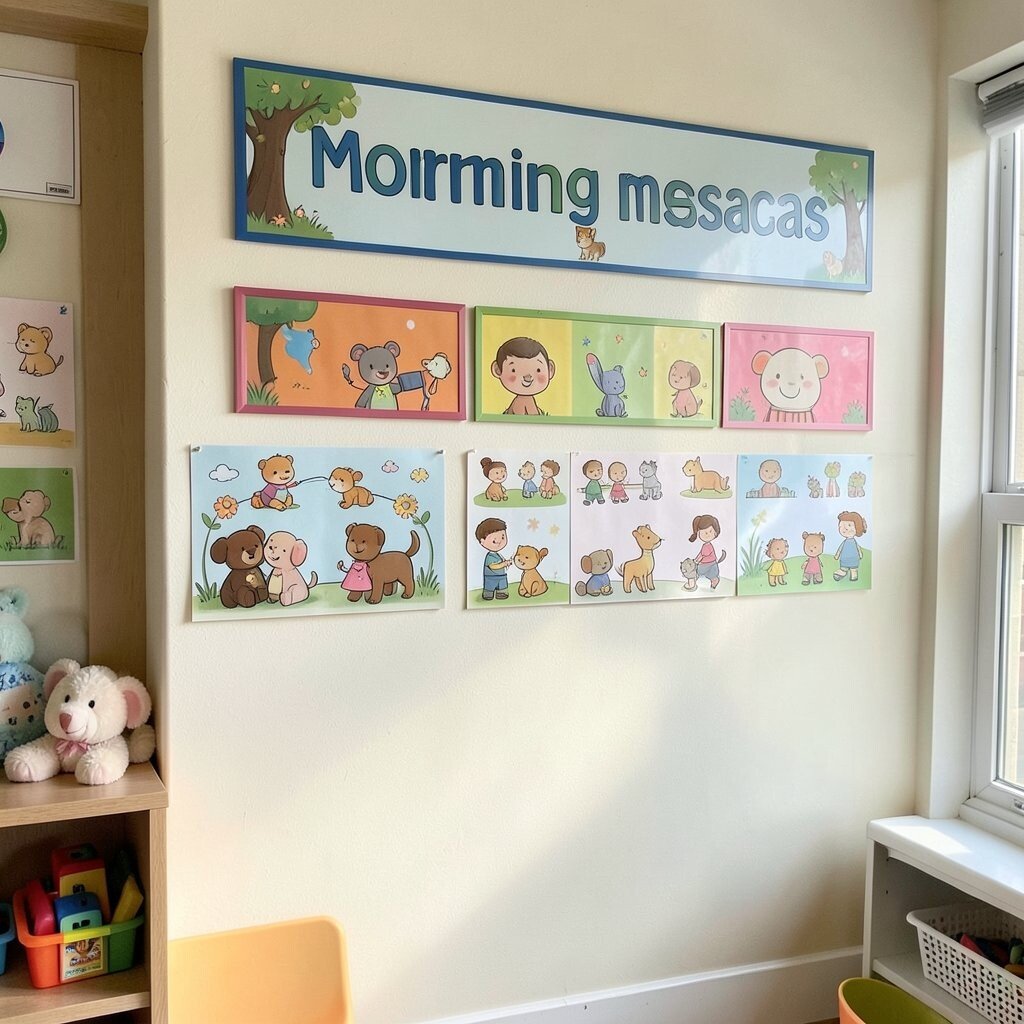
Start with a friendly message that children can follow step by step. Use a long strip of paper or butcher paper across a hallway wall, with each box holding a picture and a short prompt.
Try images for lining up, washing hands, choosing a book, or practicing a calm breathing move. The visuals help children understand routines without needing adult translation. Keep it playful by using kid-drawn icons and swapping the prompts weekly so it stays fresh.
2. Alphabet Garden With Realistic Seasons
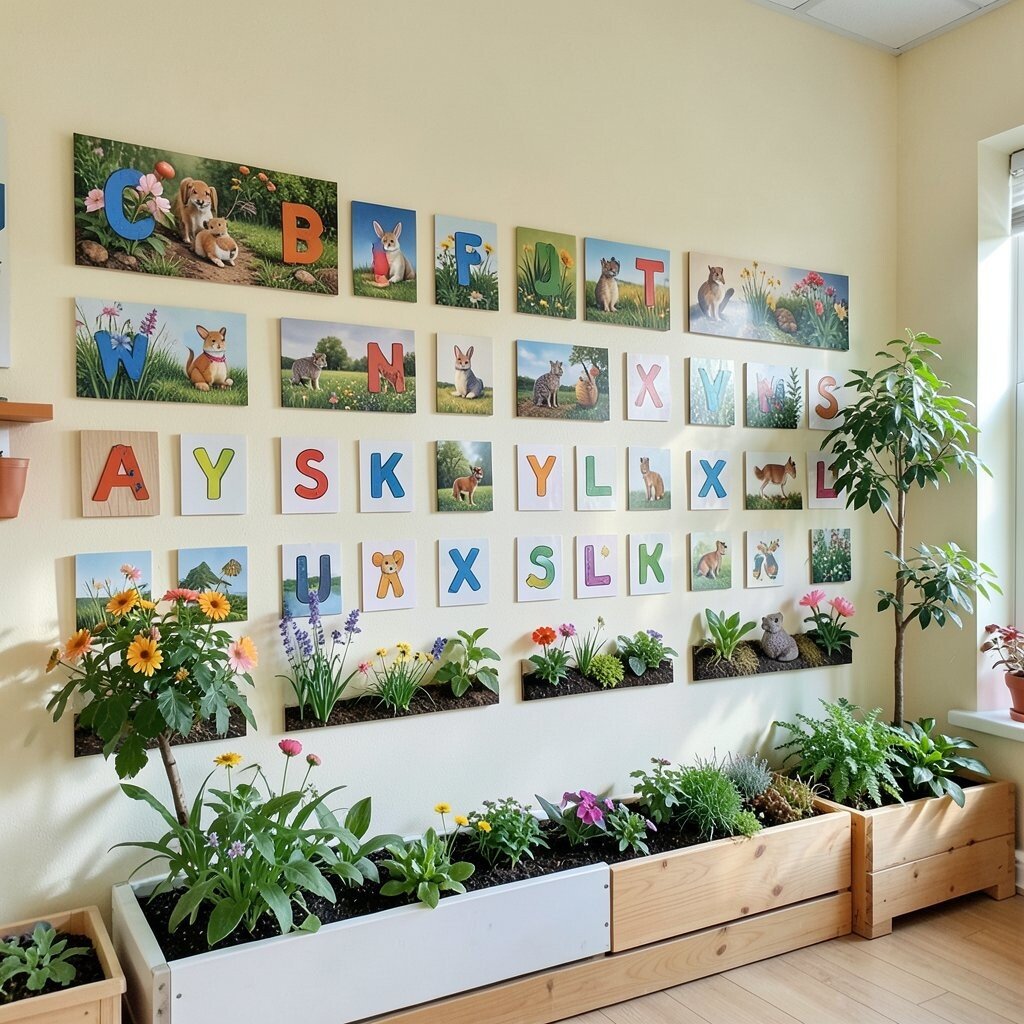
Turn an empty wall into a “garden” where each letter grows in a different season. Make large letter cards and place them on a background of grass, sky, or falling leaves made from colored paper.
Children can match letter sounds to the plants by adding a sticky note seed each time they hear the sound. This supports early literacy while also teaching how things change over time. For personalization, ask families for simple pictures of plants they see at home, then print and mount them near the right letters.
To manage cost, use craft paper, free printable letter shapes, and recycled cardboard for the base. A current trend in classrooms is mixing learning with nature themes, and this fits right in because it invites conversations about weather, colors, and patterns.
3. Wordless Story Strip With Velcro Characters
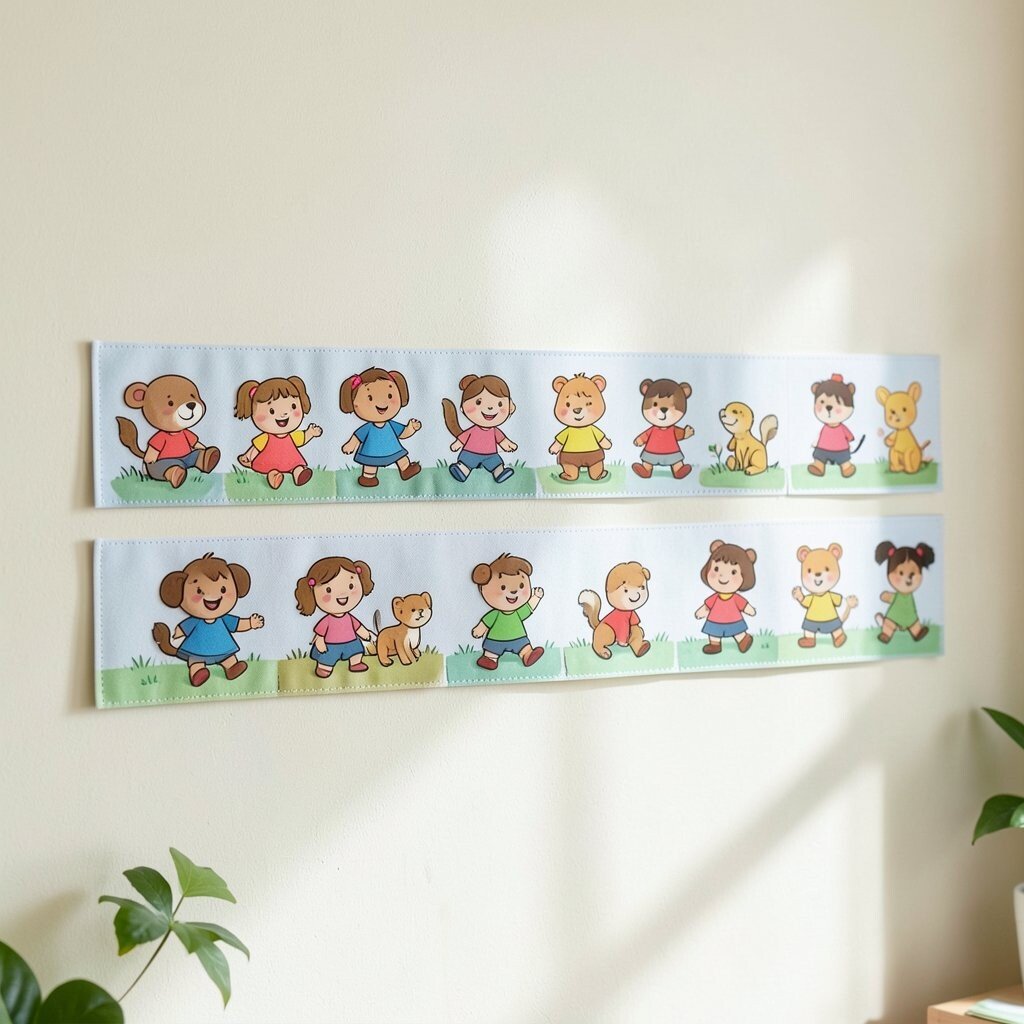
Create a horizontal story strip that shows a beginning, middle, and end without any words. Use felt or paper cutouts of characters, settings, and props, and add Velcro to the back so children can move pieces around.
Each morning, invite kids to pick a character card and place it into the first scene. This builds sequencing and storytelling skills while supporting children who are not yet strong readers. Keep it unique by letting each child design one new character using crayons, markers, or magazine scraps, then add it to the strip.
For practical setup, place Velcro in small sections so pieces do not slide. Choose durable materials like lamination for the cards, and update the story strip every few weeks to match themes like animals, space, or community helpers.
4. Color-Change Light Table Gallery
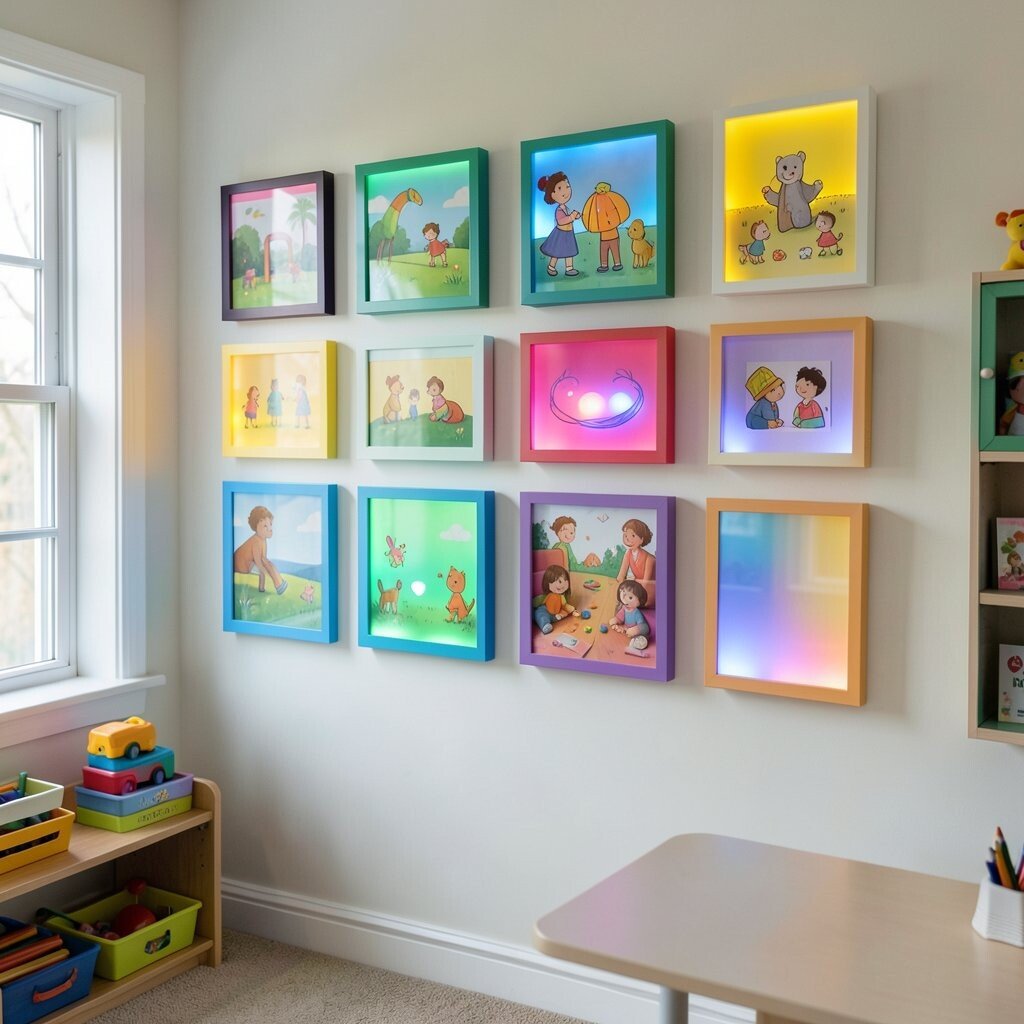
Make a “light table gallery” wall display using translucent paper shapes and color filters. Mount a grid of plastic sleeves or clear pockets on the wall, then slide in colored acetate sheets and simple picture prompts behind them.
When children place the shape behind a colored pocket, they see a new shade and can name what changed. This supports color vocabulary, visual discrimination, and science talk in a gentle way. Use inexpensive materials by cutting shapes from old report covers and adding clear tape reinforcement.
5. Community Helpers Job Belt Line
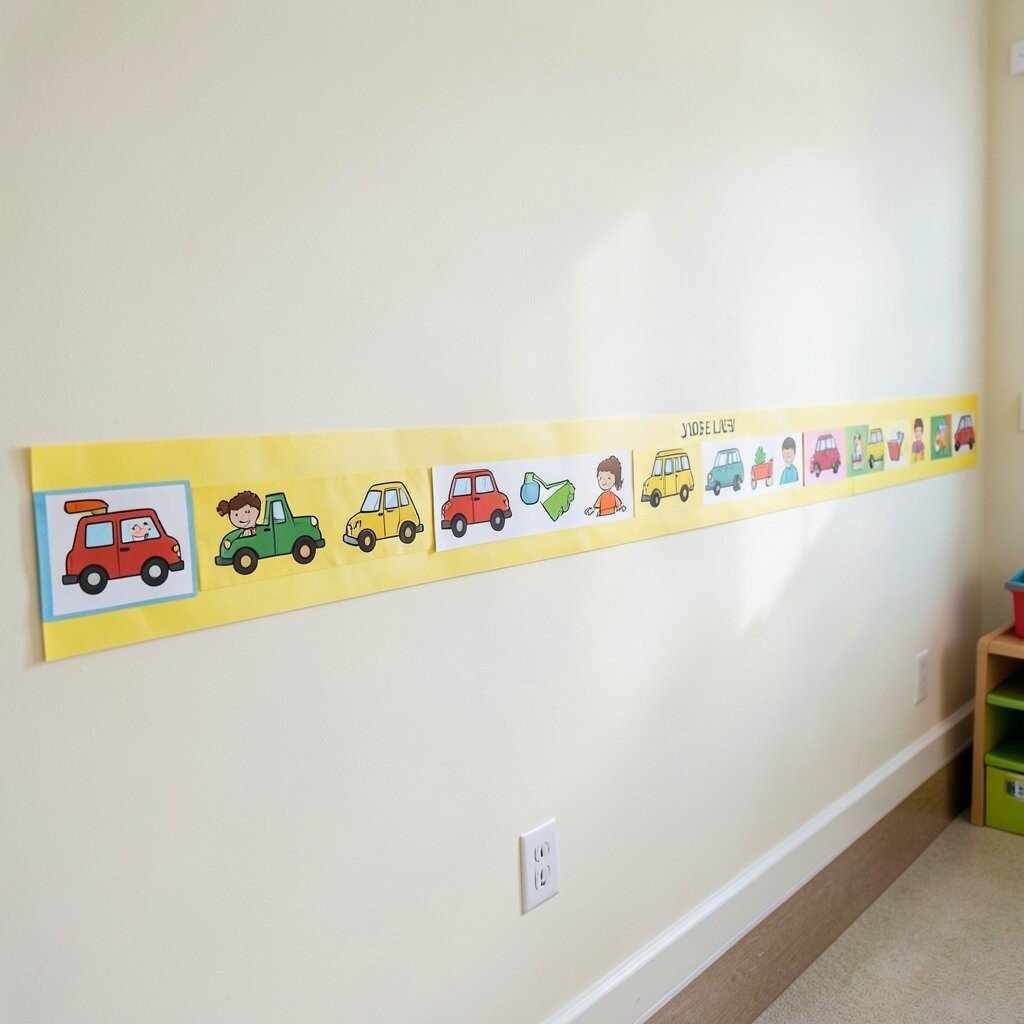
Show a community helpers belt line along the wall, with each station holding a picture and an action gesture. Make a band of cutout silhouettes, then add matching “job cards” that children can wear on a lanyard or clip onto a board.
Children learn that jobs help the whole community, and they practice sorting and matching. This idea stands out because it connects learning to real-life roles kids see at home and in their neighborhood. Personalize it by rotating cards seasonally, such as adding a gardener in spring and a mail carrier during back-to-school time.
Keep costs down by using paper templates and printing photos from free public sources or your own class snapshots. A current trend is using more culturally responsive visuals, so include helpers that reflect your community and invite kids to share what they know.
6. Feeling Faces Weather Wall
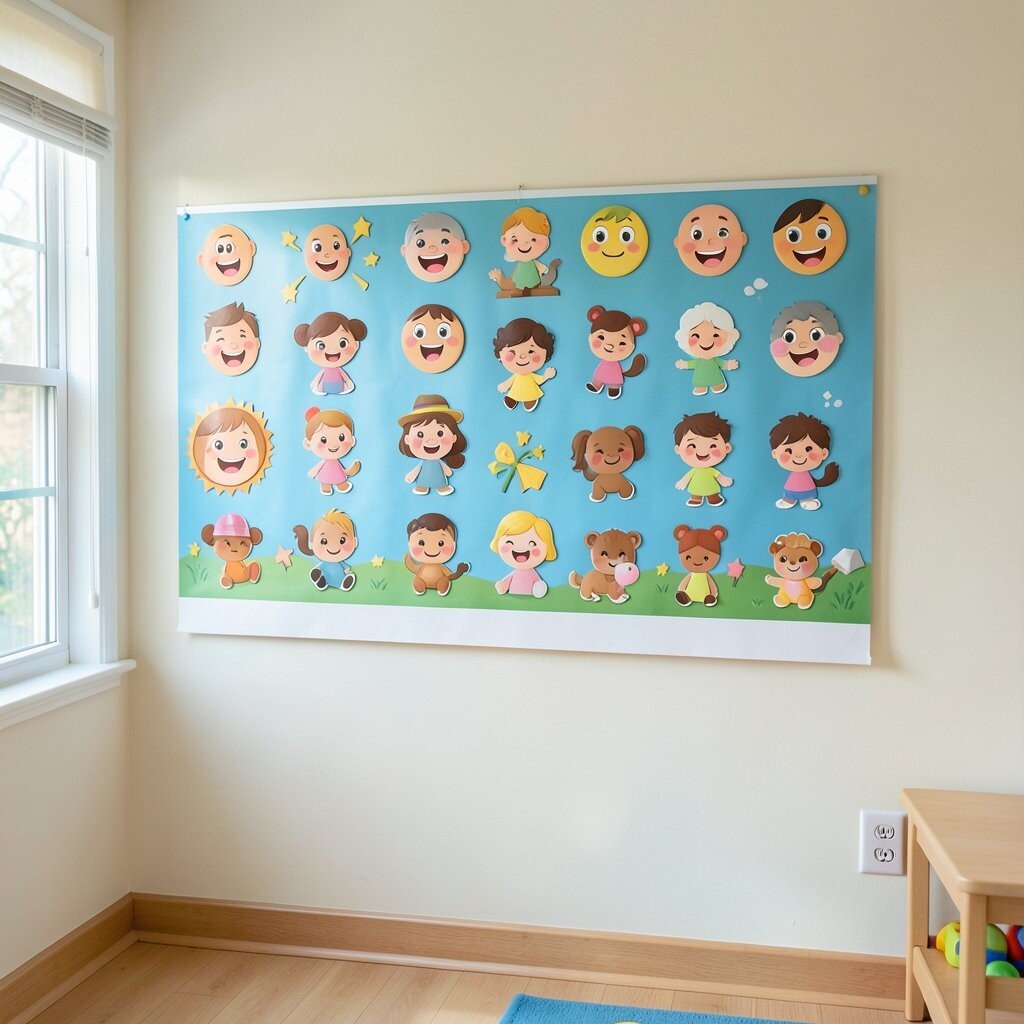
Build a feeling board that works like weather, using simple face magnets or Velcro circles. Place them in a sky chart with labels made from pictures instead of text, such as a sun, cloud, raindrop, or lightning bolt.
As children arrive, they choose how their day feels and explain it with a sentence starter. This boosts emotional vocabulary and supports social learning without turning the classroom into a lecture. For uniqueness, add a tiny “what helps” pocket near each feeling so kids can attach a calming choice card like music, stretching, or a deep breath.
To stay practical, use durable foam faces that wipe clean and choose calm colors that look good all year. Consider budget by making the faces from cardstock and laminating them with clear contact paper.
7. Numberless Counting Steps for Movement
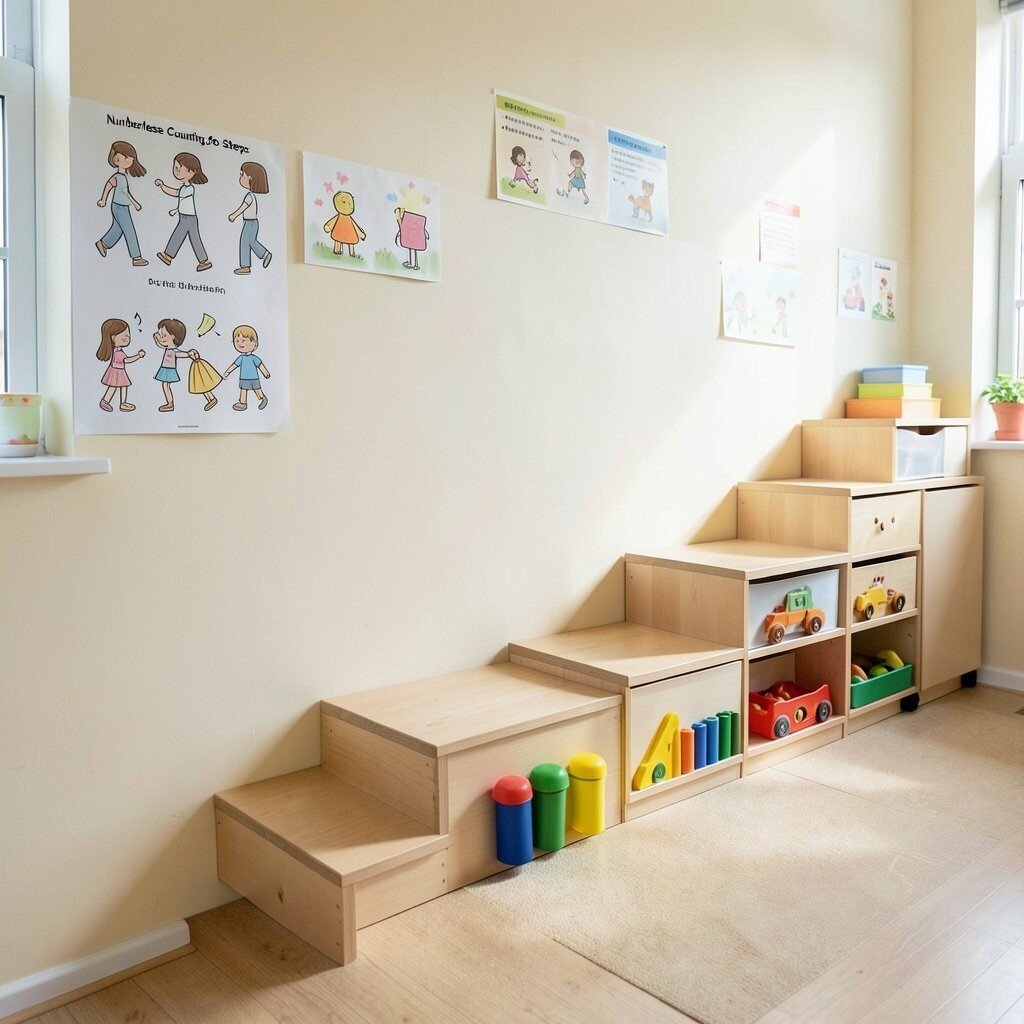
Create a set of counting steps using footprints on a wall, but keep the steps free of printed numbers. Each set of footprints can hold dots, dice patterns, or seasonal stickers instead of numerals.
Kids can count the dots when they walk to the board, making math feel active and playful. This helps with one-to-one correspondence while avoiding the stress some children feel about numbers. Personalize it by changing the theme, like using tiny stars for space week or leaves for fall.
For practical tips, place the “steps” at a height children can reach and make the footprints large enough to stand on. Use removable adhesive so you can adjust layouts when furniture moves or when seating changes.
8. The Wonder Wall With Kid Questions
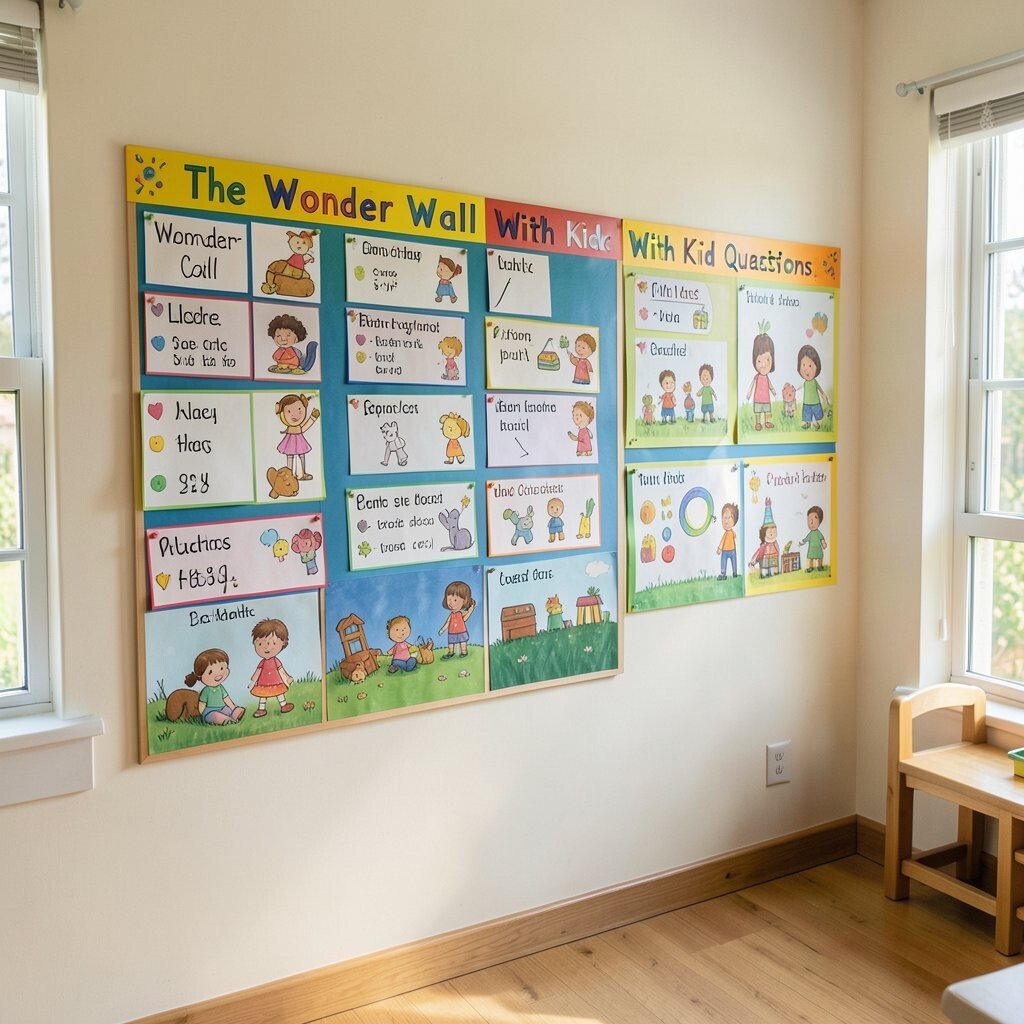
Dedicate a section of wall space for questions kids ask during class time. Use a cork strip or magnetic panel where children can post a small card with their question and their drawing.
This encourages curiosity and turns classroom talk into something visible and valued. The uniqueness comes from making questions a shared classroom treasure, not something children must keep inside their heads. Keep it practical by prompting kids with question starters like “I wonder why…” and letting them choose a picture to represent their thought.
To keep costs low, use index cards, string, or mini binder clips, and add magnets for easy swapping. A current trend is valuing student voice, and a wonder wall gives that voice a safe, colorful home.
9. Sight Word Sound Bar With Tactile Strips
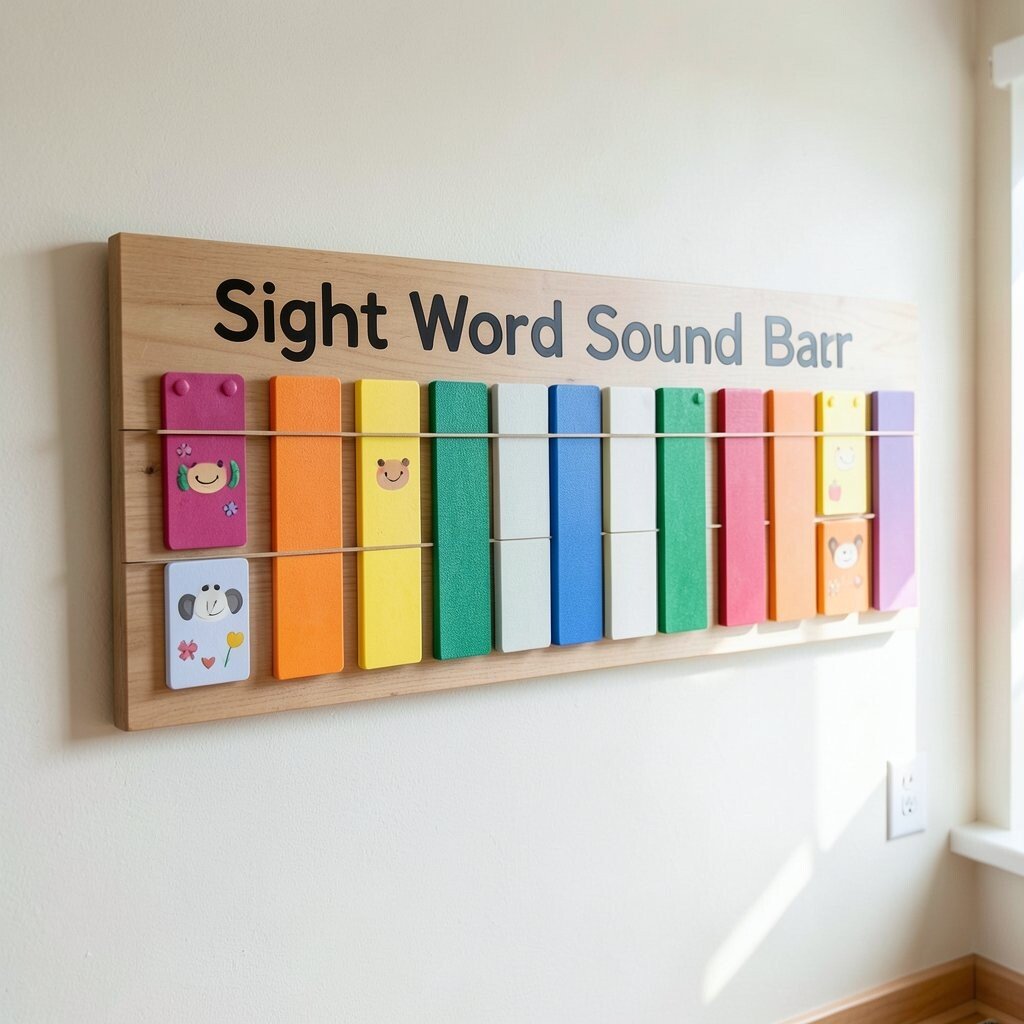
Make a sound bar that uses tactile strips to support early word recognition. Add a row of pocket sleeves, and insert cards with a picture, a simple sound cue, and a texture swatch behind it.
Kids can feel the texture while saying the sound, which strengthens memory and attention. This is helpful for learners who need movement and sensory input to stay engaged. Personalize it by using textures your students can relate to, like fabric scraps, sandpaper squares, or smooth foam shapes.
When planning cost, start with a small set of high-frequency words and expand when the class is ready. Many teachers are using multisensory materials now, and this approach fits that trend while still staying simple to run.
10. Recycling Story Poster That Shows Every Step
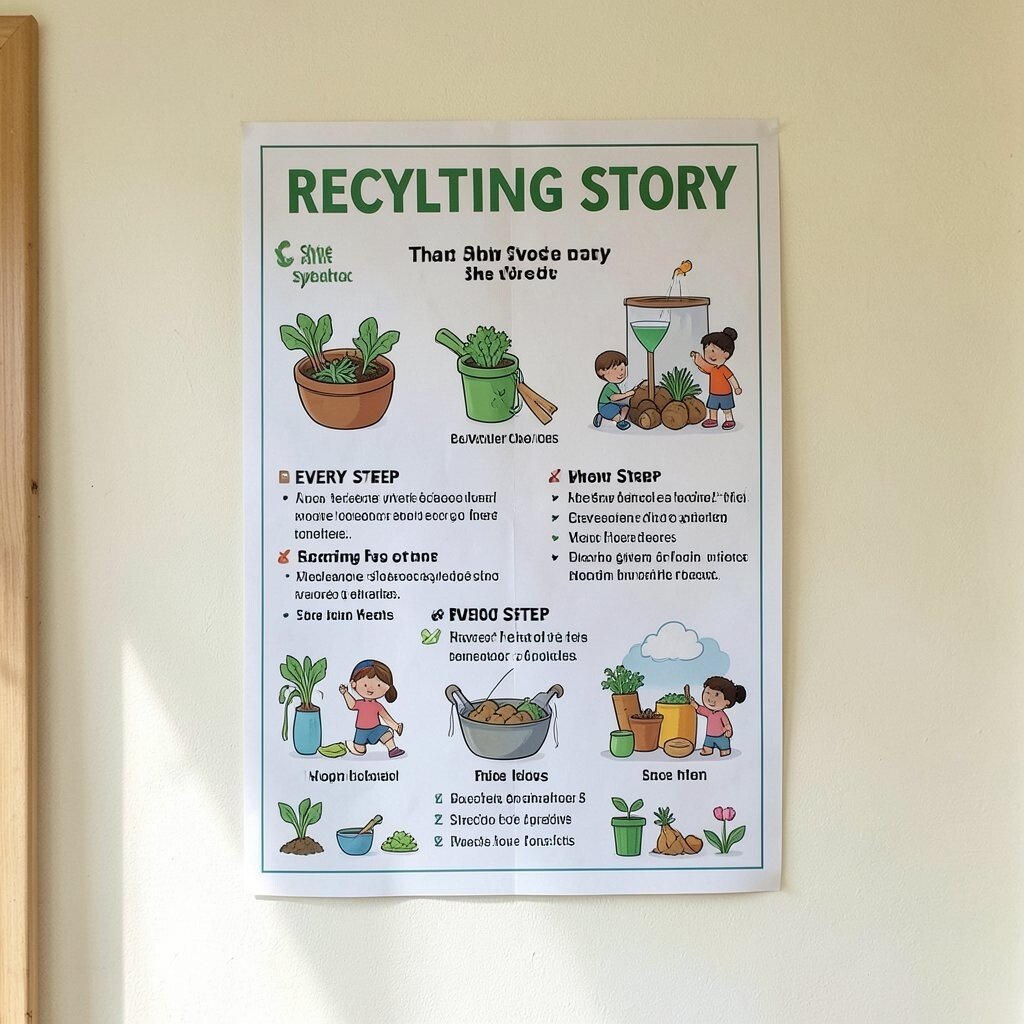
Turn a wall into a recycling story with picture-only steps that show what happens after items are tossed. Use four or five large panels that display an item, a sorting step, and a new outcome like “new paper” or “new bottle.”
This builds environmental awareness and supports sequencing skills at the same time. It also helps children understand classroom routines for bins, which can reduce mess and confusion. For personalization, ask students to bring in clean wrappers or empty containers for safe picture matching, and keep a small collection box for examples.
To keep costs in check, use paper recycling graphics, free templates, and plain cardboard for the panel frames. Make the display unique by adding a student-made “caught in the loop” character that moves through the panels as the class learns.
11. Story Map Wall for Real-Life Walks
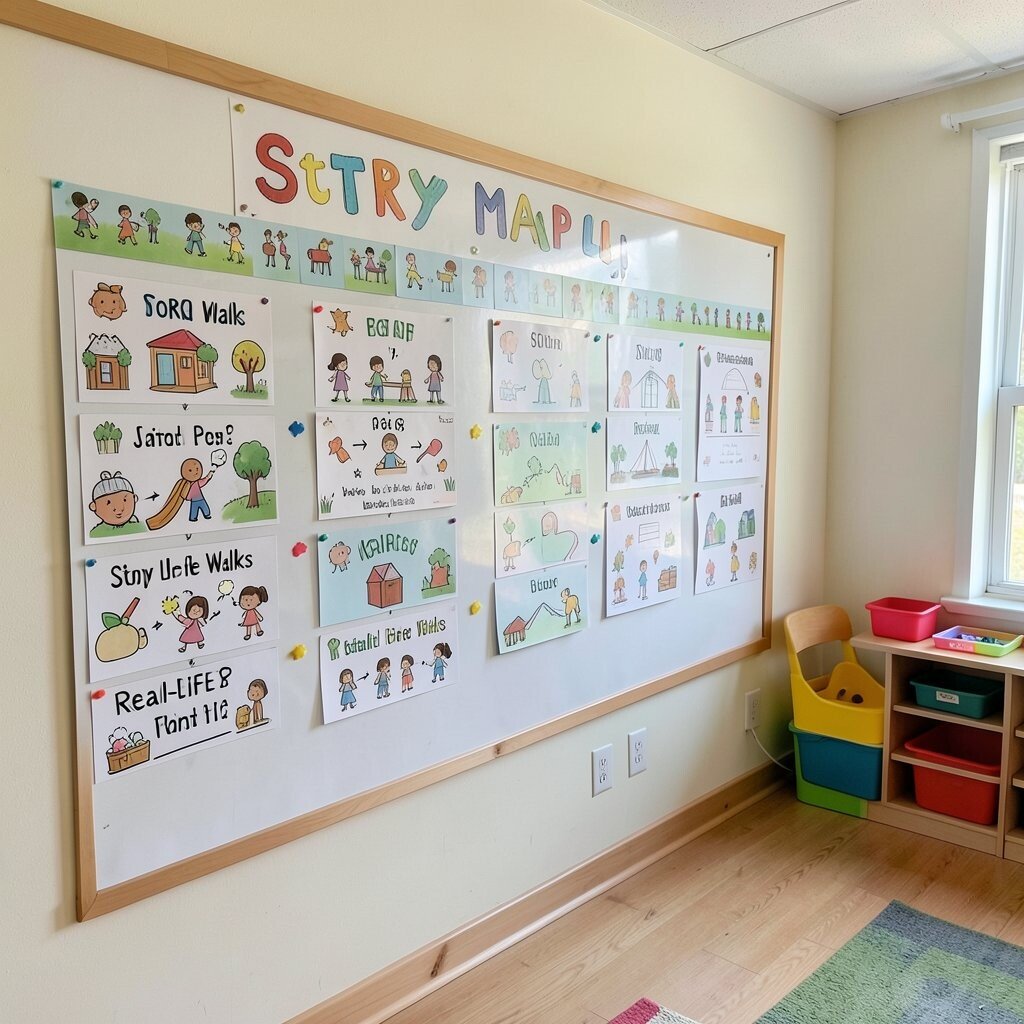
After a classroom walk, create a story map wall that shows the route and the main stops. Use a long paper strip or laminated sheet, then add icons for places like the playground gate, the reading corner, or the garden bed.
Children love seeing the real places they used, and this strengthens comprehension and vocabulary. It also supports geography basics like directions, landmarks, and “first, next, last.” Personalize it by letting each child add one photo, one drawing, or one sticker to represent what they noticed.
For practical tips, take photos with a phone and print them in small batches to avoid wasting paper. Consider current trends like outdoor learning and place-based education, since a story map helps kids connect classroom learning to the world outside.
12. Texture Alphabet Tile Wall
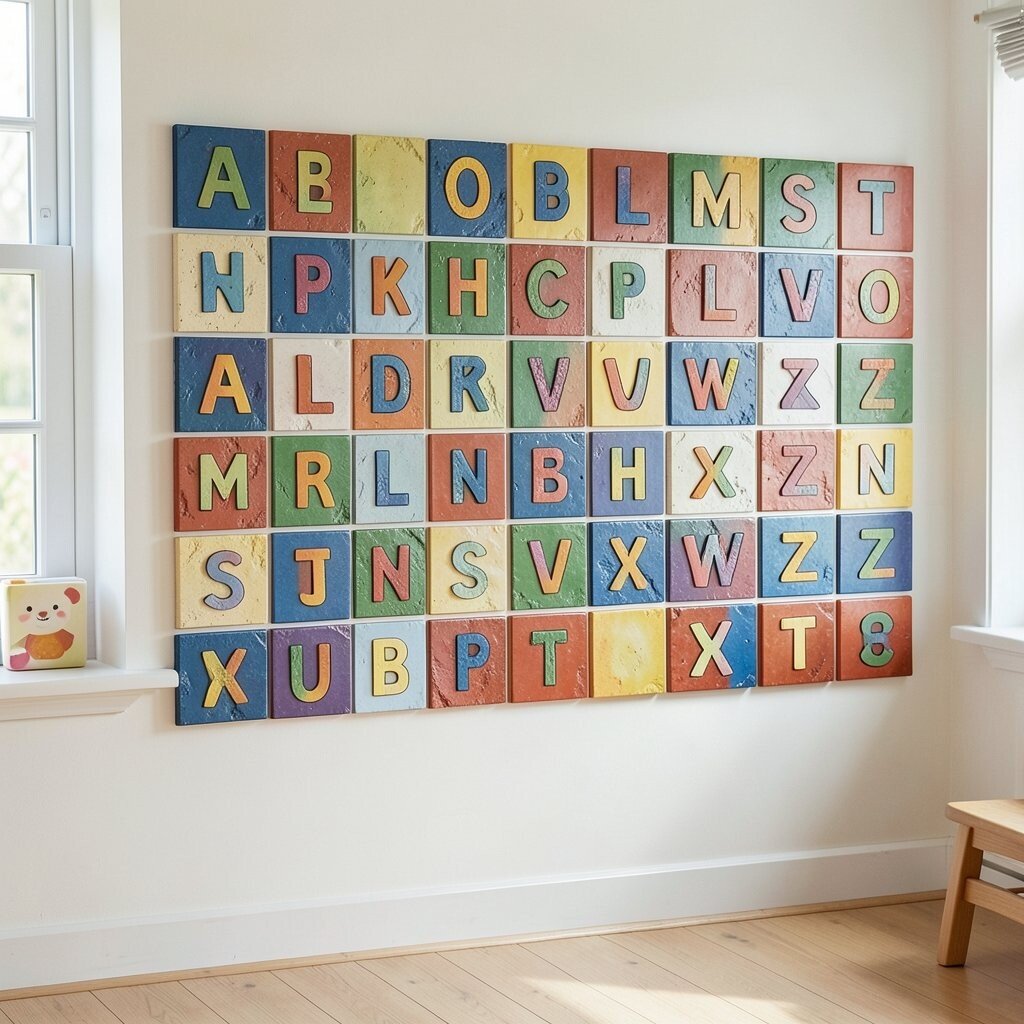
Build a tile wall where each letter is connected to a texture children can feel. Make square tiles from foam board, glue on texture samples, and arrange them in alphabet order on a low-to-mid wall section.
This supports letter recognition in a tactile way and can spark science-like questions about materials. It is unique because it makes reading practice feel like hands-on discovery using everyday items. Keep it practical by using washable textures such as felt, faux fur, or crinkled fabric, and by laminating tiles for easy cleaning.
13. Student Art Rotating Frame Wall
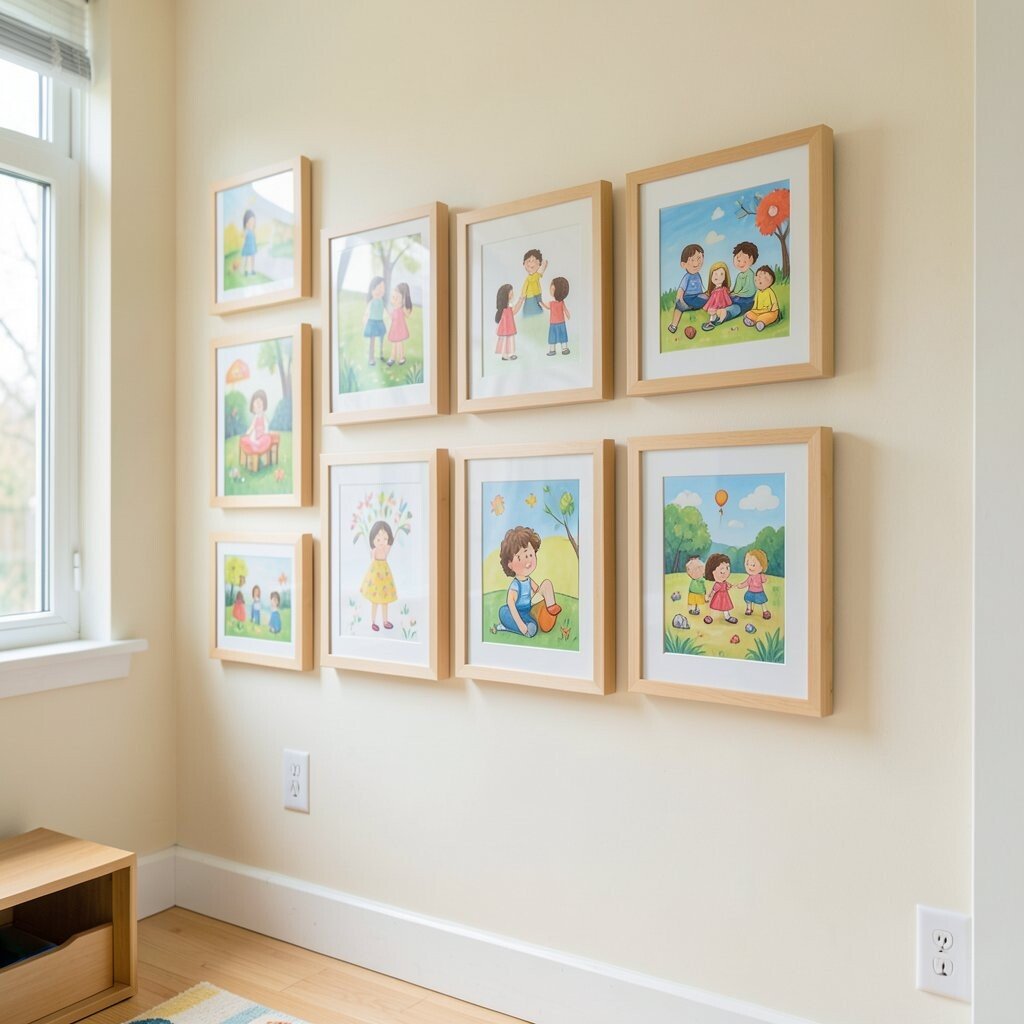
Use a rotating gallery wall with frames made from inexpensive poster frames or cut cardboard borders. Set up a system where children’s work swaps in and out on a schedule, and the most recent pieces stay front and center.
This helps children feel proud and teaches them to care for shared spaces. The benefit goes beyond art because kids practice taking turns, looking closely, and talking about color and shape. For personalization, add name labels with pictures and let children choose their own mat color so each piece feels special.
To manage cost, use thrifted frames and repaint them in cheerful colors, or use foam board cutouts with binder clips. A current trend is emphasizing process over perfection, so include a simple “first try” corner and “final picture” corner within the rotating display.
14. Classroom Jobs Board With Choice Icons
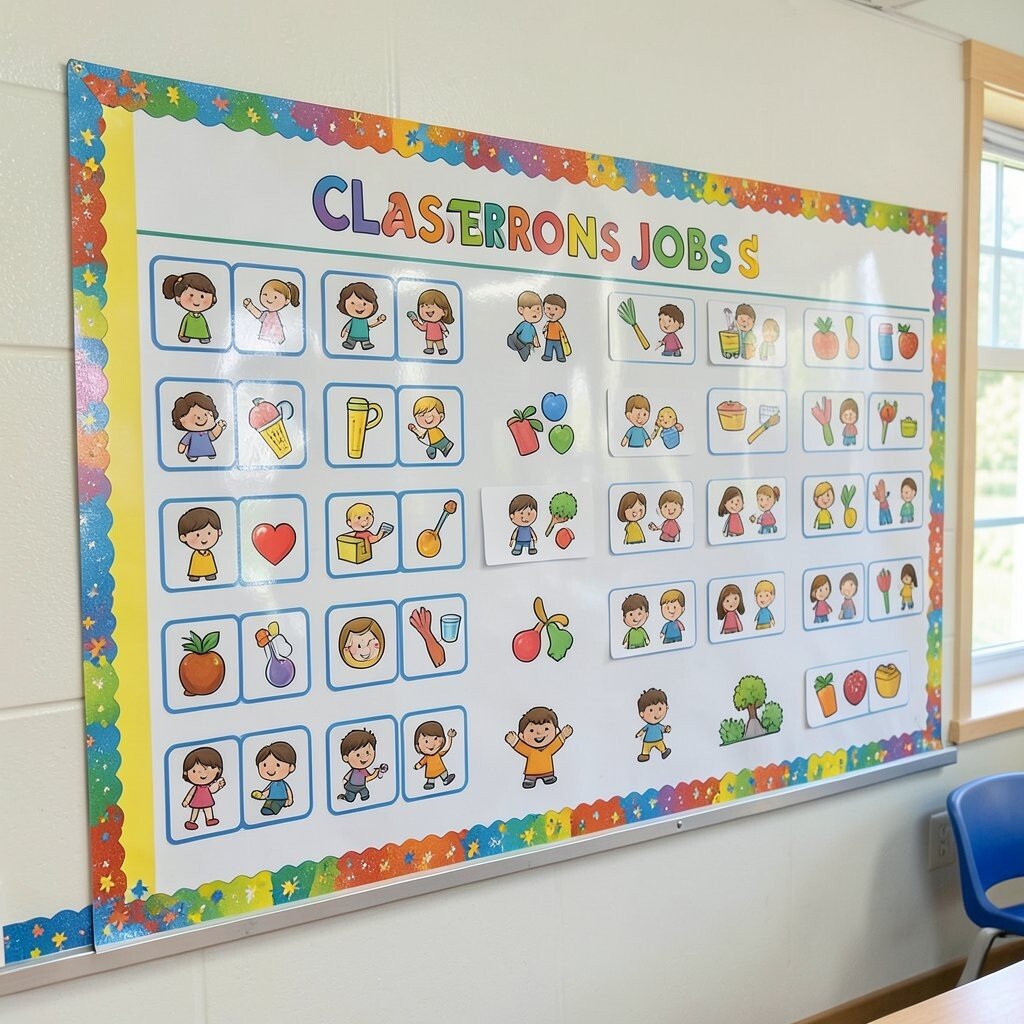
Create a jobs board that lets children choose tasks using icons, not long instructions. Place a row of job circles on the wall, each with a picture showing what the job looks like, such as watering plants, feeding the class pet, or helping line up supplies.
This supports responsibility and independence while reducing teacher reminders. It is uniquely motivating because kids can match their interests to roles, which helps them feel ownership of the classroom. Personalize it by including a “swap” icon so children can switch jobs with a partner if they want to practice something new.
For practical tips, use a simple clip system with name tags and keep the board at child eye level. Consider budget by making icons from recycled magazine images and printing job cards at home, then laminating everything for long-lasting use.