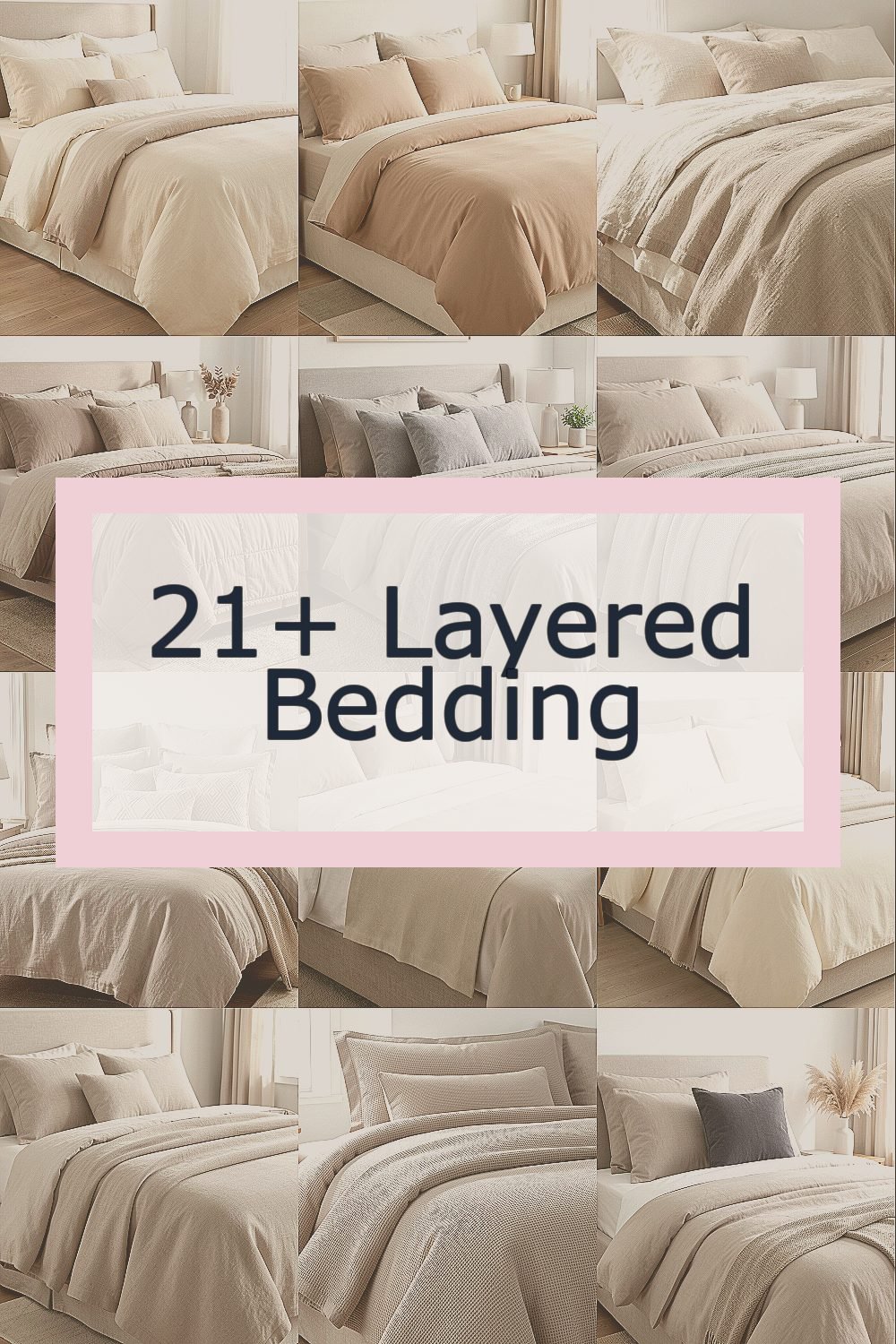
Soft layers can make a bedroom feel like a gentle exhale. When your bed looks calm, your mind often follows.
Neutral tones, mixed textures, and smart stacking give you comfort without visual noise. The result is a room that feels inviting at any hour of the day.
1. Build a Base With Warm Cream Percale Sheets
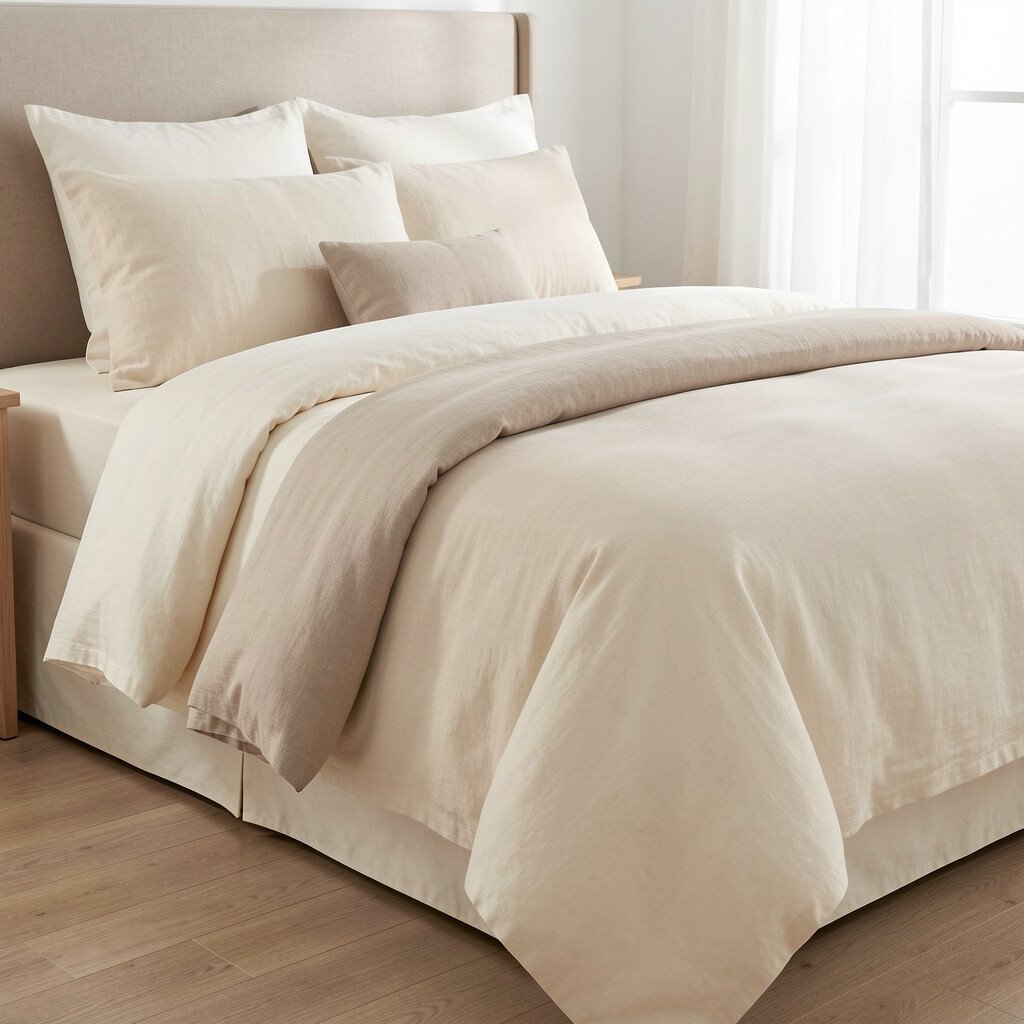
Start with cream percale for a clean, airy foundation that feels crisp against your skin. The pale color reflects light and helps the whole room look softer.
Choose a thread count you’ll enjoy sleeping on, because comfort matters more than numbers. Tuck the fitted sheet smoothly so it stays flat and gives you that neat, hotel-like look. For practical care, wash in cool water and skip harsh bleach to keep the fabric looking bright.
2. Add a Sand-Toned Duvet for Everyday Calm
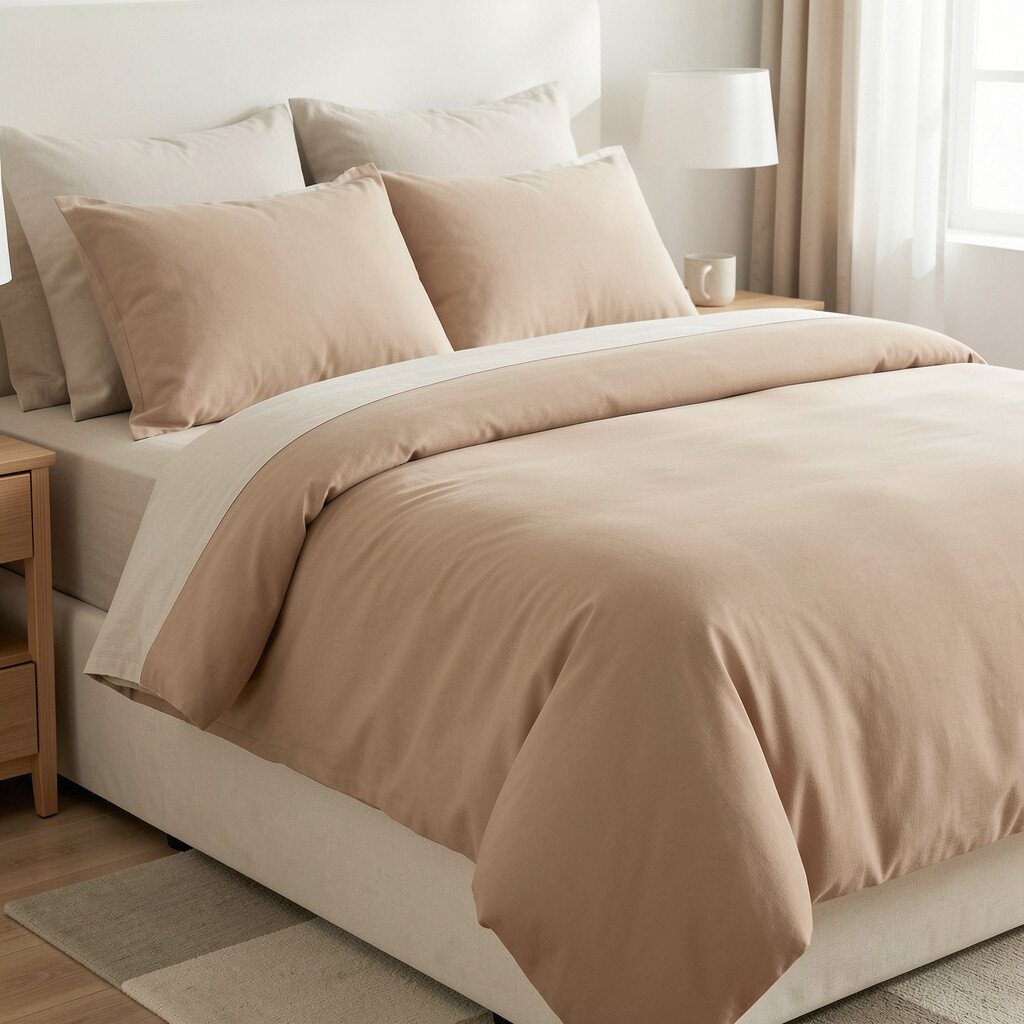
A sand duvet brings calm warmth, like sunlit linen on a quiet morning. Layer it over your sheets so the color reads steady instead of busy.
Pick a duvet cover that’s easy to remove and shake out, since daily bedding should feel simple. If you live somewhere humid, look for breathable cotton or a cotton blend so the bed doesn’t feel sticky.
For a grounded look, match the duvet color to one other item, like a curtain or rug, so everything feels connected. If you want a cozier vibe, slightly heavier weaves create that snug, cocoon feeling without adding clutter.
3. Layer Linen Texture With Oatmeal or Ecru Layers
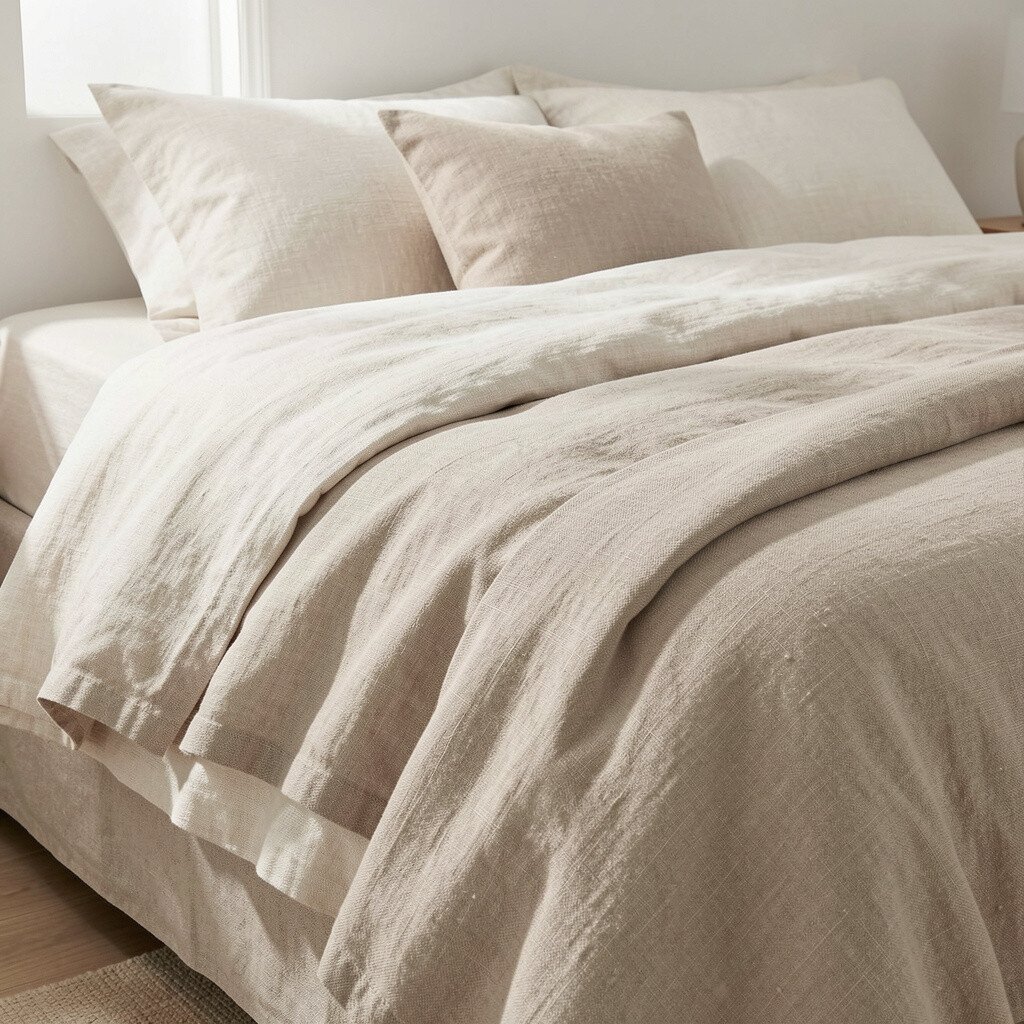
Linen-like textures add depth, even when the colors stay neutral. Oatmeal and ecru tones look natural and relaxed, like fabric that belongs in your favorite café.
Mix linen-look pieces with smoother cotton so the bed feels layered, not flat. You’ll notice the benefit right away when you touch the top layer and feel subtle movement in the weave.
For a practical setup, choose one linen layer you can rotate seasonally. In winter, keep it on top for warmth; in warmer months, let it sit lightly over a thinner comforter.
To personalize the look, choose a weave with a visible slub or relaxed finish. That small variation makes the whole bed feel more custom and less store-bought.
4. Choose a Taupe Quilt for Gentle Weight and Warmth

A taupe quilt adds a cozy layer that makes the room feel grounded. Its muted tone blends with almost any beige, cream, or soft gray you already own.
Look for a quilt with a layout you like, because stitch lines can quietly shape the visual rhythm of your bed. The extra weight can also help you feel more settled at night.
If you’re mindful of laundry, choose one with an easy-care fabric and keep a spare cover ready. When you wash regularly, the quilt stays inviting and prevents buildup of dust and odors.
5. Mix Soft Gray Throw Pillows for a Balanced Look
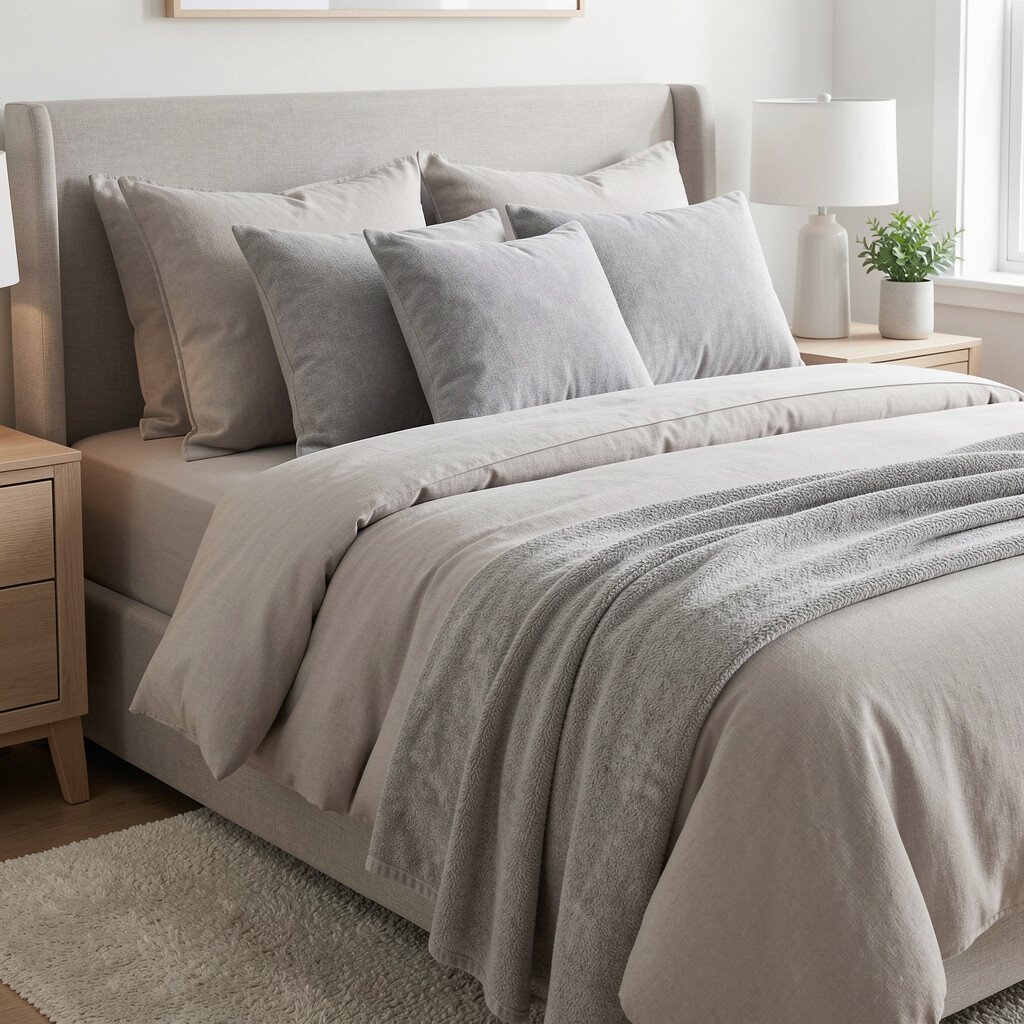
Throw pillows in soft gray make your bed feel styled without looking formal. The key is to keep the shades close, like misty stone and warm smoke, so it stays calm.
Use two pillow sizes for visual variety, such as standard plus lumbar. Fluff them daily for that fresh, welcoming feel, and your room will always look ready.
If you want a budget-friendly approach, start with pillow covers only and reuse pillow inserts. That way you can swap covers later as trends and your tastes change.
6. Add a Light Greige Blanket for Texture at the Top
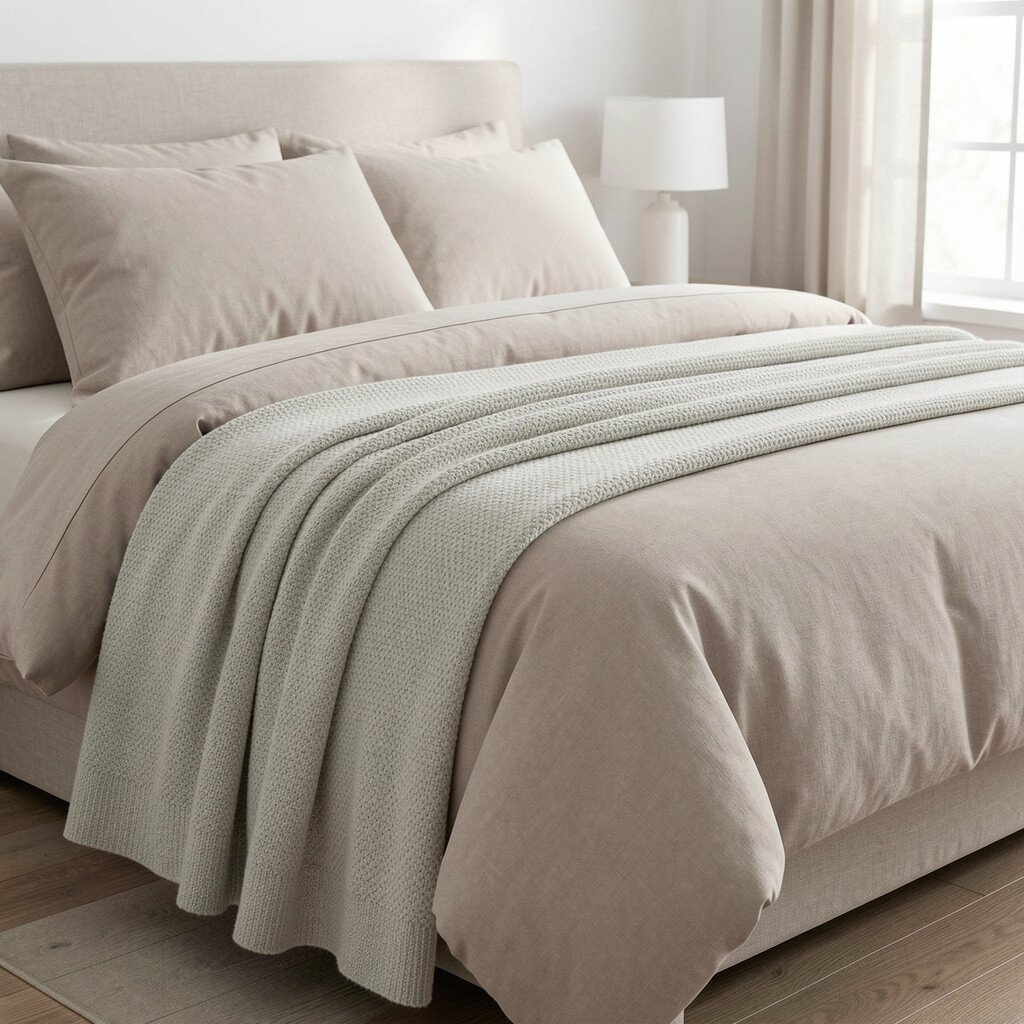
A greige blanket at the top brings an easy, lived-in style that still looks neat. It sits nicely between cool grays and warm creams.
Choose a knit or woven texture that contrasts gently with your duvet. Even a simple drape over the edge of the bed can look intentional and feels great when you need an extra layer at night.
For personalization, add a folded corner to one side so the blanket looks artfully placed. This small trick also helps you keep the blanket from sliding away.
7. Use Neutral Patterned Shams to Keep Things Interesting
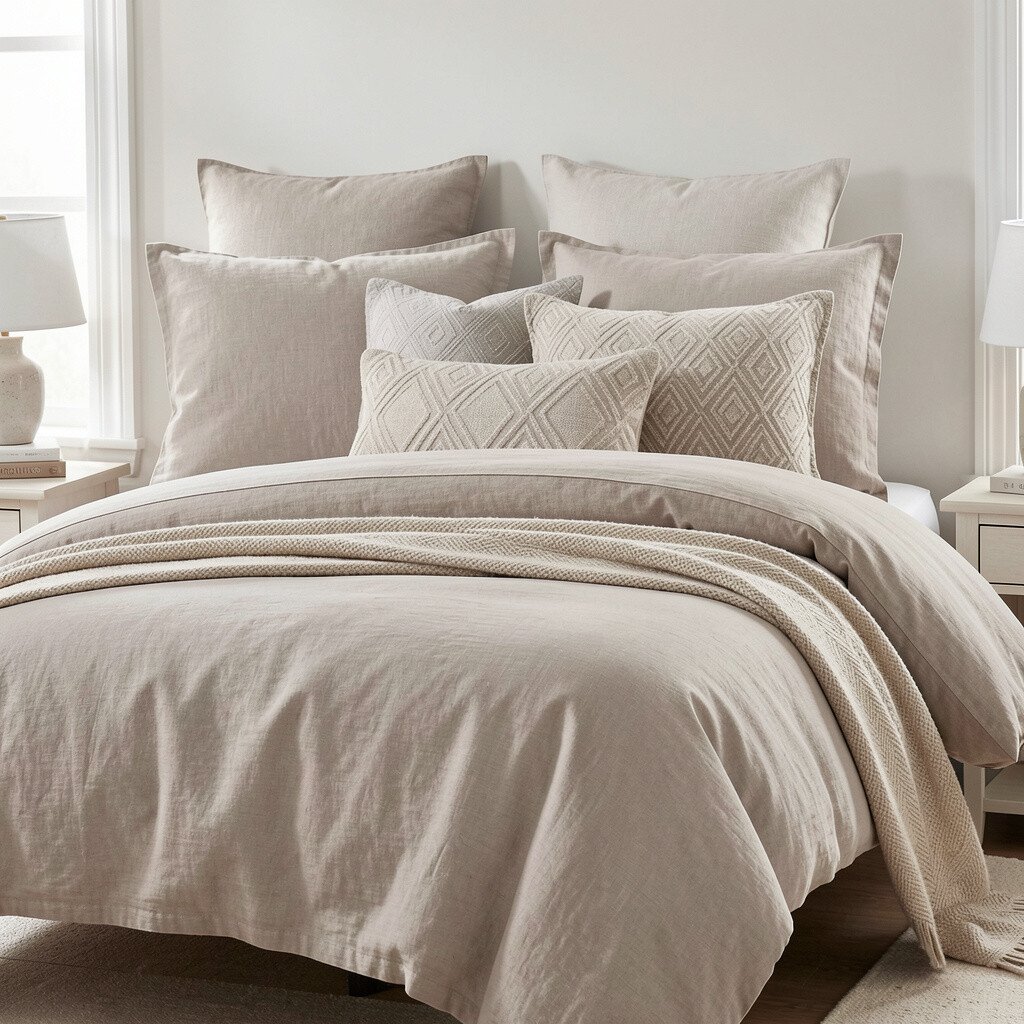
Plain bedding can be soothing, but a subtle pattern can make the look feel complete. Neutral patterned shams like small checks or faint stripes add just enough interest.
Try a pattern scale that stays understated, so it doesn’t compete with the rest of the room. A benefit of using soft patterns is that they hide minor wrinkles and everyday wear.
Match the pattern colors to your other layers, such as cream plus taupe or oatmeal plus soft charcoal. This creates a cohesive palette without the need for bright accents.
If you’re shopping on a cost limit, look for sham sets rather than full comforter sets. You often get more style per dollar that way.
8. Fold a Ecru Bed Runner for a Hotel-Style Center Line
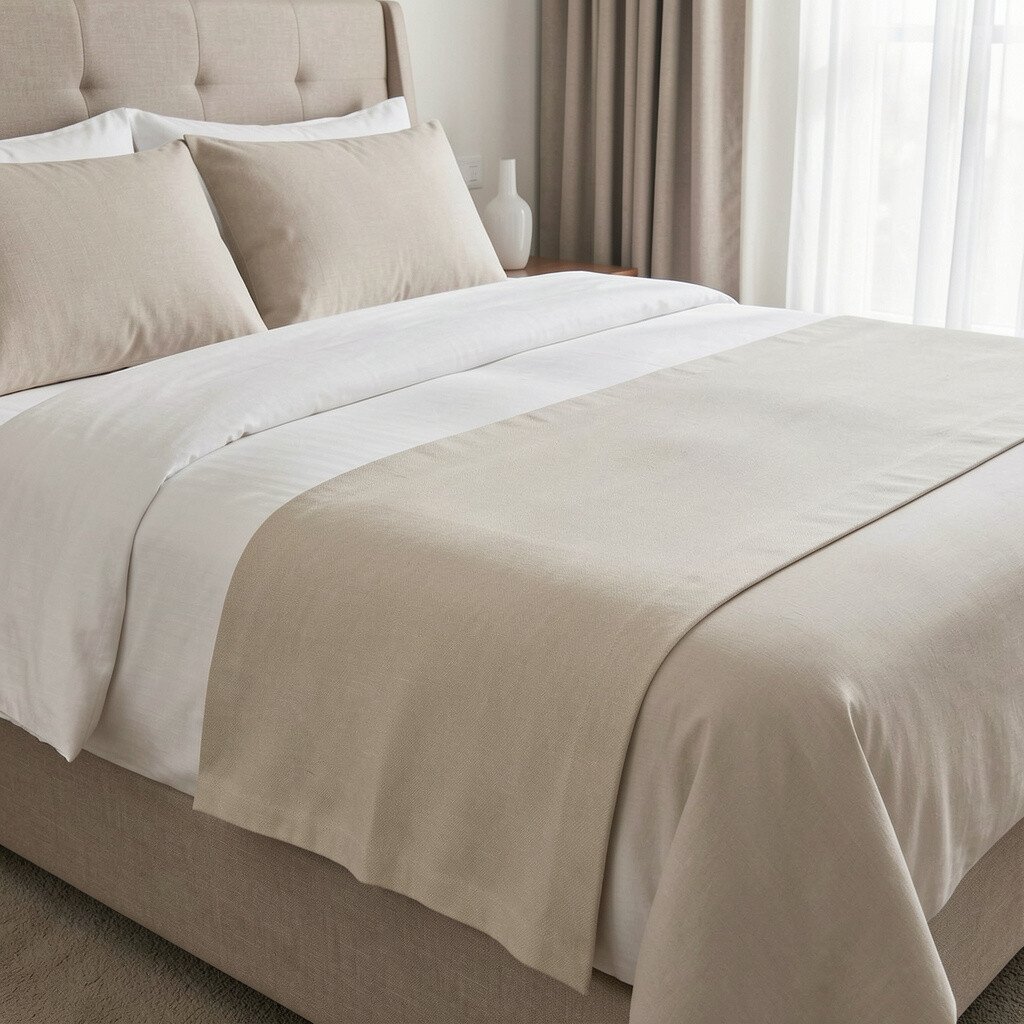
A bed runner creates a calm focal point right down the middle. In ecru tones, it feels bright and airy instead of heavy.
Use a runner that matches your duvet tone, then fold it neatly so the lines look crisp. You’ll benefit from how it visually organizes the bed, especially when you’re busy in the morning.
For a practical tip, keep the runner long enough to show but not long enough to tangle. If you have pets or kids, a runner that stays secure keeps the bed looking neat longer.
9. Swap to Ivory Sheets for an Extra Bright, Airy Feel
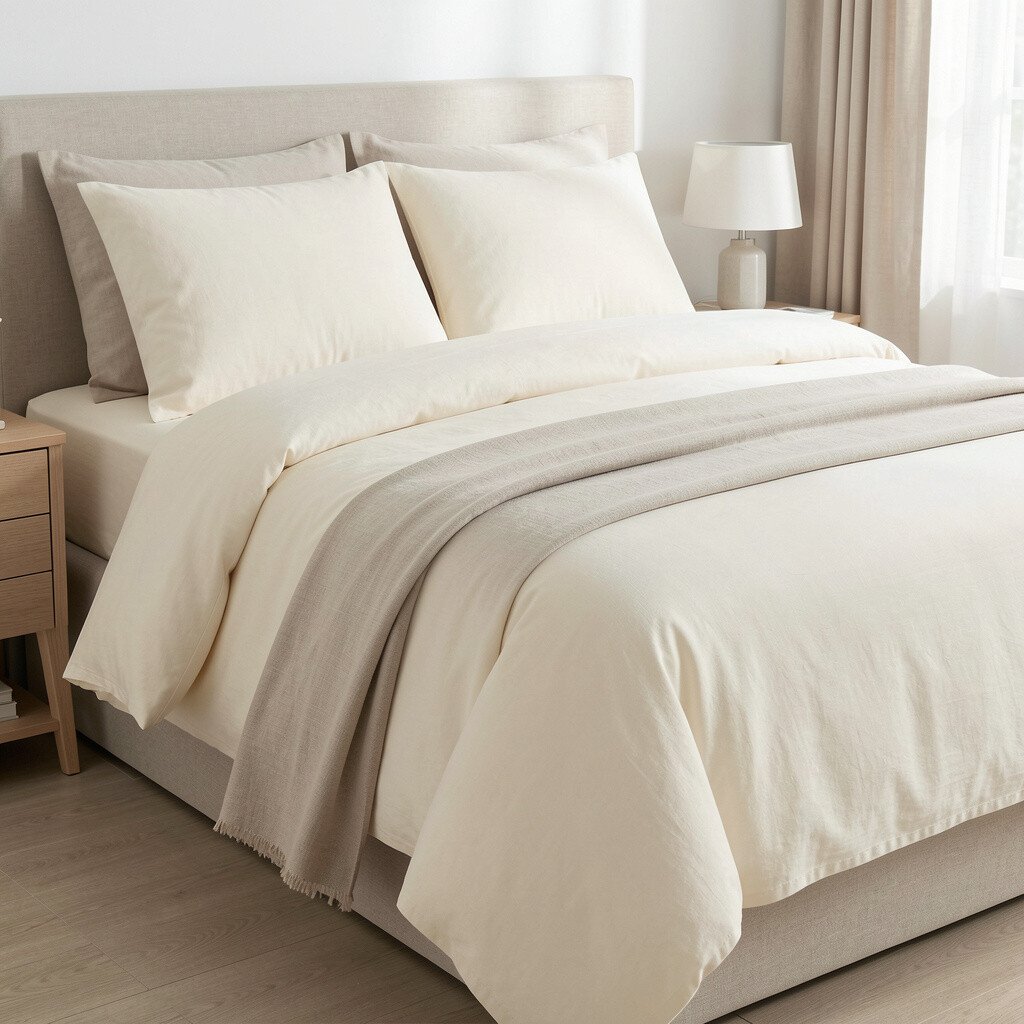
Ivory sheets are a gentle step up from cream, with a slightly warmer brightness. They make the room feel open and restful, even in soft lighting.
Choose a smooth finish if you like a sleek feel, or a lightly textured weave if you prefer a casual look. Either way, the color helps your bedroom feel clean and calm.
To keep ivory looking fresh, wash with mild detergent and separate from darker items. This small habit protects the tone and keeps your bedding looking new longer.
10. Layer a Stone-Colored Coverlet for Easy Weekday Styling
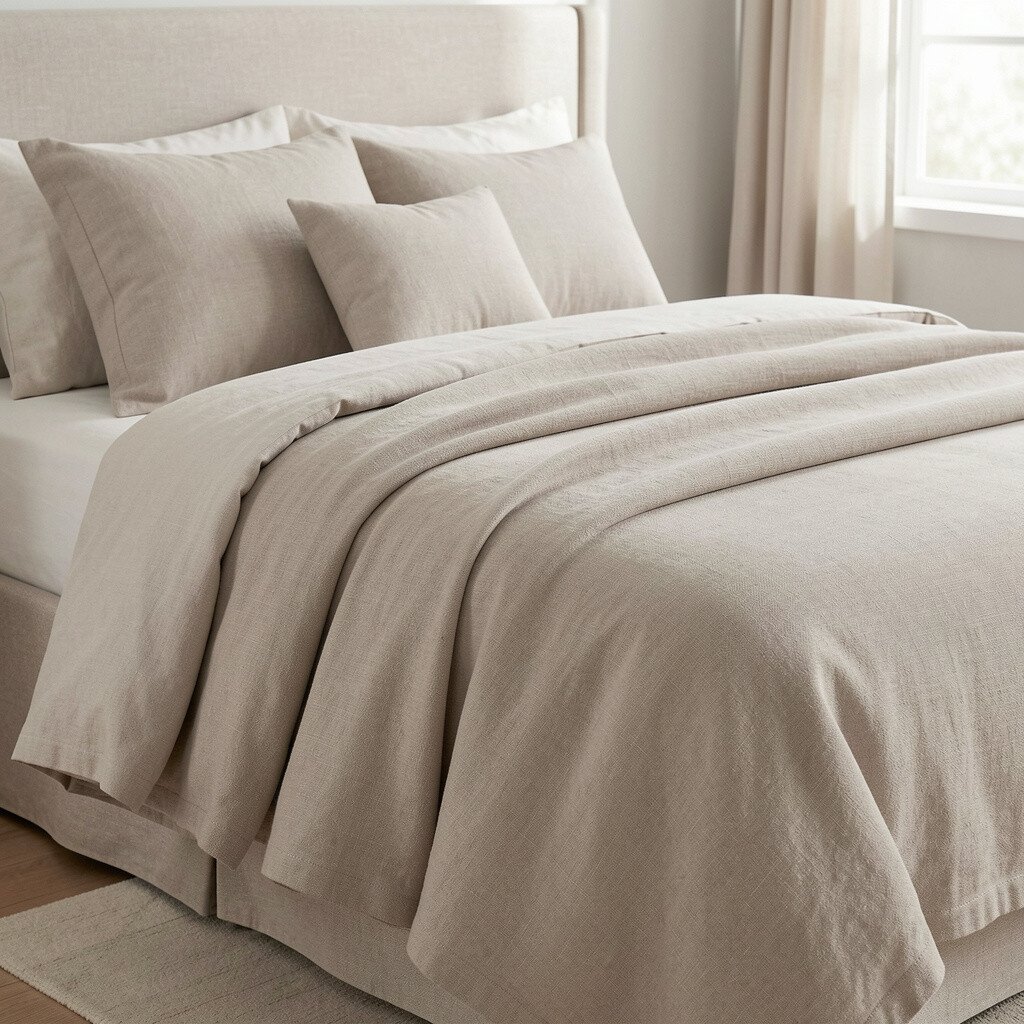
A stone-colored coverlet sits perfectly over your duvet like a top layer that doesn’t work too hard. It looks calm on its own, which helps when you’re not in the mood for full styling.
Pick a coverlet with a gentle sheen or soft matte finish depending on your room lighting. In brighter rooms, a matte fabric looks cozy; in dimmer rooms, a slight sheen can add life.
If you want to make it practical, choose a coverlet that’s light enough to refresh quickly between washes. You’ll spend less time fussing, while your bed still looks styled.
11. Incorporate Textured Cotton With Subtle Ribbing or Waffle Weave
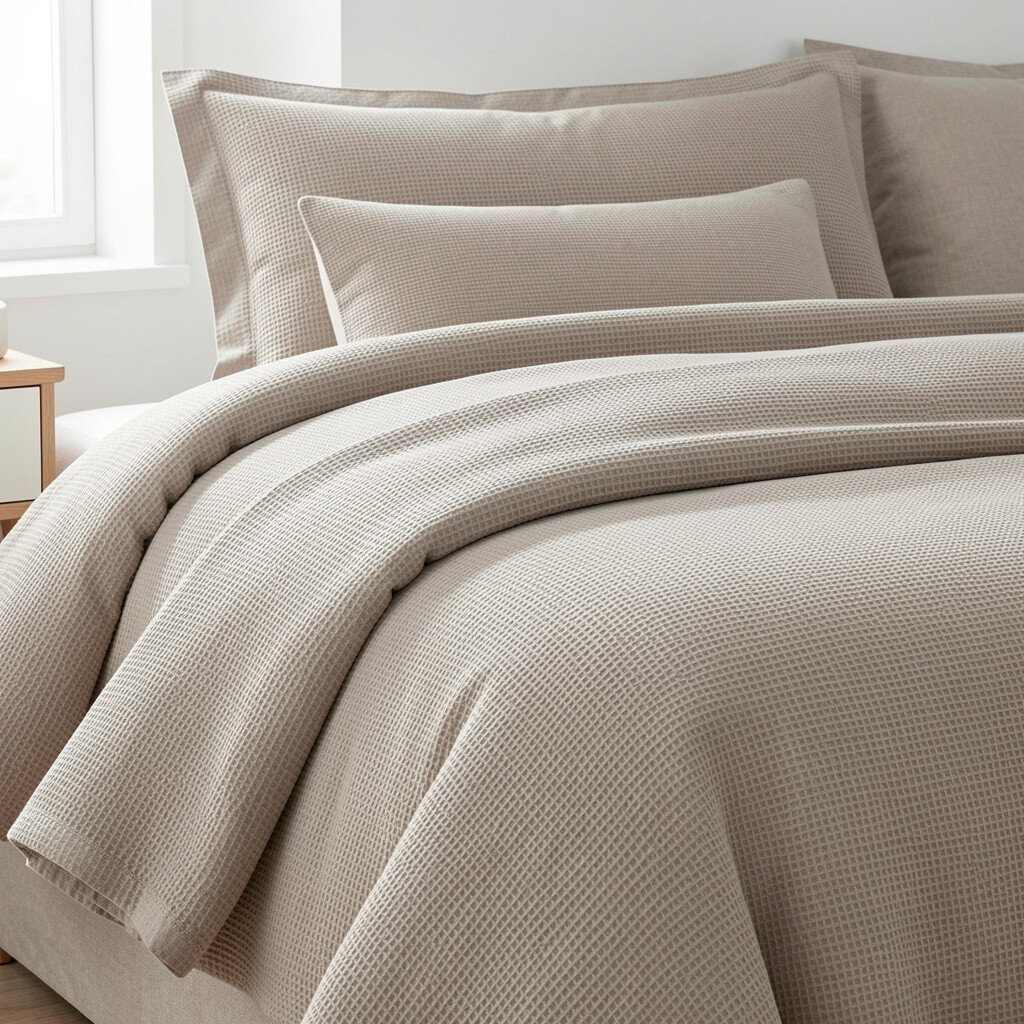
Textured cotton like waffle weave adds a soothing, spa-like feel. It also helps hide small wrinkles, so the bed stays relaxed-looking after a busy day.
Look for pieces that feel good in your hands, because texture is part of your comfort. When fabric has a little rise and fall, it catches light softly and creates depth without loud colors.
Try layering a textured throw on top of a smooth duvet for an easy contrast. This simple switch makes the whole bed feel more designed.
For personalization, pick one texture you love most and repeat it in small ways, like pillow covers with a similar weave. That repetition ties the look together beautifully.
12. Add a Soft Charcoal Accent Pillow for Contrast Without Drama
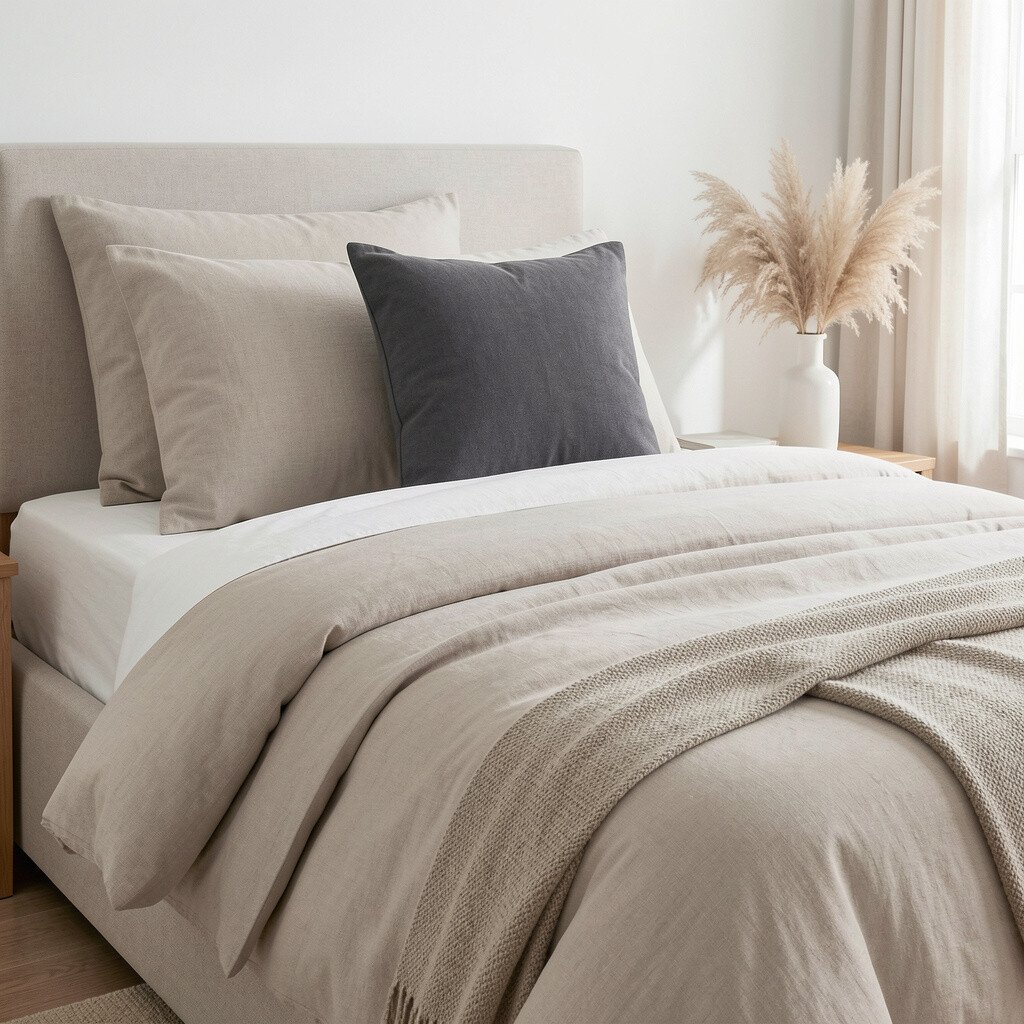
One soft charcoal accent pillow can sharpen the whole palette. It adds contrast that feels grown-up, not harsh.
Keep the charcoal limited to one or two pieces so the room stays calm. A benefit of using a deep neutral is that it makes beige and oatmeal tones look even warmer.
Try pairing charcoal with lighter pillows in cream, greige, or oat. This balance helps your bed look layered, while still feeling restful.
13. Choose Neutral Bed Sheets With a Slightly Fluted or Brushed Finish
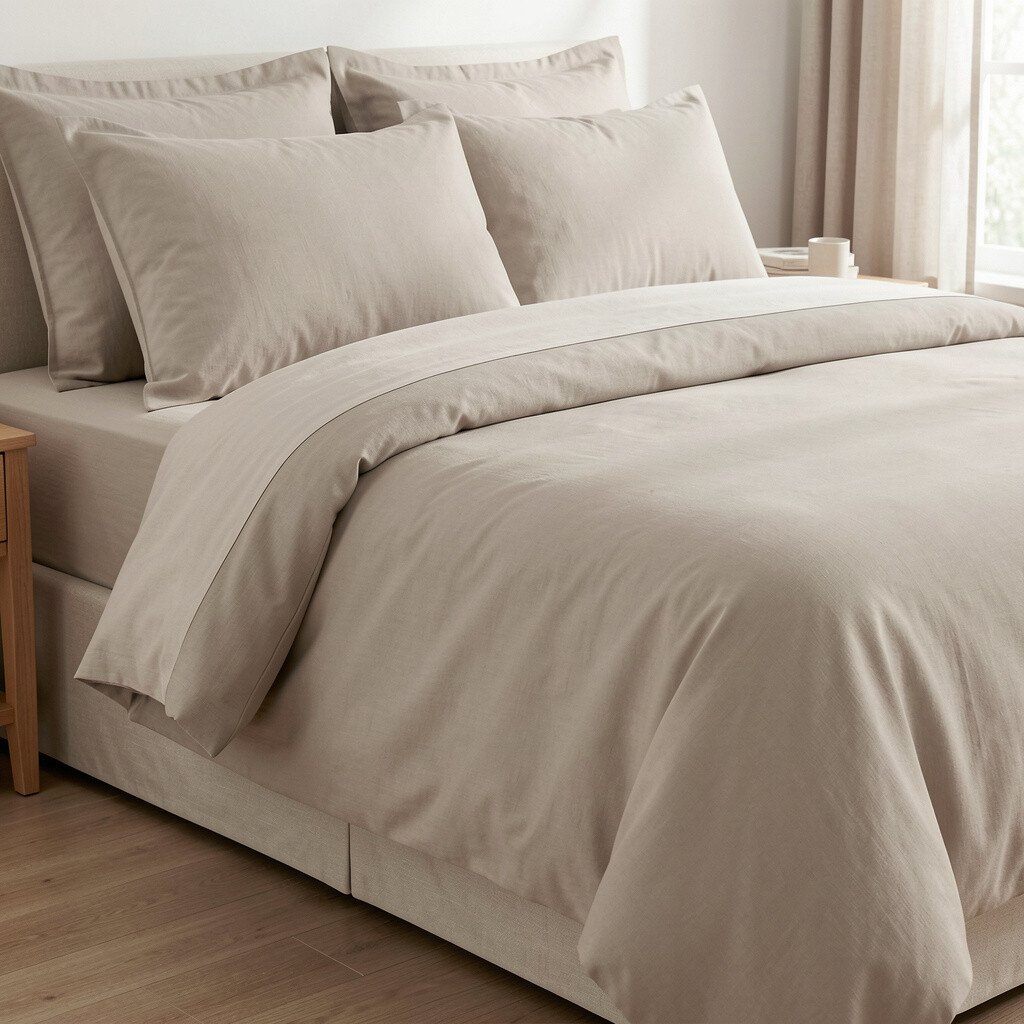
A brushed or lightly fluted sheet finish feels extra cozy and forgiving. It can also help you avoid that stiff, crisp feeling if you prefer a softer start to your night.
Neutral tones like warm taupe or creamy sand make the brushed texture stand out gently. You’ll notice the benefit when the bed looks plush even before you add blankets.
To make this practical, rotate your top layer so it wears evenly. That helps your bedding stay comfortable for longer and keeps the texture looking even.
If you like a trend-forward vibe, search for “brushed cotton” or “washed linen” styles in neutral shades. These finishes are popular because they look relaxed and feel lived-in.
14. Style Your Bed With a Two-Tone Folded Blanket Technique
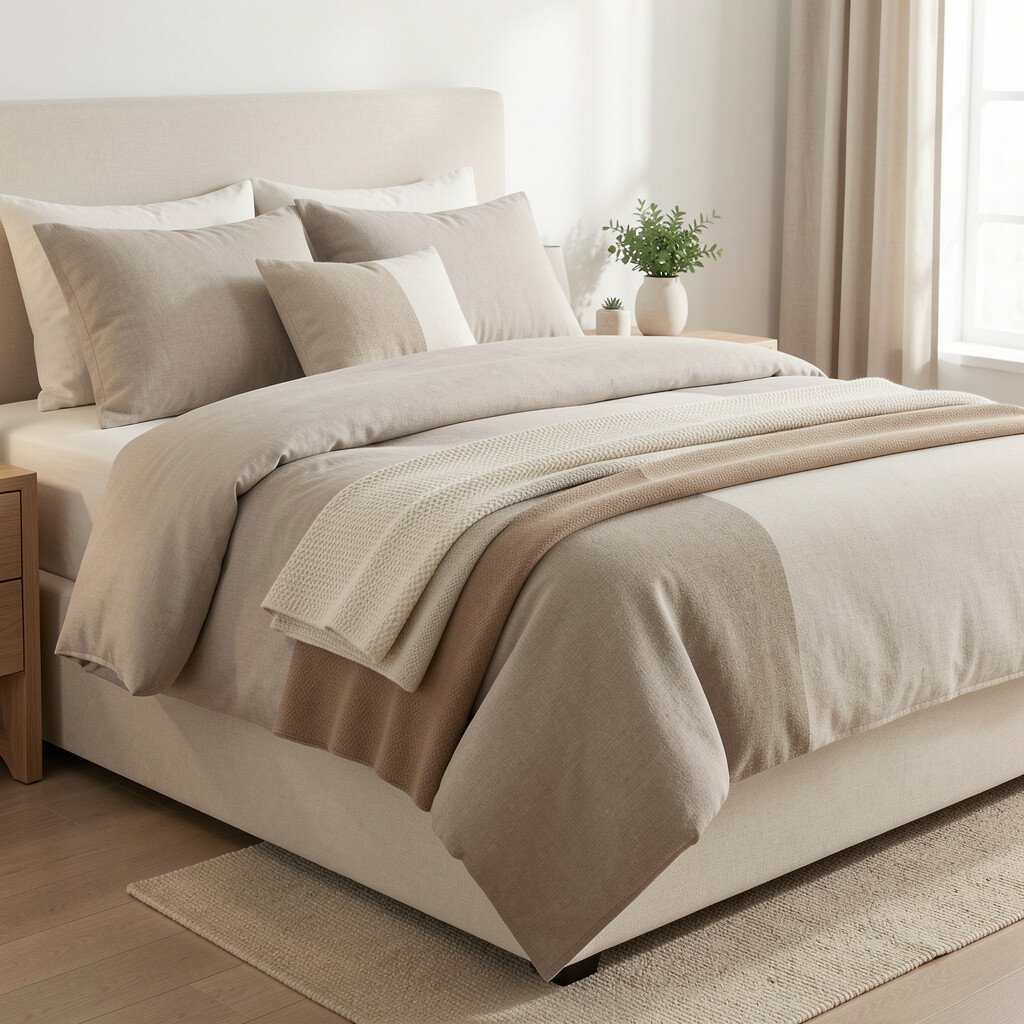
Using a two-tone folded blanket technique gives your bed a layered look without too many pieces. Choose neutral shades that are close, like ecru and oatmeal, for a smooth blend.
Fold the blanket lengthwise so both tones show, then place it near the foot of the bed. The visual benefit is that it creates movement while keeping the overall palette calm.
For personalization, try a wider fold for a more modern look, or a narrower fold for a classic feel. If you enjoy symmetry, place the fold centered; if you prefer relaxed style, tilt it slightly.
In terms of cost, you can often achieve this look with one versatile blanket by choosing a reversible option. That way you get more looks from the same purchase.
15. Pick a Greige Comforter for a Modern, Low-Maintenance Layer
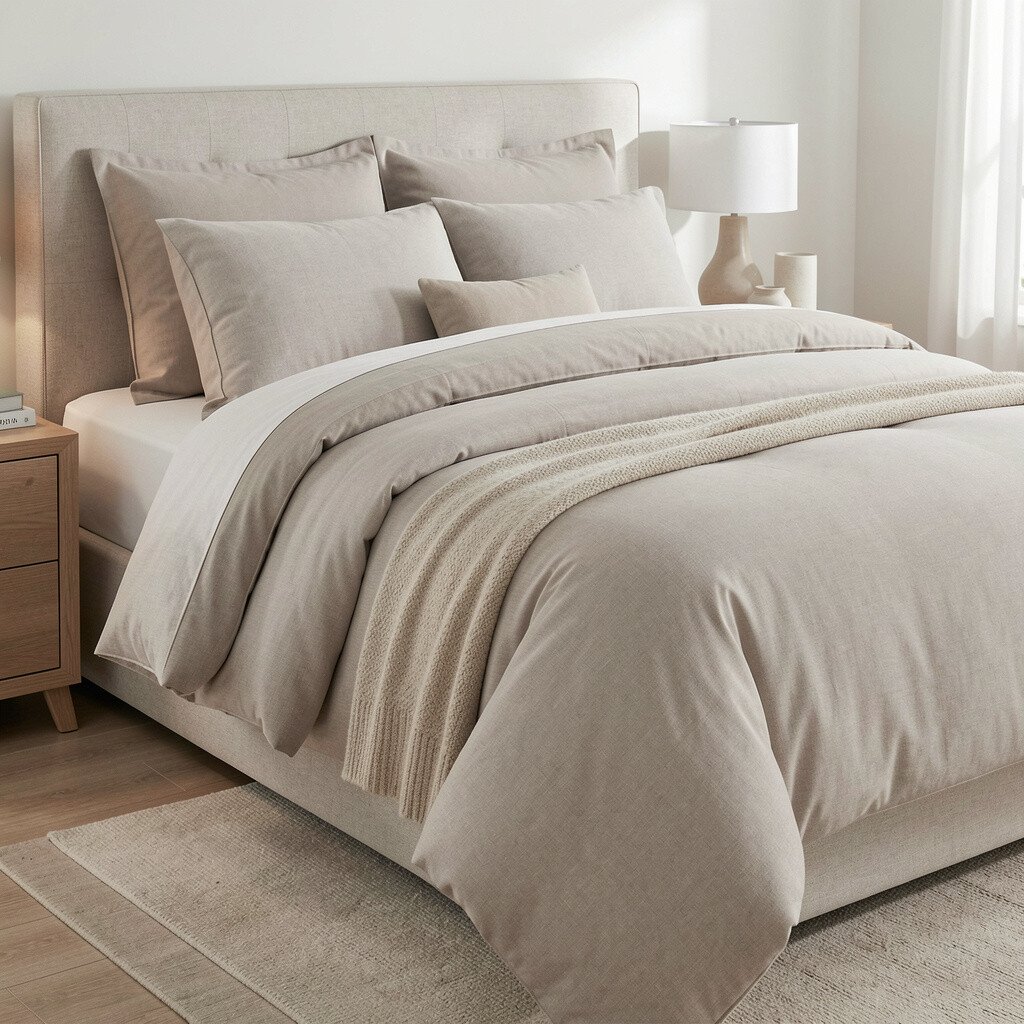
A greige comforter gives you that modern neutral style with less daily fuss. It covers everything smoothly, so mornings feel faster and calmer.
Choose a comforter with a box stitch or channel design so filling stays evenly spread. When the insulation stays put, the bed looks clean and feels warm where you need it.
If you hate frequent fluffing, opt for a design that naturally holds its shape. This is a practical benefit that also keeps your bedroom looking tidy.
For current trends, look for “softwashed” or “minimal” bedding styles that feel airy and uncluttered. Neutral comforters with subtle texture fit right in with today’s calm, cozy trend.
16. Add Neutral Curtain and Drape Hues to Match Your Bedding
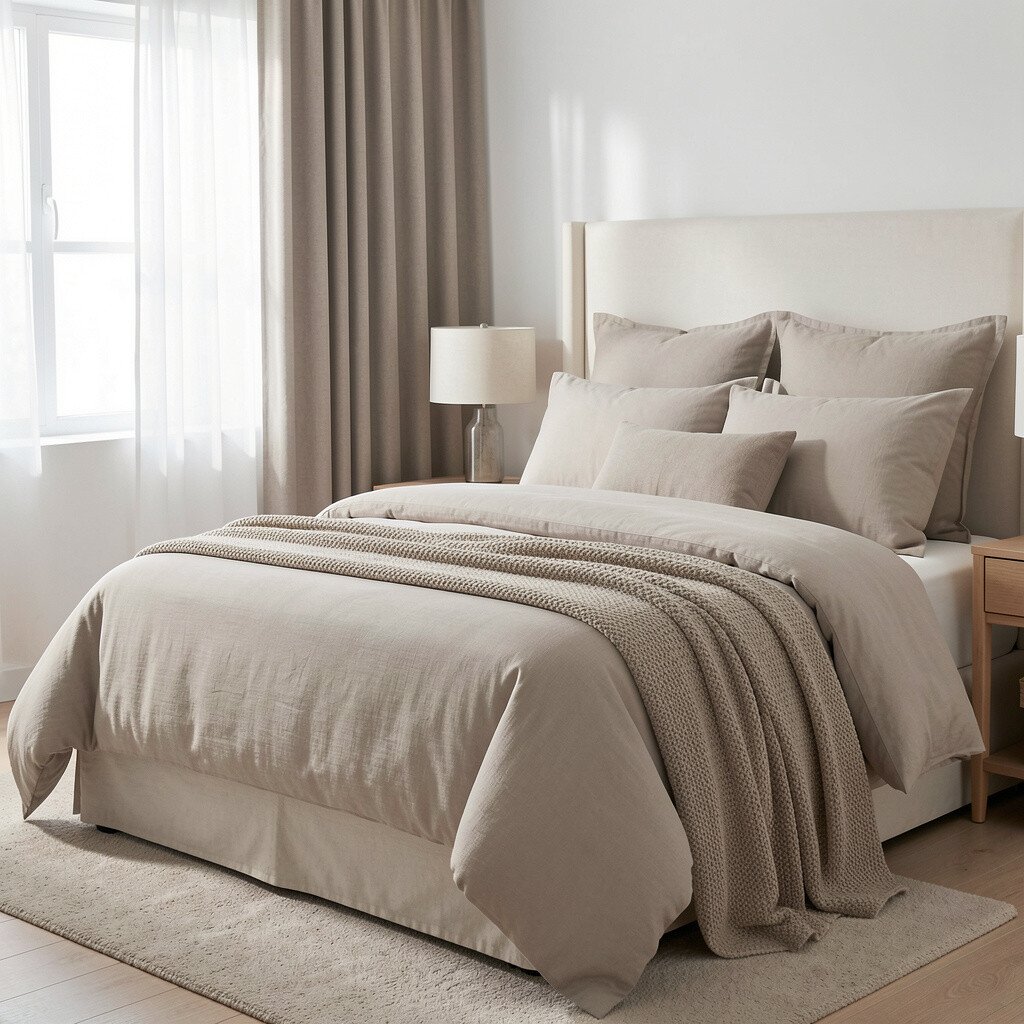
Your bedding looks even better when the room colors echo it. Matching your curtains and drapes to your neutral palette helps the bedroom feel like one complete set.
Try warm cream or oatmeal drapes if your bedding leans warm, and soft gray or taupe if your bedding is cooler. This visual pairing reduces contrast and makes the room feel quiet.
For personalization, add a sheer layer that brightens the day, then pair it with heavier neutral curtains for nighttime privacy. This gives you flexibility without changing the whole room’s look.
17. Layer With a Fluffy Down-Alternative Insert for Cloud Comfort
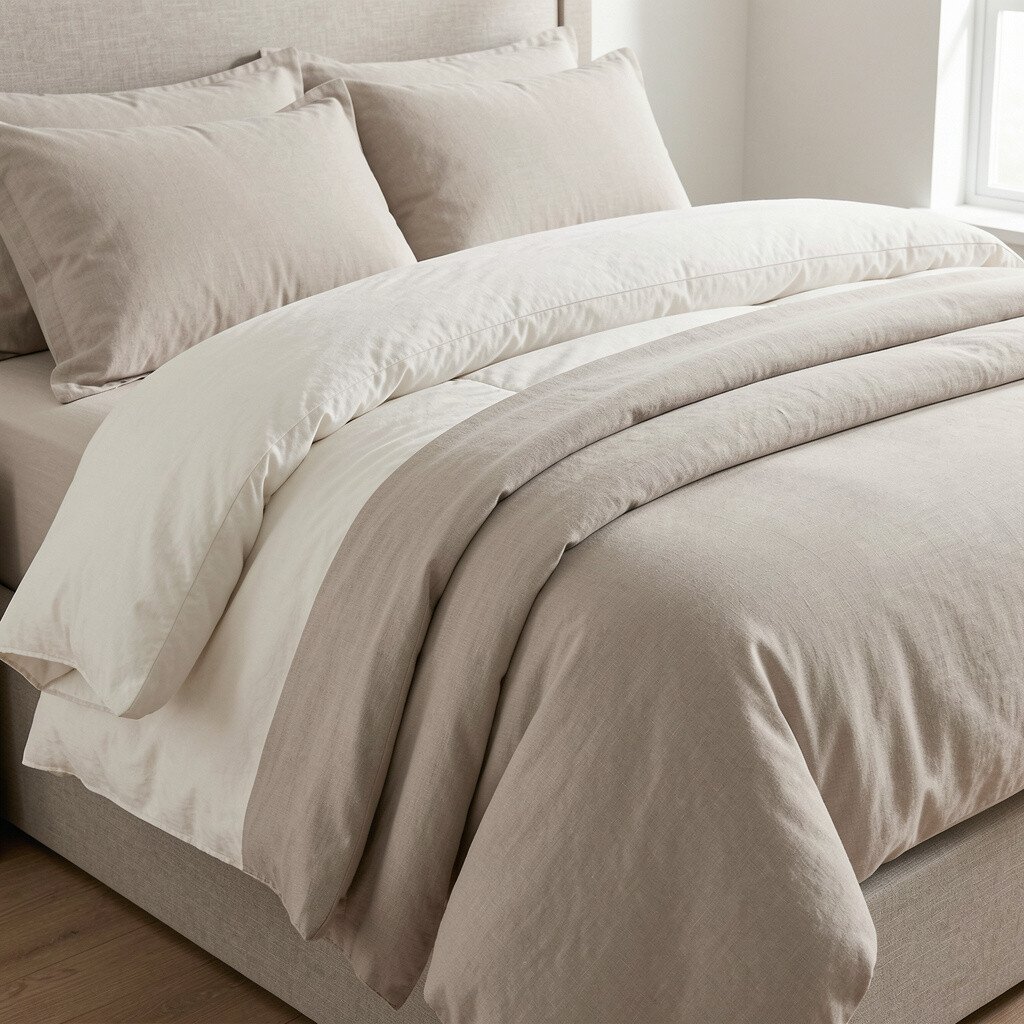
Down-alternative inserts bring that “cloud” feel without needing real down. In neutral-toned covers, they look soft and inviting rather than puffy in an odd way.
Pick an insert with good loft so it stays fluffy, especially in cooler seasons. The comfort benefit is noticeable when you lie down and feel even support across the bed.
To keep it practical, use a duvet cover you can wash often. Inserts can be harder to clean, but covers are easy, which helps maintain freshness.
If you’re budget-conscious, consider buying insert and cover separately. You can choose the best value for each piece and still get a tailored look.
18. Use Oversized Shams in Beige for a Soft, Plump Frame
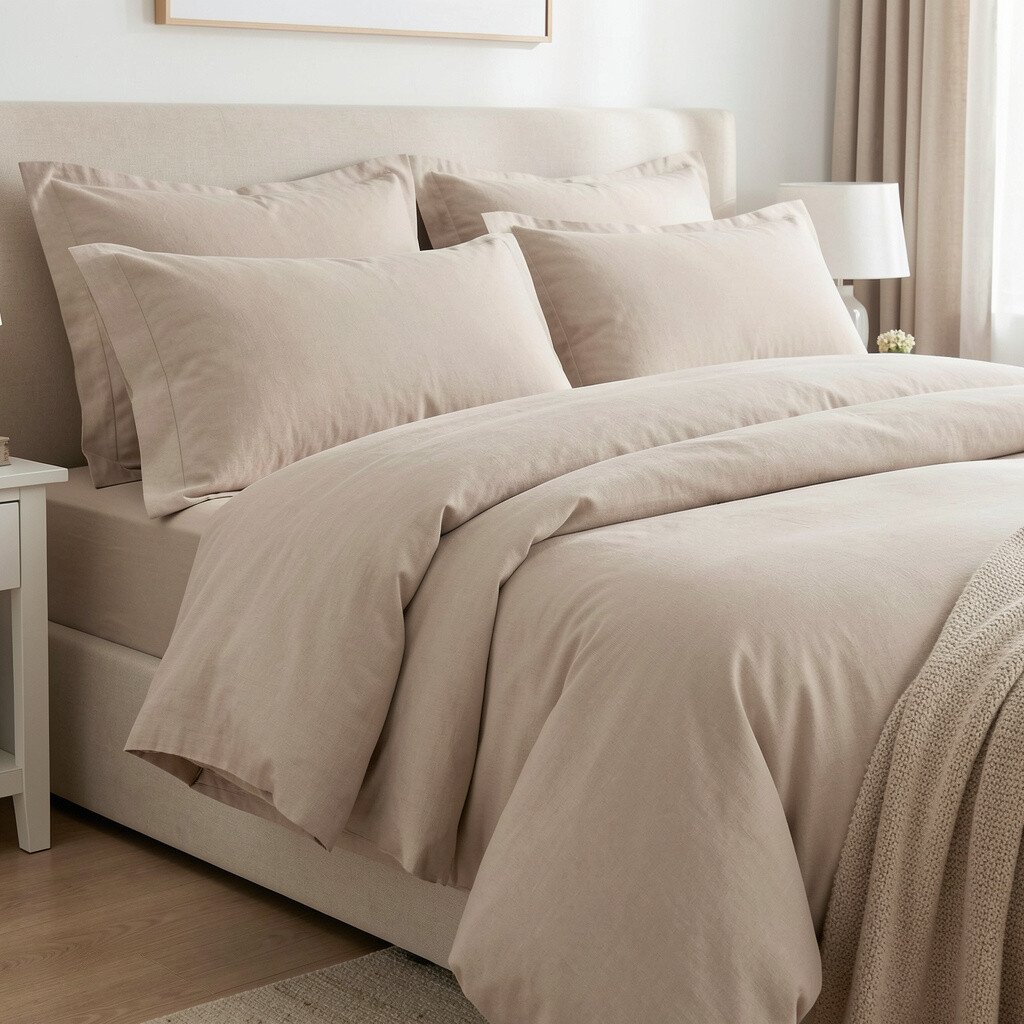
Oversized shams make your bed look framed and plush, like a well-styled lounge. Beige tones feel warm and soothing, which is perfect for a calm bedroom.
Choose sham sizes that match how you sleep, especially if you like leaning back while reading. When the shams are supportive, your neck and shoulders feel better during quiet evenings.
For a practical tip, keep pillow protectors on hand to reduce dust and allergens. Neutral bedding still needs care, and protectors help extend freshness.
19. Create Depth With a Light Brown Top Sheet or Bedspread Layer
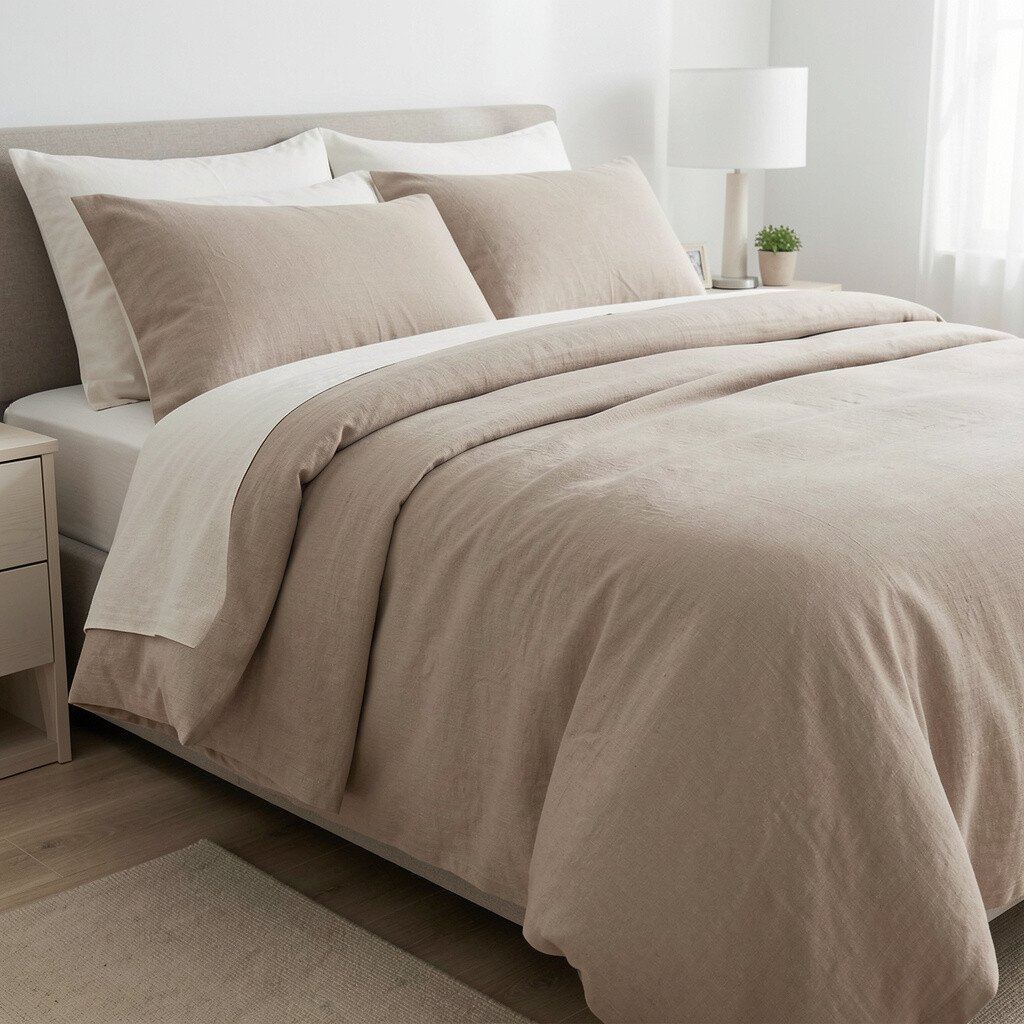
A light brown top sheet or bedspread layer adds depth while staying within the neutral family. It can feel cozy and grounding without turning your room dark.
Layer it loosely so the fabric drapes naturally and shows gentle folds. Those folds are not messy, they’re what makes a bed look styled and real.
If your goal is restful sleep, keep the top layer breathable and avoid overly thick fabrics for summer. In colder months, switch to a slightly warmer weave to keep comfort consistent.
For personalization, pick a light brown shade that matches your wood tones, like oak or walnut. When the bedding echoes the furniture, the whole room feels calmer.
20. Add a Neutral Bed Skirt or Fitted Dust Ruffle for a Clean Finish
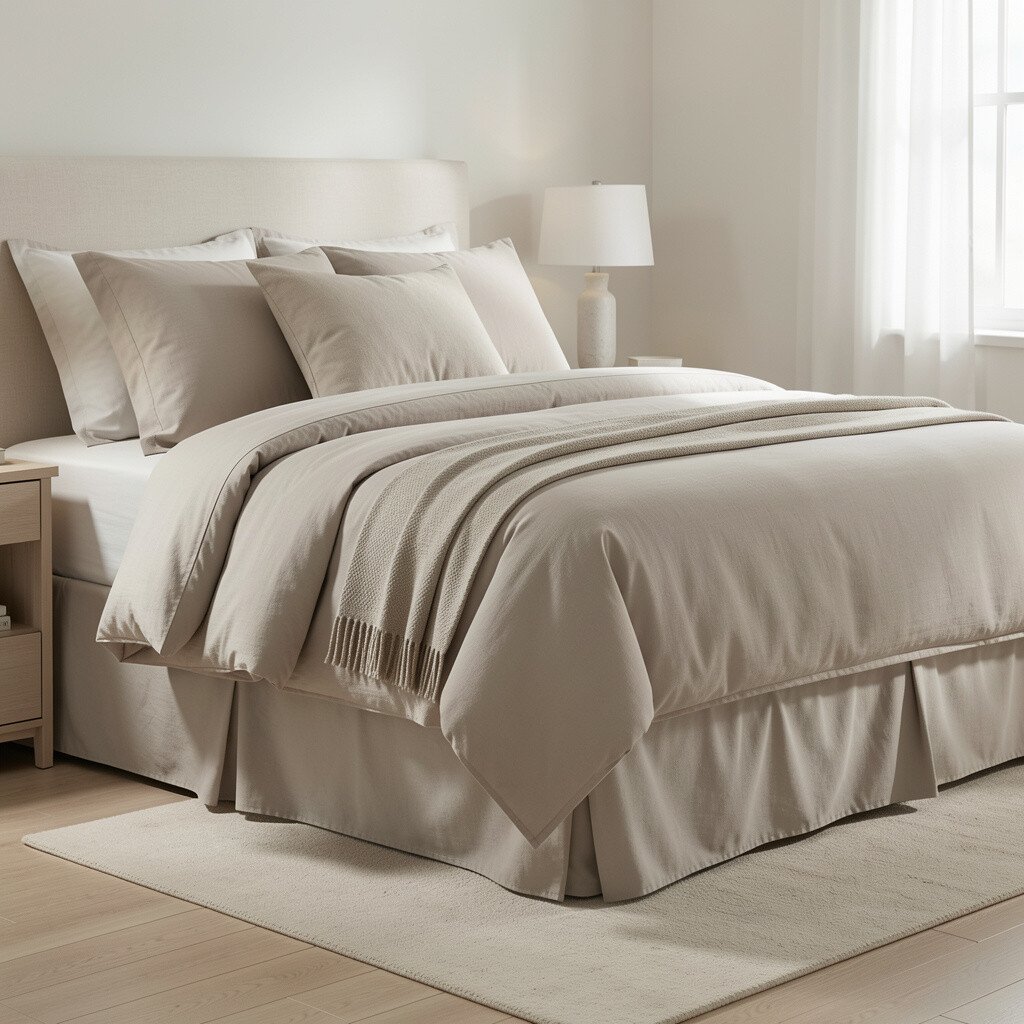
A bed skirt or fitted dust ruffle can make a neutral bed look finished and polished. In a soft beige or warm sand, it feels subtle and elegant.
This layer has a practical benefit too, because it hides under-bed items and keeps the look tidy. If your bedroom is smaller, a neatly dressed base helps the room feel more open.
To avoid bunching, measure carefully and choose the right drop length. A tailored fit looks better and reduces the urge to keep adjusting it.
If you want a modern look, choose a simpler silhouette with clean edges rather than heavy pleats. That choice keeps your calm vibe while still feeling stylish.
21. Introduce a Neutral Accent Throw With Fringe or Tassels
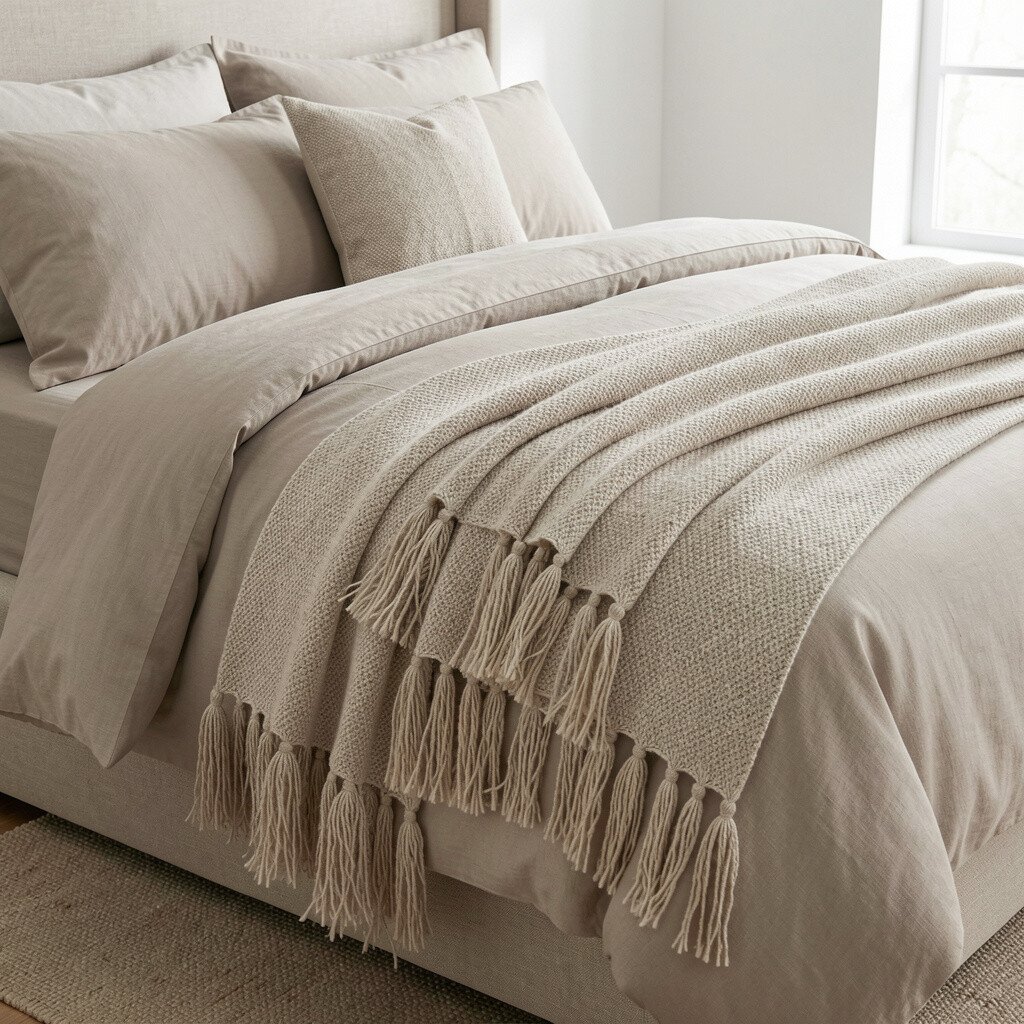
A neutral accent throw with fringe or tassels adds a little movement to your bedding. It’s the kind of detail that feels cozy and stylish without needing bold colors.
Choose a soft neutral like oatmeal, cream, or warm taupe, then drape it casually over a corner. The benefit is that you get a quick style upgrade in seconds when guests visit.
For personalization, match the fringe color to one of your pillow shades so it feels intentional. If you like a relaxed look, let the fringe hang a bit unevenly for charm.
In cost terms, this is a great place to spend a little more if you love texture, because a small throw makes a big visual impact. It also replaces easily when your style changes, without rebuilding the whole bedding set.
22. Keep It Fresh With Seasonal Neutral Swaps and Quick Care Habits
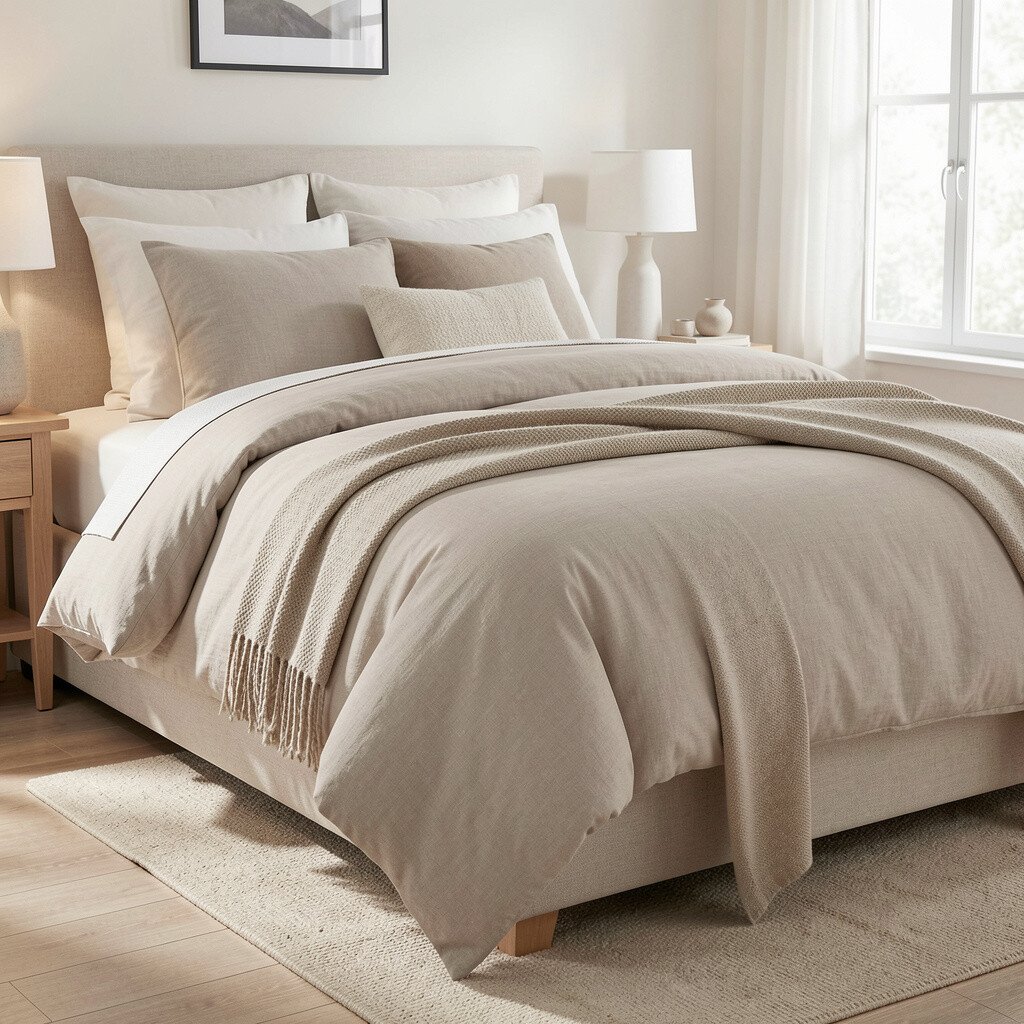
Seasonal neutral swaps keep your bedroom feeling fresh while staying calm. Swap heavier quilts for lighter coverlets, but keep the same palette so everything still matches.
Quick care habits make a huge difference, like washing pillowcases weekly and airing bedding when you can. When your bed smells clean and feels soft, bedtime becomes easier and more relaxing.
To personalize the look each season, adjust only one layer, such as the top blanket or accent throw. This lets you experiment without spending on a whole new setup.
Current styling trends favor “mix and repeat” neutrals with tactile variety, so focus on texture rather than bright colors. With neutral layers you can change the mood anytime, simply by rearranging what’s on top.