
The table can feel like the heart of your home the moment color takes over. A bold dining space can lift moods before the first bite.
Maximalist dining isn’t about doing everything at once. It is about choosing colors that make you smile and then letting them mix in a fun, personal way.
1. Citrus Canopy Table Layers
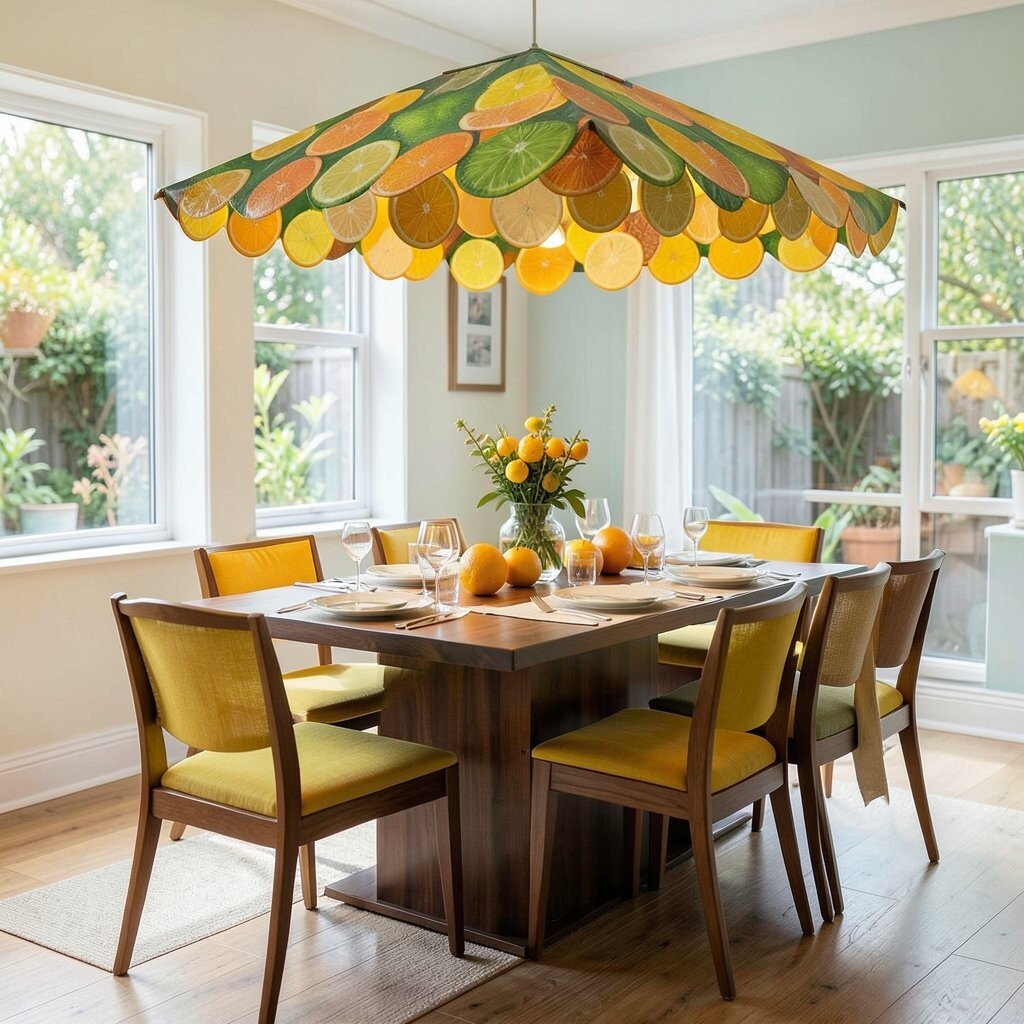
Imagine a table dressed in bright citrus tones, like sunshine at breakfast and zingy zest at dinner. Layer a lemon-yellow table runner with orange placemats and little accents in lime or tangerine.
Start by using one main citrus color you love most, then add supporting shades so everything still feels tidy. For practicality, pick wipeable placemats and a stain-resistant runner so everyday meals stay easy. To personalize, scatter small citrus prints or miniature fruit picks as a centerpiece that can shift with the season. This look feels unique because the colors look playful but still organized, especially when the layering has a clear order. If you want to keep costs reasonable, choose one statement item like the runner and build the rest with thrifted plates or inexpensive napkins. A current trend is mixing cheerful seasonal colors with patterned tableware, and citrus sets fit right in with that mood.
2. Jewel-Tone Velvet Seating Moments

Deep jewel colors make dining feel instantly luxurious without needing fancy rules. Think emerald, sapphire, or amethyst cushions on chairs that catch the light when you move.
Pair the velvet or velvet-look fabric with simple place settings so the seating stays the star. Consider adding a single bold napkin in matching jewel tones, and keep dishes and glassware in neutral finishes for balance. This setup is beneficial because comfortable seating encourages longer, relaxed meals, and the rich color hides small wear better than light fabrics. For uniqueness, try mismatched jewel shades across different chairs while keeping one color repeated so the room still feels connected. If cost is a concern, use removable cushion covers or seasonal slipcovers instead of reupholstering. A helpful trend right now is texture layering, and jewel velvet brings that tactile interest even when the dining table is plain.
To keep it practical, choose washable covers and protect floors with a simple rug pad beneath. Add a small tray or placemat in a matte neutral to prevent the color from feeling too loud. When you want a fresh look, swap cushion colors first rather than buying new dining sets.
3. Pattern Party Placemats and Napkins

Bold maximalist dining often starts with patterns that feel like a celebration. Try mixing stripes, florals, and playful geometric prints in a way that still looks intentional.
Pick a shared color family so the patterns talk to each other instead of competing. Use larger patterns on placemats and smaller repeats on napkins for an easy visual rhythm. This makes daily meals feel special because you get a mini show at every seat. For practical tips, choose cotton napkins and a few wipeable placemats so you do not dread spills. You can personalize by selecting prints that match your hobbies, like music notes, art deco shapes, or tropical leaves. To manage costs, start with a set of napkins and rotate them across different meals while keeping placemats to two or three designs. Current trends favor playful mismatching, especially when one anchor color repeats across the set.
If you want it extra cohesive, keep plates simple and let the textile mix carry the energy. When guests sit down, the variety looks lively yet approachable, which is the sweet spot for maximalism.
4. Rainbow Runner With Controlled Chaos

A rainbow table runner brings instant drama, but you can keep it calm with smart placement. Choose a runner that fades smoothly between colors so it feels bright without looking messy.
Use a solid-color plate and solid napkin to keep the eye from bouncing too much. This benefits everyday dining because it makes the table look curated even during casual weeknight meals. For uniqueness, slice the runner down the middle for two smaller accents or layer it with a thin contrasting fabric to change the vibe. If you want personalization, tailor the rainbow to your space by matching wall colors or your dining chairs. Cost considerations matter here, so choose a runner that is wide enough to cover the center and prevent you from needing extra décor. A current trend is “color blocking” in textiles, and a rainbow runner is an easy version of that idea.
5. Terracotta, Teal, and Brass Heat

Warm terracotta plus lively teal creates a dining palette that feels alive and welcoming. Add brass candleholders or warm metallic cutlery so the colors glow instead of looking flat.
Start with terracotta as the base, then bring in teal through linens, glassware, or even a bold centerpiece. This combination is beneficial because terracotta feels grounded while teal adds energy that keeps the room from feeling heavy. For practical tips, use heat-resistant coasters and candle covers so evenings stay safe and stress-free. Personalize by choosing different shades of teal, like dusty teal for a softer look or bright teal for a louder feel. To manage costs, hunt for affordable brass accents at flea markets or buy one standout brass item and echo it with small details like rings on napkin holders. Current trends often bring back warm metals, and brass works perfectly with maximalist color stories.
When the light hits brass, the whole table looks richer, which makes even simple food feel like a special occasion.
6. Tropical Florals With Bold Glassware

Tropical florals can look maximalist in the best way when the rest of the styling supports them. Choose leafy prints for a centerpiece mat, then add bright glasses in colors like coral, turquoise, or sunny yellow.
Benefits show up in how the table feels joyful and vacation-like. Practical tips help, so select glassware that is durable and safe for everyday use, or use high-quality acrylic if you want extra peace of mind. For uniqueness, pick one large palm-leaf element and repeat it in smaller patterns on napkins or placemats. Personalization can be as simple as matching your color picks to your favorite drink theme, like mocktails in pink and green. Cost considerations matter too, so consider mixing a few higher-priced glasses with more affordable everyday dishes. A current trend includes “color through serveware,” and tropical florals with bold cups deliver that look instantly.
To keep it easy, choose a floral centerpiece that holds its shape and add a simple greenery base so you can refresh it without starting over.
7. Ombre Ceramics and Snack-Plate Stacking
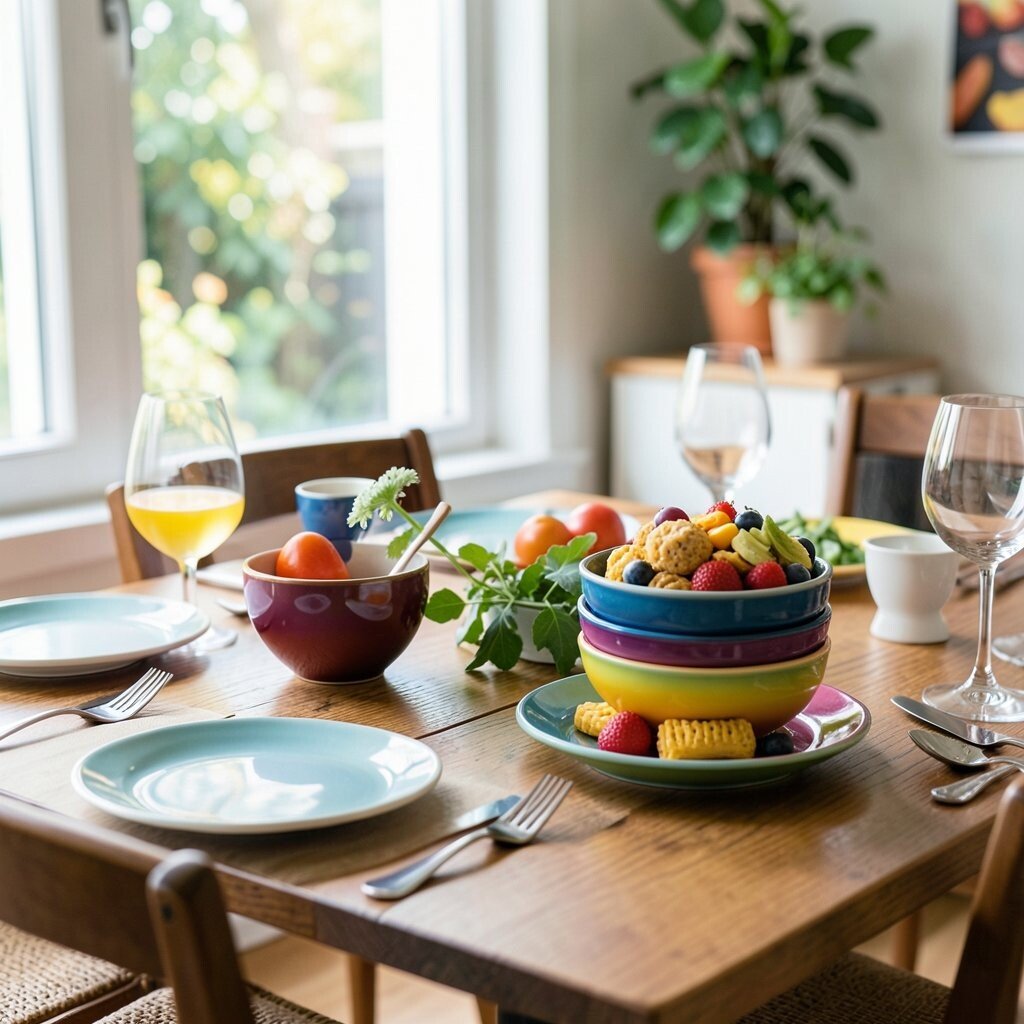
Ombre ceramics add a smooth gradient of color that looks artsy without being complicated. Stack snack plates or small bowls in matching tones so the table feels styled but still useful.
Use one ombre family, like seafoam to white or pink to peach, and then add one contrasting accent like cobalt. This benefits your dining because gradients guide the eye and make the table look cohesive even when you mix items. Practical tips include choosing dishwasher-safe ceramics if you eat often and want your setup to last. For personalization, add tiny details like colored rim stickers or matching spoon sets to pull the palette together. If you want to control cost, start with a set of serving bowls and build outward to plates later. A relevant trend is “mix and match tableware,” and ombre ceramics are a popular way to make mixing look elegant.
When you stack bowls for snacks or dessert, you create instant height, which makes photos and real life feel more exciting.
8. Loud Wallpaper Vibes Through Table Details
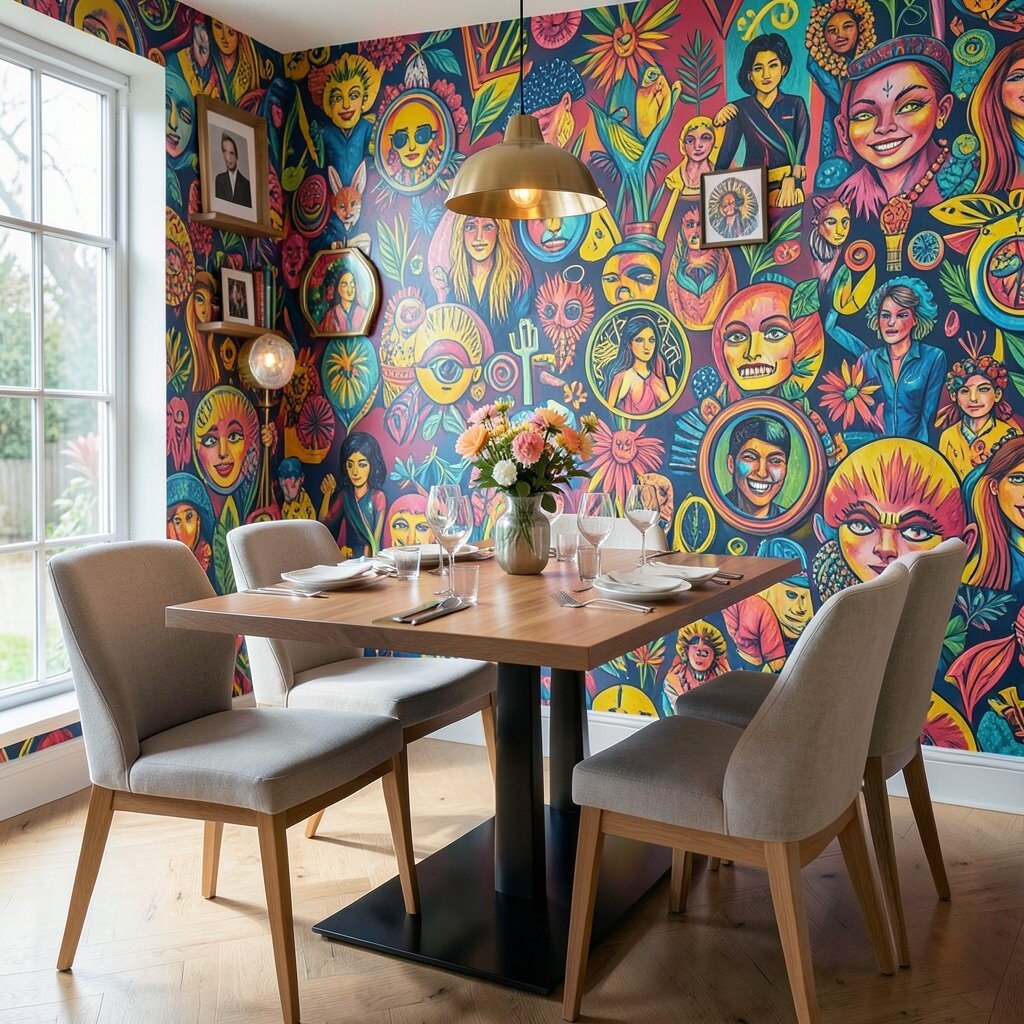
If your dining room has quiet walls, you can still bring in the feeling of loud wallpaper through tabletop details. Choose plates, placemats, and napkins that mimic bold botanical or abstract wall patterns.
This works because you get that high-impact look without committing to painting or installing. The benefit is clear practicality since textiles are easy to swap, wash, and replace. For uniqueness, select one pattern motif like swirling shapes and repeat it across napkins and placemats, then keep centerpiece elements simpler. Personalization is easy too, because you can match the pattern direction to your taste, from retro 70s vibes to modern abstract bursts. Cost considerations are flexible since you can buy fewer items if the pattern is already bold, and you can choose thrifted frames for extra visual interest near the table. Current trends lean toward statement patterns, and bringing that energy to the table is a smart, budget-friendly approach.
To keep the look from feeling busy, choose a limited palette inside the pattern so the whole spread stays readable.
9. Candy-Colored Candle Clusters

Colored candles make dining feel warm, playful, and a little magical. Use clusters in bright shades like magenta, teal, and sunshine yellow on a tray near the centerpiece.
Start by selecting one tray material, like wood or mirrored metal, so the candles look intentionally grouped. This benefits the room by adding soft glow and making the table feel cozy during evening meals. For practical tips, keep candles of similar height so they do not tip and use flameless LED candles if you have little ones or pets. Personalize by matching candle colors to your dinner theme, like green for herb-focused meals or red for cozy comfort food. Cost considerations can stay low because you can buy a few candles and rotate them throughout the year. A current trend includes colorful lighting accents, and candle clusters are a simple way to follow it without major changes.
To make the cluster look stylish, add one simple greenery sprig or a few faux petals to bridge the colors together.
10. Mix Metallics With Strong Color Anchors

Maximalist dining looks stunning when metallics blend with a few strong color anchors. Combine gold and silver tones, but keep the color story clear so the metals do not overwhelm everything.
Try copper napkin rings with silver utensils, or brass candlesticks alongside gold chargers. This benefits you because metallics add shine that makes colors look richer and more vibrant. Practical tips include checking that metal finishes do not clash by using one dominant metal and one secondary accent. For personalization, choose a color anchor that matches your artwork or favorite chair fabric, then repeat it in napkins, glassware, or a small centerpiece. Cost considerations can be managed by focusing on small metal items rather than buying an entire set, since accents add impact quickly. Current trends also show people leaning into “intentional contrast,” and metallic mixing is a big part of that right now.
If you want a neat look, align chargers and centerpieces so even mixed metals feel orderly from across the table.
11. Teal and Coral Centerpiece Swirl
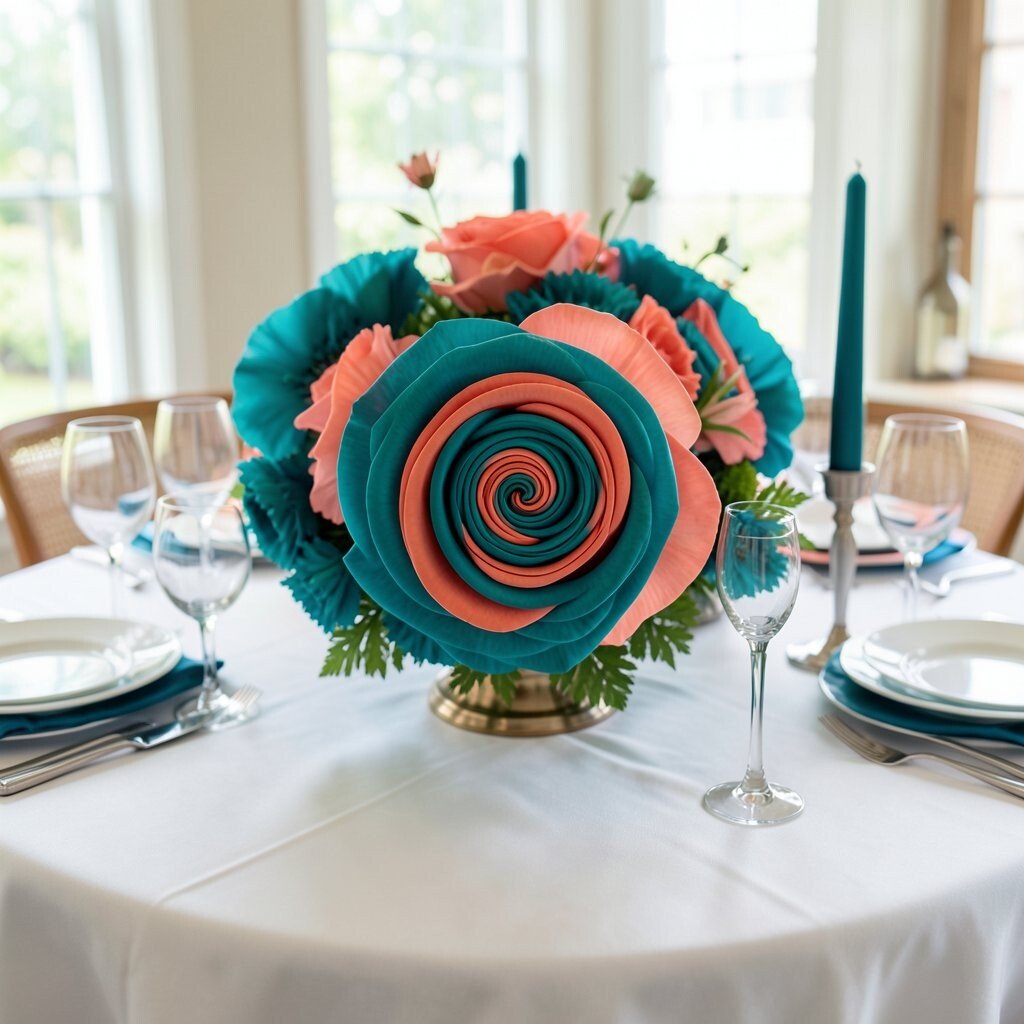
A centerpiece can be more than flowers, especially when you lean into color. Create a swirl effect using rolled napkins, ribboned fabric, or layered vases in teal and coral.
This approach benefits your dining because it gives height and movement without needing complex arrangements. For practical tips, choose containers that are stable and use water-resistant materials if you include fresh stems. Personalize by selecting flowers that match your palette, or swap to fabric ribbons for allergy-friendly styling. Cost considerations stay easier because you can build a swirl look with a few vases and colorful napkins. A current trend is “architectural centerpieces,” and a swirl form adds that structured wow factor. Uniqueness comes from how the swirl reads at a glance, especially when the tablecloth is neutral and the center is vivid.
To keep it consistent meal to meal, use the same containers and rotate only the ribbons or the stems.
12. Bold Flatware With Monochrome Plates

Sometimes maximalism feels best when one category is bold and another category is calm. Try colorful flatware in a bright tone, while keeping plates monochrome and clean.
Benefits include easier coordination since solid plates let the colors stand out. For practical tips, choose flatware that is comfortable and balanced so it feels good in your hand, not just pretty. Personalize by picking flatware colors that match your dining room, like matching chair accents or rug shades. If cost is a concern, you can buy a smaller set for everyday hosts or use colored utensils for special meals while keeping regular utensils for backups. Current trends highlight “statement serveware,” and bold flatware counts as that without taking over your whole table. This idea is unique because the color stays controlled, so even beginners can get the maximalist vibe quickly.
When you set the table, align the flatware consistently so the pattern looks crisp rather than scattered.
13. Patterned Tablecloth With Simple Bowties

A patterned tablecloth can act like a backdrop, turning your dining table into a stage. Choose one dominant print, then add simple bowties or ribbon accents in a coordinating solid color.
This benefits your space because the table becomes the focal point and you do not need many extra decorations. Practical tips help too, like choosing a tablecloth with a pattern that hides crumbs and small spills. For uniqueness, pair a bold print with unexpected ribbon colors, such as a bright blue bow on a warm-toned tablecloth. Personalization is easy if you use ribbon shades that match seasonal outfits, art frames, or holiday décor. Cost considerations can stay manageable because a single strong tablecloth can replace multiple smaller items, and you can rotate ribbons for variety. Current trends favor maximal patterns, but they also lean toward clear, friendly styling so everything still feels welcoming.
If your room is already colorful, pick a pattern that uses fewer hues and let the bowties add the remaining punch.
14. Citrus and Berry Dessert Displays

Even dessert can bring color into a maximalist dining plan. Use bowls and plates in bright berry shades, then layer fruit in shades like blueberries, strawberries, or raspberries alongside citrus slices.
This benefits your dining because it makes the table feel exciting from first glance to the last spoonful. Practical tips include placing dessert items on trays so they stay neat, and using small liners to catch juice and prevent sticky mess. Personalize by adding themed garnishes like mint, edible flowers, or colorful sprinkles for a fun holiday vibe. Cost considerations can be thoughtful here since seasonal fruit usually tastes better and may cost less, and you can use one or two bold accent fruits to carry the look. A current trend is “table-to-photo” food styling, and colorful fruit boards photograph beautifully without extra clutter. Uniqueness comes from mixing bright fruit colors with your table linens, so the whole setting feels coordinated.
To make it easy, prepare the fruit a bit ahead and store it properly so you are not rushing during guests’ arrival.
15. Bold Wallpaper-Style Placemats and Frames
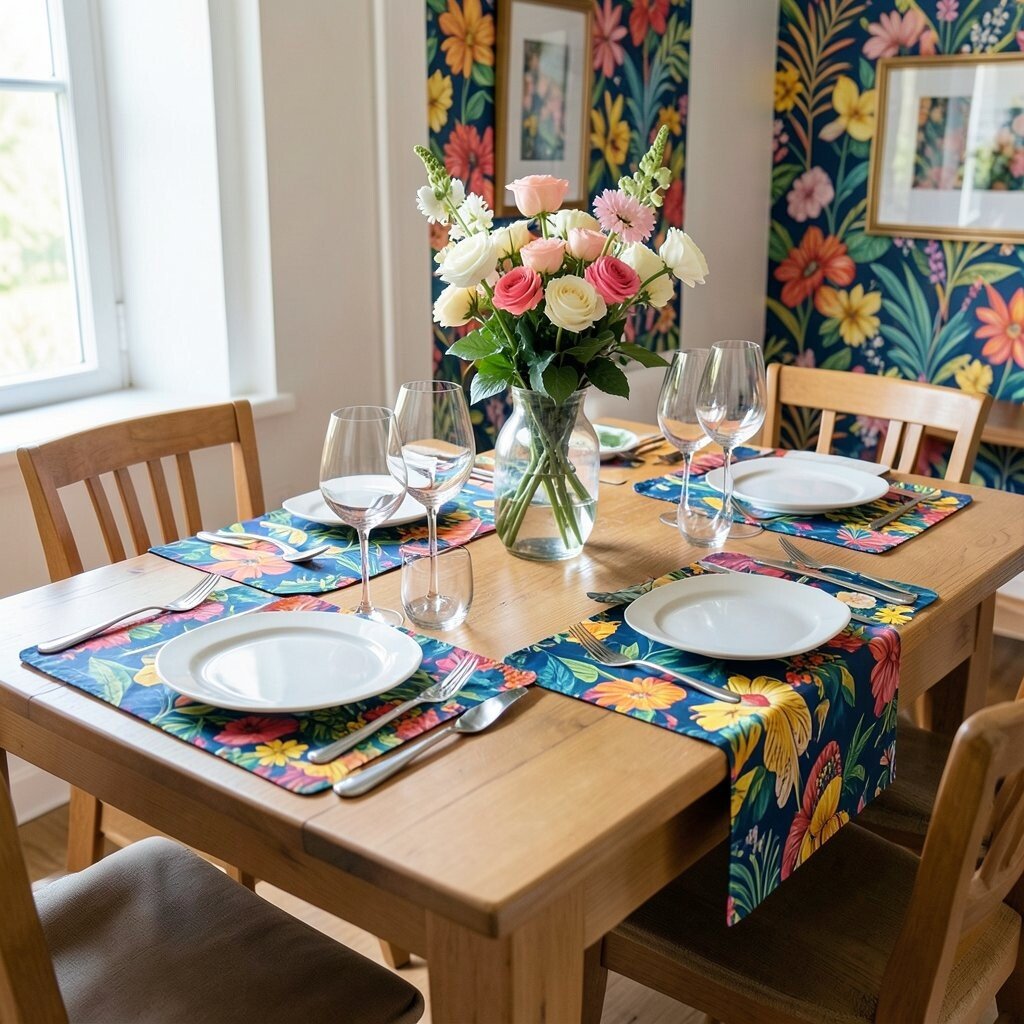
Bring maximalist energy to your dining room by pairing colorful placemats with framed art near the table. Choose placemats that look like tiny scenes, then echo the palette in a few frames on the wall.
The benefit is a cohesive look that feels designed, not random. Practical tips include using frames with glass that is easy to wipe, and choosing placemats that can be cleaned quickly when spills happen. For uniqueness, pick one frame that is intentionally colorful and keep the rest more simple so it still feels curated. Personalization can be as personal as printing art that matches your family photos style, like abstract shapes or bold typography. Cost considerations are flexible since you can use thrifted frames and print your own colorful art, then mount them for a custom gallery feel. Current trends often show “micro gallery” styling, and your dining table can connect to that trend nicely.
To avoid clutter, keep the frames limited in number and let the placemats do most of the talking.
16. Terracotta Lantern Table Lighting
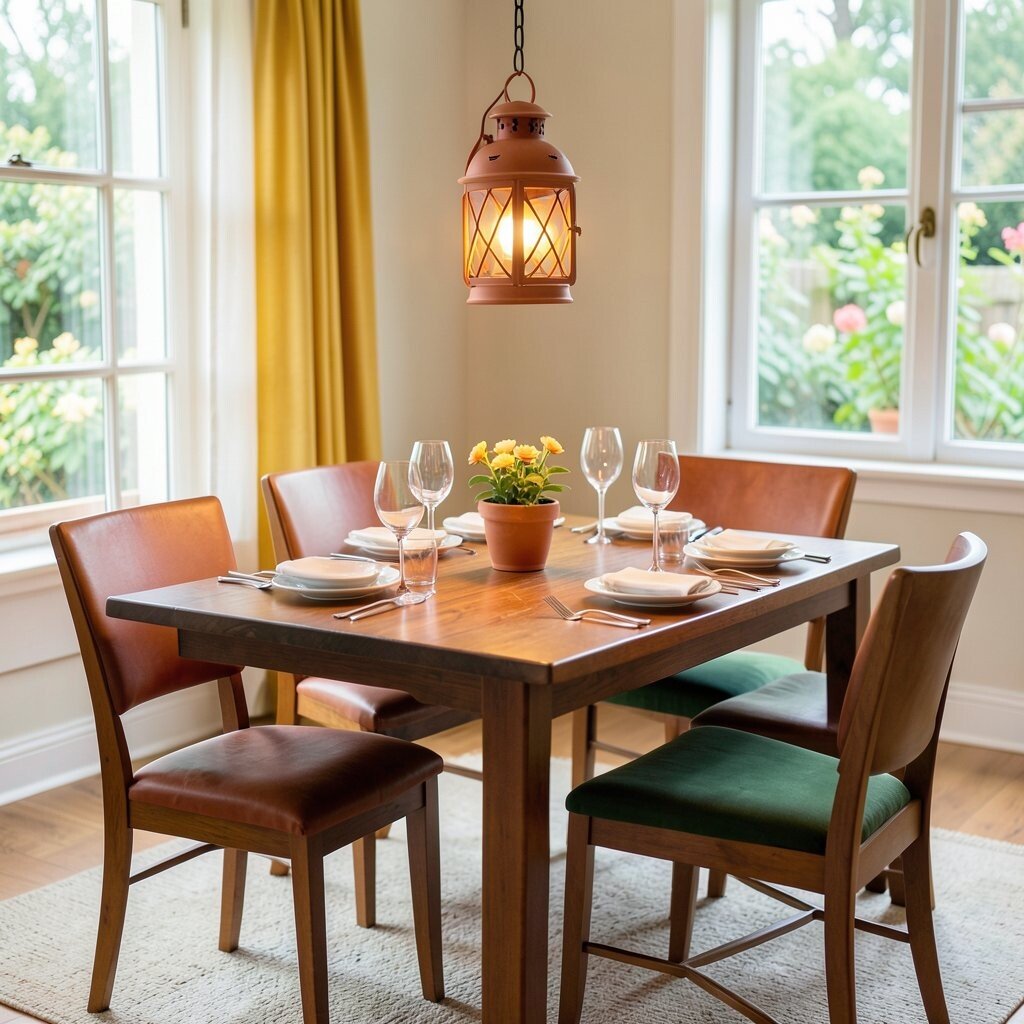
Warm lantern lighting makes maximalist dining feel both festive and grounded. Use terracotta-toned lanterns or lantern-like holders and place them around the centerpiece or along the table runner.
This benefits your dining because it adds cozy warmth that makes bright colors look even richer. For practical tips, choose lanterns with stable bases and use battery candles if you want an easy cleanup. Personalize by tying a small ribbon around each lantern handle in a color that matches your napkins, like teal or mustard. Cost considerations can be manageable because lanterns can be reused across seasons, and you can start with one cluster near the table rather than filling the entire space. A current trend is “soft dramatic lighting,” and terracotta lanterns fit that vibe perfectly while staying on-theme with maximal color palettes. Uniqueness comes from the way lantern light changes the mood as the evening goes on.
If your table is small, place lanterns at the ends so they frame the setting instead of crowding the center.
17. Funky Mix of Chair Sashes and Napkin Rings
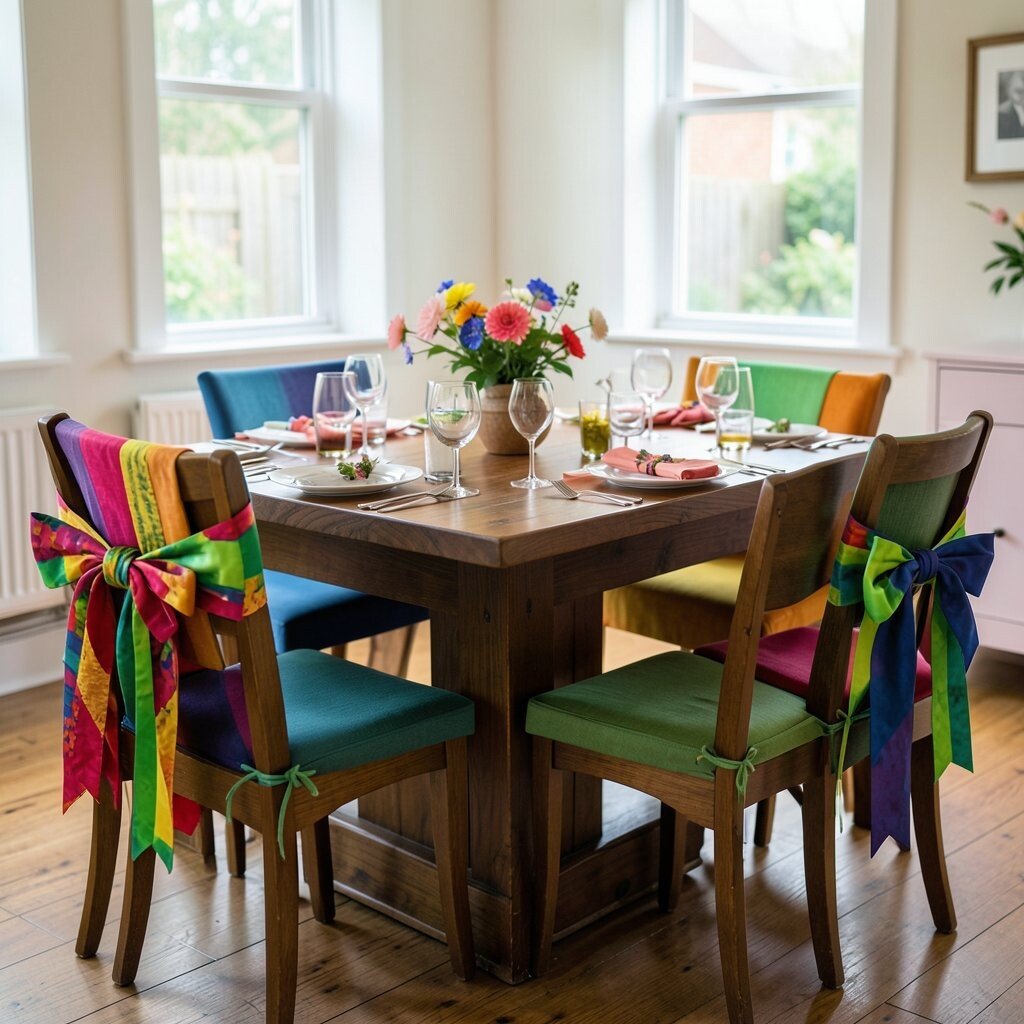
Chair sashes and colorful napkin rings can turn everyday dining into a styled event. Choose bright fabric sashes in colors like magenta, turquoise, or sunny yellow and tie them gently around chair backs.
Benefits include a clear sense of occasion without heavy décor costs. Practical tips include selecting washable sashes and tying them securely but not too tight, so the chair remains comfortable. For uniqueness, use two colors across your chairs instead of matching everything, and repeat one color in your table linens so it all feels linked. Personalization can be fun when you choose sashes that match a theme, like summer herbs or winter berries, then keep napkins neutral during off seasons. Cost considerations stay easier because you can buy sashes in bulk or repurpose fabric you already own. Current trends show people favoring textile styling and “mixy matchy” coordination that still feels deliberate.
To keep the table usable, leave enough space between sashes and the table edge for easy sitting and reaching.
18. Maximalist Bar Cart Serving Zone
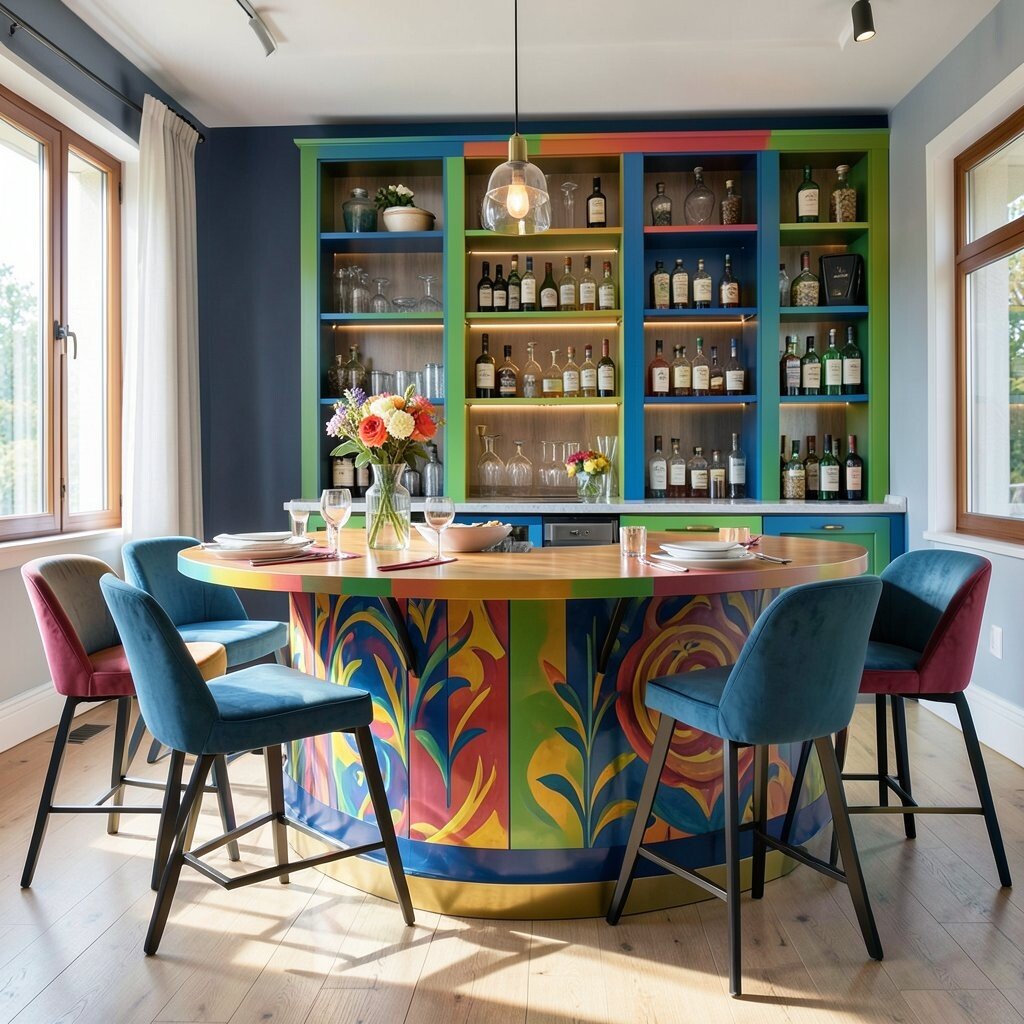
A colorful bar cart makes dining feel like a party zone that moves with your guests. Paint or style the cart in bold colors, then stock it with bright serveware like colored pitchers, striped straws, and colorful glass mixes.
This benefits your dining by giving you a functional hub, which reduces clutter on the table. Practical tips include using trays with handles and keeping everything organized by category, like mixers, garnishes, and glassware. Personalize by placing a small chalkboard or sign on the cart with your favorite drink name ideas, or simply label with removable tags so you can change them often. Cost considerations can be handled by choosing one bold cart piece and adding smaller accessories over time rather than buying everything at once. A current trend is creating “drink-forward” entertaining, and a maximalist bar cart supports that easily. Uniqueness shows up because the color spreads around the room, not just on the table.
When guests arrive, offering colorful drinks first makes them feel included, and it sets the tone for the meal.
19. Color-Matched Table Games and Place Cards

Maximalist dining can be playful and interactive when you add tiny color-matched place cards and mini games. Use cards in bold colors and place them at each seat alongside a small prompt for conversation, like a favorite comfort food or a travel memory.
This benefits the meal because it encourages connection, especially for groups that do not all know each other well. Practical tips include using sturdy card stock and placing them in small holders so they look neat and do not blow around. Personalize by matching each guest’s card color to a theme from the meal, like teal for herb dishes or coral for spicy bites. Cost considerations are friendly since card stock, markers, and a few holders cost far less than big décor changes. Current trends highlight experiences over extra things, and table prompts are a simple way to follow that while keeping the room vibrant. Uniqueness comes from how the color story becomes personal to each seat rather than being only a background look.
To keep it smooth, prepare the cards ahead and keep a matching small bowl of pens or mini pencils on a tray near the drinks.