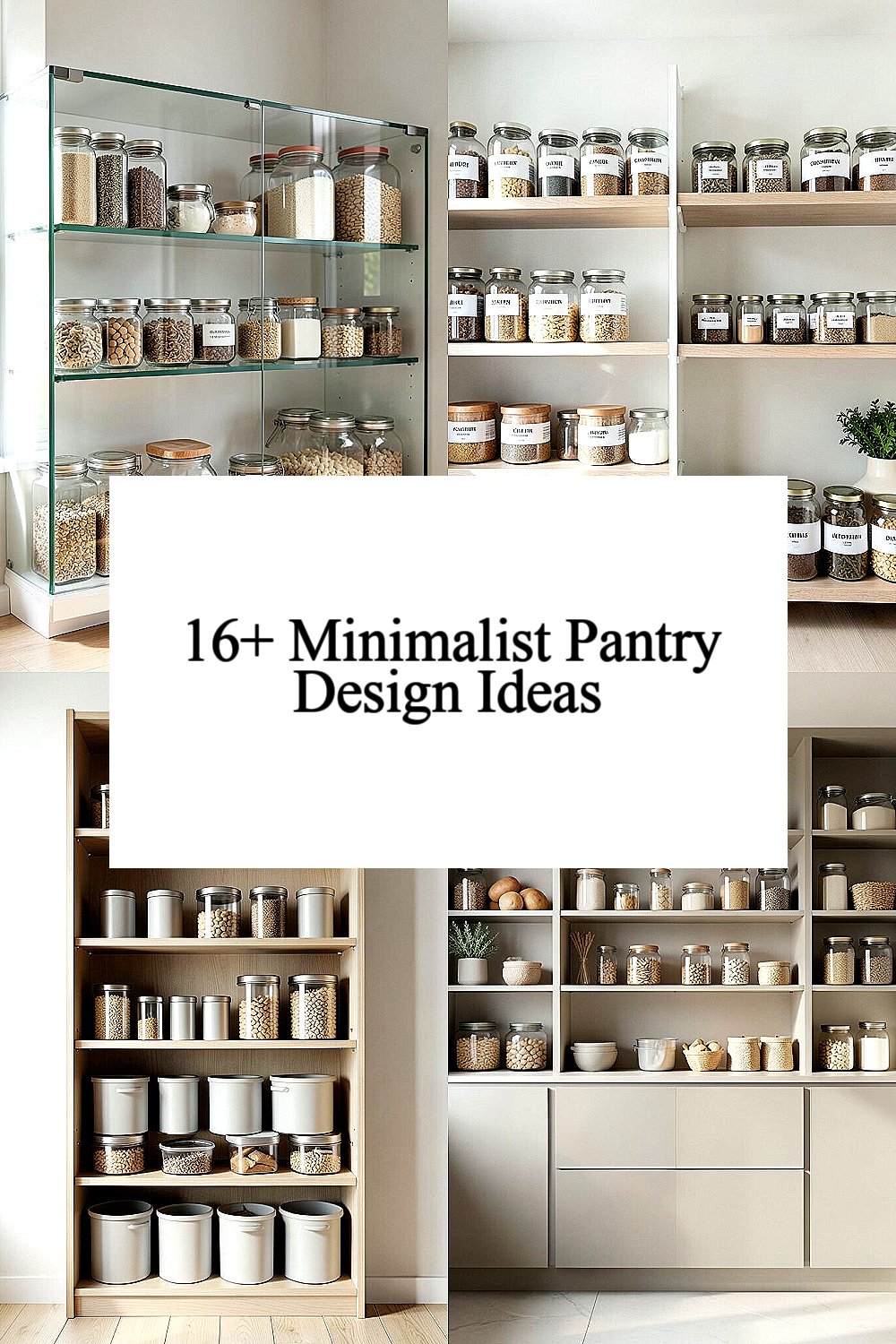
A calm pantry feels like a quiet promise in your home. With a few thoughtful changes, your everyday ingredients can look tidy and work harder for you.
Minimalism is not about having less for the sake of it. It is about choosing what belongs and making it easy to see, reach, and restock.
1. Clear Glass That Shows What You Love
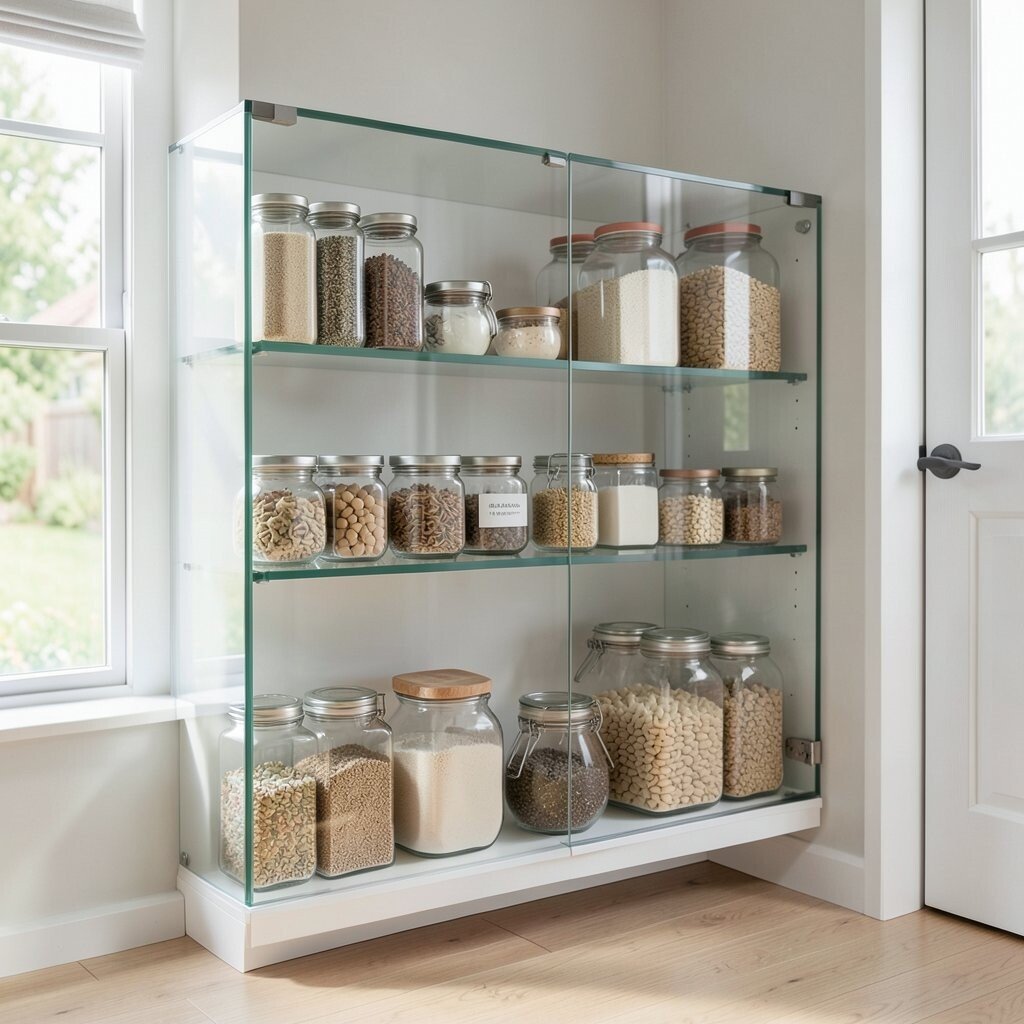
Swap some of your jumble for clear glass containers with simple lids. When you can see beans, rice, and pasta at a glance, the pantry looks bright and organized.
Choose consistent shapes and labels that stay neat and small. This helps you find items fast and reduces the chance of buying duplicates. For a personal touch, rotate a few containers to match your favorite colors, like amber for spices or pale blue for baking goods.
2. One Consistent Label Style Across Shelves
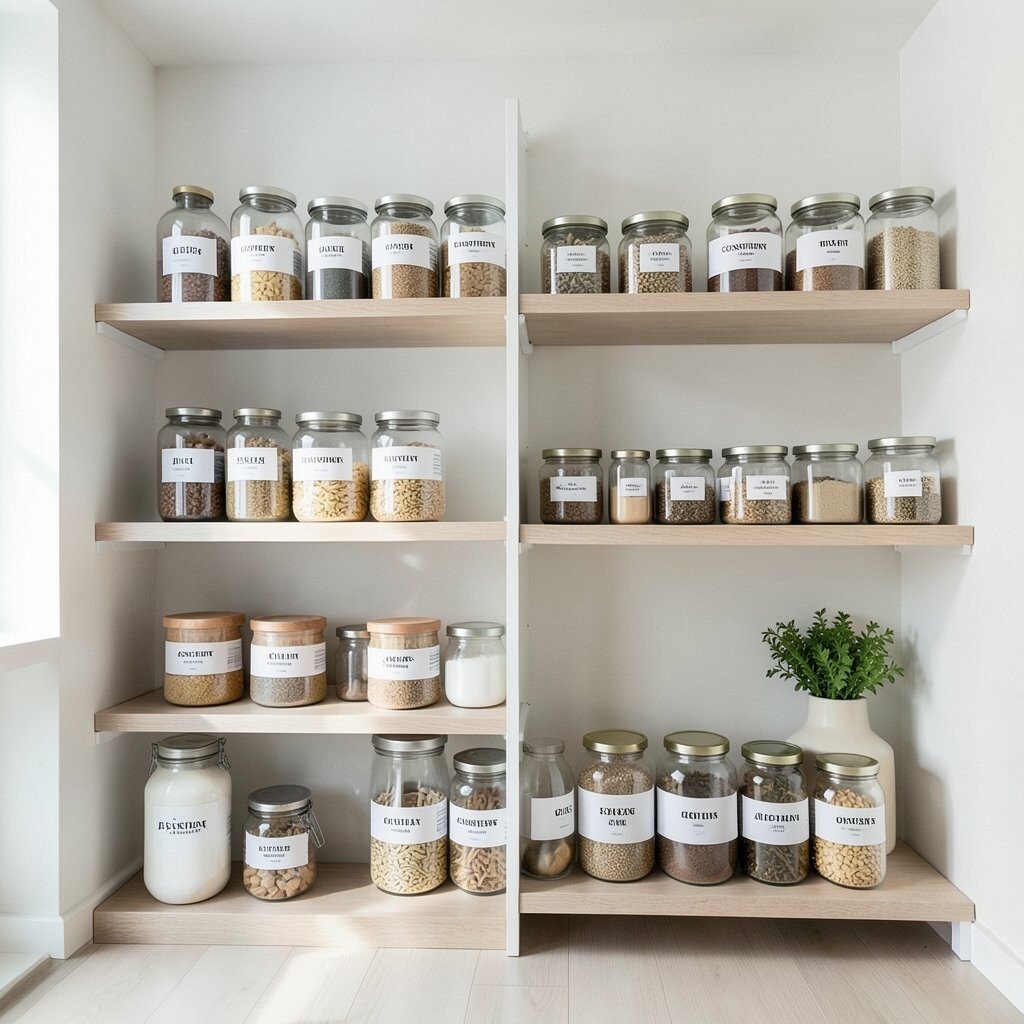
Keep the whole pantry feeling minimal by using one label style for everything. Even when the ingredients differ, the shelves look calm because the text and placement match.
Use simple fonts and avoid heavy graphics so the pantry stays visually light. This makes it easier to read while you cook, and it helps kids or guests put items back correctly. If you like flexibility, print labels in batches and update them as your pantry changes with the seasons.
Cost stays reasonable when you use label templates and reuse older jars. You can also write refill dates on small pieces of tape that peel off cleanly. It is a small habit that keeps your inventory fresh without adding clutter.
3. Vertical Space With Slim Canisters and Bins
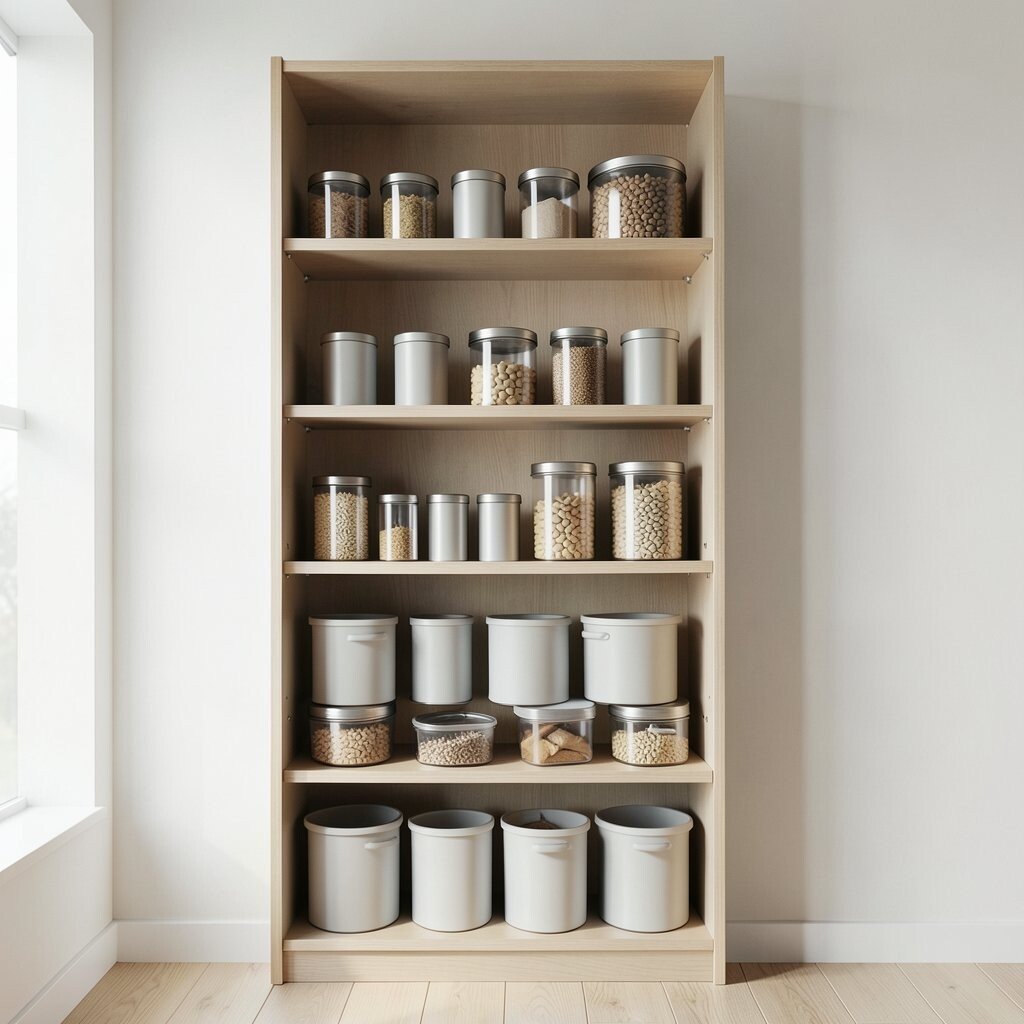
Use tall, slim containers to make the most of the height in your pantry. Stacking canisters neatly gives the room a tidy rhythm instead of a messy pile.
When everything fits in a designated vertical spot, restocking becomes quicker and less stressful. Measure your shelf depth and container width before you buy to avoid awkward gaps. People also love this setup because it keeps frequently used items at eye level, which is great during busy weeknights.
To personalize, group items by how you cook, like breakfast staples together or baking tools in one column. If you want to save money, start with a few best-used categories and expand slowly. This keeps the upgrade affordable while still making a noticeable difference.
4. A Neutral Color Palette That Calms the Room
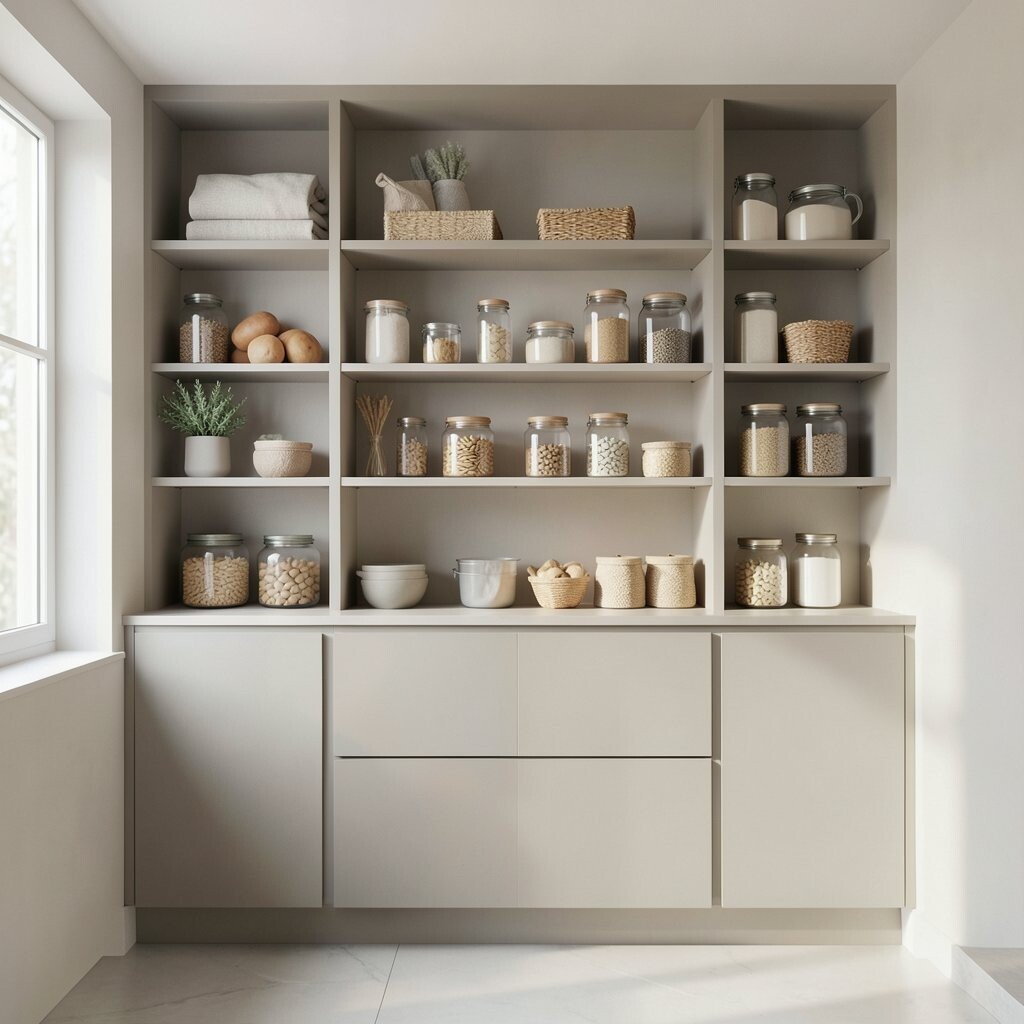
Choose neutral tones like white, cream, warm gray, or light wood for containers and shelf liners. A soft palette makes the pantry look clean even when it is full of food.
Neutral colors also blend with most kitchens, so you do not need extra matching décor. Keep lids in a single finish, like matte black or brushed stainless, for a simple consistent look. If you have darker cabinets, lighter containers can brighten the space instantly.
5. Hidden Bulk Storage Behind Simple Doors
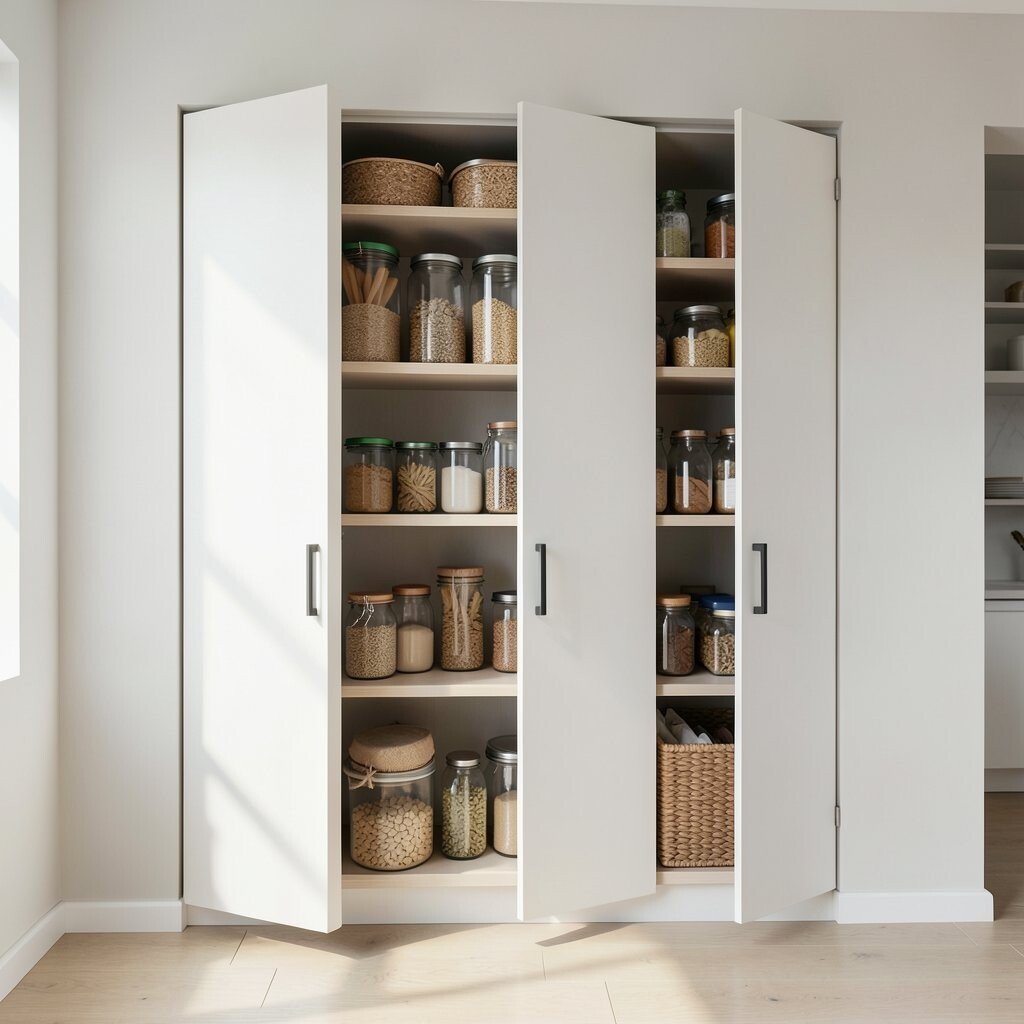
Store less exciting items, like extra cereal boxes or overflow baking supplies, in a closed cabinet or behind a door. The pantry stays visually neat because the “extras” do not stare at you every day.
Closed storage helps you maintain a minimal front without throwing away what you already have. When you label the inside, you still keep things easy to find. For uniqueness, choose a door style with subtle texture, like shaker panels or a soft-close matte finish.
To keep costs low, use what you already have and reorganize first. Adding a few matching bins can make a closed area feel intentional. This approach looks polished while staying budget-friendly.
6. Clear Bins for Produce-Like Staples You Use Often
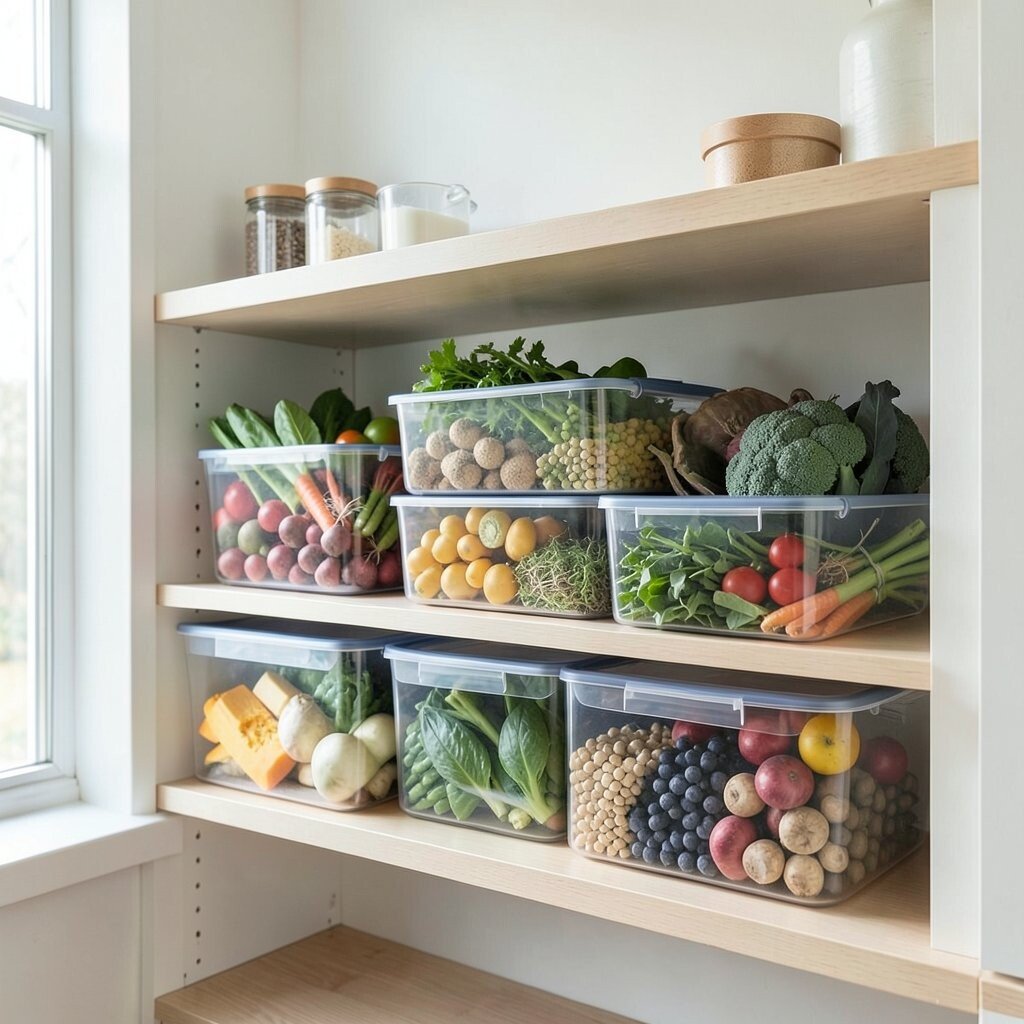
Even pantry items can feel more organized when you group them like fresh foods. Try clear bins for things such as pasta shapes, nuts, or dried fruit so everything looks orderly and ready.
Clear bins create a visual map that makes it easy to grab what you need. They also encourage you to keep quantities in a sensible range, because you can see when a bin is running low. Choose bins that stack or fit tightly, so the shelves look sharp rather than crowded.
For a personal touch, add one small color accent on the bin label, like green for snacks or gold for baking mix. If you are mindful about cost, begin with one shelf and upgrade as you empty items. This way, your pantry improves without a big spending rush.
7. Minimalist Turntable for Everyday Spices
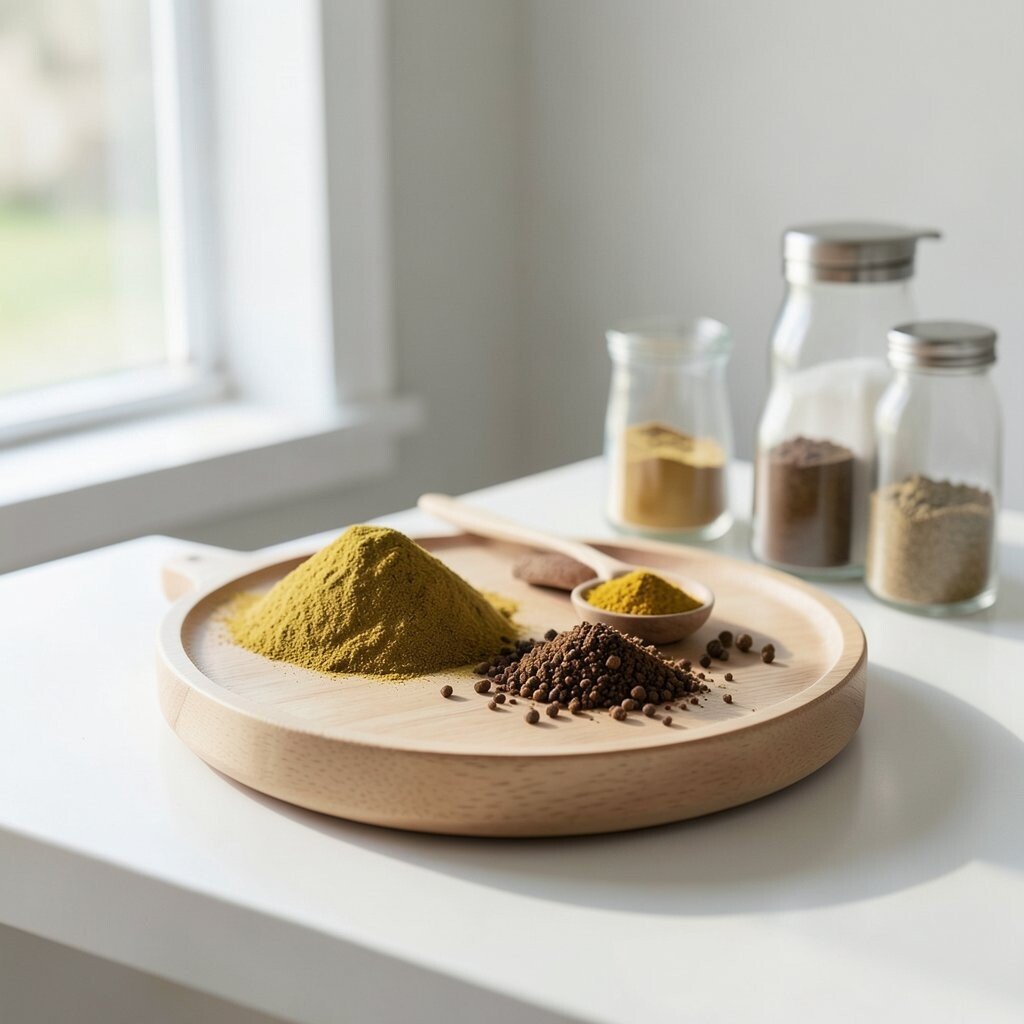
A small rotating organizer can make spice searching feel effortless. Instead of digging through a crowded rack, you spin the turntable and pick instantly.
This setup saves time and keeps bottles from getting knocked around. Use identical containers or matching caps so the look stays calm. Place the turntable on an accessible shelf or inside a cabinet door to keep it from taking over the pantry.
8. Adjustable Shelving for a Custom Fit
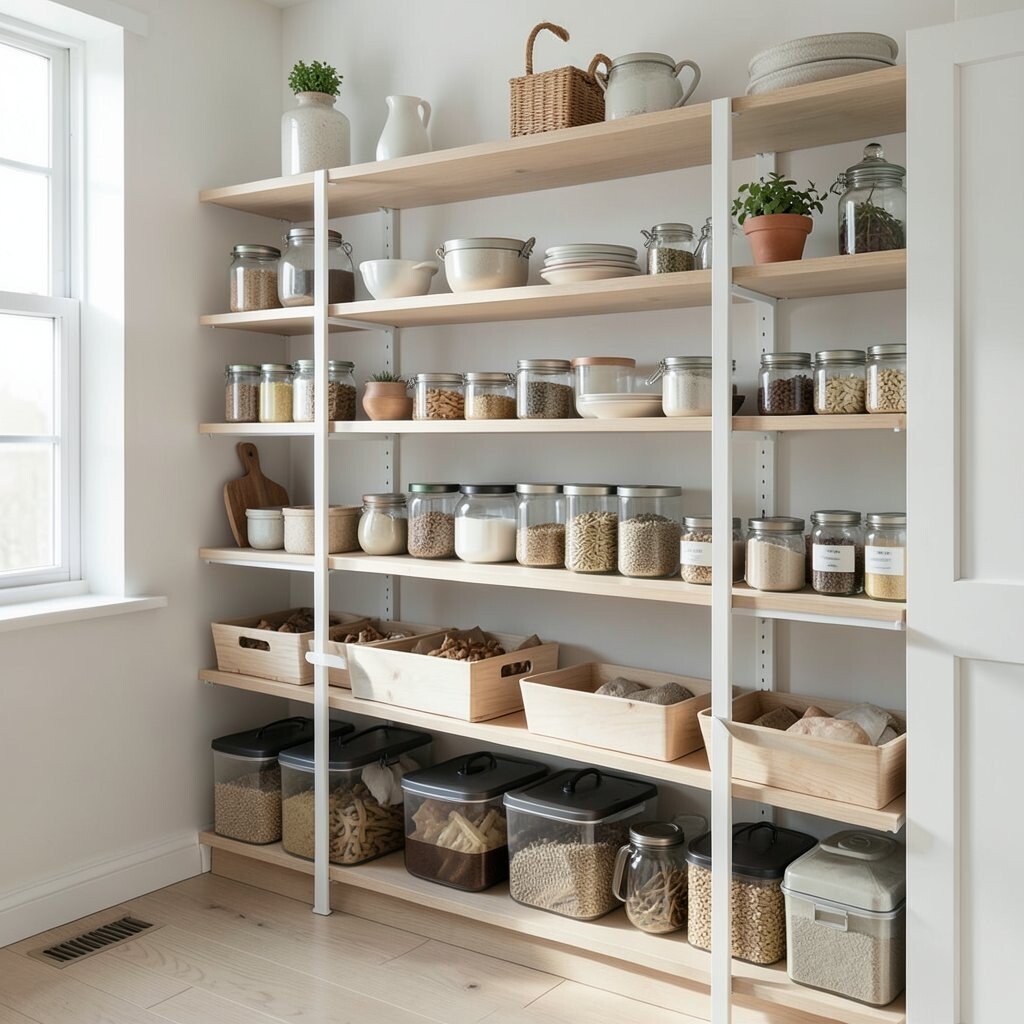
If your pantry has adjustable shelves, use them to fit your containers exactly. When gaps are smaller and items sit evenly, the space feels more curated.
Custom spacing improves usability because tall items do not force awkward sideways packing. It also makes restocking easier since you can always place new containers into the same height. Consider using shelf risers so shorter items stay at eye level.
For personalization, store your taller baking essentials near the back and your daily cooking items on the front tier. This gives a natural flow that feels satisfying to use. If you are renting or want a low-cost change, start by moving shelves and only then consider adding small organizers.
9. Keep One “Tool Zone” for Baking and Cooking Helpers
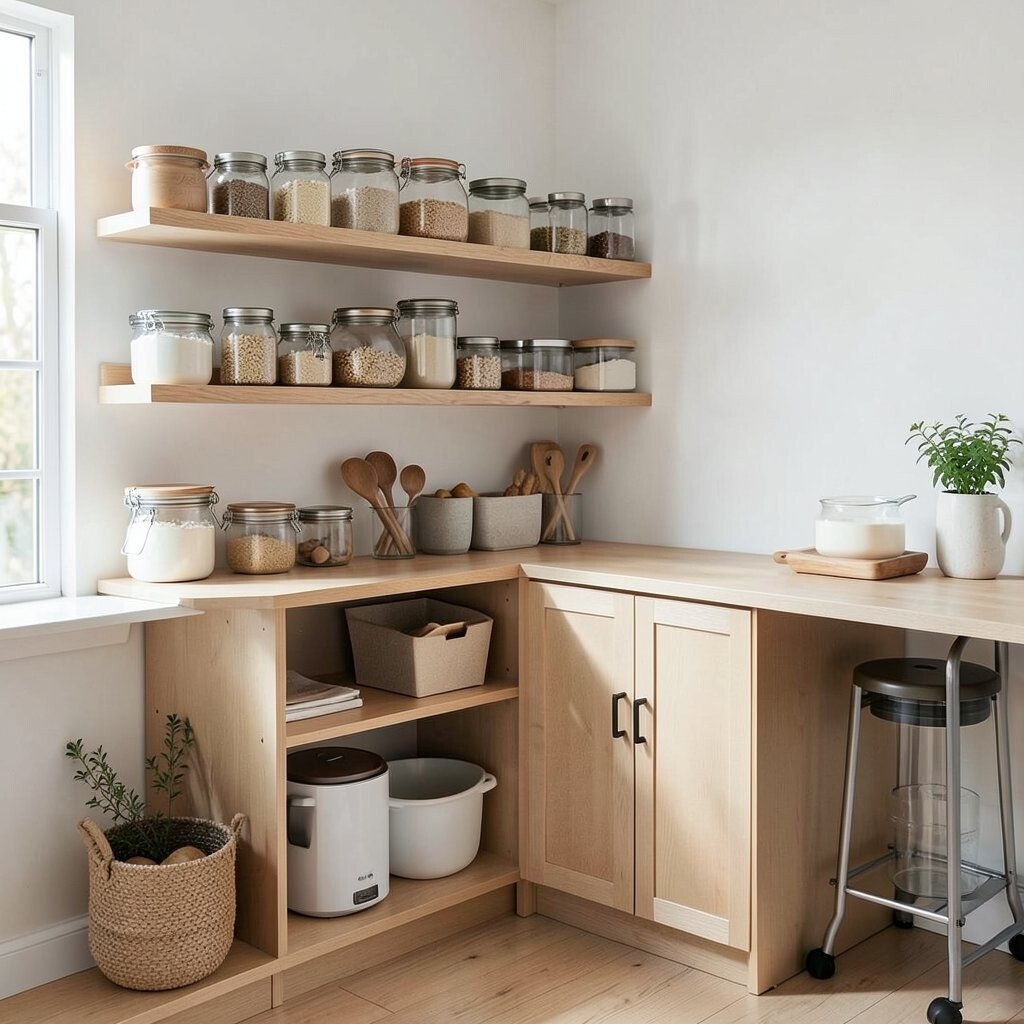
Create a simple corner for measuring cups, spatulas, and extra liners. When tools live together, your pantry feels more like a working kitchen station and less like a storage closet.
Use a tray or a shallow bin so small items do not scatter across shelves. This reduces clutter and helps you put things back in seconds. Choose containers that match the pantry colors to keep the overall look minimal and tidy.
10. Texture in One Place Only, Like a Linen Shelf Liner
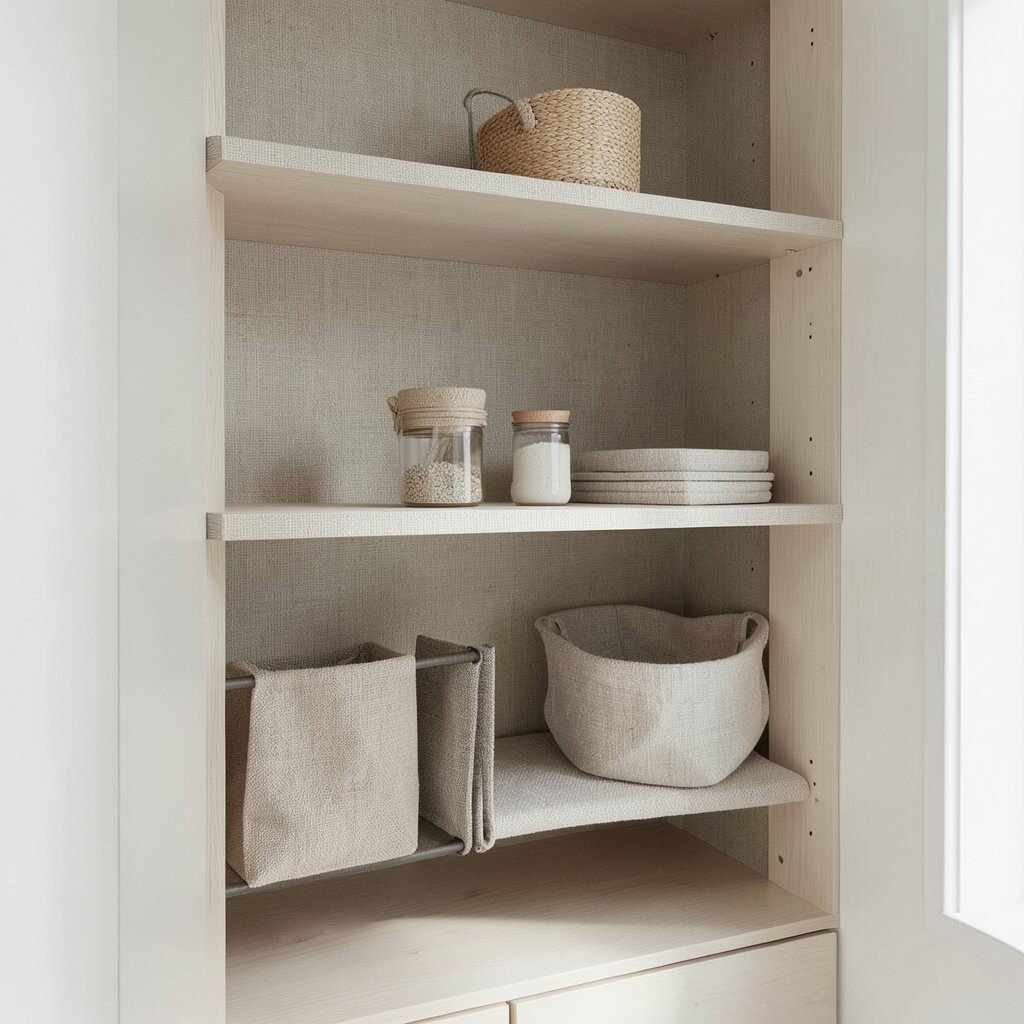
Add one gentle texture so the pantry feels warm without getting busy. A light linen or woven shelf liner can soften the look and protect shelves from spills.
Texture also helps items grip better, especially when containers are clear and smooth. Keep the liner simple and stick to one consistent material across the shelves. This gives the pantry a cozy vibe while still staying minimal.
Cost is often reasonable because liners are easy to cut to size. If you like switching styles, choose a neutral liner that you can reuse when you change containers later. That flexibility keeps the upgrade practical.
11. Stack-Friendly Containers With Consistent Heights
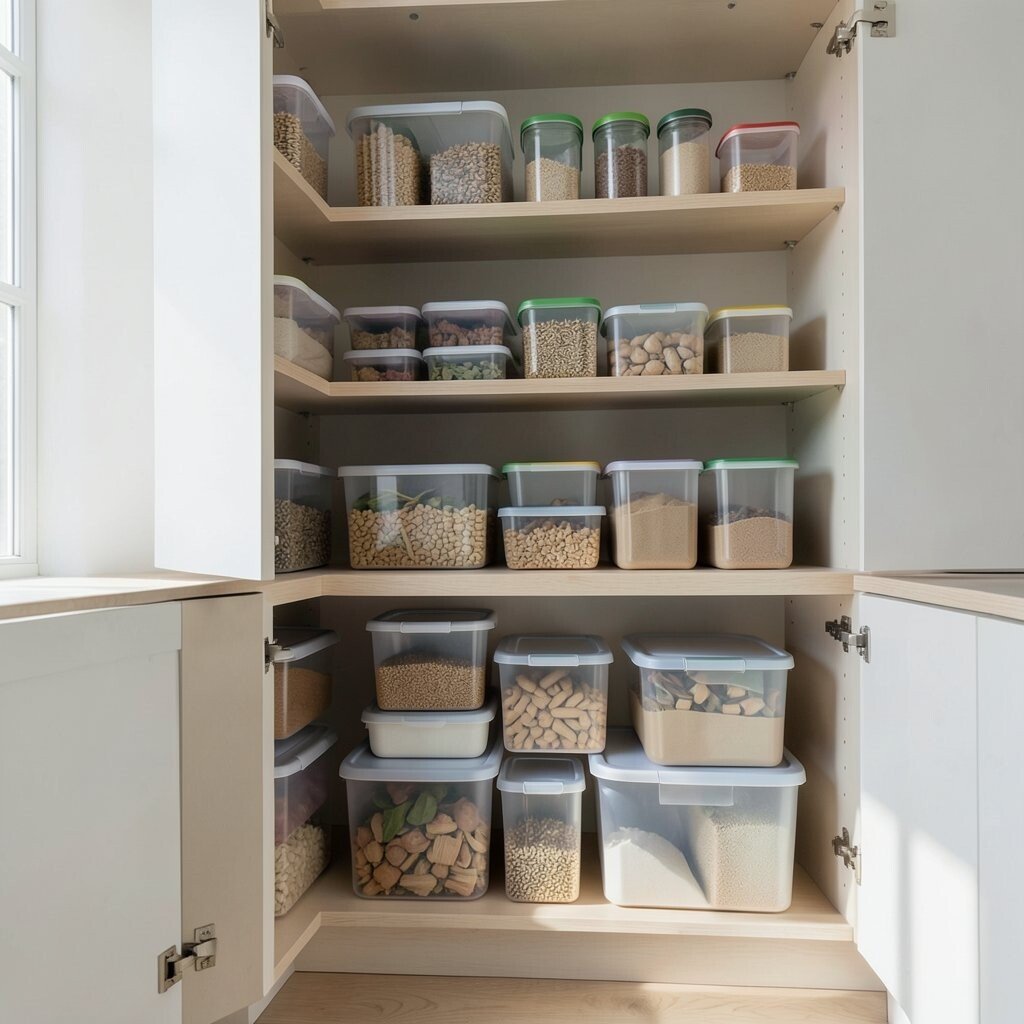
Pick containers that stack neatly and keep the same height across a category. When the top lines align, the pantry looks organized even before you label anything.
Stacking-friendly shapes also make the most of deep shelves and prevent wasted space. It is easier to take items out without knocking everything else. For personalization, choose a few different container widths to match the types of food you buy most.
If you want to watch your budget, focus on the containers you touch daily. Keep pantry staples like flour, sugar, or pasta front and center with nicer pieces. The rest can be in basic jars until you feel ready to upgrade.
12. Use a Small Shelf for “Grab and Go” Snacks
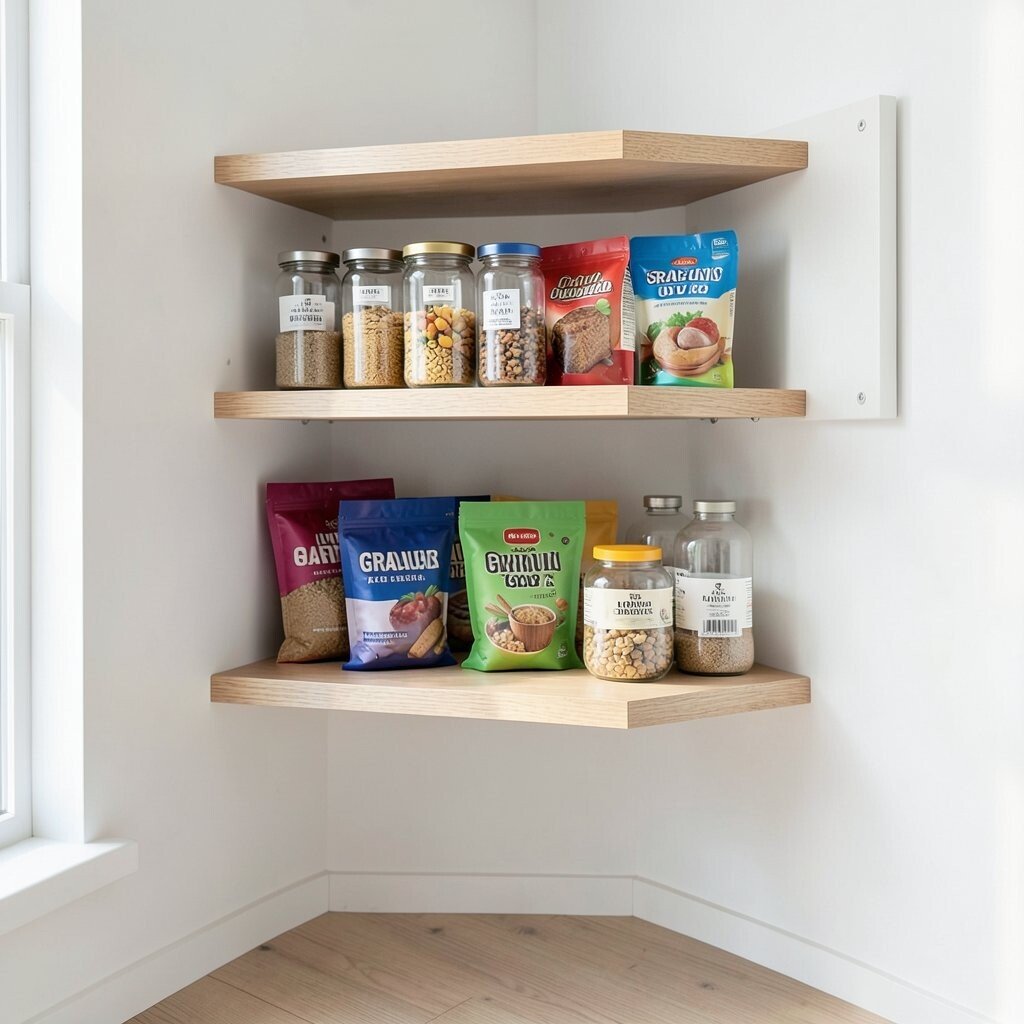
Put your simplest snacks in one dedicated shelf near the front. You can keep granola, tea, and single-serve items together for quick access.
This small zone reduces clutter across the whole pantry because you are not scattering snacks on every shelf. It also makes the pantry feel friendly, especially when you have kids or frequent guests. Choose containers that are easy to open, like wide lids and sturdy handles, so the space actually gets used.
For a unique look, group items by size and shape, such as tall bottles on one side and small boxes on the other. Cost stays controlled when you reorganize what you already have first. Then add matching containers only for the items that show the most.
13. Minimalist Photo or Artwork That Fits Your Pantry Style
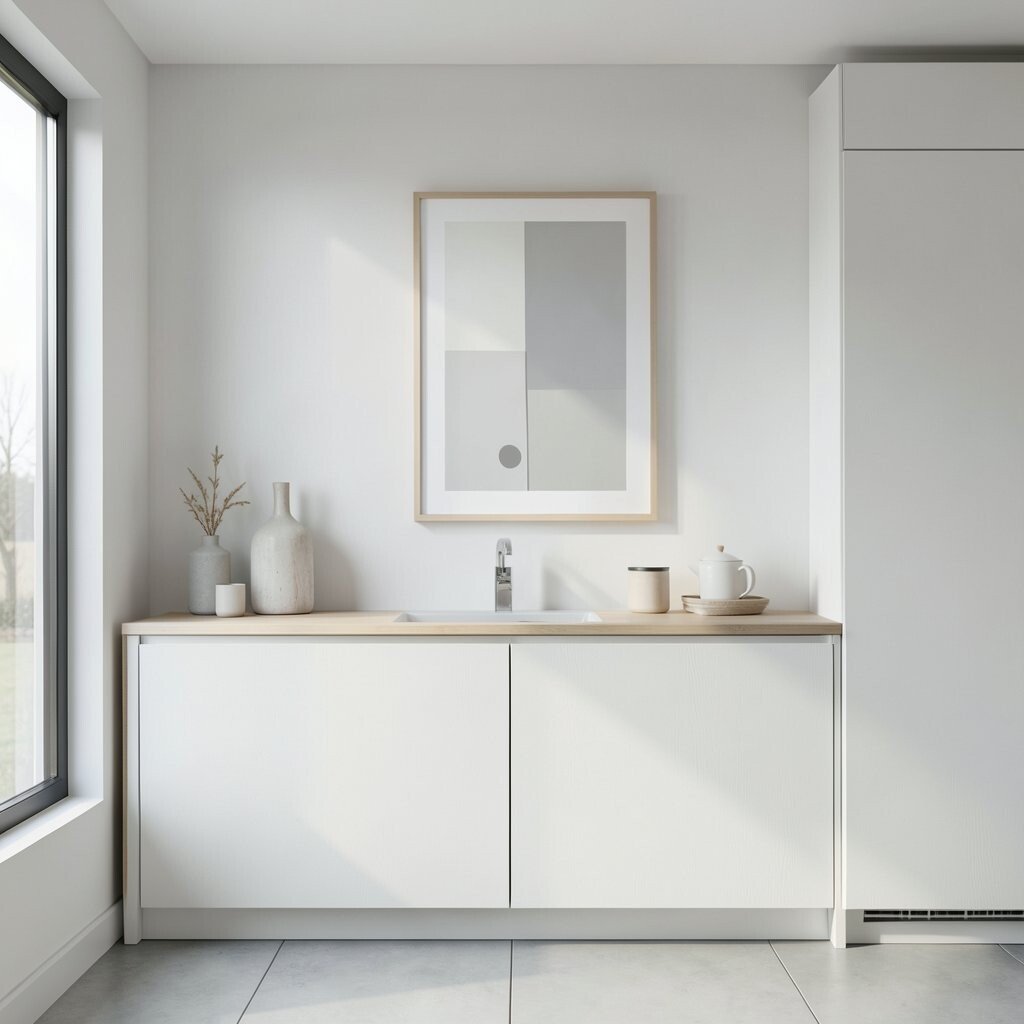
Even a pantry can feel personal with one small piece of art or a framed print. Keep it minimal so it does not fight with the shelves, like a simple botanical line drawing or a monochrome quote.
Personal details can make everyday tasks feel calmer and more enjoyable. If you prefer not to display anything, try using a subtle color accent on shelf liners instead. That still gives character without adding visual noise.
To keep costs low, you can use a printable art file and place it in a cheap frame. Just choose a style that matches your kitchen. A small touch can make the pantry feel like part of your home, not just storage.
14. A “Spill-Guard” Setup With Easy-Wipe Surfaces
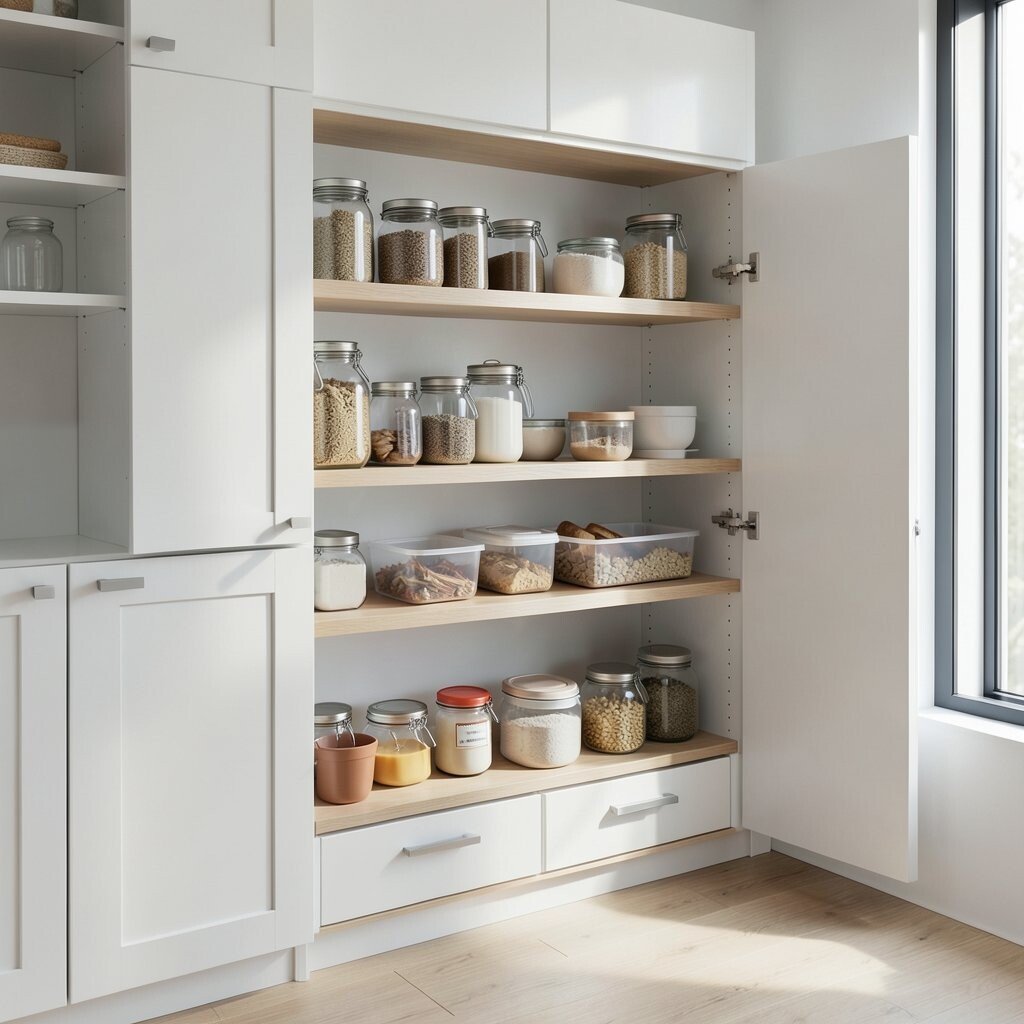
Plan for mess by using liners, trays, and wipeable surfaces where spills might happen. A shallow tray under oil, vinegar, or baking ingredients can save you from sticky cleanup.
This makes the pantry easier to maintain, which is a huge win for minimalist living. It also keeps shelves looking new because liquids do not soak in. Choose trays that look clean and simple, like smooth metal or neutral plastic, so they blend with your design.
For personalization, use a tray size that fits your container perfectly so it looks intentional. If you want to keep spending down, repurpose baking sheets or cookie trays after they are cleaned well. That hack gives you function without buying something brand new.
15. Flexible Overflow Baskets for Seasonal Changes
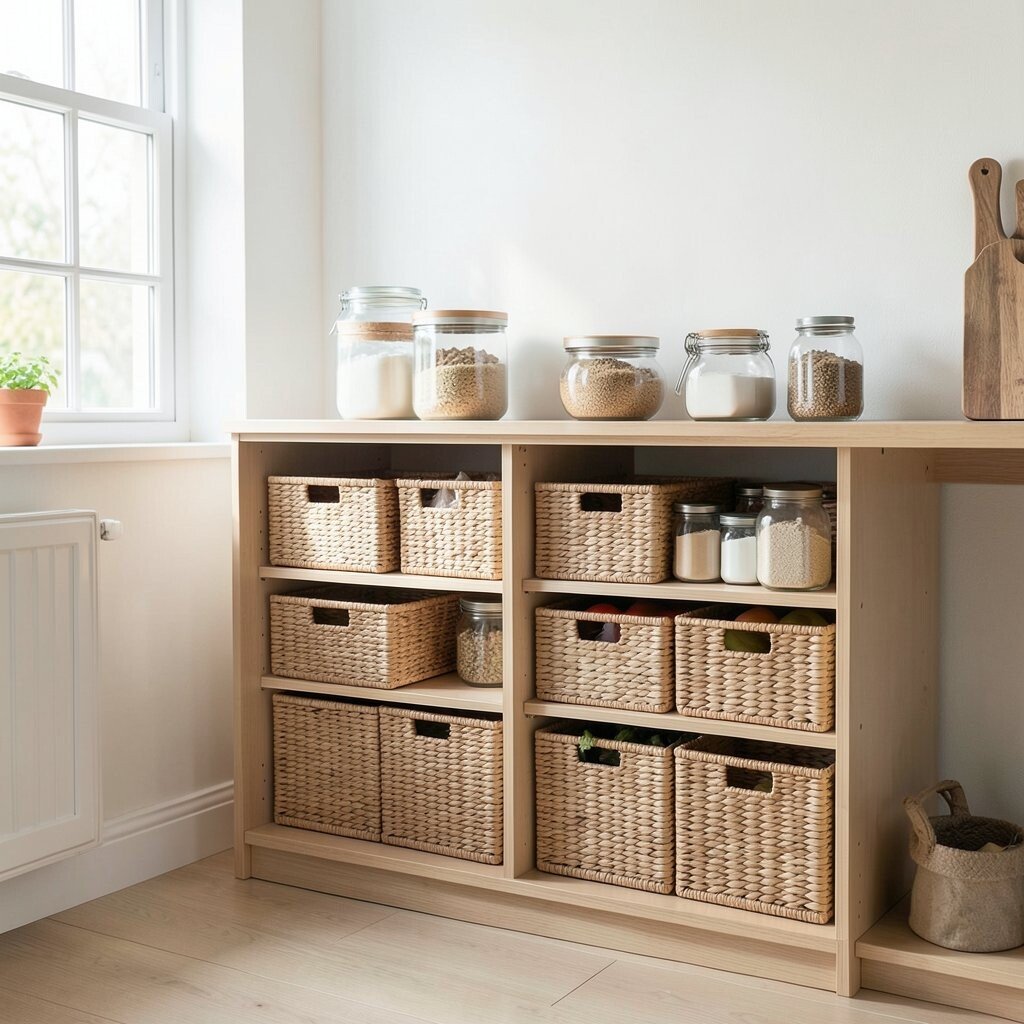
Seasonal cooking changes what you keep on hand, so add one flexible storage area. Overflow baskets can hold extra soup packets, holiday baking supplies, or summer grilling staples.
When overflow lives in one place, your main shelves stay minimal and ready all year. Label the baskets so you can swap them quickly when seasons shift. For uniqueness, choose baskets in a natural material like rattan or a clean woven look.
Cost considerations matter here because baskets can add up. Start with one basket that covers your biggest seasonal shift, like winter baking items. As you notice what you actually use, you can add more later with confidence.
16. Lighting That Makes Labels and Food Look Fresh
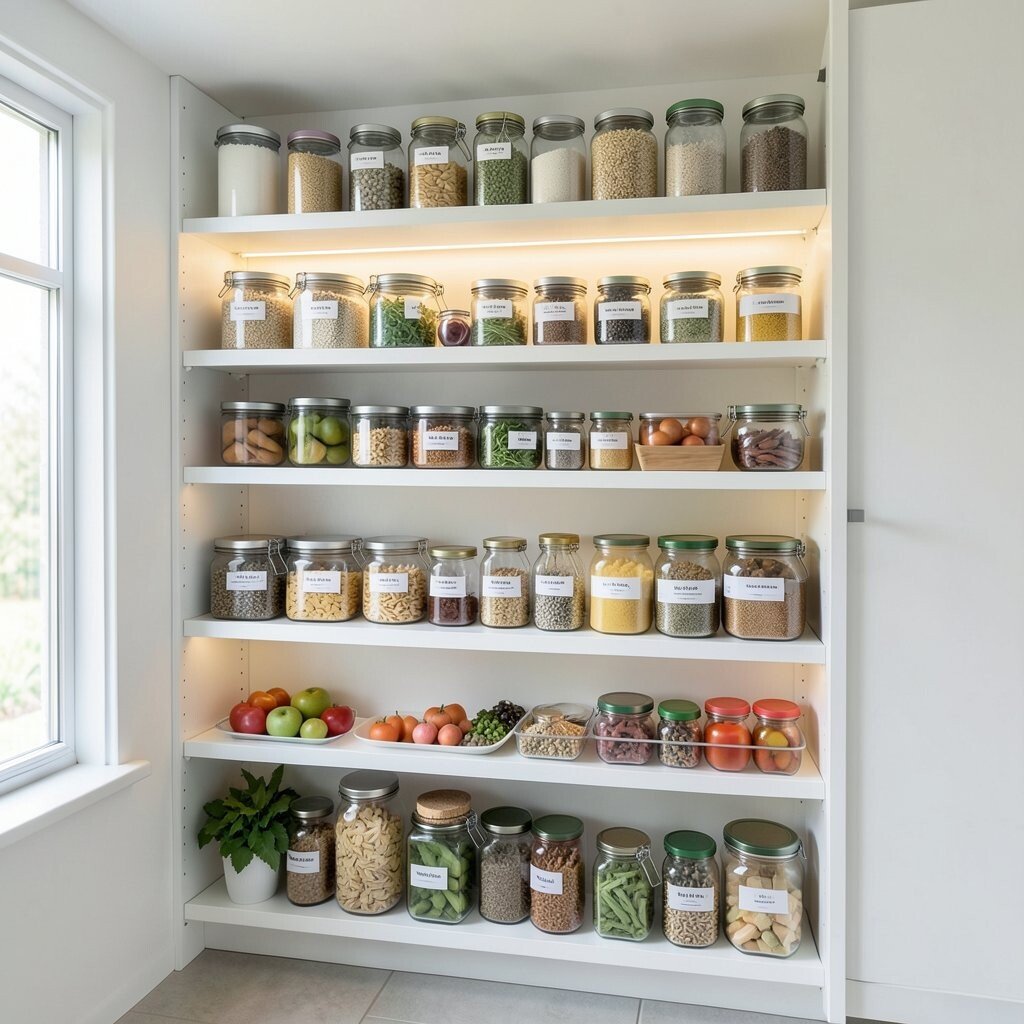
Good lighting changes everything, and it can make a pantry look higher-end. A simple LED strip or a small motion light helps labels and containers stand out clearly.
Better visibility encourages you to cook from what you already own. It also reduces the chance of missing items behind others, which helps prevent waste. Choose warm lighting for a cozy feel, or neutral lighting if you want crisp clarity.
For a practical approach, place light near the front shelf so you can read labels without leaning in. If you are renting, look for plug-in options or adhesive solutions that are easy to remove. A small lighting upgrade is often more affordable than replacing storage furniture.
17. A Simple Restock Ritual With Easy Inventory Checks
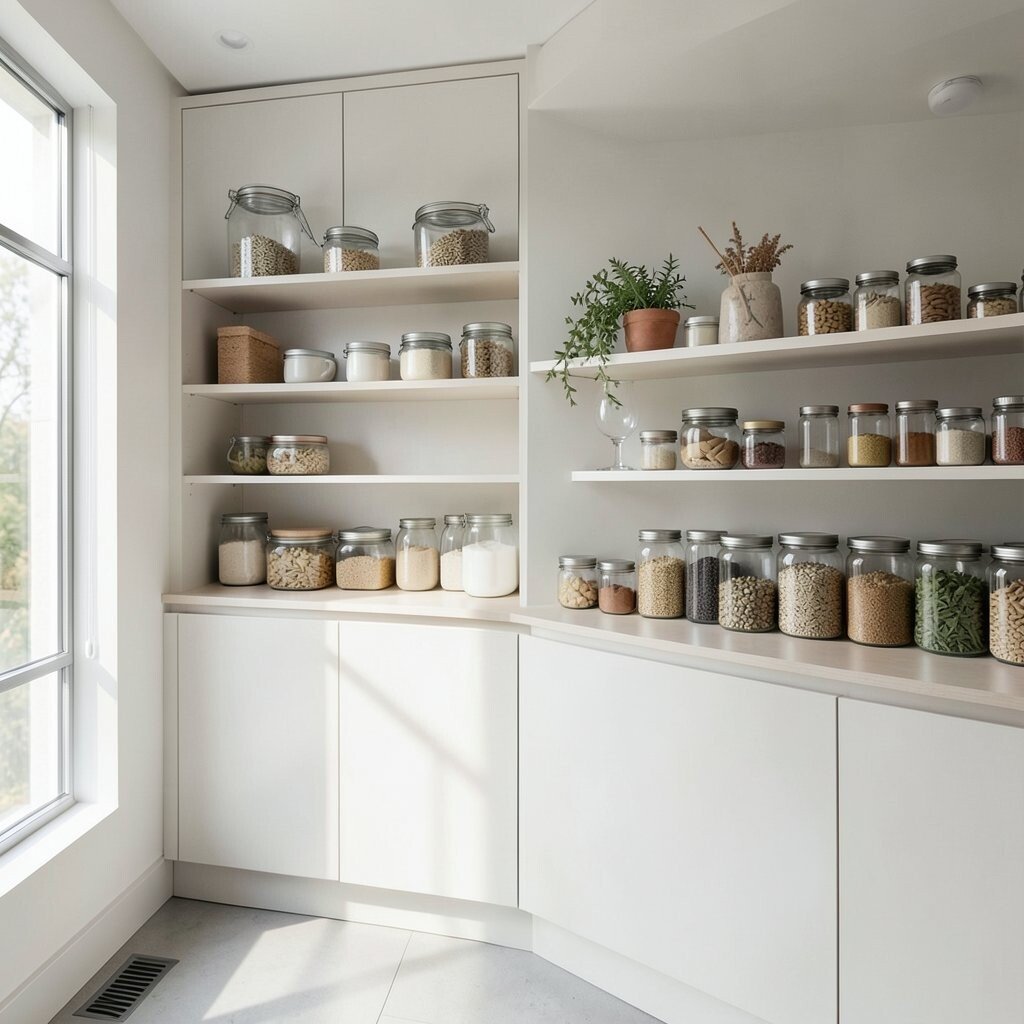
Minimalism stays beautiful when you maintain it, and that starts with a gentle routine. Do a quick scan before shopping so you know what is truly running low.
This prevents duplicate purchases and keeps the pantry stocked in a realistic way. When everything has a home, restocking becomes calm rather than chaotic. Use a small notebook page inside a cabinet door or a notes app on your phone so the check takes only a minute.
Personalize your ritual to match your life by setting a weekly moment, like Sunday morning. Cost is basically zero, because it uses what you already have. Over time, this approach helps your design stay minimal without feeling restrictive.