
The second floor bedroom often feels like its own little world. When everything has a home, that world feels calmer and brighter.
Minimal changes can make the space work harder for you. The best part is that minimalist organization still leaves room for comfort and personality.
1. Clear the Floor With a Quiet “Landing Zone”
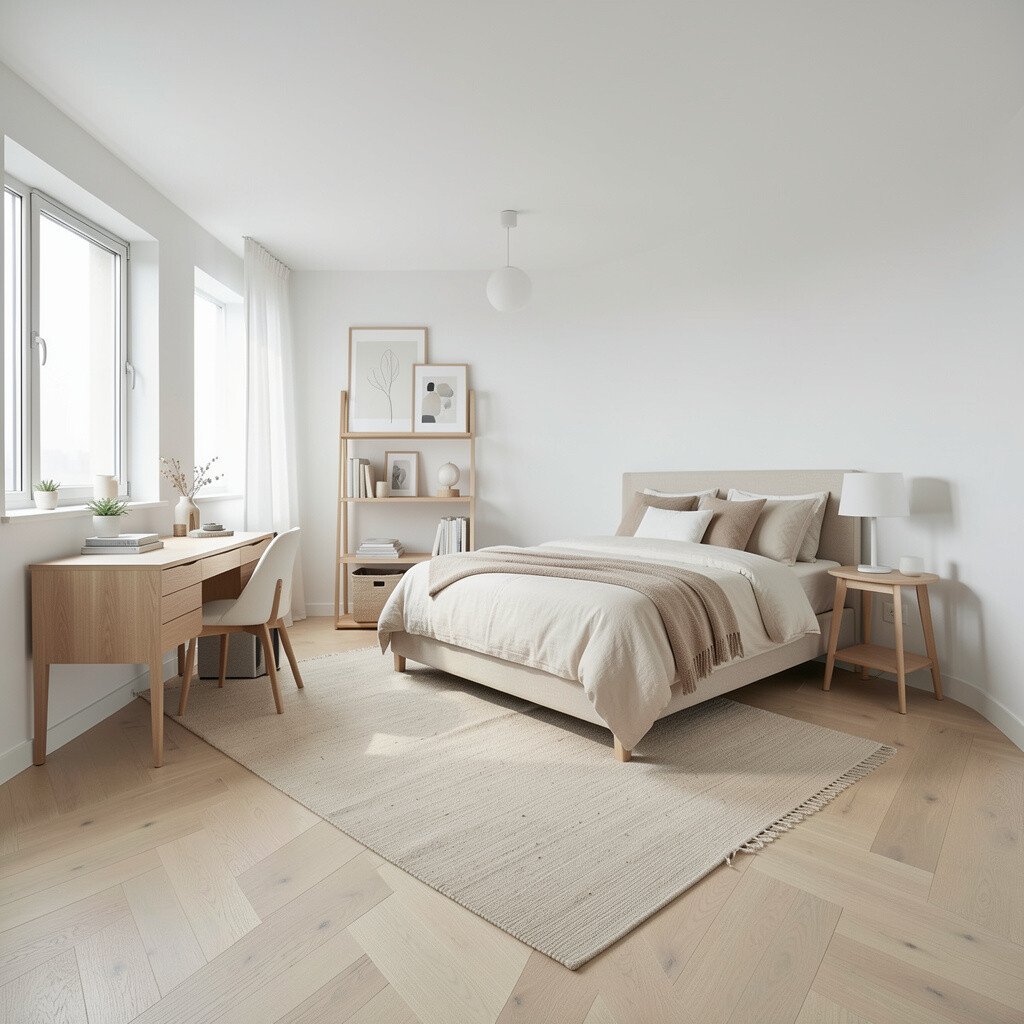
Start by choosing one small area near the doorway or entry point to act like a landing spot. Keep a simple basket or slim tray there for everyday items like mail, hair ties, or a light jacket.
When shoes and loose stuff stay off the floor, the room instantly looks tidier. You can also use a small woven basket for nighttime essentials, like lotion or a lip balm. Pick one look that matches your decor, such as light wood and neutral fabric, so it feels calm instead of cluttered.
2. Use Under-Bed Bins With One Purpose Each
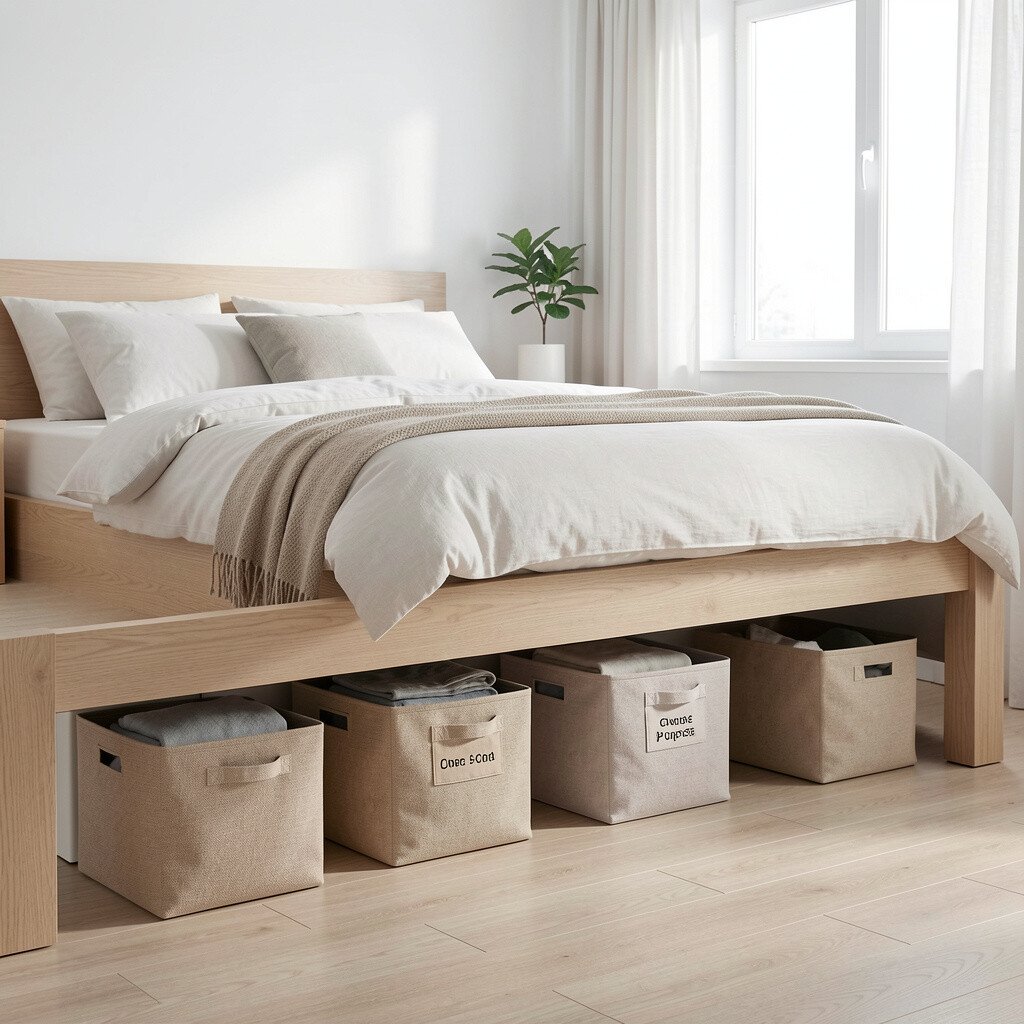
Slide matching storage bins under the bed to hide what does not need to be seen. Choose bins with labels on the outside so you can grab things without digging.
Because under-bed space is often unused, it becomes a practical staging area for seasonal items. Storing extra blankets, holiday clothes, or travel gear down low keeps the room visual and clean. For a modern feel, go for matte finishes and soft colors that blend with your bedding.
You will save time when laundry week arrives and you know exactly where things are. If you want to keep costs low, reuse sturdy boxes that fit the space and cover them with coordinating fabric. When you personalize, add a small card with your own system, like “winter socks” or “swim items.”
3. Hang a Single “Everything-Here” Rail for Daily Clothes
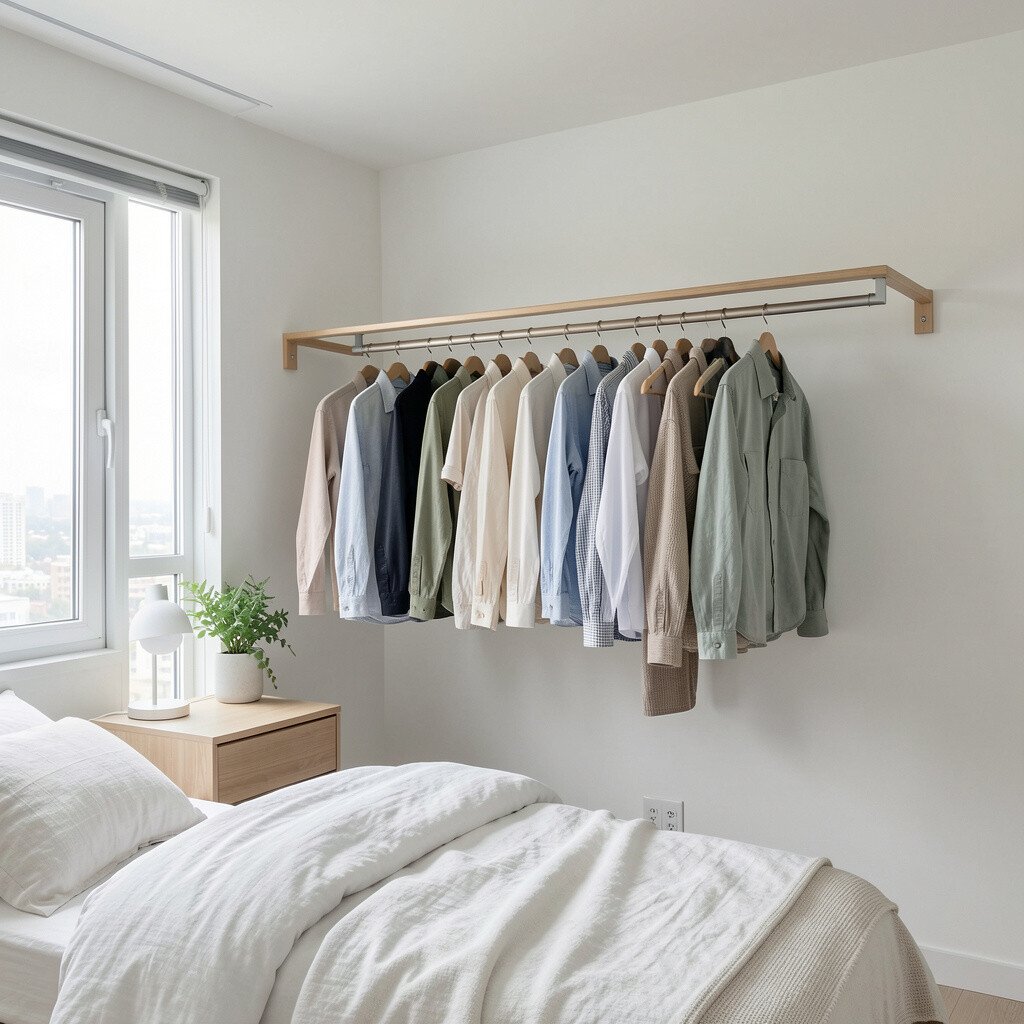
Set up a minimalist rail or wall hook bar for items you wear often. Think about placing it where you can see it easily, like near the closet door.
This makes getting ready smoother because you are not hunting through a pile. It also reduces the temptation to toss clothes on a chair. Use hangers that match in shape, so the visual line looks neat and intentional.
If your budget is tight, use a thrifted rod or a simple bracket system. Add a small fabric shelf pocket for items like belts or scarves. For personalization, choose a rail color that fits your room, such as black for contrast or white for softness.
Over time, the rail becomes a daily habit, and your room stays comfortable and orderly.
4. Choose One Color Palette for Storage Items
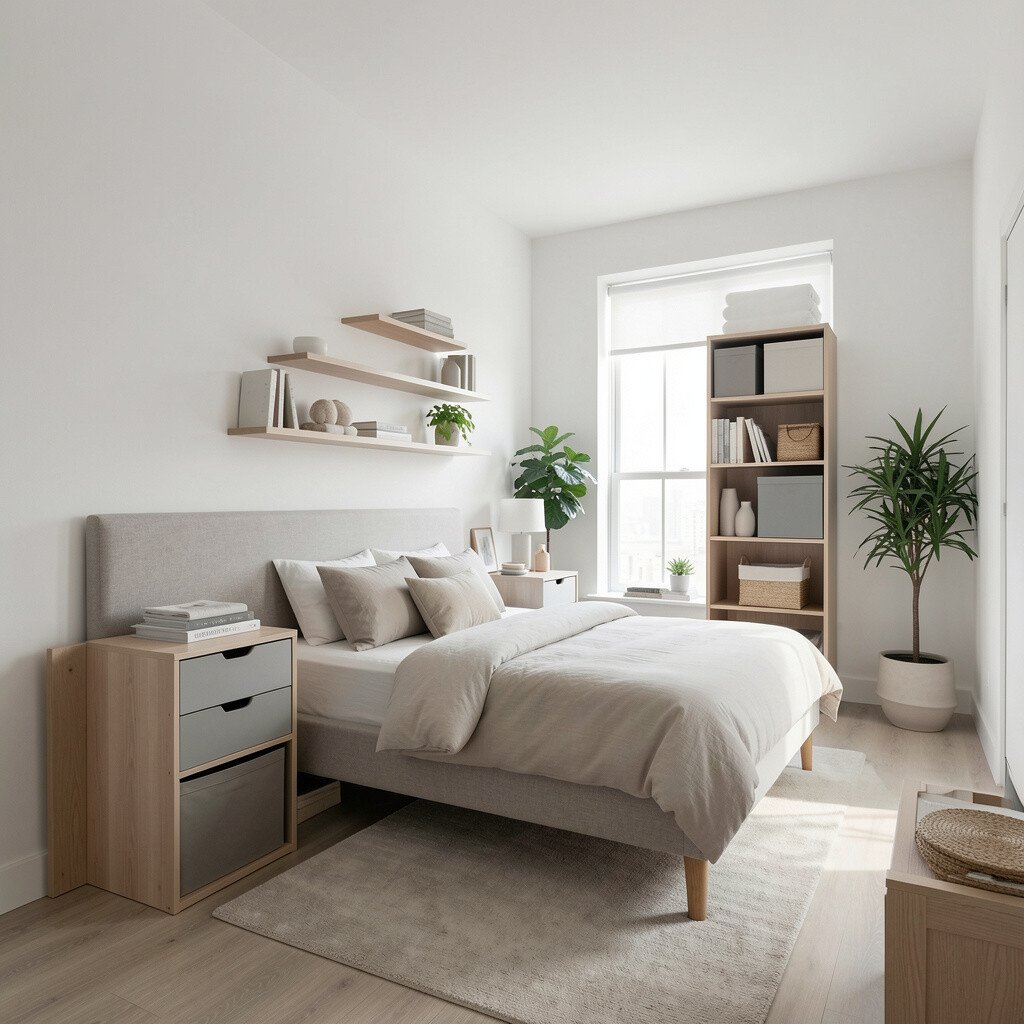
Pick storage containers and baskets in a few colors that match your bedding and curtains. When everything shares a similar tone, the room feels “finished” even when it is still personal.
A coordinated palette makes clutter less noticeable because items look like part of the design. It also supports minimalist goals without making your room feel cold or empty. Try muted beige, soft gray, or warm white for an easy match.
5. Turn Nightstand Surfaces Into a Clear, Calm Stage
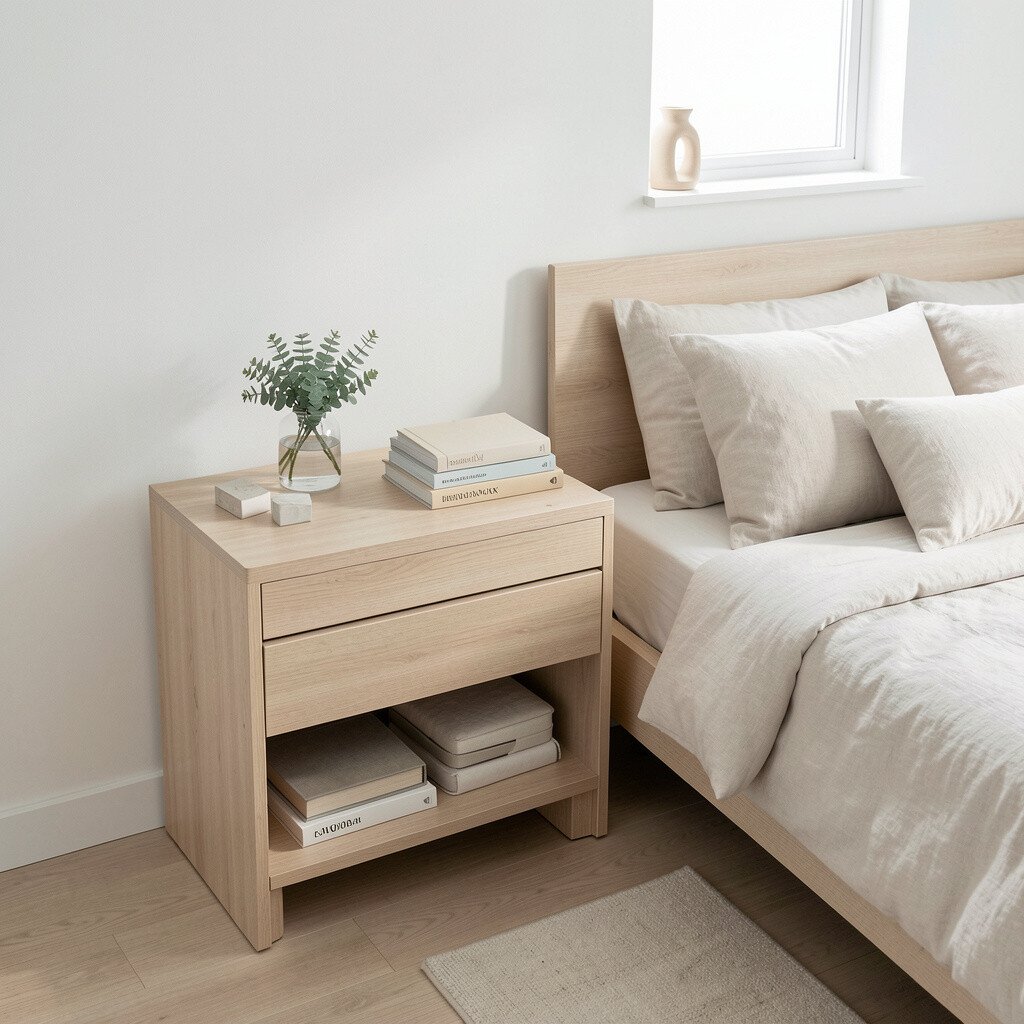
Start by moving everything off the nightstand and back into drawers or a tray. Keep only a lamp, a book, and a glass of water if you really need it there.
A clean surface feels welcoming, and it helps your brain relax at night. If you have charging cords, tuck them into a small box or behind the lamp so they do not become visual noise. This is one of the easiest ways to make the second floor bedroom feel instantly more spacious.
For practical personalization, use a small organizer tray with sections for rings, hair clips, or a single bottle. Even a simple fabric basket can look stylish when it matches your palette. If you want to keep costs down, use what you already own, then refine slowly.
6. Label Only What You Truly Need
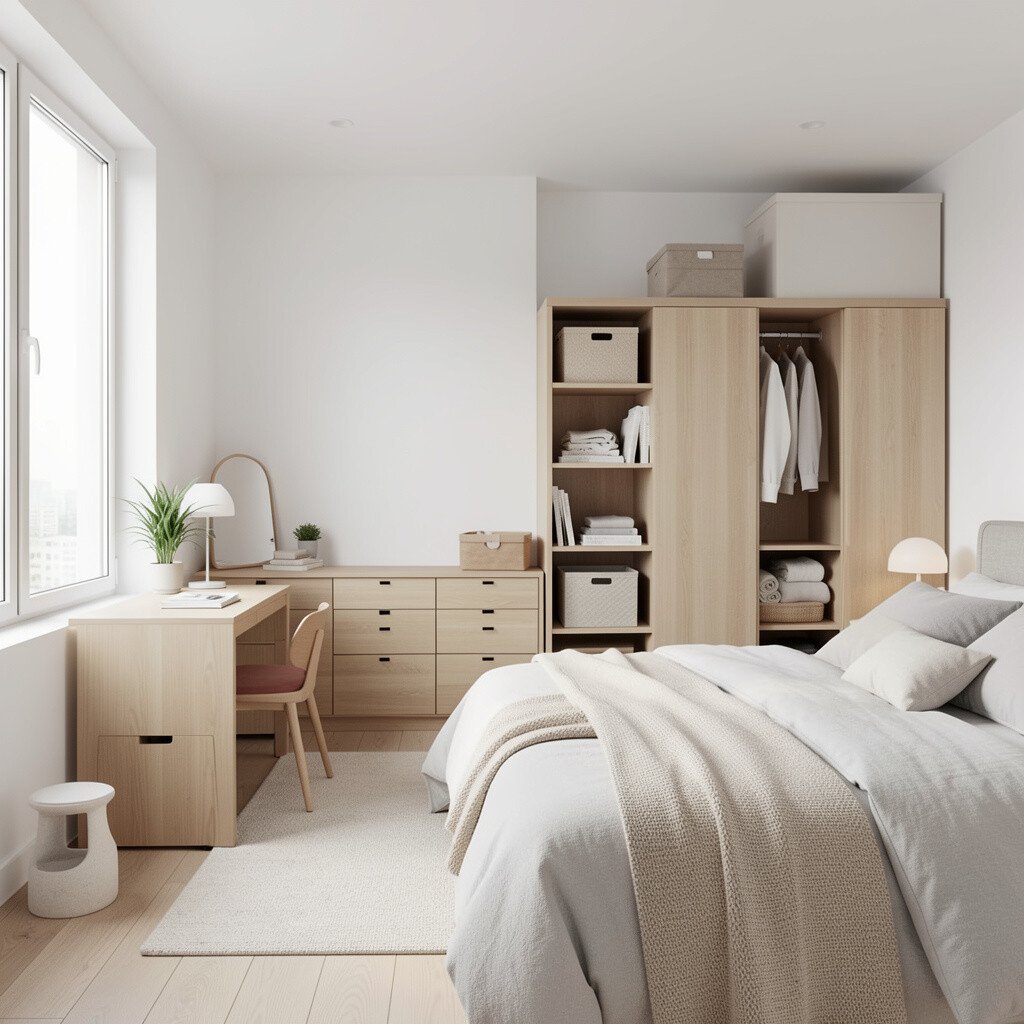
Labels help you find things without opening multiple bins. Choose labels for items you store away, like extra pillowcases or winter accessories.
When you keep labels minimal, the room stays neat without turning into a craft project. Use clear handwriting or simple printed tags, so they look clean and readable. A small label also supports good habits because it encourages you to put things back the moment you are done.
7. Create a Clothes “Loop” Instead of a Pile
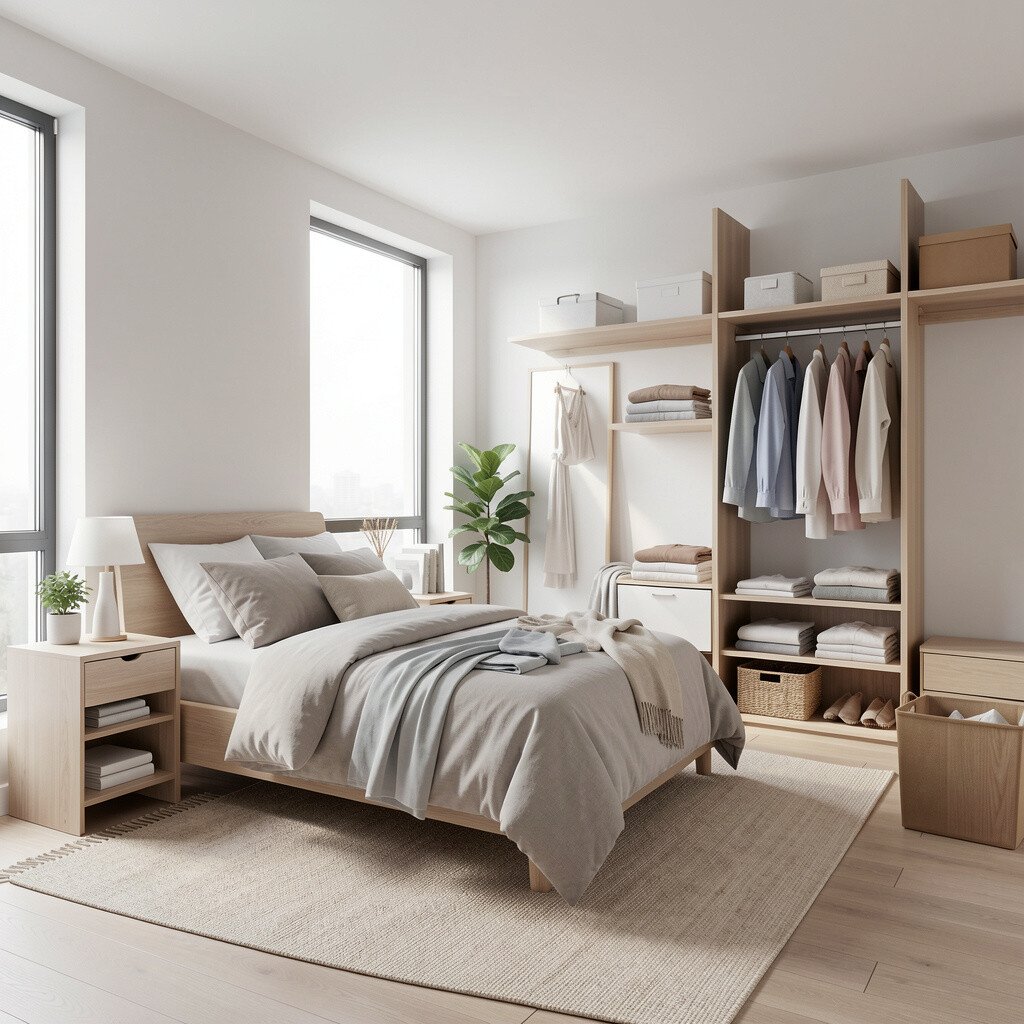
Build a system where clothes cycle back into place right after use. Use a hamper or a small sorting basket near the door so you can drop items in the moment you take them off.
This cuts down on the day-long mess that forms when clothing sits on chairs. It also keeps the bedroom looking tidy even on busy weeks. Place a second container for “maybe” items that you wear more than once, so they do not mingle with laundry.
8. Fold Using the Vertical Method for Small Drawers
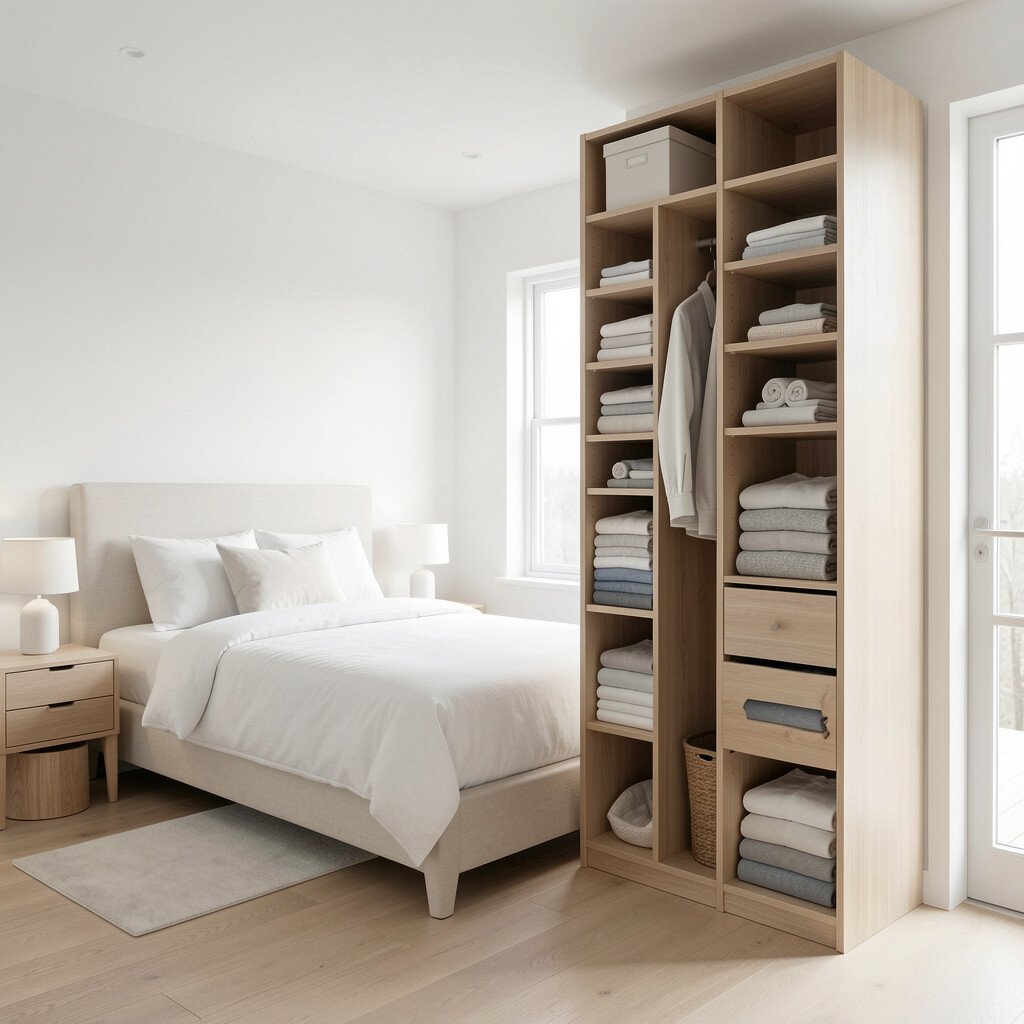
Try vertical folding for socks, tees, and even small sleepwear pieces. When items stand upright, you can see what you own without rummaging.
This saves time and prevents overbuying because you can actually check your stock. It also uses drawer space more efficiently, which is great in upstairs bedrooms where space may feel tight. Use simple dividers so stacks stay lined up.
9. Keep Chargers in One Small Catch-All Container
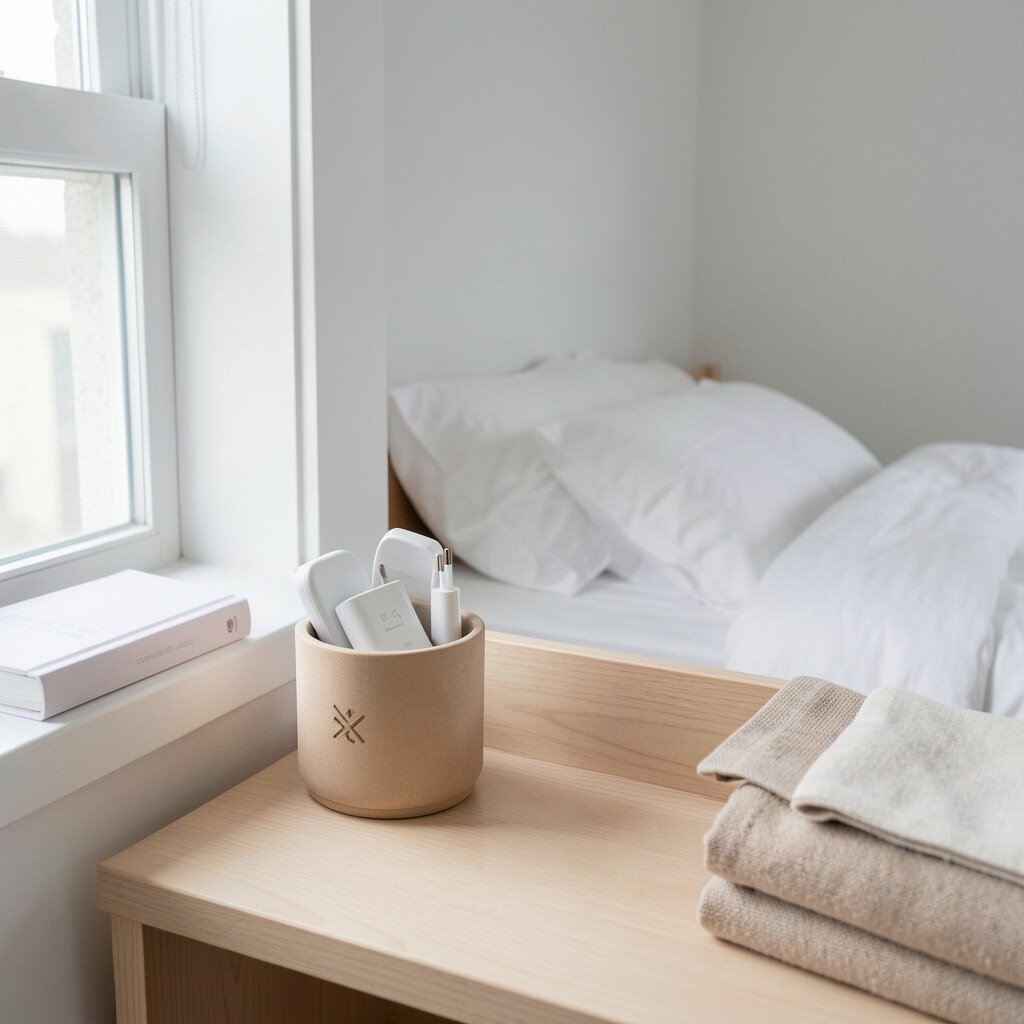
Put all chargers, cords, and adapters into one small organizer box. Keep it near the outlet or inside the nightstand, so cables stop wandering around the room.
When cords stay in one place, surfaces look calmer and your daily routine feels smoother. Label the cords with tiny notes so you do not guess later. If you want a budget-friendly option, use a shoebox or plastic container and add dividers using cardboard.
For personalization, choose a fabric cover that matches your bedding. This tiny setup helps the room look clean without needing new furniture.
10. Use a Wall Mirror to Reduce Visual Clutter
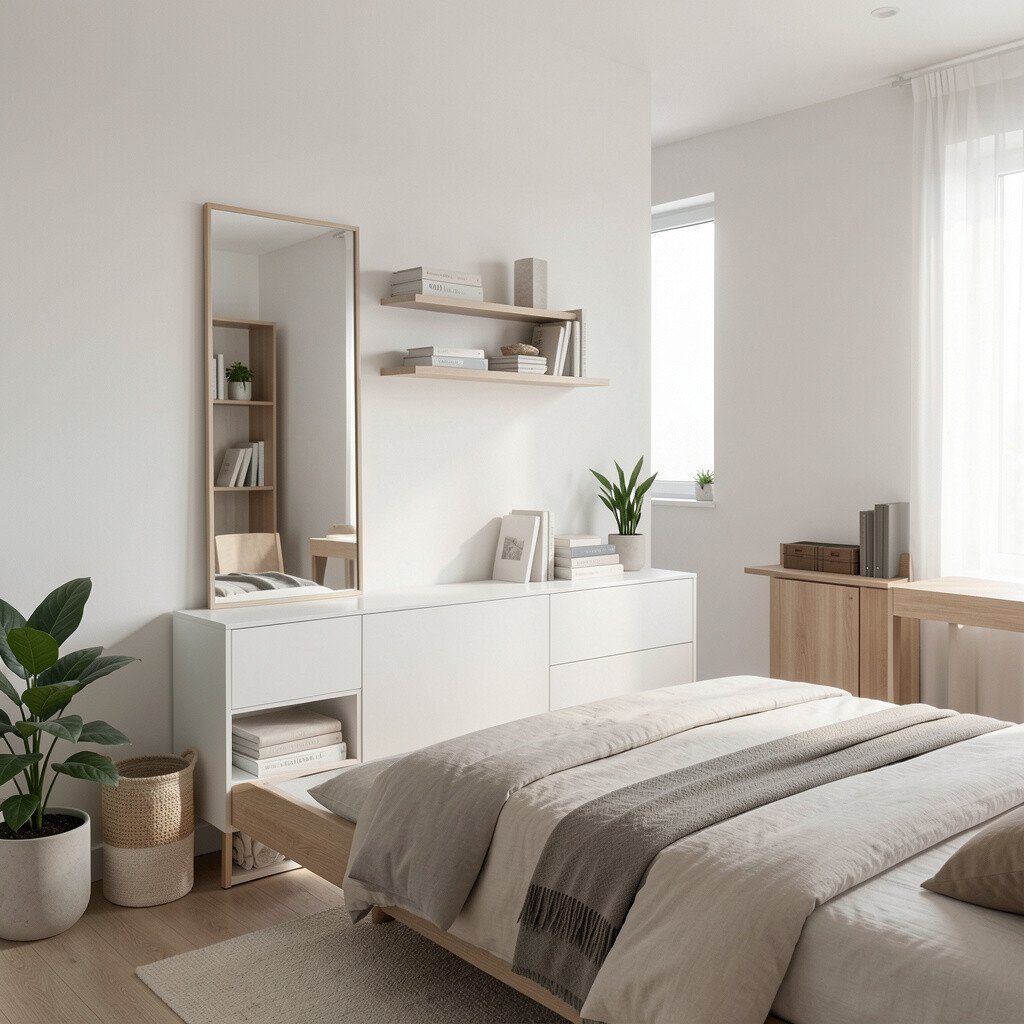
A well-placed mirror can make your bedroom feel larger and brighter. Hang it so it reflects a clean part of the room, like your bed or a tidy corner.
When the reflection shows order, it makes the whole space feel more organized. Mirrors also help you spot mess quickly because you see the room at a glance. To keep it minimalist, choose a simple frame and keep the surface around it clear.
11. Store Seasonal Items in One Rotating Zone
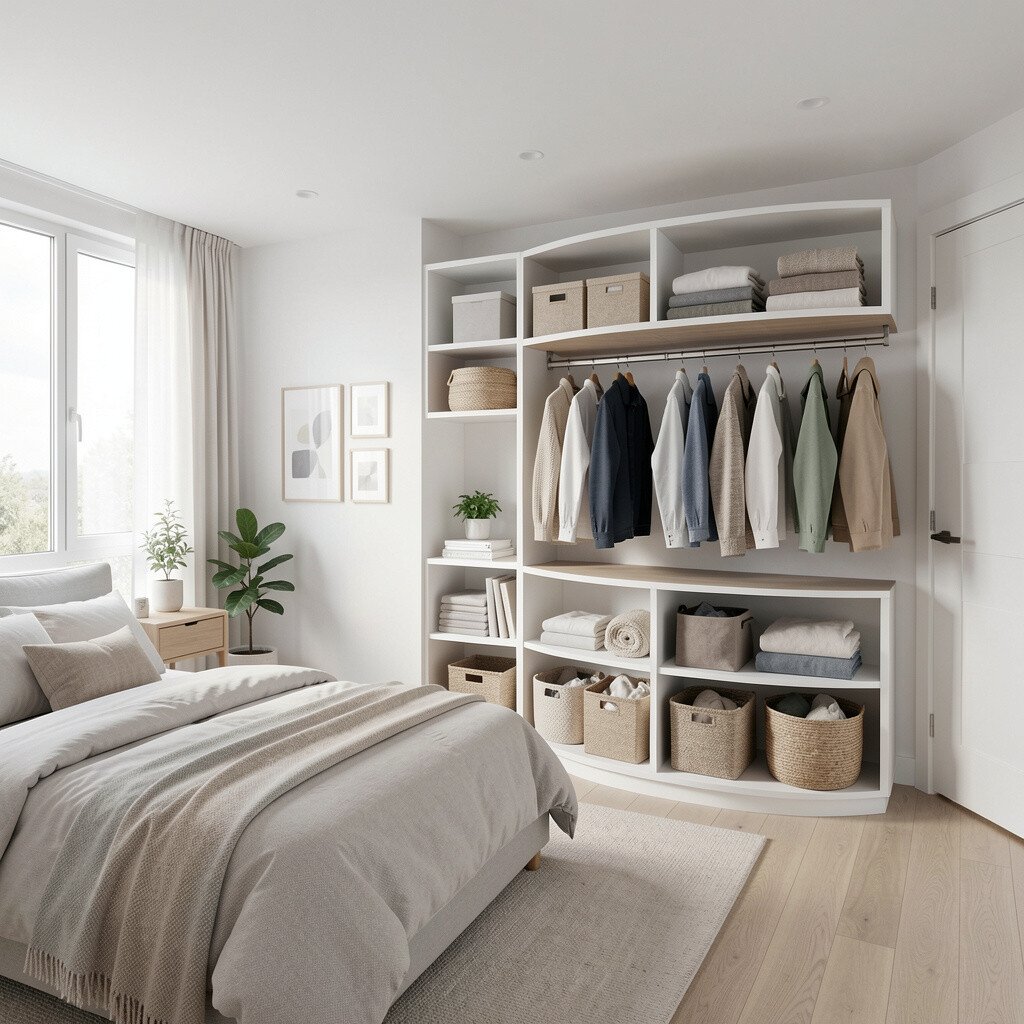
Pick a single spot for seasonal items, like the top shelf of a closet or a bin under the bed. Keep only the current season items there, and move the rest away.
This helps you avoid a “everything everywhere” feeling that builds over time. When you rotate, you also get a natural reminder to check what you still use. A simple checklist in your notes app can keep the switching fast and stress-free.
12. Make a “Bookshelf of Favorites” Instead of a Full Library
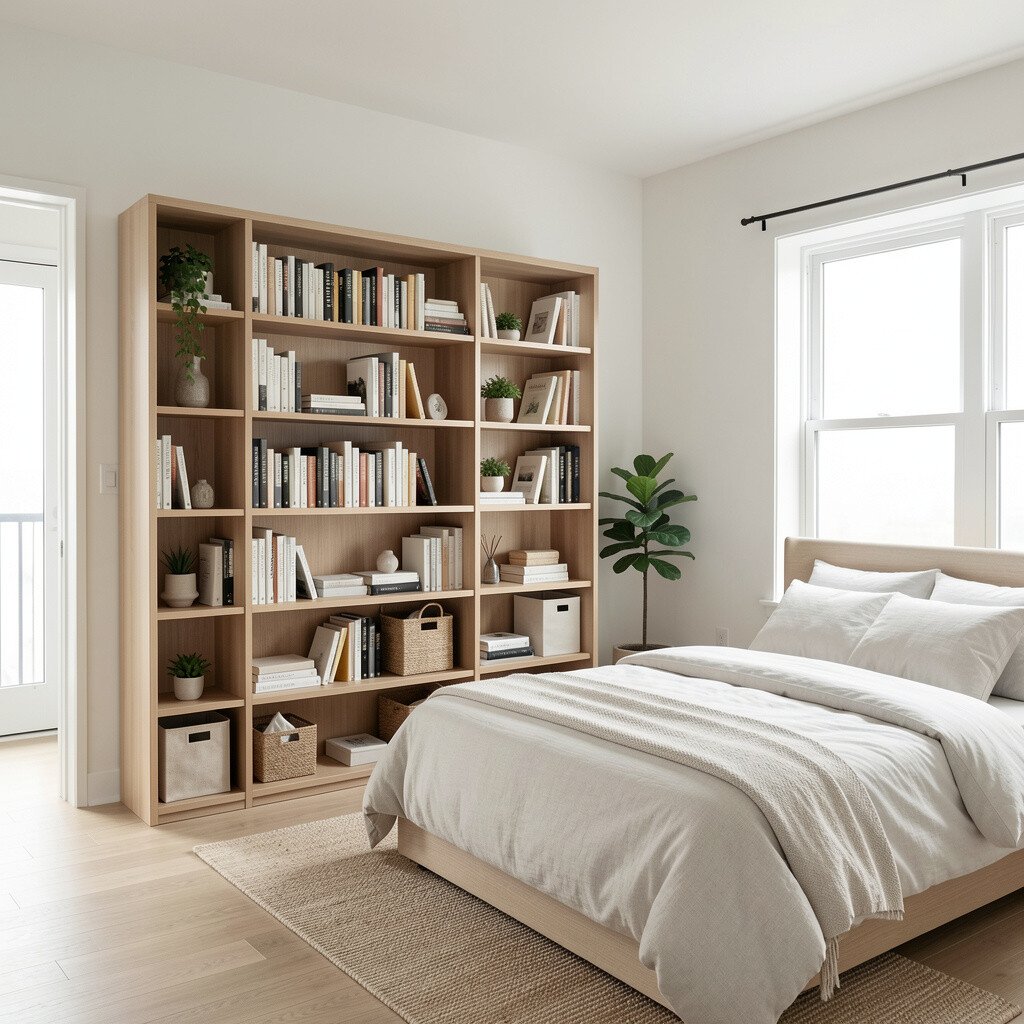
Choose a small group of books to display on shelves, and store the rest in a closet or under-bed. Your display will look curated instead of crowded.
This trend of mindful collecting fits minimalist bedrooms because it puts meaning back into what you keep. It also makes dusting easier since the visible area stays manageable. Use bookends or a small tray to hold small decor items so everything looks intentional.
For personalization, rotate your favorites when the season changes or when you finish a read. If you need a low-cost setup, use what you have and limit the display space. A little selection can look more stylish than a full shelf.
13. Keep a Minimal Laundry Setup With One Sort Option
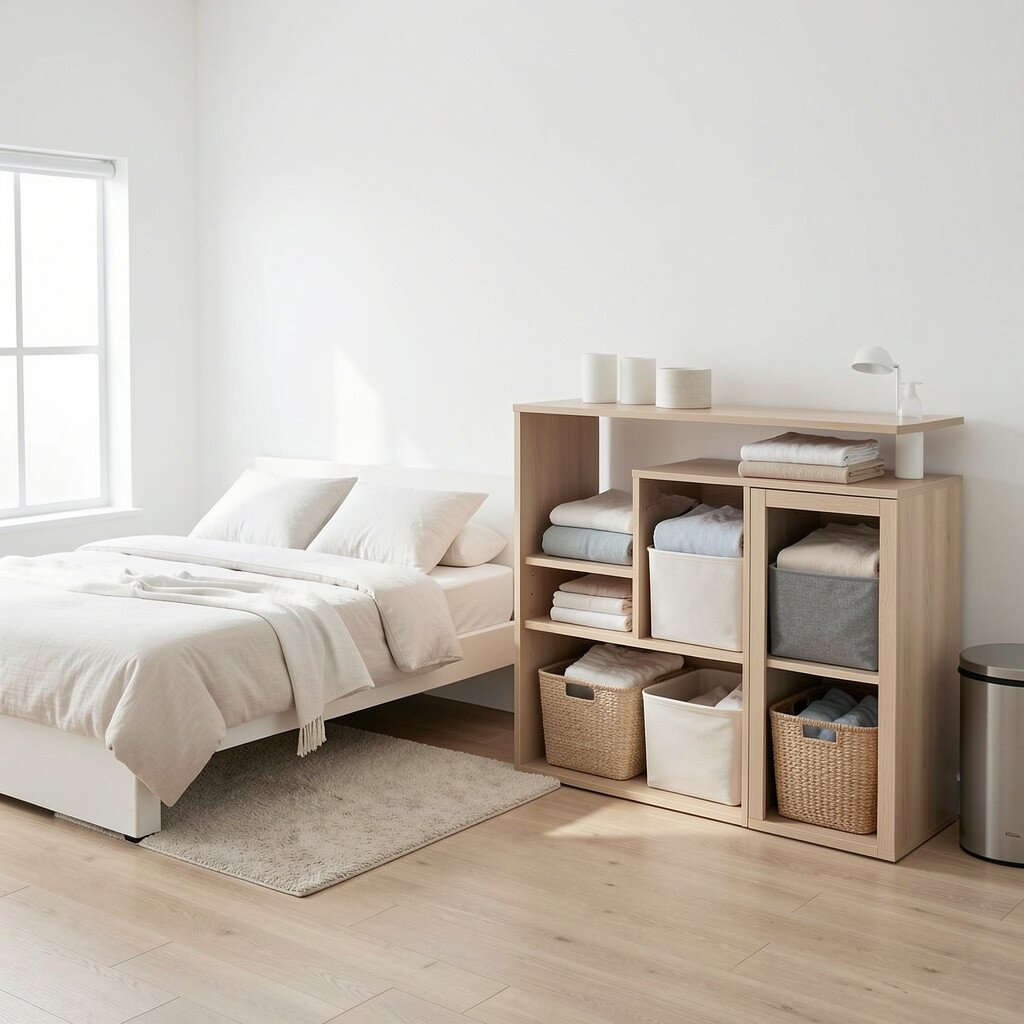
Use one hamper for everyday laundry and one smaller bin for delicates or items that need extra care. Place them where you already walk, so sorting feels automatic.
This reduces clutter in the room while still keeping your laundry routine simple. When sorting happens right away, your bedroom stays calmer and you avoid the stress of late-night sorting. Pick bins with lids or neutral colors to keep the visual look tidy.
14. Add a Vertical Hanging Organizer for Accessories
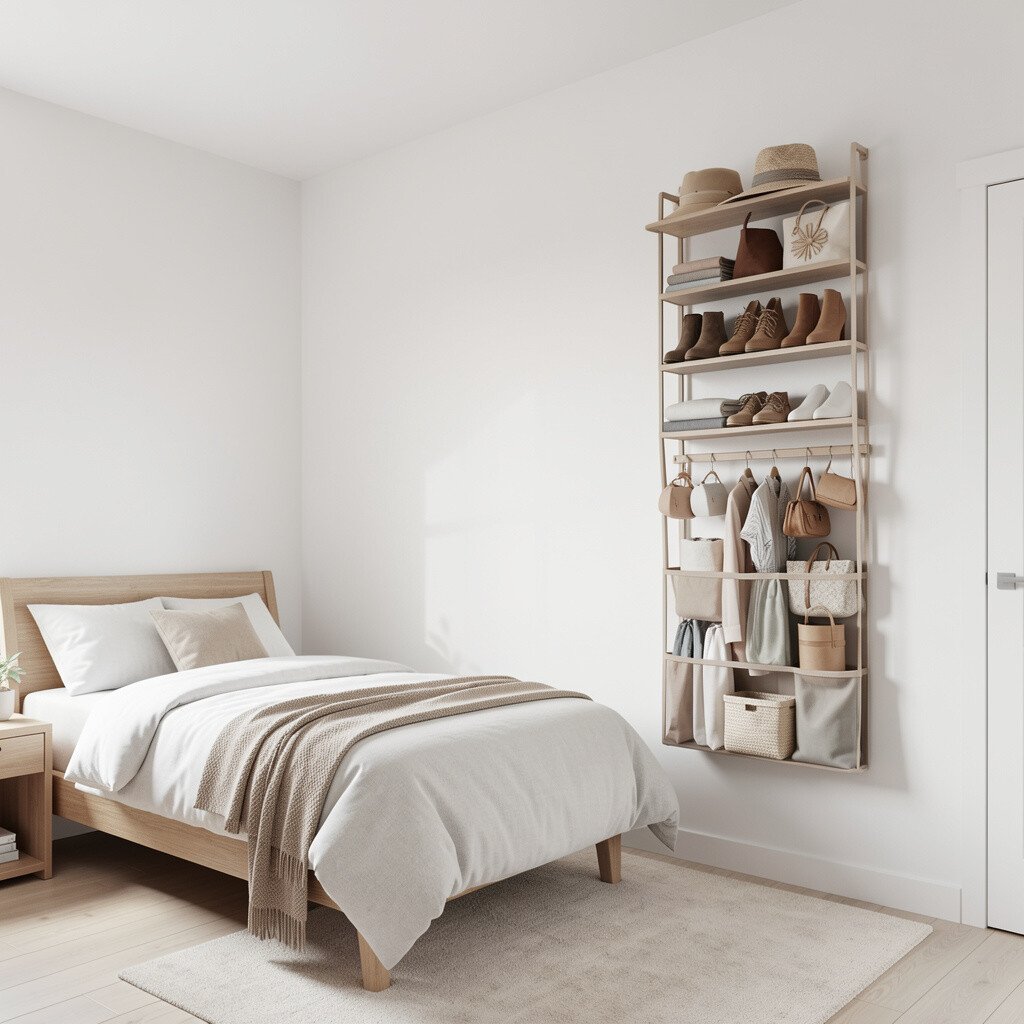
A hanging organizer can hold jewelry, scarves, and small accessories without taking up drawer space. Choose one that hangs from the back of a door or inside a closet wall.
It keeps tiny items from getting lost, and you will spend less time searching. The clear front sections also help you see what you have at a glance. For a minimalist feel, select an organizer in a neutral fabric or a simple clear material.
15. Put a Small Tray in the Closet for Odds and Ends
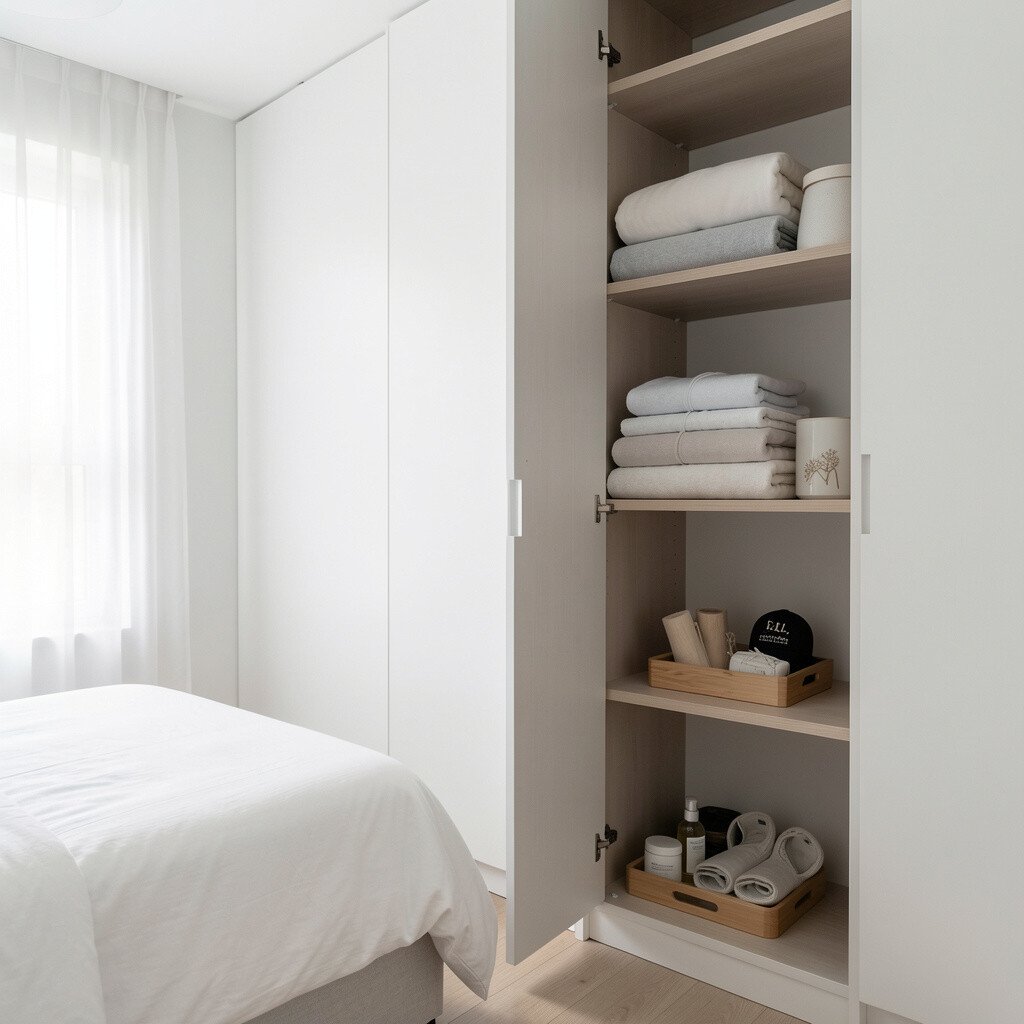
Place a shallow tray on a closet shelf for small items like keys, sunglasses, or hair tools. When everything has a tray, the closet stops becoming a dumping ground.
This is practical for upstairs bedrooms because you likely use the closet area often during daily routines. It also helps you keep your morning steps smooth because you can grab items quickly. If you want to spend less, reuse a dish from a thrift store and keep it clean and simple.
To personalize, match the tray style to your decor, such as ceramic for a soft look. Keep the tray small so it stays a “home” rather than a storage cliff. When you maintain the tray, the whole room looks more intentional.
16. Choose One Statement Piece and Keep the Rest Simple
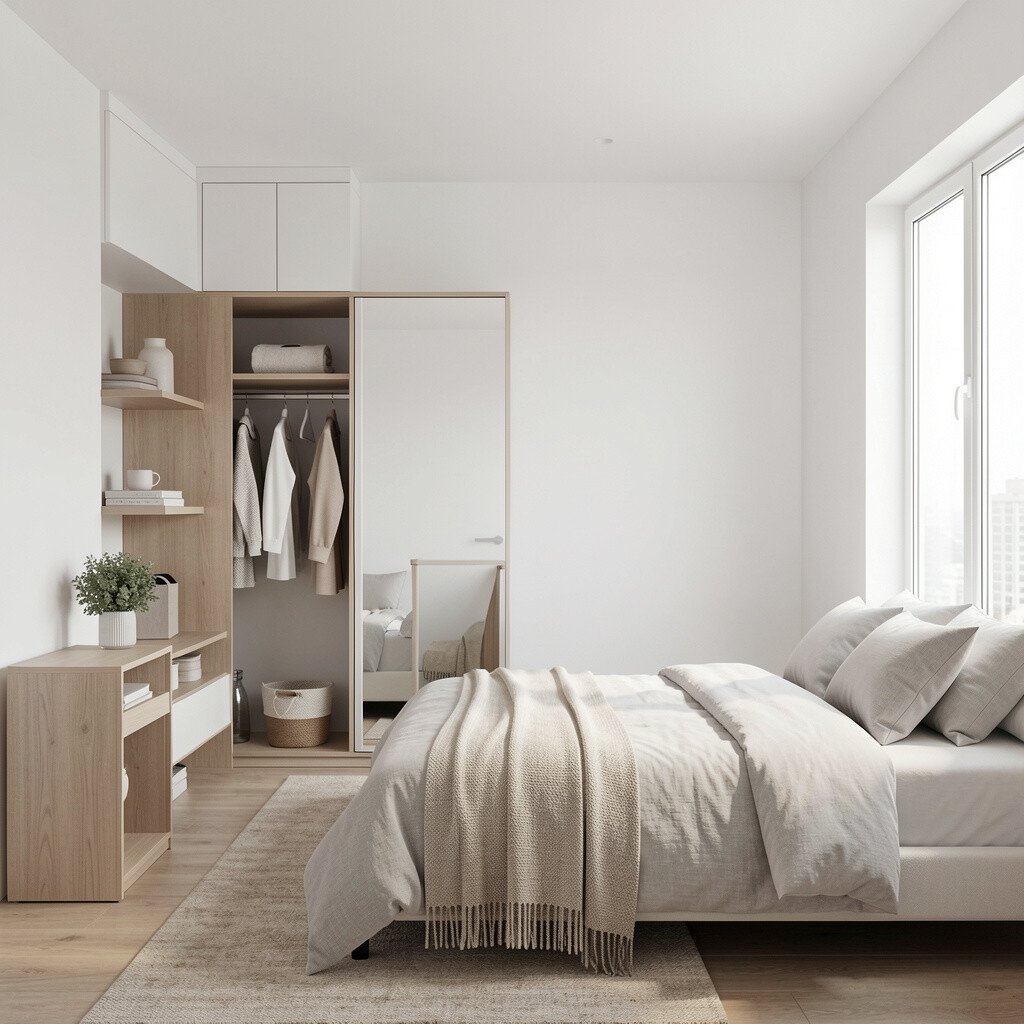
Pick one visual anchor for your room, like a soft textured rug or a simple wall art piece. Then keep everything else understated so the space feels balanced.
This minimalist approach makes the room feel design-forward without requiring lots of furniture. A clean background lets your chosen style show through. When you organize, you can even store similar items together so the room stays calm around that statement.
17. Use Drawer Dividers to Stop Mixed-Up Clutter
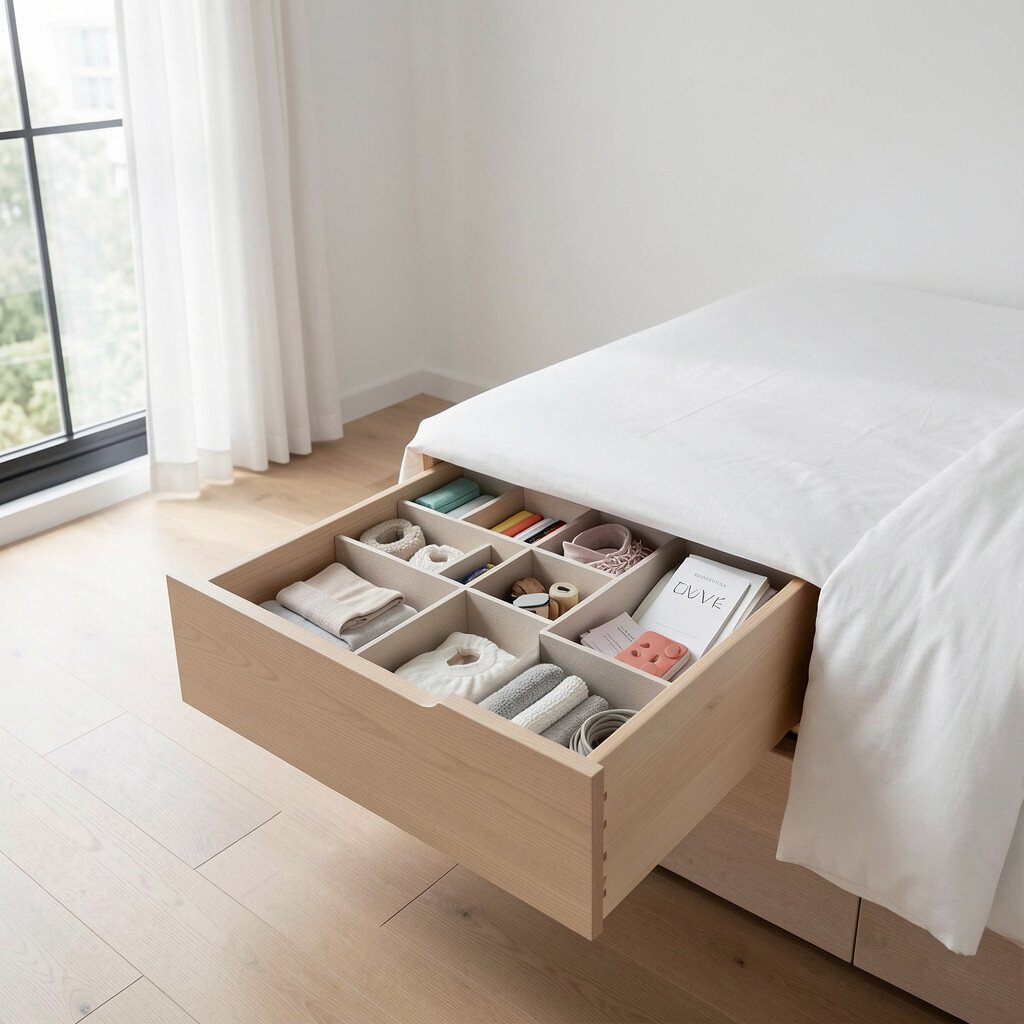
Install simple dividers to separate items like socks, sleepwear, and undergarments. Even basic cardboard dividers work if they fit snugly.
Divided drawers reduce the “pile effect,” where items mix and become messy again. It also helps you keep your space tidy during busy weeks when you do not have time to reorganize. Make it yours by adjusting divider sizes for your habits.
If you want to keep costs low, measure your drawer and cut sturdy material to size. For a more polished look, cover the dividers with fabric or contact paper that matches your palette. When everything has its own lane, the bedroom always looks ready.
18. Keep the Ceiling and Corners Clear With Tidy Lighting
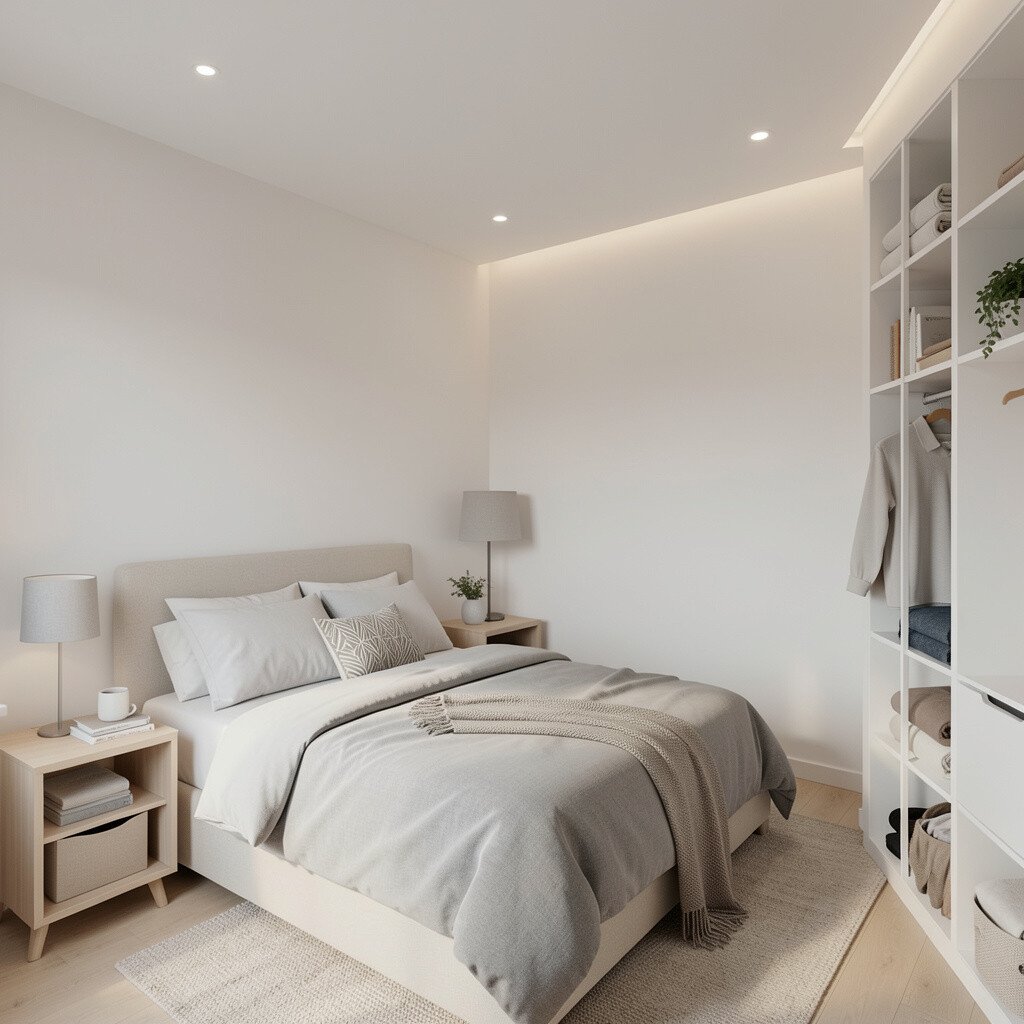
Choose lighting that helps the room feel warm without crowding surfaces. A wall sconce or a simple floor lamp can reduce the need for extra side tables.
When lighting is placed thoughtfully, corners look less busy and the room feels calmer. It also gives you more room for storage choices since you are not forced into placing items on crowded furniture. For a trend-friendly look, go for soft warm bulbs that make the space feel cozy.
19. Build a “Return Basket” for Daily Cleanup
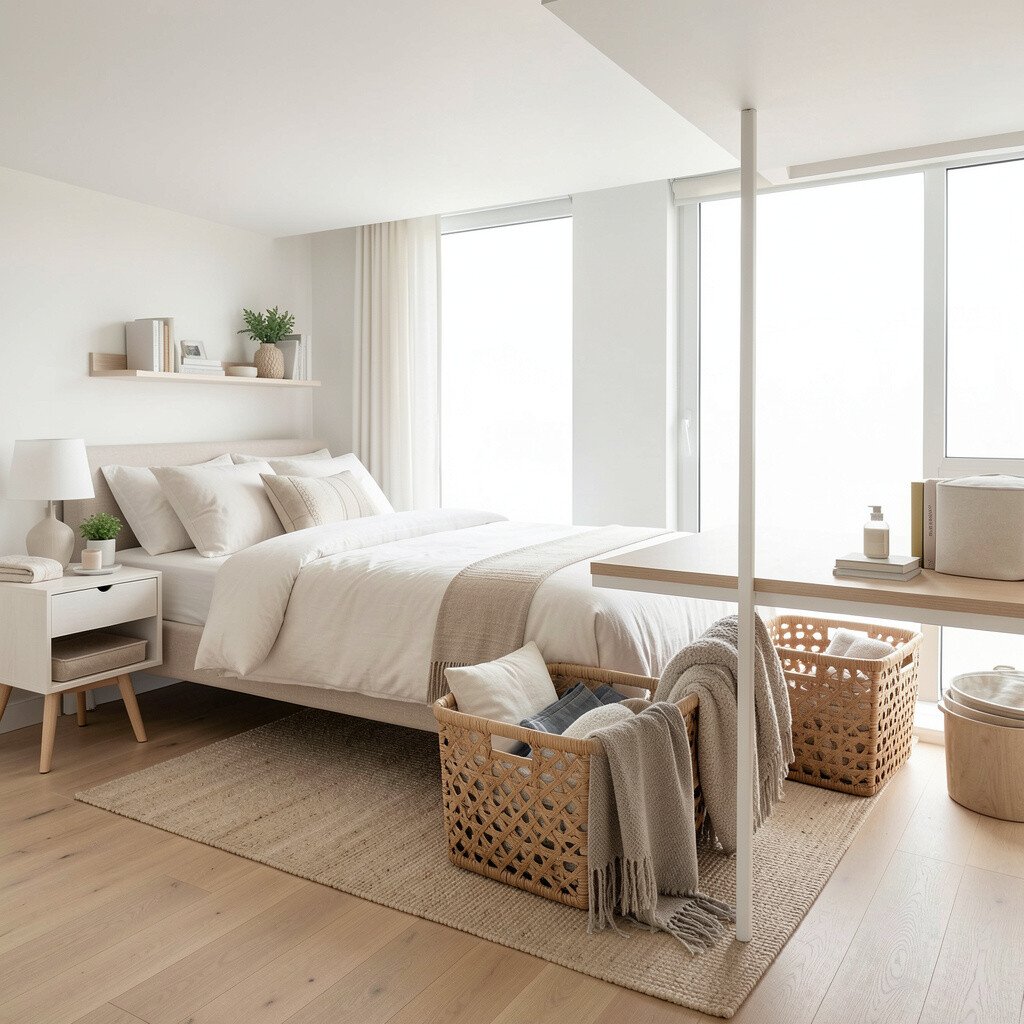
Place a basket in the bedroom for items that belong elsewhere in the house. Every time you walk by, add the item, then do a quick return during your daily routine.
This helps stop small clutter from turning into a bigger mess. It also makes cleanup feel smaller and more doable, which matters on busy weekdays. Use a basket you like seeing, such as a woven style, so the process feels easy rather than annoying.
20. Personalize With One Visible Memory Shelf
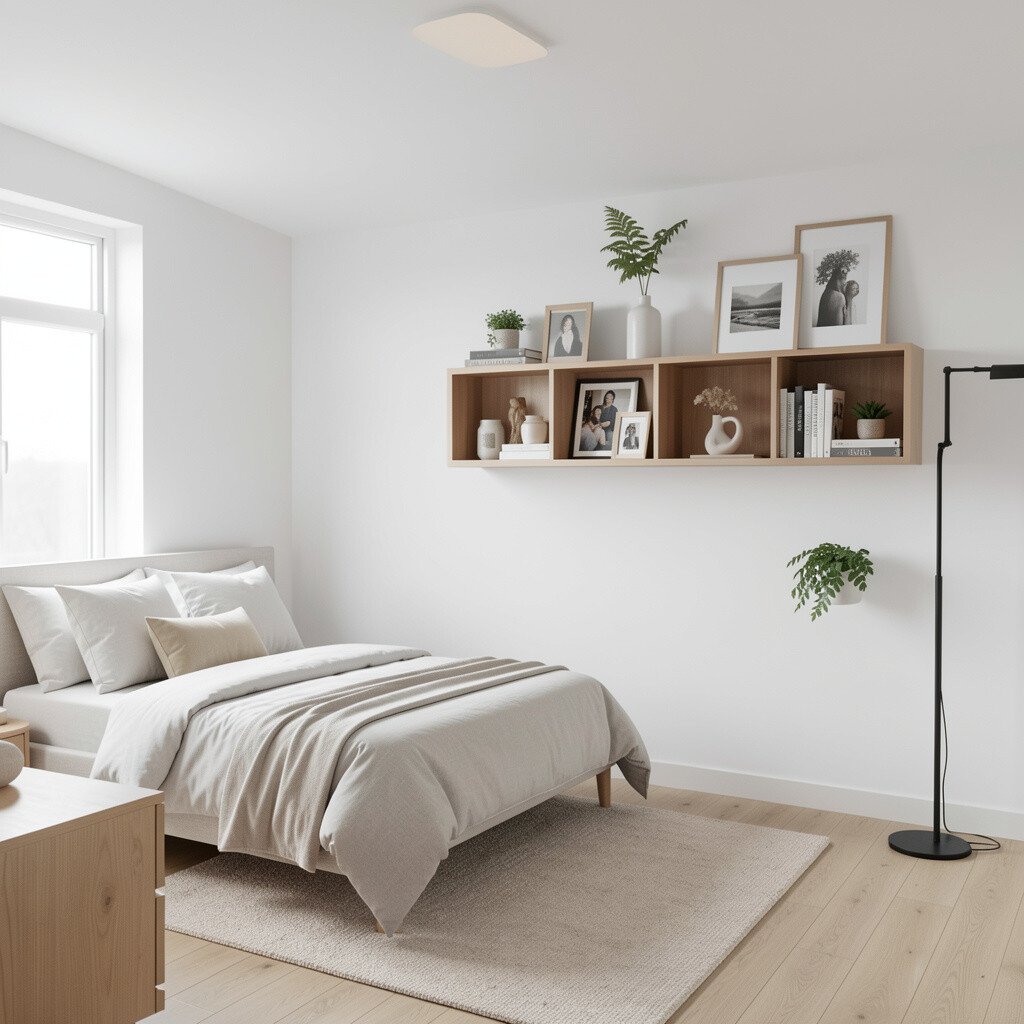
Create a small shelf or ledge where you keep a few meaningful items, like a photo frame and a small keepsake. Keep it tiny so it supports the minimalist look instead of overpowering it.
This is a great way to add warmth without adding chaos. Visible memories remind you why the room feels good, even when you keep the rest super simple. Choose frames that match your palette and keep the number of items small, so everything stays clear and easy to maintain.
For practicality, store extra supplies in nearby drawers or bins so the shelf can stay neat. If you want to spend less, use a picture rail or a thrifted shadow box. Over time, this personal touch makes your organized bedroom feel truly yours.