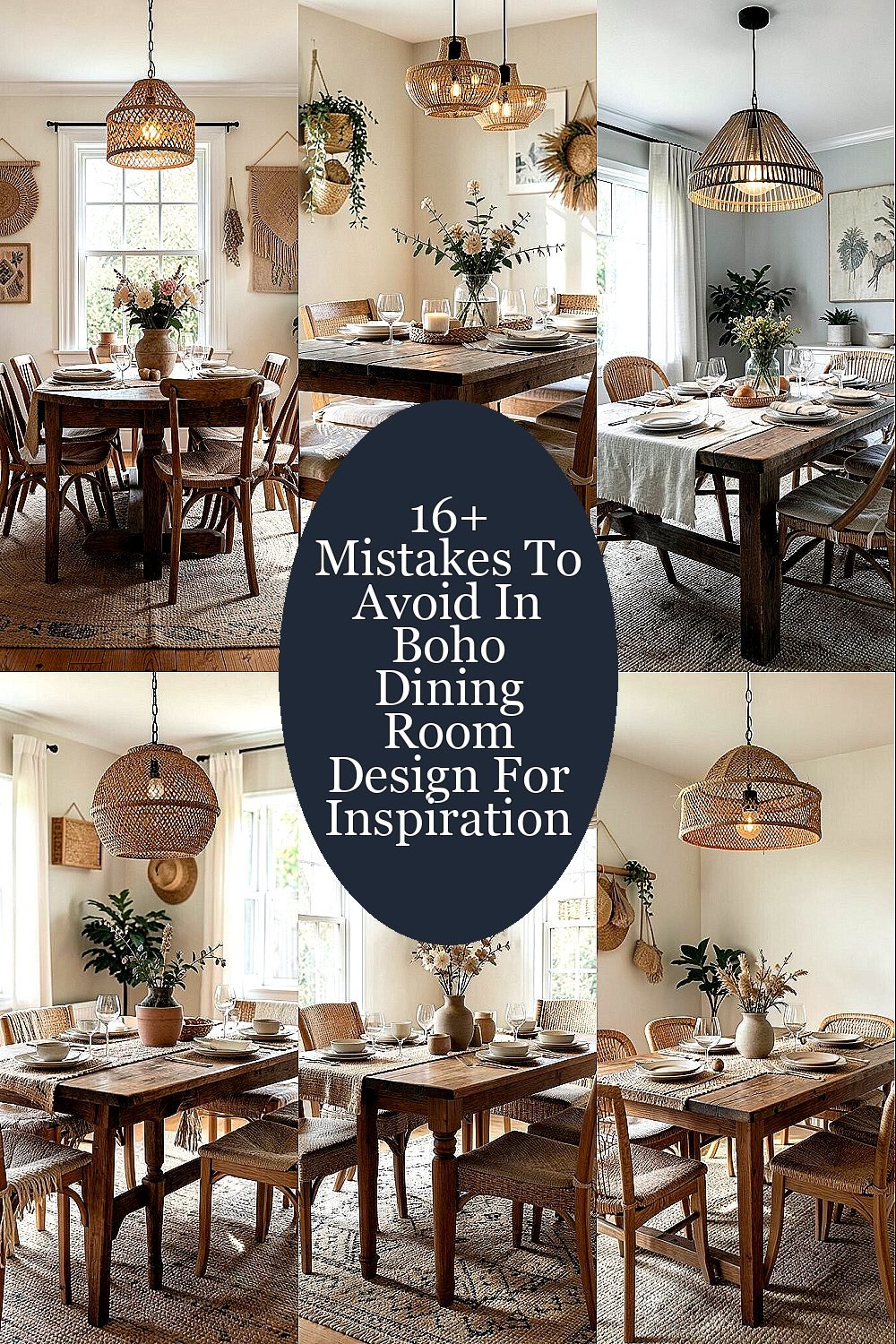
Boho dining rooms can feel warm, easy, and full of life. Small choices can make them charming or messy.
1. Filling the Room With Too Many Styles

A boho dining room can look rich and relaxed when it mixes pieces with care. If every chair, rug, and lamp comes from a different world, the room may feel noisy instead of calm.
Pick one main mood and let the rest support it. A woven chair, a simple wood table, and a soft patterned rug can create a space that feels unique without costing a fortune.
2. Ignoring the Size of the Table

A table that is too large can crowd the room and block the easy flow that boho style needs. A table that is too small can leave the space feeling unfinished and lose the cozy visual balance.
Measure first so the room can breathe around the edges. Round tables, slim benches, and light wood tops are popular now because they keep the look open and friendly while also saving money compared with heavier furniture.
The right size also makes everyday meals more pleasant. It gives room for candles, plants, and woven placemats without making the surface feel packed.
3. Choosing Cold Lighting

Harsh white light can flatten the soft colors and textures that make boho rooms shine. Warm lamps, paper shades, and dim bulbs create a gentle glow that feels welcoming at night.
Think of lighting as part of the decoration, not just something practical. A thrifted lamp or a plug-in pendant can bring charm at a lower cost, and it is easy to match them with rattan, wood, or brass details.
Layering light also helps the room feel more useful. A mix of overhead light and table lamps lets you set a mood for dinner, homework, or a slow weekend brunch.
4. Forgetting Texture

Boho style depends on touchable surfaces that invite the eye to linger. If the room uses only smooth chairs and plain walls, it can miss the cozy depth people expect.
Try mixing linen, jute, cane, ceramics, and rough wood for a fuller look. These materials add uniqueness without needing a big budget, and they work well with current trends that favor natural, handmade pieces.
5. Using Only One Color

A room made of one flat shade can feel sleepy and unfinished. Boho spaces usually feel better when soft earth tones meet dusty pinks, mossy greens, warm clay, or deep blue accents.
You do not need bright rainbow color to make it interesting. A few pillows, art prints, or chair cushions can bring in personality and are easy to change later if your taste shifts.
Color can also help guide the eye around the room. A woven basket in one corner and a painted vase on the table can make the whole space feel connected without much cost.
6. Making the Walls Too Bare
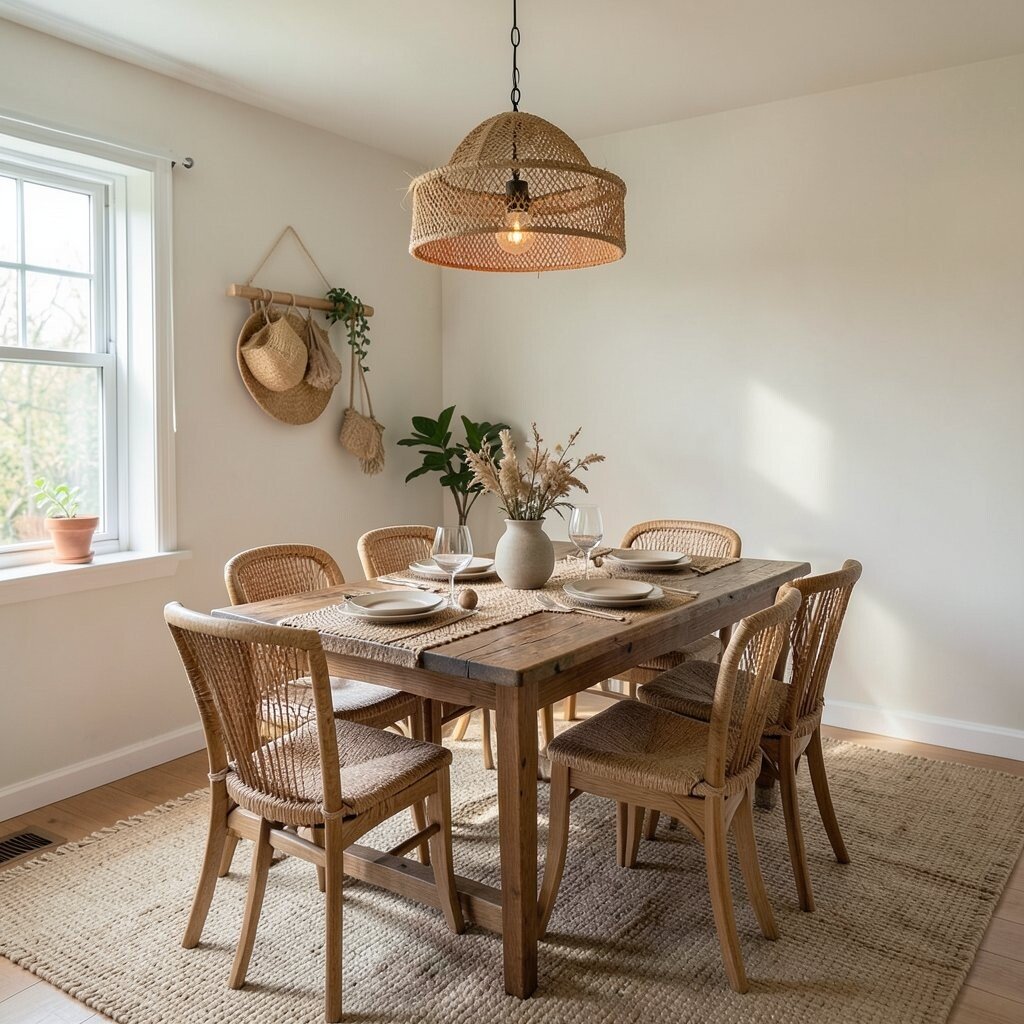
Empty walls can make a boho dining room feel like a waiting room. The style often needs layers of art, baskets, mirrors, or framed textiles to feel complete.
Keep the display simple so it still feels calm. A small gallery wall, one large vintage mirror, or a handmade textile can give the room character and reflect light in a helpful way.
This is also a smart place to show your own story. Travel finds, family art, or thrifted frames can make the room feel personal while keeping the price much lower than buying all new decor.
7. Overlooking the Rug Size
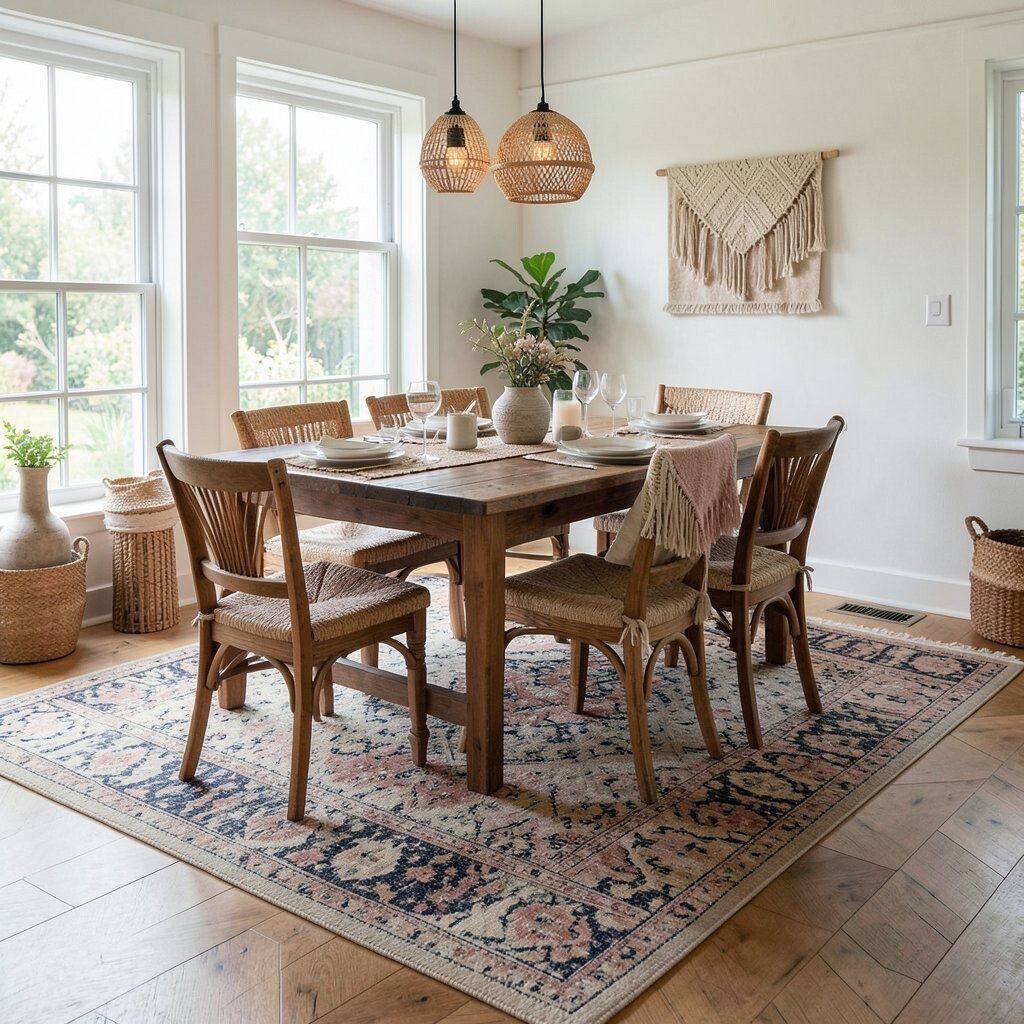
A rug that is too small can make the table look as if it is floating. In a boho dining room, the rug should help anchor the furniture and bring the whole scene together.
Choose one that reaches well past the chairs, so they still sit on it when pulled out. Flatweave and patterned rugs are popular because they feel relaxed, clean easily, and often cost less than thick pile rugs.
The right rug also adds warmth underfoot. It gives the room a cozy base and helps louder patterns feel more thoughtful instead of random.
8. Buying Furniture That Feels Too Heavy
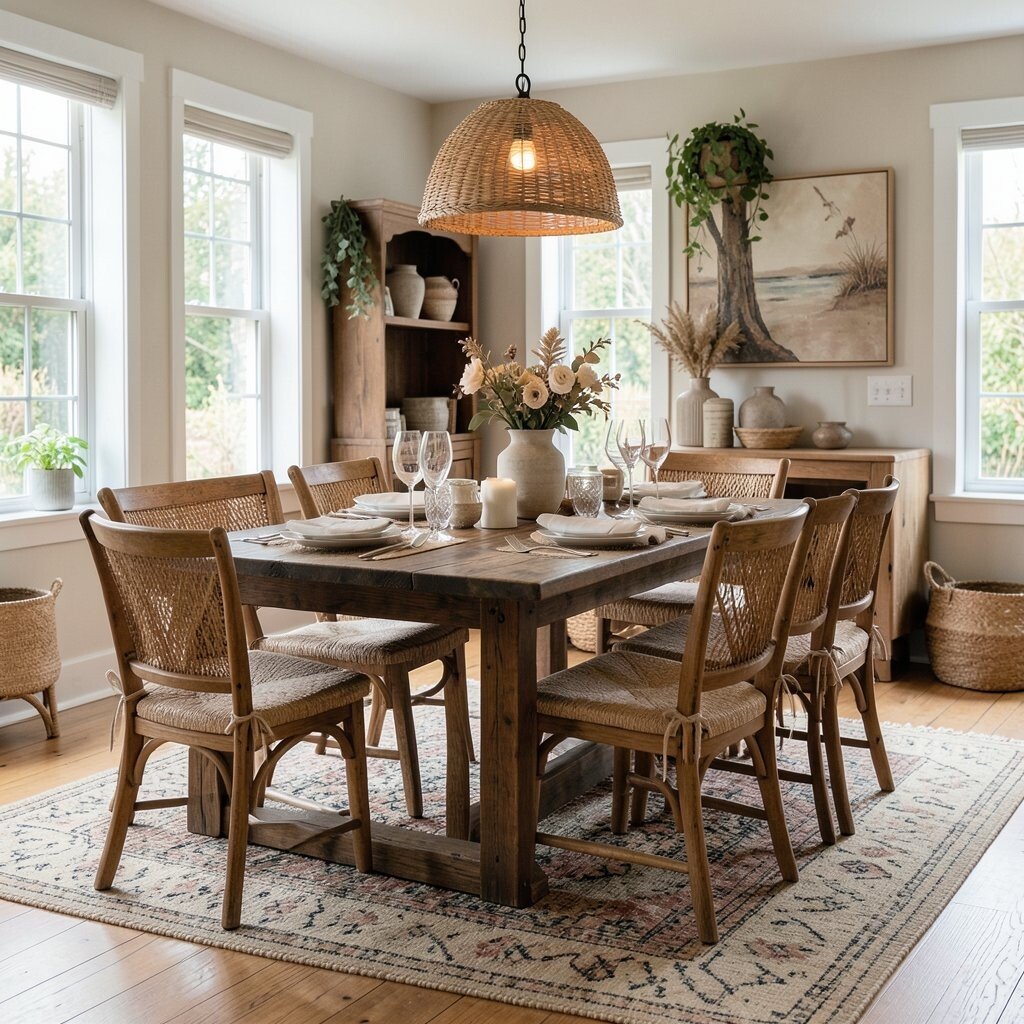
Massive chairs and bulky cabinets can make a boho dining room feel closed in. Lighter shapes with open legs, woven backs, and simple curves keep the room airy and easy to move through.
Look for pieces that let light pass around them. Cane chairs, slim wood buffets, and stools can give the room a fresh look while also making smaller spaces feel larger.
Light furniture can be easier on the budget too. Many secondhand pieces fit this style well, and a little sanding or new paint can make them feel special.
9. Mixing Patterns Without a Plan

Pattern can make a boho room lively, but too many busy prints can fight with each other. When nothing repeats, the room may seem cluttered even if each piece is lovely on its own.
Let one pattern lead and use quieter pieces nearby. A striped rug, floral cushions, and one patterned runner can work together if the colors stay in the same family and the rest of the room stays calm.
This creates a look that feels layered rather than messy. It also makes it easier to add new items later, since you already know what tones and shapes belong in the room.
10. Leaving Out Greenery
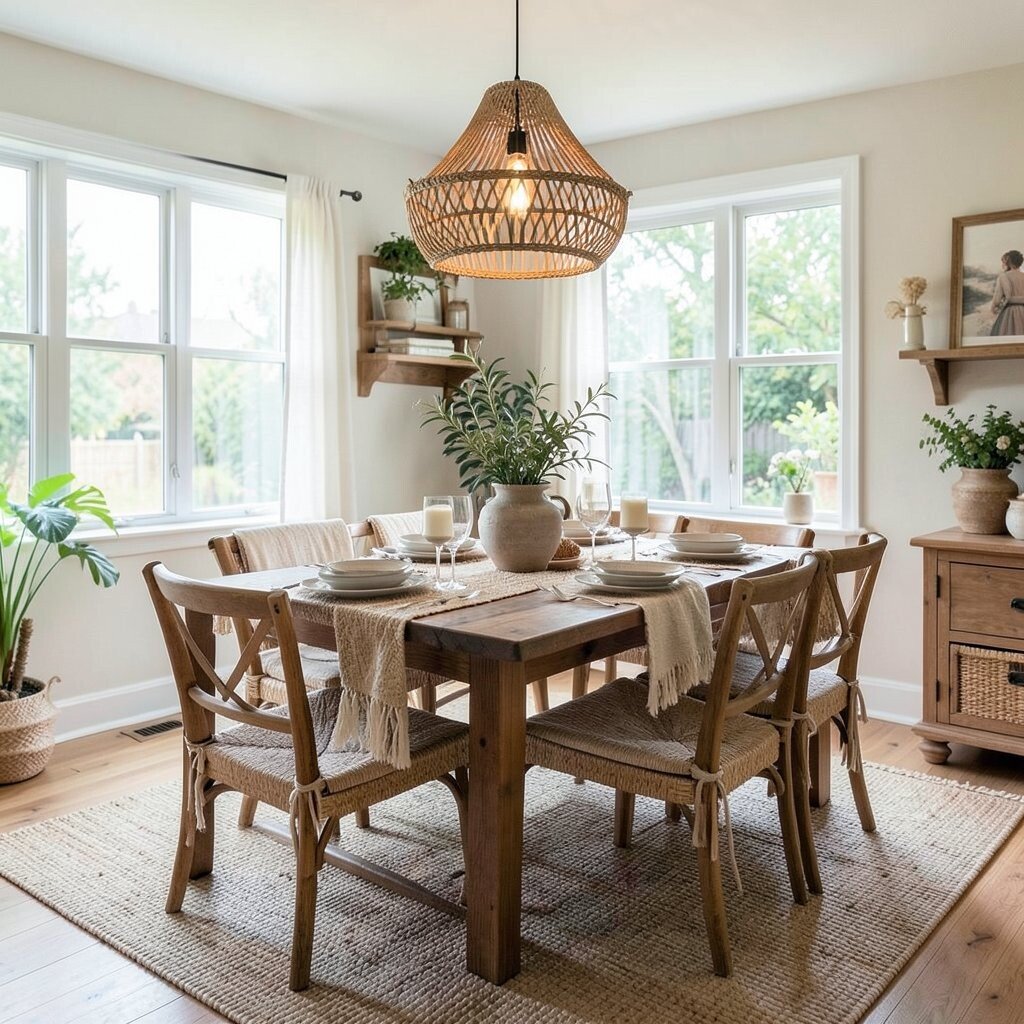
Plants bring life to a boho dining room in a very natural way. Without them, the space can feel a little stiff, even if the furniture is stylish.
Use hanging vines, small herbs, or a tall leafy plant in a woven basket. Green leaves soften sharp edges, cost less than many decor items, and fit well with the current love for earthy, lived-in spaces.
You can also choose plants that match your routine. Low-care options work well for busy homes, while fresh herbs near the table add scent and can be used in cooking.
11. Pushing Everything Against the Walls

When all the furniture hugs the edges of the room, the center can feel empty and awkward. Boho dining rooms often look better when the arrangement feels relaxed and easy to gather around.
Try pulling the table slightly away from the wall if the room allows it. A small bench, a basket under a side table, or a reading chair in the corner can make the room feel useful without filling every inch.
This layout creates a friendlier flow for meals and conversation. It can also make a modest room seem more thoughtfully designed, which is a big win when you want style without high cost.
12. Choosing the Wrong Chair Mix

Boho style loves mixed chairs, but the mix still needs a shared thread. If every seat has a different height, color, and shape, the table can lose its calm and inviting look.
Keep one element steady, such as all-wood frames or all-natural seats. Then vary the details with cushions or finishes, which gives you personality while staying easy on the eye and often easier on the wallet.
Mixed chairs can feel very current when done well. They suggest a collected home rather than a showroom, and that handmade feeling is a big part of the style’s charm.
13. Forgetting Storage
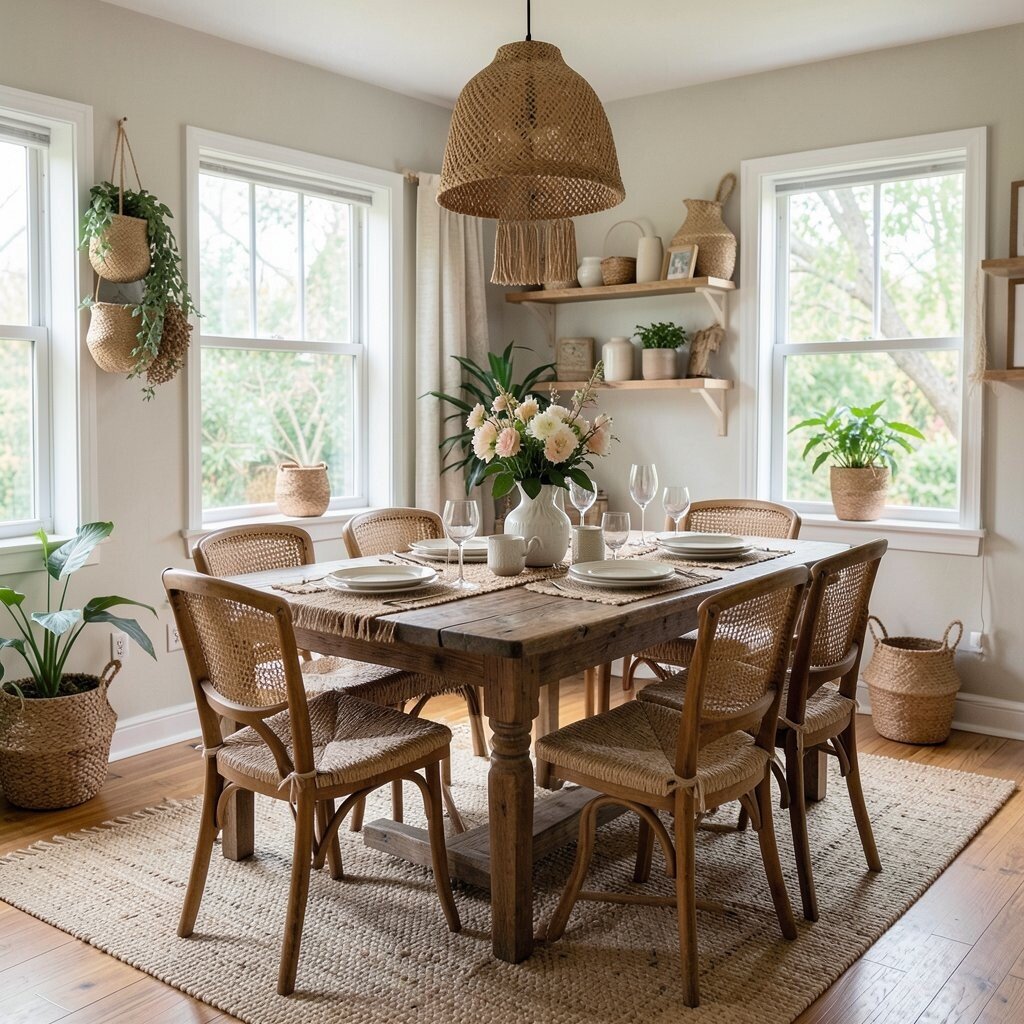
Pretty dining rooms still need places to hide the daily mess. If there is nowhere for napkins, candles, extra dishes, or table games, the room can quickly lose its calm boho feel.
A woven cabinet, open shelves, or a vintage sideboard can solve that problem in a stylish way. These pieces add texture and character, and buying them secondhand can keep the total cost far lower than custom storage.
Storage can also support your personal style. It gives you a place to keep favorite serving bowls or special finds so they can be used often instead of tucked away and forgotten.
14. Making the Space Too Perfect

Boho rooms should feel lived in, not stiff and overly polished. If every edge is sharp and every item looks brand new, the room may miss the relaxed spirit that makes this style so appealing.
Let a few handmade, vintage, or slightly imperfect pieces stay visible. A worn table, a stitched table runner, or a handmade bowl can add warmth and make the room feel more honest and welcoming.
This approach often saves money too, since older items can be easier to find and more affordable than showroom furniture. It also gives the room a story, which is a big part of why boho spaces feel so special.
15. Using Decor That Is Too Small

Tiny decor can get lost in a dining room with a table, chairs, and wall art. When the pieces are too small, the room may feel scattered instead of rich and grounded.
Choose a few larger items to hold the space, such as a bold pendant, a wide mirror, or a generous vase of dried stems. Larger pieces often create a better visual anchor and can be a smart buy because you need fewer items overall.
Big decor also makes the room feel more confident. It gives the eye a place to rest, which helps the mix of colors and textures feel calm instead of busy.
16. Missing a Clear Focal Point

A boho dining room works best when one part of it draws attention first. Without that anchor, the room can feel like a collection of nice things that never fully come together.
Make the table, light fixture, or wall art the star and let the rest support it. This keeps the room easy to understand, and it helps each personal choice feel intentional instead of random.
Current boho rooms often use one strong natural feature, such as a carved table or a bold woven pendant. That look feels fresh, simple to shop for at different price points, and easy to adjust as your style grows.
17. Ignoring Everyday Comfort
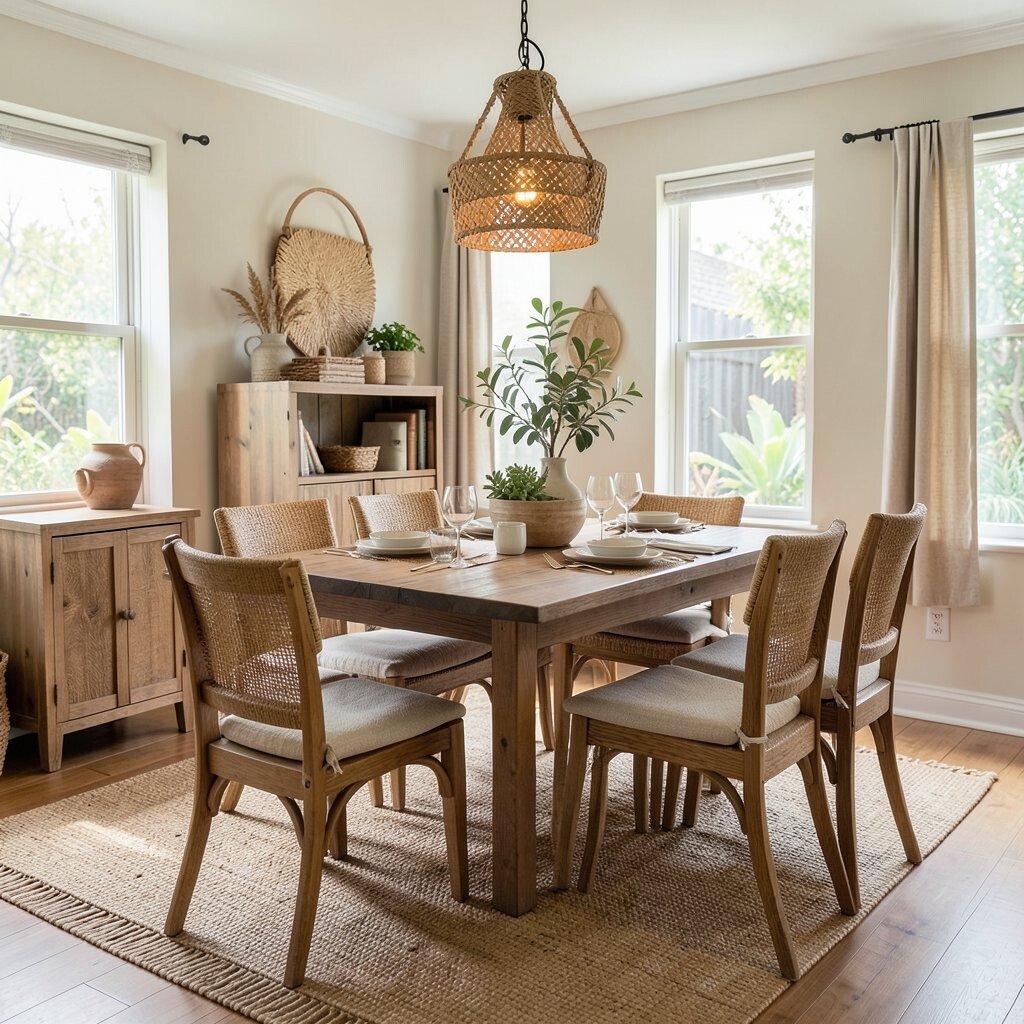
A boho dining room should look lovely, but it also needs to work for real meals and real people. If the chairs feel awkward, the table is hard to clean, or the lighting is too low, the room will not be enjoyed as much as it should be.
Choose fabrics that can handle spills, surfaces that wipe clean, and seating that invites long talks after dinner. Comfort brings the biggest benefit of all, because a room that feels good gets used more often and becomes part of daily life.
Small comfort choices can still be personal and stylish. Soft seat pads, easy-to-reach serving pieces, and warm layers like throws nearby make the room feel thoughtful, cozy, and worth the time you spent on it.