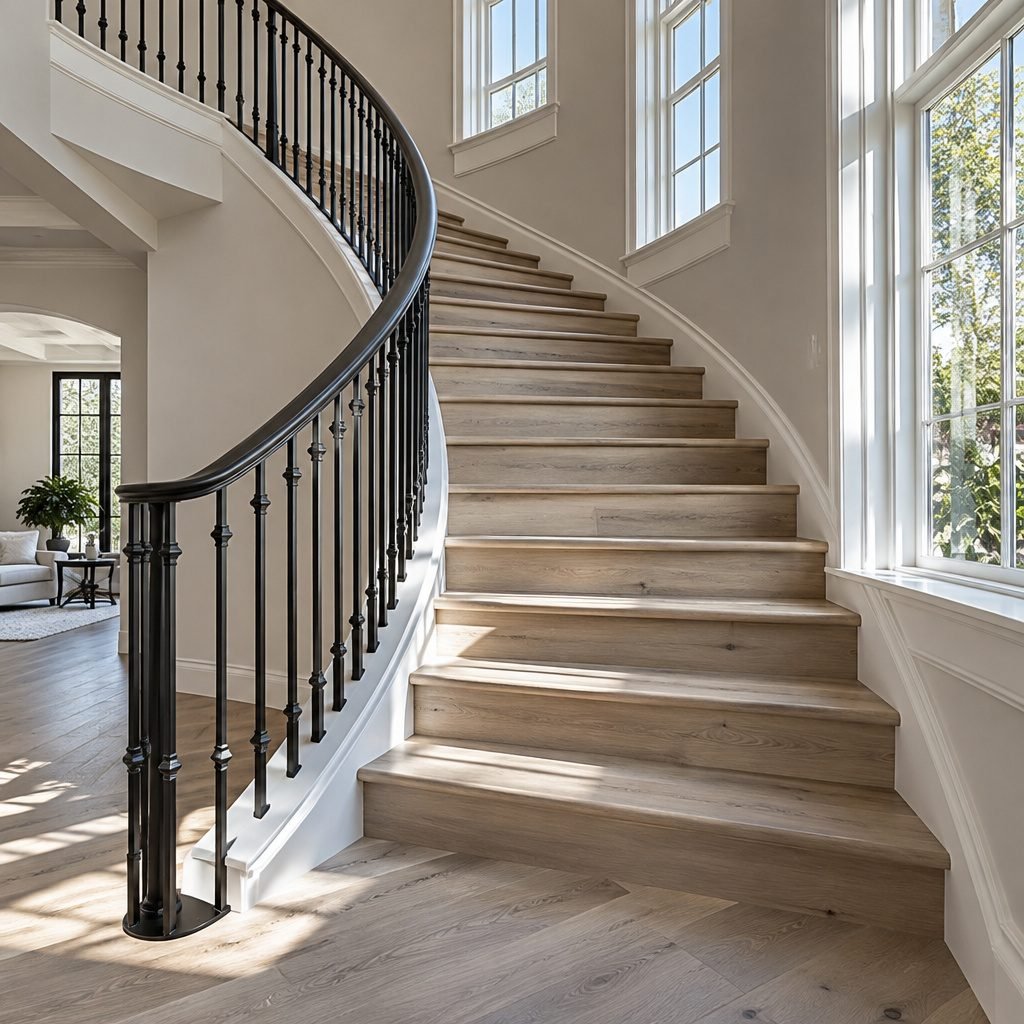
Stairs can make a room feel calm or awkward in a single glance. Small choices change the whole mood.
1. Ignoring the Staircase Shape

A staircase with the wrong shape can look bulky, stiff, or out of place in the room. When the form matches the space, the whole area feels smoother and more open.
Curved, straight, and L-shaped stairs each give a very different visual feel, so the shape should fit the home instead of fighting it. A clean straight run can feel modern and simple, while a softer turn can make the stair area feel more graceful and unique, though custom shapes usually cost more than basic layouts.
2. Choosing the Wrong Rail Style

Railings are one of the first things people notice, so a heavy or awkward rail can drag down the whole design. A good rail adds charm and helps the stairs feel finished.
Thin metal rails can feel light and current, while warm wood rails can make a space feel cozy and rich. It helps to match the rail to the rest of the room, and it is smart to think about upkeep and price before choosing a fancy custom look.
A rail can also be a chance to show personality through shape, color, or material. Simple lines often work well in busy homes, and they can save money while still looking polished.
3. Forgetting About Lighting

Dark stairs can look flat and even a little dull, no matter how nice the materials are. Good lighting brings out shape, texture, and color.
Soft wall lights or hidden step lights can make the stair path feel safe and stylish at the same time. This look is popular in many modern homes because it feels calm, and it can be done in a budget-friendly way with simple fixtures or LED strips.
Lighting can also help a staircase stand out as a feature instead of fading into the background. If the home has a warm style, soft yellow light works well, while cooler light can suit cleaner, newer designs.
4. Using Materials That Clash

Some staircases look messy because the wood, metal, glass, and wall finishes do not work together. A clean mix makes the stairs feel planned and easy on the eyes.
It helps to repeat one or two finishes around the room so the stairs feel part of the same story. Bold mixing can be exciting, but it should still feel balanced, and using too many expensive materials can raise the price fast.
5. Making the Steps Feel Too Heavy

Thick-looking steps can make a staircase feel bulky and close in a room. Lighter visual lines often feel more open and fresh.
Open risers, slim edges, and simple supports can help the stairway look less heavy. This style is often used in current homes because it feels airy, and it can make a smaller room seem bigger without changing the whole floor plan.
There is also room for personal style through the finish on the treads or the shape of the side trim. If the home needs warmth, a wood tone can soften the look, while white or pale shades can brighten the space without a big cost.
6. Skipping the Wall as a Design Feature

A plain wall beside stairs can make the whole area feel forgotten. That blank space can become a strong part of the design with very little effort.
Artwork, framed photos, narrow shelves, or textured paint can turn that wall into something welcoming. Even simple changes can improve the look a lot, and they often cost far less than a full staircase rebuild.
The best choice depends on the home’s mood and the amount of light in the area. A quiet gallery wall can feel personal, while a bold color or textured panel can give the stairway a fresh and modern edge.
7. Forgetting Balance Between Open and Closed Views

Some stairs feel too closed, while others feel too exposed, and both can look off. The right balance helps the staircase feel safe, stylish, and easy to live with.
Glass panels can create a clear, modern look, but they may need more cleaning and can cost more than simple rails. Solid side walls can feel calm and classic, and they also give more room for color, trim, or art if you want a stronger personal touch.
8. Overdoing Decorative Details

Fancy carvings, loud patterns, and too many trim shapes can make a staircase feel crowded. Clean details often stand out more because they are easier to read from a distance.
One strong feature can be enough, such as a special handrail, a detailed newel post, or a patterned runner. This keeps the design unique without making it feel noisy, and it can also help control spending because every extra detail adds cost.
Modern stair design often leans toward simple forms with one special twist. That mix feels fresh and useful, and it works well in homes that want charm without clutter.
9. Picking Colors That Fight the Room

Color can make stairs feel calm, bold, warm, or cold. When the stair color clashes with nearby floors and walls, the whole area can feel uneasy.
Soft matching shades usually make the stairs feel more pulled together, while a strong dark or bright tone can be used for drama. A painted stair can be a lower-cost way to refresh the look, and it gives plenty of room for personal style if you want something playful or sleek.
It is smart to test colors in daylight and at night because stair areas can change a lot with lighting. A shade that looks rich in one setting may feel muddy in another, so a little planning can save time and money later.
10. Ignoring the Surrounding Architecture

A staircase should feel like part of the house, not like it was dropped in by mistake. When the design follows the room style, the whole home feels more thoughtful.
A rustic home may suit wood and warm tones, while a clean city apartment may look better with crisp lines and lighter finishes. Matching the staircase to the home can make it feel special and lasting, and it can prevent costly redesigns that happen when the style feels wrong later.
Small details matter here, such as the ceiling height, nearby doors, and the shape of the landing. Those pieces can help guide the final look so the staircase feels natural, comfortable, and worth noticing.
11. Making the Design Too Busy for Small Spaces

In a tight area, a staircase with too many features can feel crowded and hard to enjoy. Simple lines often look better because they give the eye a place to rest.
Slim rails, light colors, and open views can help a small stair area feel larger and brighter. This approach is popular right now in compact homes, and it usually costs less than heavy custom work with lots of built-in parts.
Personal touches still fit well, even in a small space, through a special runner, a painted riser, or one bold art piece nearby. The key is to keep the main structure calm so the room can breathe.
12. Forgetting Comfort for Looks

Stairs can look beautiful and still feel wrong if they are hard to use. A design that feels good underfoot and in the hand will always age better.
The step size, the handrail height, and the grip of the surface all matter for daily comfort. Practical choices can still look stylish, and they often save money over time by reducing wear and the need for fixes.
Textured finishes, soft edges, and well-placed rails can make a staircase feel friendly and easy to move on. A home feels more unique when beauty and comfort work together instead of fighting each other.
13. Leaving the Staircase Without a Focal Point

Without one clear focus, a staircase can fade into the background and feel plain. A strong focal point gives the eye a place to land and makes the stairway more memorable.
This focus could be a bold light fixture, a striking railing, a painted wall, or a runner with a simple pattern. Choosing just one main feature can keep the look balanced, and it may keep the project more affordable than trying to make every part special.
The best focal point usually depends on the rest of the room and the amount of natural light. A bright space may suit a darker feature, while a dim space may benefit from shine, glass, or a lighter finish.
14. Not Thinking About Long-Term Style

It is easy to chase a trendy look that feels exciting now but looks tired later. A staircase works best when it feels current and also has staying power.
Trends like mixed materials, slim rails, and soft neutral colors can look fresh, but they should still fit the home’s character. A smart design mixes style with staying power, and that helps protect your money because you are less likely to redo the stairs too soon.
Personal style still matters, so it is worth adding one or two details that feel like your home. When the staircase feels unique, practical, and easy to love for years, it becomes a real part of the house instead of just a way to move between floors.