
Your kitchen wants a cleaner, brighter vibe without feeling sterile. Small cabinet choices can make a room feel brand new.
Modern white cabinets are timeless, but your styling is what makes them feel current. With the right details, you get a fresh look that still works for real life.
1. Bright White With Soft Matte Finish
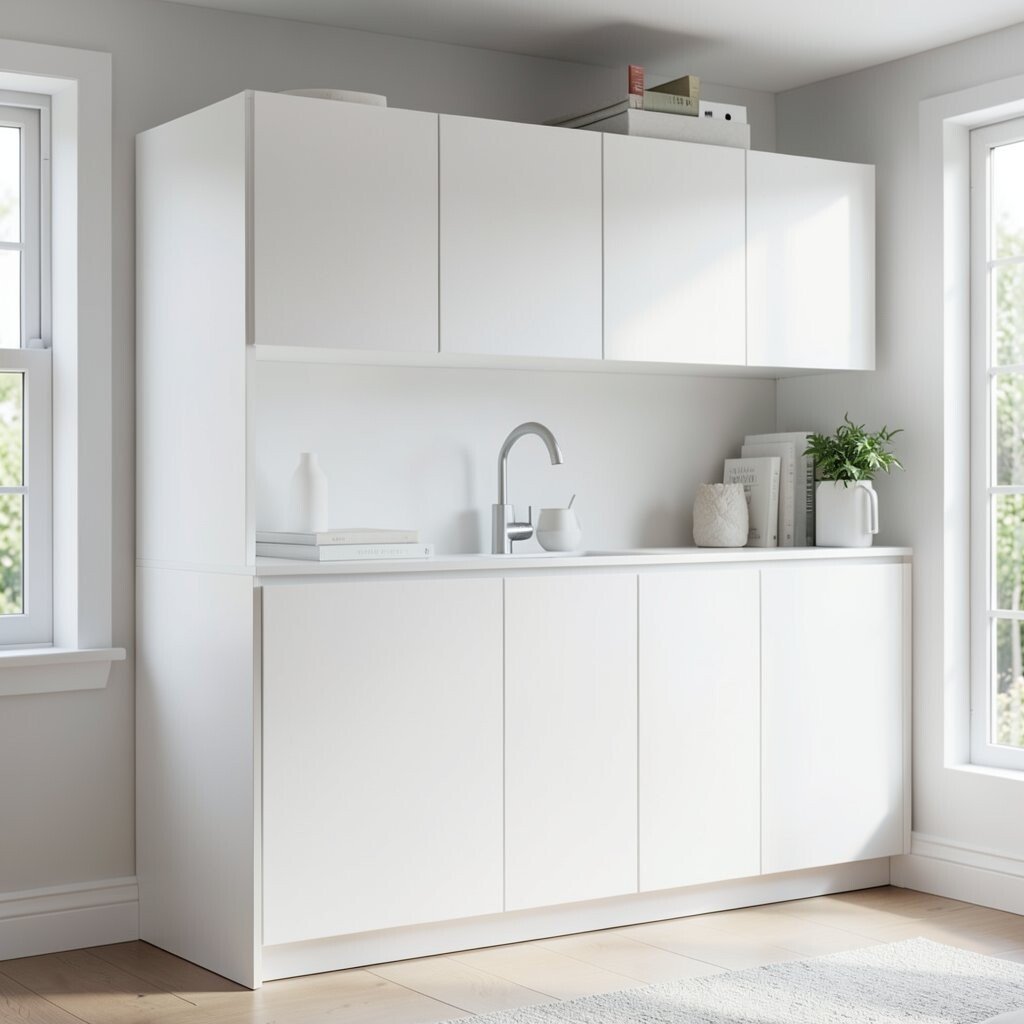
Start with a soft matte white that looks smooth but never shiny. It makes countertops and backsplash colors pop without reflecting harsh light.
The matte surface hides fingerprints better than glossy paint, which is a daily win. Pair it with warm lighting, like 2700K bulbs, so the white feels cozy. For a practical step, wipe doors with a gentle cleaner and a microfiber cloth to keep the finish looking even.
2. White Cabinets With Sleek Flat Panels

Choose flat-panel cabinet doors for a clean, modern silhouette. You’ll notice how flat surfaces give the whole kitchen a calm, tailored look.
This style works well with both minimal hardware and a more tailored design. Keep spacing consistent and install doors level, because the simple lines make mistakes more noticeable. If you want a personal touch, match the cabinet height to your lifestyle by selecting taller units for pantry storage.
For cost, flat panels can be budget-friendly when you select standard sizes and finishes. If custom widths are needed, focus custom work on visible sections, like the main run above the counter. Add a slim toe-kick lighting strip to make the bottom edge feel high-end.
3. Shaker-Style White With Modern Hardware
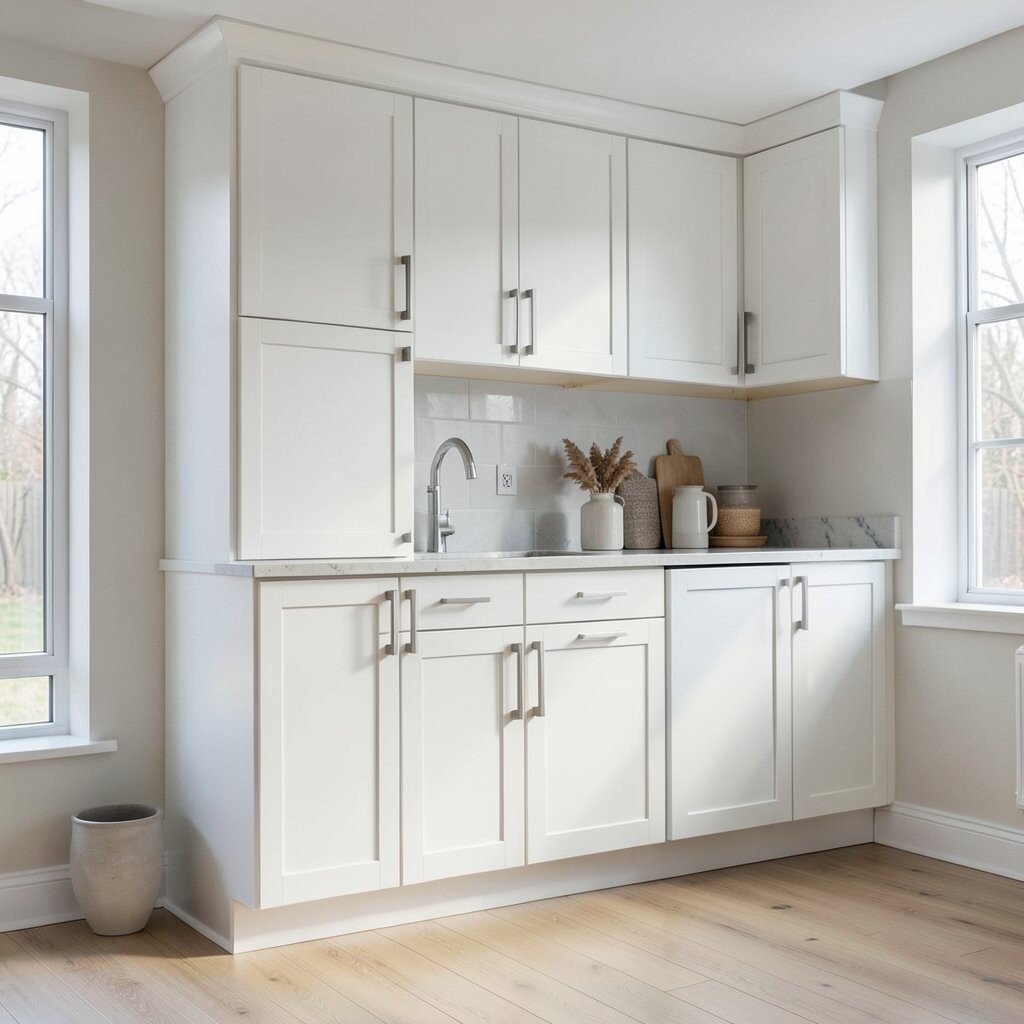
Shaker doors bring a friendly structure, and white paint keeps them crisp. The look feels familiar, but hardware choices can modernize it fast.
Swap round knobs for slim bar pulls or modern cup pulls. You’ll get a subtle upgrade that changes the feel of the entire room. Keep hardware in a consistent metal, such as brushed nickel or matte black, so the kitchen looks finished.
Shaker cabinets are also great for practical storage because the door style hides minor alignment issues. When budgeting, consider repainting existing Shaker cabinets instead of replacing them. If you’re starting from scratch, ask about semi-custom options that keep door styles uniform while allowing a better layout for your workflow.
To personalize, try slightly different finishes on open shelves versus closed cabinets. That contrast can feel designer-made while staying realistic to maintain.
4. White Cabinets Paired With Dark Countertops
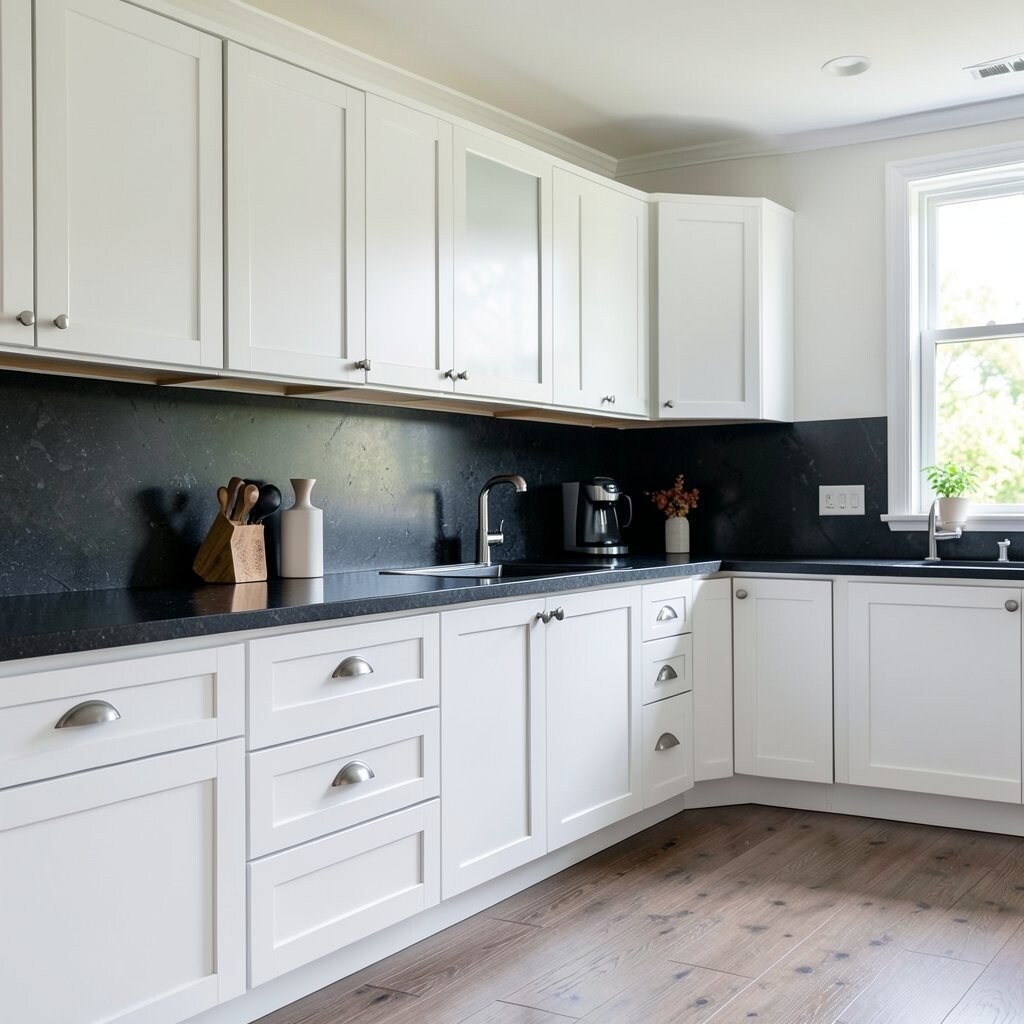
Imagine crisp white cabinets set against a deep charcoal or espresso countertop. The contrast is bold, yet it still feels clean and modern.
Dark counters add visual weight, making the cabinets look bright and well-framed. When you choose a countertop pattern, look for something with gentle movement, so the room feels softer than flat. For day-to-day use, select a surface with good stain resistance and wipe spills quickly.
If you want a trend-forward look, choose a slab-style look with fewer seams. It makes the kitchen feel like one continuous surface, especially with white cabinetry. Budget-wise, keep the dark countertop limited to the main kitchen run and consider a simpler material for smaller sections like the island sides.
Personalize by adding a complementary accent, like a dark faucet or a matching utensil holder. Small repeats help the whole design feel intentional.
5. Upper Cabinets to the Ceiling for a Grand Feel

Full-height white cabinets create a neat, tall look that draws the eye upward. Even in smaller kitchens, this can make the space feel bigger.
When cabinets go to the ceiling, you also gain extra storage for items you use less often. Choose a consistent door style from top to bottom to keep the design modern. Use adjustable shelves so you can customize spacing for baking trays, bowls, or seasonal serving dishes.
If you’re watching cost, keep the ceiling run in standard depths and prioritize finishes that are hardest to see. You can save money by using simpler interior shelving while keeping the exterior doors premium. Add a long ledge of open space at the top only if your ceiling has enough height to avoid clutter.
6. White Cabinets With Glass-Front Upper Doors
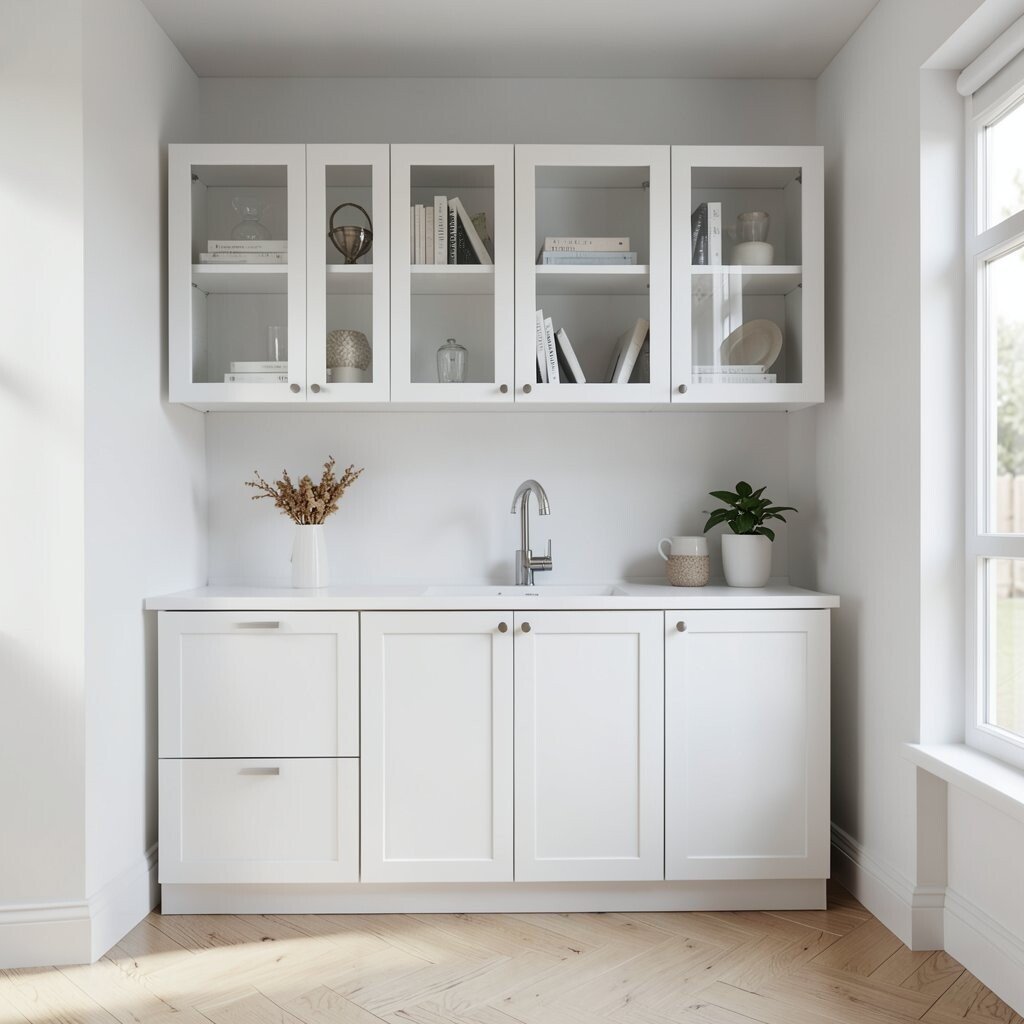
Glass-front cabinet doors instantly make a kitchen feel lighter. You can see curated dishes inside, which adds charm without extra décor on the counters.
Use clear glass for an airy feel, or try frosted glass to blur what’s behind. This gives you privacy if you prefer a calmer look. For practical use, place your most-used items at eye level and store smaller pieces inside labeled containers.
7. Floating Shelf Accents in Warm White
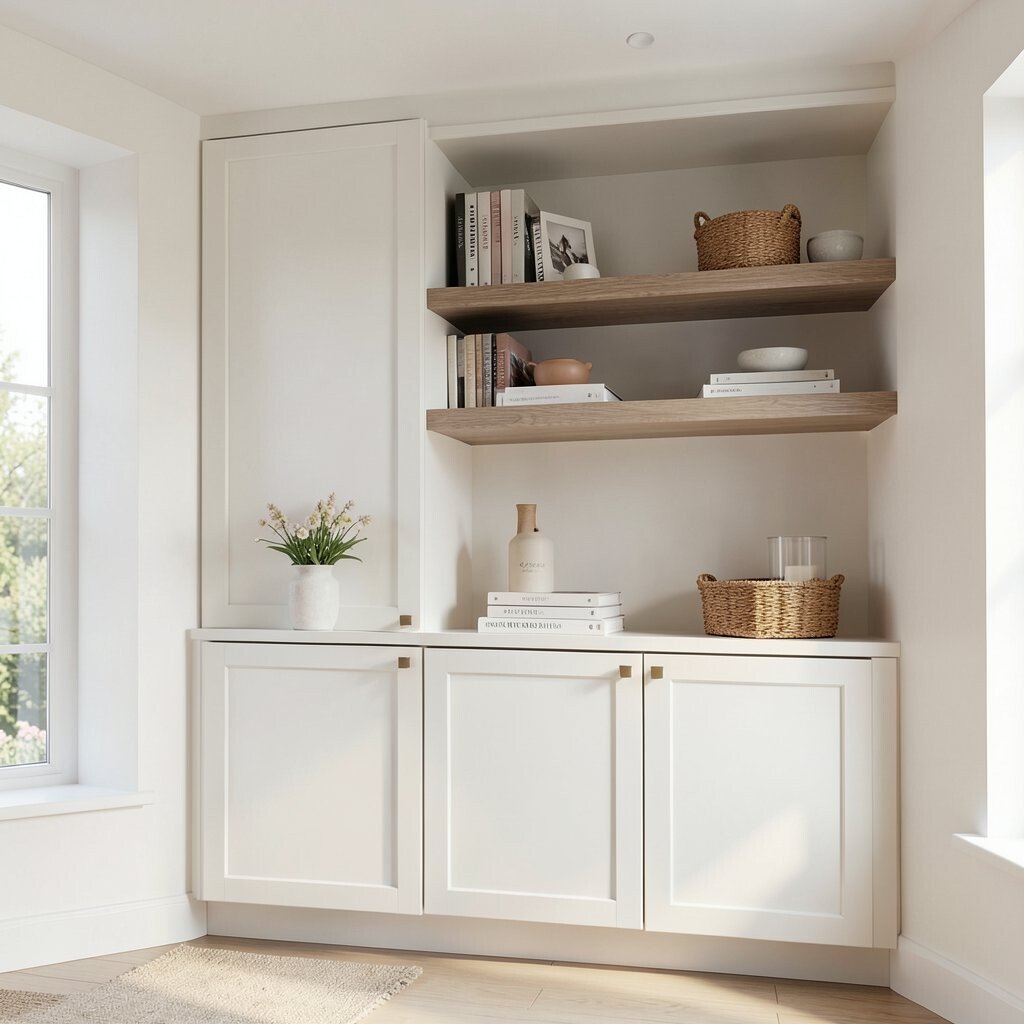
Swap a few upper cabinets for floating shelves in a matching warm white. The result feels modern, but still welcoming, like a coffee shop counter.
Shelves let you style with color through bowls, mugs, and glassware. It’s also helpful for accessibility, since you can grab everyday items fast. Consider shelf brackets in a finish that matches your hardware to keep everything cohesive.
If you want a budget-friendly approach, use shelves only above the areas you use most, like near the coffee station. Keep your shelf styling simple with a repeating color theme to avoid visual mess. This idea works especially well if you keep the rest of the cabinetry clean and minimal.
8. Off-White Cabinets for a Softer Modern Look

If bright white feels too harsh, go for a warm off-white. It adds a gentle glow and pairs beautifully with wood tones and soft textiles.
Off-white cabinets make natural materials feel richer, like oak floors or walnut accents. Choose paint swatches in daylight and evening light, because undertones look different at night. For personalization, blend off-white cabinets with a backsplash that has warm whites, creams, or subtle beige movement.
Cost considerations are similar to standard white paint, but off-white can reduce the need for extra color correction in your lighting plan. A consistent undertone also helps with trim, doors, and ceiling paint coordination. Keep cabinet interiors a similar tone if you want the whole space to feel unified.
9. White Cabinets With Hidden Rail Pulls
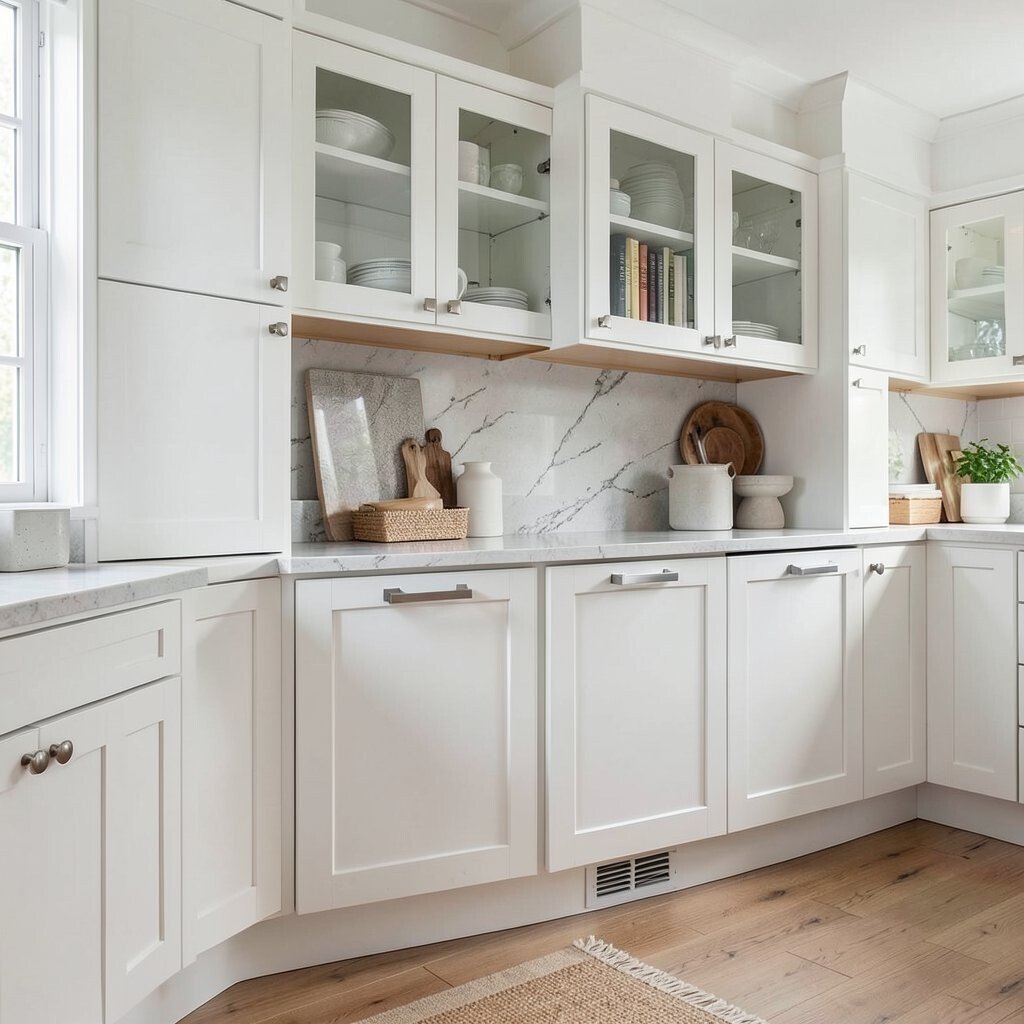
Hidden rail pulls make cabinets feel sleek and almost seamless. Your eyes focus on the door lines instead of hardware, which creates a modern, tidy look.
You’ll also enjoy easier cleaning, since there’s less metal surface to wipe. This is a great option for households with kids, because there are fewer protruding knobs to bump. Ask installers about comfortable opening positions so the handle placement fits your height and grip style.
When budgeting, hidden hardware can cost more upfront, but it often reduces long-term wear by keeping surfaces protected. For a unique touch, pair hidden pulls with a subtle texture in the door finish. Matte white plus gentle texture looks high-end without needing extra décor.
To keep it practical, maintain consistent handle alignment across drawers and doors so the workflow stays smooth.
10. White Cabinets With Built-In Lighting
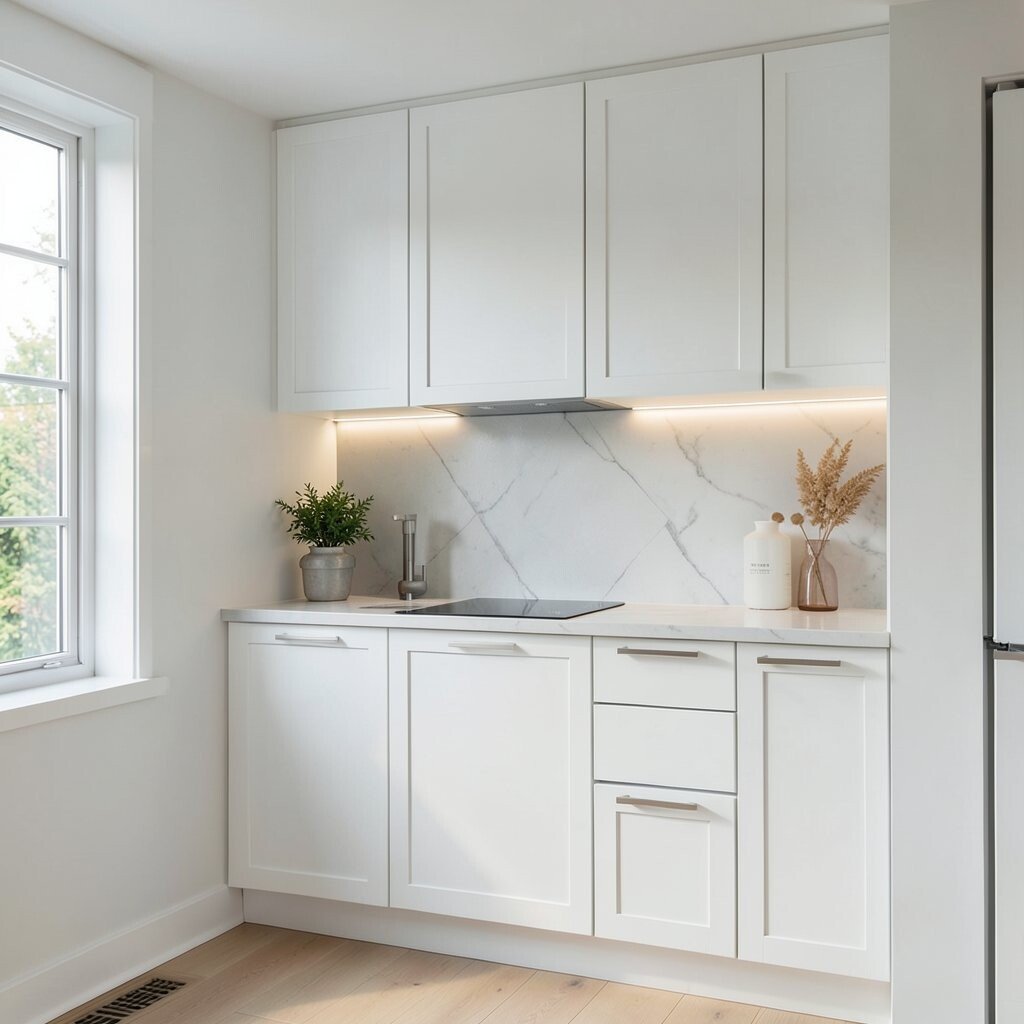
Under-cabinet or interior cabinet lighting can make white cabinets look more expensive. Soft light turns storage areas into a calm, glowing feature.
Consider LED strips under uppers to brighten prep zones and reduce shadows. This helps you see spills and crumbs faster, which is a real day-to-day benefit. For a personalization idea, add a light shelf strip inside glass-front doors so dishes look crisp but not harsh.
11. High-Gloss White for a Clean, Modern Statement
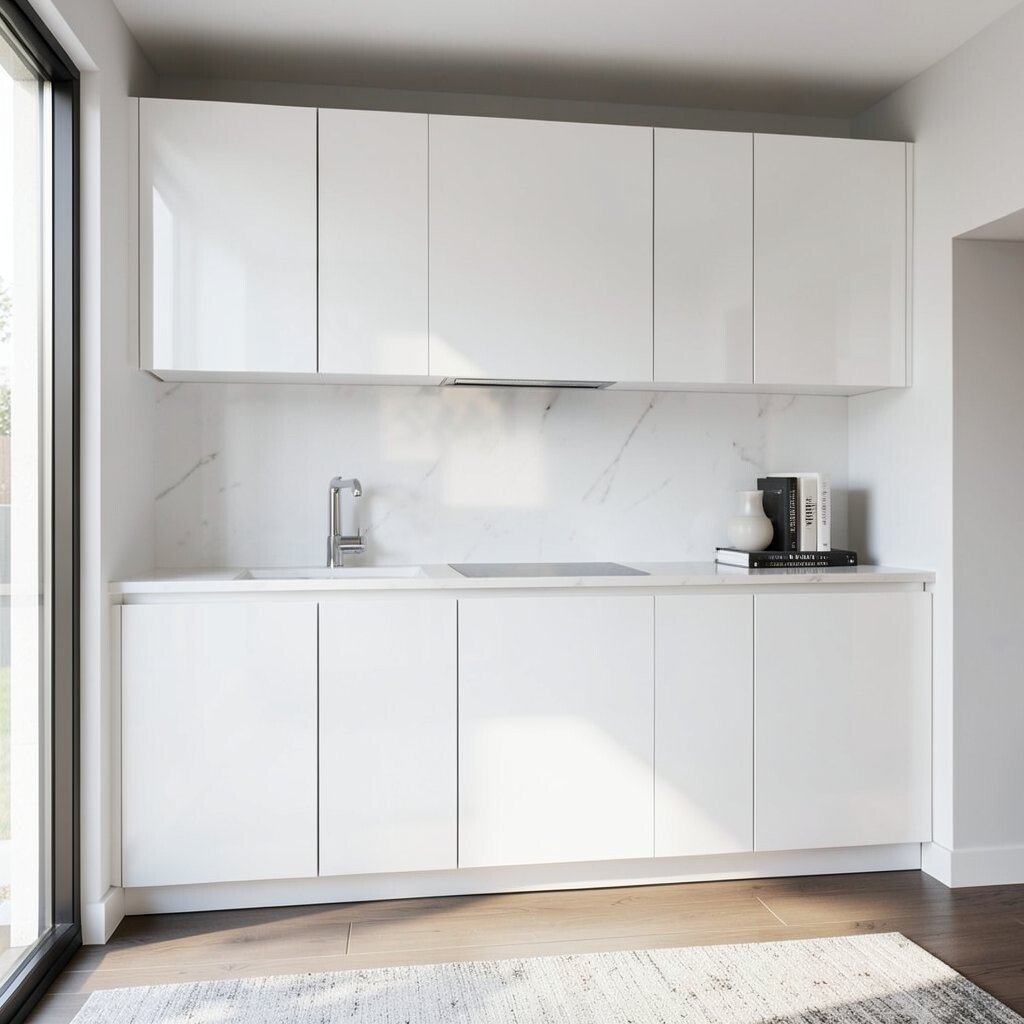
High-gloss white cabinets deliver a bold, polished look that reflects light. If your kitchen lacks brightness, this finish can help it feel lively and open.
With glossy surfaces, you’ll notice a more dramatic contrast with dark countertops and brass accents. The tradeoff is that glossy finishes can show smudges more easily, so regular wiping is part of the routine. To keep it looking great, use a gentle cleaner and dry with a microfiber cloth to prevent streaks.
12. White Cabinets With Warm Brass Hardware

Warm brass hardware adds a friendly, upscale touch to white cabinets. The pairing feels modern, but it still brings in warmth from the metal.
Brass works especially well when you have tan, honey, or walnut wood elements in the room. You can match brass to faucets, light fixtures, or bar pulls to make the design feel intentional. For practicality, choose hardware finishes that resist tarnish so you’re not constantly polishing.
Budget-wise, brass fixtures can vary a lot in price, so set a target range and prioritize visible pieces like drawer pulls. You can save by keeping hinges and less-visible parts standard. Personalize by choosing slightly larger pulls on lower drawers to make the kitchen feel grounded.
13. Monochrome White Cabinets With a Textured Backsplash
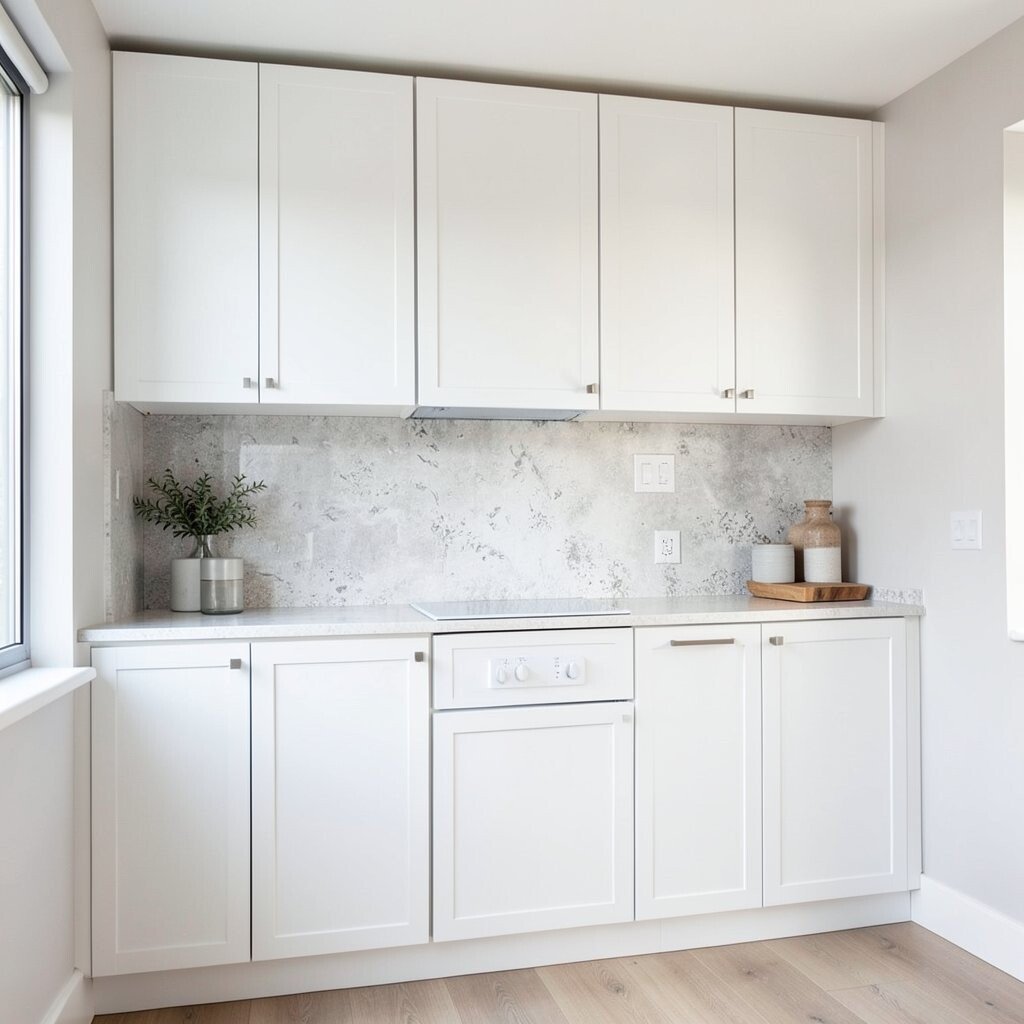
Keep the cabinetry a pure, consistent white for a monochrome look. Then add texture through the backsplash so the kitchen never feels flat.
Try options like small-format tile, subtle 3D patterns, or a stone-look material with gentle variation. Texture adds depth and keeps your white cabinets from blending into the wall. For a practical step, pick a grout color that complements the cabinet undertone so everything stays cohesive.
To personalize, repeat the texture in small ways, like a patterned rug under the sink area. If your budget is tight, splurge on the backsplash and keep the cabinet finish simpler. This approach makes a high-impact change without needing a full kitchen makeover.
It’s also a current look because modern kitchens use contrast in texture rather than relying only on color.
14. White Cabinets With Recessed Door Frames
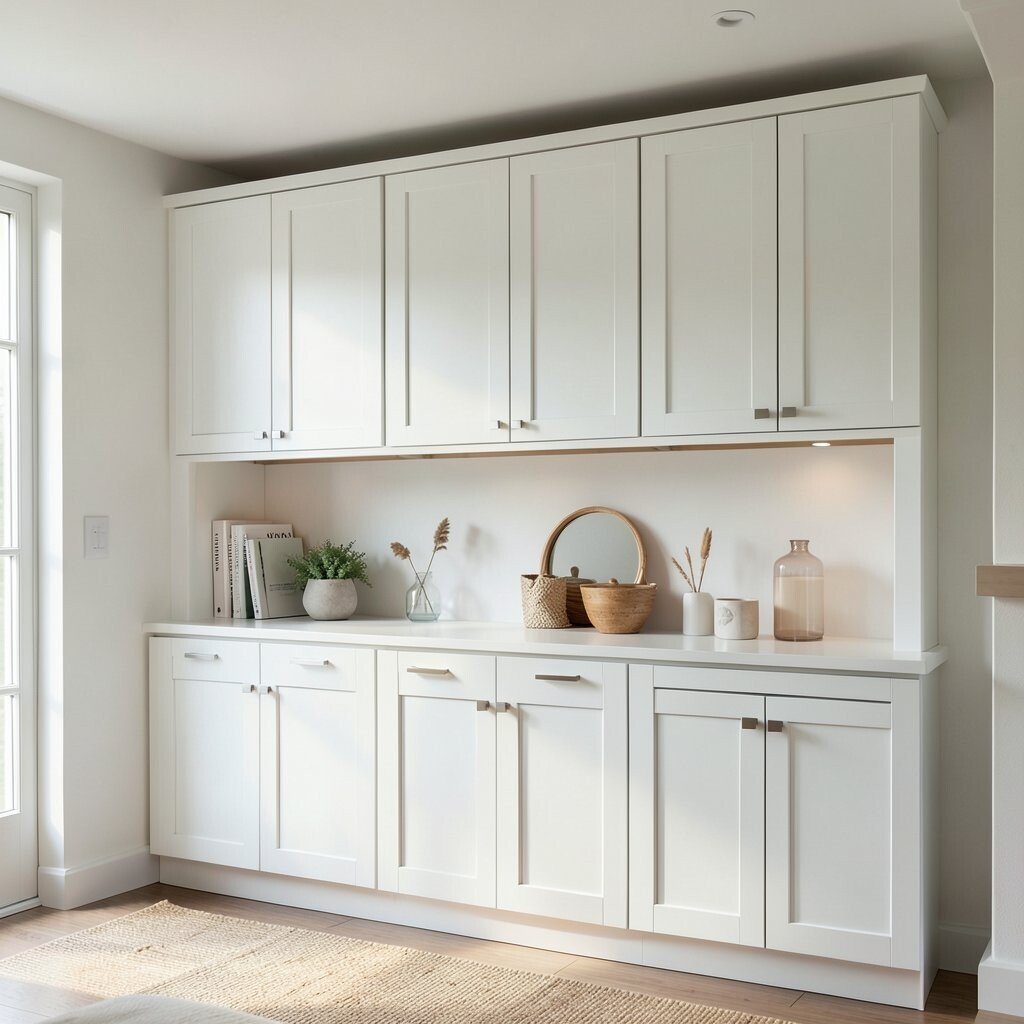
Recessed door frames create shadow lines that make white cabinetry look dimensional. It’s a subtle effect, but it adds depth that flat panels can’t match.
When the frames are consistent, the kitchen looks carefully designed even with minimal décor. This style also helps hide minor surface imperfections because shadow creates a forgiving visual. Make sure the recess depth is uniform across all doors so the lines stay crisp.
15. White Cabinets With an Accent Island in a Different Tone

Use white cabinets along the perimeter and choose a contrasting island finish. A wood-toned or painted island can become the room’s focal point without overwhelming the space.
The benefit is flexibility, because you can refresh the island color later while keeping the rest timeless. Try a warm oak for a natural feel or a muted color like sage or soft gray for a calm modern vibe. For personalization, match the island countertop material to a coffee station or bar seating area.
Cost considerations are easier with this plan since you spend more on one standout piece instead of the entire cabinetry set. If you’re working with an existing kitchen, repainting just the island can be a high-impact upgrade. Keep hardware consistent across both zones, unless you want a deliberate mix for a bold look.
16. White Cabinets With Slim Profile Drawer Fronts

Slim drawer fronts give your storage a refined, modern edge. They also visually balance kitchens with lots of vertical cabinetry lines.
Look for drawers that open smoothly with soft-close slides so the look stays effortless in daily use. Slim profiles can feel lighter visually, which helps the kitchen feel less heavy. For practical personalization, plan drawer layouts based on your routines, like placing cutting tools in the most reachable zones.
Budget-wise, you can choose slim fronts on visible areas and keep interior drawer options practical. If you’re replacing only some cabinetry, prioritize slim fronts in the cooking and prep zones. This creates an intentional design pattern without overspending.
17. White Cabinets With a Two-Tone Upper and Lower Mix

Consider pairing white lower cabinets with a slightly different upper tone. It can be a soft gray, creamy white, or even a muted color that feels calm and modern.
This approach adds depth and makes the room feel designed rather than copied. When you choose the upper tone, make sure it complements your wall color and lighting so the palette stays cohesive. For personalization, add a matching ceiling light or pendant in the same metal finish as your hardware.
Cost considerations depend on whether you’re painting or installing new cabinets, but two-tone setups can still be manageable. If you’re updating an existing kitchen, paint is often cheaper than replacing. Choose durable cabinet-grade paint so the finish holds up near cooking and cleaning zones.
It’s a popular modern trend because it adds interest without using bright colors that can feel dated quickly.
18. White Cabinets With Open-Closed Storage Layout
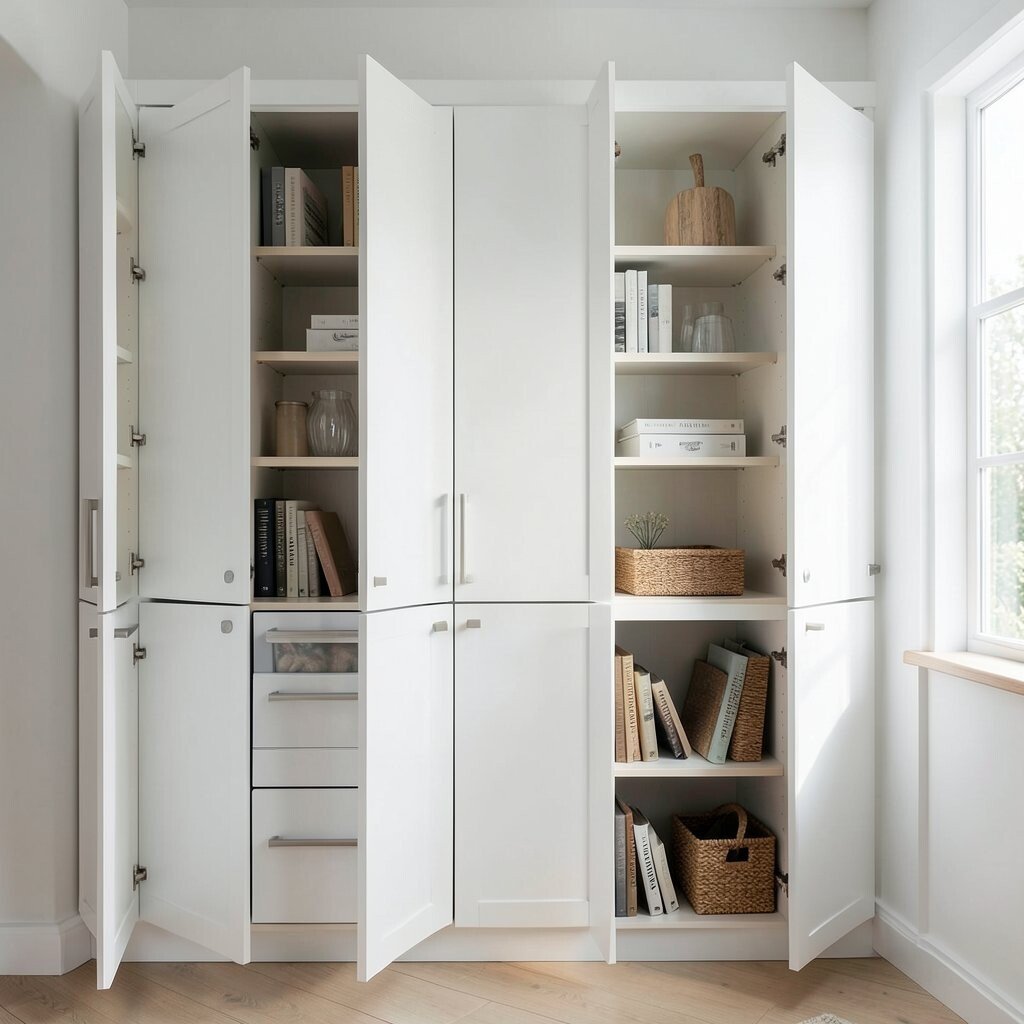
Mix open shelves and closed cabinets to create a balanced rhythm. The closed doors keep clutter hidden, while the open areas give you a place to show beautiful items.
For visual description, picture alternating sections where white doors frame open cubbies filled with neatly stacked jars. That blend makes the kitchen feel curated yet practical. Use matching containers in the open sections so the display looks clean even when you’re busy.
From a practical viewpoint, open storage works best for items you use often. Keep rarely used appliances in closed cabinets to prevent countertop clutter. If you’re personalizing on a budget, start by replacing only a few cabinets with open shelving to see how you like the look.
19. White Cabinets With Textured Painted Finish and Glazing
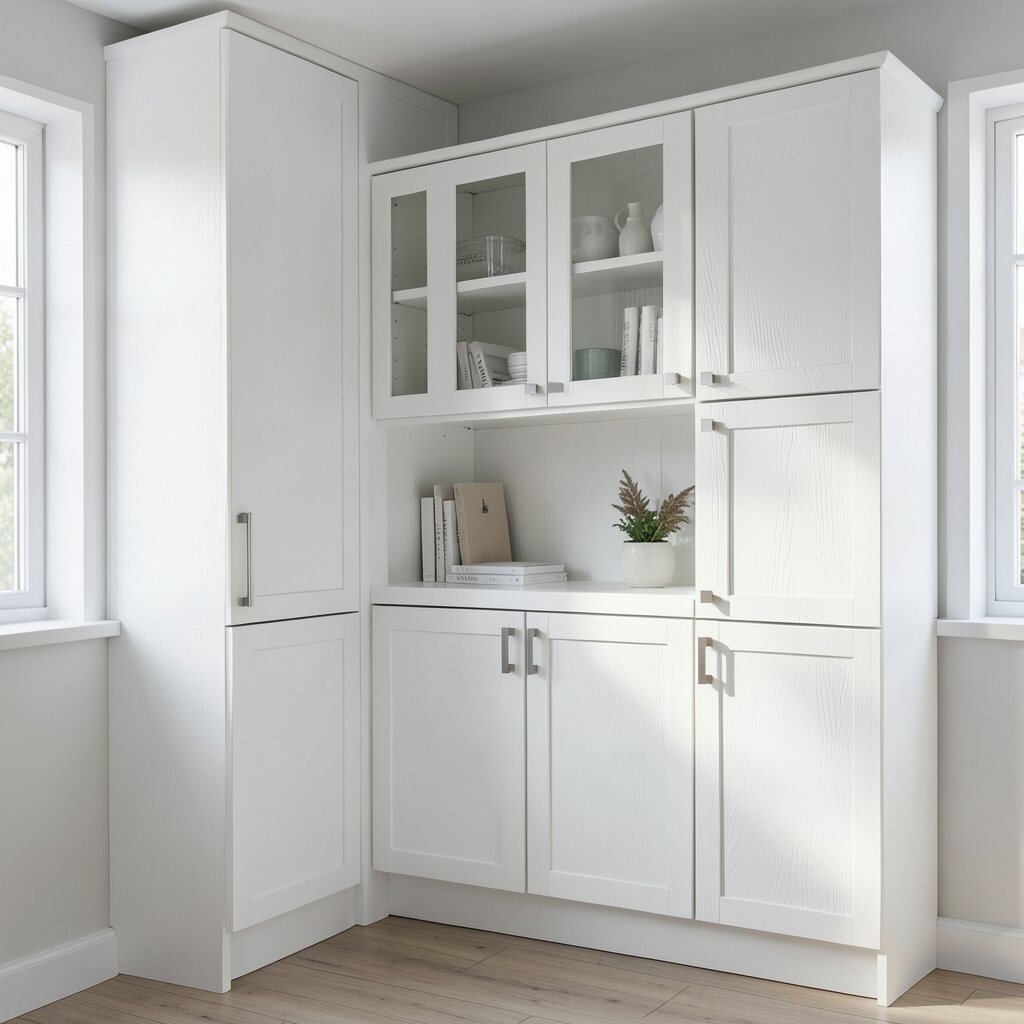
A textured white paint with subtle glazing adds depth while still staying modern. Up close, you’ll see gentle variation that makes the cabinets feel hand-finished.
This idea is unique because it avoids the flat, painted look that can feel too plain. Glazing can also soften undertones, helping the cabinets look warm rather than clinical. For practical tips, choose a durable topcoat and keep cleaning gentle to protect the texture.
Cost considerations are important here since specialized finishes may require professional work. If you want to manage budget, limit glazing to certain sections like the main cabinet run or an island facade. Personalize by coordinating glaze warmth with your hardware metal and your countertop undertones so the whole room sings together.
This style fits current trends toward tactile surfaces and finishes that look richer than standard paint.