The first minutes of the day set the mood for everything that follows. A bright, welcoming morning meeting space can turn routines into happy moments.
When children feel comfortable in their surroundings, their voices get louder and their bodies settle into learning. Decor and play ideas work together, so the room feels lively, safe, and ready for sharing.
1. Cozy Welcome Corner With Soft Lighting
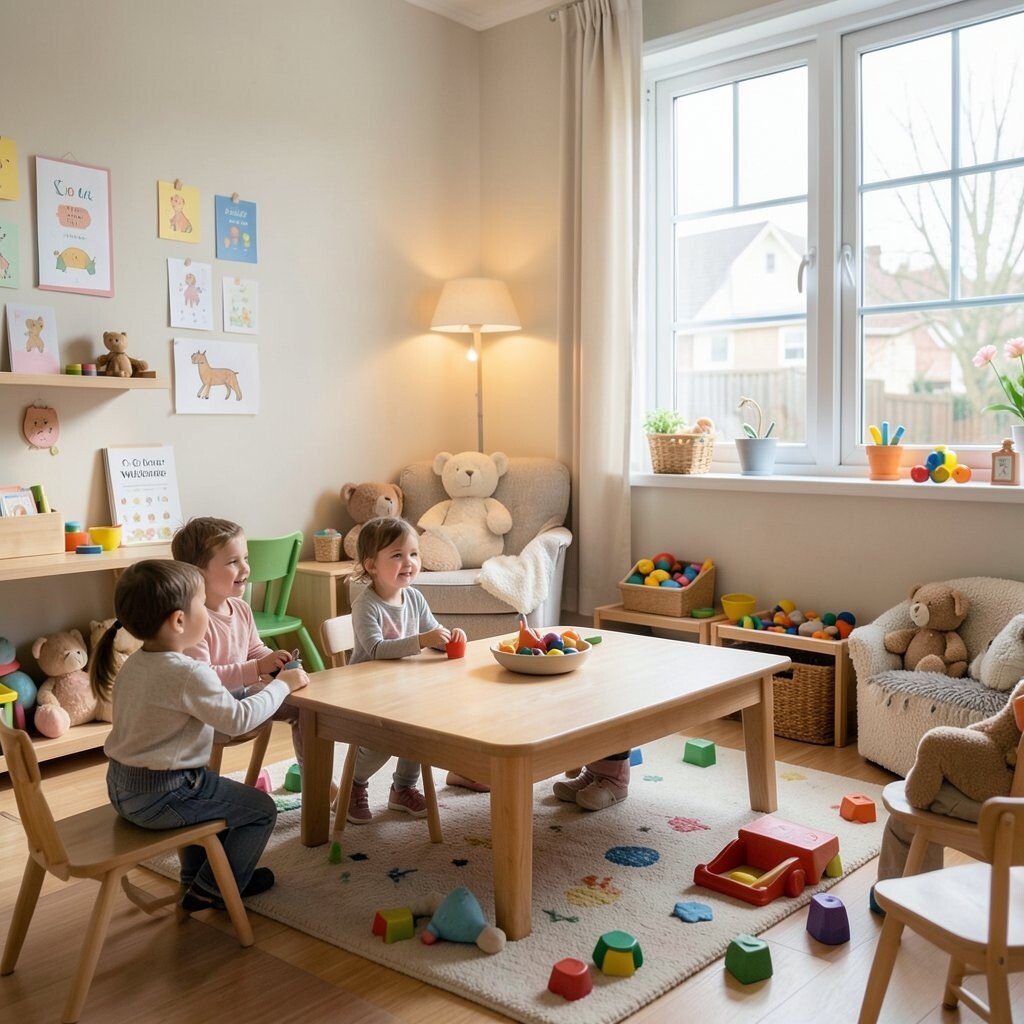
Choose a small spot near your circle area where kids can see themselves clearly and feel calm. Add a few warm-toned lamps or battery fairy lights placed high enough to stay out of reach.
Pair the lighting with plush pillows, a soft rug patch, and a simple backdrop like felt clouds or a sunrise banner. Kids often relax when the area looks gentle, and that can help morning meeting run smoother. For a practical setup, keep a “quiet spot” mat nearby so a child who needs a break has a clear place to go.
2. Name Banner With Colorful Velcro Panels

Make a long name banner with bright fabric strips and individual pockets or Velcro-backed name cards. Children can line up their names on the banner each morning while they arrive and settle.
To keep it unique, use each child’s favorite color on the background fabric, but keep the style consistent. This activity boosts confidence and supports early literacy as kids recognize letters in their own names. Choose durable materials like felt and heavy Velcro so it stands up to daily handling without tearing.
If you want personalization, let families send in a fabric scrap in the child’s chosen color. For cost considerations, you can reuse old curtains or scrap fabric from a craft bin. This idea fits current classroom trends that focus on hands-on, tactile organization rather than only printed charts.
3. Calendar Board That Becomes a Story
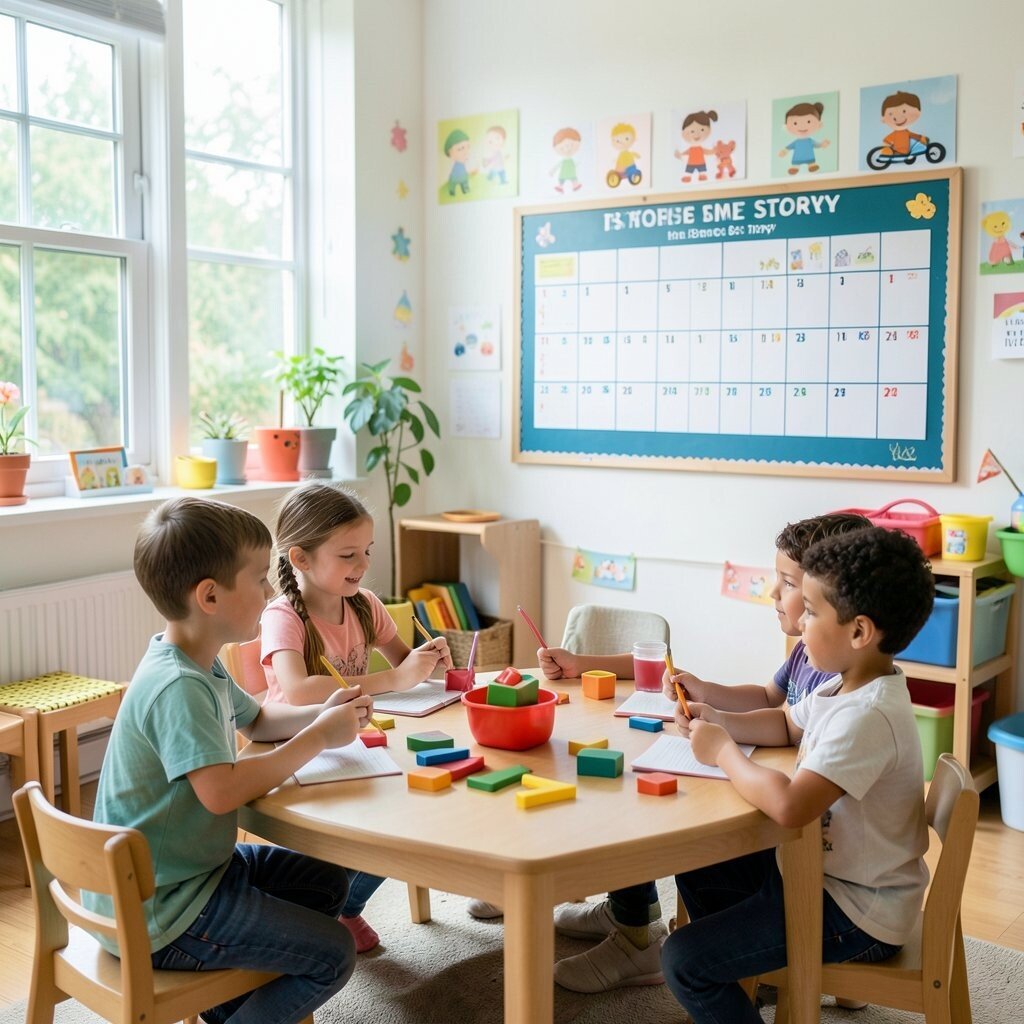
Create a calendar board using felt pieces that move like characters in a mini story. Instead of only showing dates, place the pieces so the month feels like a backdrop scene.
For example, the weather icon can sit near a sun or cloud, and the day-of-week pieces can include tiny animals that “visit” the scene. Children stay engaged longer when the calendar feels like a living picture. When you rotate pieces weekly, you build anticipation and help kids remember patterns through repeated play.
Use pocket charts or magnetic shapes if you prefer, but keep the layout simple and big enough for little hands. Personalize by adding a small “favorite thing” card for each day, like a paper star for kindness or a heart for friendship. If budget is tight, cut shapes from poster board and cover them with clear contact paper to make them sturdier.
4. Weather Spin Wheel With Daily Movement
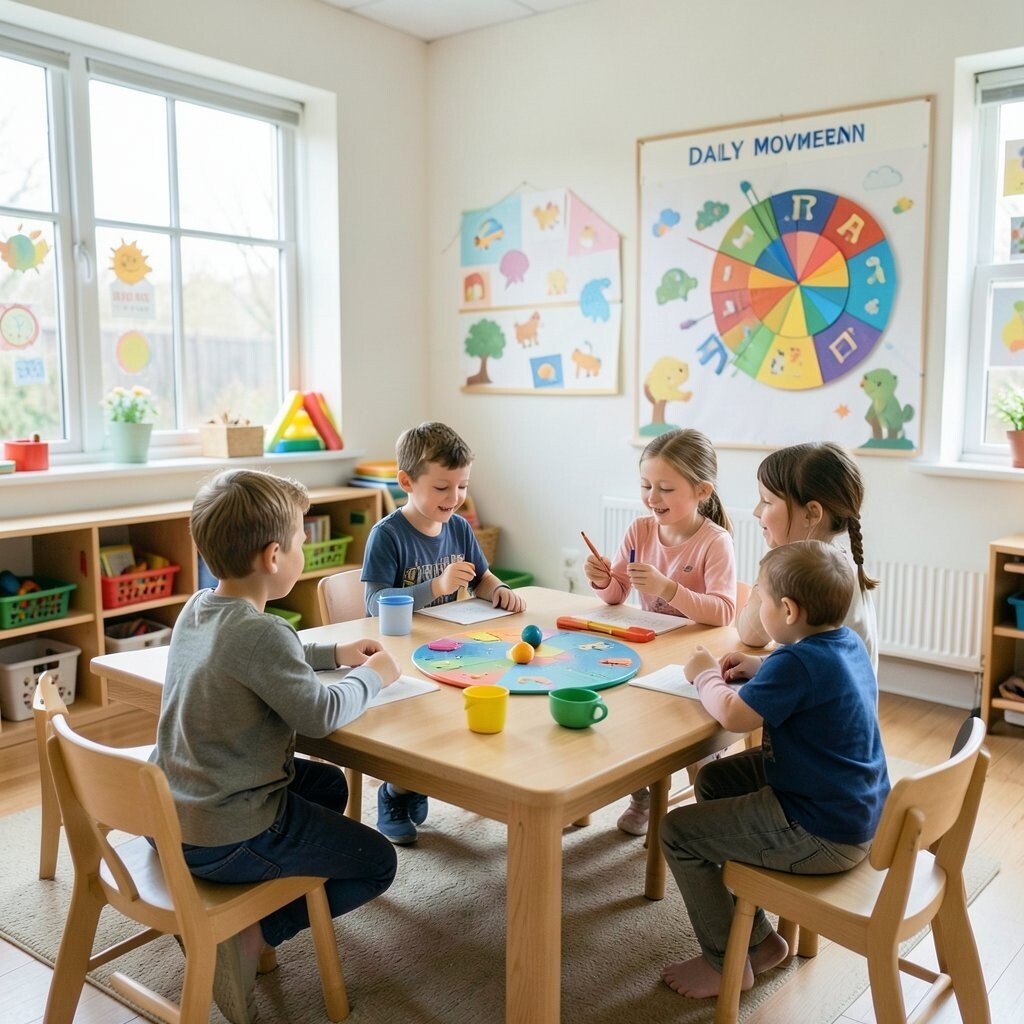
Make a weather wheel where children spin to choose the morning weather. Place the wheel low on a stand so kids can take turns without climbing or reaching too high.
Include simple visuals like a sun, cloud, rain drops, and a windy swirl, then connect each choice to a quick movement. For example, sunshine means kids do a gentle arm stretch, rain means they wiggle fingers like raindrops, and windy days mean they sway like tall grass. This boosts language and body awareness, and it keeps the group focused.
5. Morning Message Board With Pictures and Velcro Answers
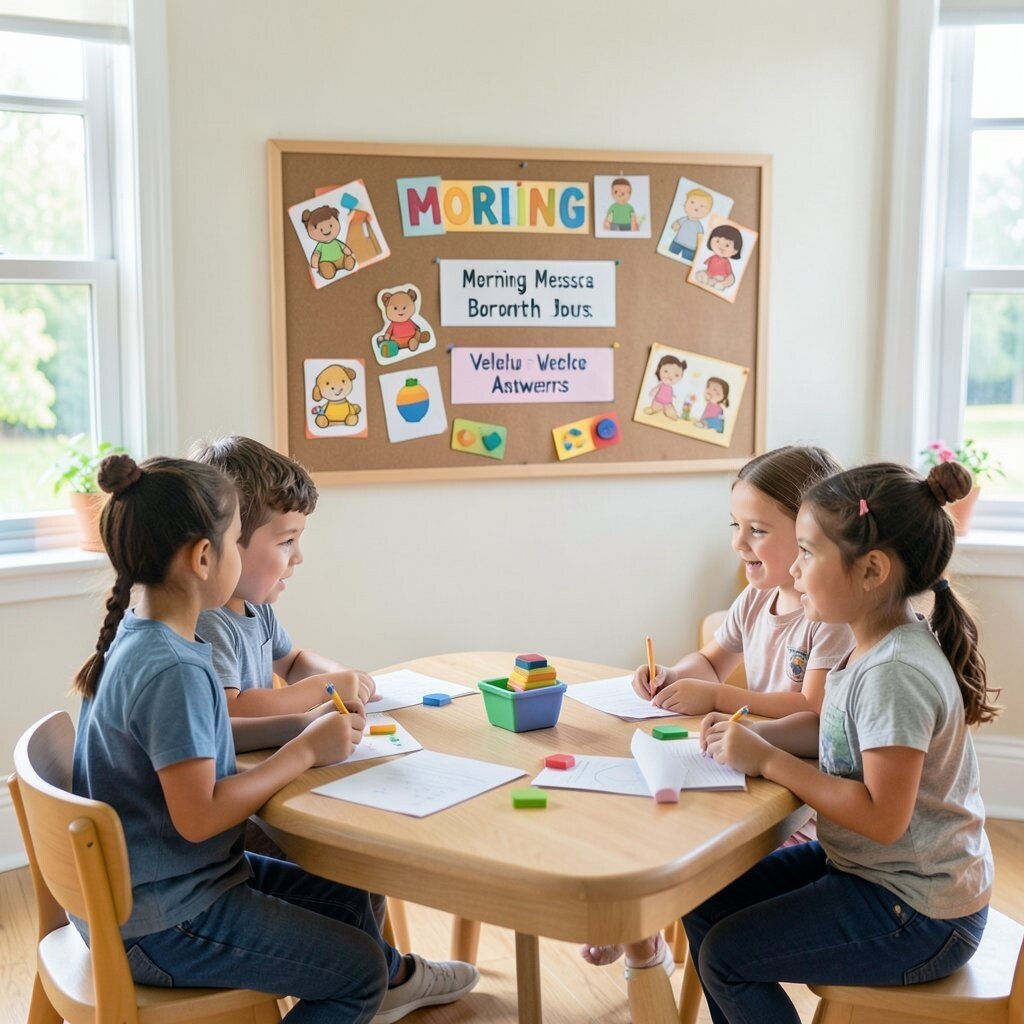
Hang a message board where you can swap picture sentences quickly using Velcro strips. Add one sentence frame like “Today I feel…” with two or three picture options for kids to choose.
Let children pick a feeling card and place it next to the matching word or symbol. This gives families an easy connection to emotions and helps children practice describing what they notice. Use bright laminated cardstock so you can wipe it clean after busy mornings.
To personalize, rotate the pictures to match seasonal themes, like leaves in fall or snowflakes in winter. For cost, start with a small set of cards you can reuse and extend over time. Many current classrooms use visual supports like this because they reduce confusion and increase participation.
6. Circle Time Story Tunnel From a Foldable Parachute
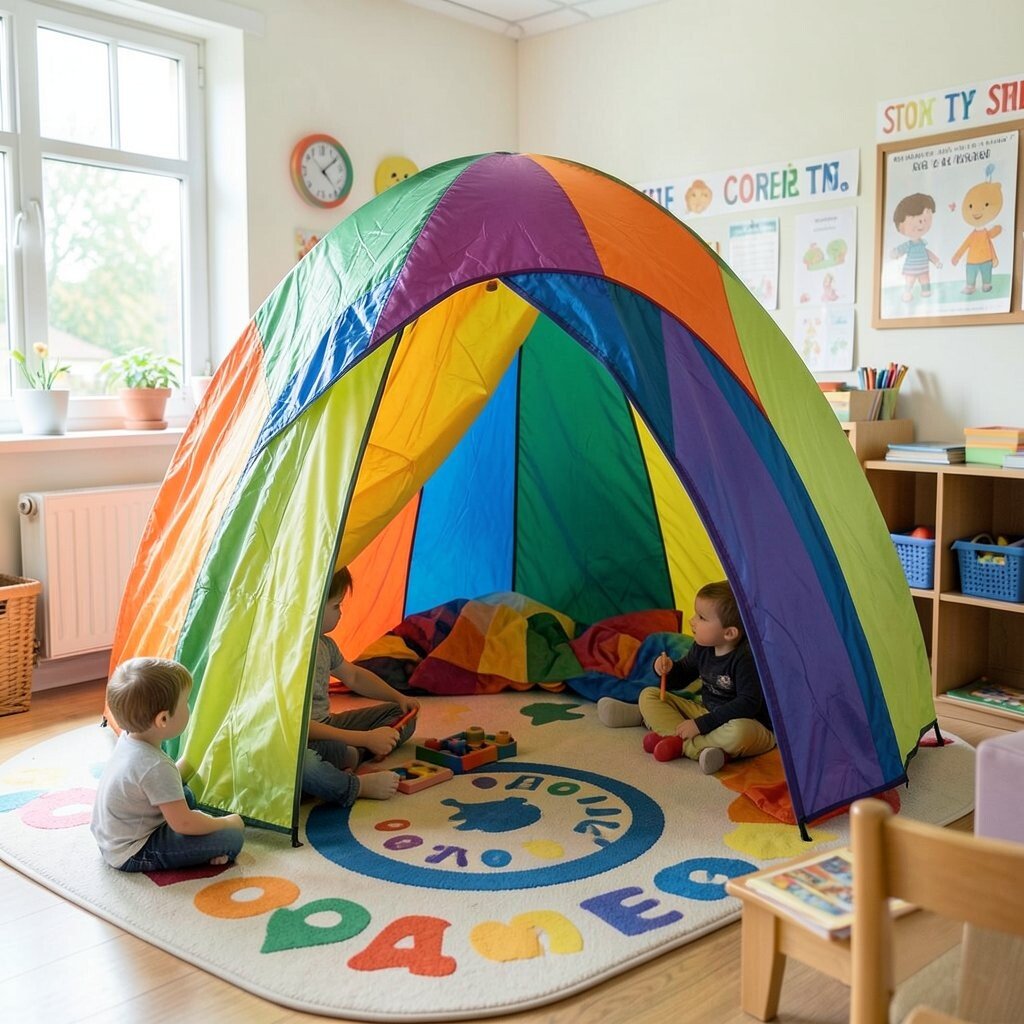
Turn your circle area into a “story tunnel” using a lightweight parachute or foldable fabric canopy. Gather the fabric in a ring shape and let a child hold it to create a doorway.
As you read, the group can wiggle the fabric to make waves or wind, which adds excitement without overwhelming the room. Kids stay attentive when they can do something with the story, and it also builds listening skills. Choose bright colors and add a simple trim so it looks special while still being easy to pack away.
7. Marble Run Path Around the Rug for Turn-Taking Play
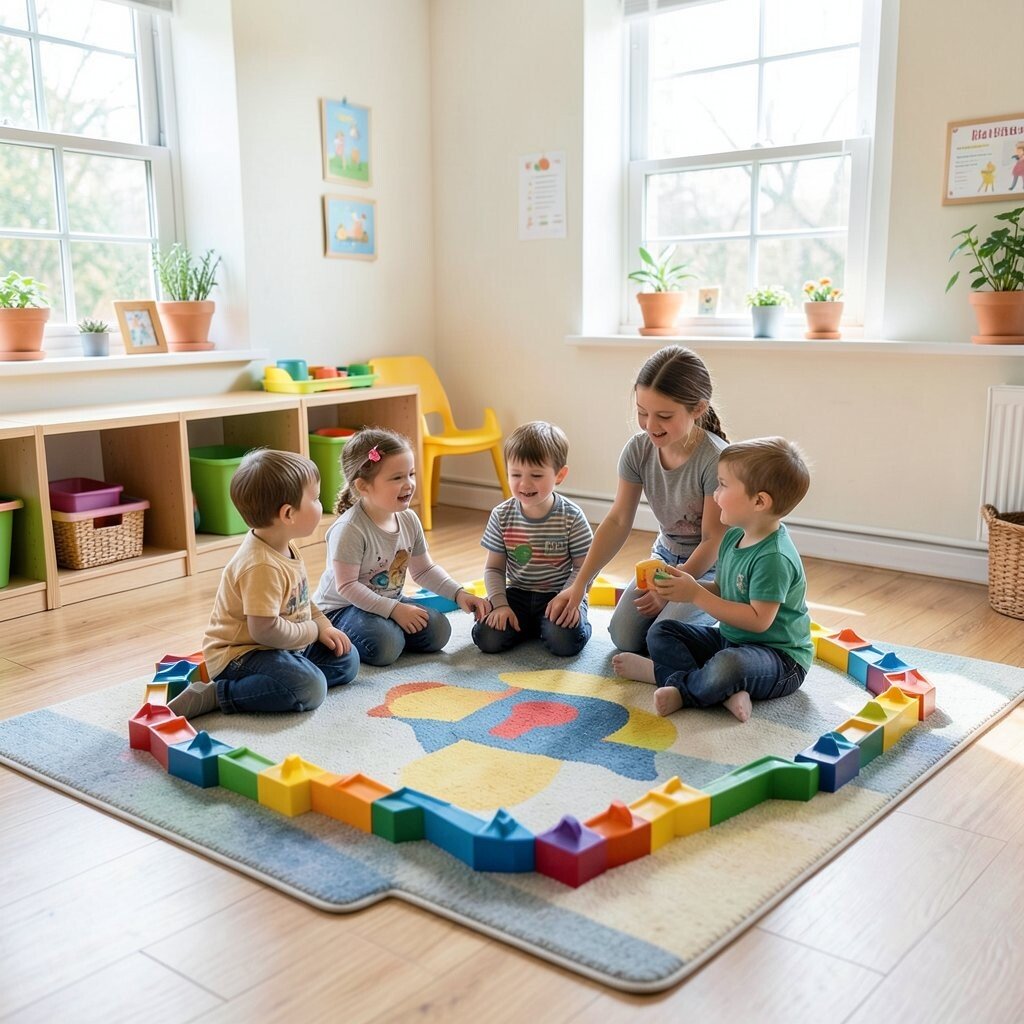
Set up a small track path that wraps around the morning meeting rug. Use cardboard ramp pieces or a compact wooden track so children can take turns sending a ball down the route.
When children use the track as part of transitions, it reduces waiting and encourages patience. Each child learns turn-taking because the play has rules built into the materials. For uniqueness, decorate the track supports with painted signs like “Start,” “Pass,” and “Stop” using child-friendly shapes.
If you want personalization, add a theme sticker pack each month so the path matches what you’re learning. For cost considerations, you can start with a few pieces and build outward slowly. This kind of movement-based learning is trending because it connects play with routine and supports executive function in a gentle way.
8. Display Line of “We Did It” Photo Clips
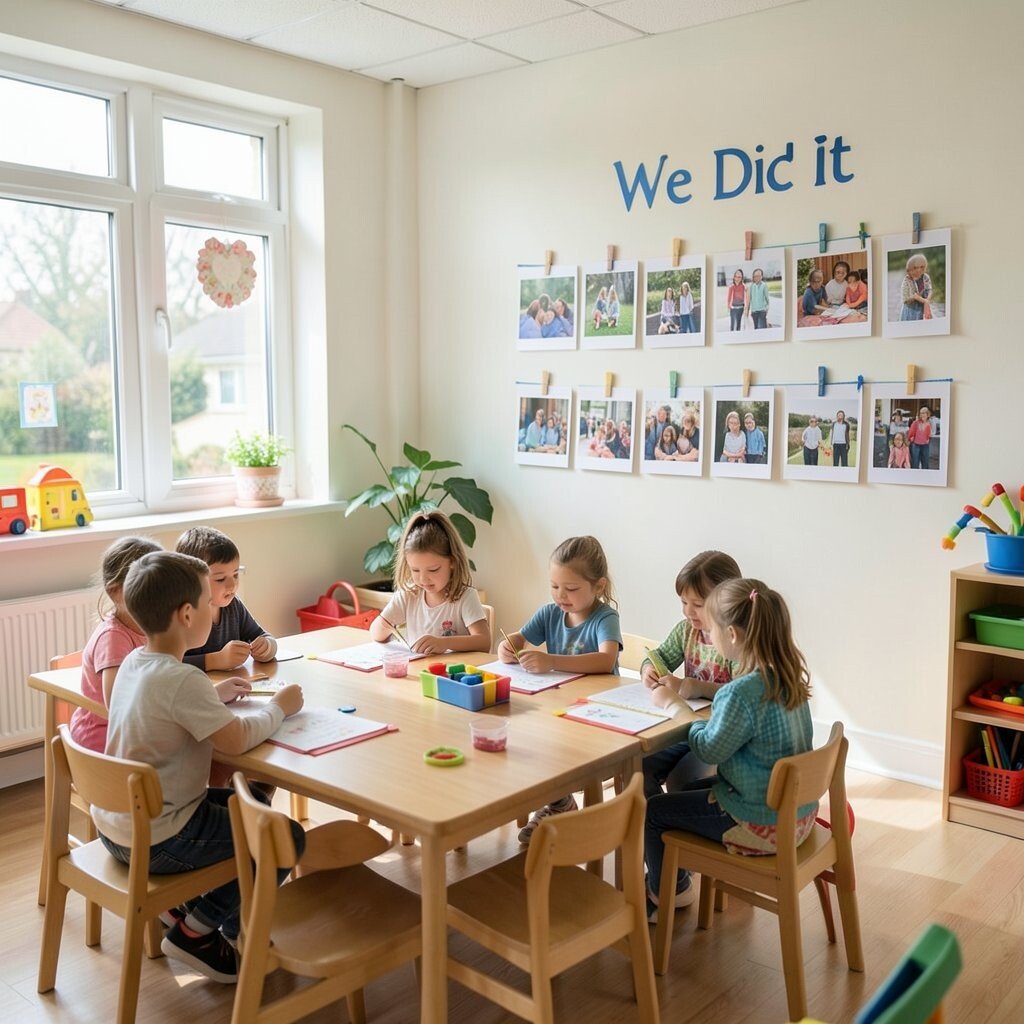
Create a simple clothesline or string with mini clothespins to show morning meeting wins. Clip up small photos of kids greeting, sharing, or doing a teamwork activity.
Seeing real moments helps children feel proud and can motivate them to participate again. Keep the photos at kid eye level and rotate them every week so the board stays fresh. Use a neutral background and bright photo frames made from cardstock to keep it cheerful without taking over the room.
9. Theme Rug Tiles With Small Floor Decals
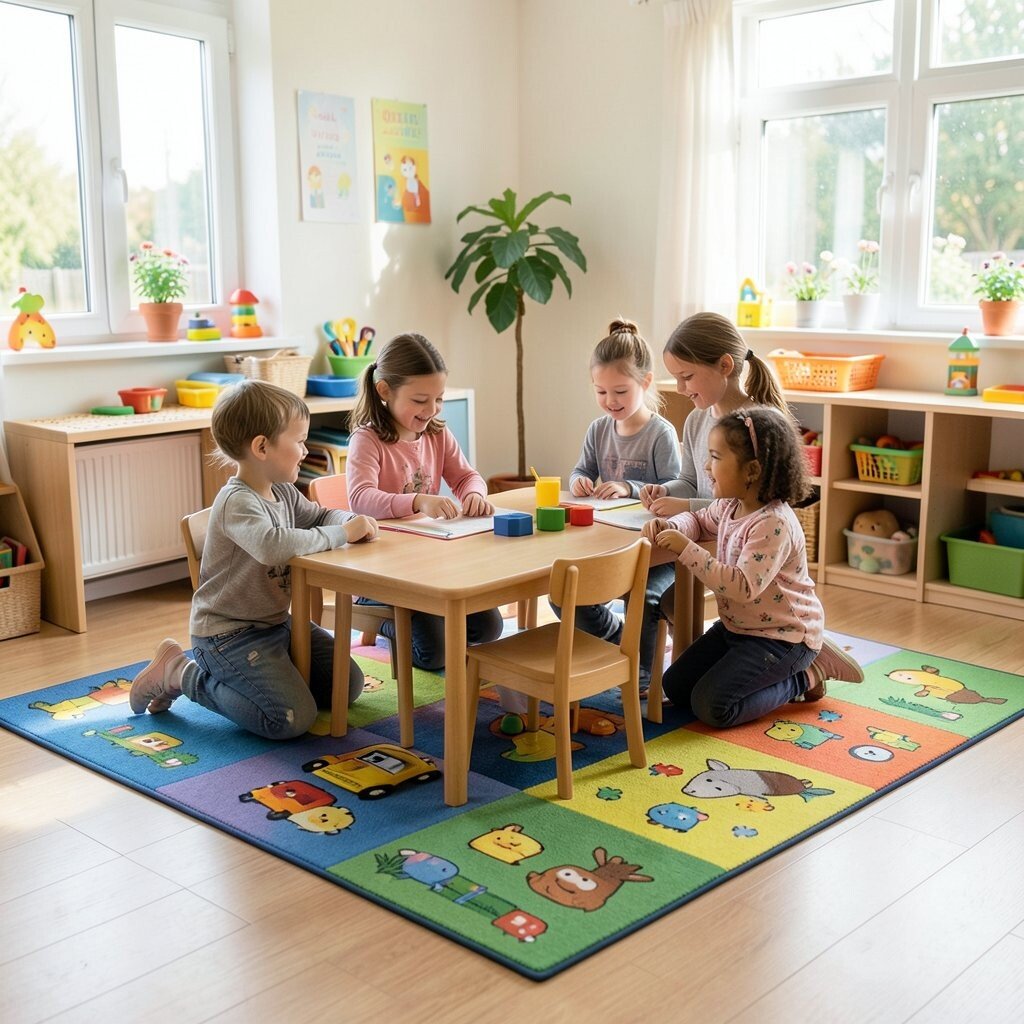
Add rug tiles or floor decals around the circle area so kids know exactly where to stand. Place footprints or numbered star spots to guide spacing while keeping the floor fun.
These visuals support independence and reduce bumping during transitions. You can personalize the spots to match your themes, such as planets, dinosaurs, or ocean waves. If you want to keep things low-cost, use removable vinyl shapes or tape that’s easy to peel up.
For a current trend feel, use “learning trails” with small steps that connect to songs and movement games. Kids often enjoy walking to their spot like they’re traveling somewhere. Keep the visuals consistent across the year so children learn routines faster.
10. Morning Meeting Props Basket With Rotating Choices
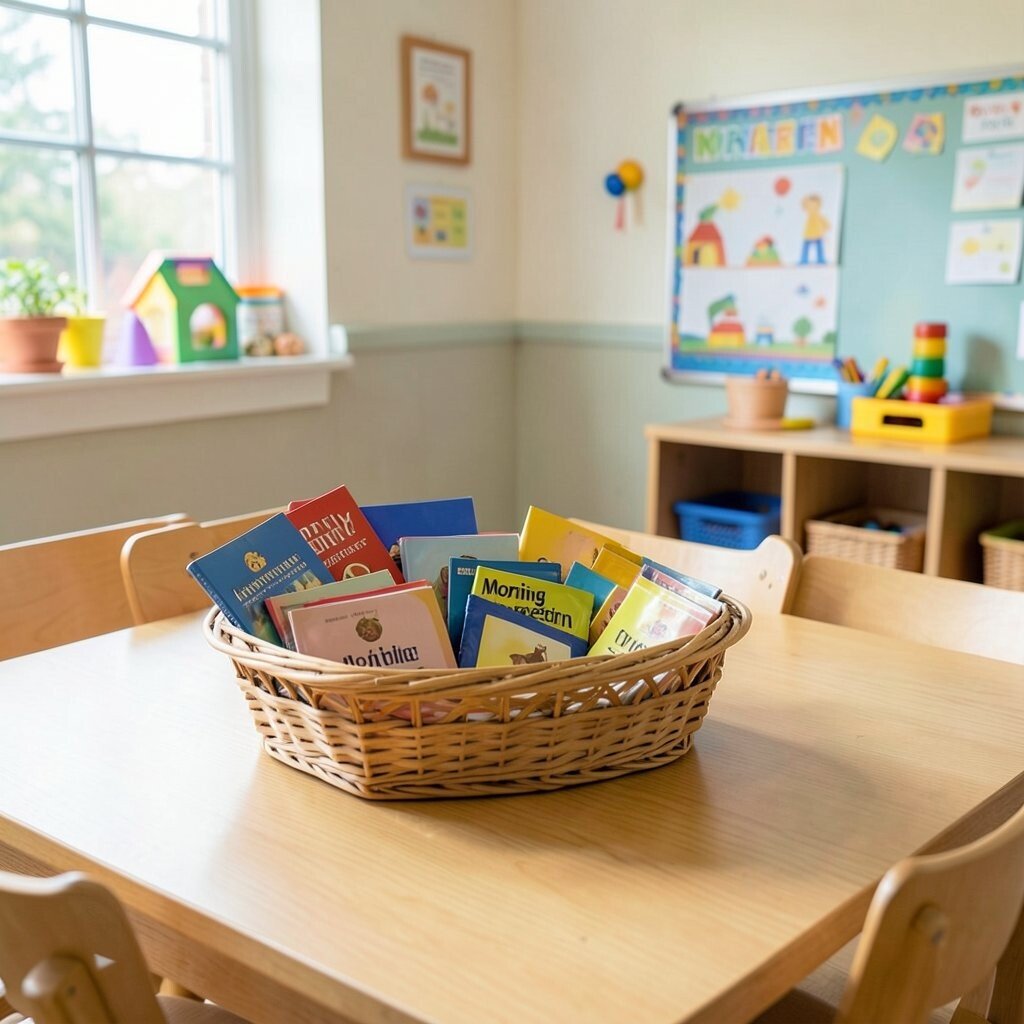
Keep a basket filled with simple prop cards and manipulatives kids can use during greetings and discussions. Examples include a soft puppet, a rainbow scarf, a talking stick, or picture cards for prompts.
Let children choose one prop for the day, then use it as a fun tool while you practice speaking and listening. This helps shy kids join in because the prop gives them something to hold and focus on. For uniqueness, label the basket with your class mascot and color-code the prop types.
11. Calm-Down Cloud Jar With Mini Breathing Prompts

Create a “calm-down cloud jar” using a clear container with cotton-like clouds floating inside. Add a few printed breathing cues with simple pictures such as inhale bubbles and exhale hearts.
When the meeting starts, teach a short breathing routine using the cloud jar as a visual anchor. This can help regulate energy and support children who feel overwhelmed. Personalize the jar with your class colors and add a name tag so it feels like it belongs to your group.
For cost, you can reuse a salad container and fill it with inexpensive foam or cotton batting. This fits today’s focus on emotional learning and sensory-friendly spaces. Just keep it gentle and short so it never becomes scary or confusing.
12. Interactive Weather Pockets at Child Height
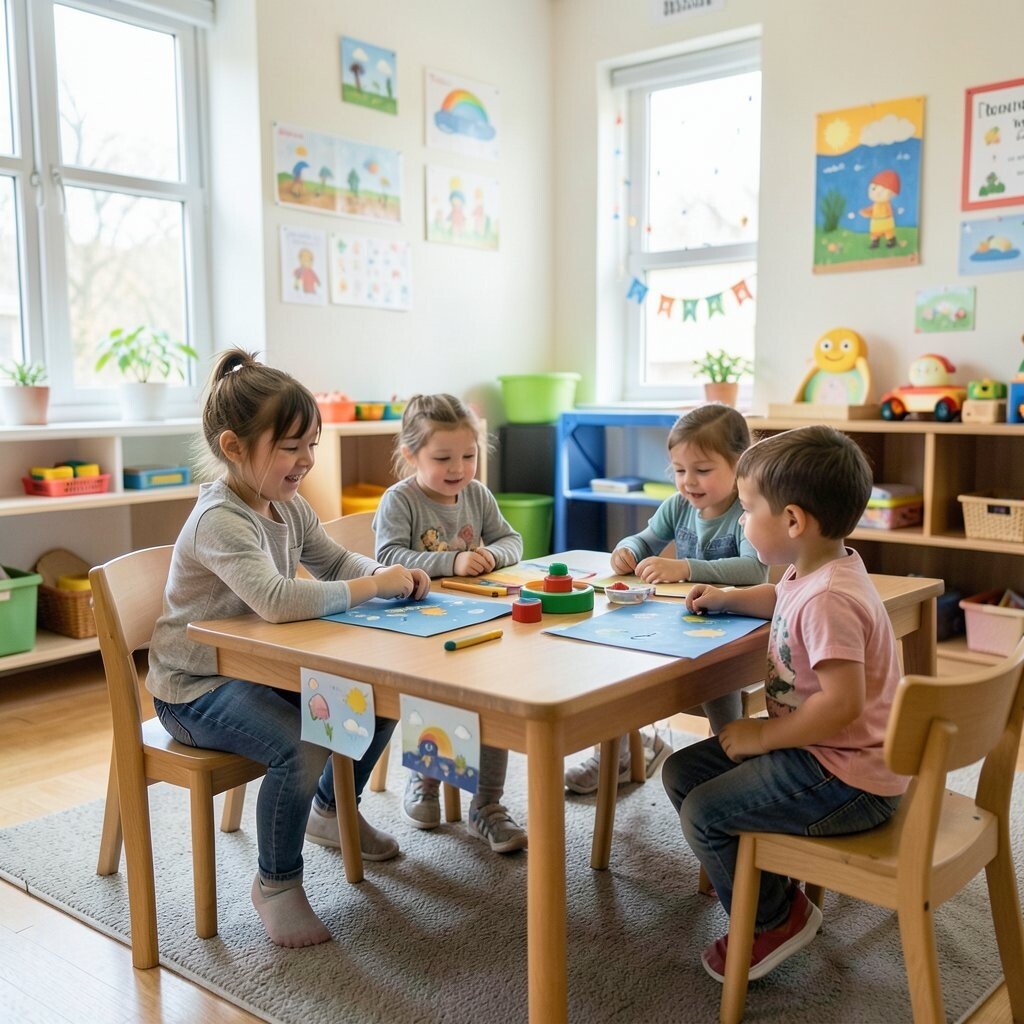
Mount a set of fabric pockets on the wall at child height and place weather cards inside. Each morning, a child draws a card and places it into a matching pocket on the board.
Seeing the weather change across the week encourages curiosity and supports vocabulary development. Use pockets with different shapes so children can match by both color and form. For a unique touch, connect each pocket to a small mini symbol like a raindrop for “rainy” or a star for “sunny.”
13. Hand Puppet Theater Behind a Simple Backdrop
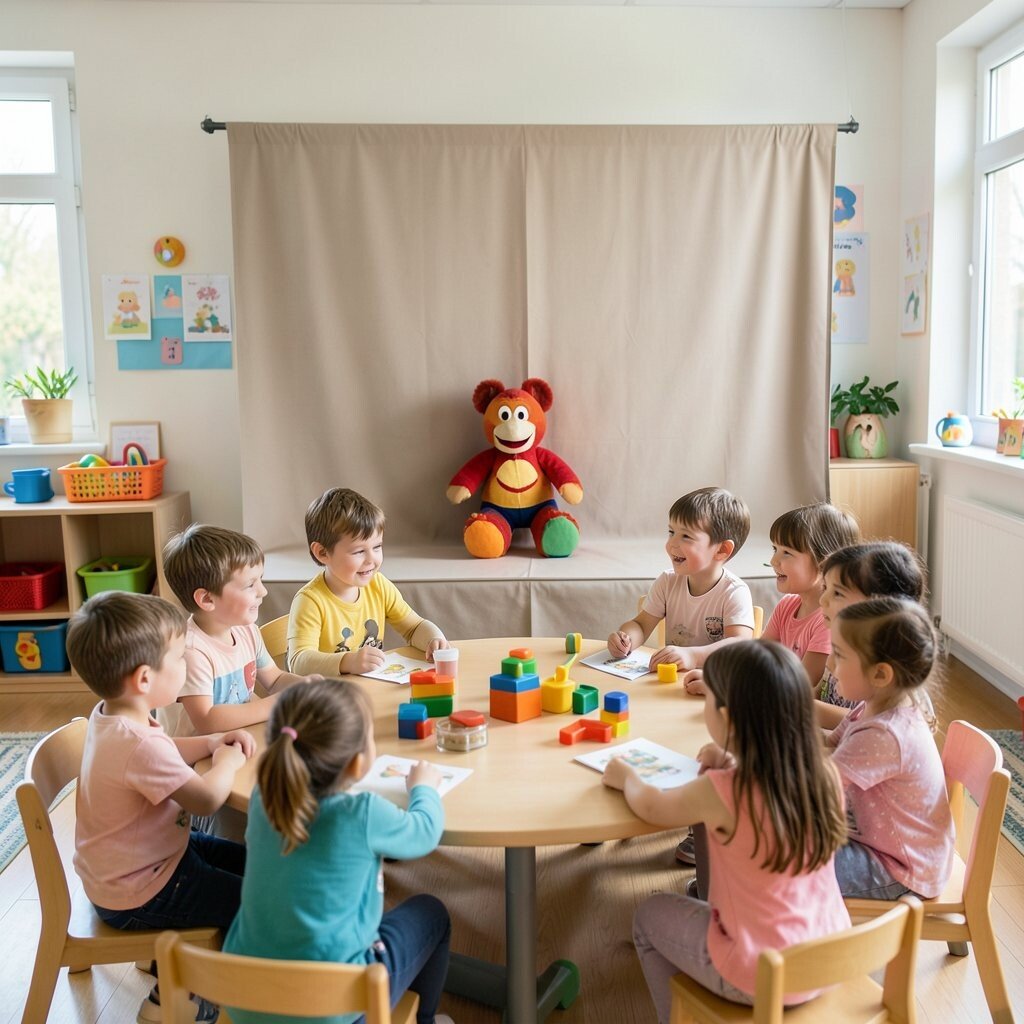
Build a small puppet theater using a lightweight folding screen or a cardboard arch covered with fabric. Add a felt curtain that you can open and close during morning greetings or read-aloud moments.
Puppets make sharing feel safer because the puppet can model what to say. Kids often copy the puppet’s tone and listen more carefully when they know puppets will be part of the routine. Personalize by adding a banner with your class name and a rotating “puppet star” card each week.
To control costs, use inexpensive fabric and craft foam, and reuse old cardboard from shipping boxes. This aligns with current classroom trends that use story-based teaching and pretend play to support language growth.
14. Rainbow Track Cards for Song-Based Movement
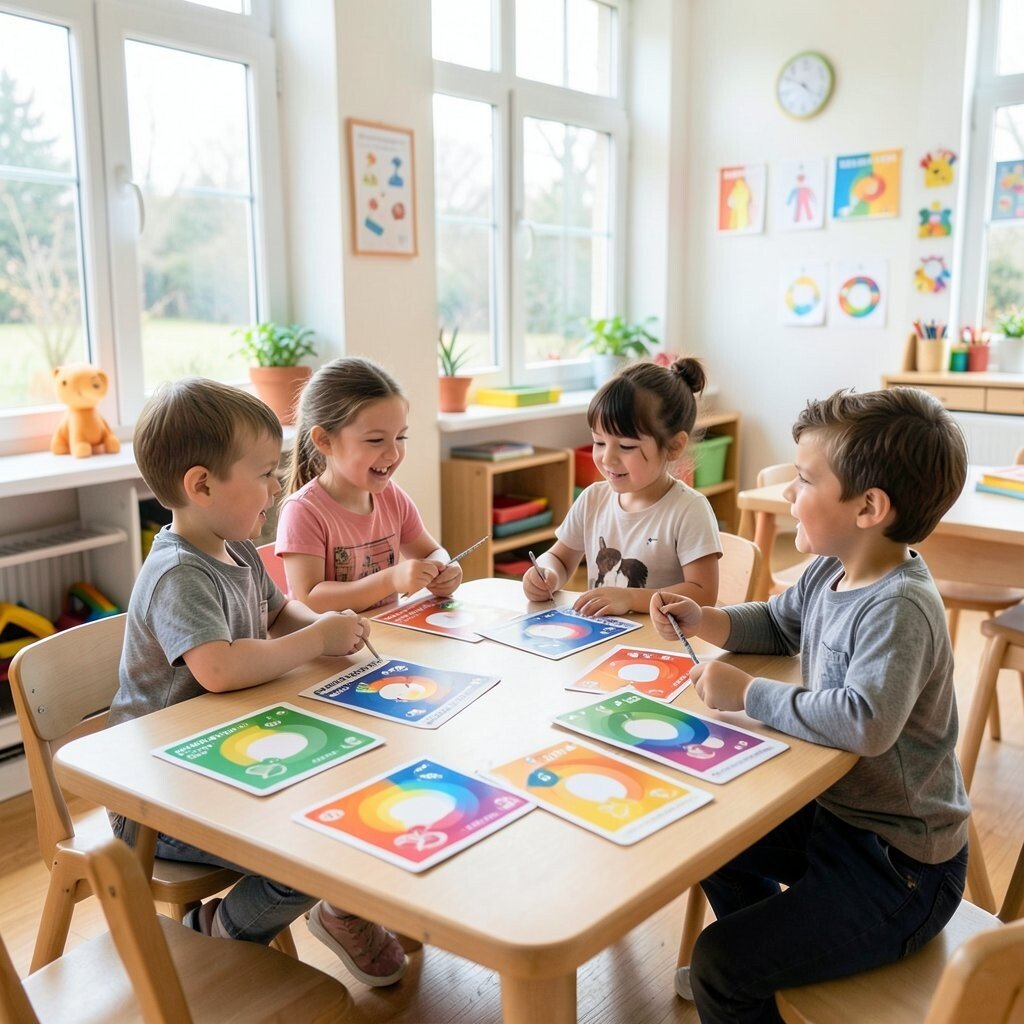
Make rainbow track cards that lie on the floor and correspond to movement during your greeting song. As you sing, children move to the color that matches each verse or gesture.
Visual cues help kids follow along without relying only on memory, and that can make morning meeting more inclusive. Keep the steps short and safe, with clear spacing between cards so children don’t trip. For personalization, tie the colors to classroom learning, like blue for “quiet listening” and green for “kind choices.”
15. Kindness Corner With Tiny Message Tiles
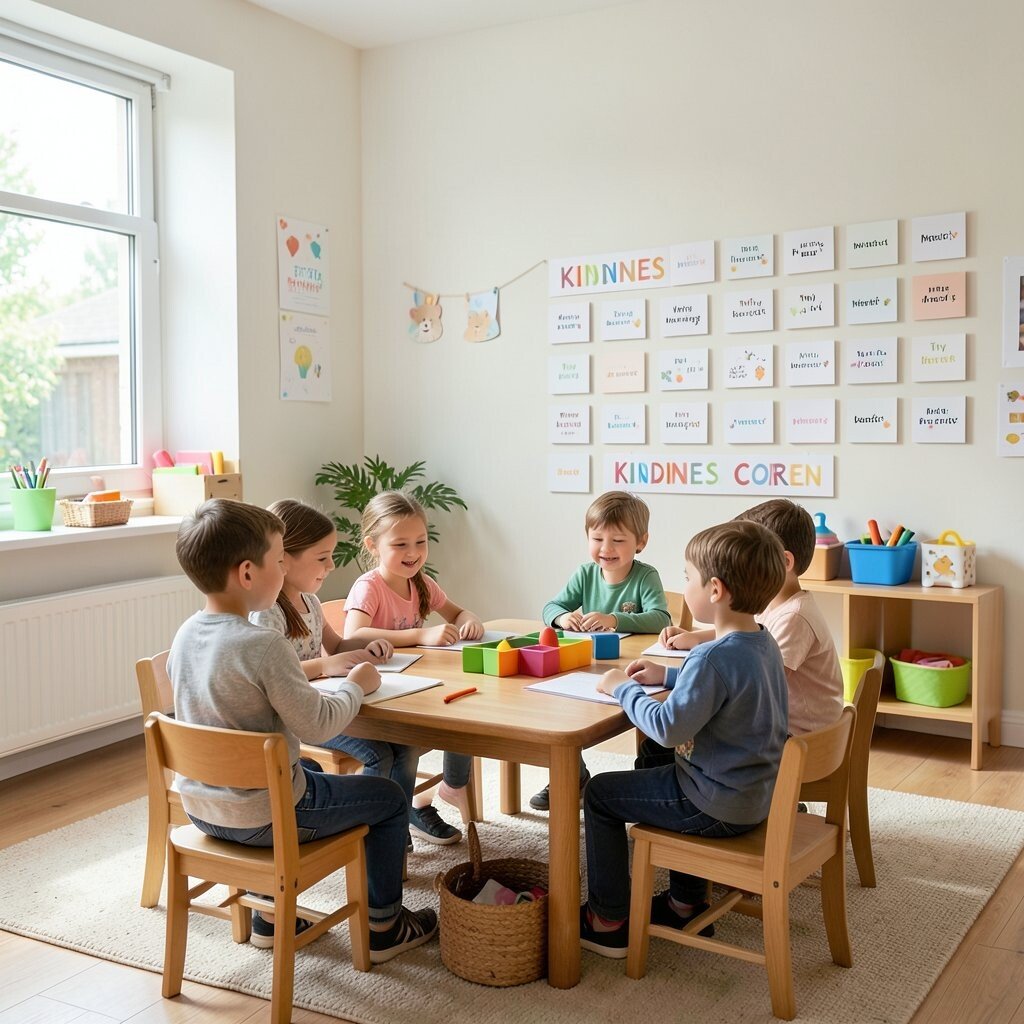
Set up a kindness corner near the meeting area with a basket of small message tiles. Each tile can have a picture and a short prompt like “You can help me” or “Great job sharing.”
During morning meeting, children choose one tile and place it on a display board shaped like a heart or a sunshine. This strengthens community and encourages positive language every day. Use thick paper or foam stickers so the tiles stay intact even with lots of handling.
To keep costs down, start with a small set and reuse them by storing tiles in a labeled envelope. Personalize by adding seasonal kindness messages that fit holidays or class themes. This idea feels fresh because it turns kindness into a shared ritual kids can act out.
16. Story Props Wall With Velcro Character Swaps
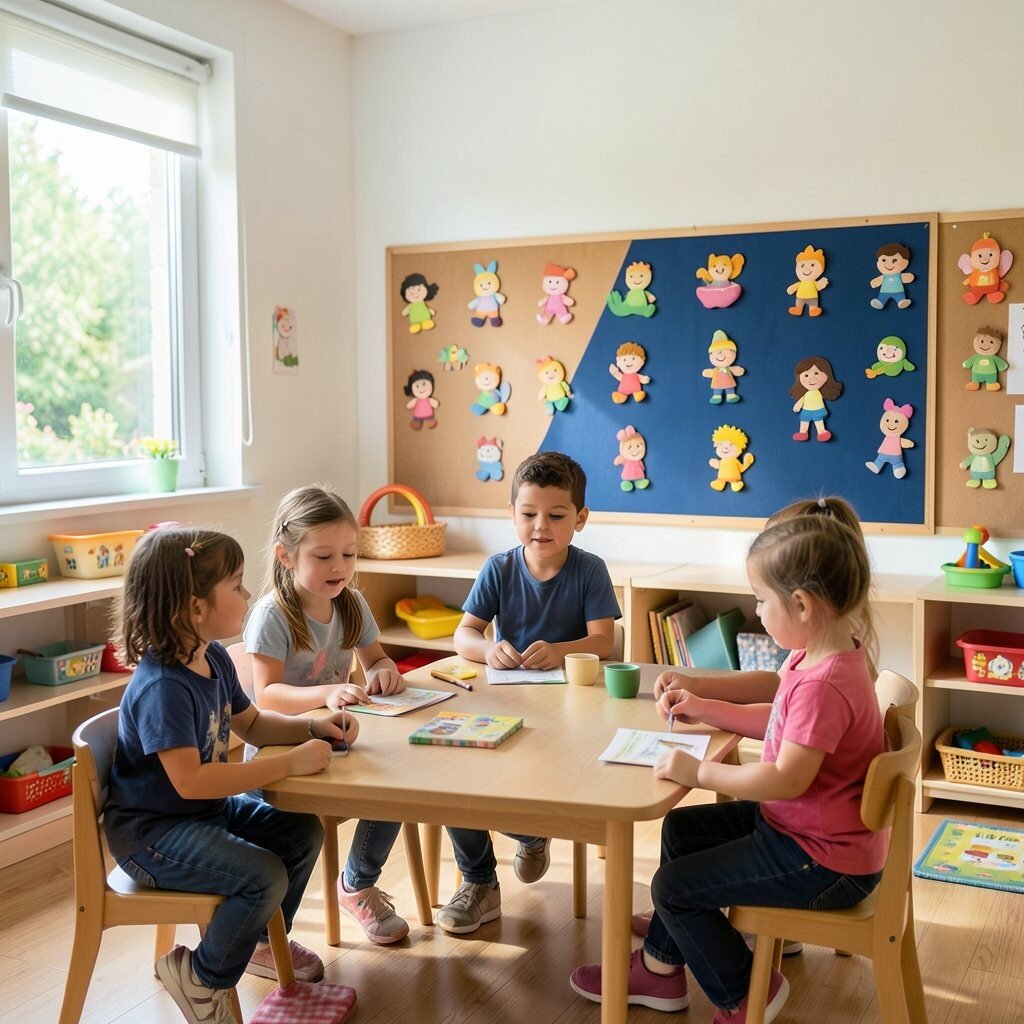
Make a story props wall where you can attach characters and objects using Velcro. Keep the pieces large and simple so children can swap them quickly during retells.
When children help set up the story scene, they practice sequencing and speaking in full thoughts. The wall also doubles as decor that stays relevant all year, since you can rotate pieces based on what you’re reading. For uniqueness, paint the background like a classroom skyline or a friendly forest so it feels magical.
For practical setup, store the Velcro pieces in a clear bin with dividers by character type. This helps morning meeting stay organized because props are always where kids can reach them safely. Consider using fabric-backed pieces for durability and easy cleaning.
17. DIY Alphabet Snack Station for After-Meeting Sharing
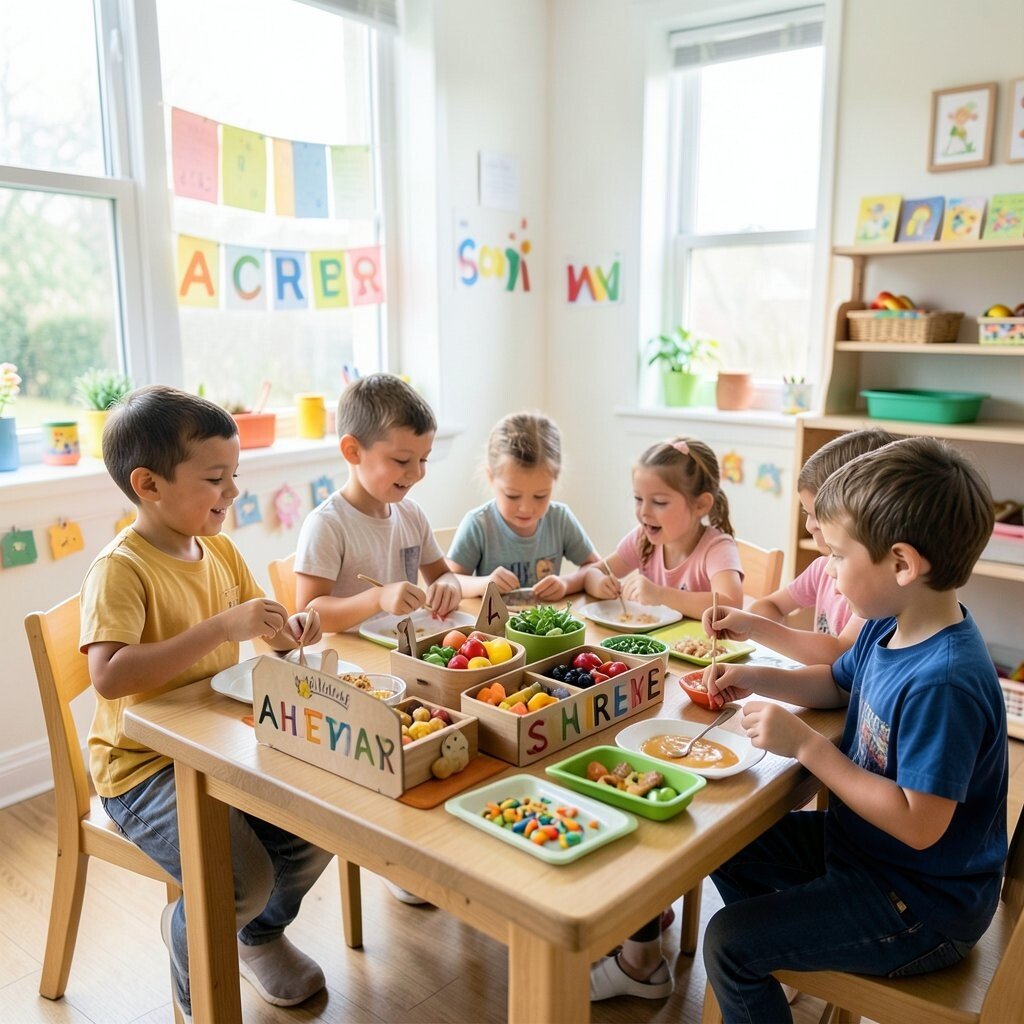
Set up a small alphabet snack station that’s visible but only used right after morning meeting. Use letter cards and simple tray options so kids can choose a letter to find in snack foods like crackers or fruit.
Even a short connection between literacy and a daily routine can support early reading habits. Keep it practical by limiting choices to a few letters and having one clear order for steps. Personalize by adding a class theme picture on each letter card so the station matches your decor style.
For cost considerations, use sturdy paper and laminate the cards, then reuse everyday containers. This idea works with current classroom interest in sensory-friendly, hands-on learning that doesn’t require expensive materials. The best part is that it creates a smooth transition from meeting to play.
18. Motion Mood Cards on a Spin Clip Strip
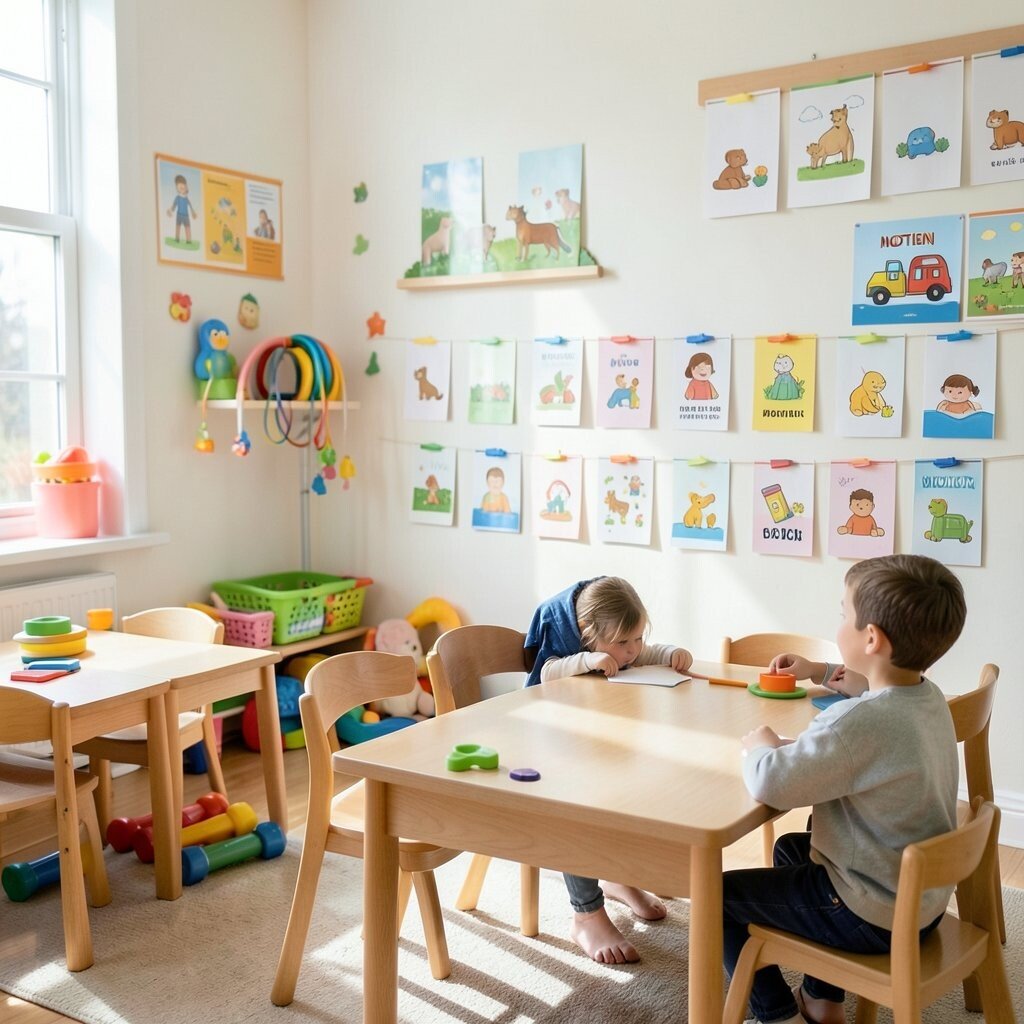
Create a spin clip strip with mood cards that show different energy levels. In the morning, children spin a clip to choose how they’ll move during center time after meeting.
Use visuals like a calm turtle, a walking bunny, and a zooming rocket to match the level of movement. This helps the group plan together and reduces chaos when it’s time to transition. For personalization, add small class inside jokes as images, like a mini mascot holding a sign that matches your classroom culture.
19. Classroom Map Bench With “My Seat” Markers
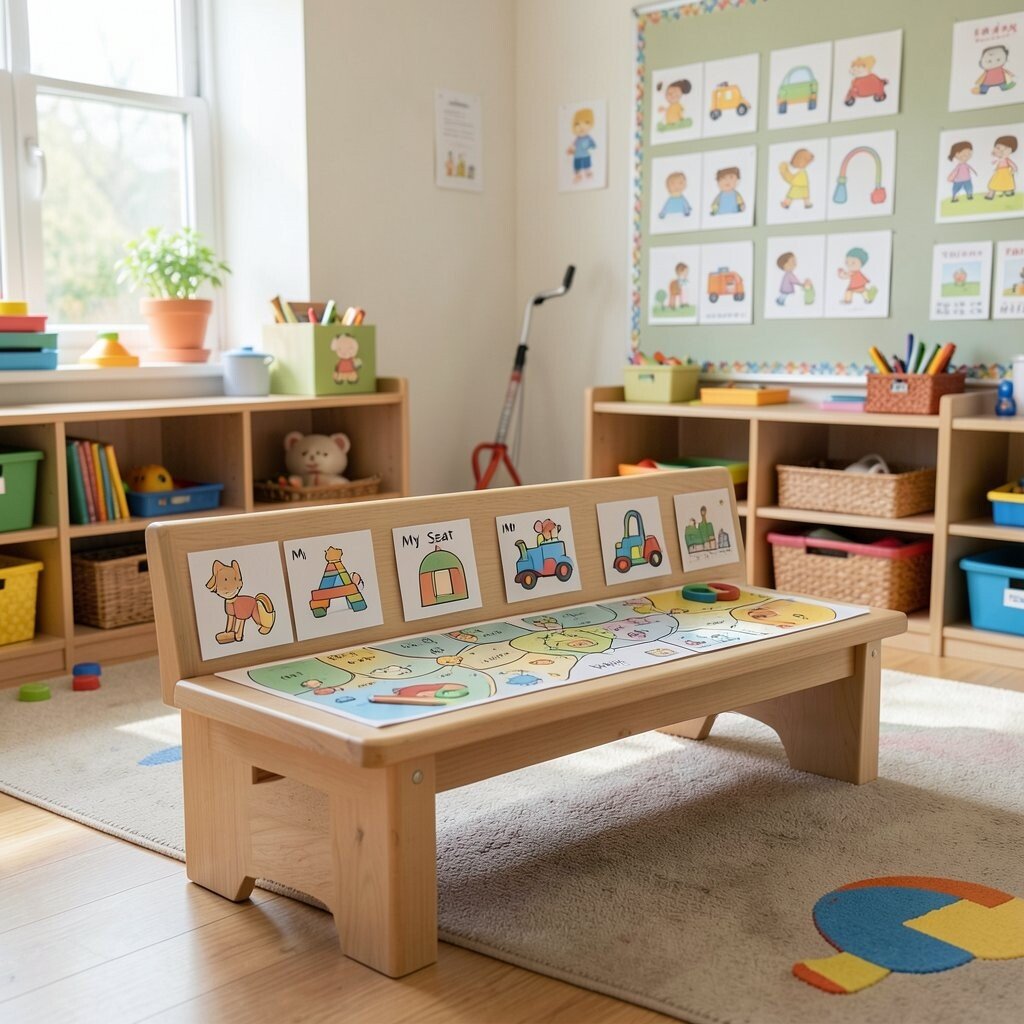
Design a bench or low seating area with “my seat” markers so each child has a consistent spot. Place the markers on a rug or bench back panel with bright pictures and clear outlines.
Consistency makes kids feel secure, and it also saves time because there’s less deciding where to sit. Keep the seats easy to identify by using color coding, such as assigning each group a color. For uniqueness, make the bench look like a bus stop, boat deck, or spaceship, depending on your yearly theme.
To keep it budget-friendly, use existing benches and add removable fabric covers with Velcro. Many teachers are using themed seating because it supports engagement while still keeping organization at the center.
20. Magnetic Word Wall Labels for Shared Morning Greetings
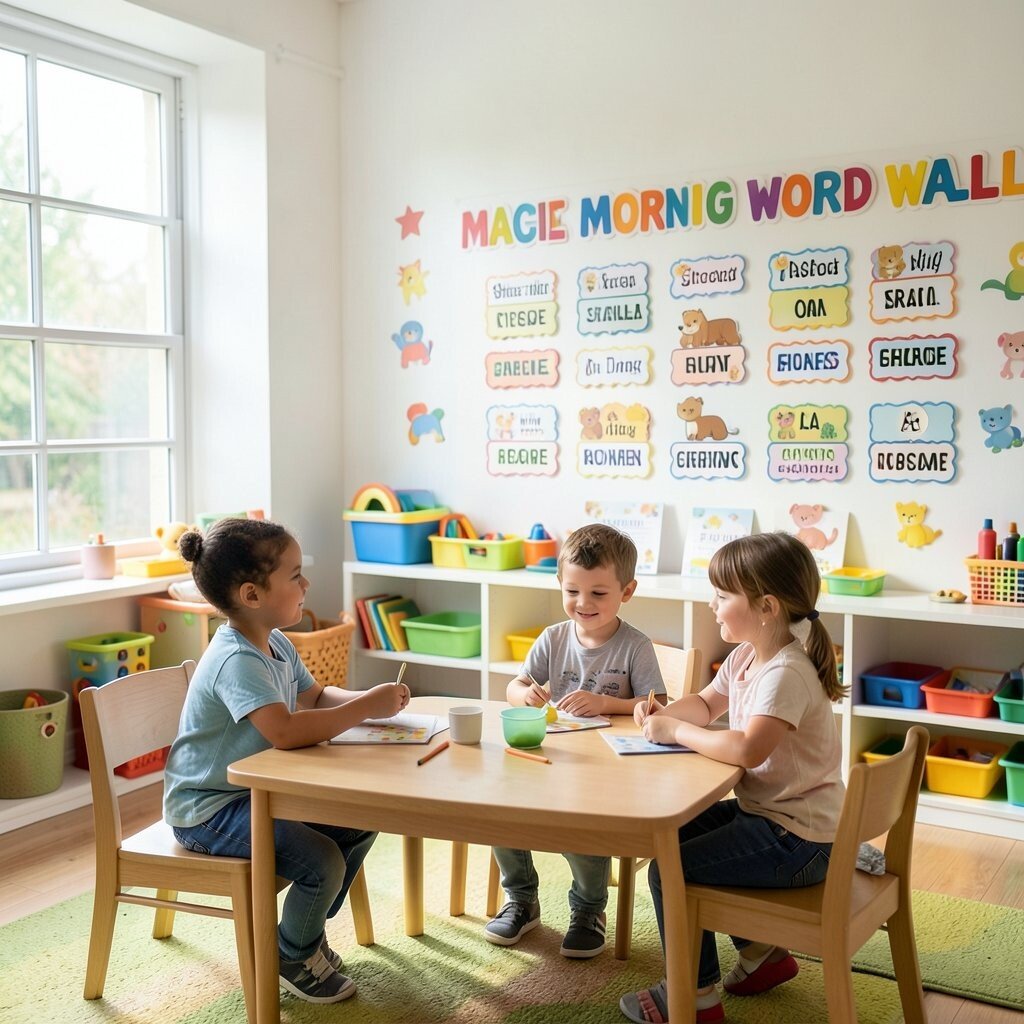
Build a magnetic word wall with greeting phrases kids can assemble together. Use large magnets with picture supports so children can match “hello” and “good morning” with visuals.
During greetings, invite children to place magnets while you chant the phrase as a group. This creates a fun connection between spoken language and print awareness, which helps early literacy. Personalize the word sets by adding seasonal words like “spring,” “teamwork,” or “thank you,” so the wall feels alive all year.
For cost, you can reuse cheap cookie trays for backing boards and make magnets from foam shapes or cardstock plus magnetic tape. This kind of interactive word play is popular right now because it supports active learning without extra screen time.