The moment you change your stairs, you change the whole feel of your home. It’s one of those upgrades that people notice every day.
From quiet comfort to bold style, good stair choices make moving through your space feel easier and more beautiful.
1. Floating Steps With Warm Lighting
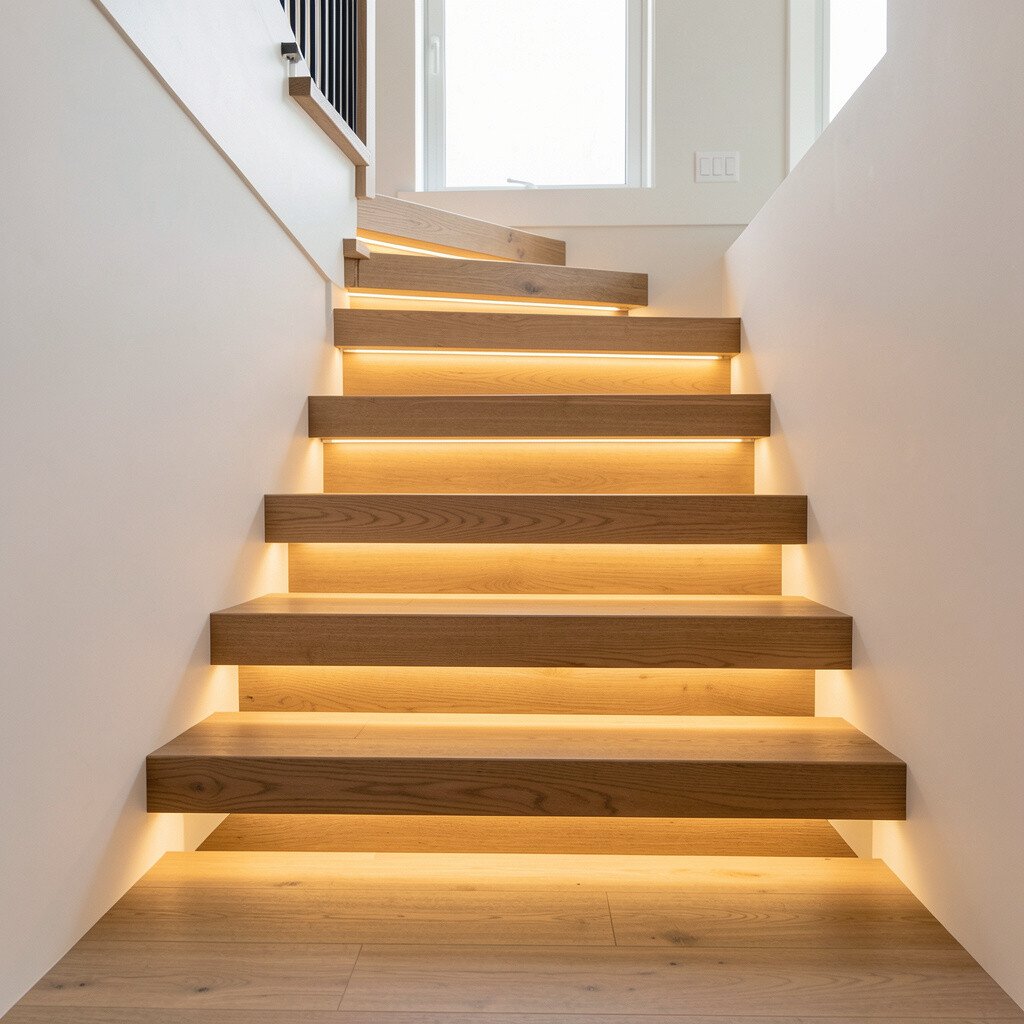
Floating steps look like they’re hovering above the floor, creating a clean, modern vibe. Add warm lighting along the risers or beneath the treads and the effect feels soft, not harsh.
Choose wood for a cozy tone, or go with metal and glass if you want a sharper look. Make sure the lighting is low voltage and placed where it won’t cast strong glare when you climb. If you have kids or pets, the gentle glow can also help you see each step at night without turning on bright overhead lights.
2. Wide Treads For Easy, Everyday Footfalls
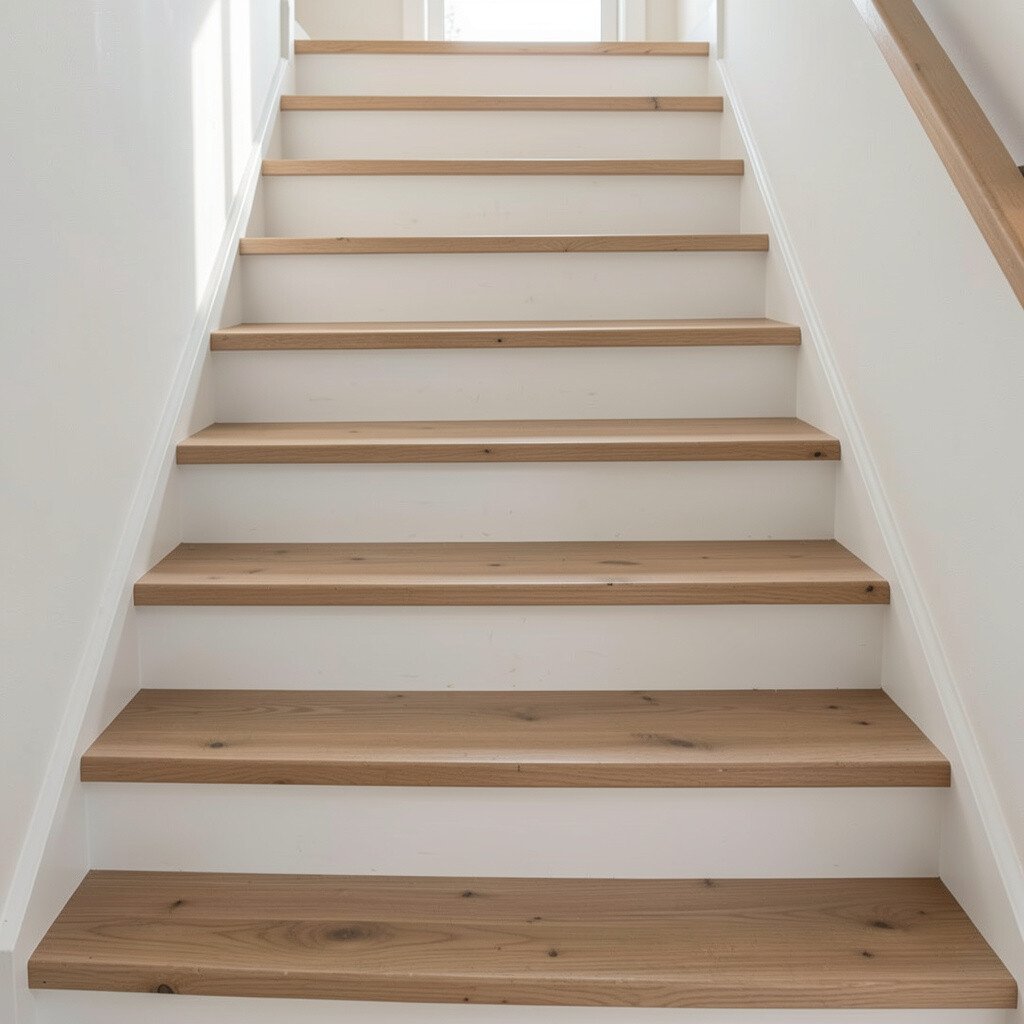
Wide treads make stairs feel calmer because your foot has more space to land. In real life, that small comfort helps when you carry groceries or rush between rooms.
This style also lets you add subtle design details, like a slightly textured finish for traction. Consider pairing wider steps with a simple, durable handrail that matches your existing trim so the whole run feels coordinated.
When budgeting, remember that increasing tread width may change the stair overall layout. Ask your installer to show you how the framing will work before you commit, because small adjustments to the opening can affect cost.
3. Staircase Wraparound With Built-In Storage
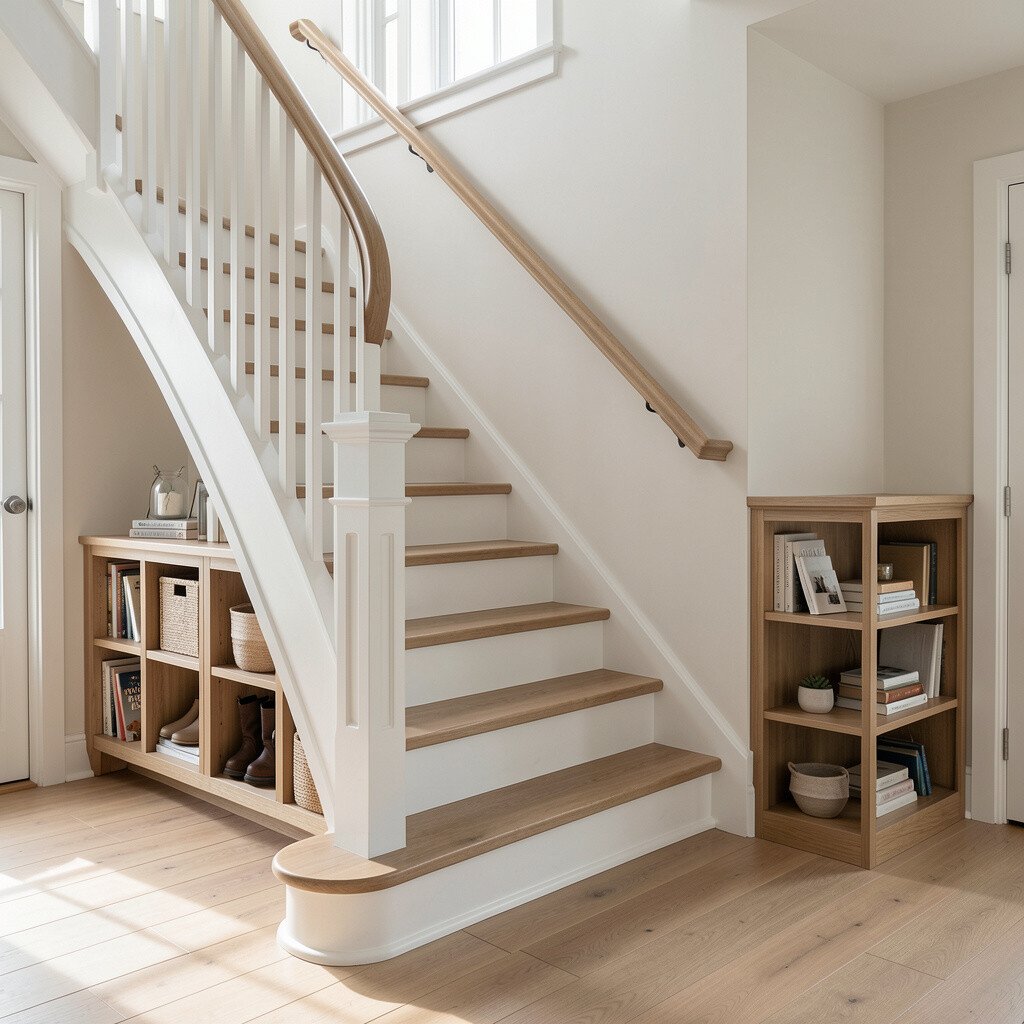
A staircase wraparound can hide clutter and turn an awkward corner into something useful. Think drawers under the lower steps or cabinets that run along the side wall.
You get practical storage plus a built-in look that feels custom without needing extra rooms. It’s especially helpful in hallways where you want a place for shoes, coats, and everyday items.
For personalization, match the cabinet fronts to your kitchen hardware so everything feels like one design story. Choose soft-close hinges for a quiet home, and use a finish that matches moisture levels if the area gets humid.
Cost varies based on how much millwork is built from scratch, but you can lower expenses by using ready-made drawer boxes and having only the face frames tailored. Talk with your installer about the cleanest way to route any wiring if you add lighting inside the storage.
4. Curved Staircases With Smooth-Rounded Details
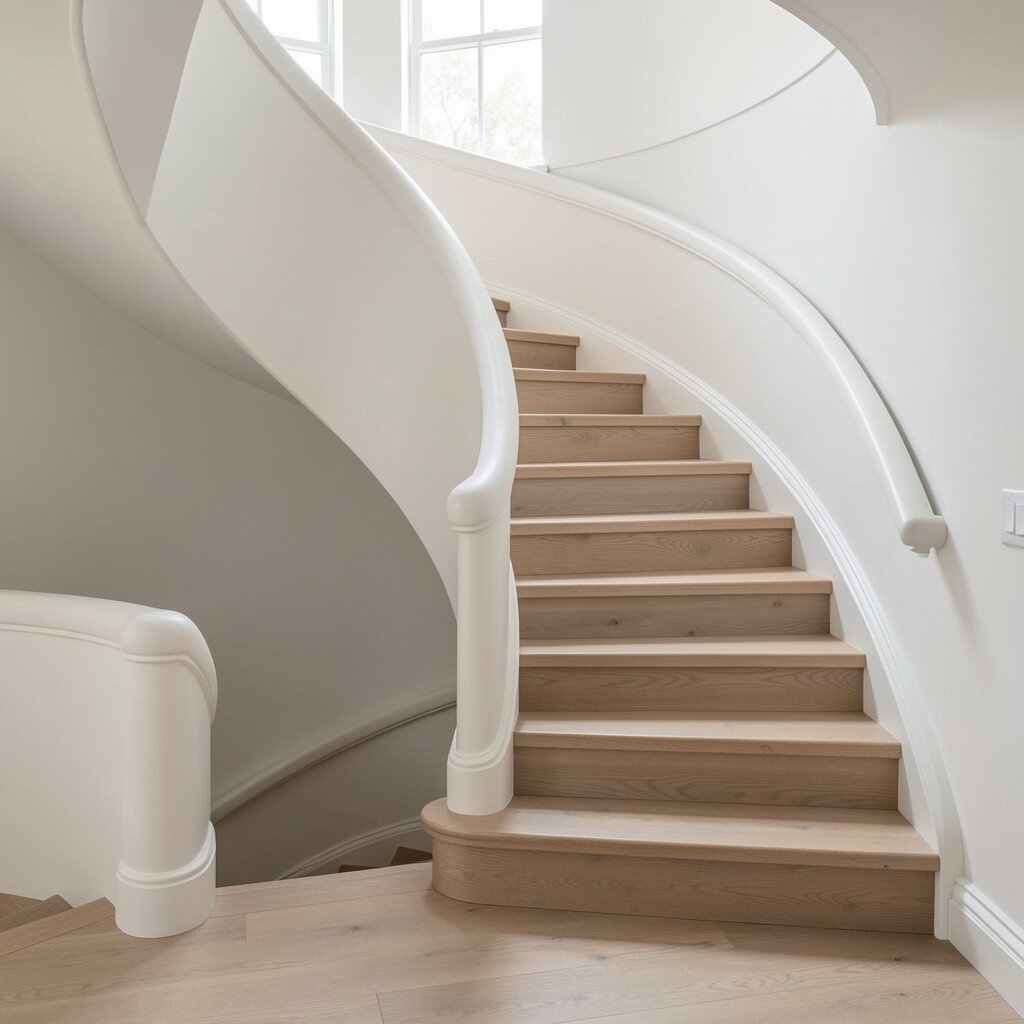
A curved staircase adds movement and elegance the moment you walk in. The shape feels welcoming, and the handrail usually invites you to slow down and move smoothly.
If your layout allows it, curved treads can also help soften transitions between floors. Use a stain or paint that fits your style, from light oak for airy spaces to deep walnut for a dramatic feel.
5. Full-Height Panels For A Bold Statement Wall
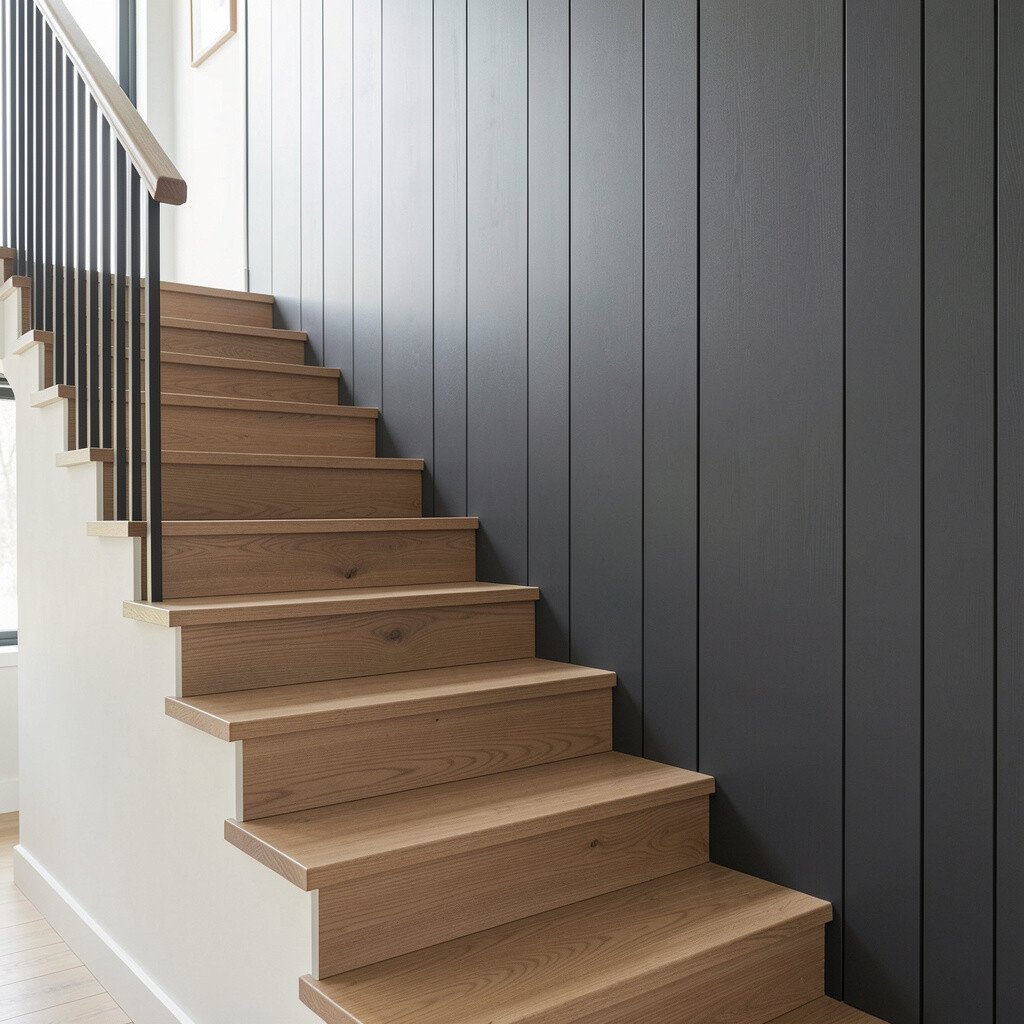
Installing stair panels that rise from the base to the top can make your staircase act like a feature wall. It’s a chance to bring color, texture, and personality right where people naturally look.
Choose materials that handle everyday wear, like durable wood veneer, fiber panels, or a painted finish with strong top coating. You can also add decorative inserts that reflect your home style, from simple lines to artsy patterns.
For uniqueness, consider blending two finishes, like painted risers with stained treads. If you want a smoother feel, make sure the paneling isn’t too thick where feet need clearance, and plan the spacing carefully.
6. Modern Glass Panels With Sleek Metal Rails
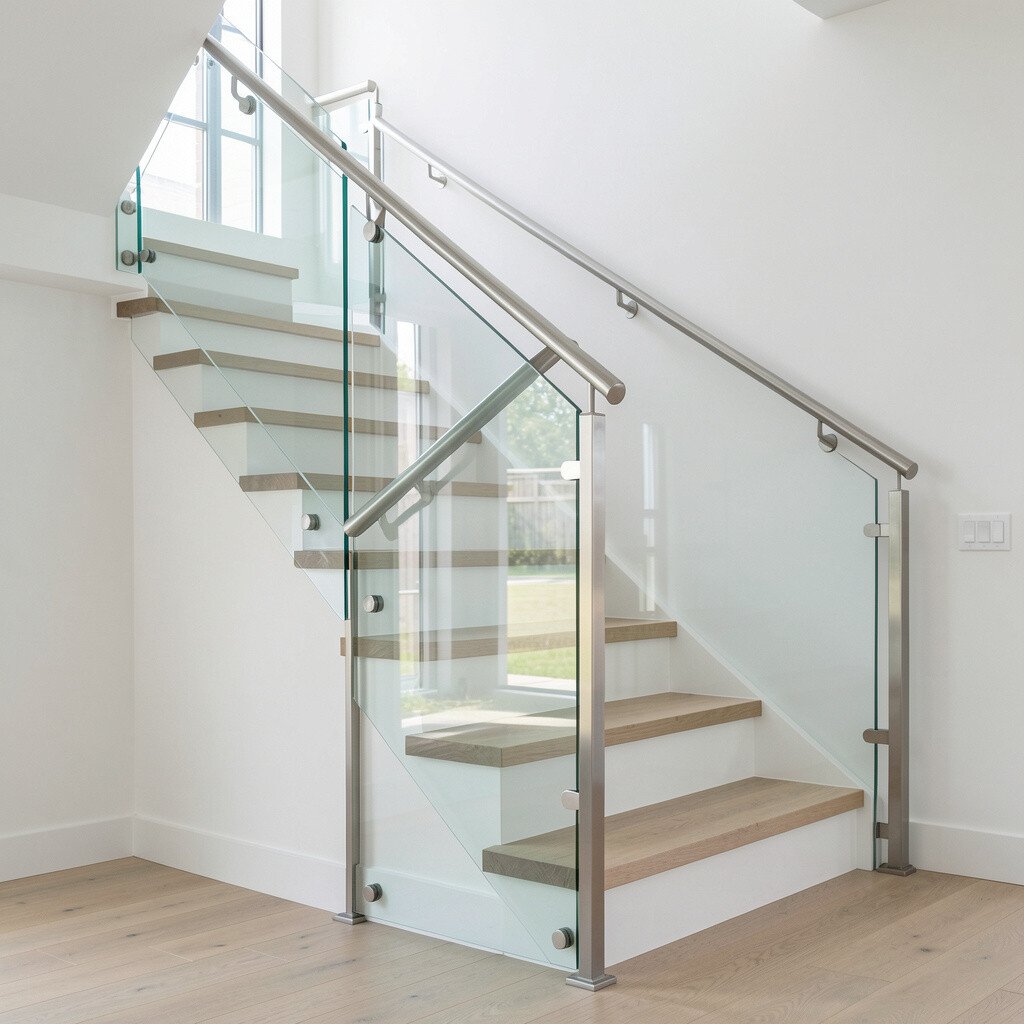
Glass panels with thin metal rails can give your stairs a light, open feeling. Even in smaller homes, this look helps the space feel less boxed in.
This option is also great for homes with good natural light because the reflections make the area feel brighter. For safety, choose tempered glass and ask for compliance with local building rules.
When you’re thinking about cost, glass and custom rails tend to run higher than basic wood balusters. You can offset that by choosing a simpler rail shape and keeping panel sections consistent, which reduces fabrication time.
7. Traditional Turned Spindles With Fresh Paint Colors

Turned spindles bring classic charm, but you can update the look with fresh paint and thoughtful color choices. A crisp white railing can feel timeless, while a soft gray or warm greige feels current.
You can personalize the vibe by choosing a satin finish on the handrail for comfort and easy cleaning. If you like contrast, paint the spindles one shade and stain or seal the treads in another.
8. Handrail That Doubles As A Built-In Seat
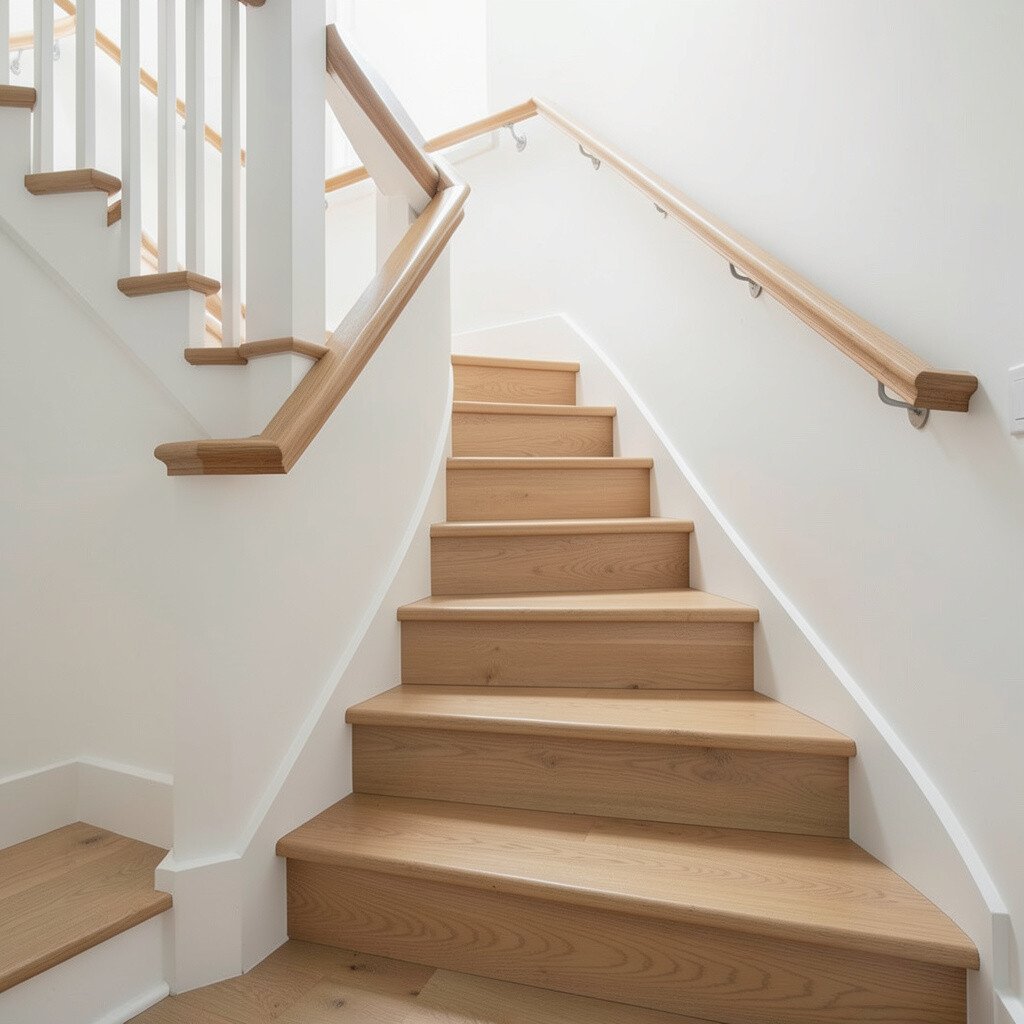
A stair handrail that feels sturdy and comfortable can also become a quiet convenience. Some designs include a built-in bench-like ledge near the landing so you can pause, tie shoes, or set items down.
This is especially useful for busy homes where someone is always grabbing something and moving quickly. Add a small storage nook nearby and you get a practical station without adding more furniture.
To keep it safe, use rounded edges and secure attachments, and make sure the seat surface can handle daily use. Ask your installer about thickness options and whether the wall framing can support the added structure.
9. Two-Tone Stairs With Painted Risers And Stained Steps
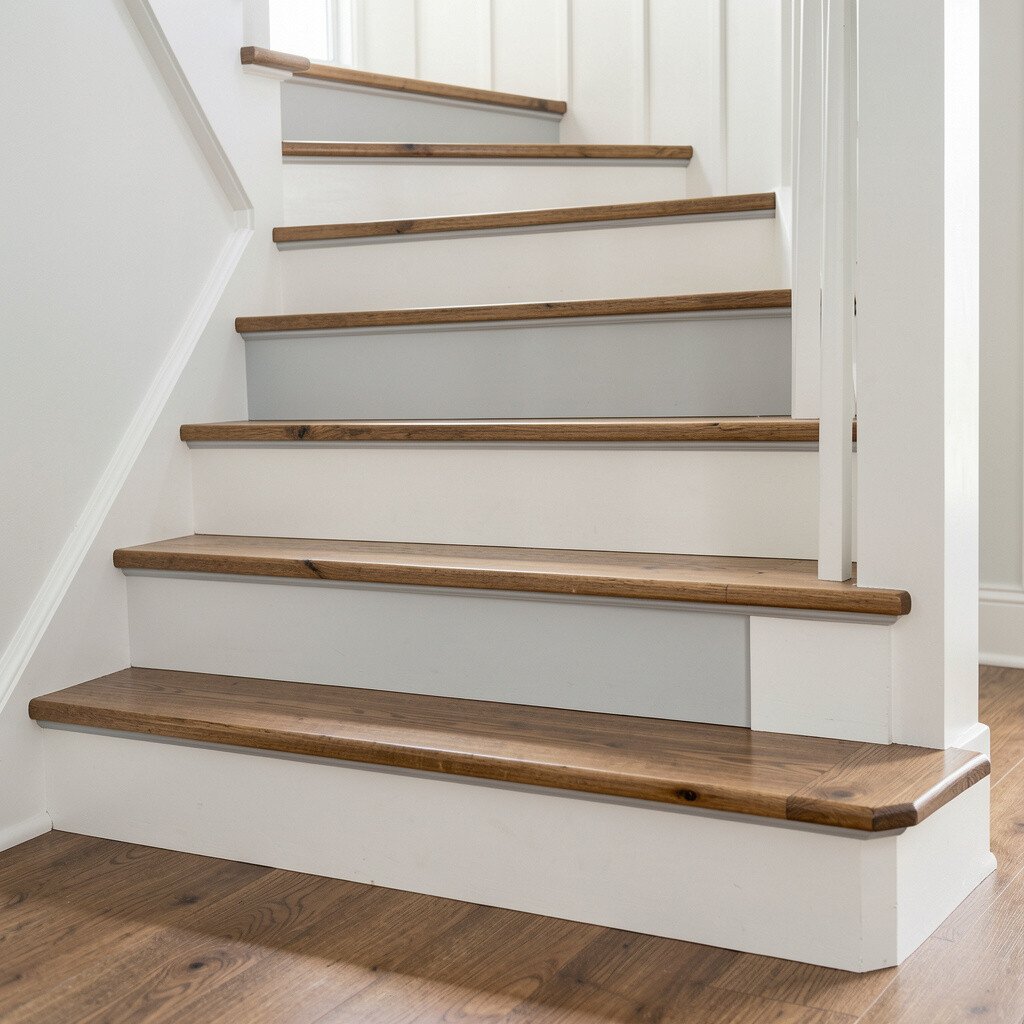
Two-tone stairs look eye-catching because the contrast separates steps visually. Painted risers can add color while stained treads keep the warmth of real wood.
Pick a color that matches your room palette, like a deep navy with light oak or a muted green with warm walnut. You’ll also get an easy style update later, since repainting risers is usually simpler than replacing full treads.
For practical installation, keep the finish system consistent so the riser paint doesn’t scuff easily. A durable topcoat matters, especially where shoes hit the vertical surfaces often.
10. Textured Treads For Extra Grip And Comfort
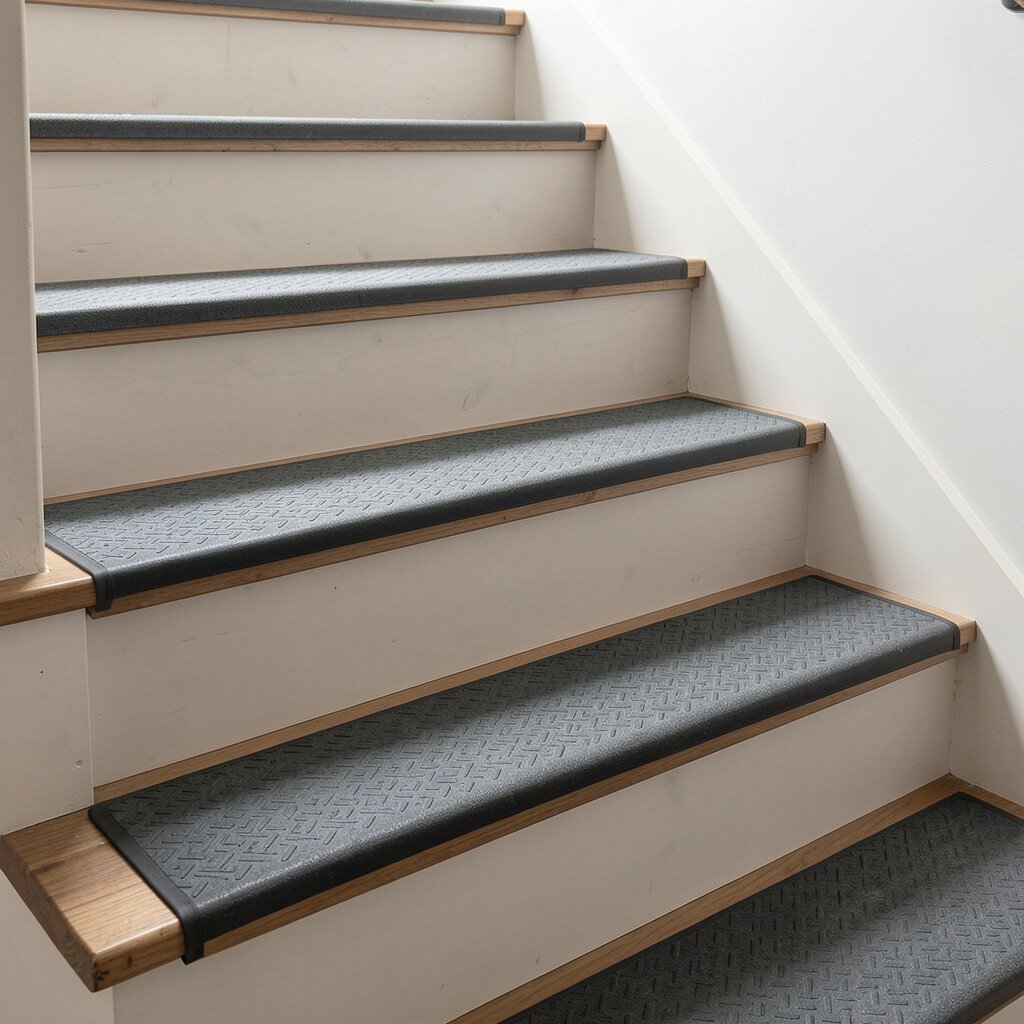
Textured treads help stairs feel more secure, especially on rainy days or in homes with lots of foot traffic. You can choose subtle grooves, slip-resistant coatings, or a lightly sandblasted wood surface.
This idea is all about comfort as much as style, since good grip reduces worry when you’re carrying items. Consider pairing textured treads with a smooth handrail so the balance feels right for both grip and glide.
Cost can be manageable because many slip-resistant finishes are applied during installation rather than requiring a full material swap. Ask for samples so you can see how the texture looks under your lighting, since strong textures can feel visually heavy.
11. Staircase With Accent Shadow Gap Lighting
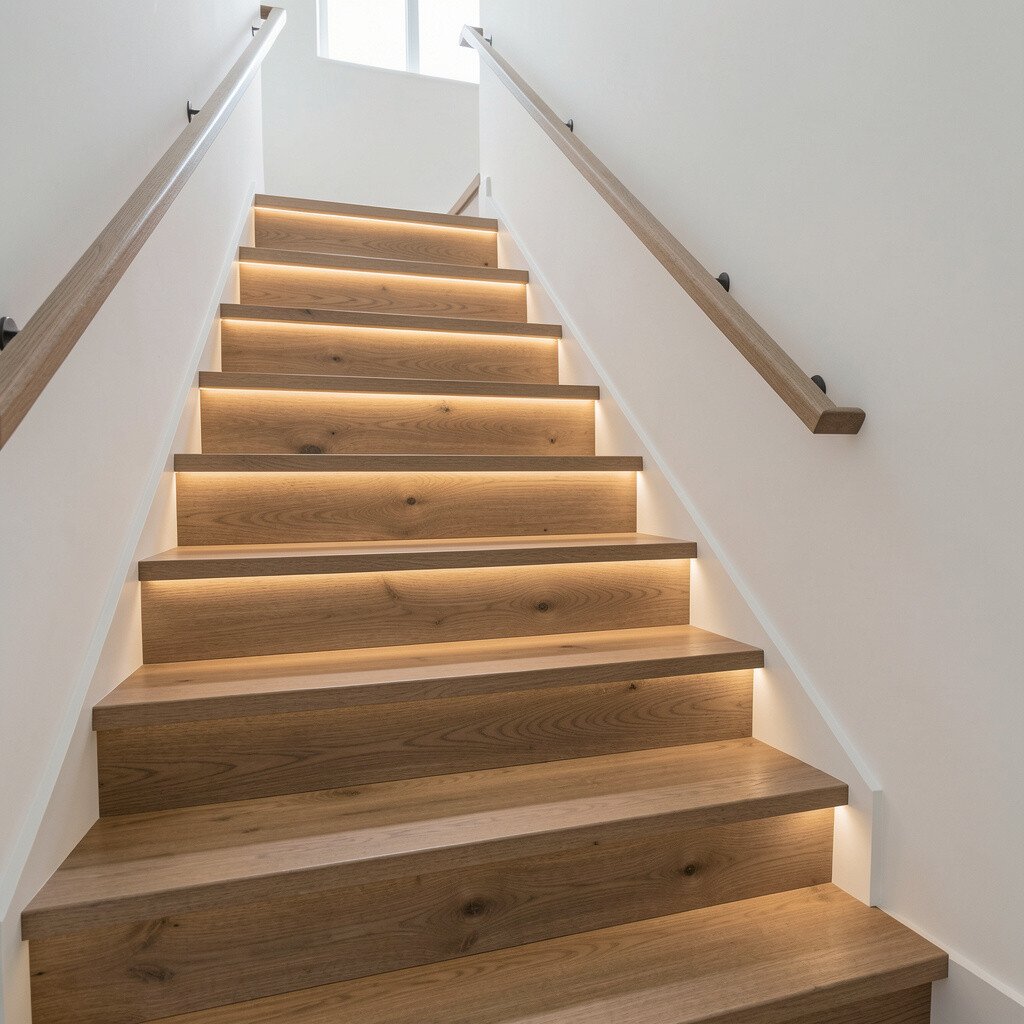
Shadow gap lighting adds a modern glow by letting light sit between materials. The result feels clean and upscale, with a soft line that highlights the shape of each step.
To make it feel personal, choose a color temperature that matches your home, such as warm white for cozy evenings. You can place the light inside a recessed channel on the side of the treads or under the risers for a gentle halo.
For installation planning, ask whether the channel needs extra framing and whether wiring can run neatly through the wall. This is a great place to invest, because lighting upgrades usually make the stairs look better from every angle.
12. Stair Runners That Coordinate With Your Living Space
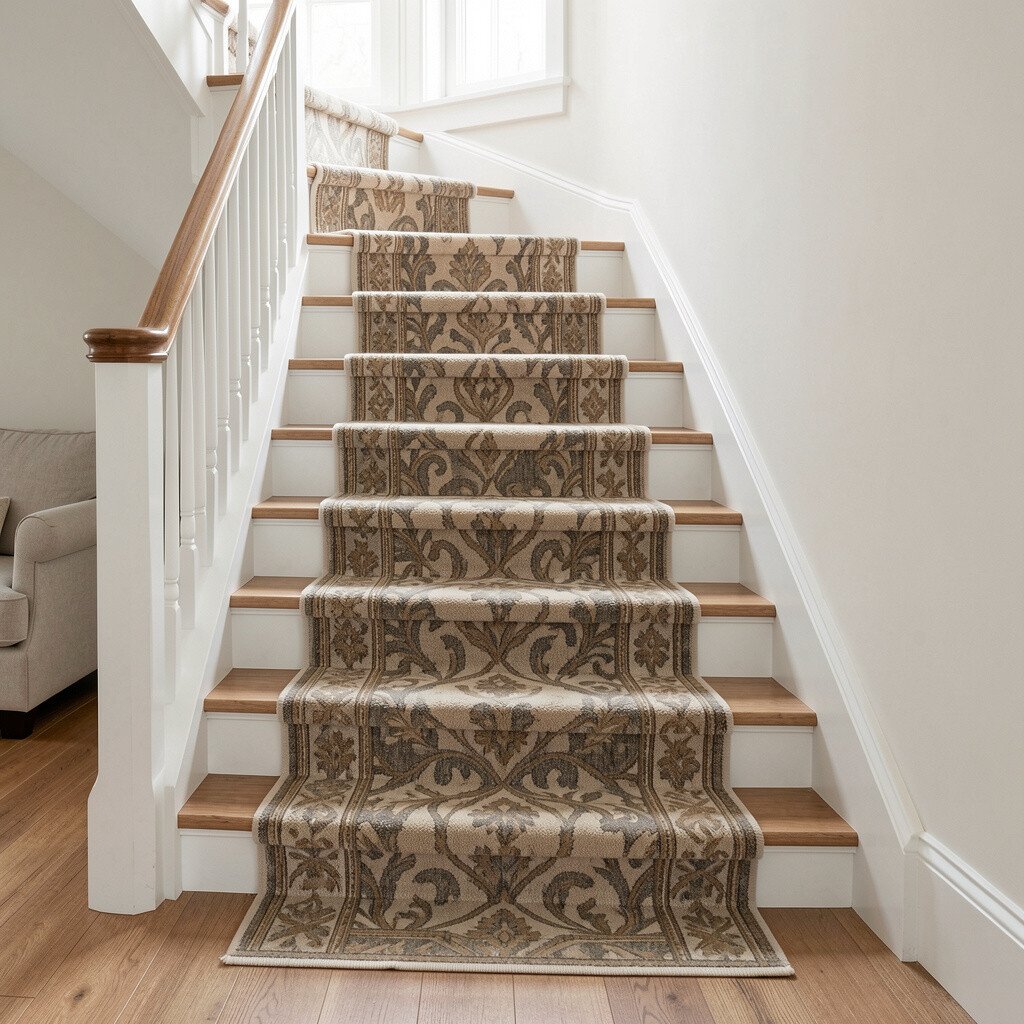
A runner can make stairs feel welcoming while also protecting your steps from wear. When you pick the right pattern, the stairs blend with the rest of your home instead of looking random.
Choose a runner with a backing that grips well so it stays put, and select a pile height that matches your daily routine. If you have pets, a tighter weave can be easier to clean and less likely to trap hair.
Personalization is easy here since runners come in many colors and textures. Just measure carefully and plan for proper fitting around corners so the edges look neat and stay secure.
13. Minimalist Staircases With Hidden Fasteners
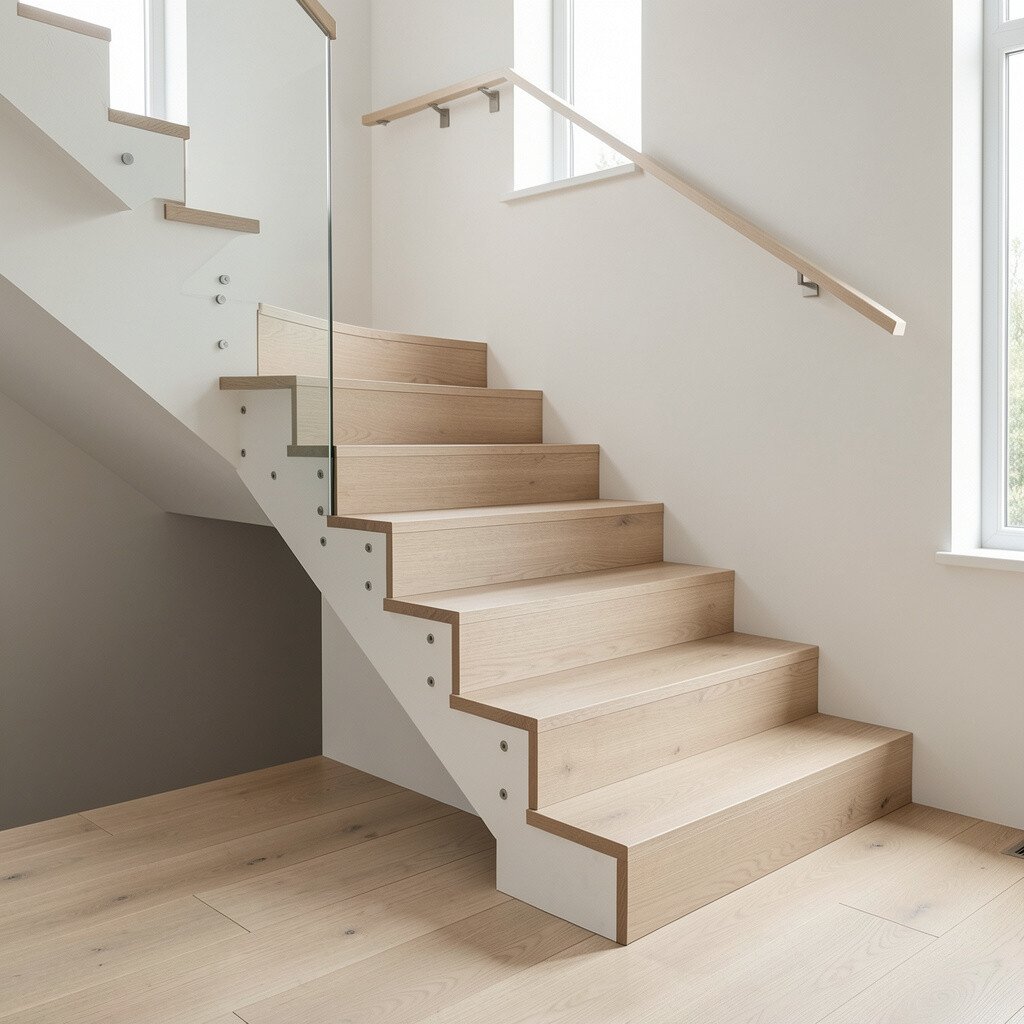
Minimalist stair ideas focus on clean lines and a tidy look where you barely see hardware. Hidden fasteners make the wood or composite surface feel smooth and continuous.
This design fits modern homes because it lets your materials do the talking. Use a consistent finish across treads and rail components so nothing looks mismatched or overly busy.
Cost can run higher because precision installation takes more labor, but the payoff is a refined look. Ask your installer to show you how they handle alignment at each step, since neat spacing makes the whole staircase feel intentional.
14. Renovated Stairs With Matching Trim And Doorway Flow
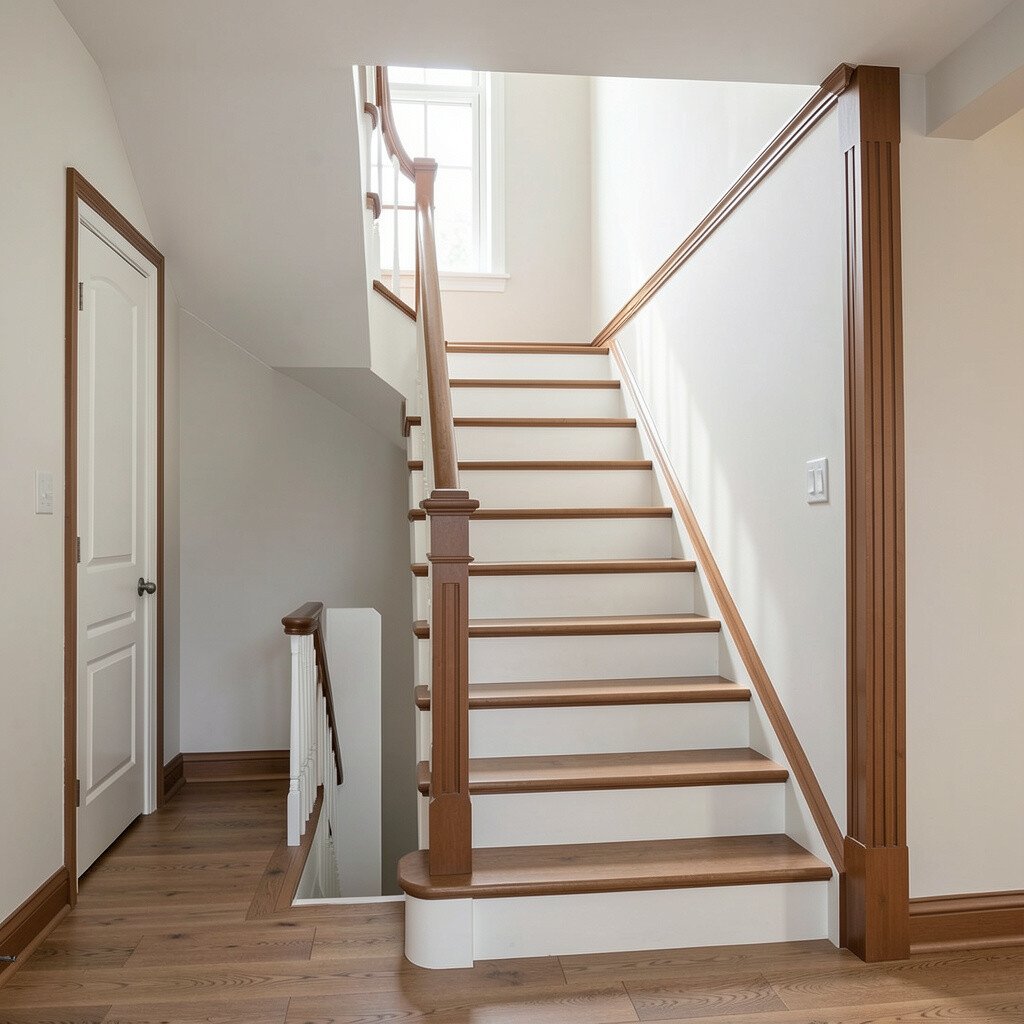
Instead of treating stairs as an isolated project, match them to the trim and doorways around them. When trim lines and finishes line up, your home feels more connected and less pieced together.
You can personalize the transition by using the same wood species on handrails, baseboards, or wall panels. Adding new stair skirt boards or updated landing trim also helps the staircase look built-in, even if it’s being renovated.
For budget control, consider what can stay, like existing framing, while upgrading visible elements such as treads, risers, and railing. A practical way to estimate cost is to ask for two options, one that reuses more parts and one that replaces more, so you can choose the level of change that fits your timeline.
Current trend energy leans toward cohesive millwork, warm finishes, and details that guide the eye upward. When you plan the stair styling with the rest of the hallway in mind, the final result feels polished and comfortable from the very first step.