The reading corner can feel like a tiny harbor for little readers. With ocean touches, every story starts to feel like an adventure.
Soft light, sea-inspired colors, and kid-friendly seating make calm, cozy space that still sparks curiosity.
1. Whimsical Wave Backdrop Curtains
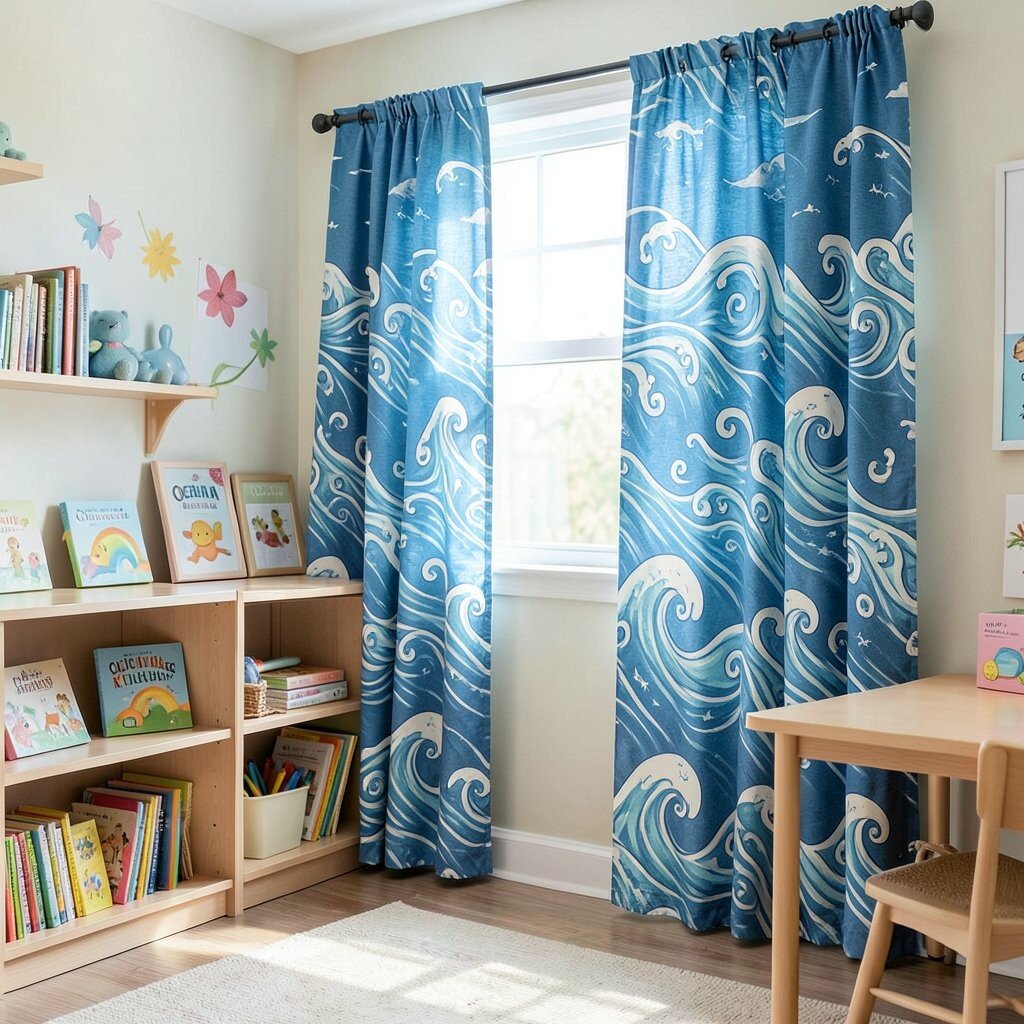
Choose lightweight curtains printed with gentle wave patterns in seafoam green, sky blue, and pale white. When the fabric drapes behind your reading area, it instantly frames the space like a shoreline at story time.
Have the child-friendly benefit of creating a visual calm that helps students focus on books instead of the rest of the room. To personalize, let your class name or a small paper-fish garland hang along the curtain edge using clothespins, so it can be changed each season.
2. DIY Bubble Light String Overhead
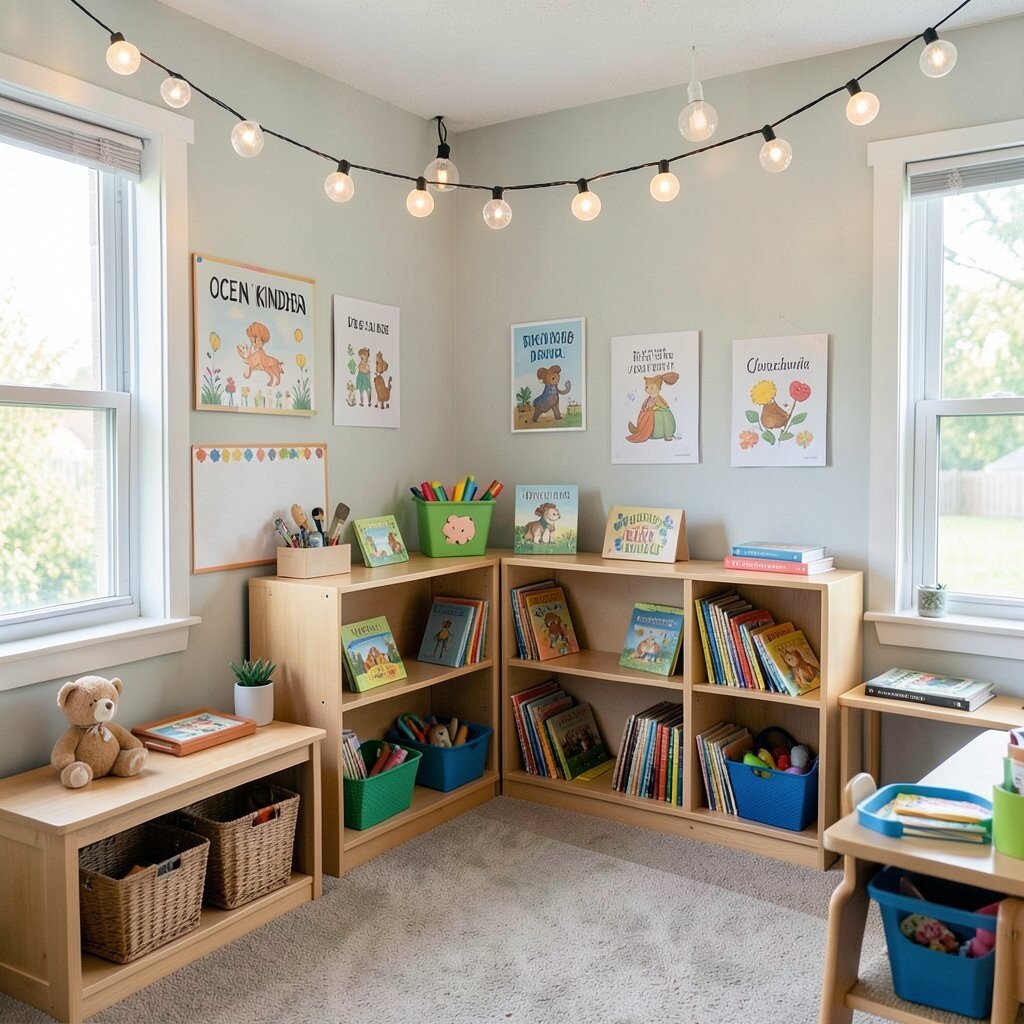
Hang a string of warm LED lights shaped like bubbles above the reading corner, keeping the cord safely out of reach. The soft glow makes the area feel cozy, especially on cloudy days, and it adds a dreamy “underwater” vibe without being too dark.
Kids respond well to gentle lighting because it supports a soothing mood during quiet reading. For practical setup, secure the strand to sturdy hooks along the ceiling track and aim the lights downward so they brighten book covers and calm faces.
If you want to control cost, look for seasonal lights after holidays or choose reusable clip-on decorations. A current trend is using warm mini lighting instead of bright lamps, so the corner feels more like a nighttime story nook even in daytime.
3. Seashell Reading Rug With Soft Borders
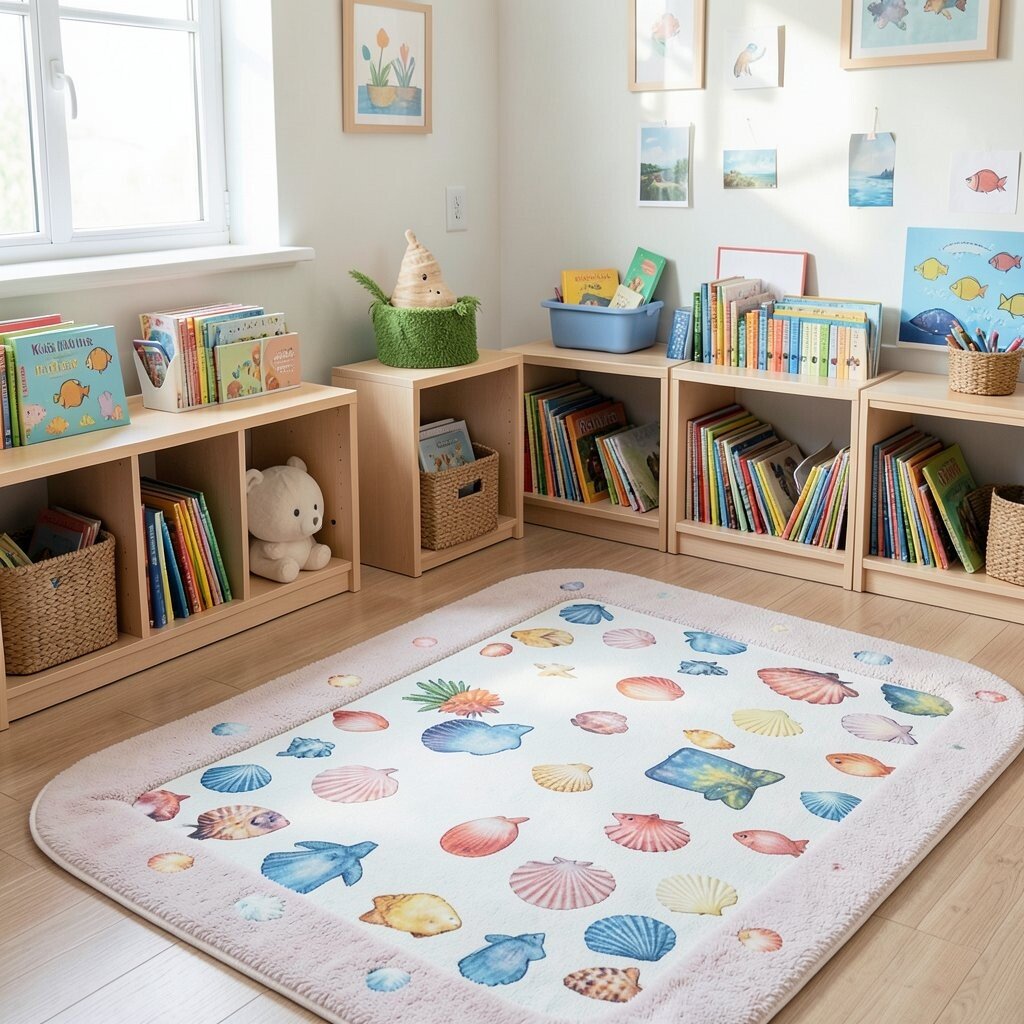
Lay down a rug that features subtle seashell shapes and smooth ocean gradients. Rounded edges help prevent corners from lifting, and the texture gives toddlers and kindergarteners a comfy place to sit.
When children feel comfortable on the floor, they naturally stay longer with books and reduce fidgeting. Personalize the rug by pairing it with a few themed fabric patches you can swap, like starfish for spring and waves for summer.
For practical tips, choose a rug that is easy to wipe and machine-wash if possible, because snacks and spills happen fast. If budget is tight, place a plain blue rug and add removable fabric appliqué squares to create the seashell look.
This idea also stays unique because the “soft border” feel mimics sandbars, giving the corner a grounded, gentle identity.
4. Starfish Reading Pillows in Different Sizes
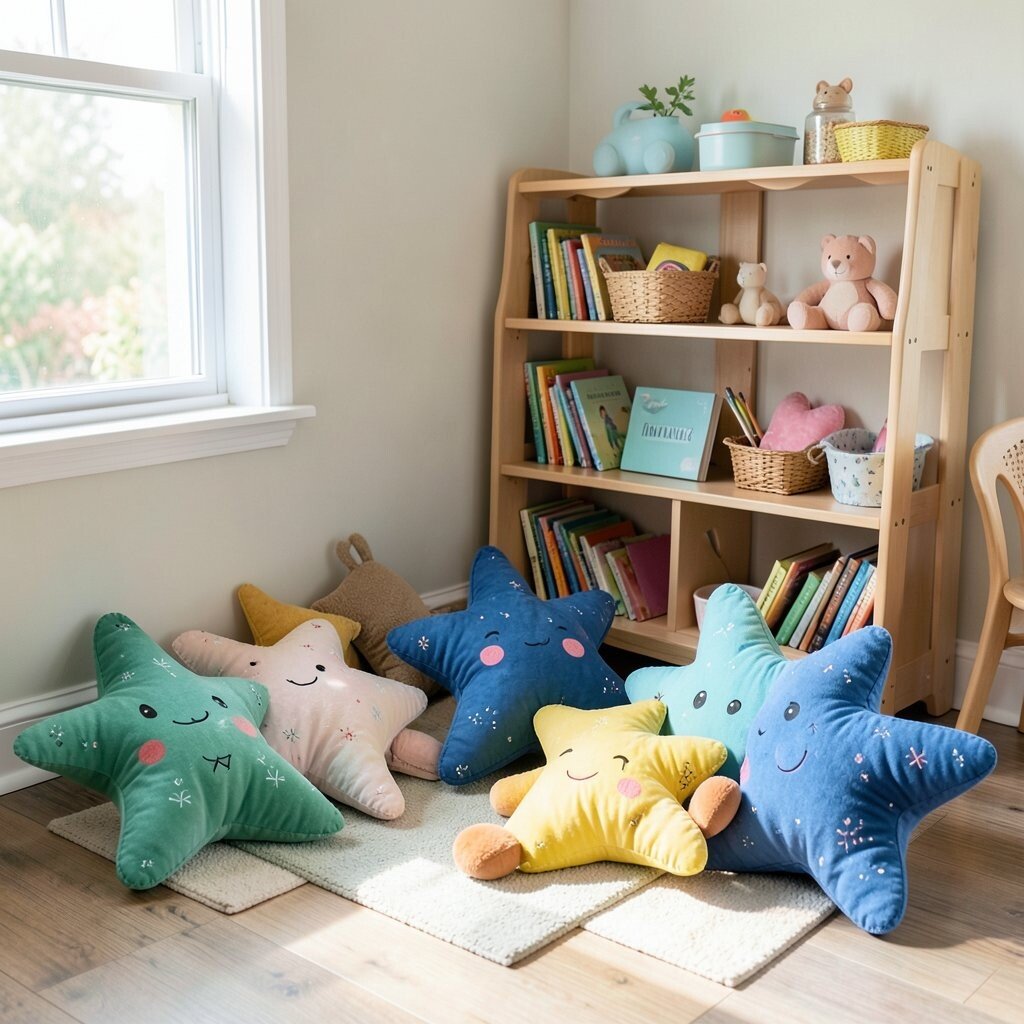
Add plush pillows shaped like starfish or make pillow covers with printed starfish fabric. Use different sizes so children can stretch out, sit tall, or cuddle up with their favorite characters.
This seating makes story time more inclusive because some kids prefer lounging while others like upright support. If you want a practical personalization, label the pillow spots with child-made picture cards and rotate them weekly so each student gets a turn to lead the cozy spot.
To keep costs reasonable, start with two or three pillows and build up over time. A current trend is mixing “play-soft” decor with functional seating, and these pillows do both.
That unique mix of comfort and ocean theme turns the reading corner into a small tradition kids look forward to daily.
5. Layered Paper Coral Shelves for Book Display
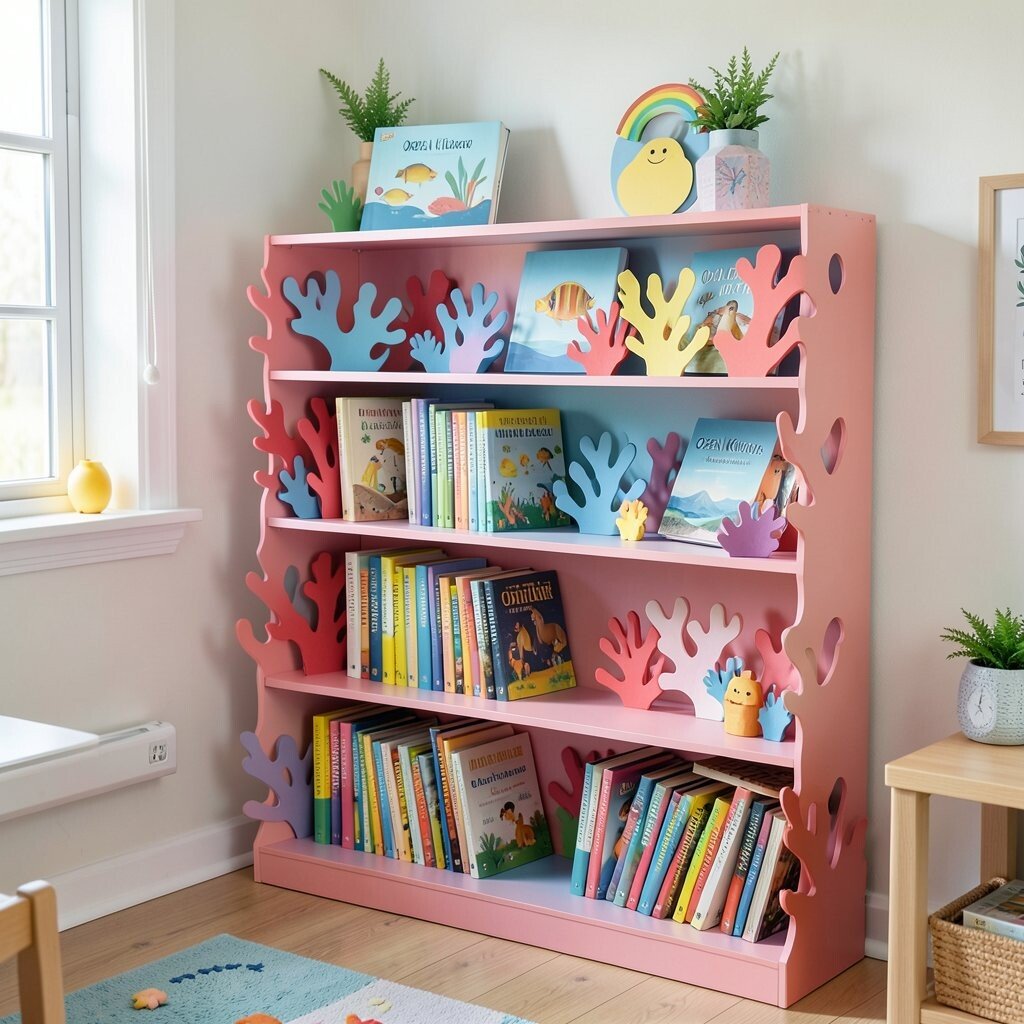
Create a coral-style bookshelf display using sturdy poster board cut into gentle branch shapes. Paint or cover it with textured craft paper, then attach mini ledges where books can stand like sea plants.
Books become easier to reach when the shelves are low, and that encourages independent browsing. For practical tips, use Velcro strips or book stop bars so covers face outward and stay neat during rotations.
Personalize by letting each student place a small name tag shaped like a shell on their “favorite shelf,” which adds ownership. If you want cost savings, use cardboard from shipping boxes and simple paint, then seal with a clear matte spray to handle daily touch.
This approach feels unique because it doesn’t look like a standard book rack, but it still works for everyday organization.
6. Undersea Shadow Box With Fabric Sea Creatures
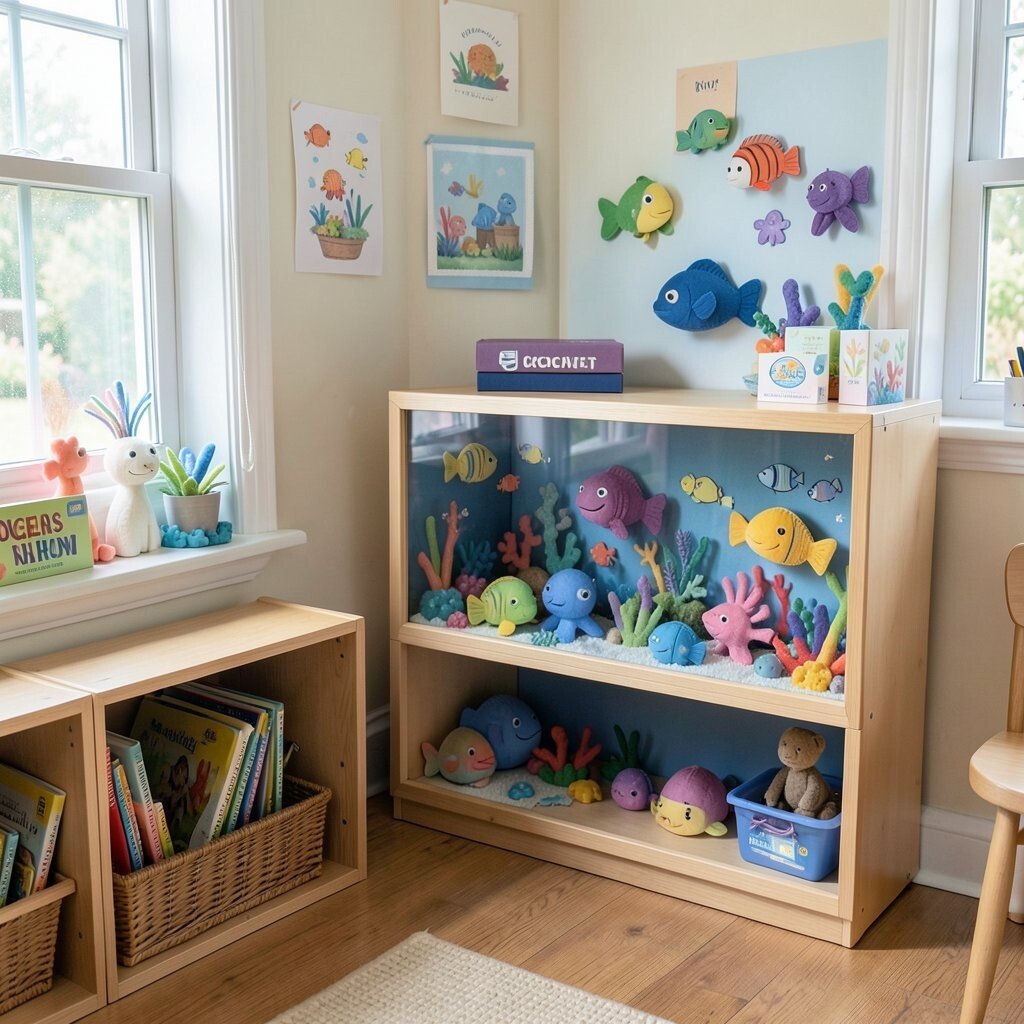
Hang a shadow box framed with ocean colors and fill it with soft fabric sea creatures and layered felt waves. When light hits the pieces, the scene looks like it has depth, almost like a mini aquarium behind glass.
This kind of visual centerpiece supports attention because it gives kids something calm to look at while they settle in. For practical setup, use strong glue or stitching to make sure parts are secure, since kindergarten hands can be curious and busy.
To make it personal, include a few handmade items from students, like paper “claws,” tiny felt fish with their names, or their favorite story character shapes. You can keep costs down by using thrifted fabric scraps or old craft felt and reusing frames.
7. Ocean-Themed Reading Ladder or Floor Tiles
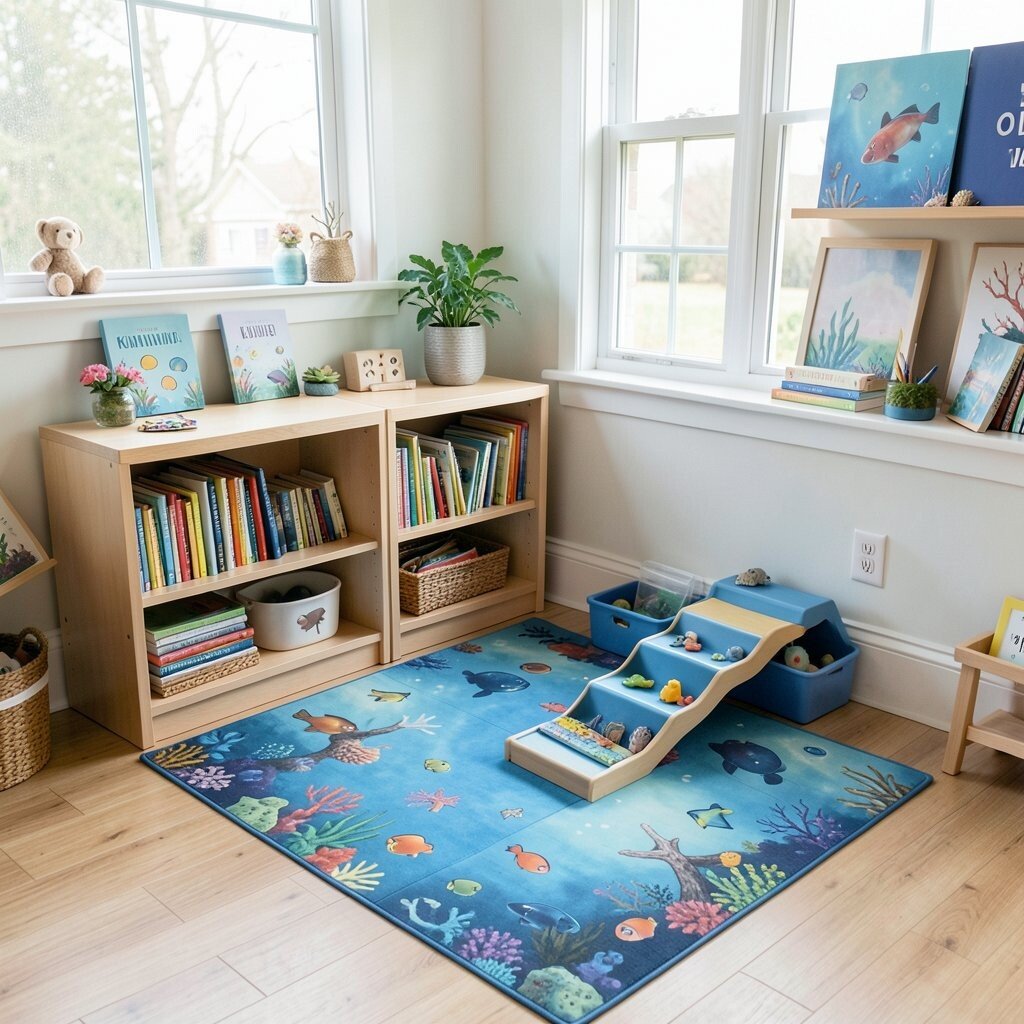
Place a reading ladder made from soft fabric or thick foam stepping stones leading to the rug area. If you prefer a simpler version, use floor tiles with wave patterns so students naturally move into the reading zone.
The visual path helps kids transition from busy play to quieter sitting because it sets a clear route. For practical tips, place the ladder or tiles so there is a safe walking space, and keep it wide enough for small feet and careful balance.
Personalization can be as easy as using color-coding where each color matches a reading level or weekly theme. This idea stays current because many classrooms use movement-friendly seating zones that still keep literacy at the center.
8. Floating Book Markers With Popsicle Stick Fish
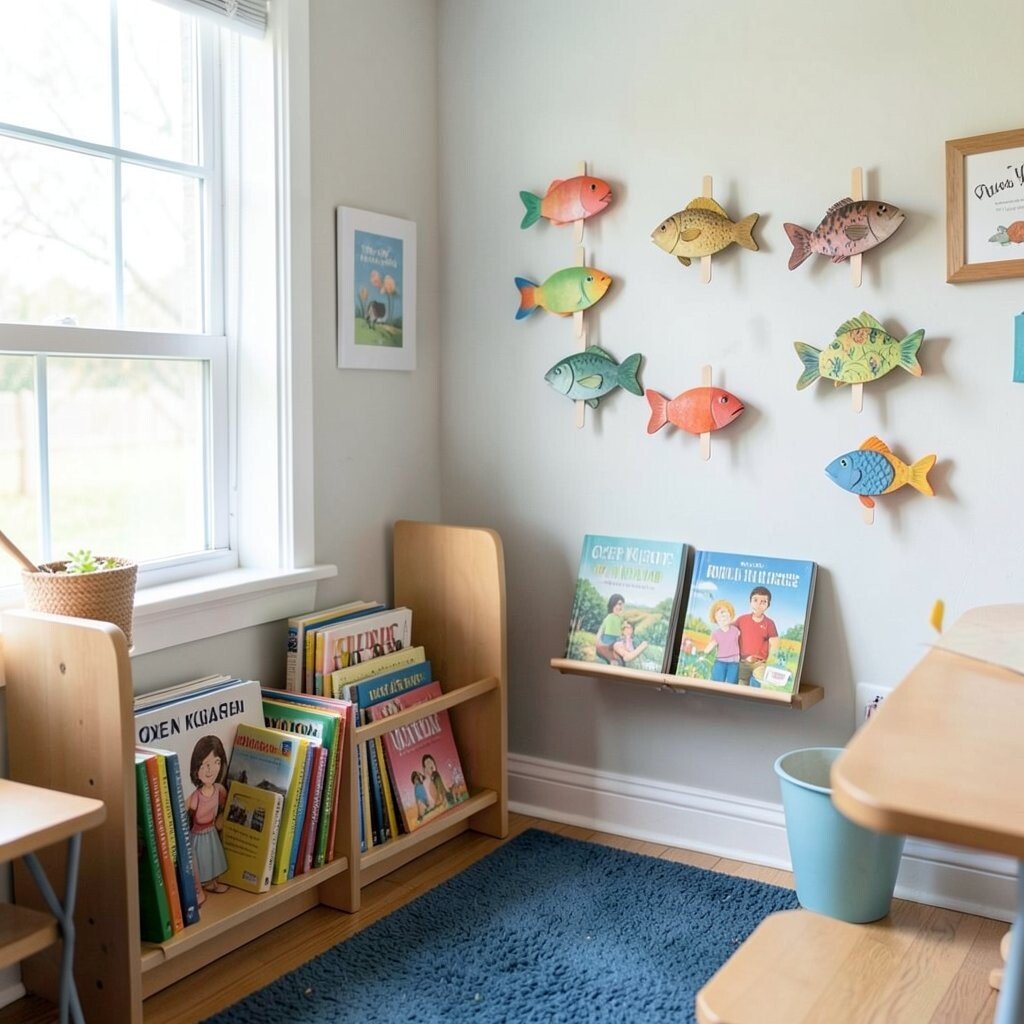
Make a set of floating book markers by using popsicle sticks painted like fish, then attaching yarn “streamers” that hook lightly on book edges. Store them in a clear jar so children can grab one and feel like they’ve joined the story world.
These little markers support benefits like helping kids keep their place and showing care for books. For a practical twist, add a small pocket-sized card on the jar label area with “Hold here” directions using simple pictures.
Cost considerations are friendly because popsicle sticks and yarn are usually inexpensive and easy to replace. For uniqueness, use different fish faces, like a smiling whale, a shy clownfish, or a friendly crab, so each student finds “their” character.
When the markers are fun, children are more likely to read longer because the act of returning the marker feels like closing a sea mission.
9. Mermaid-Inspired Canopy Using Draped Fabric and Clips
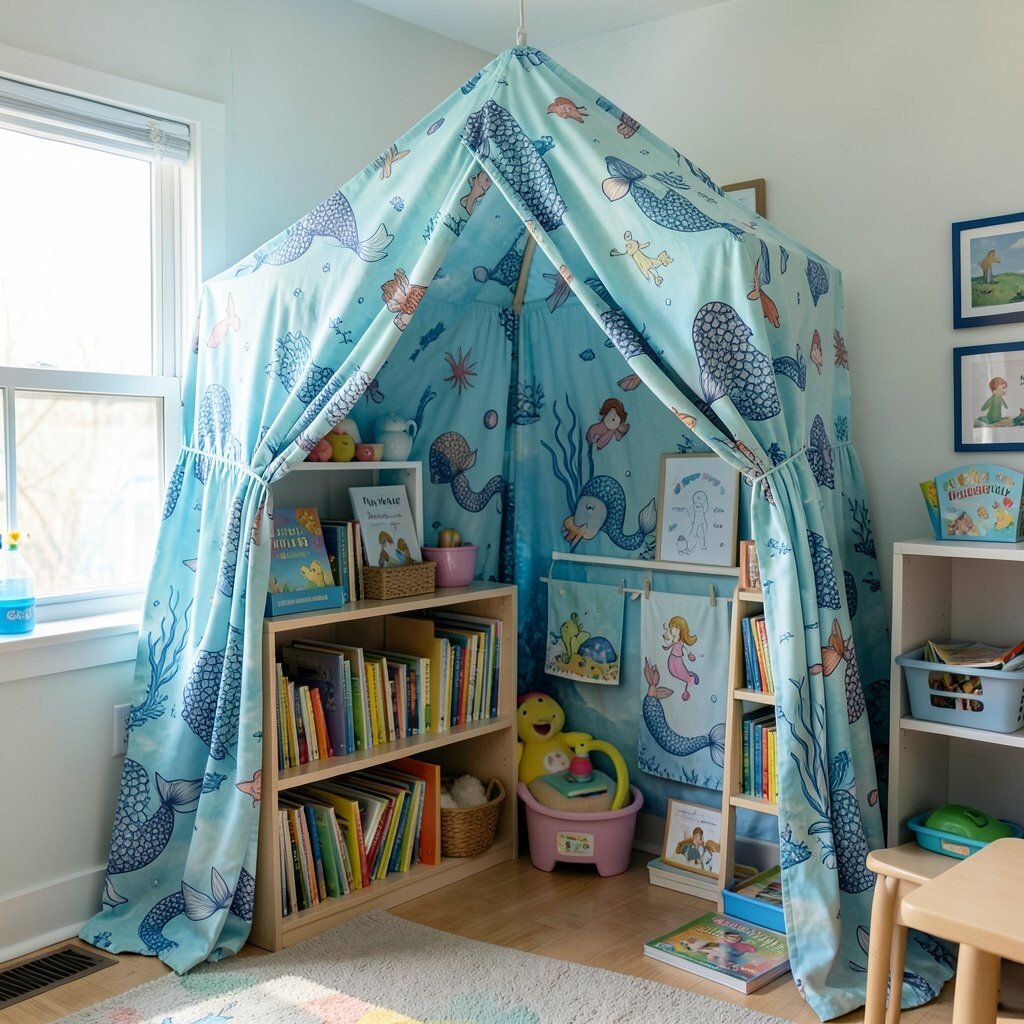
Create a gentle canopy over the reading corner using sheer fabric or lightweight curtains attached with clip rings. Choose colors like lavender-blue, seafoam, and soft white so the shade feels cool and calm rather than heavy.
This setup benefits students by building a special “reading bubble” that reduces outside noise and distractions. For practical tips, keep the fabric high enough to clear heads and avoid tangling, then use sturdy binder clips or tension rods at safe heights.
To personalize, let children add small paper wave cutouts to the canopy edge, rotating the display so it stays fresh all year. Cost can stay low because you can repurpose old scarves, inexpensive fabric panels, or even scrap fabric from a craft bin.
10. Ocean Scent and Story Time Set With Calm Timer Visual
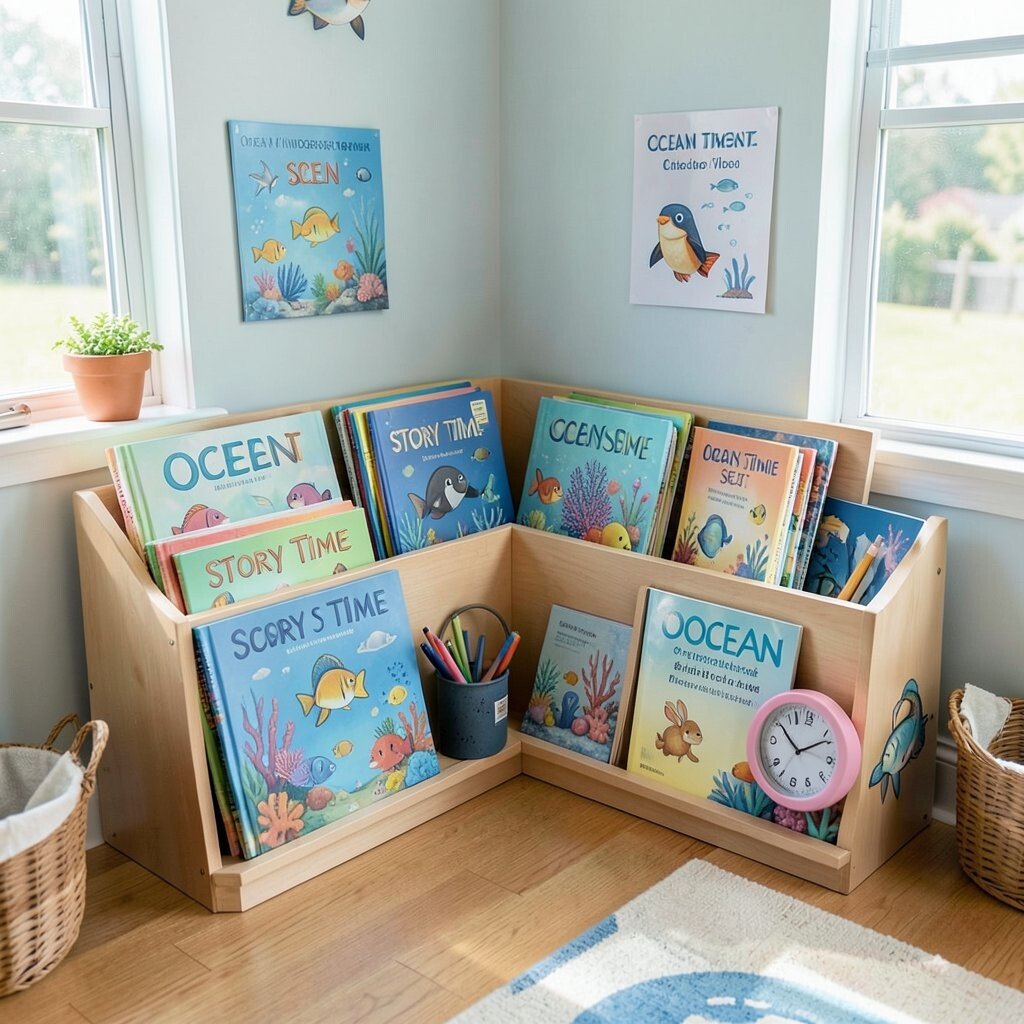
Bring in a sensory touch by placing a sealed, safe ocean-scent diffuser near the corner and using a simple timer visual with wave colors. Even a small change like fresh air and a calming timer can help kids settle into reading routines.
This benefits quiet time because children can connect the scent and visual cue with calm behavior. For practical considerations, make sure it is kid-safe, use very mild scent, and keep all products out of direct access.
Personalization ideas include adding a “quiet wave” card made by the class and changing the card each week with a new theme color. This feels unique and modern because more classrooms are blending literacy with gentle regulation tools that support emotional comfort.
11. Transparent “Aquarium” Wall Organizer for Book Rotation
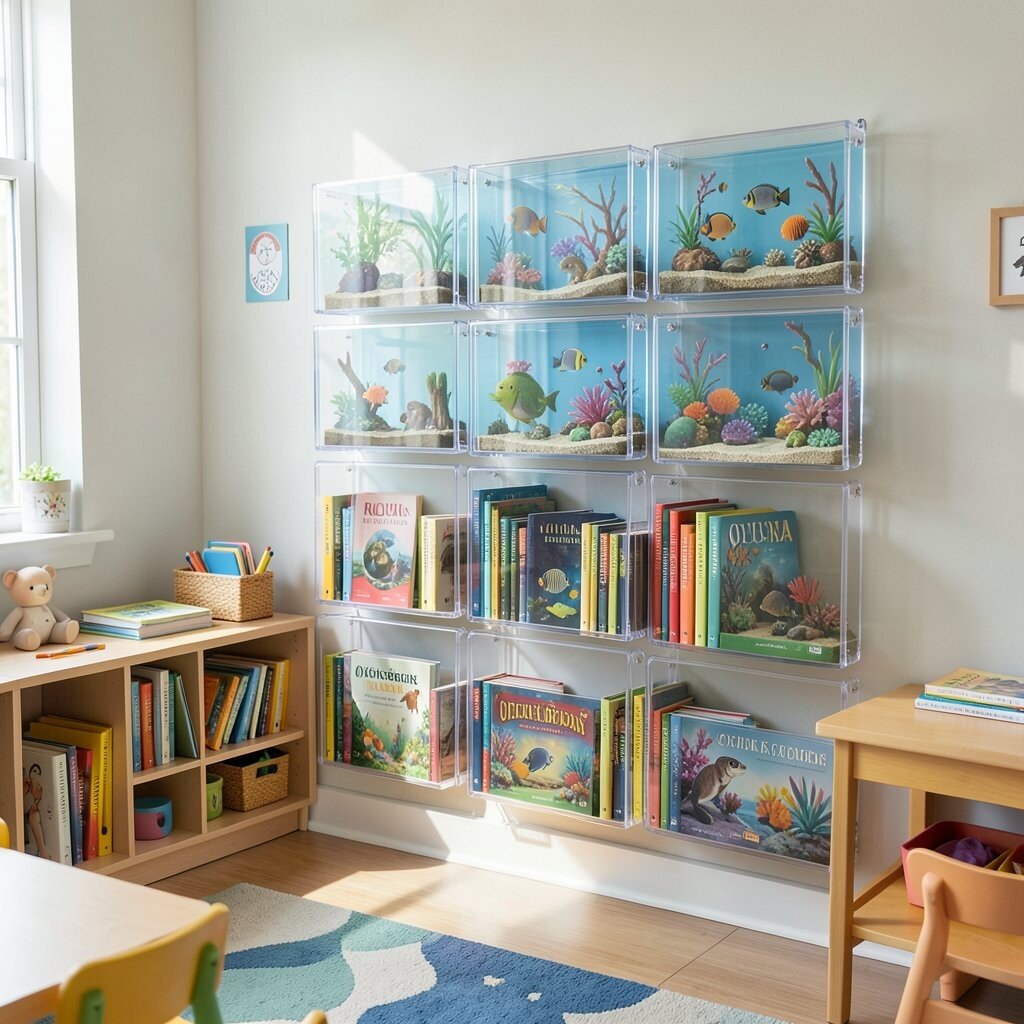
Use a transparent wall organizer with compartments for books, then place it next to the reading spot. Behind the clear pockets, add a strip of ocean-themed paper so each section looks like a different aquarium layer.
Books stay visible, which supports the benefit of choosing without extra teacher help. For practical tips, arrange books by theme or season and keep spines facing out so kids can do quick browsing during transitions.
Cost can fit many budgets since you can find organizers cheaply at home stores or repurpose a clear cabinet tray system. Personalize by placing small paper sea creatures in each compartment, so the book rotation feels playful instead of purely organized.
12. Coral Reef Window Clings and Quiet Day Light Play
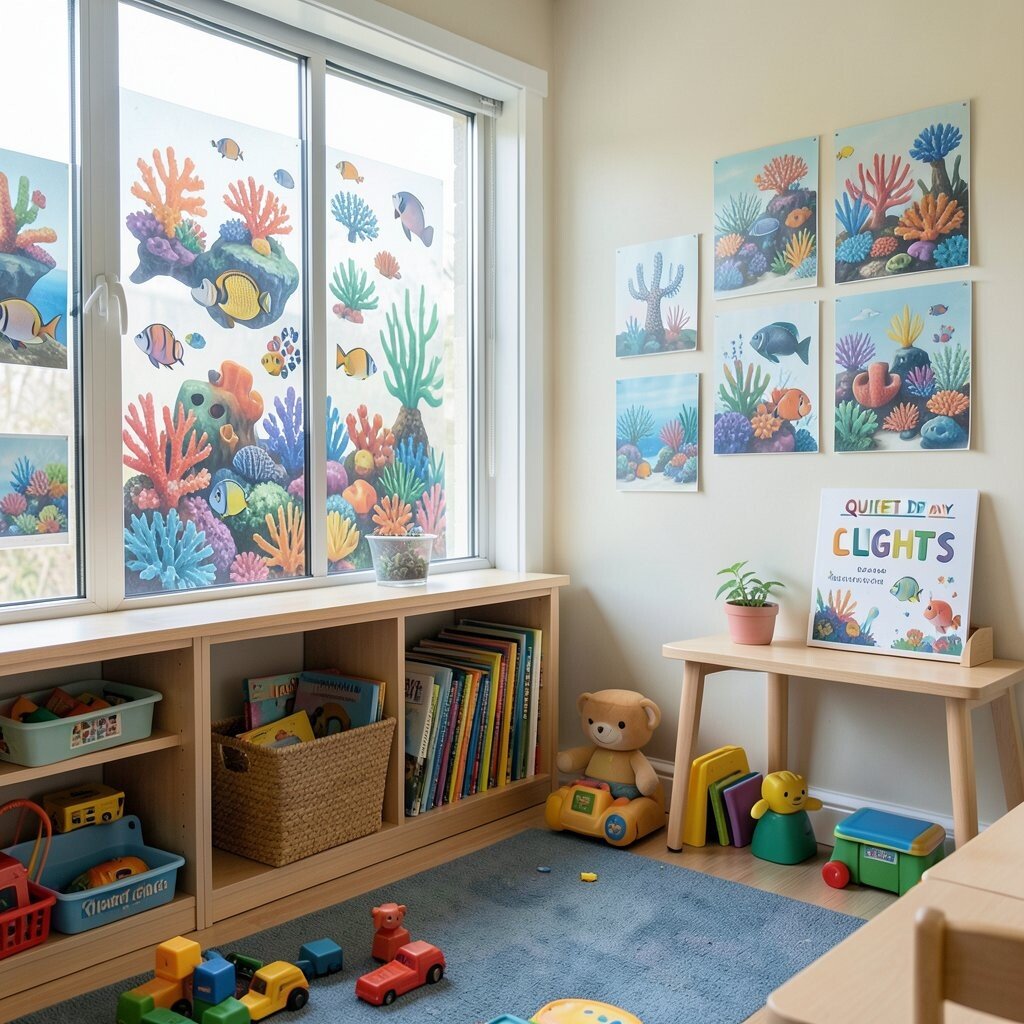
Decorate nearby windows with removable ocean clings like starfish, jellyfish, and bubbles. When the sun moves across the room, the clings create shifting shapes that feel alive, which helps kids calm their bodies during reading.
This benefits focus because sunlight patterns give gentle visual interest without demanding attention like a loud toy. For practical tips, use high-quality clings that remove cleanly and avoid placing them where they block safety or visibility.
Personalization can be built by letting each student vote on their favorite cling set, then swapping a few pieces each month. Cost considerations are flexible because window clings are often affordable and easy to change with current trends that favor mix-and-match seasonal decor.
The uniqueness comes from the way the “reef” moves with the light, making the corner feel different every day.
13. Ocean-Themed Floor Reading Board With Picture Prompts
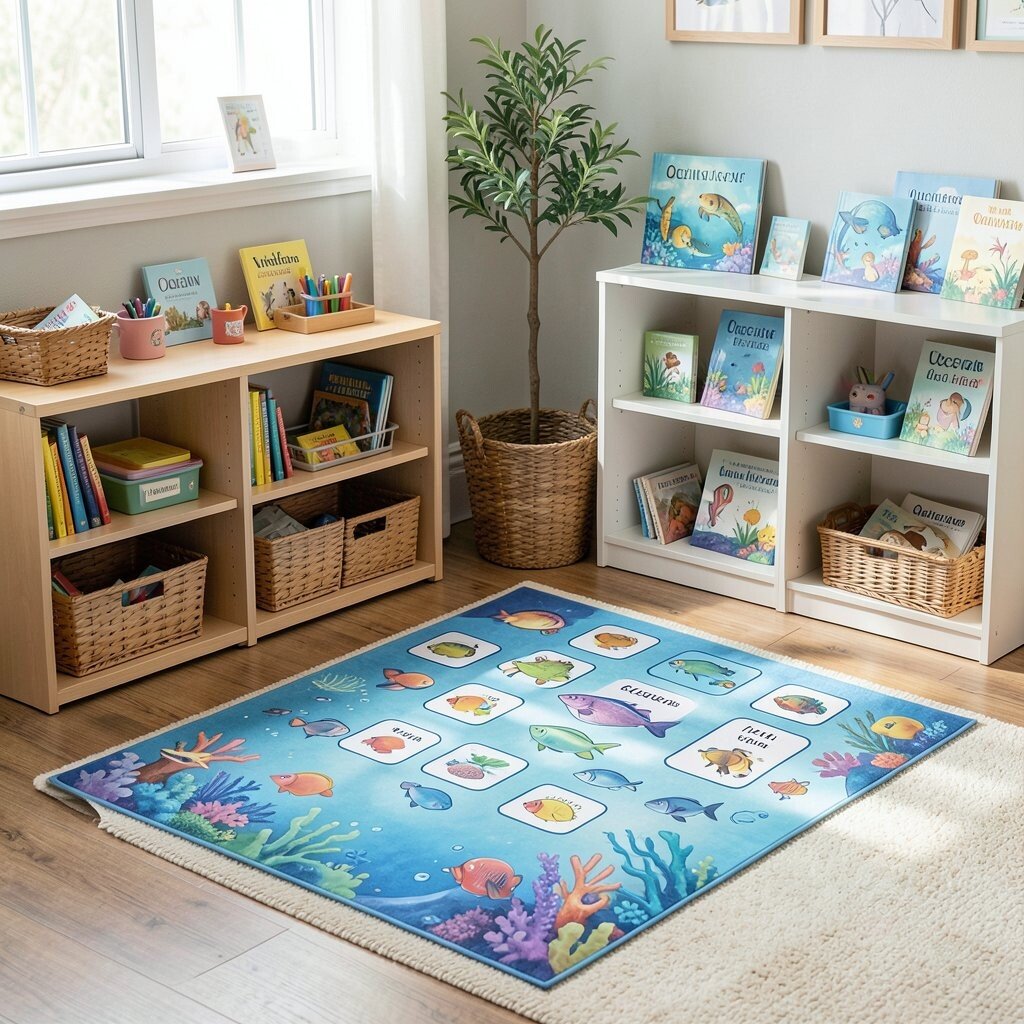
Create a floor reading board using thick craft foam or laminated poster board, then decorate it with wave borders and picture prompts for story talk. Add spaces where kids can place small magnets shaped like bubbles, ships, or sea animals.
This supports literacy benefits like expanding vocabulary and encouraging children to talk about what they see on each page. For practical tips, keep magnets large and easy to grab, and store extras in a small tray right beside the board so the corner stays tidy.
Personalize by matching the prompts to your book selections, like “Where does the fish go?” or “What happens next?” using simple pictures instead of text. For cost, you can make the board from leftover foam sheets and use inexpensive magnets, which keeps the project budget-friendly.
This idea feels uniquely engaging because it turns the reading corner into a calm place for conversation, not just sitting and looking at pages.