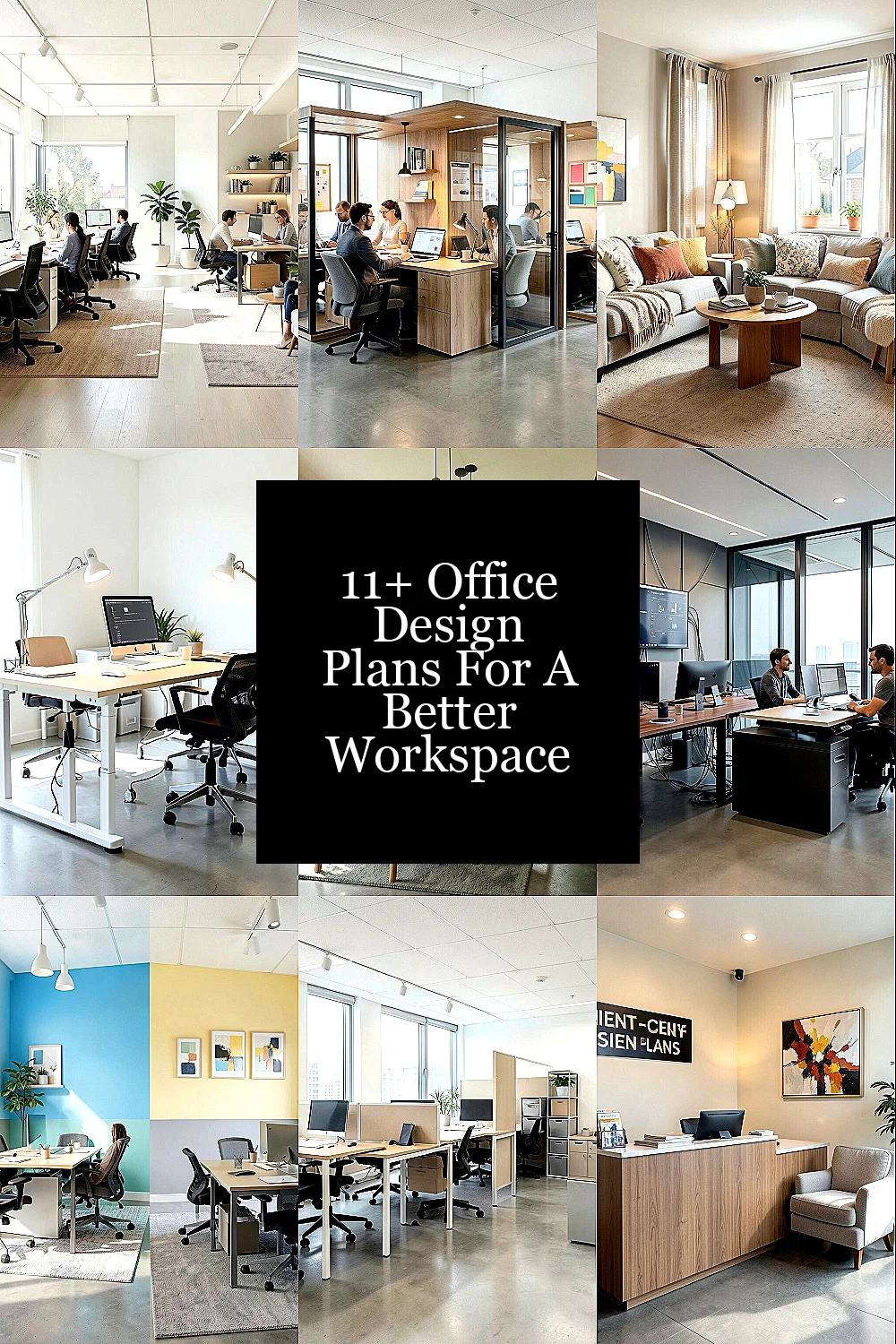
Office spaces can feel flat, loud, or plain old boring. The right plan can make work feel calmer and smarter.
1. Bright Open Layout With Soft Zones

An open office with soft zones feels airy and alive. Big windows, light walls, and low shelves help the space feel easy on the eyes.
This plan works well for teams that talk often and need quick teamwork. Add rugs, plants, and small seating pockets so people can shift from group time to quiet time. It is usually a smart mid-range choice because it uses fewer walls, but you may need sound panels to keep noise down.
2. Quiet Focus Pods For Deep Work
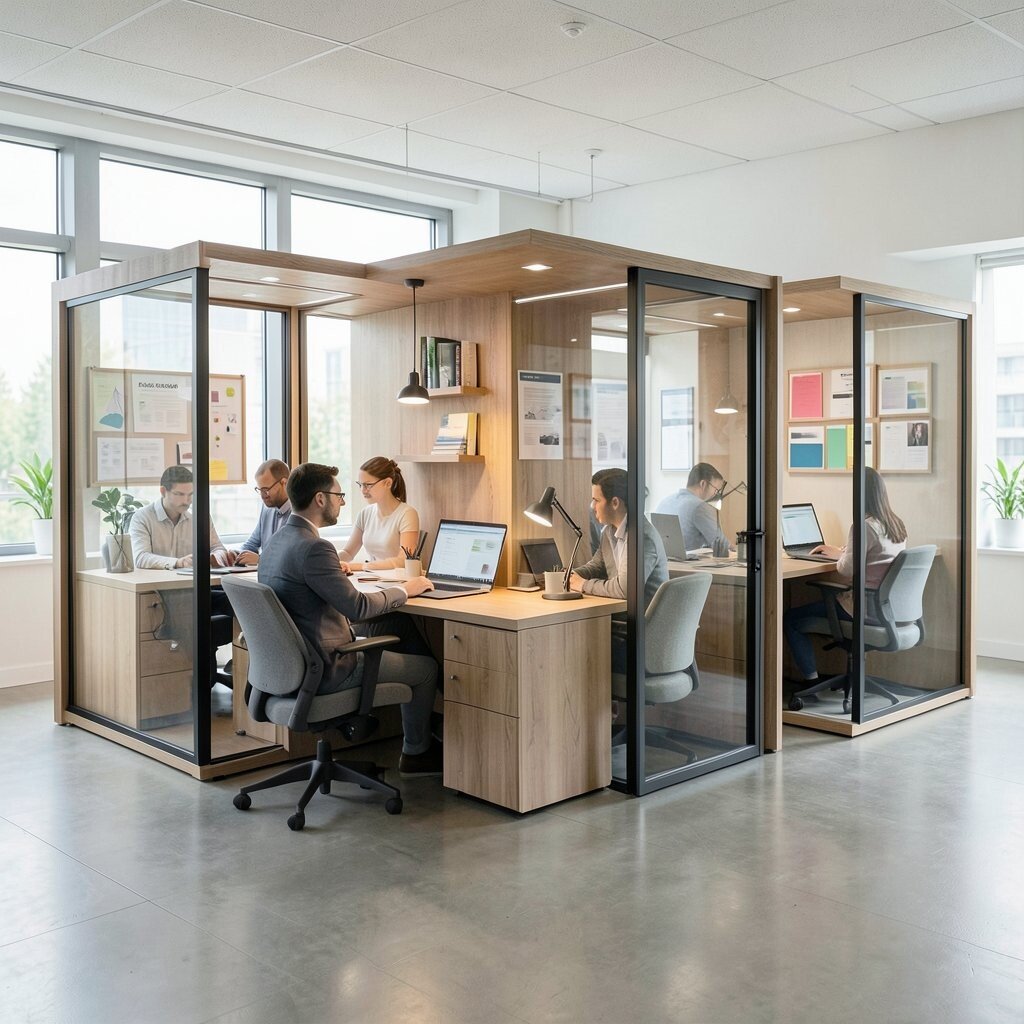
Focus pods give workers a calm place to think. They can look sleek with glass sides, warm wood, and soft chairs.
These small rooms are great for calls, reading, and tasks that need attention. They also make the main office feel less crowded and more organized.
You can personalize each pod with desk lamps, pinboards, or color accents that match your brand. Prefab pods may cost more at first, but they can save money compared with building full rooms.
3. Home-Style Lounge Office

A lounge office feels relaxed and friendly. Think cozy sofas, round tables, warm lights, and art that feels cheerful.
This style helps people feel welcome and less tense during long days. It is a strong fit for creative teams, client meetings, and casual planning chats.
Try mixing in throw pillows, soft curtains, and small side tables for drinks or laptops. You can keep costs lower by using secondhand furniture and simple decor. This look is also on trend because many offices now want a more human feel.
4. Standing Desk Studio
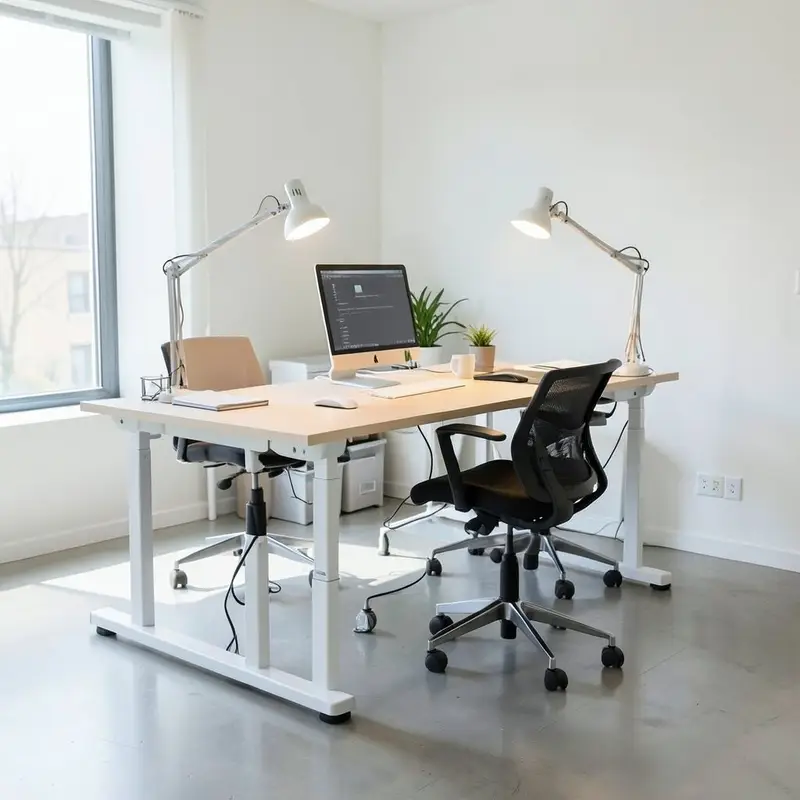
A standing desk studio looks clean and active. Tall tables, slim chairs, and bright task lights make the room feel ready for work.
This plan can help support energy and better posture during the day. It also gives the office a fresh, modern look that feels focused and neat.
Adjustable desks are a great choice because people can sit or stand as needed. Add cable trays and storage bins to keep the area tidy. Costs can vary, so start with a few desks and build from there.
5. Nature-Inspired Green Office
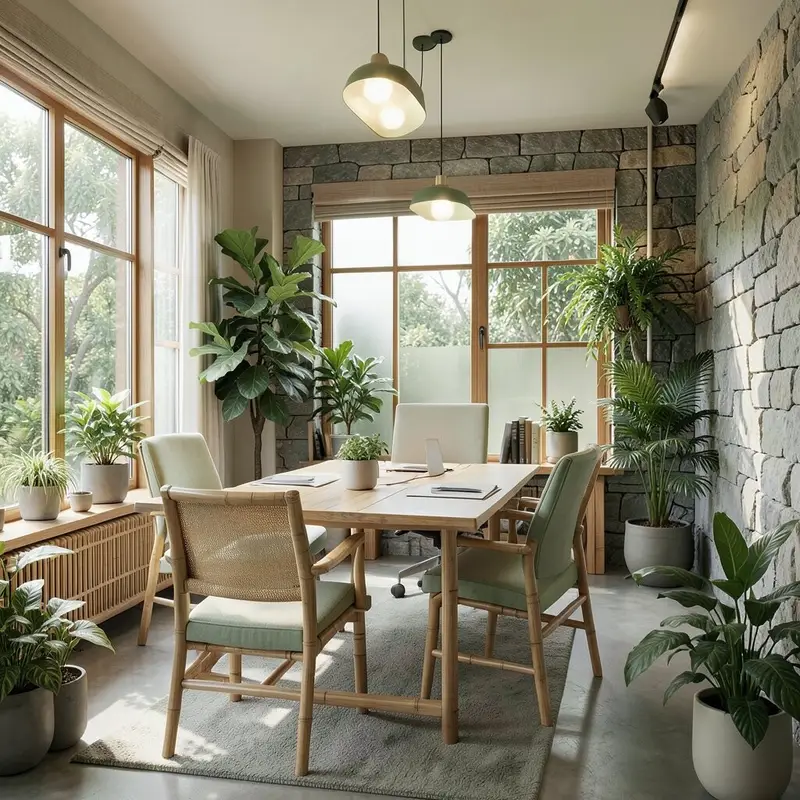
A green office brings the outdoors inside. Wood textures, leafy plants, and soft green colors create a calm and fresh mood.
This design can help people feel less stressed and more comfortable. It also makes the office look warm, modern, and full of life.
Use real plants near windows and easy-care fake plants in darker corners. Natural light, bamboo furniture, and stone-like finishes add extra charm. This plan can fit many budgets if you mix a few bold pieces with simple basics.
6. Tech-Ready Smart Workspace
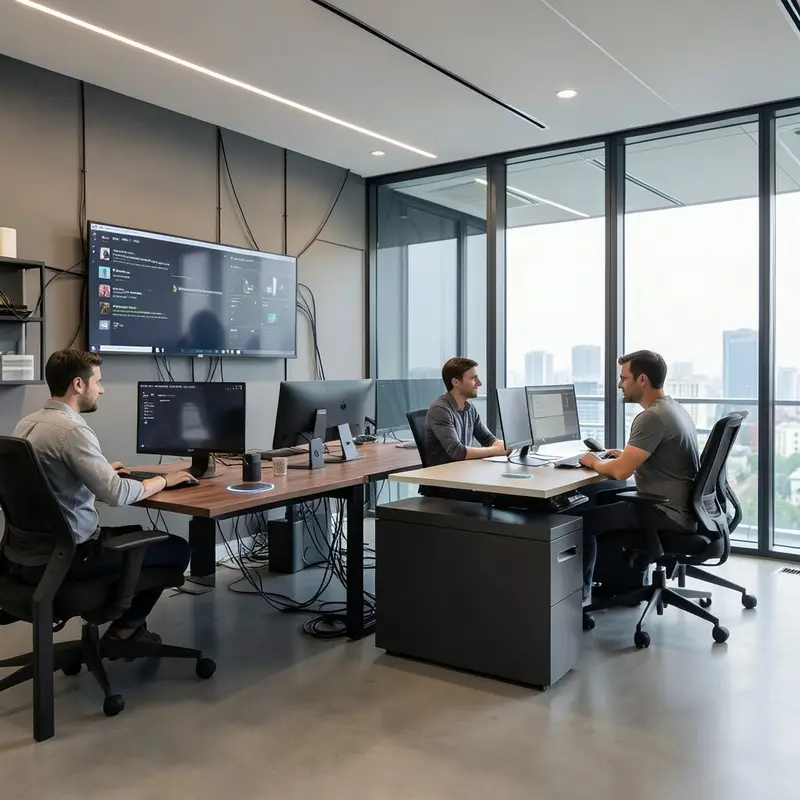
A smart workspace looks neat and high-tech. Hidden cords, wall screens, and clean desks help the room feel sharp and efficient.
This plan is useful for teams that rely on video calls, shared files, and fast meetings. It can also impress visitors with a polished, modern feel.
Choose wireless charging spots, smart lights, and easy screen-sharing tools to make daily work smoother. Dark accents with glass or metal can make the room feel sleek without being cold. The cost may be higher, but the time saved can be worth it.
7. Color-Zoned Team Office
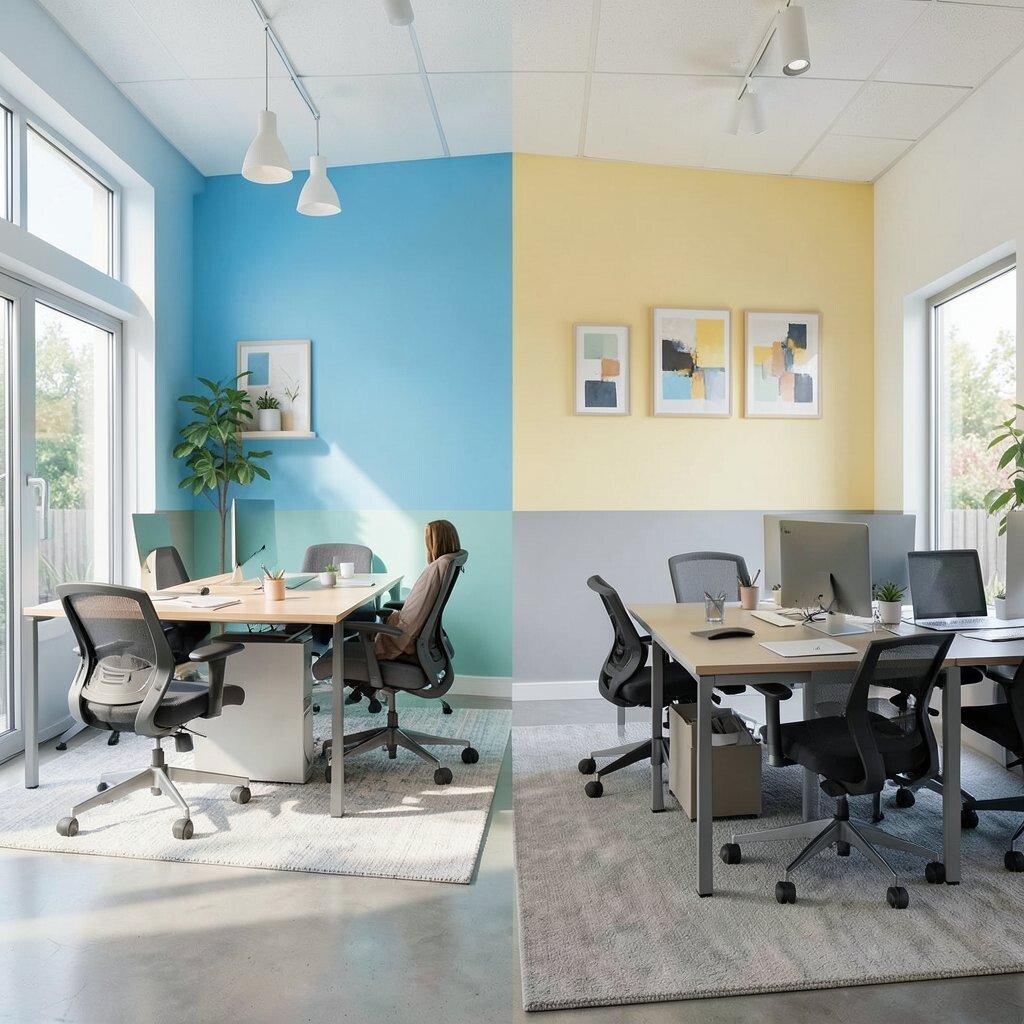
Color zoning gives each part of the office its own mood. Bright blue for focus, soft yellow for ideas, and calm gray for meeting areas can make the space easy to read.
This plan helps people know where to go and what to do. It also adds fun and personality without needing a full remodel.
You can use paint, chairs, rugs, or wall art to mark each zone. Keep the colors balanced so the office still feels calm and not too busy. This is a smart way to make a space feel custom while keeping costs under control.
8. Modular Flex Space
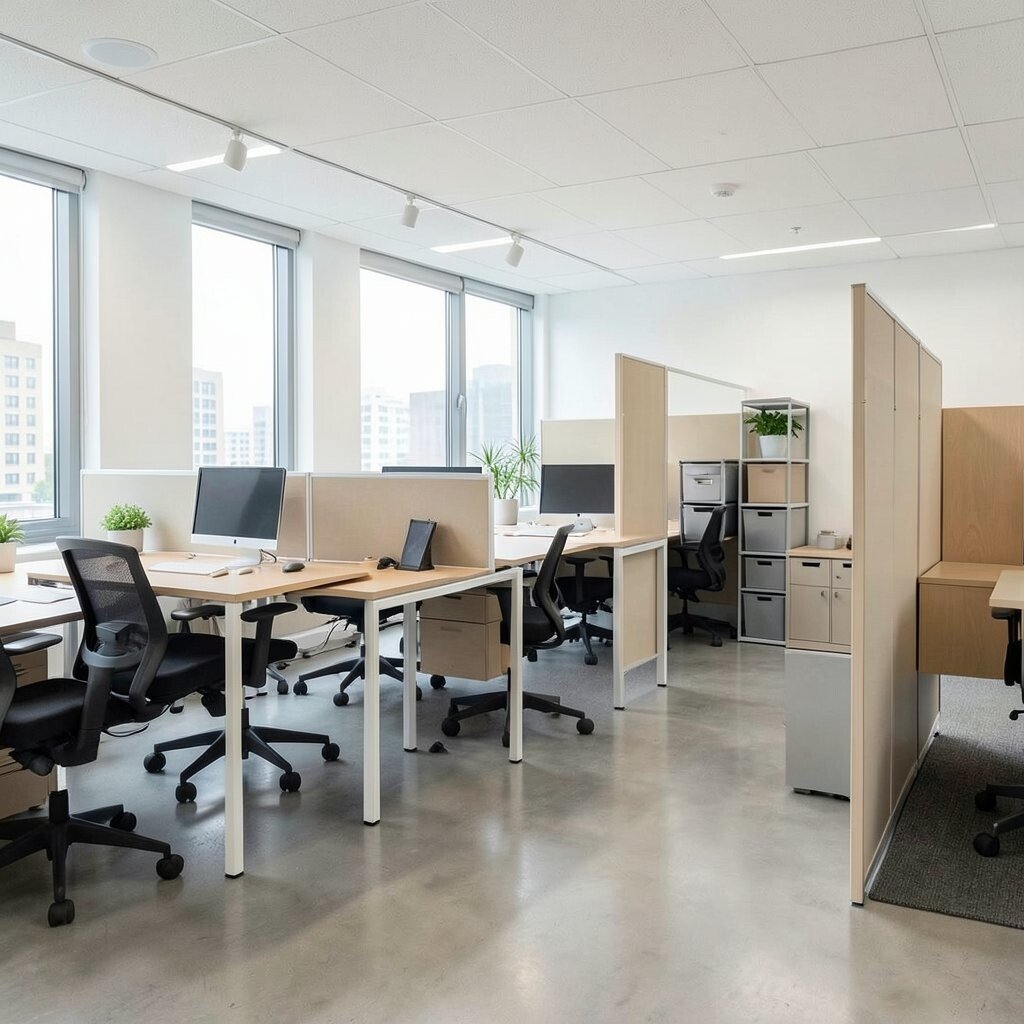
Modular spaces are built to change fast. Moveable desks, rolling chairs, and foldable tables make the office look flexible and smart.
This design is perfect for growing teams that need different setups each week. It can shift from training mode to meeting mode with very little effort.
Add stackable storage and lightweight room dividers so the space stays useful and tidy. You can also pick furniture in matching colors to keep the room looking neat. Modular plans are popular now because they support changing work styles.
9. Client-Friendly Reception Office
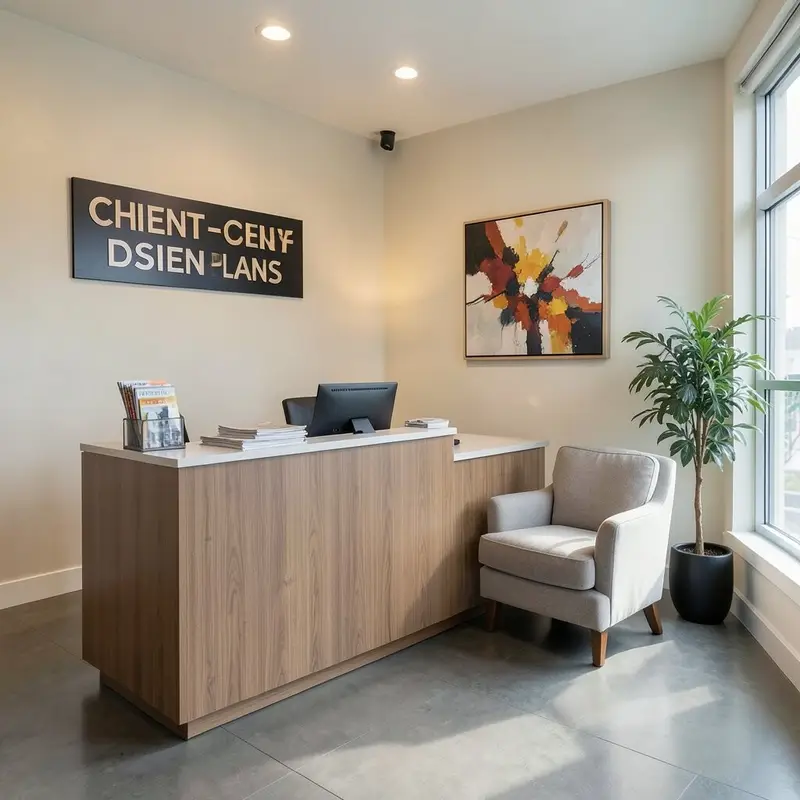
A strong reception area sets the tone right away. A clean desk, warm lighting, and a neat waiting area make visitors feel cared for.
This plan is ideal for offices that meet clients often. It can make the whole business seem more trusted, polished, and ready.
Use a bold sign, a comfy chair, and one special art piece to make the front area memorable. Small touches like water, magazines, or a plant can make a big difference. Costs stay manageable when you focus on the front space first and keep the rest simple.
10. Creative Studio With Mixed Materials

A creative studio should feel lively and full of ideas. Mixing wood, metal, fabric, and glass gives the room a rich and playful look.
This design helps artists, designers, and makers feel inspired. It also gives the office a unique style that stands out from plain corporate spaces.
Try open shelves for supplies, big tables for teamwork, and pinboards for sketches or notes. You can add custom wall colors or branded details to make the space feel personal. Mixed materials can be affordable if you reuse items and shop with care.
11. Minimal Calm Office

A minimal office feels simple and peaceful. Clean lines, light colors, and very little clutter help the room breathe.
This plan is great for people who get distracted easily or feel tired in busy spaces. It can make work feel lighter and more focused.
Use hidden storage, slim desks, and just a few decor pieces to keep the look clean. Soft lighting and one or two textured items can keep the room from feeling cold. This style is often budget-friendly because it avoids extra stuff.
12. Hybrid Collaboration Hub

A hybrid collaboration hub supports both in-person and remote work. Large screens, shared tables, and flexible seating make it easy for everyone to join in.
This plan feels current and practical for modern teams. It helps meetings run smoothly and gives the office a lively, connected feel.
Add sound control, strong internet, and camera-friendly lighting so virtual guests can take part with ease. A mix of booth seating, open tables, and quiet corners gives people choices during the day. Costs can be planned in stages, with the most important tech and furniture added first.