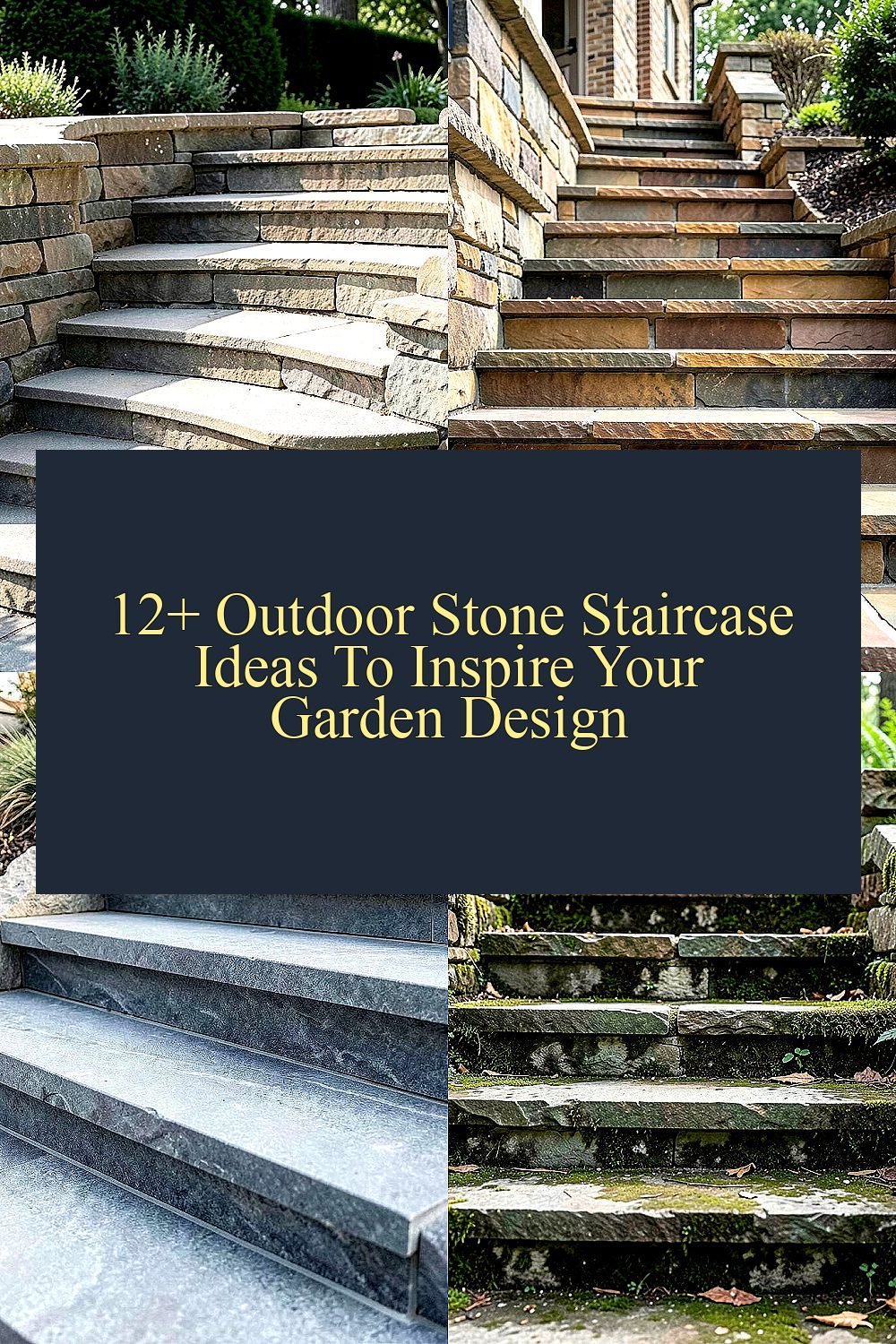
Stone steps can make a garden feel calm and grand at the same time. They also bring shape to outdoor spaces in a way that feels timeless.
1. Gentle Curved Stone Steps

Curved stone stairs soften a yard and make the path feel smooth and welcoming. Their flowing shape looks lovely beside lawn edges, flower beds, and small trees.
This style works well in gardens that need a softer look because it avoids hard angles. It can also be practical on sloped ground, since the curve often helps the stairs feel more natural and easier on the eye. If you want a custom look, try matching the stone color to your patio or adding low plants along the sides, while keeping in mind that curved cuts can raise the price a bit.
2. Wide Rustic Flagstone Stairs

Wide flagstone steps bring a relaxed, country feel to an outdoor space. The uneven shapes and earthy colors can make a garden seem warm and inviting.
These stairs are useful when you want a roomy walk that feels safe and easy. They also pair well with wild flowers, rough timber edges, and simple lanterns, which fits a popular natural garden trend. For a personal touch, mix stone tones and leave space for moss or ground cover, though larger pieces and careful fitting may add to the cost.
Rustic stairs can hide small changes in ground level without looking too strict. That makes them a smart choice for older gardens or yards that already have a natural style.
3. Sleek Modern Stone Treads
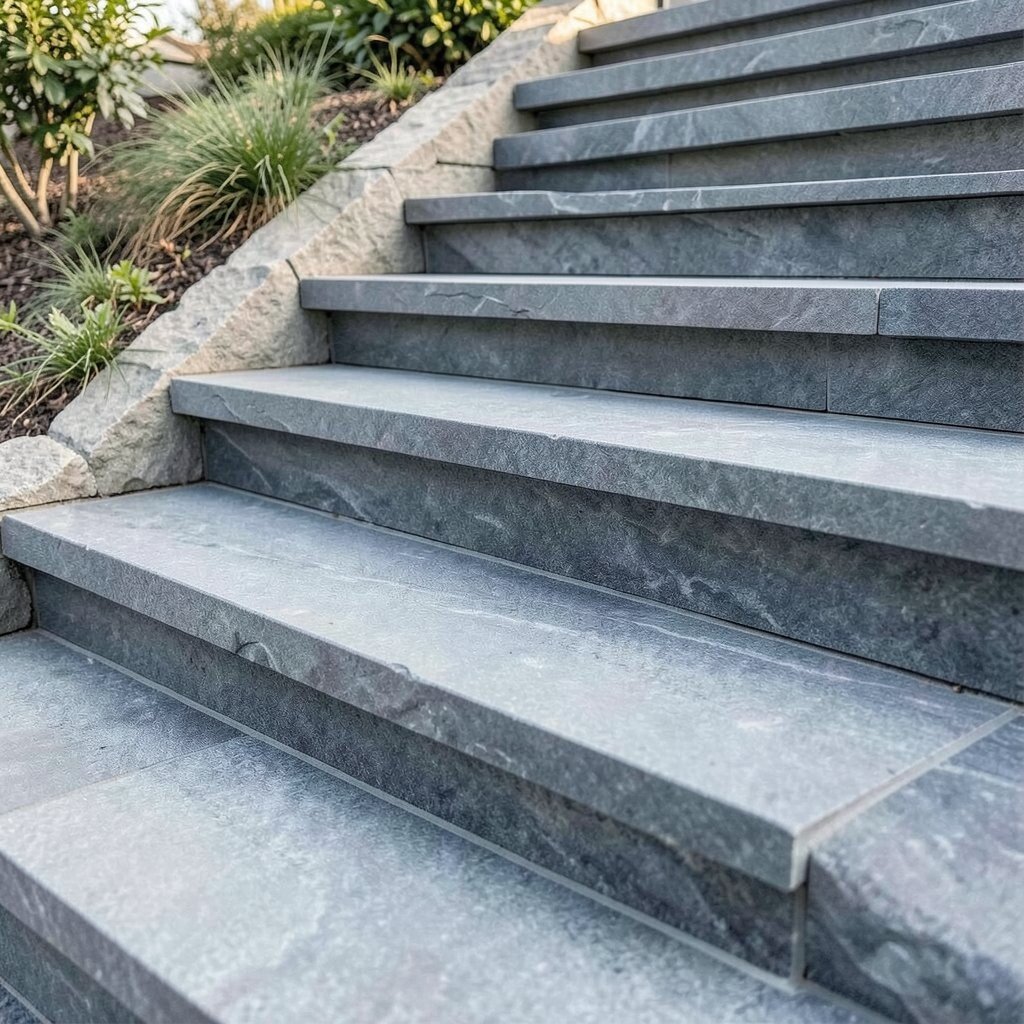
Sleek stone treads give a garden a clean and fresh look. Large flat slabs with sharp lines can feel calm and polished.
This kind of staircase is a strong match for simple planting, metal railings, and neat gravel paths. It is easy to keep looking tidy, which helps if you want a low-fuss outdoor area. A common trend is using big-format stone with fewer seams, and you can make it feel more like your own by choosing a warm gray, deep charcoal, or pale sand tone.
Because the design is so simple, the stone itself gets more attention. That means the quality of the material really matters, so spending a little more on durable slabs can pay off over time.
4. Mossy Woodland Stone Steps
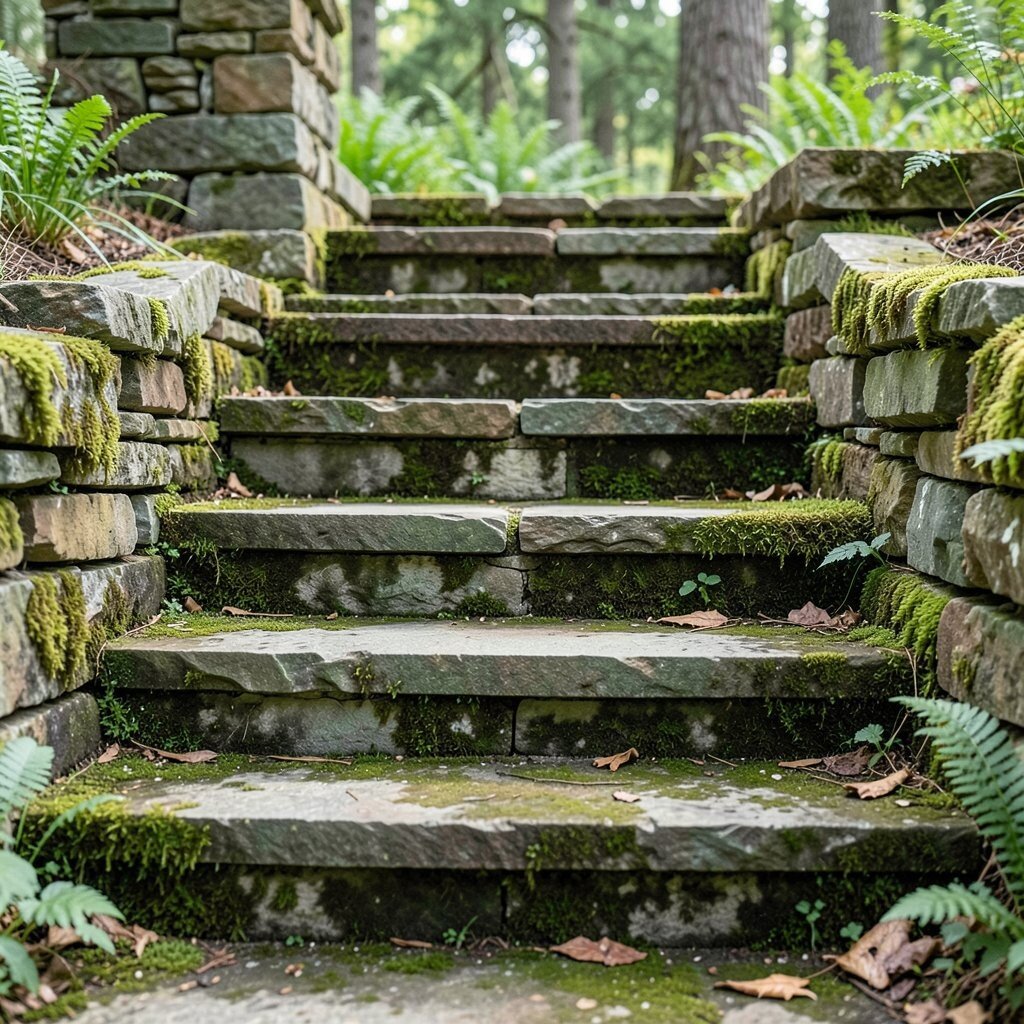
Mossy stone stairs can make a garden feel old, quiet, and full of charm. Soft green moss around the edges adds color and helps the steps blend into shady spots.
This look is great for gardens with tall trees or damp corners where a forest feel fits naturally. The stones often look better as they age, which is a big plus for people who like a lived-in style. To guide the look, plant shade lovers nearby and keep the surface safe by choosing stones with enough grip, since very smooth rock can get slippery and may need extra care.
5. Stacked Stone Stair Walls

Stone stairs with stacked side walls feel strong and well built. The raised sides can frame the walkway and make the whole path seem more important.
This design adds structure to a sloped yard and can help hold soil in place. It also creates a neat place to tuck in small plants, which gives the stairs more texture and charm. If you want a richer look, use local stone and add low lights in the wall faces, though solid wall building usually costs more than simple open steps.
Many homeowners like this style because it feels both sturdy and stylish. It works especially well when the staircase needs to support heavy use from family and guests.
6. Narrow Pathway Stone Stairs

Narrow stone steps are perfect for side yards, garden trails, and tucked-away corners. Their smaller size makes a little space feel more special and secret.
These stairs are useful when you need movement through a yard without taking up too much room. They can lead visitors from one garden area to another in a gentle way. A rising trend is to pair slim stone treads with bright plants on both sides, and you can make the path feel more personal by choosing stones with rough edges or soft color shifts, while staying aware that custom sizing can push up the budget.
Even though the path is narrow, it can still feel welcoming. Small steps can be just as beautiful as grand ones when the details are chosen with care.
7. Formal Symmetrical Stone Staircase
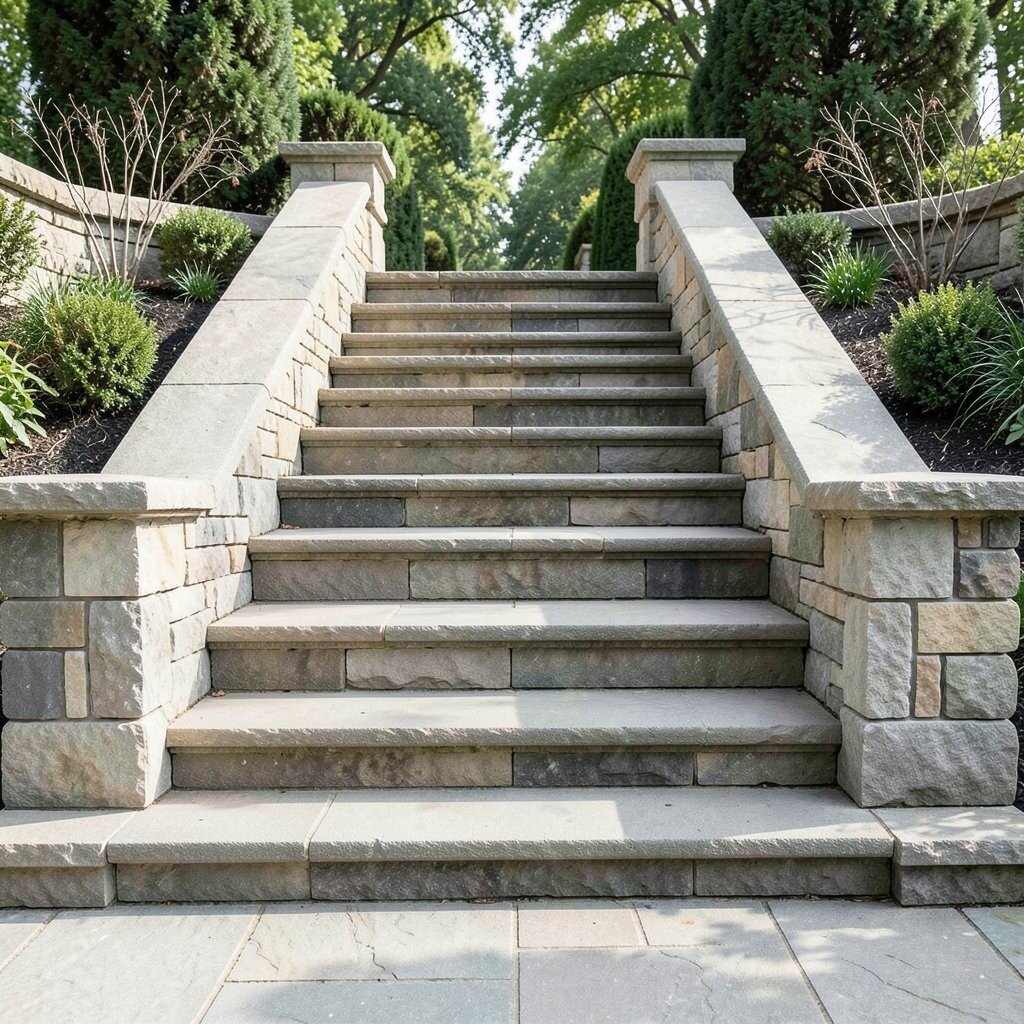
Symmetrical stone stairs bring order and balance to a garden. Their neat shape can make a front yard or courtyard feel elegant right away.
This style is helpful when you want a clear route and a clean first impression. It often works well with clipped hedges, topiary, and centered planters, which gives the space a classic look that still feels current. You can personalize it with carved posts, matching pots, or a favorite stone finish, and the careful layout may cost more because it needs precise measuring and skilled work.
The straight lines also make the garden feel calm and easy to understand. For homes with formal doors or broad terraces, this kind of staircase can tie the whole design together.
8. Stepping Stone Terrace Stairs

Stepping stone terrace stairs feel casual and playful. They can turn a sloped area into a series of soft landings that invite people to wander.
This design works well in relaxed gardens with mixed plants, small benches, and layered beds. It gives each level its own purpose, which can make a yard feel bigger and more interesting. A lot of people like this look because it supports a less rigid outdoor style, and you can make it yours by changing the stone size or spacing, while keeping in mind that more pieces may mean more labor and a higher bill.
The gentle breaks between levels also make the journey feel pleasant. That can be a nice benefit if you want the garden path to feel like part of the fun instead of just a way to get somewhere.
9. Mixed Material Stone and Wood Steps
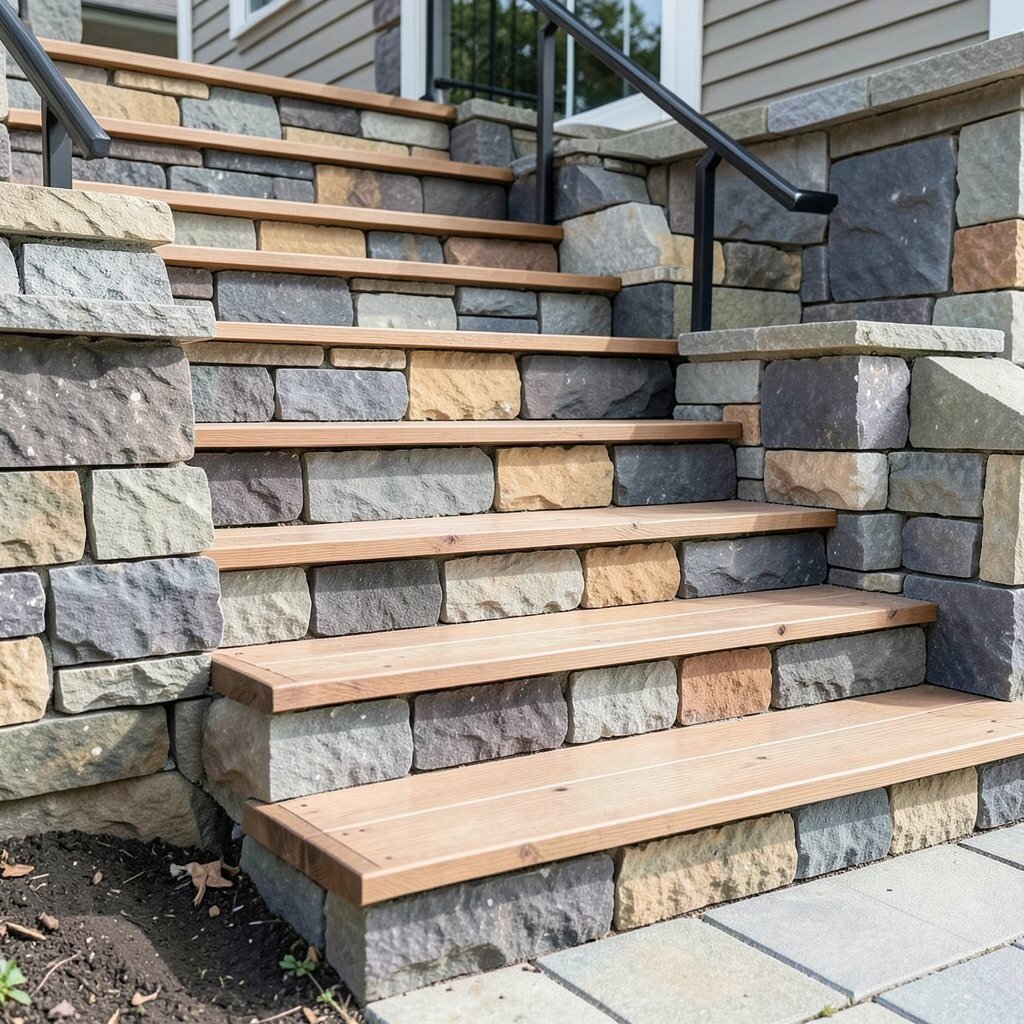
Stone paired with wood can make a staircase feel warm and fresh at the same time. The contrast between hard rock and natural timber creates a look that stands out.
This mix is useful if you want a softer garden mood without losing strength underfoot. Wood can warm up the design, while stone keeps the structure solid and easy to clean. Current outdoor style often leans toward mixed textures, and you can make the staircase more personal by choosing dark wood with pale stone or the other way around, though caring for two materials may add some upkeep costs over time.
The result feels thoughtful and unique, not plain or overly formal. It is a smart choice for people who want their garden to look designed but still cozy.
10. Natural Boulder Step Stairway

Boulder steps bring a bold, earthy look that feels almost like it grew there on its own. Large stones give the staircase a strong shape and a wild beauty.
This type of stairway is a good fit for hillside yards and natural gardens with native plants. It can also be very durable, since big stones can handle weather and heavy use well. To make the design feel more your own, mix in low grasses or ground cover between the rocks, and remember that moving and placing boulders can cost more than using smaller stone pieces.
People often choose this style when they want a rugged, one-of-a-kind path. It makes a garden feel grounded and full of character.
11. Classic Cut Stone Garden Steps

Classic cut stone steps have a crisp and polished look that never feels old-fashioned in a bad way. Their clean shapes make the staircase easy to read and pleasant to walk on.
This design works for many garden styles, from formal yards to simple family spaces. It offers a tidy edge that helps keep soil and mulch in place, which is a practical bonus for busy homes. You can give it a personal touch by choosing a warm limestone, a cool granite, or a stone with gentle speckles, and prices can change a lot based on the stone type and the level of finish.
The beauty of cut stone is that it feels reliable without being boring. It is a strong choice when you want a staircase that will still look good years from now.
12. Shallow Stone Rise Steps
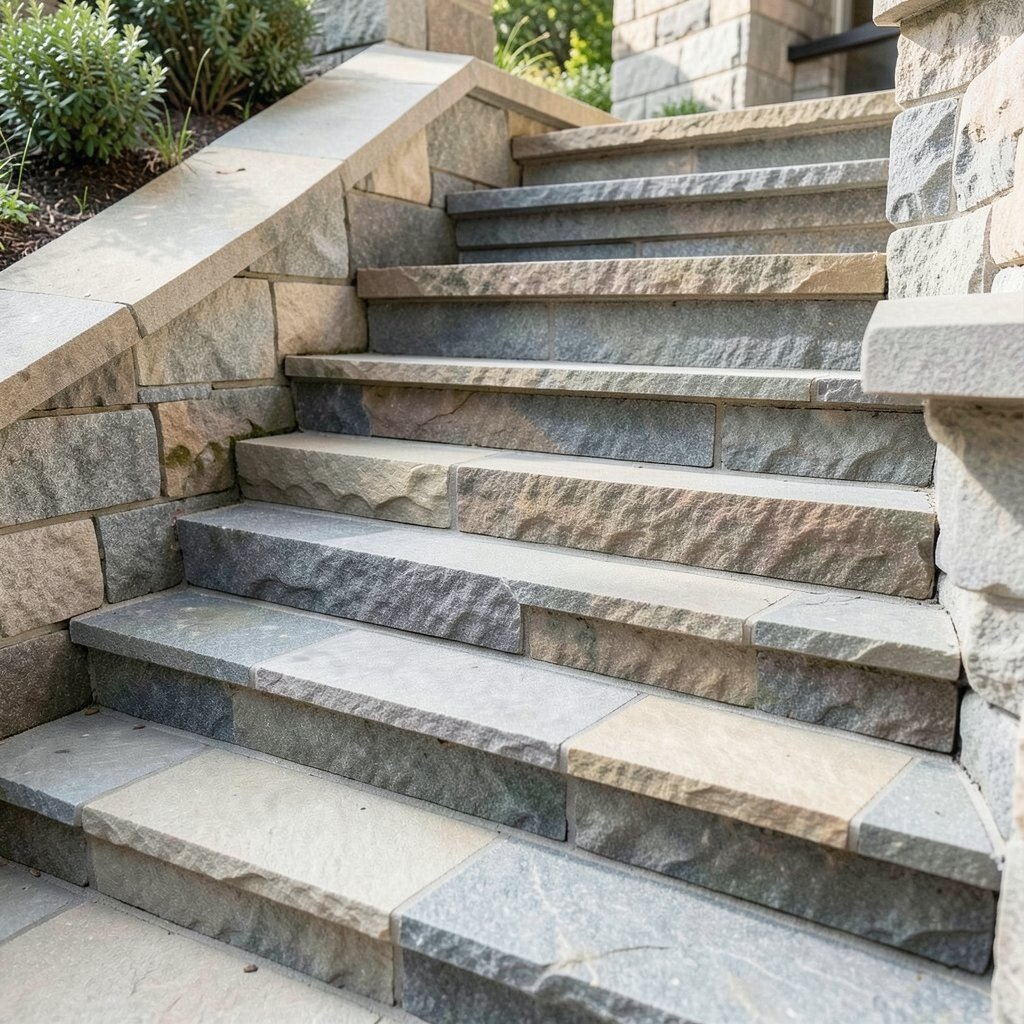
Shallow rise steps make a slope feel easier to handle. Their low height gives the path a calm rhythm and a smooth walking experience.
This style is especially nice for gardens where comfort matters, such as homes with children, older adults, or lots of visitors. The low steps can stretch out the staircase in a graceful way, which often looks elegant and open. A current design trend favors easy, slow movement through outdoor spaces, and you can personalize the feel with soft lighting or low edging plants, while knowing that longer stair runs may need more stone and more labor.
These steps can also make a smaller yard seem less crowded. They offer a gentle way to connect levels without making the garden feel steep or harsh.
13. Decorative Inset Stone Stairs

Decorative inset stairs turn a simple staircase into a real focal point. Small patterns, border stones, or inset details add surprise and charm.
This look is great when you want the stairs to feel special without becoming too flashy. It can work with many garden styles, from neat courtyards to leafy backyard retreats, and it gives you room to show your taste. You might add a stripe of contrasting stone, a mosaic edge, or subtle metal accents, though detailed work usually increases the total cost and may need a more skilled installer.
Inset details can help the staircase echo the rest of the yard, such as a patio pattern or a favorite planter shape. That kind of connection makes the whole garden feel thoughtful, welcoming, and complete.