Playrooms can feel magical in a way that other rooms cannot. A few smart choices can make them calm, fun, and easy to clean.
1. Bright and Cheerful Color Zones
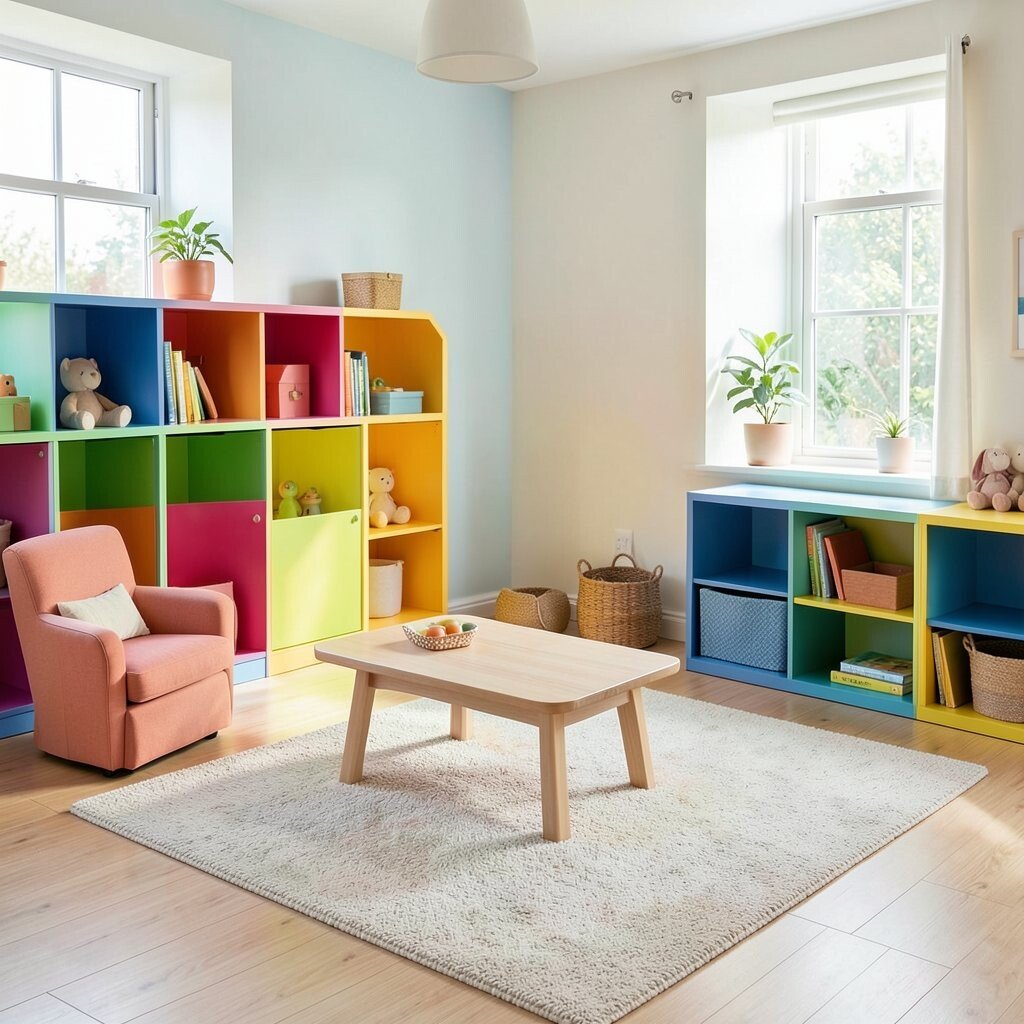
Bright color zones make a playroom feel lively right away. A soft blue corner for reading and a sunny yellow spot for blocks can give the room a happy look without making it feel too busy.
This setup helps children know where different activities belong, which can make cleanup easier. You can use paint, peel-and-stick wall shapes, or low-cost rugs to create the look, and you can always add your child’s favorite shades for a more personal feel.
2. Cozy Reading Nook
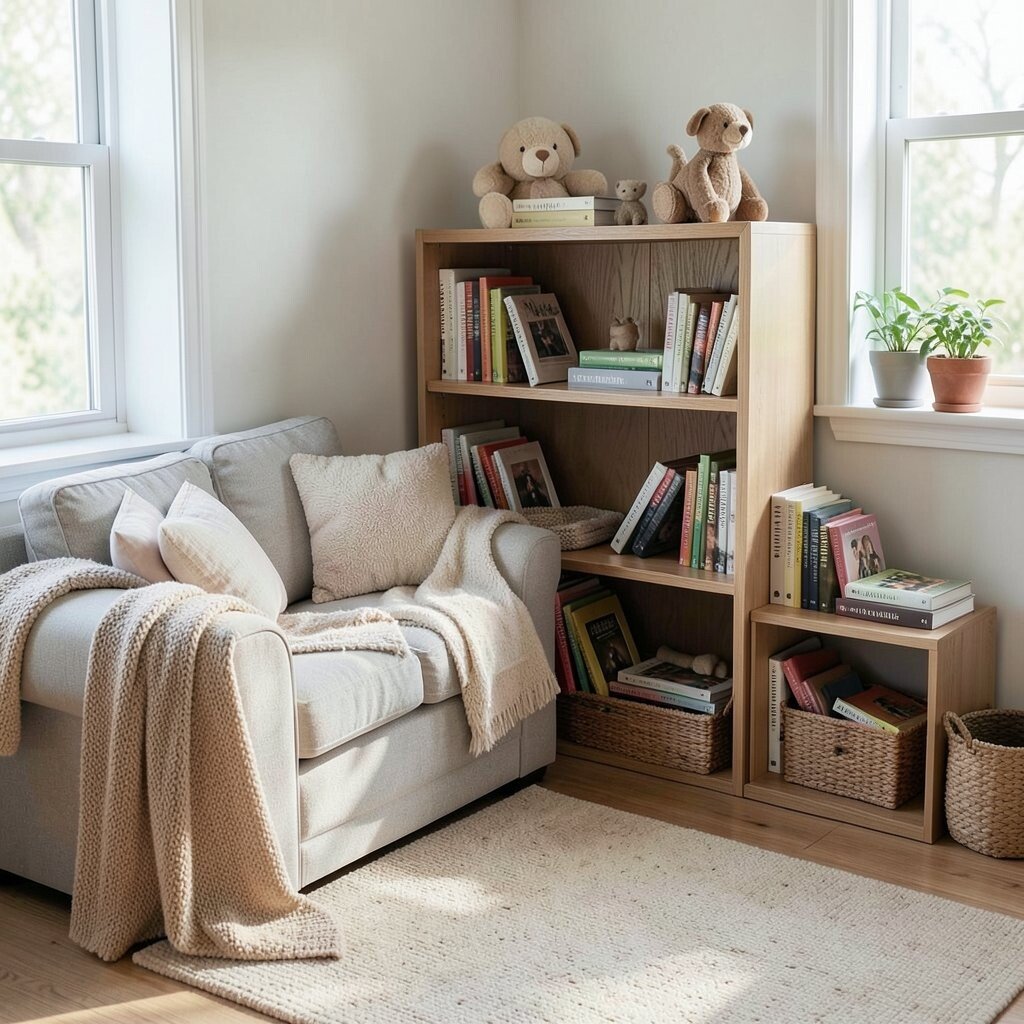
A reading nook can be a small calm spot inside a playful room. A cushioned chair, a small bookshelf, and a warm lamp can make it look inviting and soft.
This idea supports quiet time, which is helpful in a room that may get noisy. It also gives the playroom a special place that feels different from the rest, and you can keep costs lower with floor pillows, thrifted baskets, or wall shelves that do not take much space. Neutral colors are still popular, but a pop of green or coral can make the nook feel more personal.
Adding your child’s name to a pillow or using framed art from favorite stories can make the corner feel unique. Soft textures and simple storage also help the area stay tidy and easy to enjoy.
3. Built-In Storage Wall
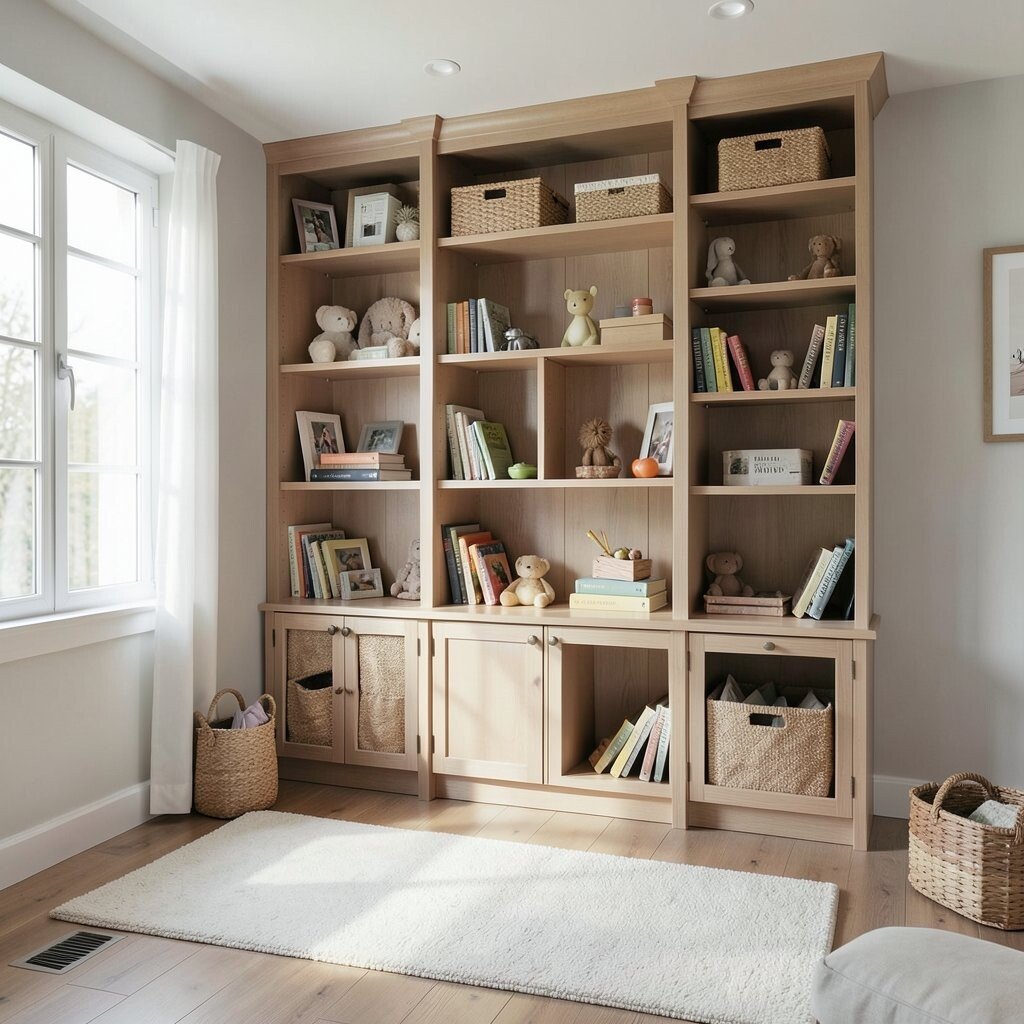
A storage wall can make even a small playroom look neat and organized. White cubbies, woven bins, and open shelves create a clean picture that feels calm instead of crowded.
This choice saves time because toys have a clear home, and it can help kids learn to put things away on their own. Built-ins can cost more than loose furniture, so many families start with ready-made cubes and add labels, fabric bins, or baskets later for a custom look.
Mixing open and closed storage is a trend that works well because it keeps favorite toys visible while hiding clutter. You can also paint the back of the shelves in a bright color to give the whole wall a playful touch.
4. Soft Floor Play Area

A soft floor play area makes the room feel safe and welcoming. Large foam tiles, a fluffy rug, or padded mats can turn a hard floor into a comfy space for building, crawling, and rolling around.
This is a smart choice for younger kids because it adds comfort and can help with tumbles. The look can be simple or bold, and you can pick from neutral tones for a calm style or bright prints for a more playful one.
5. Art Studio Corner
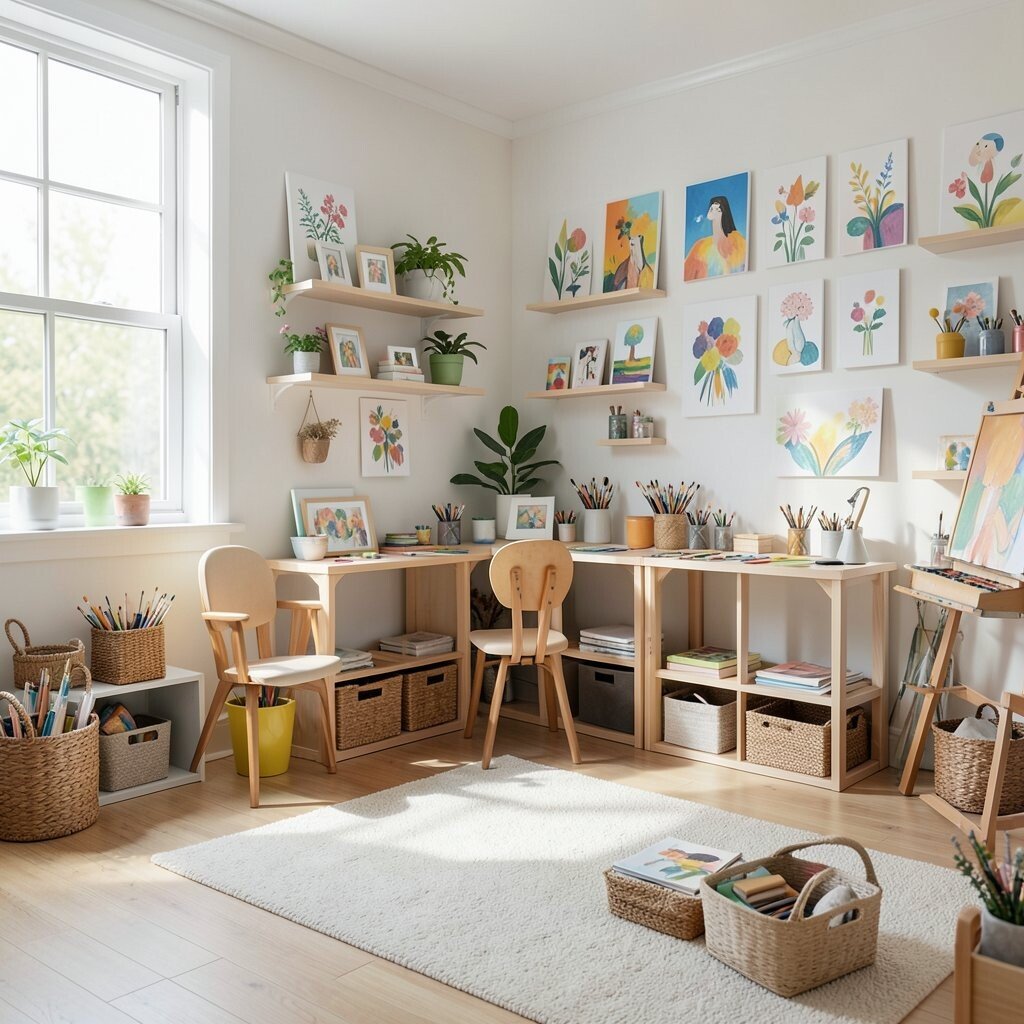
An art studio corner gives creative kids a place to make messes in a good way. A little table, washable chairs, jars for crayons, and a wall for hanging art can make the space feel alive and inspiring.
This setup supports drawing, cutting, and painting while keeping supplies in one spot. It can stay budget-friendly if you use a secondhand table and easy-clean bins, and you can add your child’s own artwork to make the corner feel special.
Open shelving is useful here because kids can see supplies and use them without help. A small pegboard or rail system is also popular now since it keeps tools neat and easy to grab.
6. Indoor Tent Hideaway
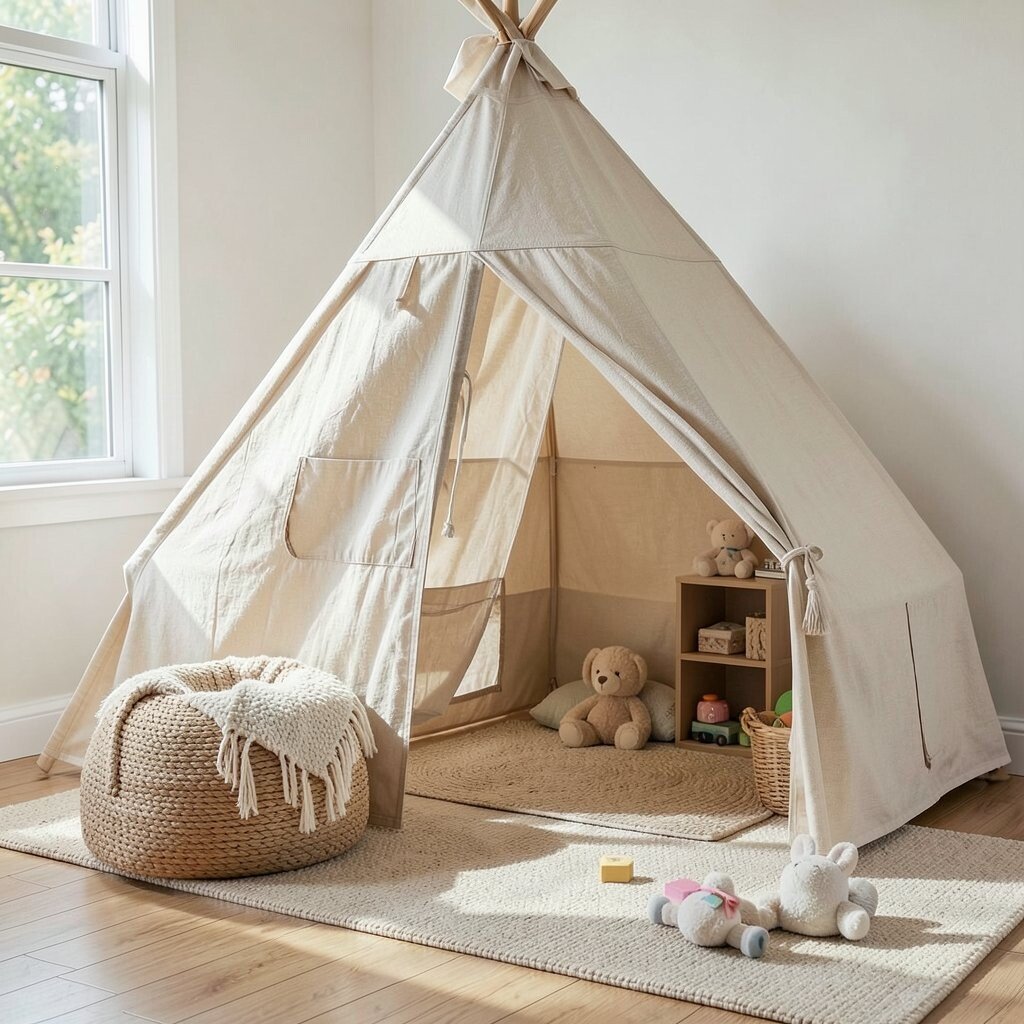
An indoor tent can bring a sense of adventure to a playroom. Soft fabric, twinkle lights, and a few pillows can turn a plain corner into a tiny secret hideout.
Kids love spaces that feel like their own, and this kind of hideaway can support both play and rest. It does not have to cost much, since many tents are simple to set up, and you can make it unique with patterned blankets or a favorite stuffed animal inside.
Choose light colors if you want the room to feel airy, or pick darker fabric for a cozy den look. Both styles are popular, and each one gives the room a different mood.
7. Mini Climbing Wall
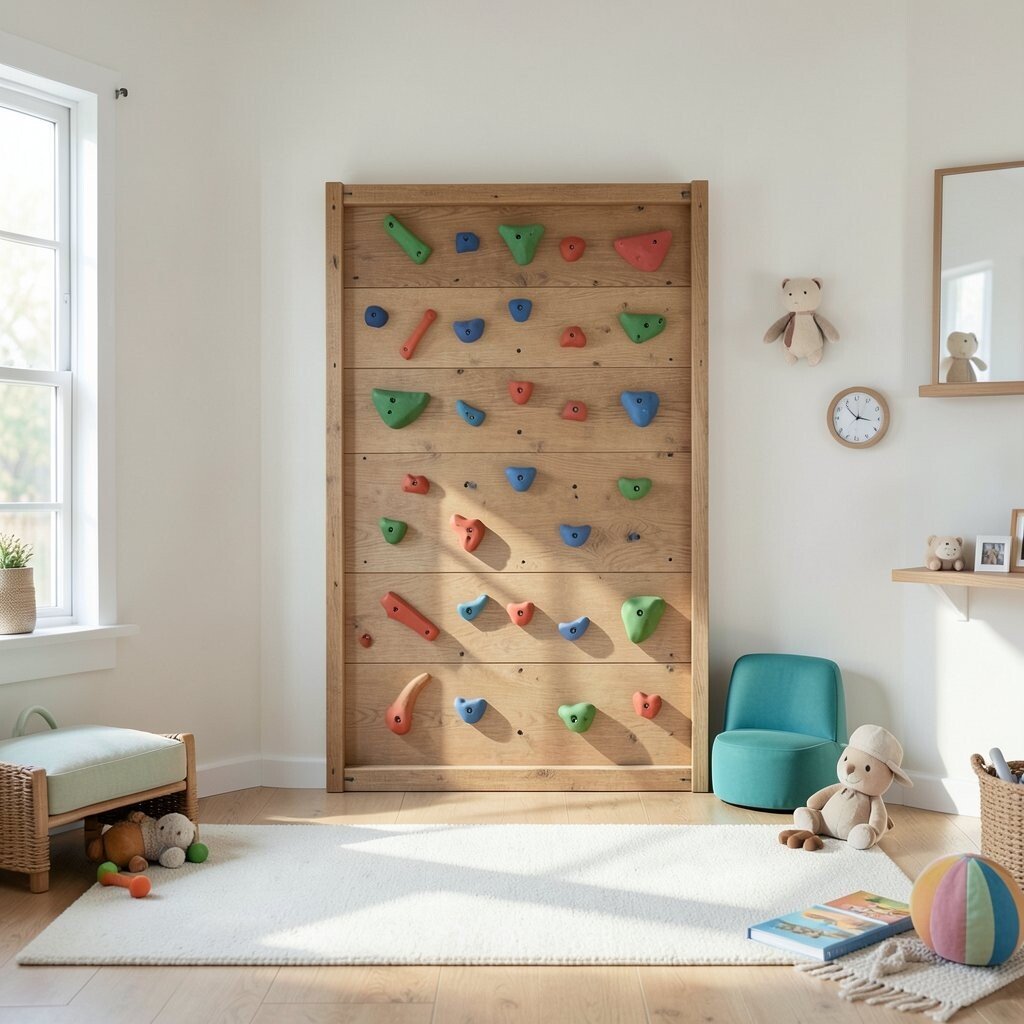
A mini climbing wall can make the playroom feel active and exciting. Colorful holds on one sturdy wall create a bold look that stands out right away.
This idea helps build strength, balance, and confidence while kids play indoors. Safety matters most, so soft flooring below is important, and the cost can stay reasonable if you use a small wall section instead of a full feature wall.
You can match the hold colors to your room theme for a more polished look. Some families also add name decals or stars nearby, which gives the wall a personal touch without adding much expense.
8. Nature-Inspired Playroom
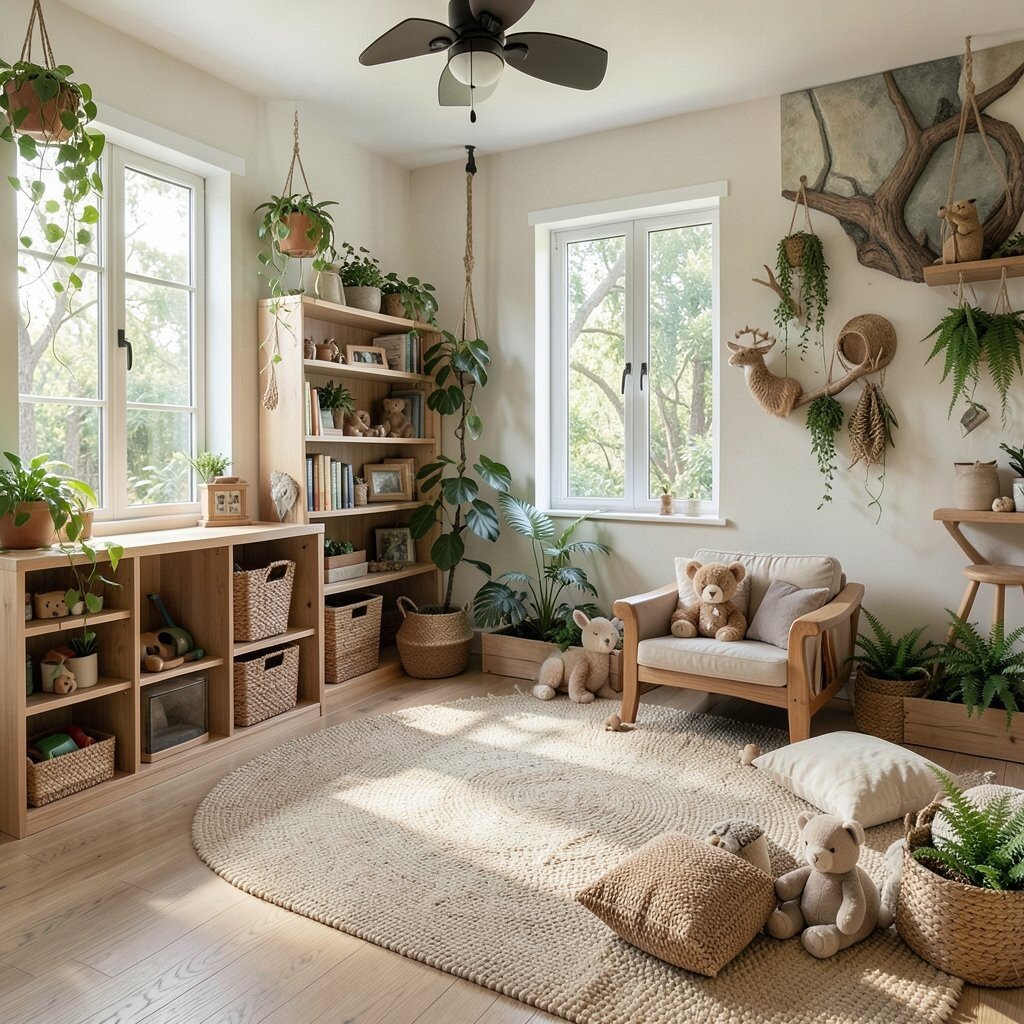
A nature-inspired playroom feels calm and fresh. Wood tones, leafy prints, and green accents can make the room look warm and peaceful.
This style works well for kids who get overstimulated by bright spaces, and it can still feel fun with animal art or a tiny pretend camping corner. You can save money by using natural baskets, simple wooden toys, and paint instead of pricey decor, and the finished room often feels timeless.
Woven textures and houseplants placed out of reach can add to the outdoor mood. Earthy styles are trending because they feel soothing and easy to live with.
9. Wall-Mounted Activity Boards
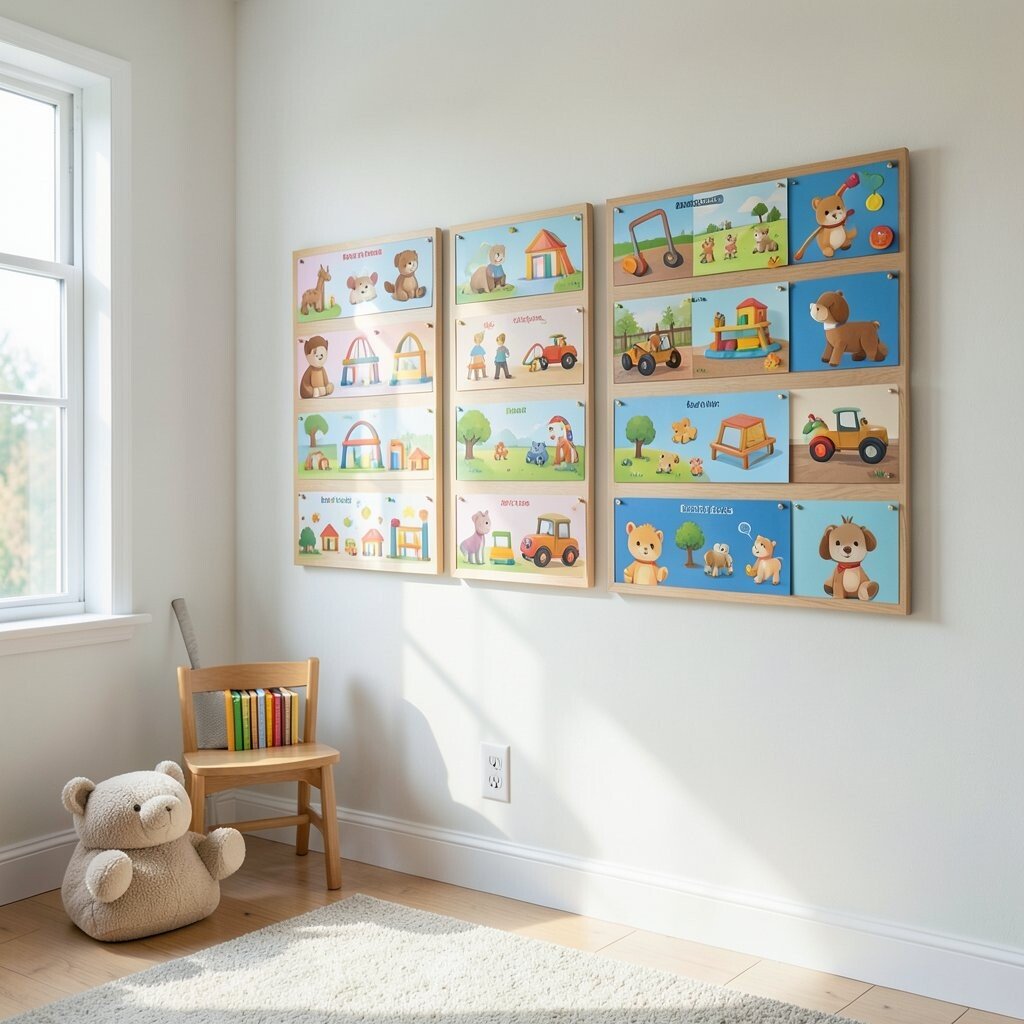
Wall-mounted activity boards can make a playroom both fun and tidy. Busy boards with knobs, latches, shapes, or gears create a hands-on look that feels playful and smart.
These boards keep kids engaged while using very little floor space, which is a big help in smaller rooms. You can buy one, build one, or combine simple panels at lower cost, then paint the wall behind them in a cheerful color to make the area stand out.
10. Pretend Play Market
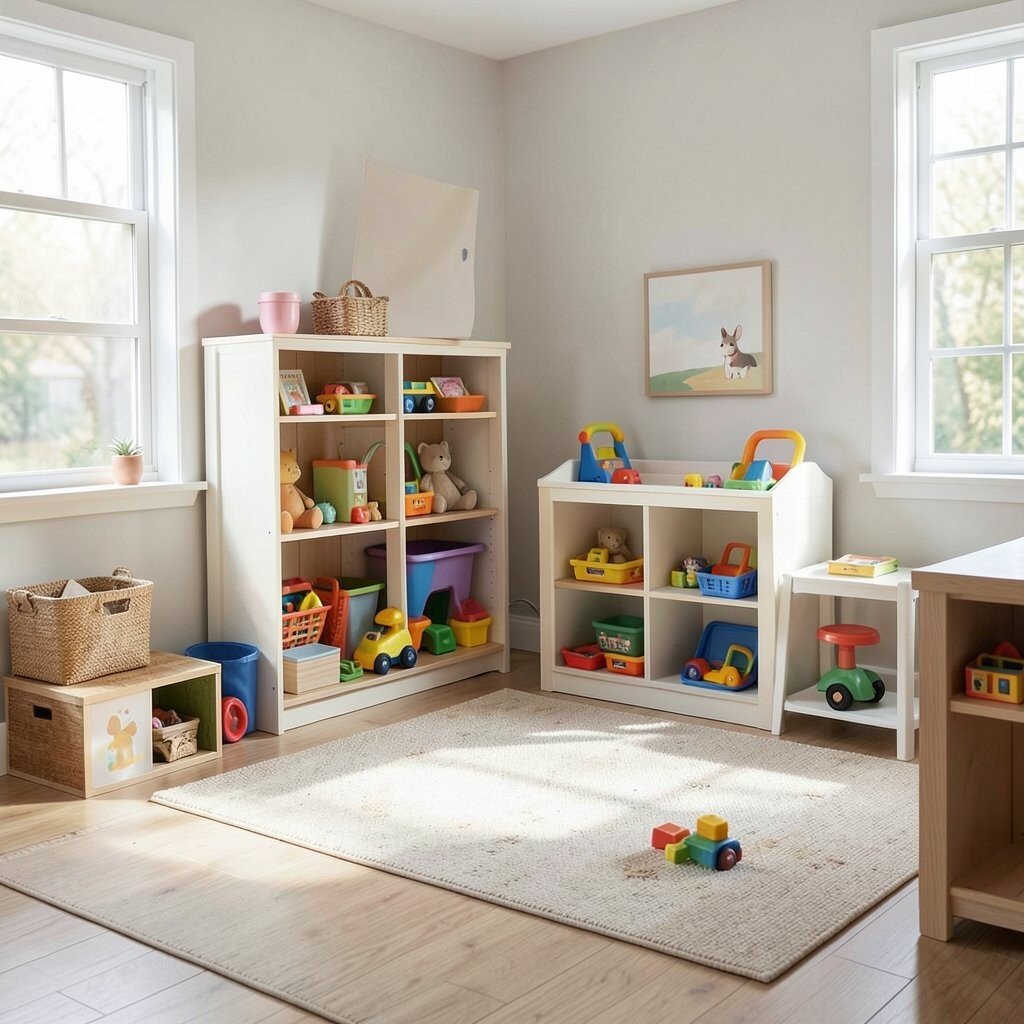
A pretend play market can turn a corner into a tiny world of make-believe. Little shelves, baskets, toy food, and a small counter make the room look like a real shop in child-sized form.
This kind of setup supports language skills, sharing, and creative thinking while giving kids a place to act out everyday scenes. You can keep it affordable by reusing kitchen carts, cardboard stands, or toy crates, and you can make it unique with signs made from your child’s drawings.
Soft pastel colors are popular for pretend play spaces, but bold red or blue can make the shop feel more exciting. A few real-looking details, like a tiny chalkboard menu, add charm without much cost.
11. Game Table Zone
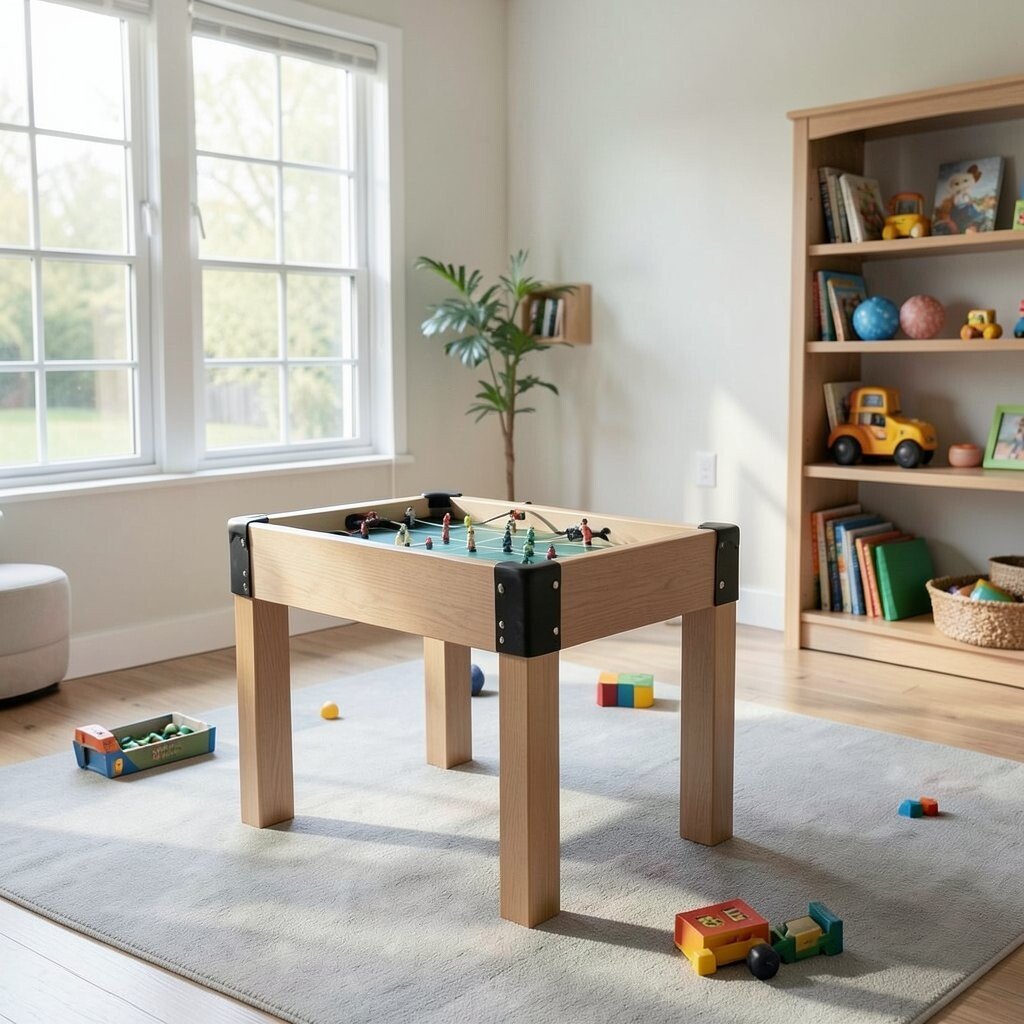
A game table zone gives older kids and family members a place to sit together. A round table with sturdy chairs can make the room look neat and friendly.
This area supports board games, puzzles, and card play, which makes the playroom useful beyond toy time. Look for a table that can handle spills and scratches, and consider a secondhand find if you want to save money while still getting a nice style.
You can personalize the space with a framed game poster or a colorful centerpiece. More families are choosing simple tables with flexible seating because they work for many ages and activities.
12. Hidden Toy Closet
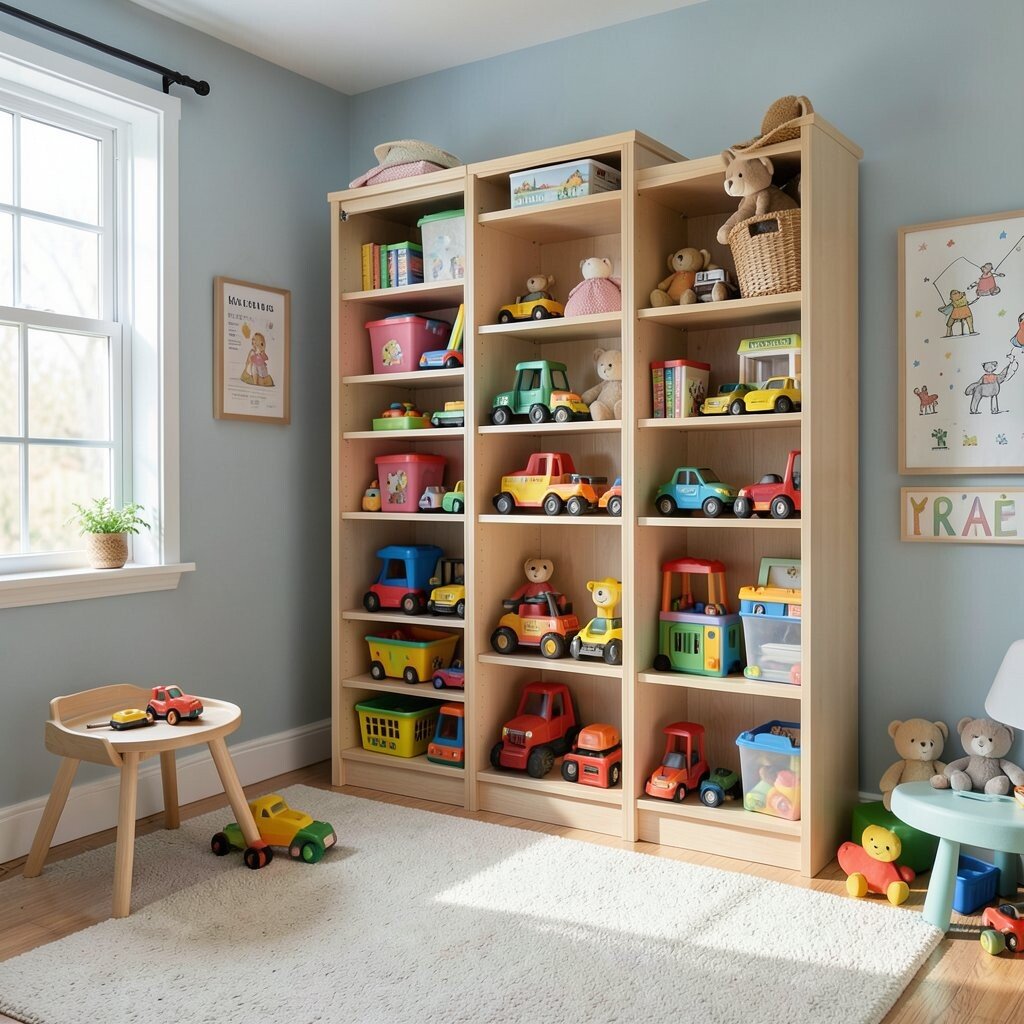
A hidden toy closet helps a playroom stay peaceful when playtime is over. Closed doors can hide visual clutter and make the room feel much calmer at first glance.
This is a practical choice for families who want the room to look neat without needing perfect shelf styling all the time. The cost can vary based on whether you build custom doors or use a simple wardrobe, and you can make it your own with bright handles or a fun painted inside wall.
When the closet opens, kids can still enjoy a cheerful surprise. That little bit of contrast can make the room feel special and well planned.
13. Sensory Calm Corner
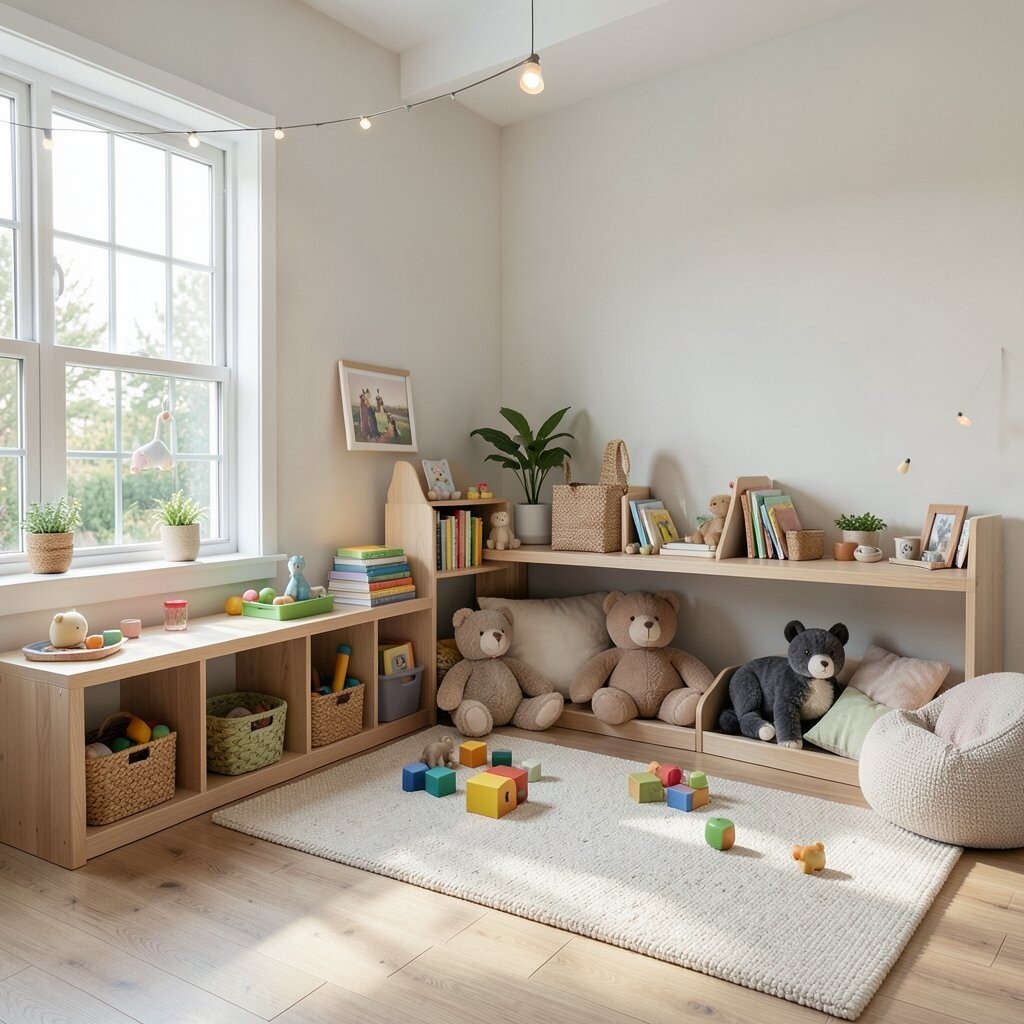
A sensory calm corner brings comfort to a busy playroom. A beanbag, soft lights, textured pillows, and gentle colors can create a quiet place that looks soothing and inviting.
This kind of space helps kids reset after loud play, which can make the whole room work better for everyone. It does not need a large budget, since a few soft items and a floor lamp can do a lot, and you can add weighted blankets or favorite soft toys for extra comfort.
Many modern playrooms include calm zones because families want spaces that support different moods. A soft curtain or room divider can help the corner feel more private without closing it off completely.
14. Road and Track Floor Design

A road and track floor design turns the floor itself into part of the fun. A printed rug, tape roads, or a painted path can create a lively scene that invites cars, trucks, and trains.
This idea gives kids a large play surface without taking up extra room, and it can be a good way to guide play in an open area. Low-cost tape designs are easy to change, while a custom rug may cost more but lasts longer and gives the room a finished look.
You can make the track feel unique by adding parking spaces, bridges, or a tiny town. Black-and-white road lines are classic, but colored routes are becoming more common for a fresher style.
15. Music and Movement Zone
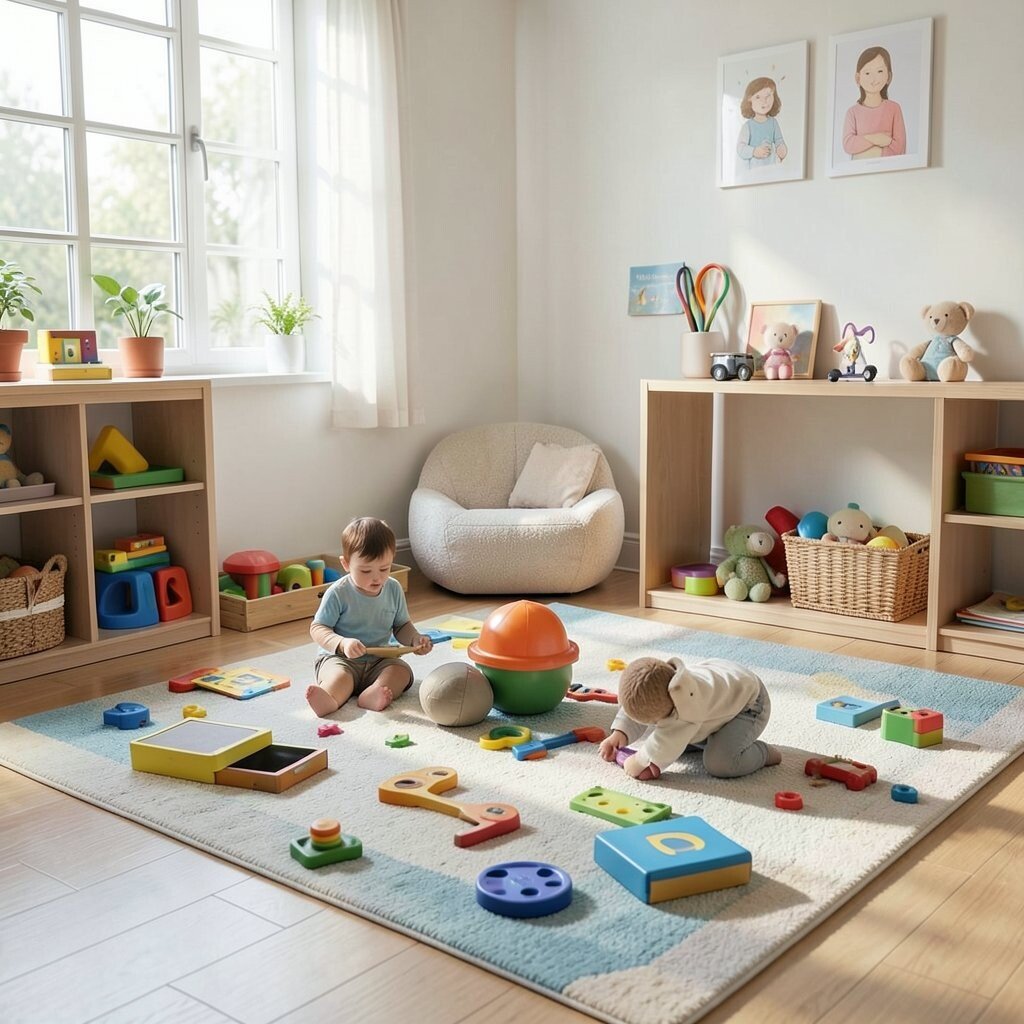
A music and movement zone brings energy into the playroom in a joyful way. A small drum, a basket of scarves, and a clear open floor can make the space feel ready for dancing and sound.
This setup supports rhythm, balance, and physical play, which is great for active kids. It can stay simple and affordable if you use soft storage bins and a few instruments, and you can personalize it with a favorite playlist sign or bright wall art.
Mirrors on one wall can help kids see their dance moves, and that can make the space feel more like a little studio. This idea fits well with current trends that blend learning, movement, and play in one room.
16. Themed Adventure Zone
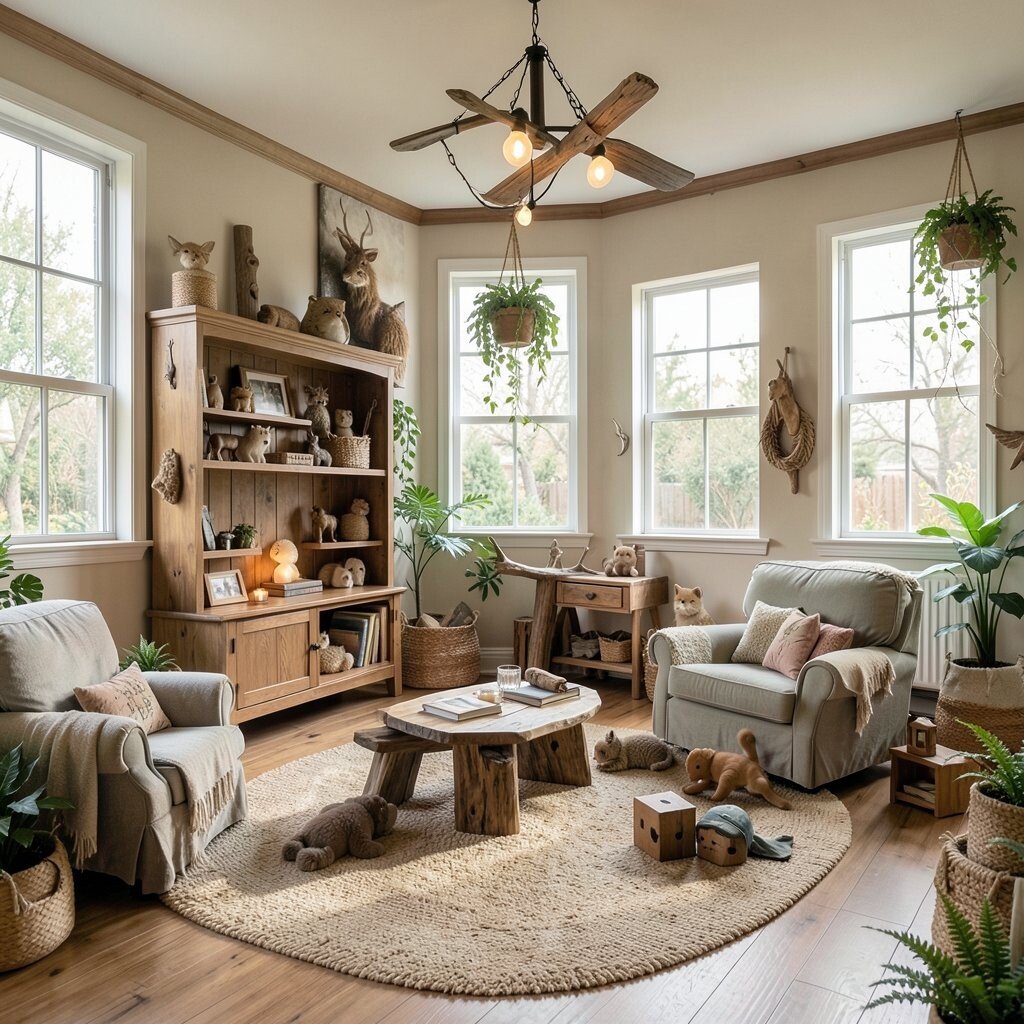
A themed adventure zone can make a playroom feel like a story waiting to happen. A jungle look, a space theme, or a castle corner can fill the room with strong visual character.
This style stands out because it makes play feel more immersive and exciting. You do not need a huge budget to pull it off, since wall decals, cardboard props, and a few matching textiles can create a big effect, and you can choose a theme that fits your child’s favorite interests.
Personal touches matter here, like a star chart for a space room or leaf garlands for a jungle room. The best themed spaces feel fun but still easy to change as kids grow.
17. Open Toy Rotation Shelves

Open toy rotation shelves keep the room fresh and easy to use. A few selected toys on display can make the playroom look clean, bright, and calm instead of crowded with everything at once.
This system helps children focus better because there are fewer toys to sort through. It also keeps costs under control since you do not need to buy more storage all the time, and you can use baskets, trays, or small bins to group items in a neat way.
Rotating toys is a smart trick that many parents like because old toys can feel new again. You can also style the shelves with a mix of wooden toys, books, and one or two bright pieces for a balanced look.
18. Homework and Craft Combo
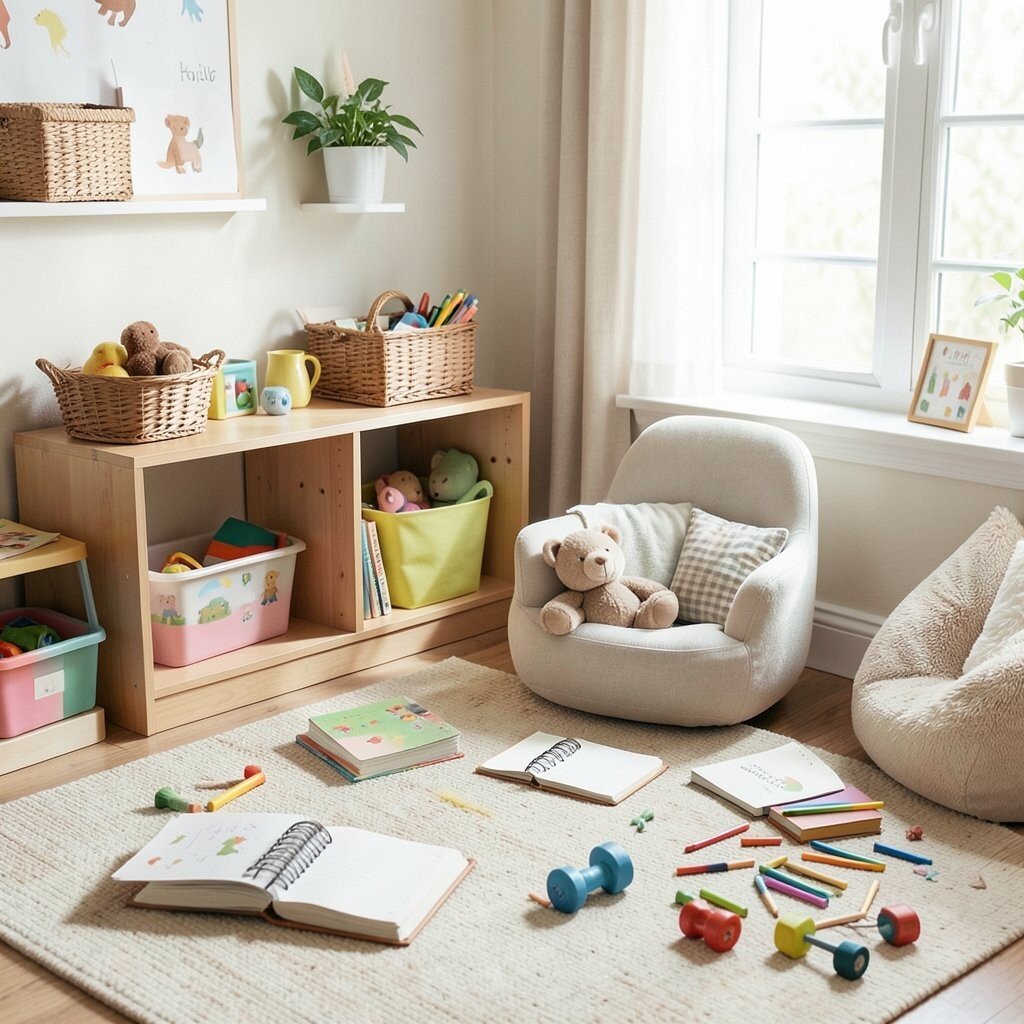
A homework and craft combo area makes the playroom useful for both school and creative time. A sturdy desk, good light, and supply drawers can create a tidy spot that feels ready for focused work.
This setup is helpful for older children who need a place to draw, read, and finish school tasks. It can be done on a modest budget with a simple desk and desk lamp, and you can make it more personal with a bulletin board, framed names, or colorful drawer pulls.
Clean lines and neutral furniture are popular for this kind of space because they help the room feel grown up but still friendly. A small gallery of art above the desk can keep the area playful without making it messy.
19. Window Seat Play Spot
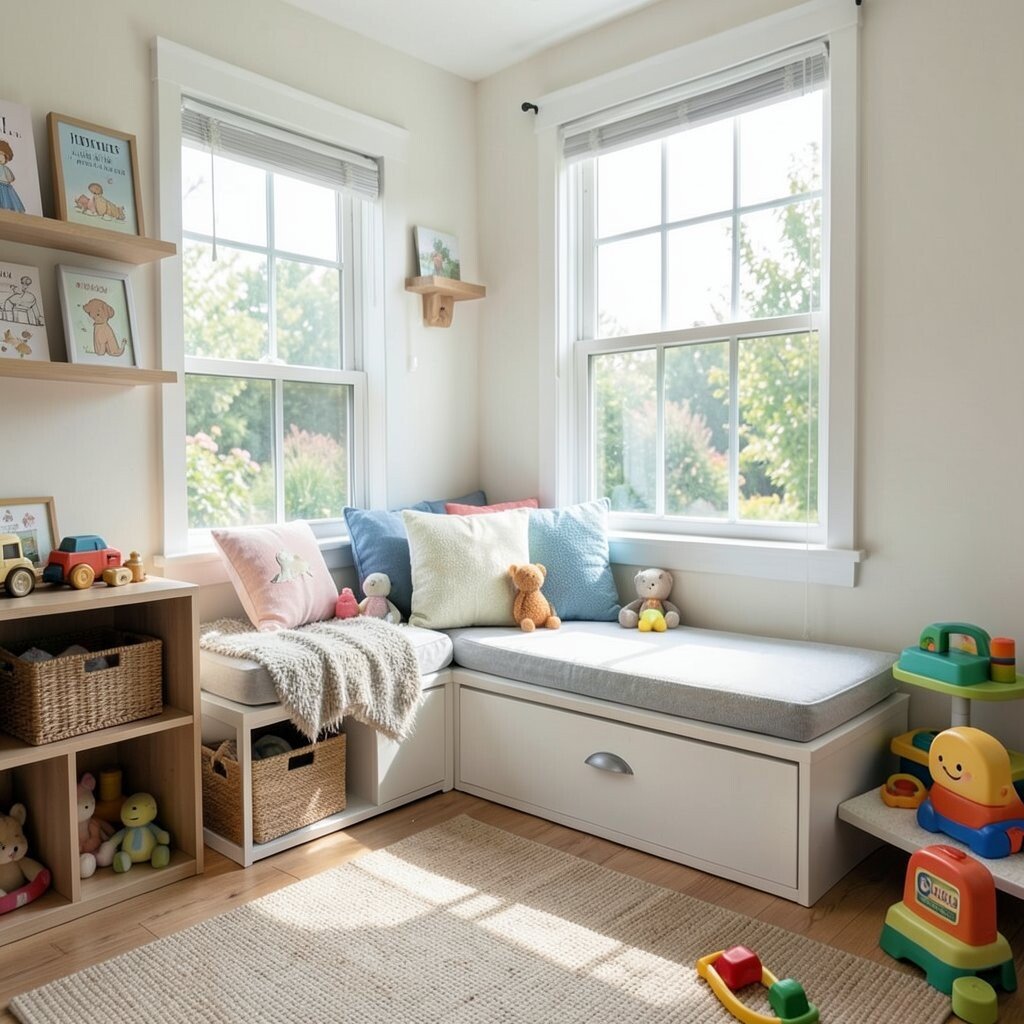
A window seat play spot can make natural light part of the room’s charm. A padded bench with storage below and a few cushions above creates a sunny place that feels cozy and bright.
This idea gives kids a place to read, rest, or watch the world outside, and it can make the room feel larger too. Built-in seating may cost more, but a simple bench or storage chest with cushions can give a similar look for less money.
You can personalize the seat with patterned pillows or a favorite blanket in the child’s colors. Soft neutrals paired with one strong accent color are a popular choice because they feel fresh and easy to live with.
20. Recycled and Upcycled Playroom Pieces

Recycled and upcycled pieces can give a playroom a clever, one-of-a-kind look. An old dresser painted in a bright shade, crate shelves, or a repurposed cart can add charm while keeping waste low.
This approach is great for families who want style on a small budget, and it often leads to rooms that feel more personal than store-bought spaces. A little sanding, new handles, or fresh fabric can make old items look cheerful and useful again.
More people are liking mixed materials and secondhand finds because they feel both practical and creative. The room can still look polished when you choose a clear color story and repeat a few shapes or textures.
21. Soft Neutral Modern Playroom
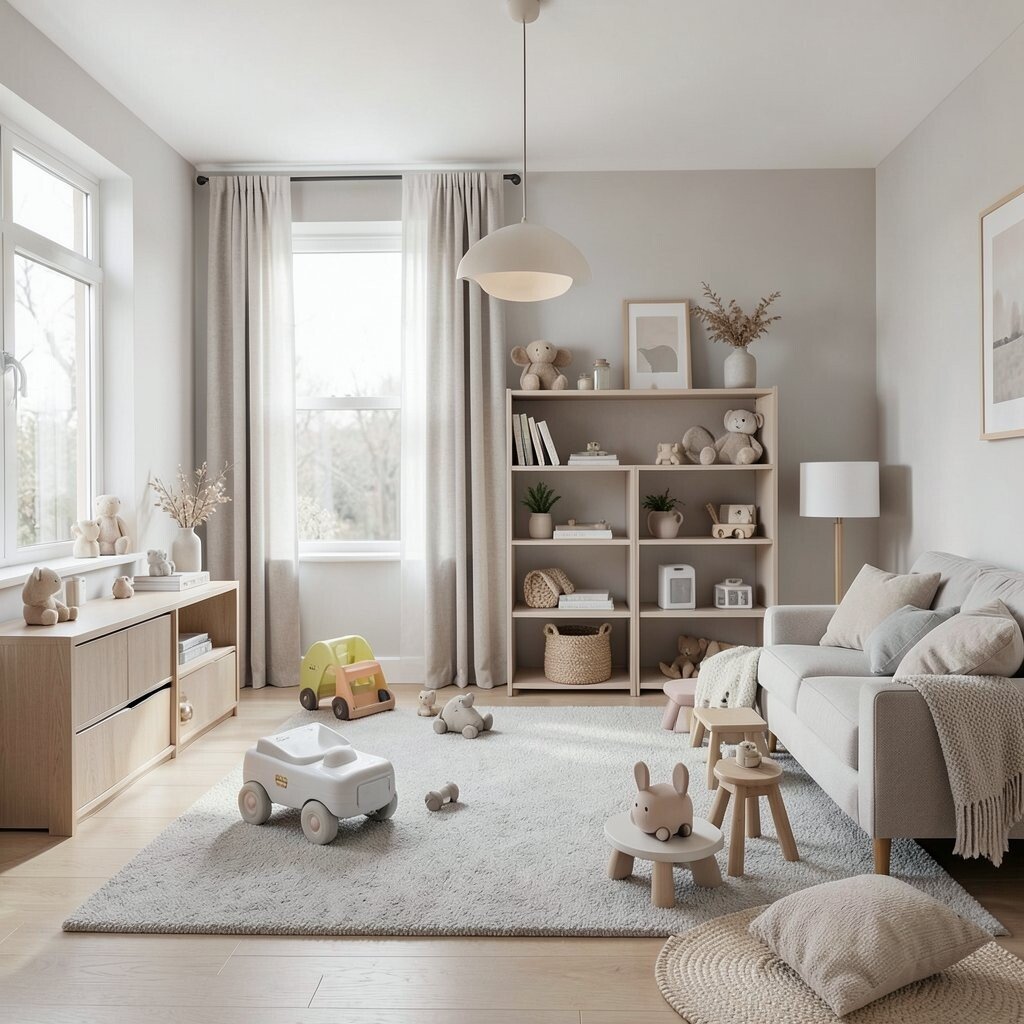
A soft neutral modern playroom feels calm, clean, and easy to update. Cream walls, light wood furniture, and a few gentle colors can make the room look stylish without feeling cold.
This design works well for families who want a space that grows with their child. It can be cost-friendly if you keep the layout simple, use long-lasting pieces, and bring in personality through books, toys, rugs, and art instead of lots of decor.
Modern playrooms often use simple shapes and natural textures, and that trend helps the room feel fresh for years. You can add small touches in your child’s favorite color to keep the space playful while still looking tidy and timeless.