Closet organization can feel like magic when everything has a home. With a few smart changes, your everyday items can look calmer and easier to reach.
And the best part is that you get to choose what works best for your life, style, and budget.
1. Stackable Bins for Instant Calm
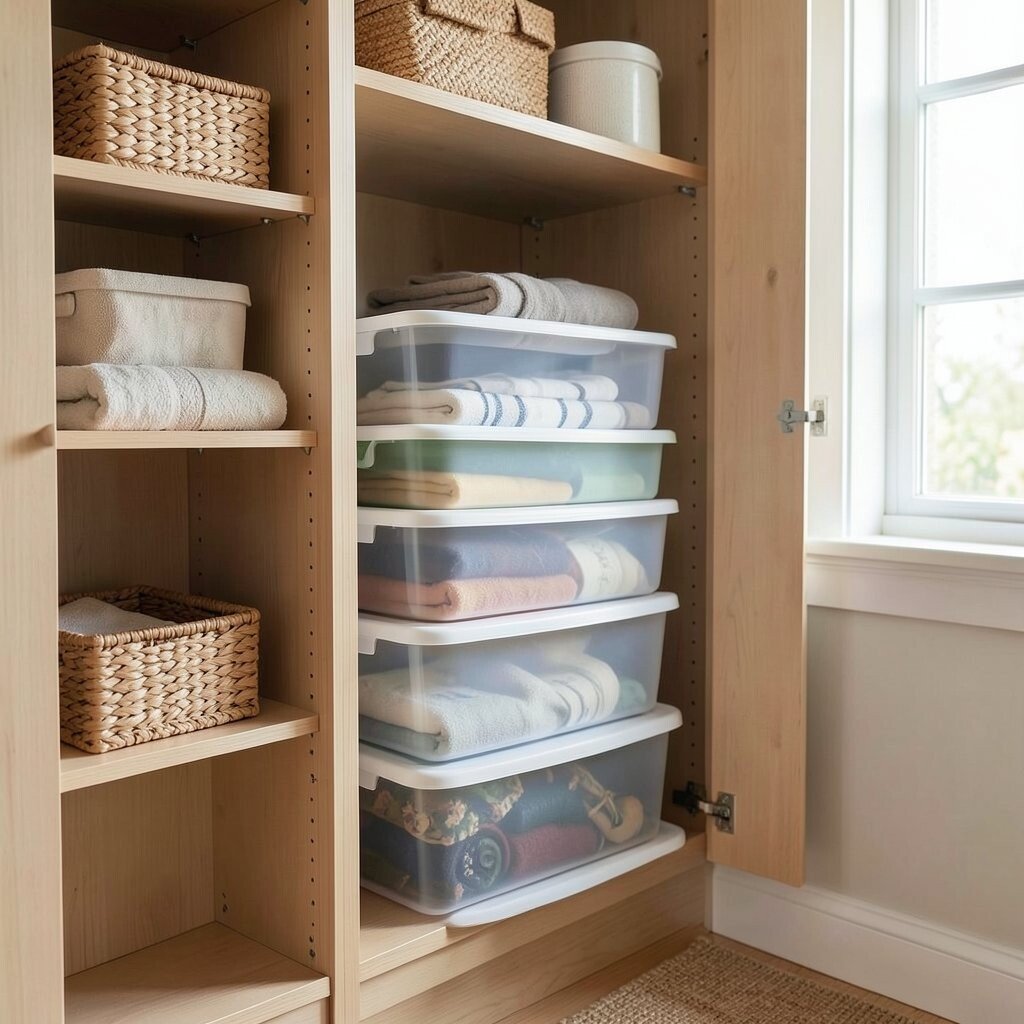
Use clear or labeled stackable bins to group small items like scarves, belts, and socks. When you open a closet door, you immediately see neat rows instead of a jumble of fabric.
Start by measuring the closet shelves so the bins fit snugly and won’t topple. Choose lids that stay put and add labels that match your routine, like “work days” or “weekends.” Stack heavier bins on the bottom and keep lighter, softer items on top to prevent crushing.
2. Adjustable Shelving That Grows With You
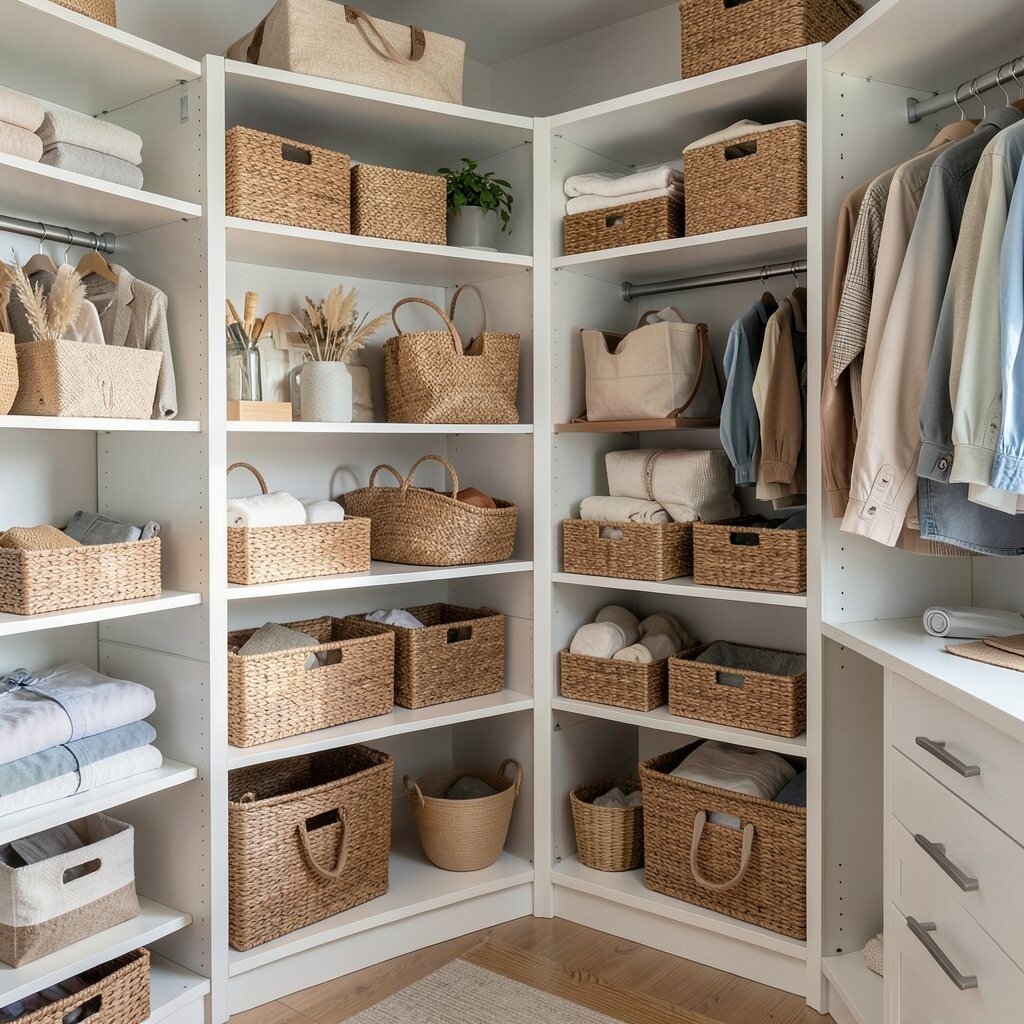
Swap fixed shelves for adjustable ones so you can change the layout as your needs shift. Imagine tall bottles, then later folded blankets, all fitting perfectly without forcing anything to squeeze.
Install at least a couple of adjustable levels so shoes, baskets, or storage boxes can share the same closet. This makes the space feel custom and helps you avoid wasting the top or bottom areas.
Use a simple measuring tape when you plan heights, and test-fit one container before committing. Many people also add a slim shelf panel or a wooden board to create a stable surface for small bins.
3. Vertical Shoe Storage With a “One-Set” System
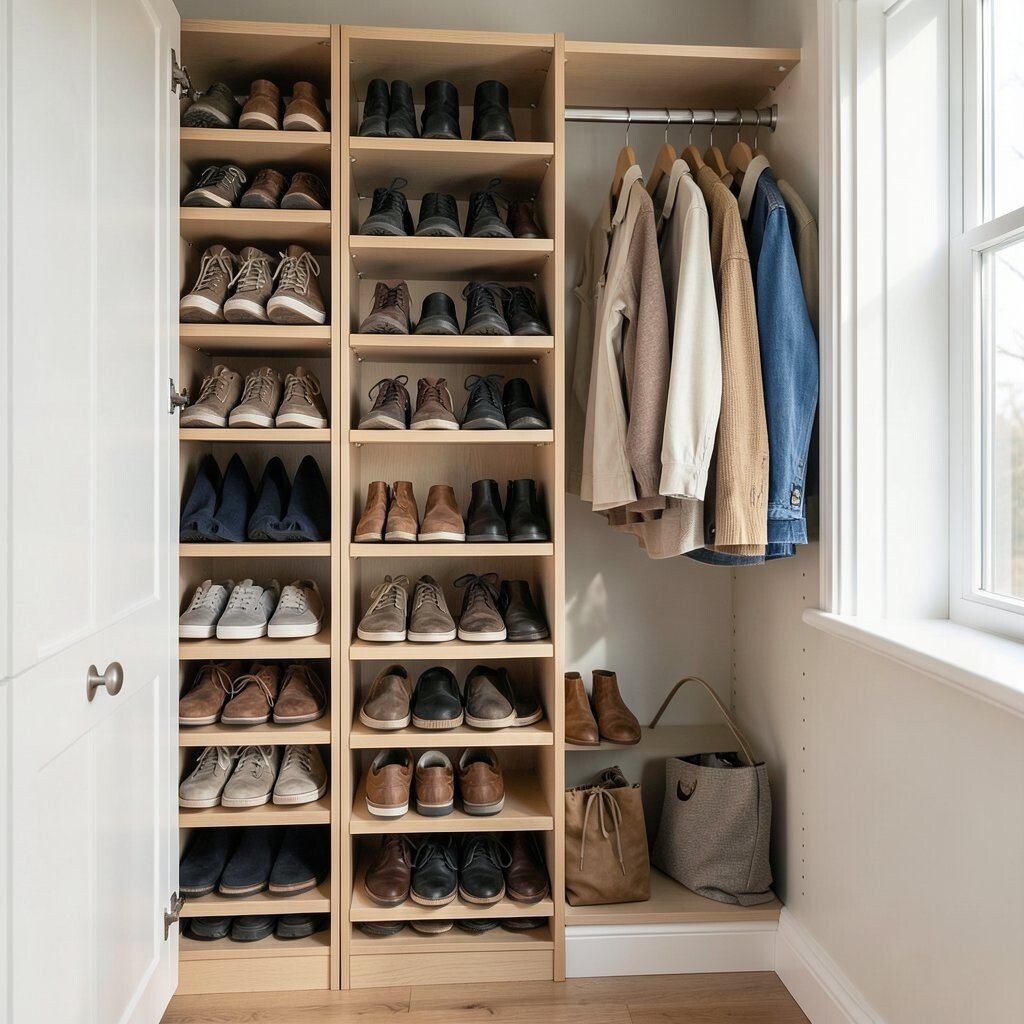
Keep shoes easy to grab by using vertical storage racks, like cubbies or slim holders. You can picture each pair standing neatly like they belong on display.
Use matching spots for every day pairs so you never have to hunt. This reduces clutter because you store the same categories in the same places each week.
For a personalized touch, try color-coordinated organizers or a small photo label that matches your shoe style. If you have limited budget, start with a single rack for your most-used pairs and expand later.
4. Hanging Organizers for Small Items and Big Wins
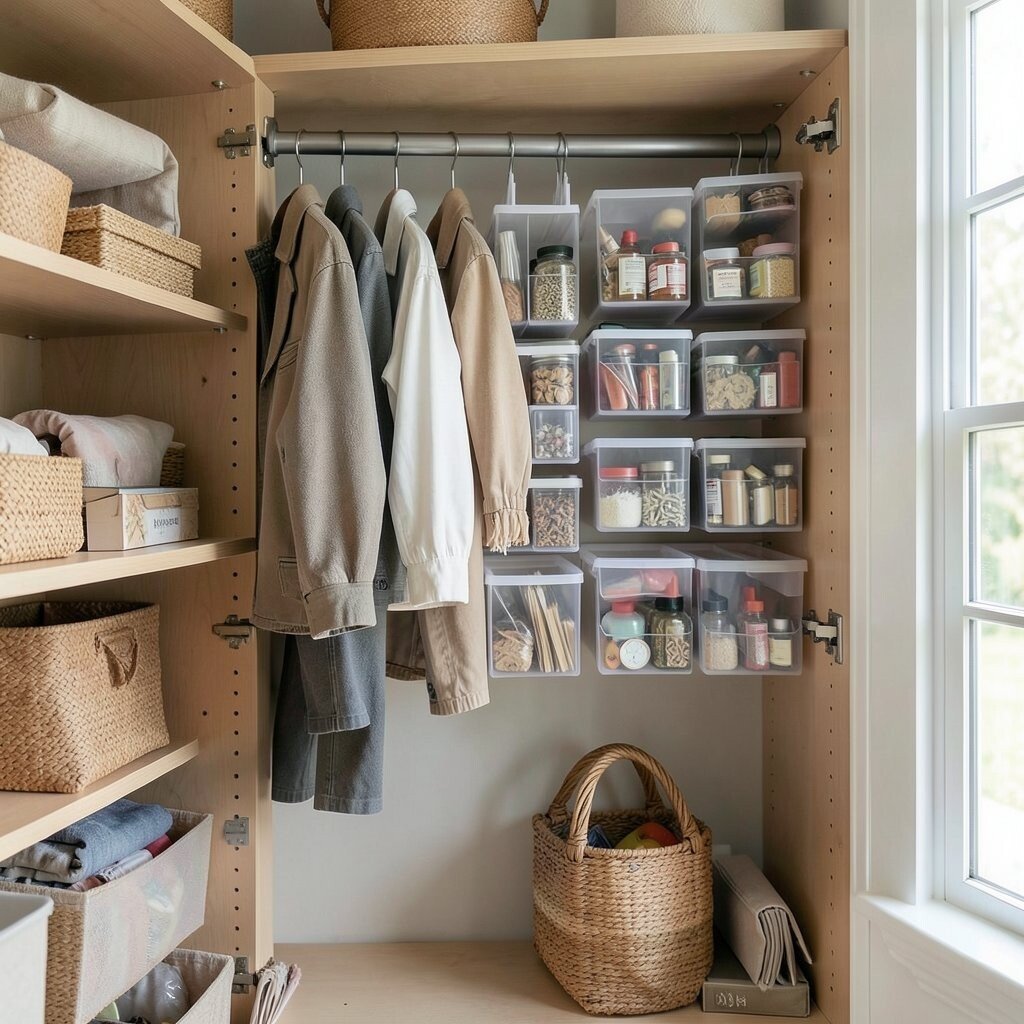
Hang organizers on the inside of closet doors to catch items that usually land on the floor. Think of a tidy row of pockets holding hats, gloves, accessories, or even cleaning supplies.
Pick a fabric organizer that folds flat when not in use, so it’s easy to store if you change plans. Use the top pockets for quick grabs and the lower sections for rarely used items.
5. Under-Shelf Drawers for Hidden Storage
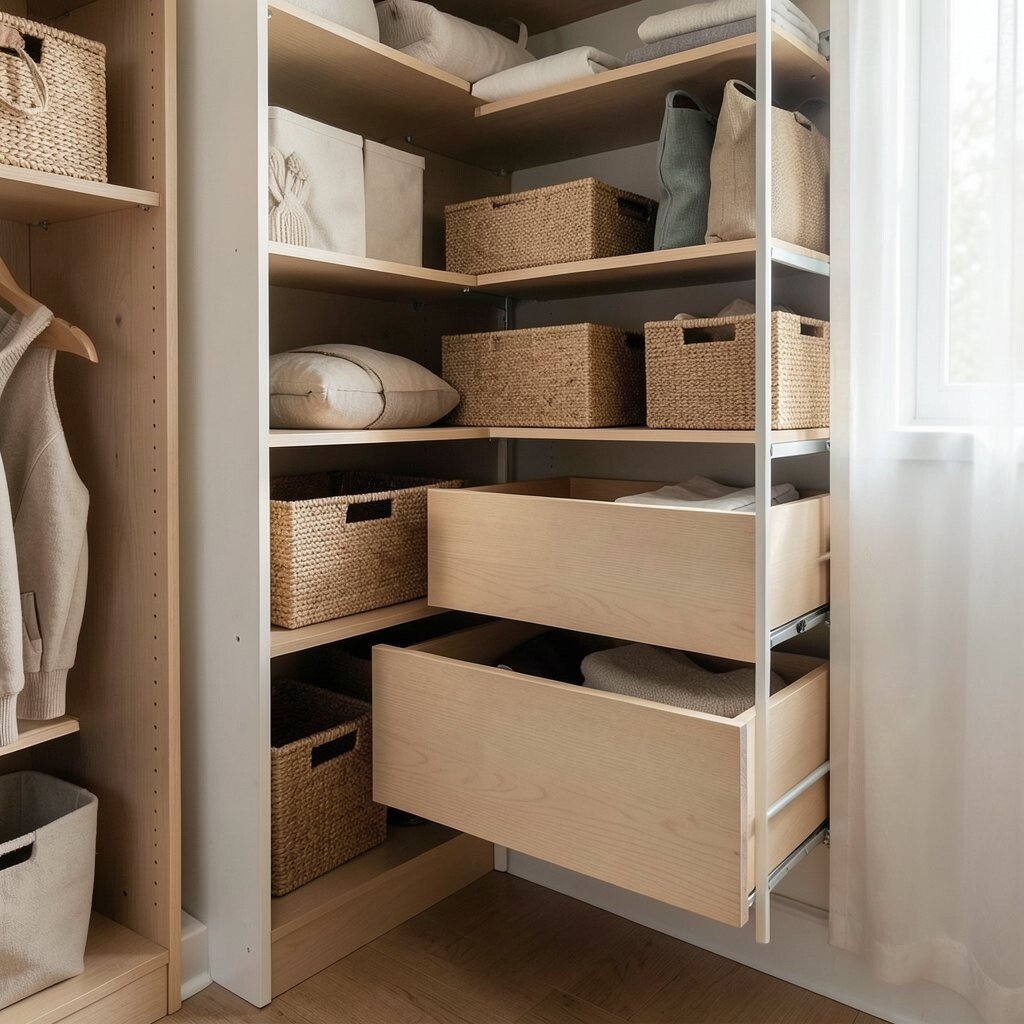
Under-shelf drawers add secret space while keeping the closet front looking clean. You can slide them out like little cabinets beneath your existing shelves.
Store things you don’t reach often, like extra hangers, seasonal scarves, or backup toiletries. This helps keep the visible shelves calmer because you’re not stacking items where they can collect dust.
Look for lightweight metal or smooth-gliding options so they open easily. If you want a budget-friendly approach, use shallow drawer units that fit a standard shelf depth.
6. Hamper-Integrated Sections for Cleaner Floors

Build a dedicated hamper area inside the closet so laundry doesn’t spill into hallways or bedrooms. It’s satisfying to see a clear “drop zone” that keeps floors free.
Choose a hamper with wheels or a smooth handle so it’s easy to carry from closet to washing day. Place it near the hanging section for fast throw-ins after you get dressed.
If your closet is narrow, a slim hamper with a removable liner can be a great fit. Adding a small breathable liner helps reduce odors and keeps everything feeling fresh.
7. Lidded Baskets for Things That Need Breathing Room
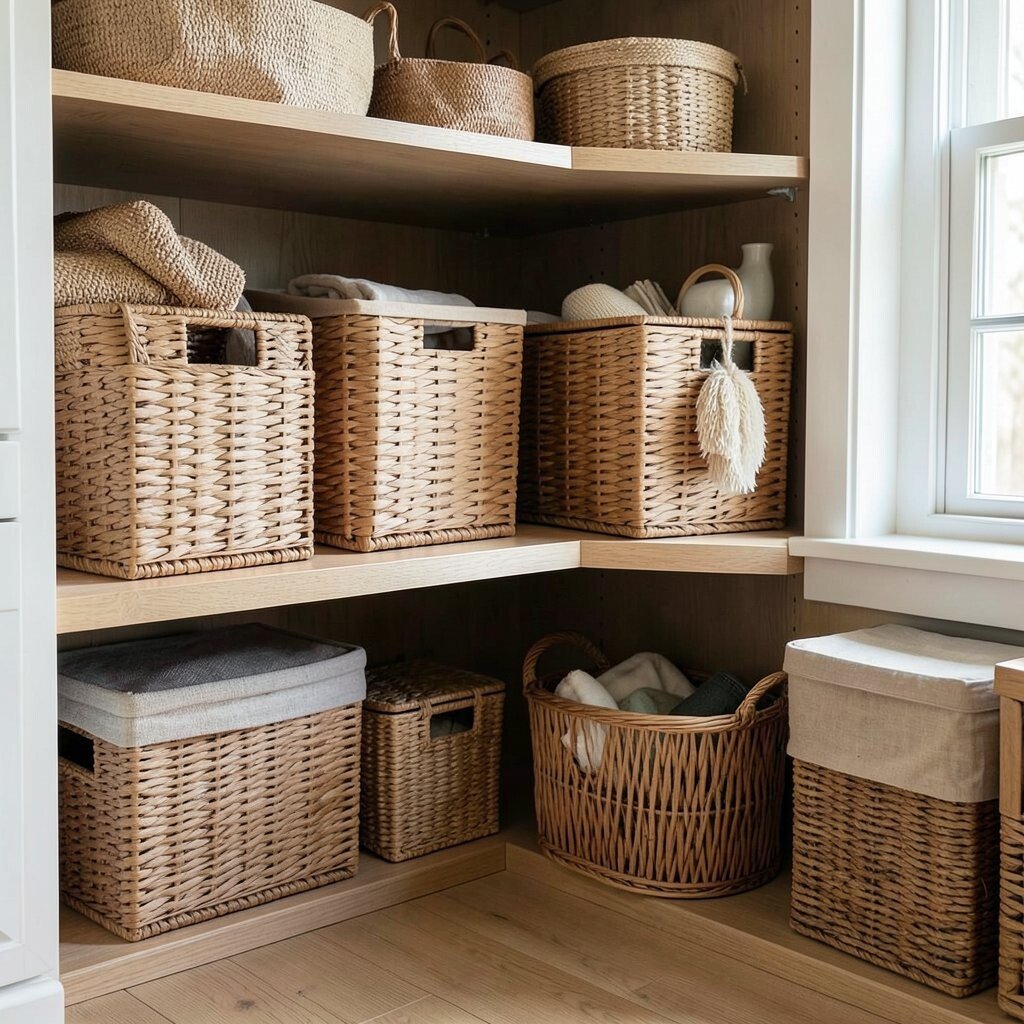
Use lidded baskets for items that you want to store neatly but still keep air moving. Visualize woven baskets lined up like soft storage boxes, each with a calming lid.
This option works well for bulky items like sweaters, hats, or extra linens that don’t like tight stacking. You get the benefit of hidden organization while still making it easy to spot what you need.
For personalization, choose baskets in colors that match your room or your closet hardware. If you’re watching cost, buy a few baskets at a time and rotate what you store as seasons change.
8. Ceiling-Height Storage for Seasonal Swap Days
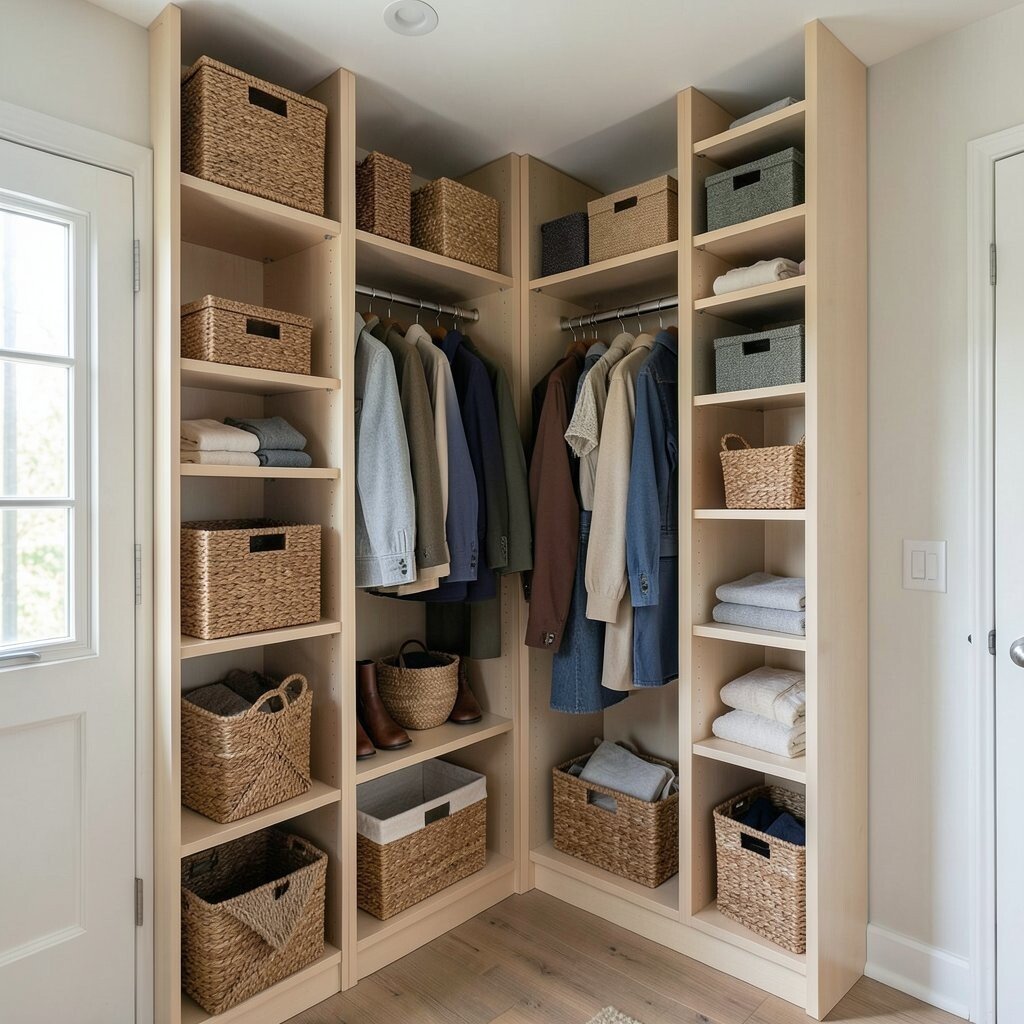
Use the top of the closet, near the ceiling, for seasonal storage so it stays out of sight. On a tall shelf, bins can look like a peaceful skyline of labeled containers.
Store holiday decor, winter gear, or summer accessories in sturdy bins with handles. Use a step stool or a pull-down shelf only if you plan to reach items regularly.
9. Clear Labeling That Looks Clean, Not Cluttered

Adopt simple, consistent labeling so you can find items without rummaging. When labels match the organization system, the closet feels like a helpful map.
Try small tags on bins or label strips on baskets, and keep the style uniform across the whole closet. This creates a visual rhythm that looks tidy even when your home is busy.
If you want a unique vibe, use handwriting or a label maker with a font you love. For cost, you can reuse old labels and just swap the inserts when your needs change.
10. Corner Shelves for Narrow Closets

Corners often go unused, but they can become valuable storage spots. Picture a small corner shelf holding rolled towels or stacked seasonal caps without taking up the main aisle.
Choose corner units designed for closet angles so they sit stable and don’t waste space. Use them for lightweight items like folded socks, small bags, or even shoe care products.
11. Color-Coordinated Hanging Sections for Quick Decisions
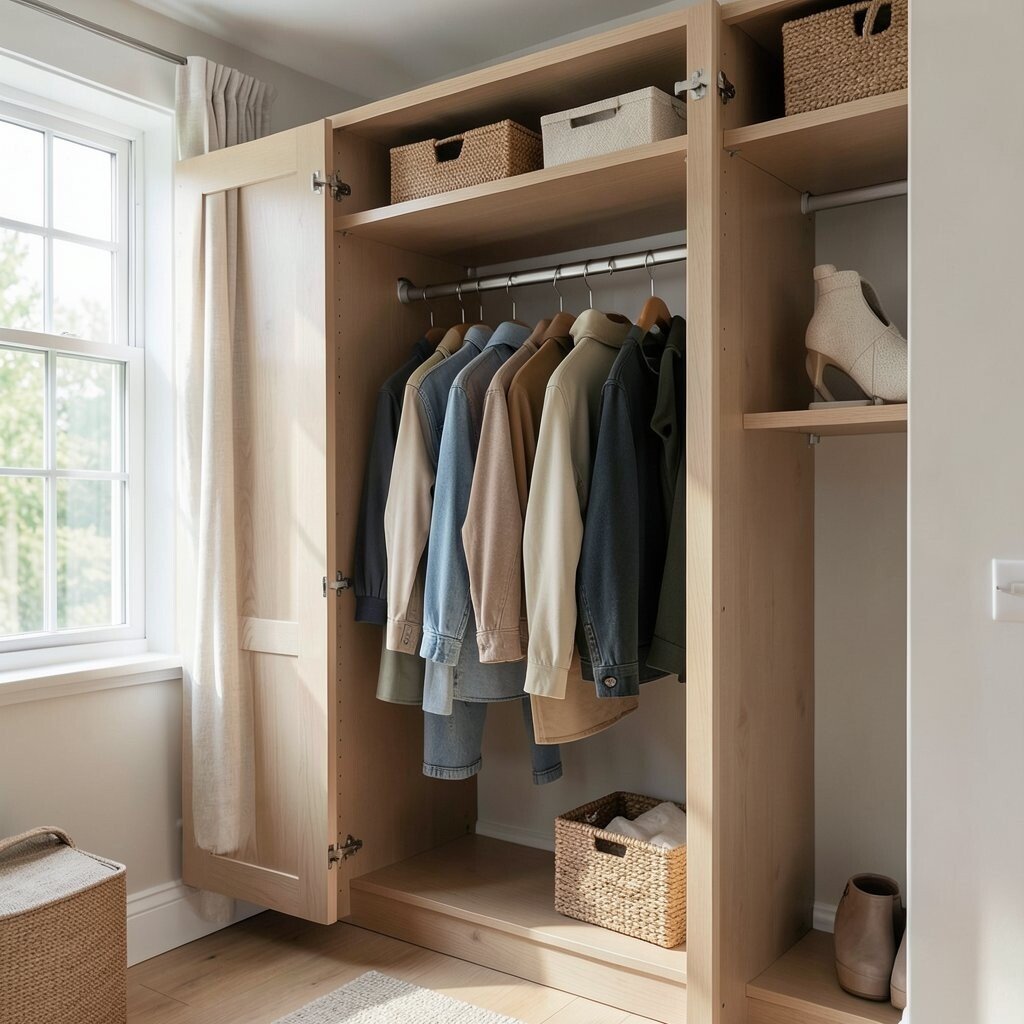
Arrange hanging clothes by color for an easy “grab and go” experience. It’s nice to open the closet and see a rainbow-like order that feels calm and inspiring.
Keep categories simple, like tops, dresses, and outerwear, then sort within each group by color. This helps you pick outfits faster and reduces the urge to toss items back in randomly.
For personalization, add matching hangers and keep the same hanger type across categories. If cost matters, start with hangers for your most-used clothing section first.
12. Curtain Panels for Flexible Closet Zones

If your closet feels like it has too many jobs, use a curtain panel to make zones. Imagine one side for daily clothes and another side for storage, all separated without building walls.
This gives you flexibility when your storage needs change, like when you rotate seasonal items. Curtains also soften the look of metal shelves and can make a closet feel less harsh.
Pick a fabric that matches your room style and choose a rod that supports the weight. For budget planning, look for removable curtain rods and use fabric you can wash or swap.
13. Shelf Liners to Keep Items From Slipping and Snagging

Add shelf liners so folded clothes and bins stay in place. The visual result is a smooth, clean base that makes everything look more put together.
Liners help prevent scratches on delicate fabrics and keep items from sliding when you open the closet. Use non-slip material for areas where bins or baskets move around.
If you like personalization, choose liner patterns that match your favorite colors in the room. For cost control, cut liners from larger sheets and reuse them when you rearrange shelves.
14. Drawer Sets for Accessories and Small Daily Needs

Use drawer units inside the closet for accessories like jewelry, hair ties, and everyday extras. When drawers are neat, you stop digging through bags and start grabbing confidently.
Organize each drawer with simple compartments so items don’t mix together. This makes it easier to keep your closet tidy because small things return to their own home.
15. Pegboards or Slat Panels for Adjustable Hooks
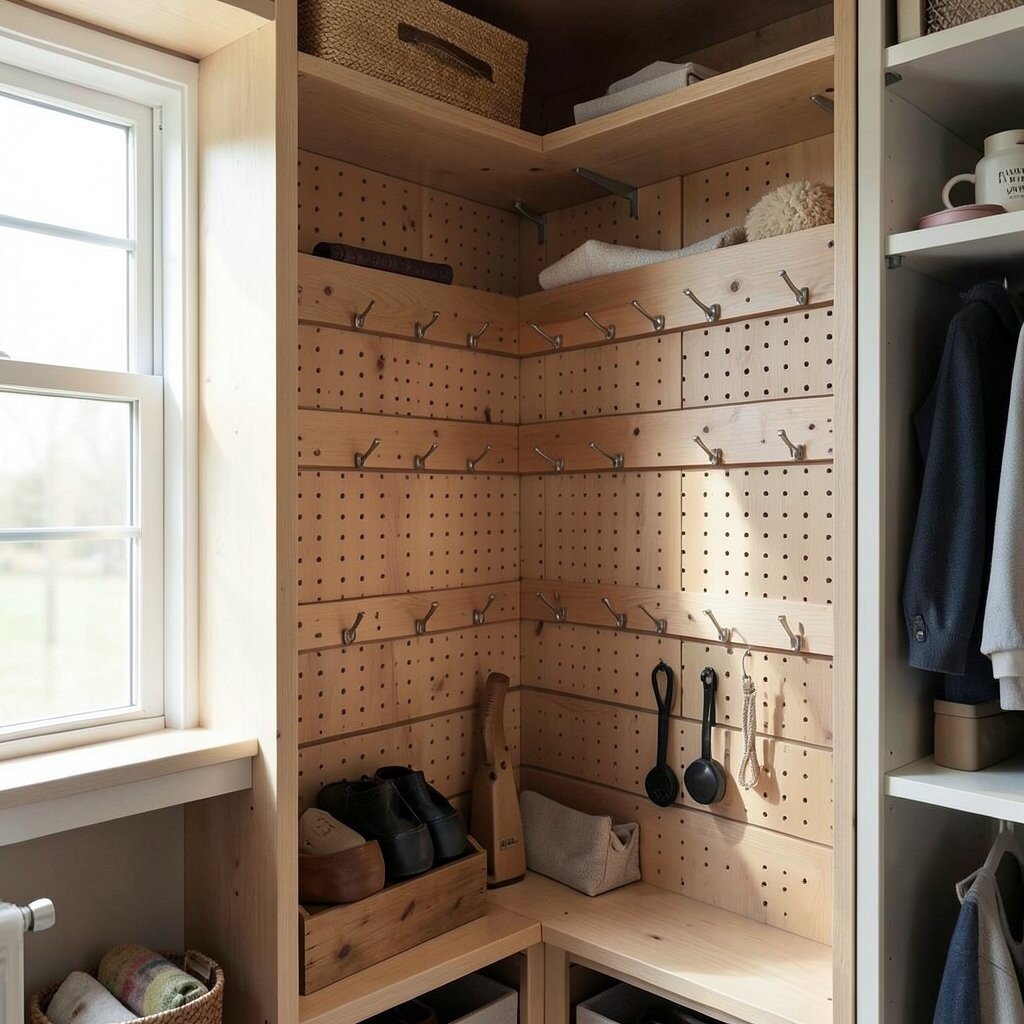
Install a pegboard or slat panel to hold hooks, baskets, and hanging organizers. It looks modern and gives you a flexible system for bags, hats, and scarves.
Rearrange hooks whenever your routine changes, which is great for people who switch seasons or hobbies often. This keeps the closet feeling fresh and helps you avoid buying new organizers every time.
For a unique look, paint the panel to match your room or leave it in a natural finish if you like warm tones. Cost-wise, you can start with a small panel for the most-used area.
16. Rolling Carts for Closets That Need Movement
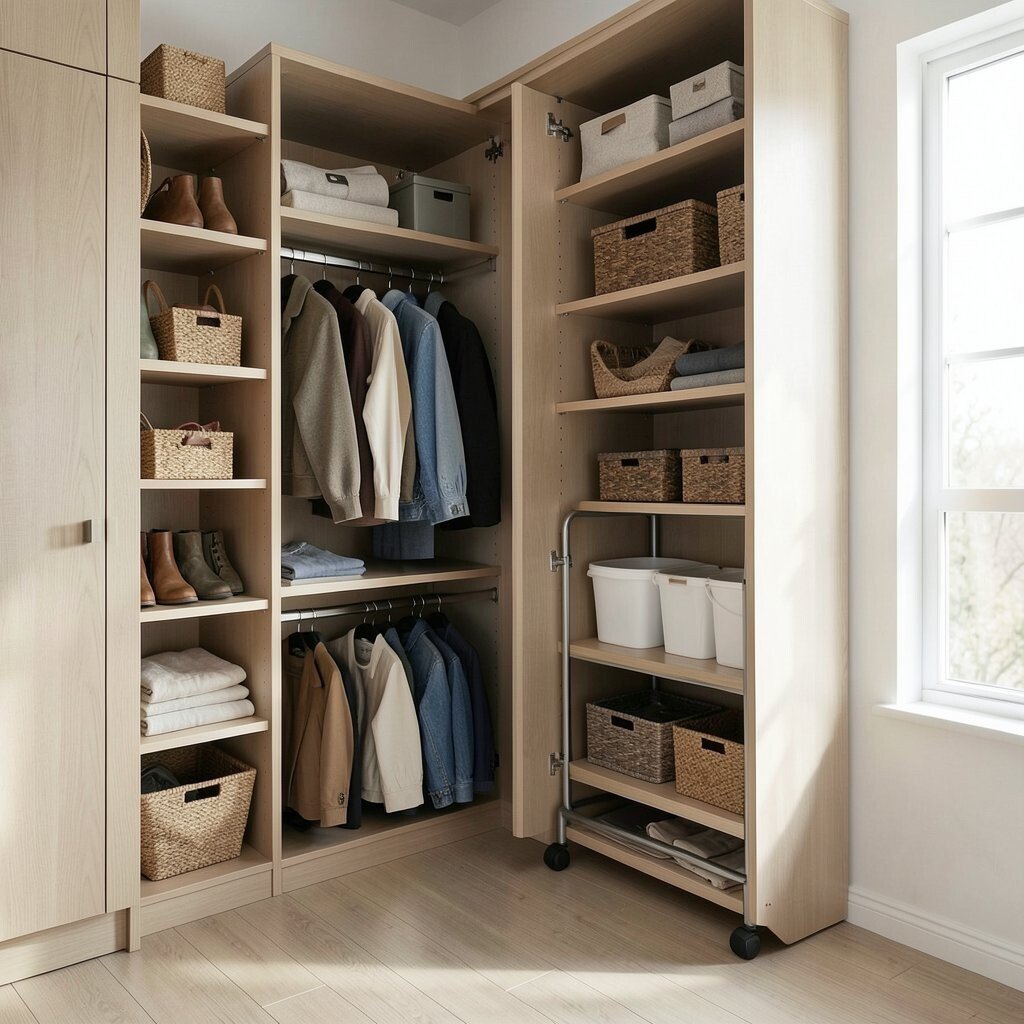
A rolling cart inside the closet can handle items that you use throughout the week. Think of a neat cart that slides out like a mini station for laundry sorting, accessories, or travel items.
Use wheels with locks so the cart stays in place when you’re grabbing items. This is especially helpful in tight spaces where reaching higher shelves can be annoying.
For personalization, add a small tray on top for daily essentials so the cart looks styled, not messy. If you want to keep costs down, choose one cart first and load it with your most frequent items.
17. Folded-Like-a-Book Storage for Maximum Neatness

Fold items using the “book-style” method so they stand upright in rows. When you see everything vertically, it feels like a library shelf for clothes.
This helps you keep shape and makes it easier to spot what you actually own. It’s a practical way to reduce overstuffing because you can see when a category is full.
Try using fabric organizers or thin bins so the upright folds stay supported. For personalization, match the organizers to your closet color palette or use a mix of neutral and bright shades.
18. Bedding and Linens Zones With Wrap Bands
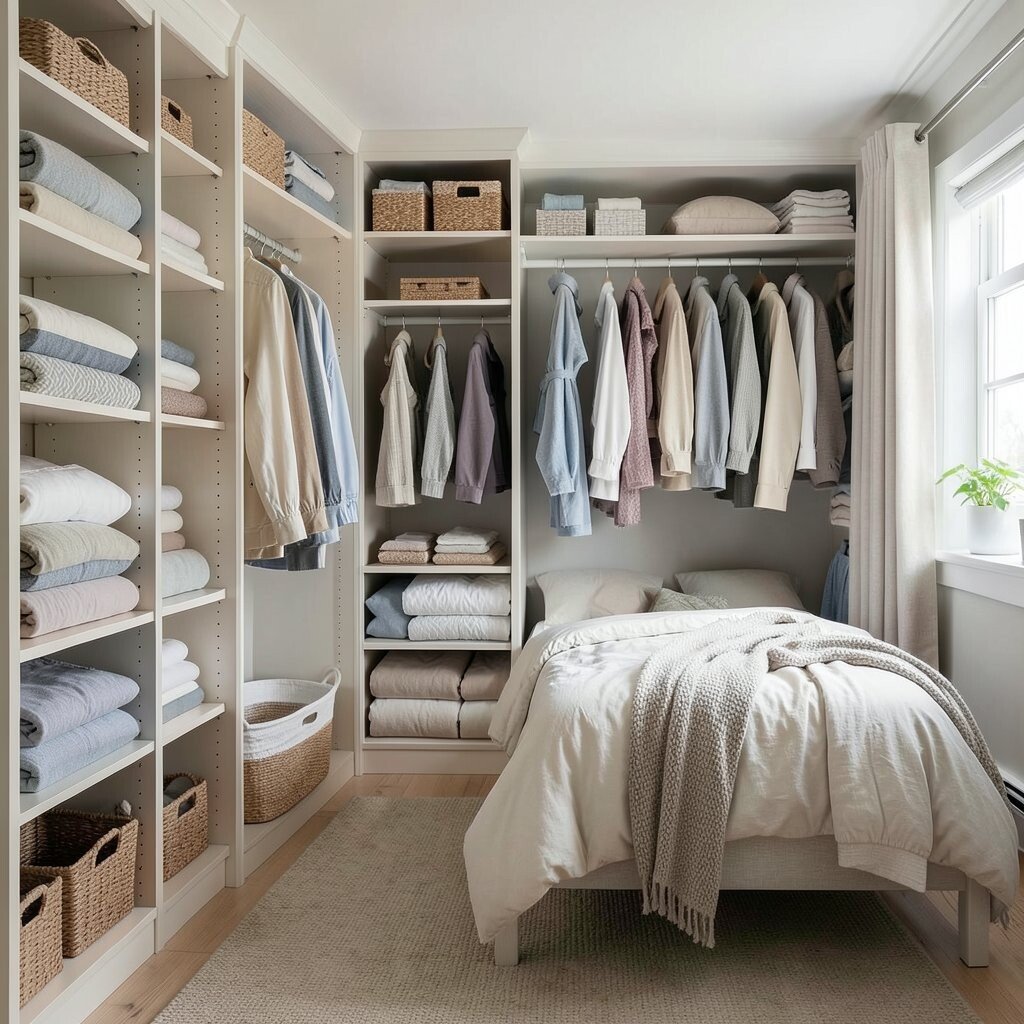
Create a specific space for bedding, blankets, and linens so they never mix with everyday clothes. You’ll notice a cleaner look because the closet sections feel intentional.
Use storage bands or straps to keep sets together and avoid the “where is the matching pillowcase” problem. It’s also helpful for guests, since you can grab a full bundle quickly.
19. Built-In Look With Matching Baskets and Trays

Use matching baskets and trays to create a built-in look, even if your closet isn’t remodeled. Picture a set of coordinated containers that makes the closet feel designed, not improvised.
Store items like small electronics, grooming supplies, or seasonal accessories in trays so they don’t wander. This keeps surfaces clear and makes the closet feel more like a tidy room corner.
For uniqueness, choose baskets with different textures, like woven plus smooth plastic, while keeping colors consistent. Budget-friendly options include using one style set for visible shelves first, then expanding when you can.
20. Hanging Wardrobe Dividers for Clear Categories

Use hanging dividers to separate clothing sections within the same rod area. Visualize a crisp divide where work clothes stay apart from casual outfits.
This helps you maintain order without needing extra shelves, which is great for smaller closets. Add labels or color bands so everyone in the house can put items back correctly.
Personalize the system by using dividers in different heights for bulky and lightweight items. If cost is a concern, try dividers for one rod section at a time so you get results quickly.
21. Back-of-Door Hanging for Bags, Towels, and Tools

Maximize the inside back of the closet door with hooks or a hanging rack. It’s a simple visual upgrade because bags and towels stop cluttering the floor.
This works well for items that you grab often, like tote bags, umbrellas, or small cleaning tools. Use a sturdy hook placement so heavy items don’t tear the organizer fabric.
22. Smart Rotation With a “Currently In” Shelf
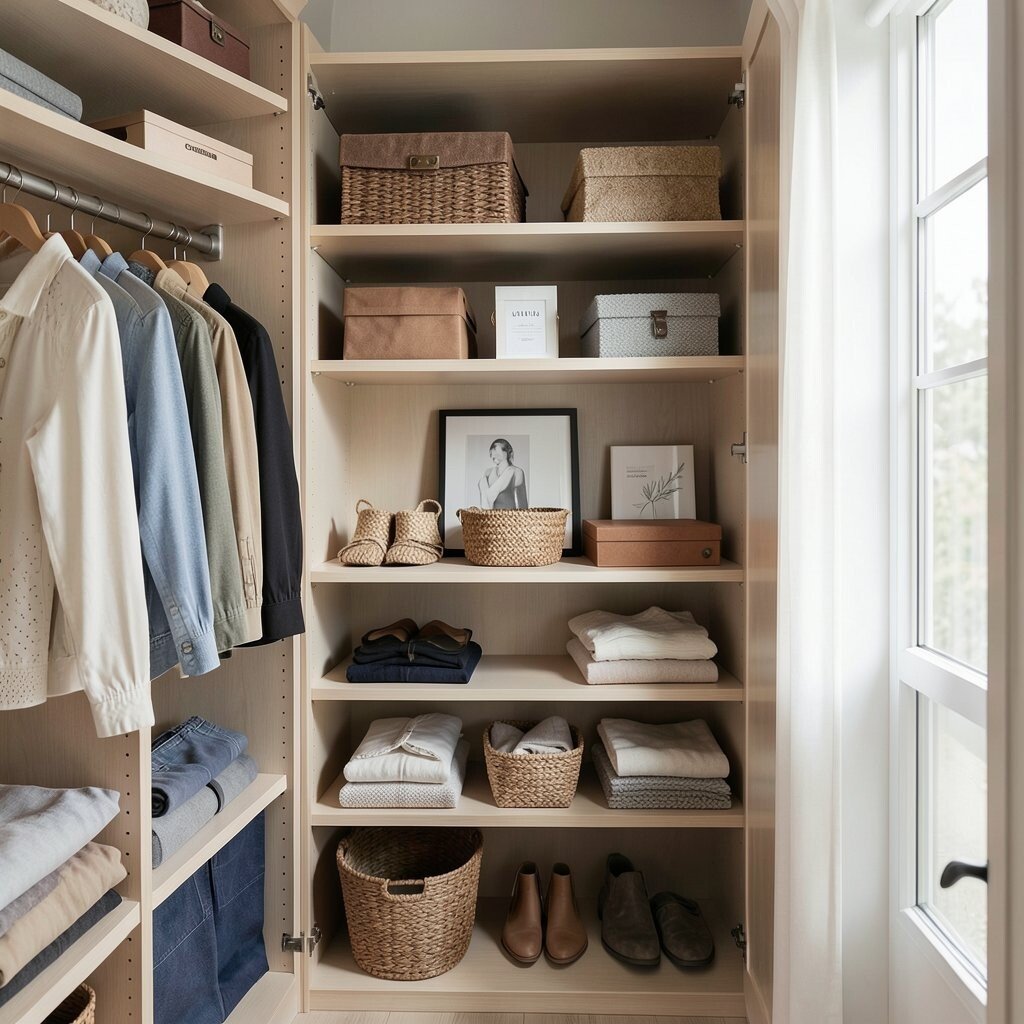
Create a “currently in” shelf so you store only what you use right now at eye level. Imagine one neat shelf that feels ready for daily life, while the rest stays calmly packed away.
When seasons change, swap bins from higher shelves down to the currently in spot. This makes closet organization easier to maintain because you’re not reorganizing everything at once.
For personalization, choose a shelf style that matches your mood, like baskets for soft items or clear bins for quick sorting. Cost considerations can stay friendly by doing one swap cycle at a time instead of buying a full system immediately.