The right stair can make a tight home feel calmer and more generous. Small-space stairs can be both practical and stylish without stealing your whole floor plan.
You just need a smart plan, a clear idea of how people move, and a few design choices that match your daily life.
1. Compact Spiral Staircase With a Light Core

A slim spiral staircase can wrap upward in a way that feels like it takes almost no room. The metal or wood center post keeps the structure tidy, and you still get a strong visual line.
Pick a finish that matches your wall color so the stair blends into the space. If you want more openness, choose open risers so light can pass through. Measure your clearance carefully so moving bags, groceries, and laundry doesn’t feel cramped.
2. Floating Steps With Hidden Brackets

Floating steps look like they’re hovering, which is great when square footage is precious. In a hallway or narrow living room corner, the clean underside lines can make the area feel brighter and less heavy.
Go with a light wood tone or matte paint to keep the steps calm and modern. Use sturdy hidden brackets and follow local safety rules for tread depth. Add a slim handrail that matches your door hardware so the whole stair feels like part of one design story.
To personalize, line up a small gallery of frames on the wall beneath the upper landing. If you’re cost-conscious, keep the run shorter and reuse wall studs for fastening. Many homeowners also choose a simple stair stringer that hides less material while still feeling secure.
3. L-Shaped Corner Stair With Storage Under the Run
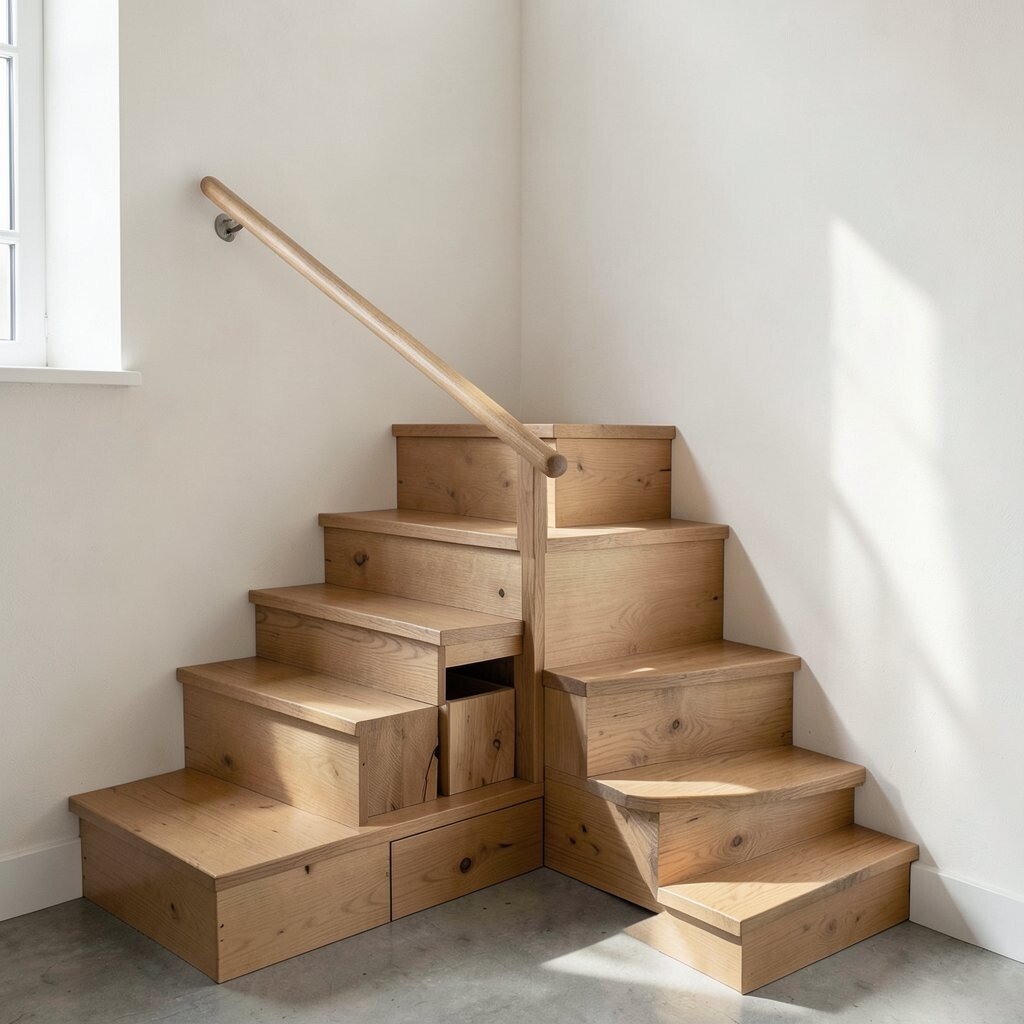
An L-shaped stair can fit into a corner and gives you a natural stop where people can pause. You’ll often gain a landing that works like a small shelf area for books, baskets, or plants.
Design the space under the lower portion as drawers or pull-out bins to reduce clutter. It’s especially helpful in apartments where every inch needs a job. Choose easy-grab handles and keep the bins sized for shoes, cleaning supplies, or seasonal items.
If you want the look to feel softer, use rounded edges on treads and warm-toned wood. Cost depends on whether you build custom storage, so you can also buy pre-made drawer units to lower labor. Use a consistent stain and hardware color to make it feel intentional, not patched together.
4. Narrow Straight Stair With a Clutter-Free Wall
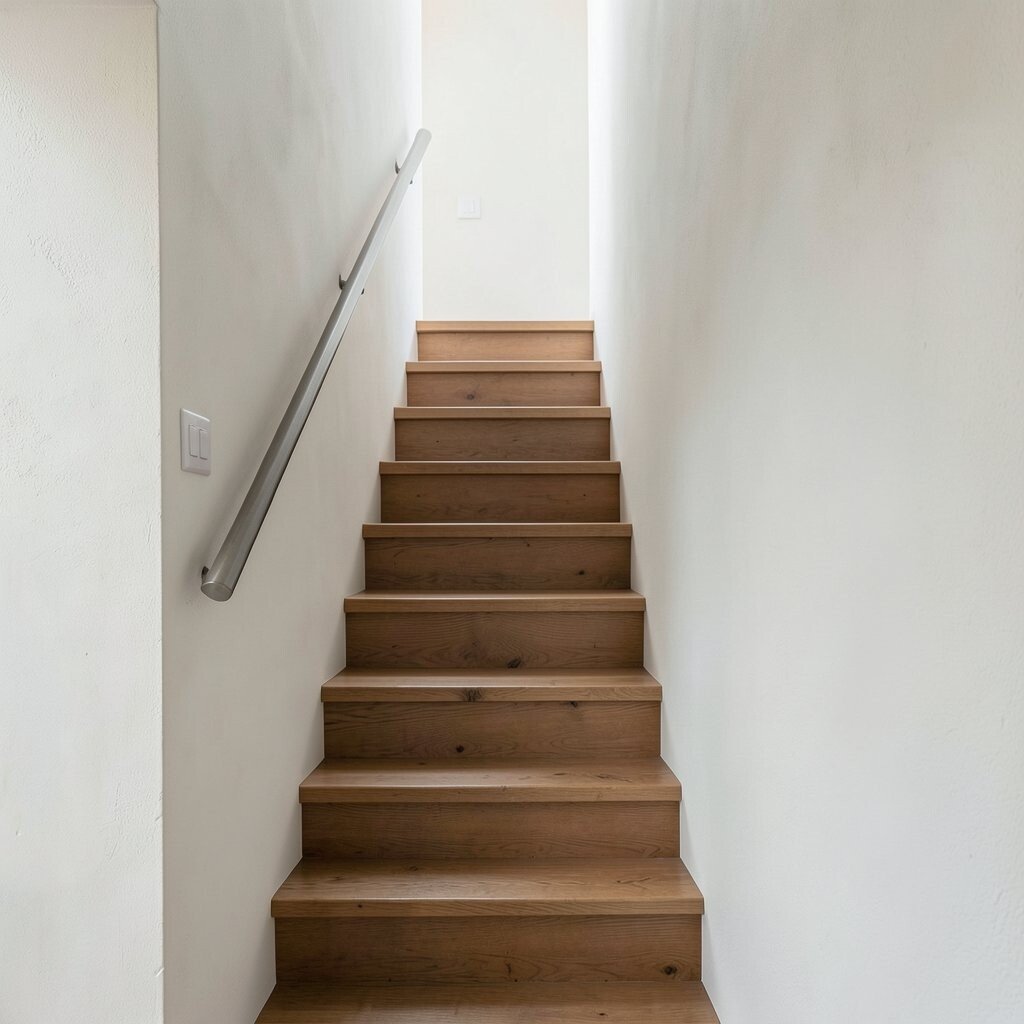
A straight stair is one of the simplest shapes, and it can be surprisingly friendly in tight plans. When the stair runs along a plain wall, the space feels organized, and you don’t have extra turns to plan for.
Keep the surrounding wall clean by using a simple paint color and avoiding busy wallpaper near the treads. Install a handrail that’s comfortable at everyday height, not just for reach tests. For practical upgrades, add a non-slip nosing on each step so the stair stays usable in winter boots or rainy days.
5. Stairs Built Into a Console-Like Platform
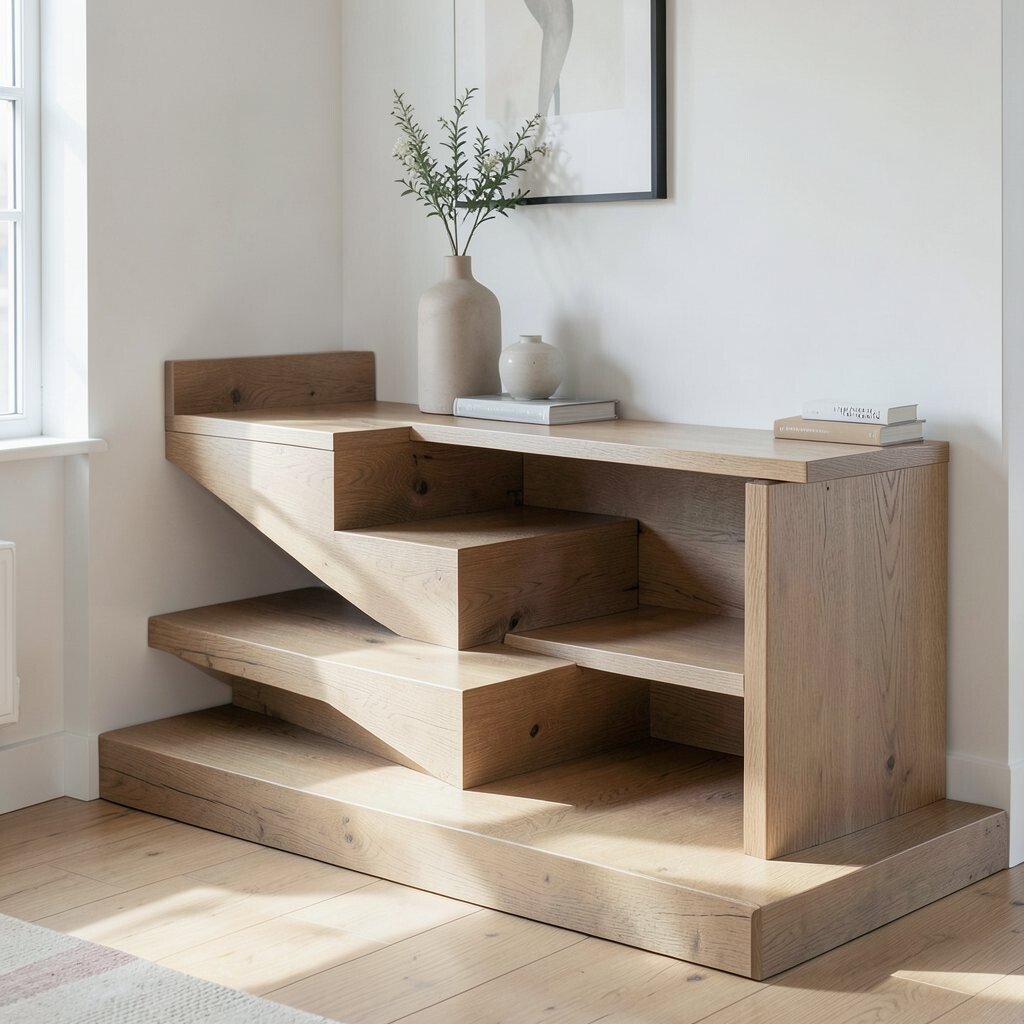
You can treat the stairs like furniture by building them into a slim platform that also acts as a console. This works well when you want a staircase to double as a visual divider between living and sleeping areas.
Use open shelving at the sides to store small items like books and framed photos without making the space feel crowded. A darker stain can create contrast against light floors and make each tread stand out. Keep shelf gaps consistent so your layout looks neat, even when daily life adds clutter.
For cost control, consider partial storage only on the sides, not under every step. Personalize by choosing a unique tile or laminate for the nosing edge. You’ll get a custom feel while still staying within a reasonable budget for materials and labor.
6. Small Stair With Built-In Bench Landing

A bench at the landing turns stair time into something you can use, not just climb. In narrow urban homes, it can become the perfect spot for putting on shoes, resting, or dropping a bag for a moment.
Choose a bench height that matches your everyday routines and add a comfortable, removable cushion if you like flexibility. Keep the underside of the bench as a storage pocket for spare hats, cables, or seasonal gloves. This creates a smoother flow because you don’t have to walk back and forth to reach everyday items.
Use vertical slats or simple paneling to keep the bench from feeling bulky. If you’re working with a limited budget, upholster only the top and leave the rest of the structure clean and simple. Many current urban design trends favor multi-use pieces like this because they reduce the need for extra furniture.
7. Reclaimed Wood Treads With Modern Metal Stringers

Reclaimed wood treads can add personality while still serving as a sturdy staircase. The mix of worn texture and clean metal can look artsy, but it also stays practical because wood gives warmth underfoot.
Use a durable sealant so the treads handle daily wear and easy cleaning. Pair the metal stringers with a matte finish to keep the overall look modern. For personalization, arrange the tread grain direction so it feels intentional across the run.
Cost varies based on how much reclaimed material you find, but you can often save money by sourcing locally. This style is popular right now because it adds character without turning the space into a museum. If you’re worried about maintenance, choose thicker treads that resist dents and keep replacement easier later.
8. Staircase With a Vertical Garden on the Adjacent Wall
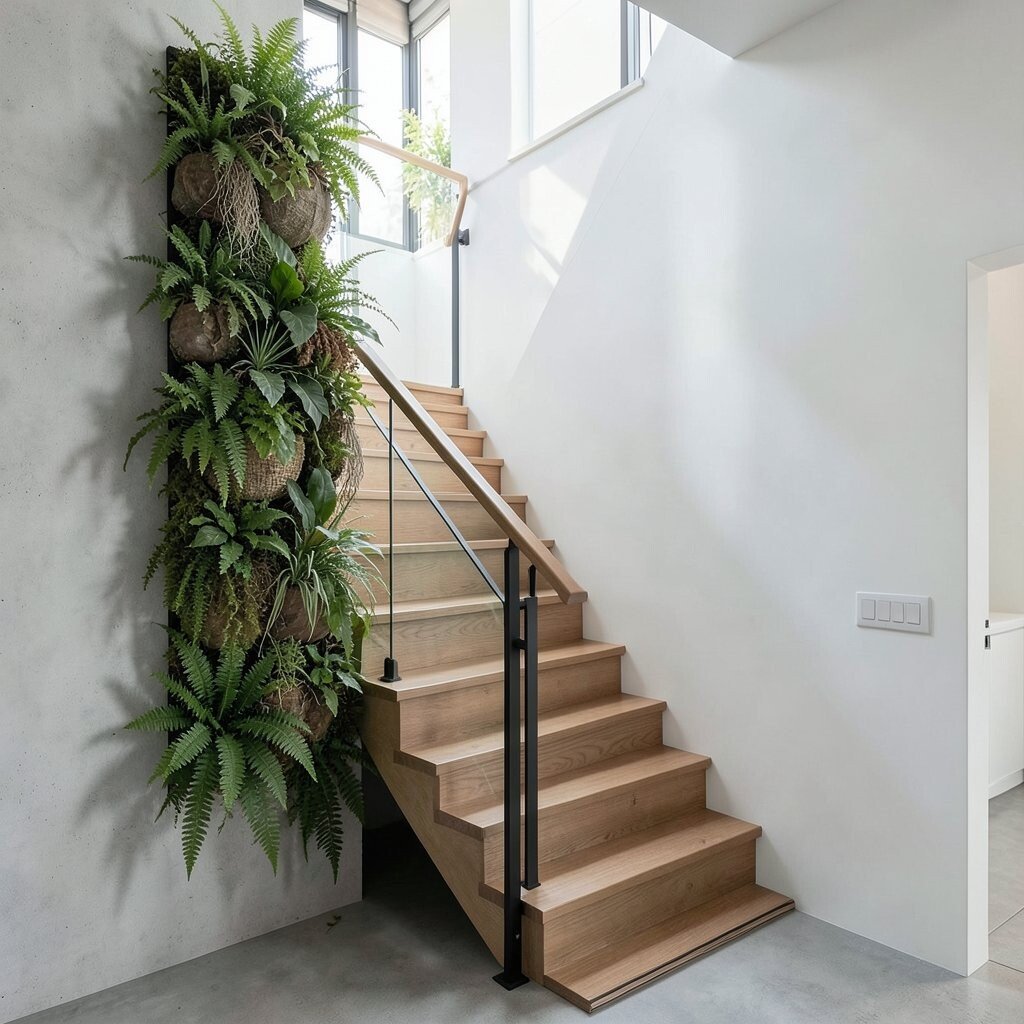
A stair near a wall can support a living backdrop, like a vertical garden panel beside the steps. The greenery softens sharp lines and makes a small stair nook feel calmer and more inviting.
Choose planters designed for indoor use and make sure water drainage won’t damage the wall. You’ll benefit from improved mood and a fresher feeling in rooms that otherwise feel tight. Keep plant sizes small and pick low-maintenance varieties so daily care doesn’t become stressful.
For personalization, repeat a color from your decor, like sage green or deep teal, in a matching planter tray. This can be done with modular systems that fit different wall widths. Costs depend on whether you choose real plants or stylish faux options, and both can still look trendy.
9. Entry-Focused Stair With a Built-In Shoe Drawer Row
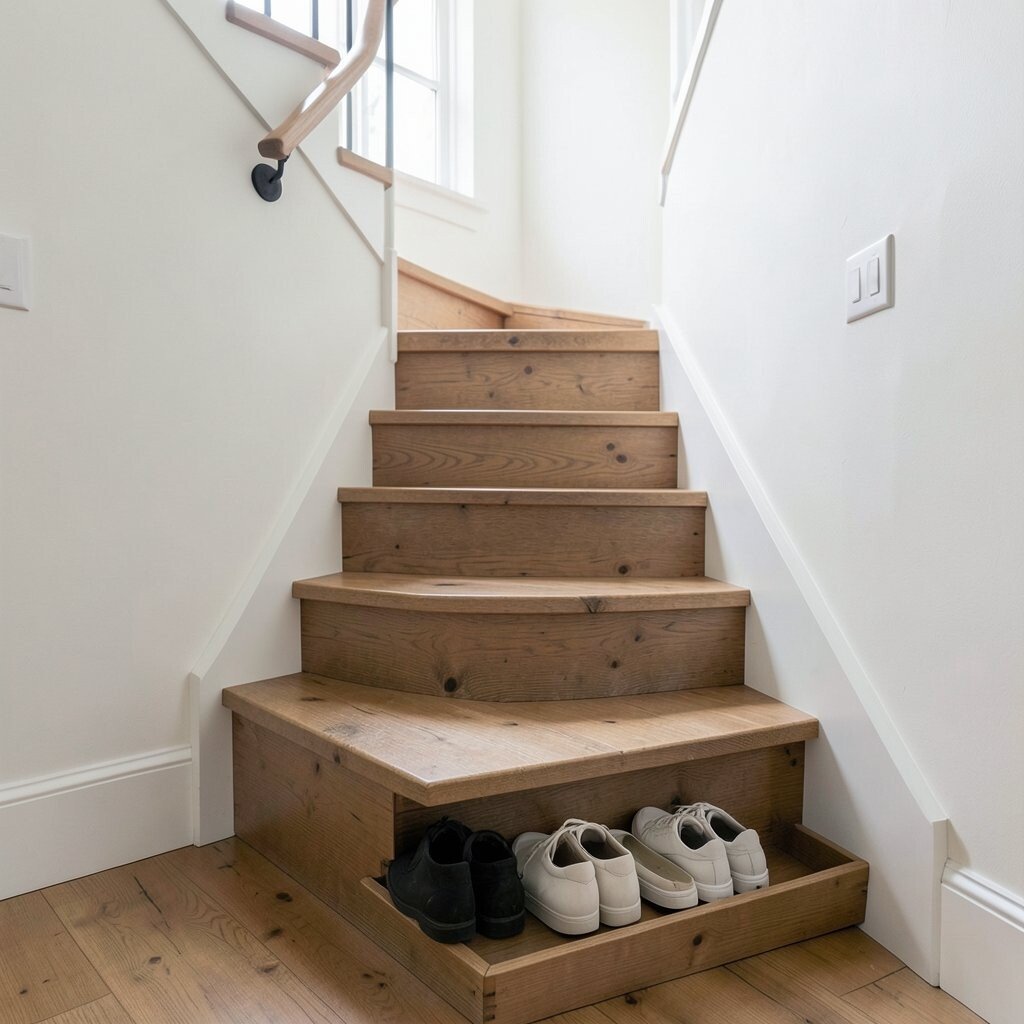
An entry stair setup can help your home feel tidy the moment you walk in. When the steps include a drawer row for shoes, you reduce the pile that usually forms at the bottom.
Design the drawers with smooth slides so they’re easy for family members to open. Use a light interior lining that makes it easier to spot what you need quickly. This is a practical way to keep the landing clear for bags, umbrellas, and daily items.
For uniqueness, choose drawer fronts with gentle curves or a subtle pattern in the wood grain. You can also add small labels using removable stickers so you can adjust as seasons change. If you want to stay budget-friendly, start with under-stair storage only and build it once your daily habits are clear.
10. Minimalist Carpet-Lined Treads for Quiet Footsteps
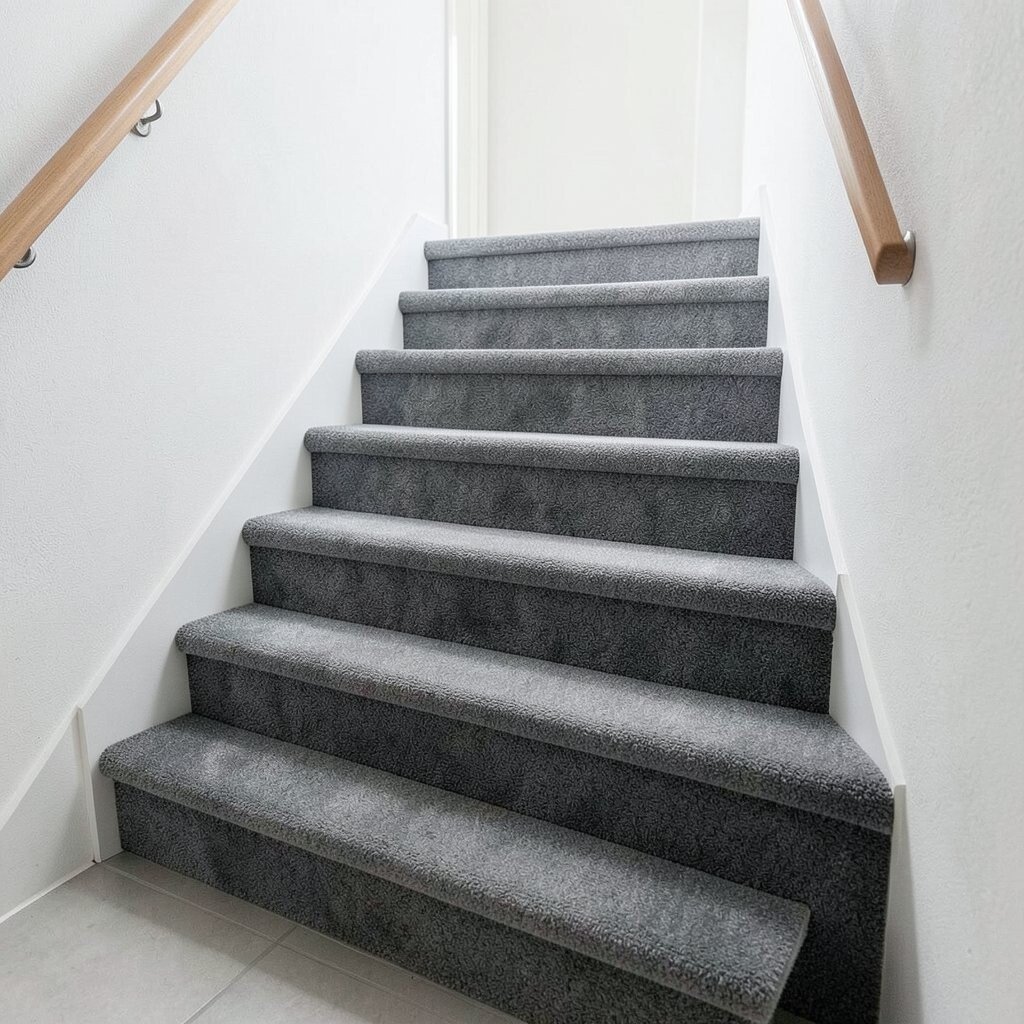
Carpet-lined treads can make an urban home feel quieter, especially in apartments with thin walls. The soft surface reduces noise when you go up and down, and it makes cold floors feel less harsh.
Pick a stain-resistant carpet and make sure each tread edge is secured so nothing shifts. This approach gives comfort benefits without changing the stair’s size. Use a simple neutral color to keep the staircase blending into the room, or go with a muted pattern to add warmth.
Personalize by choosing a carpet shade that matches your rug or curtains. Costs can be reasonable because you can replace only the tread coverings instead of rebuilding the stair structure. This style fits current trends that favor cozy textures and “softening” elements in city homes.
11. Stair With Side Lighting for a Bright, Narrow Feel
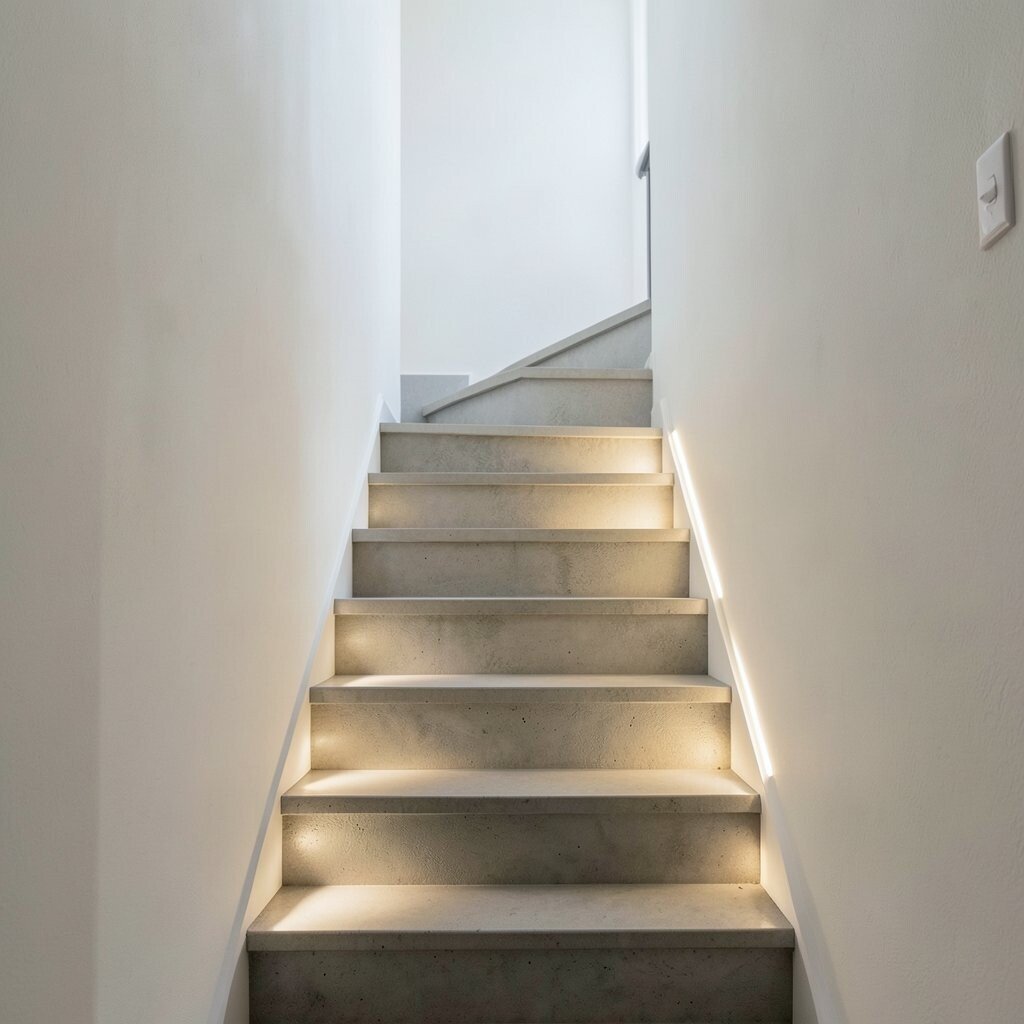
Small steps can look bigger when you add lighting that runs alongside them. Side lighting helps define each tread, guides movement at night, and makes narrow corridors feel less dark.
Use warm LED strips under a trim channel so the light looks smooth, not harsh. You’ll benefit from safer steps because you can see edges clearly. Keep wires hidden and use a simple smart plug or dimmer if you like controlling mood.
For personalization, match the trim finish to your handrail, like brushed nickel or matte black. Cost depends on whether you hire an electrician, but pre-assembled LED kits can reduce the price. This is a popular urban upgrade because it looks sleek and also improves everyday safety.
12. Bookcase Stair Wall With Open Treads at the Center
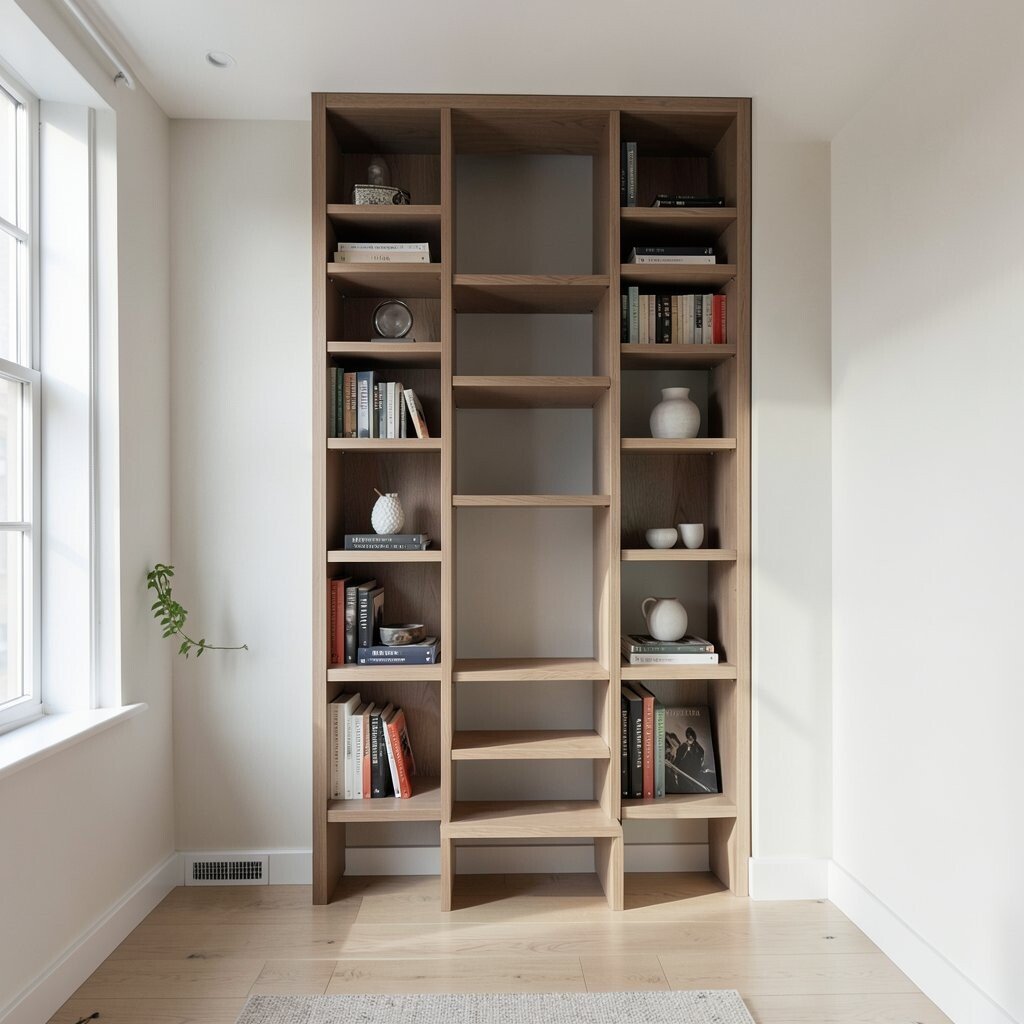
A stair wall that doubles as a bookcase can make a tiny home feel purpose-built. Open treads placed between shelves keep the look light, and the surrounding storage makes the stair feel less like a separate object.
Choose shelf spacing based on the sizes of your real items, not generic dimensions. You’ll get a clear visual order that helps you keep the space organized over time. Add a small reading light near the landing if the stair area becomes your favorite pause spot.
To personalize, include a mix of book sizes and add small decor pieces that repeat across levels. Costs can be higher if you build fully custom, but modular shelving systems can work well for many layouts. Current trends also favor “built-ins” because they reduce the need for extra furniture.
13. Corner Stair With Curved Handrail and Rounded Treads
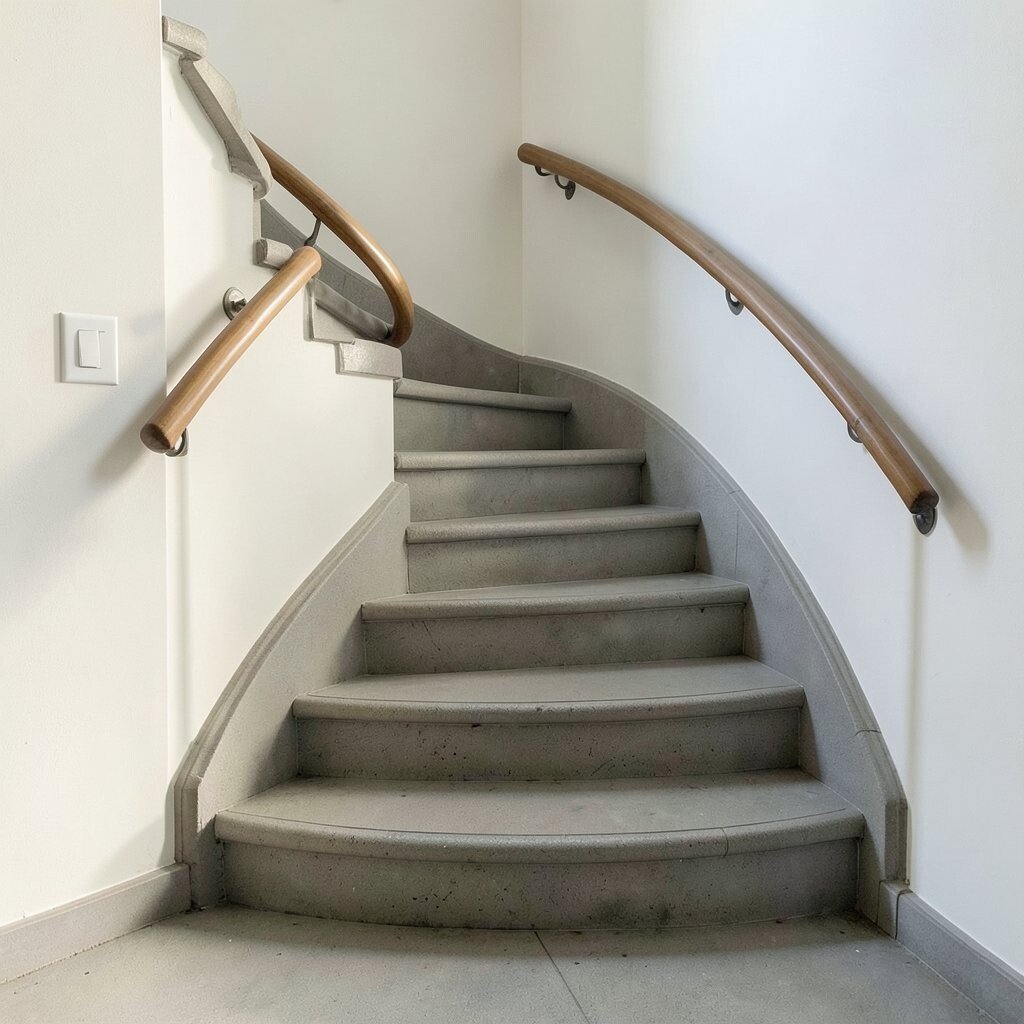
Rounded treads and a gently curved handrail can soften the look of a corner stair. When lines feel more fluid, the space can feel welcoming instead of sharp or cramped.
Choose a rail shape that fits comfortably, and test the grip length for daily use. Rounded edges can also reduce wear and snagging on clothing or bags. Practical placement matters too, so keep the rail continuous where people naturally hold on.
For uniqueness, select a rail material like wood over metal, or paint metal to match your cabinetry. Cost considerations are often moderate because shaping rails might be the main custom part. If your budget is tight, focus on rounded rails and standard treads, then upgrade finishes later as you live with it.
14. Compact Stair With Under-Step Pull-Out Laundry Basket Storage
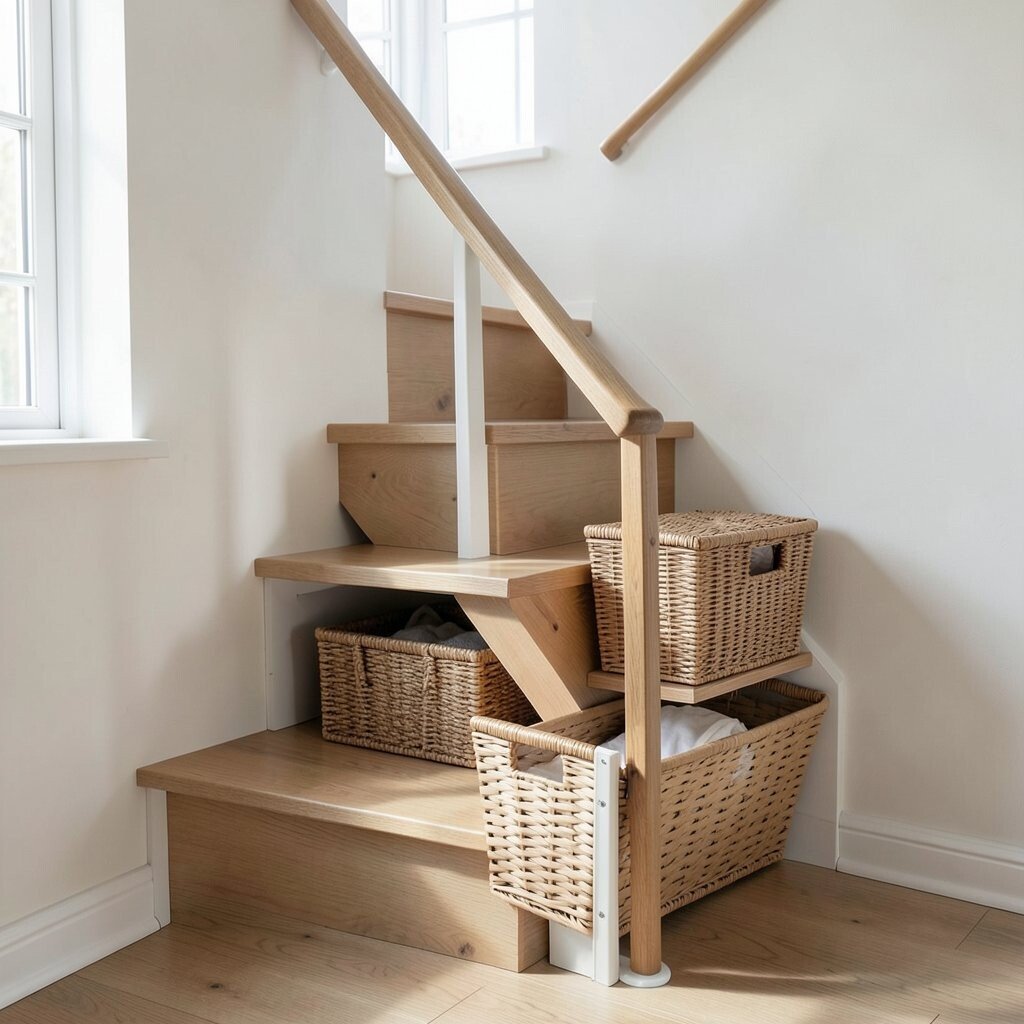
If your home does laundry in tight spaces, the stairs can help without adding clutter. Under-step pull-out laundry baskets store clothes out of sight and keep the route to your washing area simpler.
Choose baskets that slide smoothly and won’t bind when they’re full. This setup is practical because it reduces trips and makes it easier to move laundry through your routine. Label bins by color or cycle if it helps your household stay consistent.
Personalize by using baskets with matching colors to your bathroom or utility area decor. Costs can stay reasonable if you design the storage to fit standard basket sizes. This idea fits modern living because storage systems are becoming more modular and user-friendly in small urban homes.
15. Folded-Panel Stair Access With Space-Saving Landing
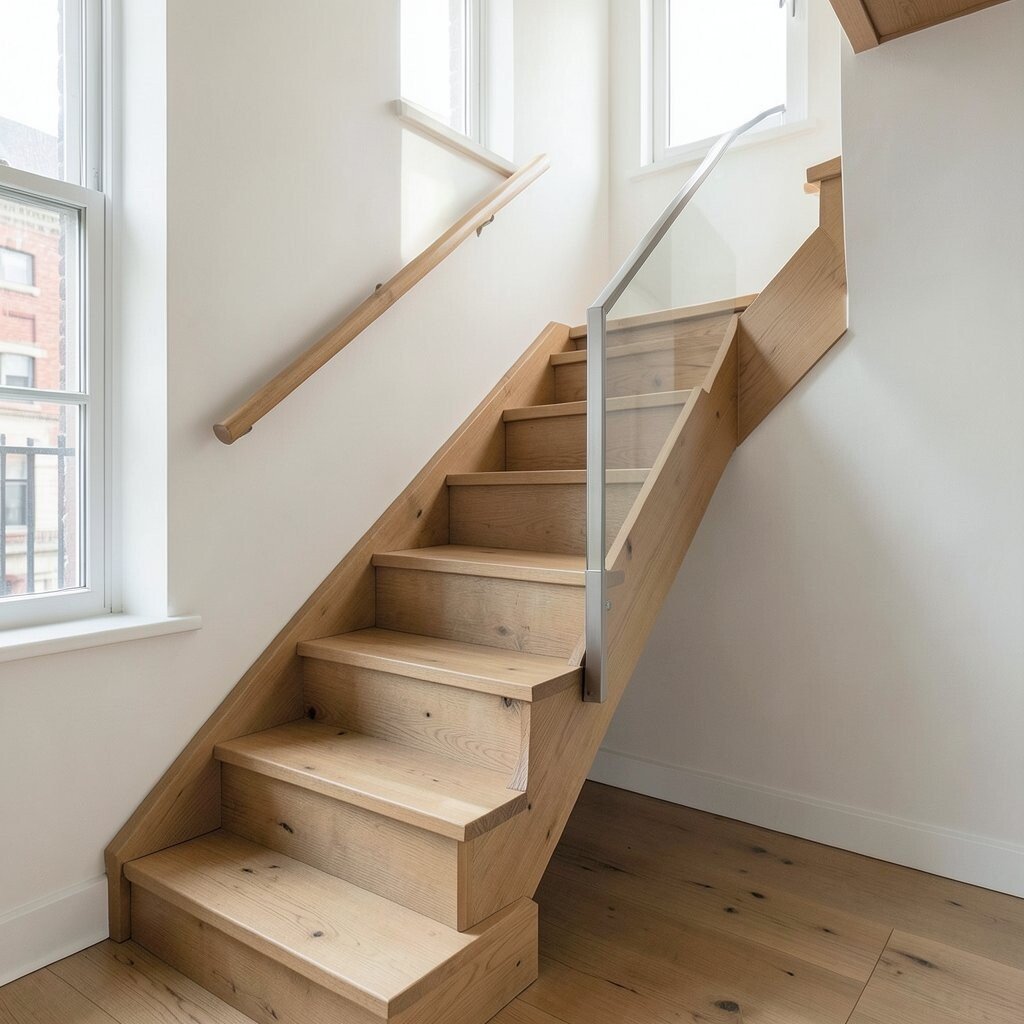
In some small layouts, you can treat a stair run like a controlled entry route to a loft or raised platform. A compact access design with a small landing can help you keep the rest of the floor clear for daily activities.
Plan the movement path so doors, chairs, and kitchen traffic don’t bump into stair edges. This makes the staircase feel integrated instead of annoying. Use a sturdy landing surface with grip texture so stepping down or up feels secure even when hands are full.
For personalization, add a slim wall-mounted organizer near the landing for keys, mail, or a small charging station. Cost depends on materials and whether the access system needs specialized hardware, so shop carefully for quality components. This aligns with current urban trends that prioritize flexible floor plans and multi-use space.
16. Glass-Railing Stair With Slim Posts for Visual Openness
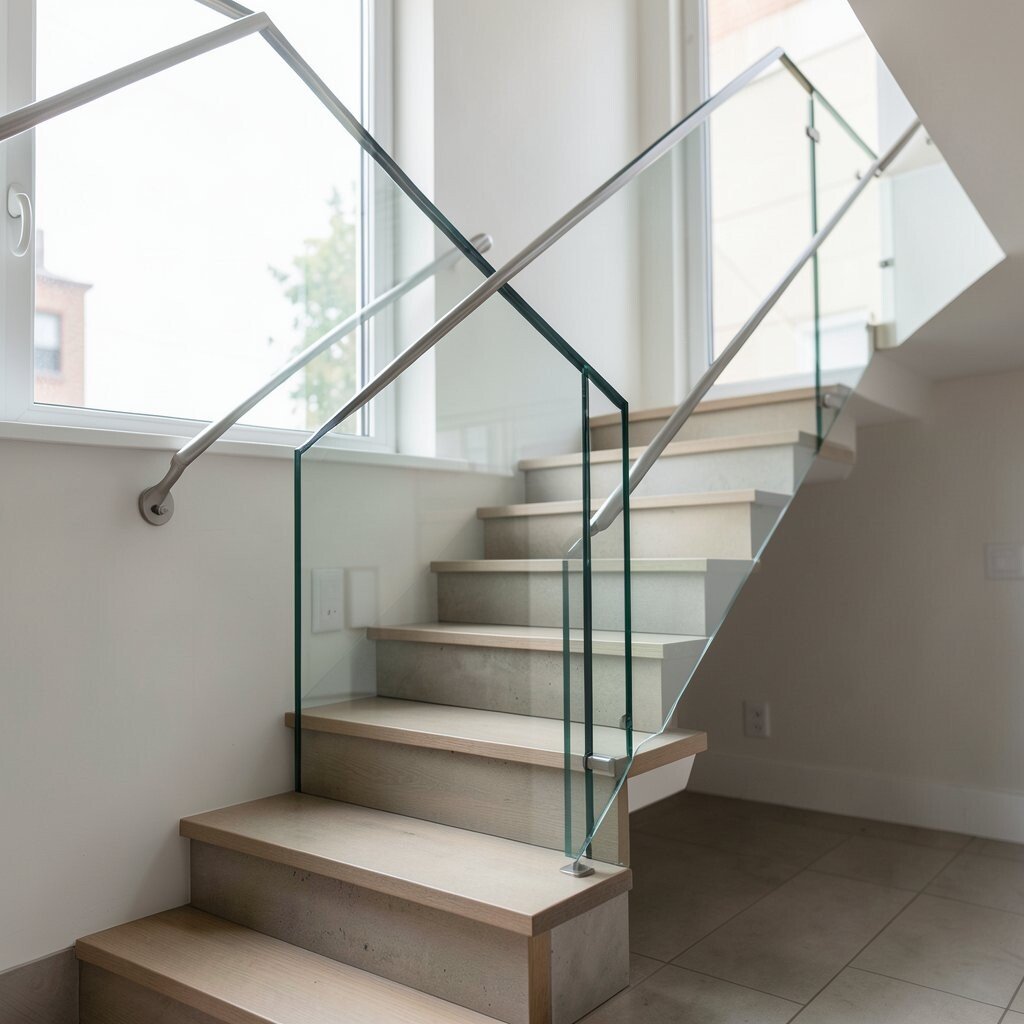
A glass railing can keep sightlines open, which is a big win for urban spaces that rely on natural light. Even when the stair takes physical room, the visual feel can stay airy and clean.
Use tempered glass and slim posts so the structure looks minimal. You’ll benefit from a modern look that pairs well with neutral walls, light floors, and minimalist furniture. For practical tips, keep the glass easy to clean by choosing a protective coating if available.
Personalize with a tint choice or a frame finish that matches your faucet or cabinet hardware. Cost can be higher than wood-only designs, but it can pay off by reducing the need for extra visual design elements elsewhere. This is popular right now because it makes small homes feel more open without sacrificing safety.
17. Staircase With Reversible Tread Colors for Seasonal Style

Using removable tread covers lets you change the stair look as your style shifts through the year. In small urban homes, this can refresh the whole room without spending on a full rebuild.
Choose covers that attach securely and are easy to swap, like washable top layers or modular panels. You’ll benefit from keeping the stairs feeling “new” while also protecting the base material from everyday scuffs. It’s a simple way to keep maintenance manageable and avoid deep repairs from staining.
For personalization, rotate color themes that match seasonal decor, such as warm tones for winter and lighter shades for spring. Cost considerations are usually lower because the covers replace parts instead of redoing the structure. This idea also fits current trends that favor flexible interiors you can update often.