The floor is where style meets daily life. When it feels right underfoot, the whole room starts behaving better.
Think of these designs as buildable inspirations, not vague dreams. Pick the ones that match your routine, your taste, and your budget.
1. Marble Vein Statement Floors

Imagine stepping onto a soft, cool surface with delicate veins that look like natural handwriting. Light from a window catches the pattern and makes the room feel brighter without adding extra decor.
For practical results, choose sealed marble or high-quality porcelain that mimics marble veining. It gives you the upscale look while making cleaning easier for busy mornings. Pair it with simple baseboards and a calm wall color so the veining stays the main character.
2. Wide-Plank Oak With Modern Finish

Wide oak boards bring a grounded, tailored feel that still looks warm. The grain runs boldly from edge to edge, creating a sense of space even in smaller rooms.
A modern matte finish helps hide daily scuffs and reduces glare from overhead lights. For personalization, try a slightly smoked tone or a lighter stain to match airy furniture.
If you want the look without the long installation time, consider engineered oak. It is usually more stable across temperature changes, which can help keep floors looking straight.
3. Herringbone Wood That Frames the Room
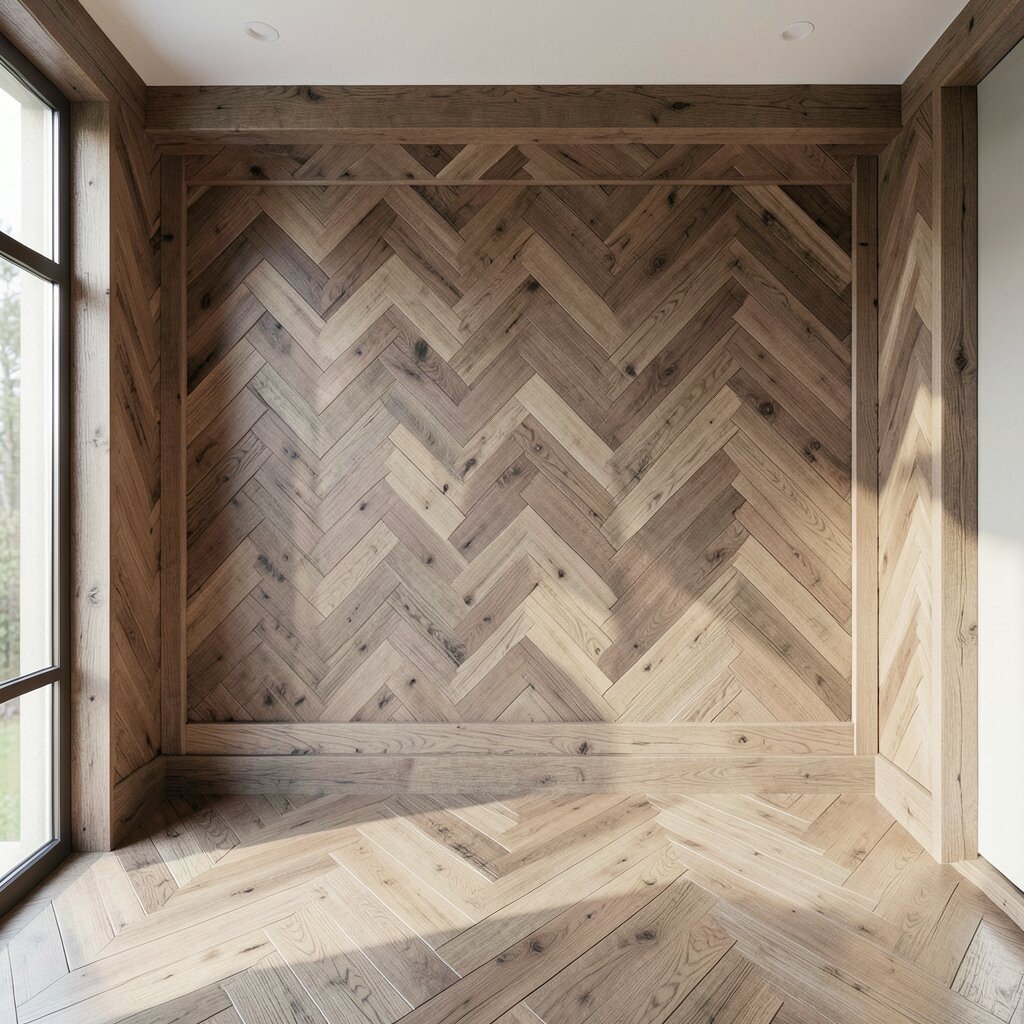
Herringbone creates a moving pattern that feels both classic and clever. From the hallway to the living room, it guides your eye and makes walls look more balanced.
To keep it sophisticated, use consistent plank widths and crisp transitions at doorways. A clear finish adds shine only where it counts, instead of everywhere at once.
Personalize the vibe by choosing warm walnut tones for a cozy feel or pale ash for a cleaner look. If your home gets heavy traffic, select a wear-layered engineered plank for better day-to-day durability.
4. Terrazzo-Style Composite for Color Depth
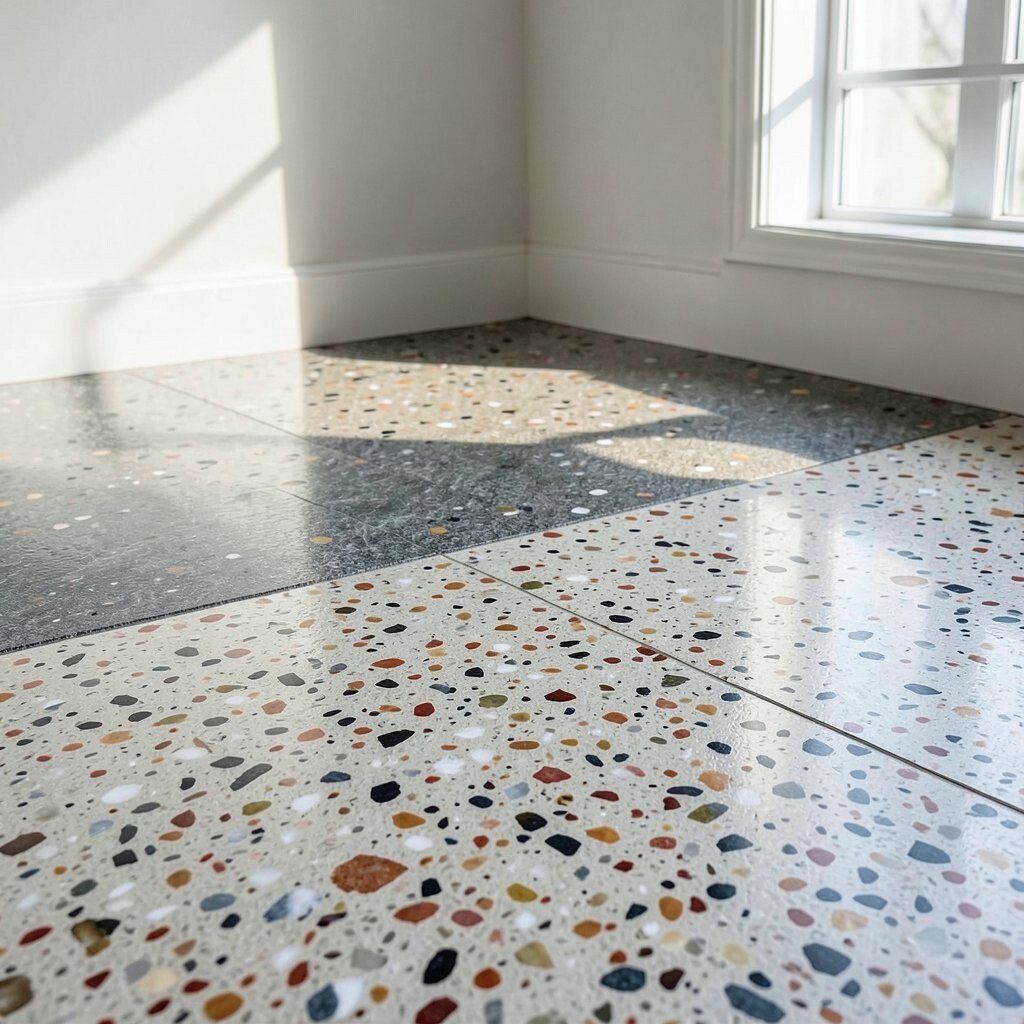
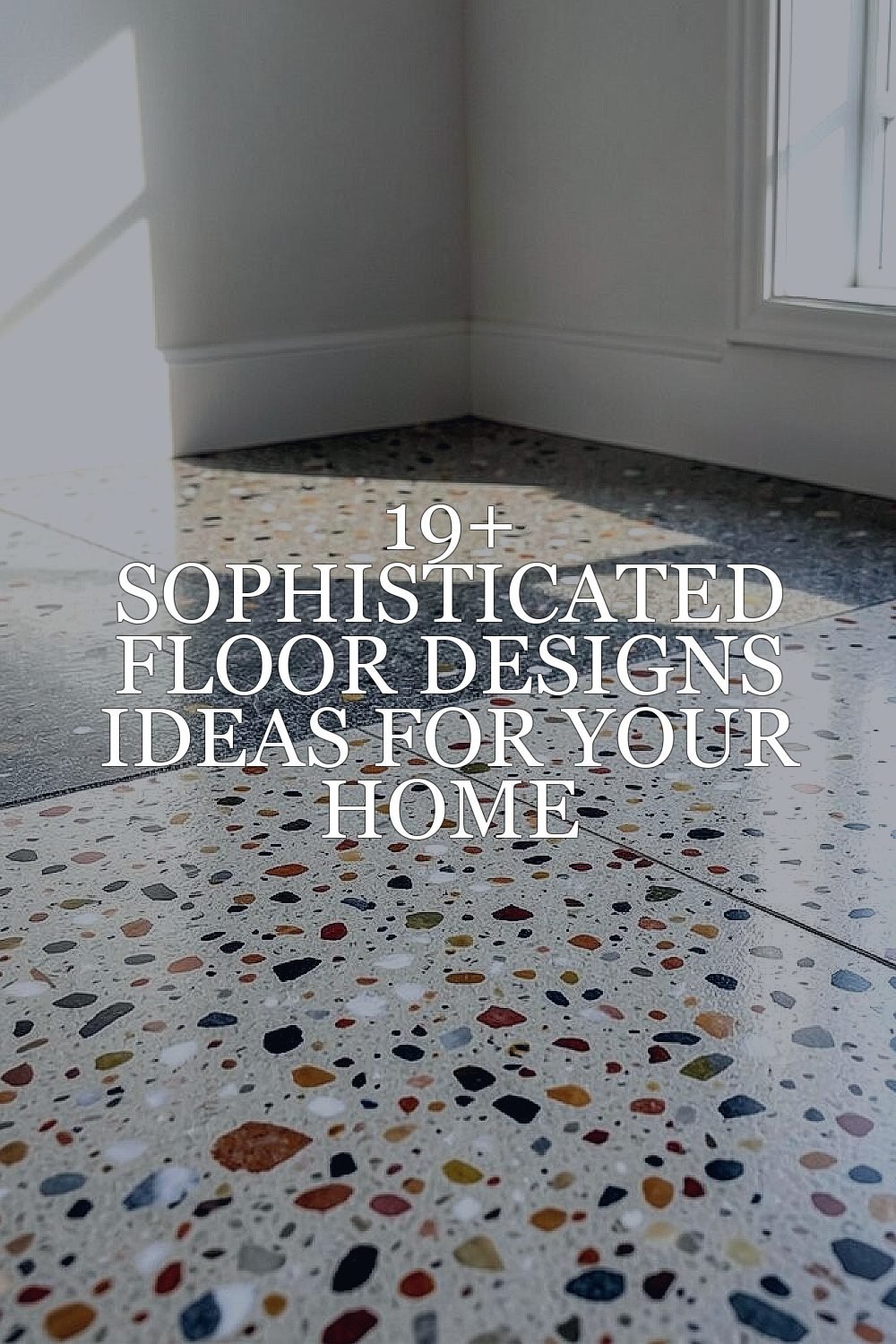
Terrazzo has that playful, speckled elegance that still feels grown-up. You can see depth in every speck, which makes even a plain room look styled.
Opt for composite terrazzo or porcelain terrazzo to cut maintenance stress. Sweep regularly and use gentle cleaners so the surface keeps its smooth, polished feel. Match the color specks to your accents, like cabinet hardware or sofa legs, for an intentional look.
5. Geometric Cement Tiles With Soft Edges
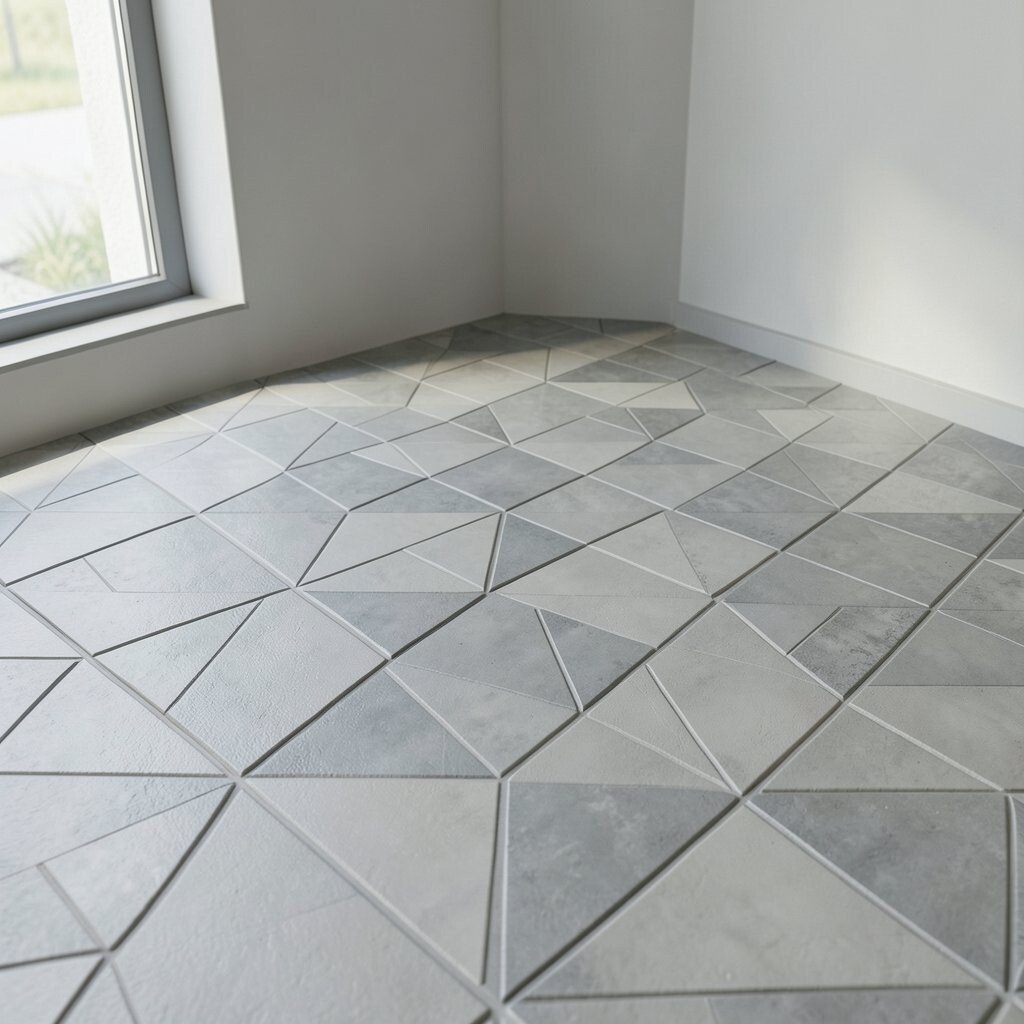
Geometric cement tiles add a crisp rhythm that looks custom-made. The pattern feels artistic, yet the floor stays practical and anchored.
Choose smaller tile layouts if you want the design to feel refined rather than busy. Grout color matters too, since a warmer grout can make the pattern look softer and more welcoming.
For personalization, pick one dominant shape and repeat it through a runner into the hallway. That tiny planning step makes the whole home feel designed, not accidental.
6. Sandstone Effect Planks for Coastal Calm

Sandstone-inspired flooring brings a quiet, spa-like mood to your rooms. The surface looks textured, like sun-warmed stone, which adds comfort to every step.
Use it in bright spaces with neutral walls so the color variations feel intentional. Pair with linen curtains and brushed metal fixtures to complete the relaxed style.
7. Hand-Scraped Hardwood for Vintage Character

Hand-scraped wood carries natural texture that feels rich and lived-in. It hides minor scratches and makes the floor look more authentic over time.
Look for boards with a uniform yet varied scraping pattern so the finish feels designed, not random. If you have pets or kids, this type of texture usually forgives daily life better than super smooth finishes.
Personalize your look by coordinating the stain with your cabinetry, especially around warm wood tones. A satin topcoat can keep the shine gentle while protecting the surface from wear.
8. Blackened Slate-Look Porcelain for Contrast
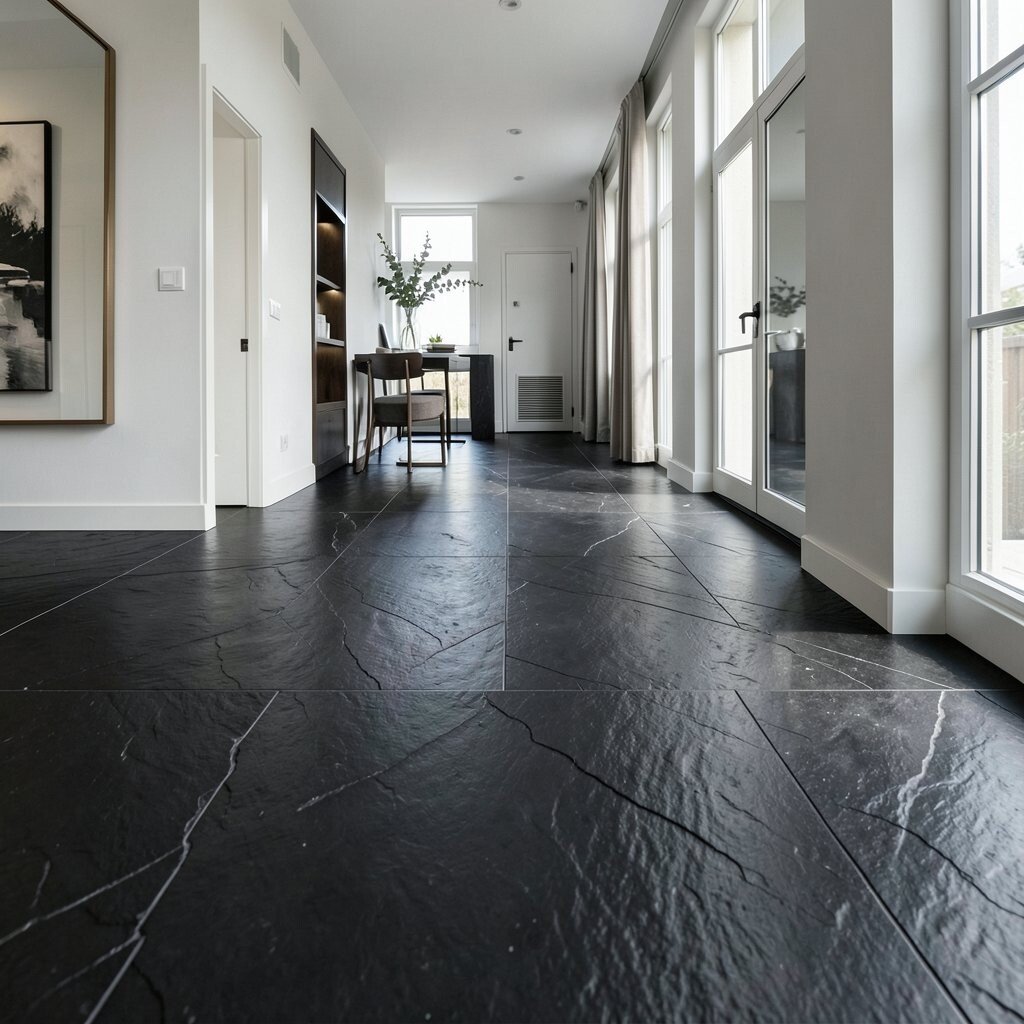
A slate-look floor in dark tones can make a room feel dramatic and modern. The subtle speckling and tonal shifts keep it from looking flat.
Balance the bold floor with light walls and softer textiles so the room stays inviting. If you want practicality, porcelain tends to resist stains and handles spills with less worry than natural stone.
9. Greek Key Inlays in a Neutral Base
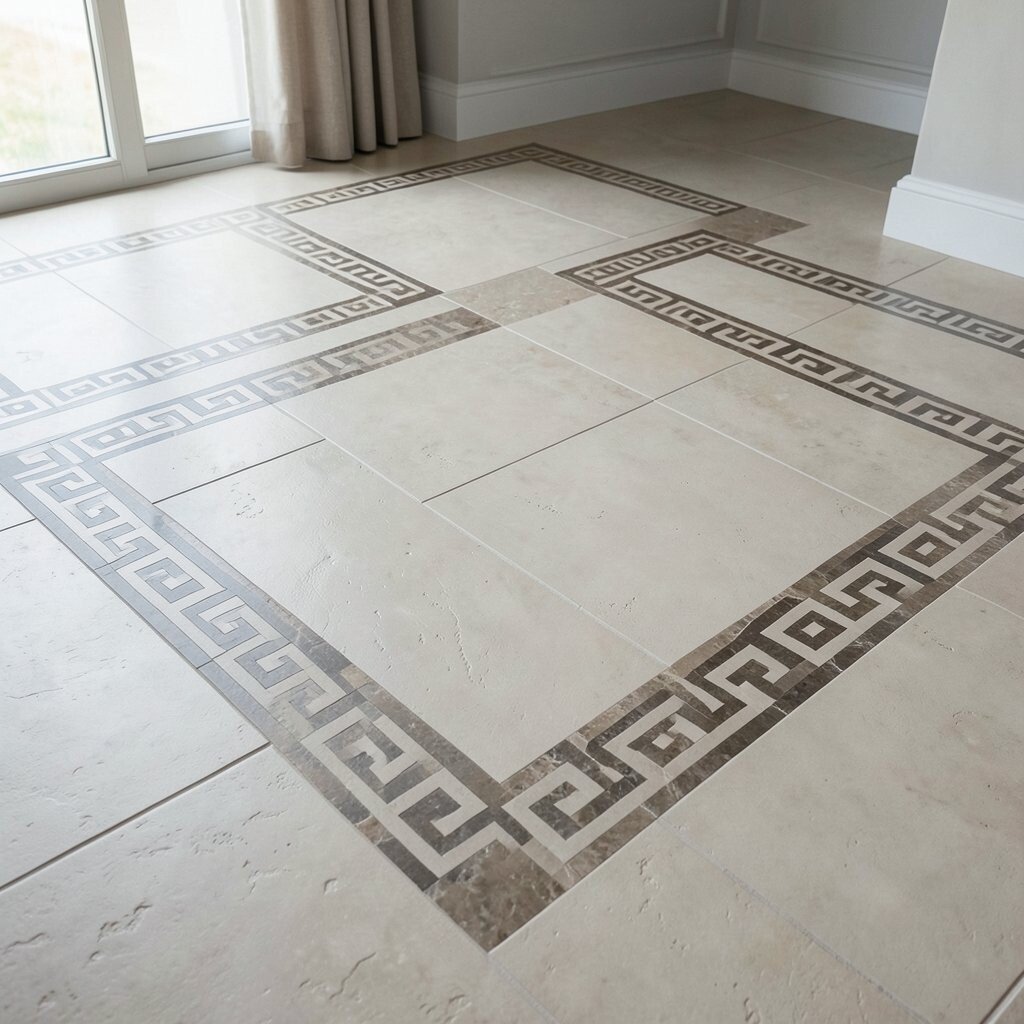
Greek key details give a dignified, architectural feel without loud colors. The repeating shapes look crisp and tidy, especially along edges or center pathways.
Keep the main field in a neutral material like light stone or warm wood. Then add the inlay as a focused feature so it feels intentional and not overwhelming.
For personalization, choose a darker accent border that matches your trim or light fixtures. This small connection can make the entire space feel carefully coordinated.
When thinking about cost, natural stone inlays can raise the price, but engineered or tile inlay designs can deliver a similar effect. You can also limit the inlay to a hallway or entry zone to control budget.
10. Vinyl Plank With High-End Texture

Modern luxury vinyl can look surprisingly real, especially with embossing that mimics wood grain. It adds comfort and warmth underfoot, which makes everyday life feel easier.
Choose thicker planks with good backing for a quieter room. For practical setup, install with a clean subfloor and use transition strips at thresholds to prevent gaps.
Personalize by matching plank width to your room size, since wider boards often feel more upscale in open spaces. It is also easier on the wallet than many hardwood options while still delivering a sophisticated look.
11. Cork Flooring for Warmth and Sound Control
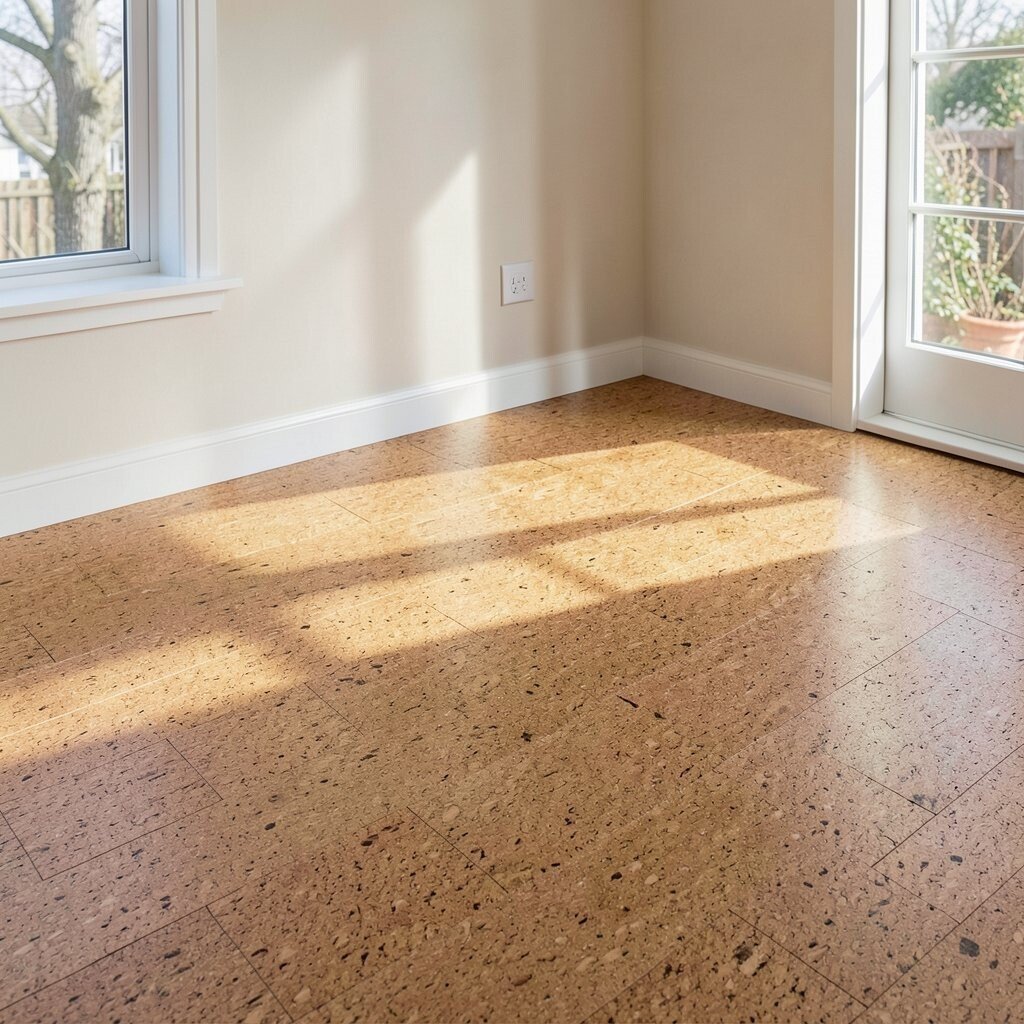
Cork feels soft and steady under your feet, like a gentle cushion. It also helps reduce sound, which is great for homes with kids, stairs, or shared spaces.
The natural color palette can feel earthy and refined, especially when sealed with a matte finish. Try a medium honey tone for warmth or a muted gray-brown for a more modern mood.
If you want extra sophistication, use a herringbone or plank layout in cork rather than a basic grid. With proper sealing and routine cleaning, cork can stay looking smooth for years.
12. Brick Floors With Limewashed Character
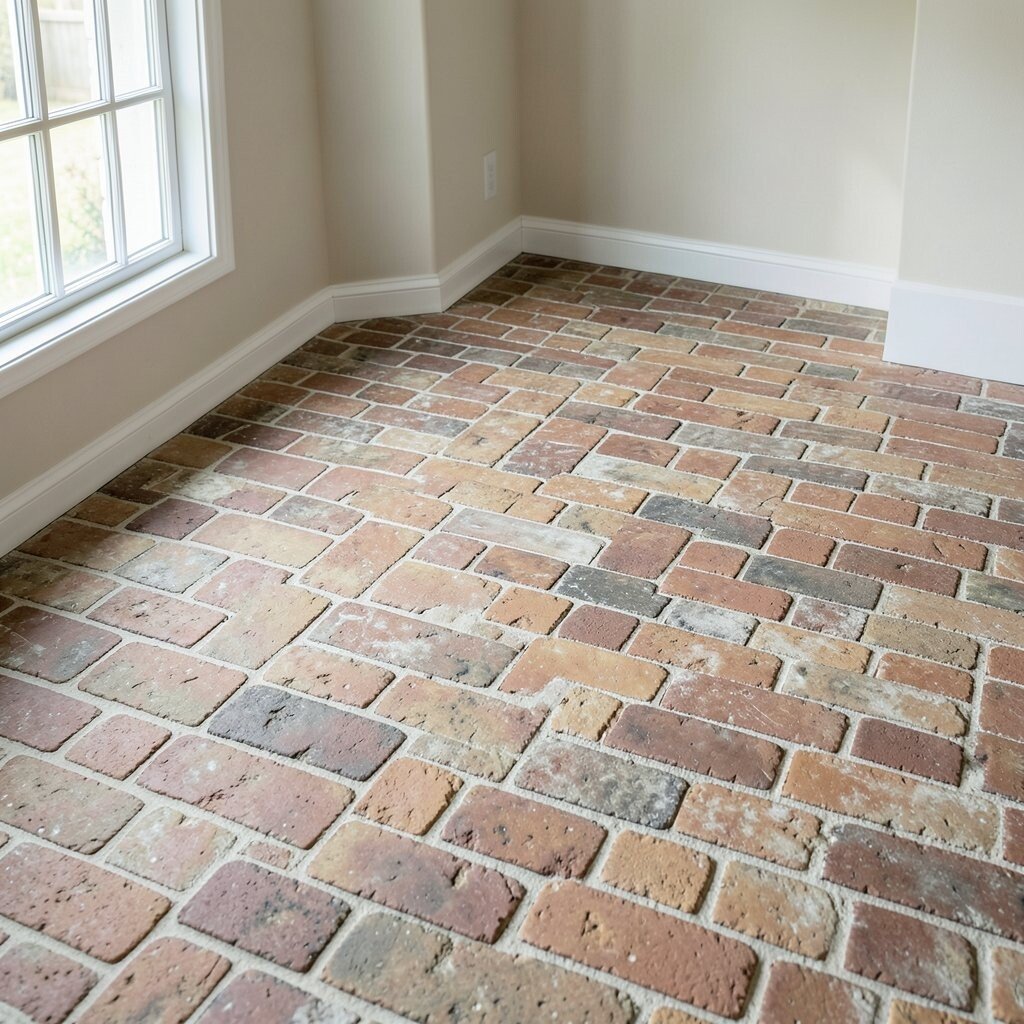
Brick underfoot brings history into your home in a bold, welcoming way. A limewashed finish adds a soft, airy look that feels elegant instead of heavy.
Seal the surface well so it resists moisture and stains, especially in entryways or kitchens. For personalization, consider a lighter wash to keep the floor bright and pair it with modern furniture lines.
13. Bold Border Tiles Around a Simple Center

A plain field with a decorative border can look both polished and intentional. The contrast frames the room like a picture, which makes it feel finished.
Pick a border style that echoes your home’s theme, like small geometric bands or subtle floral motifs. Keep the center in a large-format tile so cleaning stays easy and grout lines remain minimal.
For practical planning, measure doorways and account for where the border lands so it lines up nicely. This kind of layout thinking often matters as much as the tile choice itself.
14. Polished Concrete for Sleek Industrial Lines

Polished concrete delivers a smooth, sleek look with a bold modern edge. It reflects light cleanly, which can make open-plan rooms feel even larger.
To keep it comfortable, consider area rugs in high-traffic spots and use a sealer that resists stains. If you love the industrial style, pair it with simple cabinetry and warm wood furniture to avoid a cold feeling.
For personalization, ask about a colored stain or a subtle aggregate finish. That small change can add depth while still keeping the floor elegant and low-fuss.
15. Narrow Parquet Squares for Classic Order
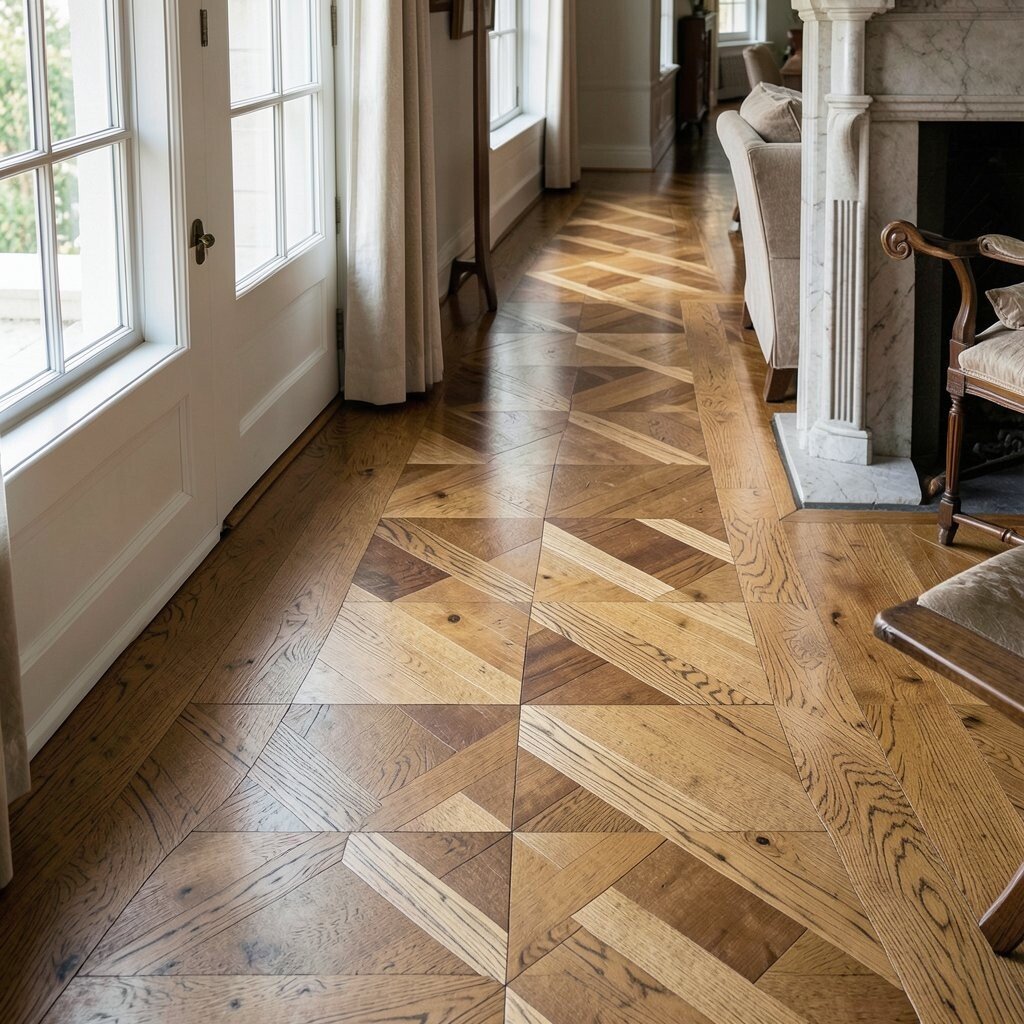
Parquet floors bring a neat, patterned order that feels timeless. Narrow squares add detail without needing flashy colors.
Choose a warm finish and keep the surrounding baseboards simple so the pattern stands out. If your room has darker furniture, a lighter parquet can brighten the space instantly.
For practicality, seal the floor well and use felt pads on furniture to reduce scratches. When you want personalization, coordinate the parquet layout with a similarly styled rug border so the floor and textiles work together.
16. Large-Format Porcelain for Seamless Calm
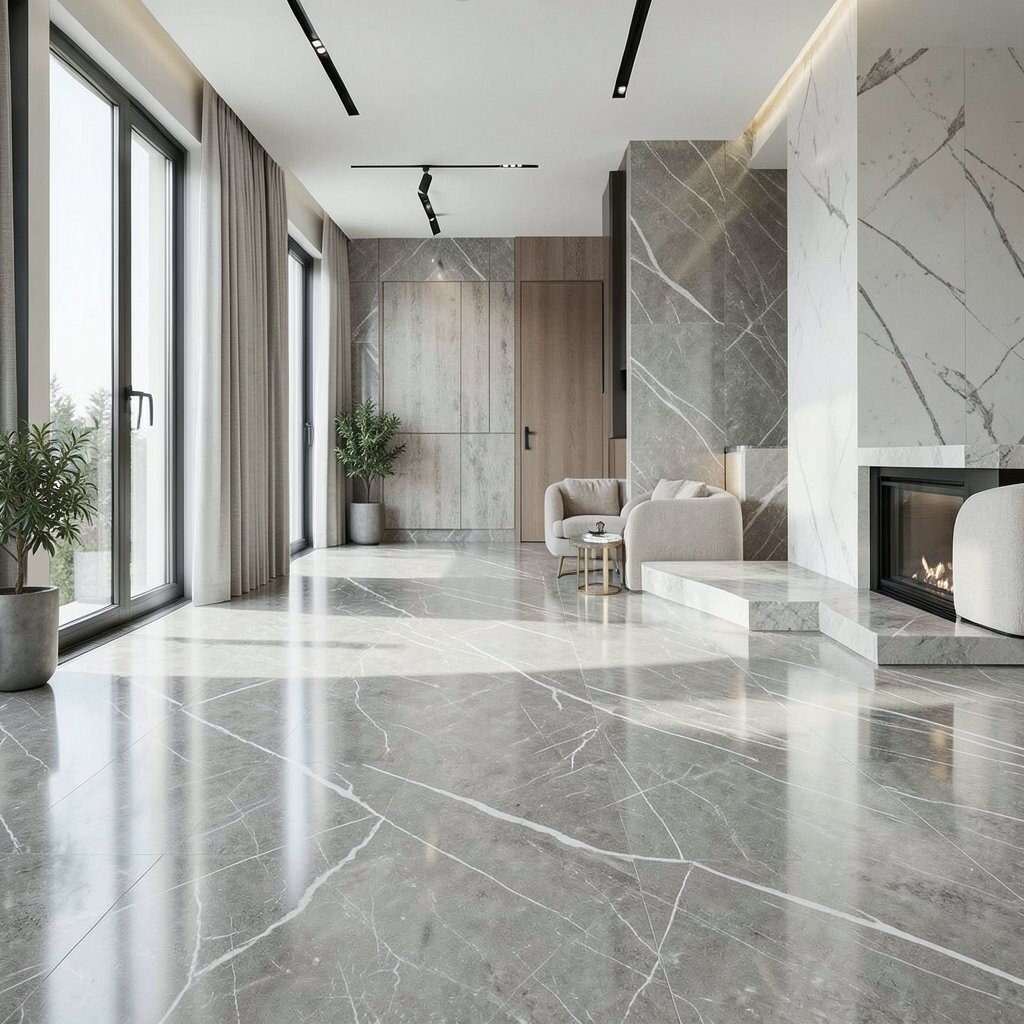
Large-format porcelain tiles create a smooth, quiet look with fewer visible seams. The wide surface area feels clean and modern, especially in contemporary homes.
Choose a finish that matches your lifestyle, like a satin look for less glare or a textured option for extra grip. For personalization, select a subtle stone or marble effect so the room feels luxurious without demanding constant attention.
17. Patterned Laminate With Designer-Like Layers
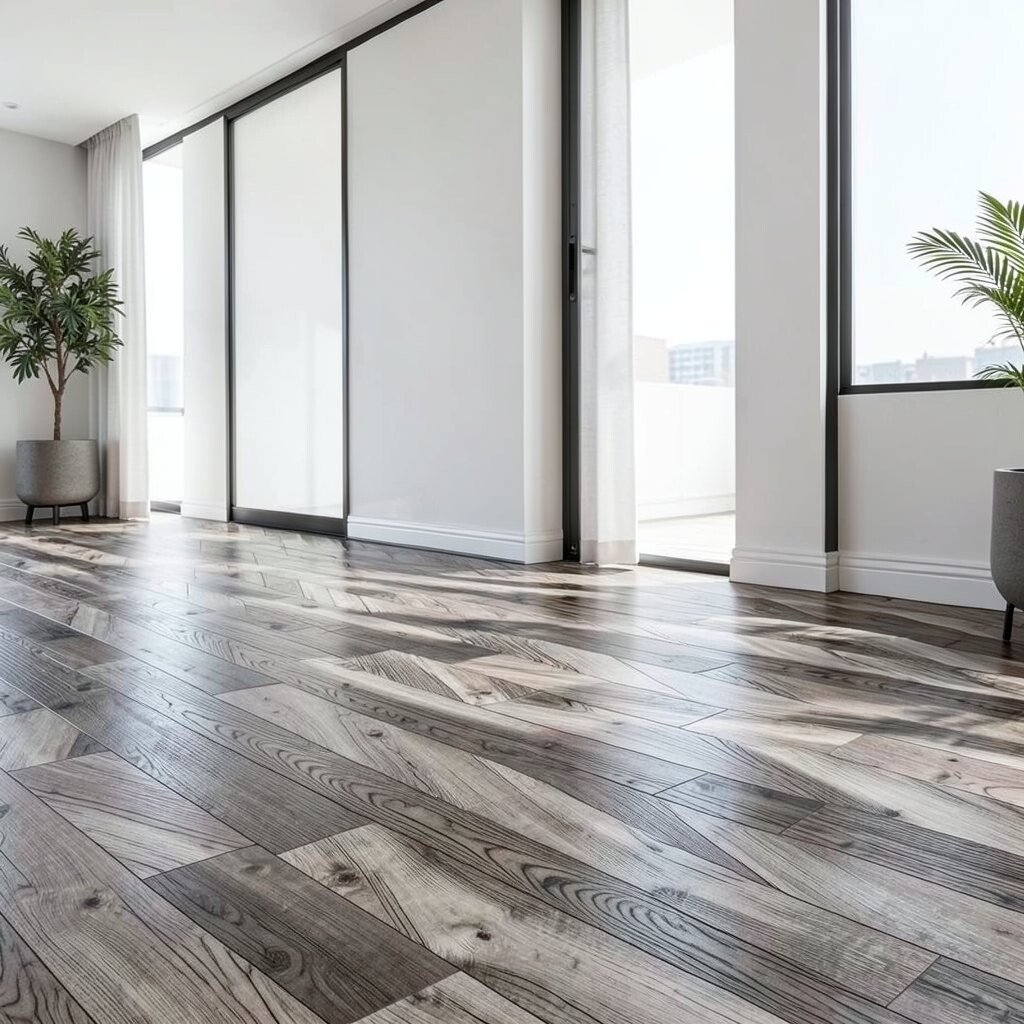
High-quality laminate can mimic real wood and stone while staying budget-friendly. When it includes realistic layers and grain variation, it looks far more sophisticated than basic laminate.
Select a product with a good wear rating for durability, especially in hallways and kitchens. Add an underlayment that helps with sound so your home feels calmer as you move through it.
For personalization, choose plank widths that match your room proportions, and coordinate transitions so edges feel crisp. Many options also offer easy replacement of boards, which helps when you want long-term flexibility.
18. Hand-Painted Floor Motifs for Artistic Personality

A hand-painted floor motif can turn a room into a gallery. It gives your home a personal signature that no showroom display can copy.
Keep the rest of the flooring simple, then use a medallion or corner design that echoes your decor. This approach keeps the artwork feeling intentional, not random.
For cost considerations, custom painting costs vary based on design size and protective coatings. A smaller motif at an entry or in a dining area can give you maximum impact with less expense.
To keep it looking sharp, use a durable topcoat and clean with gentle products. That way the colors stay fresh while the floor remains ready for everyday life.
19. Luxury Carpet Tiles With Structured Texture
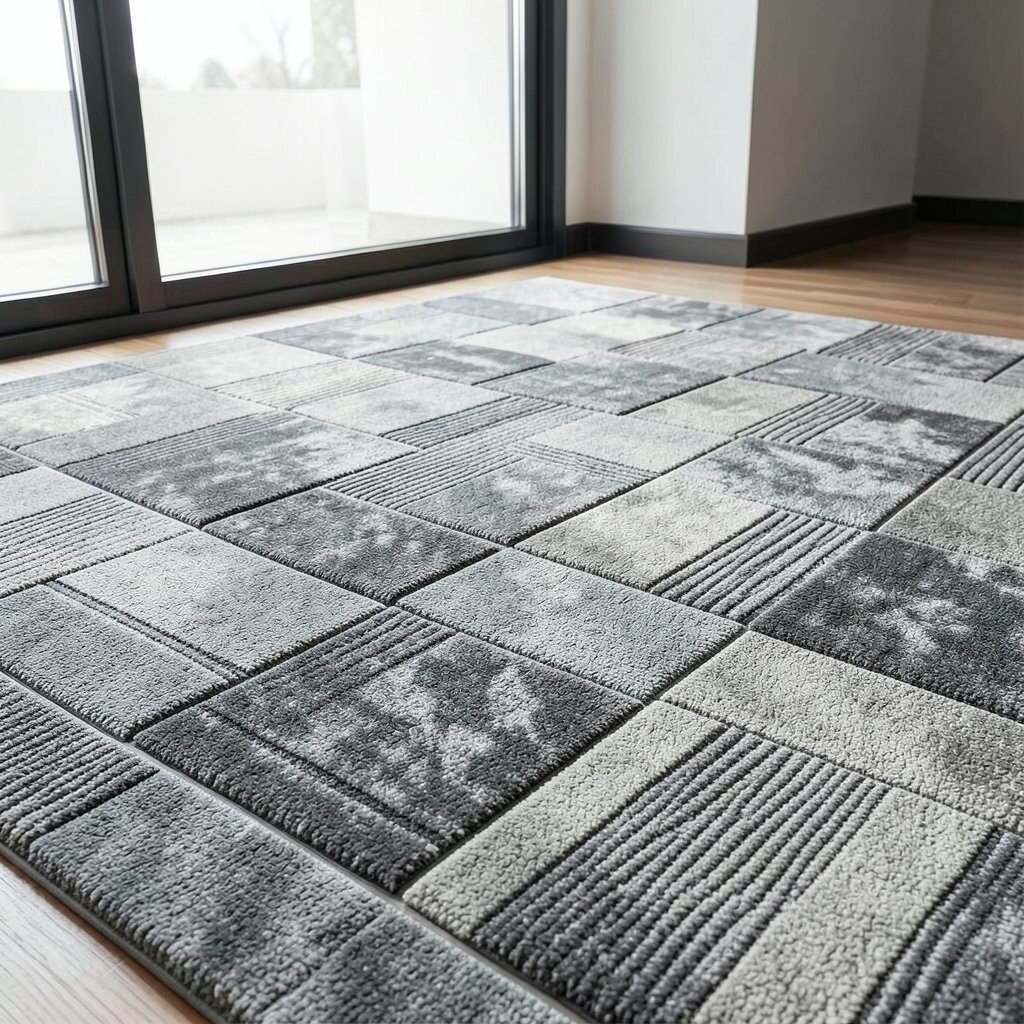
Carpet tiles can look tailored when you choose structured textures and tight patterning. They offer a comfortable surface without the bulkiness of traditional broadloom carpet.
Use them to create subtle zones, like a defined seating area, by mixing a slightly darker tile border. For personalization, align the direction of the pile so it reads as one cohesive surface across the room.
Practical tip for busy homes, replace only a damaged section instead of redoing the whole floor. That flexibility makes carpet tiles feel smart as well as stylish.
20. Custom Mosaic Runner in the Entry
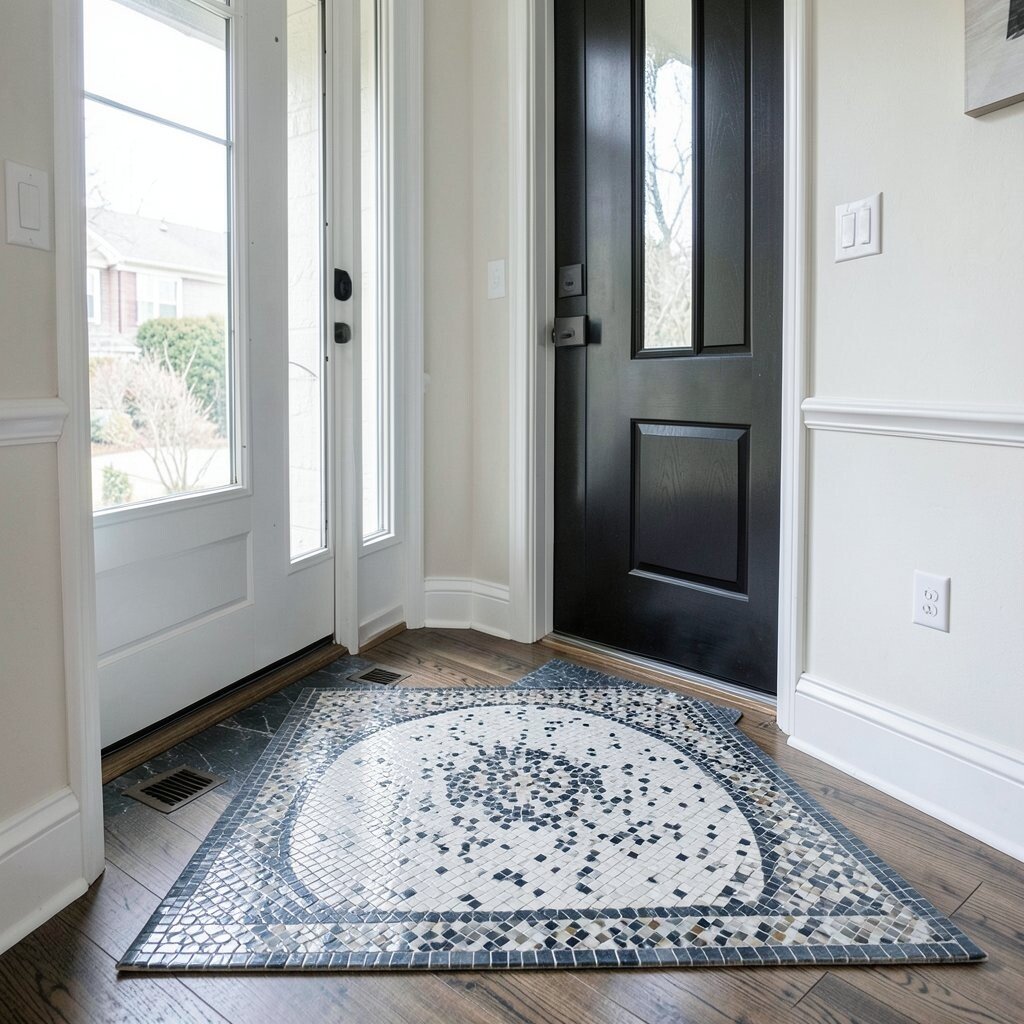
An entry runner is where first impressions happen, and a mosaic design makes it unforgettable. Even a small strip of artful tile can lift an entire home’s mood.
For a sophisticated look, keep the runner palette in two or three related tones and leave the surrounding floor simpler. That balance makes the design feel curated, not chaotic.
If you want personalization, choose a mosaic that echoes a pattern in your curtains, rugs, or cabinet handles. When thinking about cost, limit the mosaic to the runner and use standard tile elsewhere to stay within budget.
To keep it practical, use slip-resistant tile and ensure the runner edges are sealed well. That way it stays beautiful while still handling daily shoes and weather changes.