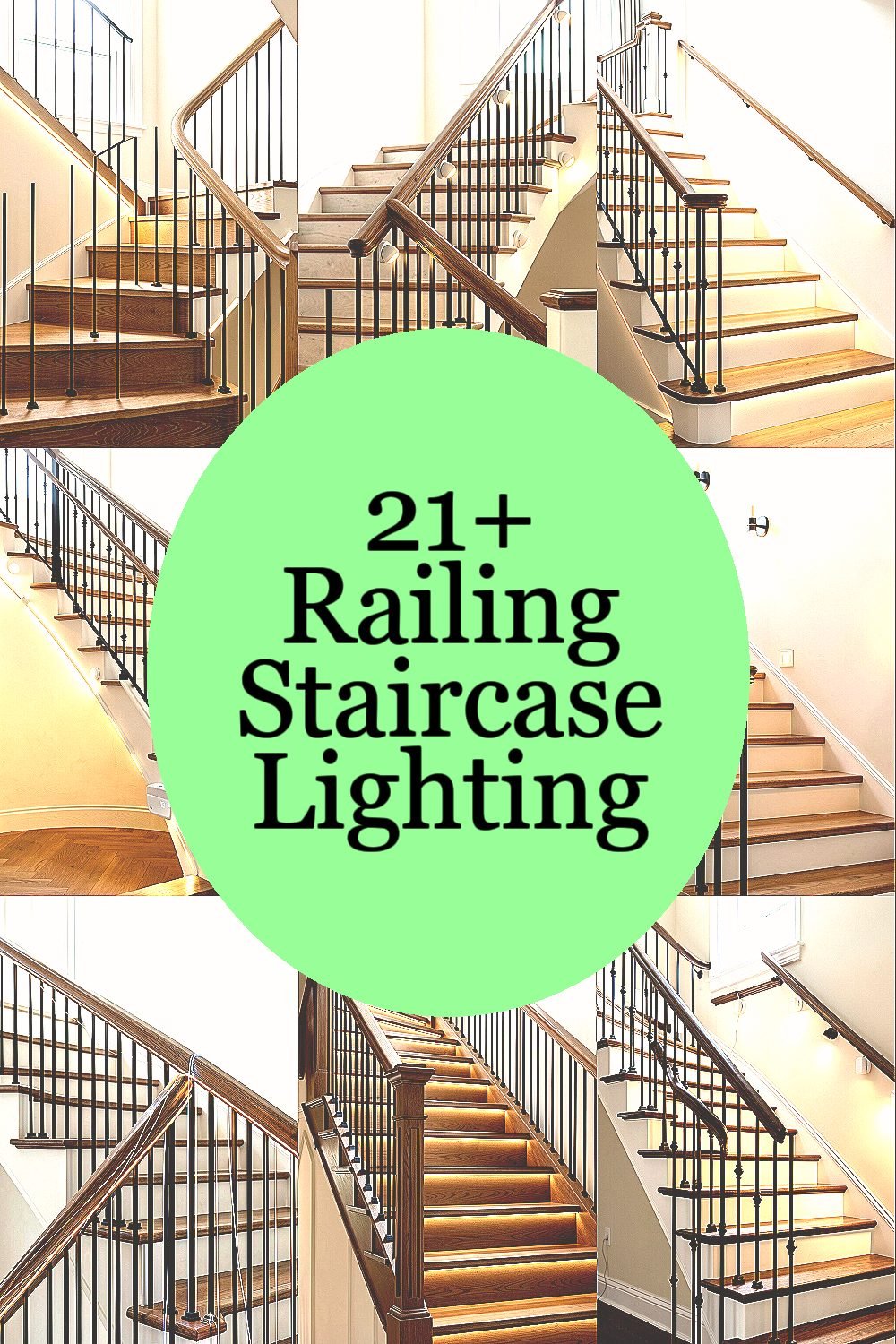
The stairs are one of the first places your home shows its style. With the right railing lighting, every step feels safer and more inviting.
When lighting matches the space, the whole hallway starts to glow with personality. Even small changes can make your stairway look custom and feel warmly finished.
1. Recessed Rail-Edge LED Strip for a Clean Glow
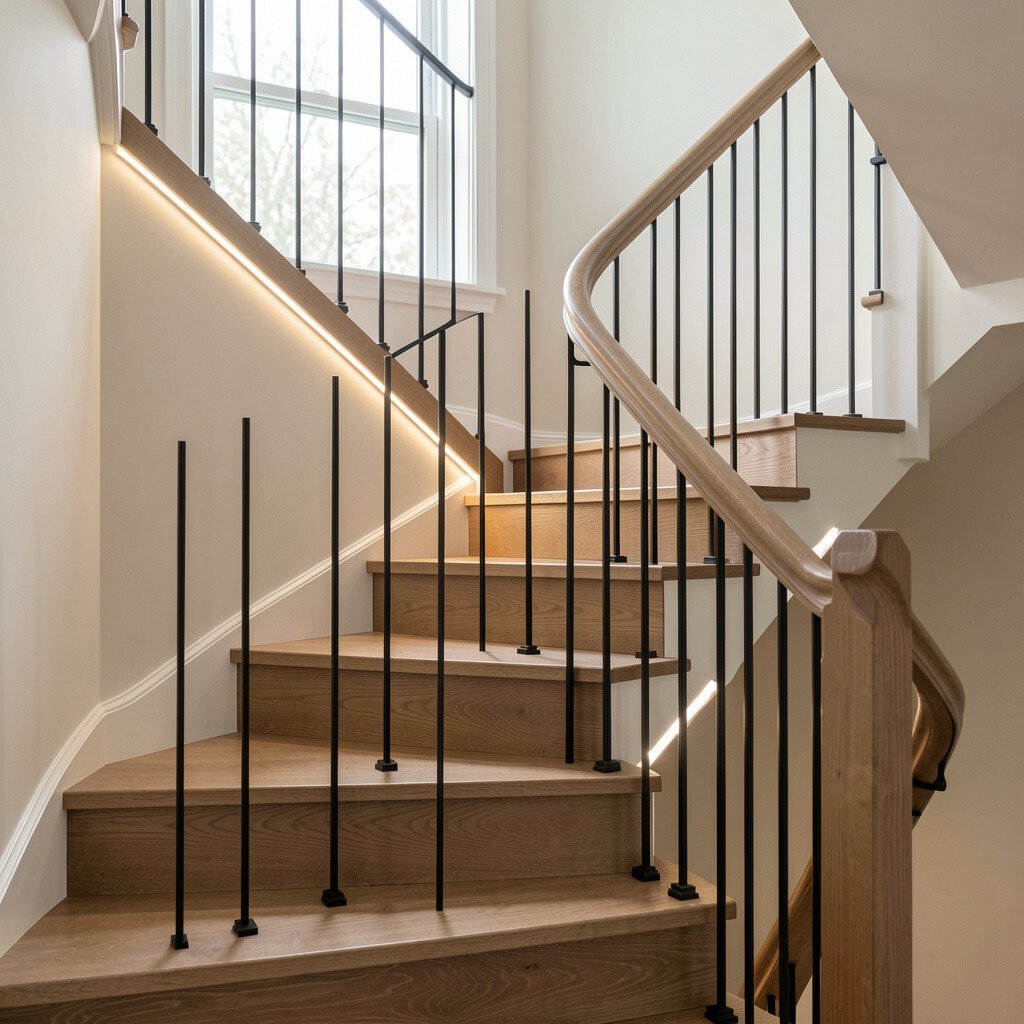
A slim line of light tucked into the rail edge looks crisp and modern. It quietly highlights the handrail without turning the stairway into a spotlight show.
Choose a warm-to-neutral white so the glow feels friendly at night. Use a diffuser channel so the light spreads evenly, not in harsh dots.
For personalization, aim the light slightly downward so it paints the tread edges. If you have pets or small kids, the softer distribution helps reduce glare while you move.
2. Low-Voltage Puck Lights Mounted Along the Railing
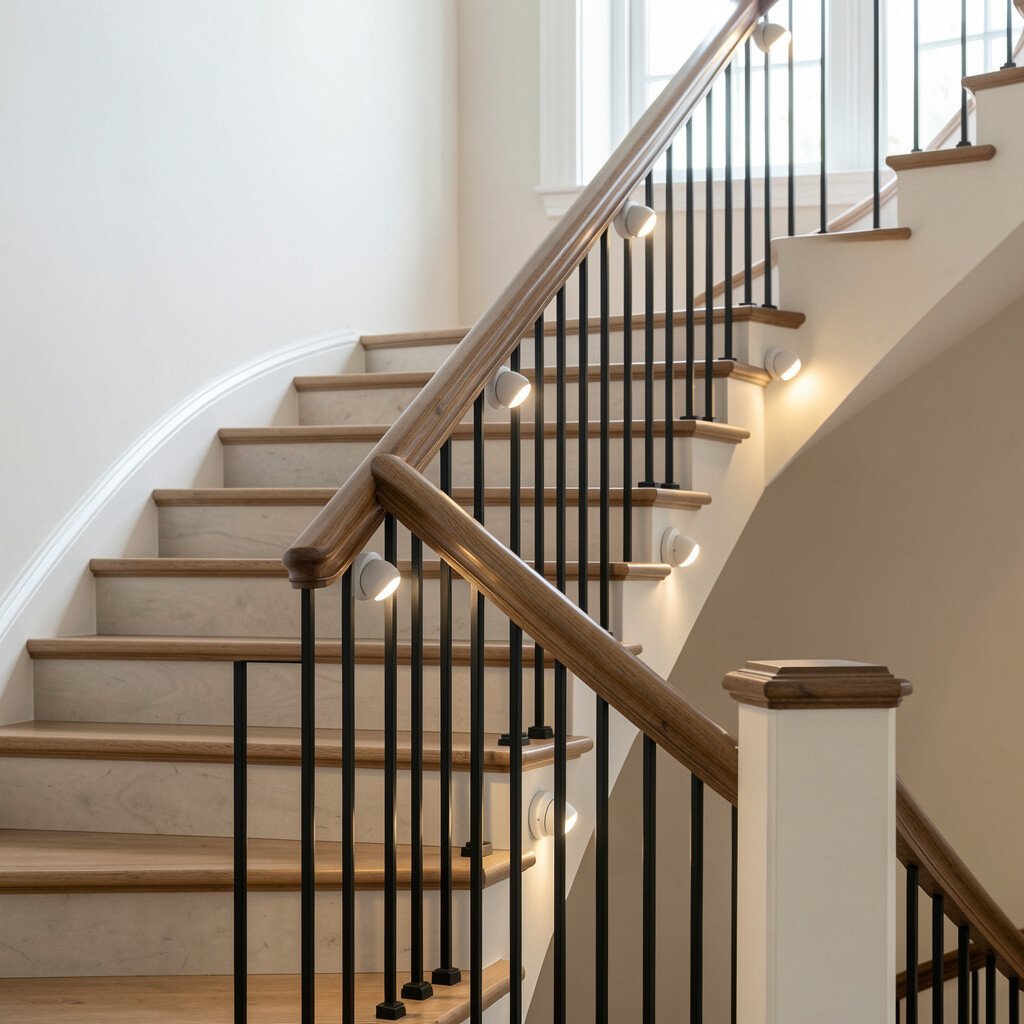
Puck lights create a dotted trail of brightness that feels intentional and easy to follow. They give your staircase a “pathway” look without overwhelming the walls.
Space the pucks evenly so each tread gets a steady amount of light. If you want a cozy vibe, pair them with a dimmer so the brightness can change with the hour.
For cost control, use fewer pucks in tighter spaces and rely on wall reflection for balance. You can also match the finish of each housing to your railing hardware for a neat, unified look.
3. Under-Rail Linear Lights With a Gentle Shine
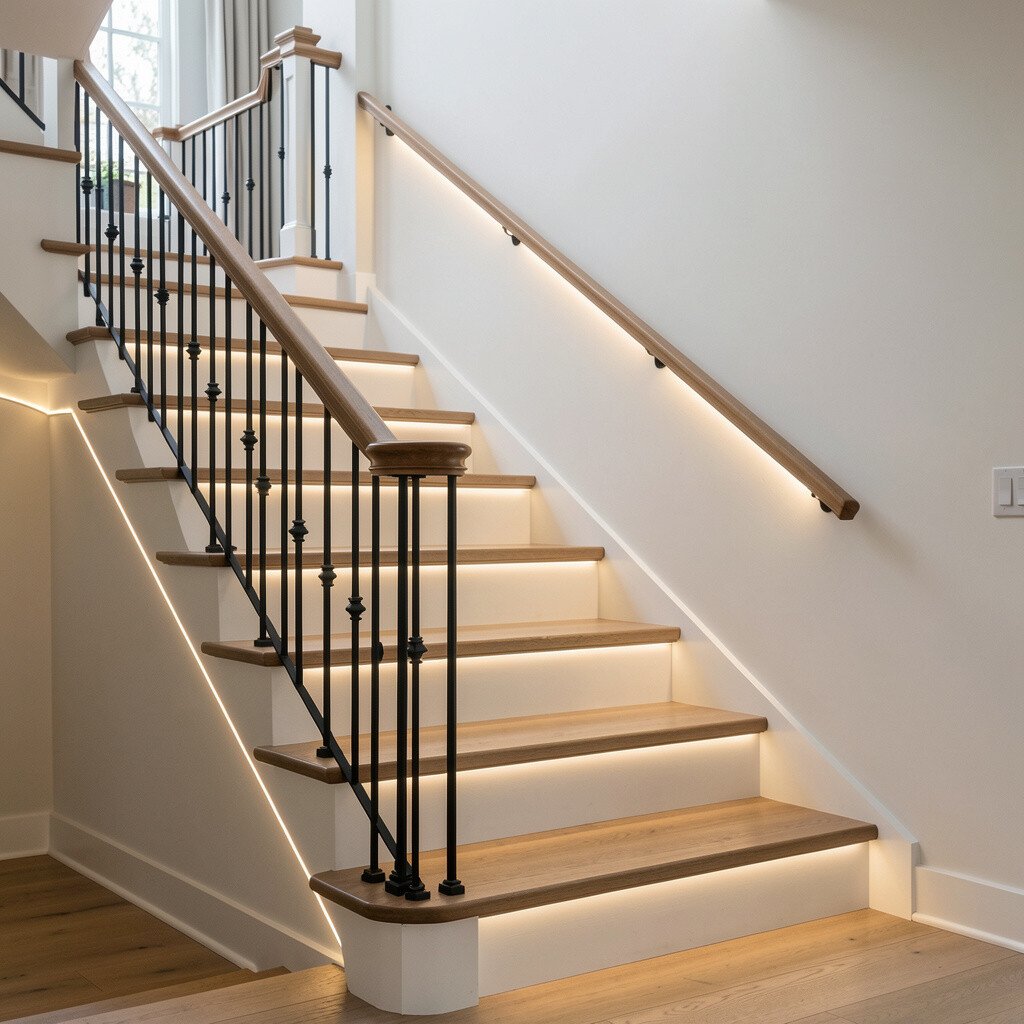
Lighting mounted under the rail creates a soft wash that makes the steps feel more open. The glow hugs the staircase like a warm ribbon.
Pick a profile designed for narrow mounting so installation stays tidy. A diffused lens helps keep the view comfortable from the bottom of the stairs.
If you have a banister with curves, flexible LED segments make the shine follow the shape. To personalize, vary the brightness by zone so the upper landing feels calmer.
Many homeowners like a warm white for evening comfort, and it blends well with wood or painted railings. A dimmer is often worth it because it prevents the lights from feeling too strong at night.
4. Smart Motion Sensors for Hands-Free Safety

Motion-activated railing lighting is practical and feels surprisingly welcoming. As you approach, the lights respond quickly, guiding you step by step.
Set a short fade-out time so the stairs stay bright just long enough. This helps avoid leaving lights on all night and can reduce energy waste.
For uniqueness, pair the sensor with a gentle ramp-up so the light comes on smoothly rather than with a sudden flash. If your household uses different routes, add time scheduling so it only activates during your busiest hours.
Check sensor range during installation so it catches you consistently, especially when carrying items. Many smart systems also let you adjust brightness levels from an app.
5. Color-Tunable LEDs for Seasonal Mood on the Stairs

Color-tunable lights let the staircase match holidays, parties, or even your daily mood. One evening it can feel soft and calm, and another it can feel fun and festive.
Choose a system with a reliable controller and a smooth app interface. Warm tones for quiet nights and slightly brighter whites for guest visits are a popular mix.
To personalize, set scenes like “evening reading” or “welcome home.” If your decor includes wood, try warmer settings because they keep the grain looking rich.
6. Warm Candle-Style Bulbs in Modern Rail Sconces
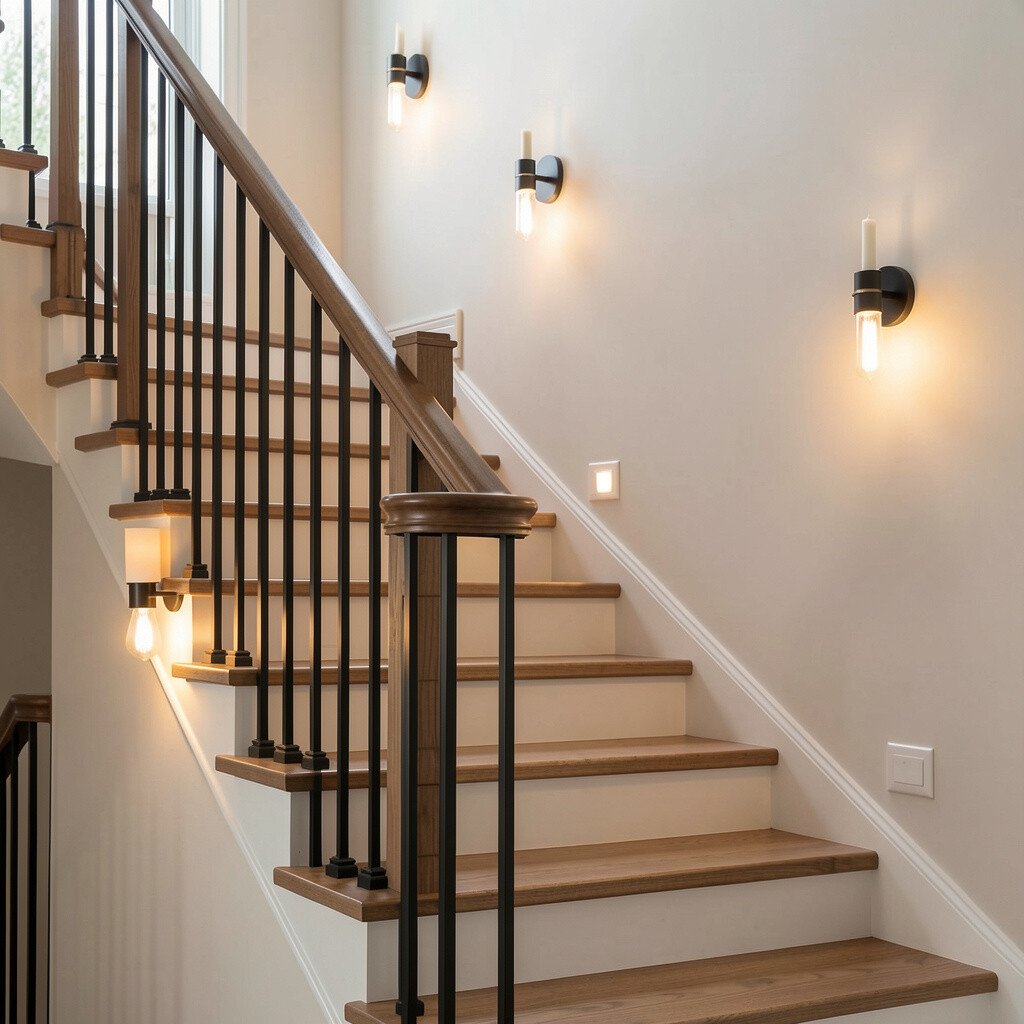
If you like a classic vibe, candle-style bulbs can make a staircase feel like a cozy hotel. The railing sconces add character while still keeping the light practical.
Pick fixtures that match your railing finish, such as matte black, brushed nickel, or aged brass. This small detail makes the lighting look built-in rather than temporary.
Use frosted or diffused covers to avoid harsh glare at eye level. For cost planning, consider fewer high-impact fixtures rather than lighting every inch of the rail.
7. Fiber-Optic Accent Threads Through the Handrail Cap
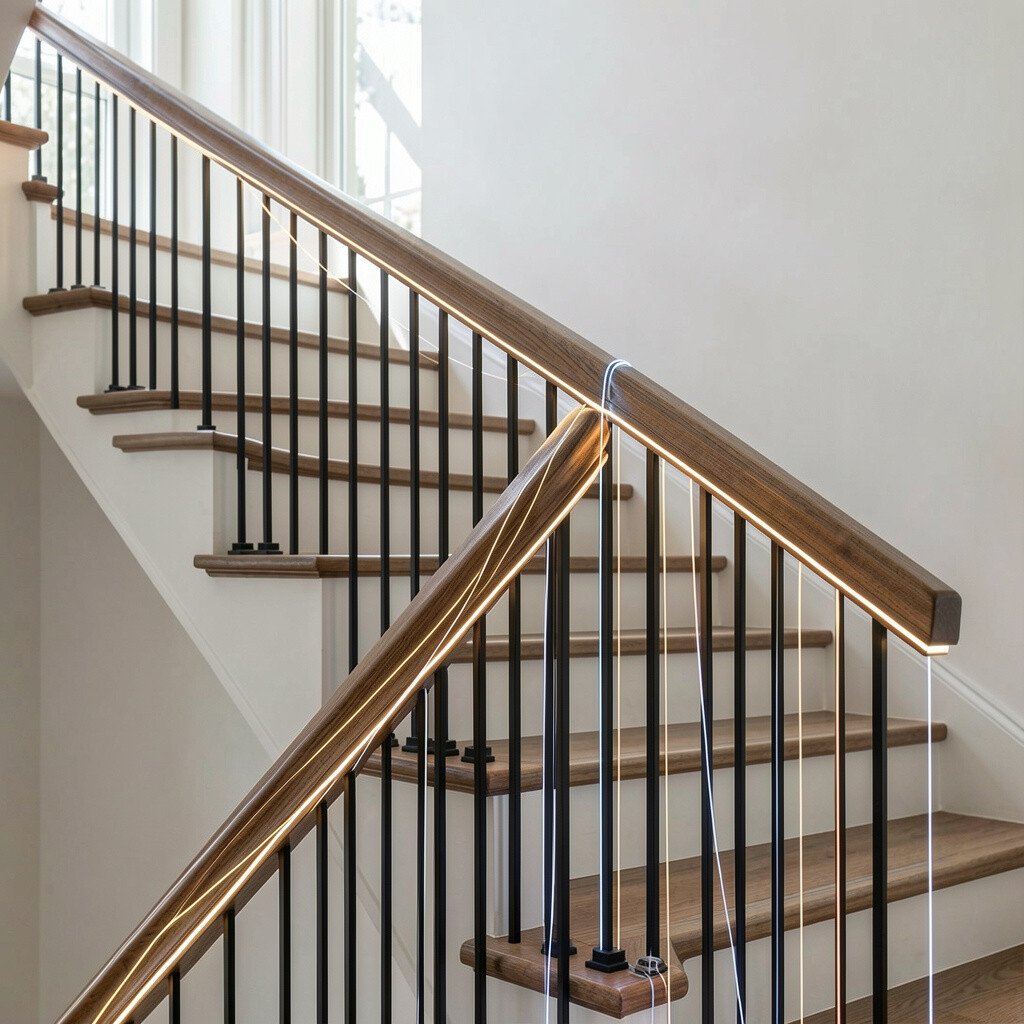
Fiber-optic accents can look like tiny points of light tucked inside the rail cap. The effect is delicate and modern, especially in homes with neutral walls.
This option is unique because the light source can sit out of sight, while the threads create a clean sparkle effect. It’s also great for adding ambiance in spaces where you don’t want visible LED components.
For personalization, choose a layout pattern that follows the railing lines. You can make the sparkle denser near landings and lighter along straight runs.
Since installation can be more involved, think of it as a design feature to install thoughtfully once. Many homeowners find it’s worth the careful work because the look stays elegant for years.
8. Integrated Channel Lighting With a Mitered, Gallery Finish
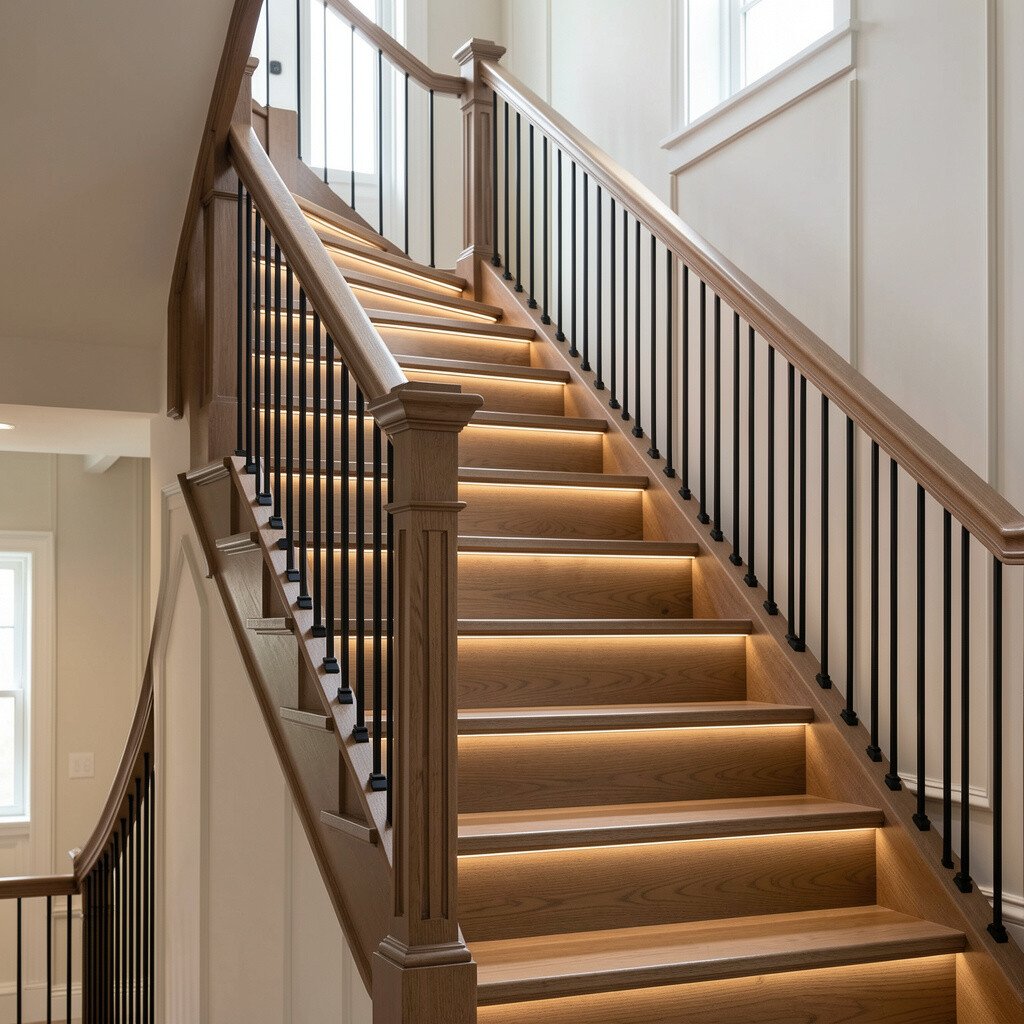
An integrated channel turns your railing into a sleek lighting track. The light feels architectural, like it belongs to a custom built home.
Look for channel systems that allow clean corners and angled ends. A mitered or precision-fitted look reduces the chance of gaps where dust can collect.
For a stylish finish, use a metallic channel trim that matches your stair details. If your home has modern lines, a narrow channel with bright optics can give a crisp, high-end feel.
Start with a clear plan for power placement and routing. Considering access for wiring early can save time and extra expense later.
9. Plug-In Dimmable LED Modules for Easy Upgrades
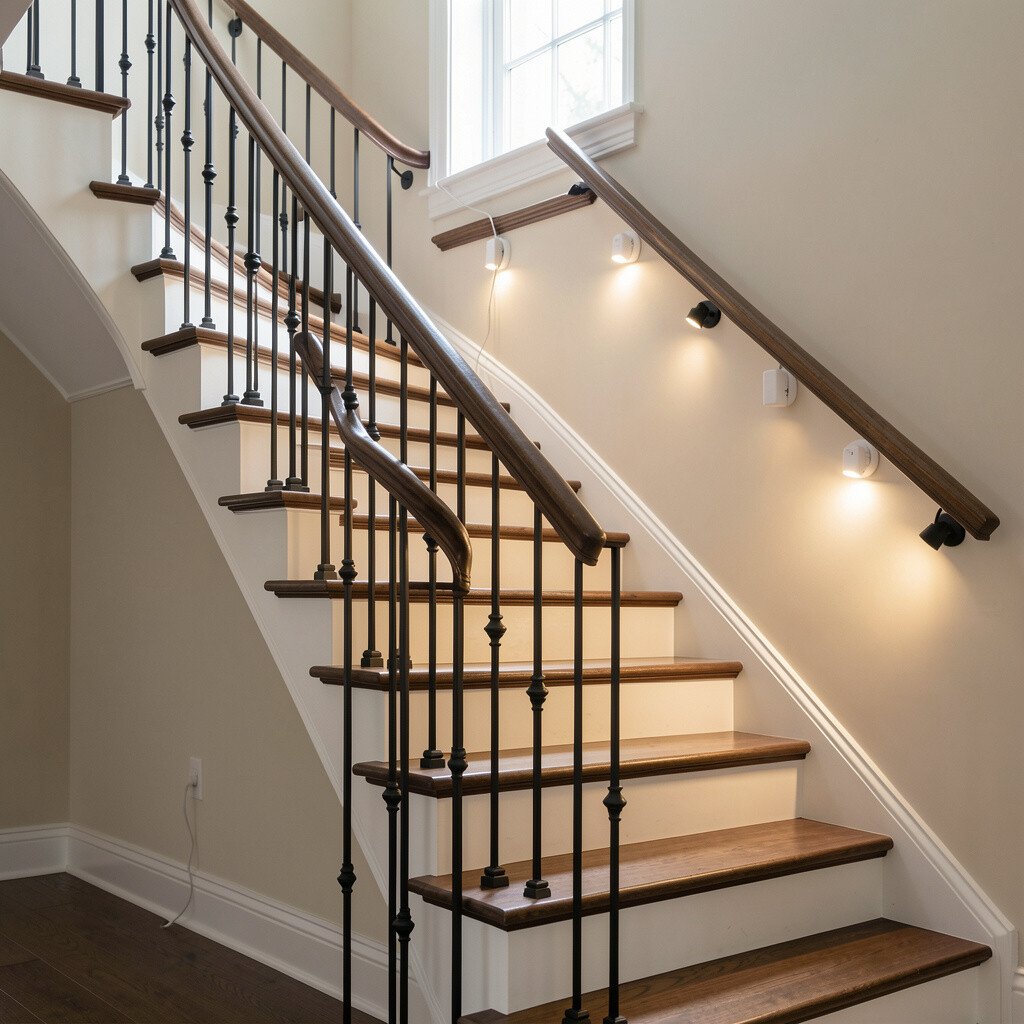
Plug-in LED modules are a friendly way to refresh your staircase without heavy installation. They’re perfect for renters, temporary homes, or anyone who likes quick upgrades.
Choose modules with a dimmer feature so you can tune the brightness. That flexibility helps the stairs feel bright enough for safety, but never harsh.
For personalization, align the modules with your railing posts for a clean rhythm. You can also mix warmer and cooler tones if you want a layered look.
When thinking about cost, compare the price per module and the number you need. Often, buying a smaller set first helps you decide how much light the space truly requires.
10. Backlit Railing Panels for a Soft Wall Glow
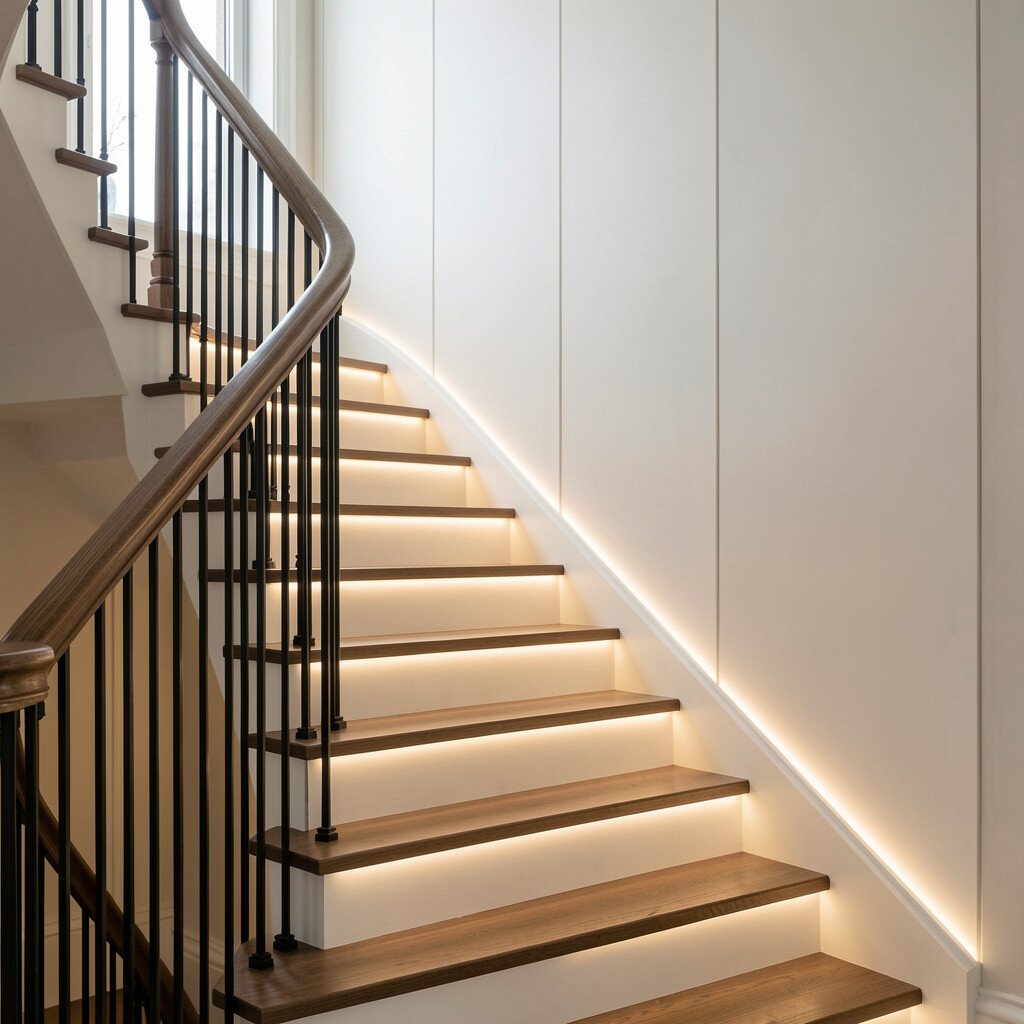
Backlit panels create a gentle glow that spreads to the walls, making the whole staircase feel brighter. Instead of shining only on the steps, it gives the hallway a warm atmosphere.
Use translucent acrylic or a frosted surface so the light disperses evenly. This gives a smooth look that hides individual LED points.
To personalize, match the panel finish to your wall texture and decor color. People often choose neutral whites and soft wood tones because they keep the glow flattering.
If your staircase turns a corner, consider panel placement that follows the sight lines. That helps the light feel continuous instead of interrupted.
11. Reflected Lighting With Light-Up Treads and Rail Shadows
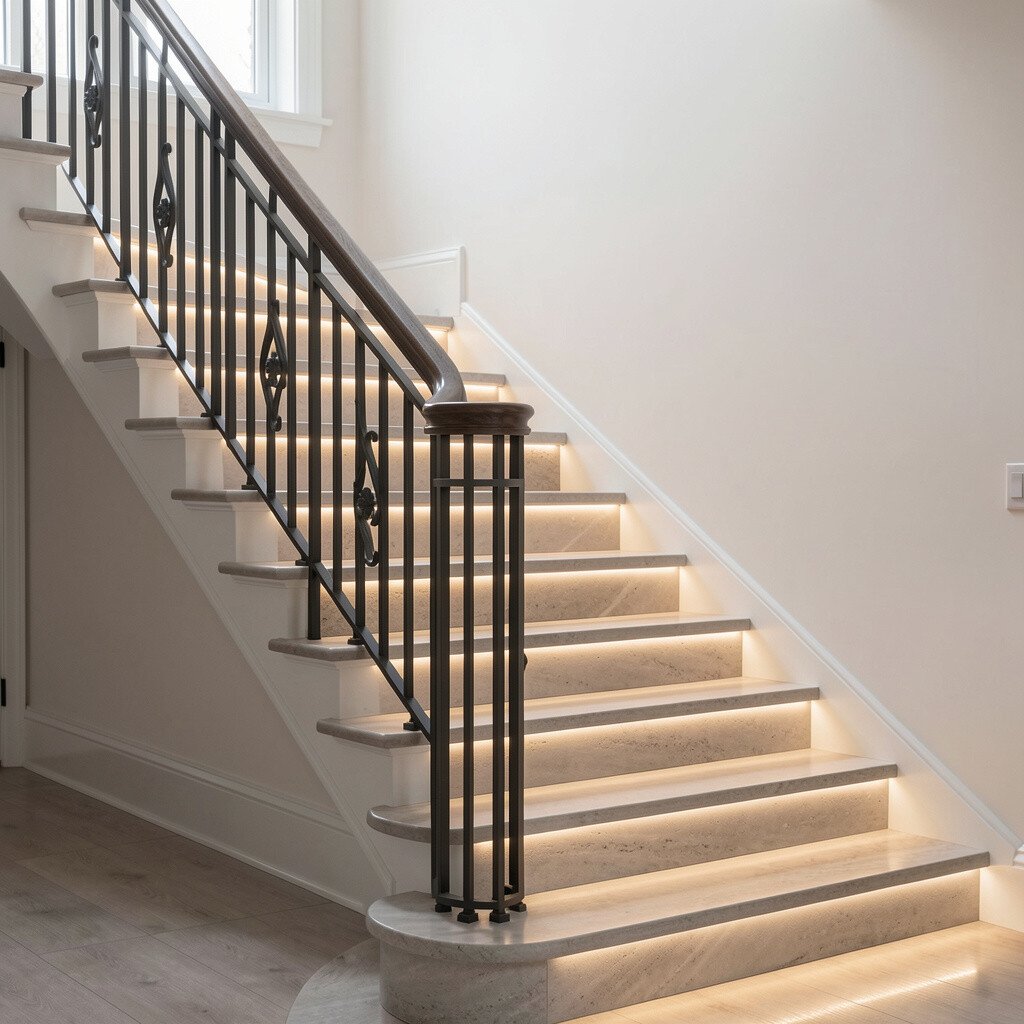
Lighting that creates rail shadows adds depth, not just brightness. When the light hits the treads and reflects upward, your stairs start to look more dimensional.
Try small LED fixtures aimed toward the underside of the rail so the light bounces across the steps. This approach keeps the glow indirect, which can feel more soothing than direct beams.
For practical safety, confirm that each step still gets enough visibility to spot the edge. Adjust angles until the shadow pattern looks even and comfortable.
Cost can stay reasonable because you can use fewer fixtures and rely on reflection. Many homeowners also find that indirect lighting reduces glare, which is great for nighttime movement.
12. Scrollwork Railing Accent LEDs for Traditional Charm
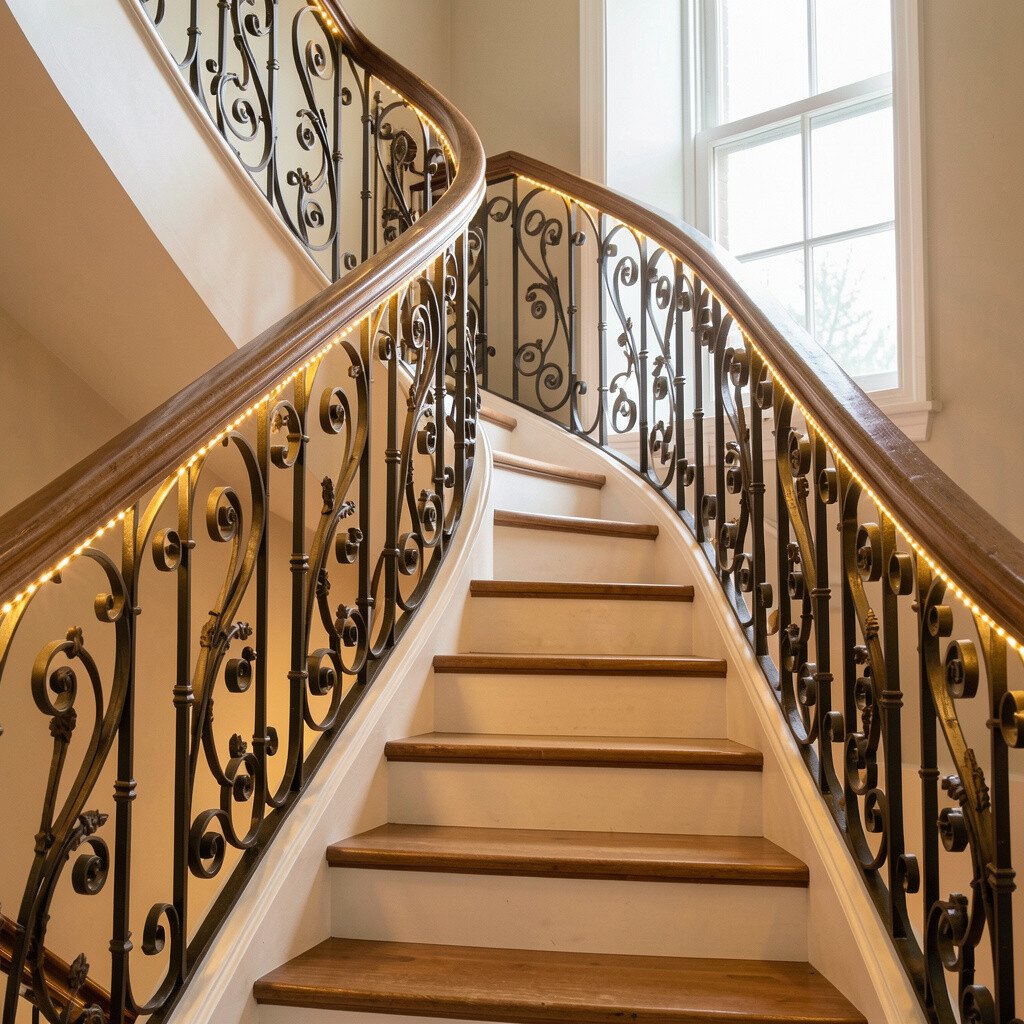
If your railing has scrollwork, accent LEDs can make the details pop beautifully. The lights trace the curves and turn ordinary ironwork into a glowing feature.
Use slim strip lighting or micro spot modules positioned to highlight the scroll openings. The visual effect feels intricate, like subtle jewelry for the staircase.
To personalize, place brighter accents near the middle of the staircase where people naturally pause. Keeping the top and bottom slightly dimmer can make the design look balanced.
For installation, plan for the rail’s material and thickness before ordering fixtures. A little measuring helps you avoid surprises and can reduce extra spending.
13. Invisible Wire Channels for a Truly Finished Look
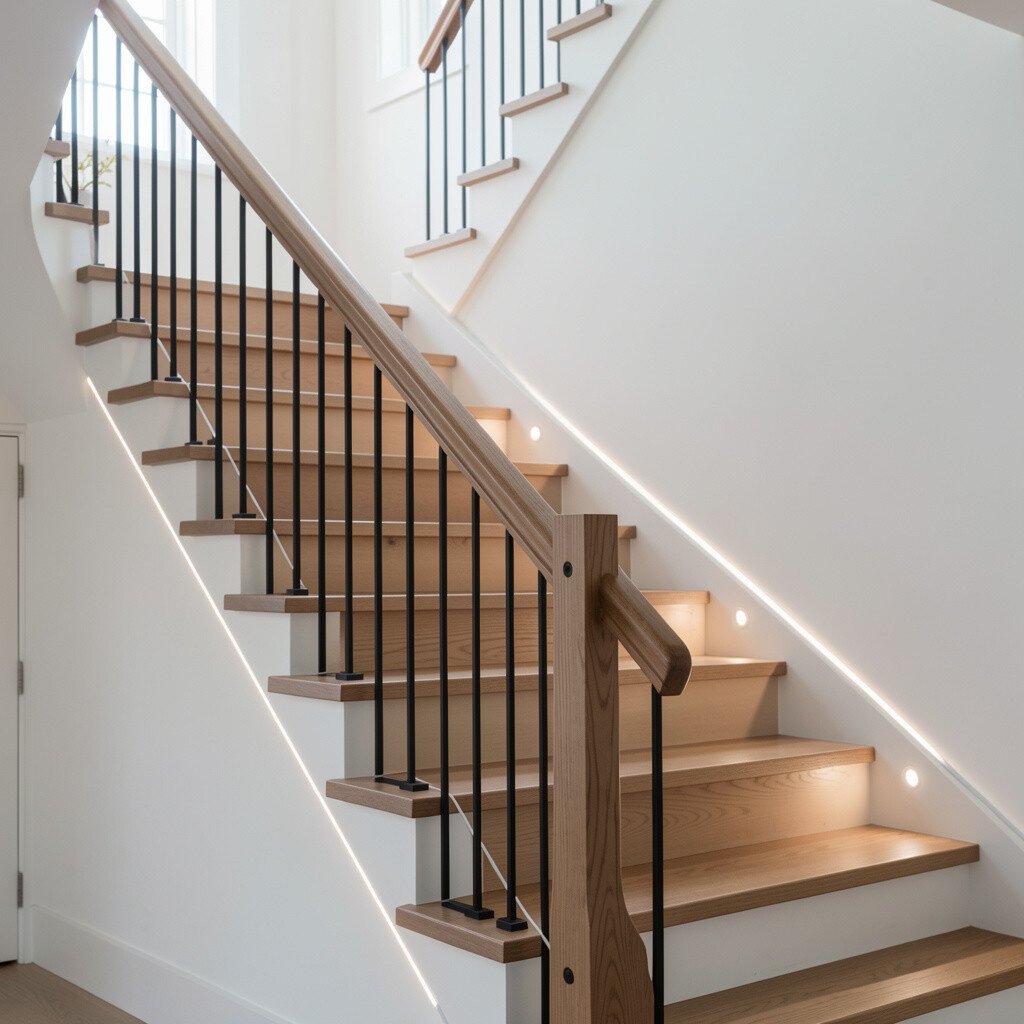
Even the prettiest lights can look messy if the wiring shows. Invisible wire channels keep everything neat and make your lighting feel built-in.
Route low-voltage lines along the inside of the rail and cover them with channels. Using the right fasteners helps keep the system secure over time.
For personalization, match the channel cover to the railing color so it disappears visually. This is especially helpful in homes with open staircases where you can see from multiple angles.
If you want to reduce cost, buy enough channel length for clean runs instead of adding patch solutions later. Clean routing also makes future maintenance easier.
14. Step-Edge LEDs Paired With Rail Lighting for Full Coverage
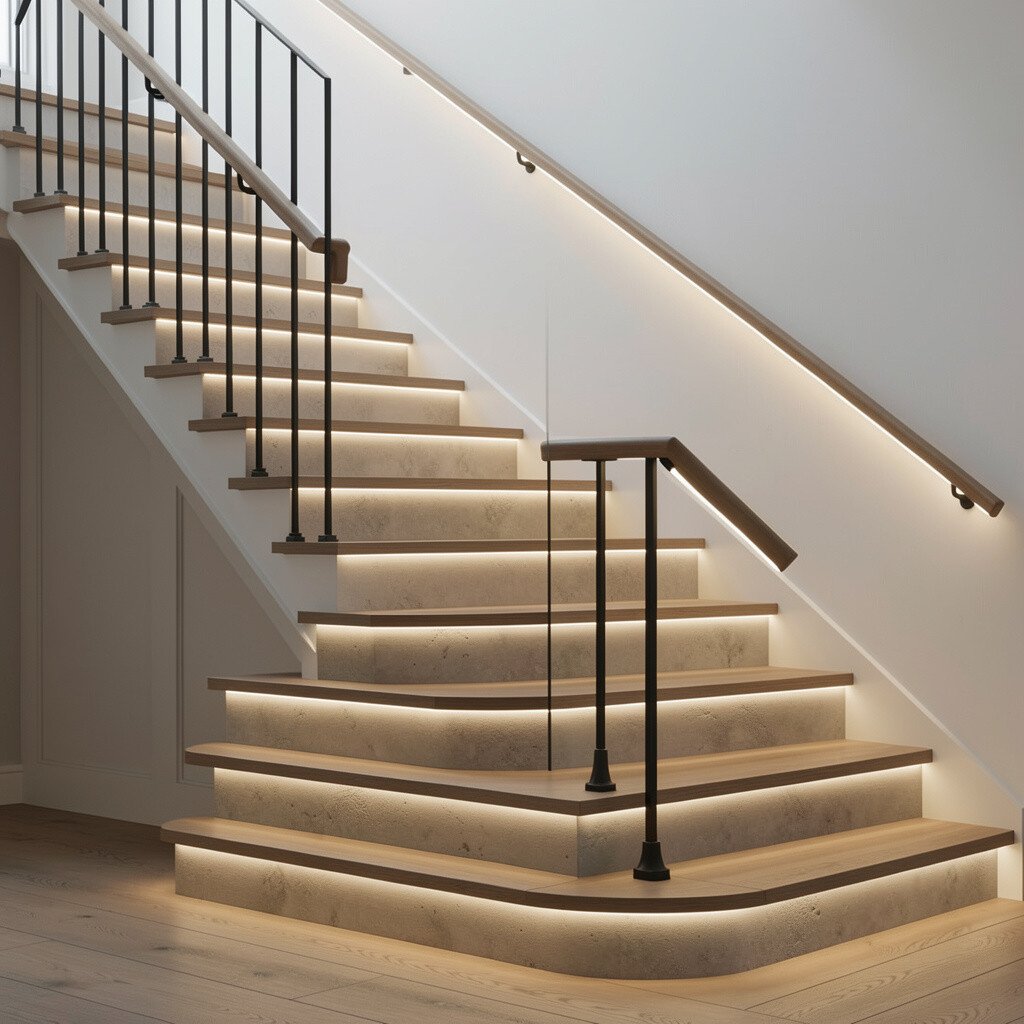
When rail lighting and step-edge LEDs work together, the staircase becomes easy to navigate. The result is bright enough to feel safe while still looking elegant.
Use a consistent color temperature across both areas so the glow feels cohesive. Warm white is a popular choice because it looks natural with wood and painted finishes.
For personalization, align the brightness to your household habits. If you mostly walk the stairs in the evening, a lower nighttime level with a higher motion-activated boost can feel perfect.
Cost considerations are important here because you’re adding more components. Many people manage budgets by starting with rail lighting first, then adding step-edge units later.
15. Hidden LED Corners Inside Newel Posts
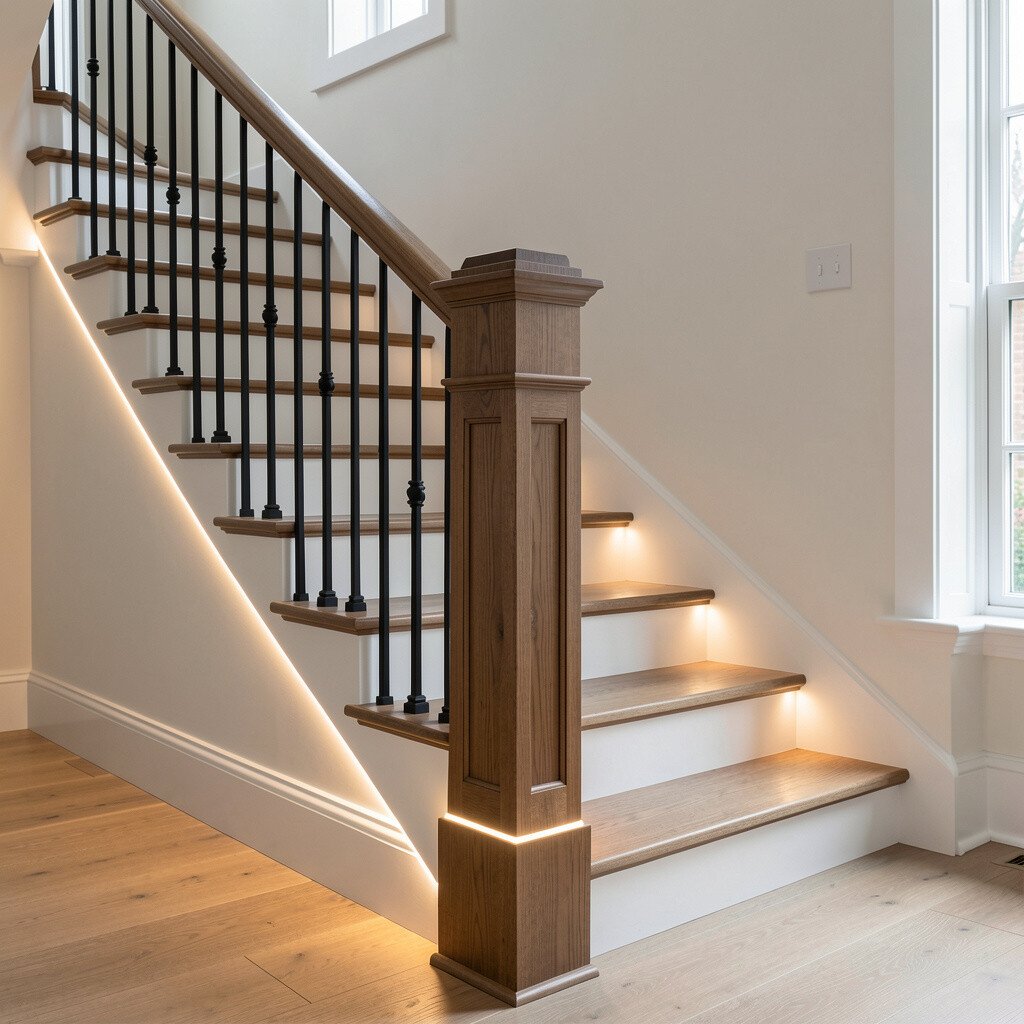
Newel posts are natural places to hide lighting, and the effect looks surprisingly high-end. Light tucked inside the post can cast a glow onto the handrail and nearby wall.
Choose fixtures that fit inside the post depth, and plan for access to the driver. If your posts are solid, measure carefully so installation stays clean and secure.
To personalize, aim the light toward the wall if you want a softer ambience. If you want clearer step guidance, aim it downward with a controlled spread.
Because newel posts are part of the railing structure, they can be great for a “custom feel” upgrade. While costs may be slightly higher due to fitting work, the visual payoff is often worth it.
16. Dusk-to-Dawn Photocell Lighting for Effortless Evenings
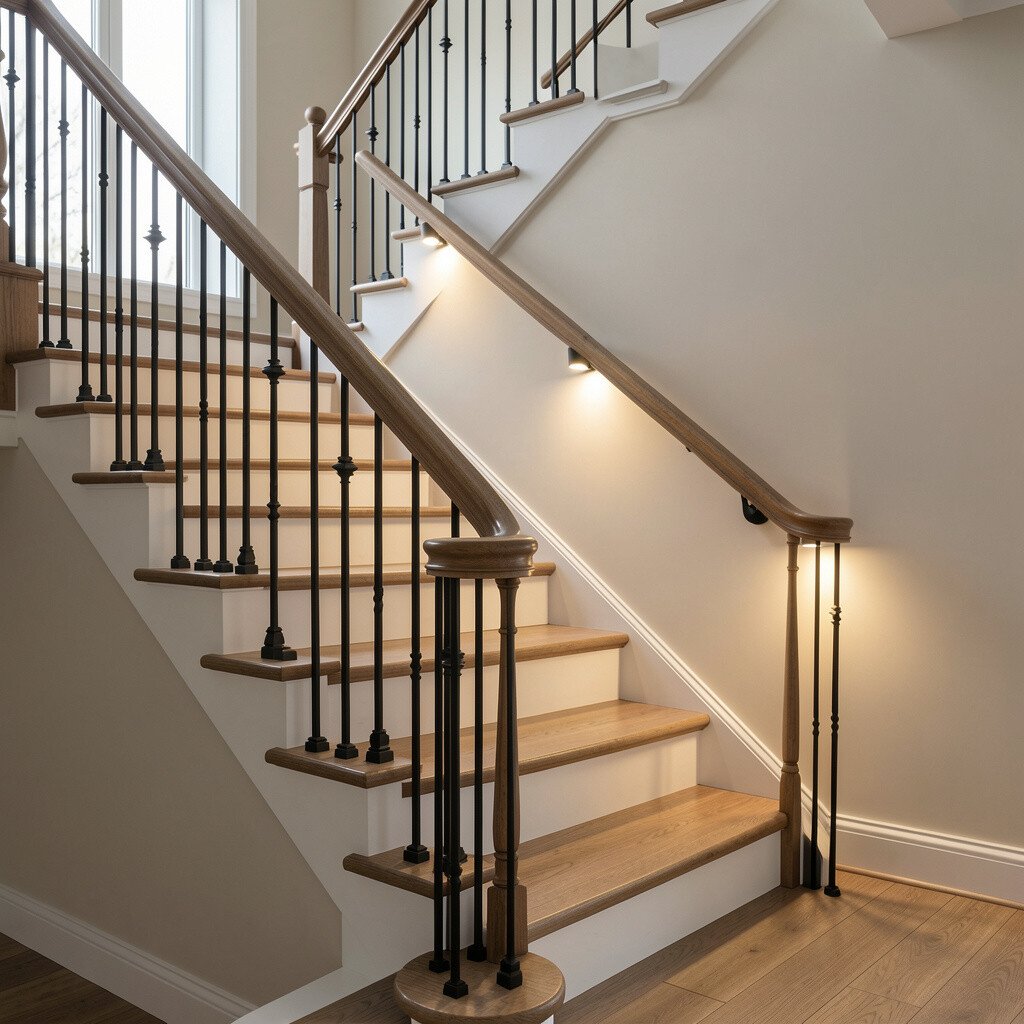
Dusk-to-dawn controls make staircase lighting automatic and stress-free. You won’t have to remember switches, and the stairs stay ready when you need them most.
Look for photocells that adjust smoothly, not abruptly. A steady activation time creates a calm rhythm for the house.
For personalization, pair the photocell with dimming so brightness is stronger at first and lower later. Many homeowners like this because it supports safety while keeping the home feeling restful.
When planning costs, remember that automation can reduce electricity usage compared to leaving lights on longer. It also helps protect bulbs and drivers by limiting unnecessary runtime.
17. Braided Cable-Look LED Trims for a Playful Modern Twist
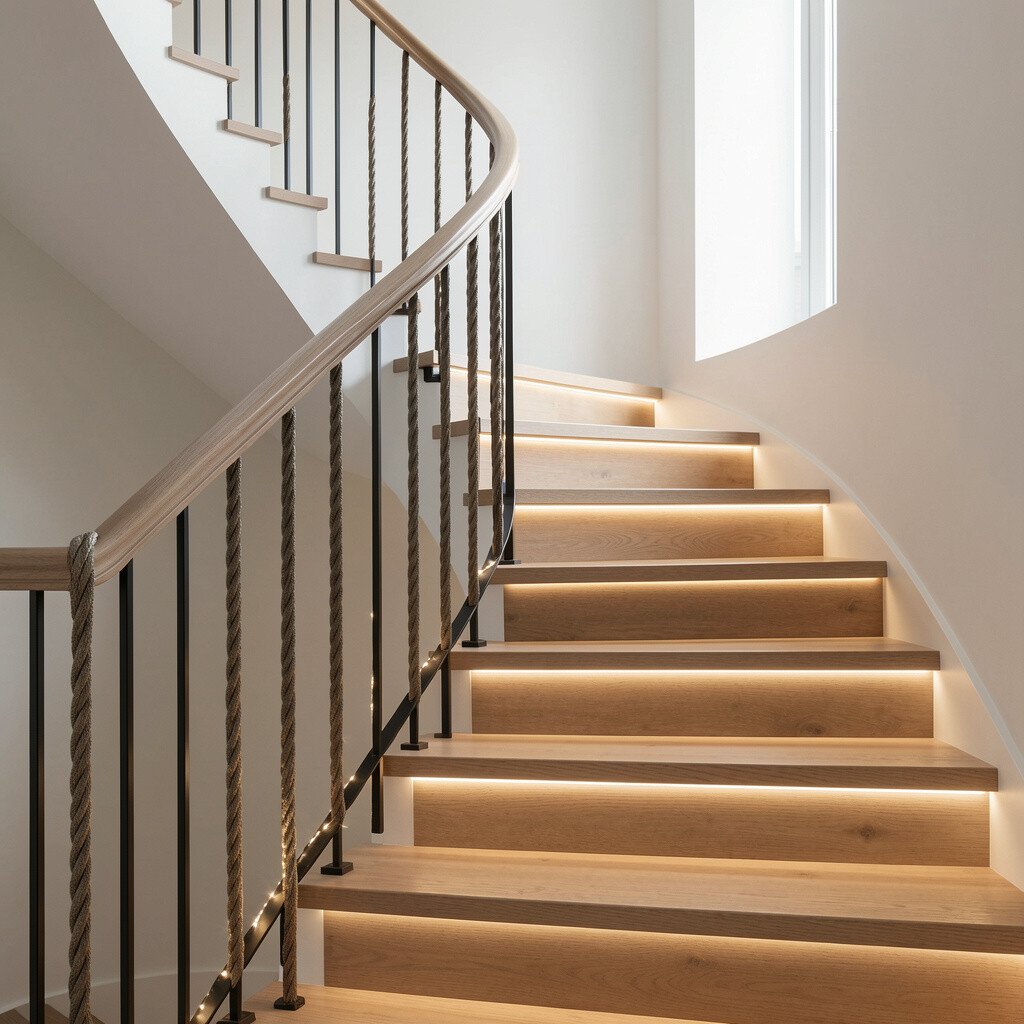
Some LED trims are designed to look like braided cable, giving a playful yet modern character. The texture detail can make a minimalist railing feel more expressive.
Use these trims along straight sections of the rail where the pattern is easy to read. This helps the design look intentional rather than random.
For personalization, choose a clear diffused version if you want a softer look. A more pronounced housing can emphasize the cable texture for bolder style.
Cost depends on the length and the type of controller, but trims can still be an affordable way to add flair. Many people find it’s an easy “upgrade layer” without major construction.
18. Brushed Brass or Blackened Steel Rail Light Fixtures
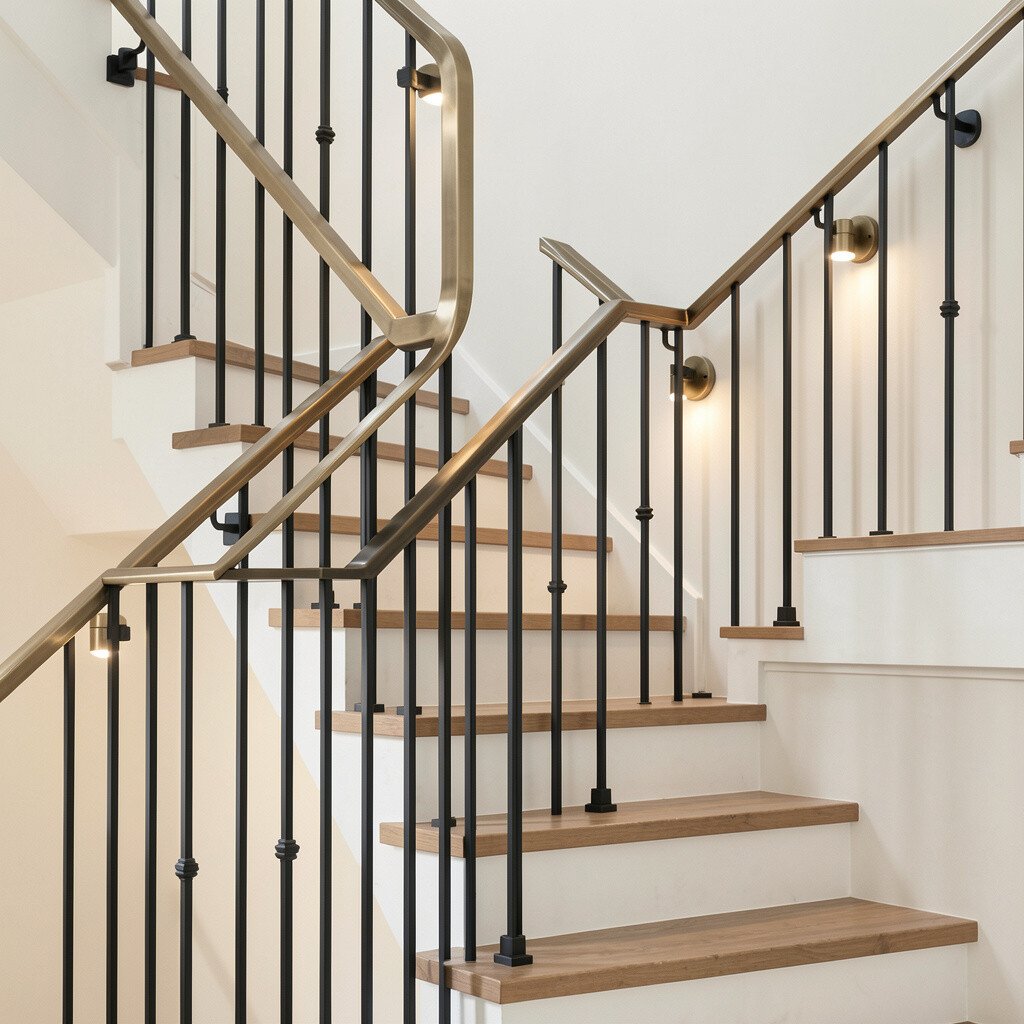
Finishing matters, and matching the lighting hardware to your railing can elevate the entire staircase. Brushed brass or blackened steel fixtures feel sophisticated and intentional.
When you choose the finish, consider other metals in the room like door handles and faucets. Consistency makes the space feel curated instead of accidental.
For personalization, mix finishes subtly if your decor already blends metals. Just keep one finish as the lead and use the other as a supporting note.
Cost considerations are simple here: quality fixtures can cost more upfront, but they often last longer and look better. Investing in durable finishes can save money on replacements later.
19. Water-Resistant Stair Lighting for Bright Entryways
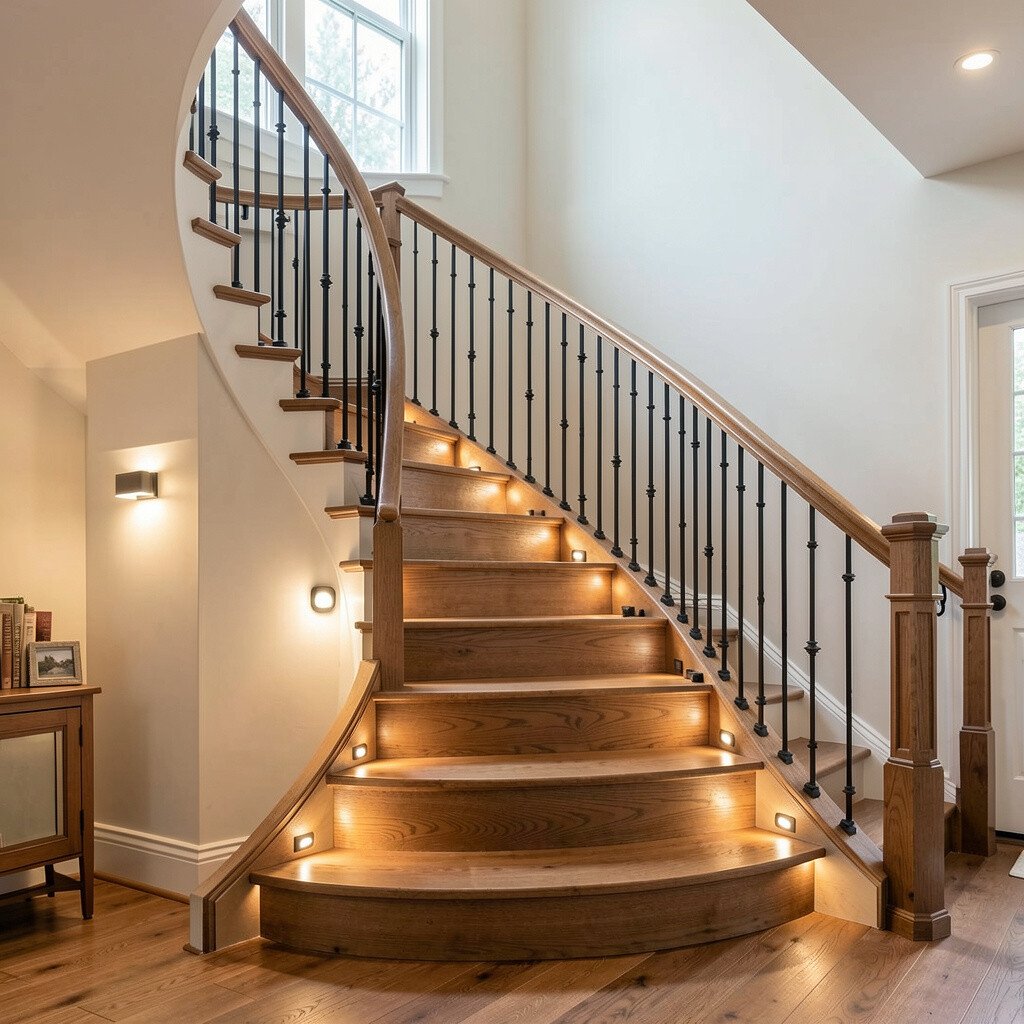
If your staircase sits near an entry door, moisture can be a real factor. Water-resistant railing lighting keeps the look fresh and protects the system from daily exposure.
Choose fixtures rated for damp or wet locations, especially if the stairway sees condensation or occasional splashes. This helps you keep lighting reliable across changing seasons.
For personalization, pair weather-ready lights with warm tones so the entrance still feels inviting. Many homeowners like warm white because it softens the look of colder materials like metal or stone.
Cost can vary by rating, but reliable protection can prevent premature failure. Spending a bit more on correct ratings often reduces repair headaches.
20. Sconce-Style Rail Lights With Directional Lenses
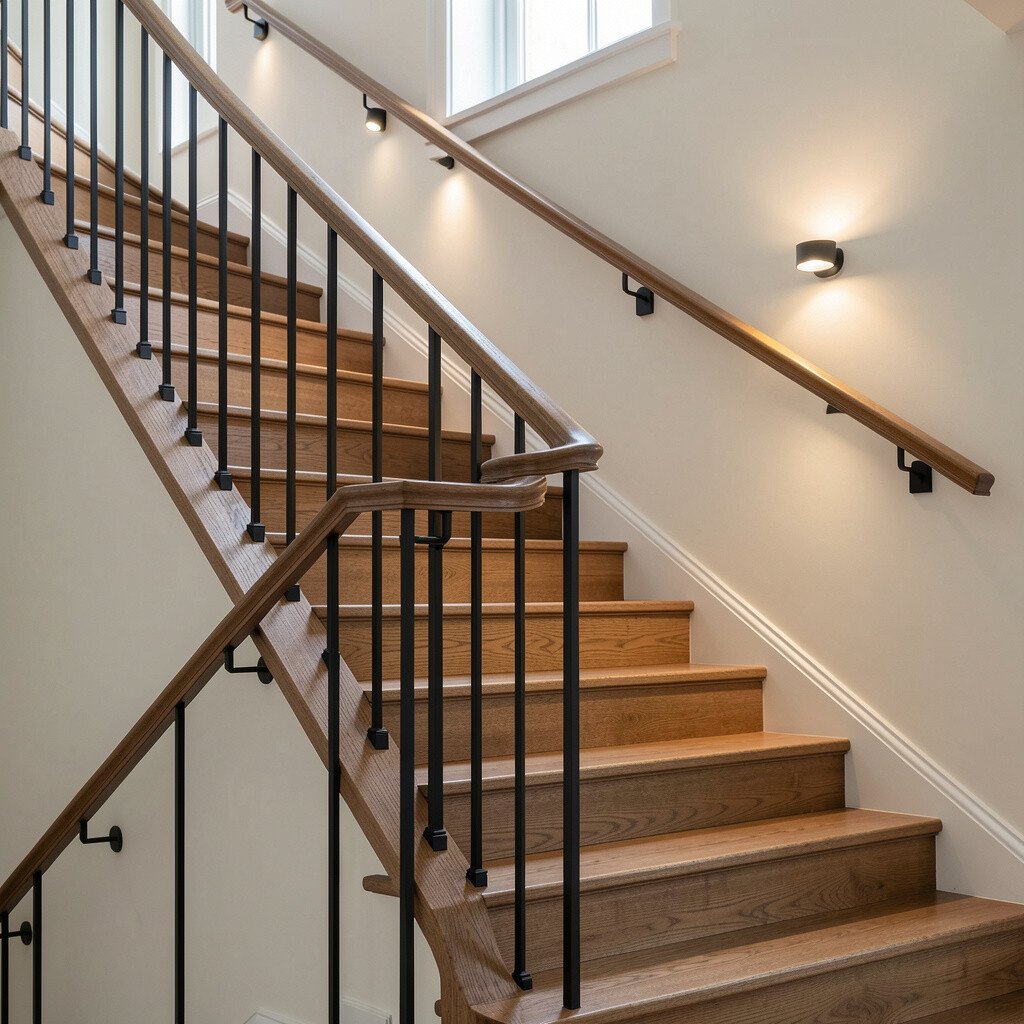
Directional lenses help you aim light exactly where it’s needed, like toward the handrail and upper wall. This makes the staircase feel tidy and visually organized.
Try adjustable heads so you can fine-tune the angle after installation. A small angle change can dramatically affect glare and how well the steps show up.
For personalization, match the lens color and intensity to your decor. Clear lenses can create a brighter, more modern look, while frosted lenses feel softer and classic.
When planning cost, remember that directional quality can reduce the number of fixtures you need. Many people end up with a cleaner design because each light does more work.
21. Stair Rail Lighting Scenes for Guests, Evenings, and Quiet Hours
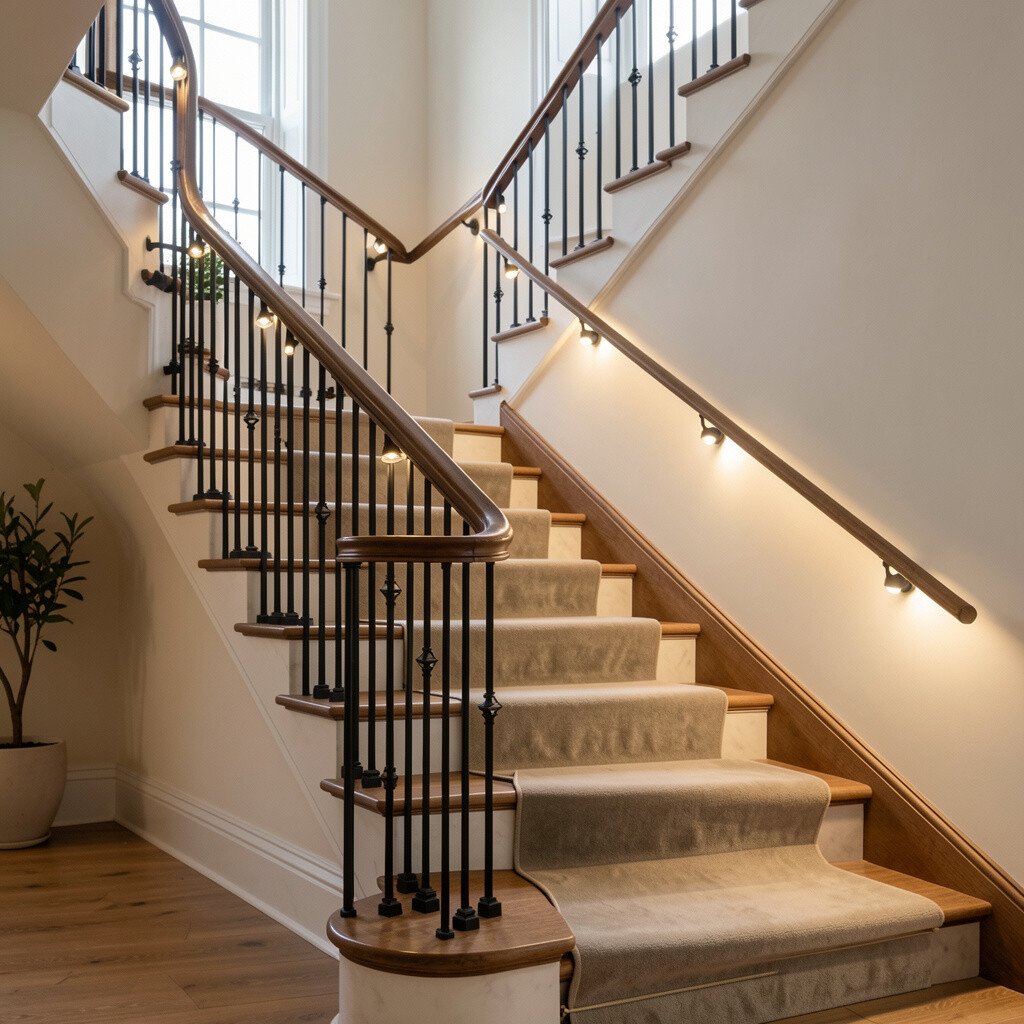
Lighting scenes make your staircase feel alive without changing fixtures. With smart controls, you can set modes for guests, everyday evenings, and quiet hours.
Create a brighter scene for entertaining so the staircase looks picture-ready and easy to navigate. Then switch to a dim, warmer scene for nighttime so movement feels calm.
To personalize, use subtle differences between the lower and upper stair zones. That small variation adds depth and makes the space feel designed, not just lit.
Cost considerations depend on your control system, but smart scenes can replace multiple timers and switches. Over time, the convenience often makes the extra setup feel worth it.
22. Railing Lighting for Curved Staircases and Spiral Homes

Curved and spiral staircases need lighting that follows the geometry, not just straight lines. The right approach makes the flow look smooth and keeps visibility consistent around every turn.
Use flexible LED strips or modular segments designed for bending. This helps the glow stay even as the rail curves, which is key for safety.
For personalization, consider a slightly brighter band near landings where people naturally slow down. Keeping the lighting smooth across the curve makes the stairway look custom and cohesive.
When thinking about cost, flexible systems can reduce the need for complicated custom fixtures. Measuring carefully and planning segment placement early helps you avoid wasted materials and extra returns.