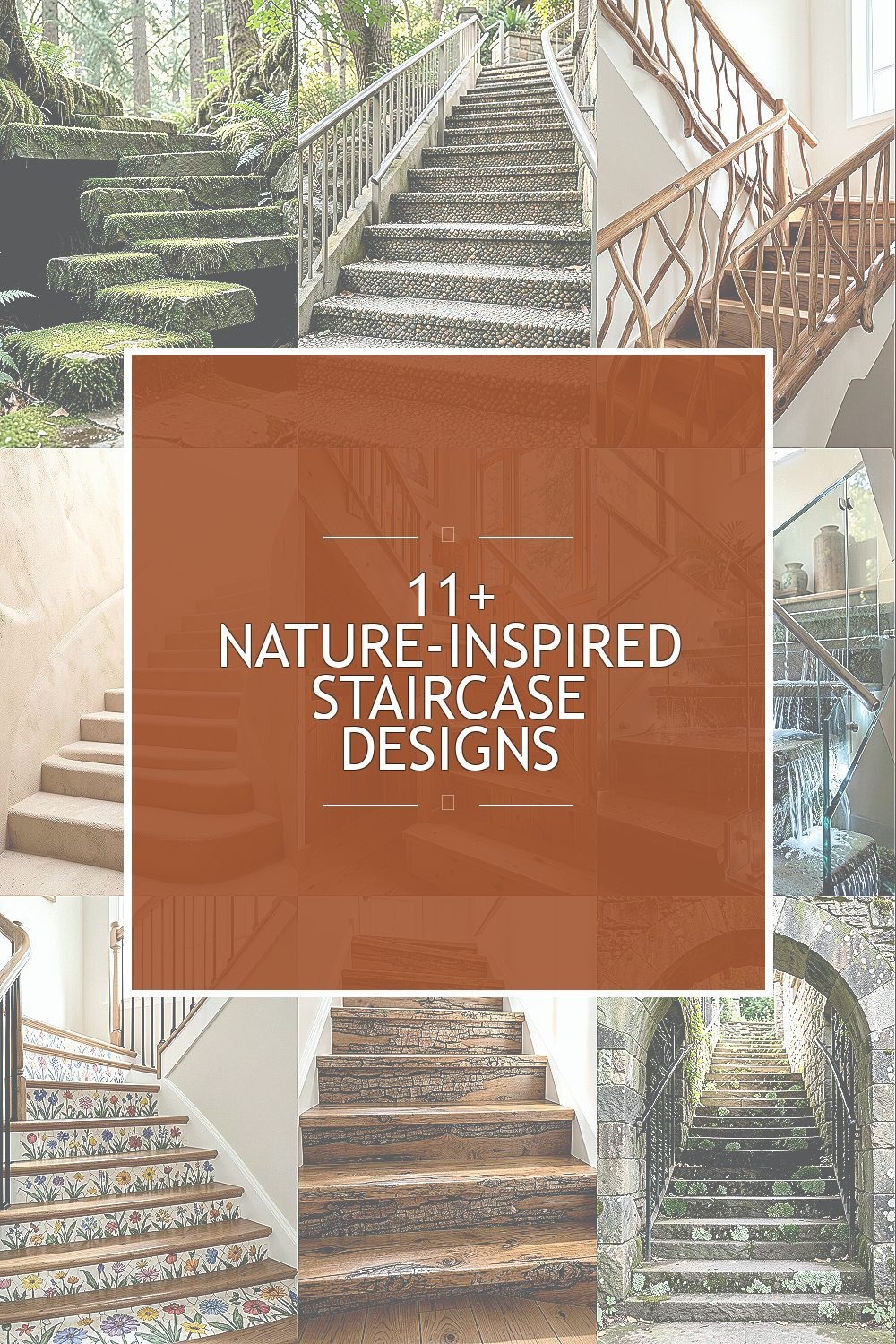
The right staircase can make your home feel alive. Nature-inspired design choices add warmth, calm, and character to the daily climb.
From stone-like textures to flowing wood lines, these ideas show how thoughtful details can look beautiful and work better too.
1. Mossy Green Rhythm With Floating Steps
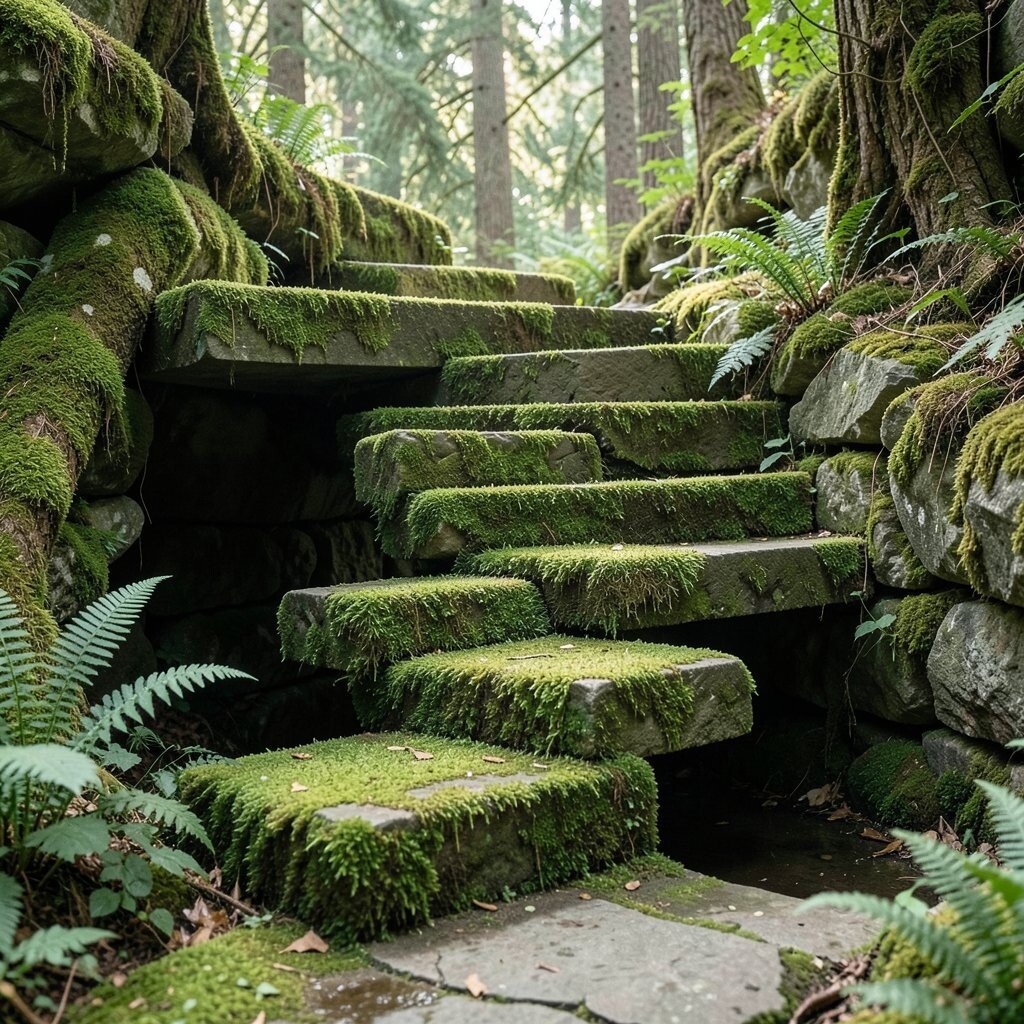
Picture steps that look like they are softly growing from the floor, with a gentle green tone that reminds you of shaded forest paths. The risers can be minimal, letting light pass through so the whole stair feels light and calm.
Use low-sheen green paint or a limewash finish on the riser surfaces, and choose treads in warm oak or bamboo to keep the mood natural. Add hidden LED strips along the side walls for a glow that feels like morning light filtering through leaves.
For comfort, keep each tread slightly wider than usual and round the front edge so bare feet feel safe. Personalize it by matching the green hue to plants you already love, like deep moss for darker rooms or minty tones for bright spaces.
2. Pebble-Stone Treads With River-Glide Handrails
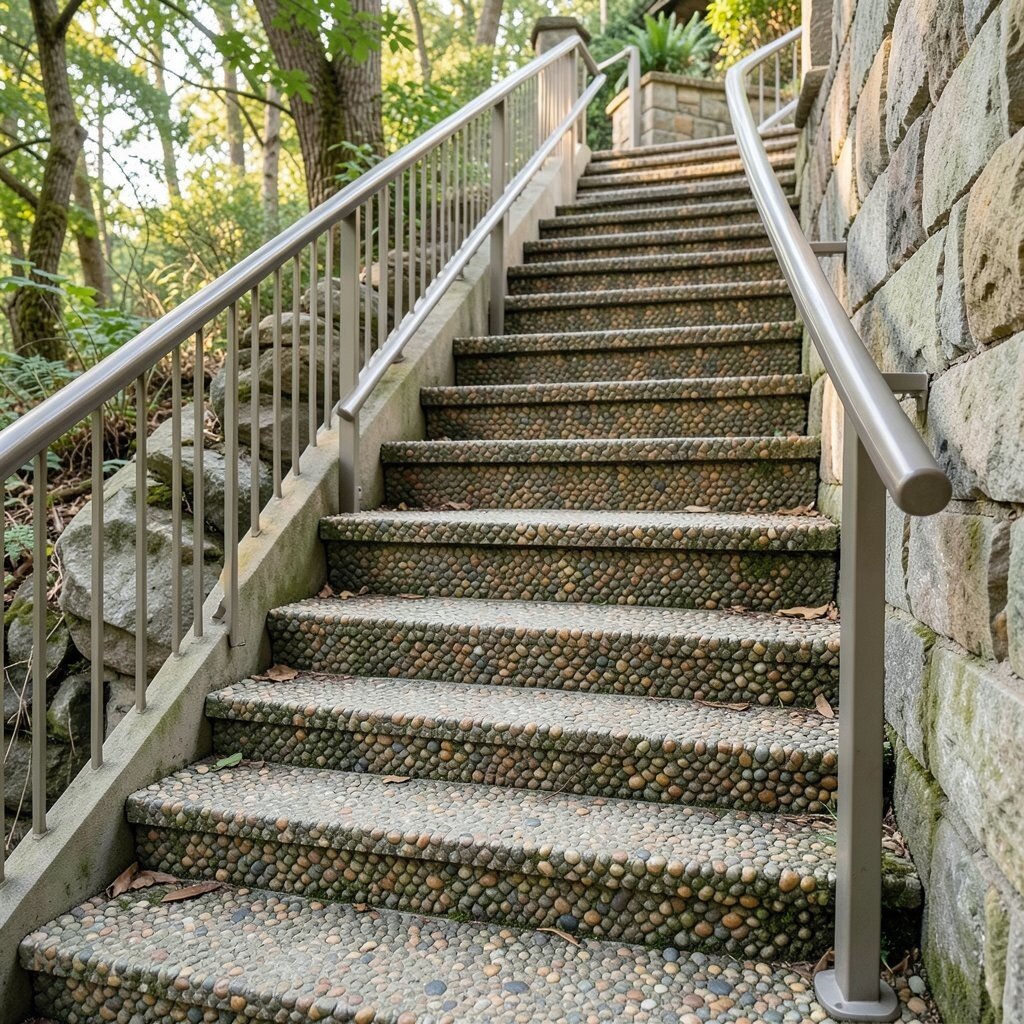
Imagine walking on smooth river stones, but in a tidy, home-friendly way. Textured tread finishes and a handrail that follows the “S” curve of a stream can make your staircase feel like a calm journey.
Choose slip-resistant stone-look tiles or a stamped coating that mimics pebble patterns, then pair them with a continuous curved handrail in walnut. This style is unique because it turns everyday steps into a tactile surface that feels grounded and steady.
To keep it practical, test traction in both wet and dry conditions if you live in a humid area. Budget-friendly options include using a stone-look vinyl or coating only on the tread edges while keeping risers simpler for a lower price.
3. Branch-Like Railings With Warm Wood Geometry
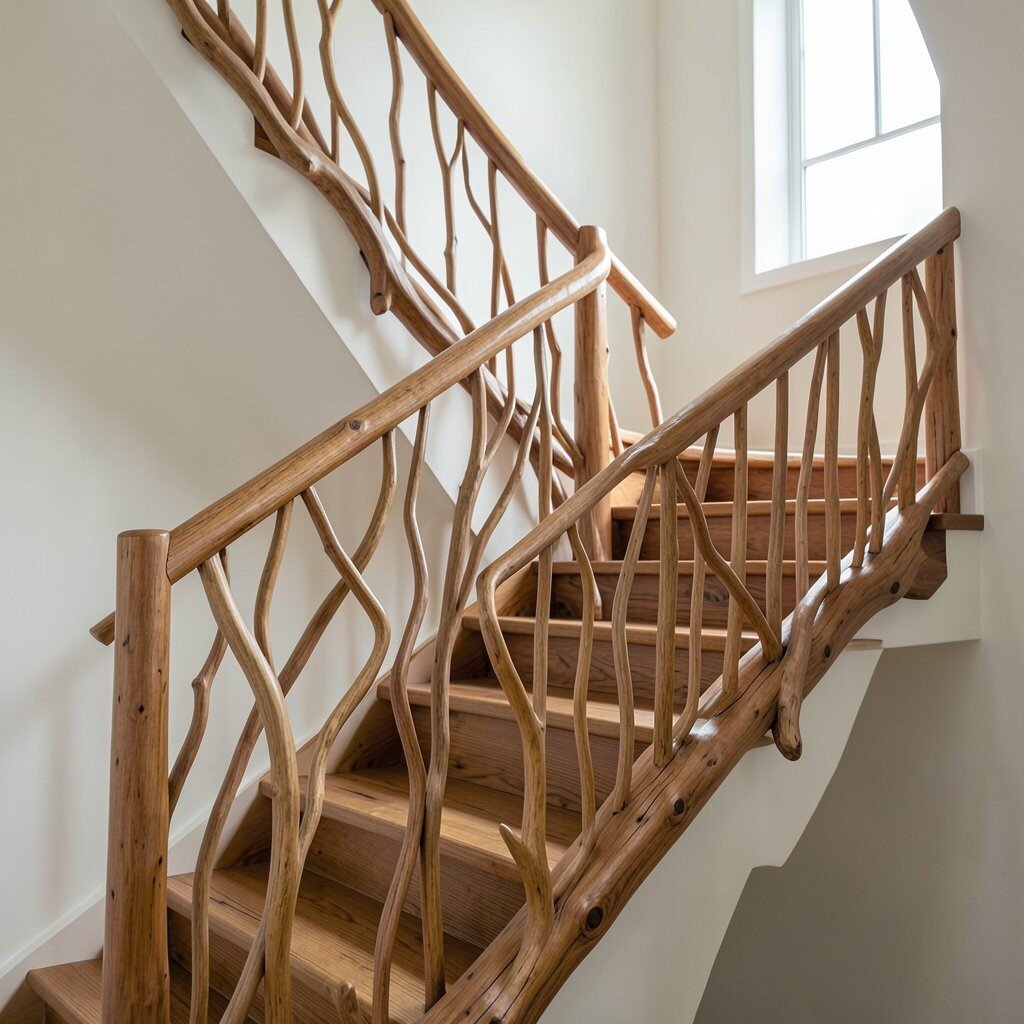
Think of a tree limb spreading outward, then neatly shaped into a railing that frames every step. The result feels organic, yet crisp, like nature drawn with careful lines.
Use wood balusters that curve slightly, or choose a metal railing with branch-inspired cutouts for a lighter, airy look. This design benefits from strong sightlines, since the open spacing helps the stair feel less bulky in smaller homes.
For practical installation, make sure every connection point is solid and that the railing height matches local safety standards. Personalize it by staining the wood in tones that match your floor, or by adding one accent panel at the landing painted in a leaf-inspired green.
If you want a modern trend, go for slim profiles and a clean matte finish, because “soft nature” details are popular right now. If budget is tight, use the branch pattern only on the first flight near the entry where visitors notice it most.
4. Sand-Dune Plaster Walls With Softly Curved Steps
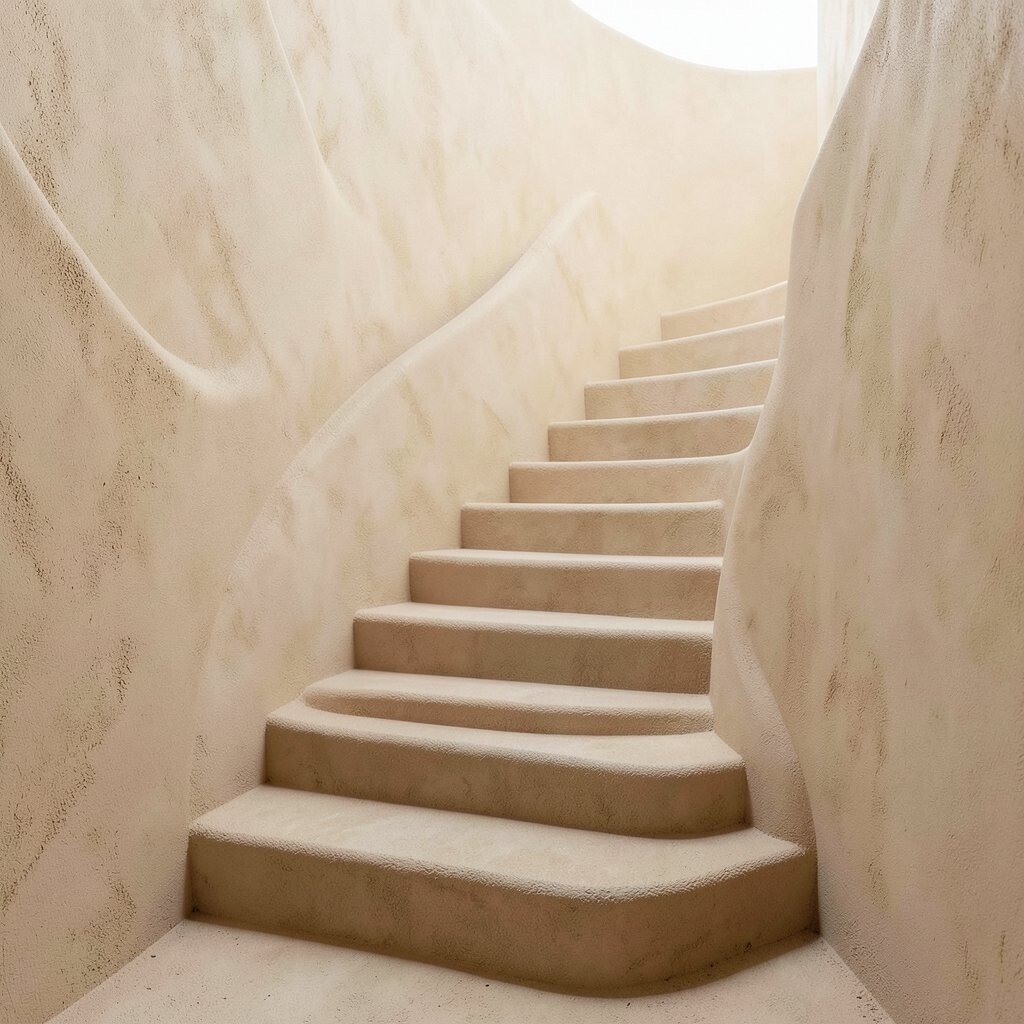
Picture the calm shape of sand dunes after wind smooths them into gentle curves. With slightly arched treads and a textured plaster finish on the side wall, your staircase can echo that same soothing motion.
Choose a microcement or lime-plaster finish in creamy beige, then blend in subtle flecks that resemble sand grains. The uniqueness comes from the way the wall texture catches light differently at each angle, making the stairs feel like a living surface.
This design can help your home feel brighter because warm neutral tones bounce light around. Keep maintenance easy by sealing the finish with a durable topcoat and wiping with a damp cloth instead of harsh cleaners.
For cost considerations, you can achieve a similar look by using textured paneling on the wall and installing standard treads over it. Personalize it by adding a narrow band of color where the wall meets the landing, like a sunlit stripe you’d see near the horizon.
5. Cedar-Lined Under-Stair Nooks Like a Forest Cabin
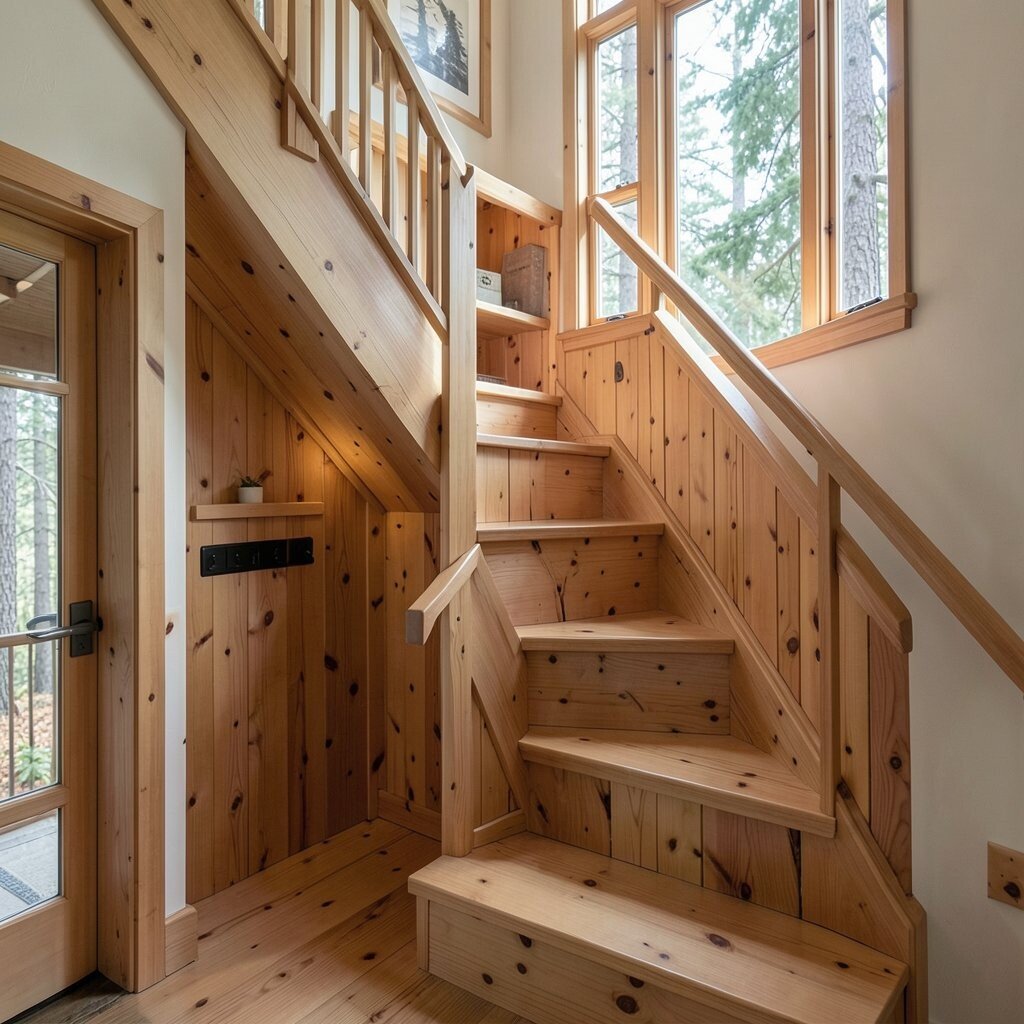
In many homes, the space under the stairs goes unused, but nature loves to make space feel cozy. By adding cedar paneling and small built-in storage under the risers, you can create a cabin-like vibe that feels warm every time you walk by.
Let the underside stay visible with smooth, light cedar boards, and use built-in shelves for shoes, books, or extra blankets. The benefit is both practical and emotional, since hidden storage keeps the main living areas tidy while the wood scent makes the space feel inviting.
Make it unique by adding a small boot-warming drawer or a recessed lantern light that glows softly at night. If you want a trend that feels current, choose simple joinery and matte finishes, since “quiet warmth” is in style.
6. Waterfall Glow With Glass Riser Inserts
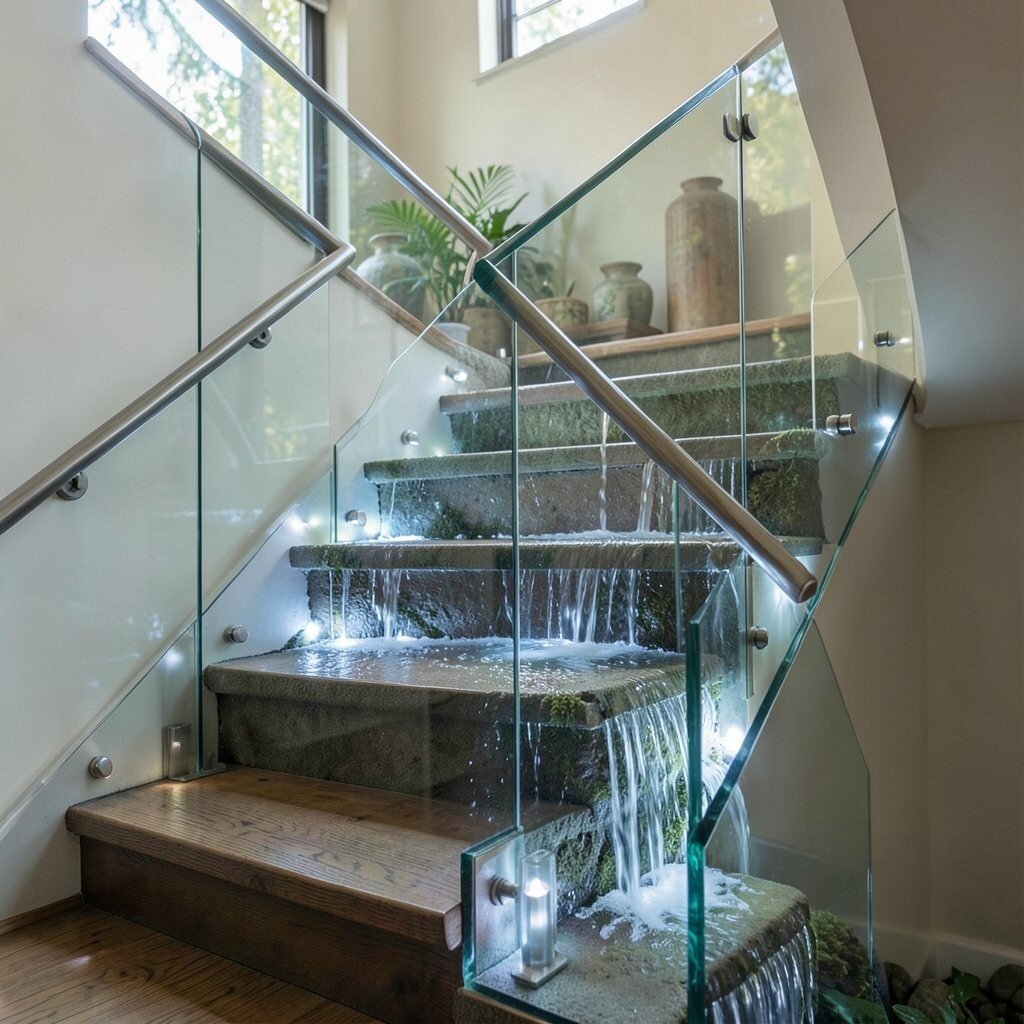
Imagine a waterfall, not as chaos, but as steady movement of light. Clear or frosted glass riser inserts can create that effect, especially when you light them from the sides.
Pair glass risers with sturdy wood or metal treads, and choose a frosted pattern that looks like flowing mist. This design’s strength is how it keeps the staircase bright, which is helpful if your entryway lacks windows.
For practical tips, use tempered glass and ensure proper seals so dirt doesn’t collect in gaps. Personalize the glow by using warm white lighting for cozy evenings, or add a subtle blue tint in one section to echo cool water.
Cost-wise, glass can be pricey, so a smart approach is to use it for only select risers on the main visible run. You’ll still get the waterfall feeling without stretching the whole budget.
7. Wildflower Mosaic Insets On the Landing
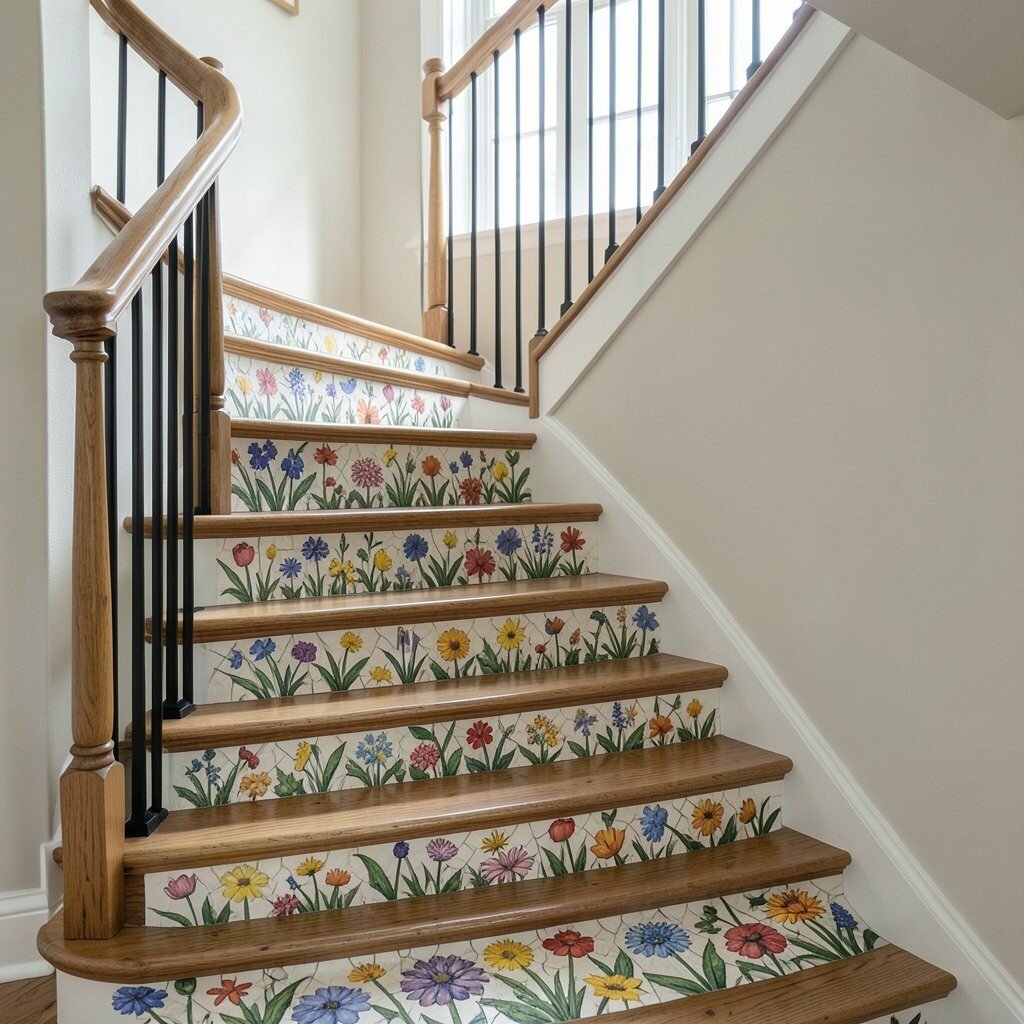
Instead of making the entire staircase decorative, focus on the landing where your eyes naturally pause. A small mosaic pattern that looks like wildflower petals can make the whole staircase feel like a garden gate.
Use hand-painted ceramic tiles or a ceramic mosaic panel embedded at the landing, then keep the surrounding steps in simple wood or neutral stone. The uniqueness is in the contrast, since a lively floral burst against clean treads feels like art without being loud.
To make it practical, choose tiles rated for floor use and seal them with a quality grout sealer. Personalize it by selecting flowers that match your home theme, like soft daisies for airy rooms or deeper marigold tones for a warmer space.
For a trend, consider mixing matte and lightly glossy tile textures so it catches light gently. If you want to reduce cost, use a smaller mosaic panel only at the center where people step and photograph.
8. Riverwood Stain With “Bark” Texture Treads
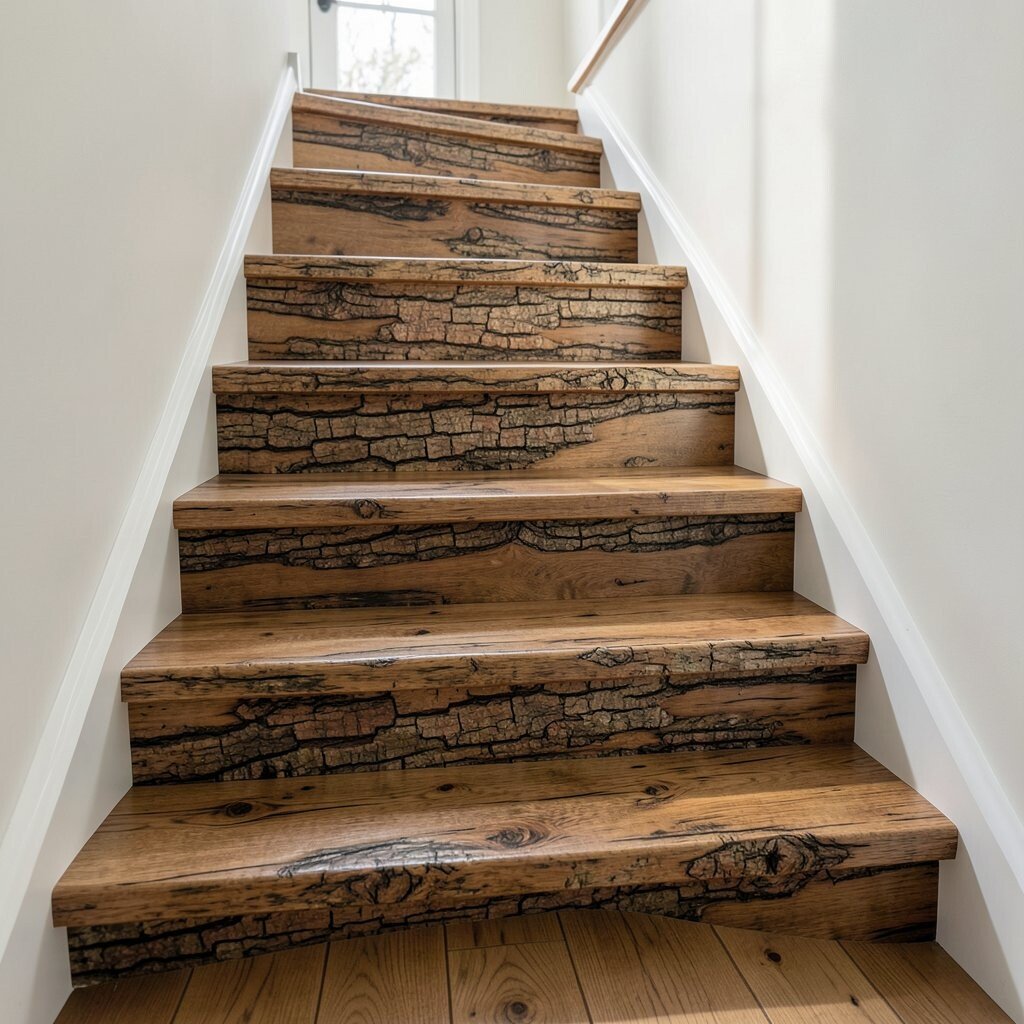
Some trees show texture in a way that feels both rugged and beautiful, and you can bring that mood indoors. A riverwood stain with a subtle bark-like grain on the treads gives you that outdoors feeling without needing real bark.
Choose a wood-look finish that shows dark swirls and lighter highlights, then add a lightly textured clear coat for grip. This design benefits safety because texture improves traction, especially on smooth floors where stairs can feel slippery.
For practical tips, test the finish sample on a spare board first, since lighting changes how grain looks. Personalize it by darkening the edges of each tread so the pattern feels like tree rings and adds depth.
Cost considerations are manageable if you use pre-finished treads instead of custom milling every step. You can also upgrade the look by replacing only the top tread surfaces while keeping the basic stair frame simple.
9. Stone Archway Stair With Lichen-Inspired Spacing

Picture the base of a rocky cliff where small plants cling to stone in neat, spread-out patches. A staircase design that uses stone-style cladding and spaced detailing can create that lichen-inspired rhythm.
Use a durable stone veneer on the wall side and build a repeating pattern of shallow ledges or recesses that look like tiny growth spots. The uniqueness comes from the micro-depth, because shadows fall inside the recesses and make the stair feel sculpted.
For benefits, stone-look finishes resist everyday scuffs and are great for busy homes. Keep it practical by sealing the veneer and choosing grout or mortar that matches your cleaning routine.
10. Rain-Track Steps With Linear Lighting Along the Stringer
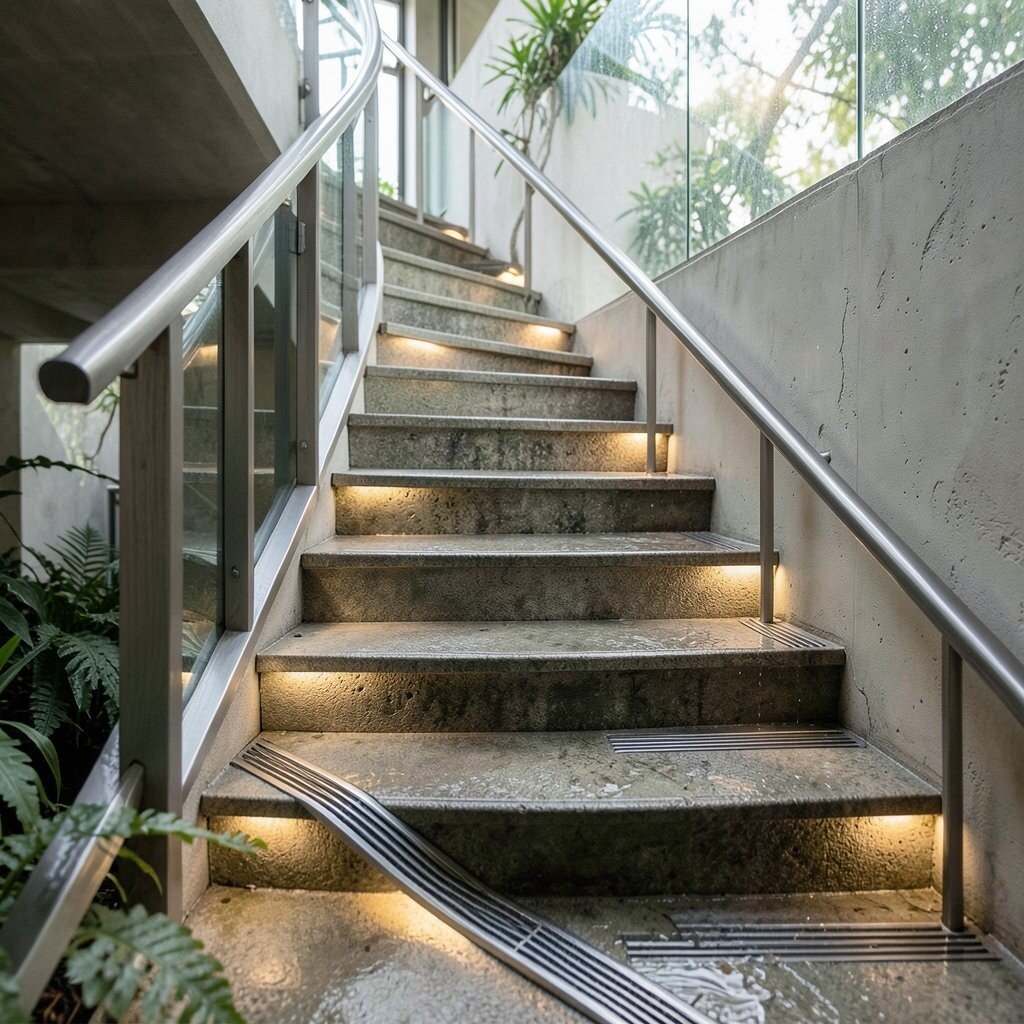
Light can behave like water, streaking and flowing along surfaces if you place it in the right path. Linear LEDs running along the stringer can mimic rain tracks, guiding the eye up the stairs.
Choose simple, clean treads and a white or weathered grey finish for the stringer, then install warm, diffused lighting in a straight line. This design benefits night safety because each step is easier to see, reducing the risk of missteps.
For practical tips, use dimmers so the brightness fits evening comfort and avoid harsh glare by adding diffusers. Personalize it by changing the lighting temperature, such as warmer glow for cozy rooms or slightly cooler for a crisp, modern feel.
If you care about current trends, the “hidden lighting” look is still popular because it feels sleek and high-end. Cost considerations can be kept low by using LED strips on one visible side rather than lighting every edge.
11. Autumn-Layering With Staggered Tread Colors

Autumn doesn’t just bring one color, it brings layers that change from leaf to leaf. You can mimic that feeling by using staggered tread colors across the staircase while keeping the overall look cohesive.
Start with a base wood tone, then add two or three complementary stains, like honey oak, warm walnut, and a soft reddish-brown. This staircase design is unique because it feels playful and seasonal, yet it can still match many interiors.
For practical tips, use durable clear coats and seal each tread evenly so colors don’t wear differently. Personalize it by repeating your favorite color pair from rugs, artwork, or curtains so the stairs feel like part of the room’s story.
If cost is a concern, you can paint only the underside of select risers or the first flight where it’s most noticeable. That way you get the layered autumn vibe without redoing every step.
12. Sunlit Arbor Stair With Curved Slat Panels
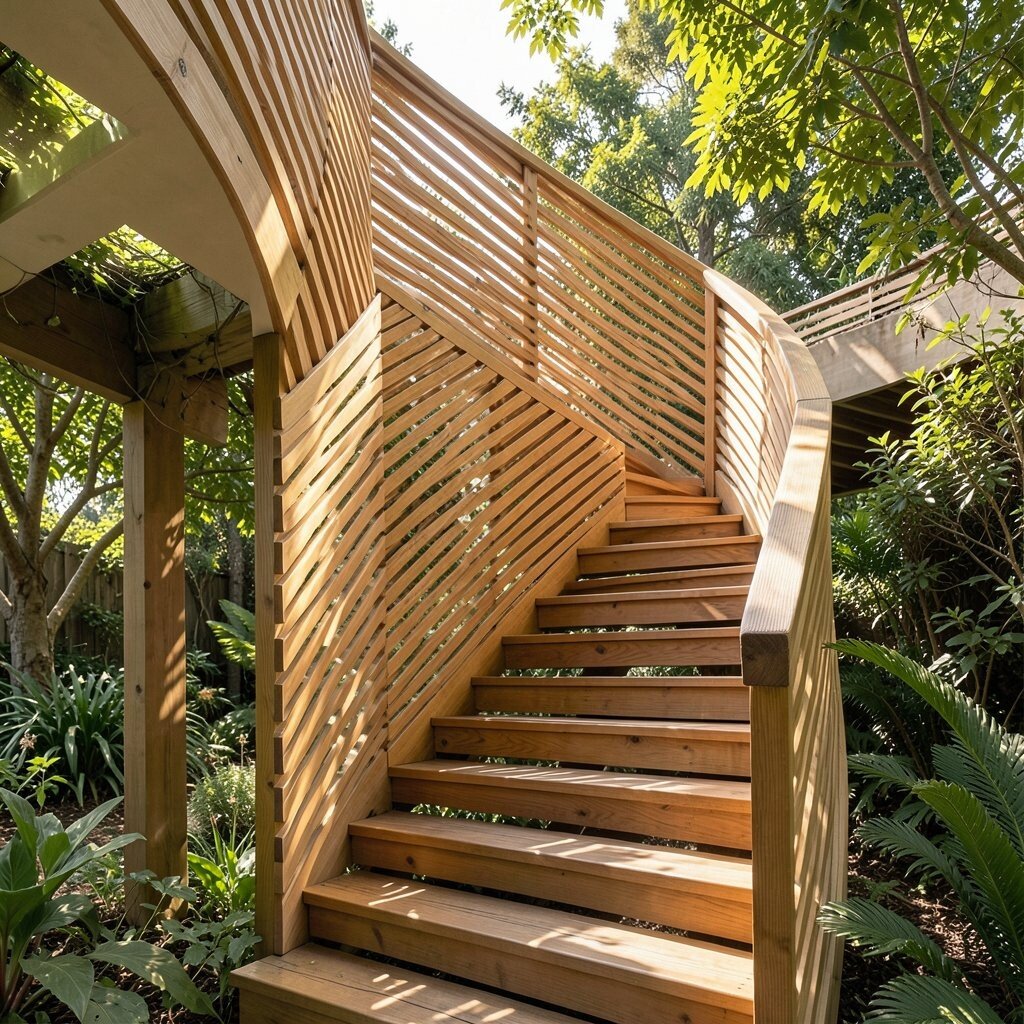
Imagine walking under a garden arbor where light filters through narrow slats. Curved slat panels placed along the staircase sides can frame the steps with a warm, airy pattern.
Use wood slats with consistent spacing, then install them in an arched line that follows the stair curve. The benefit is visual softness, since the slats break up solid wall mass and help the stair feel more open.
To keep it practical, make sure the slat panel is securely fastened and that there are no sharp edges where hands might pass. Personalize the look by choosing a slat width that matches your style, from slim modern slats to thicker rustic pieces.
Cost considerations depend on whether you build a full custom panel or use prefabricated screen sections, but either approach can look striking. For a current trend, go for matte finishes and subtle shadow gaps so the pattern casts gentle lines that change as the day shifts.