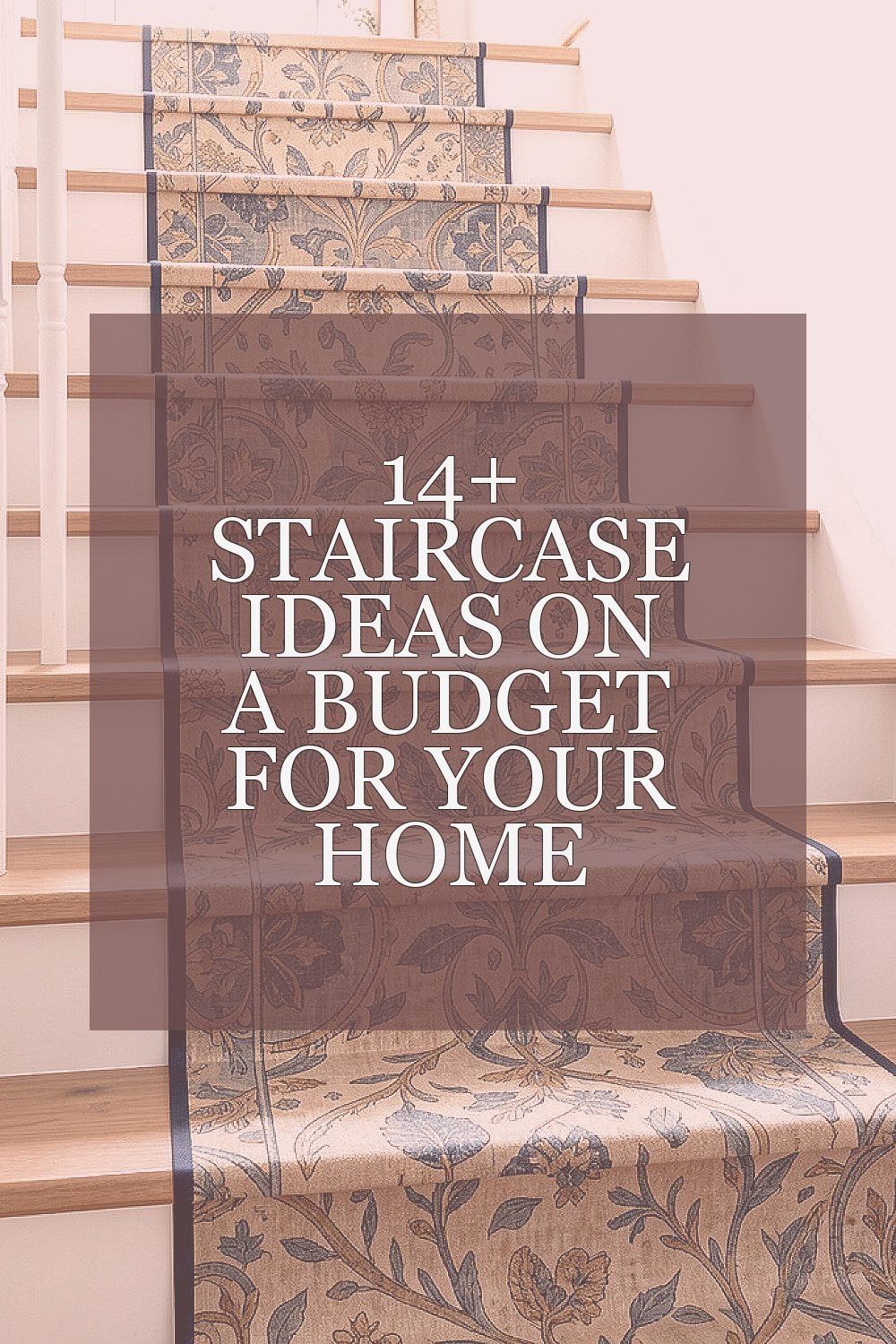
Your staircase takes up a lot of daily attention, even when you try to ignore it. With a few smart choices, you can make it feel fresh without draining your wallet.
These ideas focus on easy upgrades, stylish details, and budget-friendly materials that still look intentional.
1. Peel-and-Stick Runner Look With Real Visual Impact
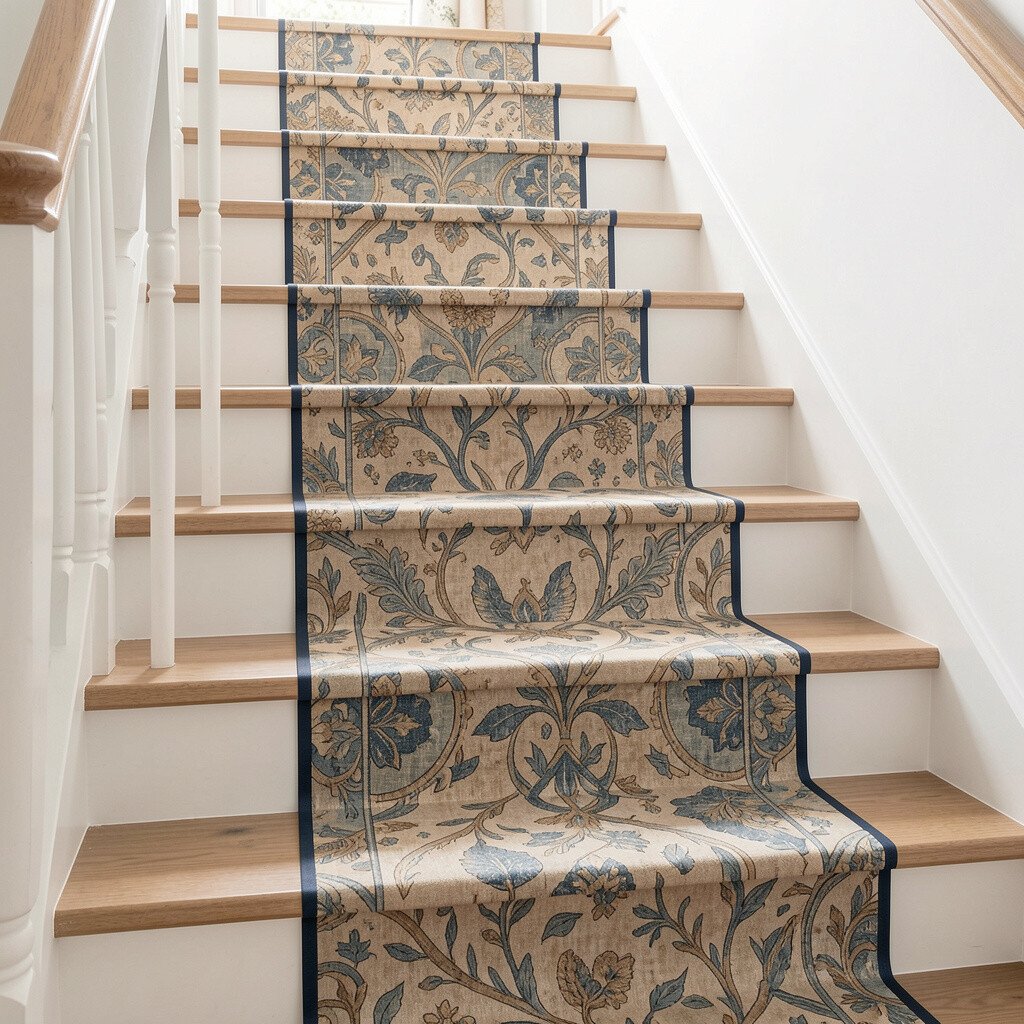
Imagine stepping onto a staircase that looks like it has a custom runner, with crisp edges and a clean pattern. You can get that effect by using peel-and-stick stair tread covers designed for grip, which also protect your steps from scuffs.
Pick a pattern that matches your home, like soft stripes for calm spaces or small geometrics for a lively vibe. Measure your tread sizes carefully and buy extra for tricky corners so you do not end up short. If you want personalization, choose a color that echoes your front door or your hallway art and repeat it across the steps for a tied-together feel.
2. Paint the Riser to Add Color Without Major Work
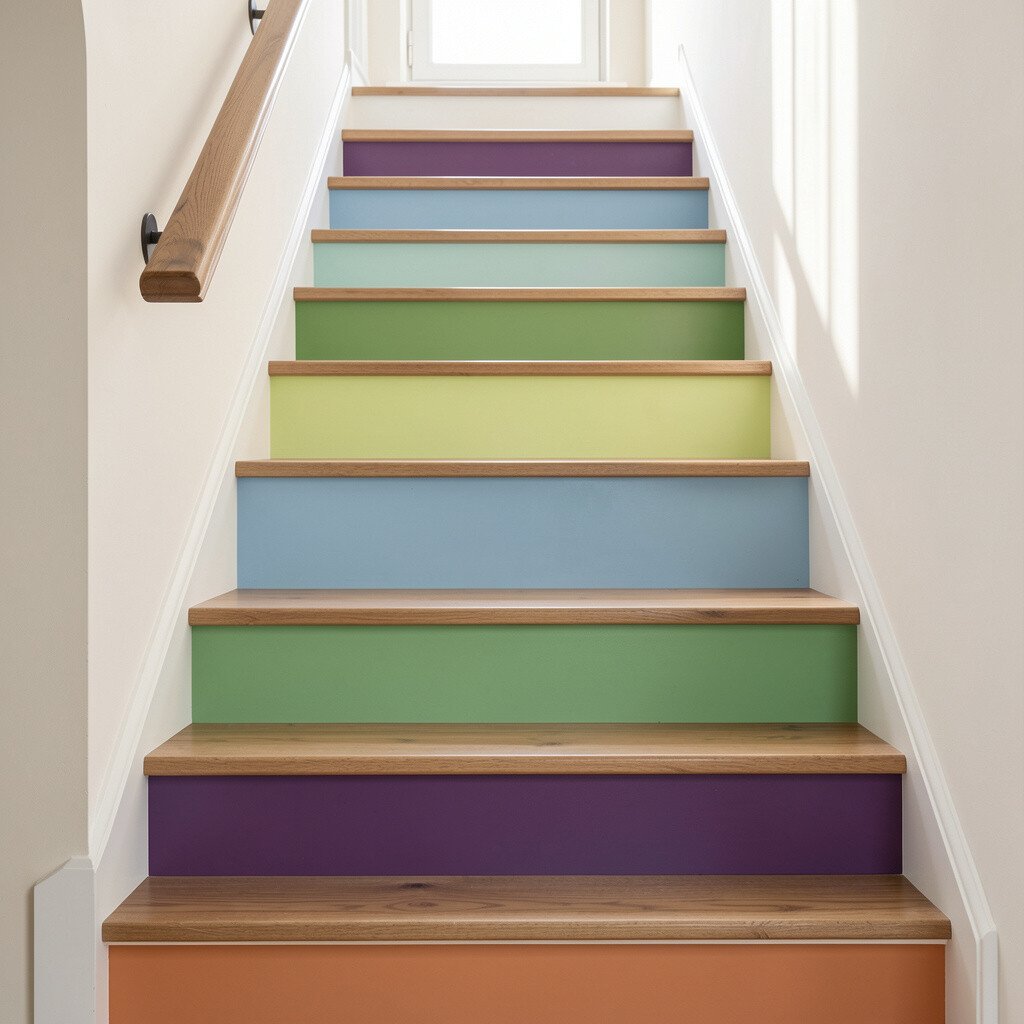
A quick coat of paint on your stair risers can make the whole staircase look newly designed. When the treads stay neutral and the risers pop, the staircase feels brighter and more modern.
Use a semi-gloss or satin paint so it wipes clean and stands up to daily foot traffic. Go with one bold shade for a dramatic look or two coordinating shades for a softer gradient feel. For trends right now, people are pairing warm neutrals with muted jewel tones because it feels stylish but not flashy.
To keep costs low, use samples first and paint a small section before committing. You can also use painter’s tape to create sharp lines and reduce the need for touch-ups later. If your staircase has carpet edges, paint only the visible risers so you avoid messy transitions.
3. Upgrade the Banister With Budget-Friendly Paint or Stain
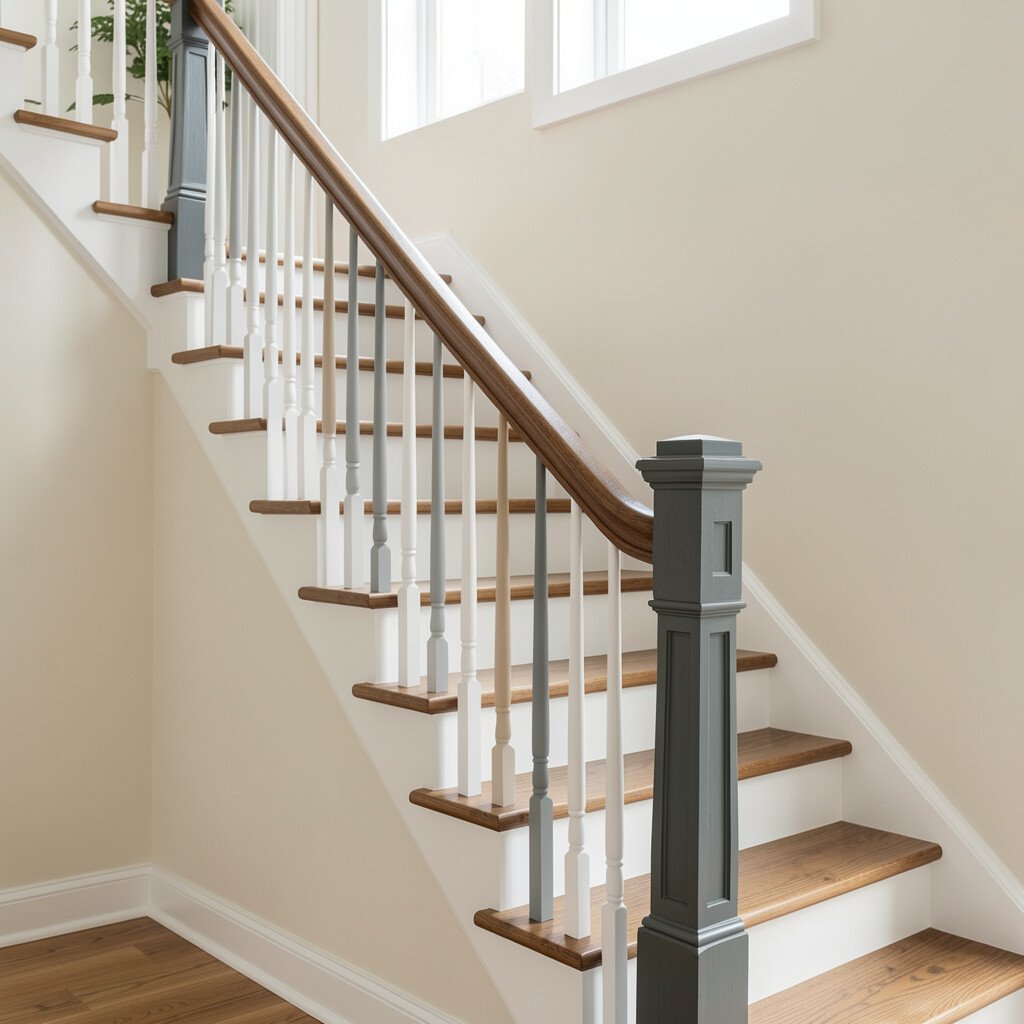
Your banister is like the staircase’s main character, and a small finish change can make it feel brand new. A fresh coat can hide worn spots, smooth the look of wood, and brighten a darker entry area.
Sand lightly, wipe off dust, and apply paint or stain based on what your banister needs. If you choose paint, a satin finish usually looks smooth without feeling slippery. If your home style leans farmhouse, a warm white or soft gray can look cozy, while deep walnut tones can feel more grown-up.
For practical success, work in thin layers and let each coat dry fully before handling the banister. Personalize by matching the banister color to picture frames or cabinet handles nearby. This upgrade is often cheaper than replacing the railing and you get a big visual win fast.
4. Add a Simple Gallery Wall Above the Stairs
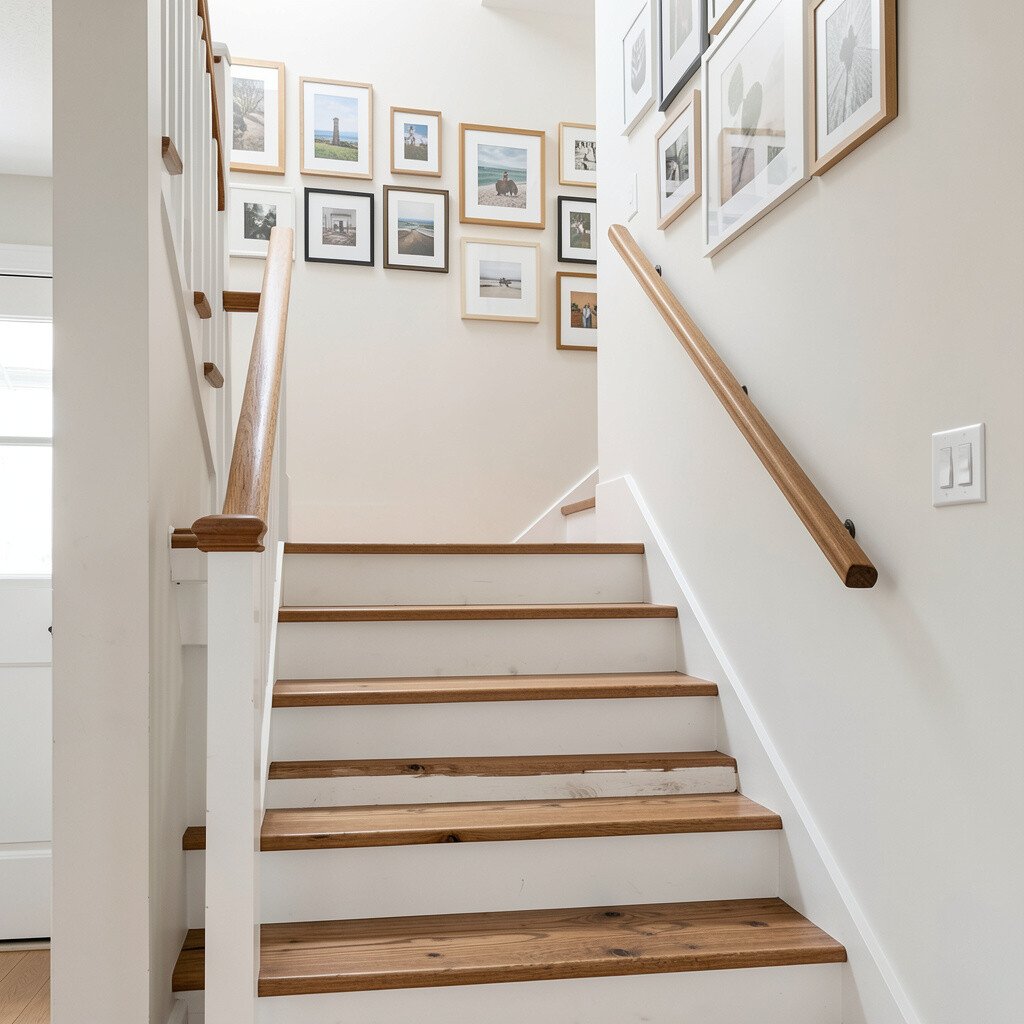
The wall above the staircase is a natural spot for style, because people see it while moving through the home. A small gallery wall can make the area feel curated, even if you only buy a few pieces.
Use inexpensive frames from craft stores, thrift shops, or discount shelves, then swap in prints that match your theme. Family photos, vintage maps, and simple line drawings all look great at staircase height. A fun trend is mixing frame colors, like pairing black frames with light wood frames for a relaxed, collected look.
5. Replace Old Hardware With New Knobs and Hooks
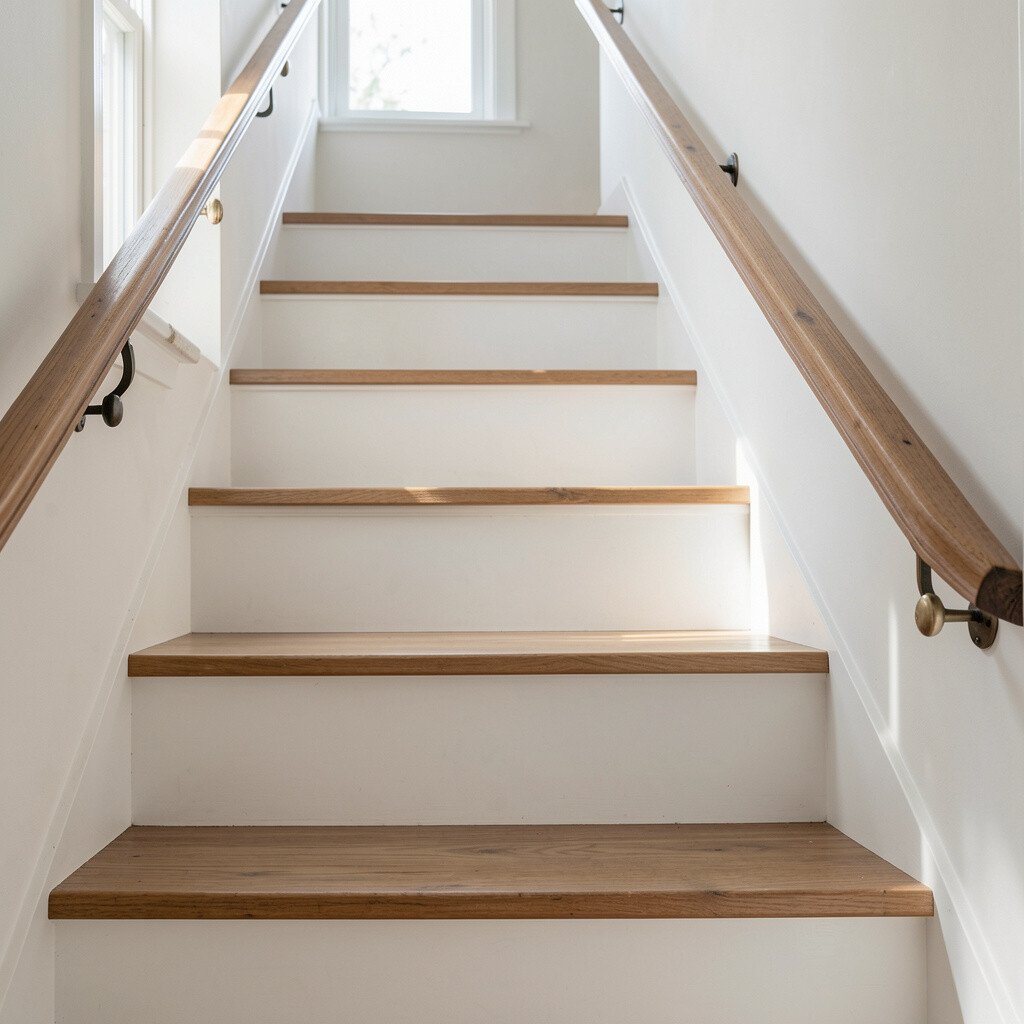
Sometimes the fastest staircase upgrade is not what you paint, but what you touch. Swapping outdated knobs, hooks, or small trim pieces near the stairs can make the whole space feel cared for and updated.
Choose hardware that matches your room’s metal tones, like brushed nickel with matching light fixtures. Look for sets that include small pieces so you can update multiple spots without overpaying. If you want uniqueness, pick hardware with a distinct shape like rounded pulls or subtle curves.
For cost planning, check your local hardware store for sales and bundles, and compare online prices the same day. You can personalize by using one repeating metal tone throughout the staircase area so it looks intentional. Keep installation easy by reading the screw size on your current pieces before buying replacements.
6. Use Wall-Mounted Sconces for a Cozy Glow
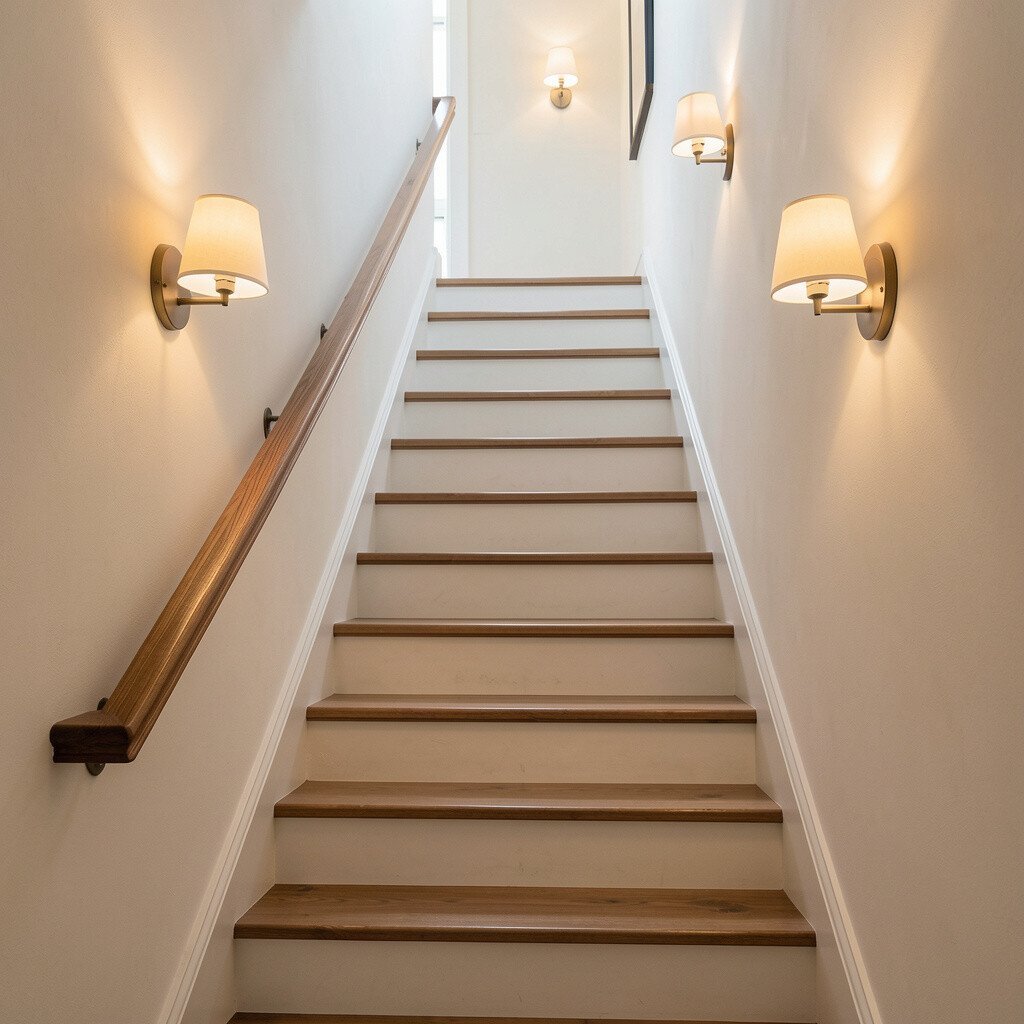
Lighting can make your staircase feel warmer and more inviting, especially in the evening. Even budget sconces can change the mood because the glow highlights paint color, wall textures, and decor.
Pick fixtures that match your style, like simple globe lights for modern homes or vintage-style shades for classic spaces. If wiring feels like a hassle, choose plug-in wall sconces that include mounting templates. For practical tips, keep the brightness comfortable so the steps feel safe without harsh glare.
To stay on budget, shop for floor model clearances or last-season finishes. Personalize by placing sconces at similar height to your artwork so the whole area feels balanced. This upgrade also helps you spot steps more clearly, which is great for safety and everyday life.
7. Create a “Shadow Box” Look With Paneling That’s Affordable
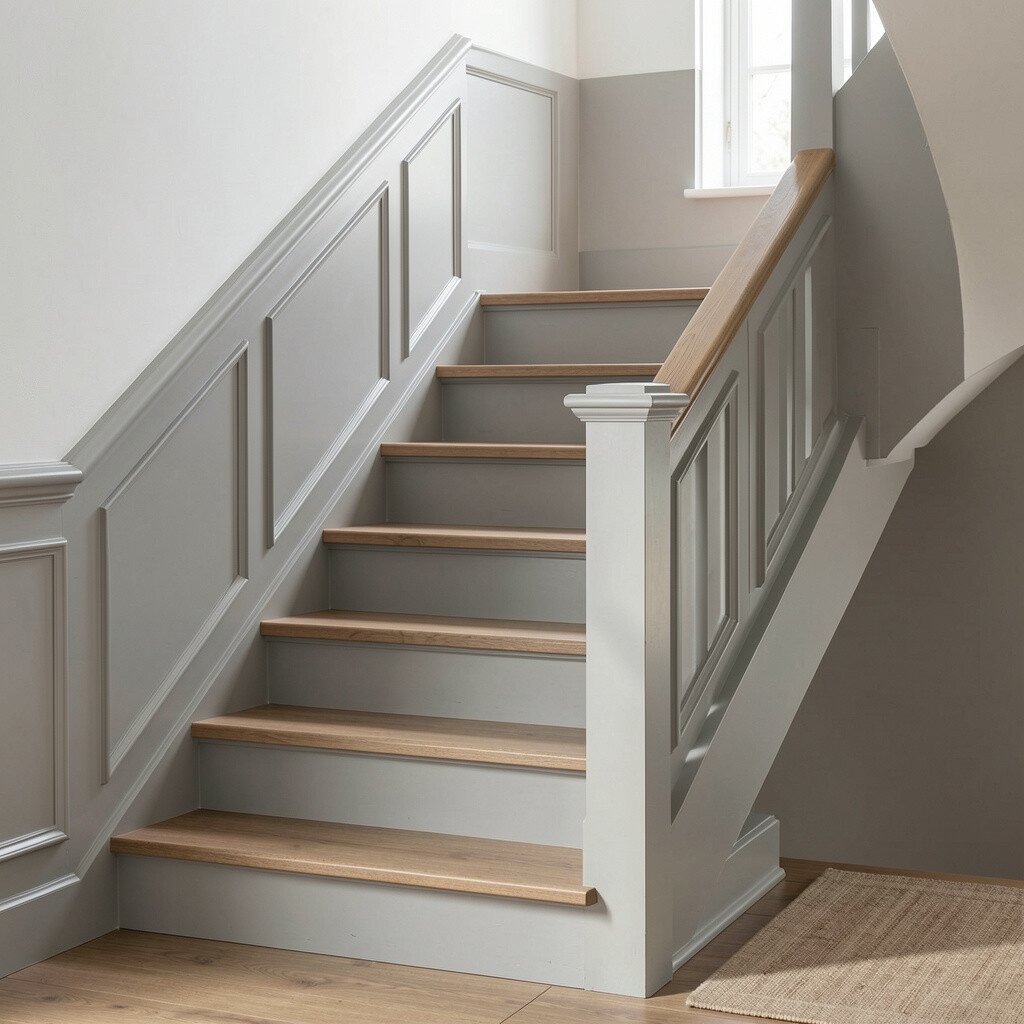
If you love the look of built-in wall details, you can borrow that style without pricey construction. Simple wall paneling kits, peel-and-stick faux panels, or even removable board strips can add depth and texture around the staircase.
Pick a design that fits your home, like vertical strips for a taller feel or small squares for a classic look. Make sure the panels are rated for your wall type and can handle light cleaning. This gives the staircase area a uniqueness that feels custom, even when you installed it yourself.
For cost considerations, measure your wall first and buy only what you need, then plan for extra for cuts. Personalize with paint colors that match your hallway so the staircase becomes part of a connected look. A clean, textured backdrop also makes framed photos stand out more.
8. Style the Steps With Simple Table-Runner-Style Decor
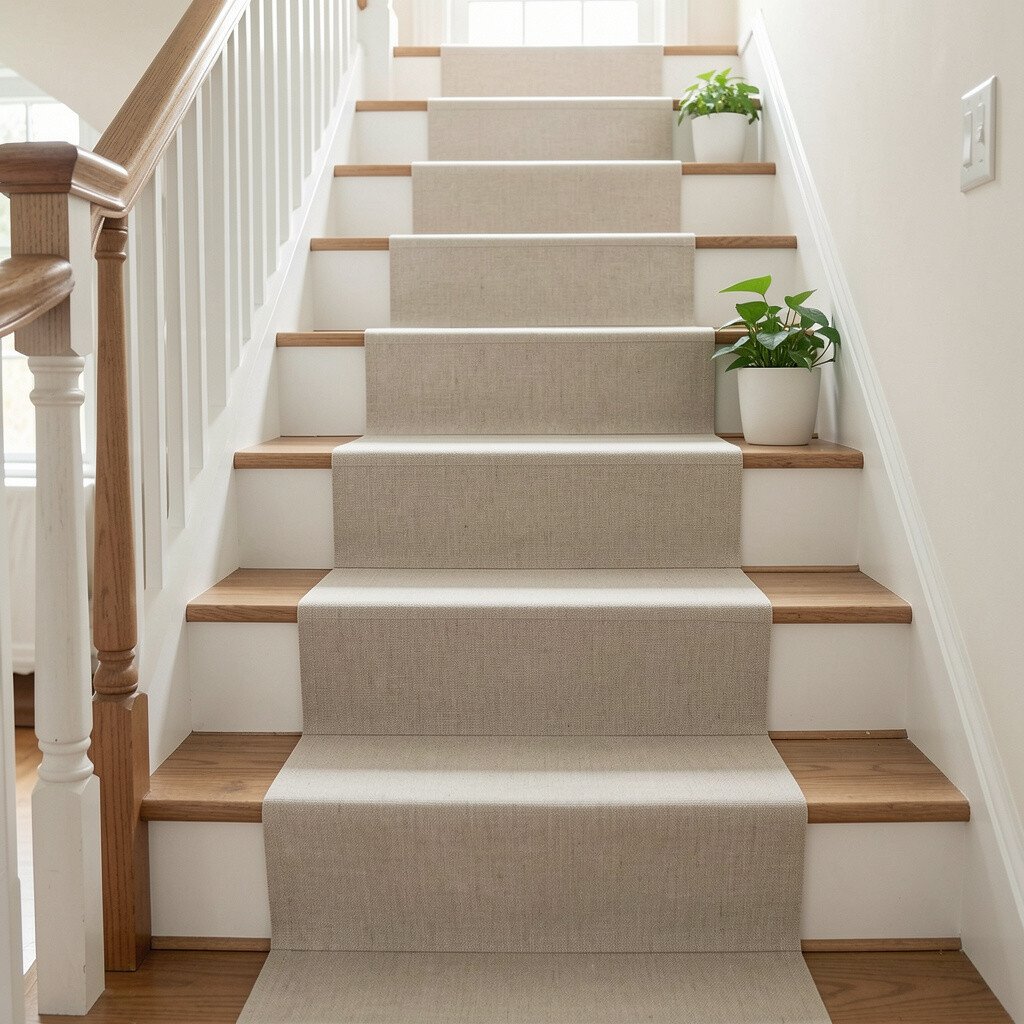
Instead of covering every inch of the staircase, you can decorate with smaller runners that still look stylish. The result feels airy and layered, which is perfect if you like a lighter look.
Choose a runner that has grip backing or use stair tread covers with a runner-like pattern. Keep the design consistent by using the same colors across multiple steps. If you want personalization, place a runner with a repeating motif like tiny florals or subtle stripes so it feels intentional rather than random.
For practicality, avoid anything too bulky that could catch on shoes. Budget-wise, buying shorter lengths for key steps can cost less than full coverage. This method is great when your staircase gets partial wear in the middle, because you can focus your decor where it matters most.
9. Stencil a Subtle Pattern on Bare Treads
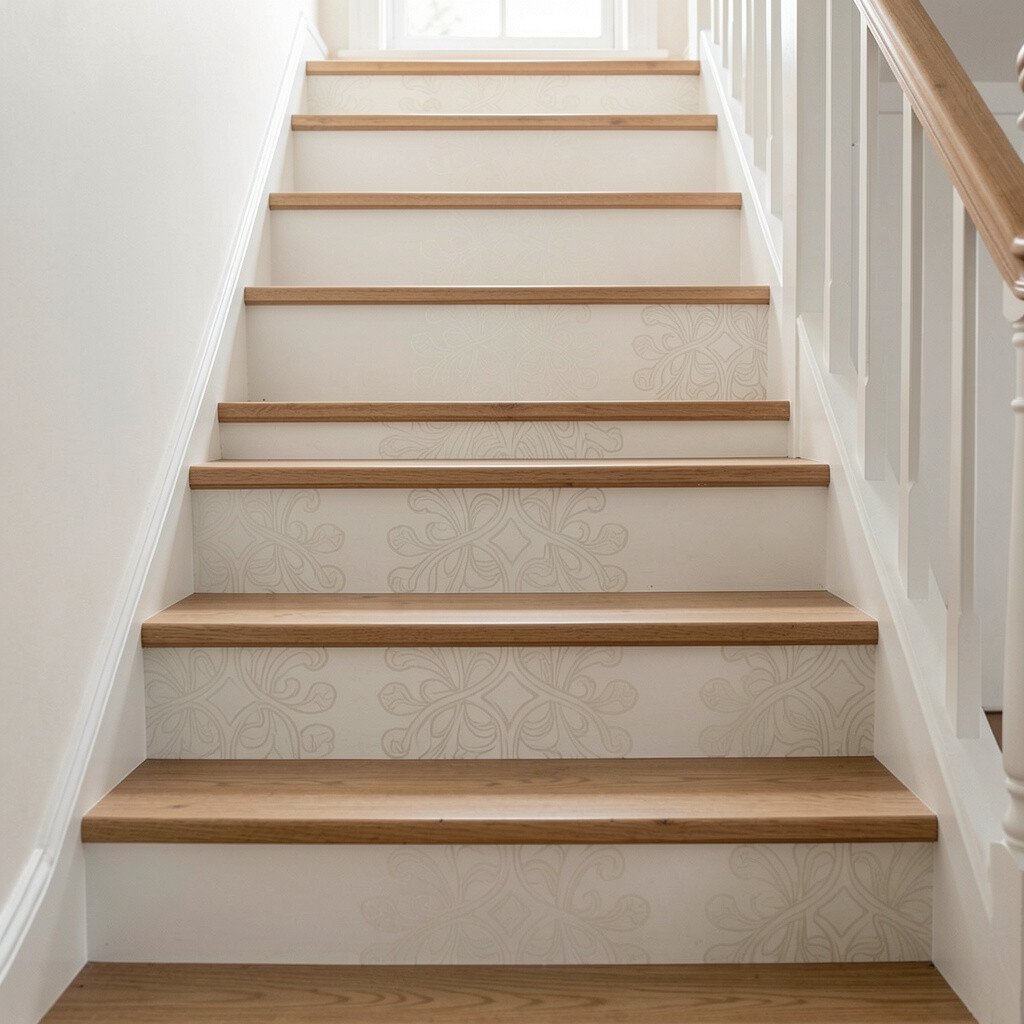
Stenciling turns plain stair treads into small pieces of art, without needing expensive materials. A repeat pattern can look high-end because your eyes catch the detail with every step.
Start with clean, sanded wood or sealed surfaces so paint sticks well. Use painter’s tape to lock down the stencil and apply thin layers for crisp edges. Practical tip is to test your stencil and paint on a scrap board first so you can see how it spreads.
For uniqueness, try a pattern inspired by tiles, like a mini chevron or tiny lattice. Keep costs low by using a single stencil and working step by step. Personalize by matching the pattern color to your banister or the art on the wall above the stairs.
10. Add Non-Slip Treads and Make Them Part of the Design
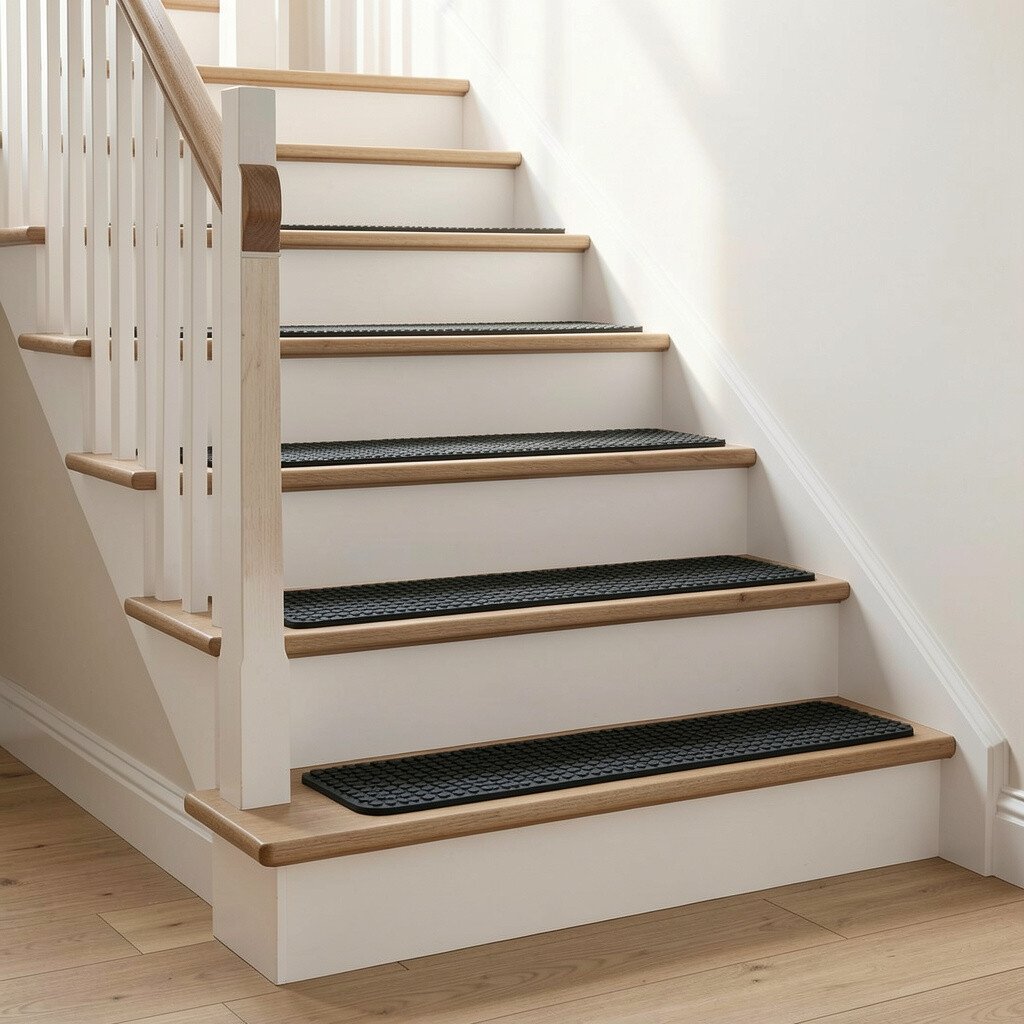
Safety can be stylish when you choose non-slip tread covers that look good, not just functional. The right treads reduce slipping and protect your staircase from everyday scuffs.
Look for covers that have attractive finishes, like neutral tones, wood-look patterns, or subtle textures. Choose sizes that fit your step edges closely so the look stays clean. A current trend is using natural textures and muted colors so the staircase feels calm and modern.
To keep costs down, measure accurately and buy a set that matches your tread count. You can also mix one slightly darker accent color for a personalized look without buying an entirely new system. This upgrade is practical, durable, and a great place to spend when you want visible value.
11. Refresh the Stair Walls With Texture Using Paint Techniques
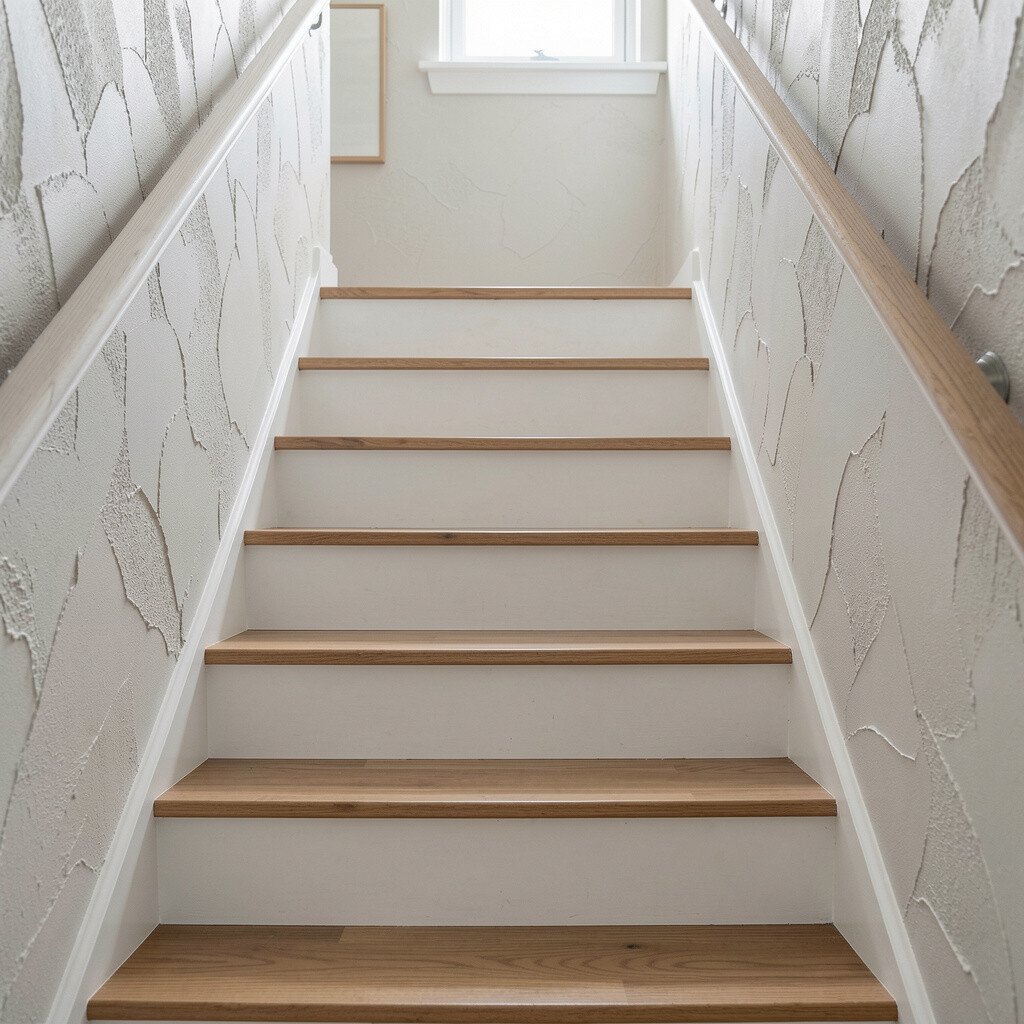
If your staircase wall feels flat and plain, texture can make it feel richer. Simple paint techniques can add dimension and interest, even when you only use paint and common tools.
Try a light sponging effect or a rag-rolling texture for a soft, forgiving finish. The key is to keep the pattern subtle so it does not feel busy, especially in a narrow hallway. This also hides small marks better than smooth paint, which is helpful for high-traffic areas.
For practical tips, use a base coat first and let it dry completely before adding texture layers. Personalize by matching your texture tone to your decor, like warm beige for cozy rooms or cool gray for a clean look. Budget-wise, texture methods usually cost less than wallpaper, and paint is easy to touch up later.
12. Hang a Woven Basket or Two for Functional Style
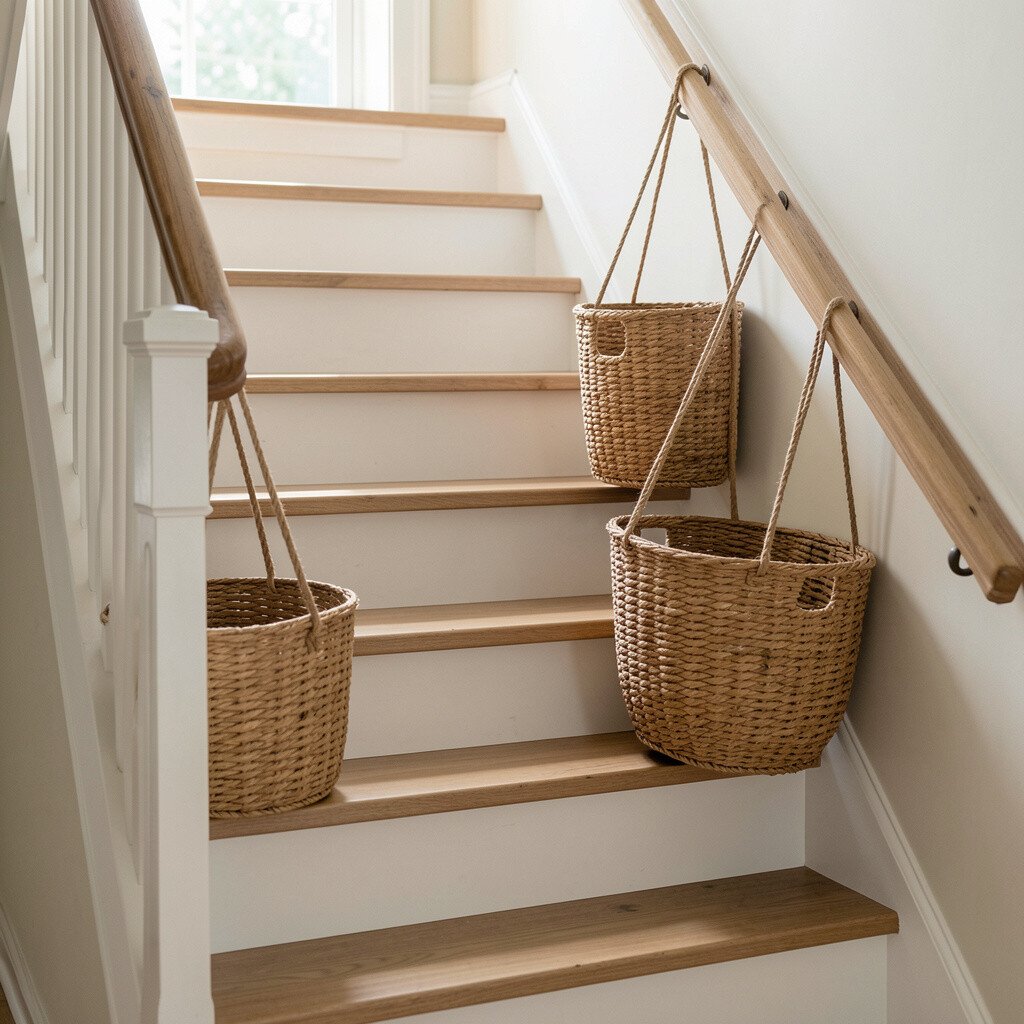
Decor that also serves a purpose can make the staircase area feel organized and welcoming. Woven baskets tucked into corners or placed on a small stand near the steps add warmth without extra renovation.
Choose baskets that match your home materials, like natural rattan for airy spaces or darker woven styles for contrast. Put items inside that you already use, like extra throws, cleaning supplies, or kids’ toy storage. This helps the area stay tidy while still looking designed.
To make it unique, vary sizes and place them at different heights so the look feels collected rather than uniform. If you have limited space, use smaller baskets and place them on the floor instead of mounting everything. Cost considerations are usually friendly here because baskets can be found on sale, thrifted, or bought in sets.
13. Add a Budget-Friendly Stair Mirror for More Light
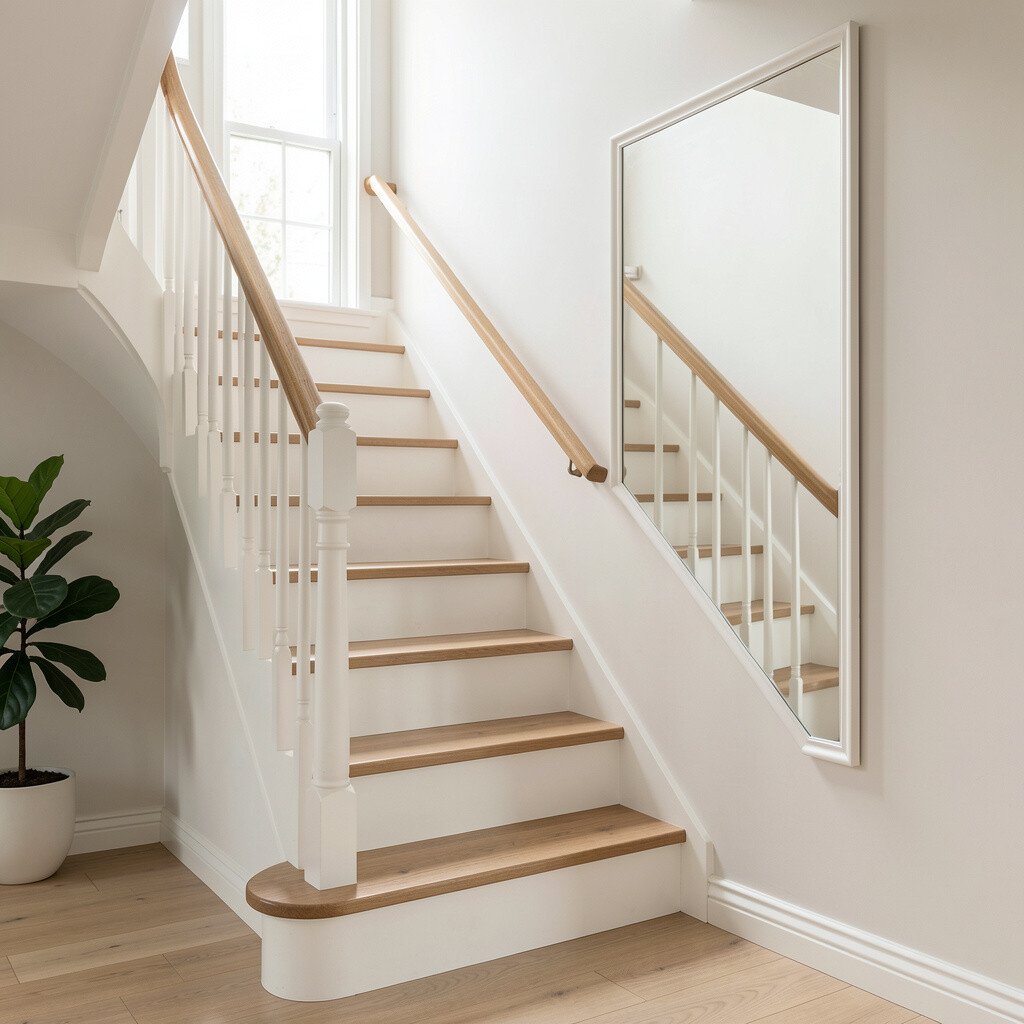
A mirror on or near the staircase can make the hallway look bigger and brighter. It bounces light around and helps your space feel more open, especially in narrow areas.
Look for a simple frame at a discount store or check thrift shops for solid styles. To personalize, paint the frame color to match your banister, or add removable trim for a custom edge. People are also enjoying rounded and oval mirrors lately because they soften the straight lines of stairs.
For practical placement, hang the mirror where it will not block walking paths or create glare in your lights. If you cannot drill into the wall, use strong picture-hanging strips made for your surface type. This is a budget-friendly way to create a statement look without major changes to the staircase itself.
14. Make a Stair-Step Plan With Removable Fabric Panels
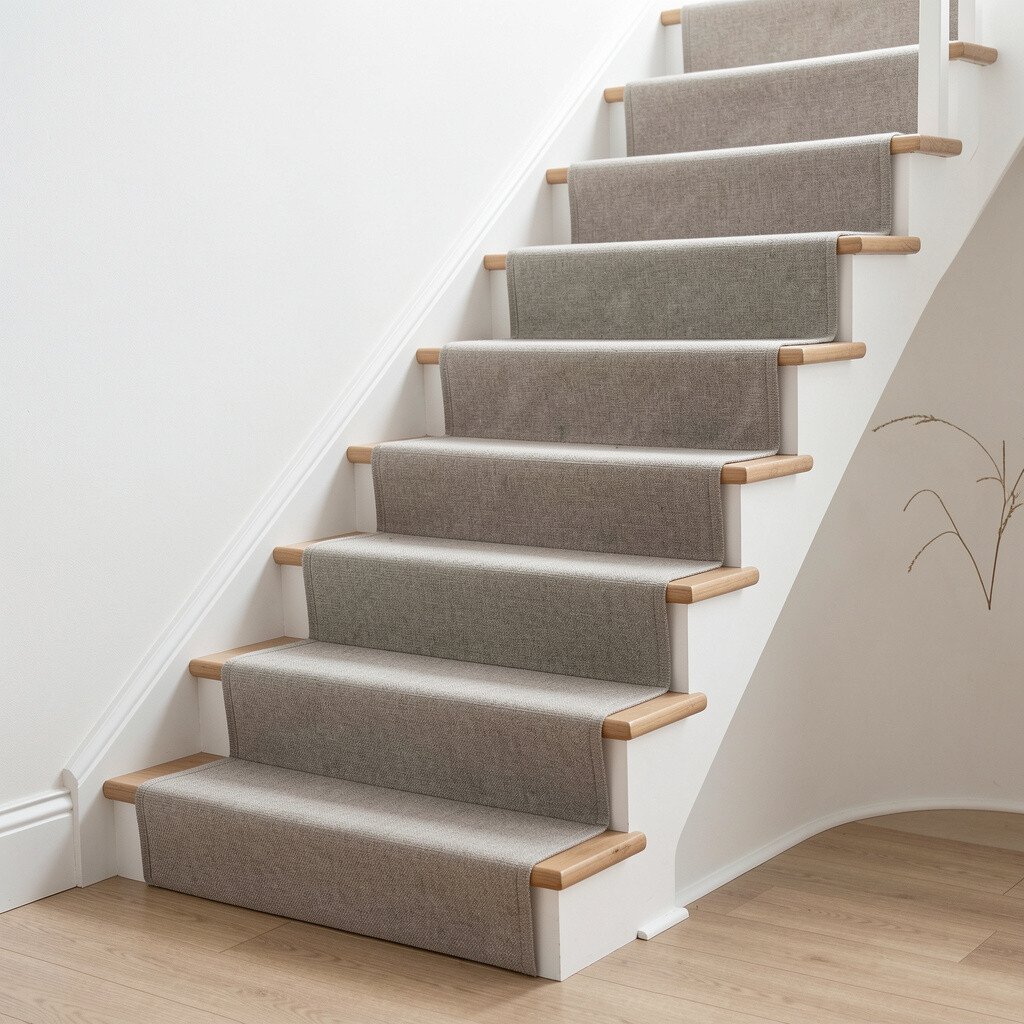
Want a staircase makeover without committing to permanent changes? Removable fabric panels can bring color, pattern, and comfort while staying flexible for seasonal updates.
Choose durable, washable fabric and use a system that holds it securely on your steps or side area. You can use adhesive-backed Velcro strips or hidden ties depending on your staircase design. This is especially helpful if you rent or if you like updating your home often.
To keep the look tidy, stick to one theme across panels, like coastal stripes or warm botanical prints. Personalize by changing fabric colors for holidays while keeping the same basic setup. Cost-wise, fabric can be cheaper than full covering solutions, and you can often reuse it in new rooms later.
15. Finish With Decorative Molding and Trim Details That Count as “Custom”
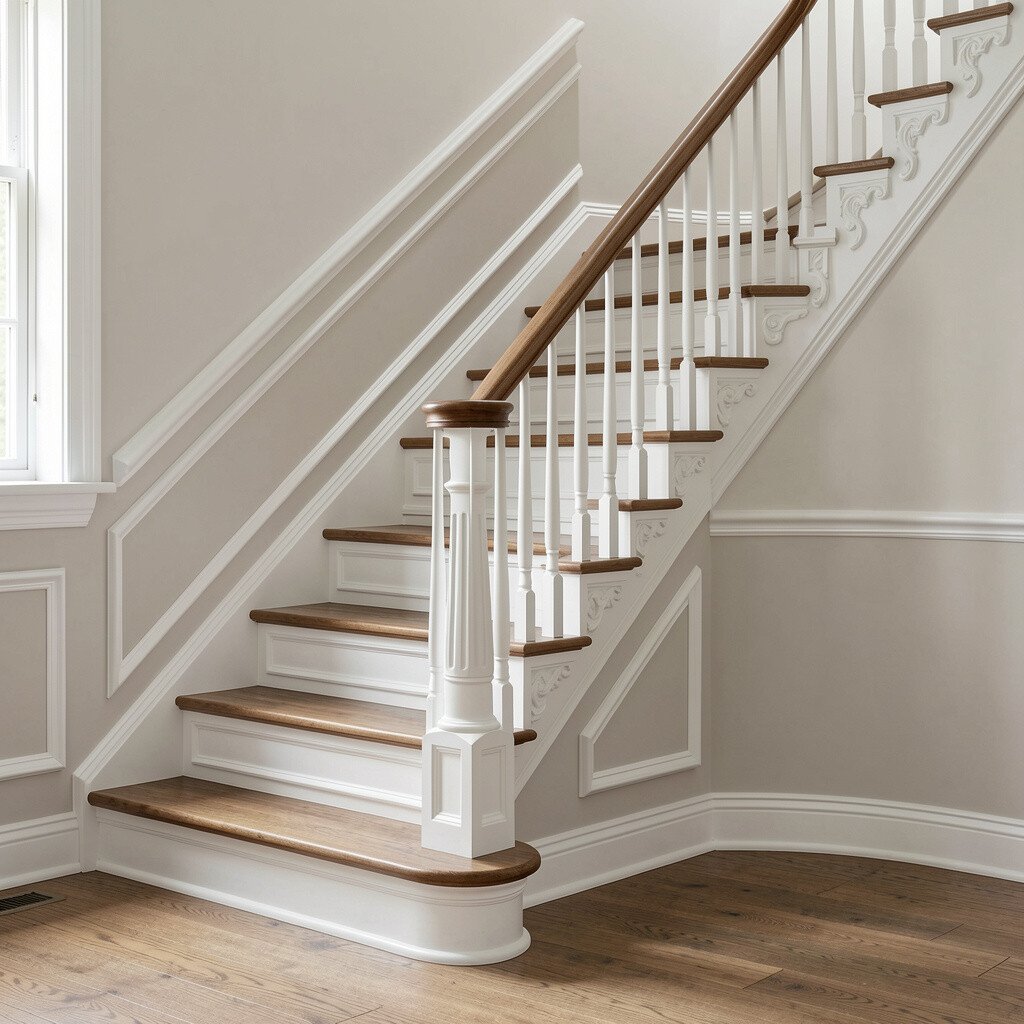
Trim and molding details can make a staircase feel like it came from a renovation magazine. Even small upgrades around the wall edges can frame the staircase and make the entire entry feel more polished.
Use budget-friendly trim strips, corner pieces, and lightweight molding that is easy to cut and install. Paint everything to match the wall or banister for a seamless, intentional look. A practical tip is to measure twice and plan your cuts so you do not waste material on small mistakes.
For uniqueness, choose a trim pattern that suits your style, like simple square lines for modern homes or slightly curved profiles for a classic vibe. Personalize by repeating the same molding style in another nearby area so everything feels connected. If you want to watch costs, shop for offcuts or clearance trim and focus on the most visible sections first.