The moment you step onto your stairs, your home starts telling a story. A refreshed floor can make that story feel new and personal.
Even small changes can add comfort, safety, and style, without turning your life upside down.
1. Warm Wood With a Fresh Clear Finish
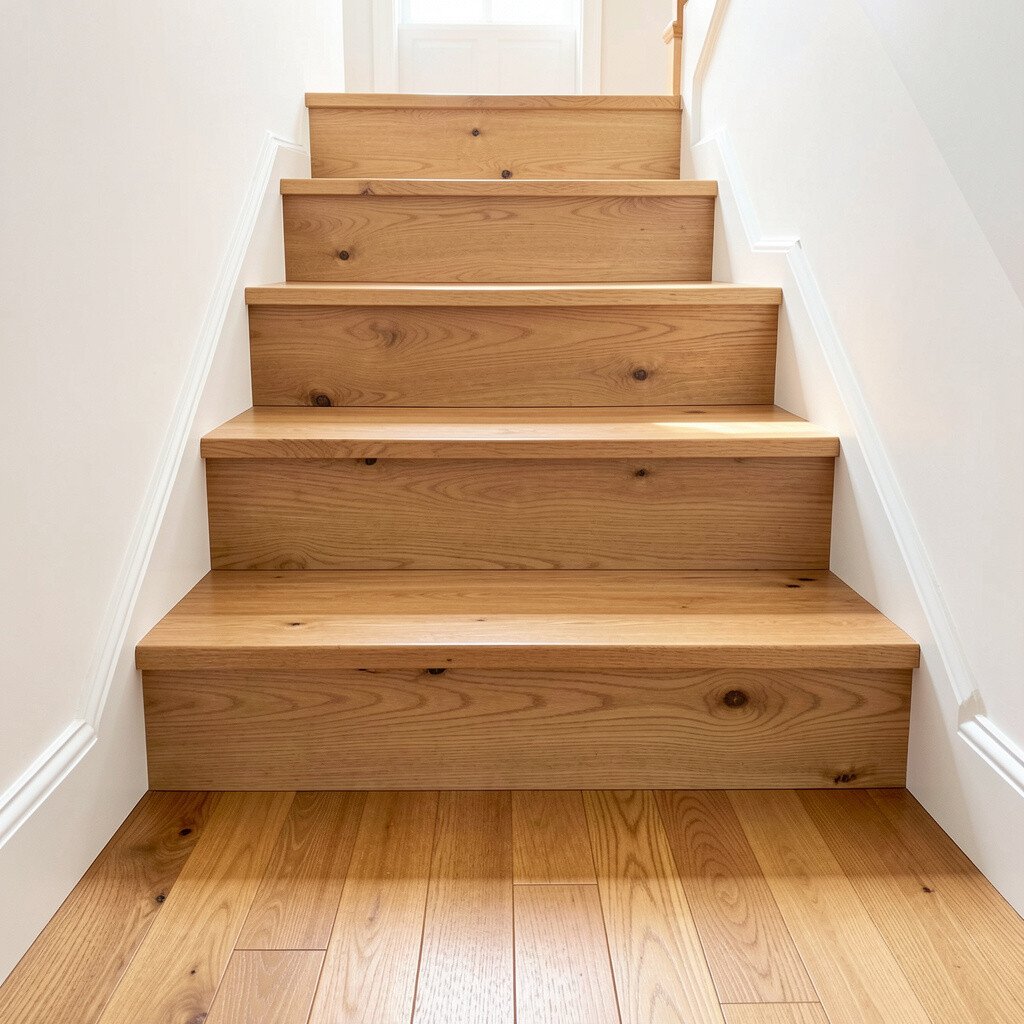
Picture how your stairs look when the grain glows in the daylight. A clear finish can bring warmth back to tired treads and landings.
When wood is sealed well, it feels nicer underfoot and holds up to daily scuffs. You can choose a matte, satin, or gentle gloss so the sheen matches your living room mood.
To keep the look even, sand carefully and remove dust before you apply any coat. If your stairs get heavy traffic, plan on a durable topcoat and allow proper drying time between layers.
2. Cozy Stair Runners With Stain-Resistant Fibers

Imagine stepping onto soft patterns that guide you up and down. A runner adds visual rhythm while protecting the original floor.
Stain-resistant fibers help your stairs stay presentable after everyday spills. Plus, runners can soften echoes, which makes the whole hallway feel calmer.
Measure the stair width, then pick a backing and grip that matches your style and safety needs. For a more custom feel, consider alternating stripes or mixing a subtle motif with solid edging.
If you’re working with a tight budget, look for remnants or roll-ended lengths in popular colors. Choosing a neutral base with a slightly brighter pattern can give high impact without needing a full redesign.
3. Bold Geometric Tiles for a Modern Landing
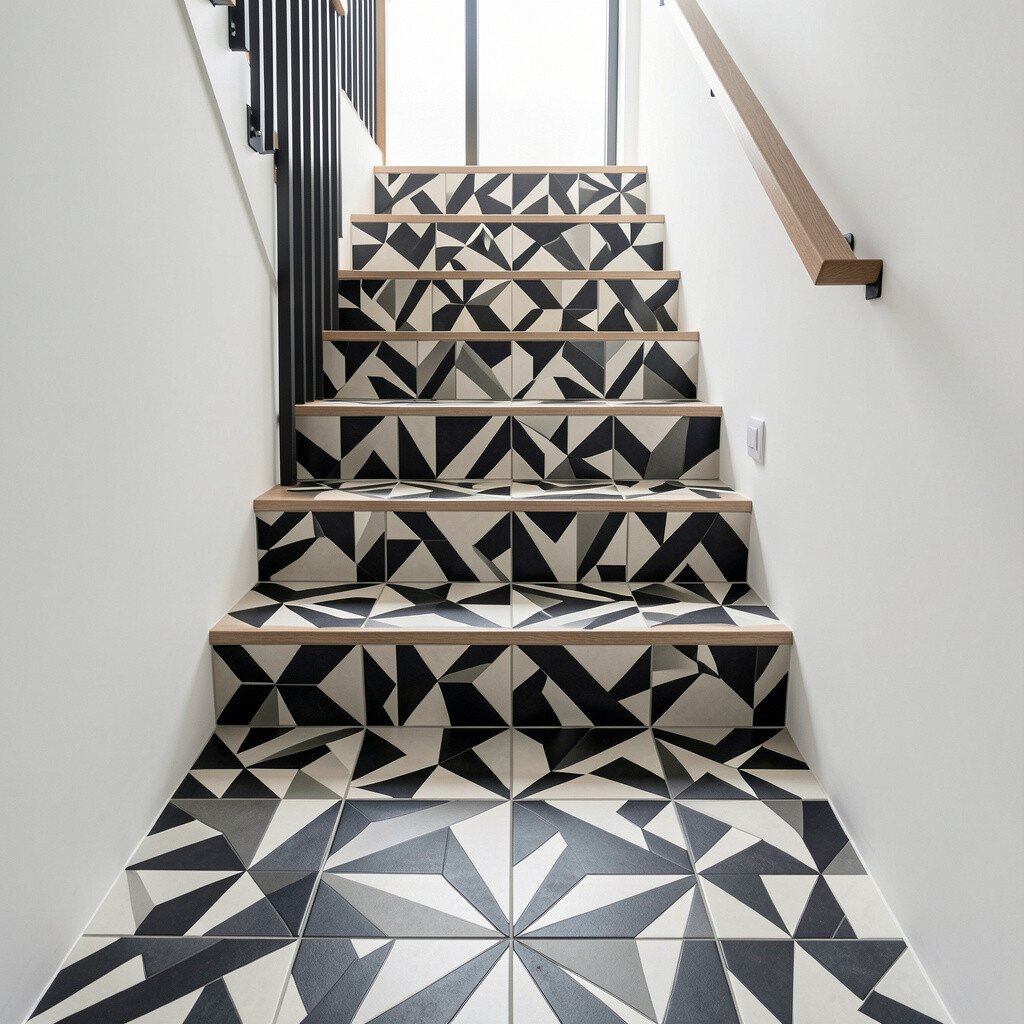
Think about a landing that greets you with clean shapes and sharp lines. Geometric tiles can make your stairs look designed, even when the rest is simple.
Tiles bring strong durability and are great for busy homes with lots of foot traffic. They also give you room to play with color in a contained area.
Use slip-resistant tile or add a treated surface so the steps feel secure. If your stairs have odd angles, dry-lay the pattern first so the symmetry looks intentional.
For personalization, match tile colors to your kitchen backsplash or hallway artwork. You can also limit the boldness to the landing and keep steps calmer for a balanced look.
Costs vary a lot by material, so start by setting a comfortable range for tile, underlayment, and labor. Many homeowners find it’s more budget-friendly to tile only the landing and not every riser.
4. Paint-Grade Treads in a Soft Two-Tone Look
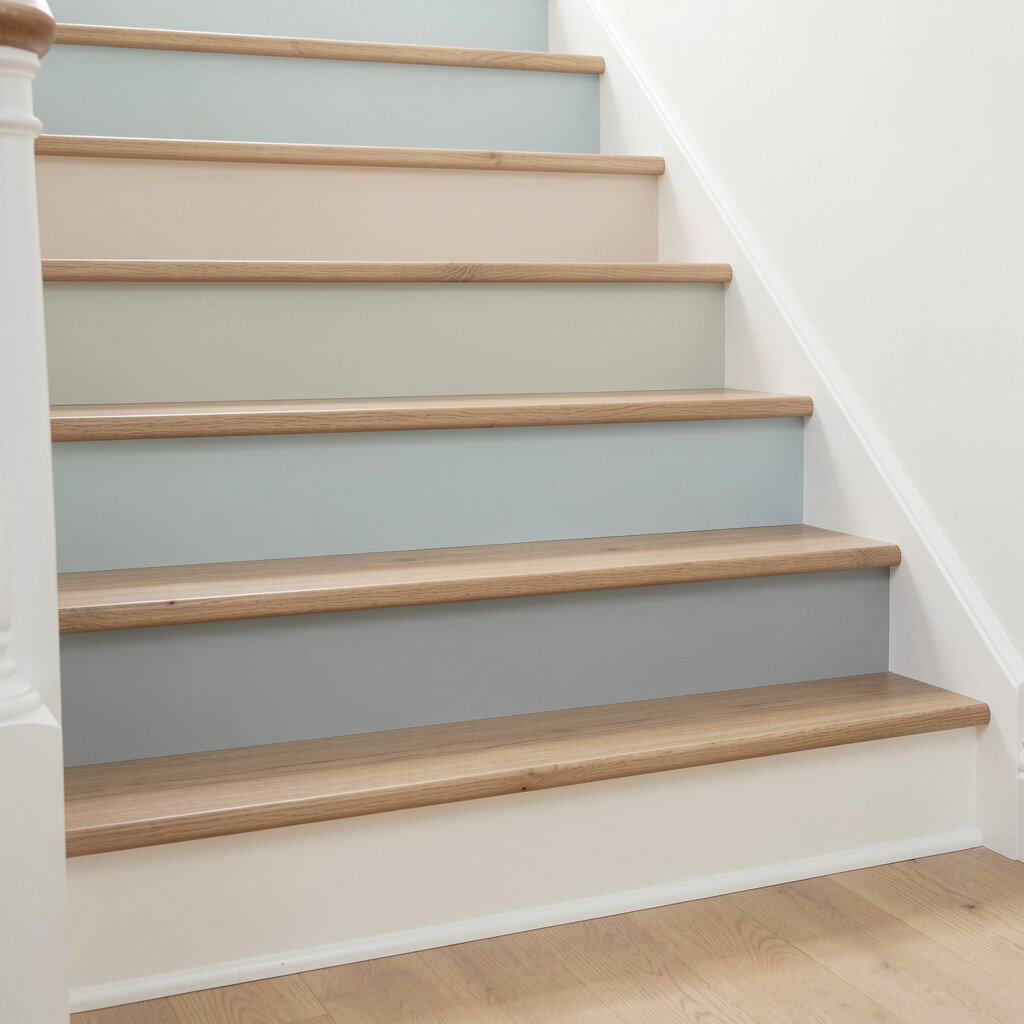
Visualize two shades that gently separate each level as you climb. A two-tone paint job can make stairs feel wider and more organized.
Paint is one of the most practical upgrades if you want a quick style change. When you use a bonding primer and a tough topcoat, the finish stays nicer longer.
Try painting the tread edges one color and the face of the step another. This simple framing trick works especially well in homes with modern trim details.
To keep it clean, use painter’s tape and a small angled brush for crisp lines. If you want a trendy mood, pick a warm greige plus a deeper charcoal for contrast.
5. Oversized Vinyl Planks for a Seamless Feel
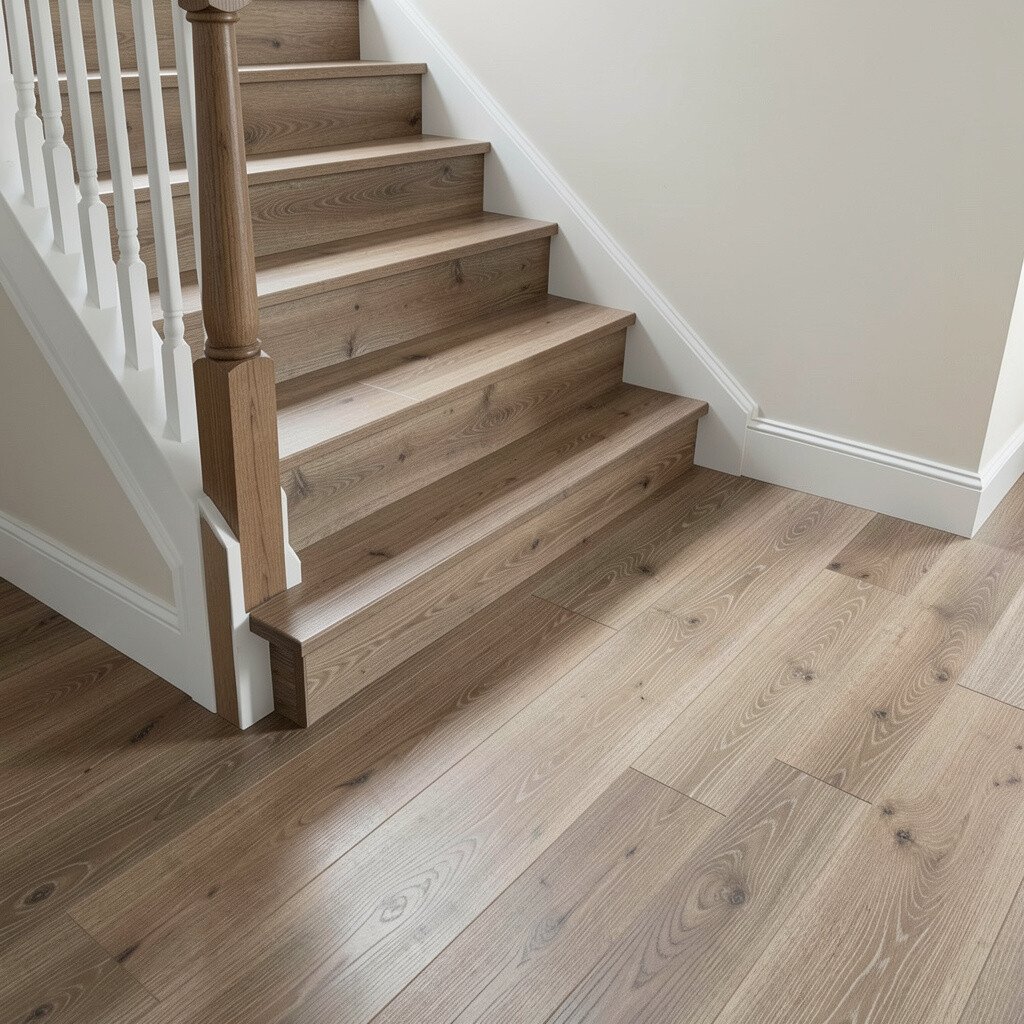
Picture stairs covered in clean, continuous boards that look like the rest of your floor. Large-format vinyl planks can create that “all connected” vibe without heavy remodeling.
Vinyl can be easier to install and more forgiving than many other materials. It’s also good for moisture-prone entryways because it resists everyday dampness.
For best results, choose planks made for stairs, then plan the direction of the pattern so it flows naturally. Make sure you have the right adhesive or click system for secure steps.
If you want personalization, echo the plank tone with matching wall paint or a hallway runner. Many current styles lean toward wide planks in oak-like shades for a calm, modern look.
Cost-wise, vinyl often sits in a friendly middle range, especially when installation is DIY. Still, set aside extra for transitions and stair nosing so everything looks polished.
6. Patterned Stencils on Existing Floors
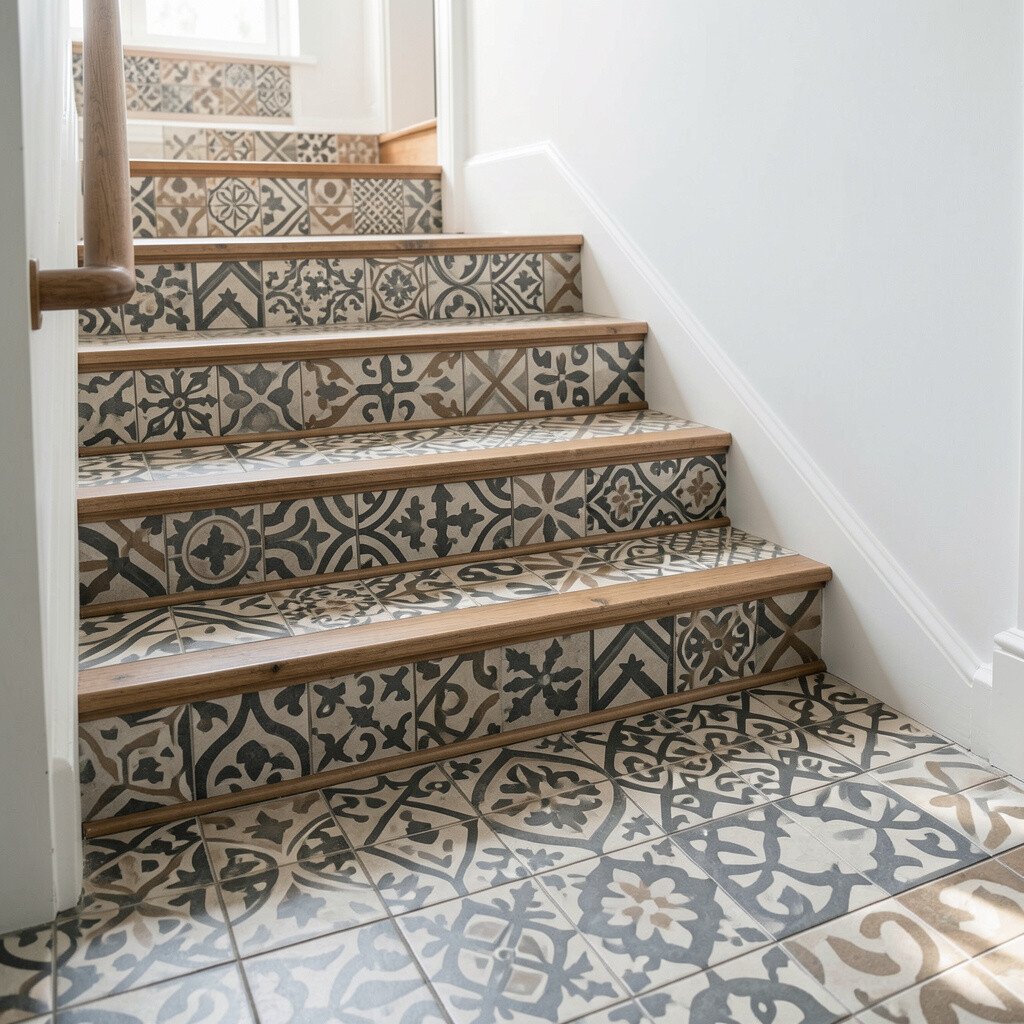
Close your eyes and imagine the steps wearing a design that looks custom. Stenciling lets you keep the original floor but still change the whole personality.
This approach can be budget-smart because you’re working with what you already own. It also gives you flexibility to match the design to your favorite artwork colors.
Start by cleaning and sanding the surface, then use a stencil that fits your tread width. Stain or paint works best when you seal the pattern afterward to protect it from wear.
For personalization, pick a repeating motif like small florals, subtle chevrons, or a minimal border. A current trend is using soft, tonal patterns that don’t fight with furniture.
7. Metallic Step Edges for a Glam Touch
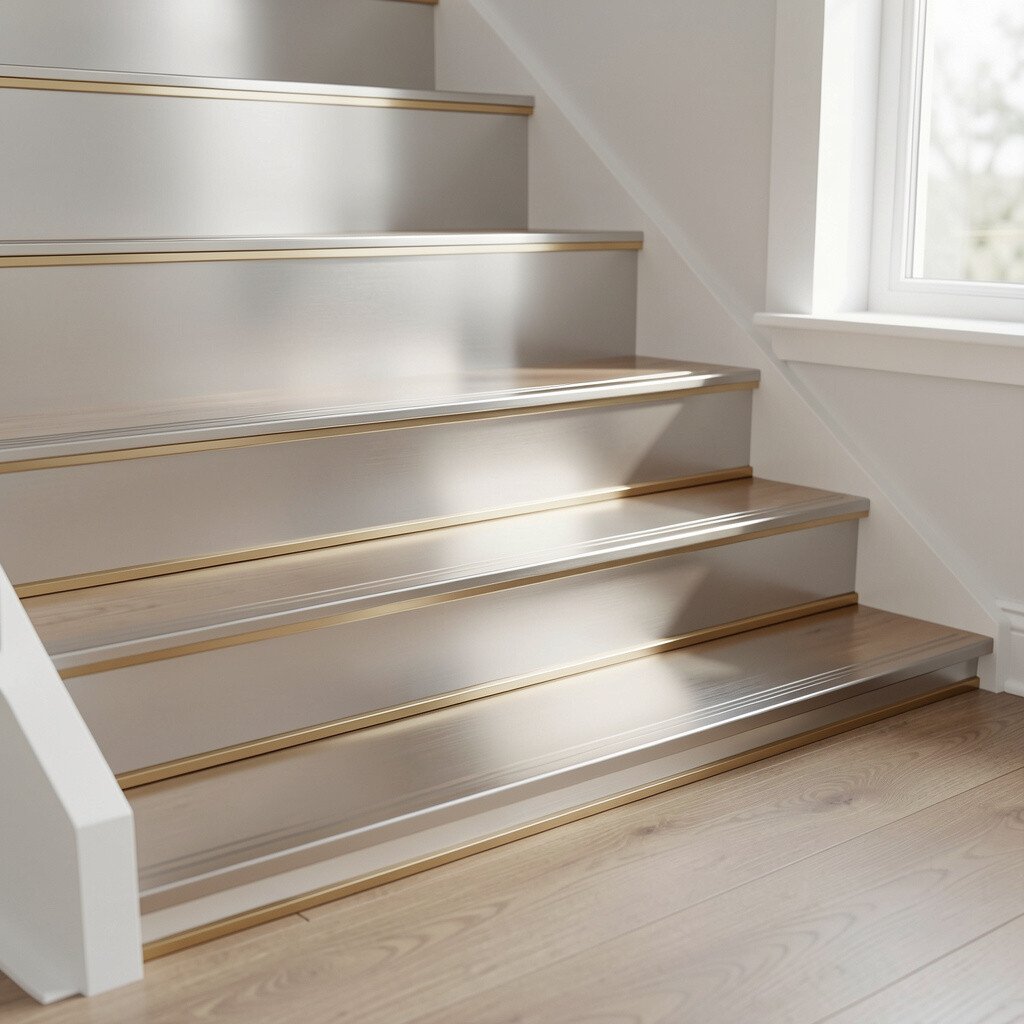
Think of sunlight catching slim metal lines as you walk. Metallic step edges can add sparkle without covering everything.
These accents boost safety by making the tread boundary easier to see. They also look great with modern lighting and hardware finishes.
Choose metal tones that match your other fixtures, like brushed nickel or warm brass. Install carefully and ensure a secure grip so the edges stay stable.
If you want a unique look, use metal only on key stairs like the first few steps or the main landing. That keeps the effect stylish but not overwhelming.
Costs depend on metal type and installation, so compare options like real metal trim versus durable coated alternatives. Even a small amount of shine can make the entire hallway feel more refined.
8. Area Rug Corners With Non-Slip Pads
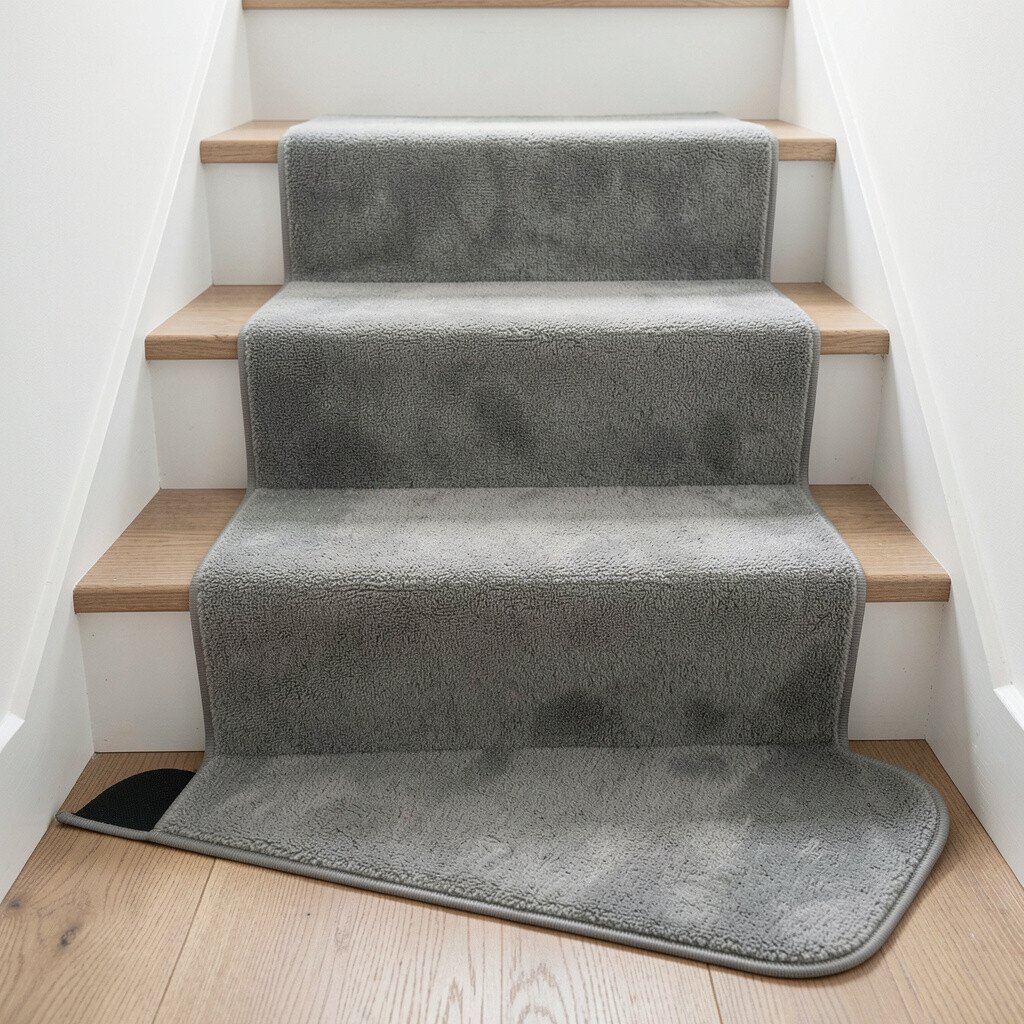
Imagine your stairs styled with small rug sections that feel cozy and easy to refresh. Rug corners can create a soft, lived-in look while protecting the surface.
Non-slip pads add comfort and help keep the rugs from shifting. You also get the fun option to swap designs with the seasons.
To keep it practical, trim edges neatly and choose rug fibers suited for high traffic. Place the densest pattern at the most used areas so wear doesn’t show as much.
For personalization, coordinate the rug colors with curtains, pillows, or a gallery wall. This style fits many current trends that favor layered textures over one hard surface.
9. Subtle Color Wash With a Glaze Effect
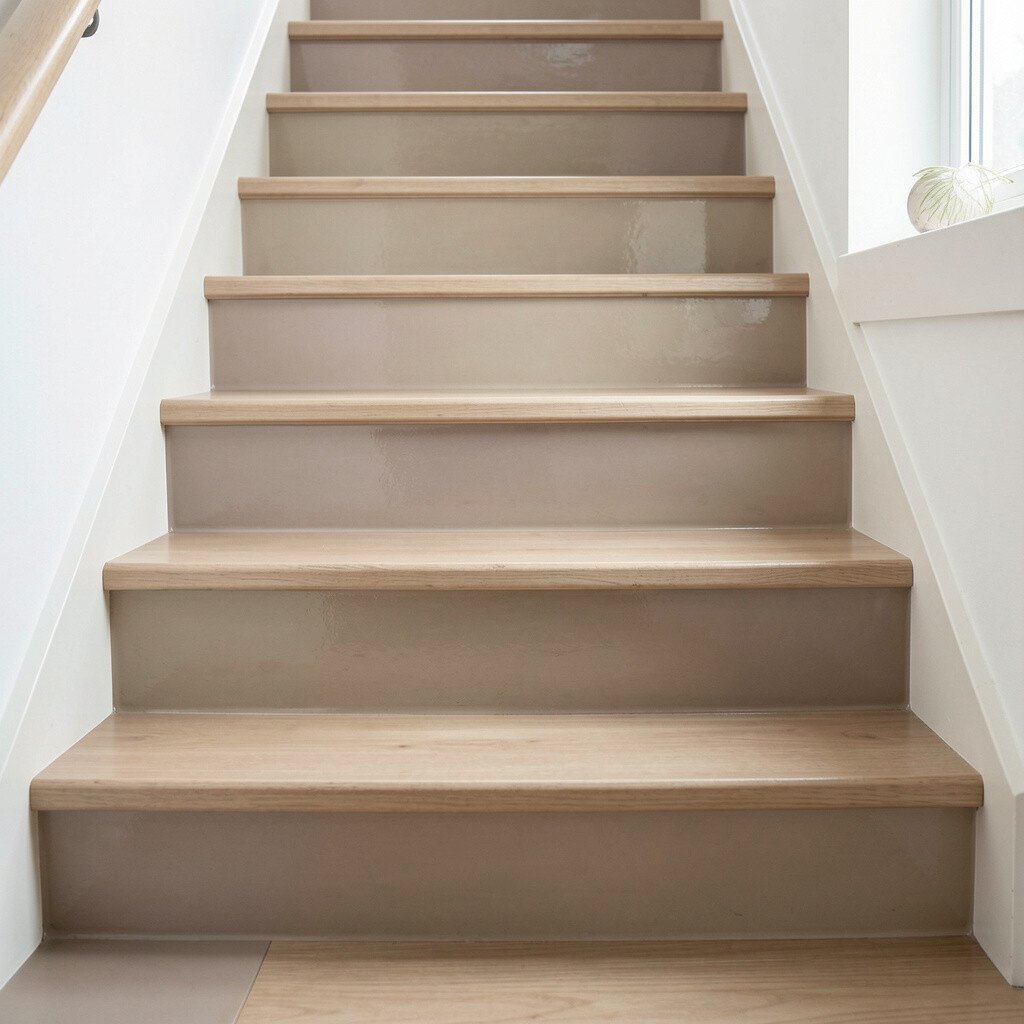
Picture stairs that look like they’ve been gently sun-kissed instead of fully repainted. A glaze effect adds depth and a soft, artsy finish to wood or painted surfaces.
This creates visual uniqueness while still keeping a calm, welcoming tone. It’s also forgiving when your stairs already have character or slight imperfections.
Use a glaze over a base color, then wipe back to control how strong the tint looks. Seal the final layer so the finish resists foot traffic and cleaning.
To personalize, choose glaze colors that fit your room, such as warm honey, cool gray, or muted olive. A glaze can also tie your stairs to adjacent floors without a harsh color jump.
Costs are usually moderate because you’re using coatings rather than replacing surfaces. You can often do this as a DIY project if you’re patient with drying time.
10. Cork Treads for Comfort Underfoot
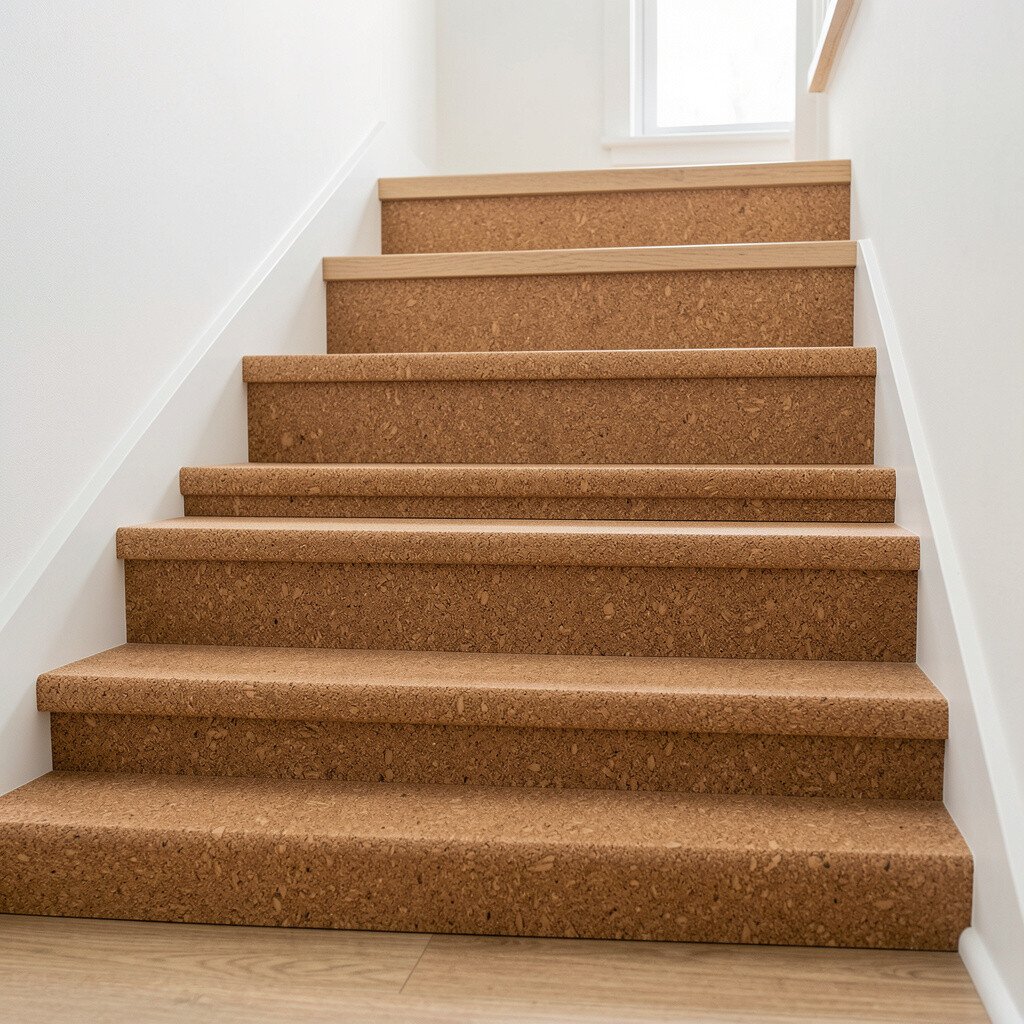
Imagine each step cushioning your feet like a soft landing after a long day. Cork treads add comfort while giving your stairs a naturally warm look.
Cork is gentle and can help reduce noise, which many homeowners love. It’s also naturally resistant to some wear patterns when sealed correctly.
Choose cork with a sturdy top layer and install it with the right adhesive for stairs. If you have pets or kids, cork can feel more forgiving than hard surfaces.
For personalization, pair cork treads with a runner in a complementary color. Current trends often mix organic materials with clean lines, and cork fits right in.
Cost depends on thickness and quality, but cork often costs less than full flooring replacement. Budget for sealing supplies and consider professional install if your steps are unusual shapes.
11. Peel-and-Stick Stair Tiles for an Instant Update
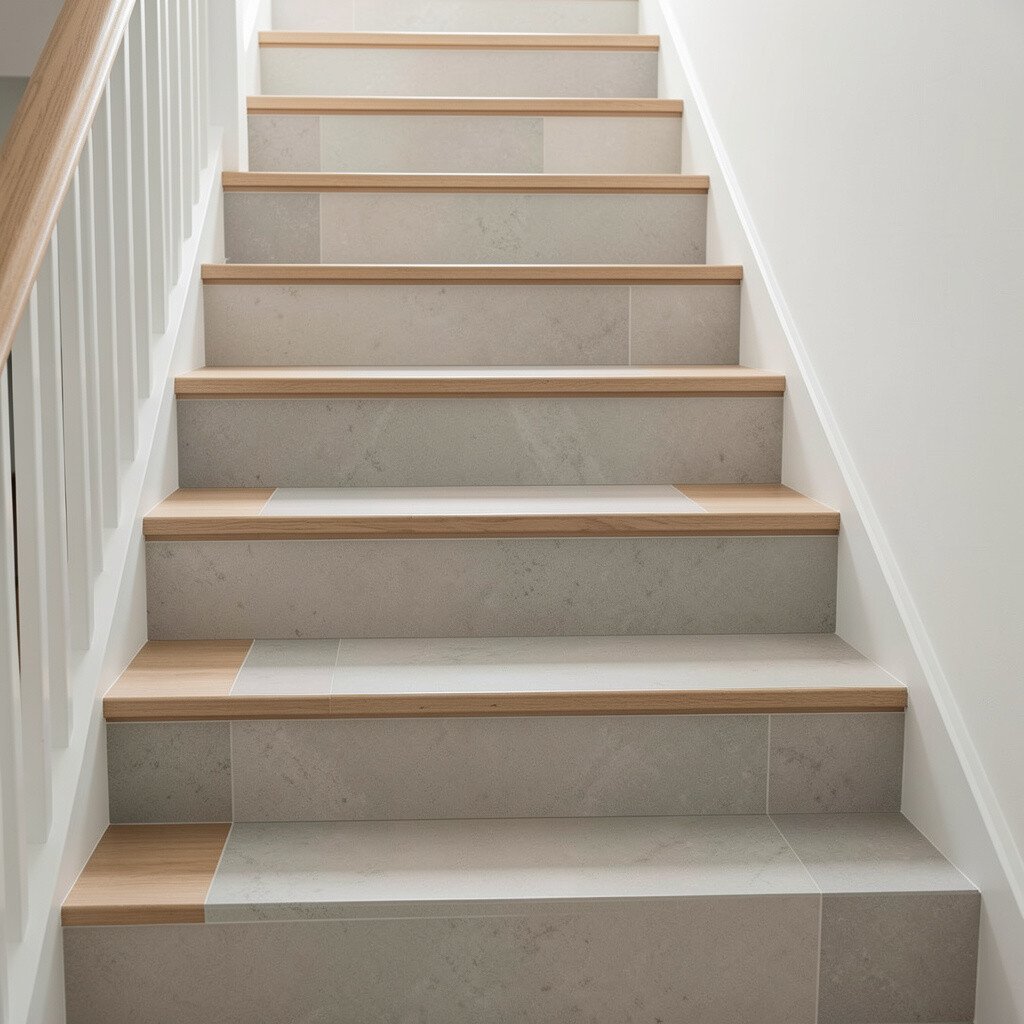
Think of stairs that look newly styled in a weekend. Peel-and-stick stair tiles can give you a bold pattern without sanding, staining, or major prep.
This option is especially practical for renters or anyone who loves changing style often. You can test colors and patterns without a long commitment.
For the best results, clean the surface thoroughly and let it dry fully before applying tiles. Press firmly, check alignment, and seal only if the product instructions recommend it.
Personalization is easy since you can use a single repeating design or create a border. Many popular styles right now feature simple black-and-white geometry or subtle marble looks.
Costs vary by tile type, so compare square footage and measure your tread area carefully. It can still be budget-friendly, especially when you cover only the main treads instead of every surface.
12. Brick-Look Flooring for an Old-World Entry Mood
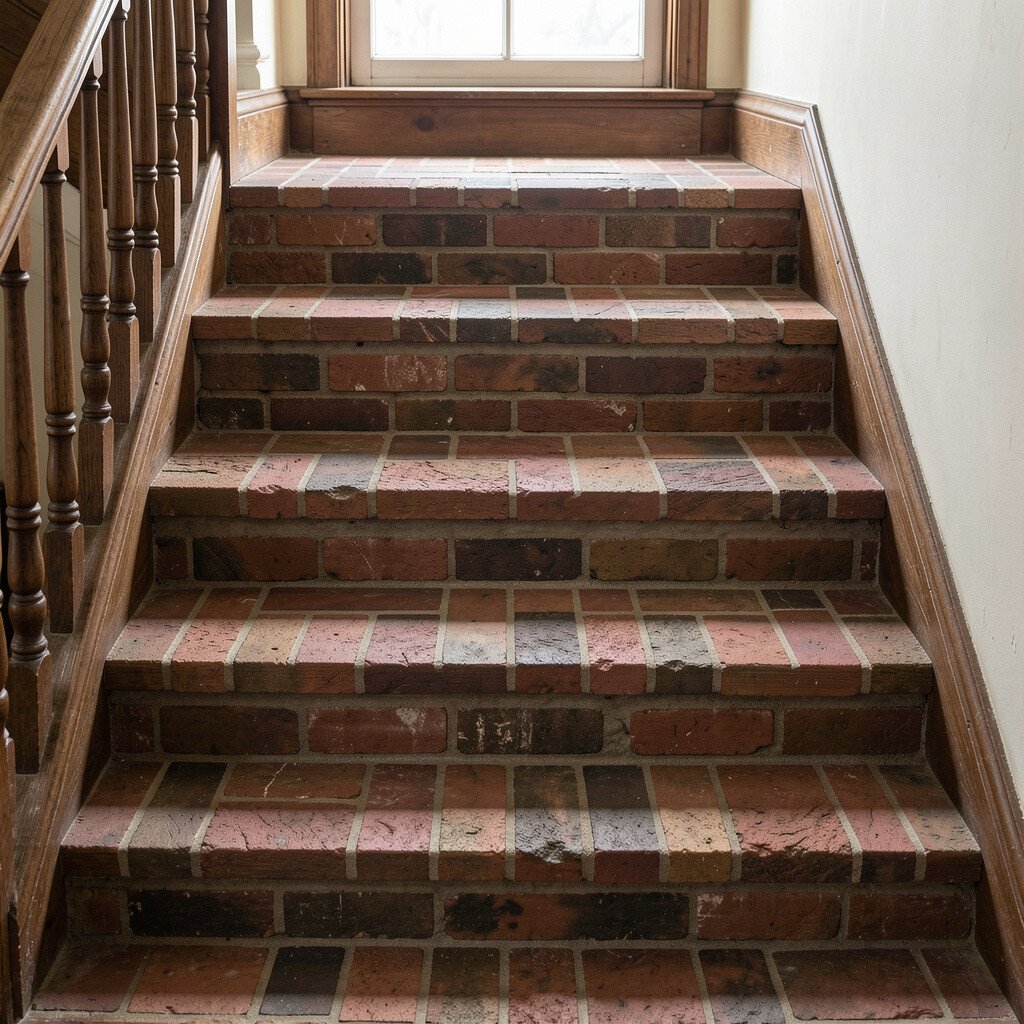
Picture a stair floor that feels like a charming courtyard on a cool morning. Brick-look surfaces bring warmth and an earthy vibe that pairs well with classic homes.
Brick-style materials can be durable and strong, making them great for daily use. They also hide scuffs better than many light finishes.
Use slip-resistant materials or add a protective surface so the look stays safe. If you’re working with tile, plan grout lines ahead of time to keep them straight and tidy.
For personalization, match brick tones to your fireplace, exterior accents, or wall color. A modern trend is mixing old-world textures with sleek railings and minimal decor.
Cost considerations depend on whether you choose real brick, tile, or a manufactured look. Many homeowners find tile is the sweet spot between cost, durability, and visual impact.
13. Staircase Linoleum-Style Panels With Vintage Colors
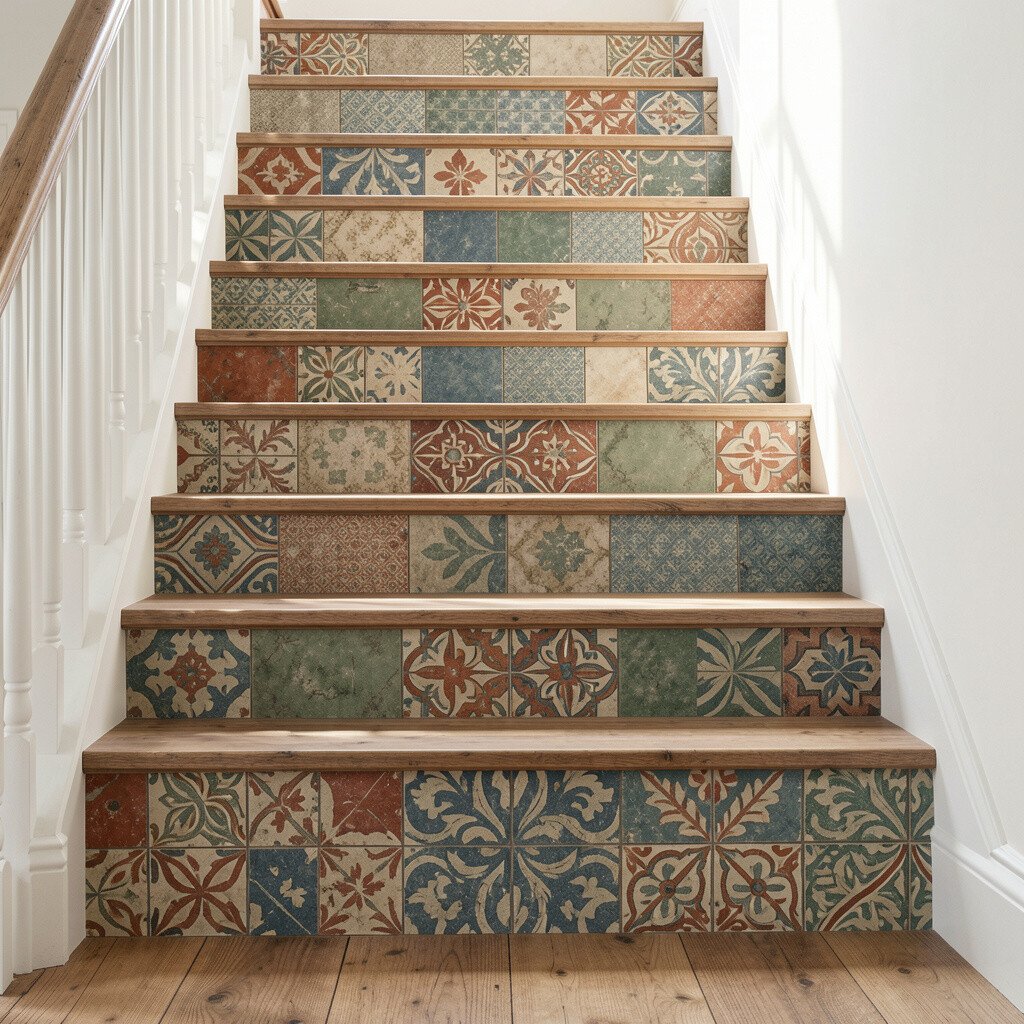
Imagine stairs with a cheerful, vintage-inspired pattern that feels playful. Linoleum-style panels can bring color and character while staying practical.
This upgrade can brighten an often-overlooked area of your home. It’s also great for hiding minor wear when you pick a busy enough pattern.
Choose a sheet or panel system made for stair use, then trim edges neatly around nosing. Seal the perimeter well so edges stay protected from moisture.
Personalize with a color palette that echoes your kitchen or bathroom, like teal, warm cream, or deep red accents. Right now, many homes are leaning into nostalgic colors paired with clean, modern walls.
Costs can be moderate depending on material quality, and DIY setup may lower labor expenses. Measure carefully so you don’t overbuy and waste patterns.
14. Raised Threshold Nosing With Clear Safety Contrast
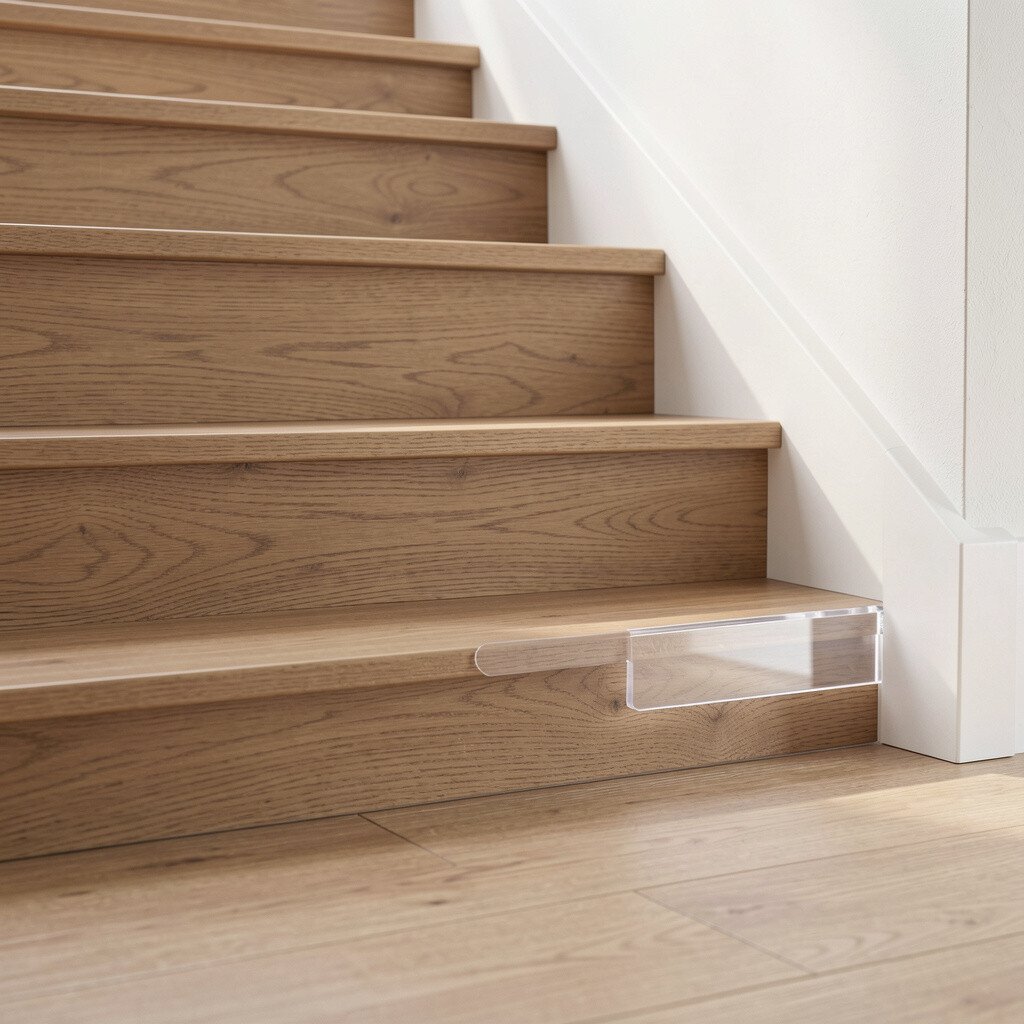
Picture every step boundary being easy to spot from a distance. Raised nosing with clear contrast can make stairs feel safer and more confident.
This idea is practical because it improves traction and visibility without changing the whole floor look. It also works well in homes that need extra clarity for kids, seniors, or guests.
Pick a color that pops against the tread, like matte black on light wood or light gray on darker finishes. Choose a durable nosing material designed for high traffic so it doesn’t loosen quickly.
For personalization, align the nosing style with your handrail posts or doorway thresholds. A current trend is using crisp contrast lines instead of heavy patterns.
Costs are often manageable since you’re upgrading key edges rather than covering every surface. Getting the measurements right is the main factor in avoiding rework.
15. Custom Inlay Borders for a Designer Look
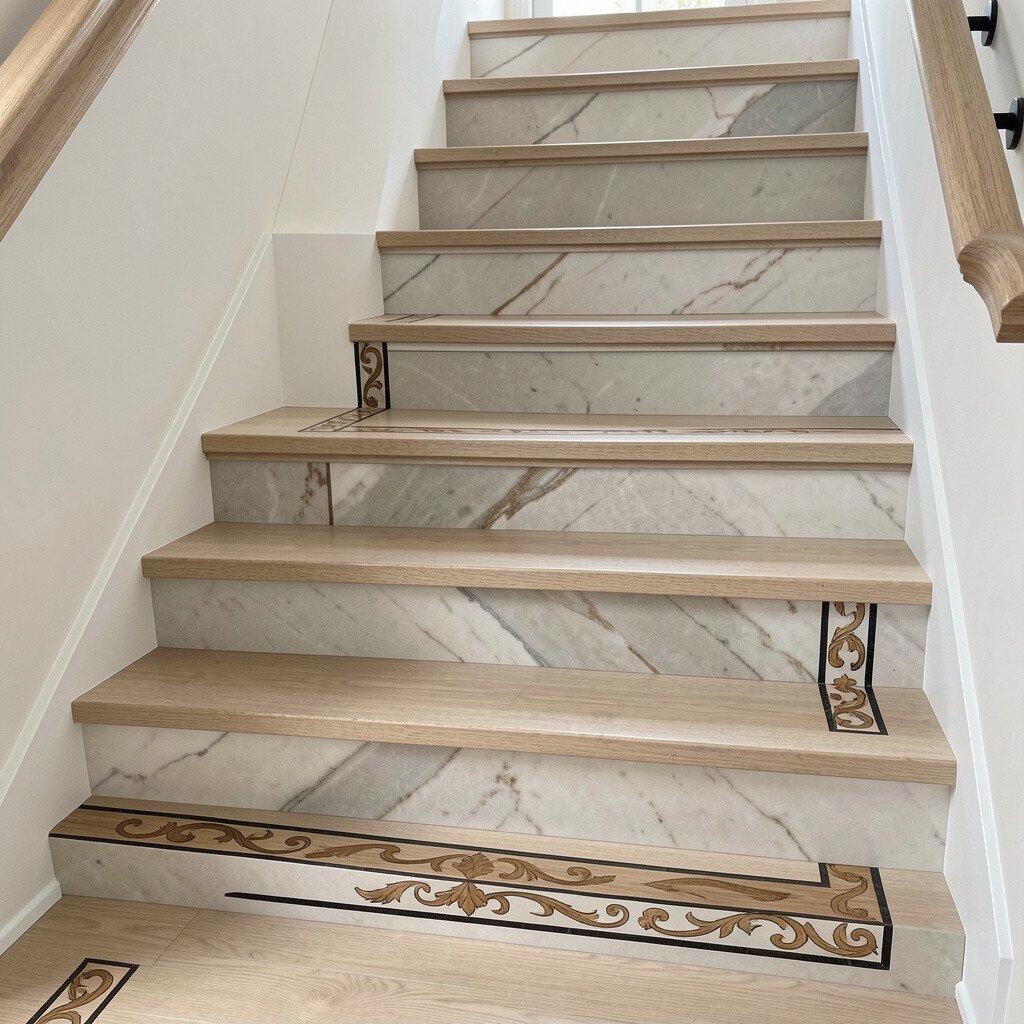
Imagine your stairs wearing a framed edge like a picture border. Custom inlay borders add a refined, built-in feel that looks expensive.
This method can elevate the look while keeping the main surface simple. It’s also a great way to personalize because you can choose the border width and tone.
Inlay can be done with wood strips, thin tile bands, or even durable trim pieces. Start by measuring each tread width and planning spacing so the border lines up across steps.
For personalization, match the border color to your baseboards or cabinet hardware. Many current designs favor subtle detailing rather than loud full-face patterns.
Cost varies depending on materials and whether you DIY or hire help. If budget is tight, use the border on the most visible steps and keep the rest minimal.
16. Monochrome Wash With Matte Sealer for a Clean Mood

Picture stairs that look crisp, calm, and easy to maintain. A monochrome wash with a matte sealer creates a smooth, modern vibe without harsh shine.
This style helps fingerprints and everyday dust look less obvious than glossy finishes. It also works well with many interior palettes, from Scandinavian to contemporary.
Use a base coat in your chosen color, then apply a wash to soften the tone and highlight the natural surface. Finish with a matte sealer that resists scuffs and makes cleaning simpler.
To personalize, select a shade that matches your wall paint undertones, like warm off-white or cool light gray. This keeps the stairs feeling like part of the whole home, not an added layer.
Cost is usually reasonable since you’re using paint and sealing products. If you have a lot of steps, plan for enough materials and give every coat time to cure.
17. Layered Approach With Runner, Side Trim, and Matching Decor
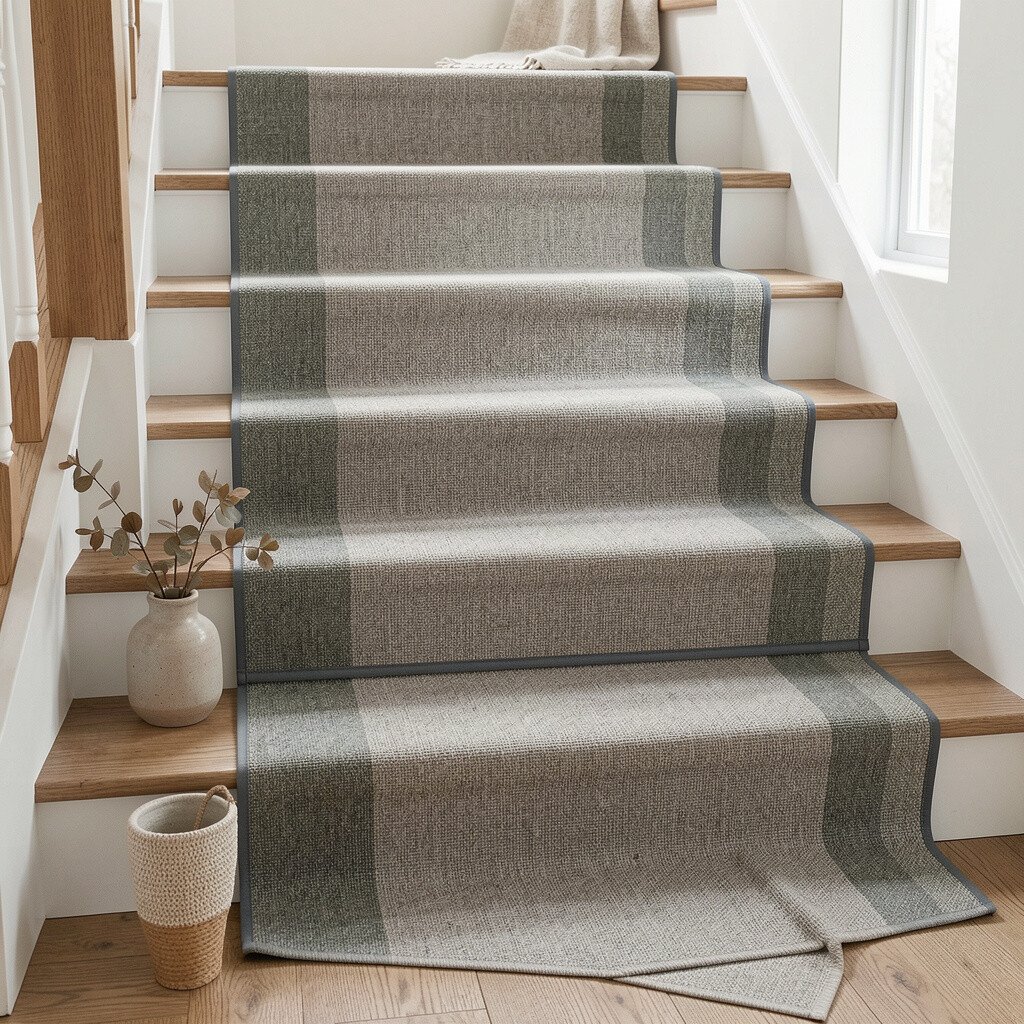
Imagine your stairs styled like a complete set, not just a surface. Layering a runner with side trim and coordinated decor turns everyday steps into a focal point.
This combination brings both style and function, since the runner protects while trim adds structure. It also gives you room to personalize across color, texture, and pattern density.
Choose side trim that matches your railing or floor tone, then pick a runner with a pattern that complements hallway art. If you like flexibility, use a runner system that’s easy to remove for cleaning.
For practical setup, install trim securely and ensure the runner has the right grip to stay put. Many homeowners find this approach reduces the amount of wear you see on the underlying stairs.
Cost considerations depend on how many layers you add, but you can control it by focusing on the most visible stretches. A little coordination can feel high-end because the whole staircase looks intentional.