The right stair railing turns a plain hallway into a safe, stylish moment. It also helps your home feel more finished, from every angle.
When you pick the right look, you can make everyday movement feel smoother and calmer. Let’s walk through a set of inspiring options you can actually picture in your own space.
1. Classic Wood Balusters With Warm Stain
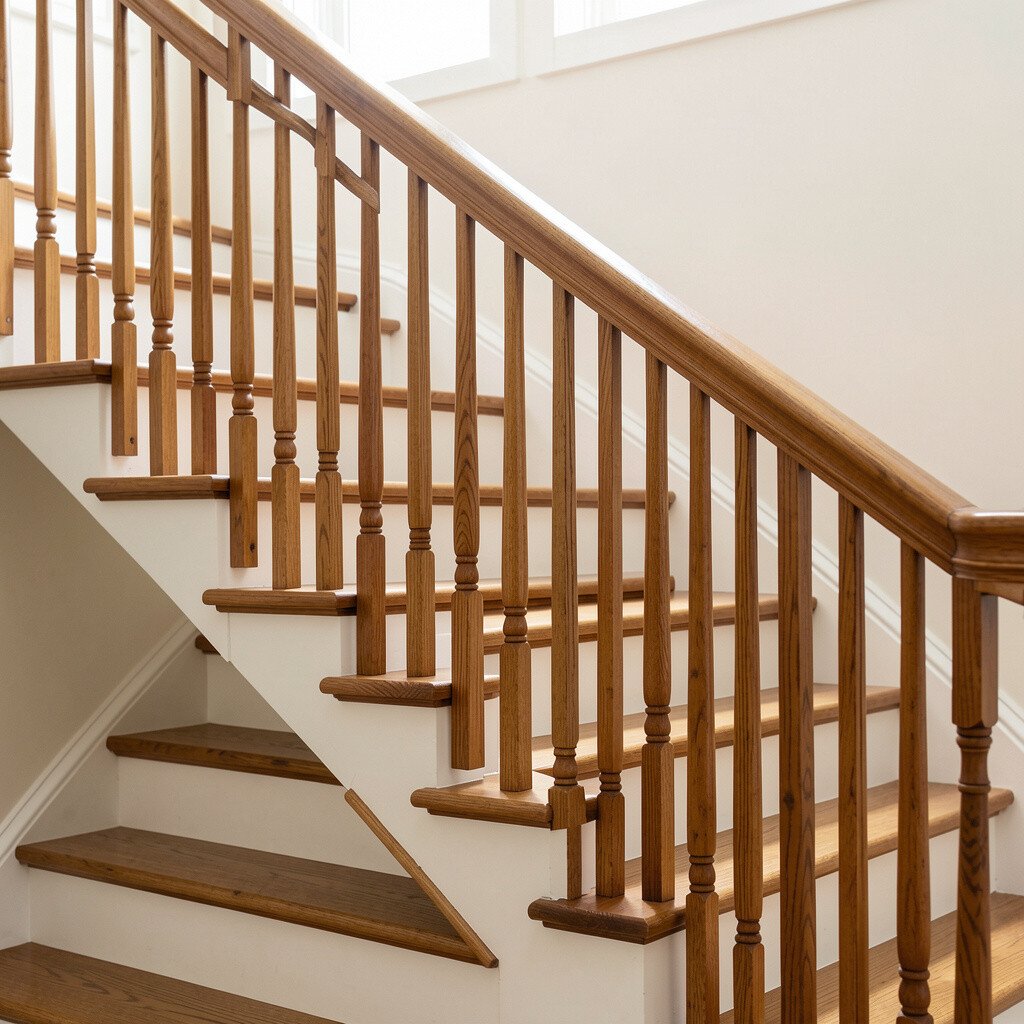
Picture a staircase lined with tidy wood balusters that catch light from nearby windows. The warm stain makes the railing look welcoming, even in the early morning.
Wood railings bring a cozy, timeless vibe that fits many home styles. You can keep the design simple for an airy feel, then personalize with a stain color that matches your floors or cabinets.
For practical results, measure the stair height and note how often the rail will be grabbed while carrying groceries. A smooth, rounded top rail feels great in the hand and can reduce wear over time. If your home gets heavy foot traffic, choose a durable hardwood and consider a clear protective finish for everyday life.
2. Modern Black Metal Rail With Clear Glass
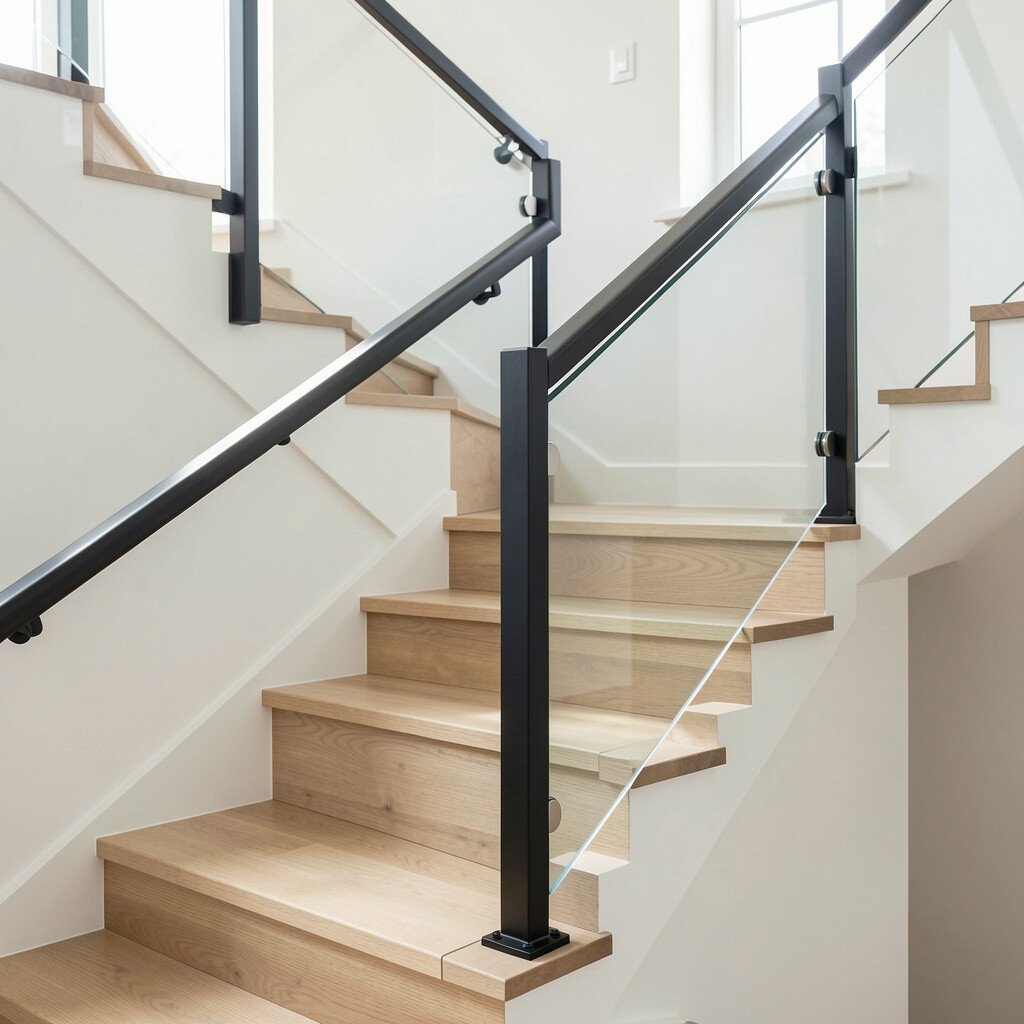
Think of a sleek staircase where matte black metal frames the view like a picture. Clear glass panels make the space feel open while the railing still looks bold.
This combo is popular right now because it mixes safety with a clean, modern look. It also helps light move through the hall, which can make narrower stairways feel bigger.
To keep it looking crisp, wipe glass panels with a streak-free cleaner and use a gentle cloth on the metal. Choose tempered glass and confirm code spacing so the railing is secure and comfortable for kids and guests.
3. White Painted Rail With Traditional Spindles
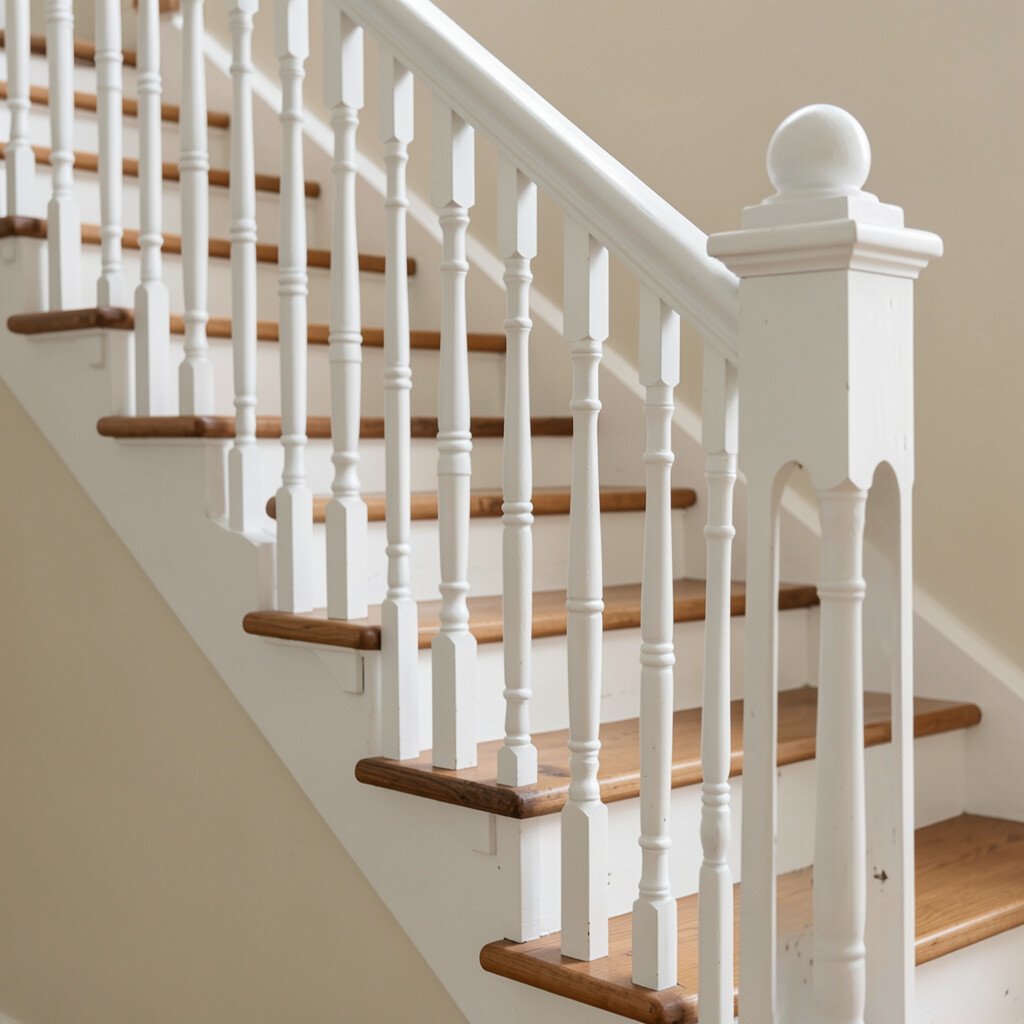
Imagine bright white paint flowing along the stair rail and spindles. It creates a fresh, crisp look that feels at home in many interiors.
White railings can make a hallway feel clean and airy without changing your floor plan. They pair nicely with neutral walls, light wood treads, and soft textiles like runners.
For personalization, pick a paint sheen that matches the rest of your trim for a seamless blend. If you want extra comfort, sand the top rail lightly before finishing so the surface feels smooth under the hand. Remember that painted railings show fingerprints, so a durable, wipeable paint helps keep them looking neat.
4. Curved Handrail With Wrought Iron Scrollwork
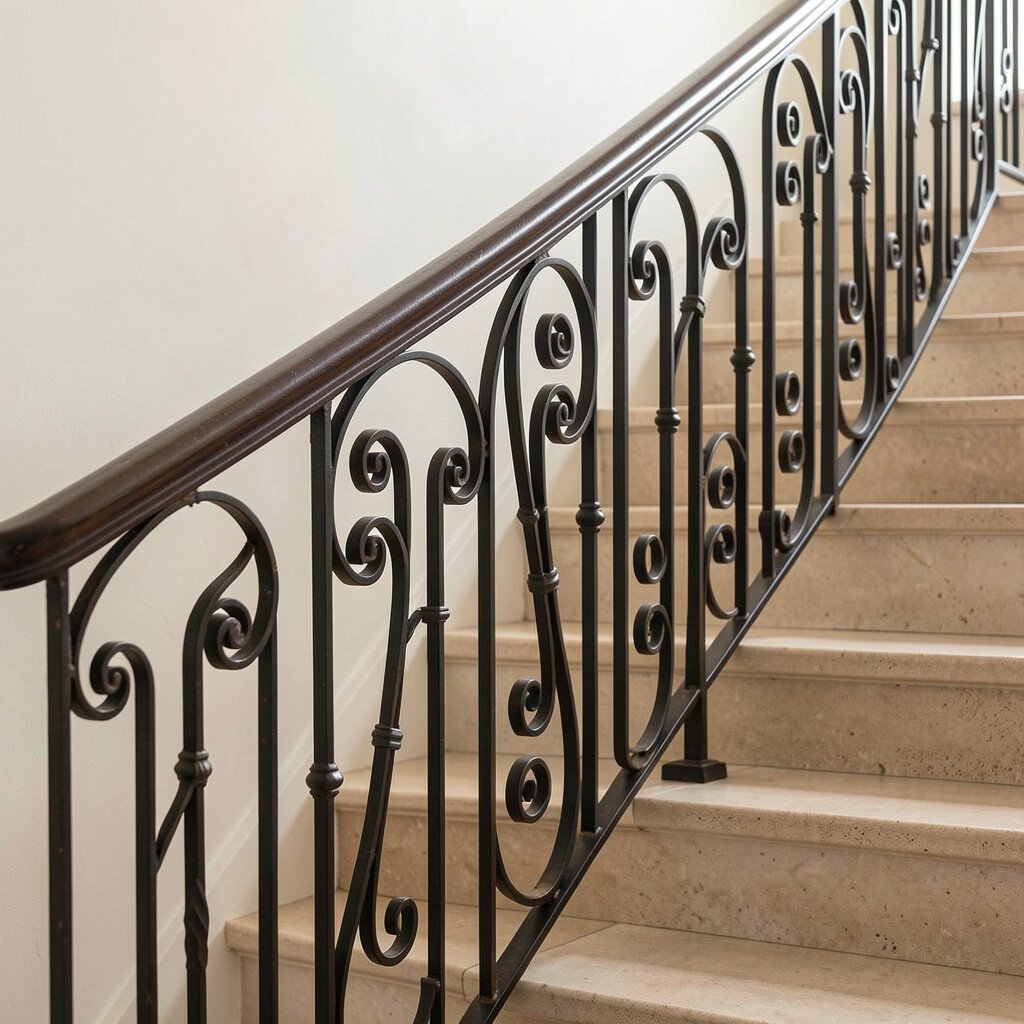
Picture an elegant curve along the handrail with wrought iron scrollwork that catches shadows. The pattern adds movement, so the stairs feel like a design feature rather than just a passage.
Wrought iron railings are unique because the metalwork can be customized to fit your stair shape and style. They also add a strong visual identity, which is great if your home has classic details like crown molding or archways.
If you want it to feel less heavy, choose a thinner scroll pattern and balance it with lighter wall colors. Ask about powder coating for long-term durability, especially if you live in a region with humid weather. For daily use, keep the handrail smooth where hands grip most, since that’s the spot people touch again and again.
5. Horizontal Cable Railing For A Minimal Look
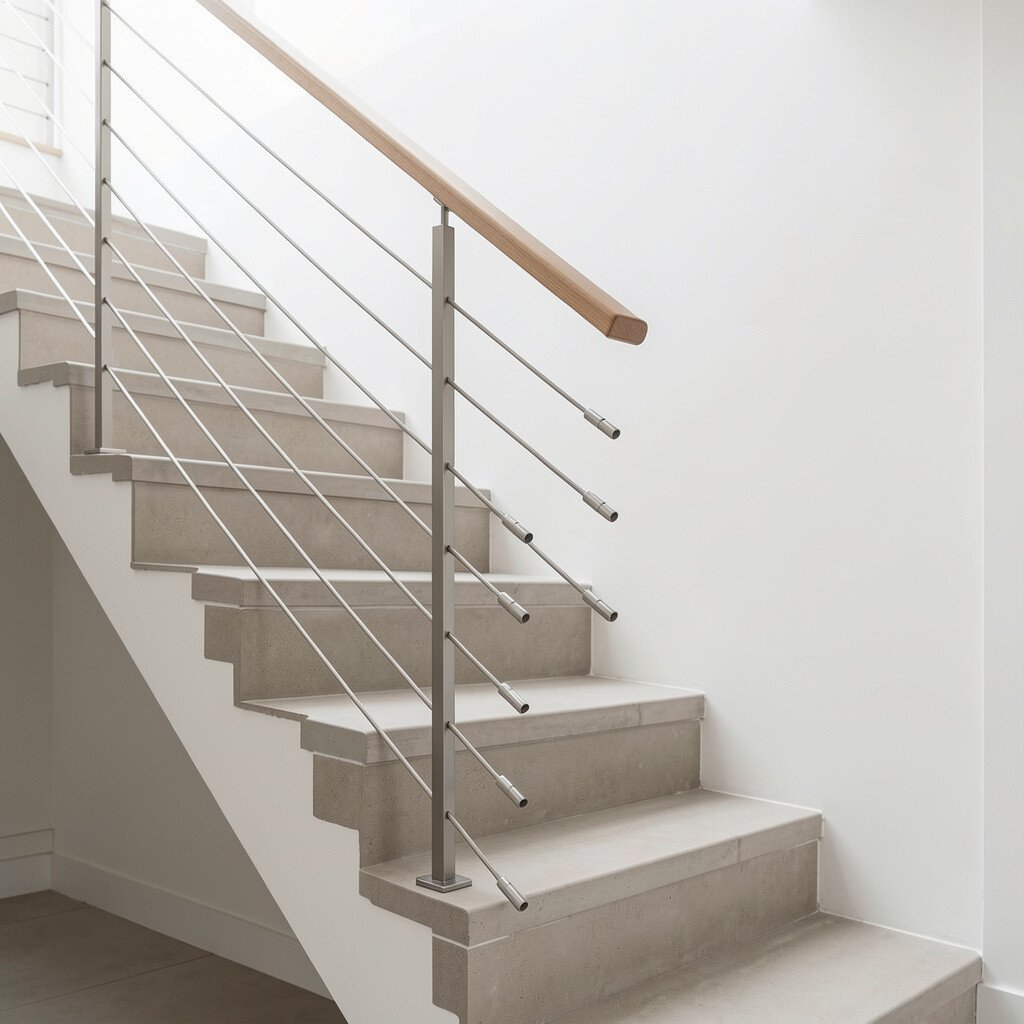
Imagine slim cables stretched between sturdy posts, creating straight lines from top to bottom. It looks clean, modern, and slightly futuristic without feeling cold.
This style is trending because it gives an unobstructed view while still delivering solid support. It’s also a great option when you want the stairs to blend with a modern open layout.
For practical planning, check cable tension and verify spacing for safety. You’ll also want to think about cleaning, since cables benefit from a quick wipe to keep them free of dust and smudges. If you like warmth, pair the metal posts with wood treads or a natural runner for balance.
6. Ladder-Style Rail With Industrial Steel Steps
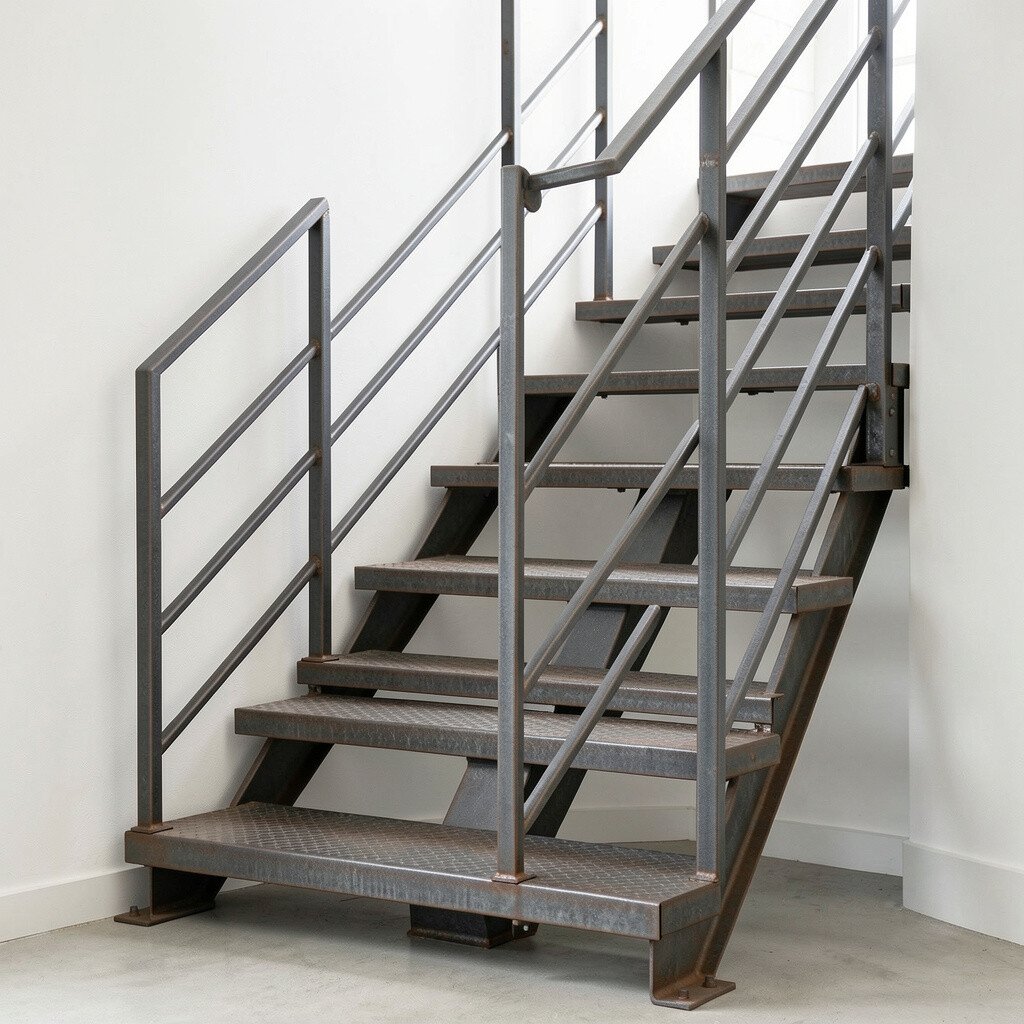
Picture a stair railing inspired by industrial design, with strong steel bars and a ladder-like rhythm. The look feels bold and structured, especially when paired with concrete or dark wood.
This option stands out because the geometry reads clearly from every floor level. It’s great for homes that already include exposed beams, metal accents, or loft-style finishes.
To make it more inviting, soften the space with a runner carpet and warm lighting along the landing. When budgeting, remember that industrial railings may cost more due to custom angles and fabrication. Choosing standard lengths and a straightforward layout can help keep the project within reach.
7. Natural Rope Rail With Rustic Charm
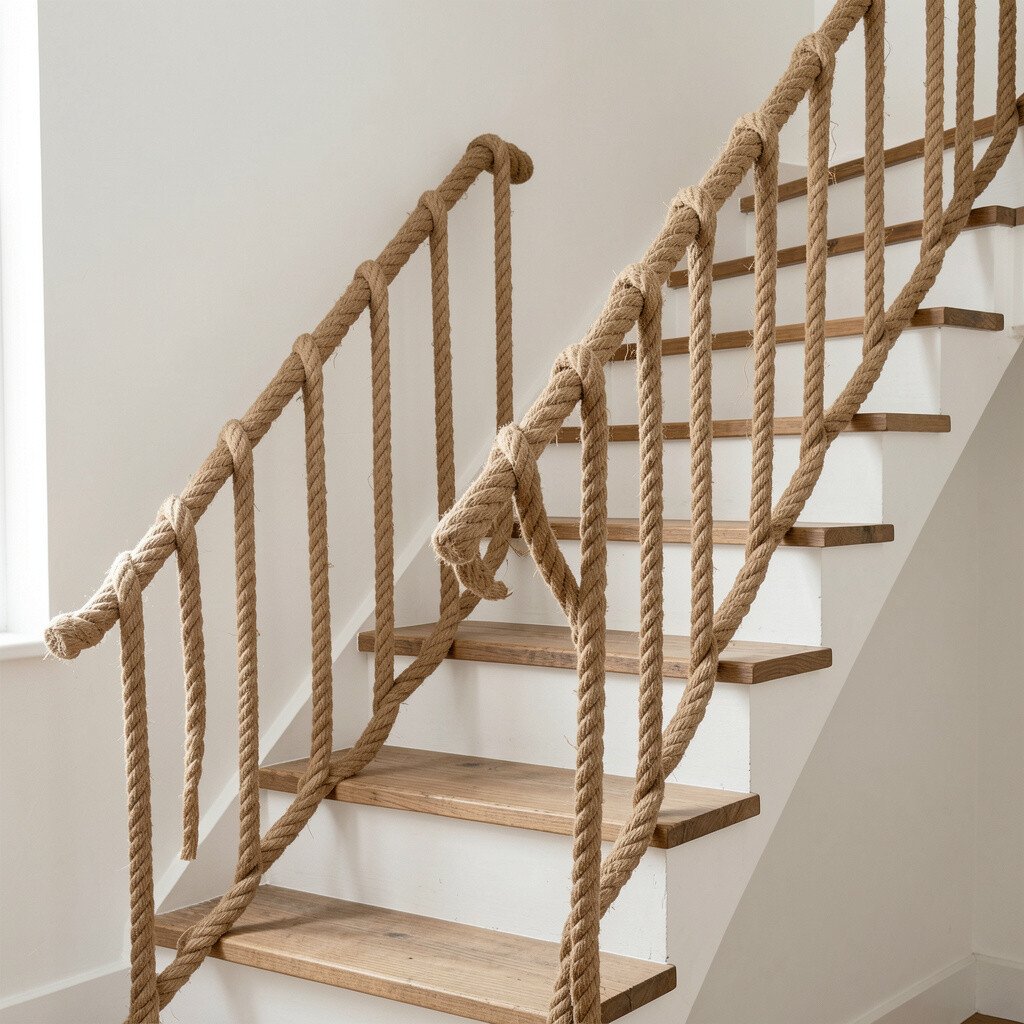
Imagine a handrail wrapped with rope, paired with wood posts that show natural grain. It creates a relaxed, coastal-rustic vibe that feels at home near beach colors or warm earth tones.
Rope railings feel unique because they add texture you can actually see and feel. They also give a softer visual line compared with heavy metal, which can make the stairwell less intimidating.
For practicality, pick rope designed for indoor wear and replace it on a schedule if it gets frayed. Keep the rope clean with gentle wipes so dust doesn’t build up in the fibers. If you have little kids, you’ll want to confirm safety spacing and ensure the rope is secured tightly to stable posts.
8. Double Rail System For Extra Comfort
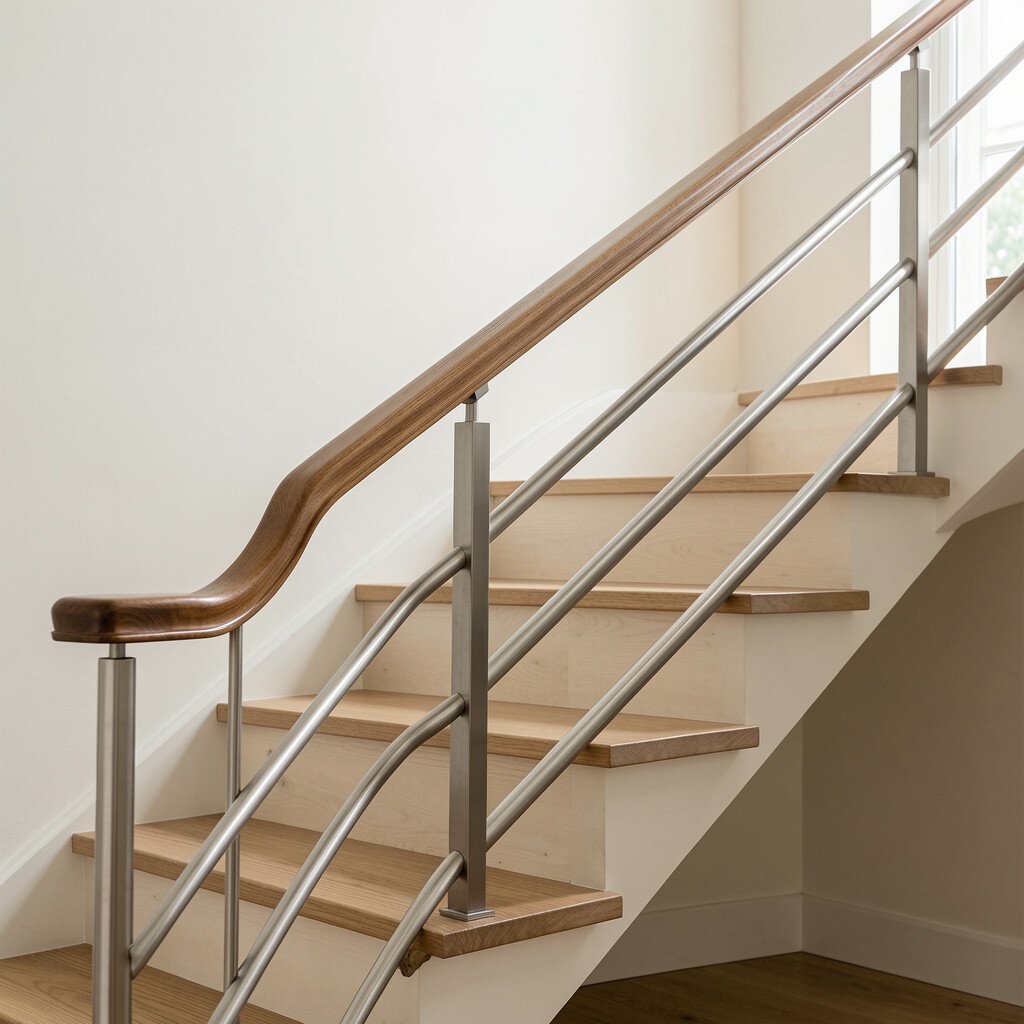
Picture a stairway with two rail levels, one for adults and one for smaller hands. The setup looks thoughtful and feels helpful the moment you step onto the stairs.
This style brings real comfort, especially in homes with kids or older relatives. It also adds a custom feel because the rail placement can match your household routines.
To personalize it, choose rail colors that blend with the trim or contrast nicely with the wall. Planning matters, so check height placement carefully and test the hand grip spot before final installation. Double rails can cost more than a single rail, but they often make the investment feel worth it through everyday convenience.
9. Sleek Wood Rail With Metal Side Mounts
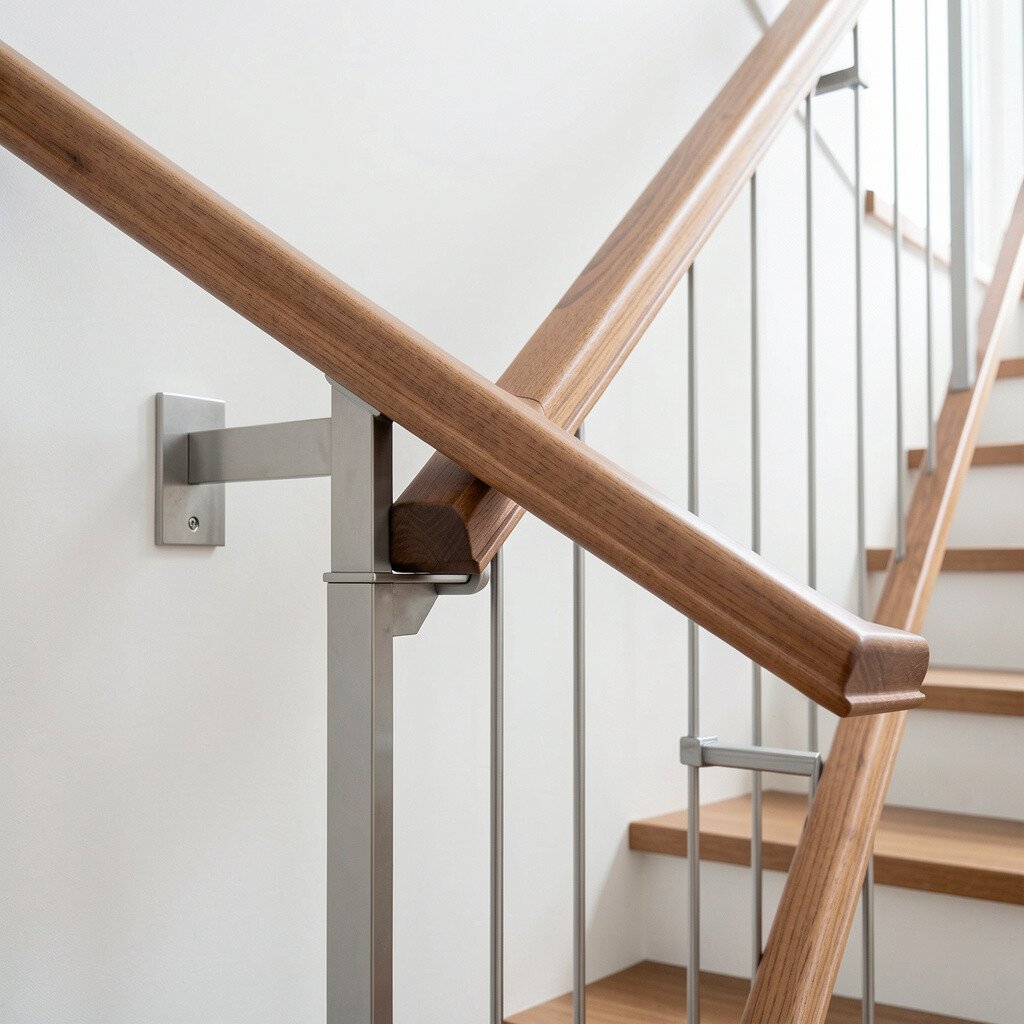
Imagine a wood handrail attached with slim metal side mounts that keep everything crisp. The combination gives you the warmth of wood with a tidy, modern structure.
This look is appealing because it feels “high-end” without being flashy. You can match the wood tone to your floors while using metal finishes like brushed nickel or black steel to fit your hardware.
For practical tips, keep the mounting hardware aligned so the rail feels straight and steady. Sand the top rail edges so the hand rests comfortably, and apply a finish that handles frequent touch. If you want to control cost, ask for simpler end caps and choose a standard rail shape rather than complex curves.
When lighting hits the metal mounts, they create small highlights that make the staircase feel curated. That subtle contrast can also make hallways look more detailed, even when everything else is plain.
10. Farmhouse Rail With Reclaimed Wood Posts
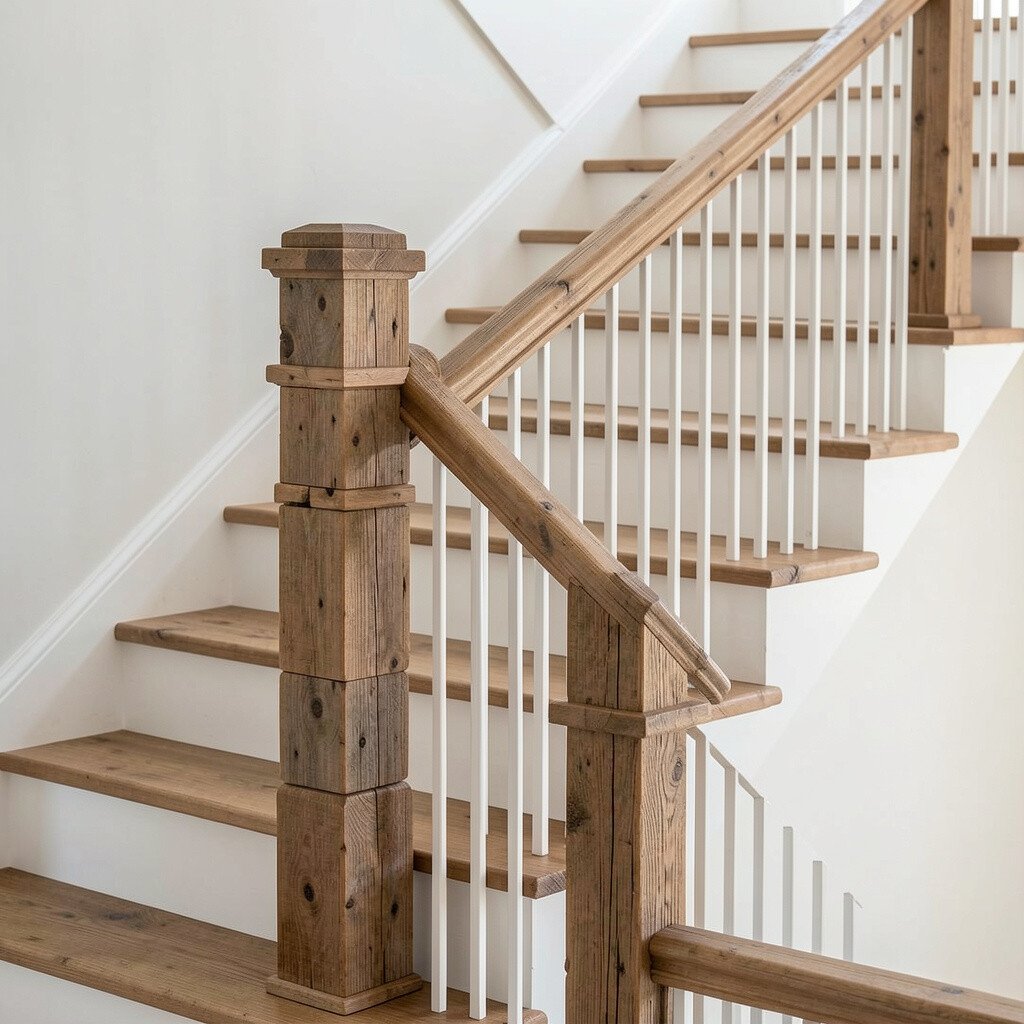
Picture reclaimed wood posts with visible character marks and a sturdy handrail. The stairs feel grounded, like they belong in a home with stories and warm gatherings.
Reclaimed wood railings are unique because no two sections look exactly the same. That means your stairs will never feel copied, and the textures add charm from every angle.
For personalization, pair the rail with a runner in muted stripes or solid neutral tones. You can also match the post color to other accents like picture frames or mantel shelves. Keep an eye on finish choices, since reclaimed wood may absorb stain differently, which can affect color consistency.
Budget-wise, reclaimed materials can be either cost-friendly or pricey depending on sourcing. Getting a local supplier to cut and prep the wood can reduce labor surprises.
11. Arched Top Rail With Soft Curves
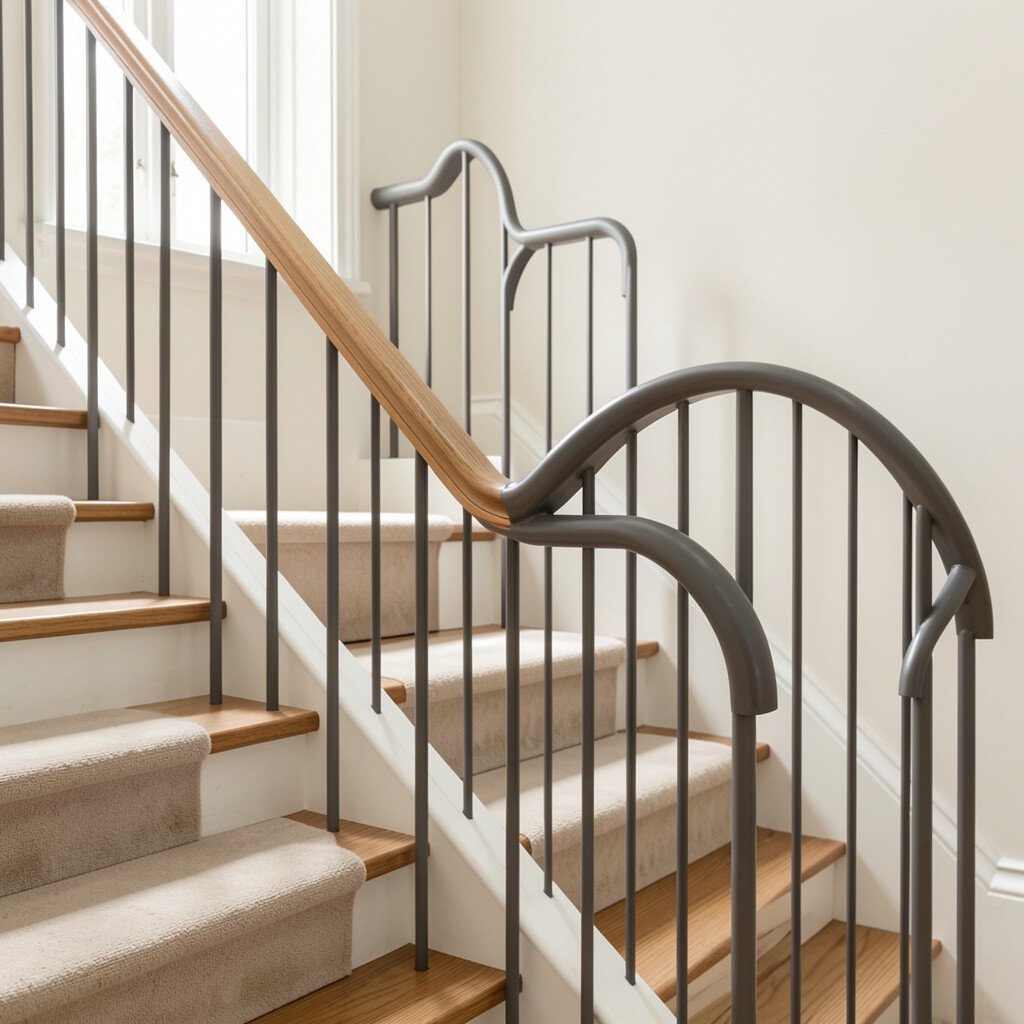
Imagine a handrail that gently arches, creating a smooth motion as you move up the stairs. The rounded shape feels friendly and looks elegant without needing heavy decoration.
This idea works well when you want comfort and style at the same time. Curved rails can also make the stairway feel less sharp, which is great for tight hallways.
For practicality, confirm that the curvature is comfortable for your hand size and grip style. Smooth finishing is important, so choose a finish that resists scratches and easy cleaning. If you’re comparing costs, curved rails often require custom fabrication, so you may want to keep the rest of the design simple to balance the budget.
12. Glass Panel Rail With Minimal Metal Rails
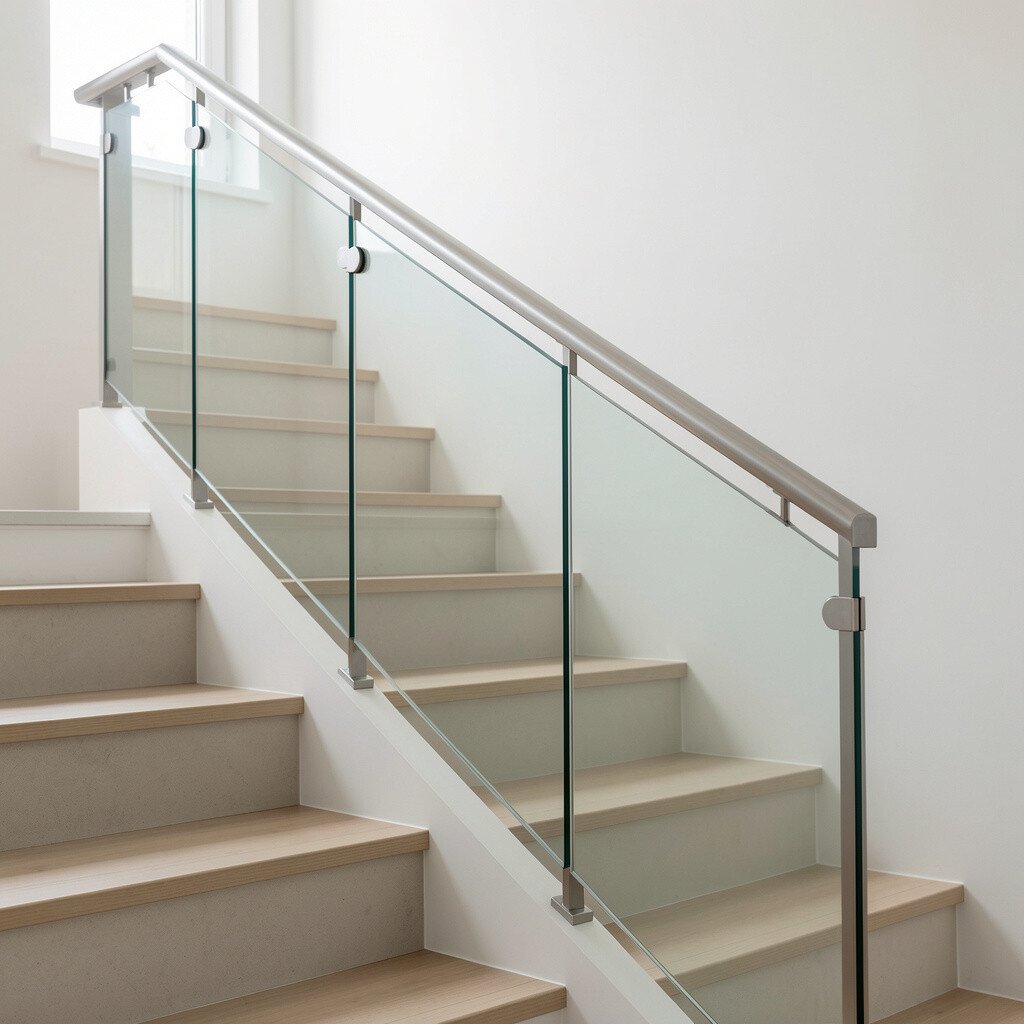
Picture a staircase where glass panels take center stage, framed by very slim metal rails. The result is airy and bright, with a clean view through the railing.
This option is popular in modern homes because it makes the staircase feel lighter. It also pairs well with stone, tile, and light-colored walls, so your interior stays cohesive.
For practical tips, choose tempered glass and ensure proper installation so the panels stay secure. You’ll also want a cleaning routine, since glass shows water spots and smudges. To make it easier, place the stair in a spot with good airflow so moisture doesn’t linger.
Personalize by selecting metal finish that matches your faucets and lighting. Matte finishes can hide fingerprints, while shiny finishes can look striking in bright areas.
13. Winding Stair With Walnut Rail and Brass Details
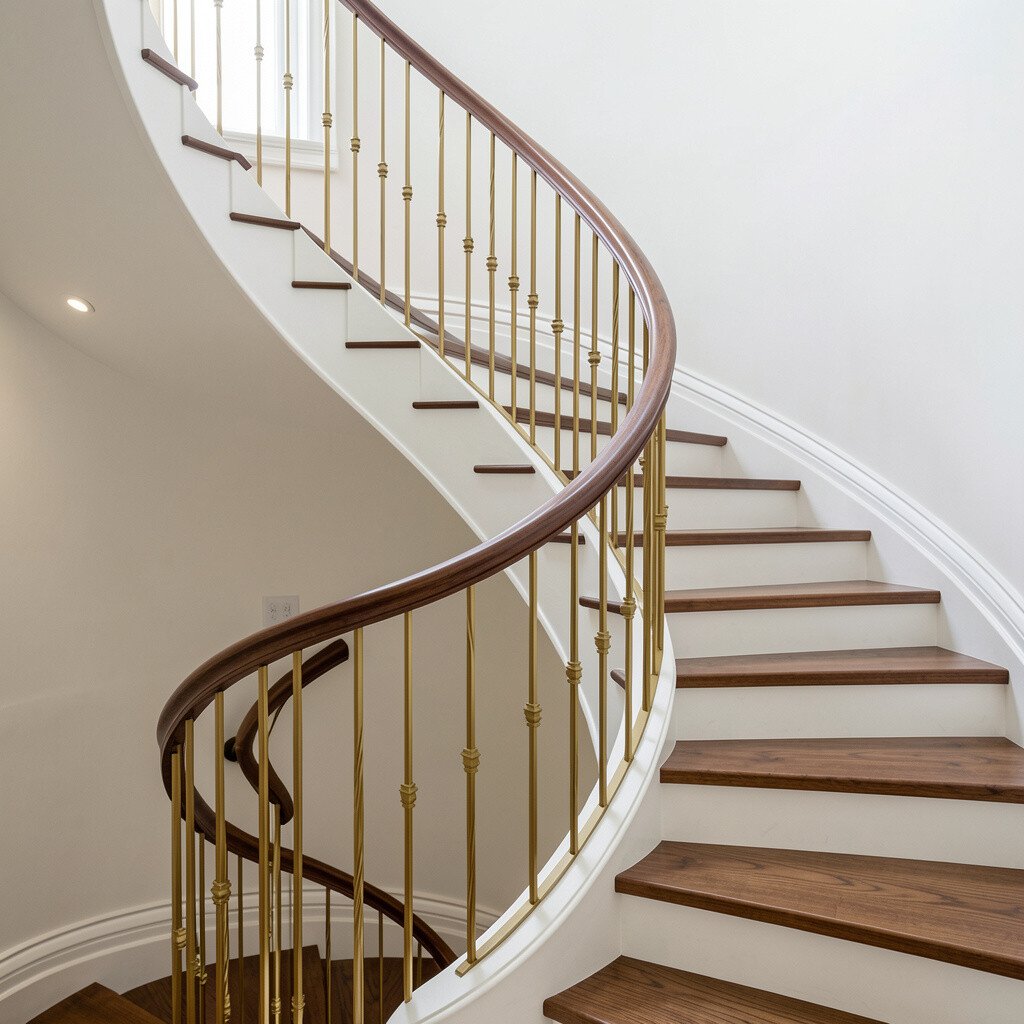
Imagine a curved staircase where walnut wood glows and brass accents add a warm shine. This look feels like a boutique hotel, especially when the railing follows the winding turns.
Walnut railings feel rich and unique, and the brass details give a polished finish. The pairing also works well when your home includes warm metals like gold-toned fixtures or vintage-inspired hardware.
For practical planning, measure each section of the winding stair because the handrail shape often changes at landings. Choose brass that’s coated or sealed so it stays bright without constant upkeep. In budgeting, custom winding rail installations tend to be higher, but the impact is dramatic and long-lasting.
14. Textured Powder-Coated Rail With Bold Color
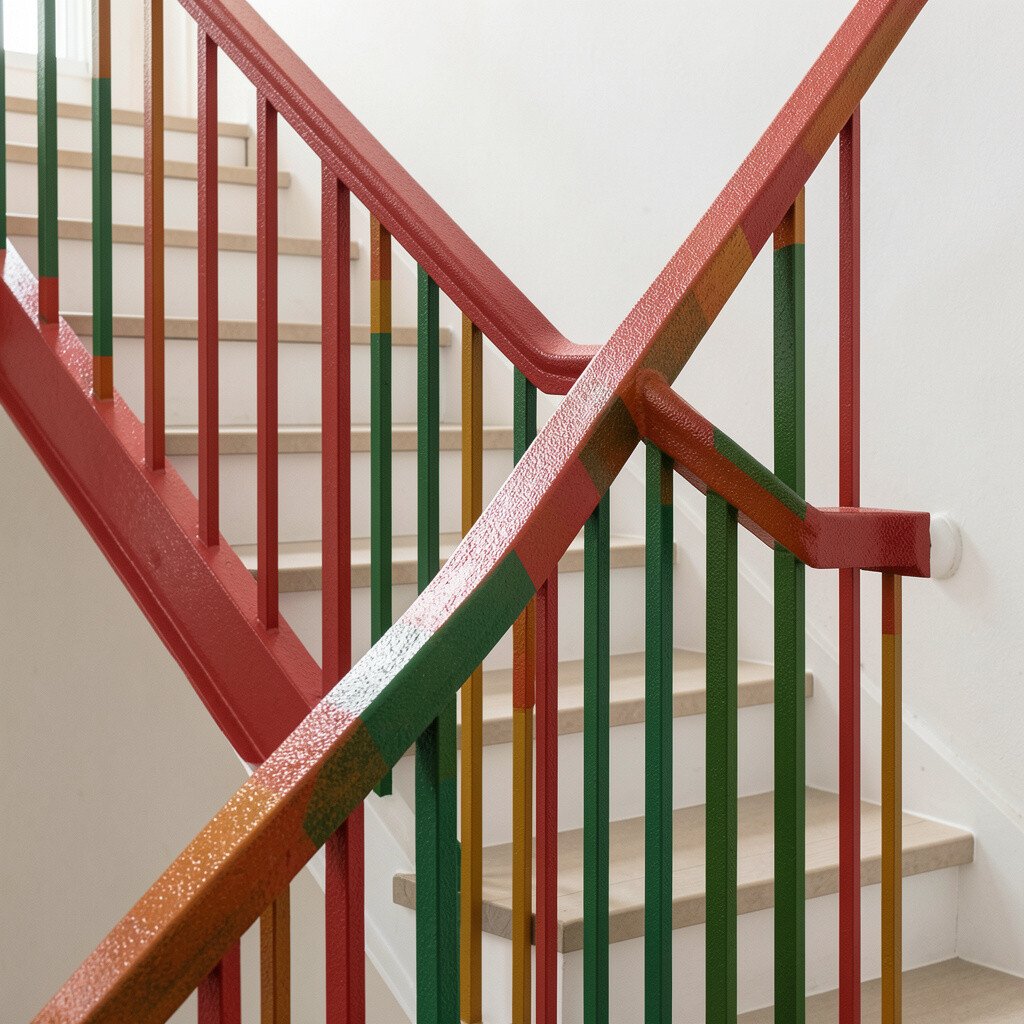
Picture a railing coated in a deep, bold color like ocean teal or warm terracotta. A subtle textured finish adds extra grip and makes the railing look interesting in daylight.
Colored railings can feel fresh because they turn a functional item into a style statement. They also let you coordinate with a painted wall, a bold rug, or colorful décor without repainting everything else.
For practical tips, pick a coating that resists chips and fading so the color stays vibrant. Consider how your stair lighting affects the color tone, since warm bulbs can shift how it looks at night. If you want to control cost, use color on the main handrail while keeping posts and base elements in a simpler finish.
Personalize by adding matching accents like picture frames, a console table, or a nearby lamp shade that repeats the same shade family.
15. Traditional Posts With Decorative Wood Panels
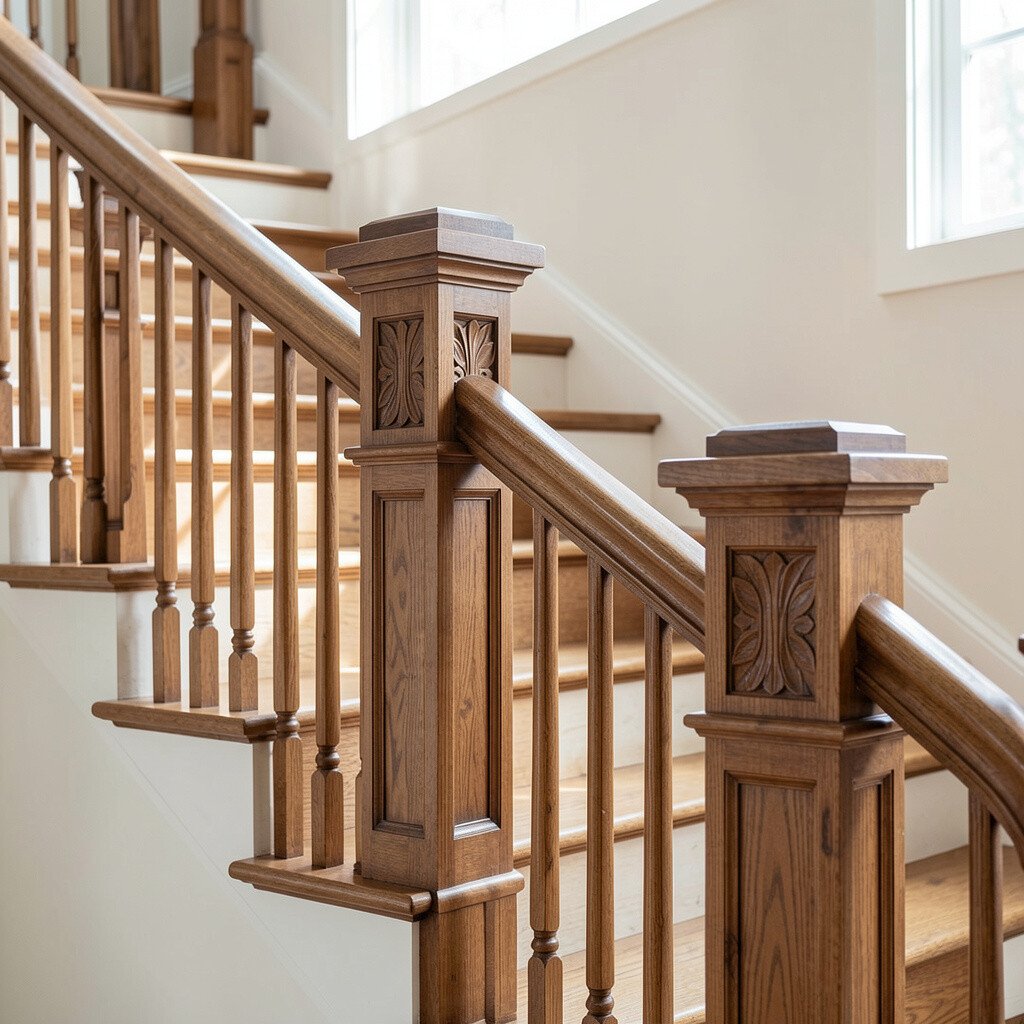
Imagine sturdy posts topped with carved wood details, plus decorative paneling between the rails. The staircase looks classic and a bit grand, like it belongs in a well-designed historic home.
This style feels unique because the panels can be customized with simple shapes or subtle patterns. It also provides a strong visual anchor in entryways where the stairs are one of the first things you see.
To make it practical, keep the panel design easy to clean so dust doesn’t collect in tiny crevices. Choose durable paint or stain, especially on the handrail top where hands rest often. Budget-wise, decorative panels add labor, so you might streamline the pattern while keeping a few signature details.
16. Minimal Rail With Floating Steps and Thin Metal
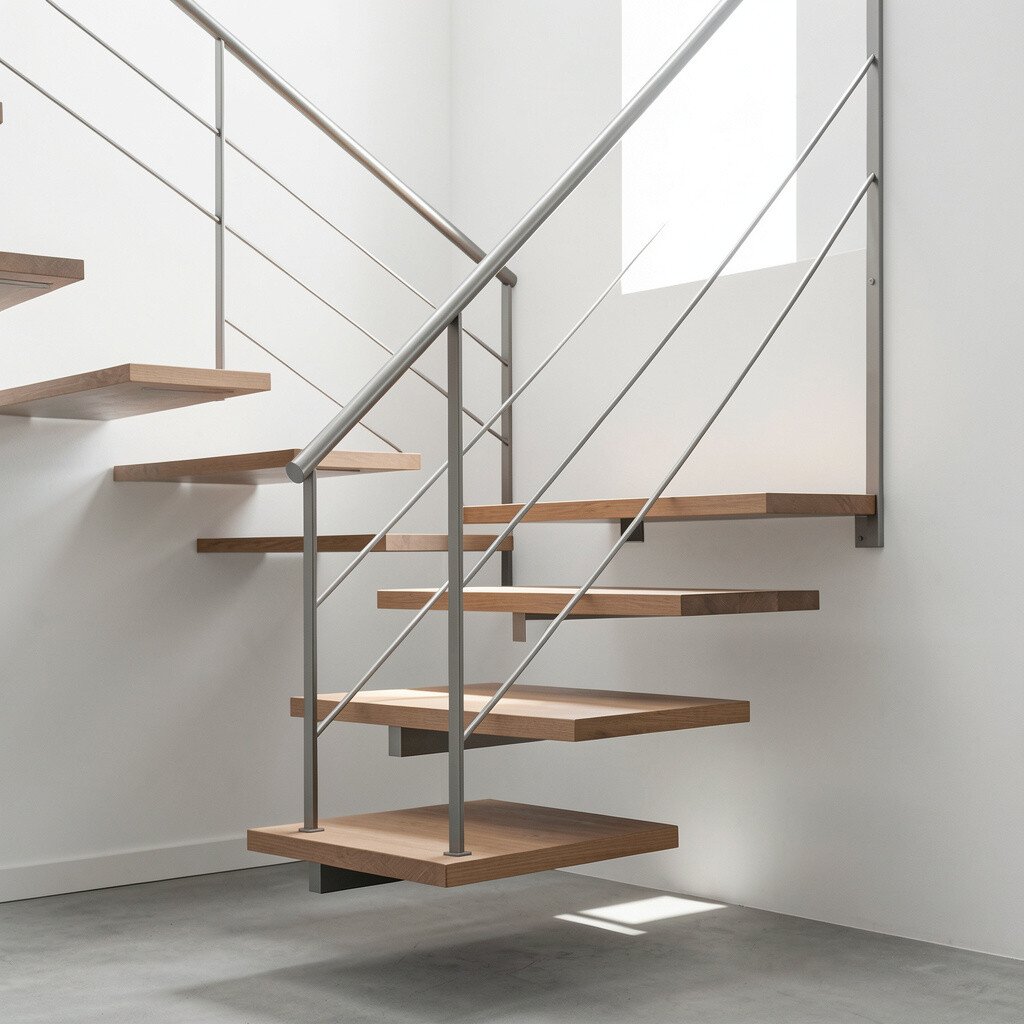
Picture floating stair steps with a thin metal handrail that seems to barely take up space. The effect is light, modern, and very “design-forward,” even in a simple room.
This idea is attractive because it creates a clean line that matches contemporary kitchens, living rooms, and open lofts. It also makes the stairs feel like part of the architecture instead of a bulky addition.
For practical tips, make sure the mounting points are rated for safety and that the handrail angle stays comfortable. Thin rails can look sleek, but you still want a grip surface that doesn’t feel too sharp or narrow. When budgeting, floating stairs and thin rail systems may require skilled installation, so plan for professional work.
Personalize the look with a matching metal finish, like brushed steel, and add warm wall lighting so the handrail reads beautifully at night.
17. Corner Stair Rail With Bench-Like Seating Support
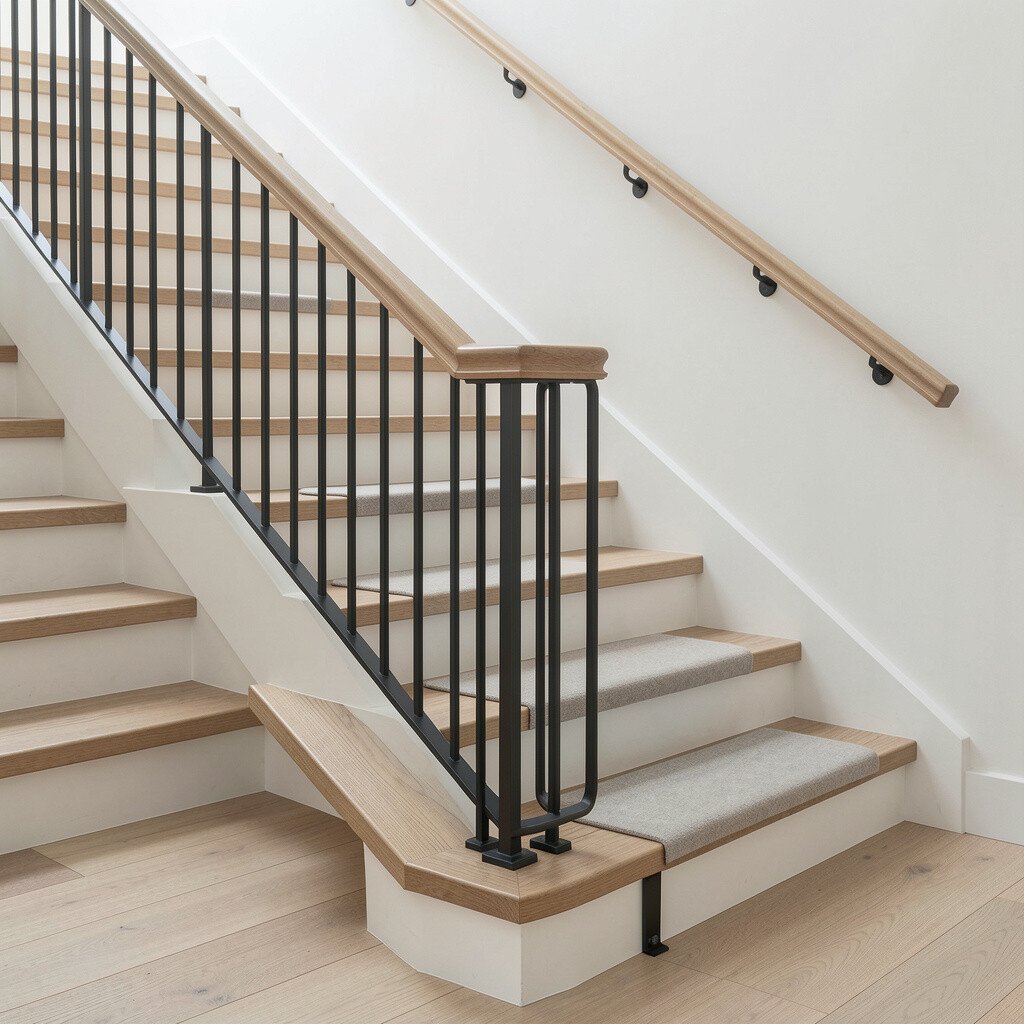
Imagine a stair corner where the railing connects smoothly and creates a natural place to rest or pause. Some designs include a wider rail section that feels almost like a bench edge.
This can be a great home idea if you like to keep daily routines comfortable, like adjusting shoes on the landing. The railing design also stands out because it solves a small problem while adding style.
For practical tips, ensure the wider rail area is sturdy and smooth, with no rough edges. Choose materials that can handle repeated touch, since the landing area gets grabbed more often. If you’re thinking about cost, adding a wider section may not be as expensive as full custom newel posts, but it depends on how the structure is framed.
Personalize it with a runner that matches the landing cushion color, creating a cozy spot that feels intentional.
18. Classic Brass Rail With Elegant Finial Ends
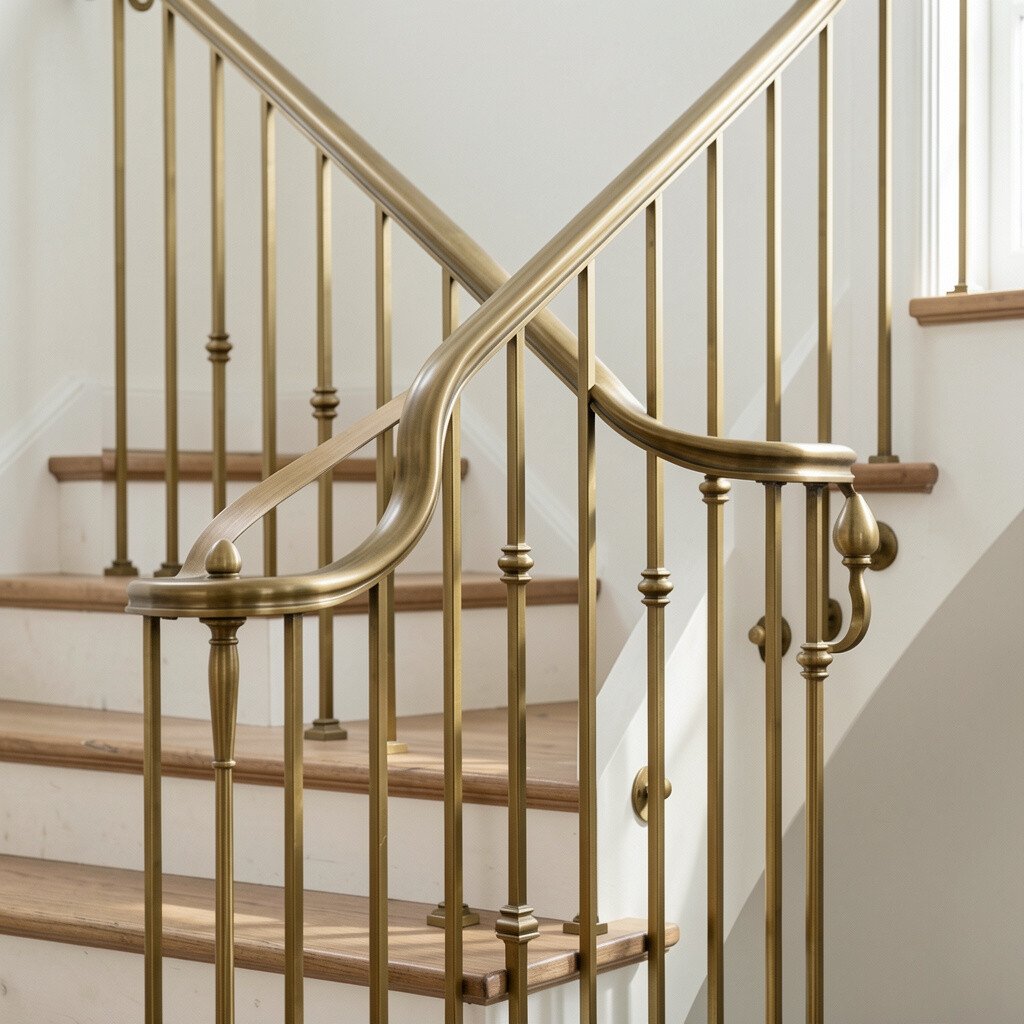
Picture a stair railing in polished brass with elegant finials at the end posts. The details catch light as you walk by, making the entire staircase feel dressed up.
Brass railings feel unique because they add a sense of ceremony, even in everyday spaces. They’re also great for homes that use warm lighting, marble, or soft neutral walls.
For practical care, use a gentle cleaner so the finish stays smooth and shiny. Brass can develop patina if you leave it alone, which some people love for character, but you can also keep it polished with regular wiping. Cost can be higher for brass than basic metal, so consider using brass only on visible rails while using a more affordable finish on hidden components.
19. Sliding Gate Style Rail for Open Concept Stairs
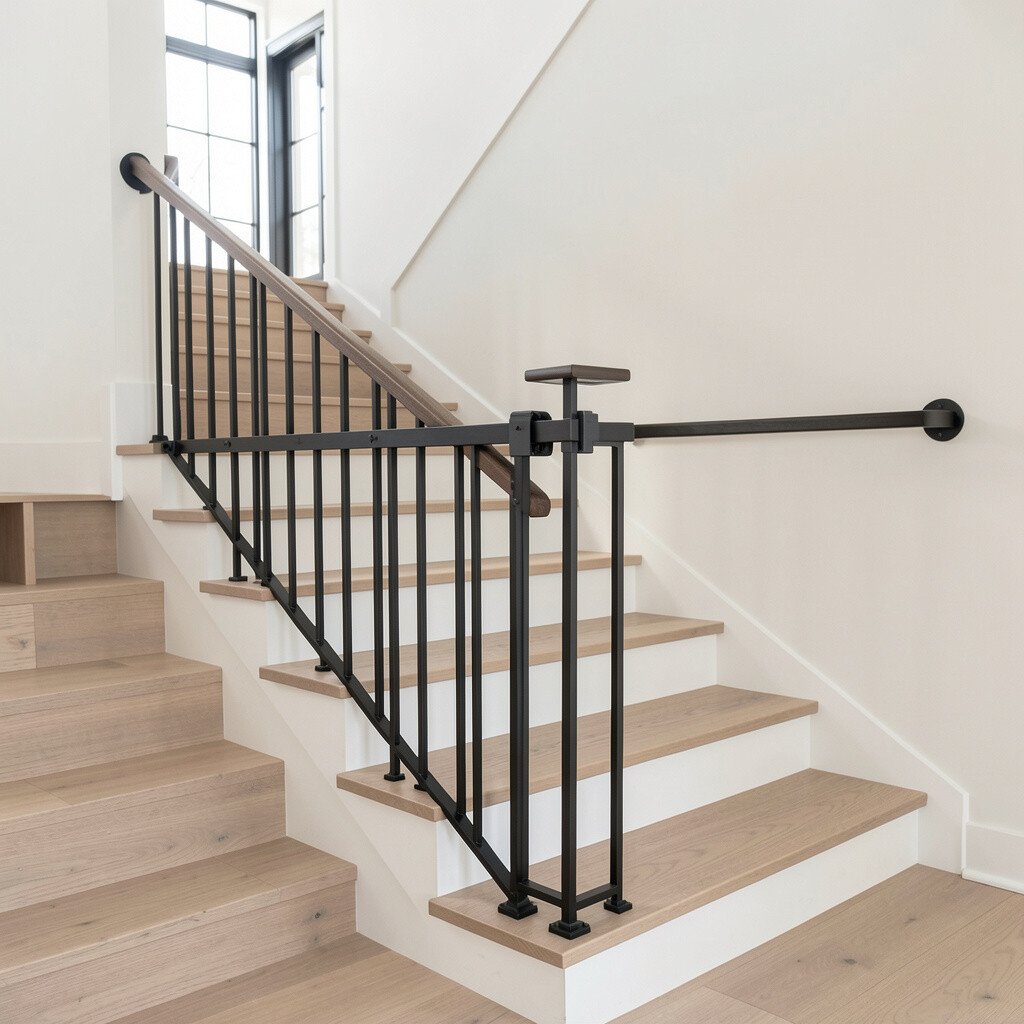
Imagine a stair railing that includes a gate-like section, designed to open and close when needed. It looks modern and helps manage spaces in homes with kids or pets.
This is a unique practical choice because it blends safety with flexibility. When the gate is open, the stair area still feels open and connected to the rest of your home.
For practicality, confirm smooth operation and check that the latch is easy to use for adults. Choose materials that resist everyday wear, since the gate area gets touched frequently. Budget-wise, add-ons like gates can raise cost, but the added peace of mind often makes the investment worthwhile.
Personalize it by matching the gate finish to your other hardware, like cabinet pulls and door handles.
20. Stone Wall With Integrated Rail and Solid Look
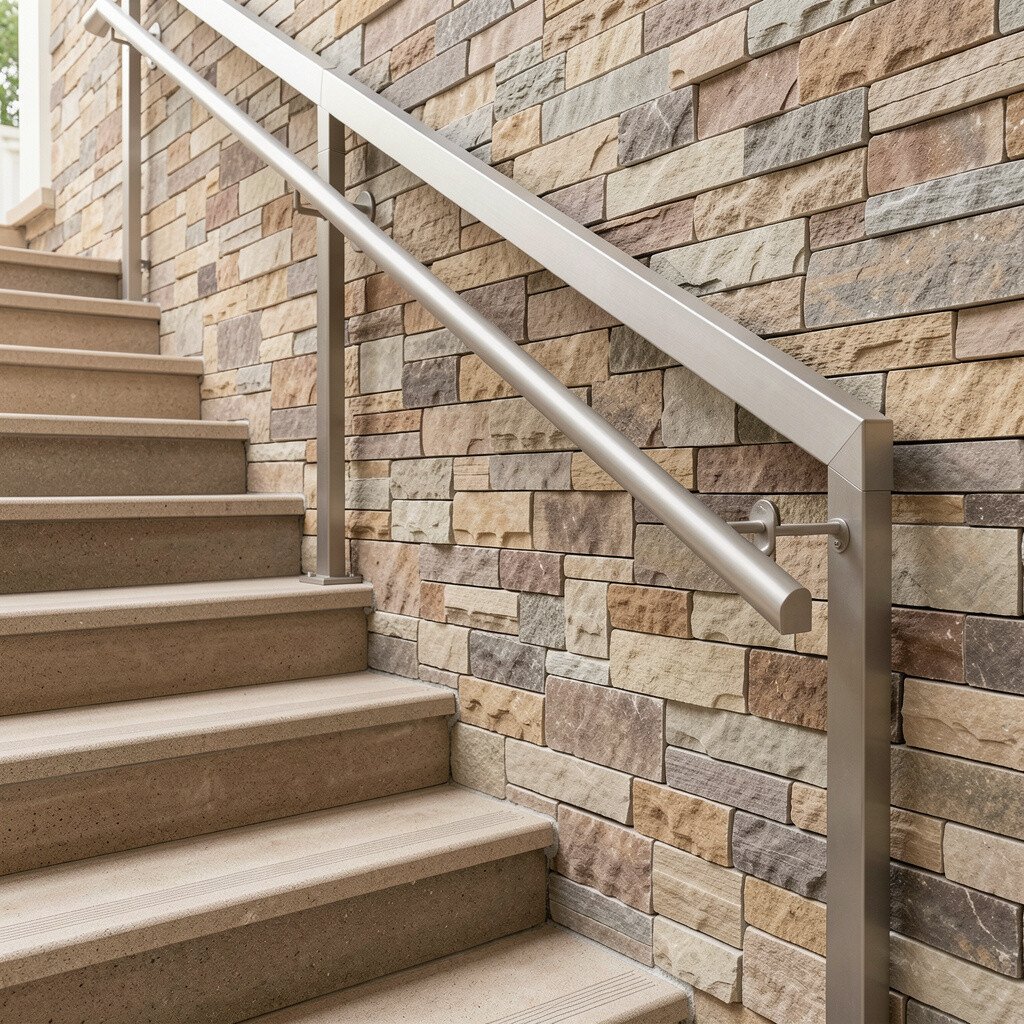
Picture a stone accent wall beside the stairs with a rail that feels built right into it. The look is sturdy and grounded, like the staircase belongs to a larger architectural plan.
This style stands out because the railing is not just attached, it’s integrated, giving the whole area a solid, high-end feel. It also helps hide some hardware, which keeps the visual line clean.
For practical tips, confirm installation compatibility with your wall material and make sure the rail anchors are properly secured. You’ll likely want a slip-resistant top rail or a finish that feels comfortable, since stone can create a cooler environment. In cost terms, stone accents can be a bigger project, but they can also elevate multiple spaces at once if you plan the layout thoughtfully.
Personalize with lighting that highlights the stone texture, plus a runner that echoes the stone tones for a cohesive look.
21. Scandinavian Light Rail With Simple Wood Slats
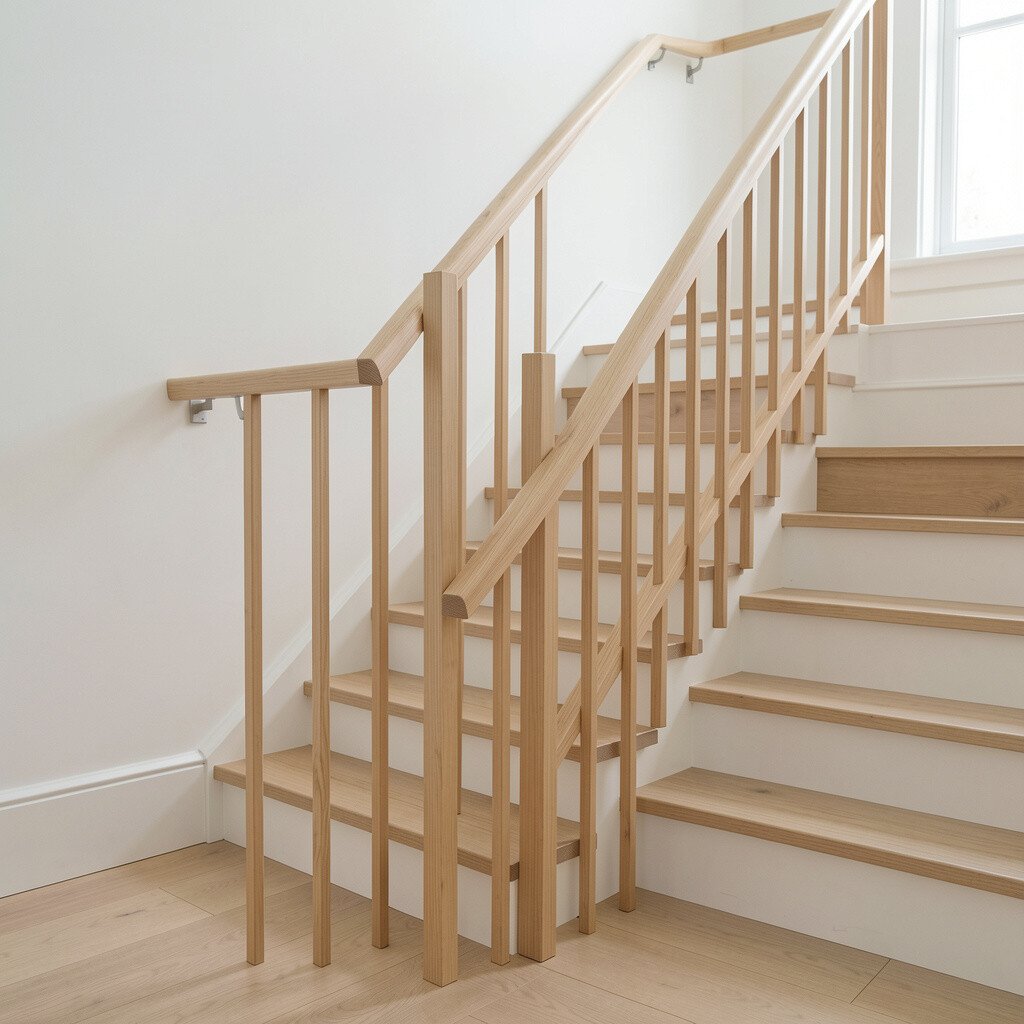
Imagine light wood slats and a clean, pale handrail that keeps the stairwell bright and calm. This style gives a soft, Scandinavian feel with a tidy, friendly vibe.
Light railings feel unique because they reduce visual heaviness, especially in small homes or narrow hallways. They also pair well with white walls, natural textiles, and simple décor that doesn’t compete for attention.
For practical tips, choose a finish that resists scuffs since light wood shows marks more easily. Keeping the railing clean is easier when you use the right protective top coat early on. If you’re budgeting, simple slat spacing and standard stair dimensions can help keep installation costs steadier.
Personalize by matching the wood tone to your desk, bed frame, or cutting boards, so the whole home feels like one calm design story.