The air feels calmer when your walls hold something living. A well-chosen succulent can make even a small corner feel cared for.
1. Echeveria in a Stacking Tray
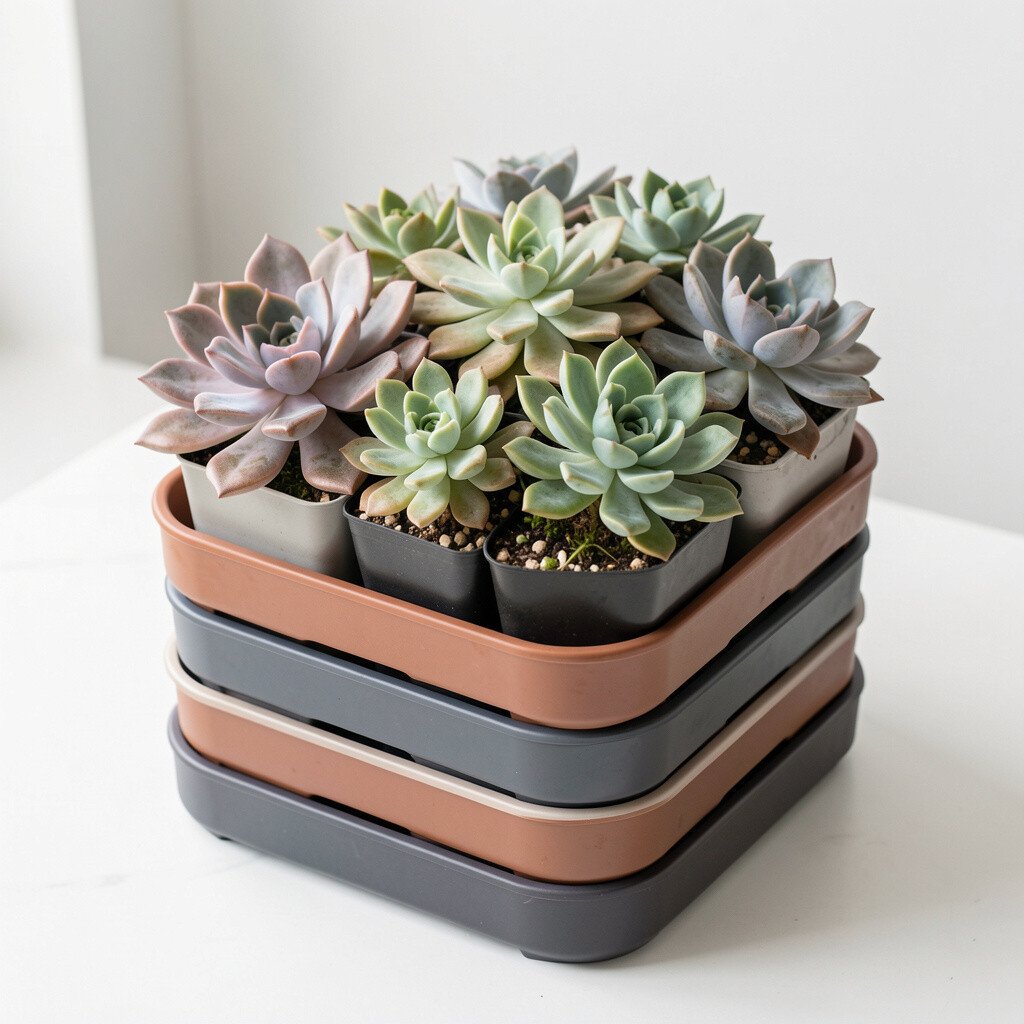
Picture tight rosettes with powdery leaves, sitting like tiny flowers. They look neat on a windowsill, and they feel friendly even to new plant owners.
Echeveria grows slowly, so your setup stays pretty for a long time. Give it bright light and let the soil dry out between waterings, and it will usually stay healthy. For a practical boost, pick a tray with drainage and group a few rosettes by size so your arrangement looks intentional.
2. Zebra Haworthia for Dark Corners
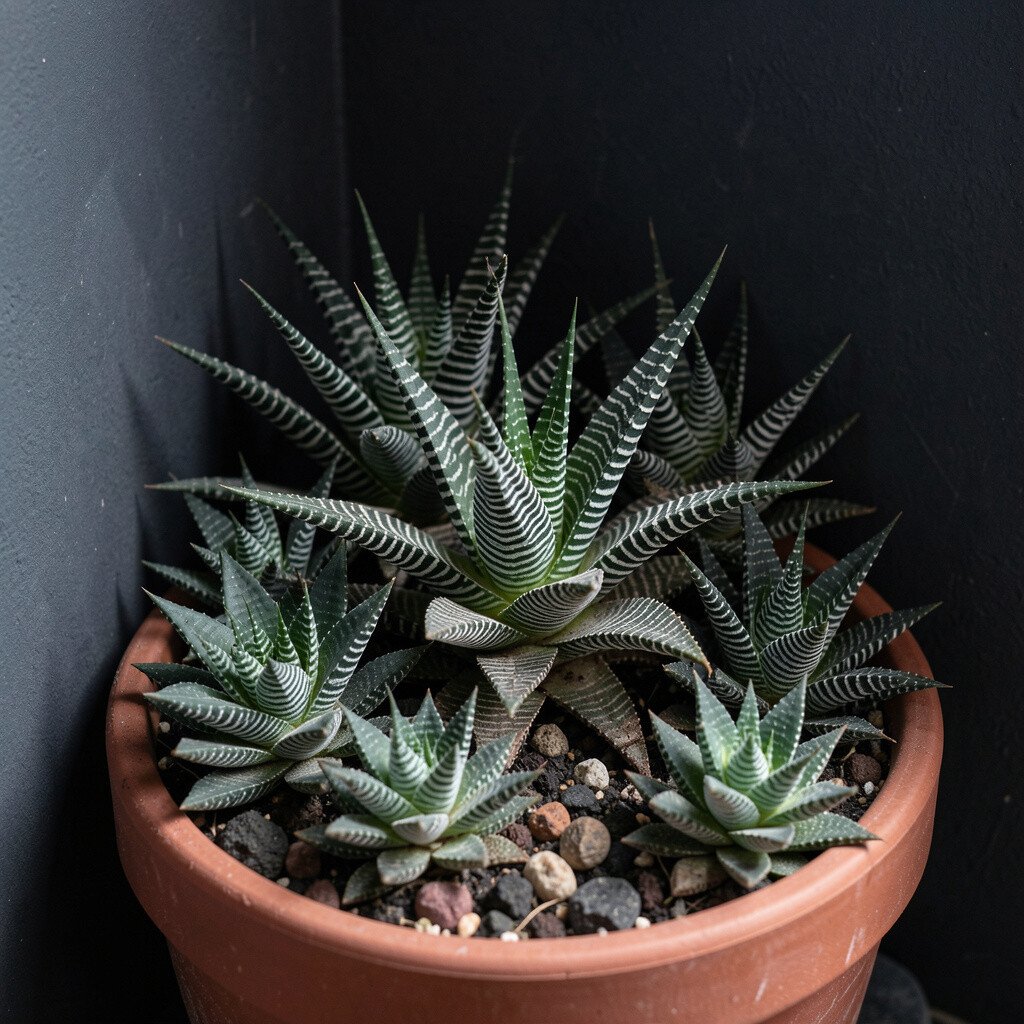
Zebra haworthia has bold stripes that look like nature made a zebra pattern just for you. Its leaves form a tight clump that feels sturdy and charming.
This plant is great when your light is softer, like near a shaded window. Water lightly and only after the mix has dried, since soggy soil can cause problems. A trendy look right now is pairing small “statement” plants with textured stoneware, so choose a pot with a matte finish to make the stripes pop.
If you want personalization, match pot colors to your room palette, like warm terracotta for cozy spaces or cool gray for modern rooms. A simple cost-friendly approach is to start with one healthy rosette and add friends later once you learn your watering rhythm.
3. Jade Plant on a Sunny Shelf
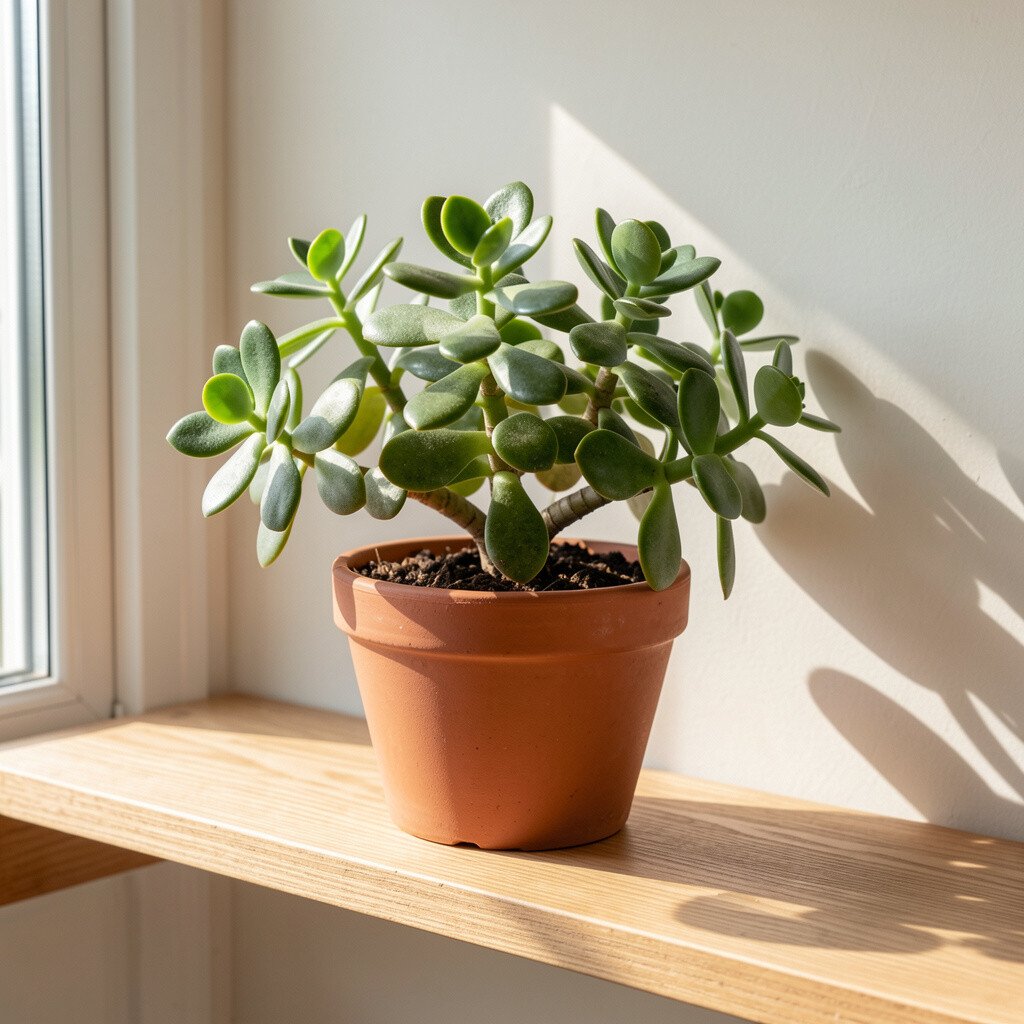
Jade plants look like miniature trees with thick, glossy leaves. When it stretches toward the sun, the shape gives your space a gentle sense of structure.
They’re known for being tough, which is a big confidence boost for busy schedules. Let the soil dry fully, then water deeply so roots get a real drink. If you want practical variety, rotate the pot a quarter turn every couple of weeks to keep the plant from leaning.
For personalization, consider trimming or repotting once the plant grows, which can help you shape a fuller form. This is also a current favorite for home styling because its classic look pairs well with both traditional and modern decor, and you can find many affordable starts.
4. String of Pearls Hanging Planter
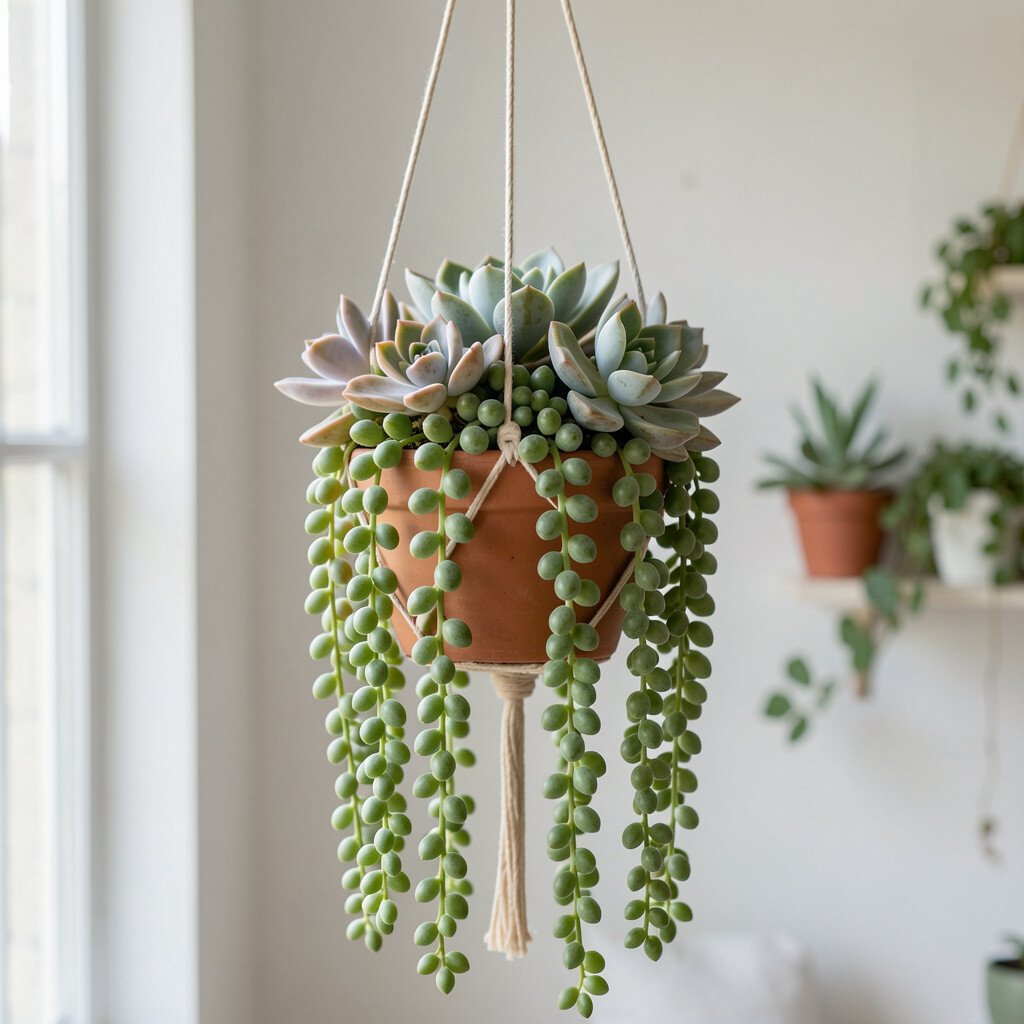
String of pearls spills down in rounded beads, like a living necklace. It looks especially magical when it hangs where sunlight catches the leaves.
This succulent loves bright light and airy soil, and it grows best when you water thoroughly but not too often. Make sure your hanging pot has drainage, then let the mix dry before you water again. For practicality, use a lightweight hanger so the planter is safe and easy to reposition.
You can personalize by training the strands around a trellis ring or arranging the beads into a layered cascade. Costs can vary, but you can often find cuttings that are cheaper than full plants, and they root quickly with the right care.
5. Echeveria with a Terrarium-Style Bowl
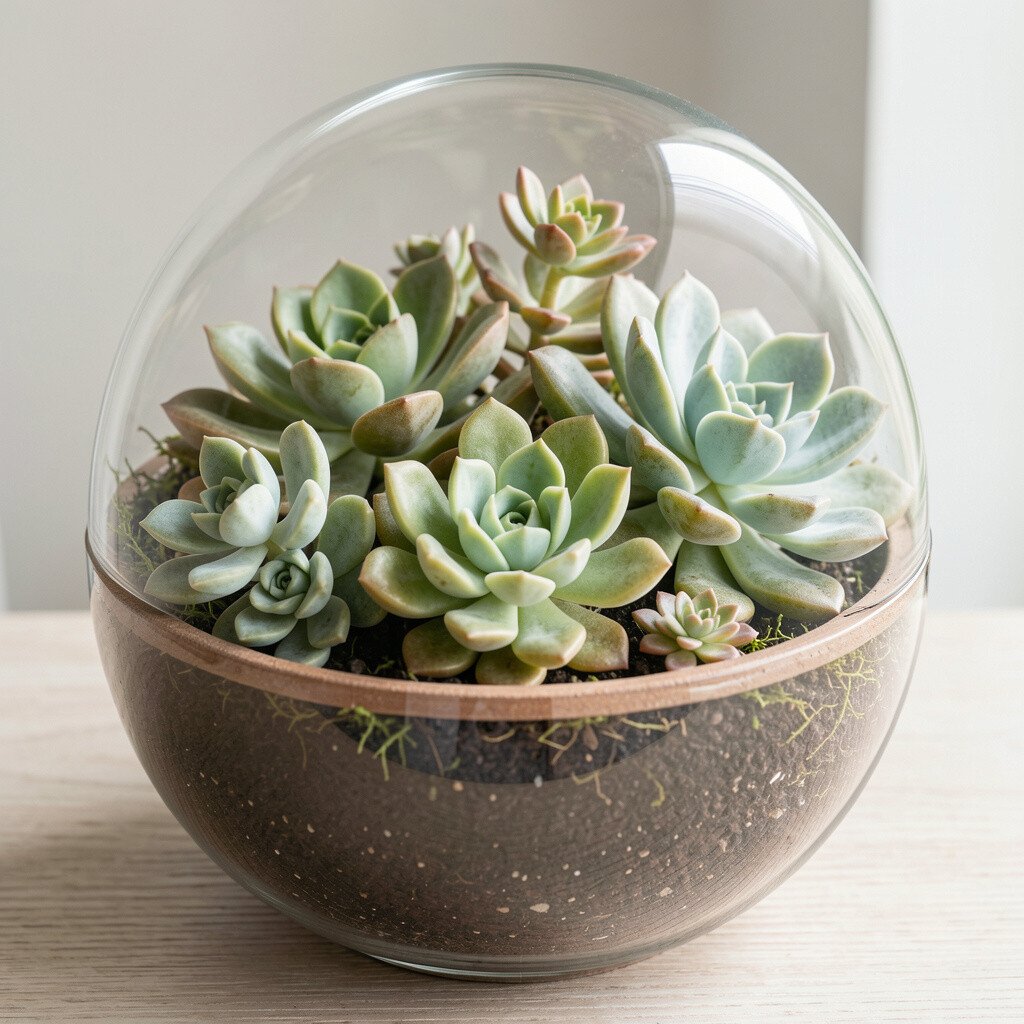
Think of a shallow bowl filled with small rosettes, creating a mini landscape. The rounded leaves and contrasting colors make the whole scene feel curated.
While succulents aren’t the same as tropical terrariums, a terrarium-style bowl can still work if you use a very well-draining mix and keep airflow in mind. Water sparingly, since smaller containers dry differently than bigger pots. A practical trick is to use a lightweight potting mix with extra grit, then keep the bowl near a sunny window for strong growth.
If you want uniqueness, place one taller rosette behind a cluster of shorter ones to create depth. Many people enjoy this trend because it looks stylish on desks and kitchen counters, and you can build it step by step without spending a lot at once.
6. Crassula Ovata ‘Gollum’ for a Sculpted Look
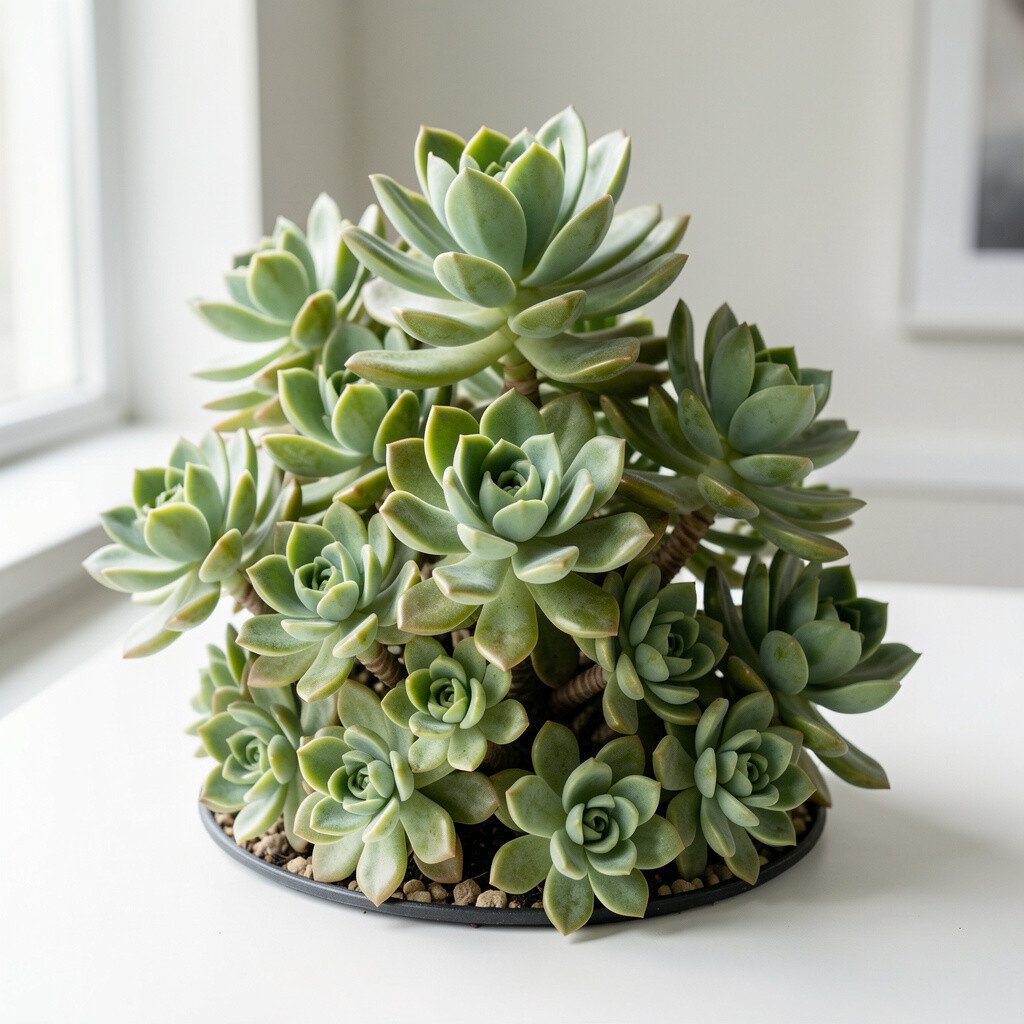
Some jade forms have leaves that curl and look like little horns. Crassula ovata ‘Gollum’ brings that playful sculpted vibe right onto your shelf.
This plant is easy to maintain, and it tends to hold its shape well when given steady light. Water when the soil is dry, and avoid frequent sips that keep roots too wet. For a practical setup, choose a pot with a drainage hole and a saucer that you empty after watering.
You can personalize it by using a decorative stone top dressing that matches your decor. It’s also a budget-friendly win because you can grow it into a more dramatic specimen over time without constantly buying new plants.
7. Haworthia ‘Zebra’ Duo on a Narrow Windowsill
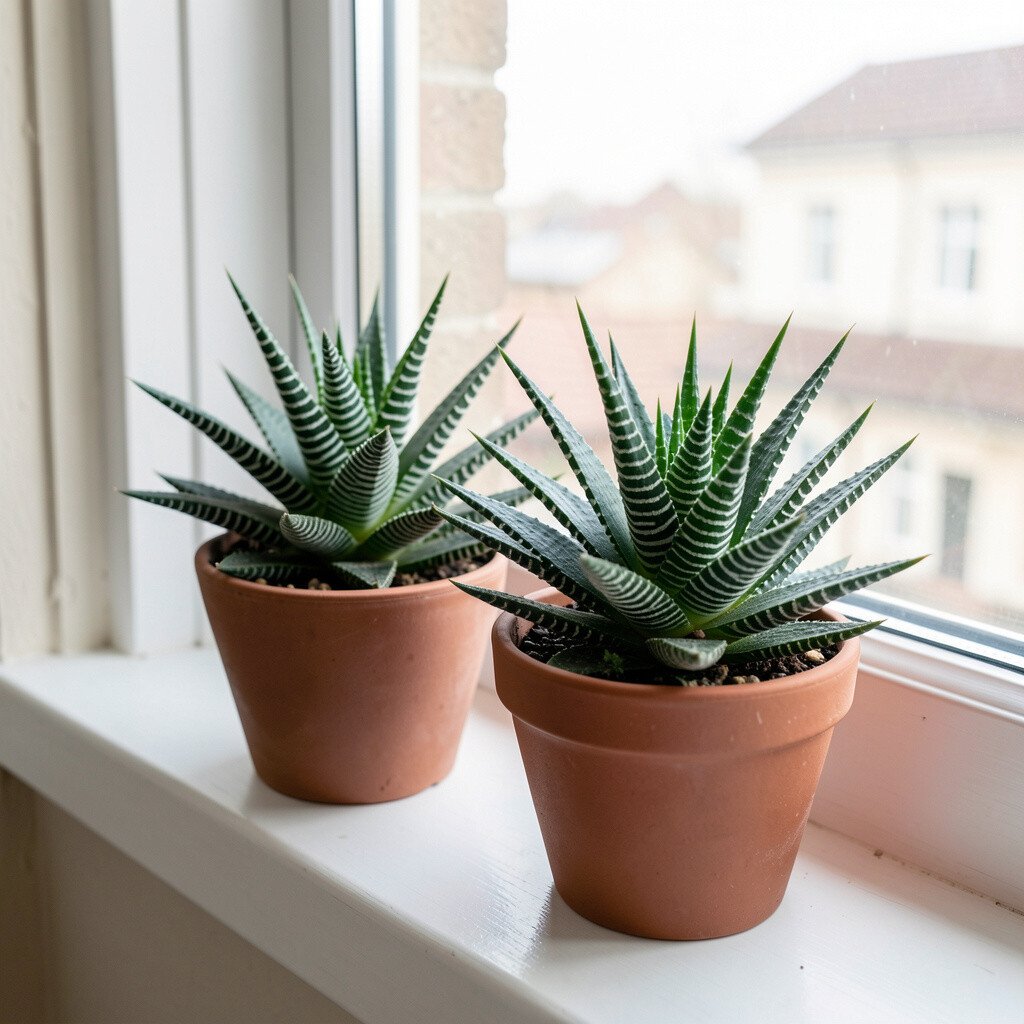
Haworthia feels graphic, like living art prints with fine textures. On a narrow windowsill, it creates a neat, repeating pattern that looks polished.
These plants prefer bright, indirect light and like their soil to dry out between waterings. If you water carefully, they usually stay compact and attractive for a long while. A practical tip is to group them in pairs or small clusters, because their shapes echo each other and look more intentional.
To personalize, rotate pot styles across a few colors, such as white, black, and muted green, for a gallery feel. This is also a current trend in plant styling, where smaller succulents are used like accents rather than big statement pieces.
8. Succulent Mix Wall Planter for Vertical Charm

A vertical planter can turn a blank wall into a soft, living mural. When you choose small succulents with different leaf shapes, the whole display looks rich and full.
This approach helps when floor space is tight, and it can also keep plants up at eye level. Watering takes a bit of care, so use a planter with individual compartments and follow the manufacturer guidance for drainage and watering intervals. For practical tips, check the planter’s weight and install securely so it stays safe and straight.
You can personalize by picking a color theme, like warm reds and browns for a cozy mood or cool greens and silvers for calm energy. Costs can be higher than standard pots, but the visual impact is big, and you can start with a smaller grid and add sections later.
9. Kalanchoe Blossfeldiana for Color Pops
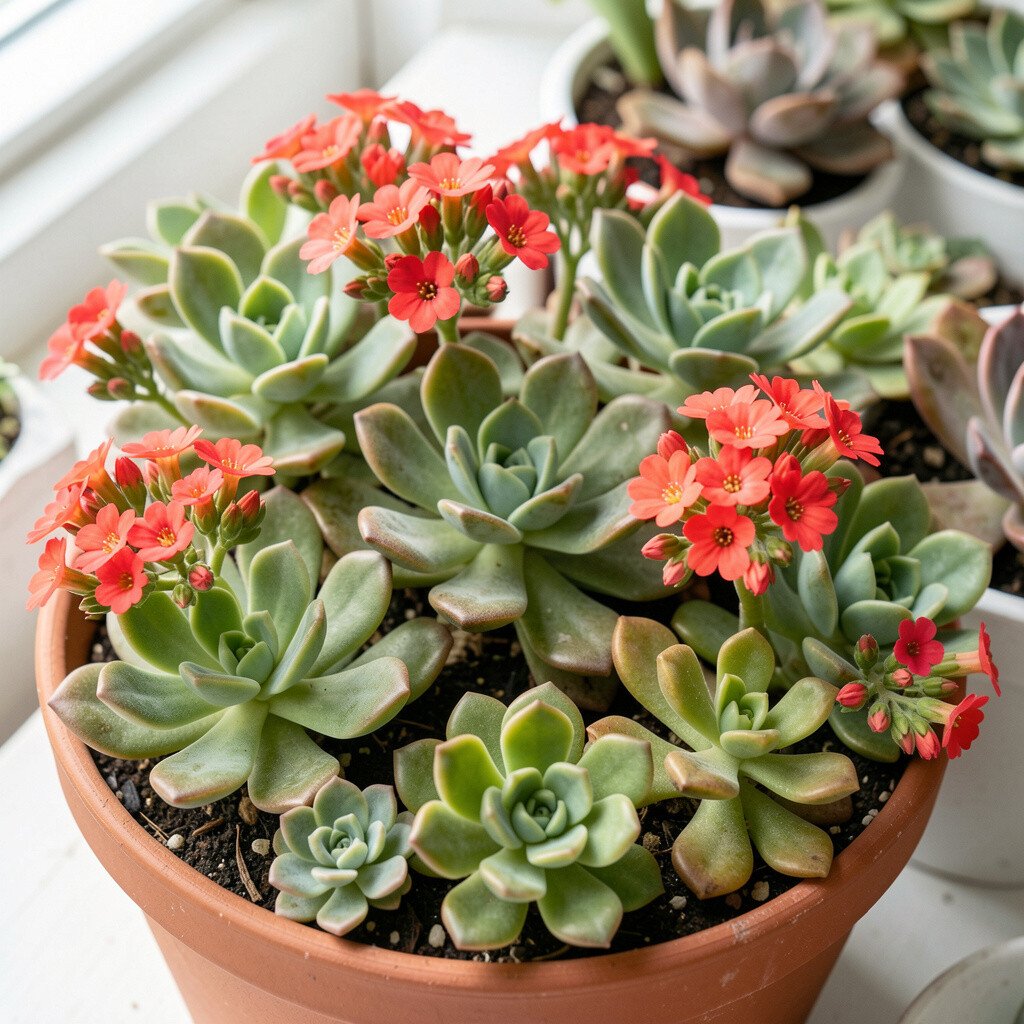
Kalanchoe brings flowers to the succulent family, with blooms that brighten even cloudy rooms. The leaves look sturdy, while the petals add an instant “cheer up” effect.
This plant is great for people who want a succulent that also looks festive. Bright light helps it flower well, and watering should be done only after the soil dries. For practical care, deadhead spent blooms to encourage fresh growth and tidy the appearance.
To personalize, place it where you can see it daily, like near a coffee corner or entryway. You can often find it at many price points, and seasonal sales can make it a smart buy when you want color fast.
10. Sempervivum for Outdoor-Friendly Texture
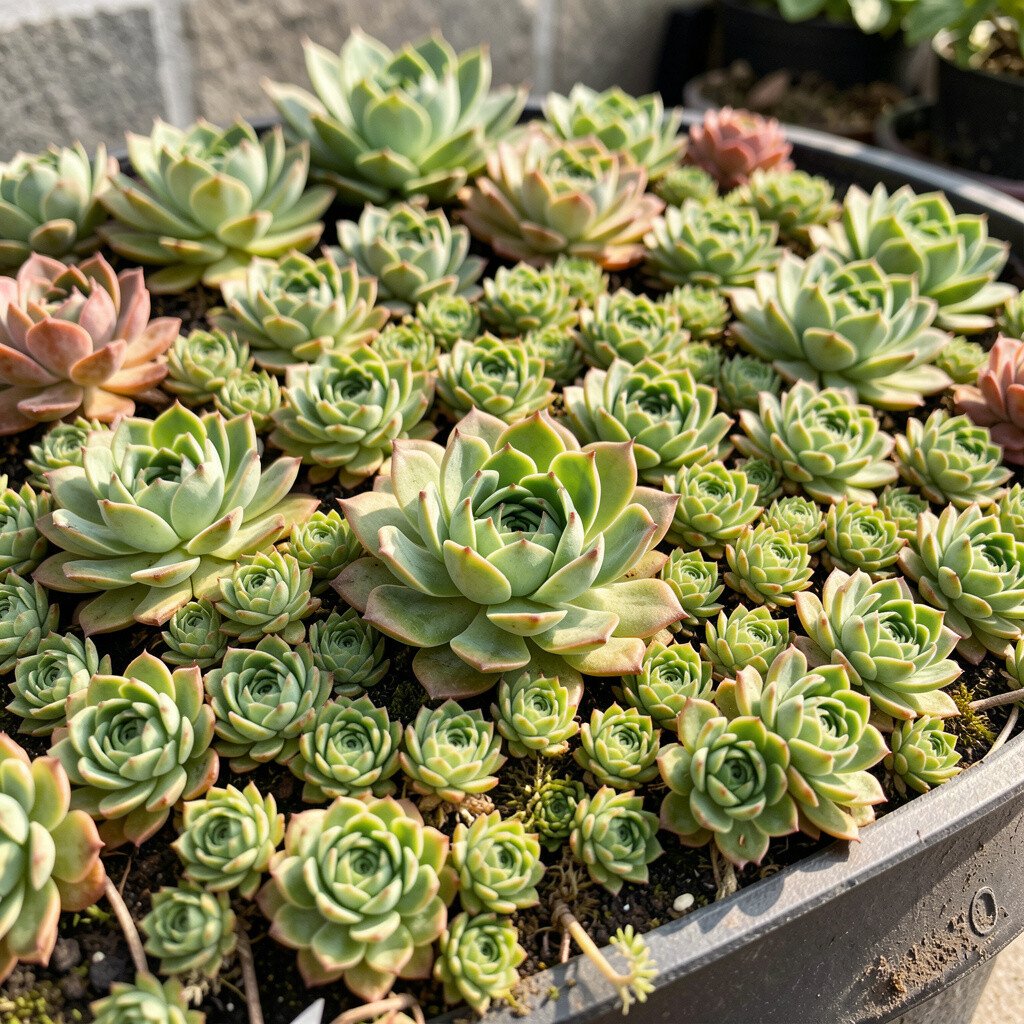
Sempervivum, often called houseleeks, forms thick rosettes that look like layered geodes. They handle outdoor conditions well, and they look amazing in sunny spots.
If your space includes a patio, balcony, or bright entry, these plants can be a perfect fit. Use a gritty, fast-draining mix and let rain do some of the work when conditions are right. A practical tip is to give them enough space between plants for airflow, which helps keep leaves healthy.
Uniqueness comes from the wide range of leaf colors, from deep green to hints of red at the tips. For personalization, group rosettes by color gradient so the display looks intentional rather than random, and expect costs to vary based on how rare the variety is.
11. Spiky Aloe for a Bold Focal Point
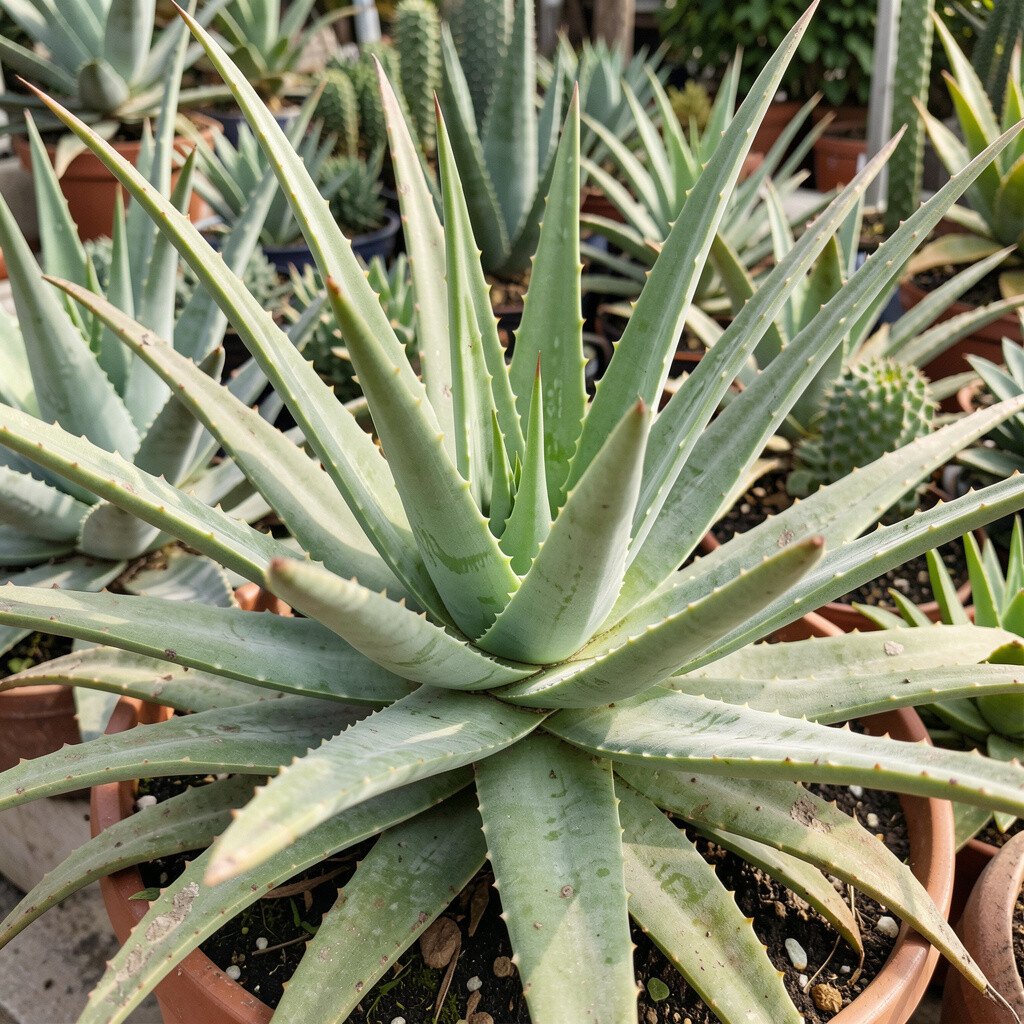
Alos bring a bold, architectural vibe with their tall, spiky leaves. In a room, they read like a living sculpture.
They thrive in bright light and like their watering to be spaced out, so they fit well into real life. Use a cactus mix and make sure the pot drains well, because aloe dislikes sitting in water. For practical tips, keep it near a sunny window and rotate occasionally so the plant grows evenly.
You can personalize by choosing a pot with a shape that feels modern or classic, like a round ceramic or a sleek planter. Many aloes are available in affordable sizes, and starting with a smaller one can still give you strong style right away.
12. Crassula ‘Blue Bird’ for Powdery Softness
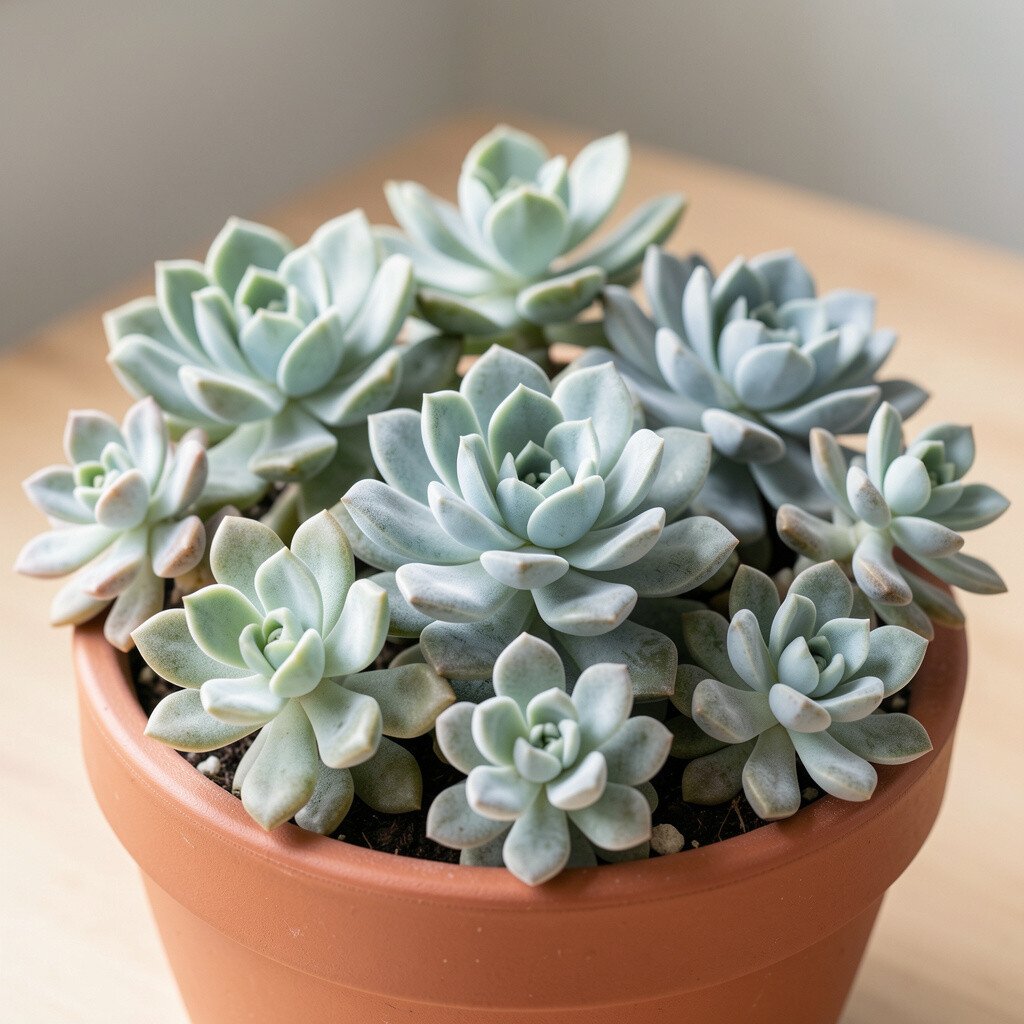
Crassula ‘Blue Bird’ looks soft and cool, with leaves that seem dusted in light blue. The overall effect is calm and soothing, like a quiet sky in plant form.
This succulent handles typical home conditions well when it gets plenty of light and dries out between waterings. Water too often and the leaves can lose their firmness, so aim for thorough watering followed by a full dry period. A practical trick is to lift the pot occasionally to learn how light it feels when it’s time to water.
To personalize, pair it with warmer-toned pots or stones to create strong contrast. As for cost, it’s often easy to find, and the slow growth means your investment stays attractive for a long time.
13. Collecting Mini Succulents in Mismatched Pots
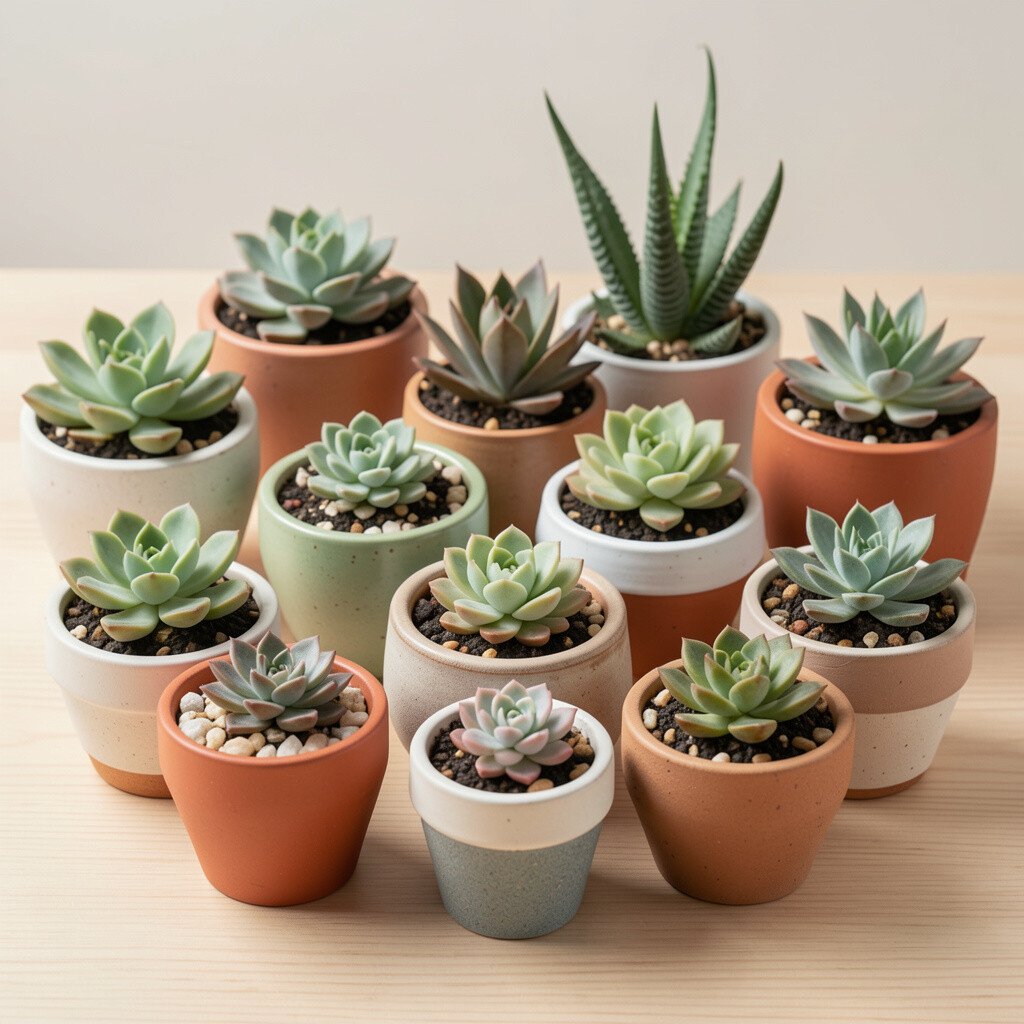
A mix of mini succulents in mismatched pots can look playful and curated at the same time. The variety of shapes and colors makes your space feel lively without needing much space.
When you group small plants, pick ones with similar light and watering needs so care stays simple. Use a consistent potting mix across your collection, and keep each plant’s drainage in mind so you don’t create hidden overwatering problems. A practical idea is to cluster them on a tray so you can move the whole display for window adjustments.
Uniqueness comes naturally when you shop for different textures and glazes, from speckled ceramics to smooth matte finishes. Costs can stay low if you mix a few bigger plants with several small cuttings, which many sellers offer as starter pieces.
14. Colorful Succulent Centerpiece for Tables
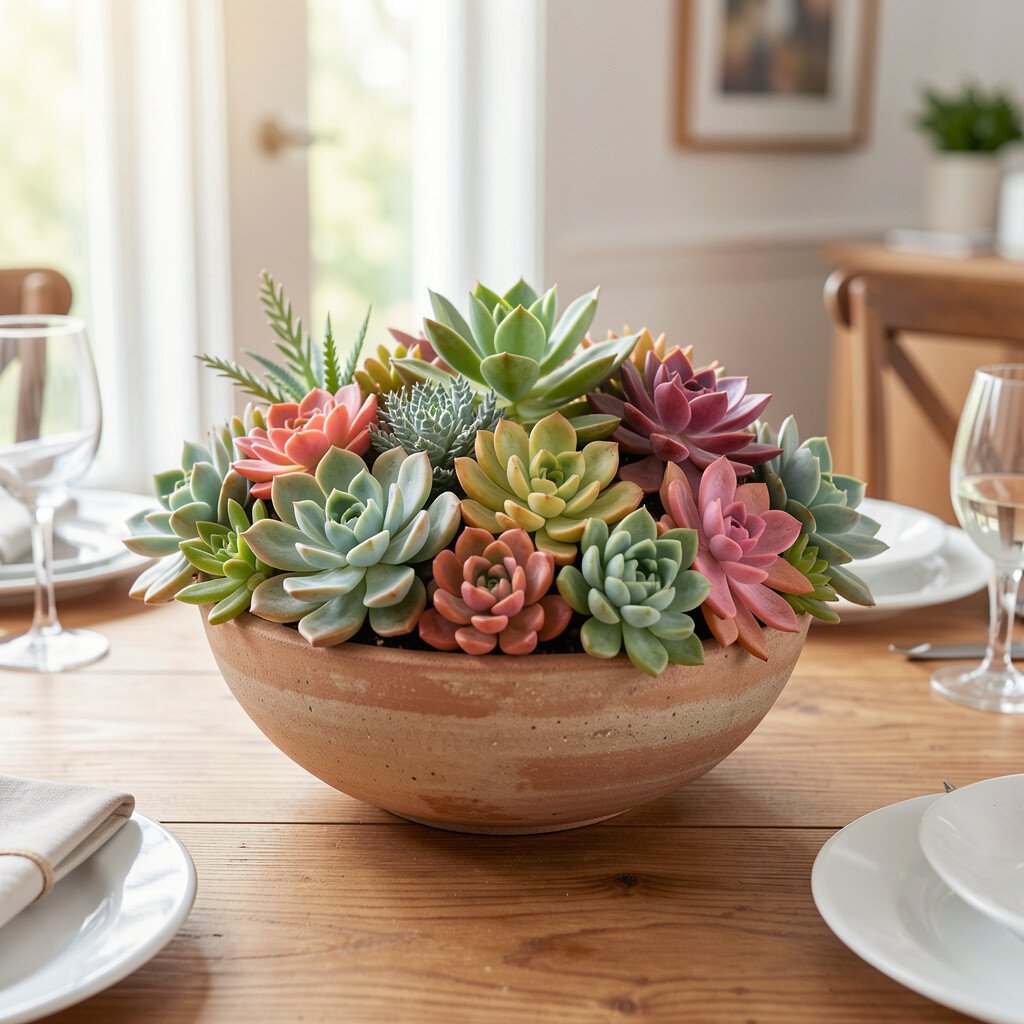
A succulent centerpiece can make a dining table or coffee table feel special without needing constant upkeep. Choose plants with contrasting leaf colors and arrange them like a small garden scene.
For best results, use a shallow planter with drainage and place it in bright light, since centerpieces often sit farther from windows. Keep water controlled, letting the soil dry between waterings, and avoid wetting leaves that can trap moisture. A practical tip is to add a decorative top layer like gravel, which helps your arrangement look crisp and neat.
You can personalize by matching the centerpiece to seasons, such as warm earthy tones for fall and brighter greens for spring. Costs depend on pot style and plant variety, but you can often build a stunning look using a few affordable pieces and a single showy focal plant.