Stone can make a home feel grounded and full of character. The right texture also helps your style look richer, even from the street.
Below are practical facade ideas that balance beauty, durability, and real-world budget choices. Each option includes ways to personalize the look so it feels like yours.
1. Rough-Cut Limestone With Warm Mortar Joints
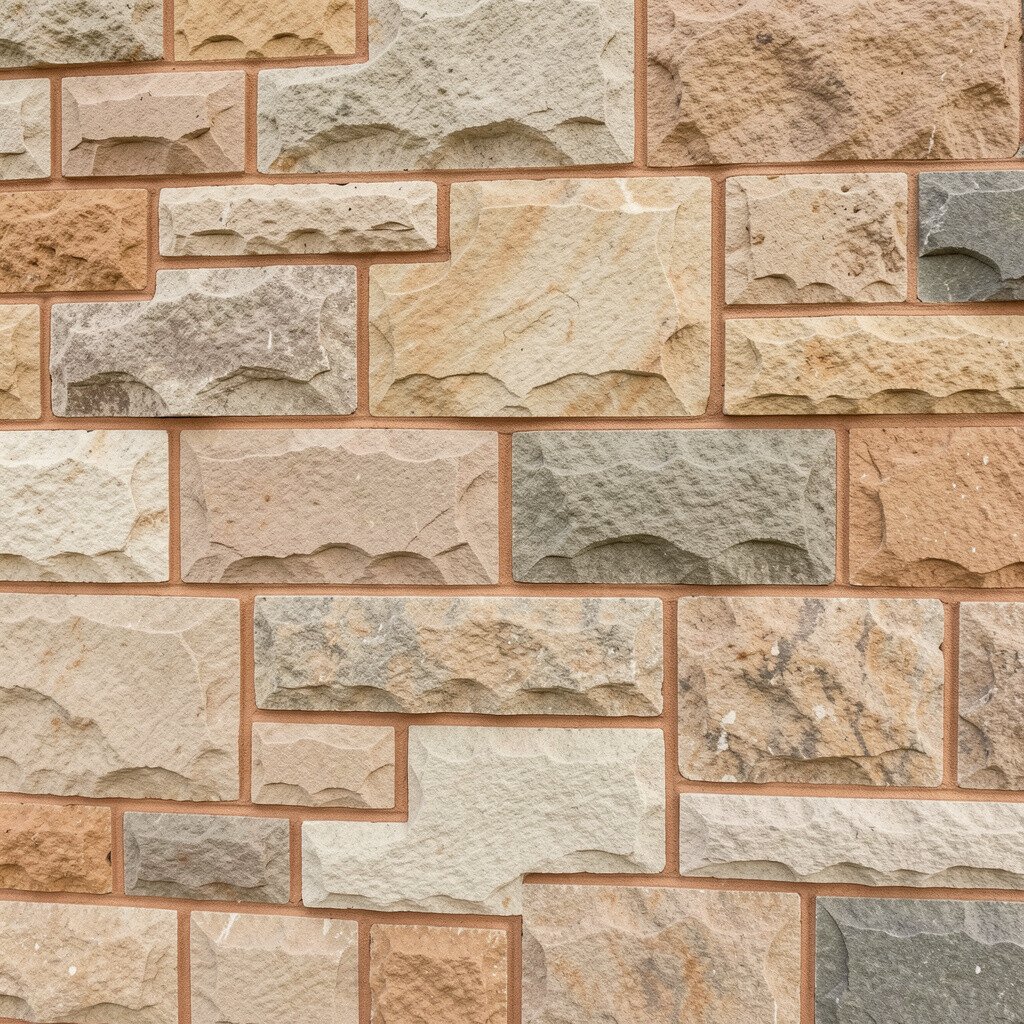
Imagine a facade that looks like it has always belonged to the neighborhood. Rough-cut limestone catches light in small ways, making the wall feel deeper than it is.
Choose a warm mortar color, such as creamy beige or light sand, to soften the stone’s edges. This combination can create a friendly, welcoming look that still feels upscale. For practical results, ask your mason for consistent bed lines so the texture stays tidy without losing its natural charm.
2. Split-Face Granite Panels for a Modern Edge
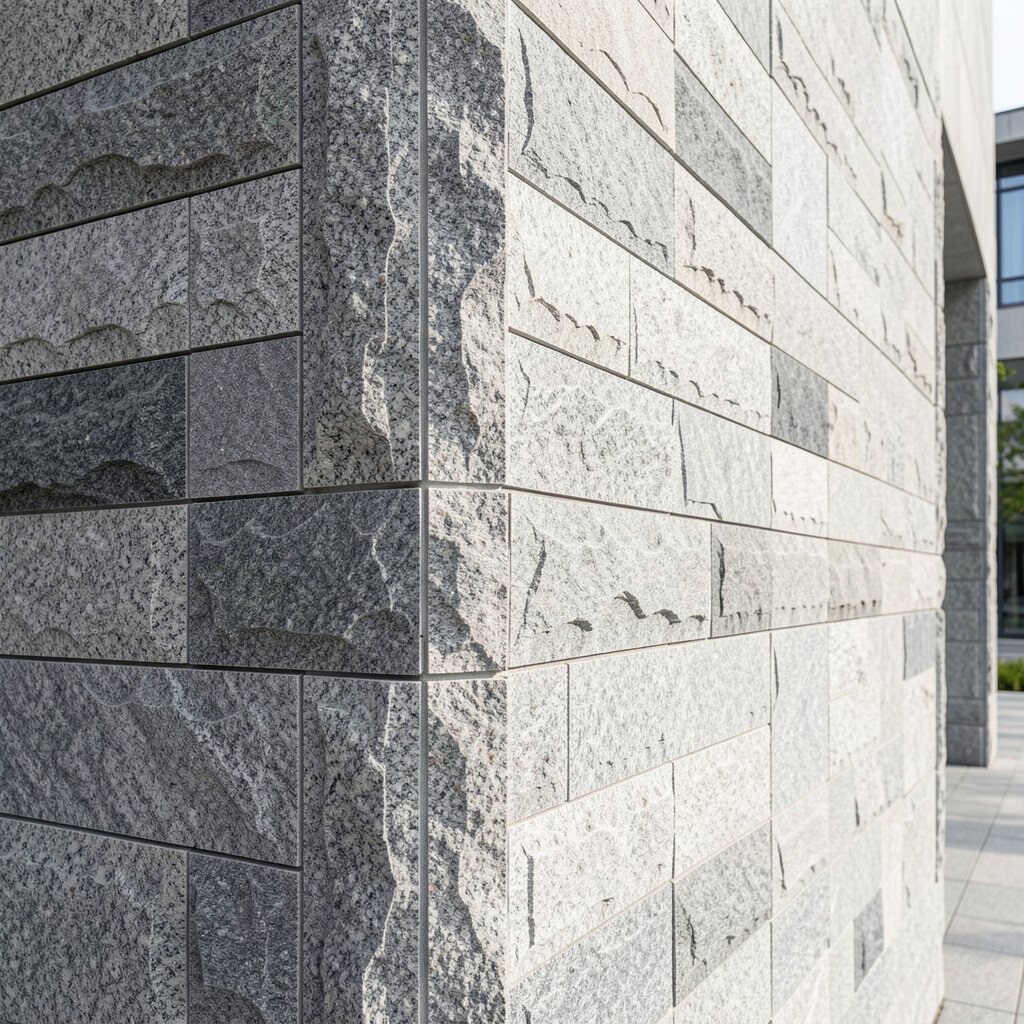
Split-face granite brings a crisp, modern attitude with lots of speckled shine. Up close, the jagged texture makes shadows that change throughout the day.
Pair granite panels with sleek lines on doors and windows to keep the design balanced. If you want to stay practical, install a moisture barrier behind the panels and seal the edges carefully.
For personalization, blend two granite shades in separate sections, like framing the entry or outlining the garage. Many homeowners find that this approach gives a “designer” look without covering the entire facade in the most expensive stone.
3. Fieldstone Veneer With a Cozy Cottage Rhythm

Fieldstone veneer gives you the charm of an old farmhouse without the weight of full stone. The uneven shapes create a natural rhythm that feels warm and lived-in.
Look for stones with a mix of browns, grays, and soft rust tones so the facade never looks flat. Keep the mortar joints slightly varied to match how real fieldstone sits in nature.
To personalize, extend the stone up around windows like a gentle frame, then switch to siding or stucco on the upper portions. This lets you control cost while still achieving a textured, high-end front. For best curb appeal, place the stone where the eye lands first, usually the entry, porch, and lower wall areas.
Maintenance is also easier with veneer than with full masonry, but you still should check seals and clean buildup yearly. Use a soft brush and mild cleanser so the texture stays crisp. When weather hits, good flashing details help protect the wall behind the veneer.
4. Stacked Travertine for a Clean, Layered Look

Travertine looks like it has subtle pores and gentle color shifts that feel calm and refined. When it’s stacked in neat rows, it creates a layered facade that reads as both modern and natural.
Choose a honed finish if you want a smoother feel that still holds texture. Keep the joints consistent in width for a tidy appearance that feels intentional. If you want a practical upgrade, use moisture-resistant backing and pay attention to how you finish corners.
5. Charcoal Basalt With High-Contrast Highlighting
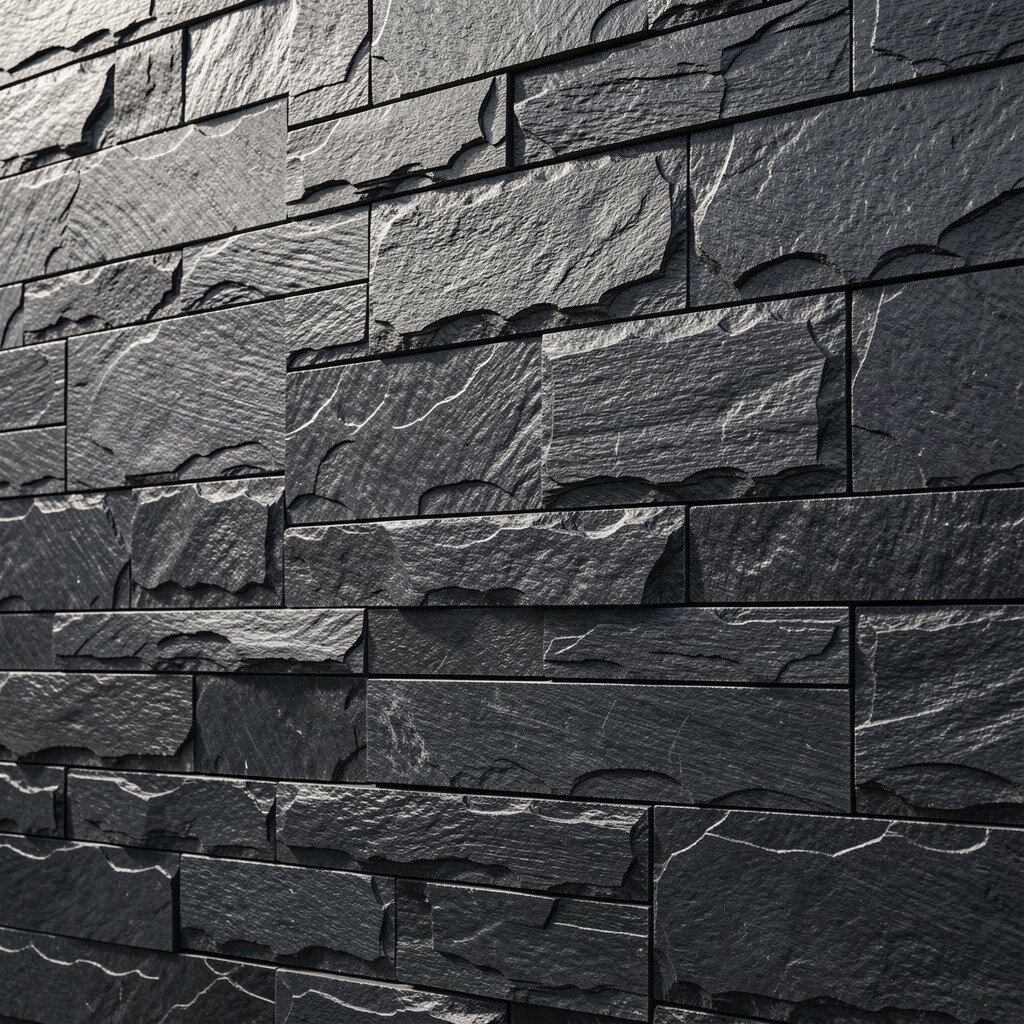
Charcoal basalt has a deep, dramatic tone that instantly upgrades a facade. The texture is tight and solid, so it looks striking even on simple house shapes.
Use lighter trim around openings to add visual contrast without clutter. A bright white or warm gray frame can make windows feel sharper and more inviting. For personalization, add a stone relief feature at the entry, like a small vertical panel or a narrow band that guides the eye upward.
Basalt often costs more than common veneers, so consider covering only the first-floor facade or the main entry wall. That way you still get the bold look, while keeping the overall project within reach. Talk with suppliers about whether honed or tumbled options change the price, since finishes can affect availability.
6. Hand-Chiseled Slate for an Artistic Facade
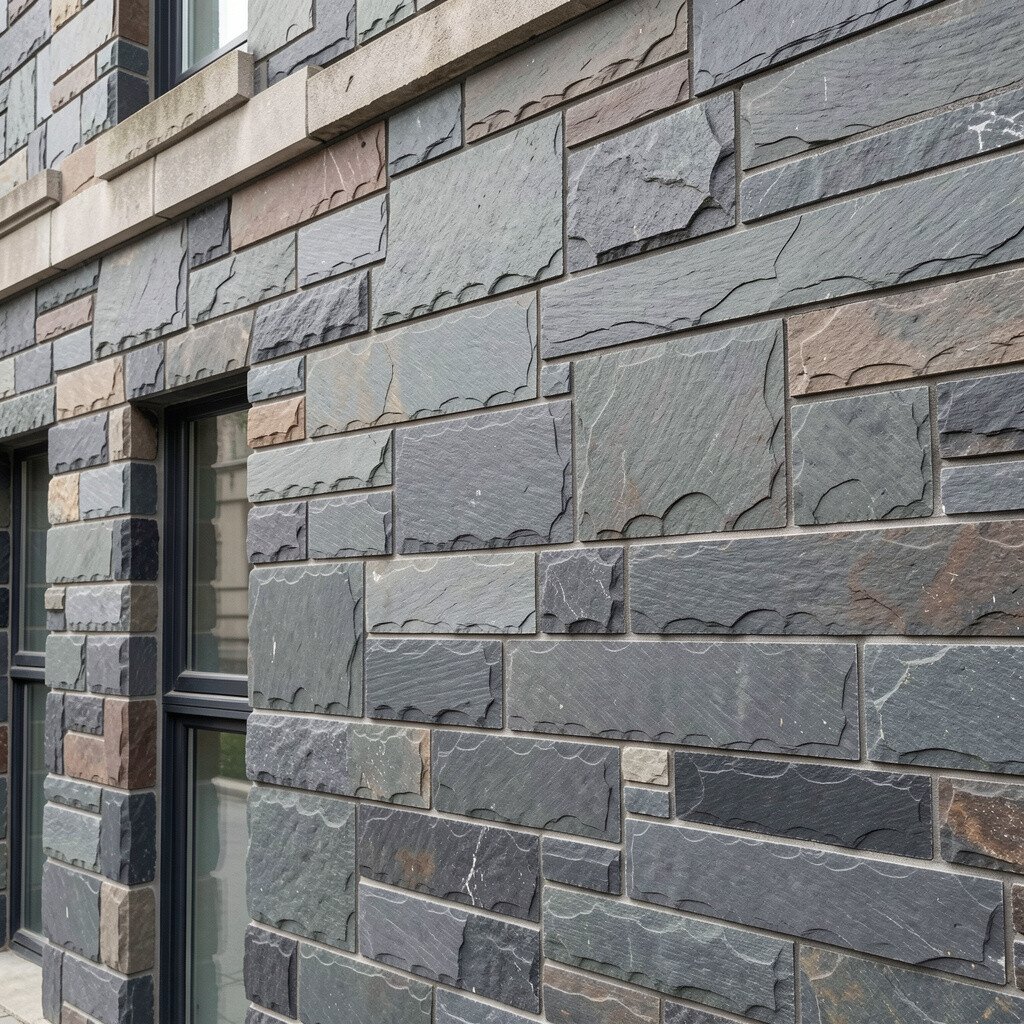
Slate brings a naturally layered texture that looks almost artistic from a distance. Each piece has its own tone, so the facade never repeats in a boring way.
To get a clean result, plan the layout carefully, especially around corners and window trims. A professional installer can help align the pieces so the wall looks structured even with natural variation.
If your goal is personalization, mix slate in two tones, such as deep charcoal and muted blue-gray. This can make the facade feel richer without needing a complicated design. Since slate is usually long-lasting, the long-term value can justify a bigger upfront spend, especially if your home needs curb appeal fast.
7. Limestone Microtexture With Subtle Shadow Lines
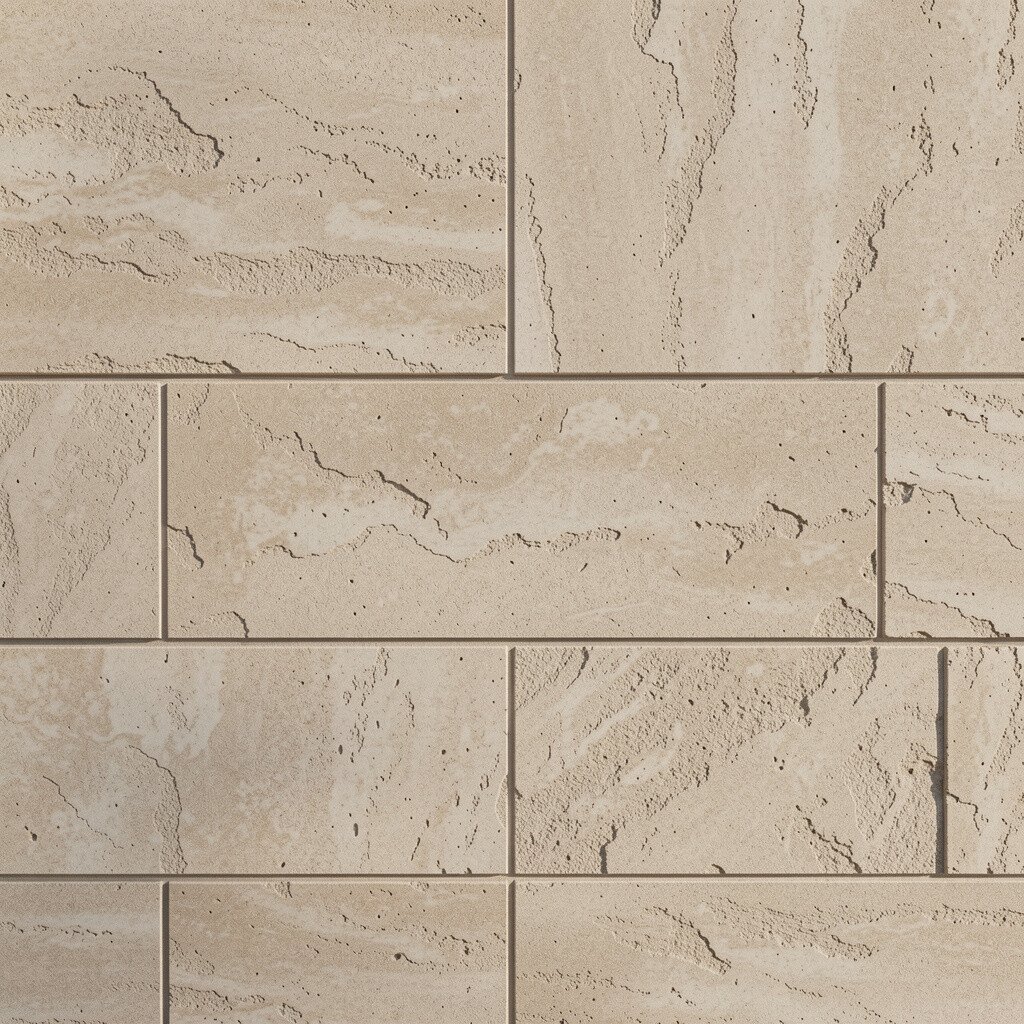
Limestone microtexture gives a refined surface that still creates depth through shadow. It’s a great choice if you want something textured but not too wild.
Go for thin ledge joints or shallow shadow gaps to boost the effect, especially in indirect light. This helps the wall look more dimensional while keeping the overall lines calm and modern.
For personalization, match the mortar tone to one of the stone shades so the facade feels cohesive. You can also add a small stone band under the roofline for a signature look. If you’re watching cost, compare panelized systems to traditional installation, since the method can affect labor and timing.
When sealed properly, limestone microtexture can resist stains and simplify cleaning. Aim for a sealant that works with your stone type and climate so you don’t have to redo it too soon.
8. Earthy Brick and Stone Blend With Textured Borders
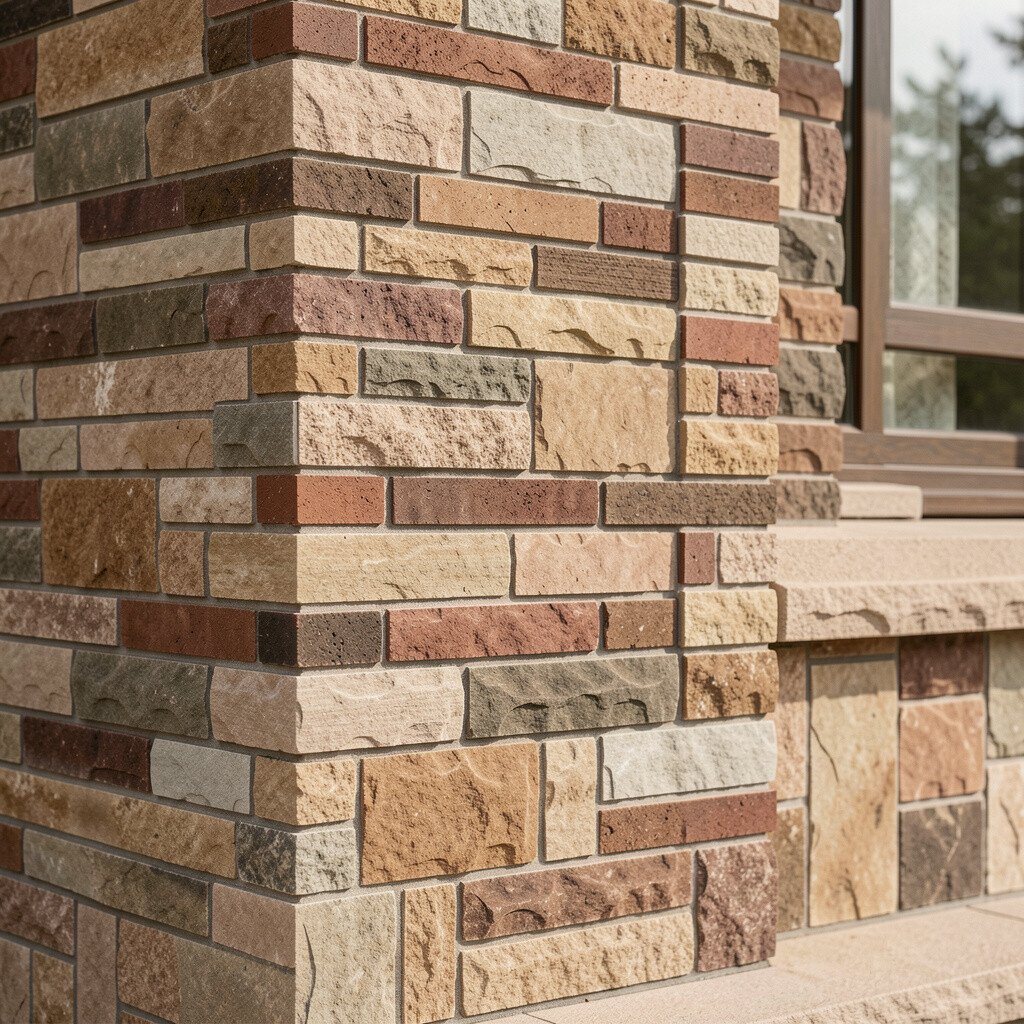
A blended facade can be the best of both worlds, with stone adding texture where it matters most. Picture brick for the main field, then stone borders around windows, the porch, and the chimney area.
This approach helps you control cost because you aren’t covering every square foot in stone. It also keeps the design balanced, since brick provides a steady background while stone brings focus and warmth.
Choose stone in a color that echoes the brick, like sandy limestone with warm terracotta brick. Keep the border thickness consistent so the look feels neat rather than accidental. If you want to personalize, add a textured stone arch or a small feature panel at the entry to anchor the whole front view.
9. Smooth-Then-Rough Contrast Panels for Dynamic Depth
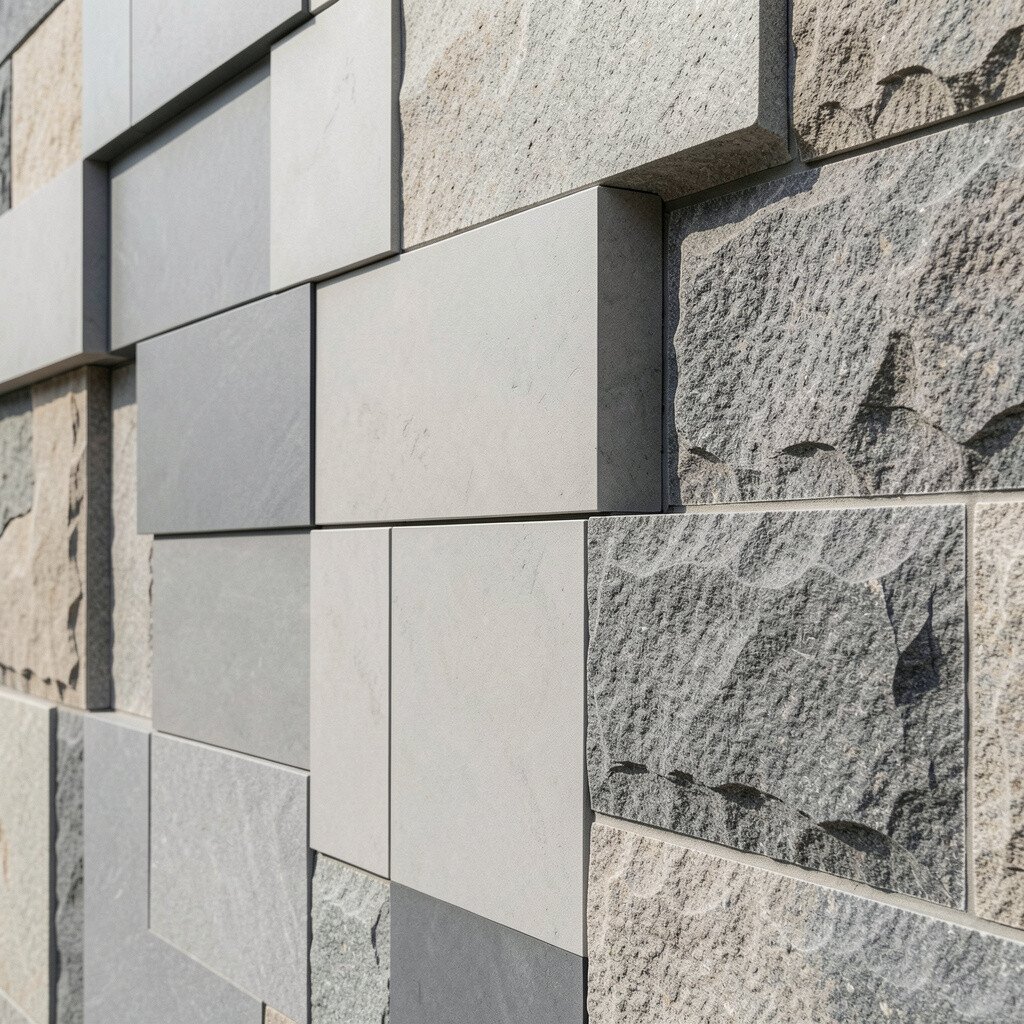
Contrast looks amazing when it’s done thoughtfully, and stone makes it easy. Using smoother stone sections alongside rougher, pebbled areas creates a facade that feels active and modern.
Try a layout where rough stone forms a central vertical feature and smoother stone frames the sides. This guides attention toward the door and can make even a simple home feel custom.
For practical planning, measure your wall sections early and ask installers about panel availability so you don’t get stuck with odd seams. It’s also smart to use the same stone family for contrast, since mixed materials can complicate sealing and maintenance. If your budget is tight, limit the rough texture to the entry zone, where curb appeal has the biggest impact.
10. Cobblestone-Inspired Front Porch Wall Texture
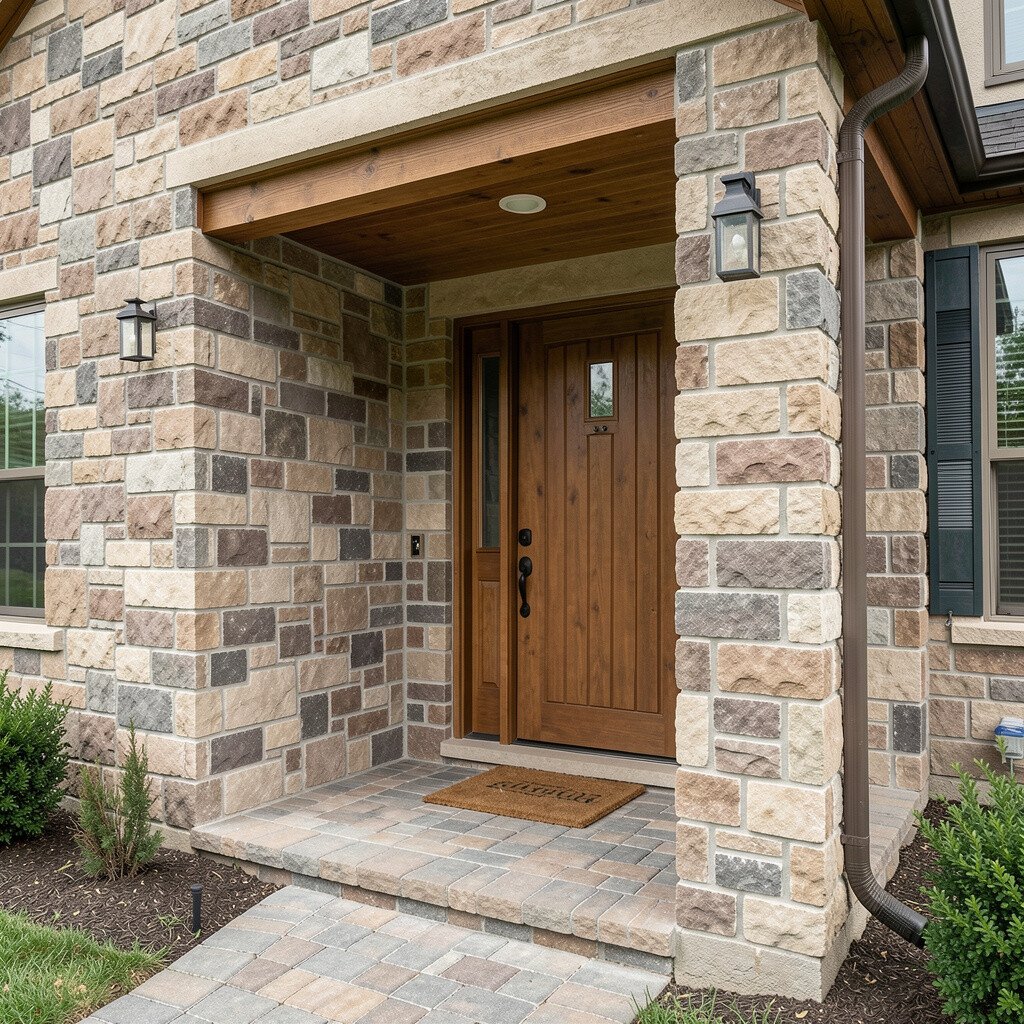
Even if your home doesn’t have a full stone facade, you can still get that textured, sturdy feel. Cobblestone-inspired veneer on a porch wall or entry pillar creates a strong focal point.
The small rounded texture of cobblestone looks charming and friendly, especially when paired with warm lighting. Add sconces near the entry so the texture glows at night and feels inviting.
For personalization, extend the cobblestone look around the front steps so everything feels connected. Many homeowners find that focusing on the porch area is a smart way to spend money where people actually notice it. Ask about thickness and installation requirements so the weight stays safe and the finish stays even.
Maintenance is manageable, but keep an eye on grout lines and clean gently after heavy weather. Good drainage around the porch also helps reduce buildup and staining over time.
11. Weathered Sandstone With Light Tinted Mortar

Weathered sandstone has a lived-in softness that feels both natural and welcoming. Its color variations add warmth, even if your house is painted in simple tones.
Use a light tinted mortar so the stone texture shows through without harsh lines. This helps the facade feel cohesive and calm, especially on larger homes where strong contrast might overwhelm.
Personalize with a slightly deeper mortar tone on select accent rows, like those around the windows. That subtle change can make the facade feel tailored without turning it into a busy pattern. Cost-wise, sandstone veneer can be a middle-ground option, especially when installed only on the front elevation and key visible sides.
To keep it looking great, seal it according to your climate and re-check it every few years. If you live in a rainy area, ask for recommendations on water-repellent sealers that won’t darken the stone too much.
12. Textured Granite Ledge Accents Over a Neutral Base

You can get a high-end granite look without committing to a full stone facade. Textured granite ledge accents placed over a neutral base like stucco or smooth siding add depth where the eye goes first.
Think about a ledge band around the entry, a small surround around the garage door, or a textured outline under windows. These accents make the facade feel layered and intentional, not plain.
For practical installation, plan your ledges so they can shed water properly and don’t trap moisture behind trim. Seams need careful flashing and sealing, especially in climates with freeze-thaw cycles. When budget matters, granite accents are a smart way to invest in texture while keeping the overall project under control.
You can personalize the placement based on how your home photographs, so choose the spots that show the most in your favorite angles. Adding slim lighting under the ledges can also highlight the stone texture beautifully at dusk.
13. Rustic Fieldstone With Geometric Window Framing
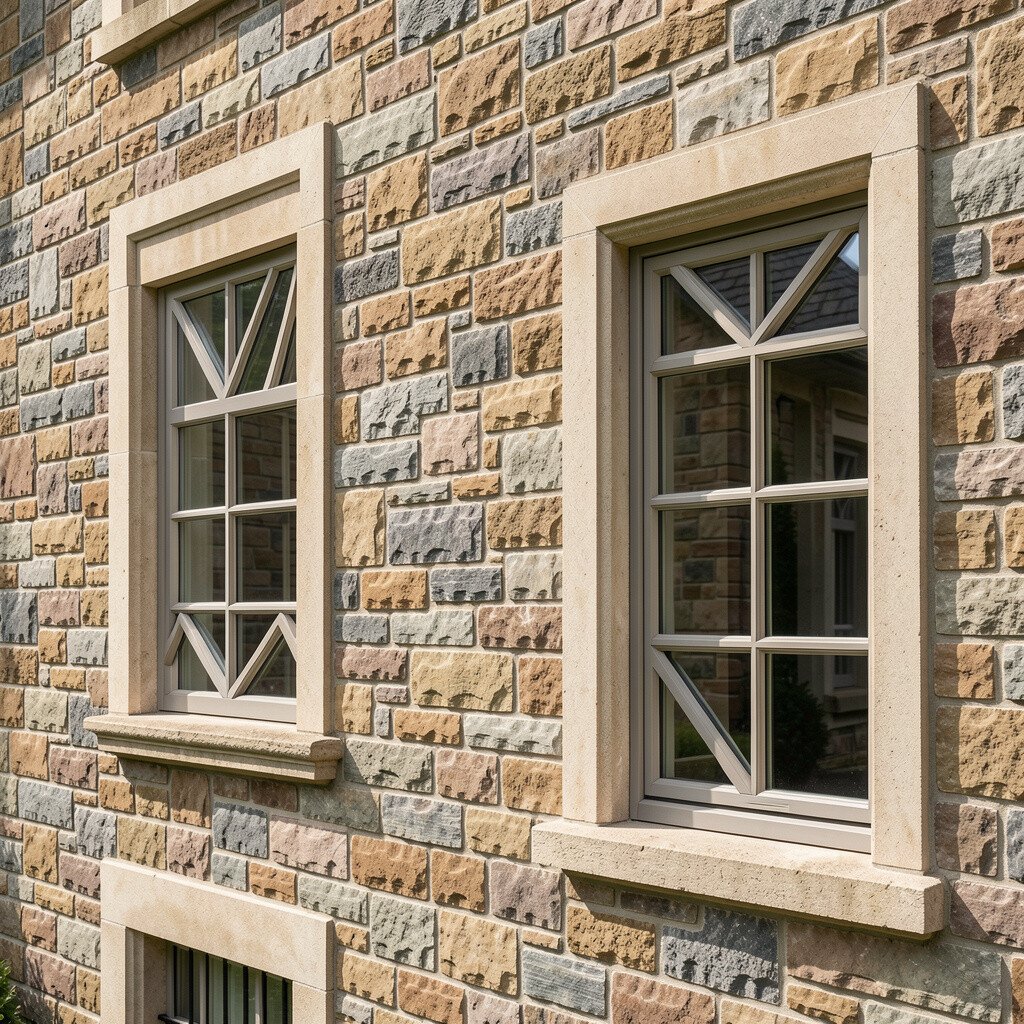
Fieldstone combined with crisp window geometry can look surprisingly modern and cozy at the same time. The rough texture softens the lines, while the clean framing keeps the design sharp.
Choose a consistent stone selection so the colors work together and the wall doesn’t look patchy. Then frame windows with stone that forms straight edges, like stacked blocks or carefully cut corner pieces.
Personalization is easy here because you control the “geometry” using the stone layout. Try outlining the windows with a slightly wider border for a custom feel, then keep the upper facade smoother for balance. For cost, you can concentrate stone on the ground level and main entry, switching to a different finish on higher walls.
To keep it practical, ensure you have proper weatherproofing behind the stone and use flashing that matches the facade system. When done well, textured fieldstone creates a durable, character-rich front that still feels welcoming every day.
If you want a trend-aligned look, consider using muted tones and avoiding overly bright mortar colors. Many recent designs lean into natural color harmony and strong detailing, so your facade stays stylish for years.