
The right staircase can set the mood for an entire home. It turns everyday movement into something quietly beautiful.
1. Warm Wood and Classic Newel Posts

Warm wood stairs instantly bring a welcoming feel, especially when the finish looks timeless rather than shiny. Pair them with classic newel posts that feel sturdy and well-made, and your hallway will look more polished every day.
Choose a wood species that matches your home’s vibe, like oak for a traditional look or walnut for richer tone. Keep the balusters evenly spaced for a neat rhythm, and use matching handrails to create a calm, continuous line. If your budget is tight, refinish existing stairs and replace only the worn handrail sections for a big visual upgrade.
2. Marble-Touched Steps for a Subtle Luxury

Add a stone accent and the whole staircase starts to feel special. Even a few marble-touched steps can catch light and make your entryway look more elegant.
Use stone only where it matters most, such as stair treads or a narrow runner border, so it stays traditional without looking heavy. A solid benefit of this approach is easier cleaning, since stone surfaces wipe down quickly. For cost planning, consider budget-friendly stone alternatives or smaller stone insets rather than full marble coverage.
To personalize, choose a stone tone that echoes your flooring or fireplace surround. When you install, ask about slip-resistant finishes so the look stays safe and comfortable. Regularly seal the stone and you’ll keep the color crisp for years.
3. Wainscoting Walls to Frame the Staircase
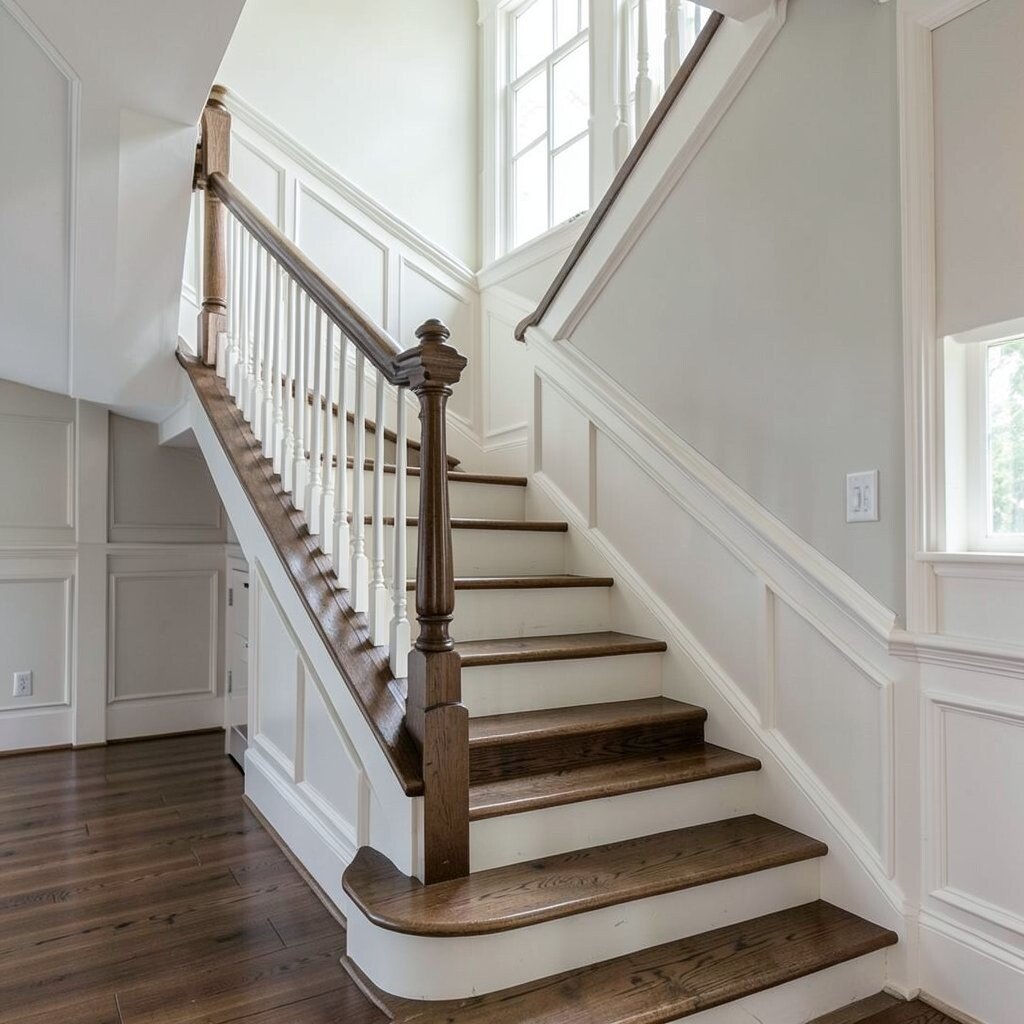
Traditional homes often look their best when walls are dressed in classic detail. Adding wainscoting along the staircase wall gives your stairs a built-in frame, like a gallery for the home’s main feature.
Go for raised panels with a simple profile so the texture feels old-school but not fussy. This creates a practical benefit too, because panel surfaces hide small scuffs better than flat paint. For a personalization twist, match the wainscoting trim width to the mantel trim or window casings.
When choosing finishes, consider matte paint for the upper wall and a durable semi-gloss for the trim. If you’re working on a budget, paint and install trim rather than replacing entire wall sections. The result looks custom because the lines look intentional.
Keep the staircase lighting in mind, since wainscoting reflects light softly and makes the area feel warmer. Install shoe molding at the base for a neat, finished edge that looks expensive without much complexity.
4. Classic Carpet Runner with Timeless Patterning

A carpet runner can make traditional stairs feel cozy while protecting the treads. Choose a pattern that feels classic, like muted florals or gentle stripes, and the hallway will look styled instead of plain.
Pick a runner width that covers the tread edges well, and keep the pile low enough to prevent snagging from shoes. This is a practical advantage because it reduces wear, dampens noise, and improves grip on steps. If you want a current feel, blend traditional pattern with subtle neutral tones that match modern decor.
5. Brass Details on Railings and Hardware

Brass hardware gives a traditional staircase a warm glow that feels inviting. Small accents, like brass balusters, stair brackets, or handrail end caps, can upgrade the look without changing the whole staircase.
Try a brushed brass finish for a softer shine that pairs well with oak, cherry, or painted wood. The benefit is that brass accents look classy in both bright and dim lighting, which helps the stairs stay attractive all day. For cost, you can focus on the most visible pieces, like the handrail ends and a few newel details.
To personalize, match brass tones to your light fixtures and door knobs so the home feels cohesive. Install hardware carefully so it aligns with the stair geometry, since straight lines make traditional styles look refined. Keep it clean with a gentle polish to maintain that fresh, elegant tone.
6. Turned Balusters for a Look That Feels Handcrafted
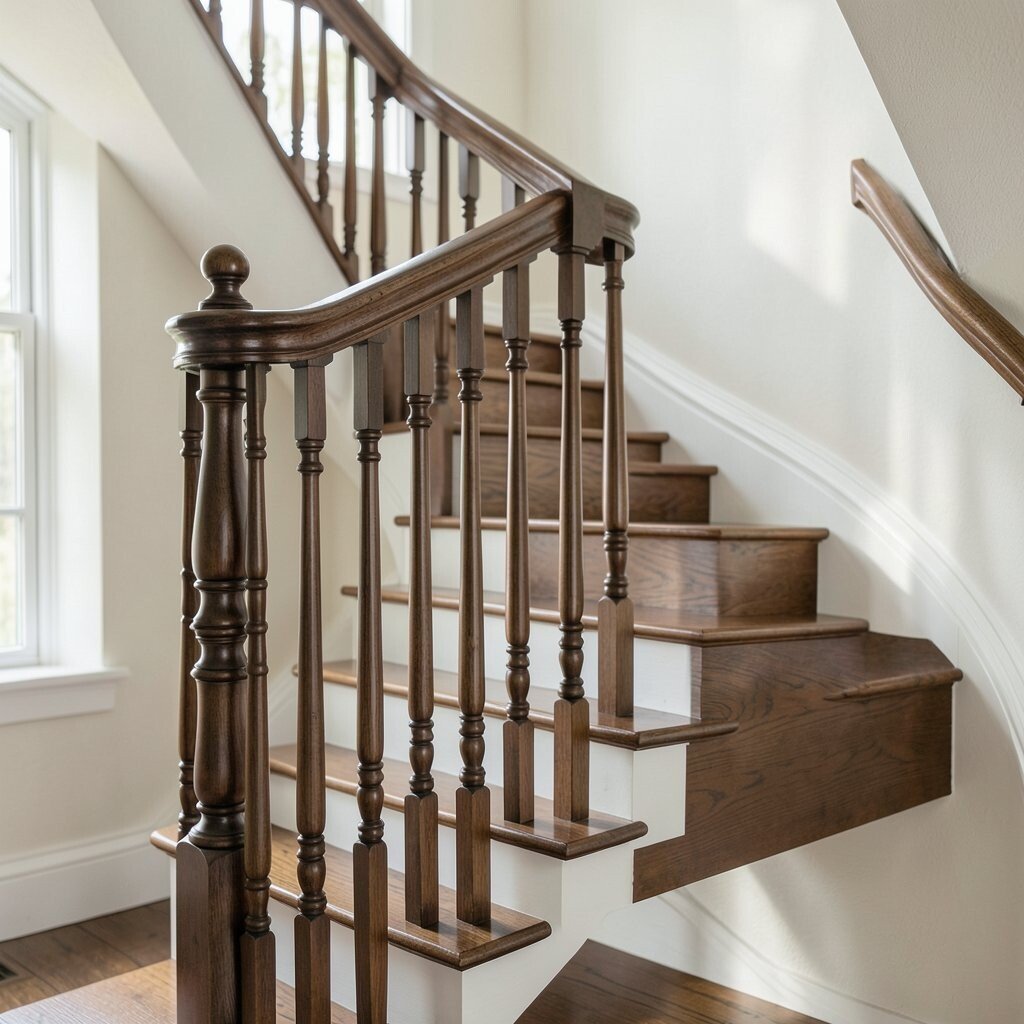
Turned balusters bring that old-world charm that people instantly notice. The repeating curve shapes give the staircase a sense of craft, like it was built by a patient artisan.
Choose baluster spacing that keeps the view open while still feeling secure. A practical benefit is that turned wood balusters help hide minor imperfections in the handrail line, since they draw attention upward. If you’re personalizing, consider matching the baluster size to your room scale, using chunkier pieces for high ceilings and slimmer ones for tighter spaces.
When planning cost, see if you can keep existing rails and swap only the baluster set. New hardware and a careful finish can make the whole staircase look newly installed. This approach also lets you select the exact profile you love without overhauling everything.
7. Painted Stair Treads for a Fresh Traditional Twist

Painting stair treads is a clever way to bring tradition into a home that wants a bit more personality. You can keep the rail and newels in classic wood while giving the steps a crisp, updated look.
Use a durable paint formulated for floors and treads, then add a satin finish so it resists scuffs. The benefit is practical too, because paint can cover scratches and imperfections that would otherwise stand out. For personalization, choose colors that echo your dining room chairs or kitchen cabinets, keeping the palette steady throughout the home.
8. Elegant Staircase Wall Mirrors and Sconces
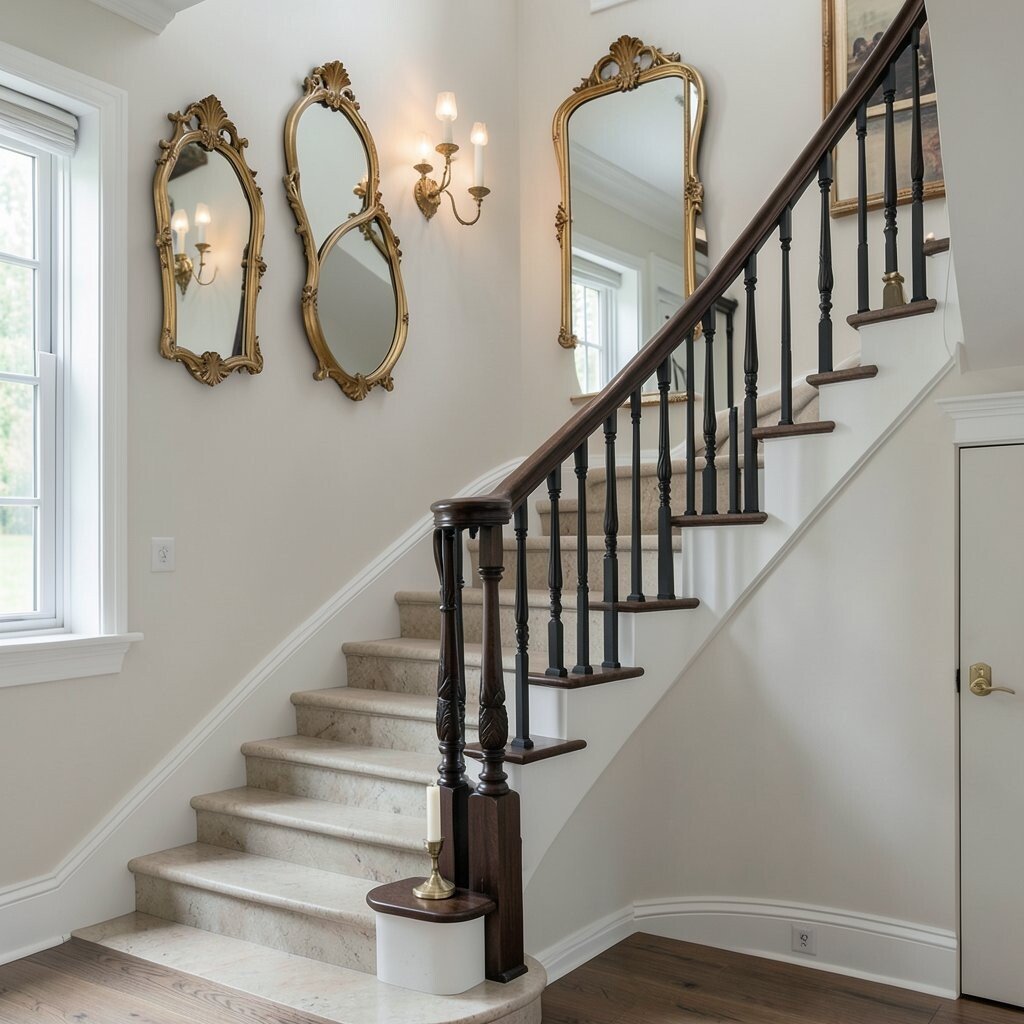
A staircase is often a hallway moment, so it deserves light and visual interest. Placing a mirror on the wall above the stairs or adding classic sconces can make the space feel brighter and more welcoming.
Choose mirrors with traditional frames, like carved wood or a thin metal border, to match the railing style. The benefit is that mirrors can make narrow stair landings feel bigger, while sconces add warm glow that flatters wood tones. For a practical upgrade, position lighting to reduce glare on the runner or stone surfaces.
To keep the look cohesive, match the sconce finish to your staircase hardware, like brass or matte black. If you’re working within a budget, you can start with one mirror and one sconce, then add a second later. Make sure the wiring or outlets are planned early so you don’t end up changing the trim work.
9. Classic Woven Runner with Neutral Texture
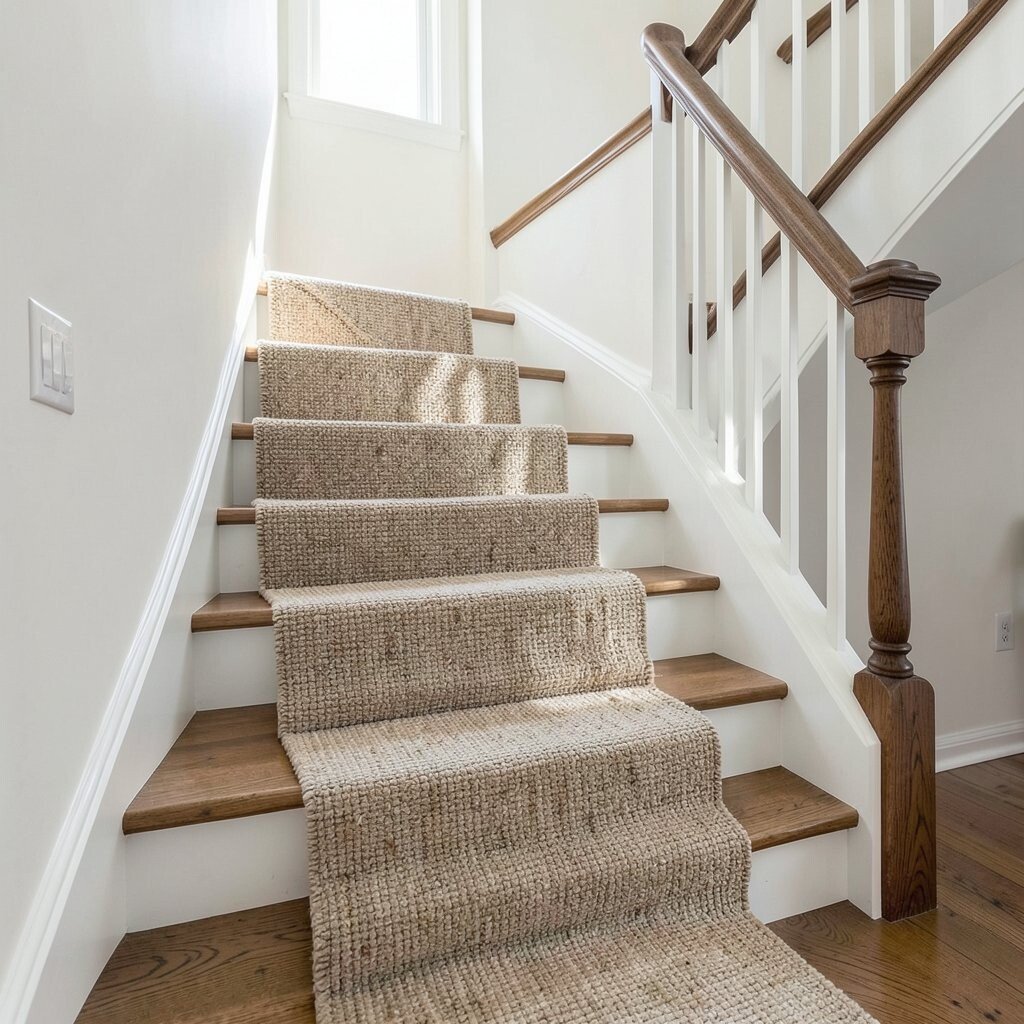
If you love the cozy feel of fabric but want something more relaxed, a woven runner is a perfect fit. It brings texture without shouting, and it pairs beautifully with traditional wood stairs.
Look for neutral tones like oatmeal, taupe, or warm gray so the runner complements many decor styles. A practical benefit is that woven fibers often feel sturdy underfoot, which helps them last longer in busy homes. For personalization, consider a runner with subtle fringe or a gentle border that frames each tread.
Current trend-wise, many homes are leaning toward natural materials and softer neutrals rather than bold, high-contrast designs. Keep the color aligned with your living room rugs and curtain fabric so the staircase feels part of the bigger picture. When cleaning, follow the care instructions and vacuum gently to protect the weave.
10. Raised Trim and Crown Molding at the Landing
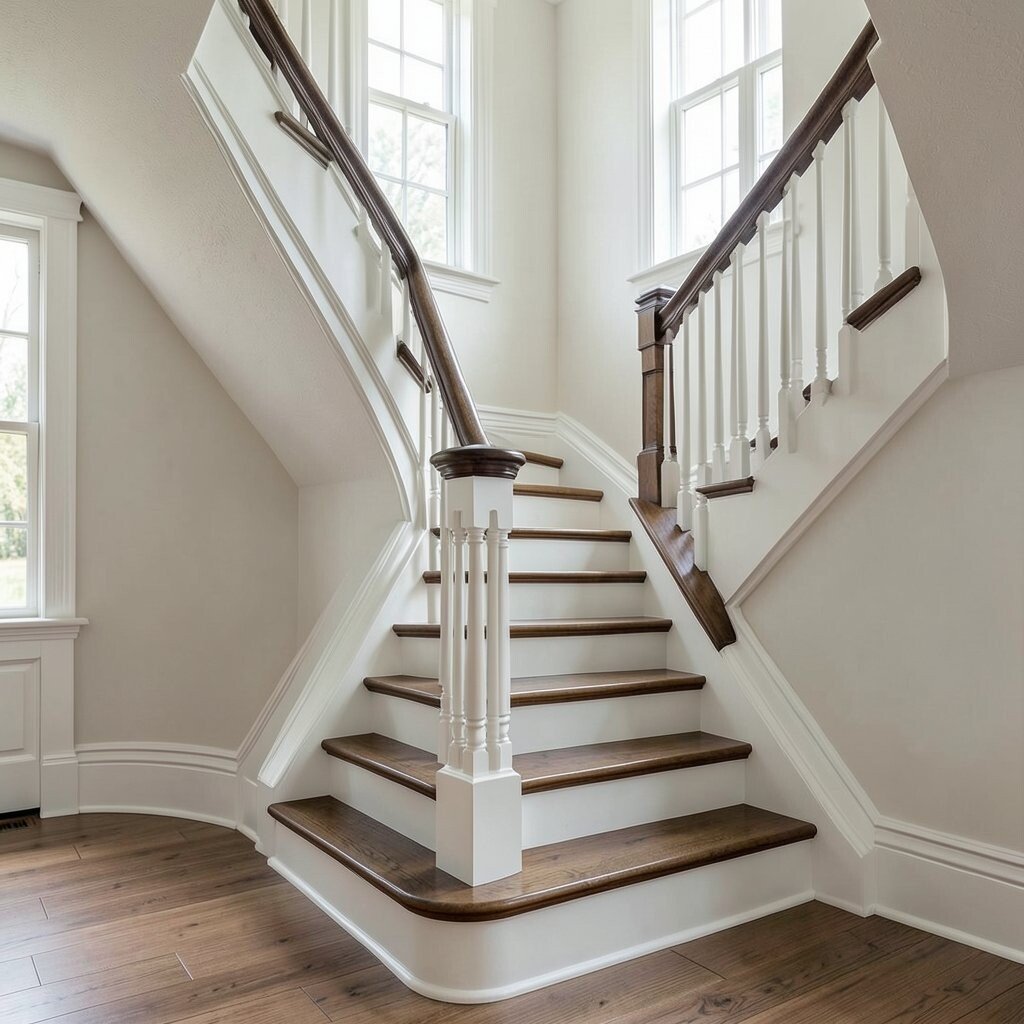
Even a simple staircase can look grand with the right trim work. Adding crown molding around the landing wall and finishing edges with raised trim makes the area feel architecturally complete.
Choose profiles that match your existing baseboards and door frames so everything feels consistent. The benefit is that trim visually guides the eye, making the stairs look taller and more elegant. If you’re cost-conscious, use pre-primed trim and paint it to match your walls for a classic, built-in appearance.
To personalize, you can echo the same molding style on the hallway ceiling line near the stairs. Make sure the trim doesn’t block your sight lines or create shadows that feel harsh. Proper measurement matters, so dry-fit sections before final installation.
When lighting is warm and the ceiling trim is crisp, the whole staircase starts to look like a focal point rather than a passage.
11. Iron Balusters with a Traditional Scroll Pattern

Iron balusters add a timeless feel, especially with scroll details that remind people of historic homes. This style balances tradition with durability, and it often looks stunning against wood handrails.
Select a powder-coated finish that matches your hardware and light fixtures, such as matte black or antique bronze. The practical benefit is that iron is strong and resists daily wear from shoes and bumps. If you want to keep the look airy, choose a scroll design that doesn’t overfill the space between rails.
For personalization, combine iron balusters with a classic runner so the stairs still feel warm and comfortable. Cost varies based on complexity, so consider choosing a simpler scroll pattern if you’re trying to stay within a set budget. You can also save money by using iron for the railing and keeping other elements in original material.
12. Hand-Carved Newel Posts for a Statement Moment

Nothing says traditional elegance like a newel post with real presence. Hand-carved details, such as leaf motifs or raised panels, can turn your stair landing into a true focal point.
Look for carvings that match the scale of your space so the details feel intentional rather than overwhelming. A practical benefit is that a statement newel post makes the staircase look finished, even when other parts are simpler. For personalization, coordinate the carving style with your fireplace mantel, cabinet doors, or molding patterns.
Cost is usually higher for carved pieces, so consider investing here while keeping balusters or treads more modest. If you’re aiming for a better match, choose a finish that harmonizes with your floors, like a warm stain or a painted look in cream. Installing a carved newel post can also be easier than replacing whole stair structures, depending on your current framing.
13. Symmetrical Stair Landing Design with Matching Frames
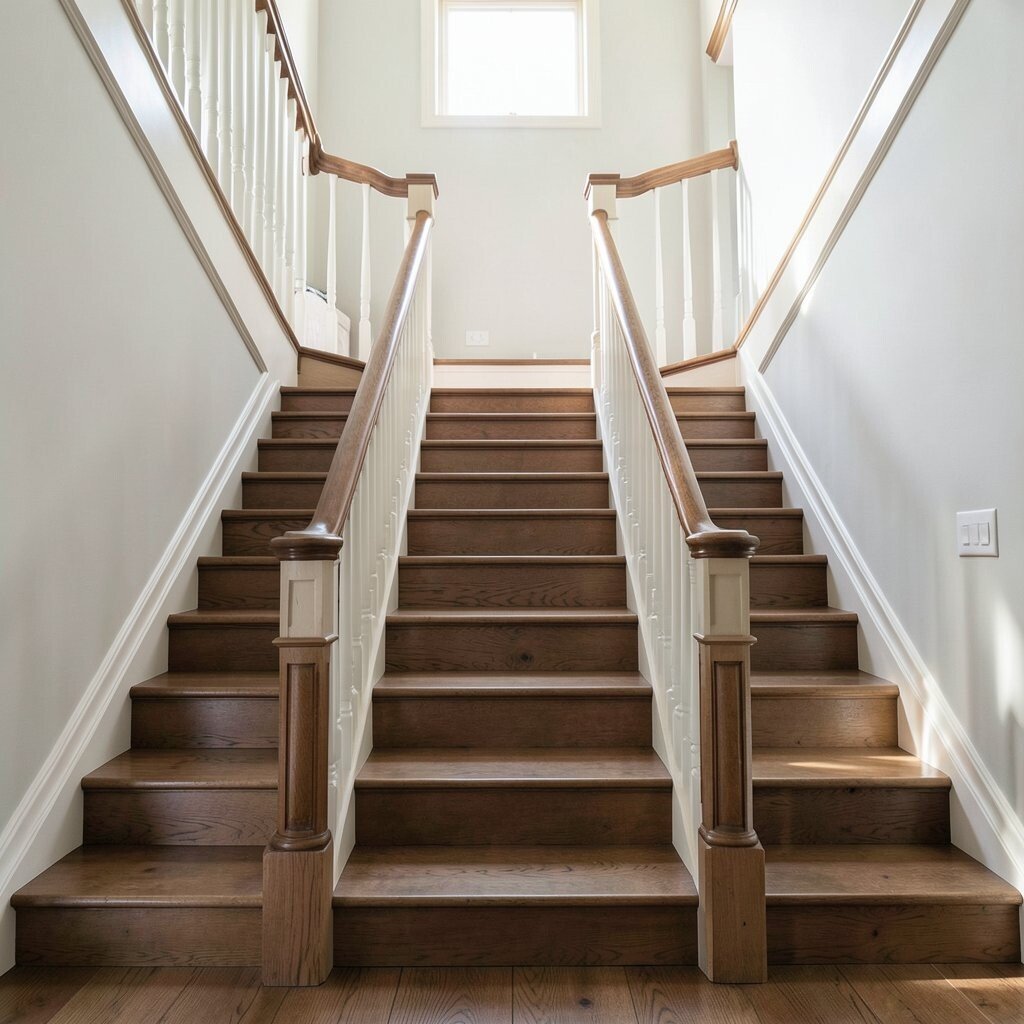
A traditional staircase feels especially elegant when the landing is treated like part of the design, not an afterthought. Symmetry helps everything look orderly, and matching details make the area feel calm and intentional.
Consider placing matching wall art frames, a pair of sconces, or a coordinating planter style on both sides of the landing. The benefit is that symmetry creates visual balance, which makes stair traffic feel smoother and more pleasant. For personalization, select frames that echo your banister and door hardware, keeping finishes consistent throughout.
If you want a practical approach, choose easy-to-maintain decor like sealed wood frames or metal candle holders. Keep the landing clutter-free so the staircase remains the star. Budget-friendly upgrades can start with paint touch-ups and two matching light fixtures, which can dramatically change the feel.
14. Timeless Stair Riser Details and Raised Panel Patterns

Details on the risers can make traditional stairs feel custom, even when the main frame stays the same. Raised panel patterns on risers create a subtle texture that looks refined from the top of the stairs.
Choose a simple panel layout that lines up cleanly from tread to tread, which helps the staircase look crisp. This is practical because panel surfaces can be more forgiving than flat risers when minor scuffs show up over time. For personalization, consider painting risers in a softer tone while keeping the handrail and treads in their classic finish.
Right now, many homes are leaning toward richer trim textures and gentle contrast rather than one-tone everything. Use that trend wisely by selecting two complementary finishes, like white risers and warm wood treads. Plan the paint sheen too, since satin often hides small marks better than high gloss.
15. Classic Stair Rail Runner Cut and Crisp Edges

The way a runner is cut and finished can make a staircase look neat or messy, even if the fabric is beautiful. Traditional elegance often comes from crisp edges and thoughtful transitions near the rail and newel area.
Work with a professional or take your time measuring so the runner sits centered and aligns with the tread lines. A practical benefit is that properly secured edges reduce fraying, slipping, and uneven wear. For personalization, choose a runner end finish that suits your style, like a tailored binding or a neat bar tack detail.
Cost-wise, careful installation can be worth it because a well-fitted runner lasts longer and looks great from every angle. If you’re updating on a budget, choose a simpler runner design and invest in trim and binding for that finished, traditional look. Keep the runner maintenance easy by vacuuming regularly and using appropriate spot cleaning products.
When the edges look sharp and the pattern stays aligned, your staircase instantly feels intentional, warm, and truly elegant.