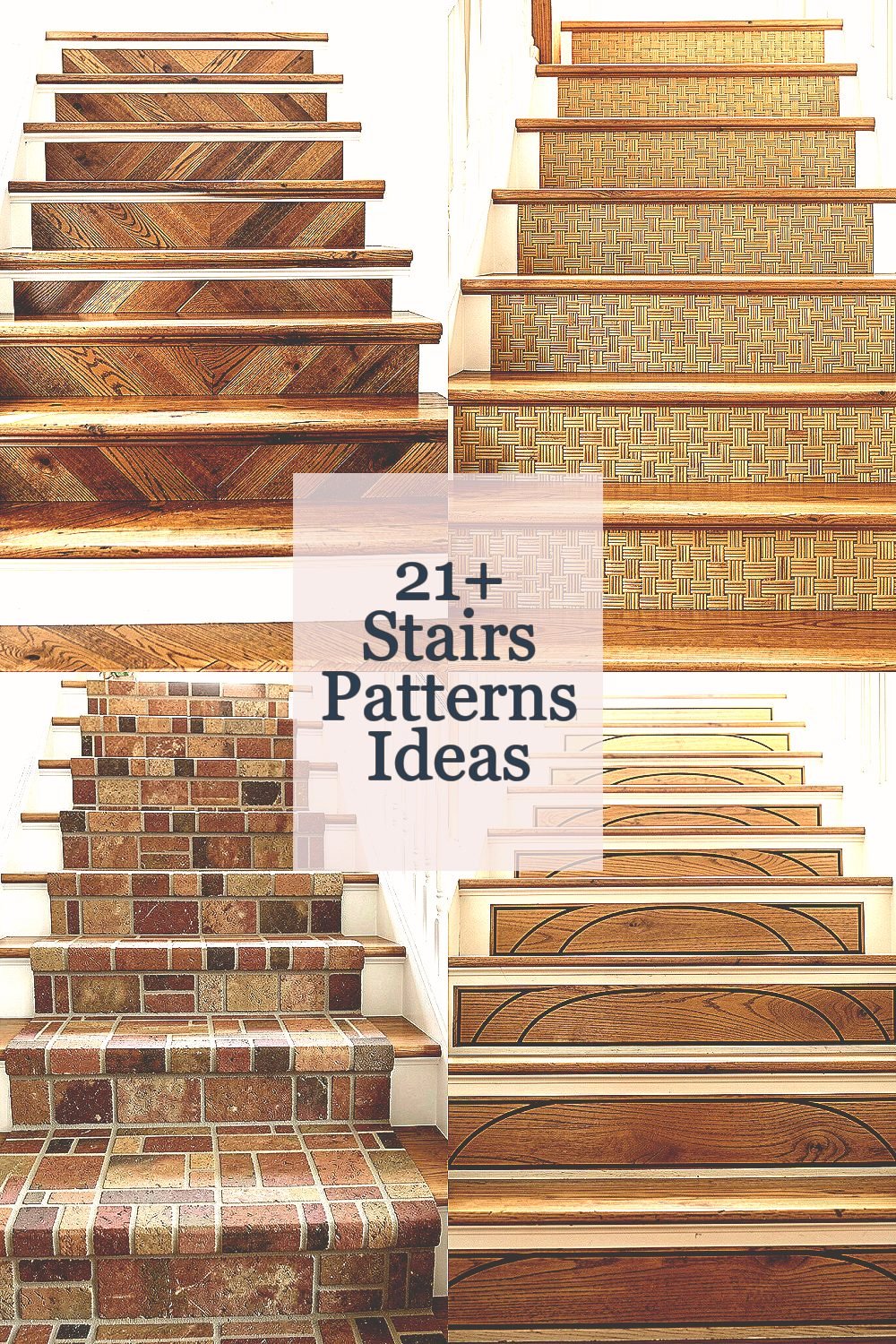
Stairs can feel like the quiet center of your home. The right pattern makes them look intentional, warm, and ready for everyday life.
1. Herringbone Wood Treads With Classic Risers

Picture narrow wood pieces set at sharp angles so the stairs look like a neat weave. When the risers stay simple, the diagonal rhythm does the heavy visual lifting.
Herringbone gives strong structure to the whole staircase, and it hides everyday scuffs better than you might expect. Use a satin finish to keep the grain looking natural and to make cleaning feel easier. For personalization, match the wood tone to your flooring and add a warm handrail stain so everything feels connected.
2. Basketweave Stair Front Panels
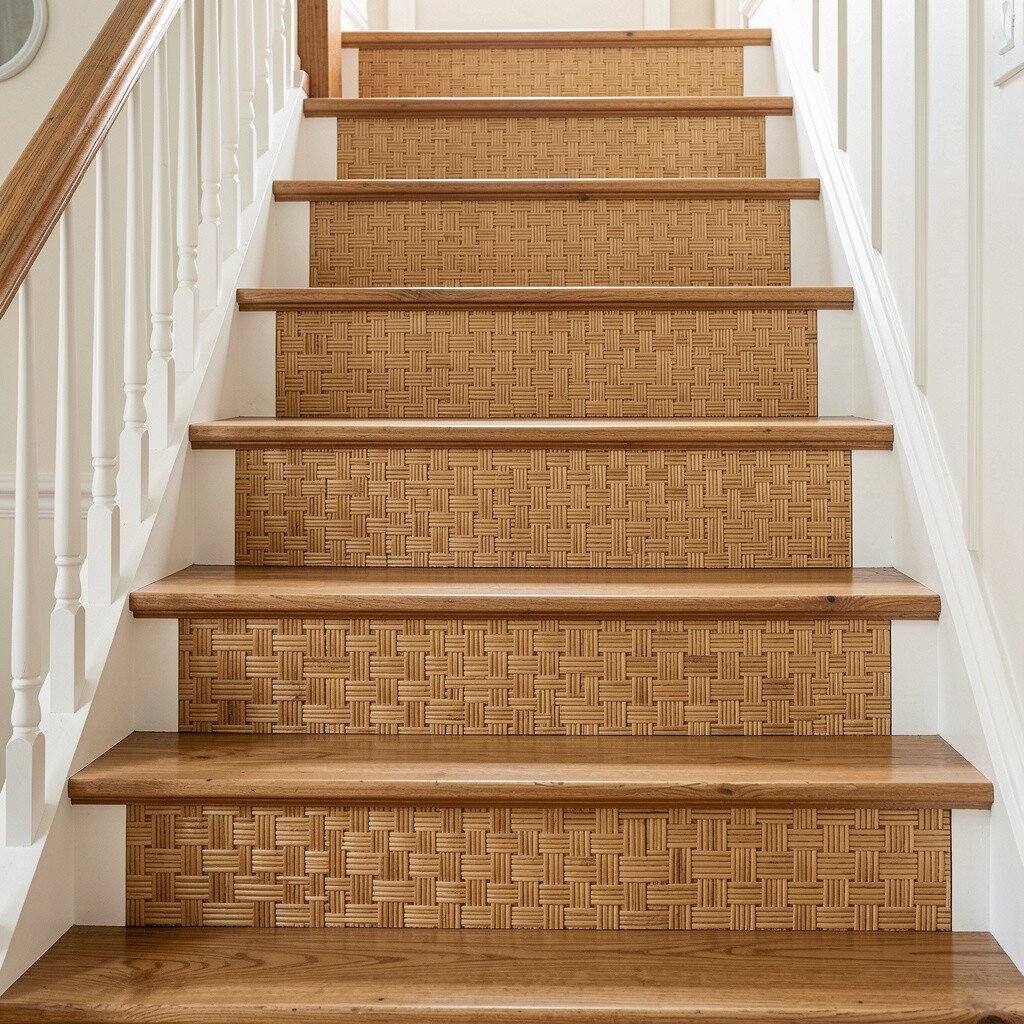
Think of a woven blanket effect running along the stair front, with tidy squares that catch light as you move. Even in a hallway, it adds a gentle, handmade mood without feeling busy.
This pattern brings a classic look that still feels fresh, especially with painted risers. It also helps you choose a durable paint sheen, since a wipeable finish keeps the woven texture looking crisp. For practical planning, confirm the width of each “cell” matches the tread depth so the lines stay even.
3. Brick-Style Tile Stair Runner
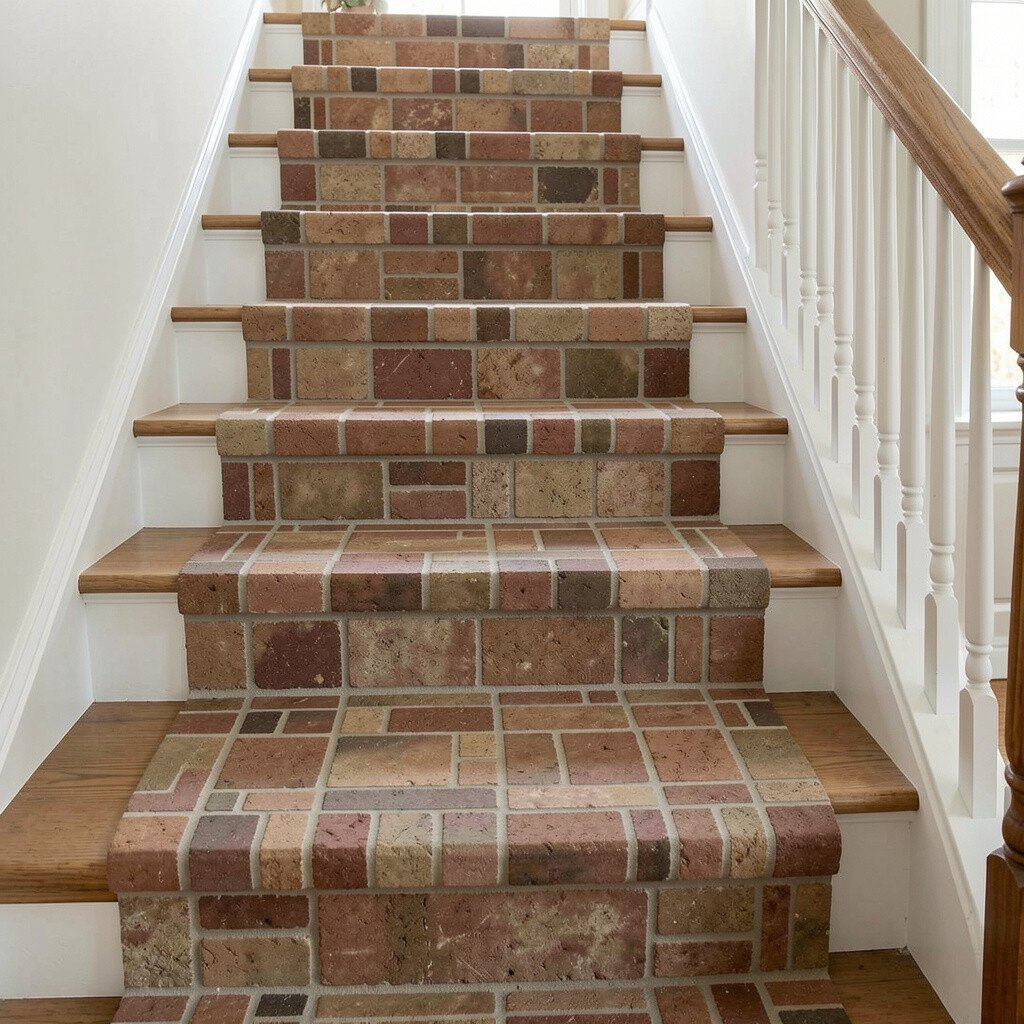
Imagine small rectangular tiles laid like a brick road, wrapping each tread in neat bands. The result feels grounded, like your stairs belong to a well-loved home from long ago.
Tile in a runner layout is a smart choice because it can handle high foot traffic and quick cleanups. Choose grout with a darker tone to reduce visible staining and keep the pattern looking sharp. If you want a personal touch, repeat a subtle color accent band at the center tread to echo your wall trim.
To keep installation smooth, measure the nosing carefully and plan for cut edges on the edges rather than across the main face. A sturdy underlayment is also important so the pattern stays flat and tidy over time.
4. Arched Panels With Beveled Inlay Lines
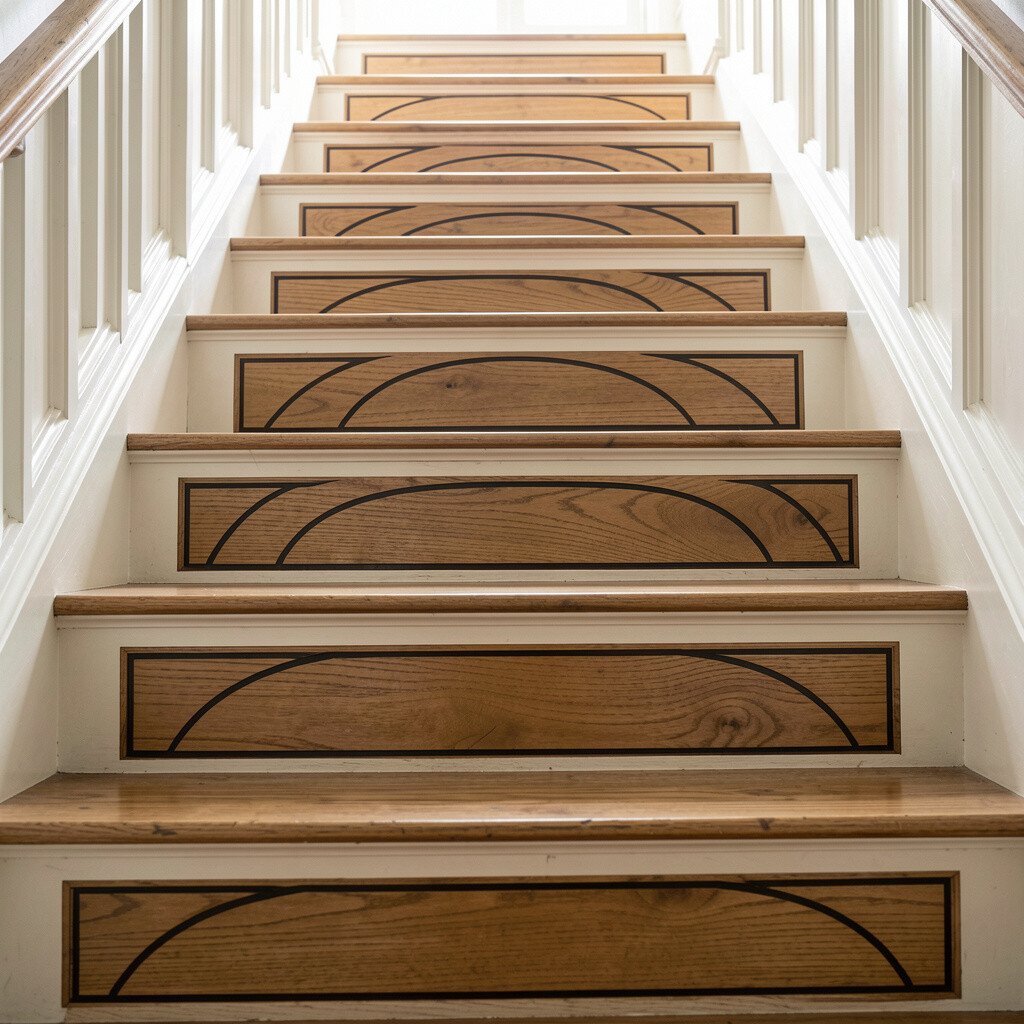
Picture softened arch shapes on the risers, framed by slim beveled lines that catch tiny highlights. The staircase looks elegant, like it belongs in a heritage home with thoughtful details.
This kind of panel design adds visual depth, which can make a narrow stairway feel more open. Keeping the inlay lines narrow also helps your eyes rest, rather than swirl through too many strong shapes. For a budget-friendly approach, consider using pre-made trim pieces and focusing your detail work on the first few steps guests see most.
5. Classic Square Medallion Center Step

Start with a large square medallion pattern placed on the most visible tread. Surround it with smaller repeating motifs so the center feels like a focal “snapshot” as you move upward.
This layout draws attention to the staircase as a whole and gives the entry level a polished feel. It is also easier to maintain than full-step pattern coverage because you can treat the medallion area as the star and keep the rest simpler. Personalize it by choosing a color that matches a rug or backsplash so it feels coordinated instead of random.
For cost control, use the medallion only where the view is best, then use solid tiles or plain wood on the remaining treads to keep materials and labor lower.
6. Spiral Scrollwork Risers in Painted Wood

Visualize risers painted in a soft neutral with scrollwork that looks like swirling vines. The pattern feels lively, yet it still keeps a traditional sense of order.
Scrollwork risers add character without changing the overall stair footprint, which is great if you want style without major remodeling. You can also paint over old wood stairs and re-carve or stencil the scroll lines for a refreshed look. To personalize, pick one repeating line weight so the curls look consistent from step to step.
7. Traditional Parquet-Style Step Borders
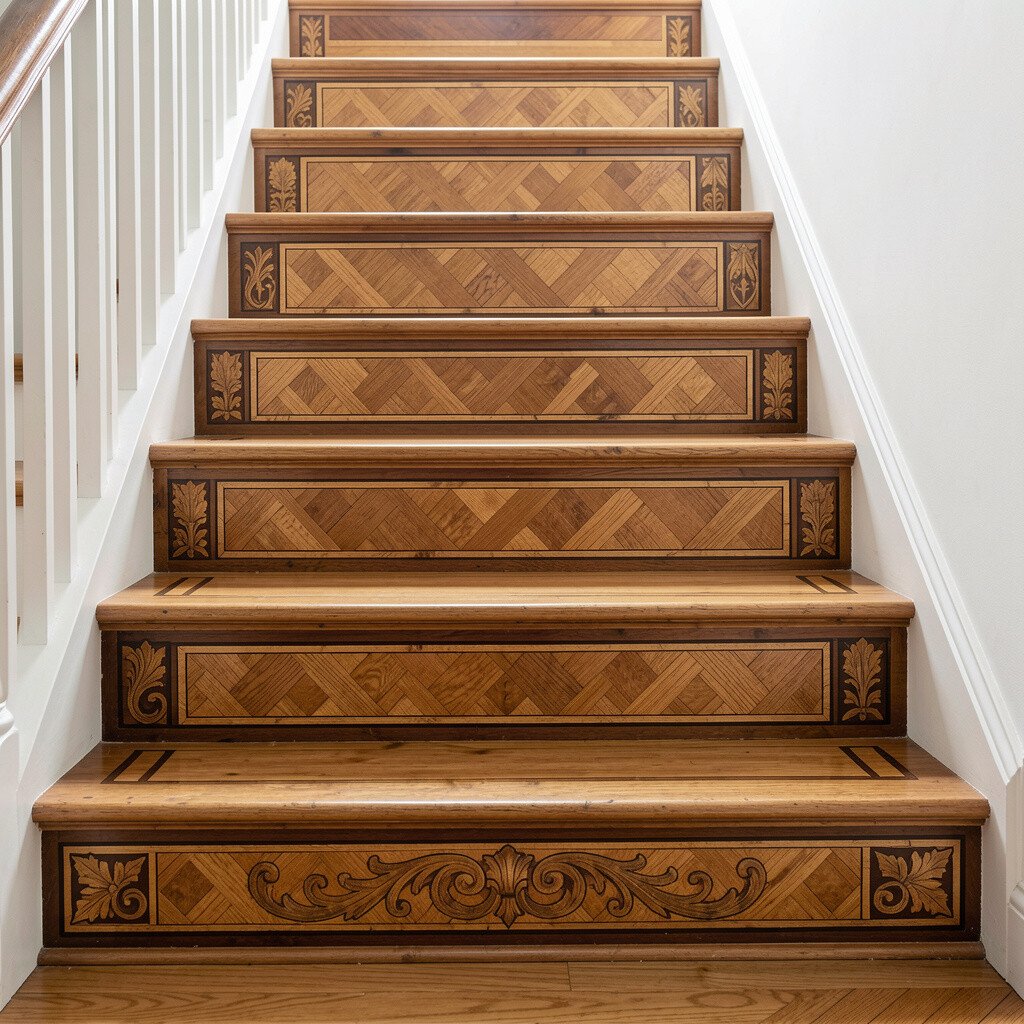
Imagine parquet wood borders framing each tread, like a picture frame for every step. The inner tread can stay plain, letting the border do the detailed work.
This design gives warmth and a handcrafted vibe, while the border keeps repairs more practical than full parquet coverage. Use the same wood species for the border to keep the tone unified, and consider a durable topcoat for everyday wear. For personalization, shift the border width on the lower steps to create a gentle “arrival” effect.
If your stairs get lots of sunlight, choose a finish that resists fading so the border pattern stays steady over time.
Planning ahead helps too, because consistent border spacing relies on accurate measurements of tread edges and nosing depth.
8. Antique-Style Stencil Tiles in Two Tones
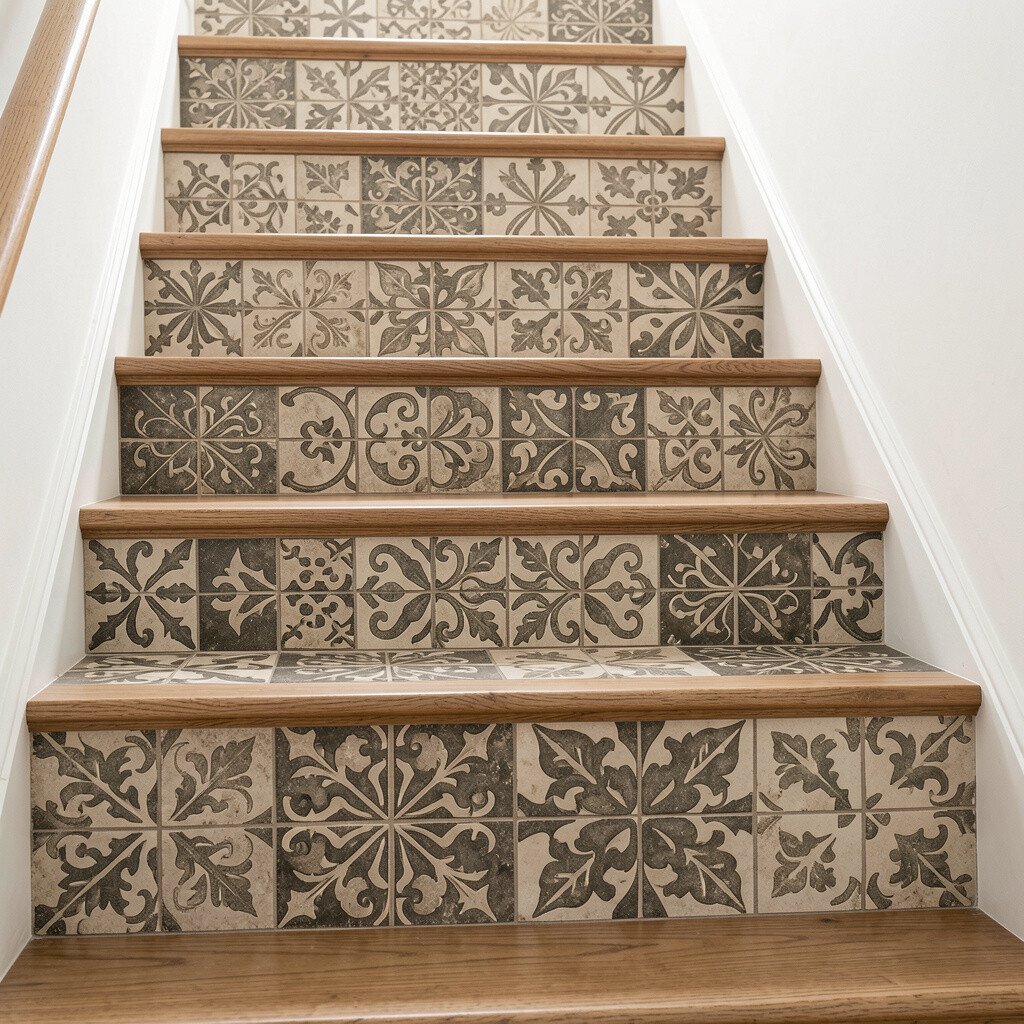
Think of two coordinated colors with stencil lines that look like old-world ceramic designs. The stairs feel charming, like they belong to a time-tested pattern book.
Stencil tile effects can be a smart choice when you want a traditional look on a more controlled budget. They also make it easier to adjust the design if your stair measurements aren’t perfectly uniform. For best results, use painter’s tape to map edges cleanly and apply thin layers so the pattern stays crisp.
9. Chevron Run on Wide Treads
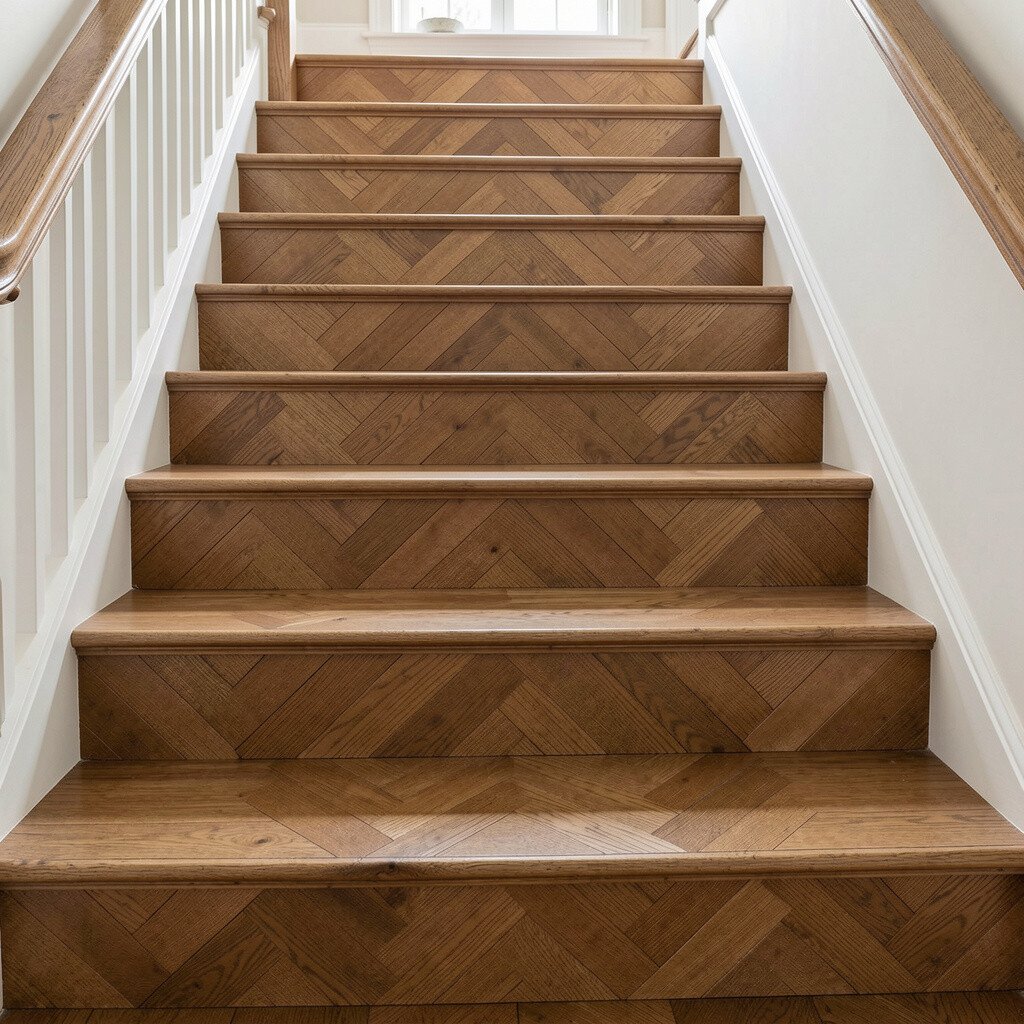
Chevron is bold in a way that still feels orderly when it’s spaced right. On wide treads, the inverted V shapes look dramatic and comfortable to walk on.
The chevron rhythm can help guide your steps visually, especially in hallways where lighting is uneven. If you like a practical upgrade, keep the chevron limited to the center so your edges stay easier to maintain. Personalize it by matching the chevron angle to a nearby feature such as a mantle or backsplash pattern.
Choose slip-resistant finishes or textured flooring in the direction of the pattern so the grip feels secure in real life.
10. Raised Panel Risers With Narrow Striping
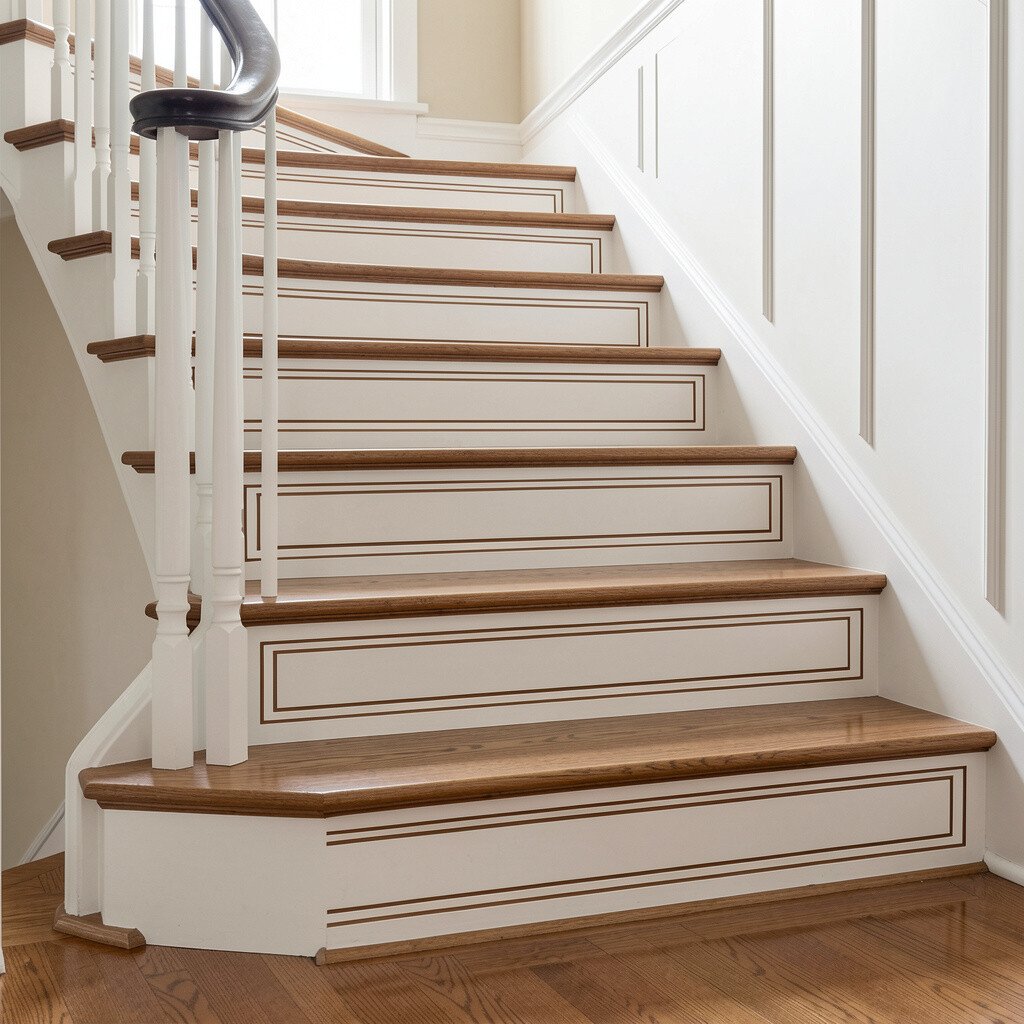
Picture risers with shallow raised panels and thin stripes running down the center. The look is understated, but the shadows from the raised details make it feel rich.
This classic style works well when you want a traditional staircase without loud graphics. It also helps hide minor imperfections because the raised edges naturally distract the eye. For personalization, stain the panels darker than the stripes so the contrast feels elegant and intentional.
If you are working with painted stairs, use a bonding primer first so the stripe lines stay clean and don’t peel over time.
11. Moroccan-Inspired Mosaic Corners on Treads
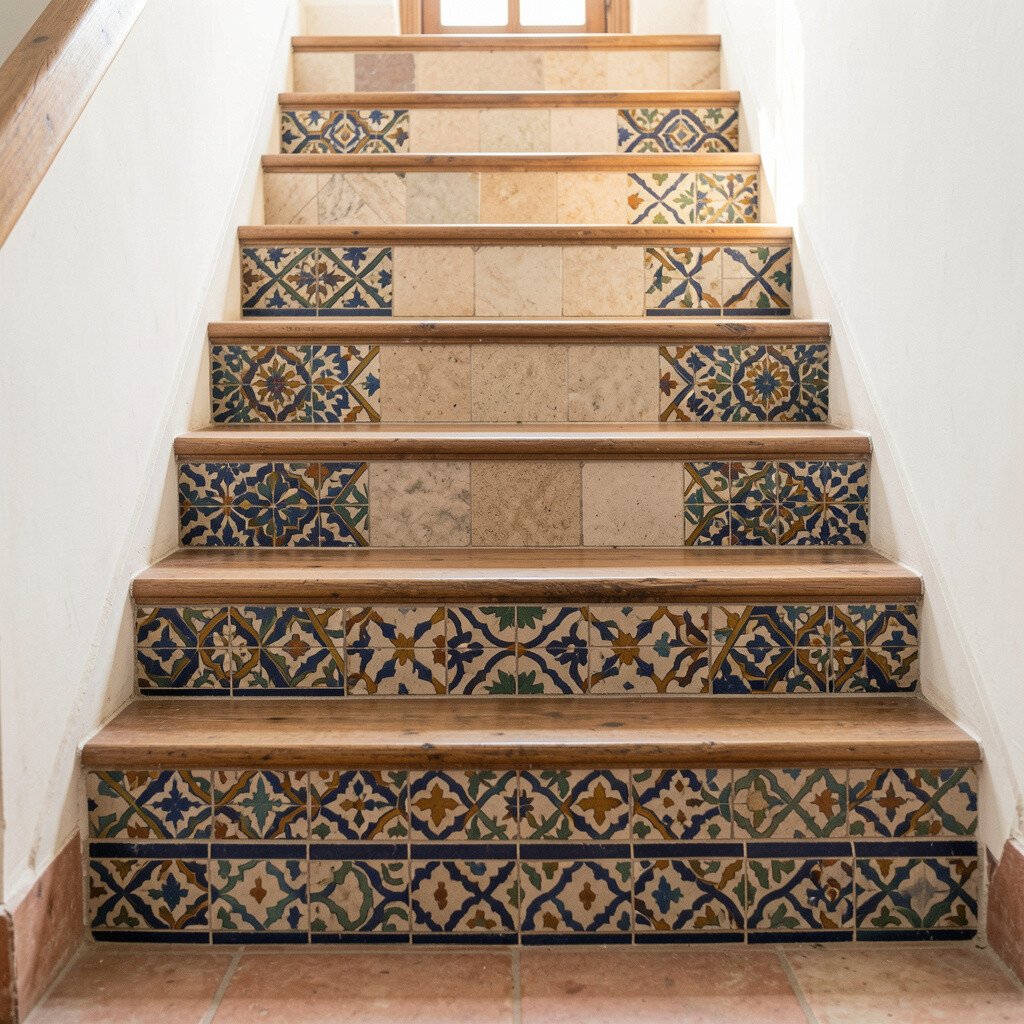
Imagine small mosaic corner clusters that frame each tread like decorative jewelry. The center of the tread can stay simple while the corners add the wow factor.
Mosaic corners look unique because they turn a repetitive staircase into something that feels tailor-made. They also allow you to choose just a few colors, which keeps the overall look balanced. For a practical approach, pick grout colors that won’t show dust quickly, and seal if your climate is humid.
When measuring, plan the corner size so the pattern aligns from tread to tread, especially around the most visible middle steps.
12. Victorian Tile Borders With Ornate Corners
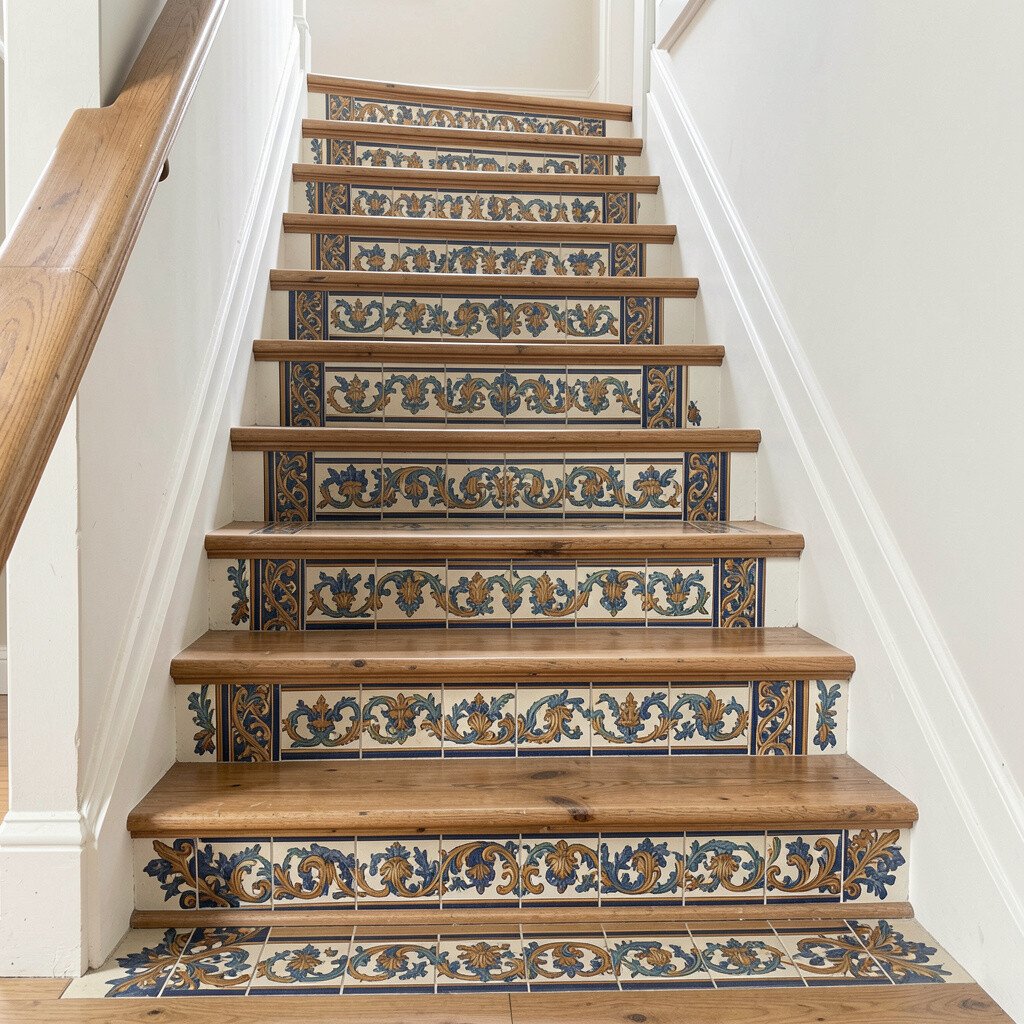
Picture a border running along the front edge of each tread with ornate corner details that feel vintage. It gives your stairs that formal, dressed-up look that still feels welcoming.
Tile borders are great when you want the pattern to show clearly without covering the entire tread surface. They can also be a cost-conscious choice because you use detailed tiles only where they matter most. Personalize by choosing a border style that matches your home fixtures, like brushed brass or oil-rubbed bronze.
13. Repeating Half-Round Inset Steps
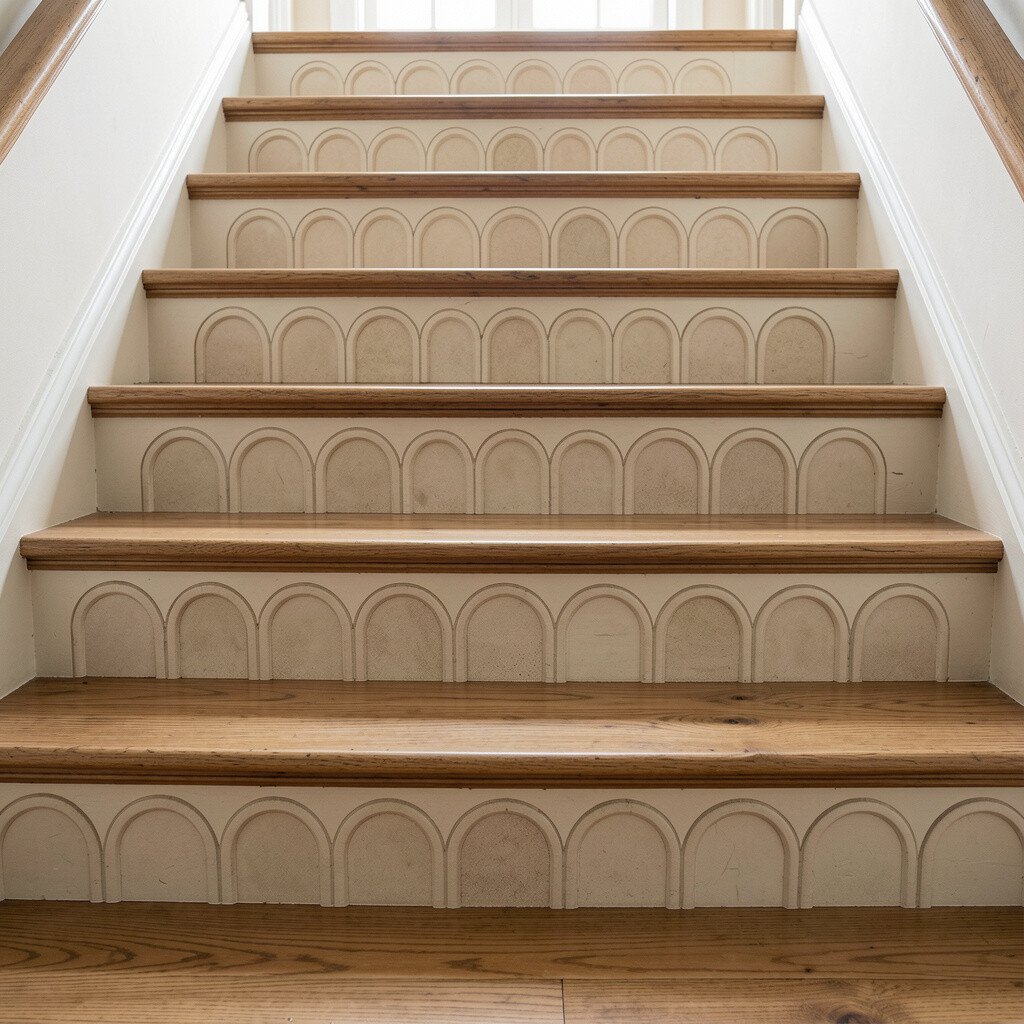
Envision a half-round inset on each tread, aligned like a series of small arches. The staircase feels calm, because the shapes repeat with gentle consistency.
This kind of inset design adds a sense of rhythm that can soften the visual weight of the staircase. It is also helpful for maintenance because the inset area can be made with durable materials while the main tread stays simpler. If you want personalization, switch the inset color on every other step to create a subtle “pulse” effect.
For cost considerations, consider using a different finish only on the insets rather than changing the whole stair surface.
14. Raised Scroll Steps With Raised Carpet Medallions
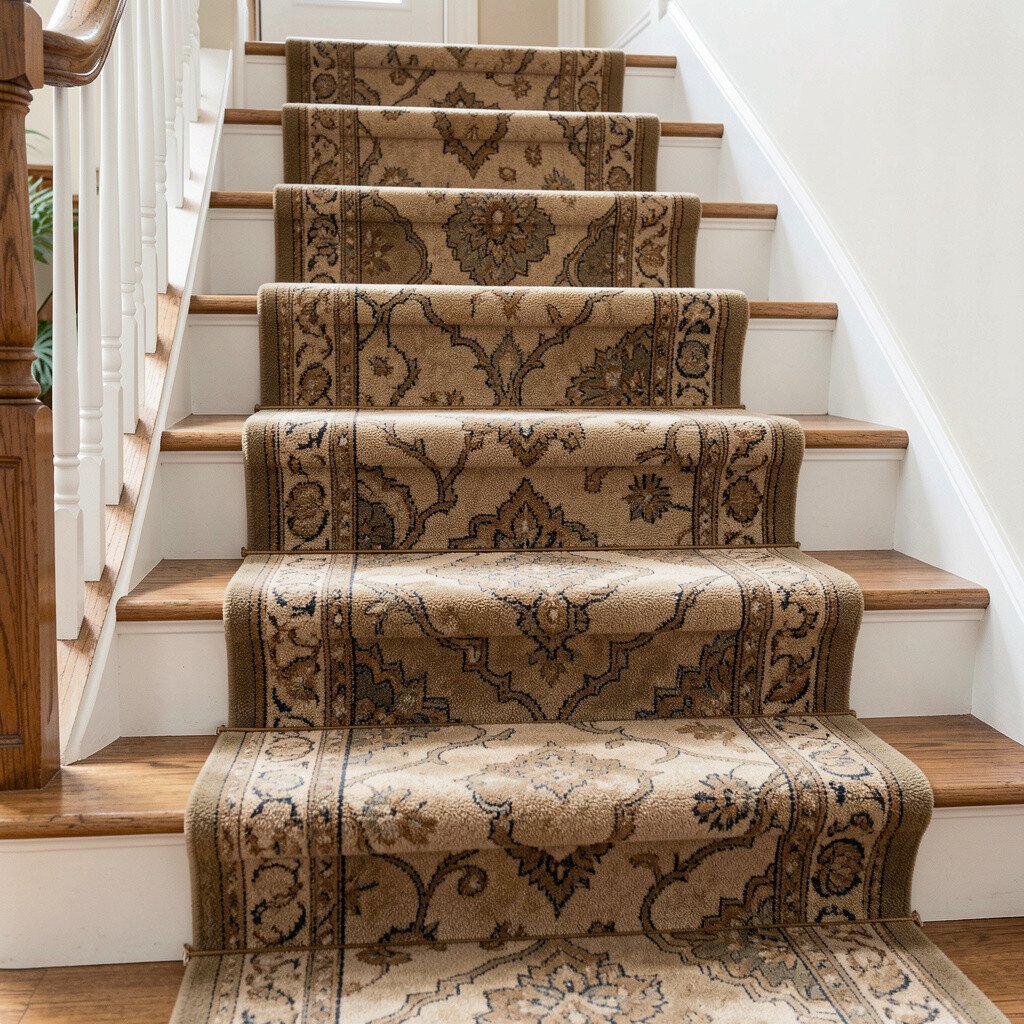
Think about traditional carpeting or runner fabric anchored into step areas with raised scroll trim. The texture feels soft underfoot, but the trim keeps the design structured.
This style brings comfort and reduces slip risk, which is especially useful for households with kids or older adults. Raised trim can also help you define the boundaries so the pattern looks crisp even after weeks of use. Personalize by choosing a runner with muted tones and letting the raised scrollwork carry the darker contrast.
15. Classic Fluted Risers in a Soft Contrast Shade
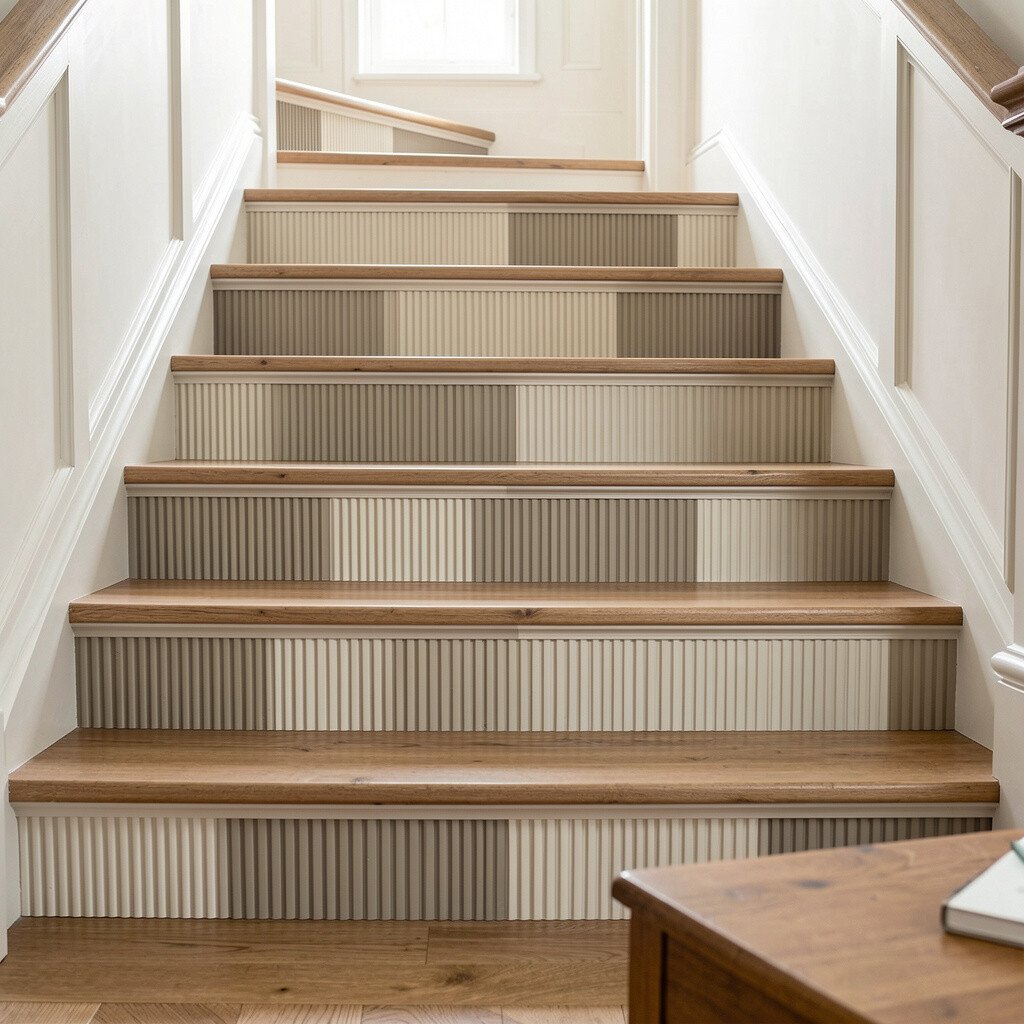
Fluted risers create vertical lines that make the staircase feel taller and more refined. A softer contrast shade adds depth without turning the look too loud.
This pattern is a traditional favorite because the grooves cast natural shadows, adding visual richness even when colors stay calm. It also tends to be durable since raised shapes resist scuff marks better than flat surfaces. For practical tips, align grooves consistently with the handrail so the whole staircase feels measured and calm.
To keep the budget steady, you can refinish existing risers and add fluted panel inserts only where needed for a fuller effect.
16. Circular Rosette Tread Patterns in Centerlines
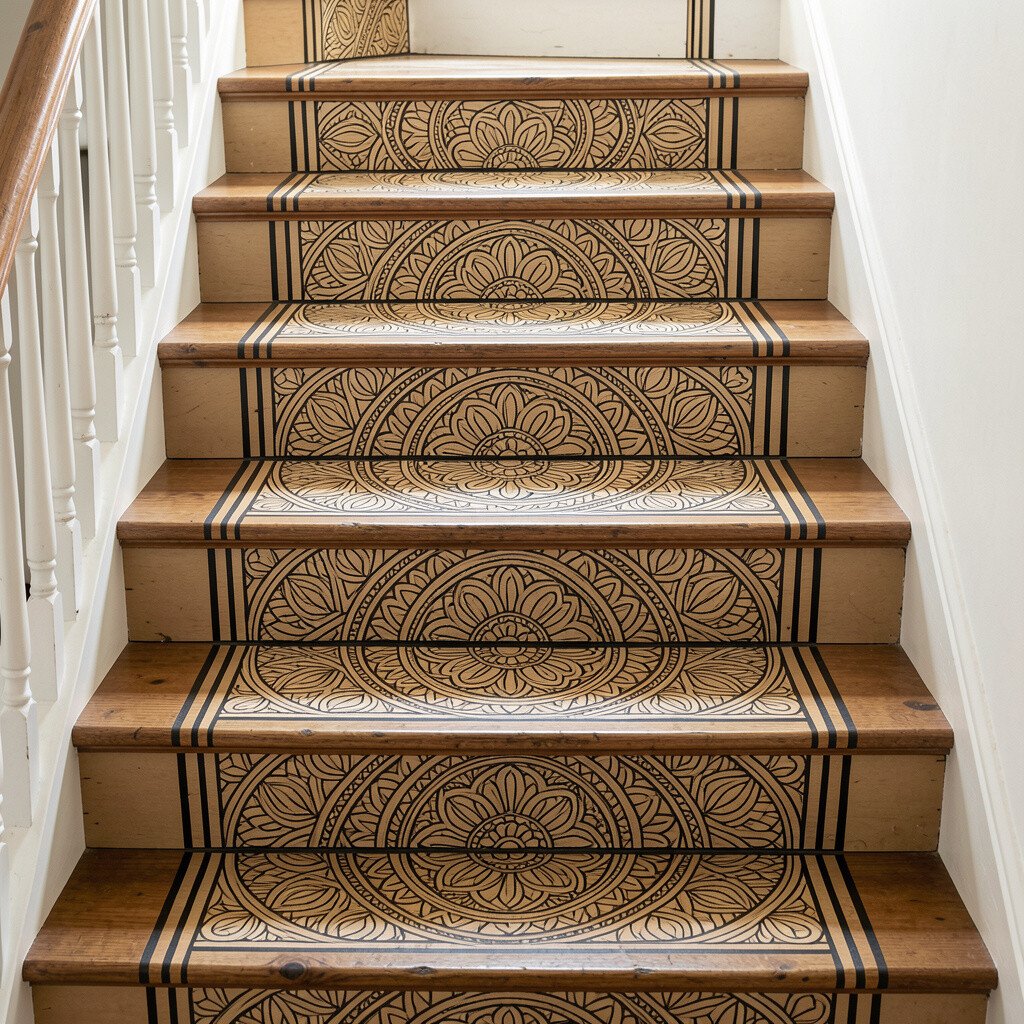
Imagine a circular rosette drawn into the centerline of each tread, like repeated stamps of classic design. The look feels steady and formal, with a gentle motion that follows your climb.
Rosette patterns are great for adding uniqueness without covering every inch of the stair. They also pair well with both wood and tile, so you can choose a material based on comfort and upkeep. Personalize the rosette size so the center feels balanced with your tread width, not squeezed or stretched.
17. Houndstooth-Inspired Stair Runner Paneling
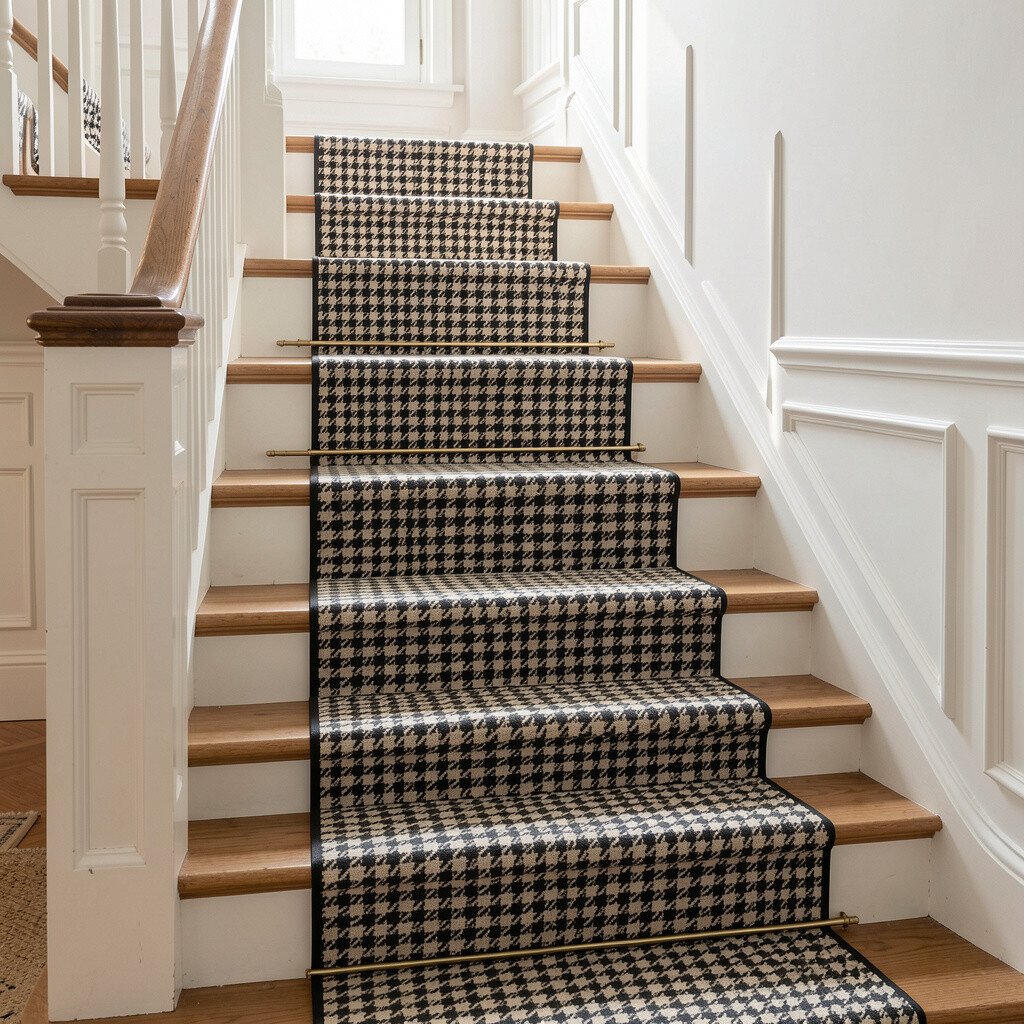
Houndstooth on stairs brings a bold traditional vibe with a clean, tailored feel. When used as runner paneling, it looks sharp while still being practical for everyday traffic.
A patterned runner helps reduce visible wear marks, which can keep the staircase looking newer for longer. It also offers comfort and sound dampening compared to fully hard surfaces. For personalization, pick thread-like tones such as warm gray and cream so the pattern reads classy, not harsh.
To keep it safe, choose a runner with a non-slip backing and check the corners where feet often land.
18. Interlocking Rope Motif Along Side Rails
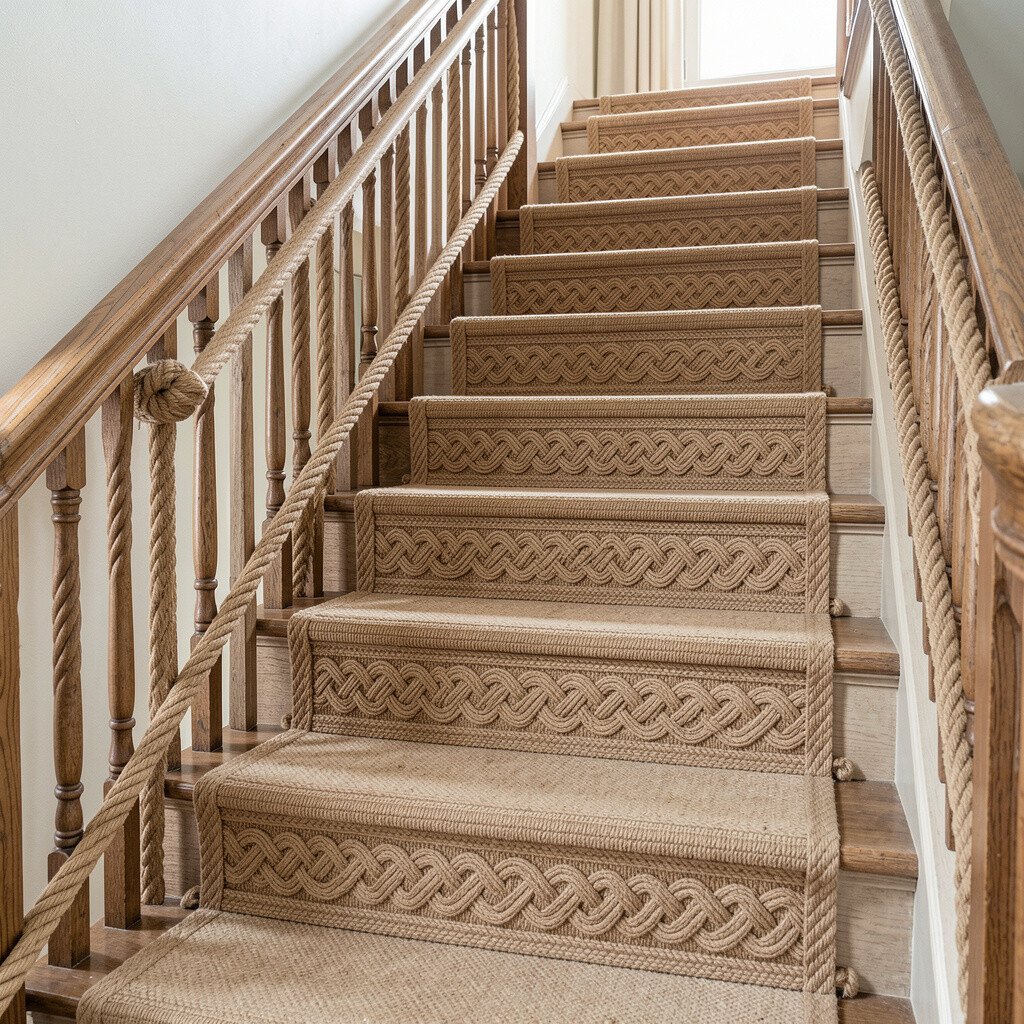
Visualize interlocking rope motifs etched or applied along the stair sides, like a carved frame. Even if the treads stay simple, the rail details give the staircase a full traditional identity.
This approach is unique because it focuses on the places your hands and eyes naturally meet. It can also be less costly than redoing every tread, since molding and detailing on the rails are often more manageable than surface-wide changes. For personalization, echo the rope motif in small ways, like using matching hardware on nearby doors.
19. Checkerboard Tread Fronts With Solid Backing
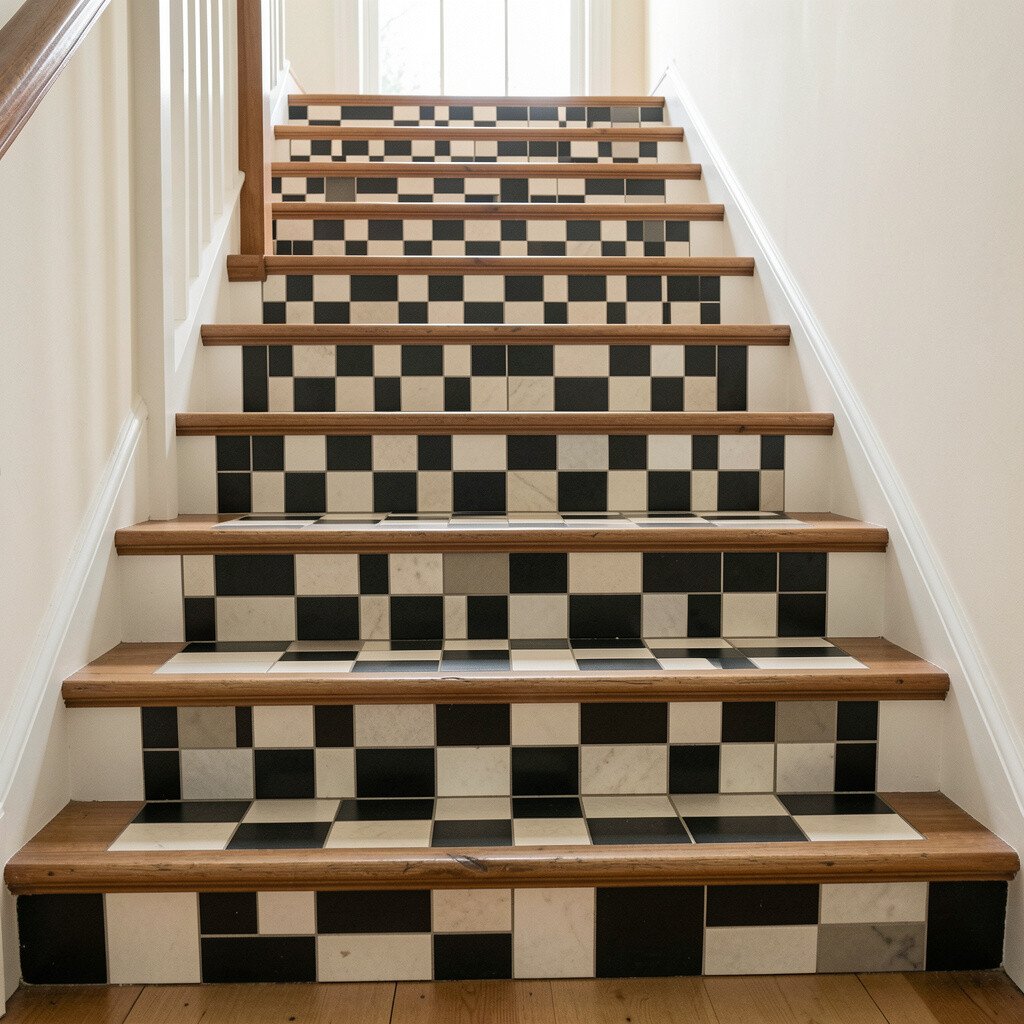
Checkerboard designs feel playful, especially when you keep them along the tread fronts rather than the entire surface. The simple squares create a crisp look that works with many traditional styles.
Checkerboard fronts are practical because they show visual order even when the stair gets scuffed. If you use durable tile or sealed wood pieces, cleaning becomes straightforward and consistent. For cost considerations, limit the pattern to the first few steps and keep the higher levels in a solid finish if you need to manage spending.
Personalize by choosing a classic color contrast, like deep brown with warm cream, so the pattern looks timeless.
20. French Country Stairs With Distressed Wood Stripes
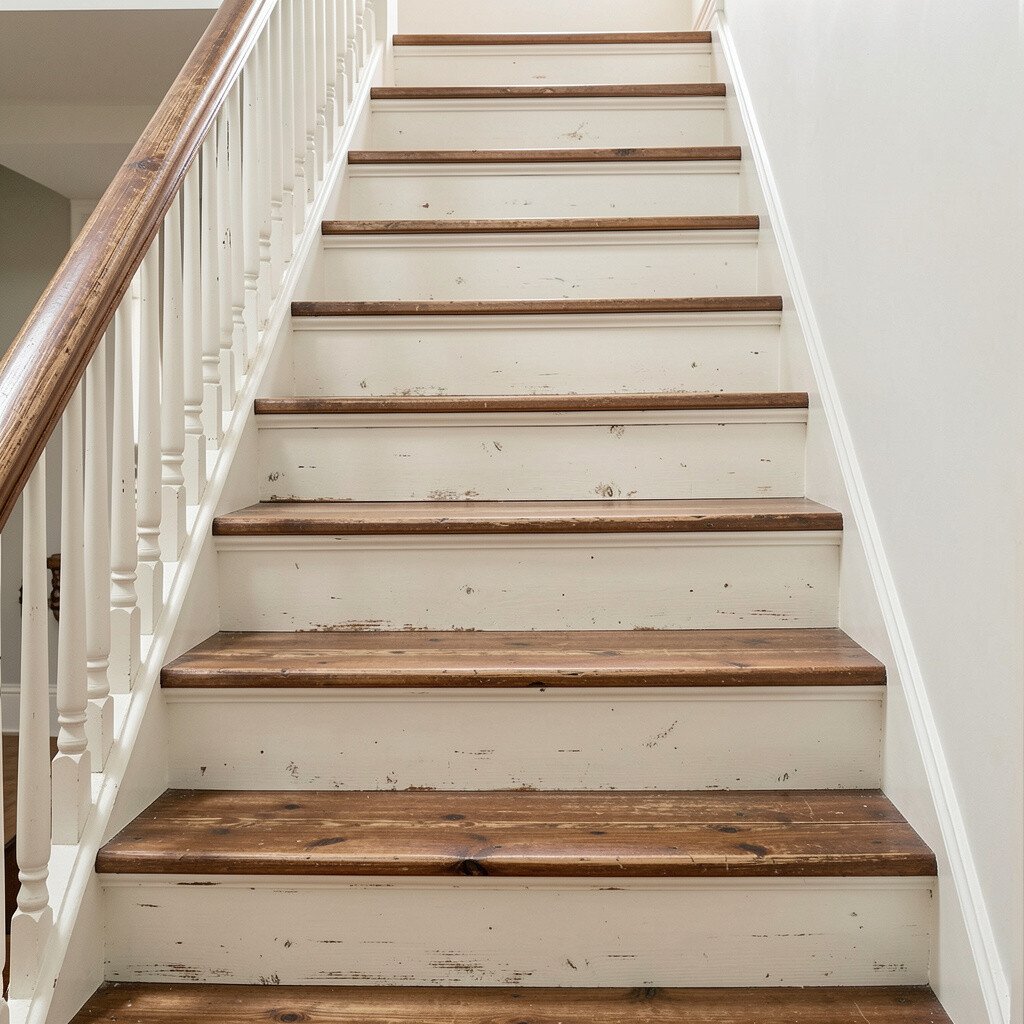
Picture distressed wood stripes running along each tread, giving a French country feel that looks lived-in in the best way. The texture looks soft and charming, like a story etched into the grain.
Distressed stripes can hide tiny scratches, which is a real benefit for busy homes. The look is unique because it balances rustic character with structured spacing, so it never feels messy. For personalization, vary the stripe width slightly across floors to match the vibe of adjacent rooms.
To keep upkeep manageable, seal the wood well and use gentle cleaners so the distress stays attractive rather than uneven.
21. Classic Corner Fleur-De-Lis on Painted Risers
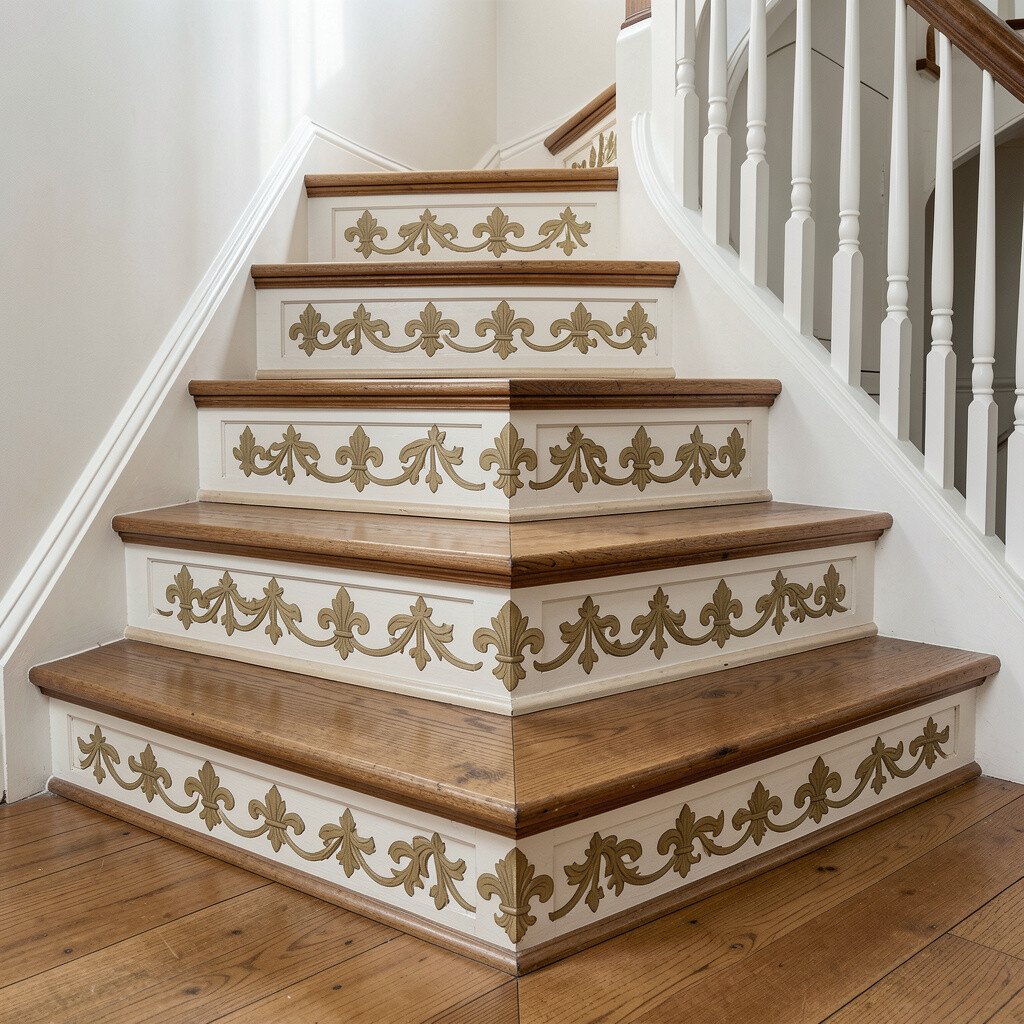
Fleur-de-lis details at the corners of risers feel elegant and old-fashioned in a friendly way. They add a formal touch without turning the staircase into a themed display.
This pattern can make a standard staircase feel special, especially when the main risers are a calm painted color. It is also an easy personalization route because you can stencil or apply decals with careful spacing. For practical tips, use painter’s tape templates so each corner shape stays aligned across every step.
Choose a finish that resists scuffing where shoes frequently brush the riser, so the details stay sharp.
22. Antique Tile Field With Narrow Running Bands
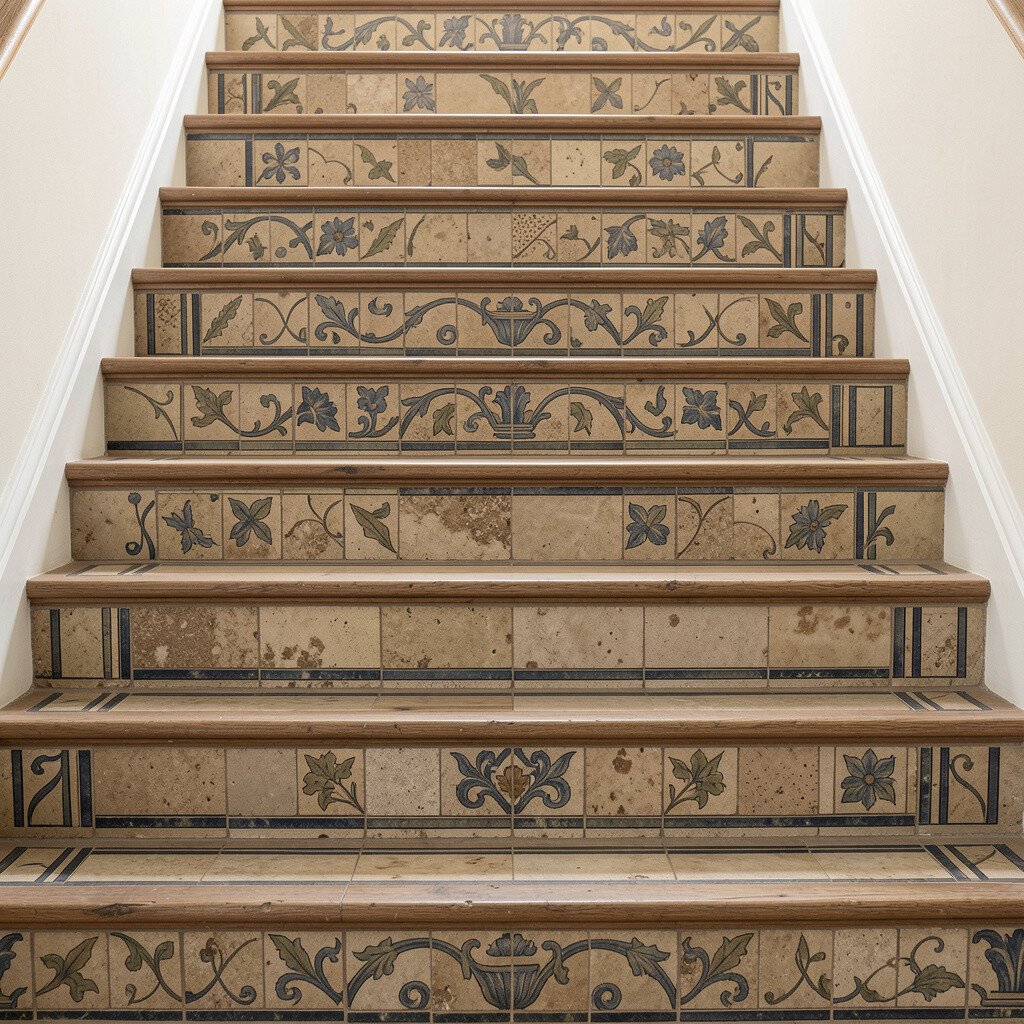
Imagine a traditional tile field pattern on the tread surface, paired with narrow running bands that wrap each step. The combination feels like classic craftsmanship, but it can still look neat and modern.
This idea is beneficial because it creates both motion and stability in the design, guiding your eyes as you climb. It also offers room for personalization since you can adjust the band color to match your trim, flooring, or wall paint. If you are thinking about cost, prioritize the most visible steps near the entry and keep the pattern more consistent on the rest to reduce tile waste.
For a clean final result, plan grout lines carefully and choose a sealant that fits your lifestyle so spills wipe up without dulling the colors.