Wood stairs can make a home feel warm the moment you step inside. The right details turn everyday movement into something quietly special.
From classic finishes to clever storage, traditional stair ideas help you build comfort that lasts. You can tailor the look to match your rooms, your budget, and your everyday habits.
1. Reclaimed Oak Treads With Hand-Rubbed Finish
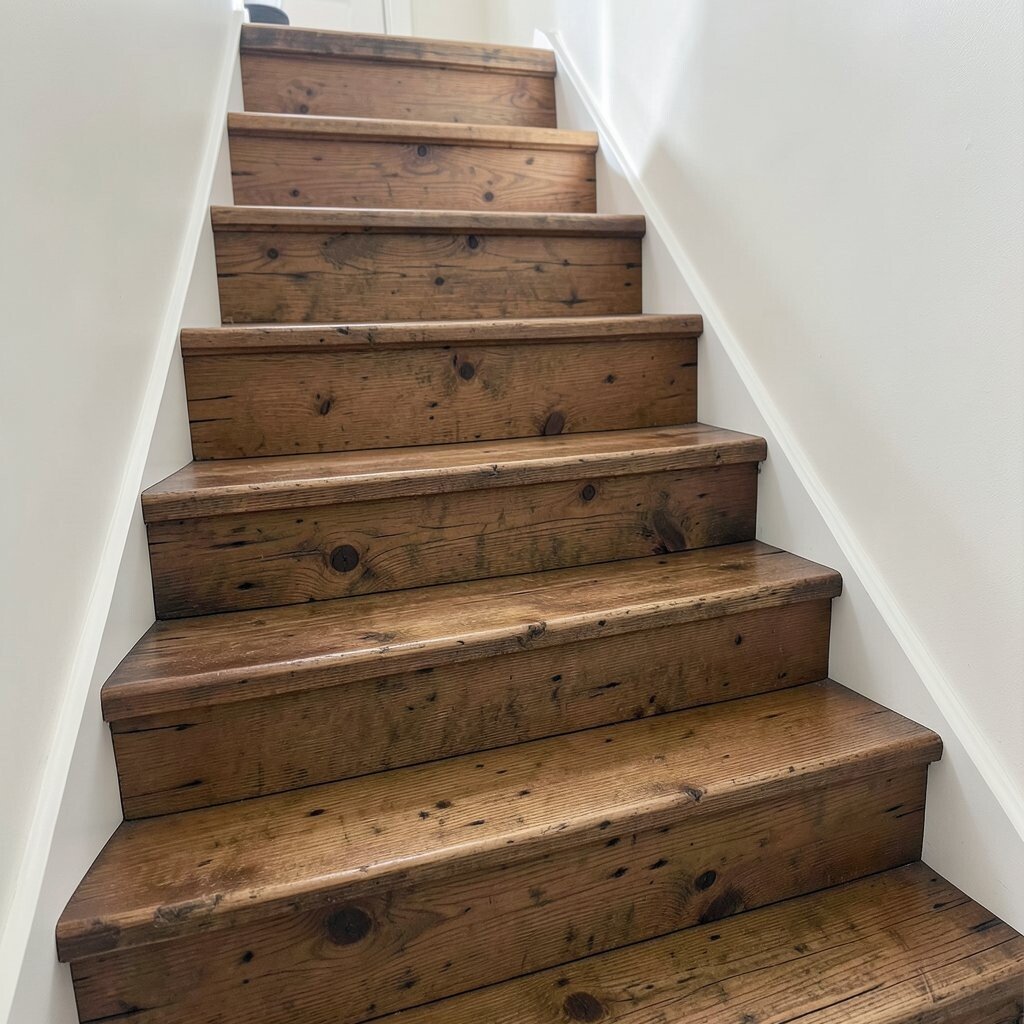
Imagine stepping onto oak treads that still carry faint marks and grain lines from another life. The color looks soft and inviting, like a well-loved table that never goes out of style.
You get a natural, timeless feel that pairs beautifully with classic railings and balusters. Hand-rubbed finishes protect the surface while keeping the wood from looking overly shiny. Choose treads with a consistent thickness so the stairs feel solid and safe.
For personalization, mix oak with a darker stain on the risers for subtle contrast. Add a runner with a muted pattern to reduce noise and make footprints feel cozy. Budget-wise, reclaimed wood costs can vary, so compare local salvage yards and pre-sanded boards before committing.
2. Classic Turned Balusters In Warm Walnut
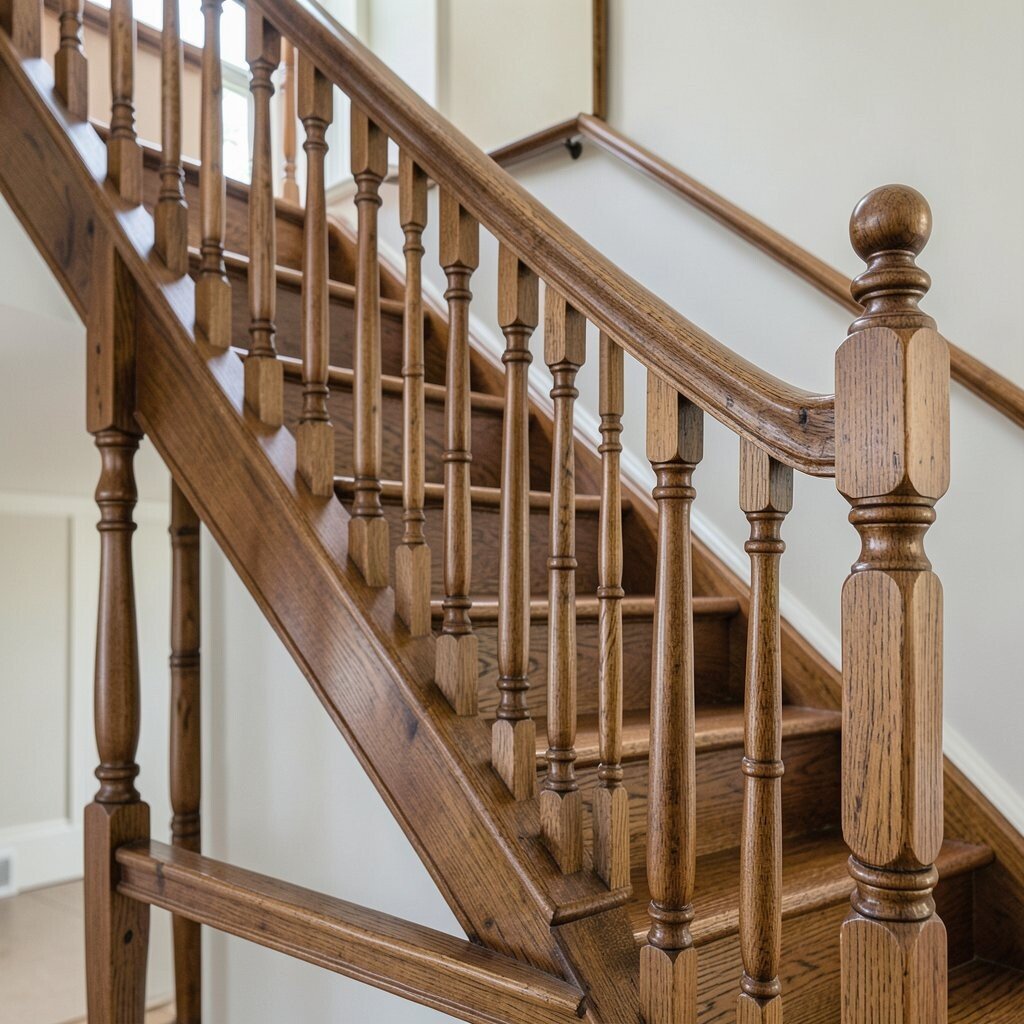
Turned balusters bring instant charm because every curve catches light in a gentle way. In walnut tones, the railing looks rich without feeling heavy.
This style adds a traditional shape to your home’s “movement zone” while helping the stairs feel more refined. Smooth wood is comfortable to touch, and a sturdy rail supports daily carrying and quick trips.
Pair walnut balusters with a light stain on the handrail if you want the top rail to feel welcoming. You can also match the baluster style to nearby furniture legs for a unified look. If you’re watching costs, consider sourcing ready-made balusters and having a local carpenter fit them.
To keep it practical, plan for cleaning by choosing a finish that wipes clean with a damp cloth. If your home has kids or pets, consider a more durable topcoat so the railing stays beautiful longer.
3. Pine Staircase With Painted Risers And Natural Steps
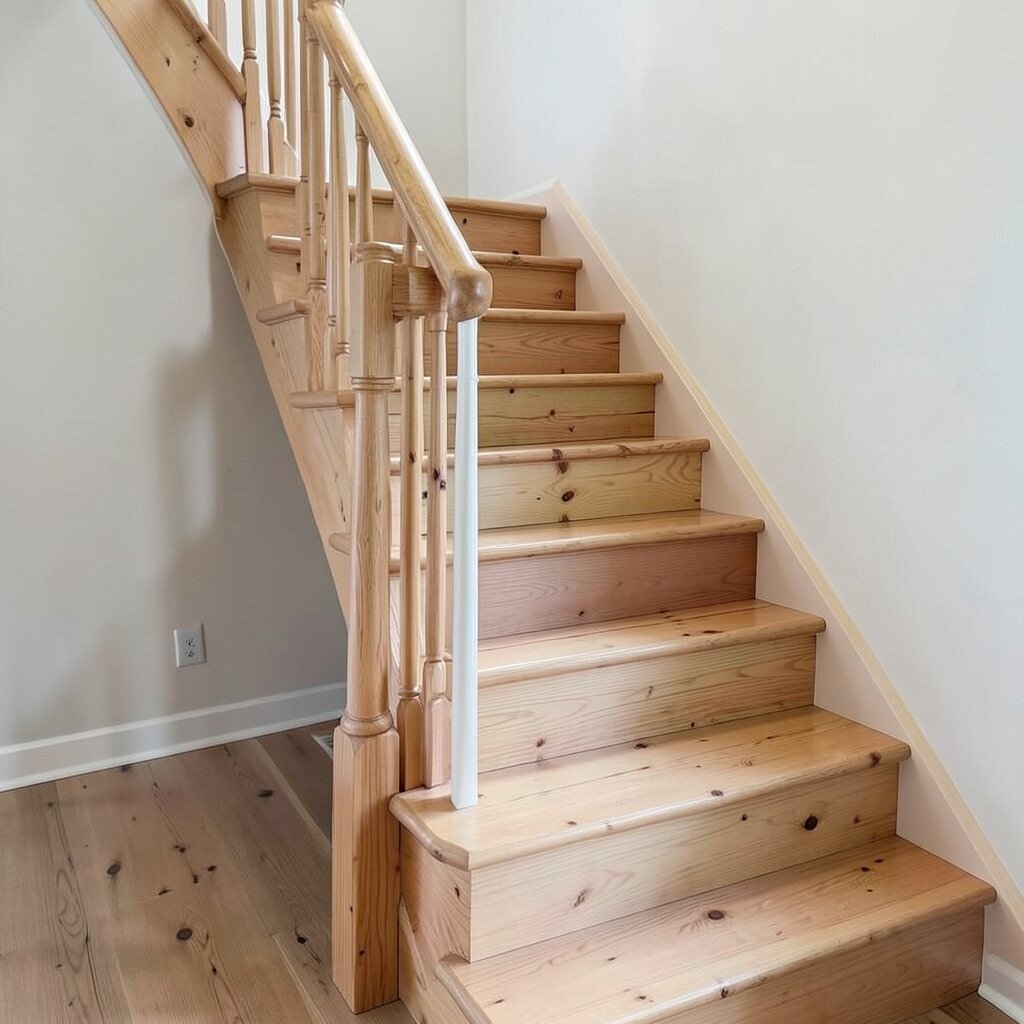
Pine has a friendly, humble look that feels at home in cozy spaces. When the treads stay natural and the risers get painted, the stairs feel bright and inviting.
Painted risers can also help the stairs look taller and more defined, especially in entryways with limited light. Natural treads give warmth underfoot and show off knots that make each step unique.
For personalization, choose a soft cream, sage, or muted blue that matches your walls. If you like traditional homes, a gentle satin sheen keeps the paint from looking too glossy. Sand thoroughly and use a primer made for wood so the finish holds up to everyday scuffs.
Cost considerations are usually reasonable because pine is often more budget-friendly than hardwood. You can spend more only where it matters, like a protective clear coat for treads. This approach also makes it easy to refresh the look later by repainting risers.
4. Whitewashed Wood Stair Steps For Airy Warmth
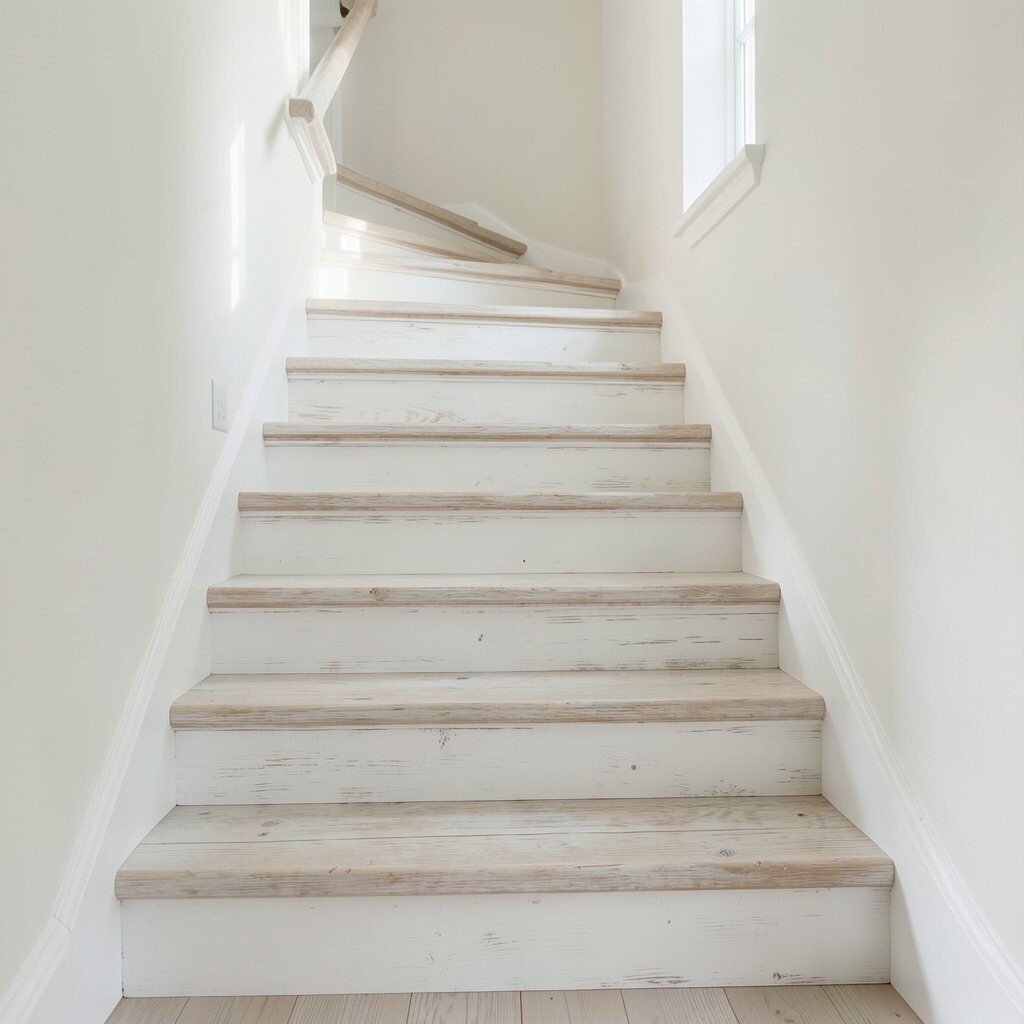
Whitewashing lets wood keep its grain while taking on a soft, airy tone. The result feels calm and bright, especially when paired with warm beige walls and textured rugs.
You’ll get a classic look that still feels modern because the grain stays visible. A light finish can also make narrow hallways feel less tight, which is a big win for cozy homes.
Try whitewashing the treads lightly and leave the handrail slightly deeper for depth. Use a breathable topcoat so the wood won’t feel sticky or smell strong over time. If you want extra comfort, add a runner with a low pile to reduce slip and dampen sound.
5. Dark Stained Handrail With Smooth Satin Sheen

A dark handrail feels grounding and adds contrast right away. When the finish is satin-smooth, it looks elegant and feels pleasant every time you grip it.
This detail brings warmth to the entire staircase because people notice the rail first. A satin sheen hides small marks better than glossy finishes, which helps the stairs keep their good looks.
For personalization, choose a deep walnut or espresso stain that matches your floor tone. If your walls are pale, the handrail becomes a strong but cozy focal point. Keep costs in mind by refinishing the existing rail instead of replacing it, if it’s still structurally solid.
To keep it practical, wipe the rail with a soft cloth and avoid harsh cleaners that can dull the finish. A slightly textured grip area can also help if your household has slippery gloves or wet hands.
6. Matching Wood Newel Posts With Traditional Profiles
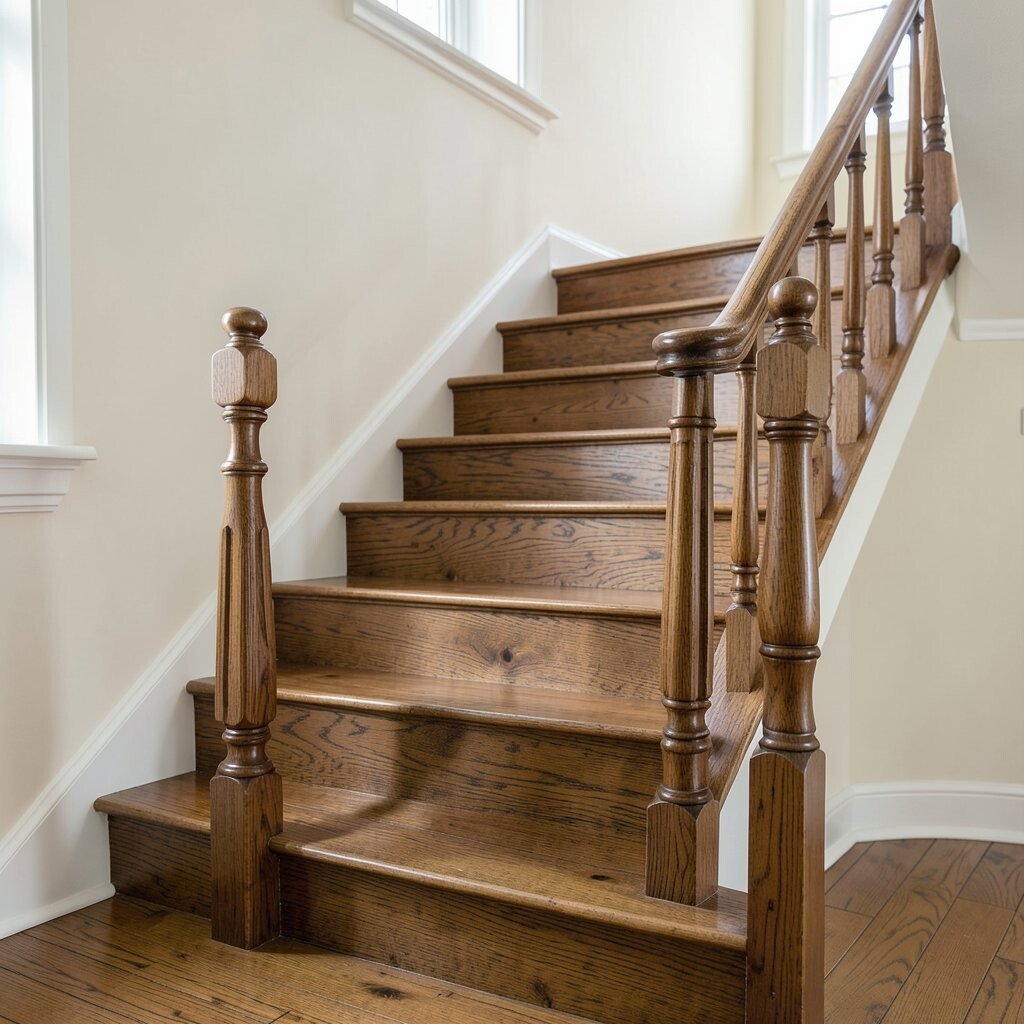
Newel posts act like the staircase’s “anchor,” and traditional profiles make them feel special. A well-shaped post with carved edges or a classic cap can instantly upgrade the look.
When the newel matches the rest of the railing, the staircase feels intentional and built as a whole. You also get better stability since a strong newel post supports handrails and balusters.
Consider wood species that fit your home, such as oak for strength and a classic grain. Add a matching stair skirt or trim detail to keep everything neat and finished. If you want to manage costs, focus on upgrading visible posts first, then refine the rest later.
For personalization, paint just the post base or add a subtle stain difference so it coordinates with nearby molding. This keeps the look traditional while adding your own signature style.
7. Oak Treads With Recessed Lighting Beneath the Stairs
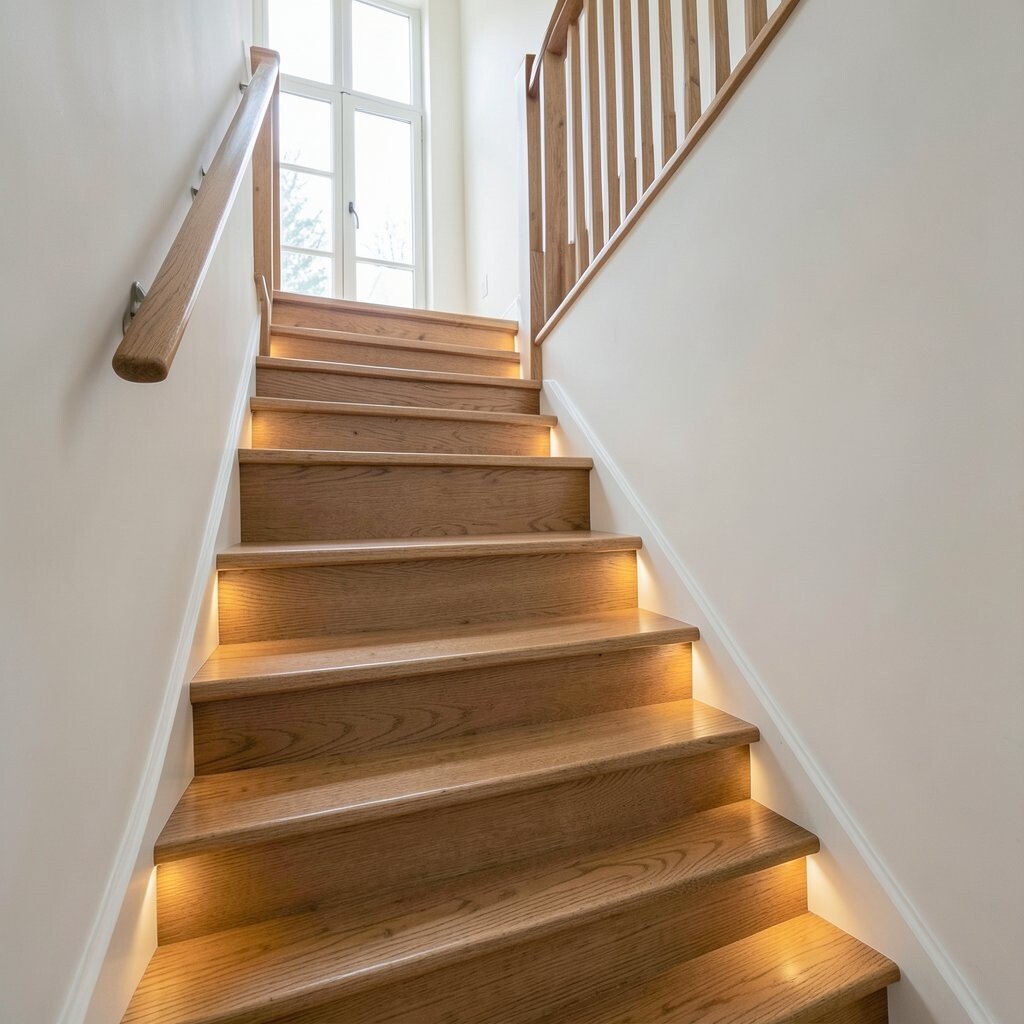
Wood treads look cozy even more when they’re softly lit from below. A traditional staircase becomes dramatic in a gentle way when light washes the underside.
Recessed lighting under the stairs can reduce shadows and make every step feel safer at night. It also highlights the wood grain, so the staircase looks warm even when the rest of the room is dim.
For personalization, pick a warm light temperature so the tone stays inviting rather than cool. Consider low-profile fixtures to keep the underside looking clean. Budget-wise, lighting adds cost, but you can save money by reusing existing electrical paths when possible.
To keep the project practical, ensure cables and junction boxes are protected inside the stair frame. If you’re not handy, hiring an electrician for final connections is worth it for safety.
8. Spiral-Spindled Railing For A Classic Yet Cozy Twist
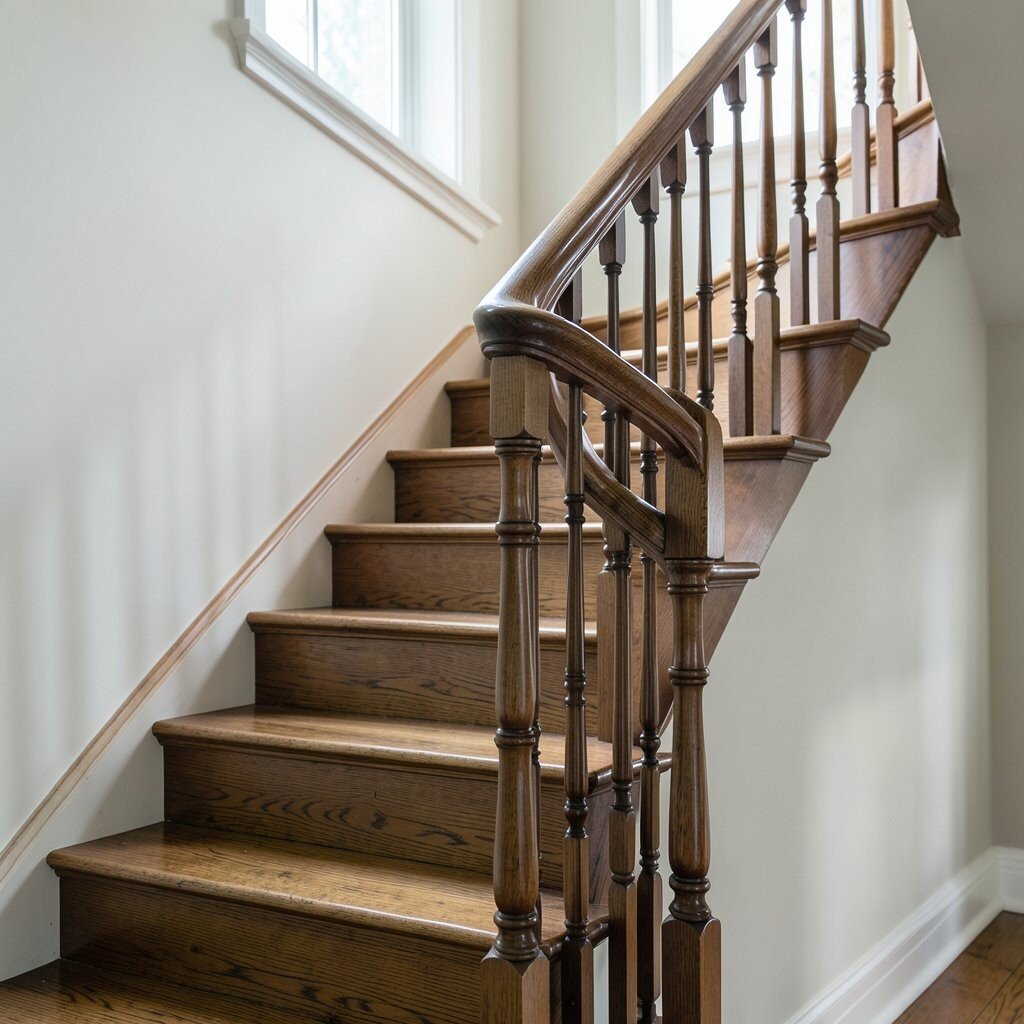
Spiral spindles bring a lively, old-world rhythm to a staircase. When paired with sturdy wood rails, the whole stairway feels both elegant and welcoming.
This design stands out because it adds motion to an otherwise straight climb. It also creates a visually richer barrier, which can make open stair designs feel more enclosed.
To personalize, choose a stain that matches your doorway trim so the spindle look feels unified. If your home leans farmhouse, a lighter wood with a soft finish can keep the spiral airy. Costs can rise with custom spindle work, so compare pre-made systems that still look handcrafted.
For practical planning, check stair measurements early and ensure the spindle spacing meets local safety rules. That way, you get beauty plus peace of mind.
9. Hardwood Stair Skirt Panel In Matching Wall Trim Tone
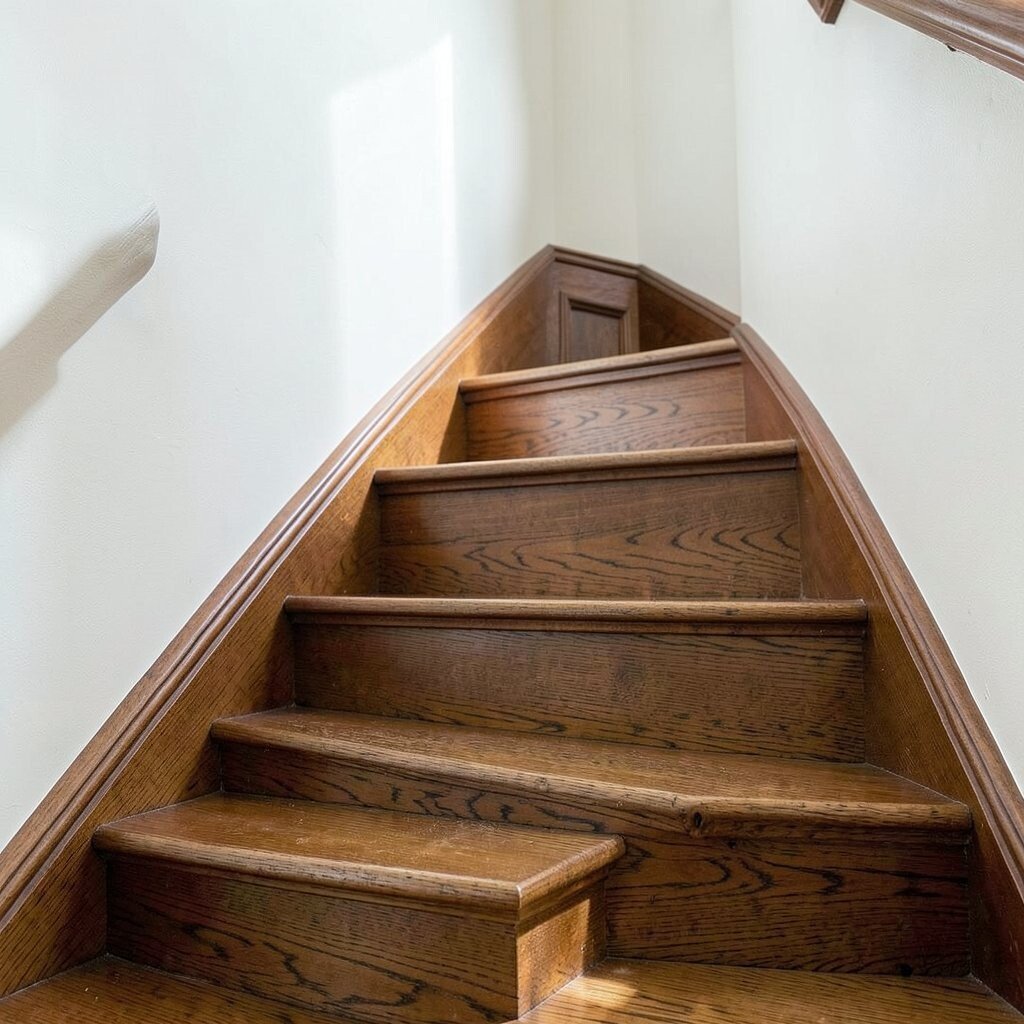
A stair skirt panel can make a traditional staircase feel built-in. When the wood matches your wall trim tone, the stairs blend naturally while still adding texture.
This approach helps hide gaps, dust build-up, and the sometimes messy underside of a staircase. It also creates a cleaner line that makes your home look cared for.
For personalization, stain the panel to echo baseboards or choose a white finish that matches crown molding. Add simple profile edges to keep the style classic, not ornate. If you’re working on a budget, use quality plywood with a wood-look veneer for the panel face.
Before installing, measure your rise details carefully so the panel fits smoothly without awkward seams. A well-fitted skirt also reduces drafts and makes the area feel cozier.
10. Walnut Veneer Risers With Traditional Style Gaps
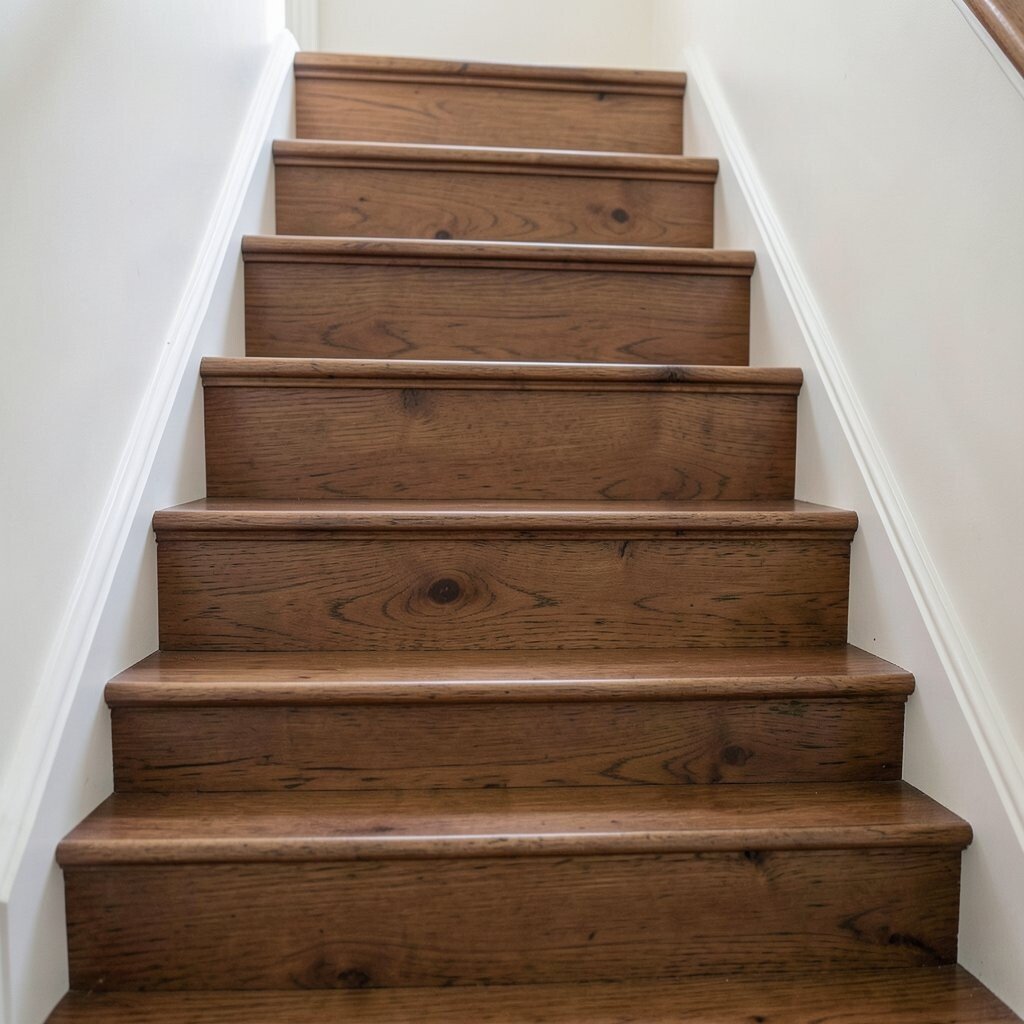
Walnut veneer risers give you a rich look without the full cost of solid walnut. The warm color and fine grain make the stairs feel upscale yet still cozy.
Choosing veneer can be a smart cost move while keeping the visual warmth of a traditional hardwood. If your staircase has consistent riser sizes, veneer panels can install neatly for a clean finish.
For uniqueness, keep the riser edges crisp and use a thin shadow gap between risers and treads. That small space makes the staircase look detailed and intentional. To personalize, vary the stain depth slightly between risers and handrail.
For practicality, seal the veneer well so it resists scuffs. Ask your installer about topcoat options designed for high-traffic wood surfaces.
11. Carved Oak Newel Cap With Subtle Traditional Detail
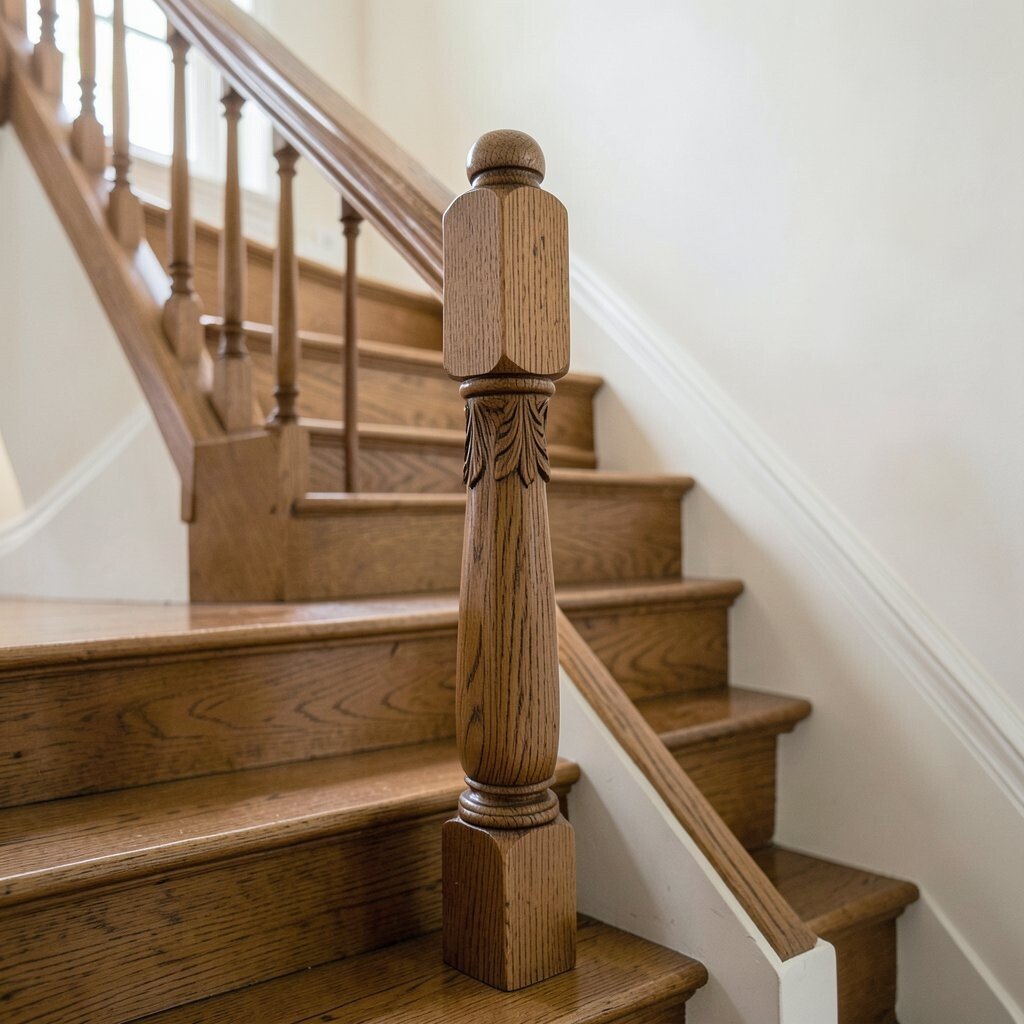
A carved newel cap adds character right where your eyes land. Even a small carved detail can make the entire staircase feel like it belongs in a storybook.
The benefit is mostly visual, but it also helps the stair feel custom, especially when everything else is simple. Solid oak carvings can also be durable, so the detail stays crisp longer.
For personalization, match the carved style to other woodwork, like mantel edges or door casing profiles. If you want a softer look, choose deeper stains and a satin topcoat to keep shadows gentle. Budget-wise, carved caps can sometimes be sourced as parts, so you may upgrade just the visible top.
To keep maintenance easy, wipe carved areas with a soft cloth and avoid soaking the wood. A good finish helps dust wipe away without scrubbing.
12. Pine Stair Stringer Trim With Classic Corner Blocks
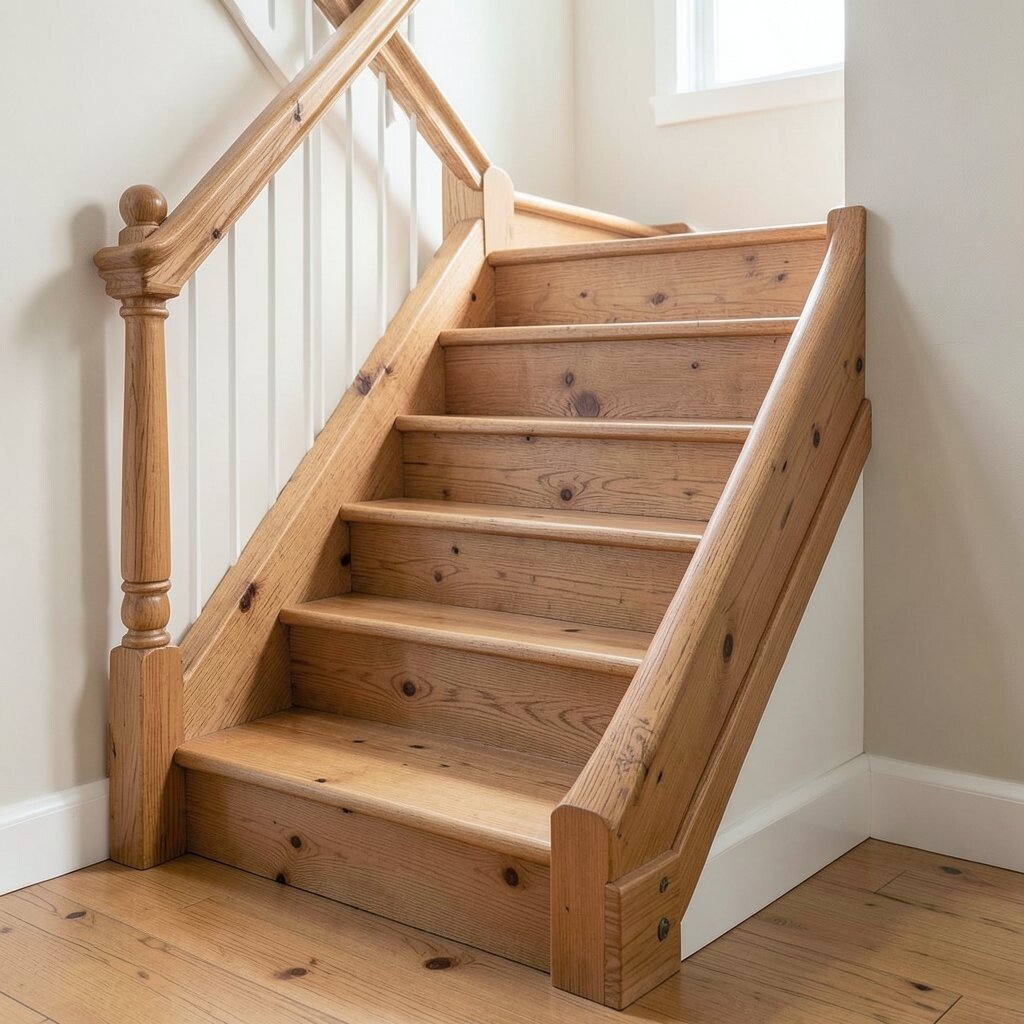
Corner blocks along the stair stringer can make a simple staircase look thoughtfully finished. Pine trim in a warm finish adds a classic, cottage-style feeling.
This style helps cover transitions and creates crisp edges that look neat from every angle. It also adds a bit of structure visually, making the staircase feel sturdy and well-planned.
For personalization, paint the blocks in a warm white if you like a traditional bright look. Or stain them slightly darker than the steps so they frame the stairs like a picture. Cost considerations are usually manageable because trim pieces are often easier to buy and install.
To keep it practical, seal trim edges well because they often catch vacuum brushes and footwear. If you have pets, choosing a satin finish can resist smudges better.
13. Stair Runner In Traditional Wool With Wood-Tone Borders
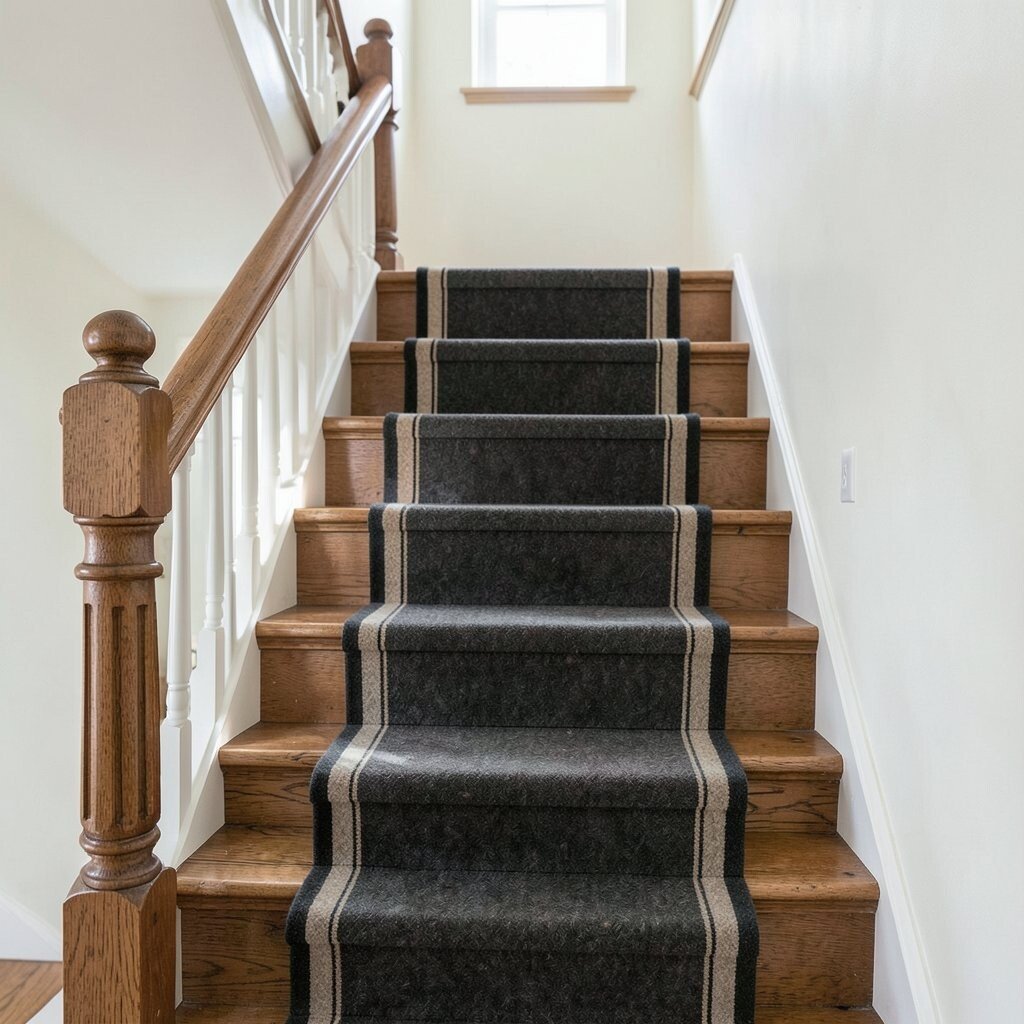
A wool runner can make wood stairs feel like a cozy landing strip. It adds warmth underfoot and helps quiet the sound of footsteps.
Traditional patterns, like subtle stripes or gentle medallions, complement wood grain without fighting it. The runner also protects the treads from wear, which can save money on refinishing later.
For personalization, pick borders that echo your wood color, so the runner feels custom rather than random. Consider a runner pad for extra cushioning and grip. Costs vary based on wool quality, so compare materials and choose a length that fits your stair width snugly.
When installing, keep the runner aligned with the stair edges to avoid bunching. Secure edges well so it stays flat and safe, especially in high-traffic hallways.
14. Hand-Finished Stair Treads With Edge Bevels
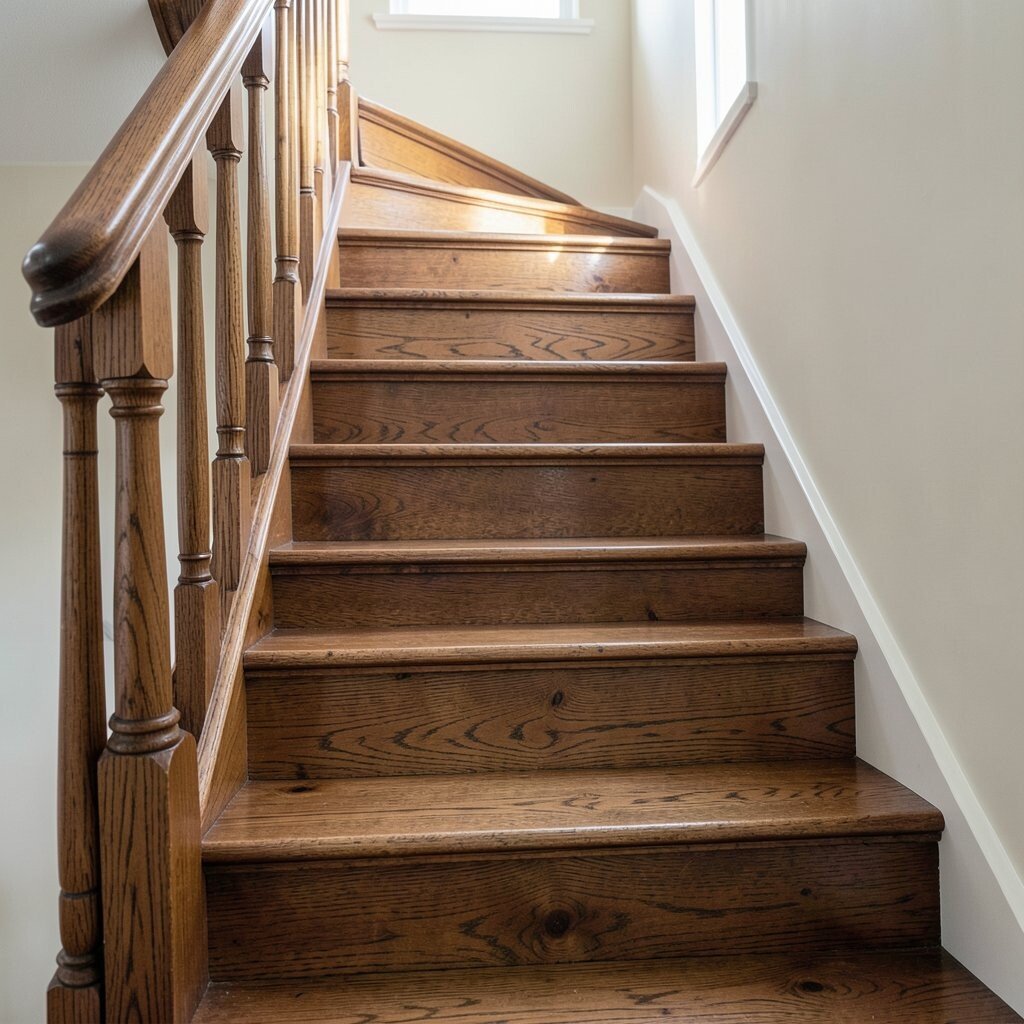
Edge bevels on stair treads add a classic touch that catches light nicely. When you run your hand over a gently beveled edge, the staircase feels smoother and more comfortable.
This detail enhances the visual rhythm of each step, making the stairs look handcrafted. Bevels also help reduce the sharpness of corners, which can be kinder for daily movement.
For personalization, choose a finish that highlights the bevel like amber satin or warm matte. You can also stain slightly different batches of treads for subtle depth if your design allows it. Cost considerations are usually reasonable because edge finishing is often part of the milling process.
To keep maintenance easy, choose a protective topcoat that resists scuffs and marks. If your household is busy, ask for a finish designed for floors.
15. Traditional Oak Stair Stringer In Clear Coat For Grain Drama
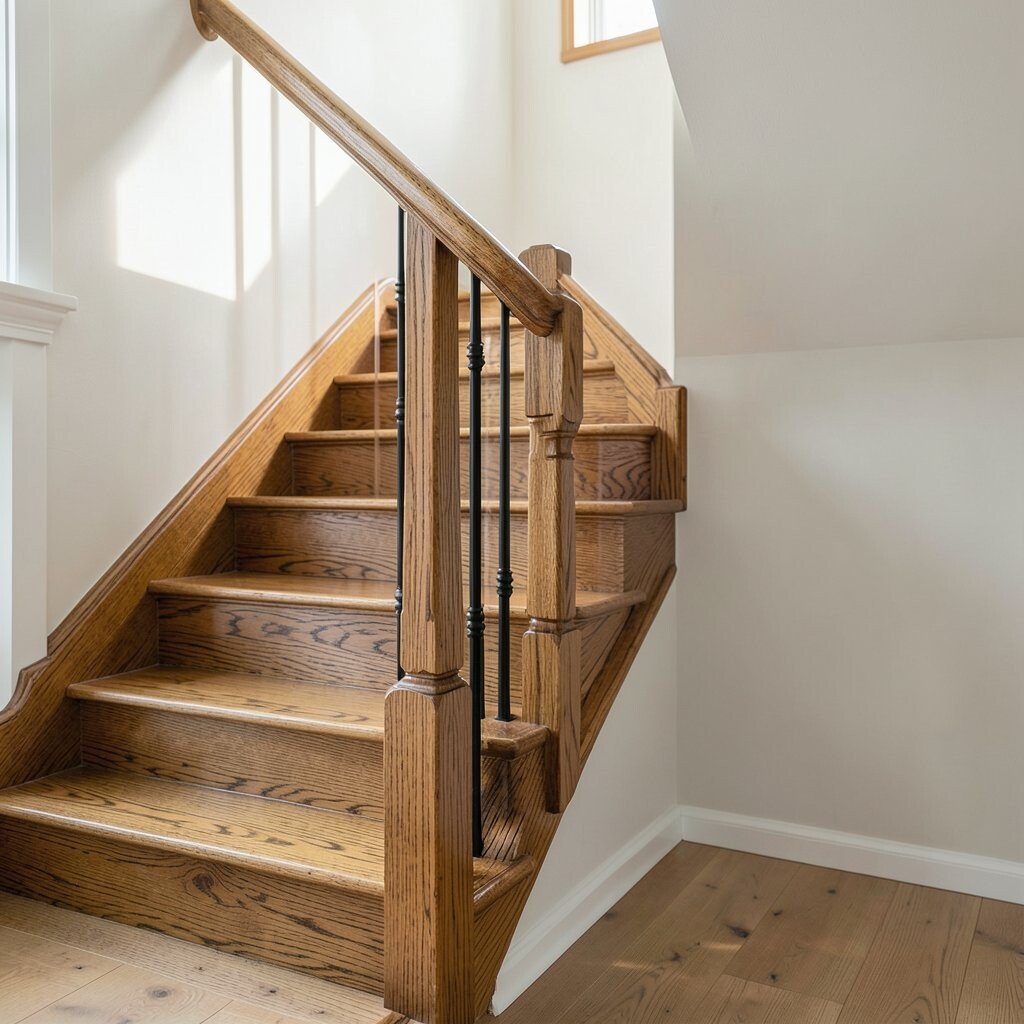
Keeping oak in a clear coat shows off natural grain drama without adding heavy color. The stairs look rich and warm, especially when sunlight moves across the steps.
A clear finish also maintains a traditional, honest wood look that works in many home styles. You can spot imperfections and smooth them before sealing, which creates a clean, polished result.
For personalization, pair clear-coated treads with a stained handrail to create depth. If you love cozy lighting, consider soft bulbs so the wood doesn’t look too orange in daylight. Cost-wise, clear coat is often less expensive than full refinishing with deep stain, but preparation matters.
To keep it practical, buff the finish properly and follow cure times before heavy use. That small step helps the stairs stay beautiful longer.
16. Light-Farmhouse Wood Staircase With Simple Rail Detailing
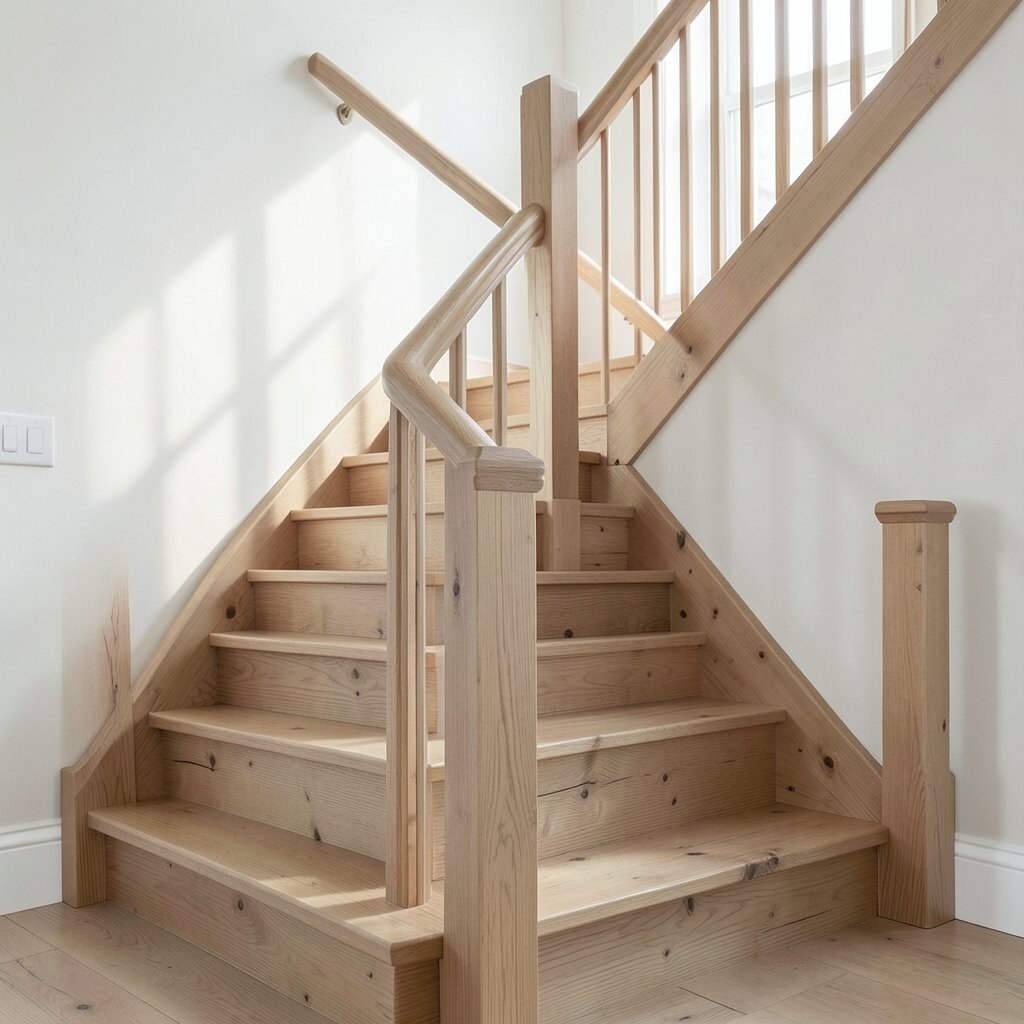
A light farmhouse staircase uses straightforward lines and warm finishes to feel welcoming. When the wood is lighter, the staircase looks open and cozy rather than bulky.
This style is unique because it balances tradition with everyday comfort. Simple rail detailing can also make your home feel less busy while still looking carefully designed.
For personalization, match the handrail and posts to other farmhouse pieces, like light wood shelves or dining chairs. Add small decorative touches, like a framed sign near the landing, to keep the vibe personal. Cost considerations often favor this style because it may use simpler profiles and fewer custom carvings.
To keep it practical, choose a finish that resists fingerprints and smudges. If you have kids, consider a more durable topcoat and keep a small cleaning cloth near the entry.
17. Refinished Walnut Treads With Existing Railing Preservation
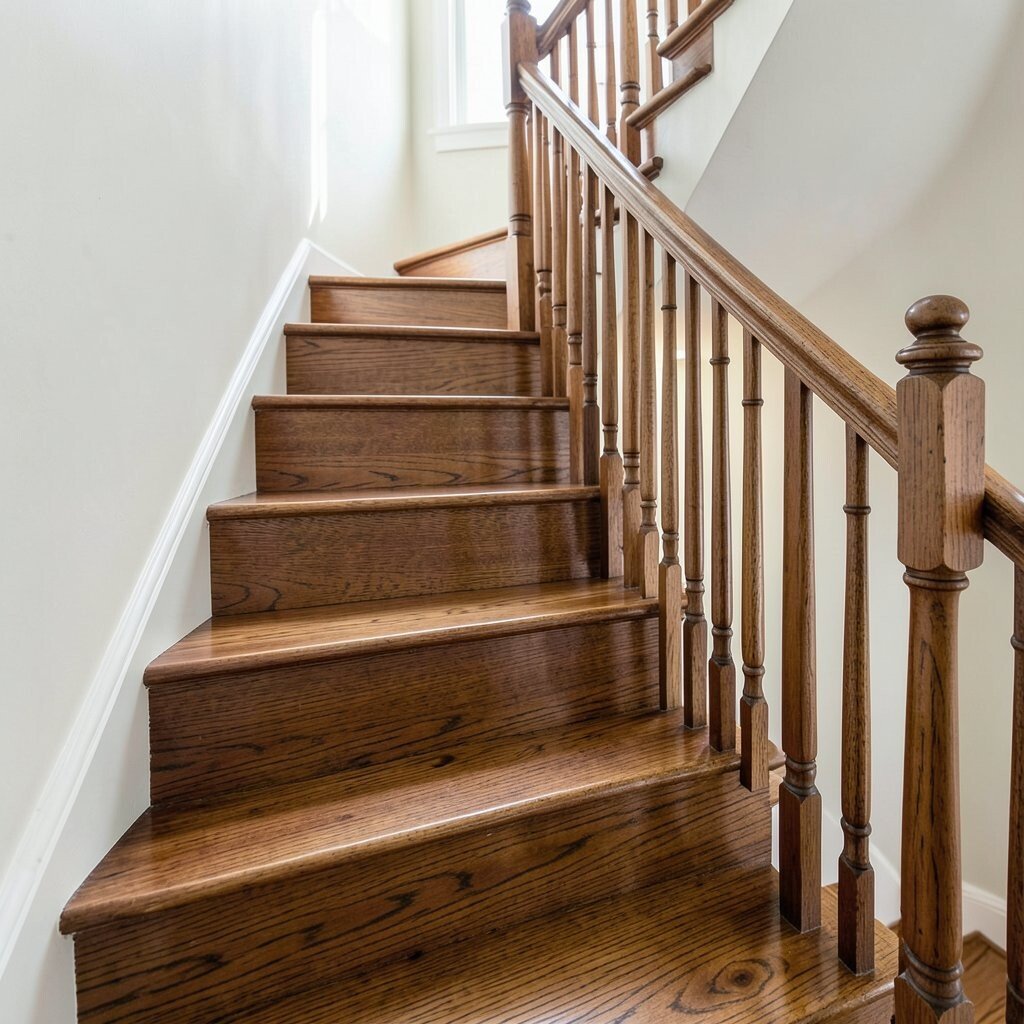
Refinishing existing walnut treads can feel like getting a whole new staircase without replacing everything. The wood appears smoother, darker, and more luxurious after careful sanding and staining.
Preserving the original railing helps keep costs under control and retains the home’s character. It also saves time because the underlying structure stays in place.
For personalization, adjust the stain depth so the treads and railing look intentionally matched. You can also add a clear topcoat that emphasizes grain without adding shine. Consider budget by pricing stain and finish materials versus full replacement.
To keep it practical, test stains on a hidden area first since existing wood may absorb dye differently. A pro can help if the treads have old coats that require careful stripping.
18. Turned Posts With Integrated Wood Panels For More Privacy
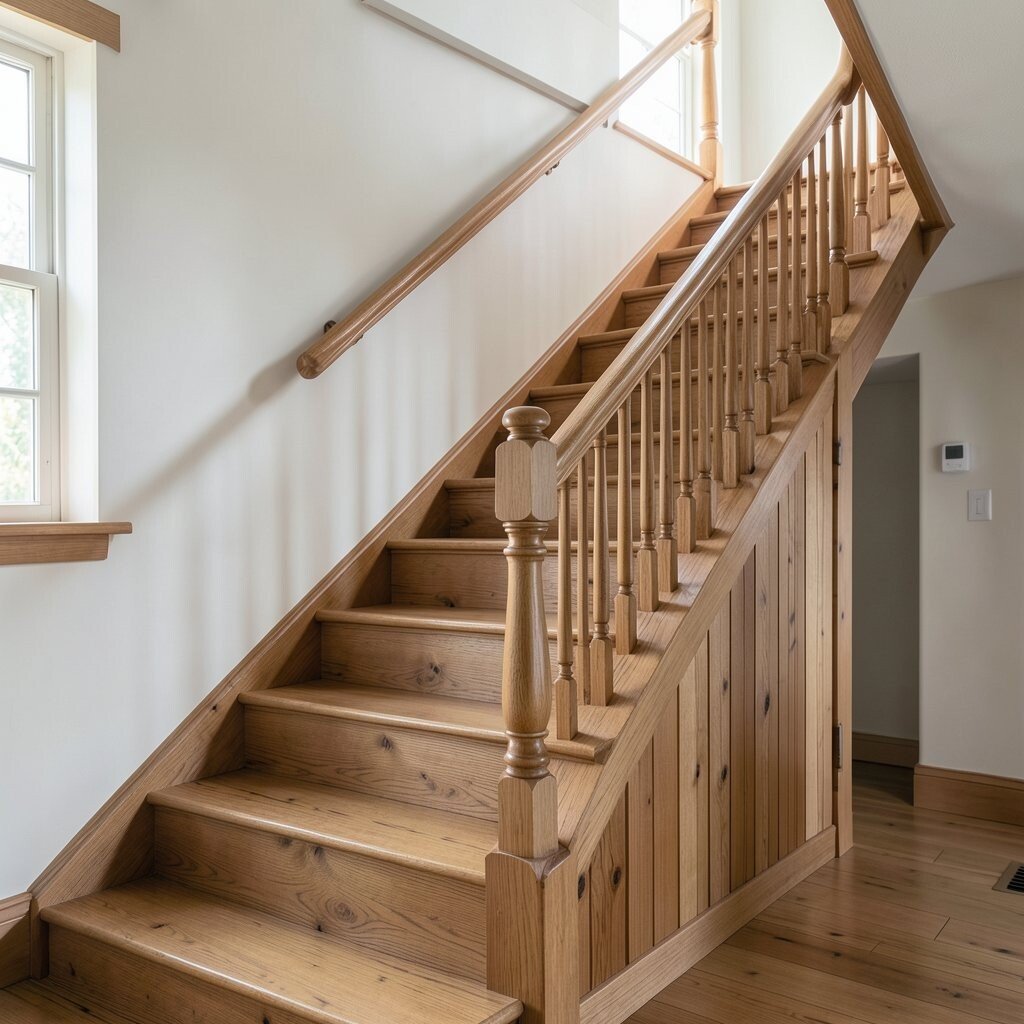
Wood panels between turned posts bring a classic, cozy feeling and add a bit of privacy. The staircase looks more substantial, which can be a great fit for homes with open sightlines.
This design can also reduce the feeling of drafts and visual clutter in busy rooms. When paired with warm wood tones, it feels comfortable instead of formal.
For personalization, choose panel details like simple raised shapes to keep the look traditional. If you want a softer feel, paint the panels in a warm white and leave the rail stained. Cost considerations depend on whether panels are custom, so look for semi-custom panel kits when possible.
For practical use, ensure panel edges are sealed well to prevent swelling. Smooth surfaces are easier to clean, especially in households that track in dust.
19. Dark Oak Staircase With Brass Pickets And Rail Hardware
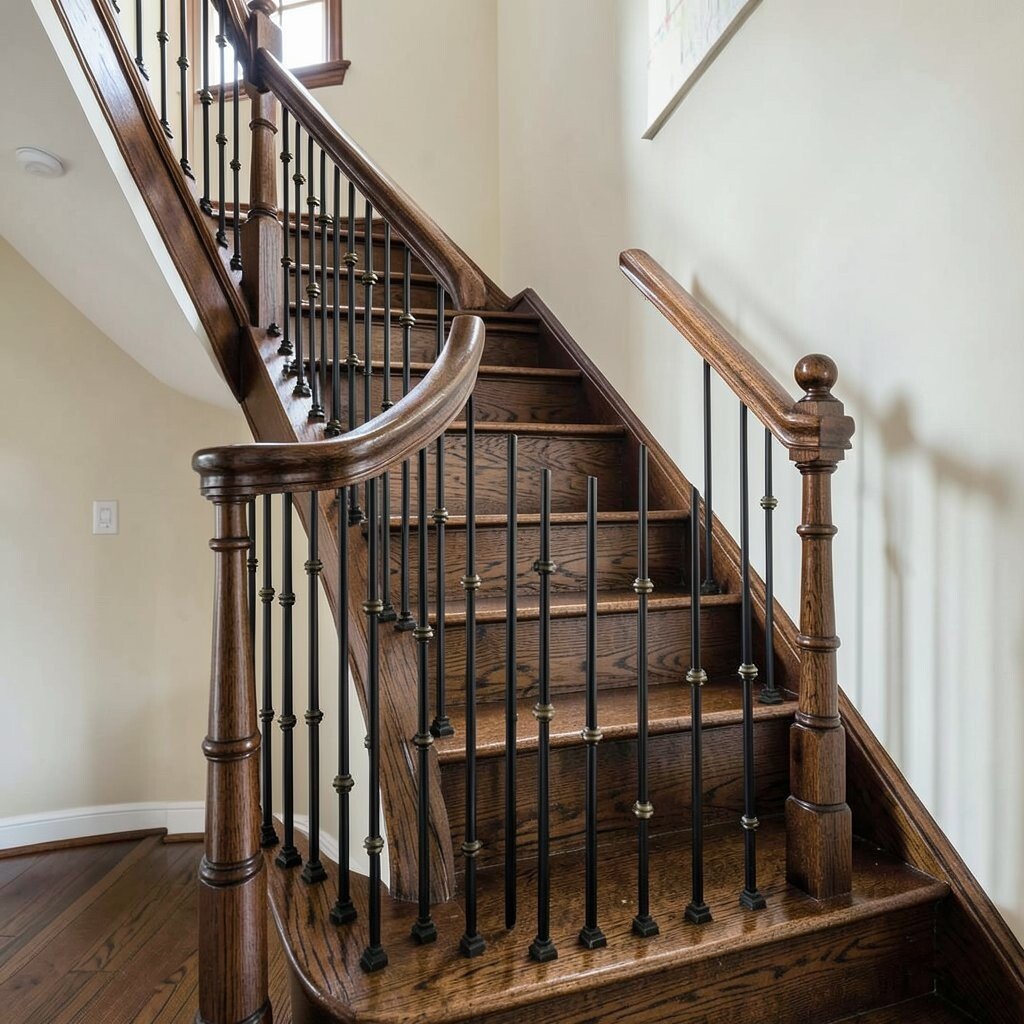
Brass hardware can add a warm glow next to dark oak without making things feel cold. When the pickets and rail details include brass, the stairs look like a classic hotel feature.
The benefit is that metal accents highlight the wood grain and create a strong visual contrast. Brass also feels special to the touch and can look timeless for years.
For personalization, choose hardware finishes that match your home’s lighting and faucets. If you have brushed nickel elsewhere, you can go with warm bronze instead for a softer traditional feel. Cost considerations include the hardware itself, but you can often upgrade hardware without changing the entire staircase.
To keep it practical, clean brass gently so it doesn’t tarnish unevenly. Avoid abrasive pads that can scratch the finish and leave tiny marks behind.
20. Cozy Stairs With White Painted Spindles And Stained Handrail
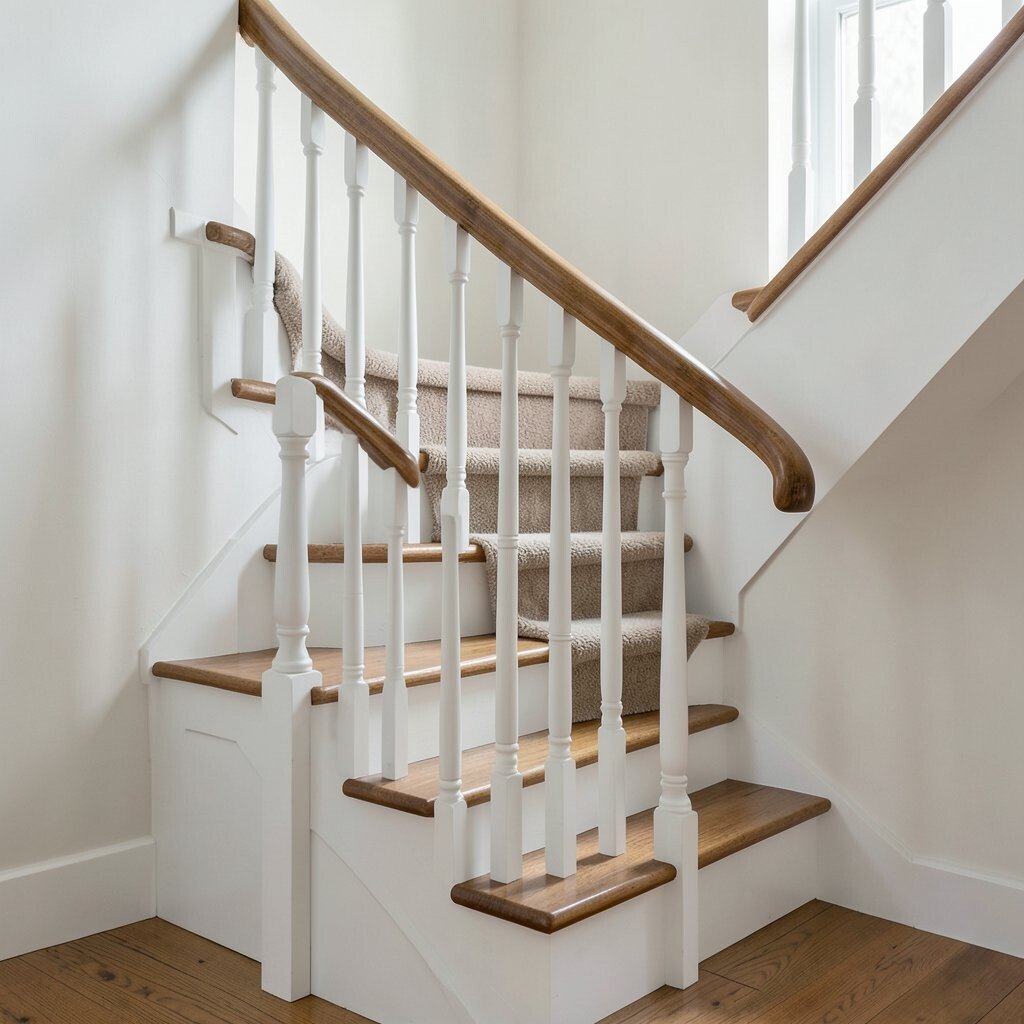
White painted spindles create a bright, classic contrast against a stained handrail. The combination looks crisp and cozy, especially in homes with light walls and warm floors.
This style gives you traditional charm while making the staircase feel airy. It can also help visually separate the railing elements so the stairs look clean and organized.
For personalization, choose a soft white that matches your trim, not a harsh blue-white. Use a durable paint made for wood so the finish handles scuffs. Budget-wise, painting spindles may be more affordable than replacing them, but prep work is key.
To keep maintenance easy, select a finish that wipes clean. If your home gets lots of foot traffic, consider using a topcoat designed for high-contact surfaces.
21. Cherry Stair Treads With Deep Warm Color And Clean Lines

Cherry wood brings a natural warmth that looks almost candlelit. When stained and finished well, cherry treads develop a rich glow that feels truly cozy.
This idea is unique because cherry darkens over time, adding a living character to your staircase. You’ll see the stairs grow more beautiful as years pass, which is a rare kind of luxury.
For personalization, keep the railing simple so the treads stay the star. Pair cherry with neutral walls and soft textiles to keep the whole home feeling calm. Cost considerations can be higher with cherry, so you might compare solid wood versus high-quality veneer for a similar look.
For practicality, seal cherry with a protective topcoat and maintain it with gentle cleaners. Proper care helps prevent dulling and keeps the color looking deep and smooth.
22. Raised Wooden Stair Skirts With Classic Molding Edges

Raised stair skirts with classic molding edges make a traditional staircase feel built-in and tidy. The layered wood detail adds depth, so the stairs look polished even before you add a rug.
This design helps cover uneven gaps and reduces dust catching in corners. It also frames the staircase visually, which can make smaller spaces feel more intentional.
For personalization, match the molding edge profile to your baseboards or crown molding. You can paint the skirt in a warm white or stain it to match the railing, depending on how cozy you want the tone. Cost considerations vary based on molding complexity, so decide how much detail you really want to pay for.
To keep the look practical, use wood sealer on cut edges and ensure the skirt is securely fastened. A well-installed skirt reduces movement and keeps the finish looking neat day after day.