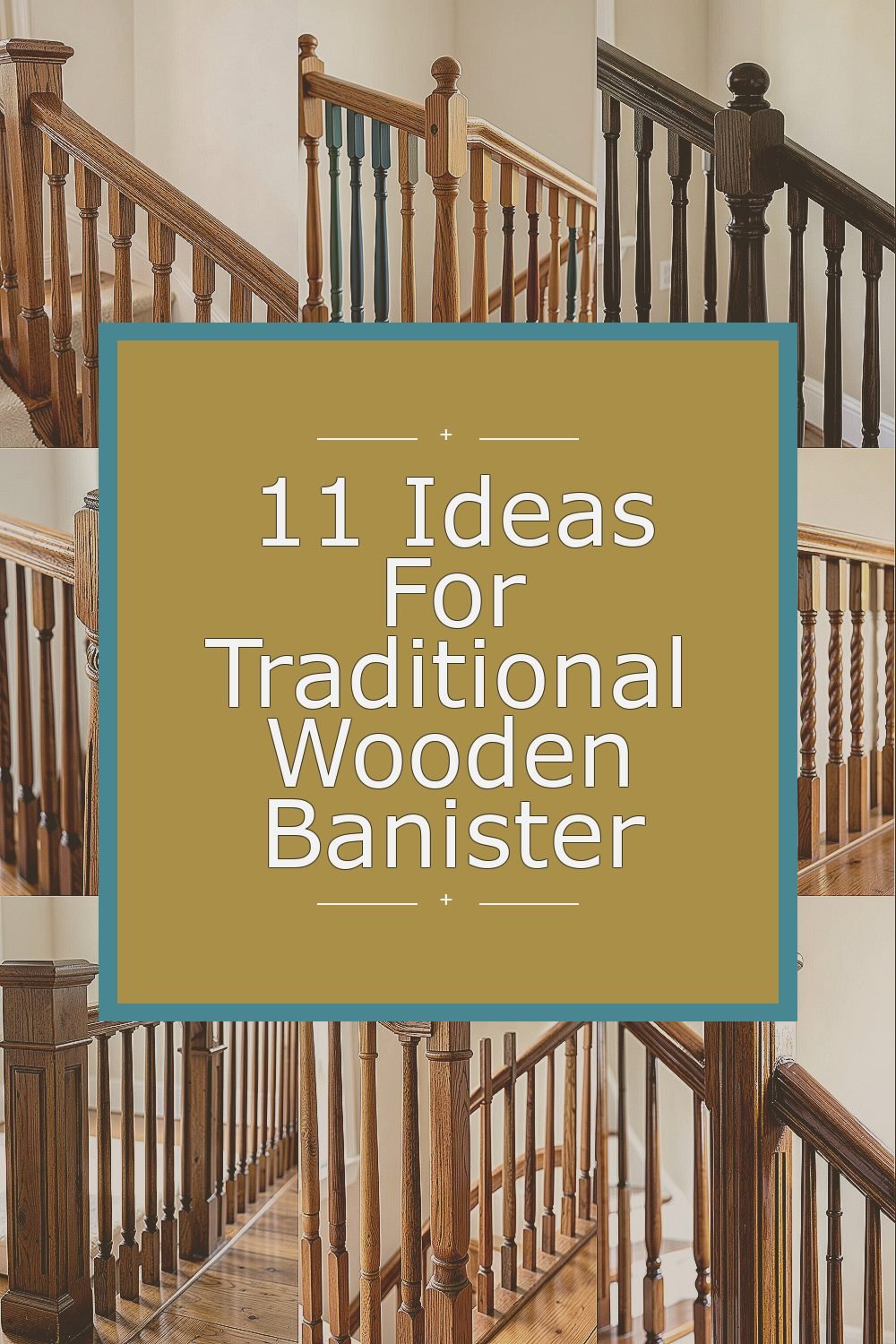
A wooden banister can change the whole mood of a home. It can feel warm, classic, and full of character.
1. Rich Oak With Gentle Curves
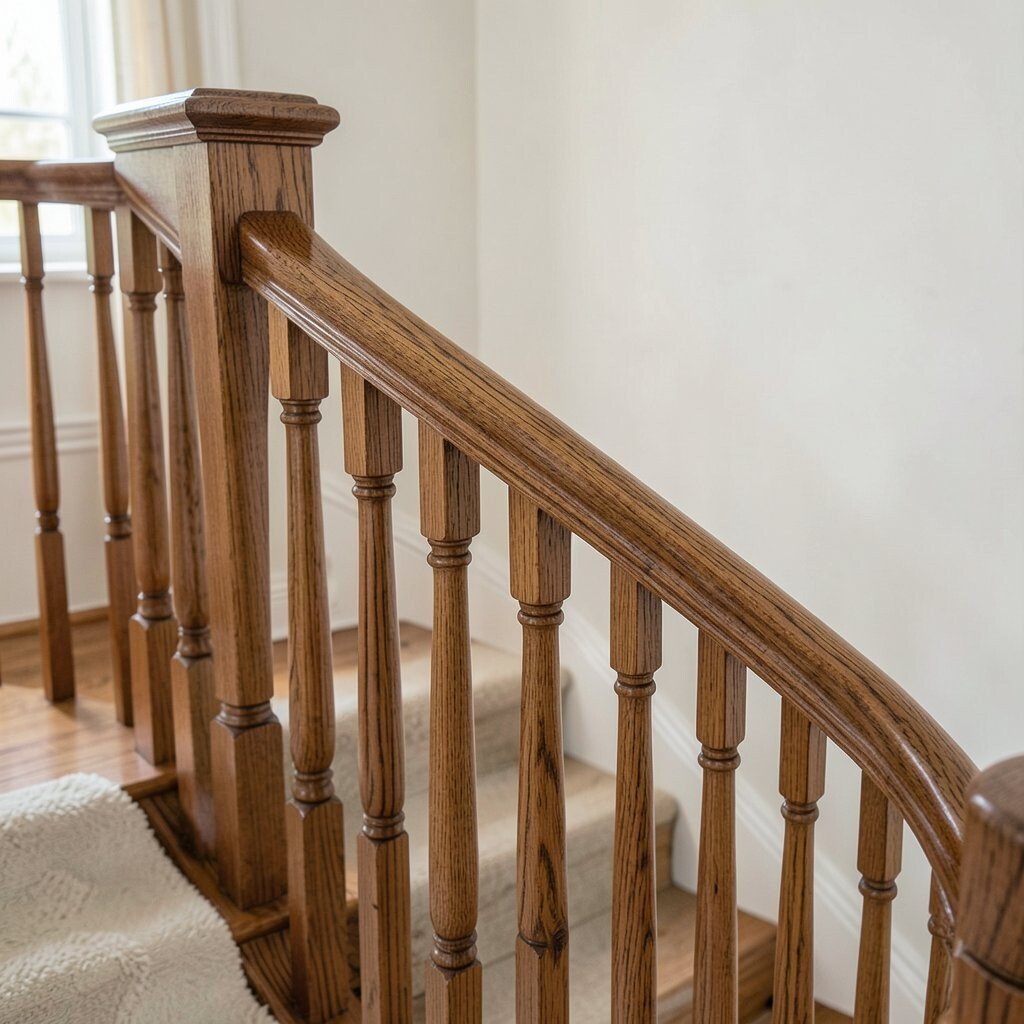
A rich oak banister with soft curves brings a cozy and timeless look to a staircase. The wood grain can show off deep brown tones that feel sturdy and welcoming.
This style works well in homes that want a classic feel without looking heavy, and it pairs nicely with cream walls or patterned rugs. It is also a smart choice if you want a design that ages well, since oak is known for lasting strength and easy upkeep, while the curved shape adds a graceful touch that feels special.
2. Painted Spindles With Natural Wood Handrails
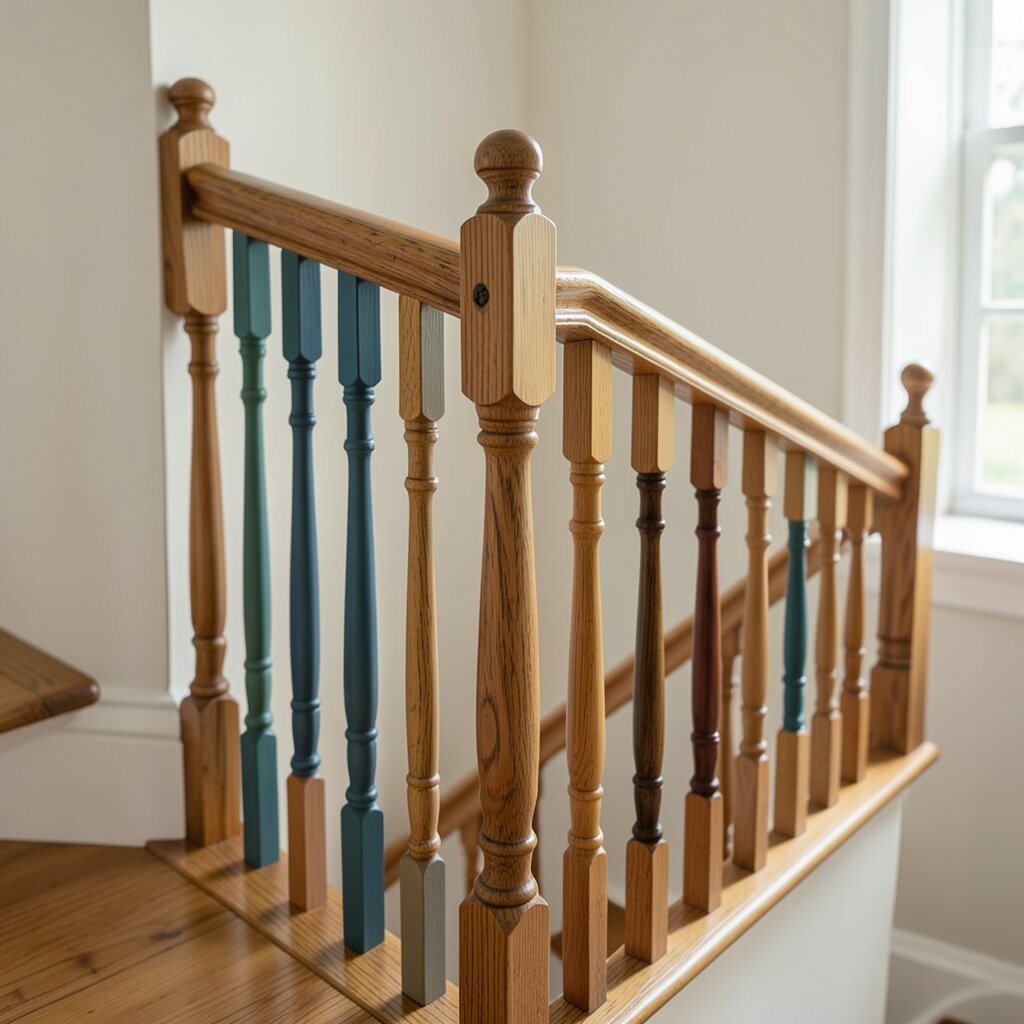
Painted spindles with a natural wood handrail give a fresh twist to a traditional banister. The mix of color and wood makes the staircase feel bright, neat, and easy to enjoy every day.
This idea is popular in many homes because it can fit both old and newer spaces. White or soft gray spindles can make the room feel larger, while the wood rail keeps a warm touch, and the look is often budget-friendly if you keep the main wood parts in good shape and only update the finish.
You can make it your own by choosing a paint shade that matches your trim, doors, or nearby furniture. A smooth satin finish is often easier to clean, which is helpful for busy homes with kids or pets.
3. Dark Stain For A Bold Classic Look
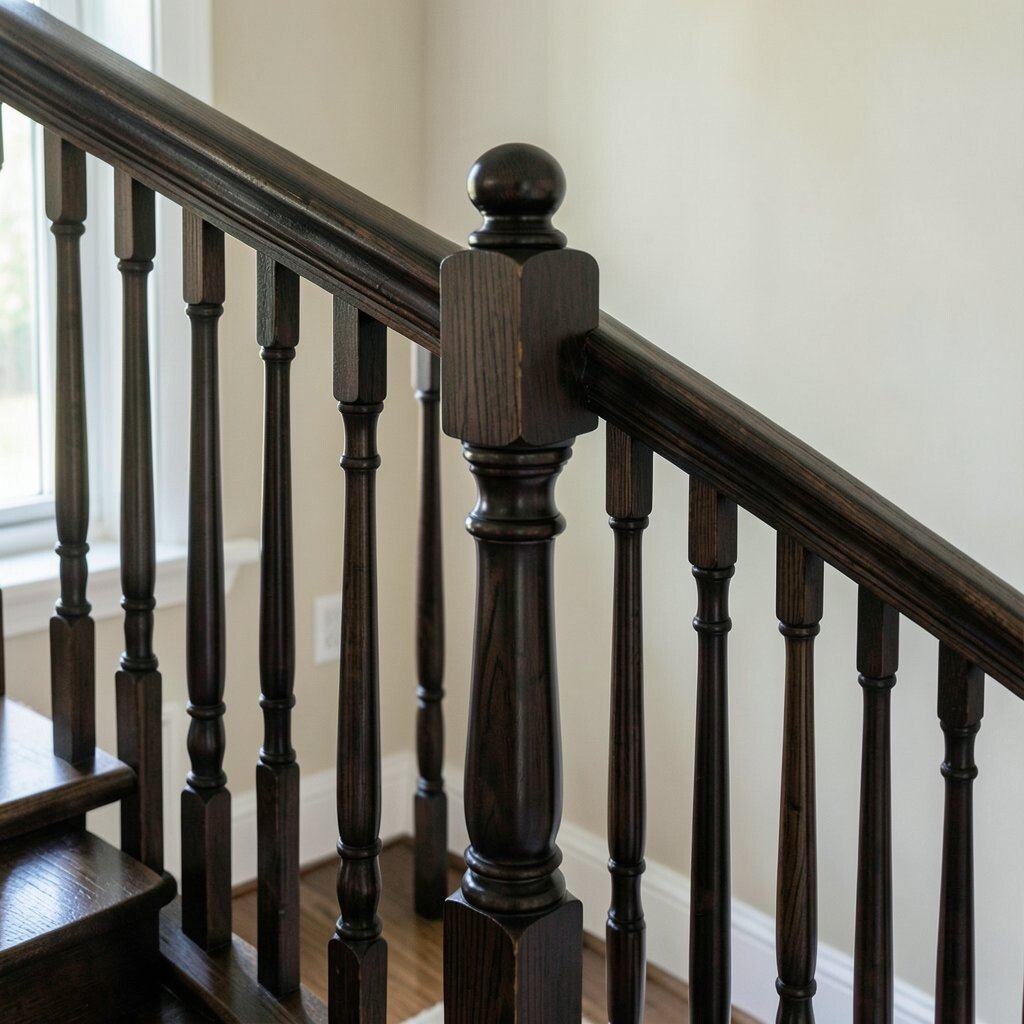
A dark stained banister can make a staircase feel rich and dramatic right away. Deep walnut or espresso tones bring out the shape of each post and spindle in a way that looks strong and elegant.
This style is a good pick if you want the stairs to stand out as a main feature in the room. It can also hide small marks better than lighter finishes, and that makes it practical for family homes, though it may cost a little more if you need sanding and careful staining to get an even result.
For a personal touch, you can match the stain to a dining table, fireplace mantel, or built-in shelves. Many homeowners like this look because it never feels too trendy, yet it still fits current love for darker, moodier wood tones.
4. Hand-Carved Details On The Posts
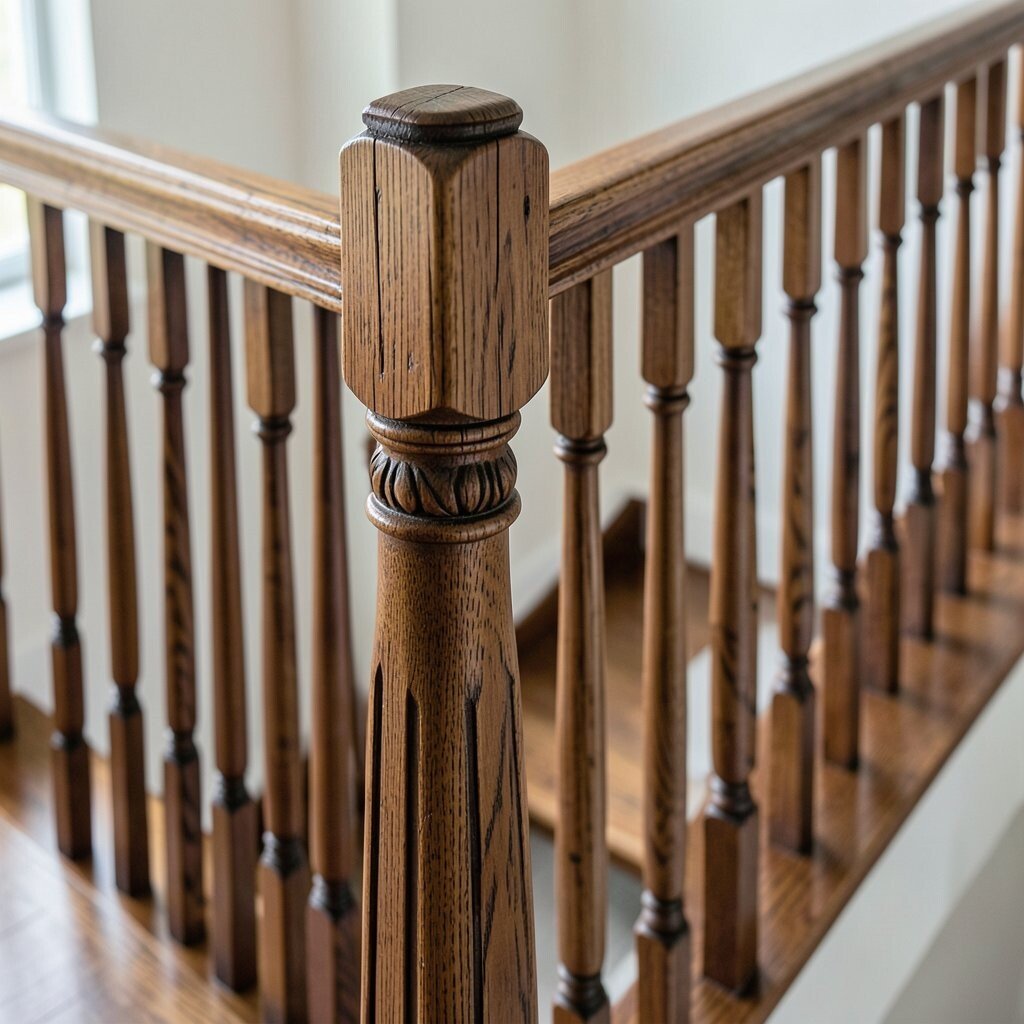
Hand-carved details on the posts can turn a plain staircase into something memorable. Small grooves, floral shapes, or simple scroll lines add texture and make the wood feel crafted by hand.
This kind of work gives the banister a one-of-a-kind feel that mass-made pieces cannot match. It can cost more because of the extra labor, but the result often feels worth it, especially if you want your staircase to reflect family style or a historic home, and you can keep the rest of the design simple so the carving shines.
5. Whitewashed Wood For A Lighter Feel
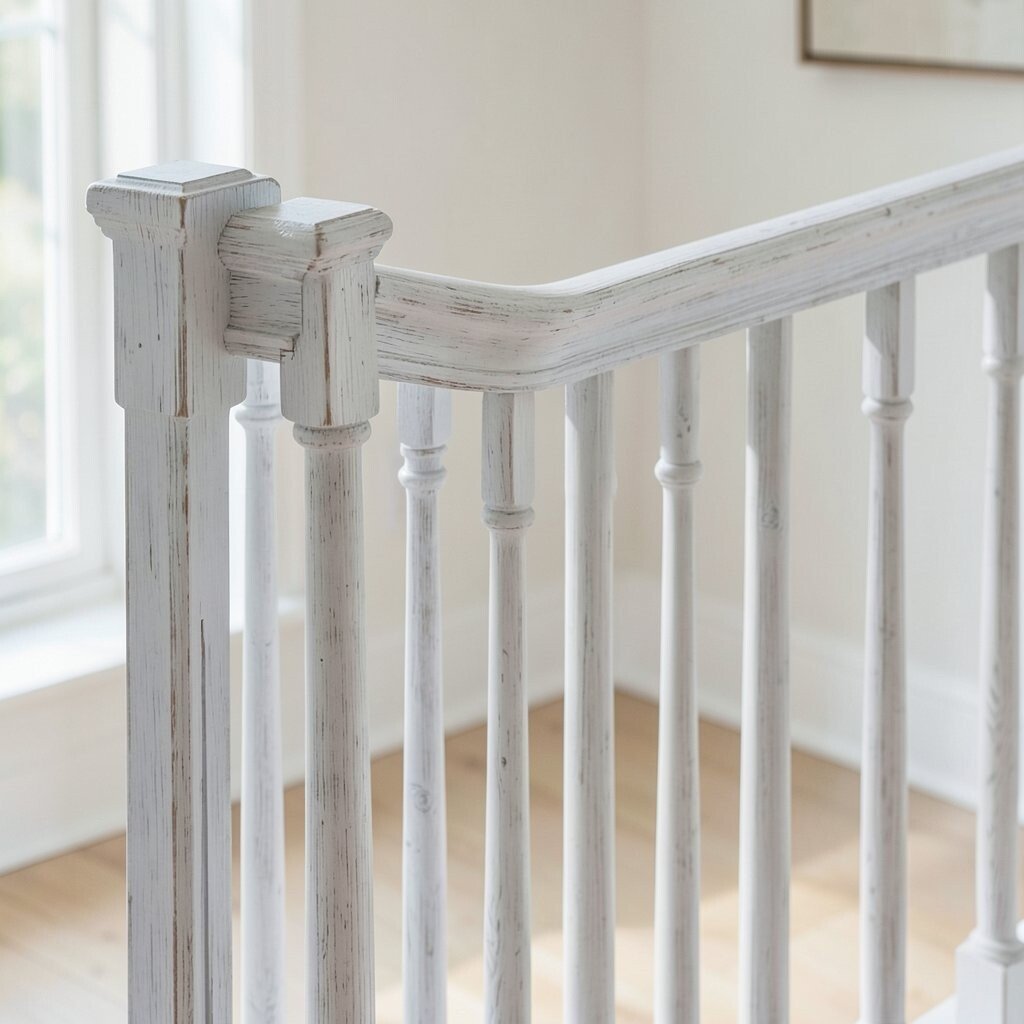
Whitewashed wood gives a traditional banister a soft, airy look while still showing the grain beneath. The finish can make old wood feel fresh and charming, almost like a sunny cottage style.
This idea is useful in darker hallways or small entryways where you want more light bounce. It is also fairly flexible, since it can work with country decor, coastal rooms, or even cleaner modern spaces, and the cost can stay modest if you are refreshing an existing banister instead of replacing it.
You can keep the look personal by letting a little more grain show through in some areas. That uneven, lived-in effect is part of the charm and helps the staircase feel warm instead of stiff.
6. Twisted Balusters For Extra Character
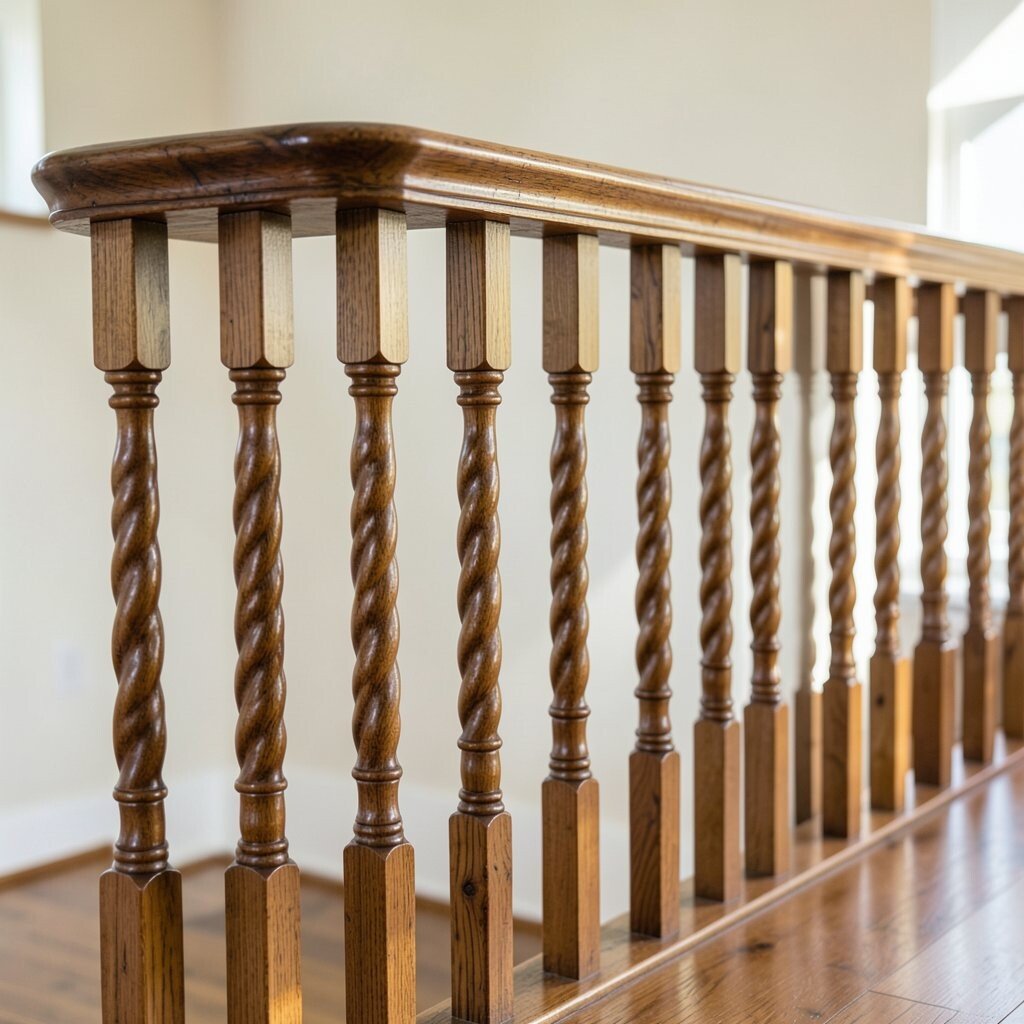
Twisted balusters give a staircase a lively rhythm that catches the eye as you move past it. Their spiral shape brings motion to the design, making the whole banister feel more playful and detailed.
This style is great when you want something traditional but not boring. It can work well with stained or painted finishes, and while custom twisted pieces may raise the price, they can also make a simple staircase look far more special without changing the whole structure.
If you want a softer look, pair the twisted pieces with a rounded handrail and simple base trim. That balance keeps the design from feeling too busy and helps the woodwork stay easy to enjoy for years.
7. Wide Square Newel Posts
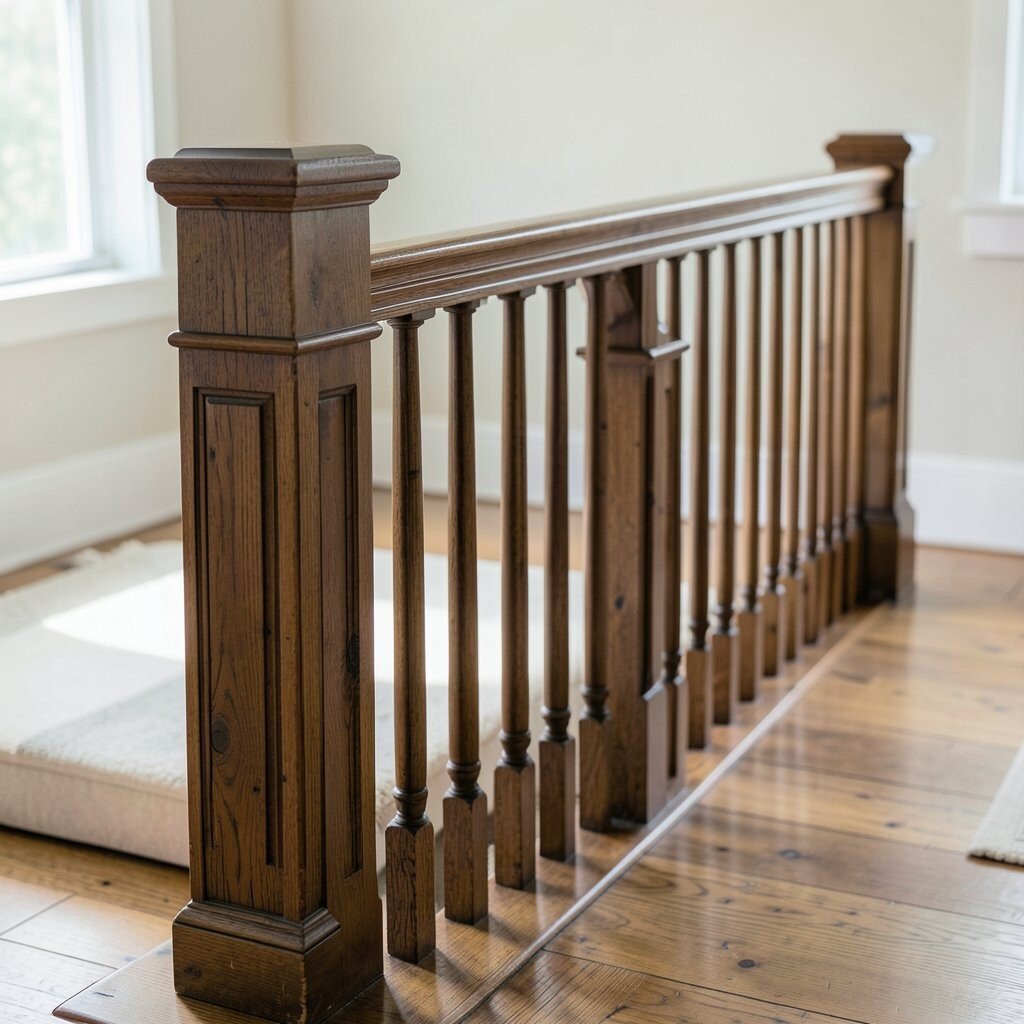
Wide square newel posts create a strong, grounded look that feels steady and classic. Their clean lines can make the staircase look more built-in and important, almost like furniture for the house.
This design is a good match for homes that want a solid traditional feel without lots of fancy parts. It can also be easier to care for than highly detailed posts, and because the shape is simple, you can often save money by choosing a straightforward build while still getting a bold result.
To make it feel more personal, you can add a cap with a slight curve or a trim band near the top. Small changes like that can make the post feel custom without pushing the budget too far.
8. Mixed Wood Tones For Depth
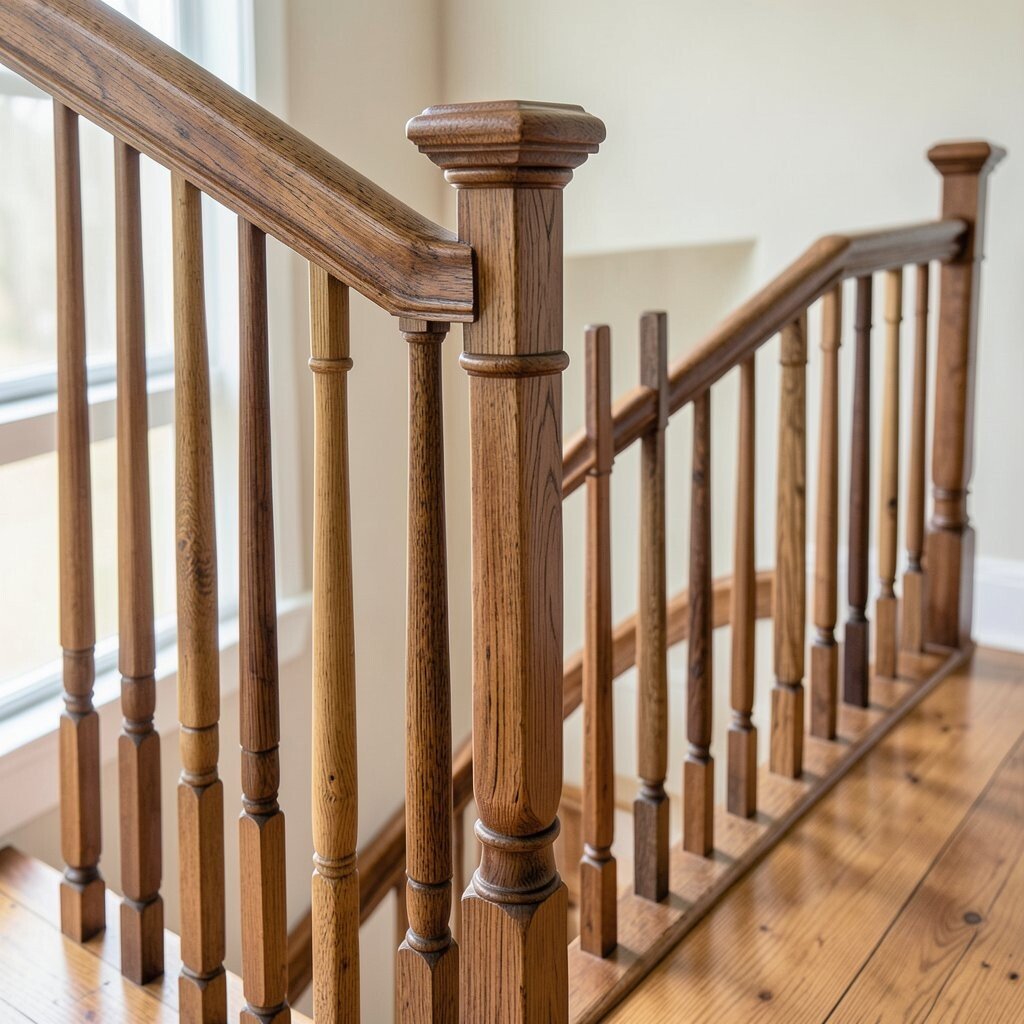
Mixed wood tones can give a traditional banister a layered and welcoming look. A darker rail with lighter spindles, or the reverse, creates contrast that helps each part stand out.
This style is useful when you want the staircase to connect with more than one finish in the home. It is also a clever way to use existing pieces if you are updating on a budget, and the varied tones feel very current since many homes now mix woods instead of matching everything exactly.
Try repeating one of the tones in nearby floors, doors, or shelving so the staircase feels tied to the room. A careful balance of warm and cool wood colors can make the whole space feel planned and calm.
9. Glossy Finish For A Polished Shine

A glossy finish can make a wooden banister look smooth, bright, and full of life. Light bounces off the surface, which helps the staircase feel cleaner and more refined.
This finish works well if you want a traditional style with a touch of formality. It can also be easy to wipe down, which is helpful in busy homes, though it may show scratches more than a matte surface, so a good protective coat is worth the extra cost.
You can make the shine feel less sharp by keeping the surrounding decor soft with woven runners or warm wall colors. That mix gives the banister a polished look without making the room feel cold.
10. Simple Spindle Patterns With Slim Lines
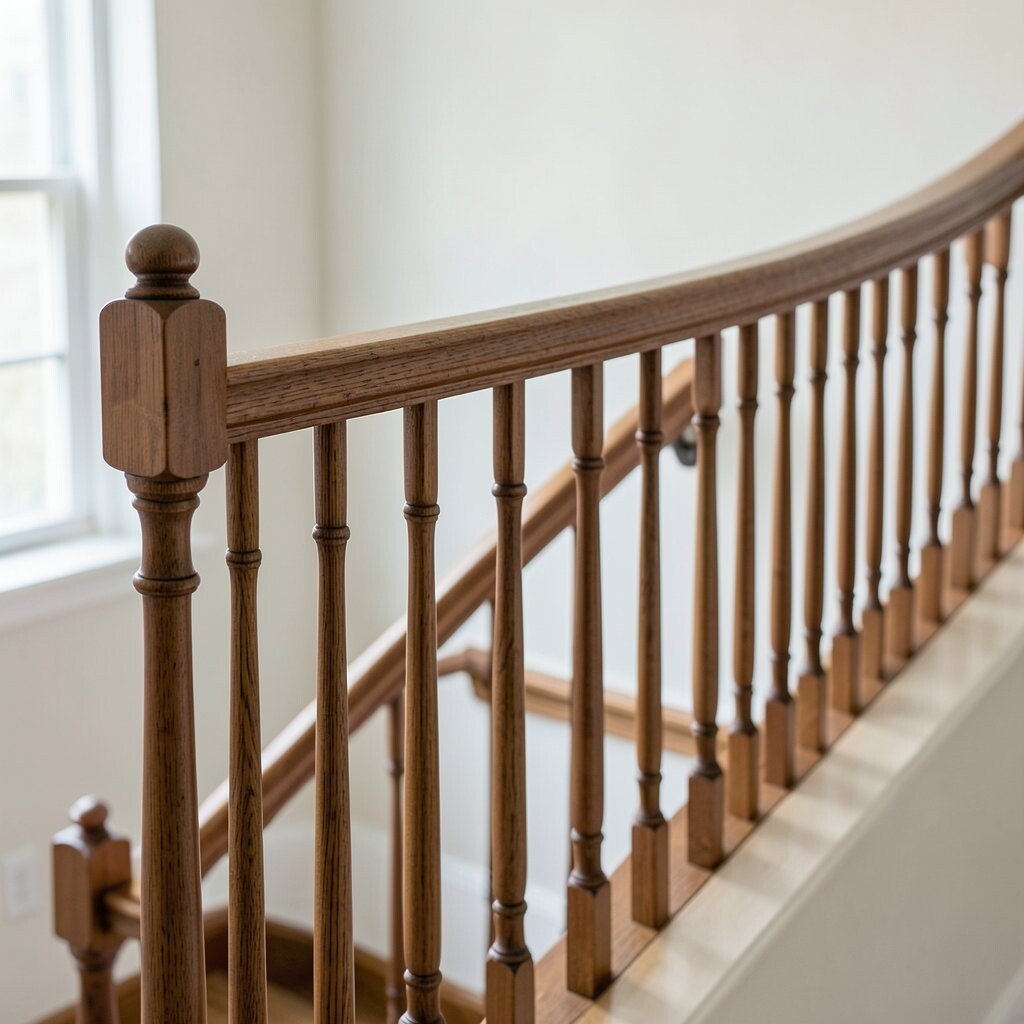
Simple spindle patterns with slim lines bring a light and graceful feel to a staircase. The design looks neat and open, so it does not crowd the room.
This is a strong choice for homes that want traditional style with a cleaner look. It can also be easier on the budget than ornate carving, and the slim shape is very useful in smaller spaces because it lets more light move through the stair area.
You can personalize the look by spacing the spindles in a pattern that feels balanced with your home’s style. Many people like this kind of banister now because it feels timeless, easy to care for, and calm without being plain.
11. Panelled Base With Decorative Rails
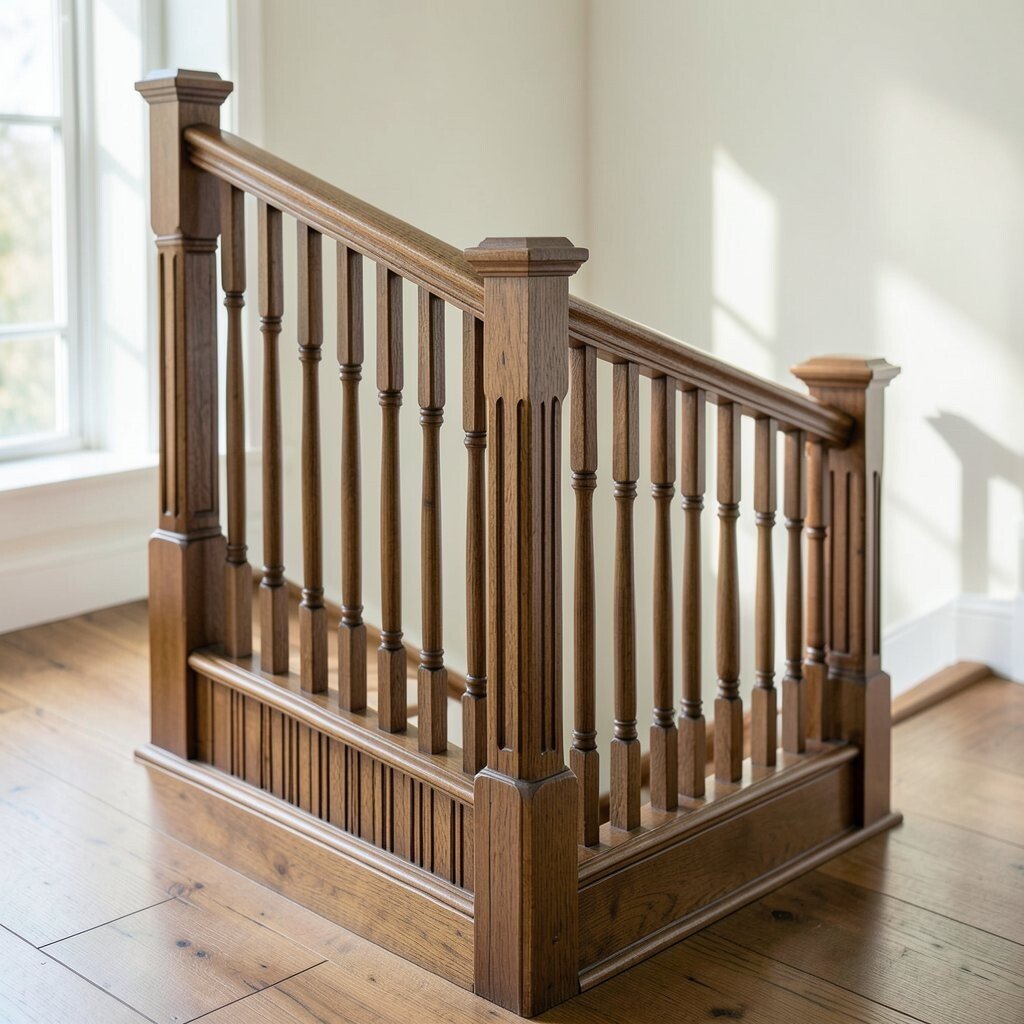
A panelled base with decorative rails gives the bottom of the staircase a built-in, furniture-like feel. The panels add depth, while the rail above creates a clear line that guides the eye upward.
This design can make an entryway feel more finished and welcoming. It is especially nice in older homes or larger halls, and if you want to keep costs in check, you can use painted panels with a wood rail for a look that feels rich without needing expensive materials everywhere.
Small details like trim shapes, beadwork, or a soft stain on the top rail can make the design feel personal. The result is traditional, but it still leaves room for your own style to shine through.
12. Antique-Inspired Finish With Gentle Wear

An antique-inspired finish with gentle wear can make a new banister look like it has been loved for years. Soft edges, faded stain, and a slightly worn patina create a warm storybook feel.
This idea is perfect if you want charm and character rather than a brand-new shine. It can also be a good way to refresh an older staircase instead of replacing it, which may lower the overall cost, and the look fits well with today’s love for lived-in, homey spaces.
To keep the finish from looking fake, use light touches and let some of the natural wood show through. Adding a woven stair runner or vintage wall art nearby can make the whole staircase feel special and complete.