A staircase can look ordinary, or it can feel like a welcome statement. The right railing adds safety, style, and personality in one easy upgrade.
From sleek metal to warm wood, these ideas show what’s trending and what works in real homes.
1. Floating Glass Panels for a Clean, Airy Look
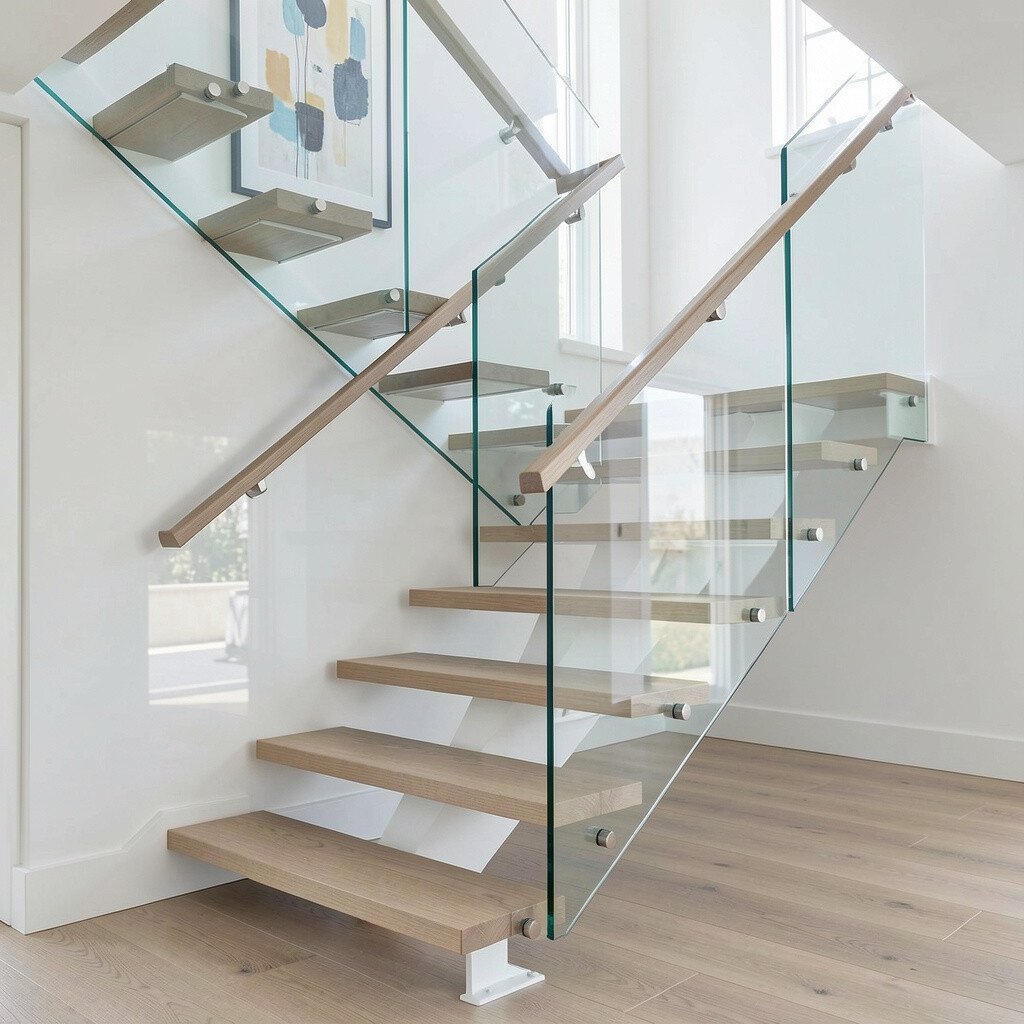
You can make your staircase feel lighter by using glass panels with slim metal posts. When the light hits the clear surface, it visually opens up the space and helps hallways feel less boxed in.
Choose tempered glass that’s made for railing strength and pair it with corrosion-resistant hardware. For a practical touch, add a simple top rail grip and keep the bottom edge protected from scuffs. If you want privacy, you can use frosted or patterned glass in places that get daily traffic.
For cost considerations, glass systems vary widely based on frame style, panel size, and whether you go with clear versus decorative options. Expect the price to be higher than basic wood, but it often pays off through a long-lasting, modern finish. To personalize your look, pick a matte black frame for a bold vibe or brushed aluminum for a softer feel.
2. Matte Black Metal with Minimal Spindles
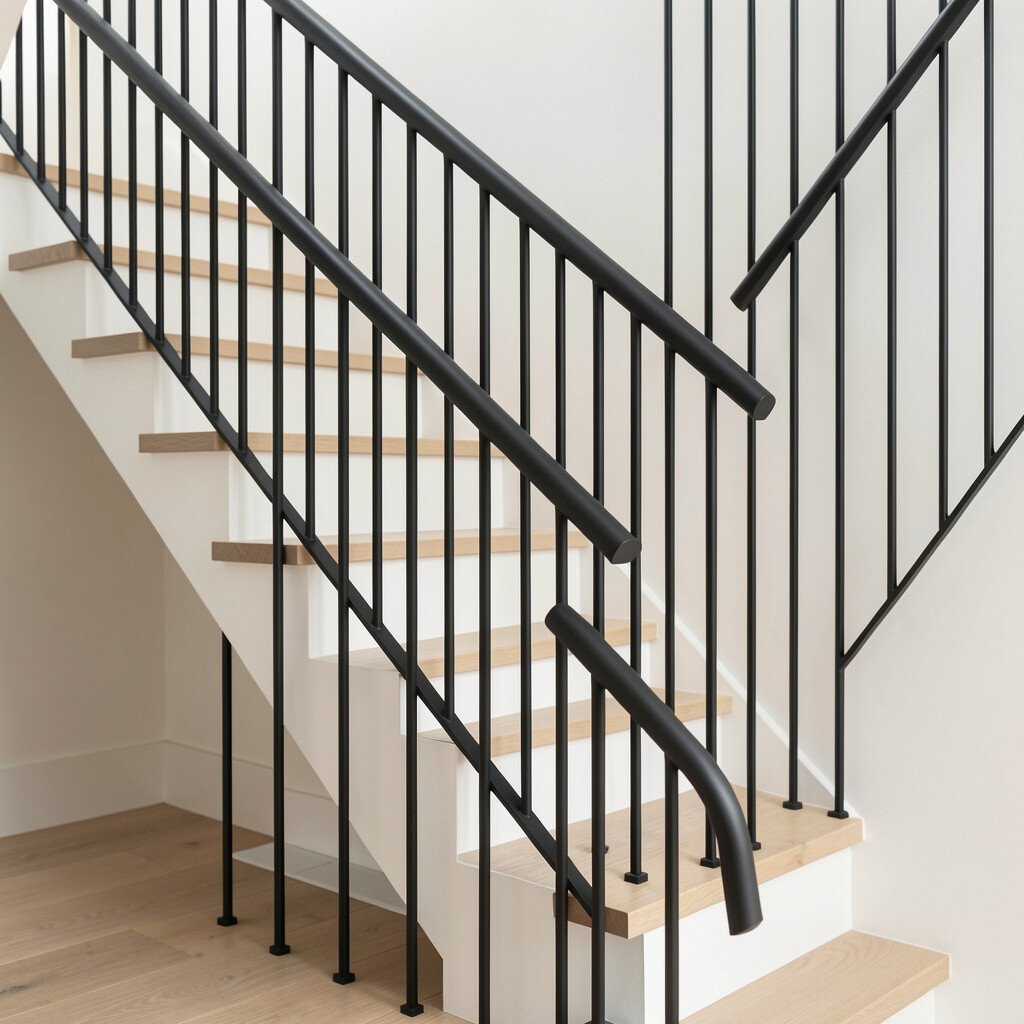
Matte black railings look sharp and modern, especially when the spindles are slim. The contrast against light walls makes every step feel intentional and stylish.
Go for powder-coated metal so the finish resists scratches and fading. It also cleans up fast when dust and fingerprints show up from everyday use.
To keep it practical, match the railing height to local safety standards and ensure the posts are securely anchored. If you want a unique twist, choose a slightly curved top rail or add evenly spaced spheres at the ends. This look stays on trend because it fits both modern and classic homes without feeling too loud.
3. Warm Wood Rails with Cable Support
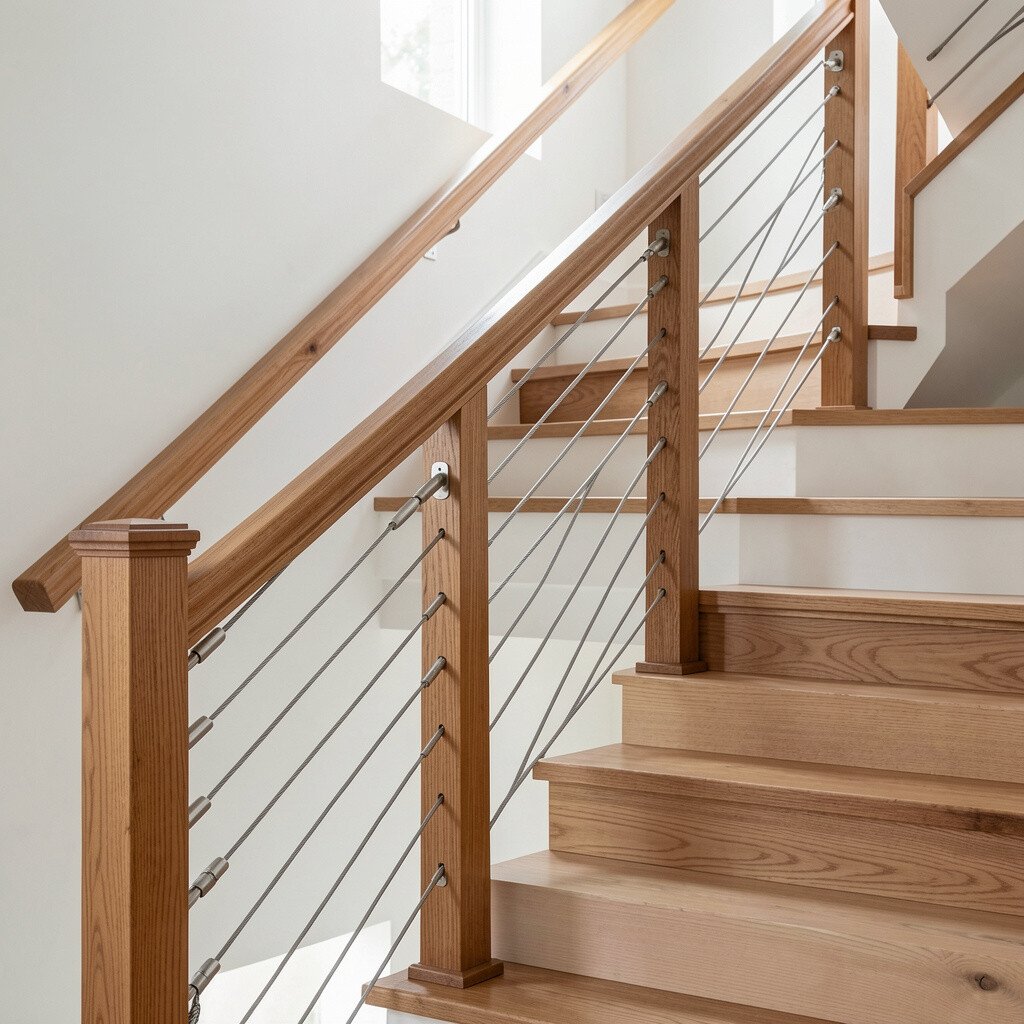
Wood handrails bring warmth, and cable systems add a clean, modern rhythm. Together, they create a staircase that feels open while still looking cozy.
Choose a durable hardwood like oak or walnut and keep it sealed for easy care. The cables can help reduce visual clutter, which is great when your staircase sits near living areas.
For a practical installation, plan where cable tension points will land so the line stays straight. Add a thicker wood handrail profile if you want a more comfortable grip for families who use the stairs often. If you’re thinking about cost, this blend can land in a mid-range sweet spot compared with full custom glass.
Personalize by staining the wood a shade that matches your floors or kitchen cabinetry. You can also switch cable finishes to warm bronze for a softer look that feels less industrial.
4. Arched Balusters That Softly Frame Each Step
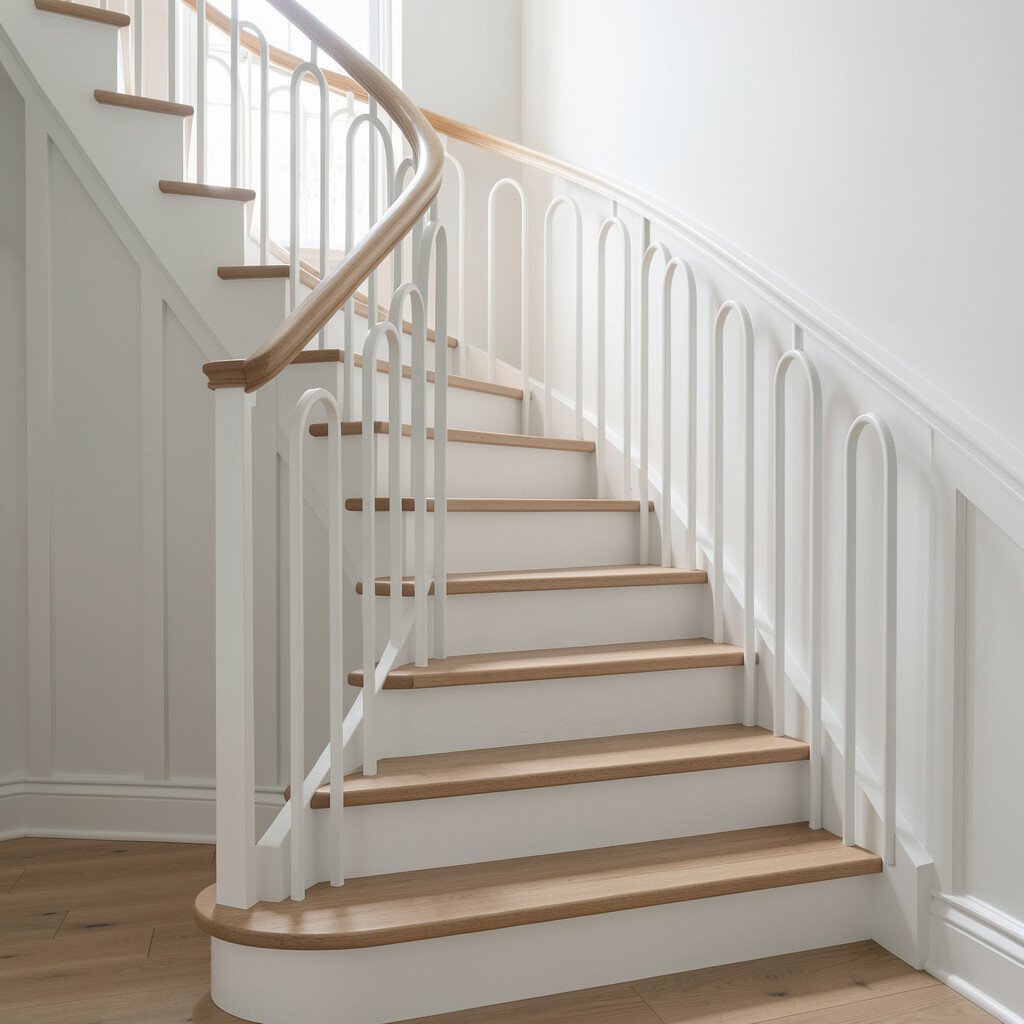
Arched balusters can make a railing feel like a piece of design, not just safety gear. You’ll notice how the curves guide the eye up the stairs and add charm without needing bold colors.
Pick wood or wrought iron depending on the vibe you want. Wood arches feel homey and warm, while iron arches look refined and crisp.
For real-life usefulness, keep the spacing consistent so the railing feels sturdy and easy to hold. Smooth edges matter too, especially if kids run up and down. If you’re budgeting, simpler arch shapes can cost less than highly decorative curls while still giving that elevated feel.
Personalize by painting the railing in an eggshell or soft charcoal instead of pure black. You can also match the arches to window trim details so the whole home feels connected.
5. Vertical Slats for a Modern Gallery Effect
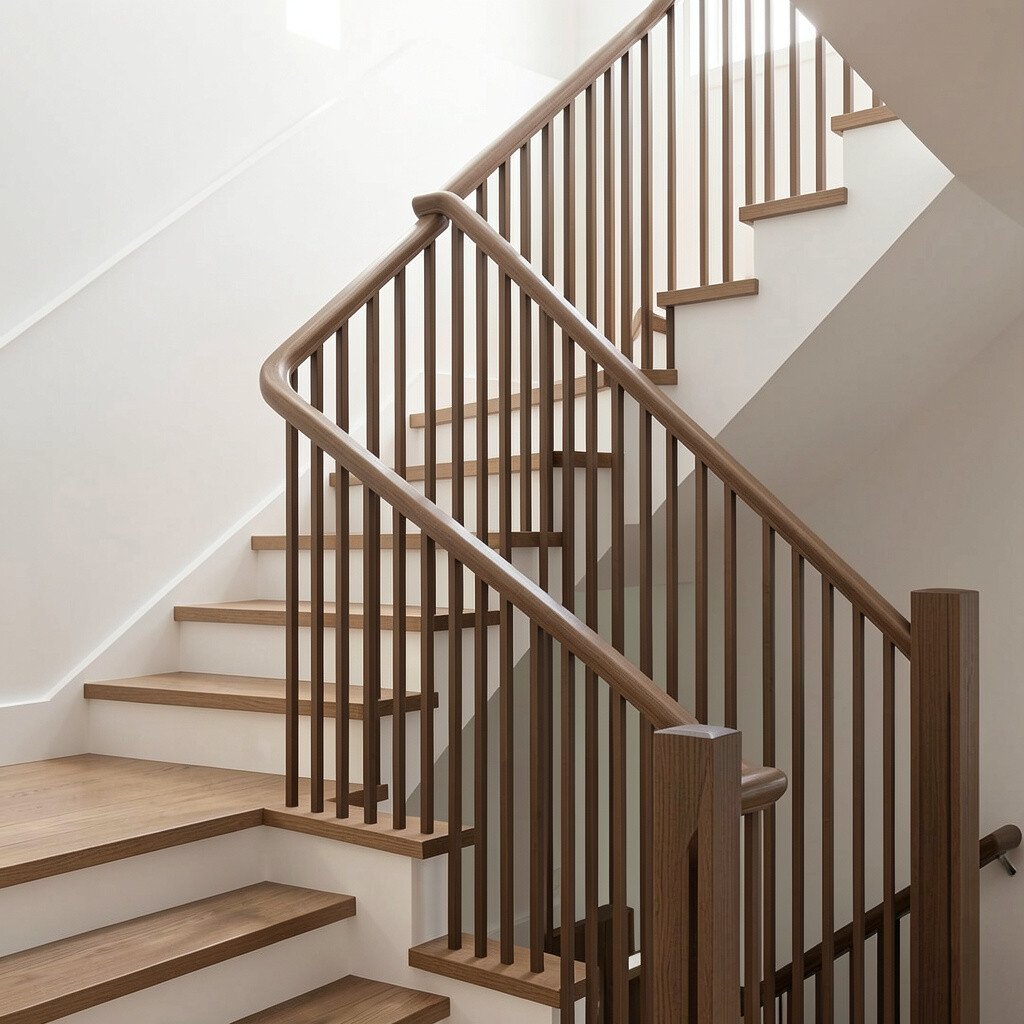
Vertical slats turn your staircase into a stylish backdrop. As your eyes move up, the repeated lines create a gallery-like effect that feels sleek and current.
Use slim wood, metal, or even composite boards to keep the look clean and consistent. A matte finish helps hide minor wear, which is handy for high-traffic homes.
For personalization, vary the slat width slightly near the top to create visual focus. If you want extra safety, choose materials that are rigid and evenly spaced. Cost can be reasonable when you choose standard lengths and simple joinery instead of custom curves.
6. Sculptural Handrail with a Streamlined Profile
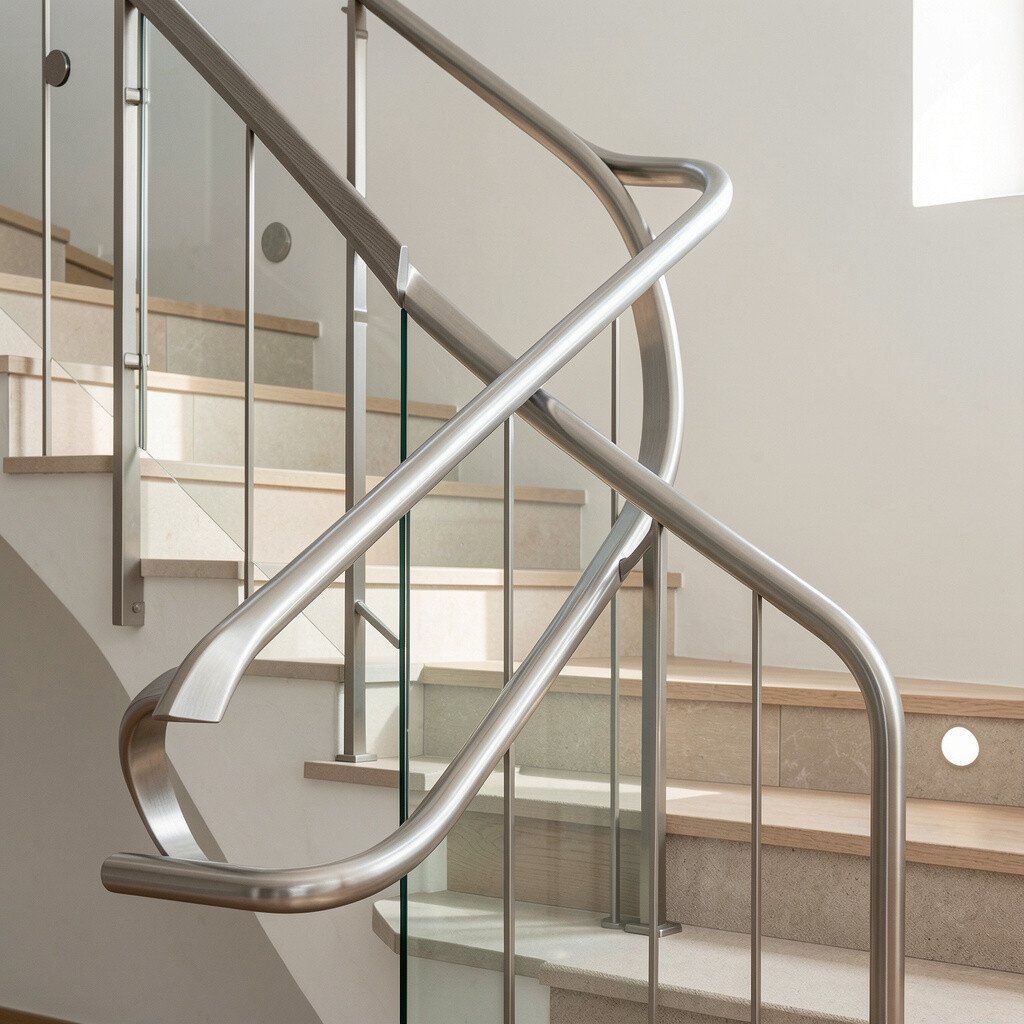
A sculptural handrail can steal the show while staying functional. Even if the rest of the railing stays simple, a beautifully shaped rail feels luxurious every time you touch it.
Look for rounded edges and a grip-friendly profile that fits naturally in your hand. Smooth finishes like satin lacquer or marine-grade oil-based sealant help the surface stay comfortable and easy to wipe clean.
For a practical upgrade, confirm the rail is securely fastened into the posts so it doesn’t wobble. You can also add a subtle height change where the stairs meet a landing, which makes transitions feel more steady. If budget matters, updating only the handrail may be more affordable than replacing the entire system.
Personalize by matching the handrail wood tone to existing trim, or by choosing a contrasting rail color for a bold statement. This idea fits many styles because the rail shape brings character without forcing a specific theme.
7. Coastal Rope Rails for a Relaxed, Textured Style
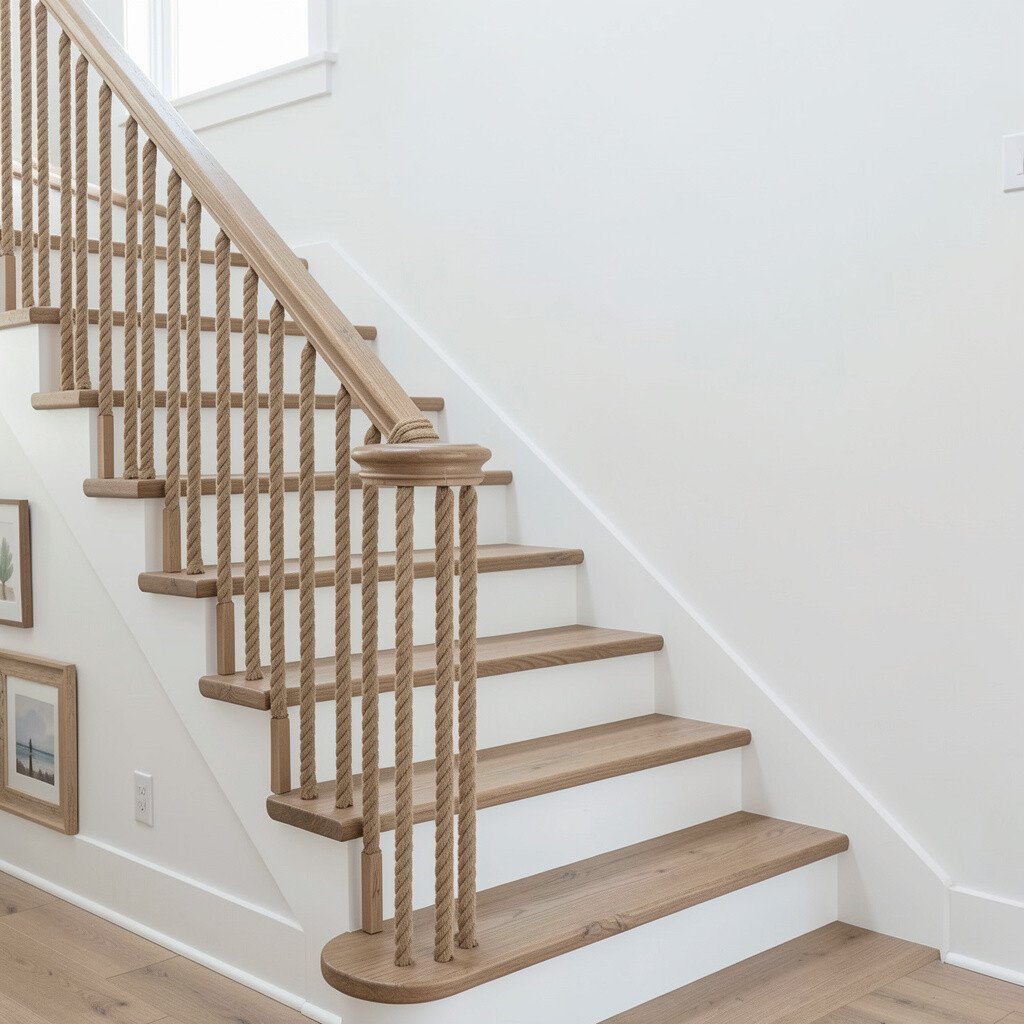
Rope rails add texture and a laid-back feel that works surprisingly well indoors. You’ll get a cozy, vacation-inspired mood, especially in homes with light wood and neutral colors.
Use rope that’s meant for indoor durability, then secure it with metal fittings that resist rust. The rope gives a warm grip, and the texture feels inviting when you walk by every day.
To keep it practical, install a solid backing beneath the rope so it stays tight and stable. Consider pairing rope with wood posts so the whole design feels balanced. Cost is often moderate because rope sections are easier to swap than expensive panel systems.
For personalization, choose a natural jute tone for beachy charm or a darker rope color for modern contrast. Adding a small decorative knot detail at the ends can make the railing feel custom without much extra work.
8. Brass Accents on Classic Wood Spindles
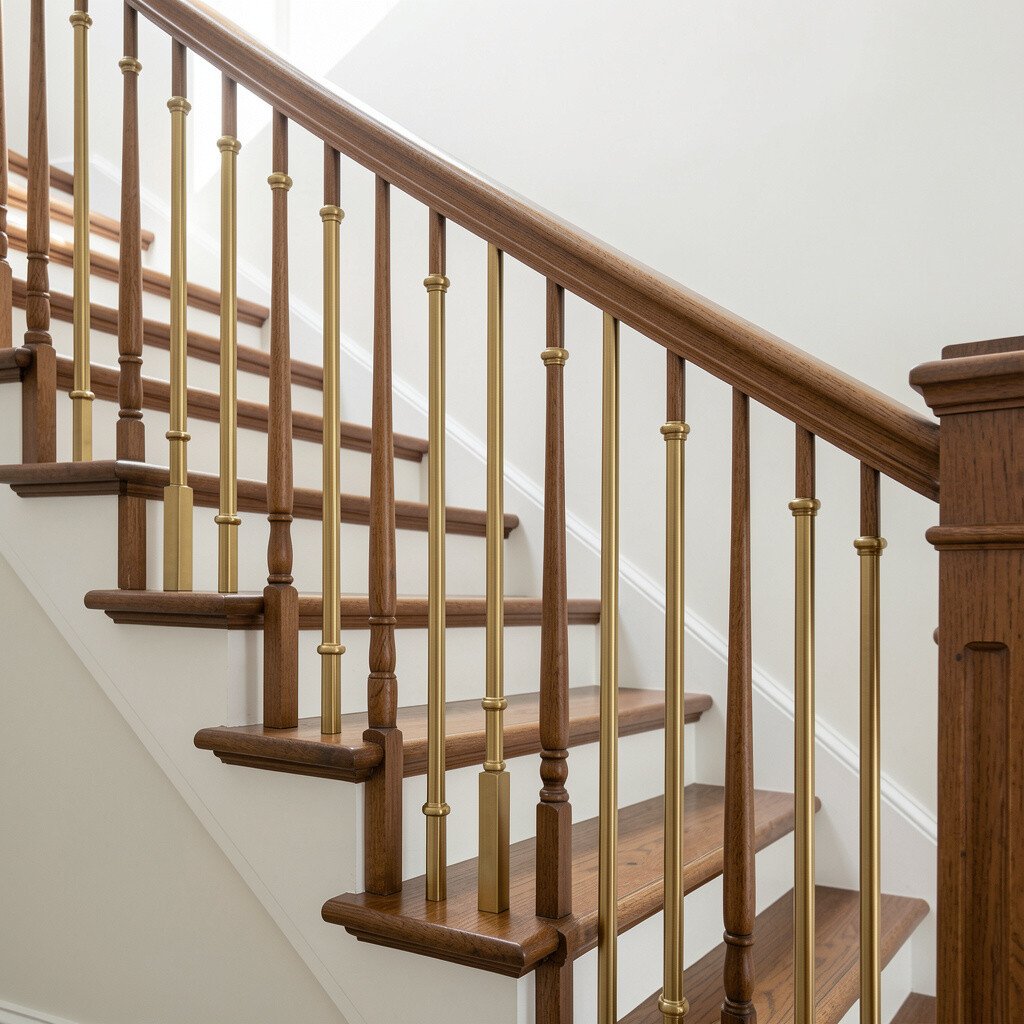
If you love traditional railings but want a fresher look, brass accents are a smart choice. The warm glow of brass makes wood feel richer and adds a touch of upscale style.
Keep the base classic with wood spindles, then add brass caps on posts and a brass newel plate. This combination gives your stairs a boutique feel while still reading familiar and homey.
For practical tips, choose tarnish-resistant brass finishes or polished brass with a protective coating. It will hold up better against daily handling and cleaning. If cost is a concern, add brass only where it makes the biggest visual difference, like the top rail ends and key anchor points.
Personalize by matching brass to other fixtures such as cabinet hardware or lighting. That small connection helps the whole home look planned, not random.
9. Oversized Balusters for a Bold, Graphic Look
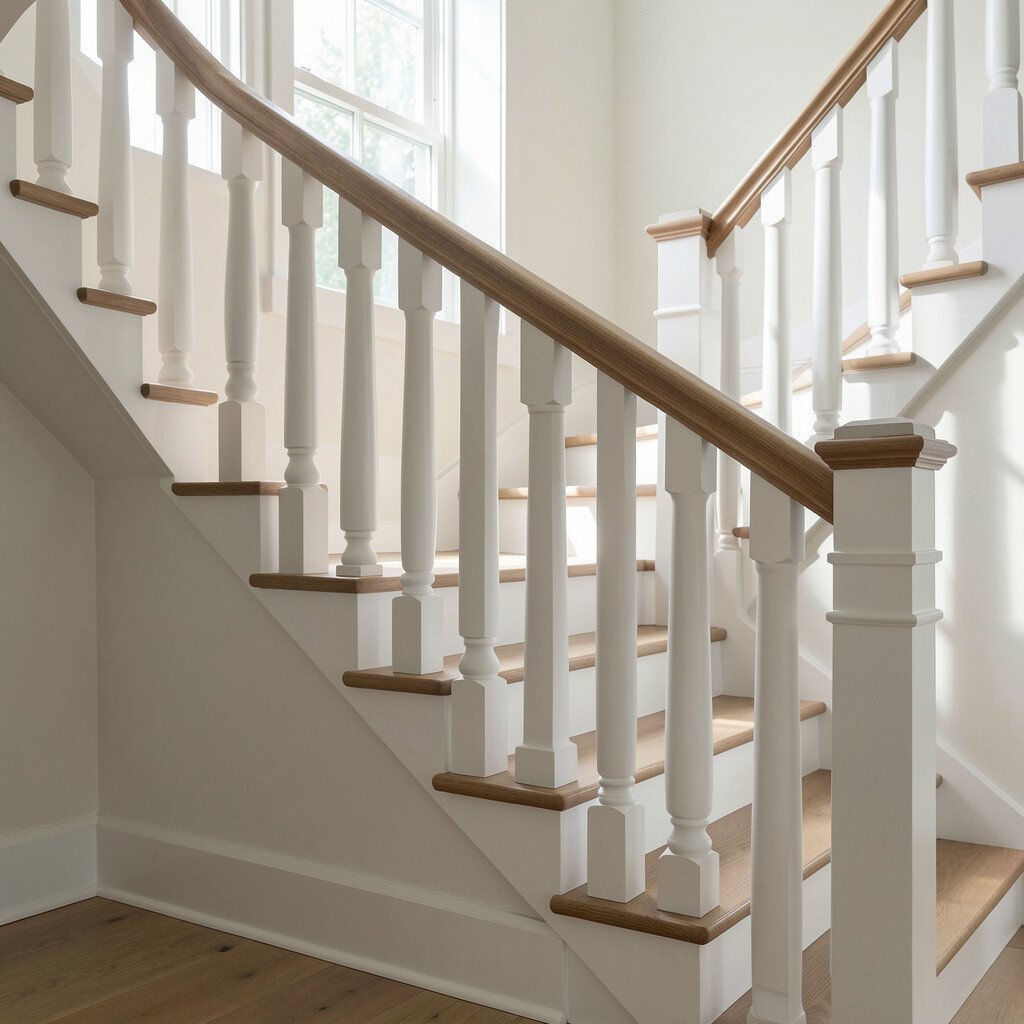
Oversized balusters can make your staircase feel like a design feature. When the railing has thicker shapes, it creates strong lines that look great in modern interiors.
Choose materials that stay sturdy, such as metal balusters or solid wood blocks. The larger forms can also reduce the clutter of tiny details and make cleaning simpler.
For safety and comfort, ensure the handrail height stays correct and the oversized pieces are firmly anchored. If you have kids, this style can feel reassuring because there are fewer narrow gaps. Cost varies, but using fewer, larger components can sometimes keep spending under control compared with detailed, multi-part designs.
Personalize by selecting a finish like satin black, white, or even natural wood grain. You can also align the baluster shapes to a repeating pattern elsewhere in the home for extra visual harmony.
10. Farmhouse White Rails with Wood Slat Infill
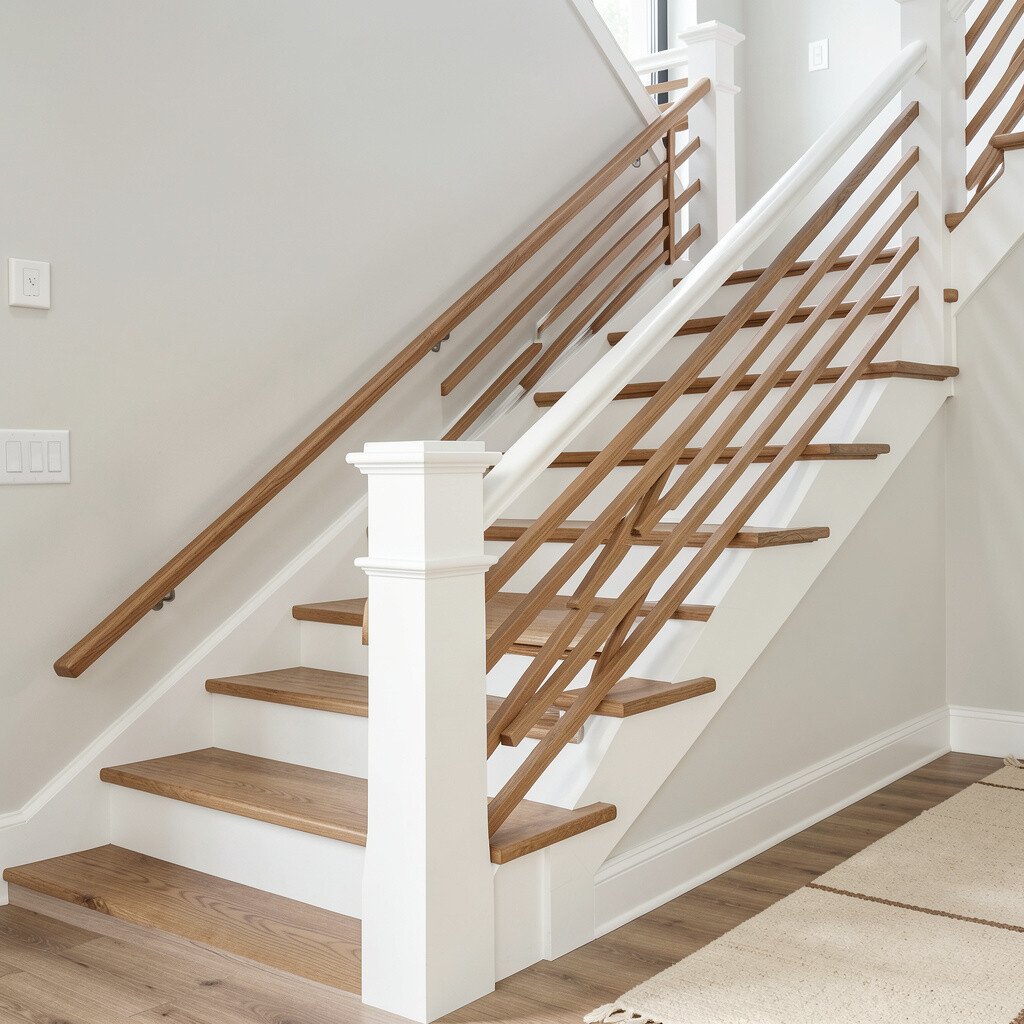
Farmhouse white railings feel welcoming and bright. When you add wood slat infill, the staircase looks charming while still staying practical for everyday life.
Use sturdy boards with a consistent spacing so the design feels neat rather than messy. A durable paint finish helps the railing handle scuffs and fingerprints without looking worn too quickly.
To make it more personalized, consider mixing open sections with a few framed panels in the infill. It creates interest without requiring complicated hardware. Cost can be manageable because wood slats and standard brackets are often easier to source than specialty materials.
Keep the style cohesive by matching the rail color to trim, window frames, or built-ins. This approach looks timeless, and it stays popular because it feels warm and easy to live with.
11. Blackened Steel with Thick, Continuous Top Rail
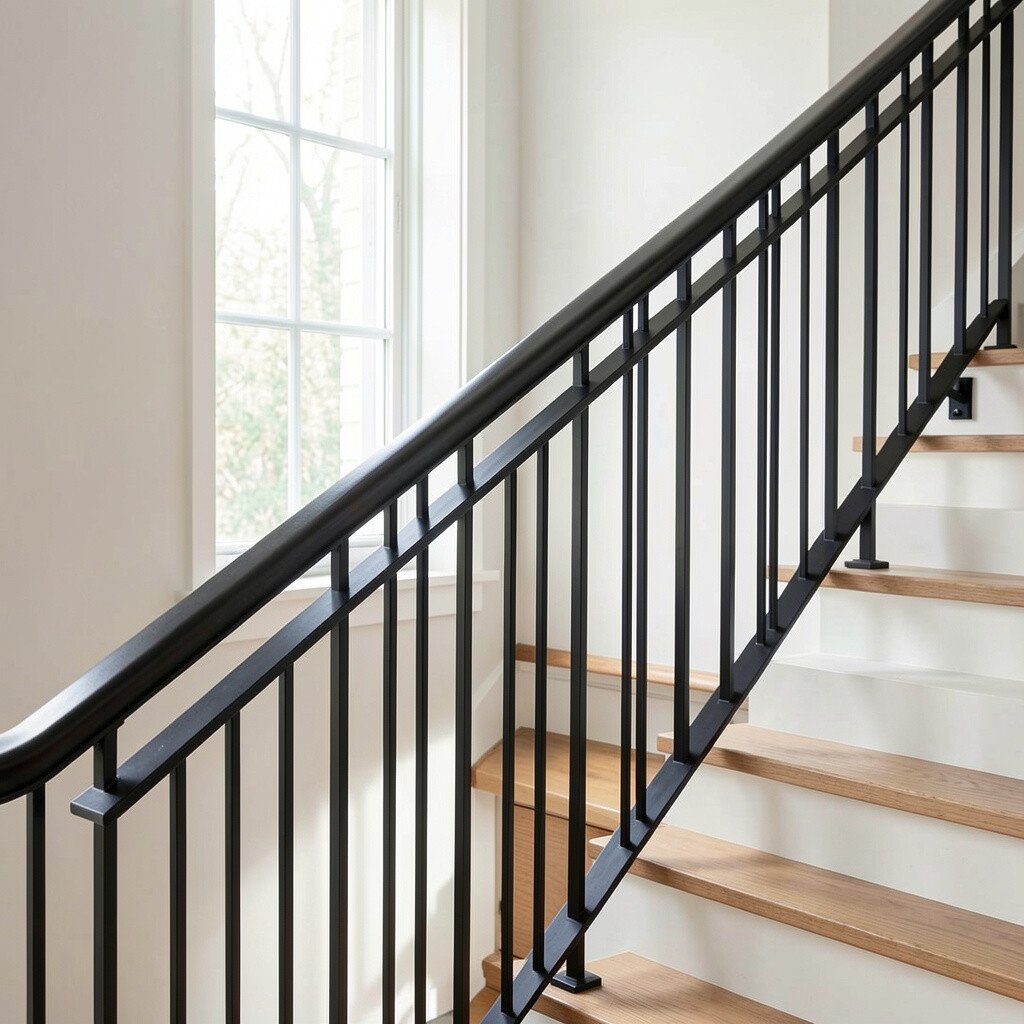
Blackened steel looks dramatic, like the railing has a built-in spotlight. With a thick, continuous top rail, it feels sturdy and gives the staircase a strong, grounded look.
This style works especially well in spaces with stone, dark wood, or modern lighting. The finish hides minor marks better than shiny metal, which is helpful when the stairs are used daily.
For practical tips, choose a top rail shape that’s comfortable to grip, not too sharp at the edges. Confirm that the posts and brackets are rated for safety so the railing stays firm over time. Cost considerations depend on whether you buy pre-made kits or go custom, but the materials can be less expensive than elaborate custom carvings.
Personalize by adding a subtle wood insert under the top rail for warmth. Even a thin strip can make the railing feel softer and more inviting.
12. Stained Glass Panels for Colorful, Artistic Stair Moments
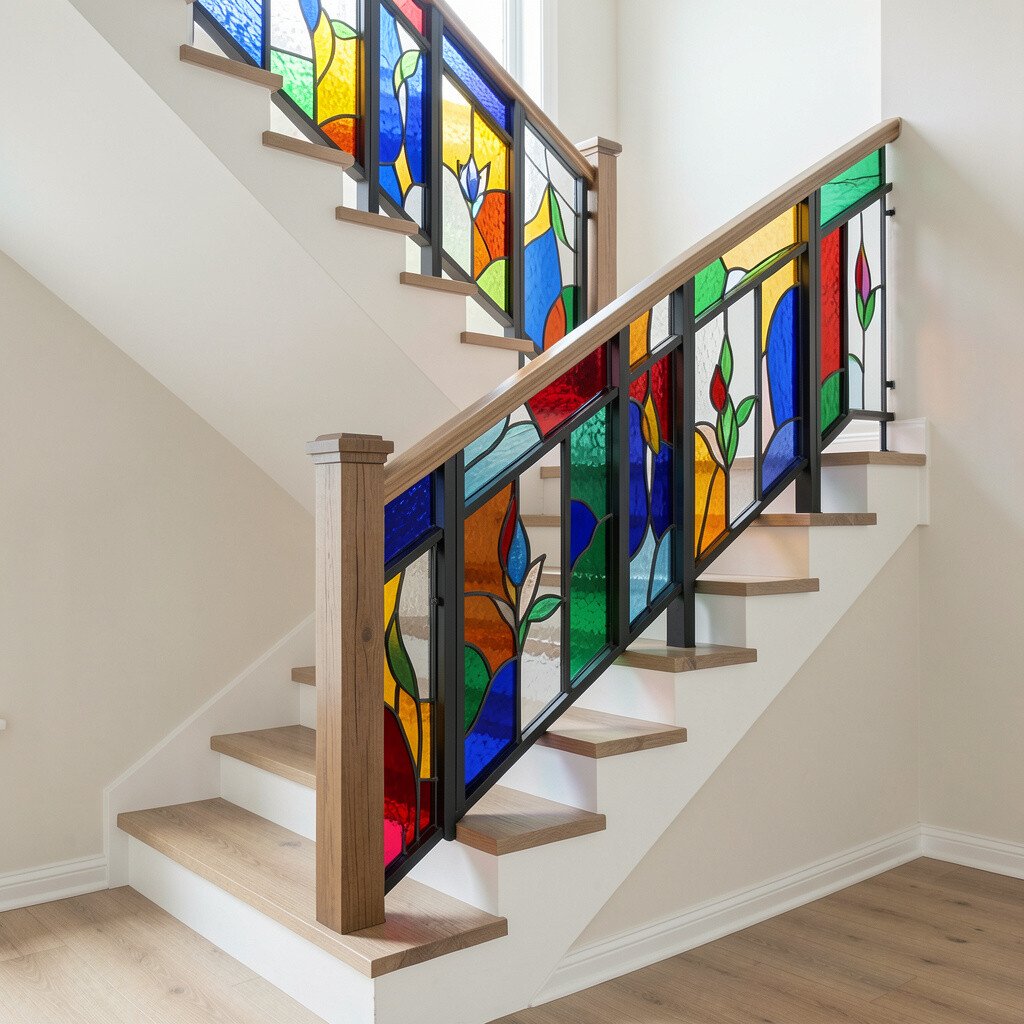
Stained glass on a staircase railing can turn ordinary movement into a work of art. You’ll love how colors catch the light and create a gentle glow across nearby walls.
Choose glass that’s built for structural use and pair it with metal framing that supports the panels safely. When you pick the right colors, the staircase becomes a focal point without overwhelming the rest of the room.
For daily practicality, consider panels that are easy to clean with safe glass cleaners. It’s also smart to place the most delicate detailing where it won’t get bumped often. Cost can be higher because glass panels require careful planning, but the result feels truly unique.
Personalize with colors that echo a favorite rug, artwork, or backsplash tile. Even one eye-catching section near the landing can make the entire staircase feel designed.
13. Woven Rattan Infill for Texture and Soft Contrast
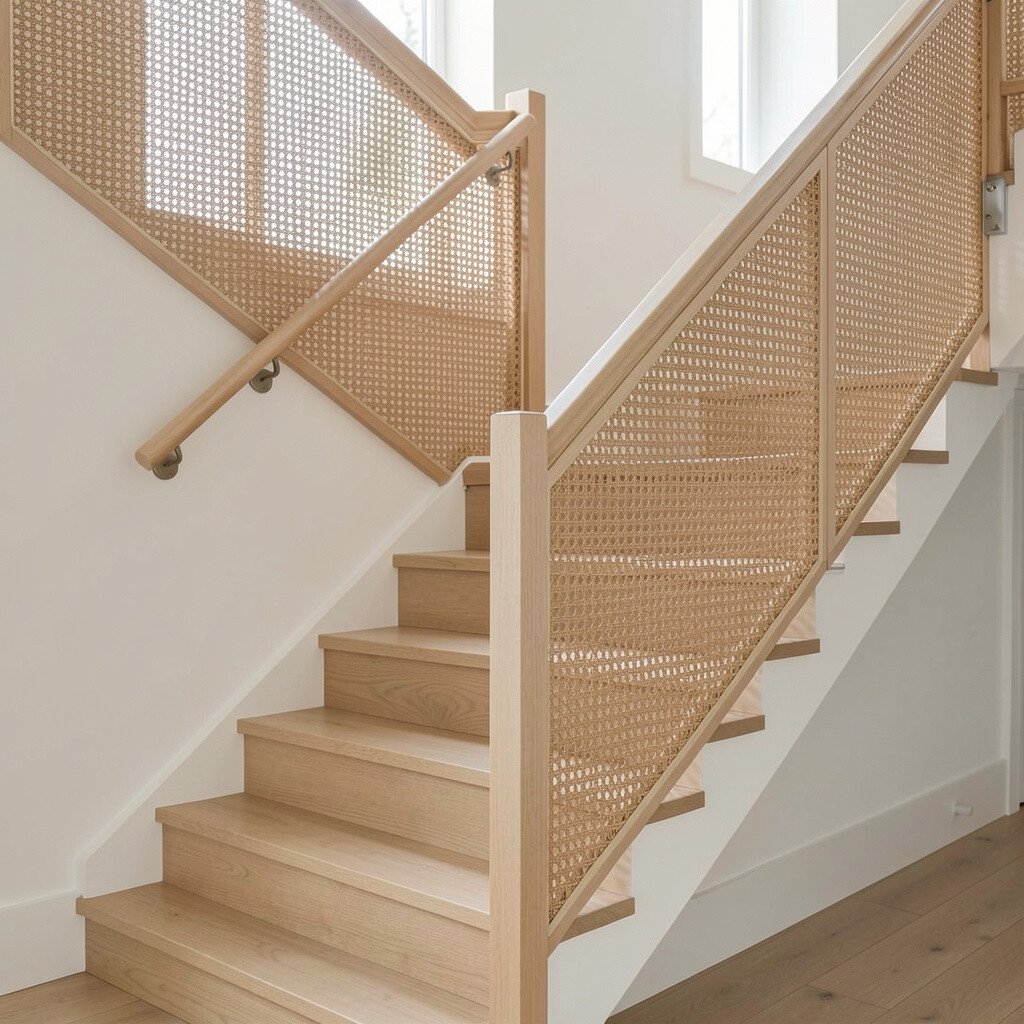
Rattan infill brings a natural, airy texture to railing designs. It softens the look of metal or wood posts and makes the staircase feel more relaxed and warm.
Choose woven rattan that’s sealed for indoor use so it resists humidity changes. Pair it with a solid handrail so you get comfort and strength where your hand goes most.
For practical tips, install the rattan in a way that keeps it tight and supported, avoiding sagging over time. If your home gets a lot of direct sun, pick lightfast finishes to protect the color. Cost is often moderate because woven materials can be more affordable than full glass systems.
Personalize by mixing rattan with painted posts in a muted tone like sage or warm gray. This creates a stylish contrast that still feels grounded and friendly.
14. Geometric Metal Screens for a Statement Look
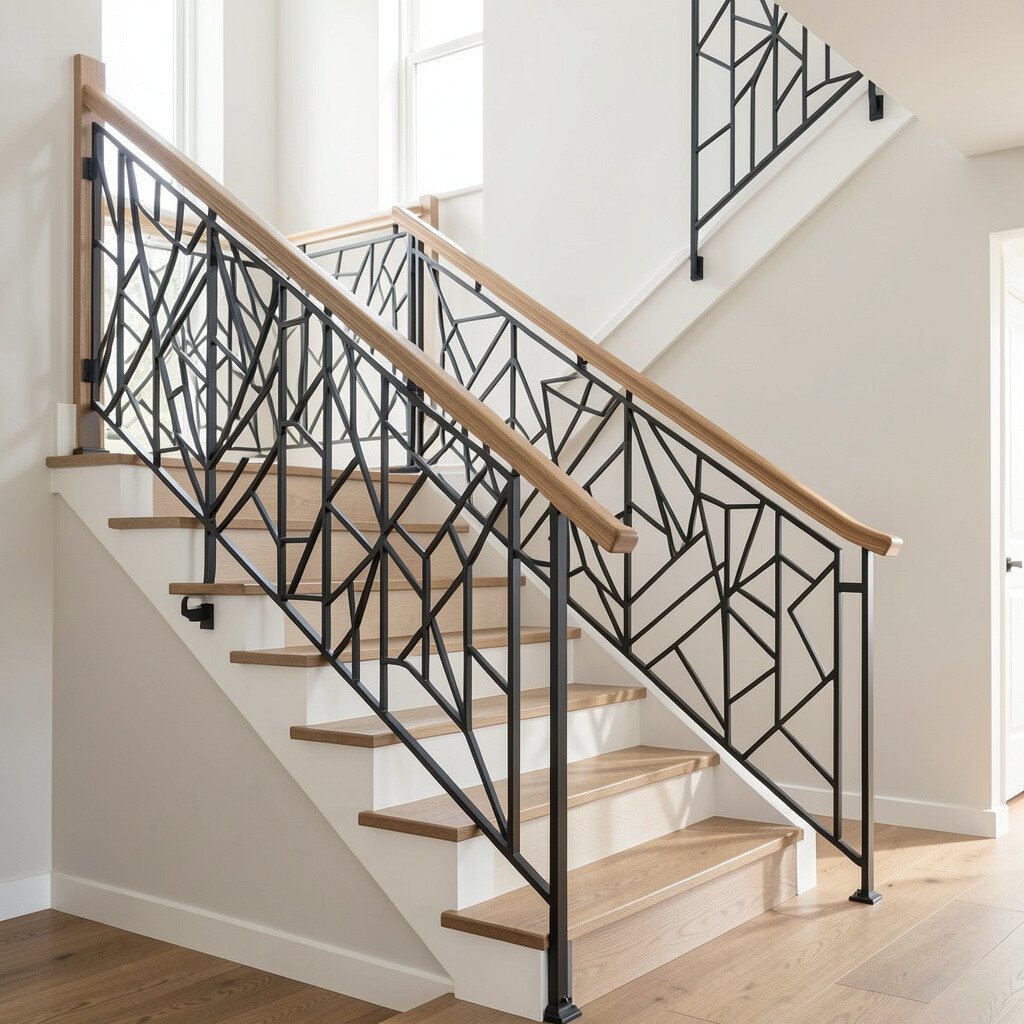
Geometric metal screens make a staircase feel like modern art. The pattern adds depth, and the open shapes let light move through the space.
Look for screen designs with consistent spacing so you still feel safe and comfortable. Powder-coated metal finishes help the look last, especially in homes where stairs get frequent use.
For a practical approach, choose a screen that’s sized to fit your staircase layout without awkward gaps. You’ll also want a sturdy top rail so the screen doesn’t carry the main grip load. Cost considerations depend on how custom the pattern is, but simpler geometric grids can be more budget-friendly while still looking bold.
Personalize by selecting a pattern that connects to other design elements in your home. If you love modern shapes, repeating circles or squares can give your whole interior a cohesive style.
15. Mixed-Material Railings with Matching Newel Posts
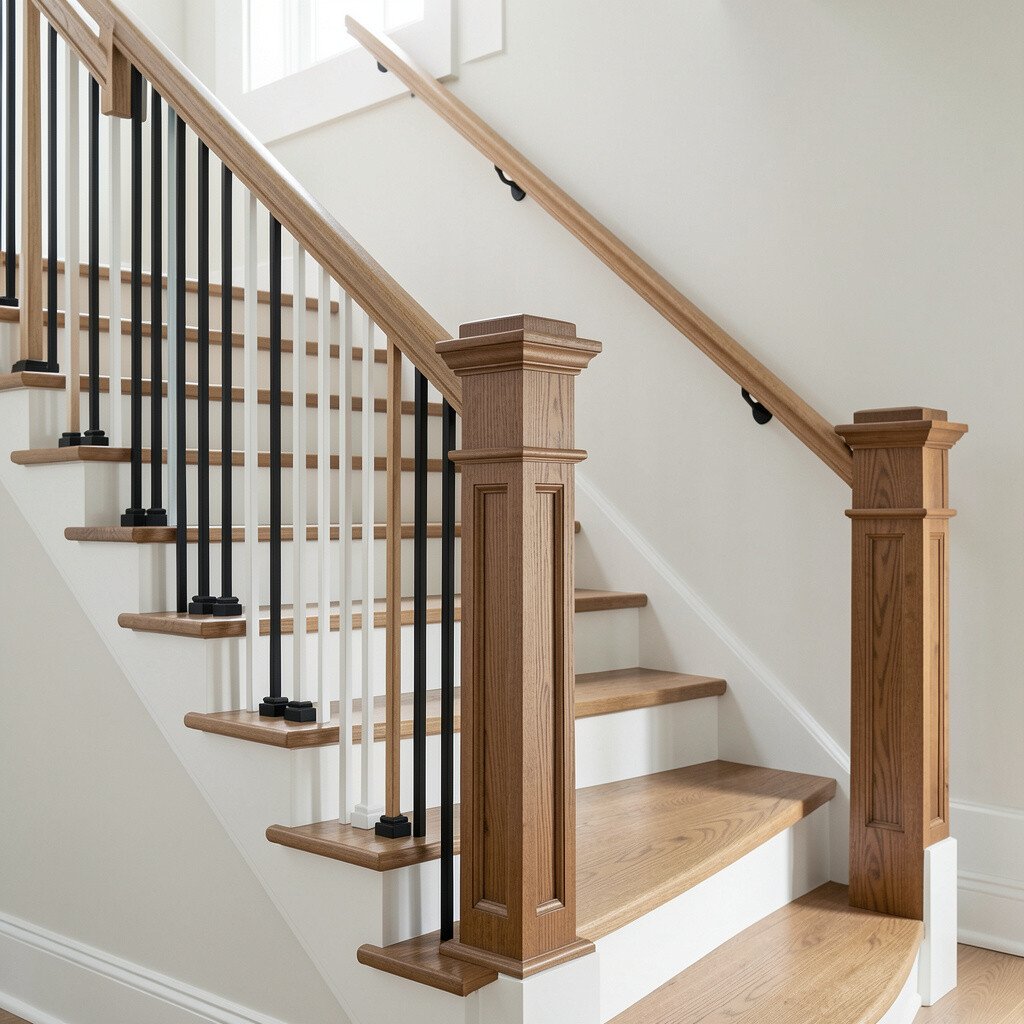
Mixed-material railings can look high-end because they balance strength with style. Think wood handrails with metal spindles, or stone-inspired finishes paired with clean cables.
Start by choosing a main material you love, then add one contrasting element to highlight the stair’s visual rhythm. Matching newel posts to both materials is the trick that keeps the design looking intentional instead of accidental.
For practical tips, make sure each material connection is secure and built for long-term use. It’s also helpful to select finishes that are easy to maintain, like powder-coated metal and sealed wood. Cost can be flexible here because you can spend more in one visible area while using simpler components elsewhere.
Personalize by matching the newel post finish to your lighting fixtures or door hardware. When the details line up, your staircase railing looks like it belongs to your home from day one.