
Your entryway sets the mood the moment you step inside. A well-chosen wall handrail can make that first impression feel warm, safe, and stylish.
Small design choices like height, finish, and details can bring your whole entryway together. With the right handrail, you get practical help and a look you’re proud of.
1. Slim Brushed Brass for a Soft Welcome

Picture a straight handrail with a brushed brass glow running along the wall. It catches light when doors open and makes the space feel brighter and calmer.
This finish pairs beautifully with wood tones, stone floors, and warm paint colors. It also feels smooth to touch, which helps daily use feel effortless. Choose a height that matches the way your household walks, and keep the mounting hardware tidy for a clean look.
2. Matte Black Floating Look With Hidden Mounts

A matte black handrail can look like it’s floating right off the wall. When paired with crisp trim or a dark door, it gives your entryway a bold, modern edge.
Hidden mounts also help the rail look uncluttered, which is great for small spaces. Use a wall-safe anchor system and make sure the rail is firmly installed for real day-to-day confidence.
For a practical touch, match the finish to nearby hardware like knobs and hooks. That small consistency makes the whole entry feel designed, not accidental. If you’re on a budget, matte black hardware is often easier to find in common sizes, which can lower replacement costs.
3. Warm Oak Handrail With Natural Grain Charm
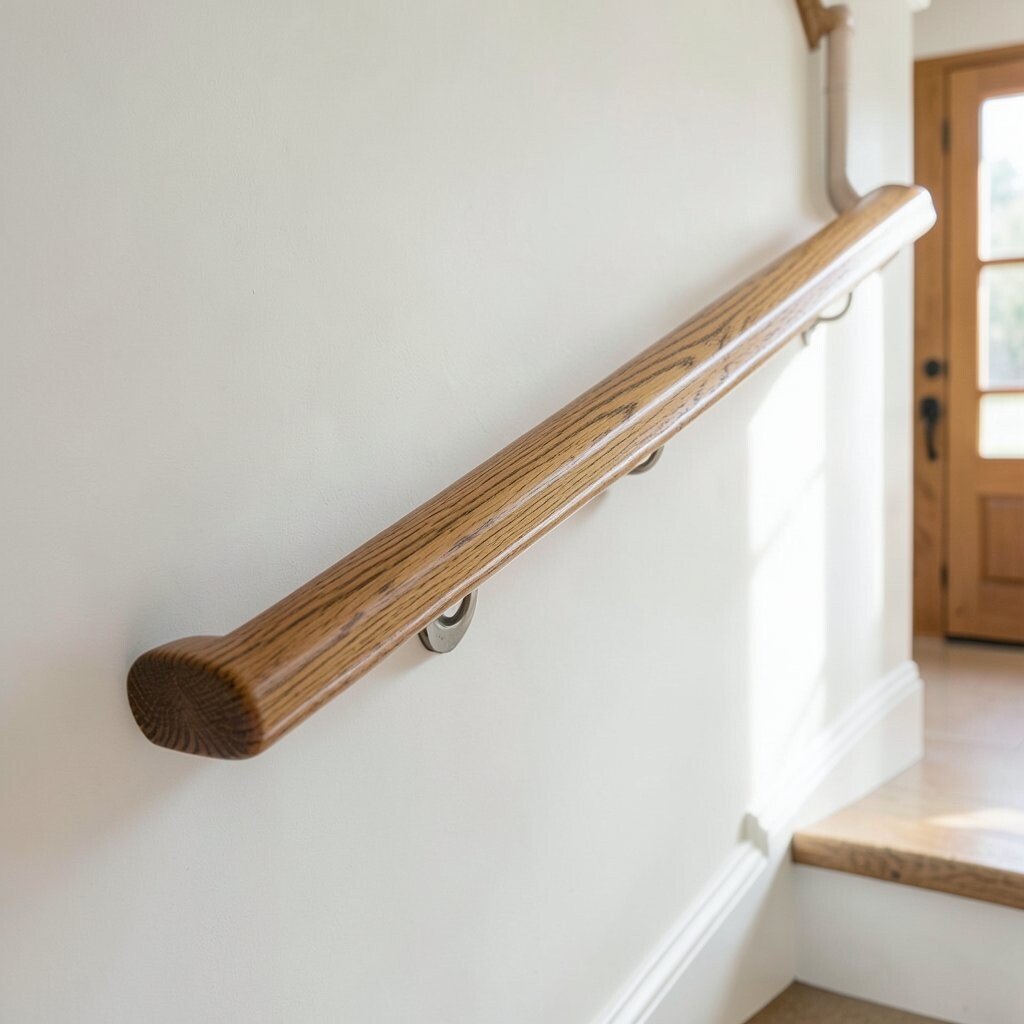
Imagine a handrail made from oak, with visible grain lines that look like they belong in a cozy cabin. It instantly adds warmth, especially when your entryway is otherwise neutral.
Wood gives a gentle, welcoming vibe and can soften hard surfaces like tile or metal. Keep it practical by choosing a durable, sealed finish that wipes clean. A slightly rounded profile can also feel more comfortable for people of different heights.
To personalize, consider a stain that matches your floor or nearby cabinetry. You can also add a subtle matching wood accent panel where the rail begins. If you want to stay on budget, you might choose engineered wood options while still keeping the same natural look.
4. White Ceramic-Tiled Wall Rail for Clean Minimalism

A ceramic-tiled handrail detail can look strikingly neat in a bright entryway. You get a smooth surface that fits well with clean-lined décor and light walls.
It’s a great choice if you want easy cleaning after muddy boots or rainy-day traffic. Pick grout colors that blend with your tile so the rail area feels integrated. For installation, plan your layout so the rail lines up with existing tile joints for a sharp, professional result.
5. Brushed Stainless Steel for Everyday Shine
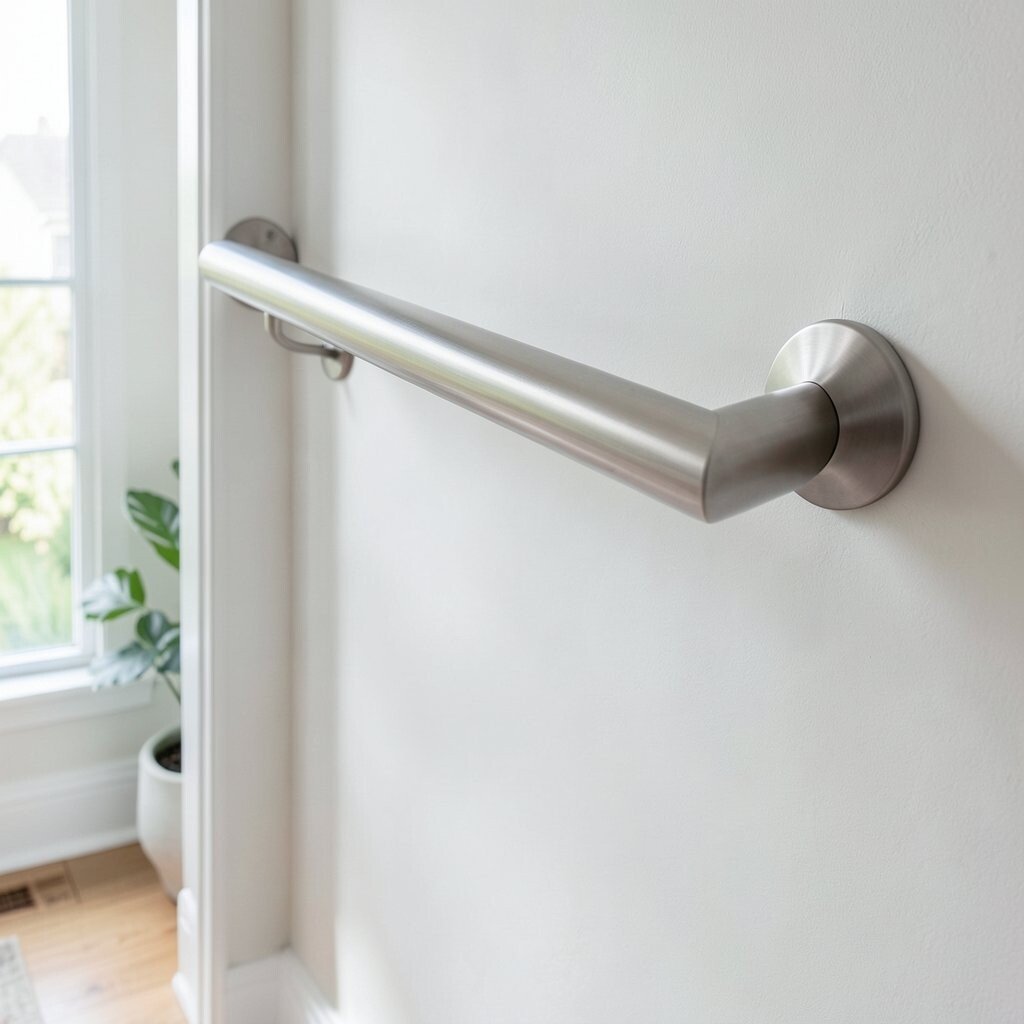
Stainless steel has a classic look that works with almost any entryway style. It reflects light in a steady, modern way without feeling flashy.
This option is also great for durability because it stands up to frequent wiping and everyday wear. Choose a satin finish to reduce fingerprints and keep the rail looking fresh. Measure carefully so the spacing feels intentional, not cramped.
If you like personalization, align the rail with a coat hook wall or a bench line. That visual rhythm makes the entry feel more curated. Cost tends to be mid-range, and stainless often resists long-term wear, which can save money over time.
6. Curved Corner Handrail for Better Flow

A corner handrail that curves can guide movement in a way straight rails can’t. When someone turns toward stairs or a hallway, the curve feels supportive and natural.
Curves also add visual interest without adding clutter. Consider a gentle radius that matches the corner layout and avoids snagging on bags or jackets. Make sure the curve is installed solidly, because the turning motion increases how people grip the rail.
7. Reclaimed Wood and Metal Mix for Storytelling Style
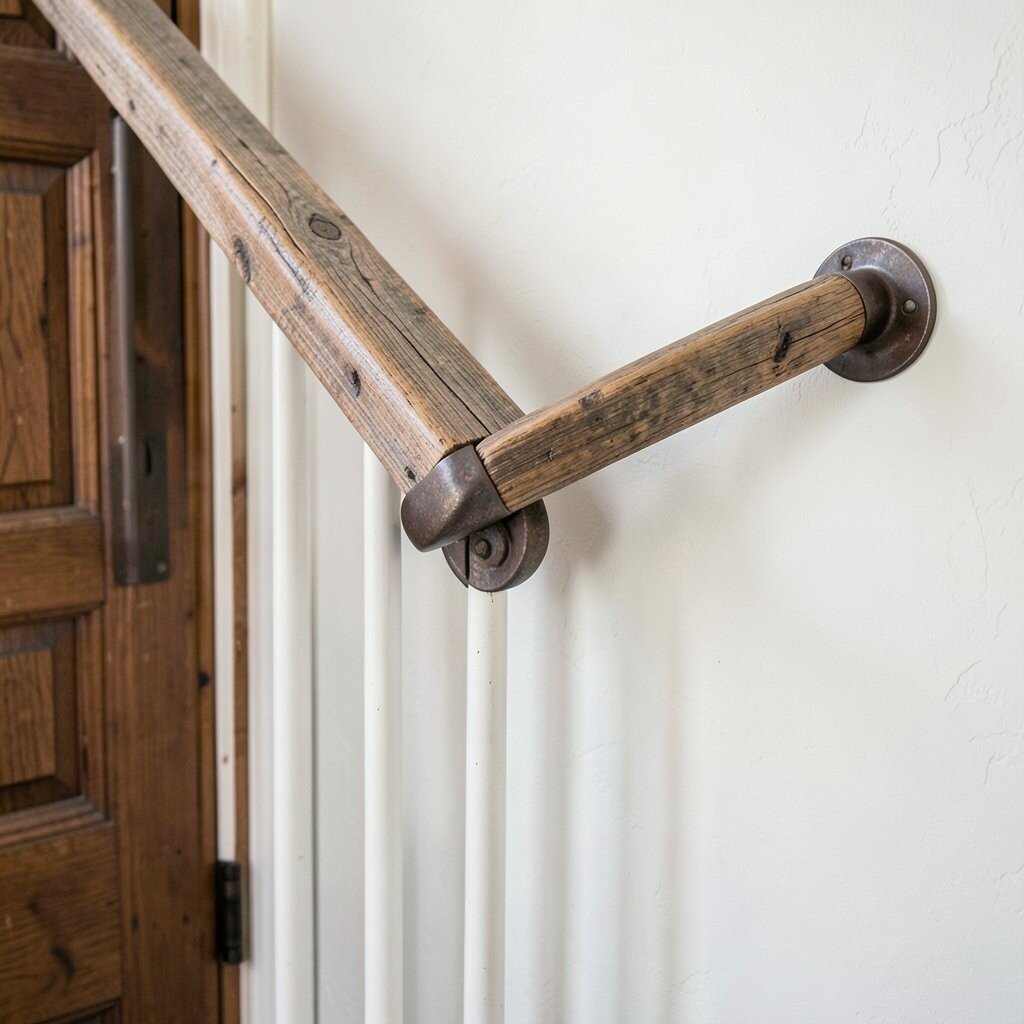
Handrails made from reclaimed wood paired with sturdy metal brackets look full of character. Every scuff and grain mark feels like a memory that adds warmth to your entryway.
This mix can be a strong uniqueness play, especially if your décor leans rustic, industrial, or farmhouse. Seal the reclaimed wood properly so it handles humidity from wet shoes and umbrellas. For personalization, choose metal that matches your door hardware or light fixtures so the mix feels intentional.
8. Glass Panel Rail for a Light, Upscale Feel
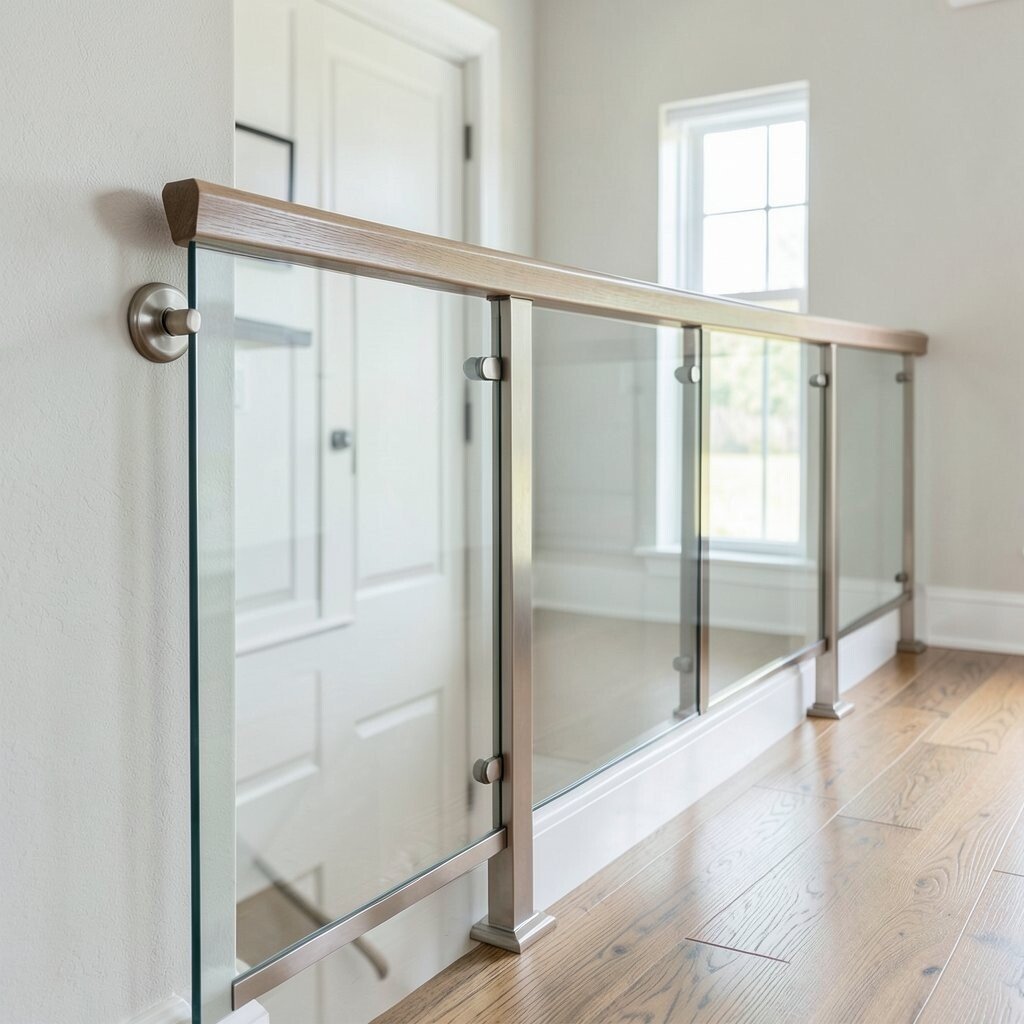
A clear glass rail can make an entryway feel open and airy. It’s a beautiful choice when you want safety without blocking sight lines.
Because glass reflects light, it can make narrow entryways feel less tight. Pair it with sleek metal supports so the overall look feels modern and clean. For practical setup, confirm local code requirements and use tempered glass designed for rail applications.
9. Vertical Slat Handrail for Texture and Grip
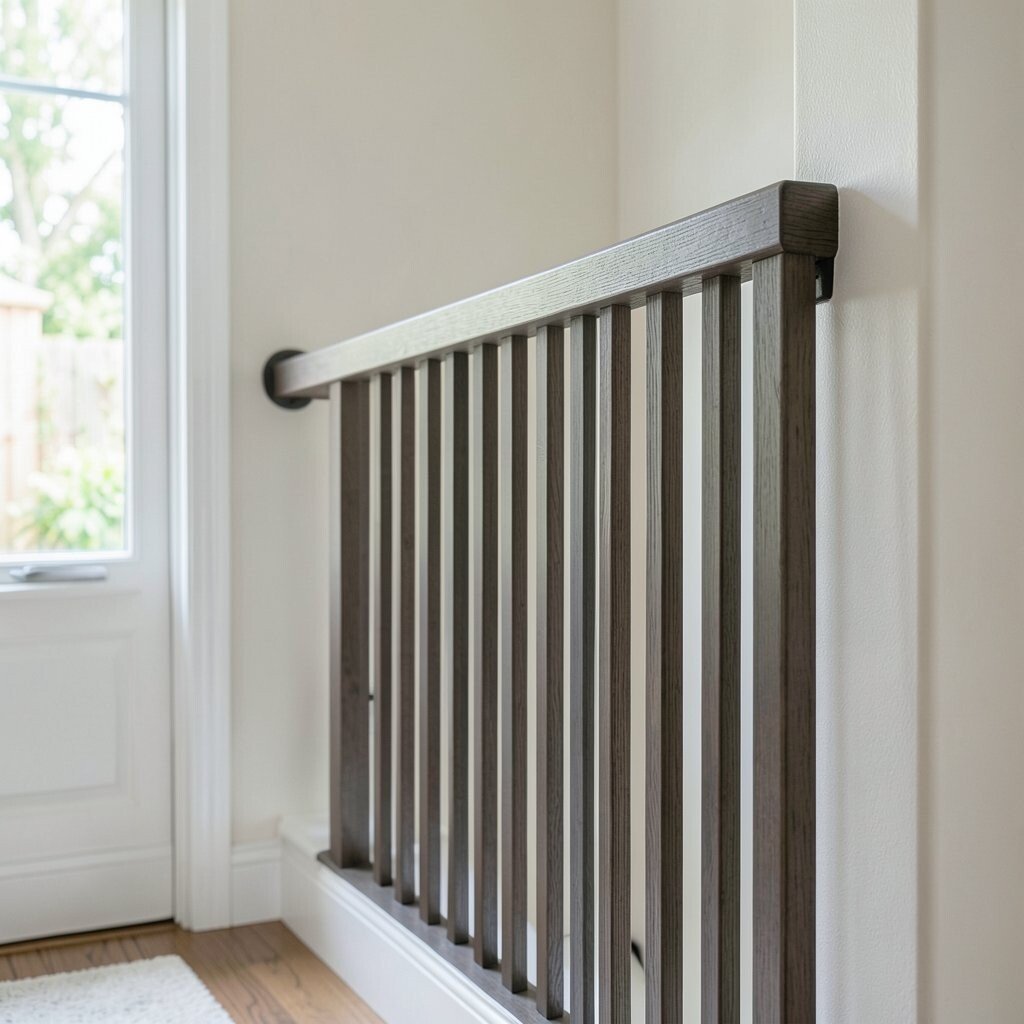
Instead of a smooth bar, try a design that uses vertical slats or ribbed textures. It creates a tactile look and gives hands something to hold onto comfortably.
That visual texture can also add style when your entryway walls are plain. Consider a finish that won’t show water spots easily, especially near doorways. Keep the spacing practical so fingers don’t get pinched and coats don’t snag on uneven edges.
10. Freestanding-to-Wall Transition Rail for Strong Support
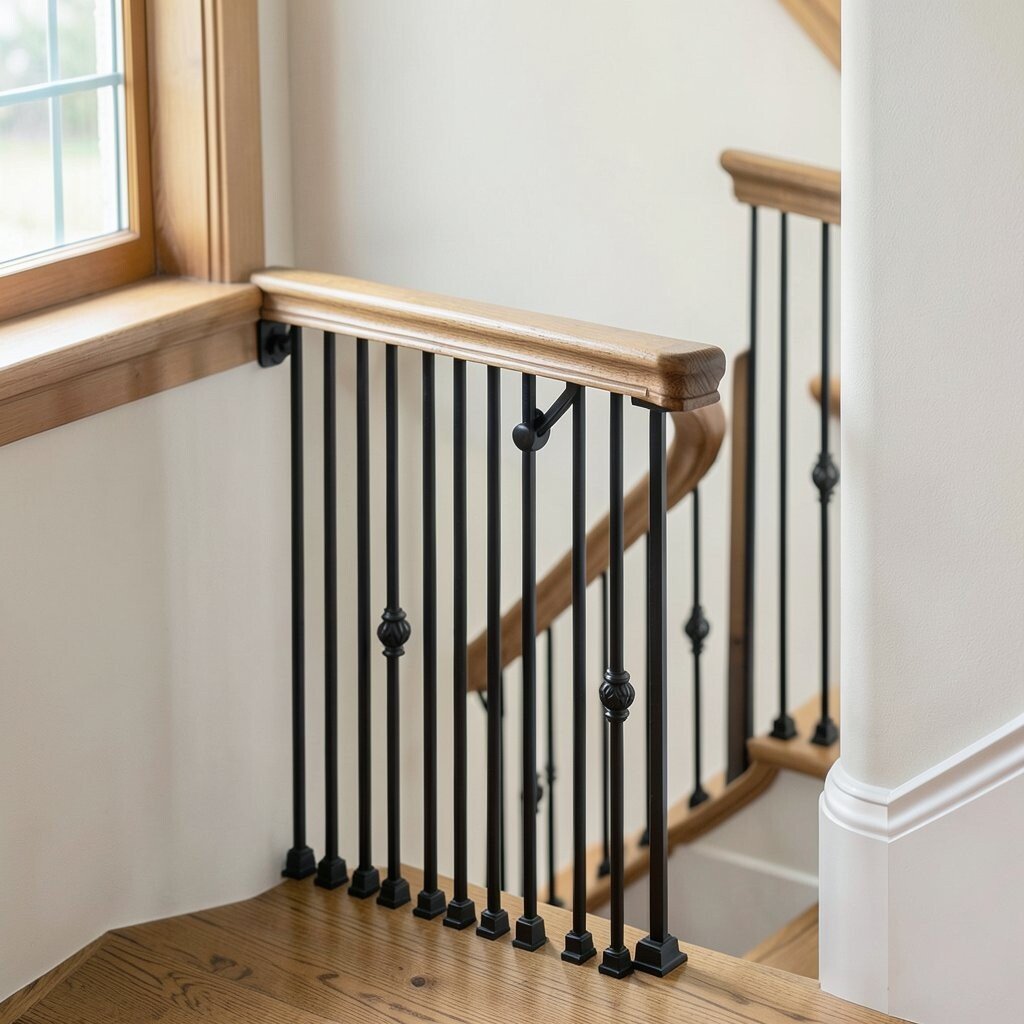
If your entryway has a bench, landing, or step area, a rail that transitions from a stand to the wall can look both helpful and designed. It gives support where people actually need it most.
This layout can improve daily routines for seniors and anyone carrying groceries. Use durable supports that match the rail finish so the junction area looks seamless. For personalization, align the rail with the bench length to keep the visual flow neat.
For cost considerations, you may spend more on specialty connectors, but the payoff is a more comfortable entry setup. Planning the exact path before buying helps you avoid expensive returns. Hiring a pro for the junction install can also prevent future loosening.
11. Soft Rounded Leather Strap Detail for a Boutique Vibe
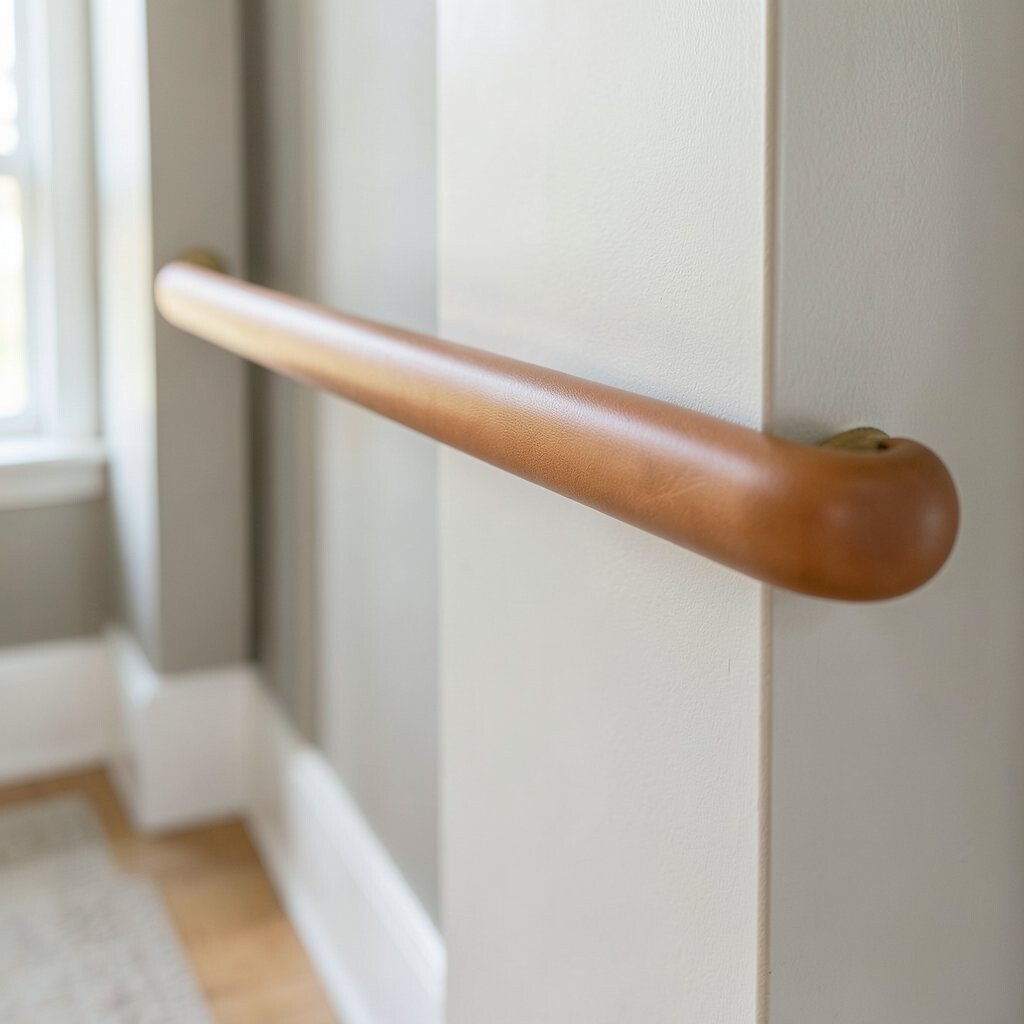
A sleek metal handrail wrapped with leather straps can look like a boutique hotel feature. The soft texture adds warmth and makes the rail feel special.
This detail brings uniqueness without needing a full remodel. Choose leather in a color that echoes your shoes, bags, or the wood in your entry. For practical use, ensure the leather is secured tightly so it won’t stretch or shift with grip.
12. Backlit Wall Rail for Evening Ambience
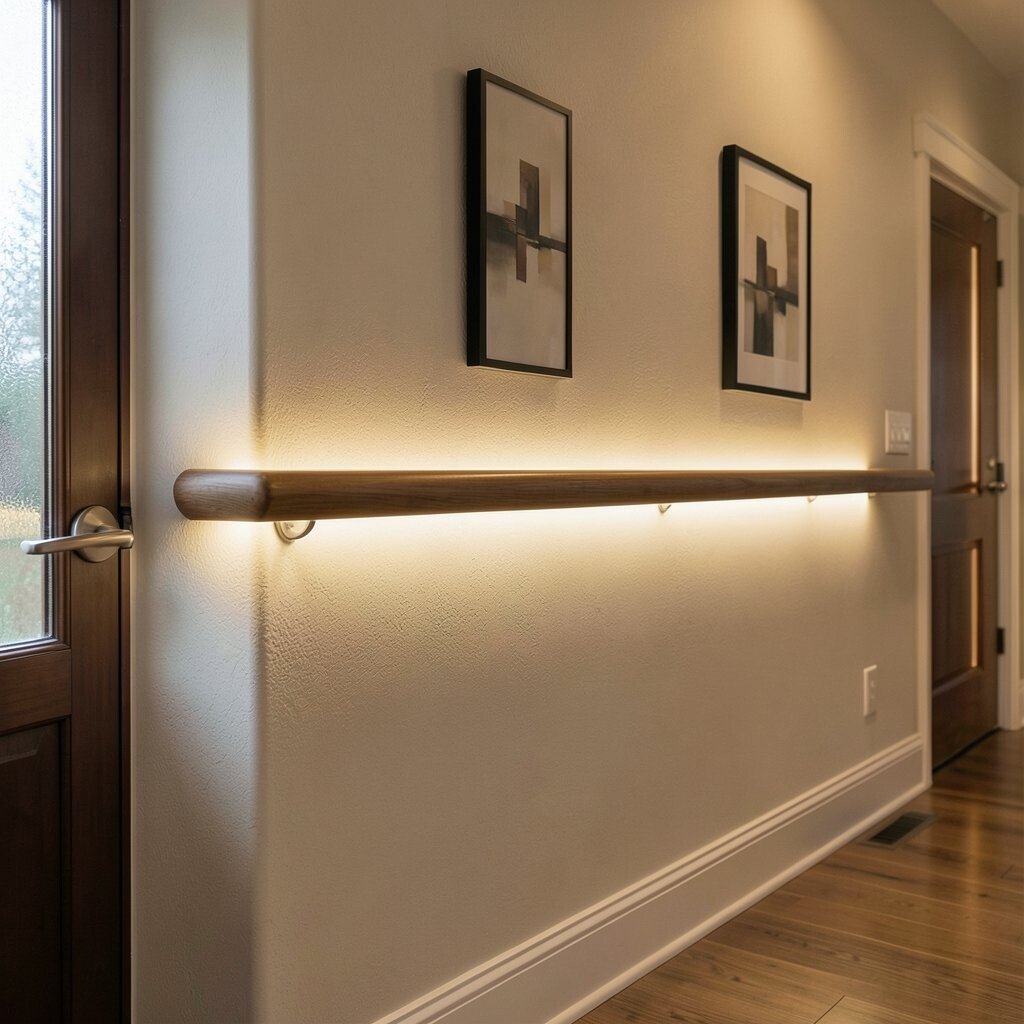
Imagine a handrail that glows subtly from behind the wall. In the evening, the entryway feels inviting instead of dim and bare.
Backlighting can also improve visibility, which helps with safety when you come in late. Use warm, soft light so it doesn’t feel harsh against skin tones. For personalization, match the light intensity to your hallway lighting so the rail feels like part of the same design system.
13. Antique Bronze Handrail for Old-World Charm
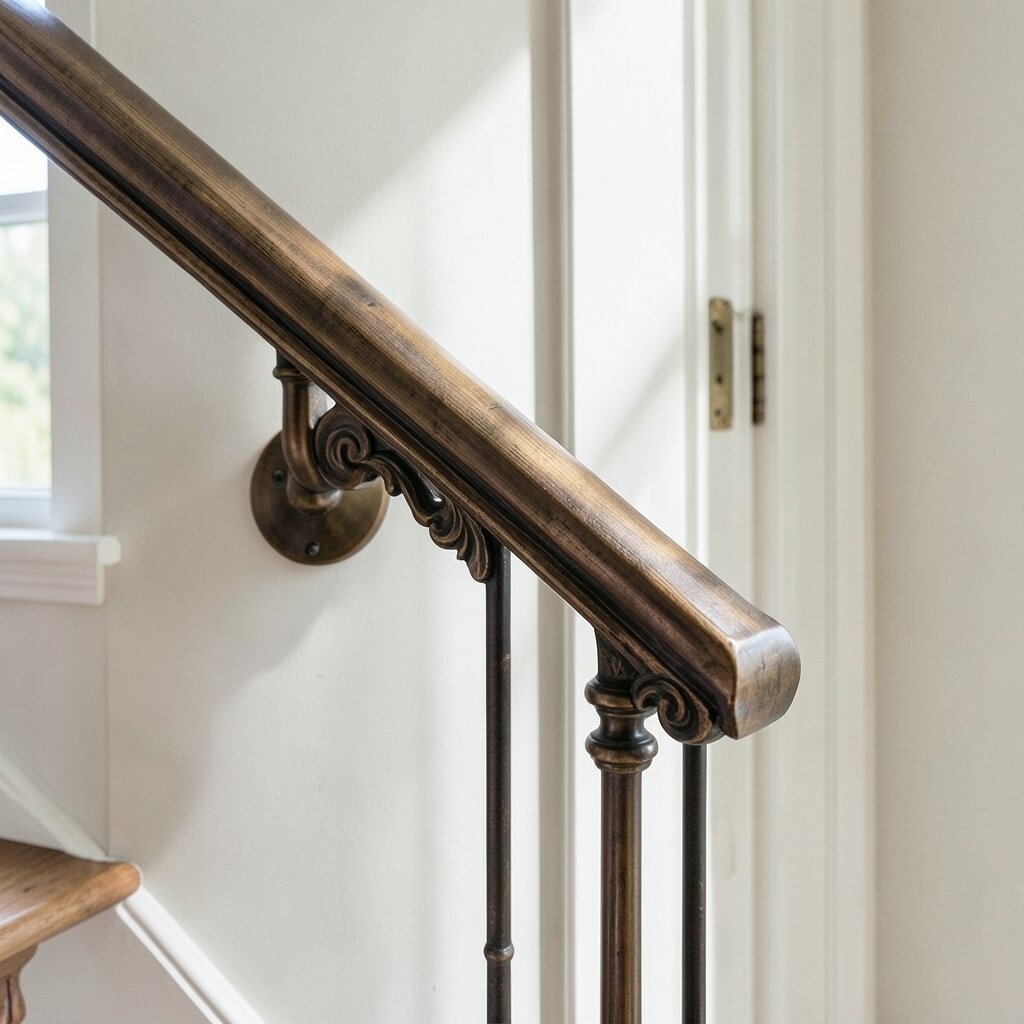
Antique bronze can make an entryway feel timeless and elegant. It adds depth, especially with patterned tile floors or classic molding.
Bronze also hides fingerprints better than shiny finishes, which helps keep the area looking tidy. Choose a rail with a slightly aged patina so it doesn’t look too new or too bright. For practical tips, clean with gentle products and avoid harsh abrasives that can damage the finish.
14. Color-Matched Rail With Your Door Frame
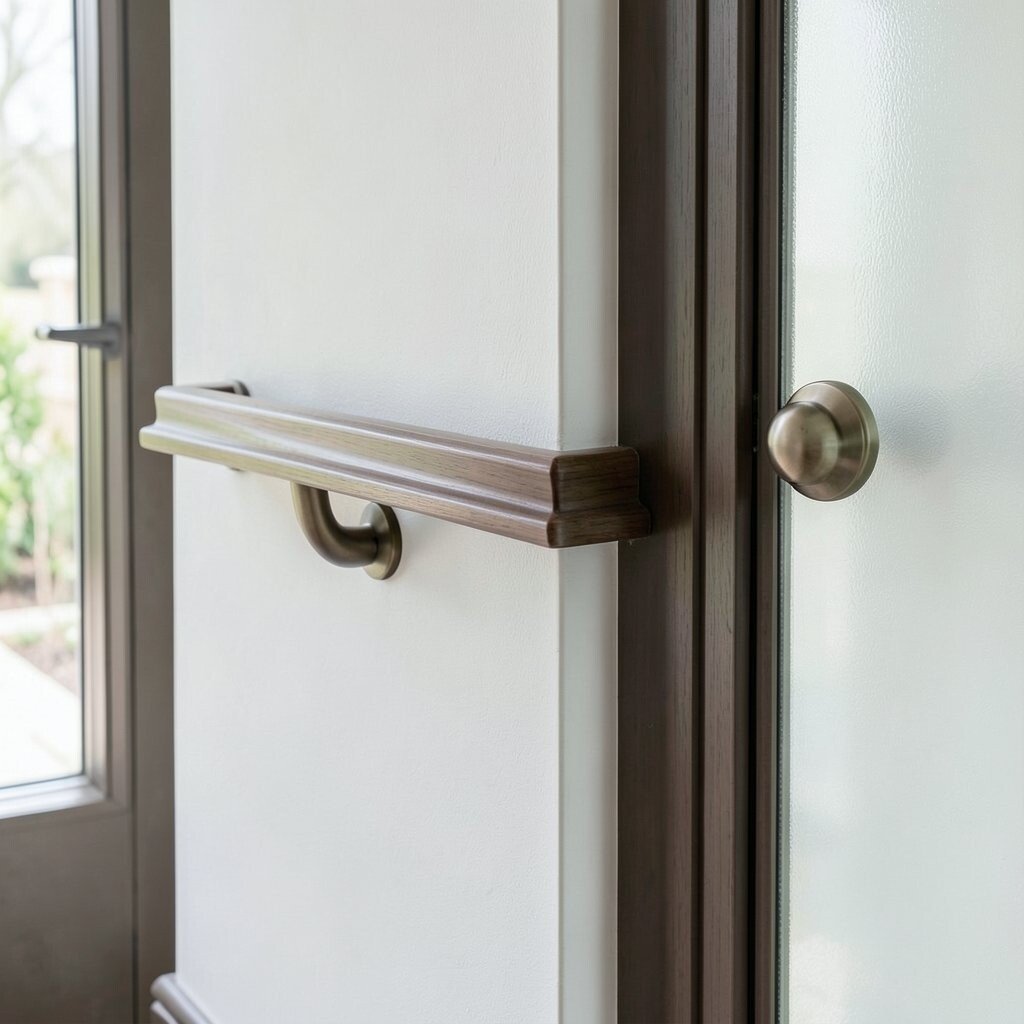
Matching your handrail color to your door frame creates a clean, finished look. It’s an easy way to make the rail feel like it belongs to the architecture.
This idea can work in bold tones like deep teal, soft sage, or warm terracotta. Use a durable powder-coated finish or a high-quality paint made for metal to handle regular touching. Measure carefully so the rail length lines up with existing trim lines.
For cost considerations, painting a rail can be less expensive than replacing finishes across the room. If you’re doing a quick refresh, this can be a budget-friendly way to make the entry feel new. Consider adding matching paint accents to a nearby console or mirror frame for extra harmony.
15. Textured Powder-Coat for a Modern, Tactile Feel

Textured powder-coat creates a subtle grip and a modern visual pattern. It’s a great choice if you want the rail to feel upscale but not slippery.
This finish is also practical because it tends to hide minor scuffs that happen in busy households. Choose a texture that feels comfortable in the hand without being rough. If you have kids or pets, textured finishes can help reduce visible wear over time.
For personalization, coordinate the color with your entry rug or accent pillows. A muted tone can look calm, while a brighter shade can become the focal point. When shopping, ask about scratch resistance ratings and warranty details to protect your investment.
16. Marble or Stone-Look Handrail for Luxury Surfaces

A stone-look handrail can bring the calm beauty of marble into your entryway. It pairs well with marble countertops, polished tile, or elegant light fixtures.
While true stone can be heavy and pricey, many designs use composite materials that mimic natural veining. That approach can help with cost while still giving a luxurious look. Keep practical comfort in mind by selecting a rail shape that feels easy to grasp, not sharp or bulky.
17. Matching Wall Paneling With Integrated Rail Lines

If your entryway has paneling, consider a handrail that aligns with those lines. The result looks built-in, like it has always been part of the wall.
Integrated rail lines can make the space feel more custom and tidy. Use matching finishes so the rail blends with trim or wall details. For personalization, pick panel styles that match your home, like vertical boards or simple flat panels.
This can be a mid-to-higher budget option because it may involve more carpentry work. Still, the payoff is a cohesive look that boosts curb appeal. Plan the rail position early so your panel layout doesn’t require awkward adjustments later.
18. Floating Wood Shelf Rail for Convenience
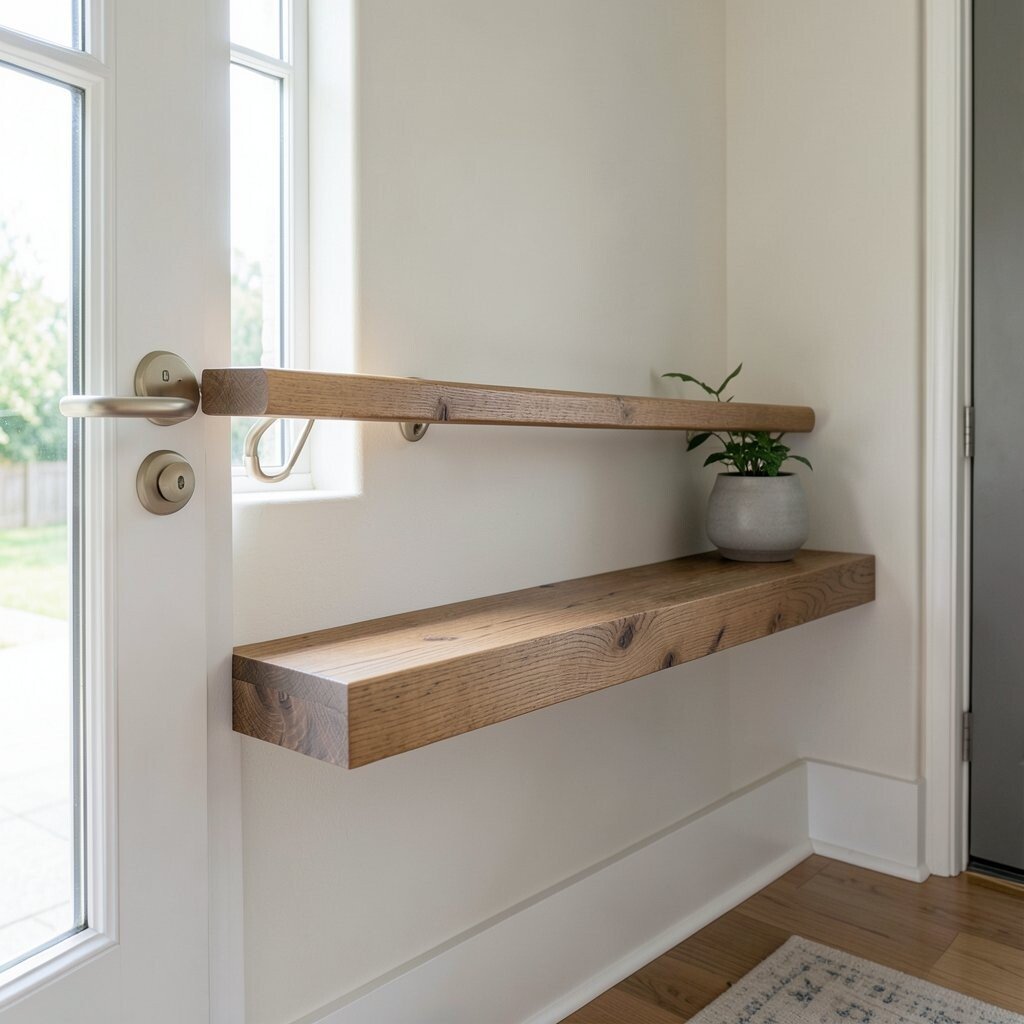
A rail with a small floating shelf can be both stylish and useful. It’s perfect for holding keys, a small bowl for mail, or a candle for gentle scent.
This setup adds function right where you enter, which makes daily life easier. Use a strong bracket system and keep the items light so it stays secure. For practical tips, position the shelf where it doesn’t interfere with gripping the rail.
If you want personalization, choose a shelf finish that matches your wall trim or the bench. Cost can be reasonable if you keep the shelf small and choose common hardware. You can also swap items seasonally so the entry feels fresh without much effort.
19. Dual Handrails for Shared Height Comfort
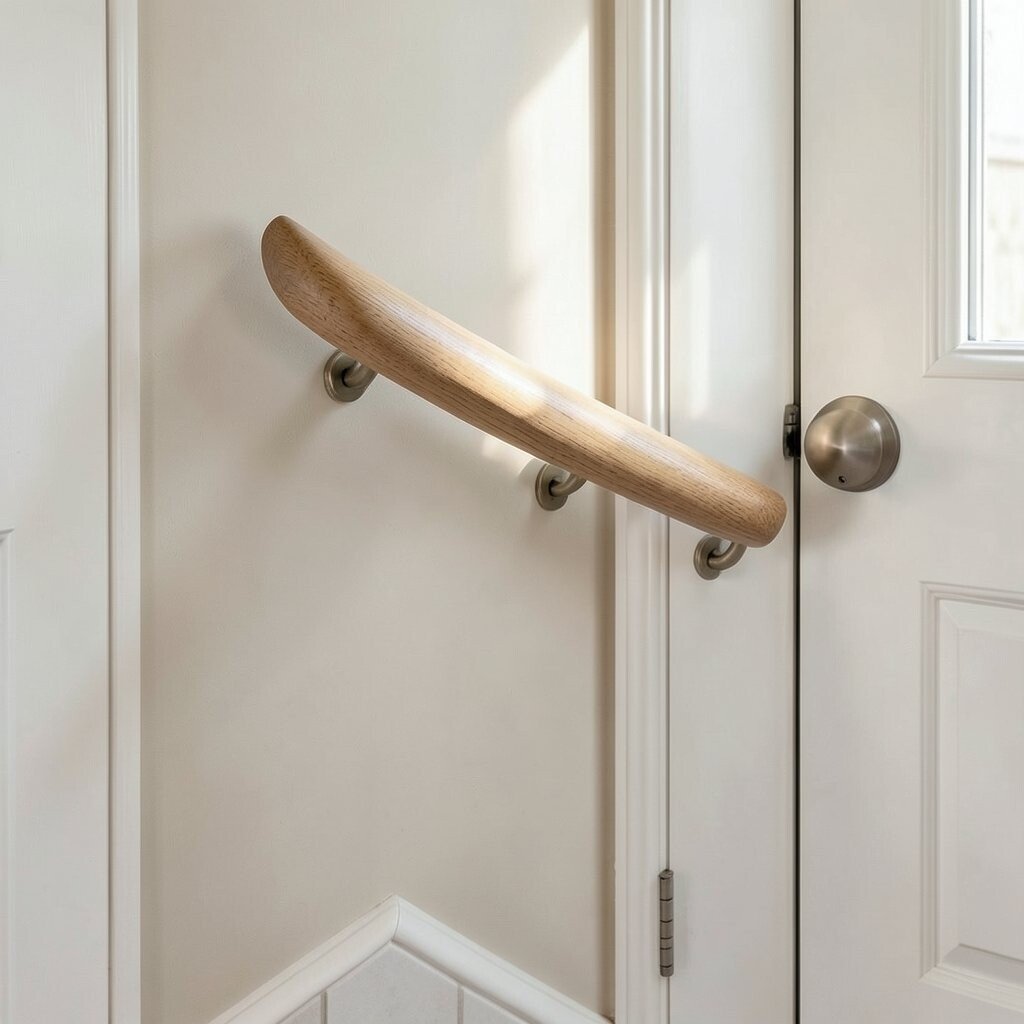
Dual handrails can offer comfort for different household needs. One rail can sit higher for taller adults while the other supports shorter users or kids.
This is especially helpful in busy entryways where people come and go with different routines. When installing, consider how people approach the rail when stepping in from rain and snow. Keep the spacing comfortable so coats and bags don’t bump into it.
For personalization, align both rails with the same style finish so it still feels sleek. Although dual rails can add cost, the convenience and safety benefits make it feel worth it. You can also choose slimmer profiles to reduce visual bulk.
20. Patterned Tile Insert Rail for Artistic Impact
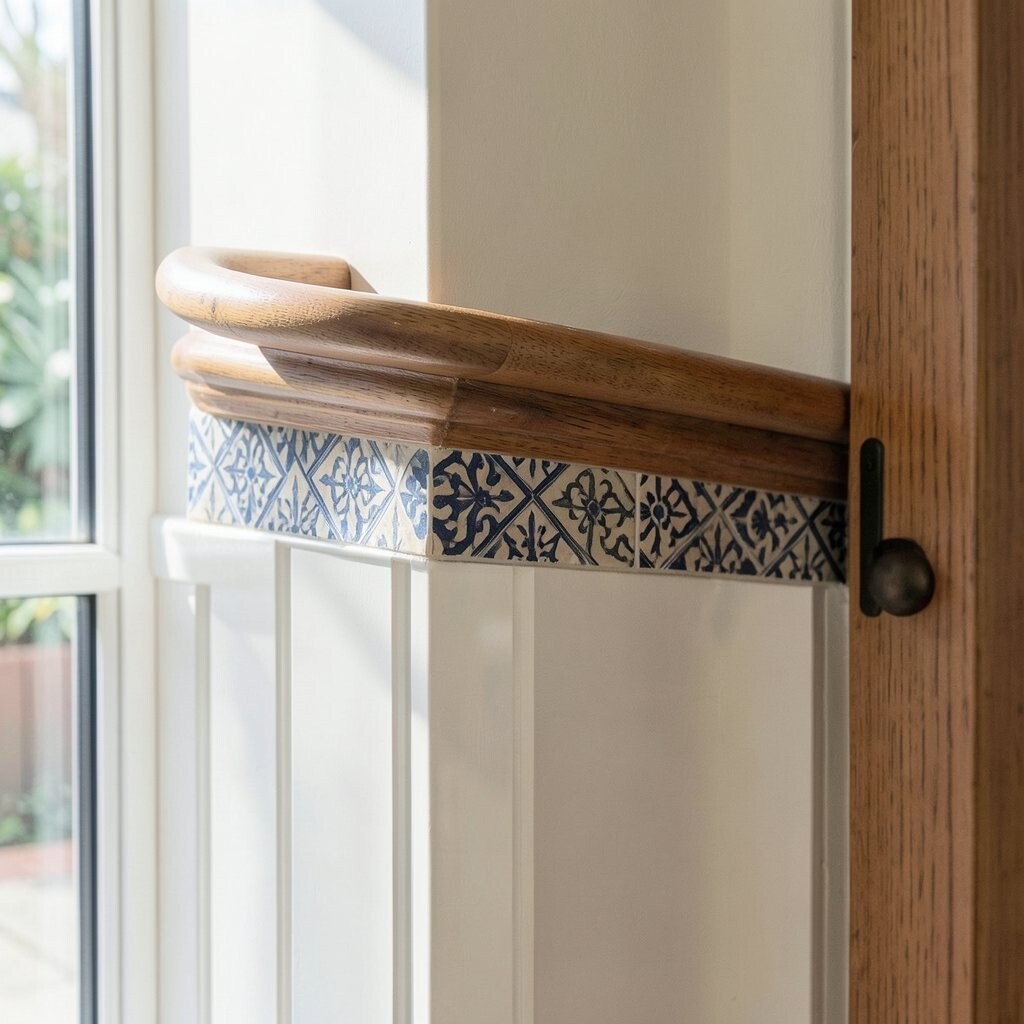
Try a handrail that includes a patterned tile insert along the grip area. It turns a functional object into a small piece of art that catches the eye.
This can be a strong uniqueness play, especially if your floor has solid-color tile and needs a design moment. Choose a pattern that echoes your entryway style, like soft geometric shapes or subtle floral accents. Make sure the tile is sealed well so it stays easy to wipe after muddy days.
For practical installation, plan grout lines so they align cleanly with the wall. Cost can vary based on tile selection, but choosing smaller tile inserts can keep the project manageable. If you love color, this is also a great way to bring it in without repainting the whole room.
21. Slim Wall Rail With Matching Coat Hook Line

A slim handrail that lines up with coat hooks creates a neat, “everything has a place” look. It also reduces clutter because you can guide keys and bags while arriving.
This idea improves daily routines and makes the entry feel organized. Keep the rail finish consistent with hooks, lights, and any nearby metal accents. For personalization, set the rail length to match the mirror width so the whole wall looks balanced.
In terms of cost, this can be efficient because you’re adding one coordinated system instead of scattered pieces. You can often find matching sets, which may lower the overall price. Just double-check measurements so the rail and hooks don’t crowd each other under the same section of wall.
22. Handrail as a Feature Flank for the Front Door
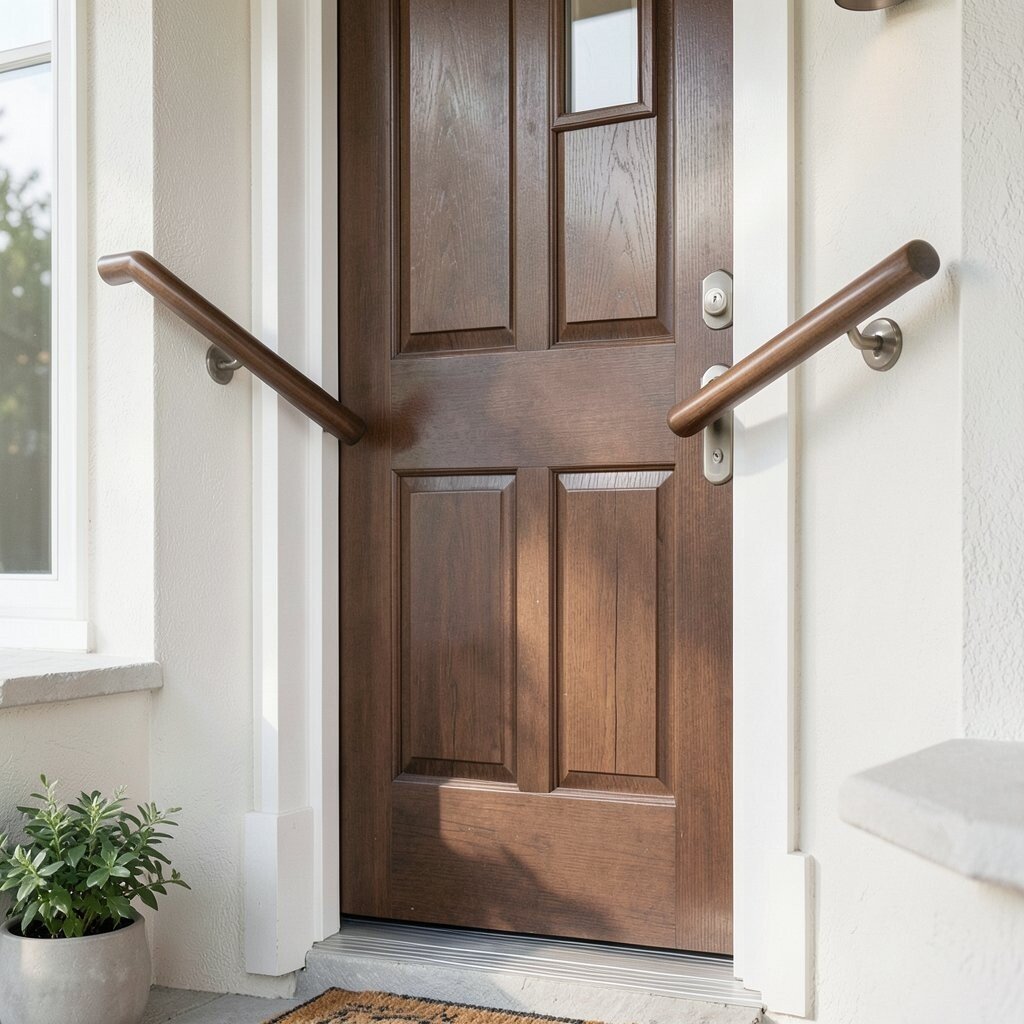
Make the handrail part of the door frame design by placing it symmetrically on one side or both sides. When people see it along the entry, it feels like a feature, not an afterthought.
This approach can elevate curb appeal because it frames the entryway visually. Choose finishes that complement your exterior lighting and door hardware so the look carries through indoors. If you want a practical benefit, install it at the height that matches how your family naturally reaches for support while entering.
For personalization, add a matching trim border around the rail area or use a unique bracket style. While this can cost more if you’re going symmetrical, you can keep it budget-friendly by selecting a simple rail profile. A clear plan for mounting points also helps avoid expensive drilling mistakes.