
A great entrance can change the whole feel of a place.
Small design choices can make a big welcome.
1. Build a gentle front ramp

A smooth front ramp gives wheelchair users an easy way in without stress. It can look clean and modern when matched to the home or building style.
Pick materials that are strong, safe, and not too slippery. A simple painted ramp can cost less, while wood, concrete, or metal may last longer and feel more polished. Add handrails or side edges for extra safety and a neater look.
2. Add a side entrance path
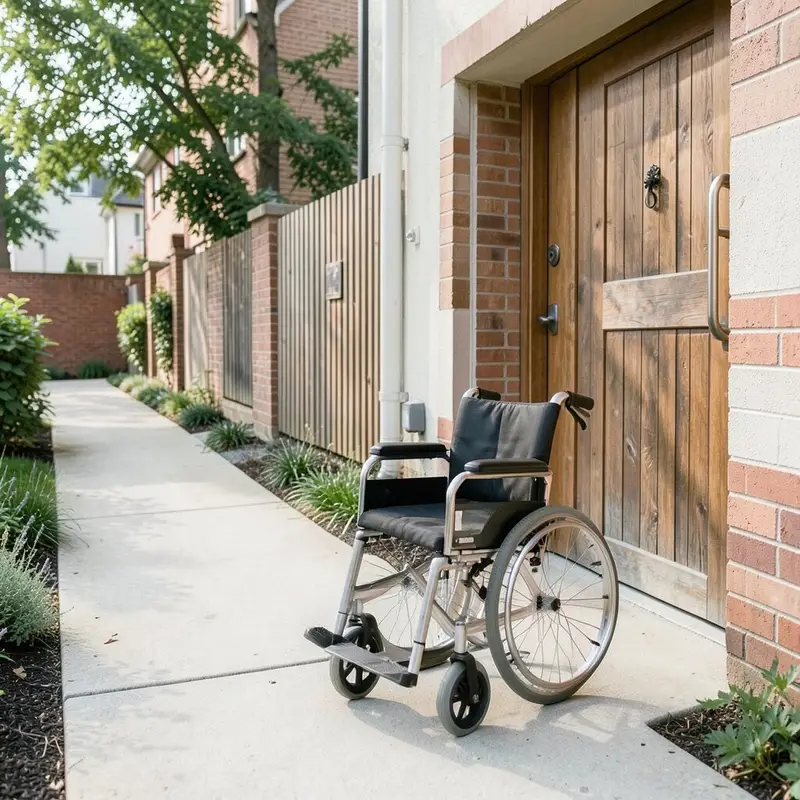
A side entrance can feel quiet, calm, and less crowded. It can be a smart choice when the front door has steps or a tight layout.
Use pavers, concrete, or compact gravel to make the path smooth. This idea often costs less than changing the main front entry, and it can fit into a yard or garden in a lovely way.
Many people like side paths because they can feel private and easy to customize. You can add plants, lights, or a small sign so the route feels friendly and clear.
3. Install an automatic door opener

An automatic door opener gives a sleek, helpful touch right at the entrance. It can make a door feel lighter, faster, and far less tricky to use.
This option is great for people who may have limited arm strength or need both hands free. It works well in busy places too, since it helps keep traffic moving with less waiting.
There are many styles now, from simple push-button systems to motion-sensor options. Costs can vary, so it helps to compare power needs, door weight, and repair service before buying.
4. Create a covered entry with a canopy

A covered entry can look warm and inviting right away. It also helps keep rain and sun away from people as they enter.
This is useful for wheelchair users who need a little more time at the door. A canopy can also protect ramps, mats, and door hardware from weather wear.
Choose a style that matches the building, such as metal, wood, or clear panels. A clear roof is a trendy choice because it lets in light while still giving shelter.
5. Widen the doorway

A wider doorway can make a space feel open and easy to move through. It can also make the entrance look more modern and less cramped.
This change helps wheelchairs, walkers, and people carrying bags or packages. If full widening is not possible, a pocket door or swing change may still help a lot.
The cost can be higher than some other ideas because wall work may be needed. Still, it can be worth it for daily comfort and long-term access.
6. Use a low-threshold door
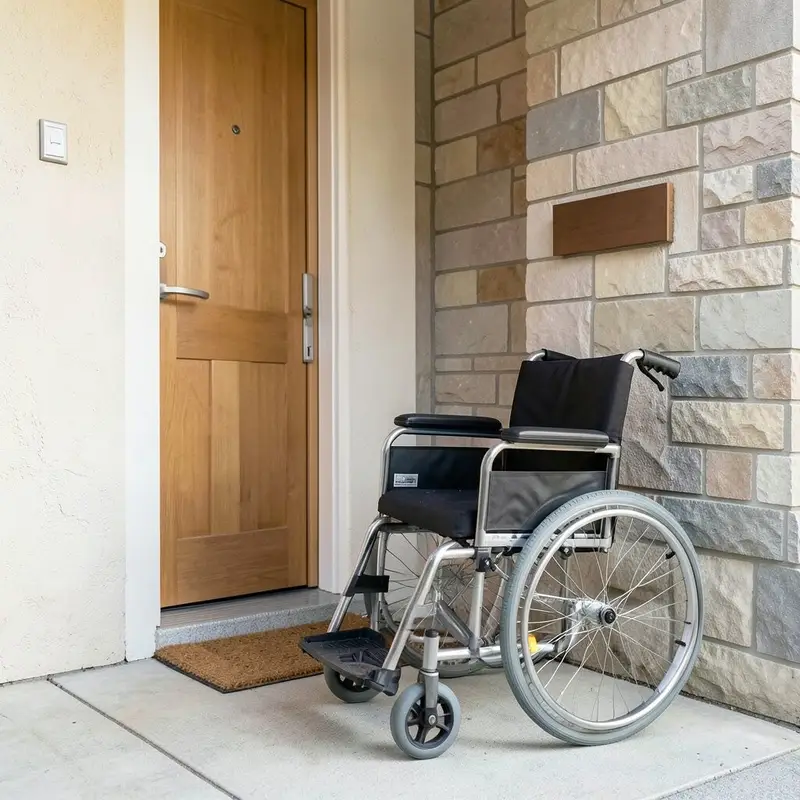
A low-threshold door has a small step-over area that feels much smoother under wheels. It gives the entrance a clean, simple look too.
This is a smart choice for both new builds and updates. A low threshold can reduce bumping, rolling noise, and the chance of getting stuck.
Many builders now favor flush or nearly flush thresholds as a modern trend. If water control is needed, ask about drainage parts that keep the door safe while staying easy to cross.
7. Add bright entrance lighting
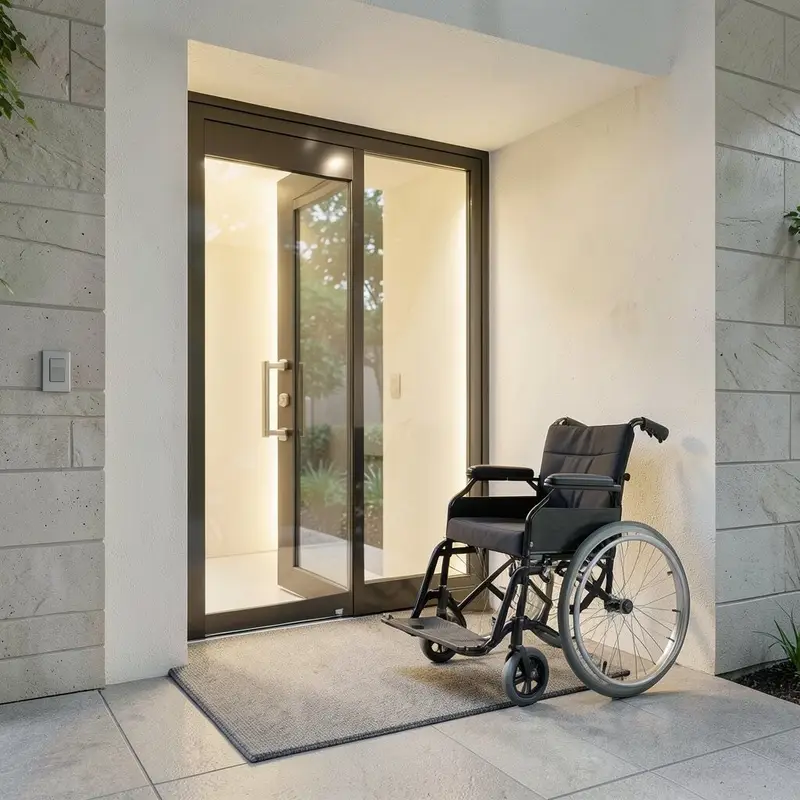
Good lighting can make an entrance feel safe and cheerful at night. It also helps people see edges, handles, and signs more clearly.
LED lights are a popular choice because they use less energy and last a long time. You can place them above the door, along the path, or near the ramp.
Warm light can make a place feel cozy, while cool light can look crisp and clean. Motion lights are handy and can lower power costs over time.
8. Place a smooth landing platform
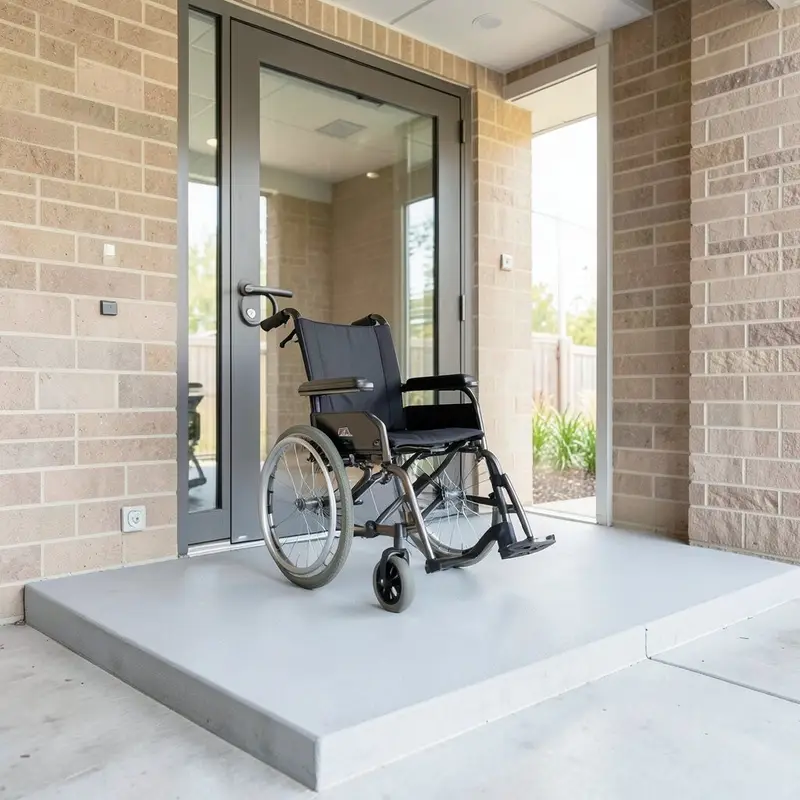
A landing platform gives a flat space for stopping, turning, and opening the door. It can make the entrance look balanced and well planned.
This helps wheelchair users line up safely without rolling backward. It also gives delivery workers and visitors a better place to pause.
Keep the surface even and not too shiny, since grip matters a lot. For a personal touch, add edging stones, a border color, or a planter nearby.
9. Use automatic sliding doors

Automatic sliding doors feel smooth and modern the moment they open. They are often used in busy shops, clinics, and community buildings.
Because the door slides aside, there is no need to pull or push a heavy panel. That makes entry easier for many people, especially during bad weather or rush times.
These systems can cost more at first, but they often save effort and time every day. A slim metal frame and clear glass can give the entrance a fresh, current look.
10. Add a bold accessible sign

A clear sign can help people find the right way without confusion. It can also make the entrance feel more organized and welcoming.
Use high contrast colors and simple symbols that are easy to read fast. Place the sign where it can be seen from the street, parking area, or walkway.
Some places now use signs with raised letters or touchable icons for extra help. This idea is usually low cost, but it can have a big effect on comfort and confidence.
11. Build a wraparound porch ramp

A porch ramp that curves or wraps around a home can look charming and graceful. It can turn access into part of the design instead of an afterthought.
This works well for houses that want to keep a cozy front porch feel. It also gives more room for turning and can blend into railings, steps, and trim.
Wood is a classic choice, while composite boards may need less upkeep. Add flower boxes or a painted railing color to make the ramp feel personal and inviting.
12. Use textured, slip-resistant flooring

Textured flooring can help wheels grip better and reduce the chance of slipping. It can also add a nice look underfoot and make the entrance feel finished.
Choose surfaces that are easy to clean and strong against weather. Rubber, textured tile, and sealed concrete are common picks for both homes and public spaces.
Many designers now aim for surfaces that are safe but still stylish. Cost will depend on the material, so it helps to balance looks, care needs, and daily use.
13. Add a portable ramp
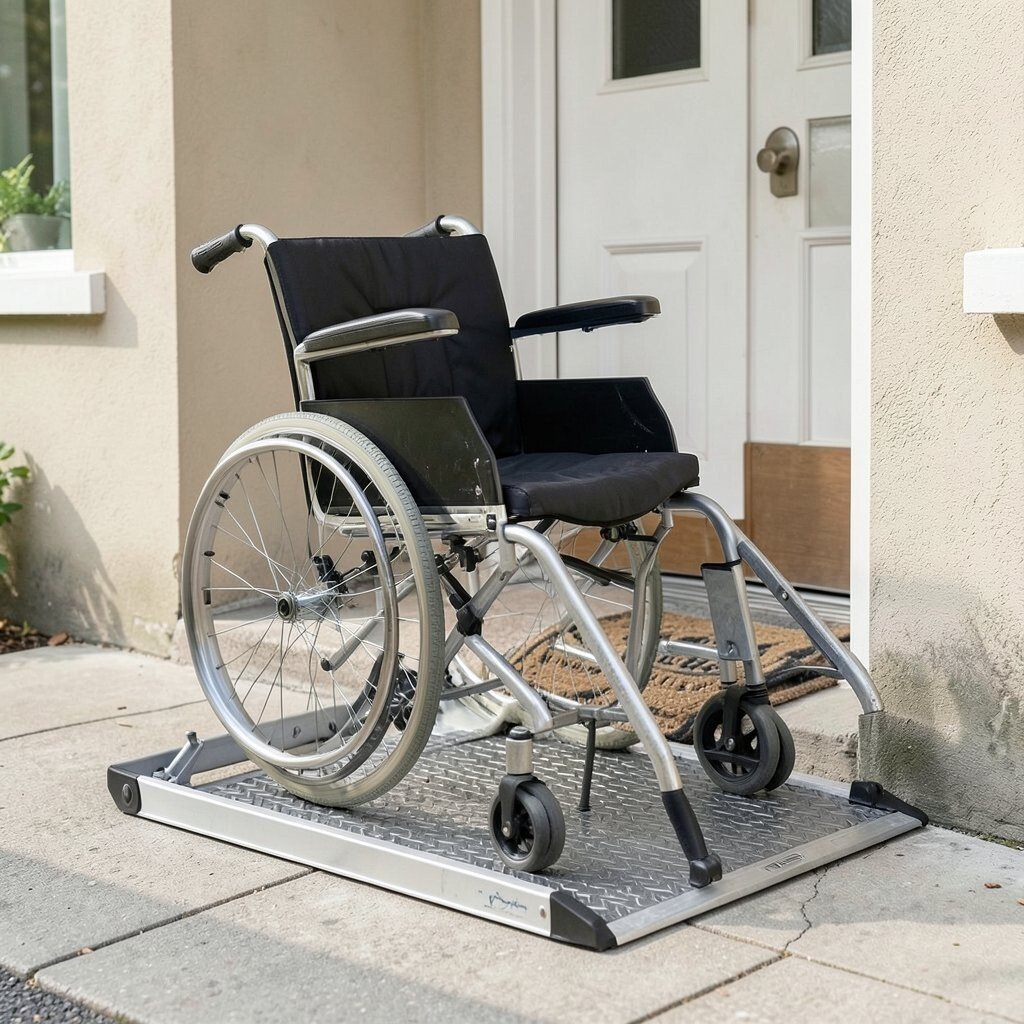
A portable ramp is a flexible fix that can be moved when needed. It is great for temporary access or places that cannot support a permanent build.
This can be a helpful choice for renters, event spaces, and small businesses. It gives quick access without a big construction project.
Foldable aluminum ramps are common because they are light and strong. Check the slope, width, and weight rating before buying so the ramp feels safe and easy to use.
14. Create a double-door entry

Double doors can make an entrance feel grand and open. They also give more space for wheelchair passage and easier turning.
When one door is enough for daily use, the second can stay ready for wider access. This setup can work well in homes, offices, and event halls.
Clear glass panels are a current trend because they bring in light and make the entry feel bright. Costs may be higher than a single door, but the roomy feel can be worth it.
15. Add a curb cut at the driveway

A curb cut smooths the jump from street to walkway. It can make the route feel less bumpy and more natural for wheels.
This small change can help at homes, schools, and shared buildings. It also helps strollers, carts, and anyone rolling luggage.
Local rules may affect how it is built, so planning matters. If space allows, pair the curb cut with a painted edge or reflective strip for better visibility.
16. Build an enclosed entrance vestibule

An enclosed vestibule creates a sheltered middle space before the main door. It can look neat, cozy, and a little more private.
This is useful in cold or windy areas because it blocks drafts and rain. It also gives wheelchair users a place to pause and adjust before entering.
Glass walls can make the area feel open, while solid panels can give more warmth and privacy. The cost depends on size and materials, but the comfort boost is often strong.
17. Use a wide, easy-grip handle

A wide handle can make opening a door much simpler. It also gives the entrance a clean, modern detail that stands out nicely.
Choose a shape that is easy to hold with little effort. Lever handles are often better than round knobs because they need less grip strength.
Matte finishes are popular now because they hide fingerprints and look sleek. This is usually a low-cost upgrade that can make a big daily difference.
18. Add motion-sensor path lights

Motion-sensor path lights can make an entrance glow only when needed. They create a safe, welcoming look without wasting much energy.
These lights are helpful for evening arrivals and for spotting changes in ground level. They can also make a path feel special, almost like a soft runway to the door.
Solar versions can lower electricity costs and are easy to place in many spots. Try lining both sides of the route so the path feels clear from start to finish.
19. Make a level threshold mat area

A level mat area can catch dirt while still letting wheels glide smoothly. It keeps the entry neat and can stop water from spreading inside.
Choose a mat that sits flat and does not curl at the edges. This helps prevent bumps and makes the entrance safer for everyone.
Some mats now come in bold colors or custom patterns, which can add personality. They are usually affordable, and replacing them is often easier than changing the floor.
20. Add a sheltered side canopy

A side canopy can protect a secondary entrance from sun, snow, and rain. It gives the building a layered look that feels thoughtful and cared for.
This idea works well when the main front entry is busy or hard to change. It can also make a side route feel just as important as the main door.
Metal frames with clear tops are popular because they look light and modern. For a personal touch, add matching trim or a painted support color that fits the building style.
21. Use contrasting edge paint

Contrasting edge paint can make steps, ramps, and landings easier to see. It adds a sharp, crisp look that can feel both useful and stylish.
This helps people notice changes in height and direction right away. It is a simple fix that can improve safety without major building work.
Bright yellow, white, or deep dark tones can work well depending on the surface color. The cost is usually low, and fresh paint can be updated as styles change.
22. Build a gentle switchback ramp

A switchback ramp folds the path back and forth to fit more length into a small space. It can look structured and elegant when the lines are planned well.
This is a strong choice for taller entries where a straight ramp would be too steep. It gives wheelchair users a more comfortable climb and a safer stop point at each turn.
Railings, landings, and clear edges make the design easier to use. You can soften the look with planters, low shrubs, or wood accents that match the building.
23. Add a smart access button

A smart access button can open doors or call for help with a simple press. It gives the entrance a tech-forward feel that many places now like.
This can be useful for schools, clinics, offices, and homes with frequent visitors. It may also help guests who need a little more time or support at the door.
Some systems can connect to phones or building controls, which is a growing trend. Costs vary by setup, but the added ease can be a strong payoff.
24. Create a welcoming entrance garden path

A garden path can make accessibility feel warm instead of plain. Flowers, shrubs, and neat borders can turn the route into a pleasant part of the visit.
Keep the path smooth, wide, and free of overgrown plants so wheels can move easily. This idea works especially well for homes that want charm and access in one space.
Use native plants if you want lower care and less watering over time. A mix of textures, colors, and soft lighting can make the entrance feel personal, calm, and memorable.