White cabinets can make a room feel calm and bright in an instant. With the right choices, they also help your space stay neat without looking plain.
1. Crisp Shaker Doors With Soft-Close
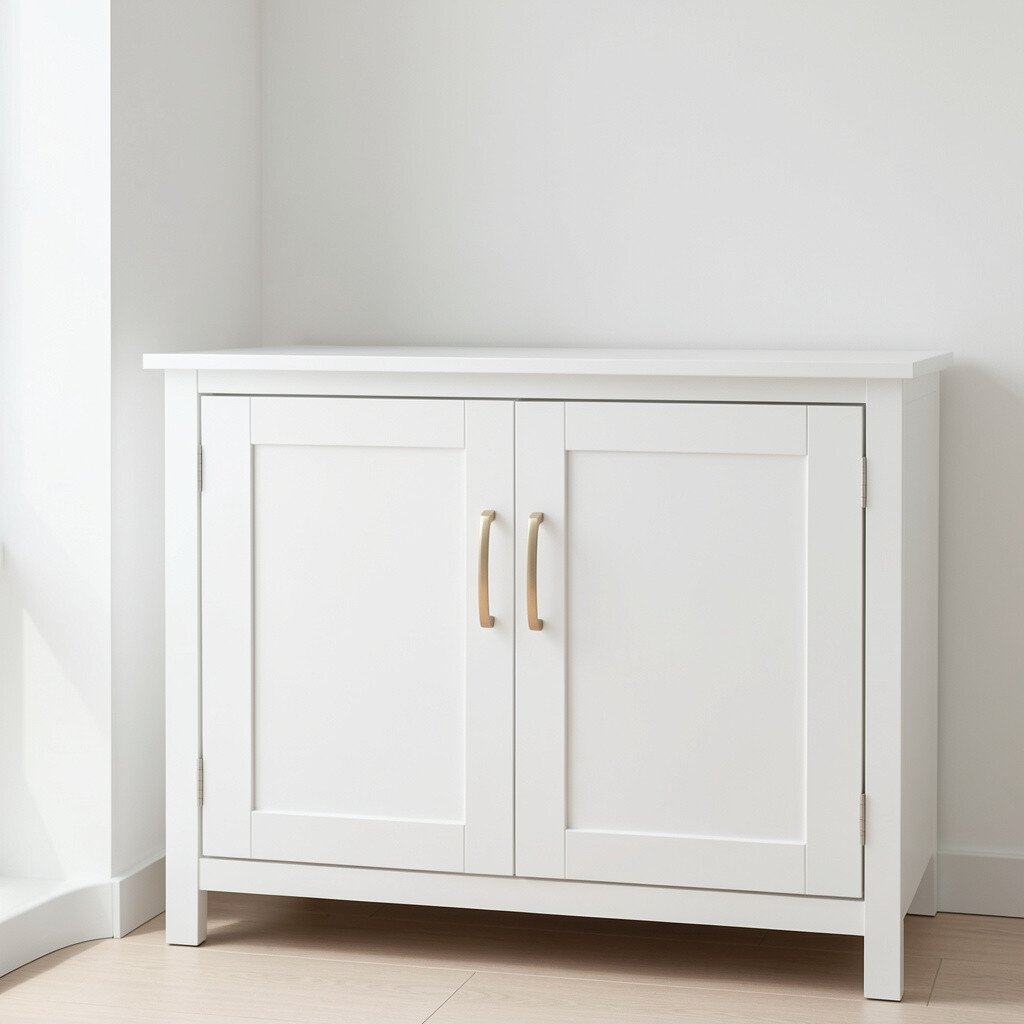
Picture simple shaker cabinet doors in clean white paint, with gentle grooves that catch light without shouting. When you open them, soft-close hinges make everything feel quiet and smooth.
Choose matte or satin paint so fingerprints and tiny smudges show less than on high-gloss finishes. Keep pulls minimal by using slim hardware or even knobless doors with push-to-open. For organization, add a peg rail inside drawers and a shallow tray for small daily items, so countertops stay clear.
2. Ultra-Flat Cabinet Faces for a Sleek Look

Think of ultra-flat cabinet fronts that blend into the wall like a smooth panel. White color plus flat doors gives a modern feel that still works in kitchens and baths.
Use a consistent reveal gap and install everything level, because minimalist lines look best when the spacing is crisp. For day-to-day use, prioritize durable cabinet doors and a solid core so dents and chips are less likely. If you want personalization, choose a subtle texture in the paint, like a very fine eggshell, to add depth while staying simple.
To keep costs under control, compare semi-custom options that offer the same flat style in standard sizes. You can also reuse existing cabinet boxes and only replace the doors and hardware for a big visual upgrade with less spending.
3. White Cabinets Paired With Warm Wood Shelving

Imagine white cabinets with open shelves in warm wood tones, like light oak or ash. The contrast feels cozy, and it helps your minimalist kitchen look lived-in rather than sterile.
Use the wood for a few key shelves instead of everywhere, so the room stays balanced. Store everyday glasses and a small set of bowls on open areas, and put rarely used items behind cabinet doors.
For a practical upgrade, line shelf surfaces with a thin, clear mat to protect the finish from heat and scratches. You can also add adjustable shelf pins so you can change spacing as your needs shift. If you want cost awareness, start with only one run of open shelving, then expand later if you love the look.
4. Off-White Cabinets With a Clean, Quiet Undertone
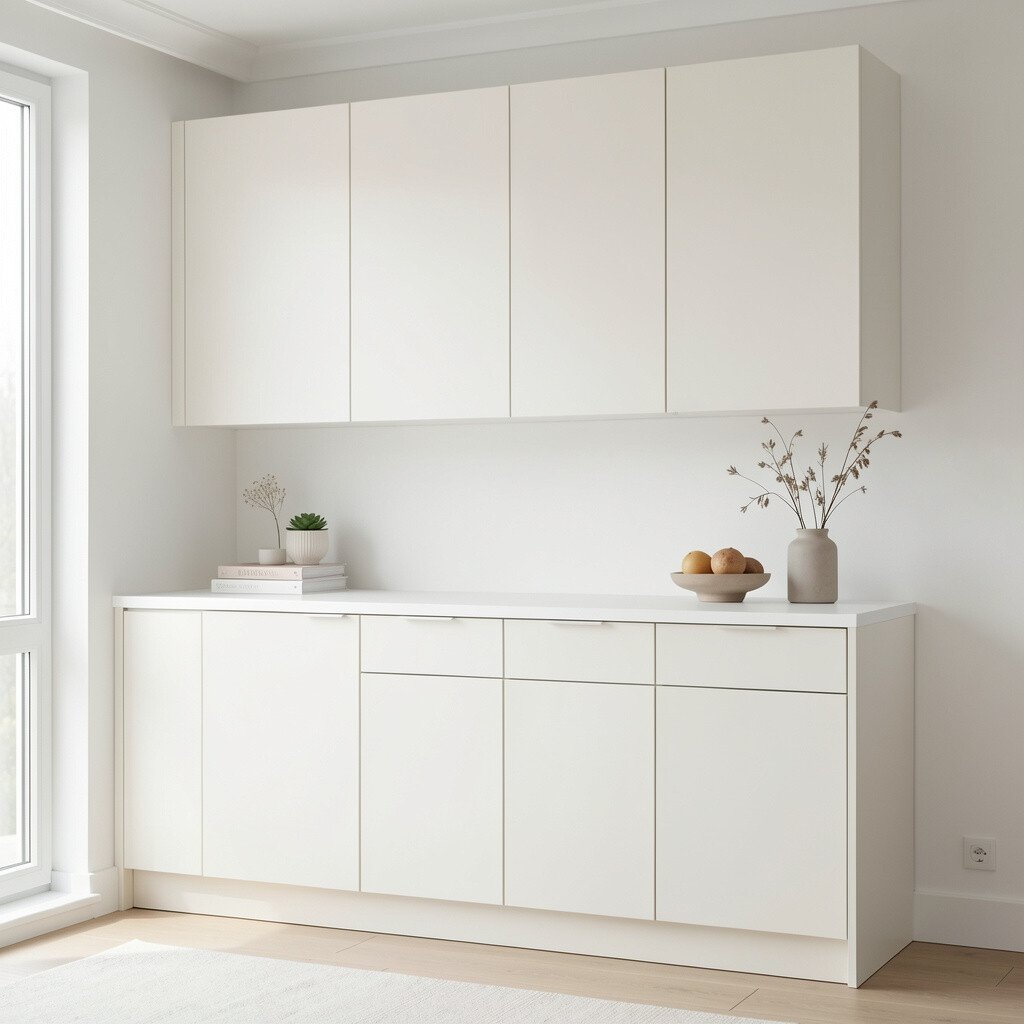
Not all whites look the same, and an off-white can make your space feel softer. Visualize creamy cabinetry that pairs well with natural light and warm flooring.
Pick a shade with a slight undertone that matches your room, such as warm cream for yellow sunlight or cooler white for brighter, bluish light. Keep countertops and backsplashes simple so the cabinet color stays the main focus. If you love personalization, add a thin band of wood trim under a few upper cabinets to bring subtle warmth.
For cost planning, test samples in the room during morning and evening, since lighting changes the look. Buying one gallon of the right paint for touch-ups can save money later. This approach also reduces stress when you’re trying to keep the whole home cohesive.
5. White Cabinets With Hidden Pulls
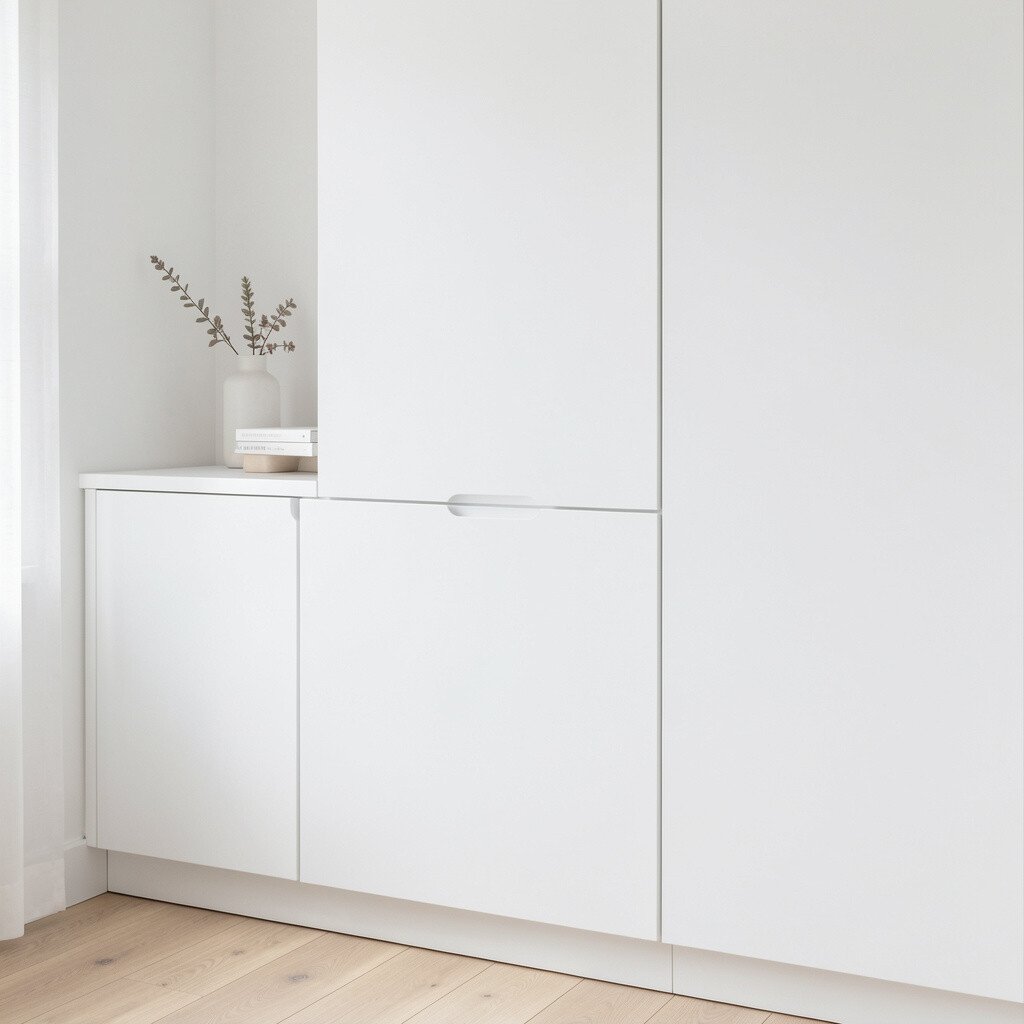
Picture cabinet doors with no visible knobs, creating uninterrupted lines across the kitchen. Hidden pulls make the space feel calmer and easier to keep visually tidy.
Choose push-to-open or integrated finger pulls, especially for drawers and base cabinets where you reach often. This is practical because fewer knobs collect dust, and it keeps your minimalist style consistent.
To personalize without clutter, pair hidden pulls with a single, matching hardware finish across the entire run. If you want a budget-friendly route, look for integrated hardware systems that work with standard door sizes. You can keep the look sleek while still controlling costs.
6. Tall White Pantry Cabinets for Vertical Calm
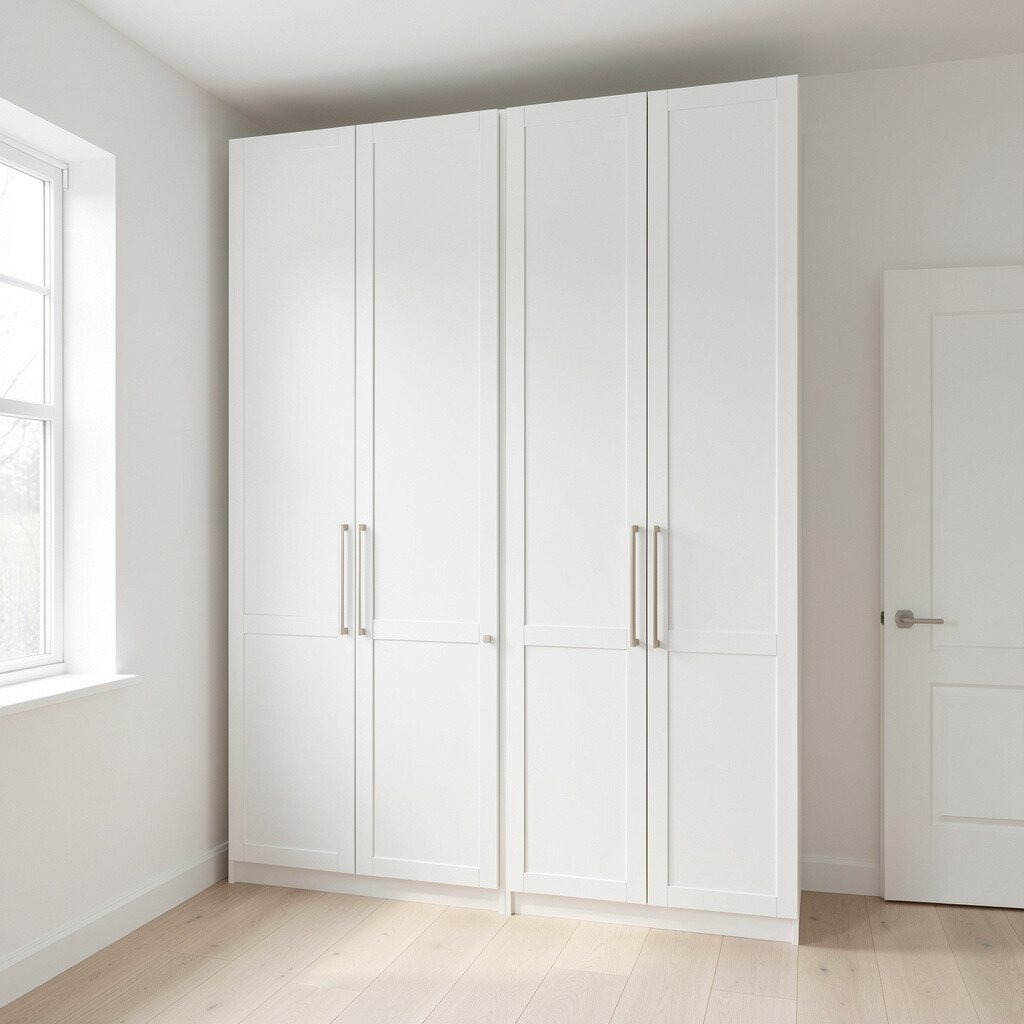
Imagine tall white pantry cabinets reaching toward the ceiling, creating strong vertical lines. A pantry that blends in reduces visual noise and keeps your ingredients organized.
Go for full-height storage with adjustable shelves so you can fit bulk items, small jars, or baking supplies. Add pull-out organizers for spices and utensils, so everything has a home and you spend less time searching.
For a unique touch, consider a narrow vertical strip of open shelving inside the pantry for a few favorite items. If you’re thinking about cost, measure carefully and focus on one tall section first, since it can deliver a big impact without redoing the entire kitchen. This style also pairs well with current minimalist trends that favor vertical organization.
7. White Cabinets With Slim Profile Trim

Think of white cabinets finished with slim trim details that frame each door like a clean picture edge. The result feels crisp and intentional, not bulky or heavy.
Choose a trim style that matches your room’s style, such as modern straight lines or a very shallow panel effect. Keep the overall palette quiet, then let the trim create interest in a subtle way.
For practicality, make sure the trim doesn’t trap dust in corners by keeping a smooth finish and easy-to-clean surfaces. If you want personalization, vary trim thickness on upper cabinets versus lower ones for a gentle rhythm. When budgeting, ask for a finish that’s durable enough for daily cleaning, since cabinet fronts take a lot of touch.
8. White Cabinets With Glass Inserts Only Where You Need Them
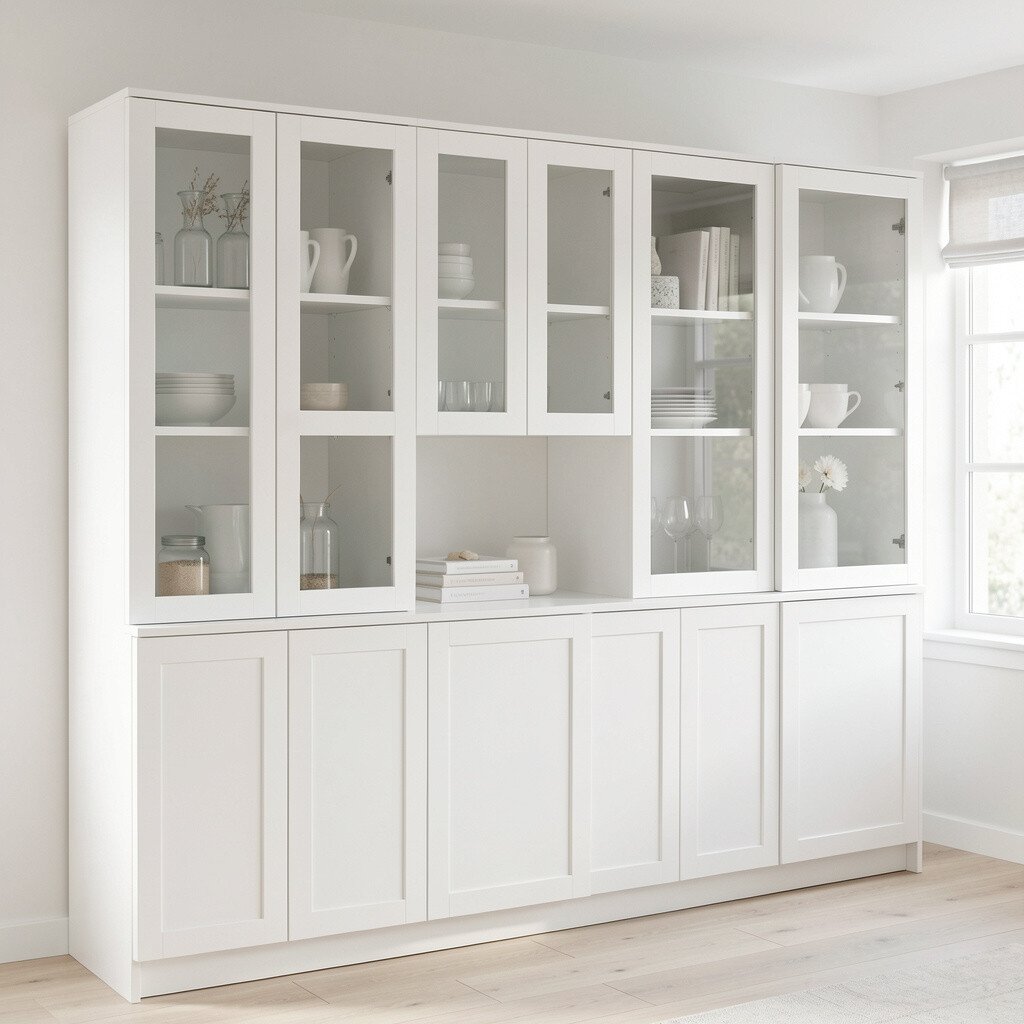
Picture a few cabinet doors with glass inserts, while the rest stay solid white. This keeps the look minimalist but gives you a place to show a small curated set.
Choose clear glass for a modern feel or frosted glass to soften the view. Display items like white mugs, simple glass jars, or a few stylish bowls, then keep the rest hidden to maintain order.
To keep it practical, use adjustable interior shelves so the glass doors can fit your dish sizes. If you want a budget-friendly approach, add glass inserts only on one cabinet wall instead of throughout the kitchen. This matches current trends that favor restrained display rather than open clutter.
9. Matte White Cabinets for Fingerprint-Resistant Living
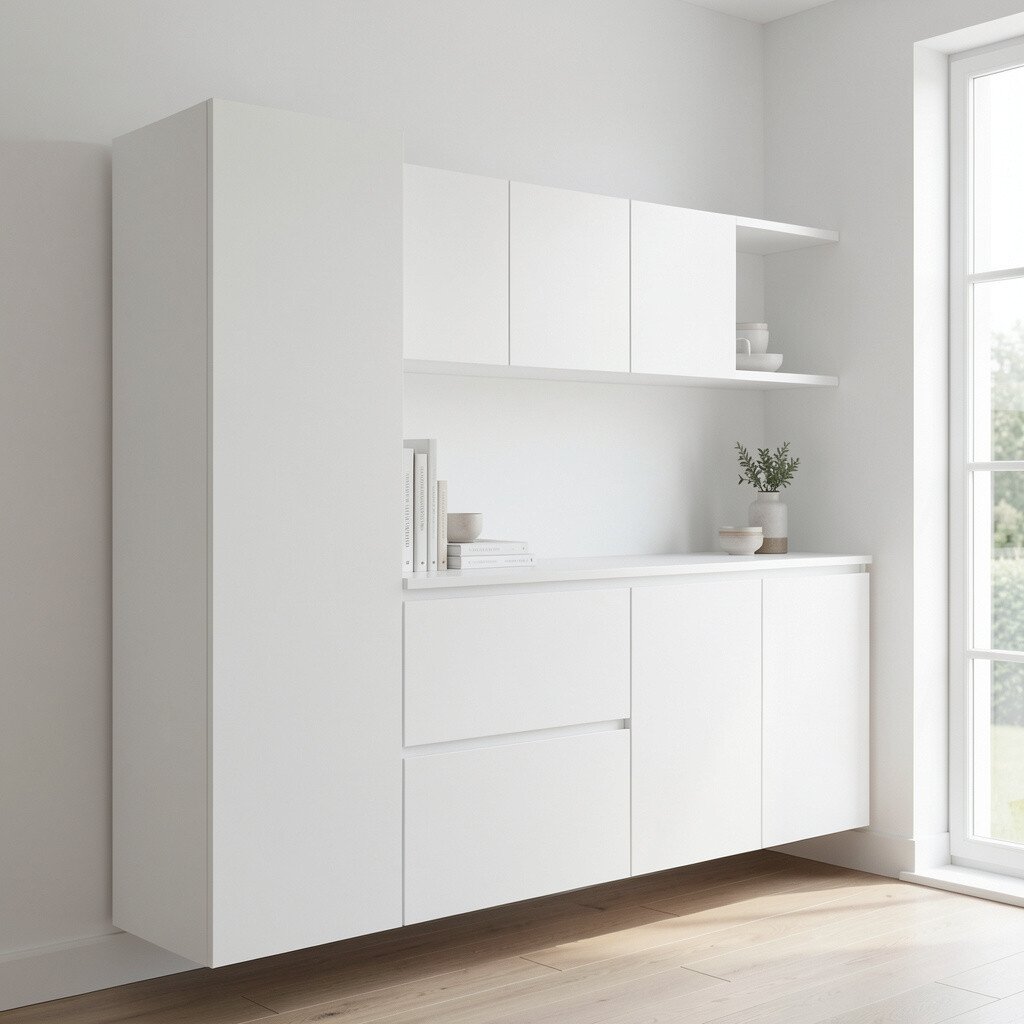
Matte white cabinets look smooth and modern, and they hide everyday marks better than glossy finishes. Visualize a calm kitchen surface that still looks fresh after busy weeks.
Pick a matte paint rated for cabinetry and consider a protective topcoat for durability. Keep cleaning easy by wiping with a soft cloth and gentle cleaner, so you won’t damage the finish. Personalize by adding a warm countertop and simple lighting, which pairs well with matte textures.
For cost considerations, matte finishes may require careful prep, but the long-term look can reduce repainting needs. If you want a lower-cost experiment, refinish one section or swap doors first before committing to full replacement. This strategy helps you stay confident while upgrading your home.
10. White Cabinets With a Floating Shelf Detail

Picture a floating shelf bridging between white upper cabinets, creating a clean “break” in the wall. The open space makes the kitchen feel airy without losing storage.
Use the floating area for a few essentials like a cutting board, a small plant, or a simple utensil jar. Keep the styling minimal so the shelf supports the look instead of adding clutter.
For a practical tip, mount the shelf securely and hide wiring if you add lighting. If you want a unique twist, choose a shelf in the same wood tone as your flooring for a natural connection. To manage cost, build the shelf from a ready-to-finish board and paint the base cabinets yourself if you’re comfortable.
11. White Cabinets With Coordinated White Countertops

Imagine white cabinets paired with bright, light countertops for a seamless, airy feel. This combination makes small rooms feel larger and helps the whole space look intentional.
Choose materials with subtle movement, like speckled or veined stone, so the kitchen never looks flat. Keep the backsplash simple, such as a clean tile or a minimal slab, so the countertop and cabinets look like one calm surface.
If you want personalization, add a single contrasting element like a warm wood stool or a black faucet. For cost, consider durable laminate or engineered options for the countertop to achieve a similar look without the highest price. This pairing is a strong fit for minimalist homes that aim for visual harmony.
12. White Base Cabinets With a Lightweight Open Corner
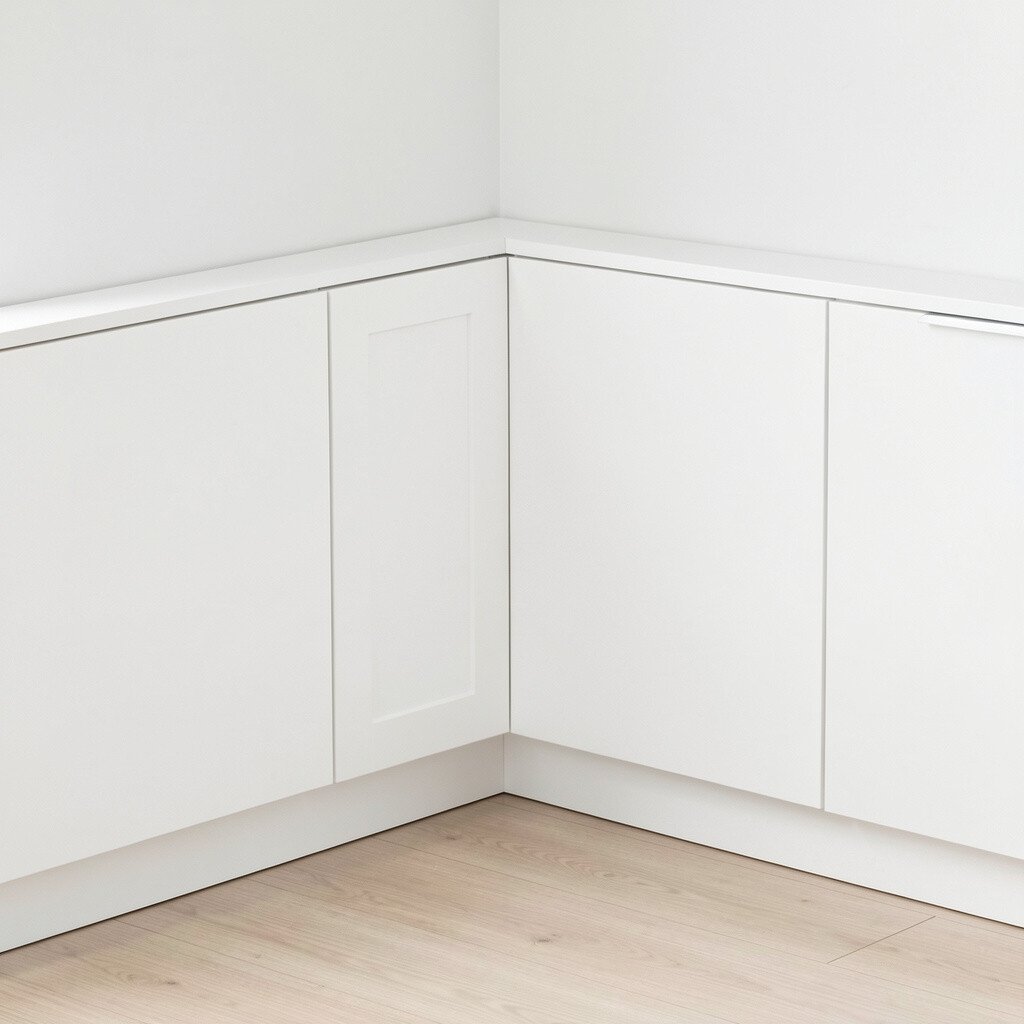
Picture a white base cabinet run with one small corner section left open or open-shelved. That “breathing room” makes the kitchen feel less boxy while keeping the rest tidy.
Use the open corner for a basket, a cookbook, or a daily-use item so it stays functional. Keep the surrounding cabinets solid and clean so the open area feels like a deliberate design choice rather than an accident.
For practical planning, measure the corner carefully and choose storage items that fit tight, like slim baskets or a narrow tray. Personalize the look by choosing a basket texture, such as woven or fabric-lined, to add warmth. If you want to control costs, start with open shelves in one corner since it’s cheaper than redesigning multiple areas.
13. White Cabinets With One Accent Finish in Hardware
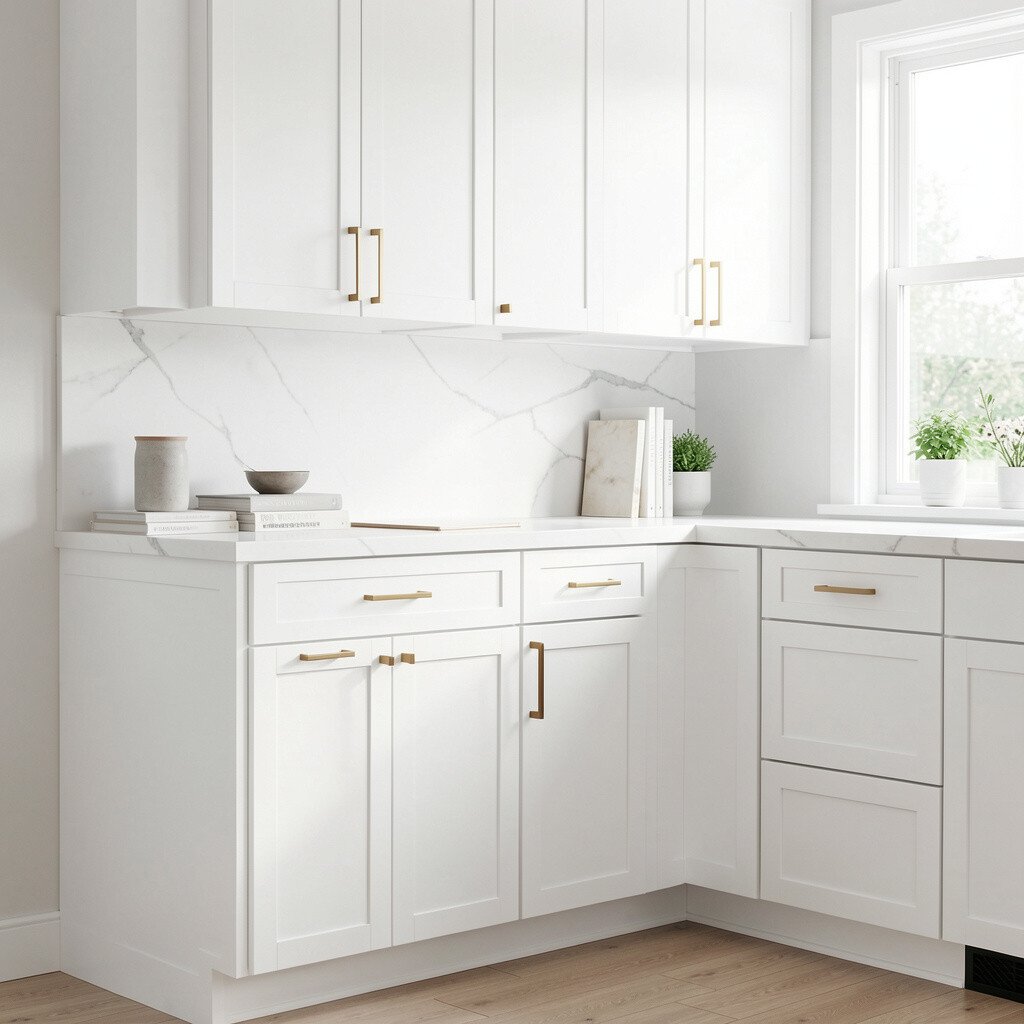
Imagine mostly white cabinets, but every pull and knob matches one accent finish like brushed brass or matte black. The look stays minimalist while still feeling stylish and finished.
Choose one hardware finish and repeat it across faucets, lighting, and even towel bars if they’re nearby. This creates a cohesive feel that looks intentional rather than random.
For practical tips, select hardware that feels comfortable in the hand and is sized for easy gripping. If you want personalization, pick an accent finish that matches your existing room accents, like frames or drawer pulls in other areas. To manage cost, buy hardware in bulk or choose a standard size system so you don’t overspend on custom pieces.
14. White Cabinets With Color-Matched Interior Shelves
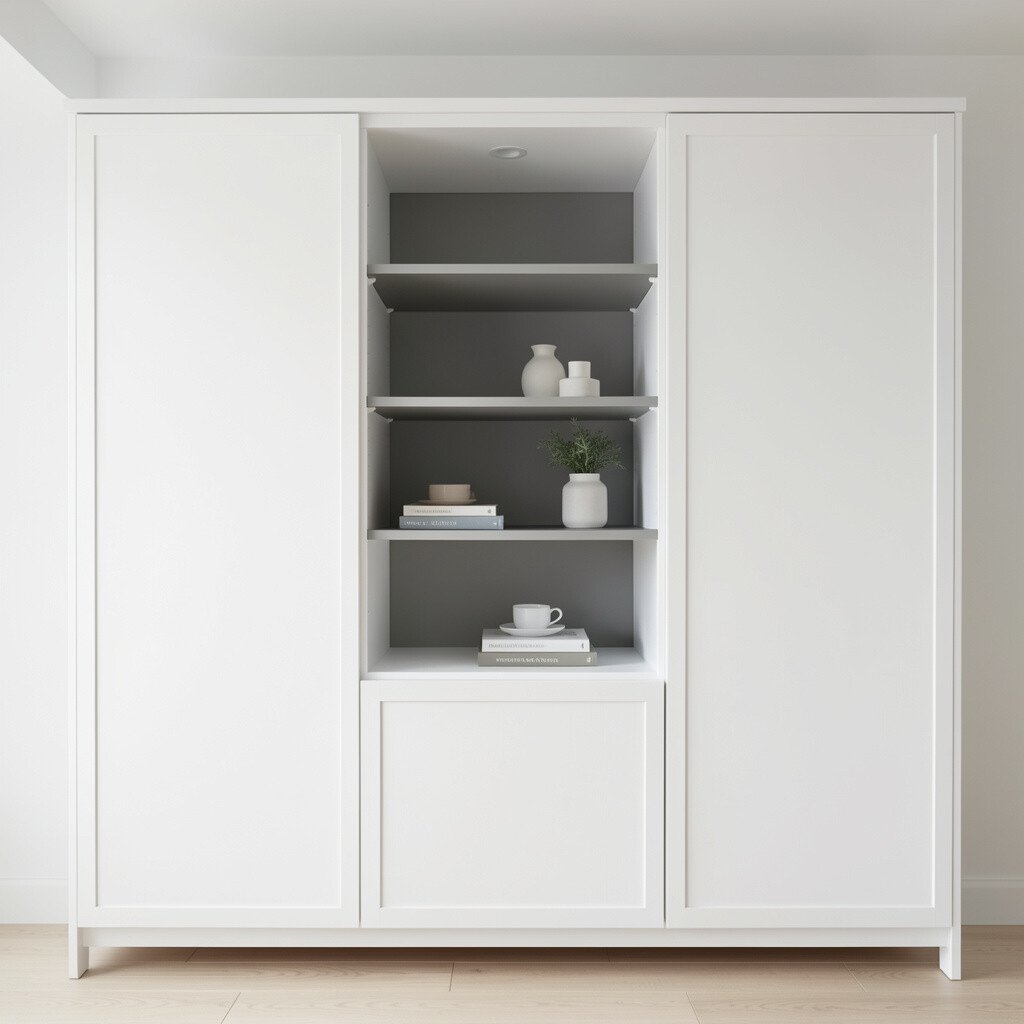
Picture white cabinets with interior shelves finished in a complementary neutral, like warm gray or soft white. When you open the doors, the whole system feels neat and designed.
This approach helps you stay minimalist because storage looks clean even when you’re using it. It also makes it easier to blend bins, jars, and organizers so everything feels tidy.
If you want a unique touch, choose a slightly darker shelf liner for easier visibility of small items. For practicality, use shelf liners that are easy to wipe and can handle kitchen spills. Cost-wise, you can often achieve this with paint, laminate shelf liners, or inexpensive shelf inserts instead of custom interiors.
15. White Cabinets With Minimal Countertop Clutter Zones

Imagine a kitchen where white cabinets coordinate with countertop zones that are kept intentionally clear. The cabinets become the foundation for everyday routines that stay streamlined.
Create a specific landing spot for items you use every day, like a knife block area or a mug tray, and store everything else behind cabinet doors. This makes cleaning faster and helps the kitchen keep its calm visual rhythm.
To personalize, choose organizers that match your lifestyle, like a utensil drawer for frequent cooking or a pull-out pantry tray for snacks. If you’re thinking about cost, start with organizers and liners first, since they’re often less expensive than changing cabinet layouts. This can still deliver a big “minimalist” feeling even before you renovate.
16. White Cabinets With a Subtle Two-Tone Upper Section
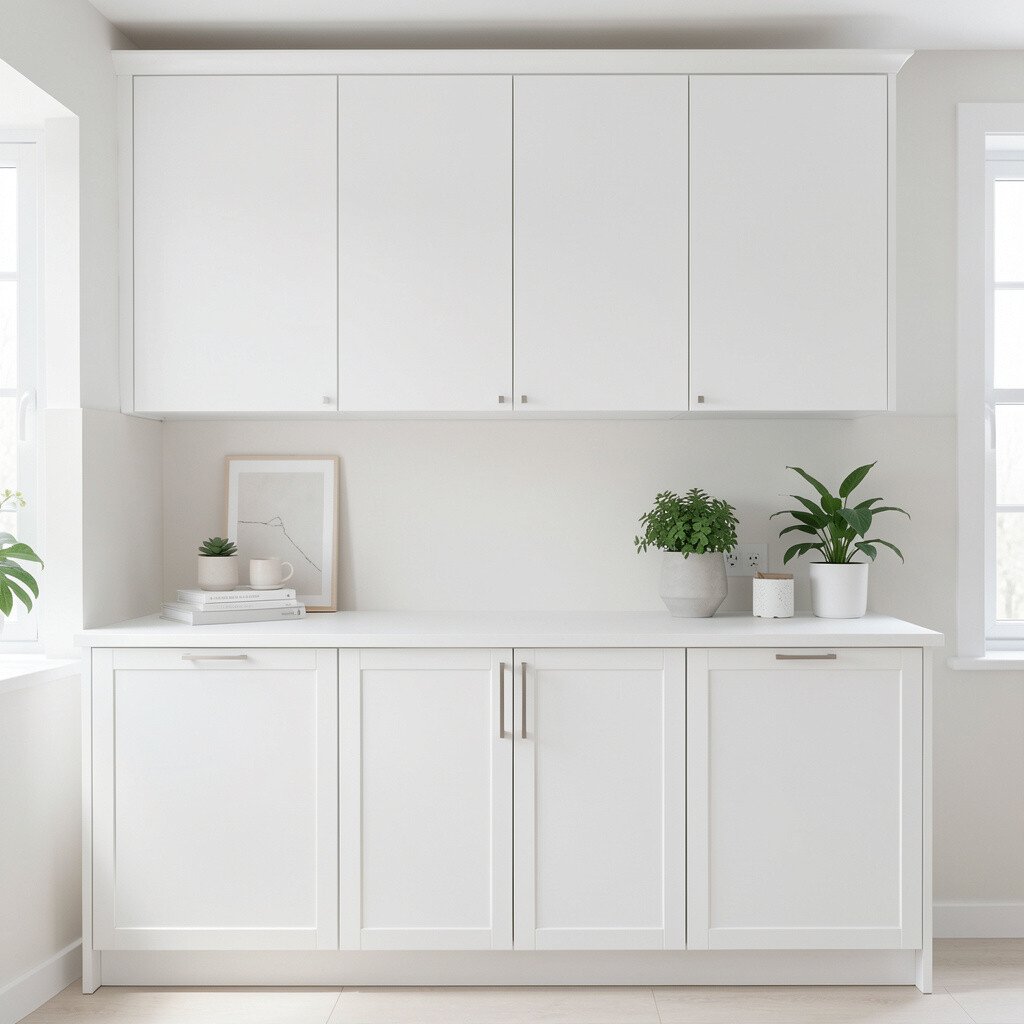
Picture white cabinets with the upper section slightly different, like an off-white or a gentle contrast shade. The room stays minimalist, but your eyes get a soft sense of depth.
Choose the second tone carefully so it’s close enough to feel cohesive, not dramatic. Pair the two-tone look with simple lighting and a backsplash that doesn’t compete with the cabinets.
For practical tips, keep door styles consistent so the look remains clean. Personalize by making glass-front cabinets in the upper section match the tone, which adds a curated feel without clutter. Cost considerations matter here, so plan ahead for enough paint coverage and consider using the same sheen across both tones.
17. White Cabinets With Ceiling-High Spans and Clean Ceilings
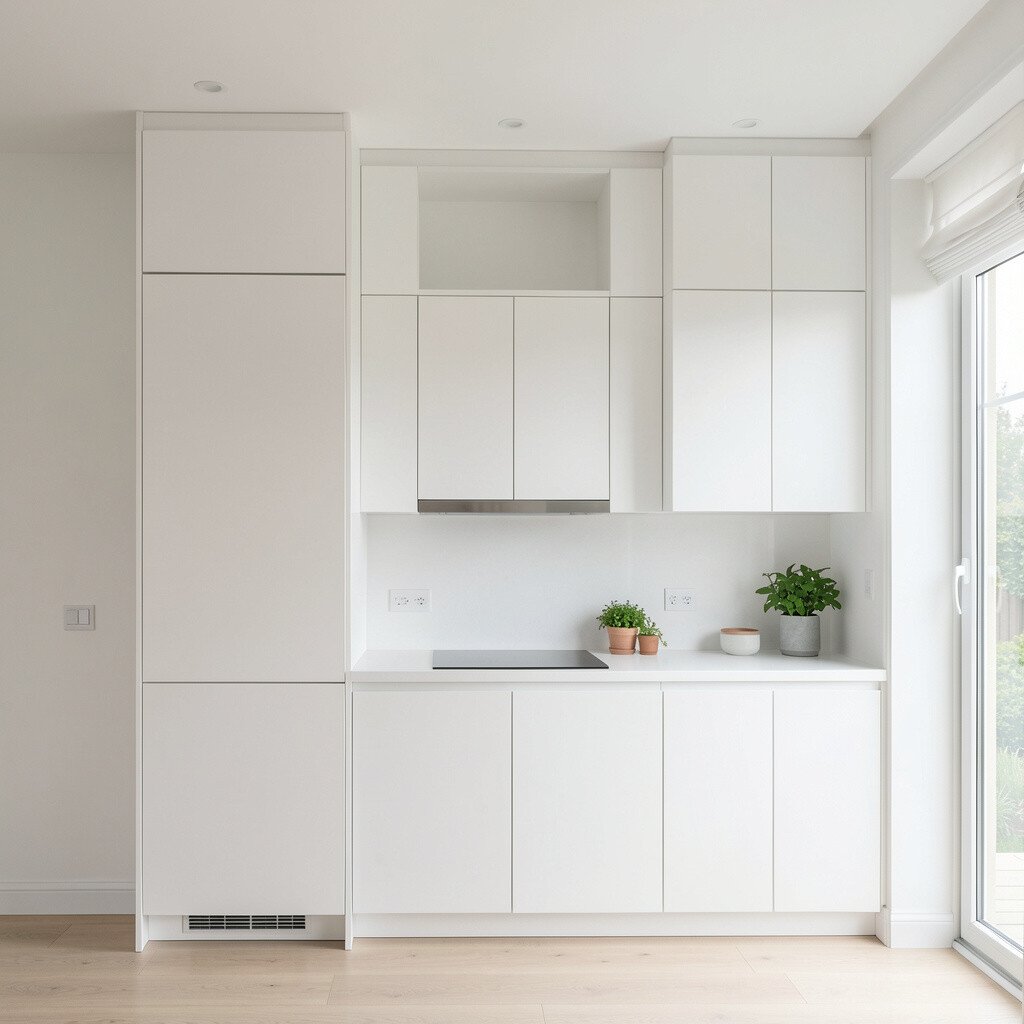
Imagine cabinets that rise nearly to the ceiling, leaving little empty space on top. This design makes the wall feel complete and helps the room look taller and more ordered.
For minimalist homes, ceiling-high storage reduces dust-catching gaps and gives you more practical space for seasonal items. Use the top interior for items you rarely need, and keep everyday supplies in the mid-range shelves.
If you want personalization, add a slim crown detail that matches your room’s trim style, or keep it totally flat for a modern look. Cost-wise, ceiling-high installs can require accurate measurements and strong mounting, so hire help if you feel unsure. Still, the visual payoff is worth it because the lines look sleek and intentional.
18. White Cabinets With Textured Details for Gentle Depth
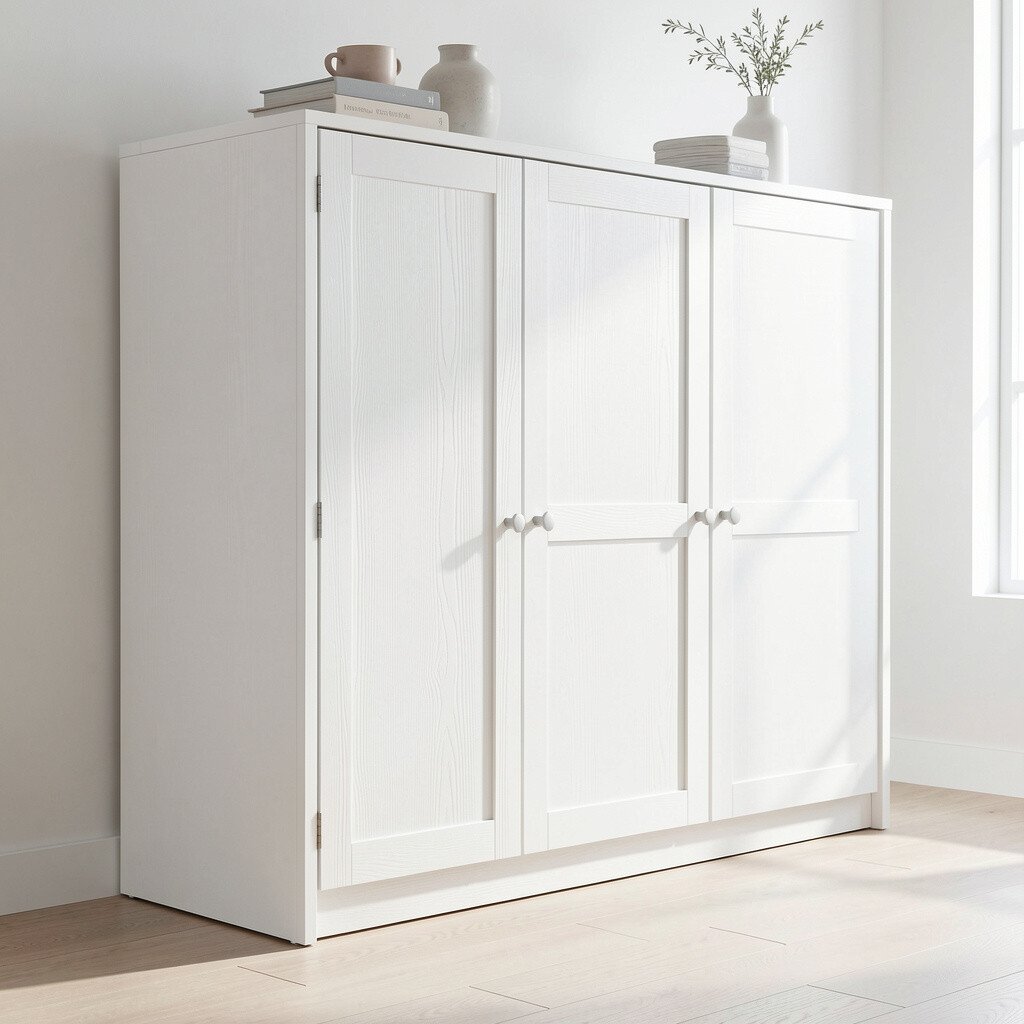
Think of white cabinets with subtle texture, like a faint linen finish or a gently embossed panel. The texture adds depth that stays soft, making minimalism feel warmer and more human.
Use textured cabinets on all doors for a full effect, or limit them to one section like an island base to keep the rest simple. Pair the texture with smooth surfaces elsewhere, such as a clean countertop and simple flooring, so the look stays balanced.
For practical tips, choose a texture that’s easy to clean and won’t trap grime. Personalize by matching the texture direction on doors and panels so it feels consistent. If cost is a concern, look for textured finishes as a finish upgrade rather than a full material change, which can keep spending in check while still giving a unique look.