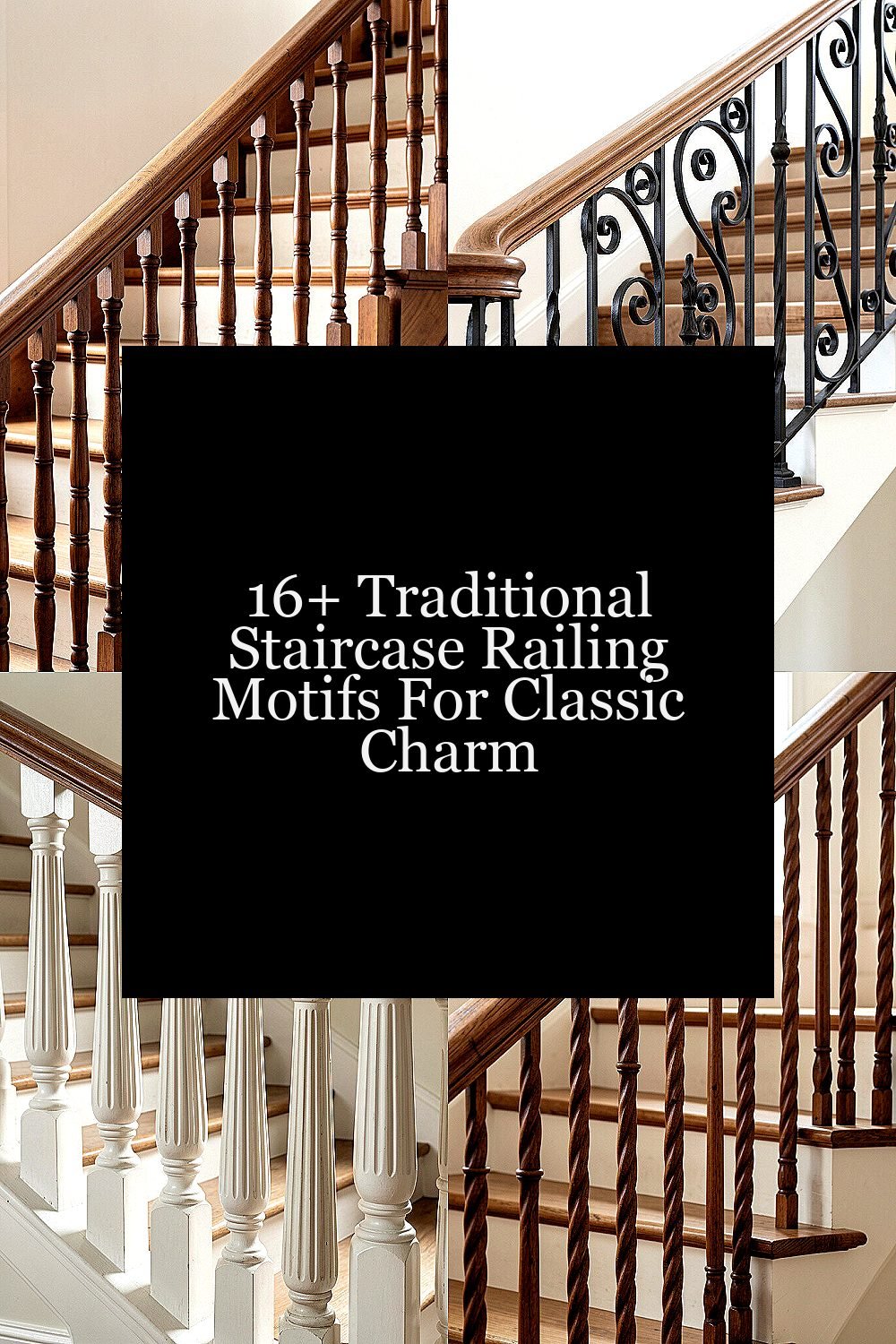
The staircase is often the first place people notice craftsmanship. A well-chosen railing motif can make your home feel instantly more polished and warm.
Traditional designs bring comfort, history, and a little ceremony to everyday movement. When the details are right, the whole entry feels more intentional.
1. Turned Spindle Lattice
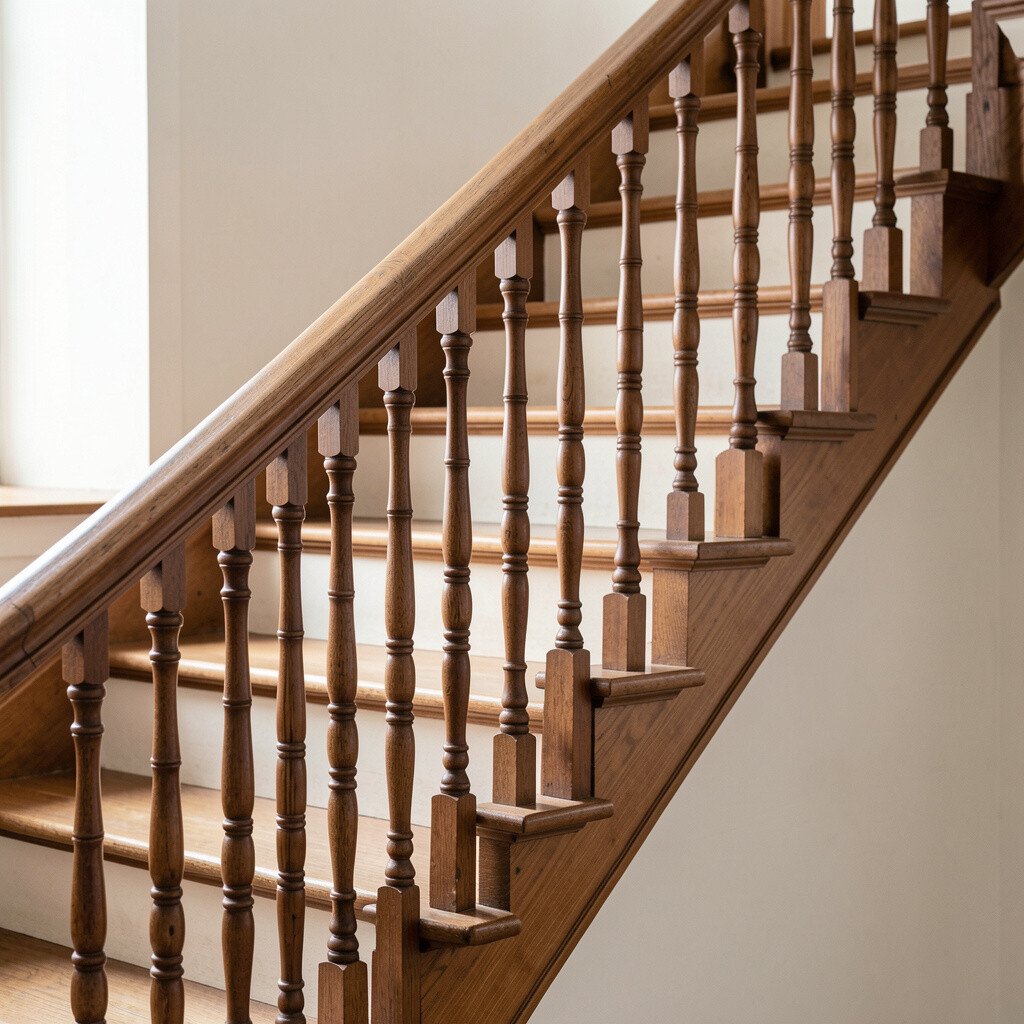
Classic turned spindles catch the light and create a rhythmic pattern from top to bottom. You can picture each curved profile repeating like gentle waves along the stair edge.
This motif feels timeless because it’s rooted in everyday craftsmanship. It also helps your railing look more substantial without adding heavy visual bulk.
If you love a clean look, keep the spindle spacing consistent and choose a finish that matches your woodwork. For personalization, vary spindle diameter slightly for a subtle hand-made feel that still reads classic.
2. Wrought Iron Scrollwork
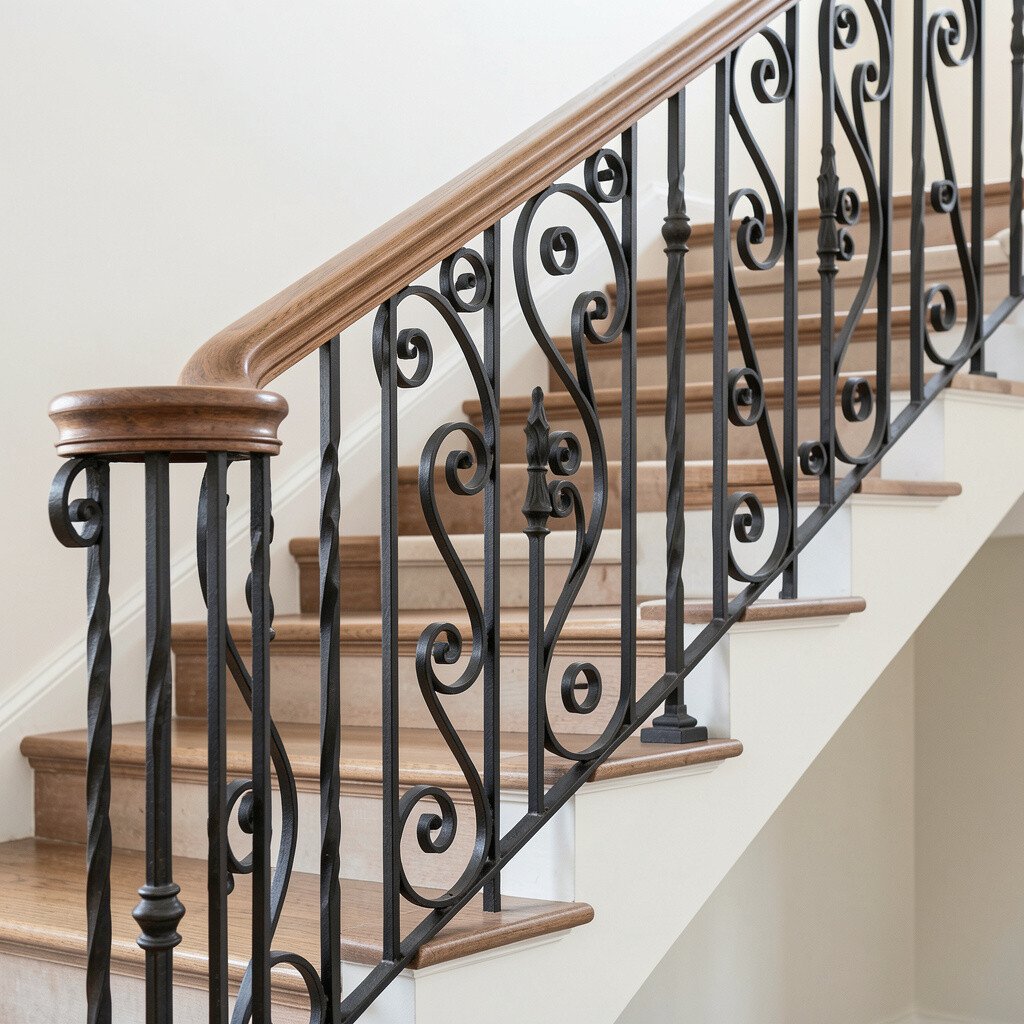
Graceful scrolls curl outward like slow-moving vines, giving the staircase a graceful frame. Against wood handrails, black or bronze iron creates strong contrast and a crisp silhouette.
This motif stands out because it adds motion to a stationary structure. It also pairs well with both traditional and farmhouse interiors, especially when the rest of the home uses natural textures.
For practical balance, match the scroll thickness to your stair width so the design doesn’t feel crowded. Budget-wise, handcrafted scrollwork costs more, but you can choose simpler patterns in the lower run and keep the most detailed section for the landing.
3. Baluster Columns With Fluted Faces
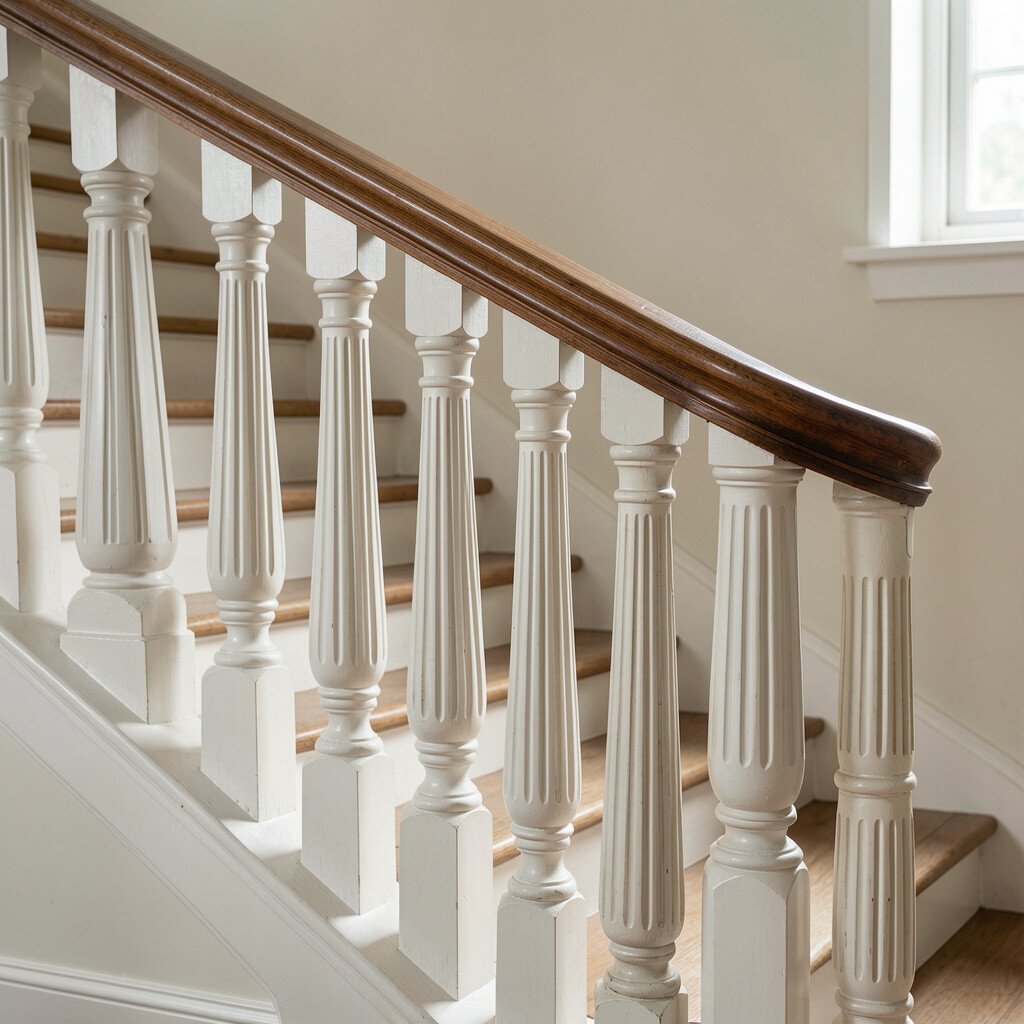
Fluted baluster columns resemble the charm of classic building facades. As you walk by, the vertical grooves create a soft play of shadow that makes the railing feel elegant.
This style brings structure and order, which is great for homes that already feel neatly designed. It also makes your handrail look like it belongs in a stately setting, even in a smaller space.
To keep it comfortable, select a handrail profile that fits the way you naturally grip. Personalize the look by choosing a wood species or stain that echoes your floor tones, so everything feels connected instead of competing.
4. Classic Rope Twist Motif
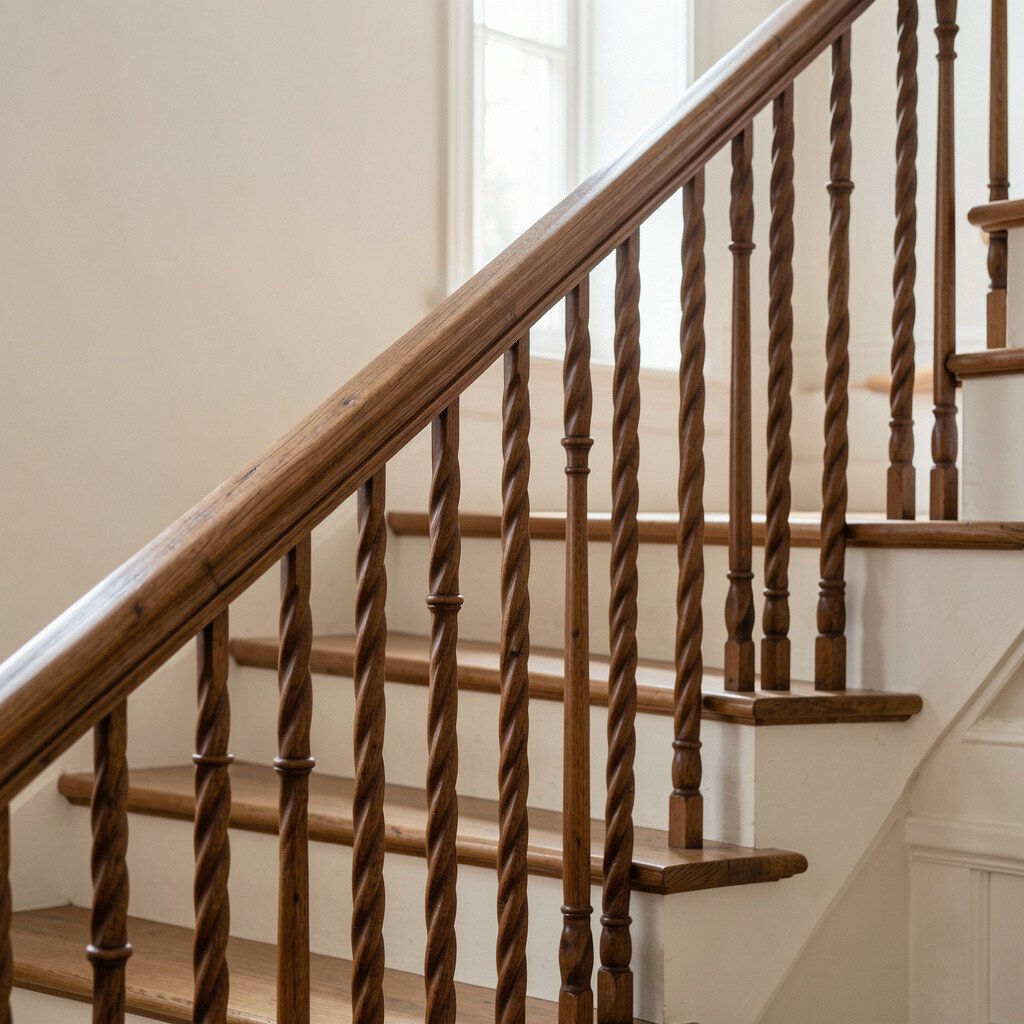
A rope twist railing looks like polished cord wrapped around the handrail. The twisting line adds energy while still feeling traditional and refined.
This motif is a smart choice when you want elegance without too many separate parts. It also hides small surface imperfections better than some ultra-smooth styles, which can save you stress during maintenance.
Keep the twist pattern consistent by selecting a railing system meant for stair applications rather than a straight run adaptation. If you want a slightly softer look, choose a satin finish so the twist reads smooth and warm instead of shiny.
5. Gothic Pointed Spires
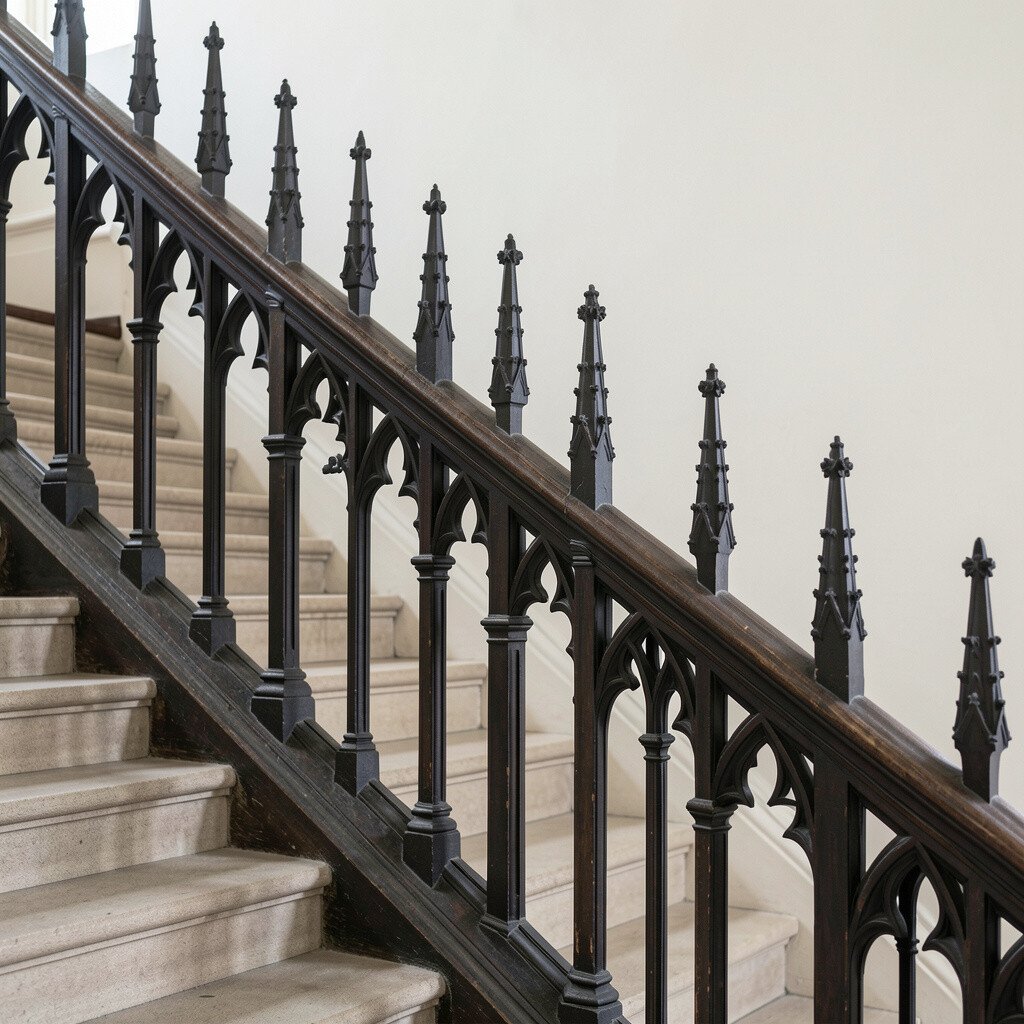
Pointed spires rise upward like miniature towers, giving the staircase a dramatic silhouette. Even simple spires can make your entry feel grand and full of character.
This motif is unique because it adds vertical emphasis, drawing the eye upward and making ceilings feel taller. It also works especially well when your home has arched doorways, dark trim, or classic molding.
For practical tips, make sure the spacing keeps fingers safely away from sharp-looking gaps. Consider cost carefully, since more detailed shapes can require specialized fabrication, but a minimal spire pattern can still deliver the gothic mood.
6. Panel-Like Railing Frames
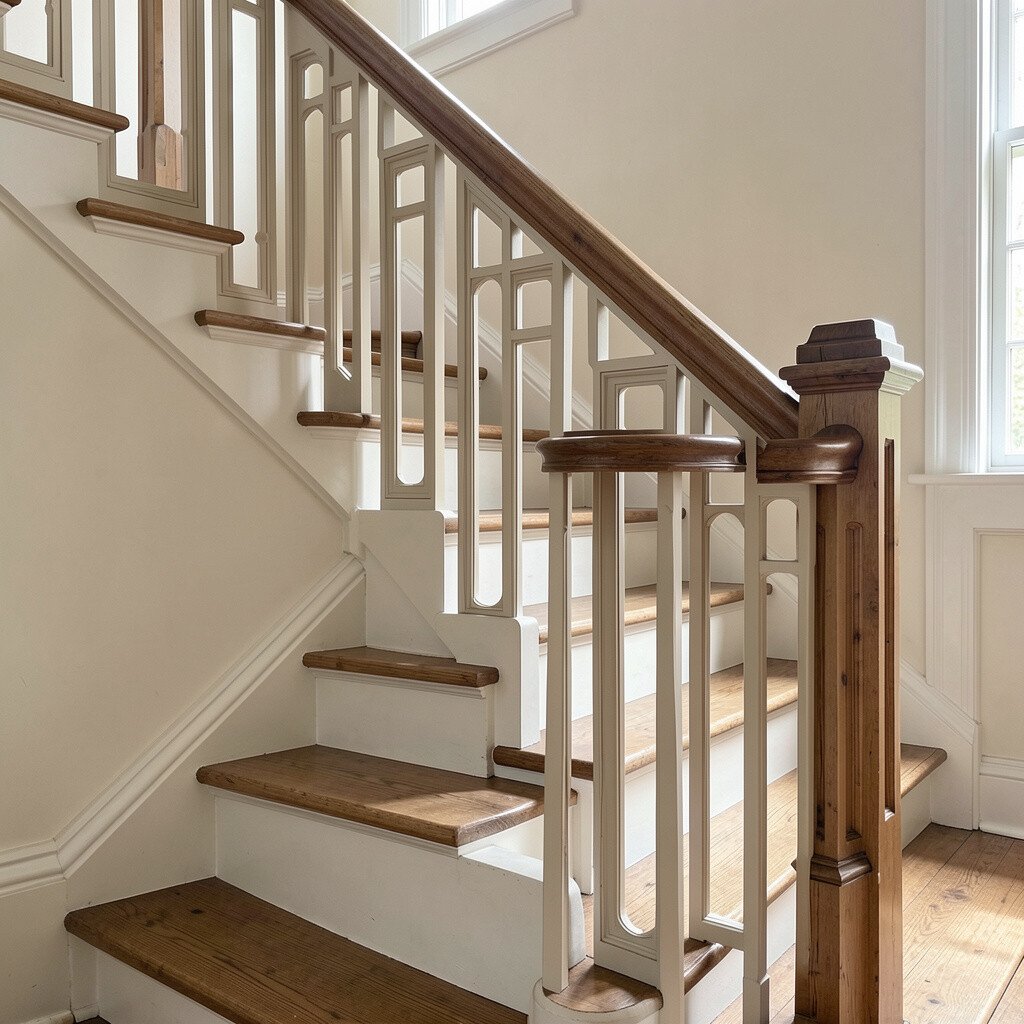
Panel motifs create a tidy, architectural look by shaping sections between rails. You see strong borders, like picture frames, holding the view as you move up the stairs.
This motif feels classic because it emphasizes structure over clutter. It can also help your staircase look more custom when your walls or woodwork already use paneling themes.
To keep it practical, choose panel thickness and rail height that feel solid when you rest your hand. Personalize by adding raised moldings or matching panel patterns to nearby built-ins, which makes the whole home feel designed, not random.
7. Laurel Leaf Baluster Accents
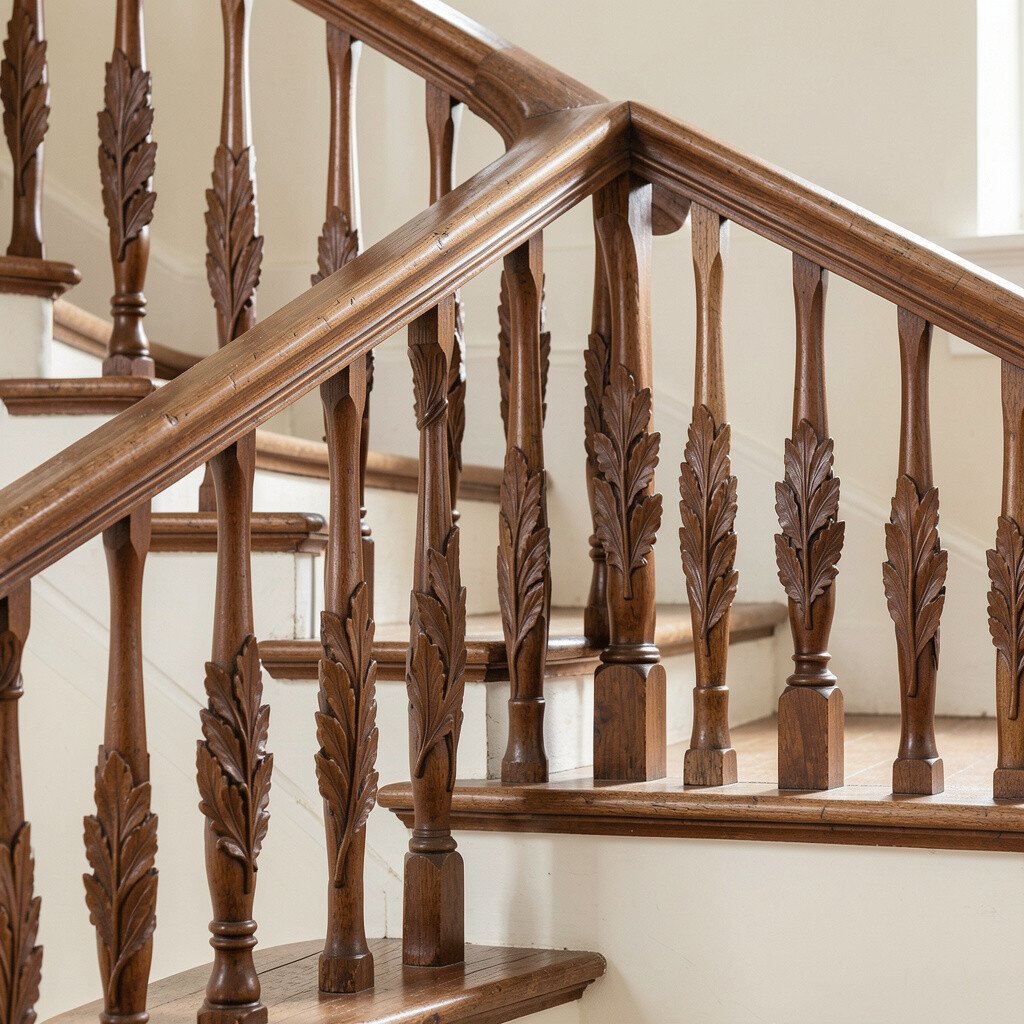
Laurel leaf details bring a gentle, celebratory mood to a staircase railing. Small leaf accents can look refined rather than flashy, especially when they repeat evenly.
This motif feels unique because it nods to traditional ornament while staying approachable. It also adds warmth to entryways that might otherwise look too plain or too modern.
When you plan installation, keep leaf placements consistent so the pattern reads clean from the bottom step. For cost, smaller accents often cost less than full coverage metalwork, and they still create a high-end feel.
Personalize by choosing a finish that complements your hardware, like warm bronze for aged brass fixtures. If you prefer softer contrast, you can also paint leaves in a matching shade instead of using dark iron.
8. Classic Square-Turn Panels
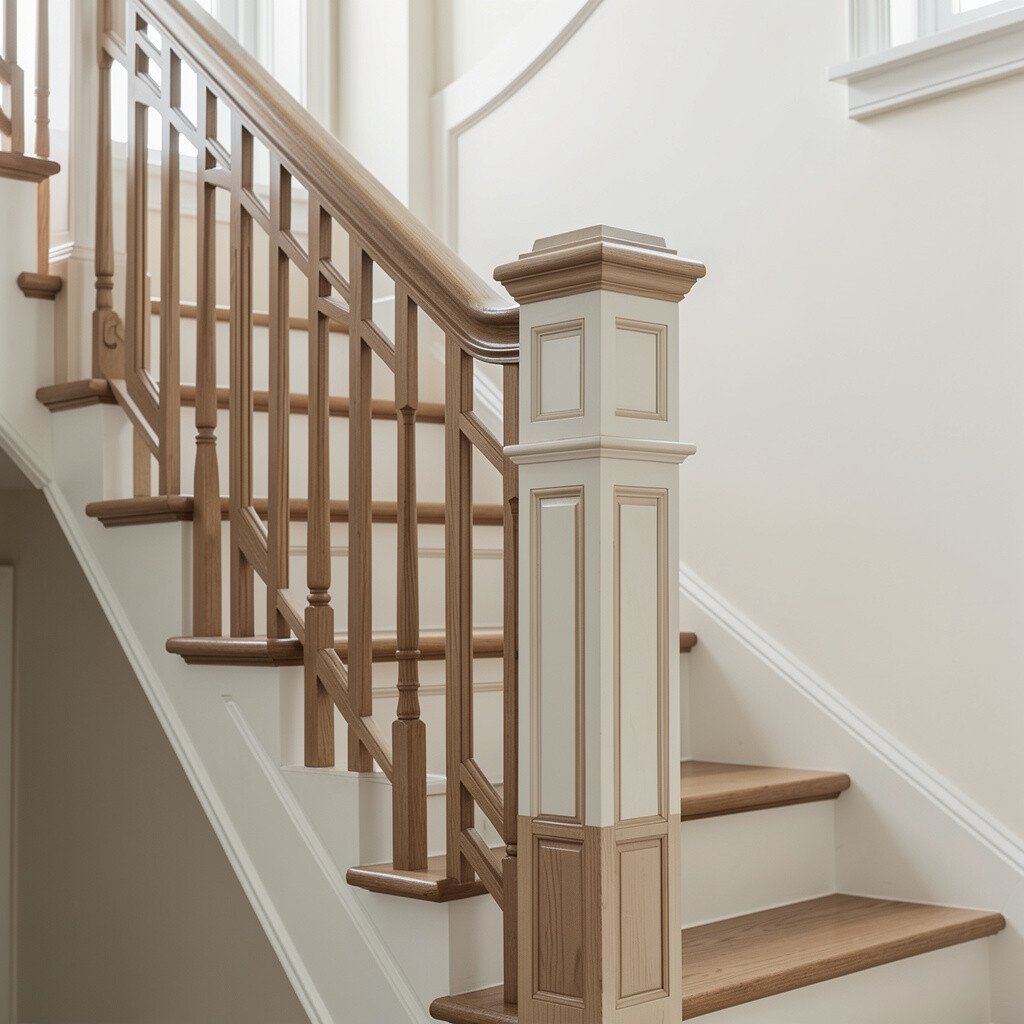
Square-turn motifs highlight corners and crisp geometry as the railing turns around landings. The look is steady and orderly, which suits many traditional homes.
This style is beneficial for practical movement because the visual lines help guide your eye to where you’re stepping. It also looks strong in hallways that already have squared trim or shaker-style cabinetry.
For a smoother budget, choose simplified square-turn brackets and pair them with a decorative handrail profile. Personalize by matching the bracket finish to your staircase lighting, so everything feels like one coordinated design story.
Also, check local requirements for railing height and spacing early so you don’t need costly changes after installation starts.
9. Oval Scroll With Center Medallion
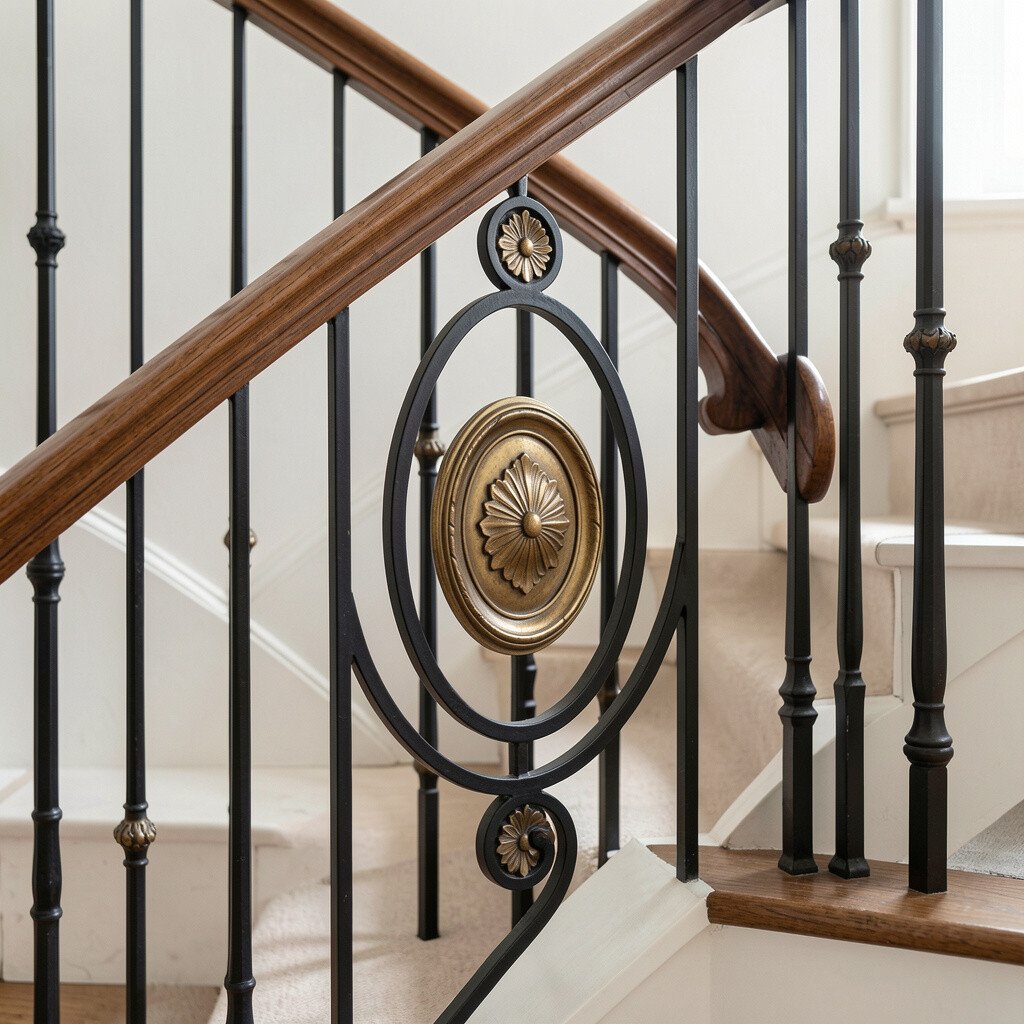
Oval scrolls with a center medallion create a focal point that feels ceremonial. As you pause near the landing, the center piece draws your attention and makes the railing feel like a “feature,” not just safety hardware.
This motif offers visual uniqueness because it combines repeating motion with a single anchor detail. It also helps break up long stair runs, which can otherwise feel visually flat.
If you want a practical touch, place the medallion at eye level when you reach the top of the stairs. Cost considerations matter here since central features usually require more custom metal or carpentry, but choosing one medallion design for the main run can keep spending under control.
10. Raised Roundels On Wood Rail
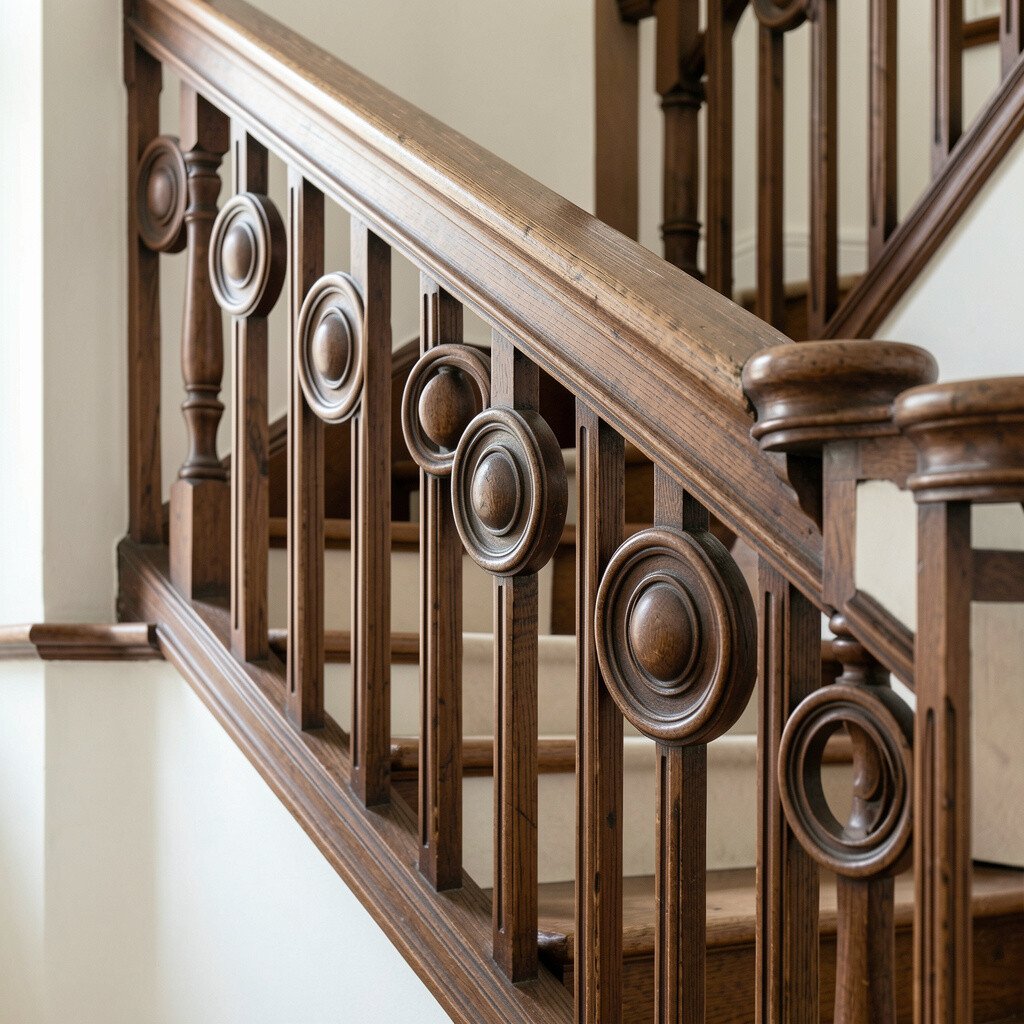
Roundels, like small carved disks, add a friendly classic feel to a railing. You can imagine them spaced evenly, creating a gentle pattern that doesn’t overwhelm the room.
This motif is beneficial because it looks detailed up close while still reading simple from far away. It also pairs well with traditional stained wood and can soften the look of darker hallways.
For practical tips, pick roundel sizes that feel comfortable at hand height and avoid anything too protruding. Personalize by staining the rail a deeper tone while keeping roundels slightly lighter, which creates subtle dimension without needing extra decoration.
In terms of cost, wood roundels are often more affordable than fully wrought iron scrollwork, especially if you choose a standard spacing.
11. Basket-Weave Infill Sections
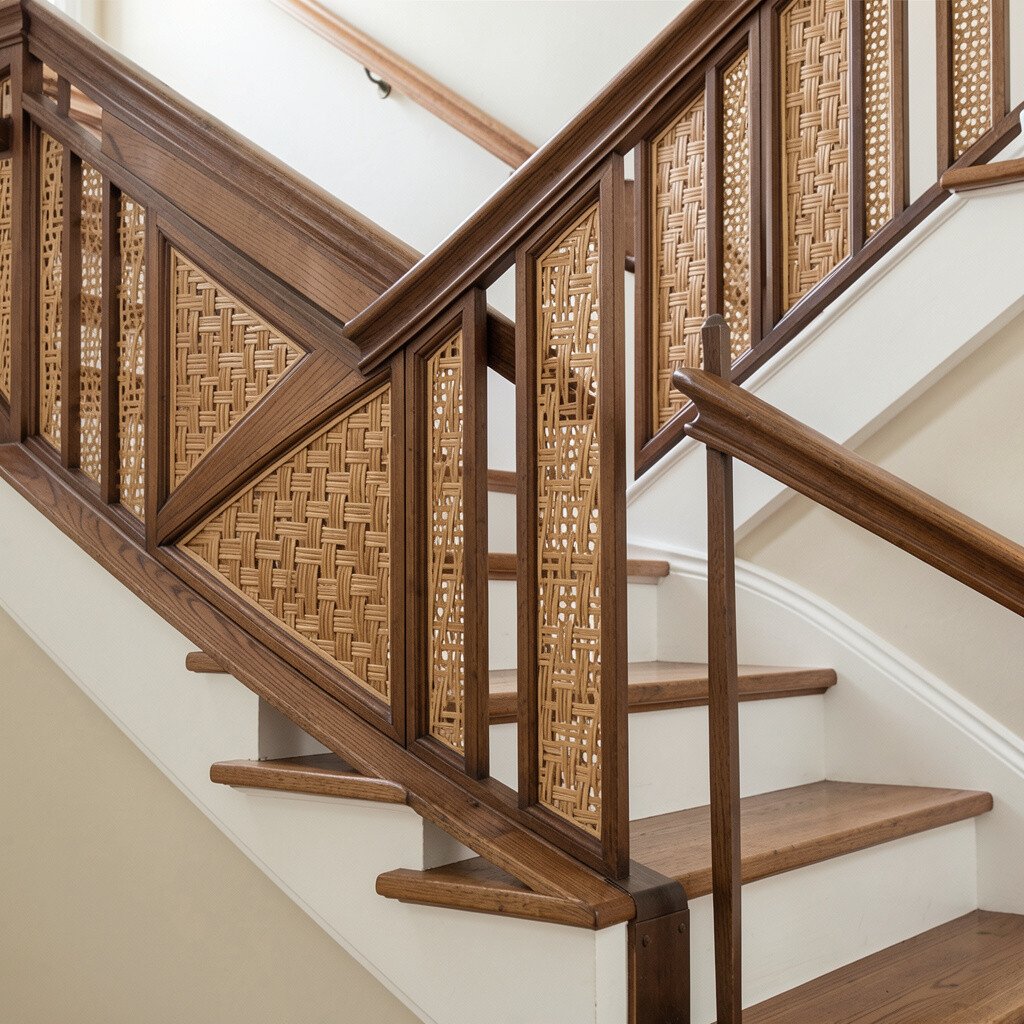
Basket-weave infill gives the railing a woven, textured look across sections. The pattern feels warm and arts-and-crafts inspired, while still staying traditional.
This motif is unique because it adds fabric-like texture to a structure that normally looks flat. It can also help hide minor imperfections since the texture breaks up sightlines.
For practical considerations, ensure the infill is made from durable material meant for stair use, not delicate decorative pieces. A great personalization idea is to match the weave rhythm to any existing patterns in your home, like rug textures or upholstery details.
Current trends lean toward tactile finishes and mixed materials, so a basket-weave motif can feel fresh without leaving “classic” behind.
12. Classic Baluster Rod With Flowering Ends
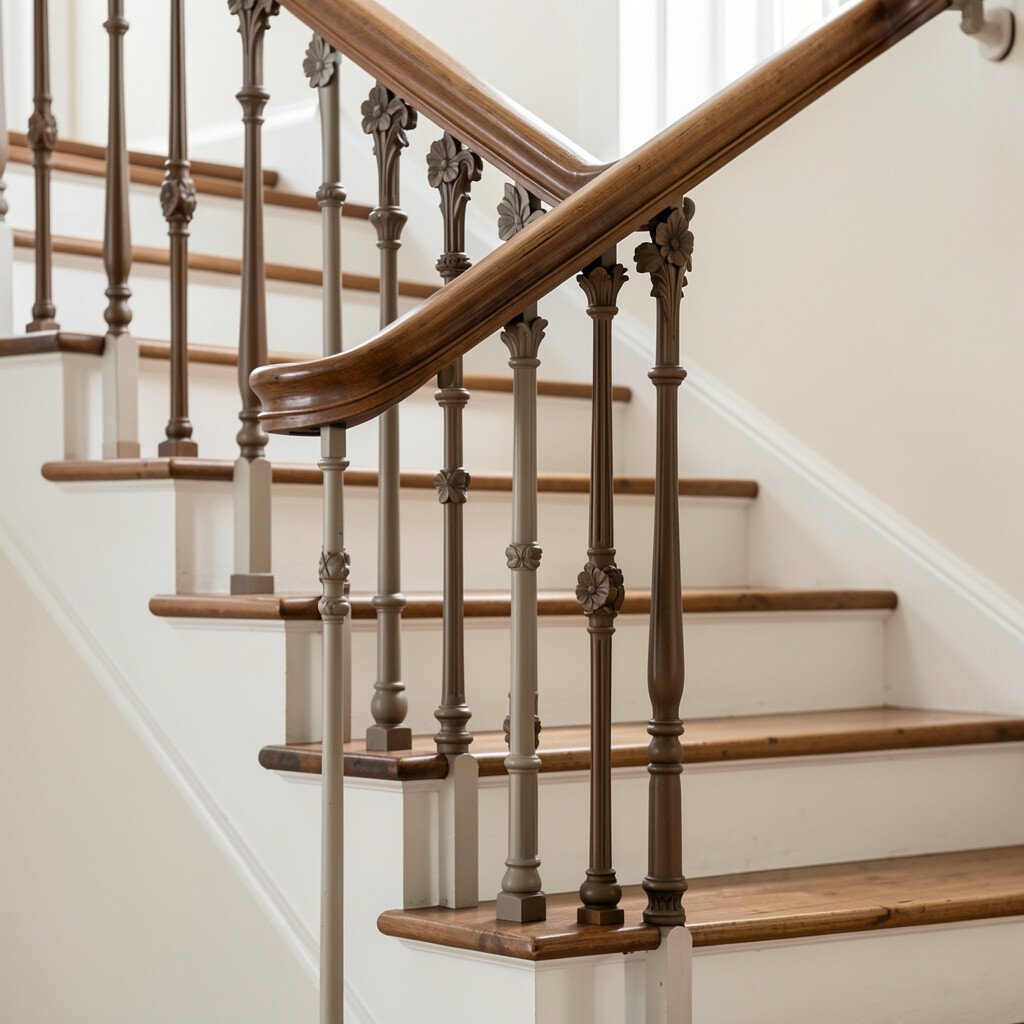
Flowering ends add a soft flourish to otherwise straight baluster rods. Think of small finials that look like petals or blossoming buds at the top of each element.
This motif benefits your overall design because it frames the handrail with consistent charm. It also creates a welcoming vibe in entryways where you want elegance but not stiffness.
For personalization, choose flowering ends that echo other details in your home, like door knockers or light fixture shapes. Cost can be moderate, since you may not need elaborate scrollwork throughout, but you still get a refined look.
13. Rope Rail Handrail With Simple Spindles
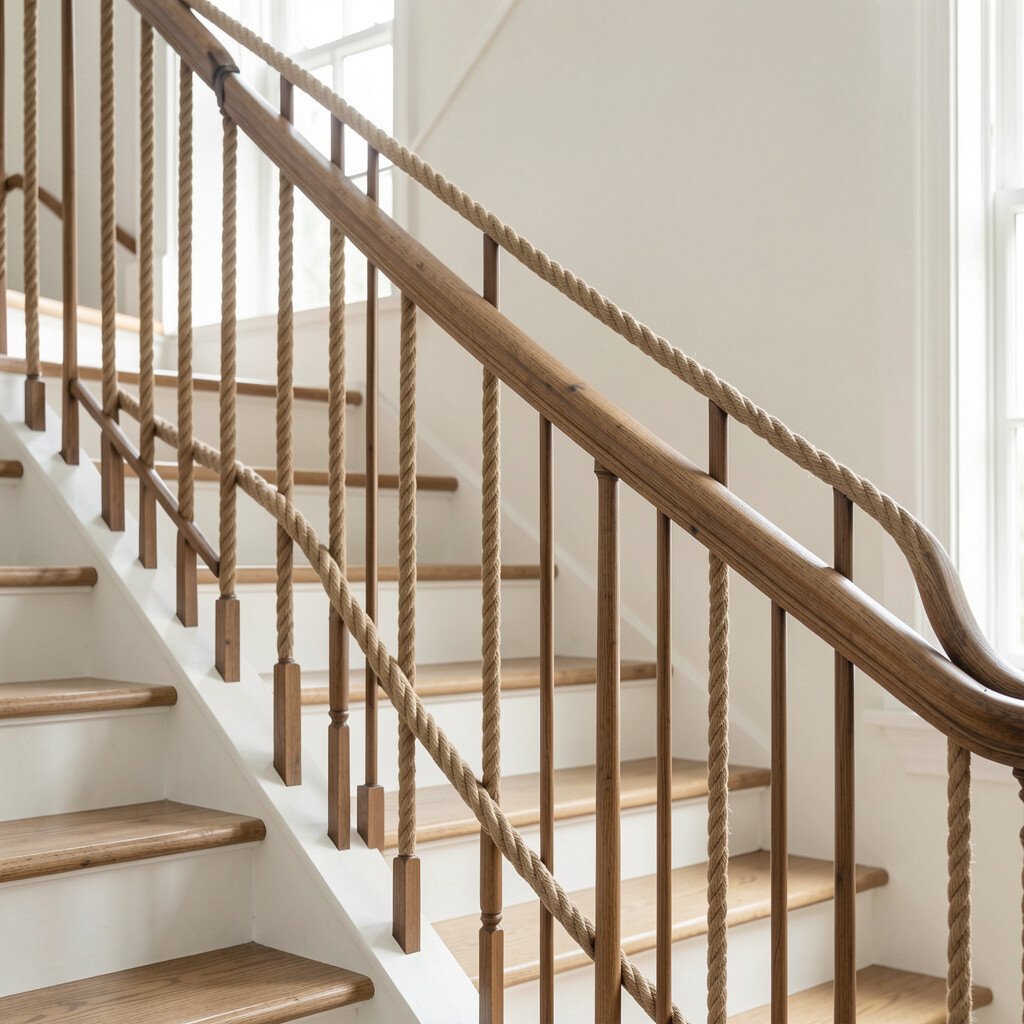
Pairing a rope twist handrail with simple spindles gives you layered interest. The spindles keep the structure light, while the handrail becomes the star of the show.
This combination is appealing because it balances ornament with practicality. You get visual beauty where you touch most, which makes daily life feel nicer.
To keep it cohesive, match the rope twist finish to your spindles so the contrast feels intentional. If you’re working with a tighter budget, consider investing in the handrail detail first, because it’s the most noticeable surface during everyday use.
Personalize further by choosing a comfort-friendly handrail shape, like a gently rounded profile that feels smooth in the palm.
14. Arched Top Rail With Straight Balusters
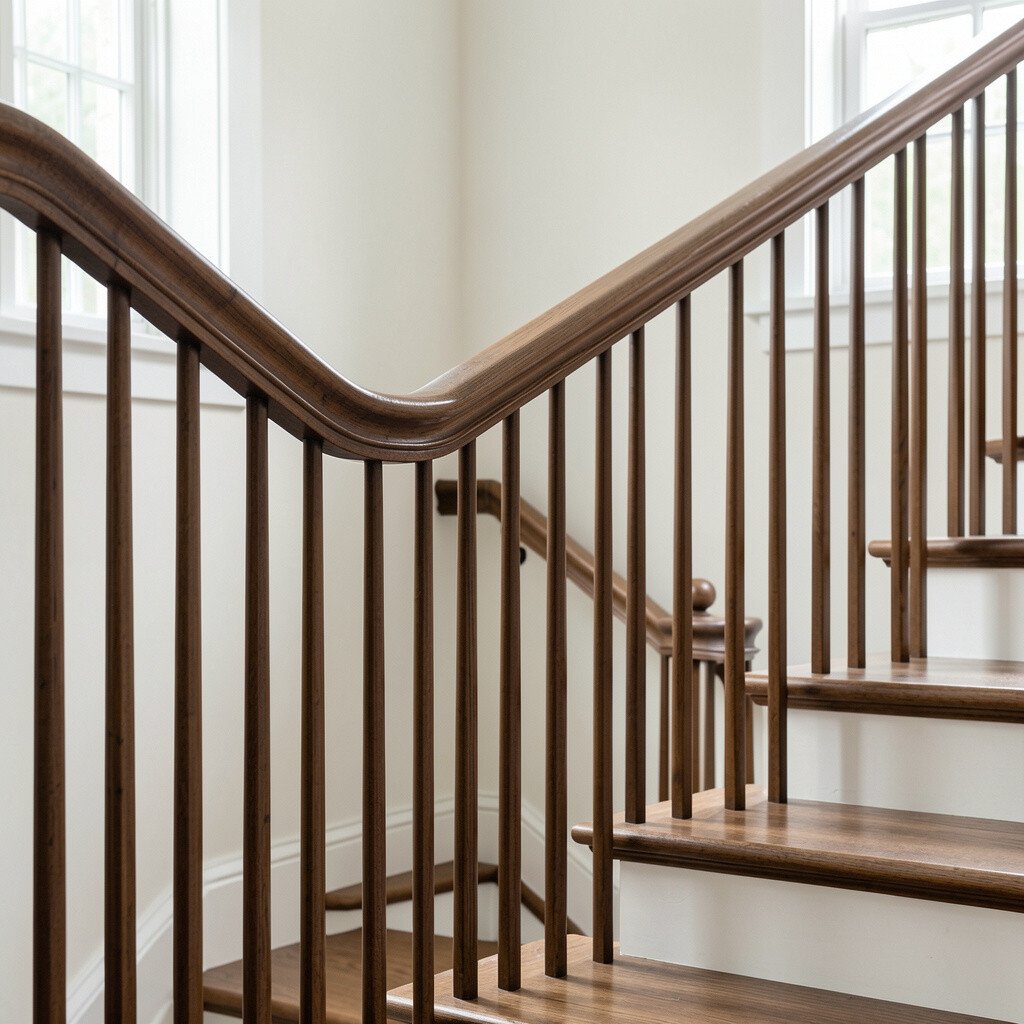
An arched top rail softens the overall line of a staircase. Even when the rest is simple, the arch makes the railing feel more graceful and welcoming.
This motif is beneficial because it creates a gentle flow that works well in narrower hallways. It can also make traditional homes feel more fluid, especially if your interior has curved doorways or rounded corners in furniture.
For practical tips, confirm the arch radius fits your staircase geometry so installation looks crisp rather than stretched. Personalize by adding matching molding on the newel posts to keep the arch feeling connected to the rest of the architecture.
15. Newel Post Crests And Shield Details
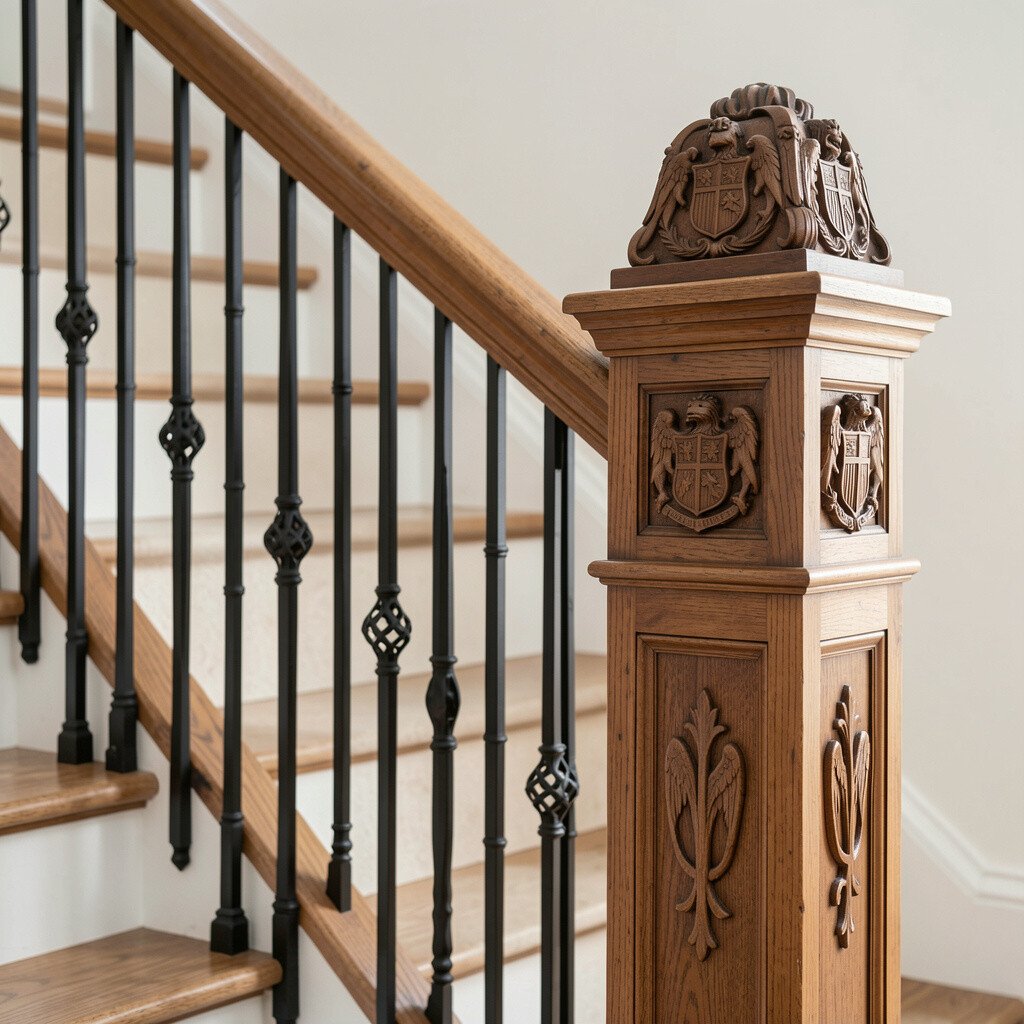
Newel posts with crest and shield details feel like a family heirloom. They add a sense of identity to the staircase and make the landing feel like a statement.
This motif is unique because the personality lives at the “anchors” where the railing begins and ends. It also helps break up long runs by giving your eyes a confident place to land.
Cost considerations are real here because crest detailing can be labor-intensive, but it may be easier to focus the design on two posts instead of every baluster. Personalize by choosing a crest shape that fits your style, like floral, geometric, or simple heraldic lines, and match the finish to your door hardware.
For practical care, consider a sealant that resists fingerprints and dust buildup on detailed surfaces, so the crest stays crisp.
16. Turned Bun-Turn Balusters With Beaded Rings
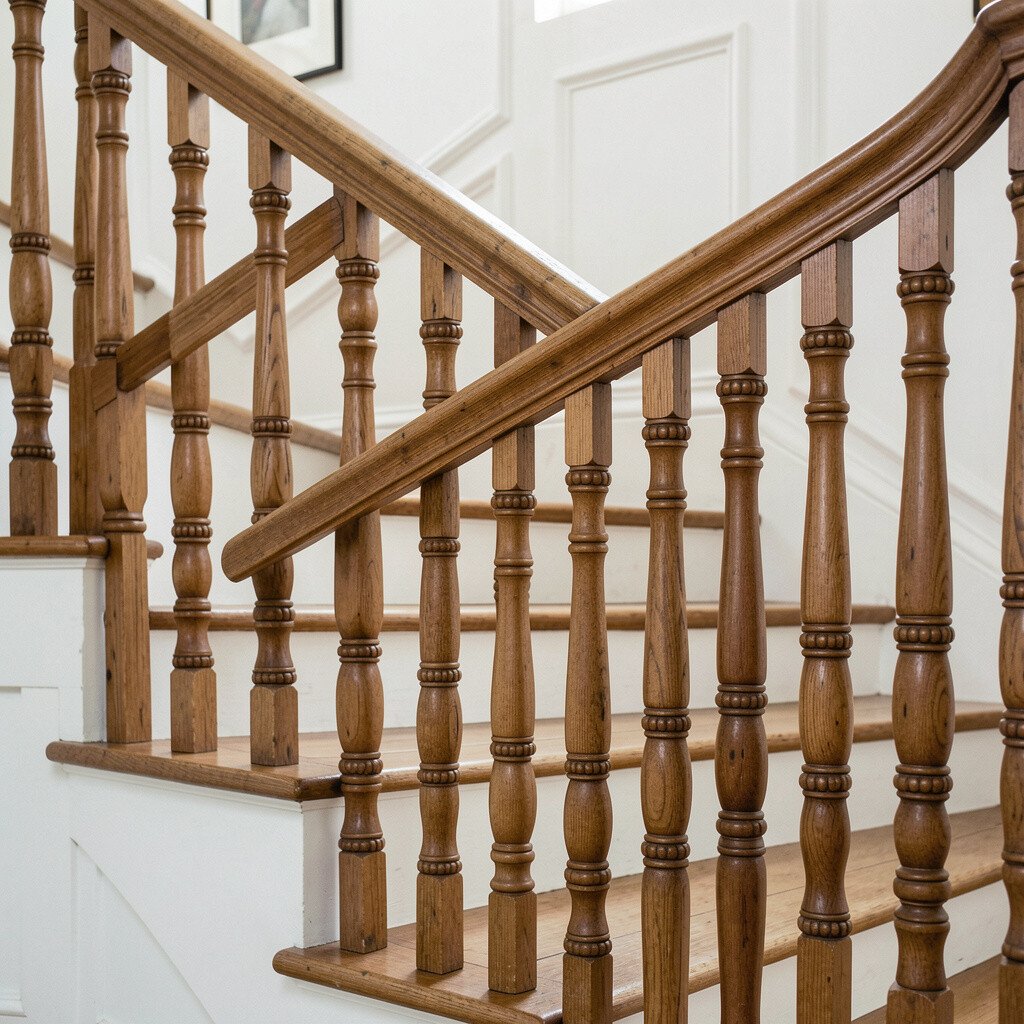
Beaded rings on turned balusters add a charming “handcrafted” rhythm. The small circles catch light softly, creating a refined sparkle as you move through the space.
This motif feels classic because it uses familiar forms seen in traditional furniture and porch railings. It also adds detail without relying on heavy metalwork, which can be a smart choice for many budgets.
To keep the look balanced, keep beads proportional to the baluster diameter so nothing feels oversized. Personalize by choosing a slightly darker bead finish or a lighter stain on the main rail, which can make the pattern read clearly from a distance.
17. Classic Scroll Pedestals At Intervals
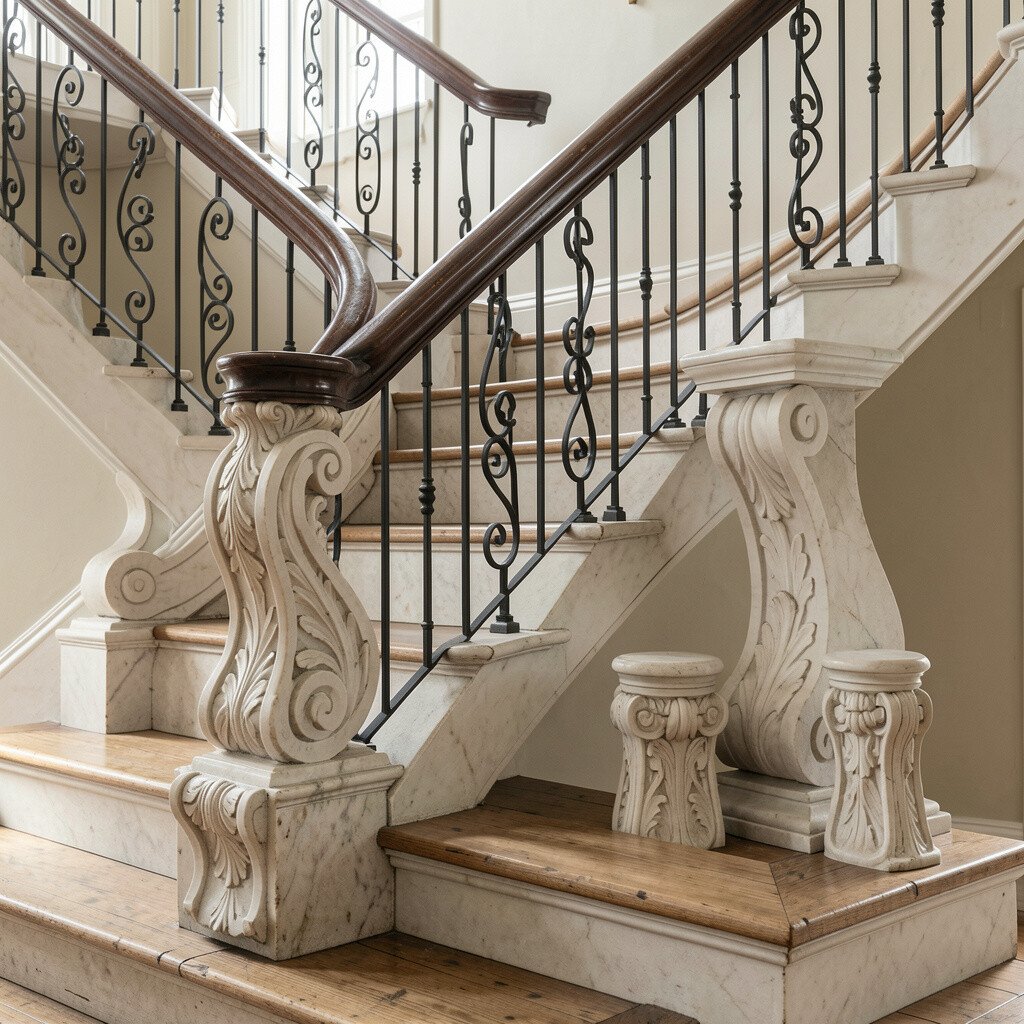
Scroll pedestals placed at intervals create an elegant rhythm without covering the entire railing. The effect is like punctuation marks, guiding the eye while keeping the staircase airy.
This motif benefits your design because it gives you structure and variety without making everything feel heavy. It’s also a great way to add uniqueness to an otherwise straightforward railing system.
For practical tips, decide where the pedestals will land before installation so they line up with the stair treads and landing details. Cost can be controlled since you’re not doing full coverage ornament, and you can prioritize the most visible sections for the best return.
Current trends lean toward “statement accents,” and this approach fits that spirit nicely while still feeling traditional.