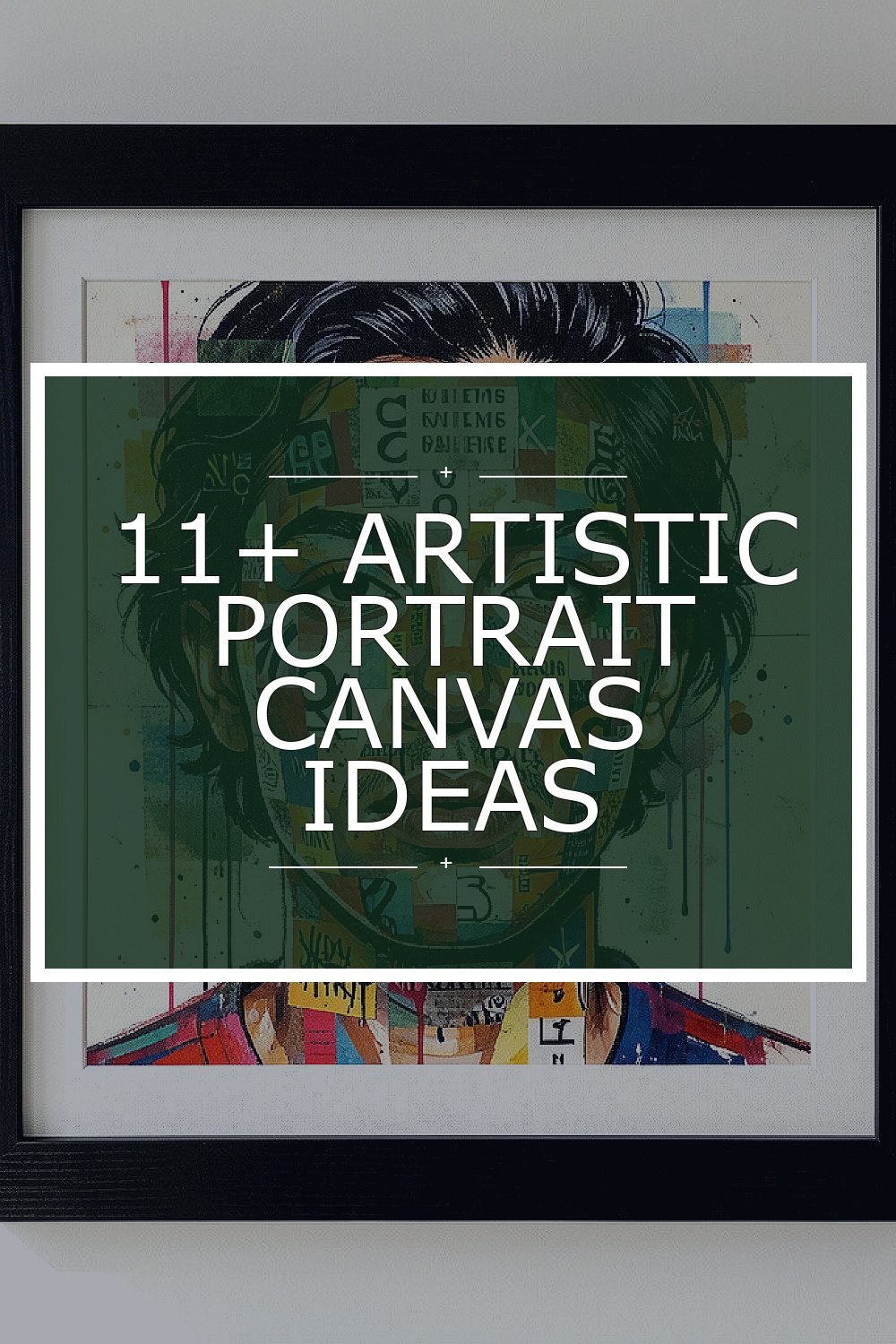
The right portrait canvas can turn a blank wall into a story you want to live with. It feels personal, creative, and quietly powerful every time you walk past it.
From bold color to soft pencil shadows, there are many ways to make a portrait feel like it belongs to you. Pick an idea that matches your mood, your budget, and your everyday life.
1. Hand-Painted Silhouette Memory Portrait
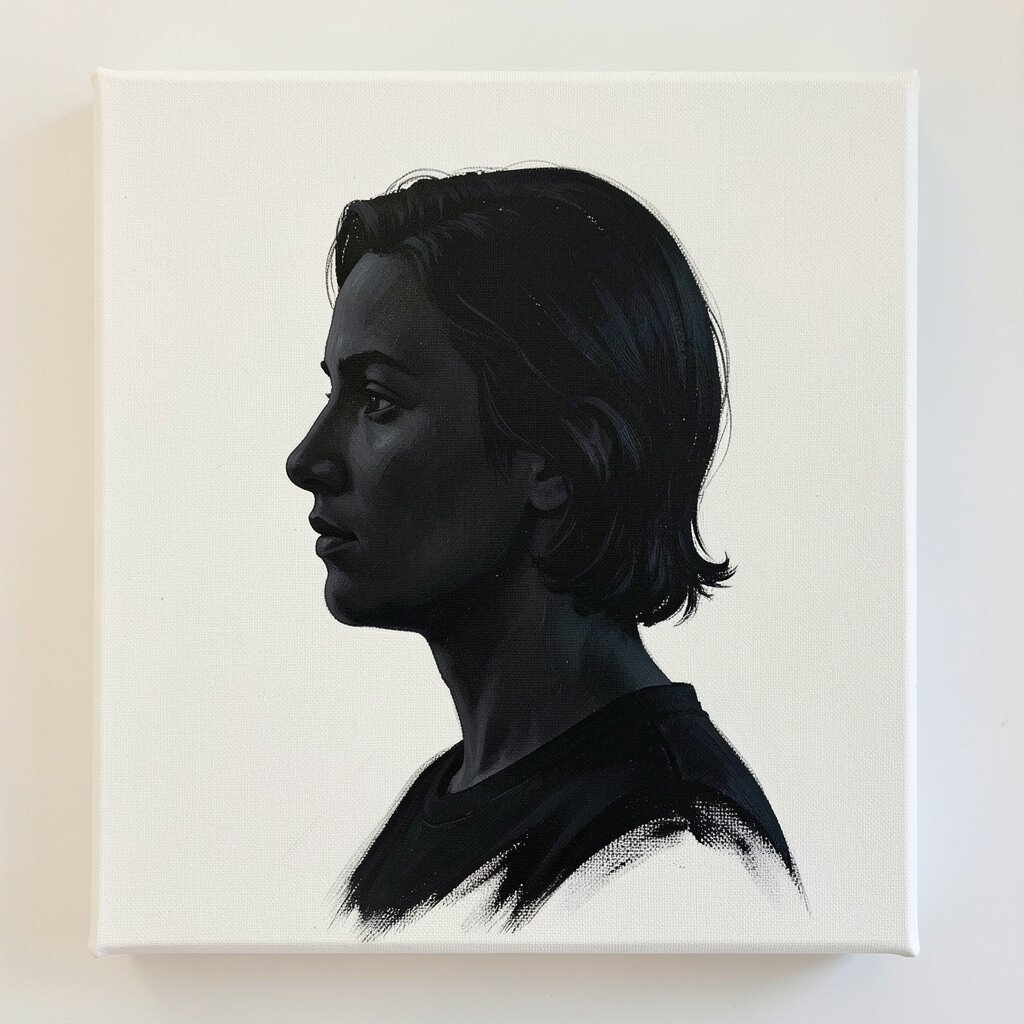
Imagine a portrait made from simple shapes, like cut paper, but painted with gentle brush texture. You can set a single bold profile against a warm background, then add small marks that hint at memories, like tiny dots of light or soft waves.
This kind of canvas brings calm energy because it doesn’t compete with your room. It also stays unique since you control the silhouette shape, background color, and the “memory clues.” A practical way to start is to sketch a profile from a favorite photo, then paint the silhouette in one main tone and add one accent color for depth.
2. Mixed-Media Collage Face in a Bold Frame

Think of a portrait built from layers: torn paper, fabric scraps, and paint that peeks through like highlights. The face can be partially realistic, then shift into abstract pieces so it looks alive from far away.
Layered art makes your space feel curated instead of plain, and it also helps hide small wall imperfections. For a realistic budget choice, use a thrifted frame and cover it with a sturdy canvas panel or gessoed board. Keep it cohesive by limiting your palette to two or three colors, then let the textures do the talking.
To personalize it, glue in meaningful bits like ticket stubs, map fragments, or fabric that matches your curtains. Right now, collage portraits are trending because they feel handmade and modern at the same time, especially when they mix matte paper with glossy paint accents.
3. Realistic Charcoal Portrait With Soft Grain Texture
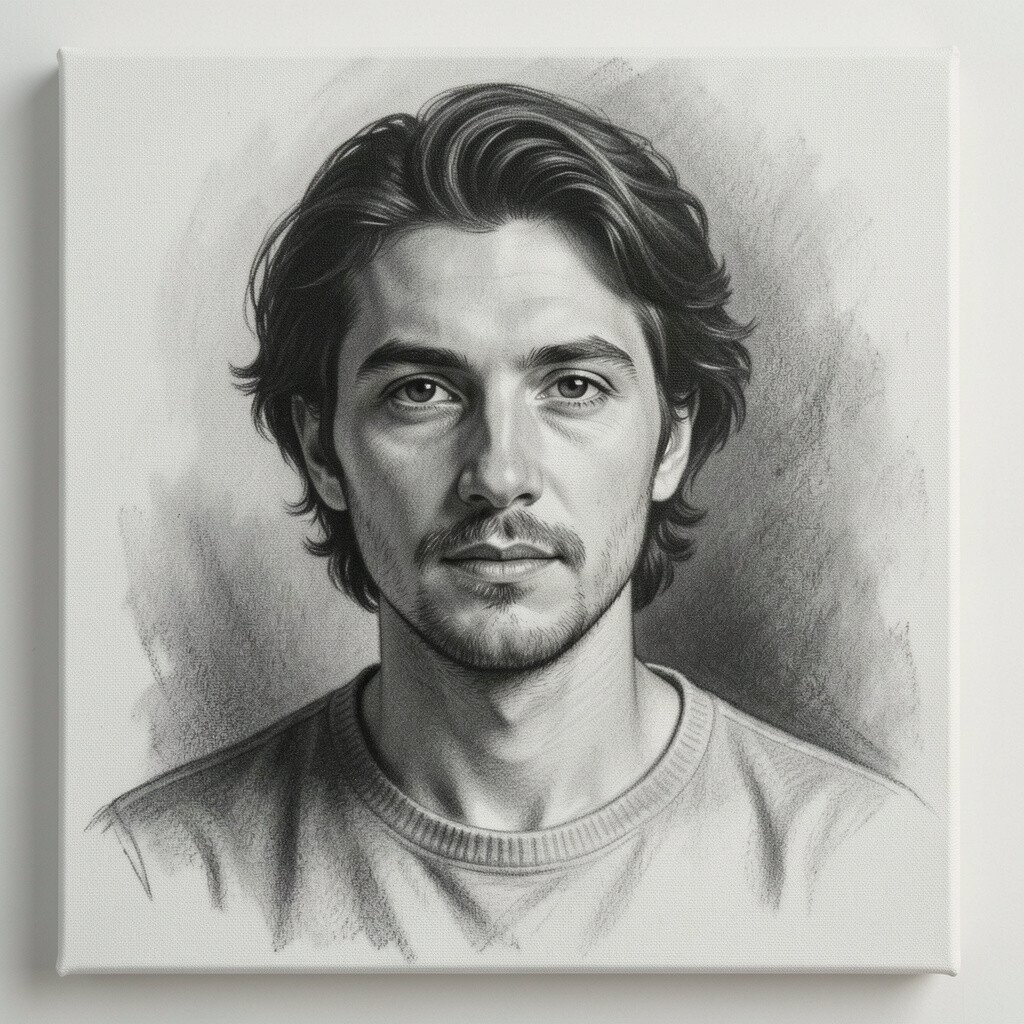
A charcoal portrait can look like a person just stepped out of a sketchbook and into your room. Use light smudges for skin shadows, then press harder for the hair edges and the deeper eye lines.
Charcoal gives a classic, timeless feel, and it works well in spaces that already have warm woods or neutral decor. You’ll also enjoy a practical benefit because charcoal studies are easy to adjust while you work, like moving a shadow slightly until it feels right.
For personalization, choose a subject with a strong expression such as laughter or a thoughtful gaze. If you want a current look, finish with a light, speckled fixative texture so it feels modern and airy rather than too dark. When cost matters, buy a small set of charcoal sticks and use a textured canvas paper or lightly coated canvas for better grip.
4. Color-Blocked Portrait Inspired by Pop Art
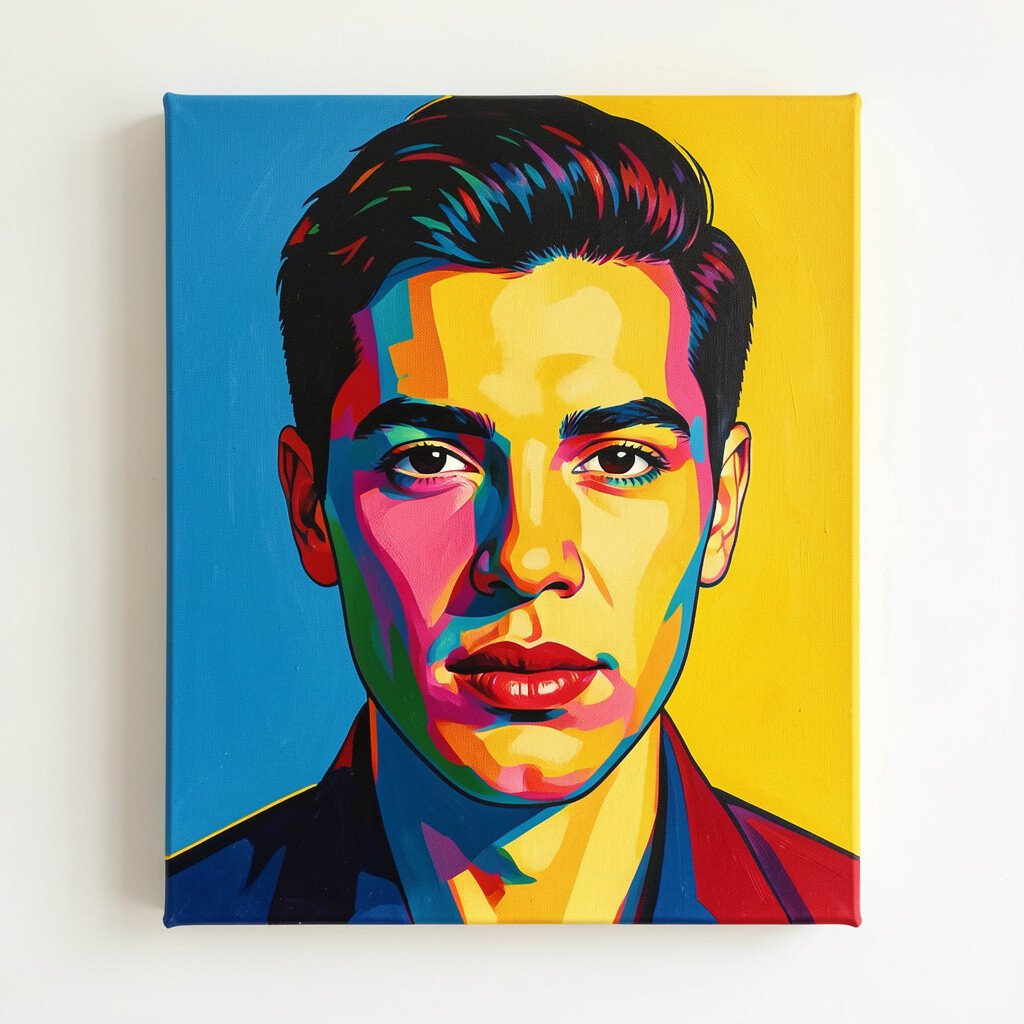
Pop art-style portrait canvases can look like colorful music on your wall. Start with a simple head outline, then fill big sections with bright colors, like candy pink, sunny yellow, and electric blue.
Color blocking adds instant energy, and it can make even a simple room feel playful. To keep it practical, use painter’s tape for crisp edges and choose a limited color set so the face reads clearly.
5. Watercolor Dream Portrait With Floating Highlights
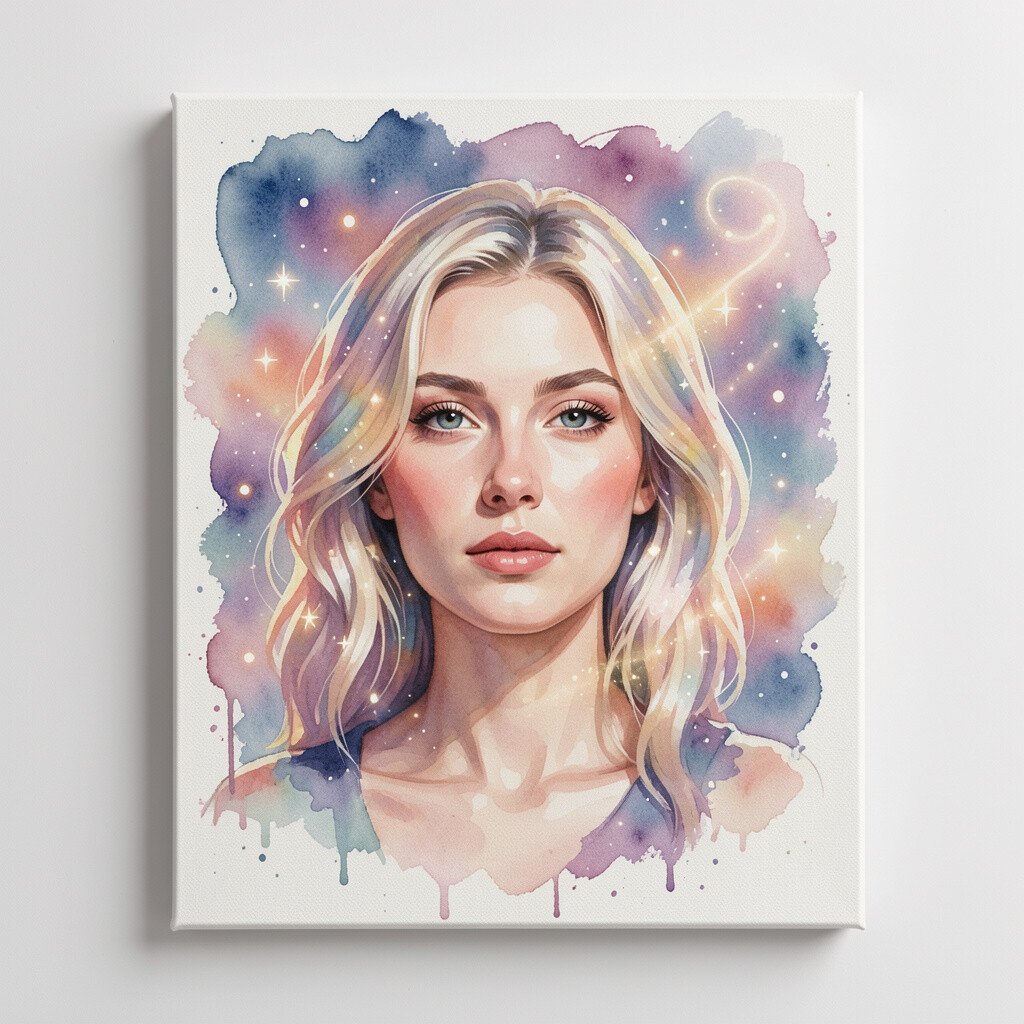
Picture a portrait where the face fades into misty washes, like watercolor drifting across wet paper. Add floating highlights around the eyes and cheeks to make the person feel soft and hopeful.
This style is great for rooms that want a light, relaxing mood, especially bedrooms and cozy reading corners. It’s also unique because watercolor blooms can’t be fully copied, so every result looks slightly different.
For a budget-friendly approach, use student-grade watercolor paints, then seal the finished canvas with a light protective spray. Personalize by painting a color wash that matches your favorite mug, throw blanket, or seasonal flowers.
6. Line-Art Portrait Drawn With Continuous Curves

A continuous-line portrait is where one unbroken line forms the face, hair, and clothing. You can draw it in black ink, then add small watercolor dots afterward to give it a gentle glow.
This creates a clean, modern look that fits many interior styles, from minimalist to boho. It also offers a simple practical win because you won’t need perfect shading to make it compelling.
Try using a subject with bold features, like strong brows or a unique hairstyle, so the line art still reads clearly. If you want trendiness, make the background a thin wash of color while keeping the line work crisp and dark.
7. Night-Sky Portrait With Constellation Details
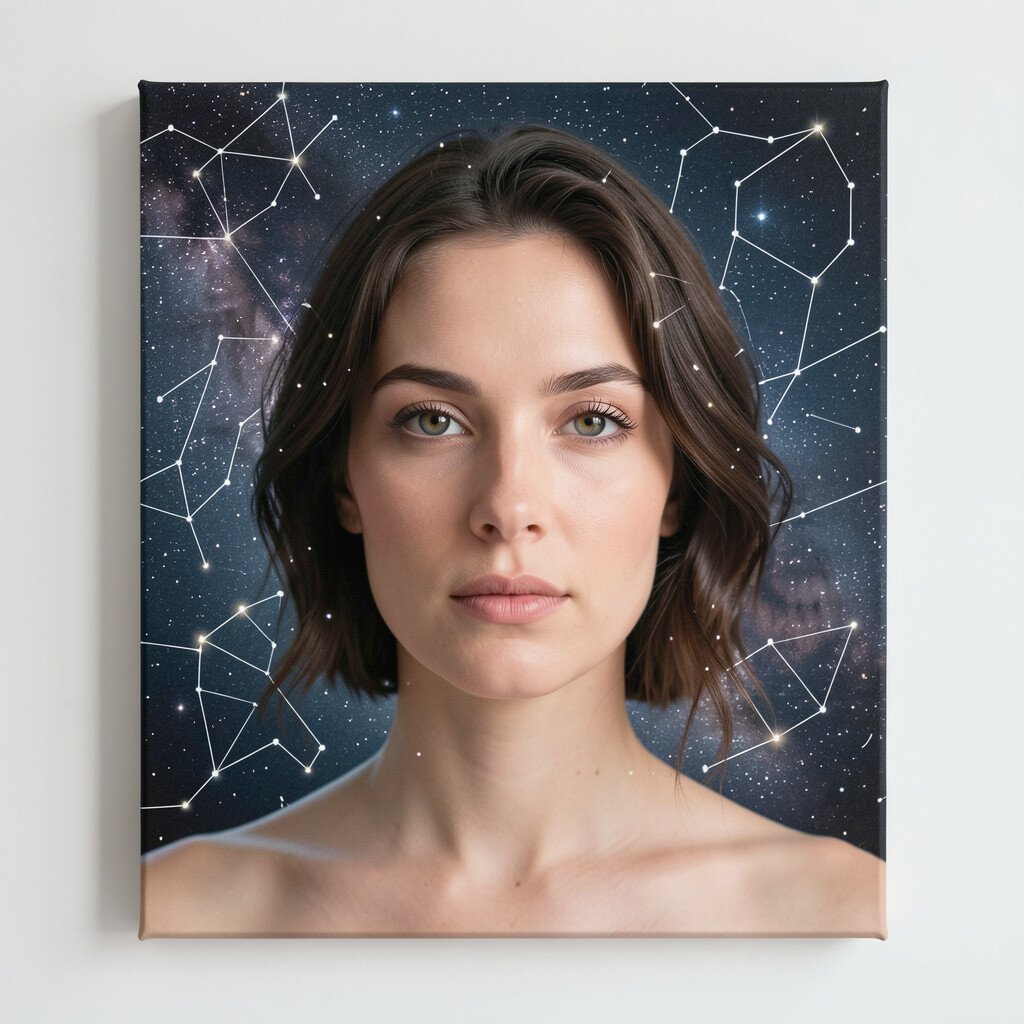
Turn a portrait into a universe by painting a dark sky behind the face. Place small star dots where freckles might be, and draw constellations that connect near the eyes and jawline.
This idea feels magical, and it can make your space feel calm at night while still looking dramatic. A useful tip is to sketch the face first in faint pencil, then map star clusters with a reference photo so the features stay recognizable.
To personalize it, use colors that match your room’s lighting, such as deep navy, muted purple, and soft teal highlights. For cost control, you can make stars using a simple toothbrush splatter technique instead of buying expensive textures.
8. Vintage Sepia Portrait With Torn-Edge Texture
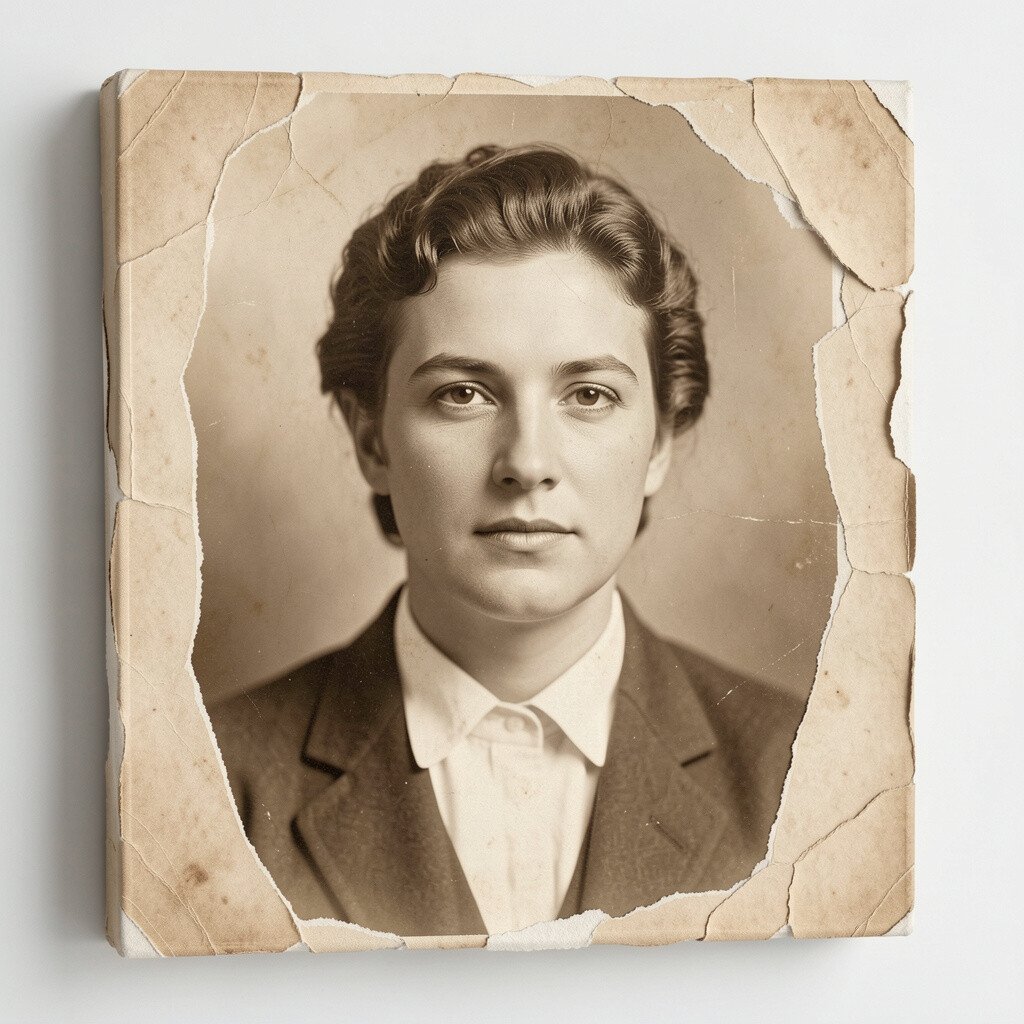
A sepia portrait can bring the warmth of an old photograph into a modern setting. Paint the face with soft browns and faded edges, then add torn paper texture around the background for a “found photo” feel.
This style gives a cozy, storytelling vibe, and it works beautifully in living rooms, hallways, or offices. It’s also practical since you can make it quickly by starting with a printed photo and tracing the main features lightly.
9. Bold Typographic Portrait With Hidden Words
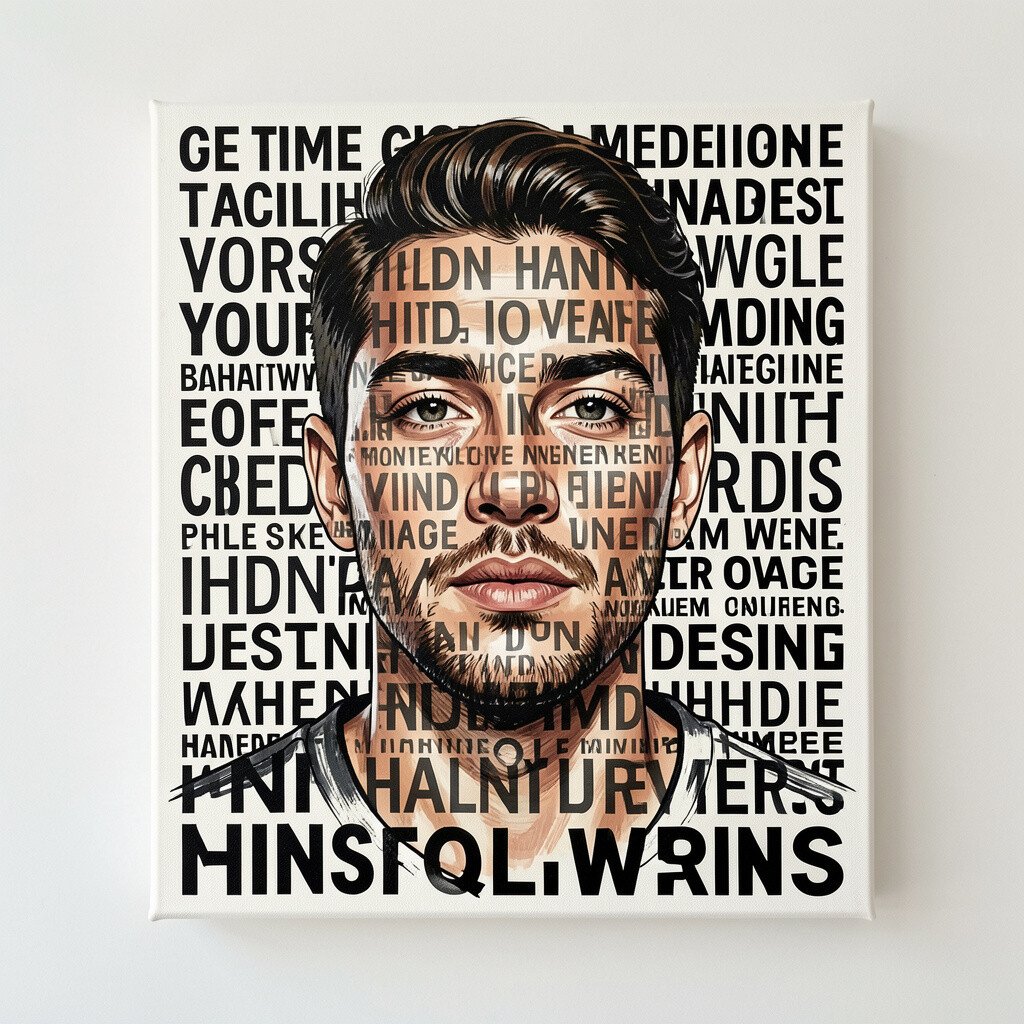
Make the portrait from letters by painting or drawing words inside the face shape. Choose meaningful phrases like song titles, family names, or short notes that match the person’s personality.
This can feel extra personal because only you know which words matter most. For practicality, keep the font style simple and use a limited number of colors so the portrait still looks clear from a distance.
To personalize it more, choose a background that matches your room’s color theme, then let the letter colors create contrast. Current trends are leaning toward text-forward art, so a typographic face feels modern while still being emotional.
10. Sculpted-Texture Portrait Using Modeling Paste and Paint
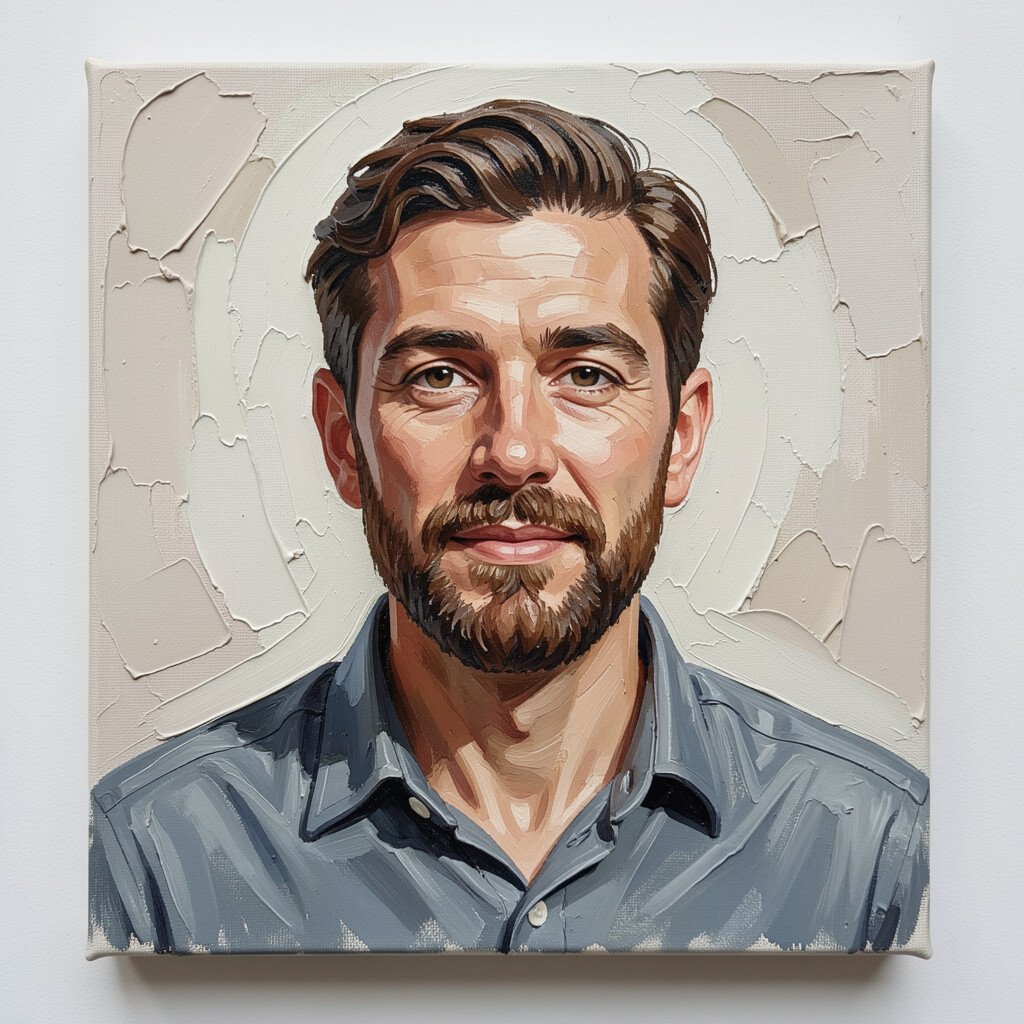
A textured portrait can look like it’s carved right out of the canvas. Use modeling paste to build up areas like hair waves, cheek highlights, and the folds of clothing, then paint over everything once it’s dry.
This adds a strong visual interest because the surface catches light differently as you move. It’s also unique since your texture pattern becomes part of the artwork, not something someone else can easily copy.
If you’re thinking about cost, modeling paste is affordable for small sections, so you don’t need to coat the whole canvas. For best results, apply it with a palette knife in thin layers and let each layer dry fully before painting. Personalize it by matching the textures to the subject’s real details, like curly hair ridges or the way light hits a scarf.
11. Monochrome Portrait With Metallic Eye Highlights
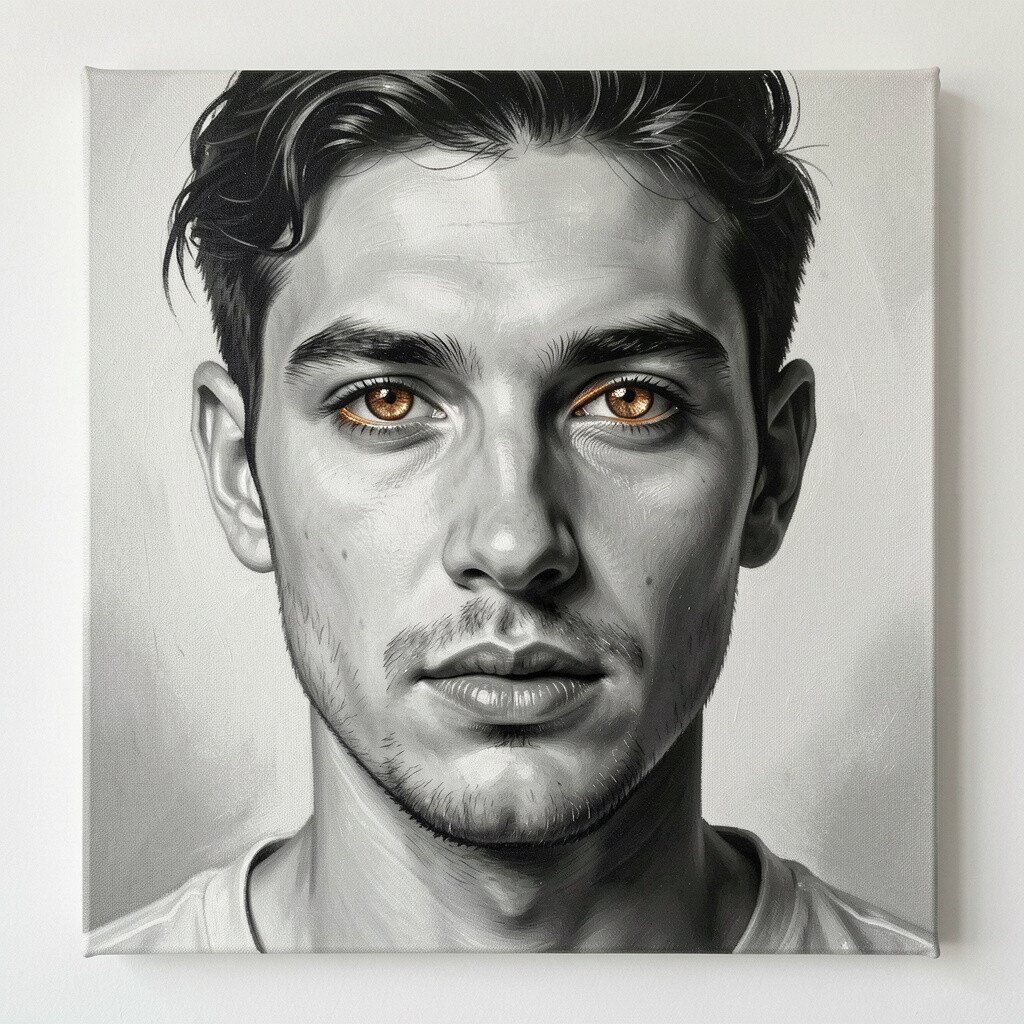
A monochrome portrait keeps the focus on shape and emotion, like a face rendered mostly in one color family. You can paint in grays or deep blacks, then add metallic highlights in the eyes, earrings, or along the nose bridge for sparkle.
This style looks elegant and stays easy to pair with different decor because it doesn’t fight with your furniture colors. A practical tip is to choose one metallic shade, such as gold or silver, so the portrait feels intentional rather than random.
12. Family-Grid Portrait With One Color Theme
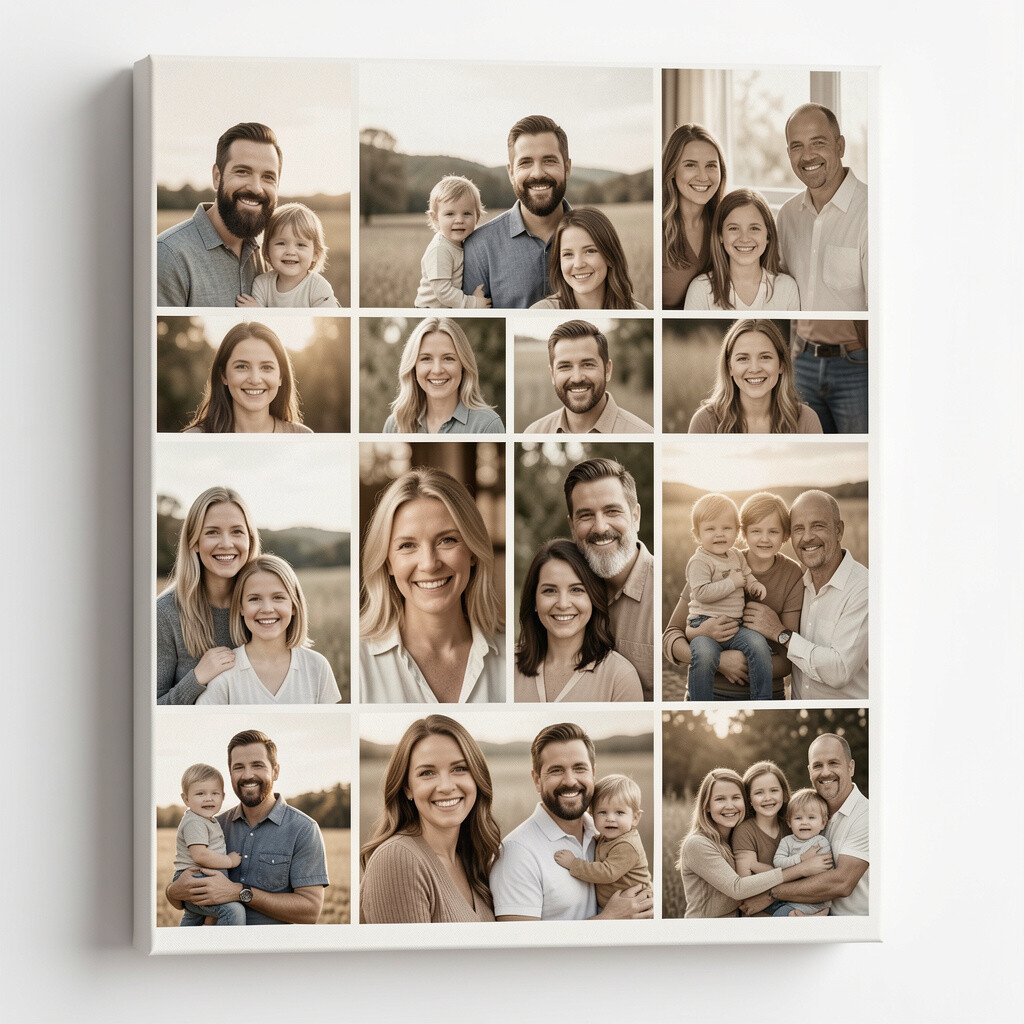
Instead of one portrait, create a grid of smaller faces that all share the same background color. Each person can have a different art style, like watercolor, pencil, or simple paint blocks, but they all belong together because the theme matches.
This helps your wall feel full without needing a huge single artwork, and it’s great for celebrating family, friendships, or a special group. It’s also a practical approach because you can work on each mini portrait separately, letting you pace yourself and avoid rushing.
To personalize it, pick one color theme that matches your room, like sage green, warm terracotta, or cool blue-gray, then keep the borders consistent between panels. For current trends, multi-panel portrait layouts are popular because they look gallery-like and modern while still feeling warm and meaningful. If you want cost control, use inexpensive canvases or canvas paper panels and mount them on one larger backing board.