Your closet can feel like a whole new room without major construction. Small moves, done in order, make the space work harder for you.
Use a simple timeline so every session has a purpose and the final look feels intentional. When you plan the order, you save time, stress less, and keep momentum.
1. Clear the Closet in One Focused Session
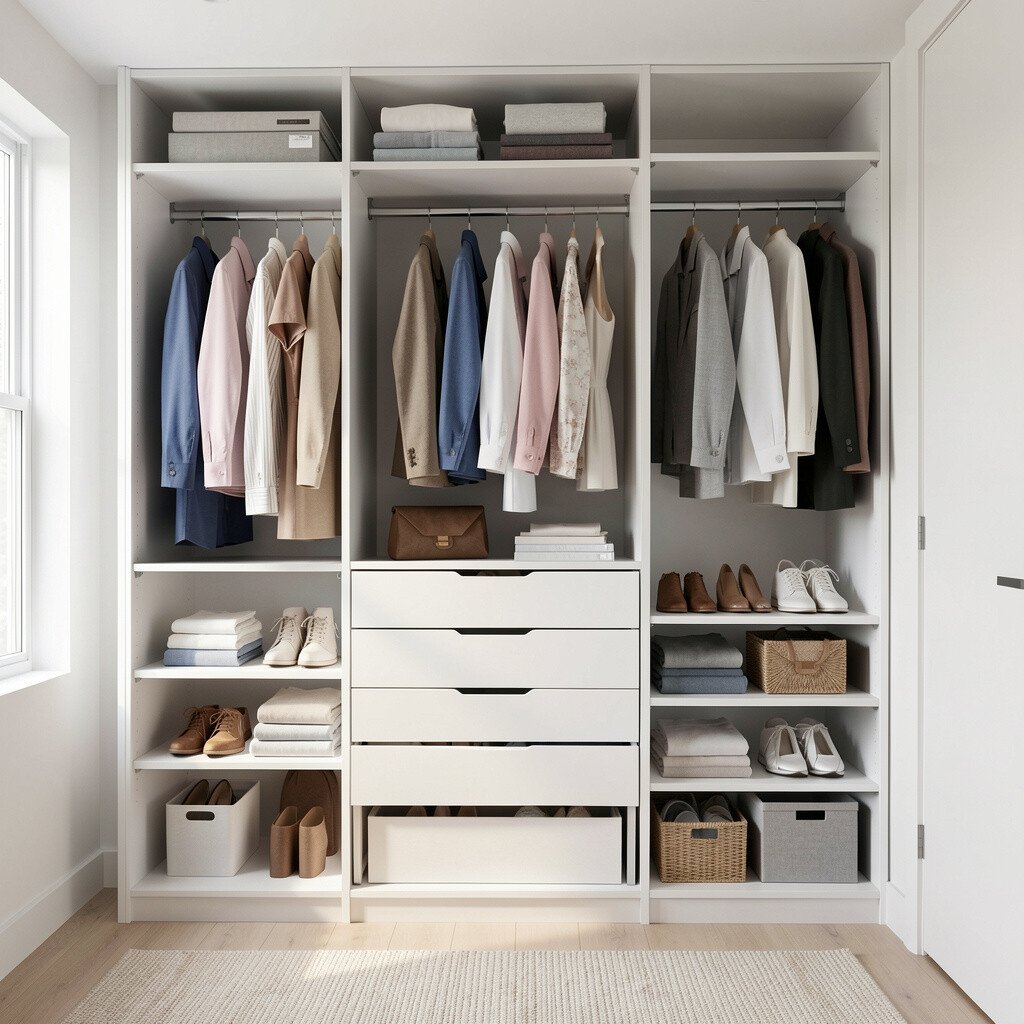
Start by pulling everything out so you can actually see what you own. You will notice duplicates, missing items, and pieces that no longer fit your life.
As you sort, place items into simple piles like keep, donate, and repair. Hang or fold the keep pile in a temporary spot so nothing gets lost again. Take a quick photo of your empty closet to compare progress later, because visual change feels motivating.
2. Measure Your Space and Plan Your Zones
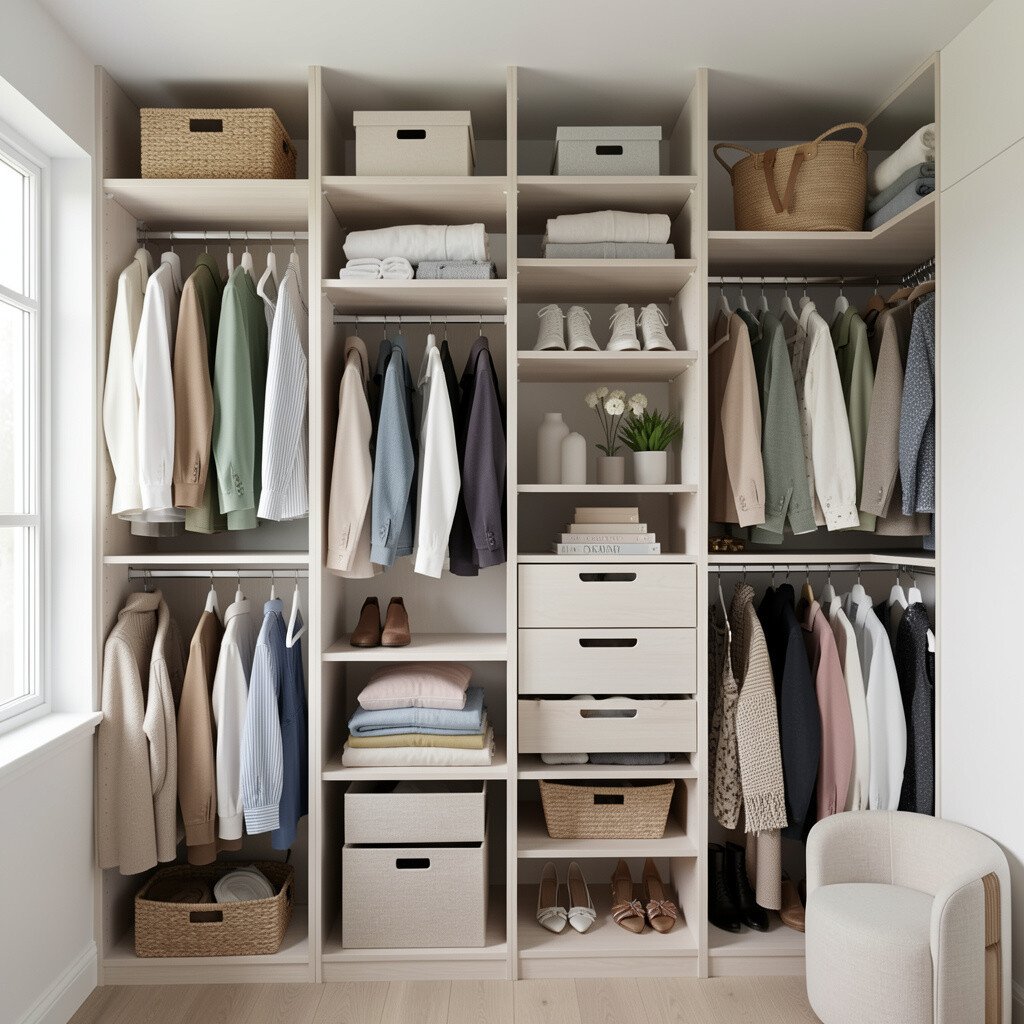
Grab a tape measure and note the closet width, depth, and hanging height. This helps you choose storage that fits instead of forcing organizers that never work.
Then decide zones based on real use, like everyday tops, work clothes, shoes, and seasonal pieces. When you group items by where you reach them most, getting dressed becomes faster. You can even personalize zones for your habits, like keeping workout gear at eye level.
For a modern touch, think in “bands,” such as front-access shelves for daily items and higher shelves for rotation. People also love clear bins for seasonal storage because they look tidy and help you spot what is inside quickly.
3. Choose a Theme That Matches Your Style
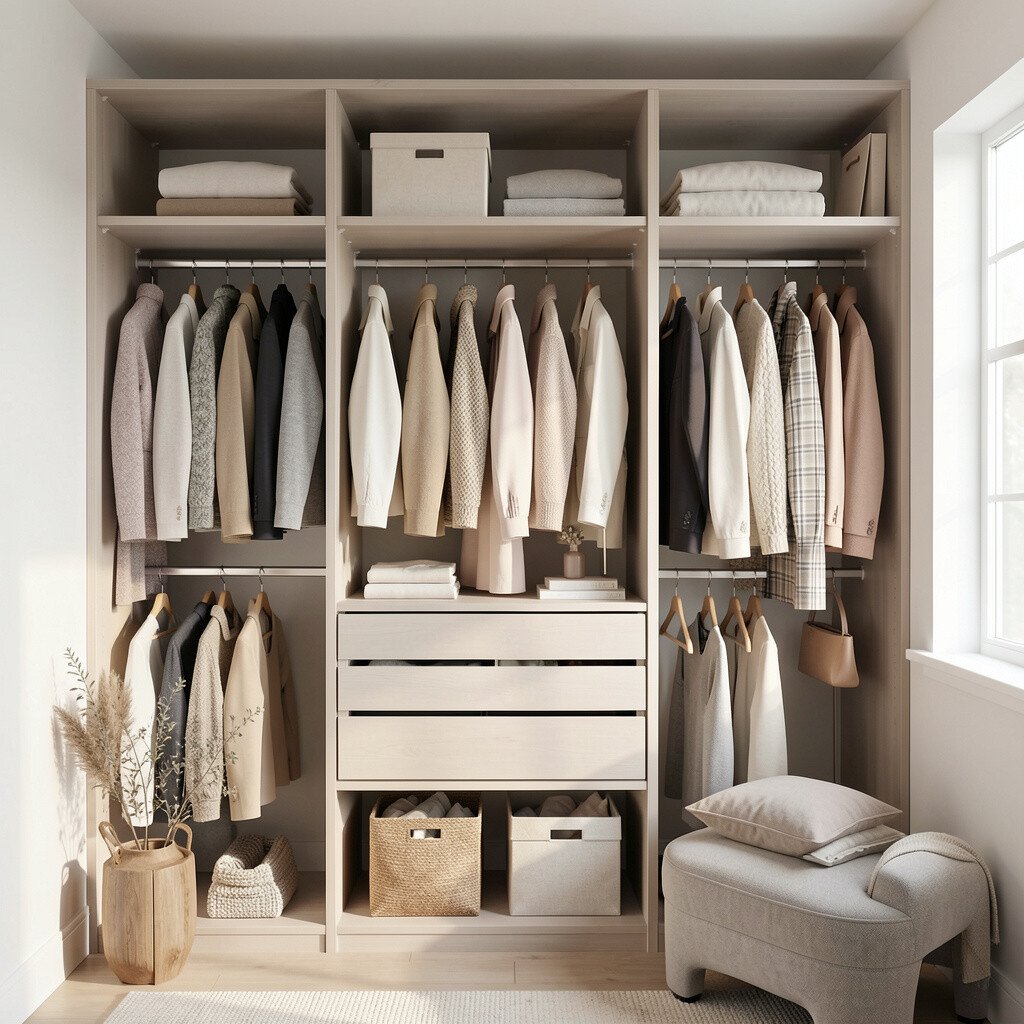
Pick a style direction you will enjoy seeing every day, whether it is calm neutrals or bright color pops. A theme makes decisions easier when you buy hangers, bins, and storage baskets.
Look around your home and match the vibe, like using woven textures for a warm feel. You can keep it simple with matching hangers and coordinated labels on bins. That consistency is a small uniqueness factor that makes the closet feel “finished,” not rushed.
Current trends often favor soft organization, like matching slim hangers and uniform shelf styling. If you love a cleaner look, choose matching colors for storage and leave some open space so your closet breathes.
4. Upgrade to Matching Hangers for Instant Order
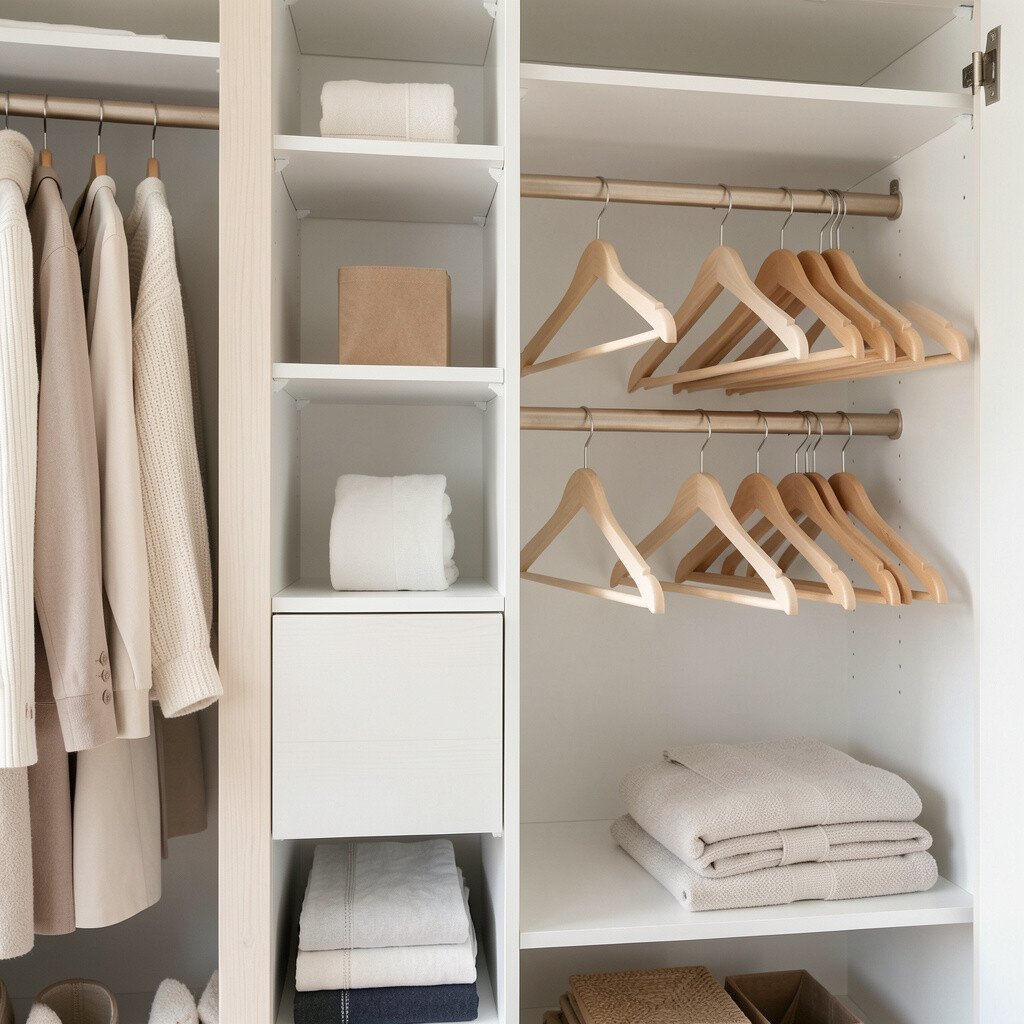
Switching to matching hangers changes how your closet looks right away. When every hanger is the same size and shape, clothes hang in a neat line with less mess.
Choose slim hangers for space savings, and use stronger hangers for heavier coats. If your closet is narrow, this step can make a surprising difference without spending much. For cost control, buy a small bundle first and test how they feel with your most-used garments.
5. Create a Cleaning Day Plan Before You Organize
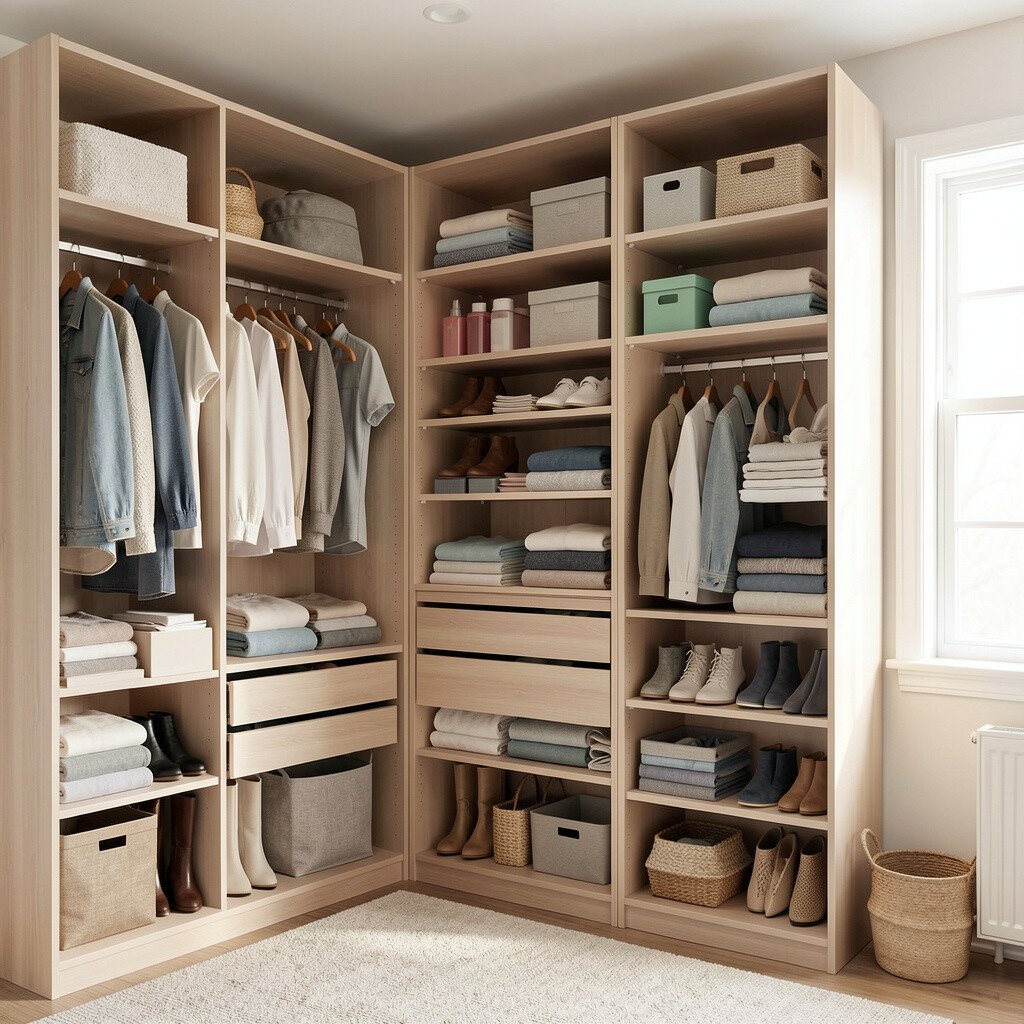
Before adding anything back, wipe shelves, vacuum corners, and clean the floor. Dust and lint collect fast, and organization works better when the surface is fresh.
Use a gentle cleaner for wood or laminate and let it dry fully. While it is drying, check for issues like loose rods, squeaky hinges, or lights that do not work. Fixing small problems now prevents frustration later.
To make the area smell nicer, add a simple freshener like a small sachet or a wipe-down with a light scent. This step is practical because it helps your clothes stay feeling clean, not musty.
6. Add Storage Where Your Clothes Actually Live
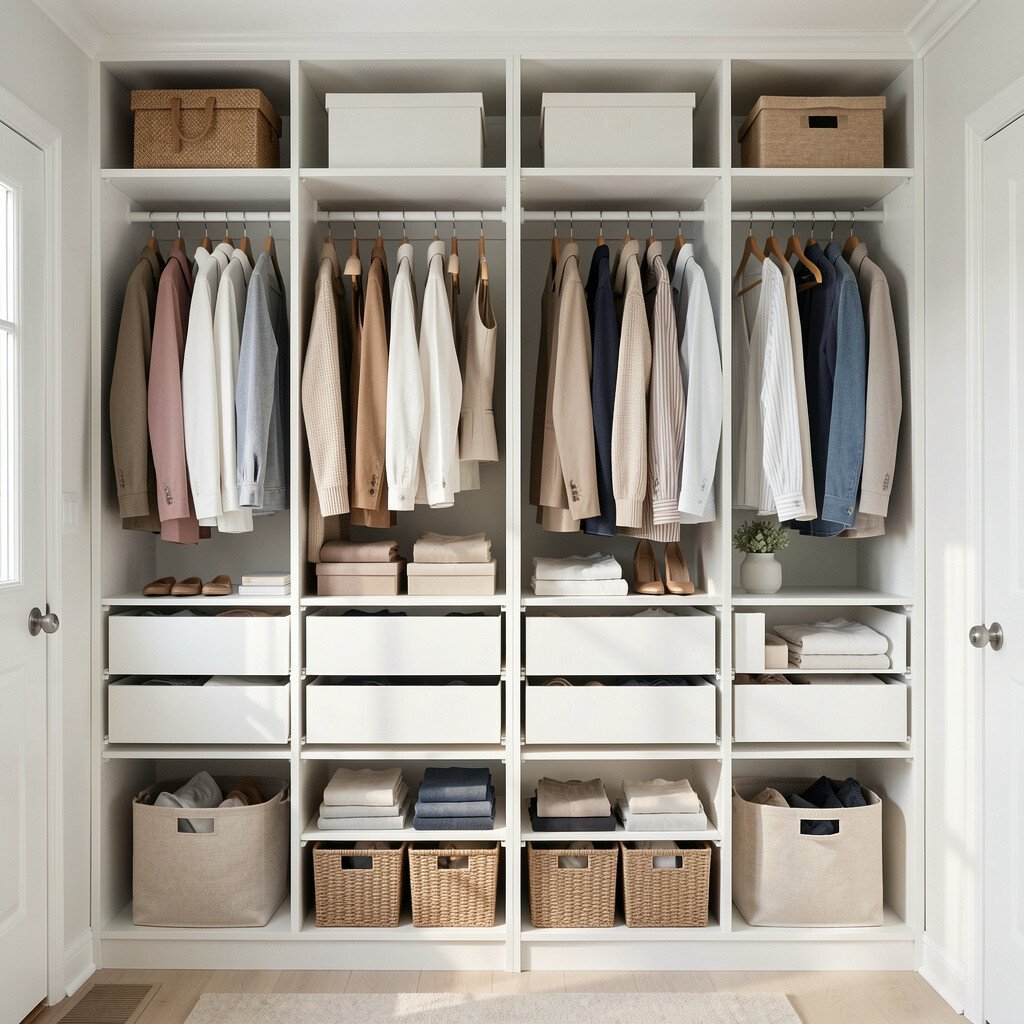
Decide which items need shelves, bins, drawers, or hanging space. Lightweight sweaters usually do well folded on shelves, while bulky items may need more generous space.
If you have a rod, use it for shirts, dresses, and pants you wear often. For shoes, consider a shoe rack or labeled shelves that keep pairs together. This improves daily flow because your brain stops hunting for mismatched items.
You can personalize by using a small drawer for accessories like belts, scarves, and hair tools. Current closet trends also include tray-style organizers for small items because they look crisp and make everything easier to grab.
7. Turn Seasonal Items into a Rotation System
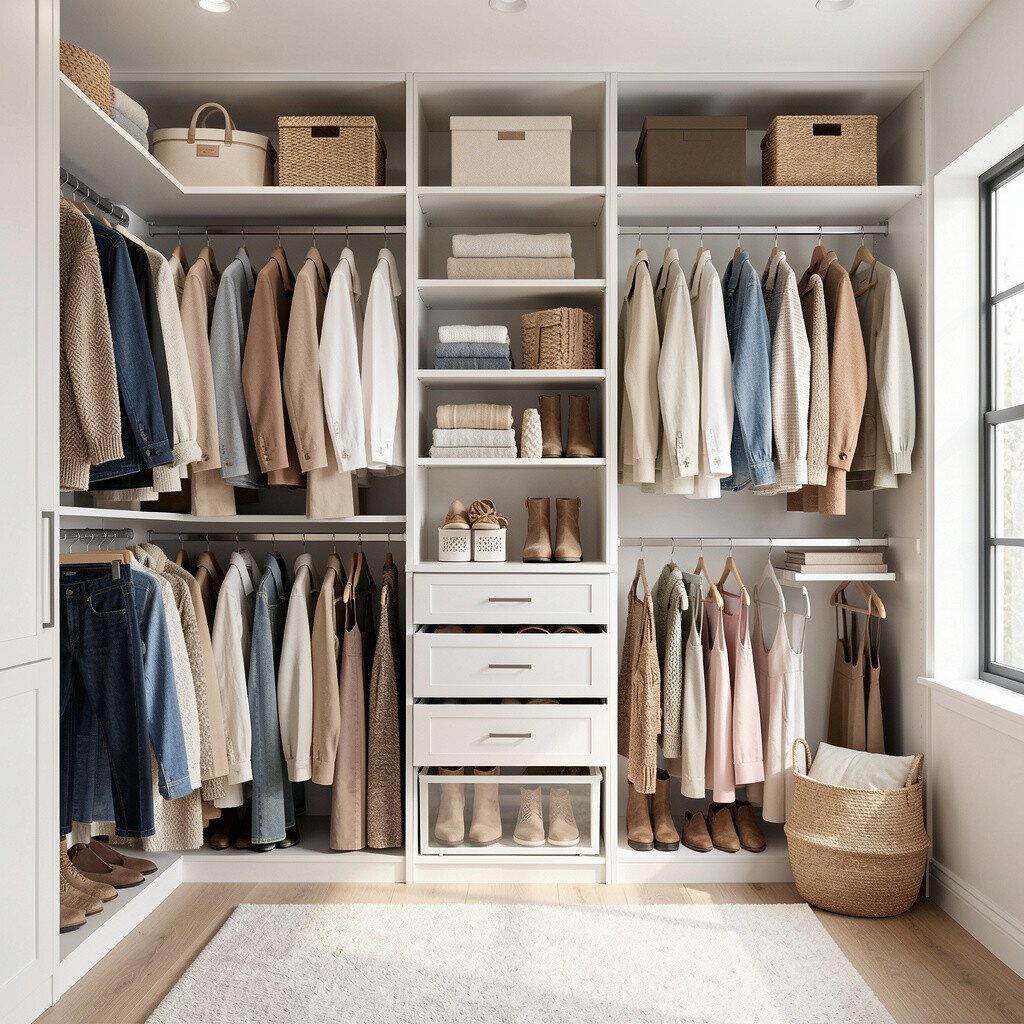
Seasonal clothes should not clutter your everyday zone. Store them higher up, in bins you can stack, or in a dedicated area that stays out of your main reach.
Label bins by season or by purpose, like “winter outerwear” or “summer basics.” When you rotate on schedule, you reduce clutter and you also protect garments from wear. This makes the closet feel calmer because you only see what you need now.
8. Use Drawer Organization for Small Stuff
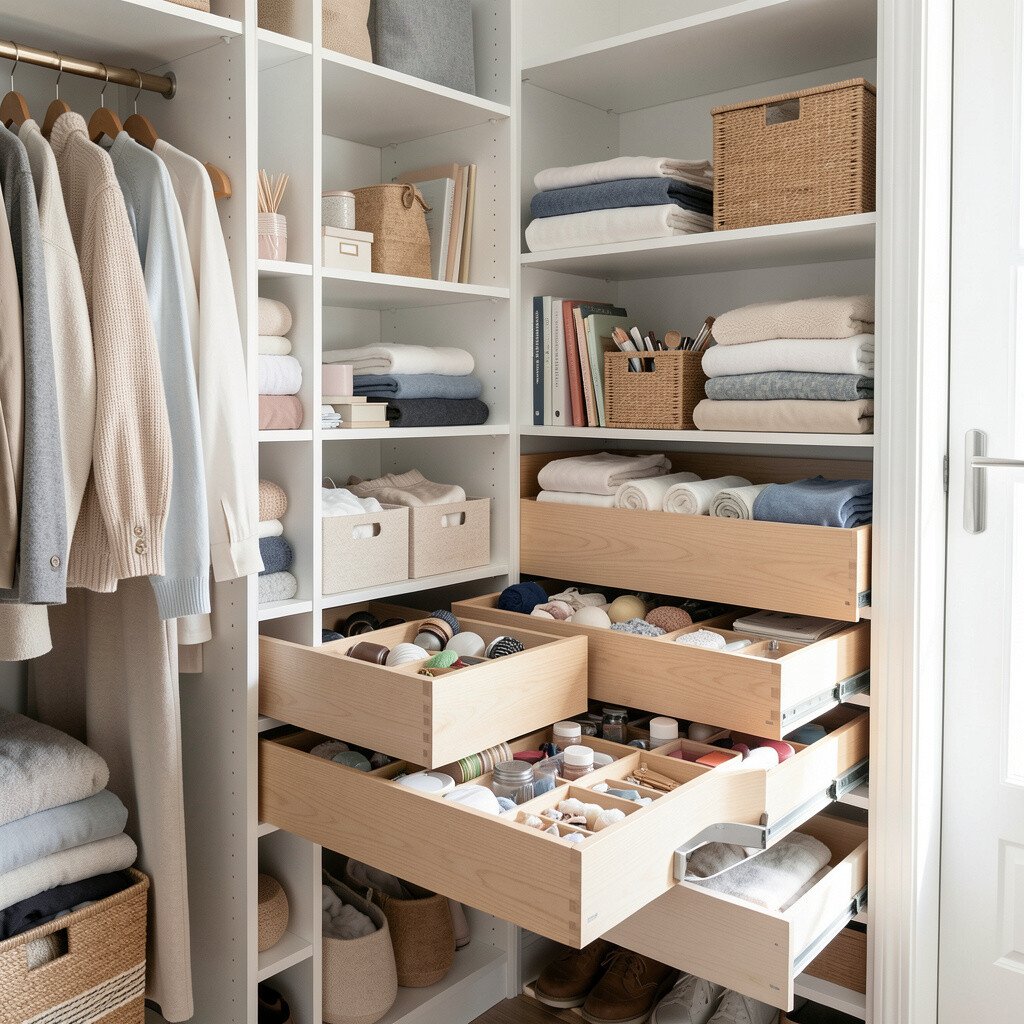
If your closet has drawers, they can be your secret weapon for a tidy look. Start by emptying drawers and checking what is actually used.
For organizing, use simple dividers or small containers so items do not mix. Group similar things together, like socks with socks and workout accessories with workout accessories. This gives you quick visibility and stops “mystery piles” from forming.
9. Build a “Wear Often” Section That Stays Easy
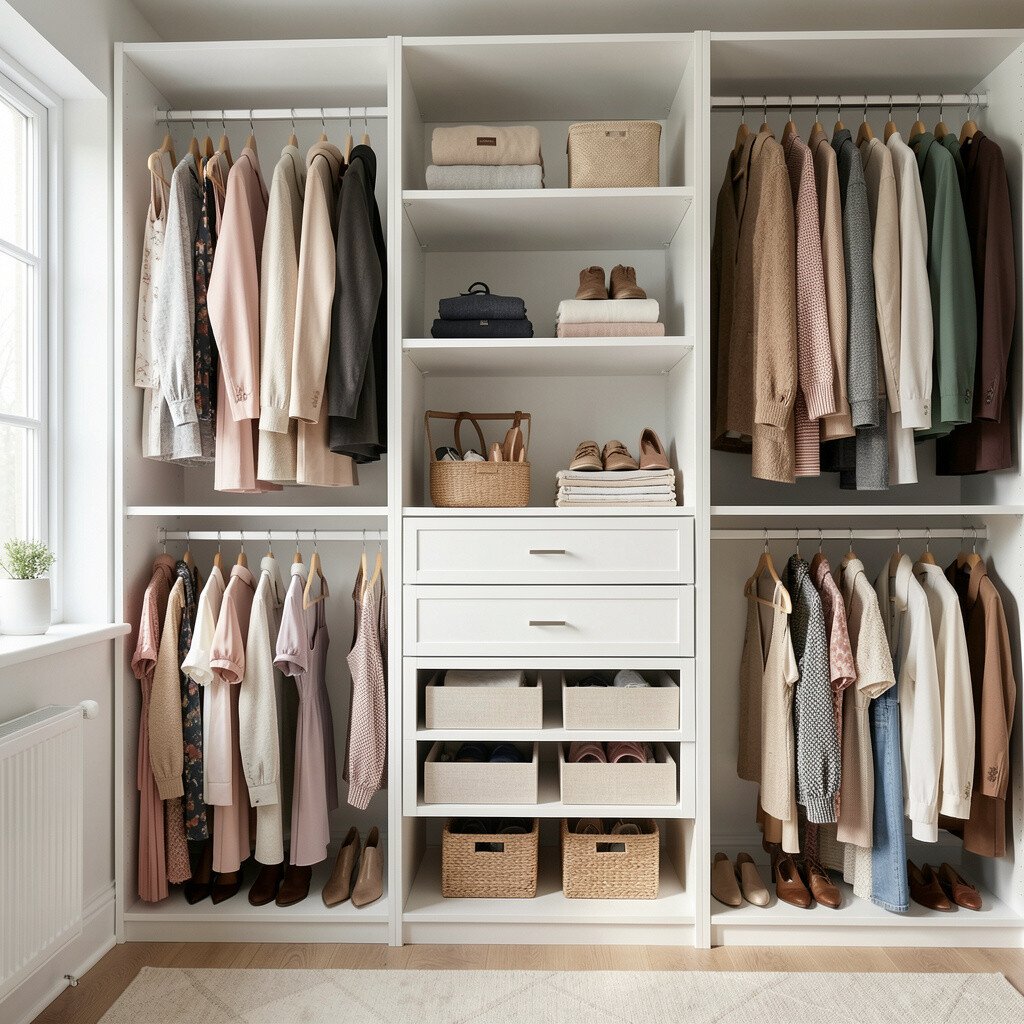
Create a section for your most-worn pieces so you never rummage. A dedicated spot helps you get dressed fast and keeps the rest of the closet from feeling chaotic.
Keep this area close to eye level or at the front, so daily items are always ready. You can personalize it by placing outfits together, like work-ready tops or weekend layers, so mornings go smoother. If you enjoy a neat look, arrange items by color or sleeve length to make it feel curated.
When you maintain this section regularly, you also reduce decision fatigue, which is a real benefit on busy days. It often feels like the closet is helping you instead of taking your time.
10. Set Up a Donation and Repair Flow
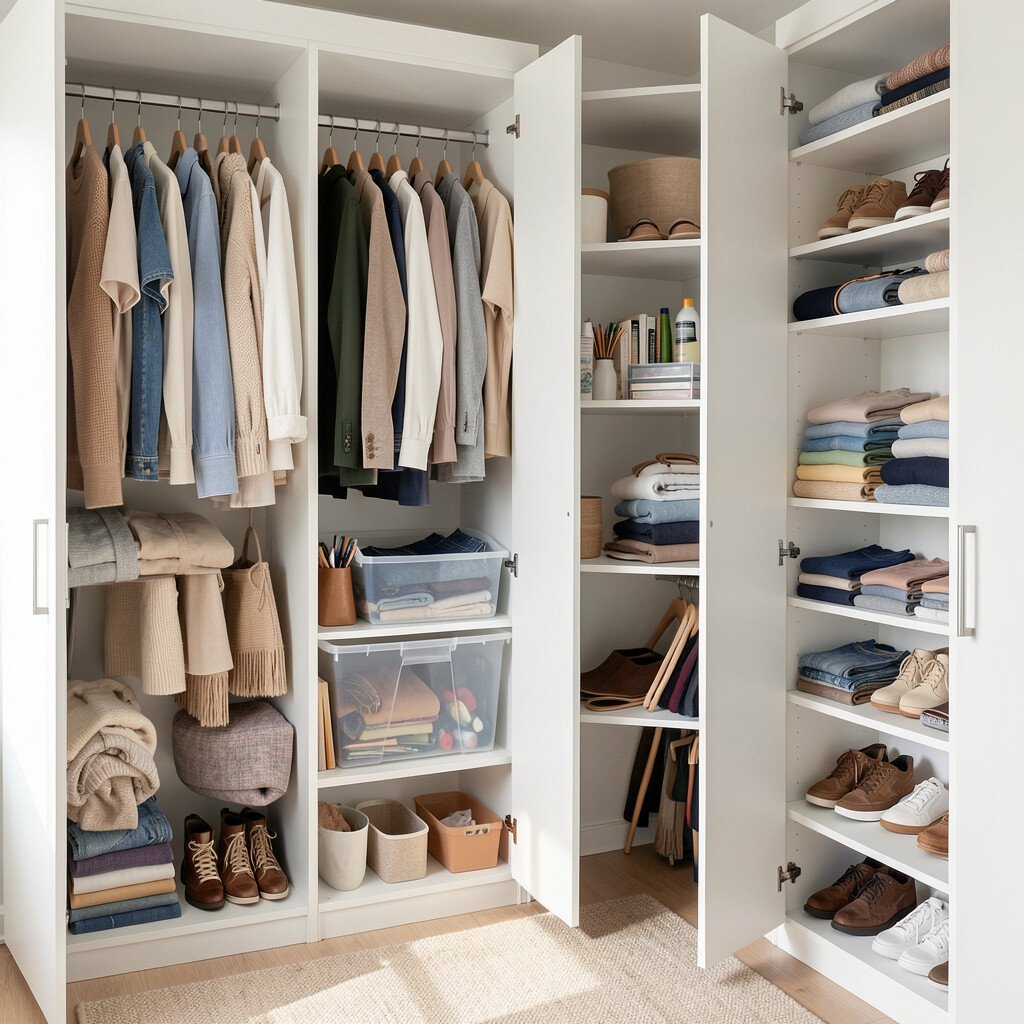
Make a clear path for items you are not using anymore. When you keep donation and repair together, you avoid leaving “maybe later” piles around.
Schedule a quick drop-off day and keep a small bag or box ready. For repairs, set aside a basket for buttons, sewing supplies, and items that need a tailor. This step saves you from forgetting small fixes and helps your wardrobe get better over time.
11. Add Lighting or a Better Way to See Everything
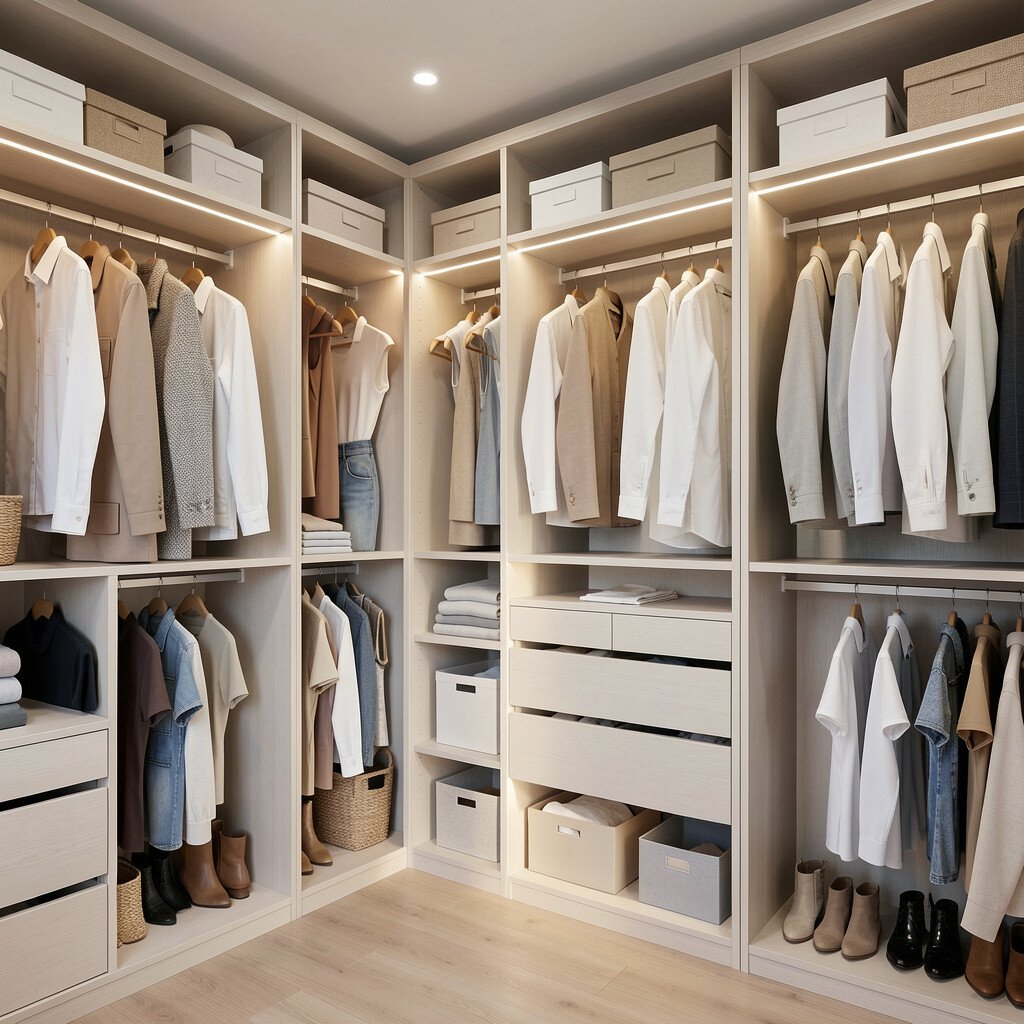
Good lighting makes your closet feel bigger and easier to use. Even simple changes like brighter bulbs or a small plug-in light can help you spot colors and textures quickly.
If adding hardware feels too big, try a motion-activated light strip or a compact lamp on a shelf. Better visibility is a practical benefit because it reduces time spent searching and trying on items. It also helps you spot stains early, which keeps clothes looking newer longer.
12. Fold Smarter with Consistent Methods
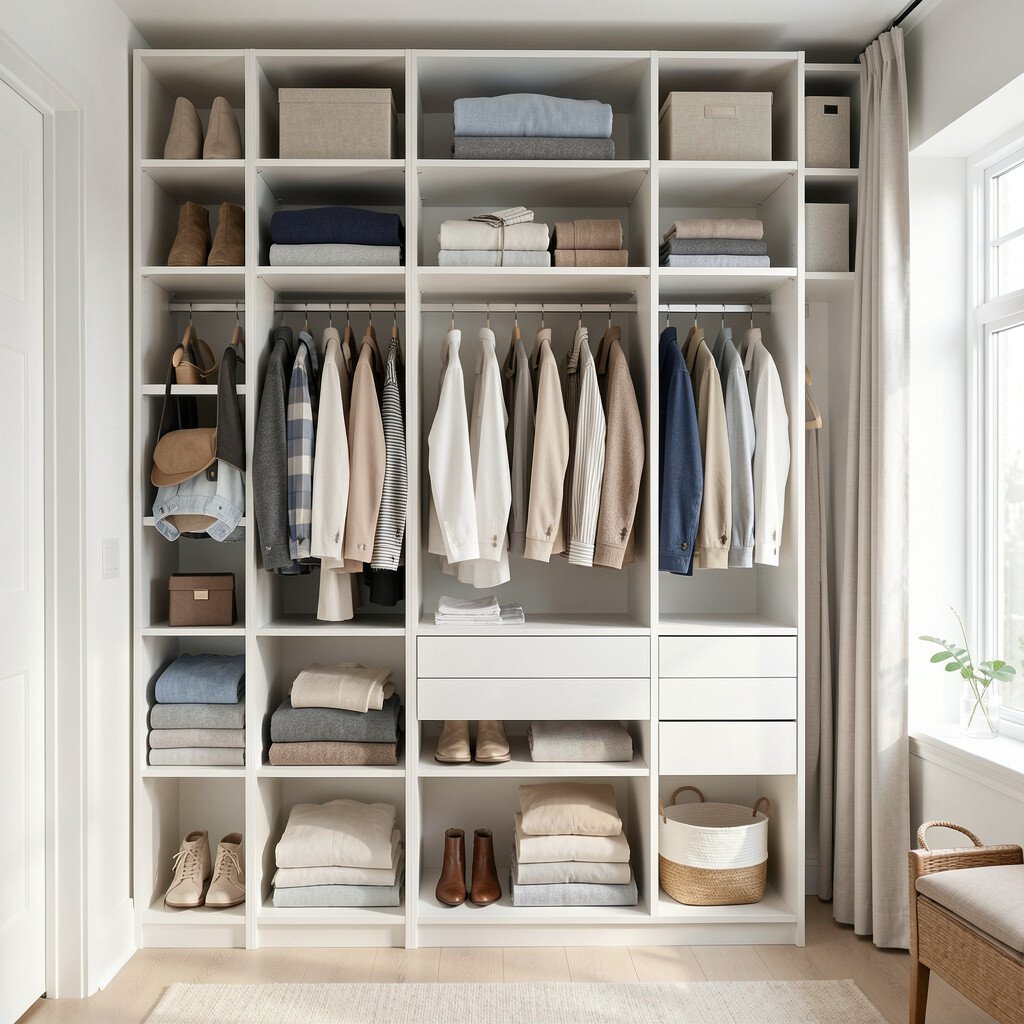
Folding the same way each time makes shelves look calm and helps items stack neatly. When every piece has a similar shape, your closet stays organized even without extra bins.
Try a simple, repeatable fold for shirts, sweaters, and tees so drawers or shelves hold more. Consistency also helps you personalize your system by choosing the fold type you like best. If you hate wrestling with stacks, use smaller stacks or short bins so each item stays visible.
People love a tidy “vertical” look for some categories, especially folded shirts, because it feels modern and easy to scan. This is a current trend that also supports quick decisions when you are in a rush.
13. Label Bins and Shelves for Easy Return Trips
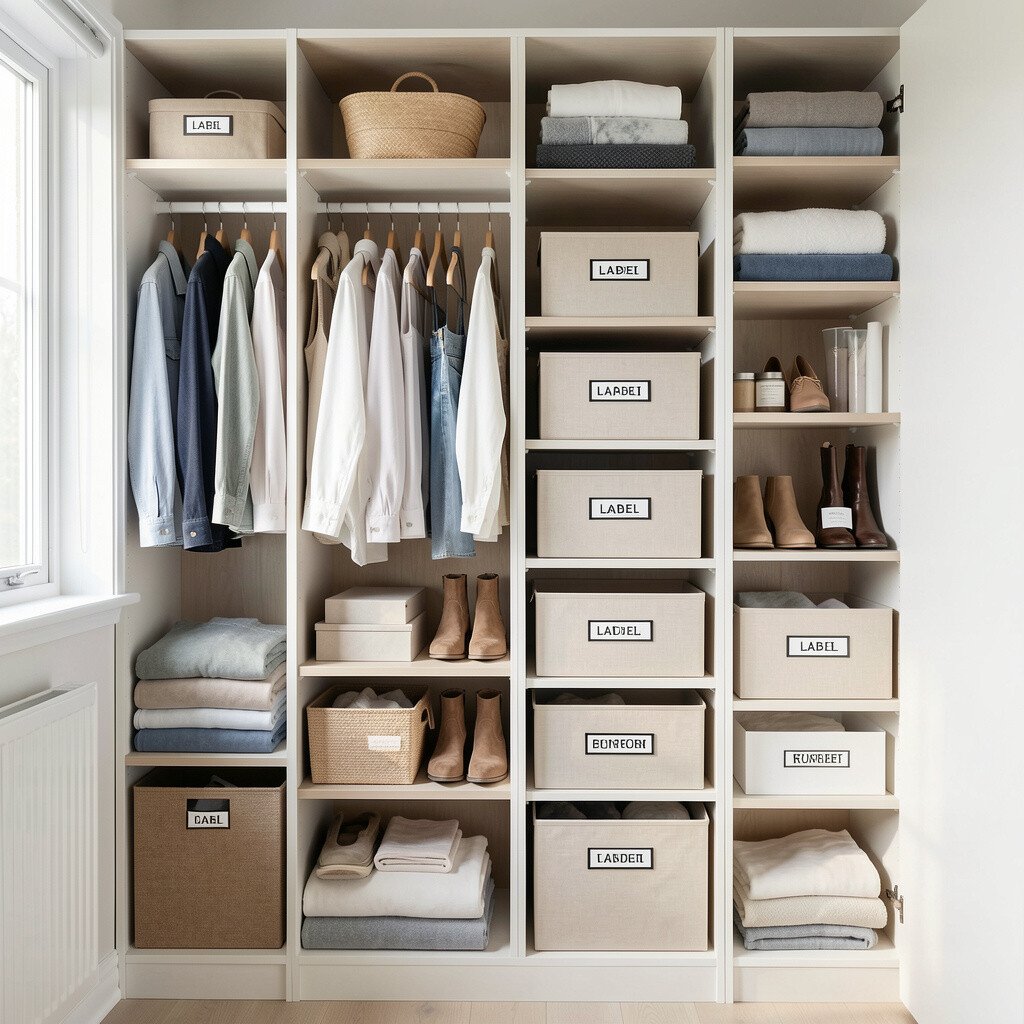
Labels help everyone in the house put things back without guessing. Clear handwriting or simple printed labels make storage feel orderly and reduce “where does this go” moments.
You can personalize labels by using categories that match your life, like “cable charging,” “office,” or “special occasion.” The benefit is huge because labeled storage protects your makeover from slowly unraveling. Even a few labels on the busiest bins will keep your system working.
If you want low-cost options, use removable label stickers or small index cards inside clear bins. That way you can update labels as your wardrobe changes.
14. Plan a Footwear Setup That Prevents Clutter
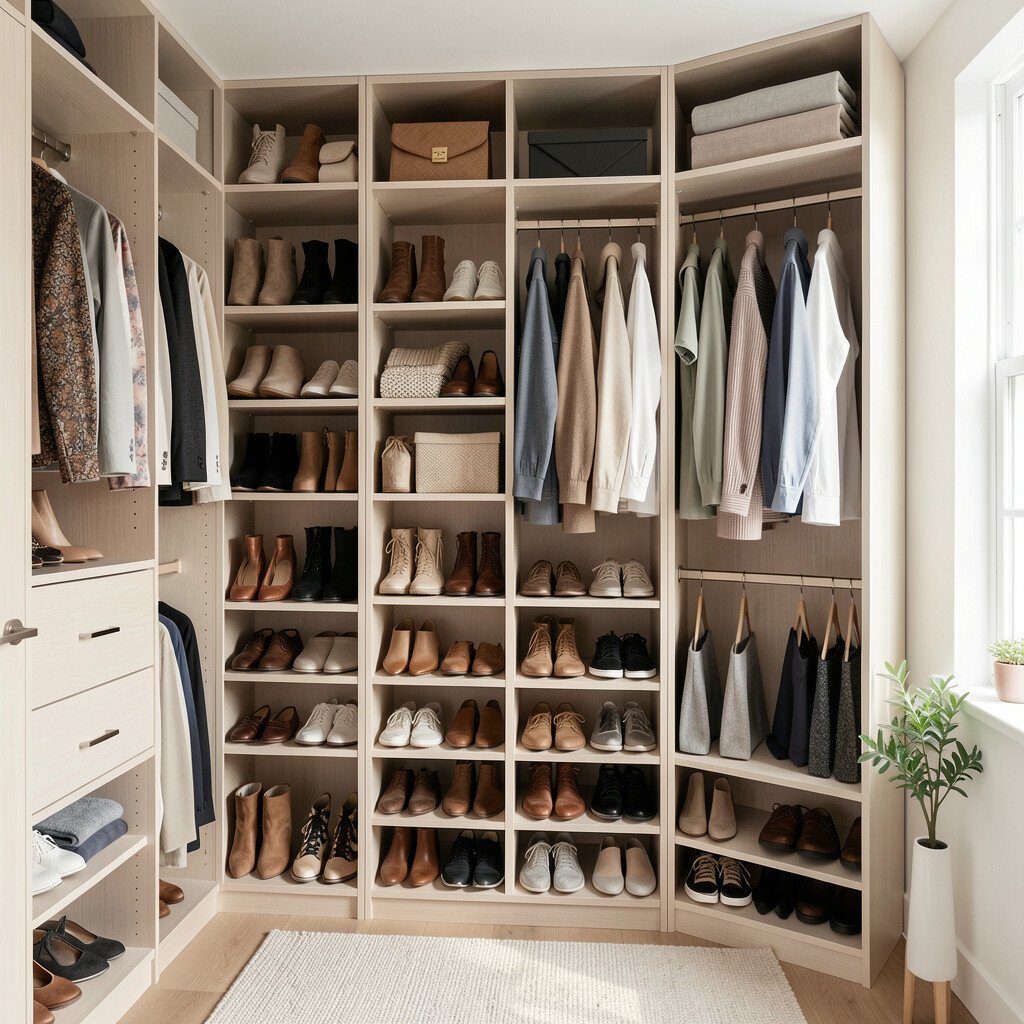
Shoes take up space quickly, so a smart setup helps your closet look instantly cleaner. Keep your most-used pairs within reach and store the rest using a system that stays neat.
You can use a shoe rack, stackable shelves, or individual compartments for boots and sneakers. Pairing shoes together is a practical tip that reduces mismatches and makes cleaning easier. A bonus benefit is protecting floors because shoe storage keeps scuffs and dirt contained.
For personalization, use a small tray for cleaning tools like shoe wipes or insoles. This creates a neat mini-zone that looks intentional and keeps supplies handy.
15. Add a Small Storage “Home” for Accessories
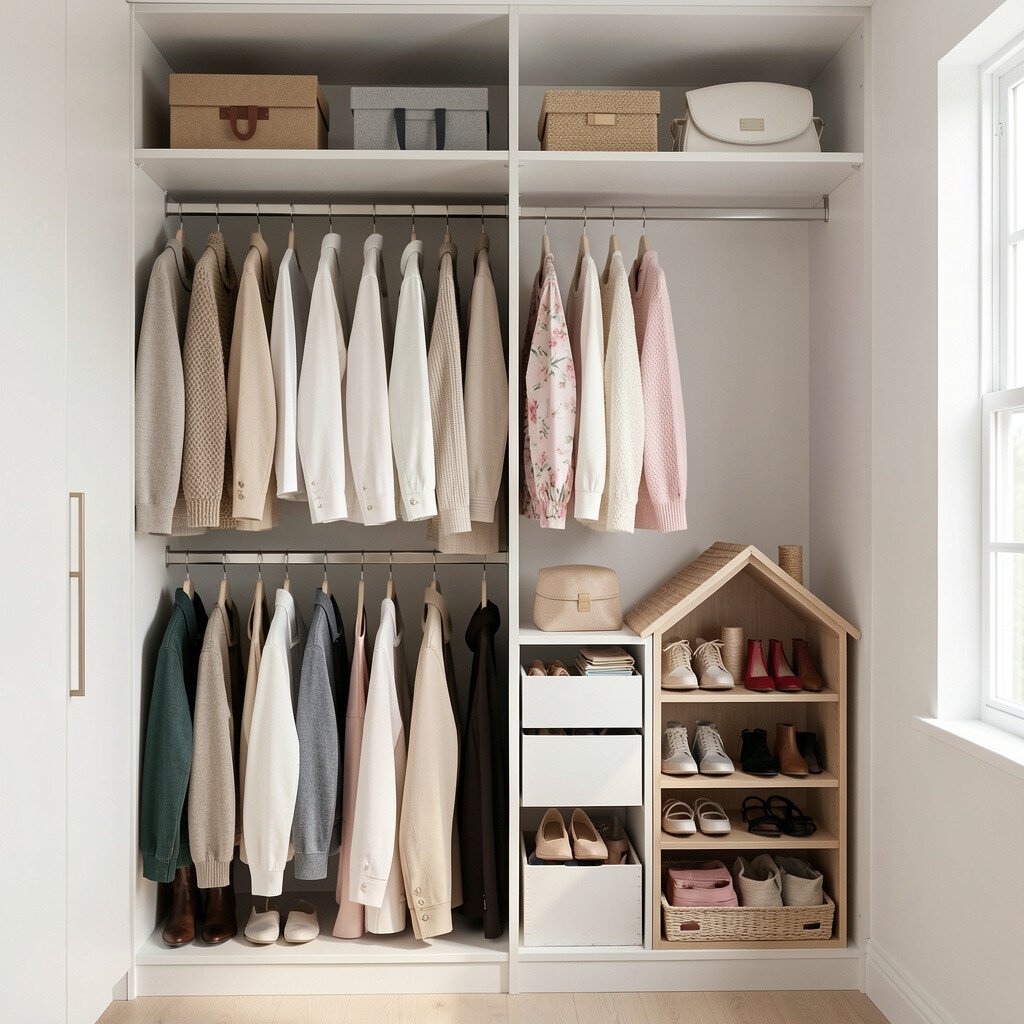
Accessories are where closets get messy if they do not have a home. Set up a dedicated spot for belts, scarves, hats, and bags so you can grab them without digging.
Use hooks on a door, a small organizer on a shelf, or baskets for rotation. When every item has a specific place, you spend less time searching and more time getting dressed. This step also keeps your daily outfits more polished, which is a real confidence boost.
16. Style the Look with Color, Texture, and Breathing Space
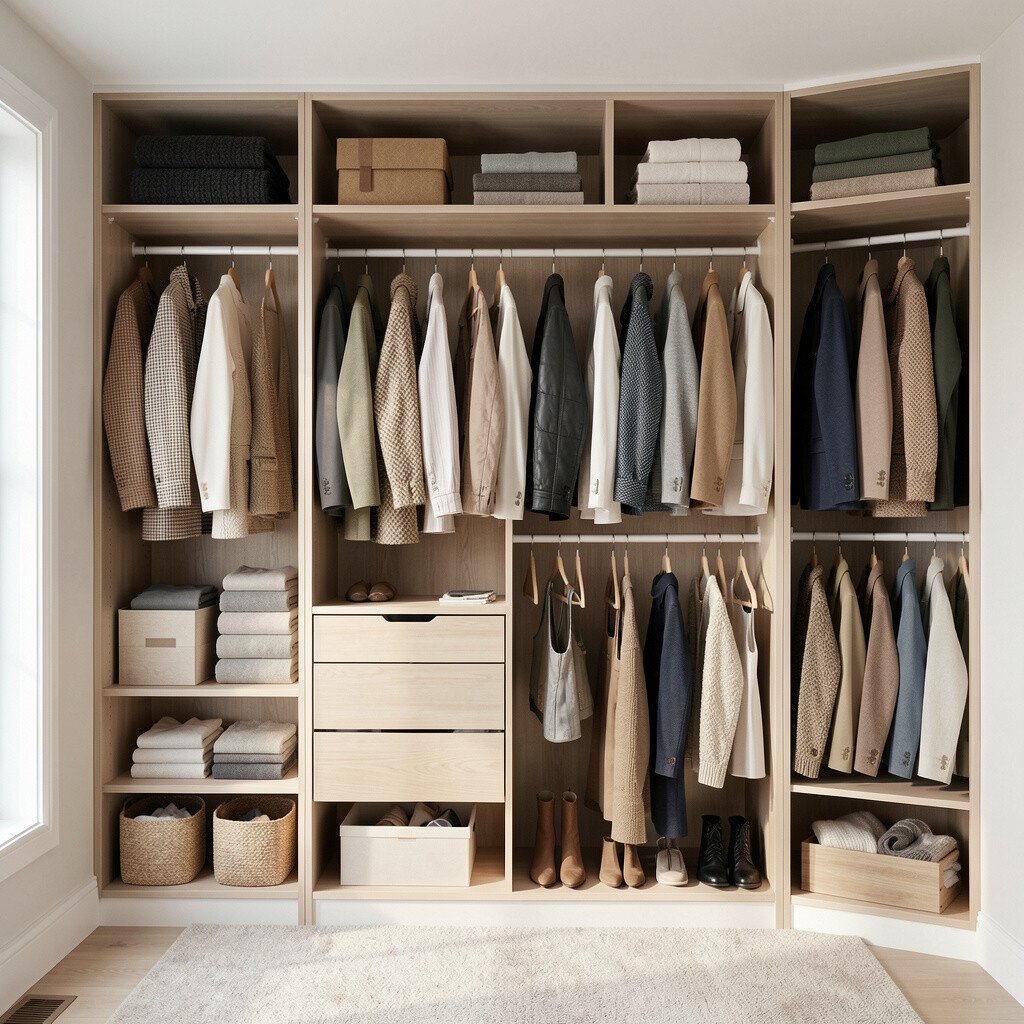
Once everything is organized, styling makes it feel like a designer closet. Add a few visual touches, like matching fabric bins, a small tray, or simple color coordination on shelves.
Choose textures that fit your theme, such as woven baskets or smooth acrylic organizers. Leaving a bit of open space keeps the closet from looking overcrowded, even when you add storage. This is a uniqueness factor because your closet reflects your taste, not just a generic layout.
Current trends often favor “less clutter, more intention,” so a tidy arrangement feels modern. You can personalize by placing a favorite scent, a framed photo, or a small plant where it will not get in the way.
17. Keep the Makeover Alive with a Weekly Reset Routine
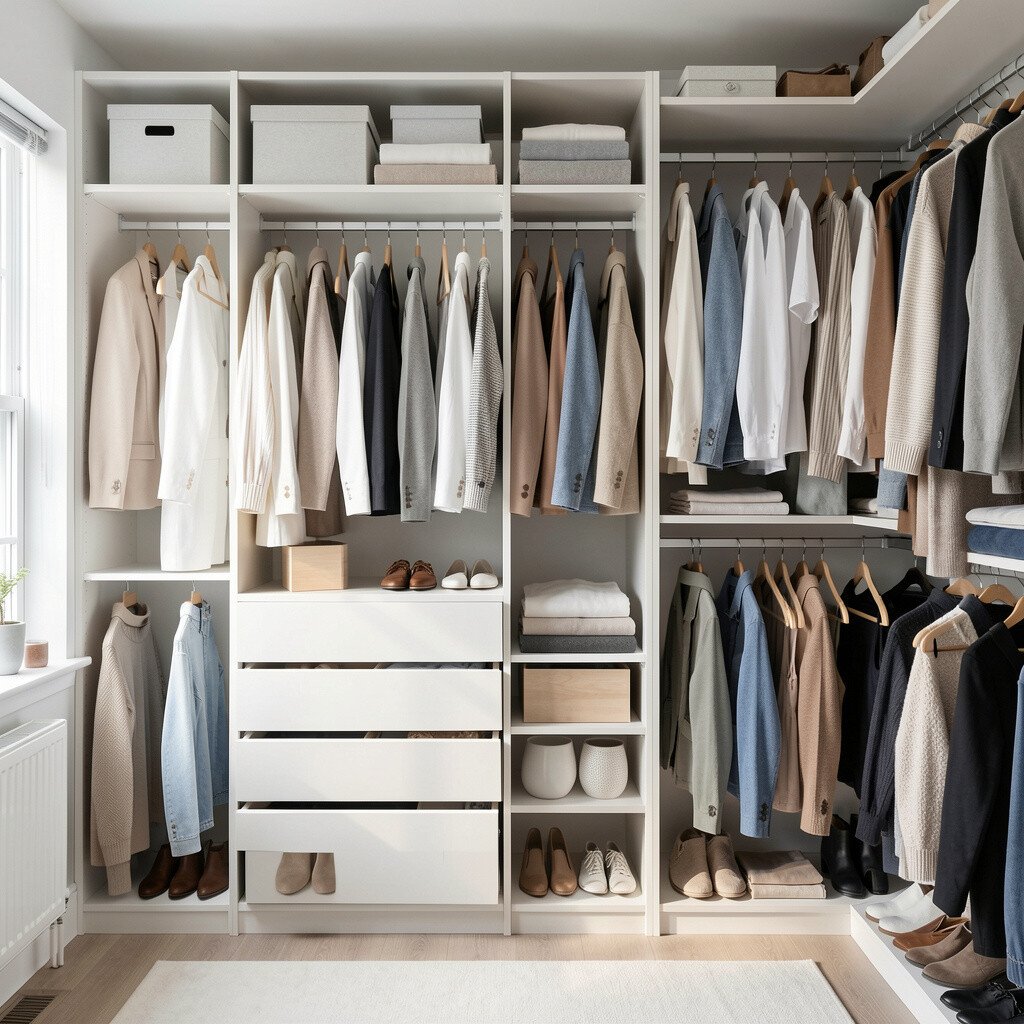
A closet makeover lasts when you do small check-ins instead of waiting for a big overhaul. Try a quick reset after laundry so items land in the right spot right away.
Spend a few minutes returning hangers to the same direction, straightening a shelf, and putting stray items in the correct bin. This practical rhythm prevents clutter from building up again. It also gives you steady progress, which feels motivating and keeps you from starting from zero later.
To manage costs, rely on maintenance habits instead of constant new purchases. If something starts to overflow, that is your cue to adjust zones rather than buying more storage right away.
18. Review, Adjust, and Upgrade One Upgrade at a Time
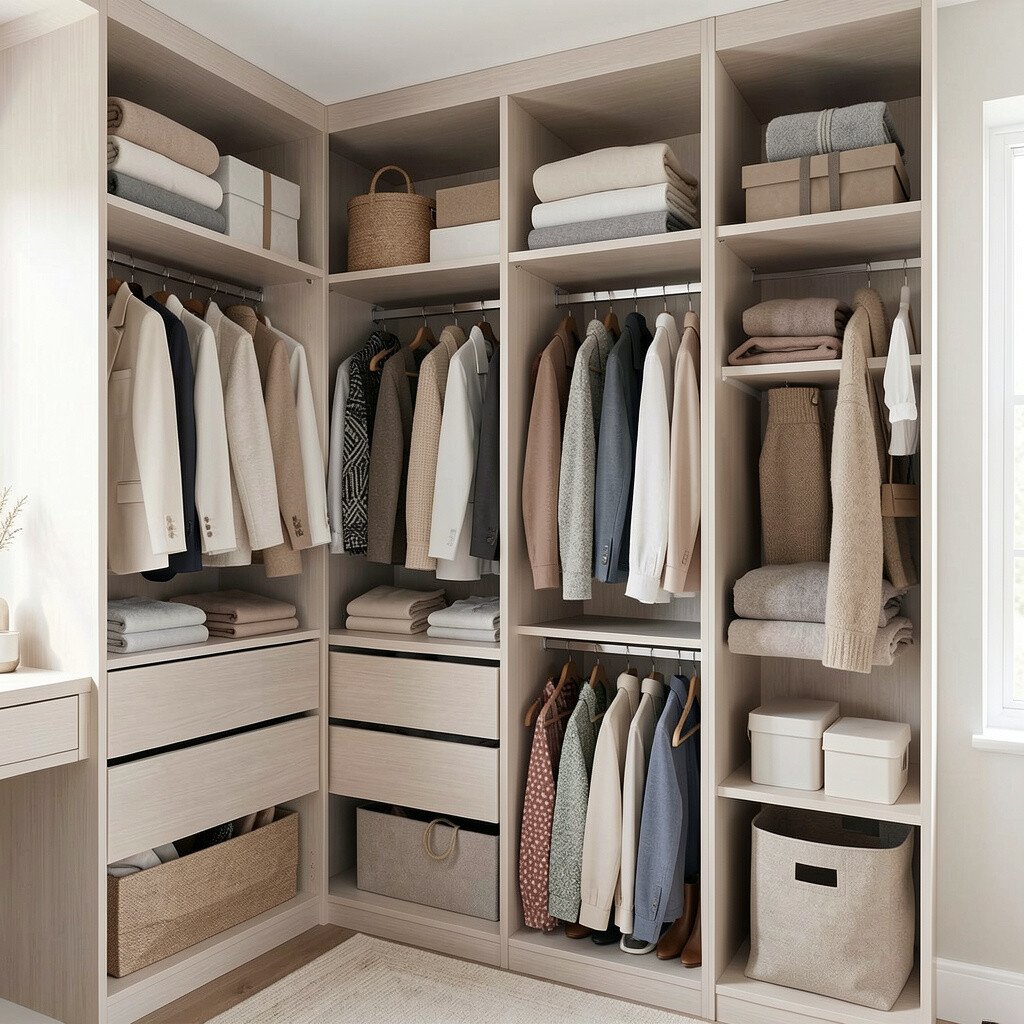
After a few weeks, do a simple review of what feels easy and what still causes friction. Notice where you hesitate, where piles grow, and which categories need better access.
Then make one adjustment at a time, like adding a divider, moving a shelf, or changing how you hang certain items. This approach keeps your plan flexible and respects your budget while still improving the system. When you iterate, your closet becomes more personal with each tweak.
If you want a trend-friendly upgrade, consider smart storage like clear stackers or modular organizers that can change as your wardrobe changes. The uniqueness comes from tailoring it to you, so the final setup fits your routine, not just a photo.