
Bright, minimal spaces can feel calm and alive at the same time. A few well-placed indoor plants can add softness, color, and comfort without clutter.
When light pours in and walls stay simple, greenery becomes the star. With smart styling and easy care, you can create a home that feels fresh every day.
1. Floor-to-Ceiling Light Curtains with Greenery Corners

Imagine tall windows dressed in airy, light curtains that move gently with the breeze. Near one corner, a cluster of leafy plants creates a natural frame without adding heavy furniture.
Choose plants that look great from a distance, like a tall dracaena, a tree-like fiddle leaf fig, or multiple palms grouped together. Keep the planters in simple shapes and muted colors so the room stays minimalist. If you want extra brightness, rotate your plants every couple of weeks so they grow evenly toward the light.
2. White Wall Shelves for Tiny Planter Lines
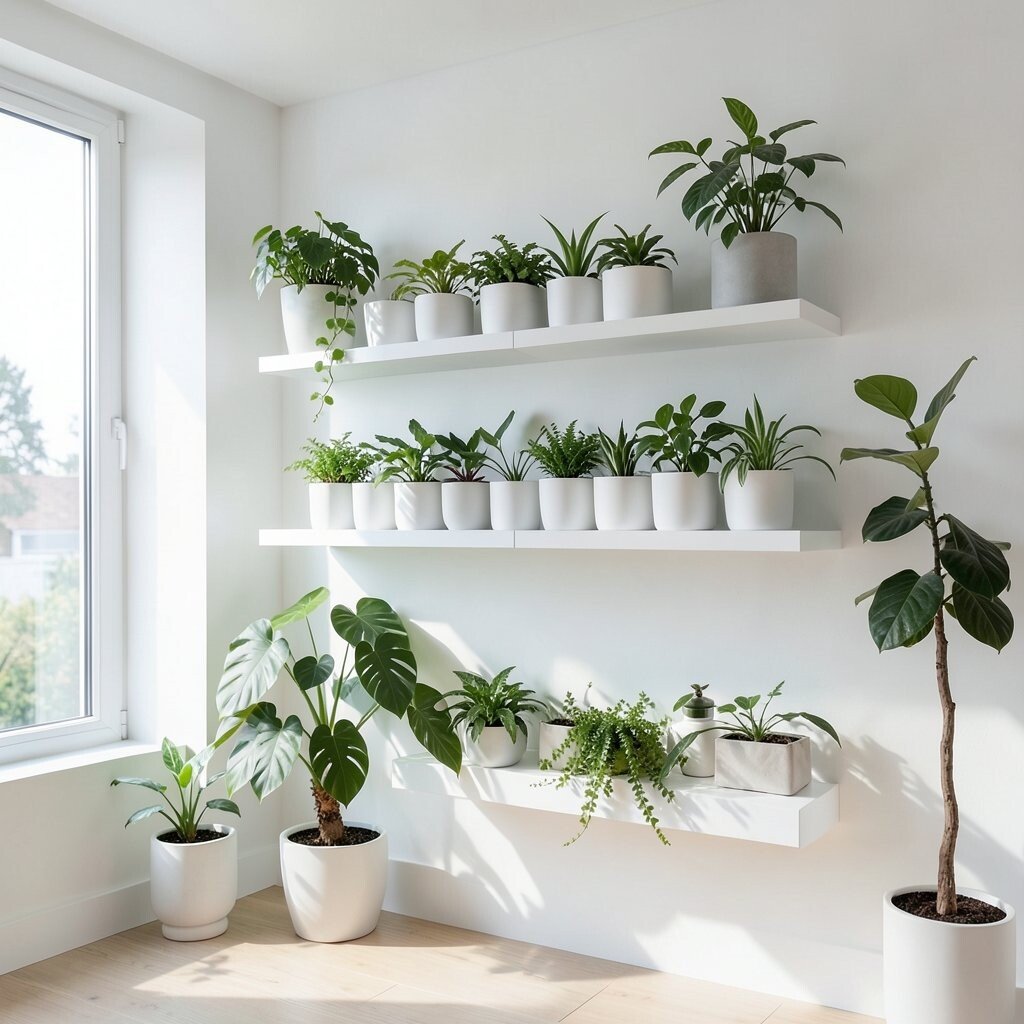
Clean white walls can feel too blank until you add a few thoughtful shelf spots. Set slim shelves at eye level so the greenery looks intentional, not random.
Use small pots and keep the heights slightly varied for an easy layered look. Try snake plant babies, small pothos, or compact peperomia so you get texture without taking over the whole wall. For practical care, place the shelves near bright windows and avoid spots that get harsh midday sun on sensitive leaves.
To personalize, mix one plant with a small glass container holding propagation cuttings, so the shelf shows growth over time. This style also matches current trends that favor minimal displays with living movement. If you are cost-conscious, start with cuttings from friends or local plant swaps and pot them into matching planters later.
3. A Single Statement Plant Near the Sofa

Your living room can stay simple when one plant becomes the main visual anchor. Place it close to the sofa so the leaves catch the light from every angle.
Consider a big, sculptural plant like a rubber plant, a bird of paradise, or a tall monstera. It brings a calm, modern look that feels bold but still clean. Water carefully and check soil moisture before you add more, because overwatering is one of the most common beginner mistakes.
If you want the space to feel extra bright, pair the plant with a light-colored pot and a matching tray for catch spills. This setup is unique because it focuses attention on leaf shape and natural color, not on many separate items. Over time, you can swap the plant for a different species while keeping the same layout for an easy refresh.
4. Window Sill Mini Garden for Morning Glow
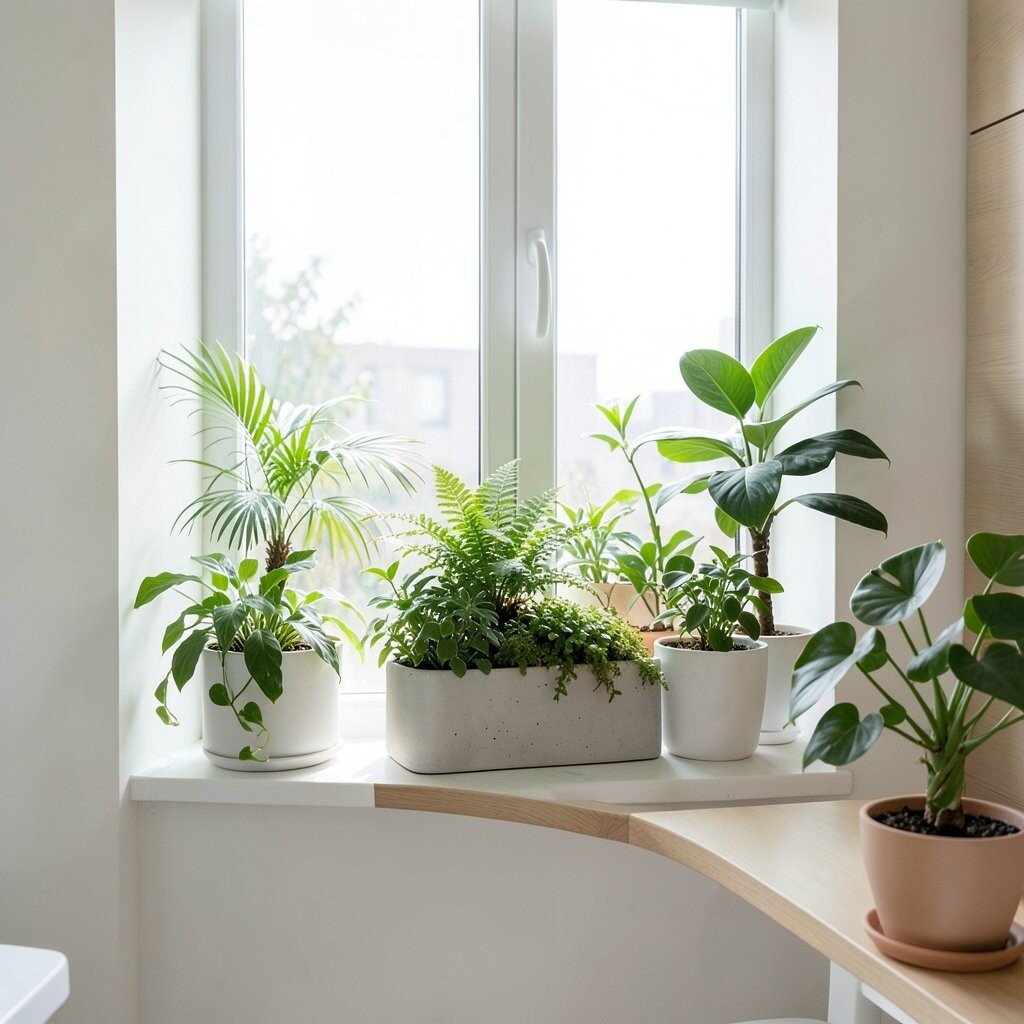
A sunny windowsill can become your daily ritual spot. Use it for a mini garden that looks neat, warm, and alive from the street side too.
Pick small plants that enjoy bright, indirect light such as jade cuttings, trailing pothos in a tidy pot, or an herb like basil if the window gets gentle sun. Keep pots the same color family, like soft terracotta with white or cream saucers, so everything stays cohesive. To make it easier, group plants by watering needs so you are not constantly remembering different schedules.
5. Hanging Planters That Keep the Floor Clear

Minimal rooms often feel better when the floor stays open. Hanging planters add plants without taking up walking space or visual weight.
Choose a macramé hanger for a softer vibe or a simple metal hook for a more modern feel. Try trailing plants like string of hearts, trailing philodendron, or hoya to get movement that looks effortless. For practical success, hang plants at eye level so you can easily spot thirsty leaves and adjust care quickly.
This idea feels unique because it uses vertical space, which makes the apartment look brighter even when the window is small. It also matches current trends that favor airy “plant clouds” instead of bulky stands. If you want to manage cost, reuse old jars as temporary propagation planters, then upgrade to proper hanging pots when you see which plants thrive.
6. Neutral Planters in One Color Family
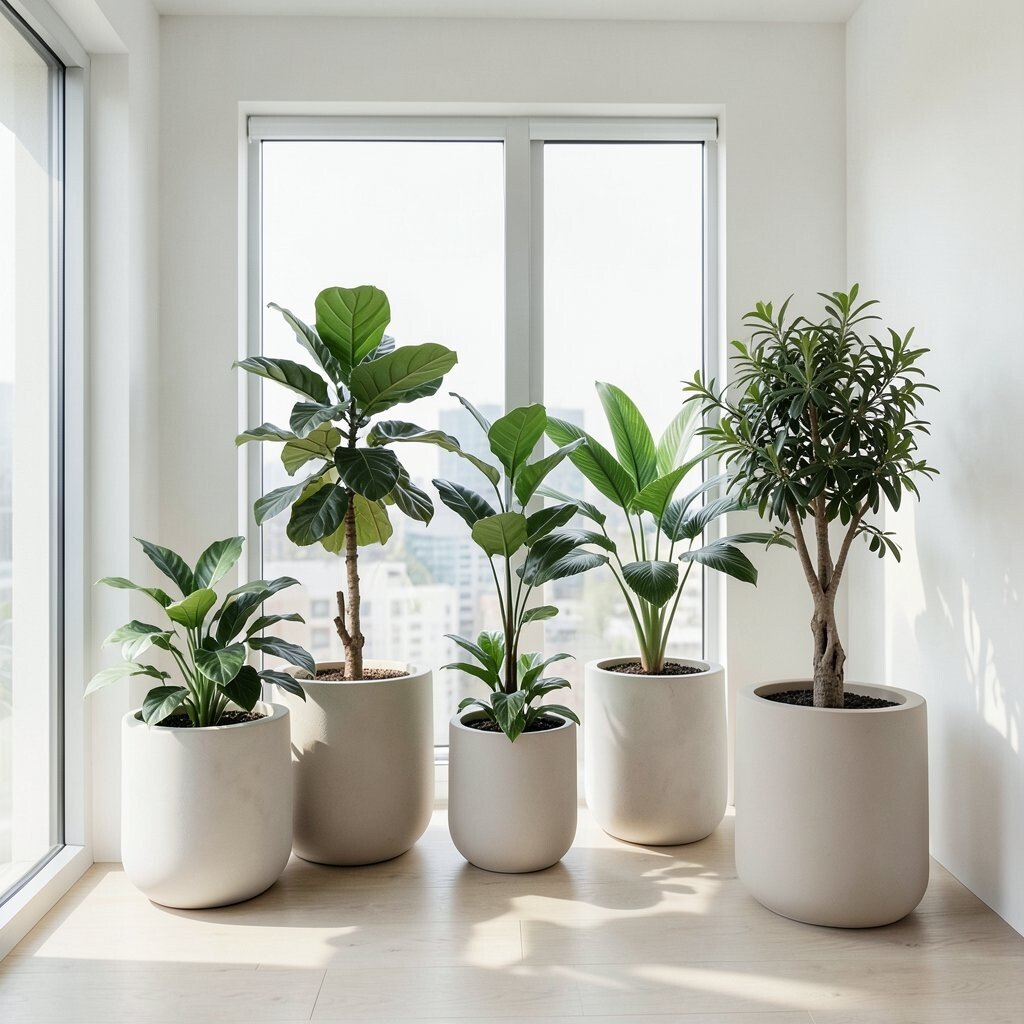
Minimalist plant styling gets easier when everything shares the same color story. Keep planters in a single palette so the leaves stay the colorful focus.
Soft whites, warm creams, light grays, and natural wood tones look clean with almost any interior. This also helps with cost, because you can find affordable planters in bulk sizes and keep them consistent. Use a matte finish for a calm, modern look, and choose a saucer that matches so the room feels tidy at a glance.
Personalize the arrangement by varying pot shapes while keeping the same color, like mixing round and cylindrical pots. This creates a unique rhythm without adding visual clutter. If you love a pop of personality, add one plant in a slightly darker pot, such as charcoal, only as a contrast point near the brightest window.
7. Layered Plant Stands for a Clean Height Gradient

A plant stand can make even simple greenery look styled instead of scattered. When you set plants at different heights, the room looks full but still organized.
Start with a taller plant on the floor, add a mid-level plant on a stand, and place a small plant on a table or shelf. This height gradient helps light reach leaves and makes the whole display feel balanced. For benefits, it also makes watering easier because you can see the soil surface more clearly.
To personalize, choose stands with simple lines and light finishes that match your furniture, like a pale oak or brushed metal. If you are on a budget, you can use thrifted side tables or sturdy stools, as long as they are stable and safe for pots. Current design trends often use “less furniture, more styling,” and a stand setup fits that perfectly.
8. Indoor Herbs by the Kitchen Sink

Your kitchen can feel bright and welcoming when herbs live right where you use them. Set a small herb pot near the sink or on a nearby counter with access to light.
Choose basil, mint, chives, or thyme based on what you cook most. This gives you practical benefits, because you get fresh scent and usable flavor, not just decoration. Keep herbs in breathable pots or in containers with good drainage so they do not stay wet too long.
9. Terrarium-Style Vessels for Controlled Green Calm
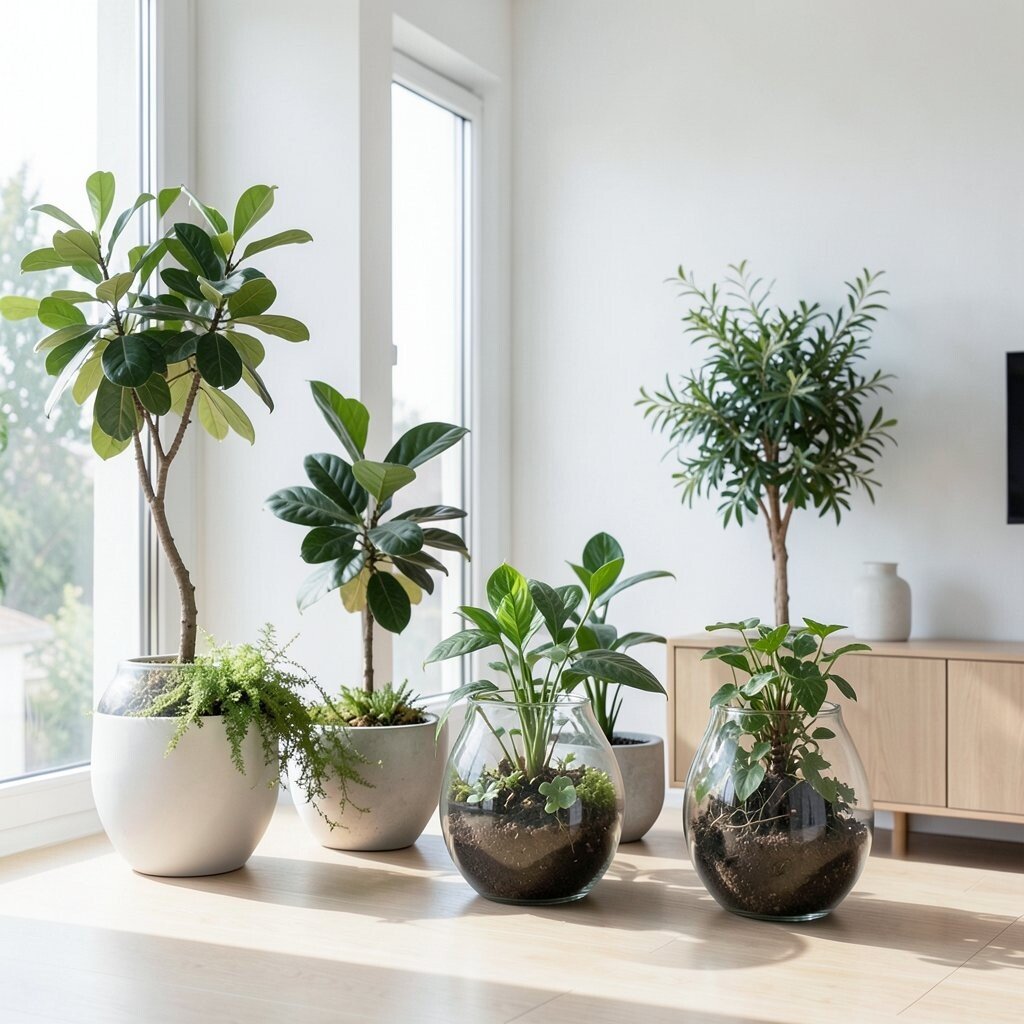
If you want a minimalist plant look with a neat shape, terrarium-style vessels can do the job. They create a glassy “mini world” that looks polished and modern.
Try a clear glass container with a simple arrangement, like a small fern paired with moss or a single plant in a layer of rocks. This can be very calming and visually unique because it shows texture through the glass. For practical care, keep the vessel in bright indirect light and open it sometimes if moisture builds too much.
Cost-wise, terrariums can be affordable if you start with glass jars and clean stones from garden centers. Personalize by choosing different leaf textures, such as combining fine fronds with a bold, thick-leaf plant for contrast. This approach is trending among people who like low visual chaos and a tidy look on shelves or tables.
10. A Plant-Filled Bath Corner for Soft Spa Vibes

Bathrooms often have light, humidity, and a calm mood, which makes them great for plants. Create a simple bath corner with a few matching planters and let greenery soften the hard surfaces.
Pick humidity-friendly plants like ferns, calatheas, or peace lily if the light is bright enough. Keep them away from direct water spray, and wipe leaves occasionally to remove dust and keep them looking fresh. This setup offers practical benefits too, because many people find the room feels more relaxing when the air looks alive.
11. Minimal Plant Bowl on the Coffee Table

A coffee table can look clean and modern when you keep the plant display simple. Use one bowl or one tray so the greenery stays contained and easy to manage.
Try a shallow ceramic bowl with a small plant like a dwarf jade, a tiny bamboo bundle, or a compact succulent mixed with moss. This makes the centerpiece feel lighter than bulky decor and still gives you living texture. Personalize it by adding a thin layer of stones that match your floor or rug color.
This idea is unique because it treats plants like art objects without losing the natural charm. For cost considerations, use a single plant instead of many small ones, and you will spend less while still getting impact. If you worry about mess, place a liner under the bowl so water doesn’t stain your table.
12. Choose Plants That Match Your Light Level

Brightness matters, and the best minimalist look starts with choosing plants that fit your actual light. Instead of forcing every plant into the same spot, match the species to the window conditions.
If your apartment gets lots of gentle light, you can try monstera, rubber plant, or bright green pothos varieties. For lower light areas, snake plant, zz plant, and cast iron plant usually do well with less fuss. This step brings real benefits, because plants stay healthier, look better longer, and drop fewer leaves.
To personalize, you can still keep the style consistent by using one planter color family even when the plants differ. Current trends focus on “right plant, right place,” and that approach helps your apartment stay tidy over time. Cost can also be lower, because well-suited plants are less likely to struggle and need replacements.
13. Seasonal Styling with One Plant Swap per Room

Minimalist spaces can feel fresh when you change just one thing at a time. Try a seasonal plant swap while keeping the overall layout calm and repeatable.
In warmer months, add bright green trailing pothos or light leafy plants near windows. In cooler months, lean into sturdier textures like zz plant, fiddle leaf fig, or a thicker leafy variety that holds its shape. This gives you personalization without clutter, because the room’s structure stays the same and only the plant “mood” shifts.
For cost considerations, keep your favorite planter setup and rotate plants from your collection instead of buying new decor every time. If you want a gentle trend feel, consider adding one plant with deep, dramatic leaves for contrast during the darker season. You will end up with a home that always feels styled, even when everything looks simple.
14. Create a Plant Care Station for Easy Routine

Indoor plants look better when they are cared for consistently, and a small care station makes it simple. Set up a quiet corner with what you already need, like a watering can, small mister, and a soil scoop.
Keep extra supplies in one simple bin with a lid so the area stays minimalist. That routine brings benefits like fewer overwatered plants and faster leaf cleanups, which helps your space stay bright. Personalize the station by using the same neutral colors as your planters so it blends into the home instead of standing out.
This approach is practical and unique because it turns plant care into a smooth habit, not a messy chore. If you are watching costs, start with small tools you can use for years and avoid buying too many specialized items at once. A consistent routine also matches current trends toward simple living, where you spend more time enjoying your plants and less time troubleshooting.