A sketch in the morning can turn into a story by lunchtime. Creativity grows best when students feel safe to try, revise, and share.
Here are classroom theme ideas that make projects feel lively, doable, and personal.
1. Community Heroes Through Paper Portraits
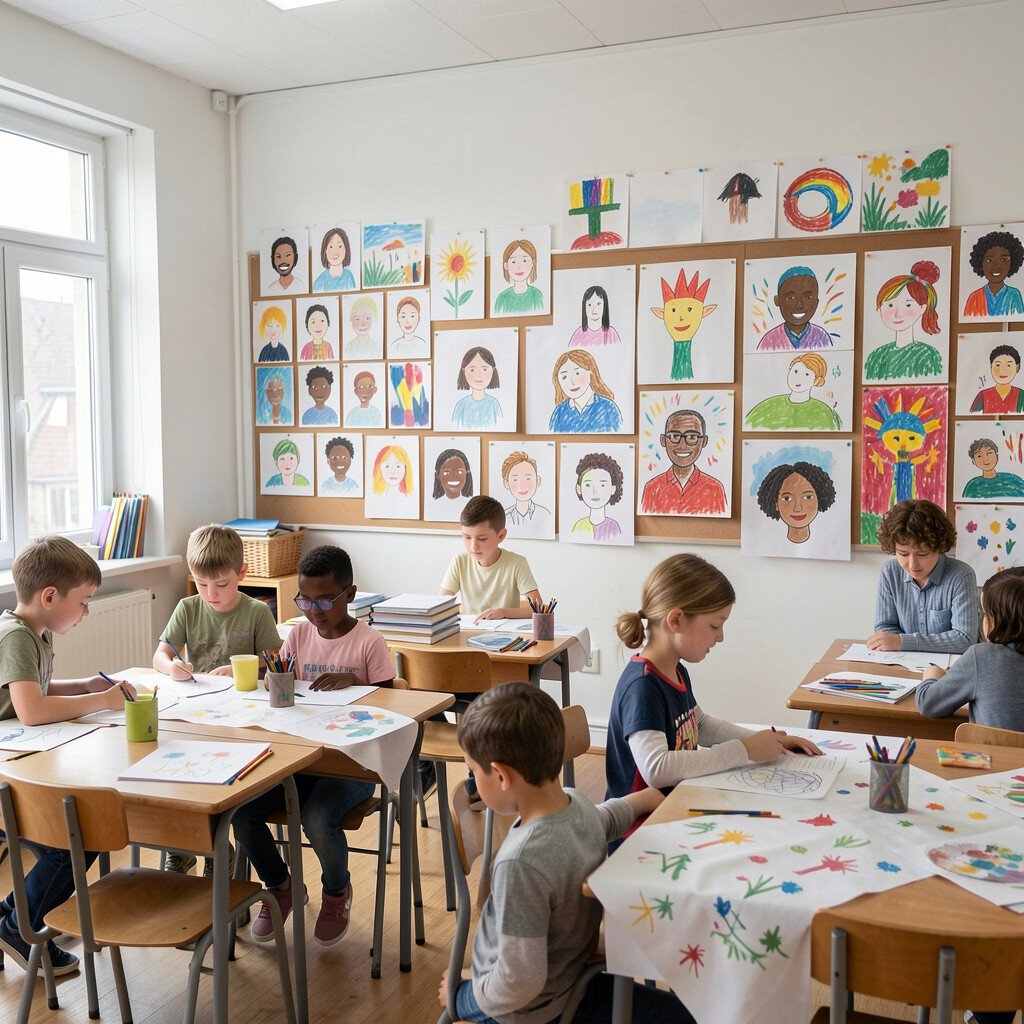
Students choose a local hero, then create a paper portrait with bold shapes and meaningful details. A classroom gallery can look like a warm wall of thank-you notes, with textures from colored paper, tape, and fabric scraps.
To keep it practical, offer templates for faces and let students pick materials that match their budgets. This theme supports confidence because everyone can connect the project to something real, like a neighbor, caregiver, or volunteer. Personalization happens naturally when students add captions about what the hero taught them or inspired them to do.
2. Mini-Worlds Using Recycled “Eco” Materials
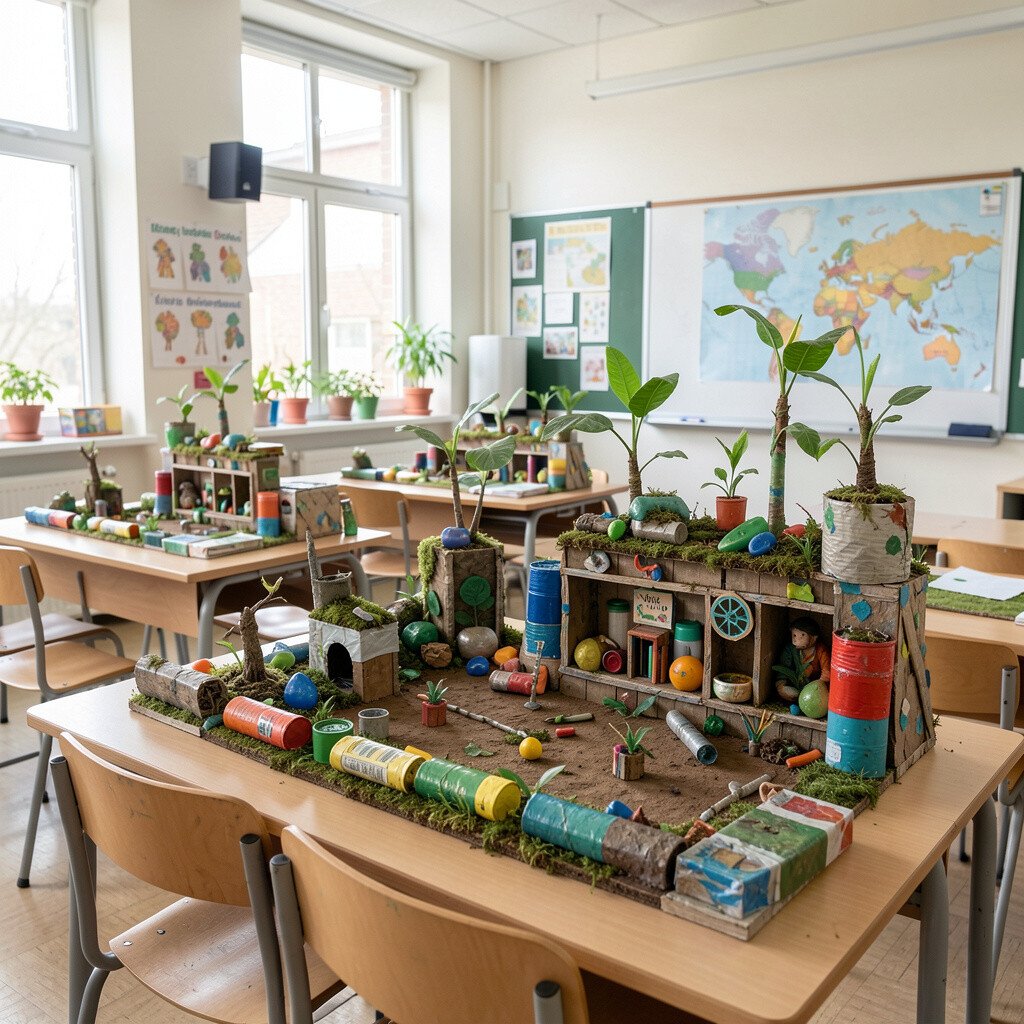
Students build tiny worlds out of recycled items like cardboard, jar lids, and bottle caps. You can almost smell the “found object” craft energy as tables fill with textures and small surprises.
This theme helps students practice problem-solving because they must plan how each recycled piece will fit and hold together. It also highlights uniqueness when every mini-world looks different based on the objects a student brings or collects.
For easy setup, create a collection station with categories such as flat cardboard, round lids, and safe plastic. Current trends in sustainability make this theme feel relevant, and you can reduce cost by using classroom scraps and community drop-offs. Ask students to label one “eco choice” in their world, like using natural colors, reusing packaging, or reducing glue by using tabs and folds.
3. Time Travel Stories With Folded Maps
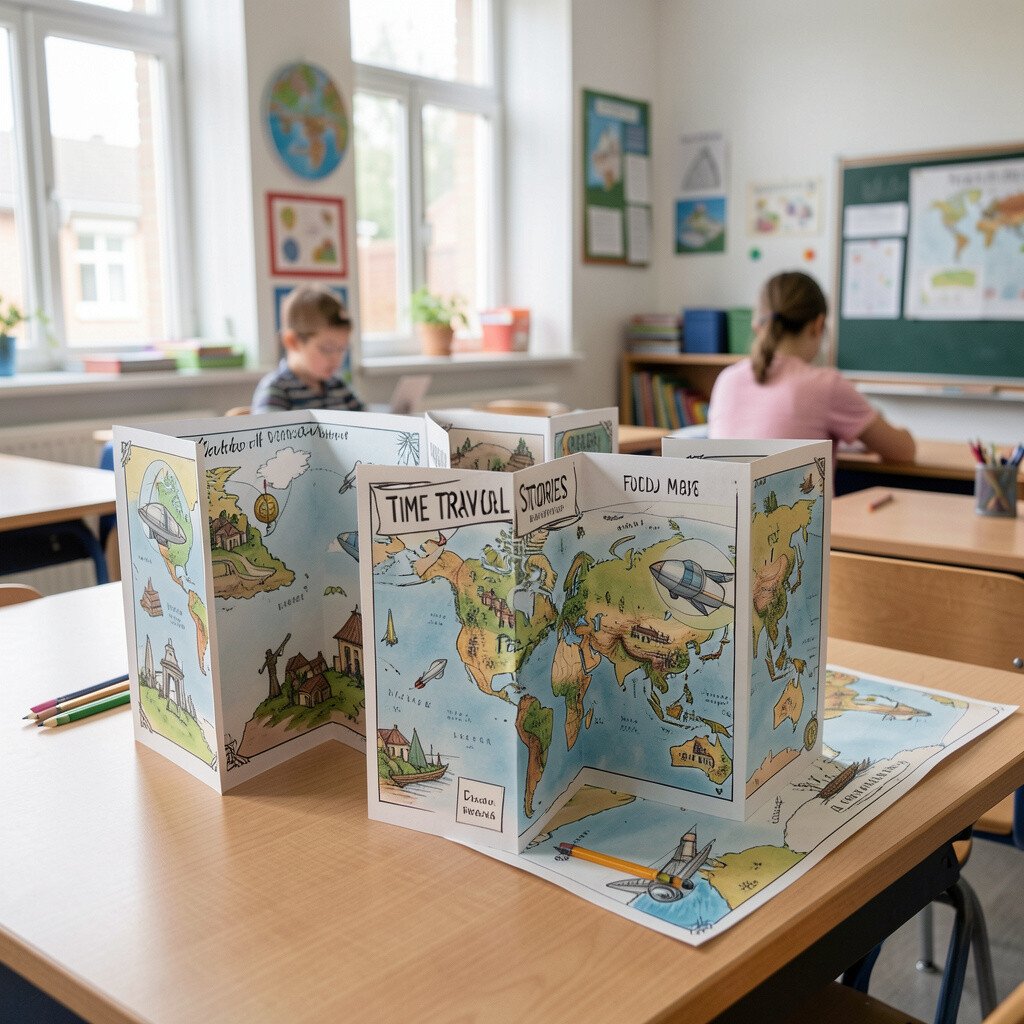
Students imagine they step into the past or future and create a folded map that guides their characters. The visual effect is strong when lines, stamps, and secret pockets turn one sheet into a travel device.
Great stories can be made accessible through structured planning, where students outline stops on the map before writing. Folded formats support student organization because each panel holds a scene, an object, and a clue.
To personalize, invite students to choose a setting they love, like space stations, ancient festivals, or a city after a storm. Budget-friendly tools like markers, paper, and a few printed images keep costs low. A current twist is to encourage “micro-scenes” that look like tiny storyboards, so art skills and writing skills both get a chance to shine.
Try adding a class “time vocabulary” word bank on the board, then let students pick three words to use in their map scenes. When peers follow each other’s maps, the whole room turns into a shared storybook.
4. Movement and Music: Rhythm Sculptures
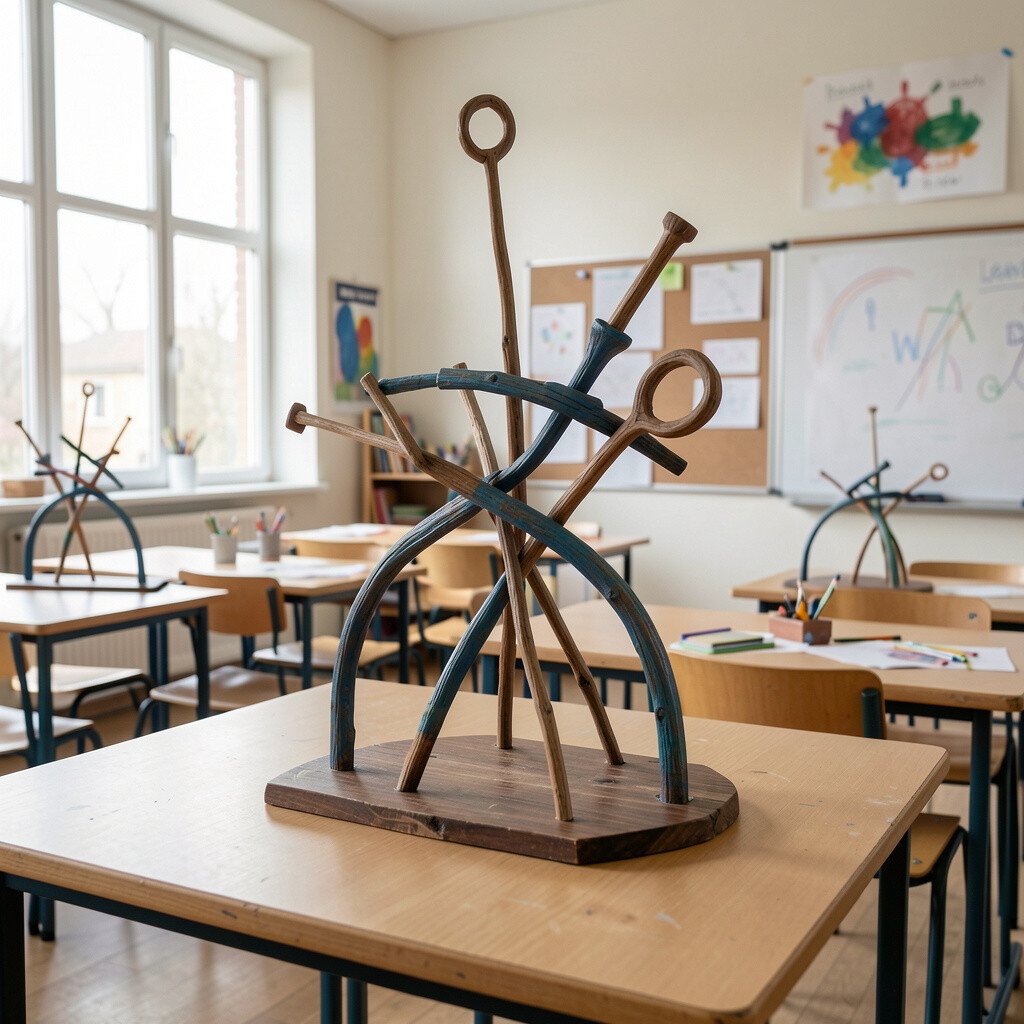
Students respond to a song by shaping modeling clay or paper into rhythm sculptures. You’ll see swirls, spikes, and gentle curves that match beats like a visual heartbeat.
This theme builds sensory creativity and helps students practice careful shaping and spacing. Students also learn to explain their choices, which strengthens communication without needing perfect artwork.
5. Weather Labs With Tornado-Fast Paper Spinners
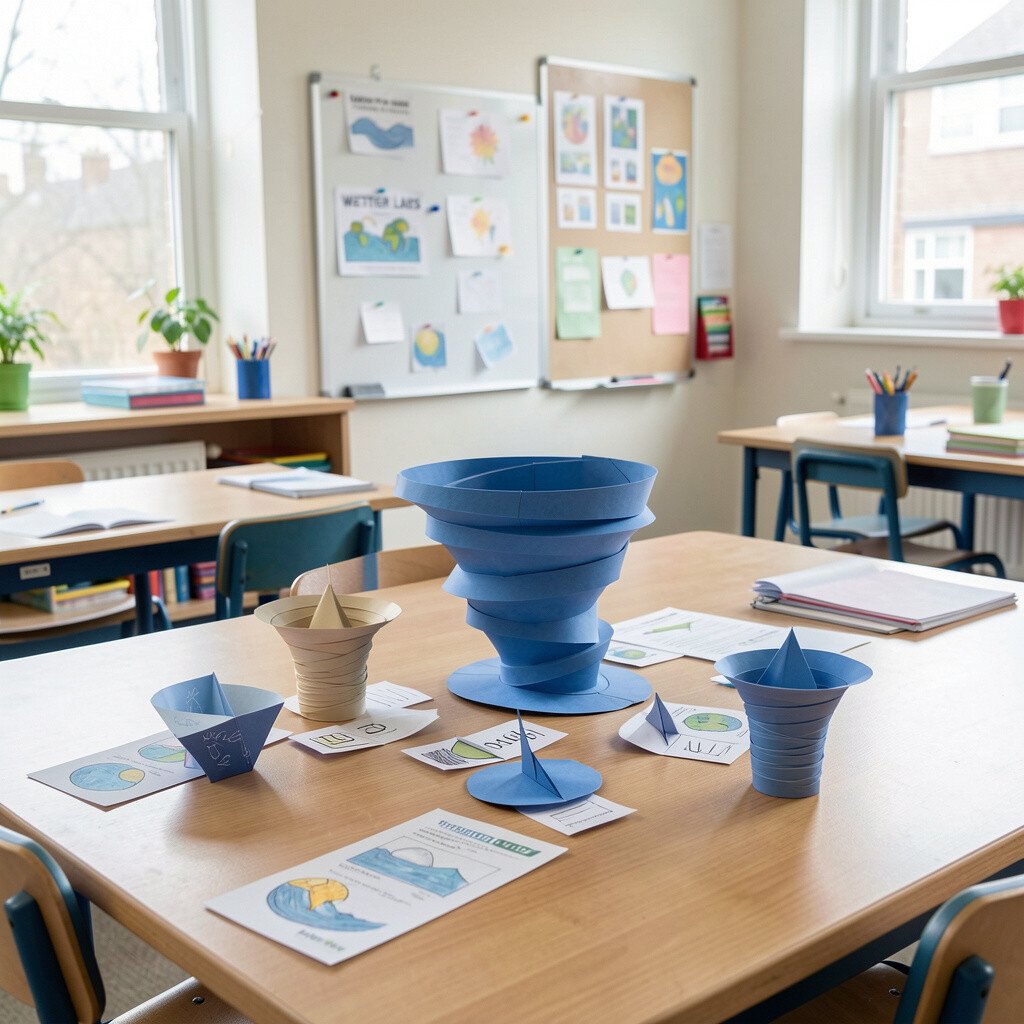
Students design spinners that represent wind, clouds, rain, or storms. The room can feel like a mini science studio when spinners spin at different speeds and colors.
They gain real cause-and-effect thinking as they test materials, adjust shapes, and observe how design changes performance. Uniqueness shows up when a “sun” spinner has a different personality than a “storm” spinner.
For practical supplies, use cardstock, brads, string, and washable markers, which are usually easy to find. Keep costs controlled by reusing brads and printing simple templates on scrap paper. Students can personalize by adding a short “weather journal” paragraph describing the conditions they were imagining.
6. Ocean Nights and Glow-Bright Sea Life
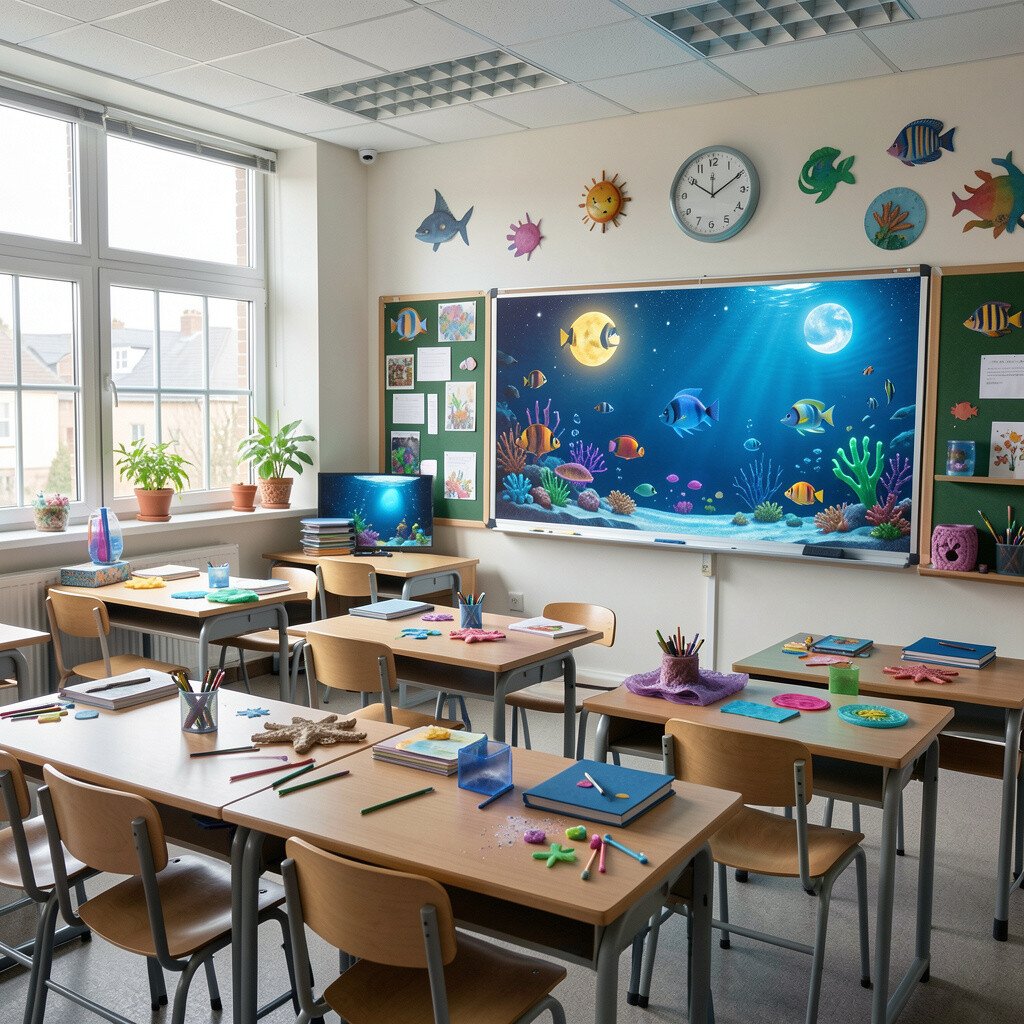
Students create ocean-themed scenes using dark paper and glow-style highlights. When they add reflective tape or glow paint, the artwork looks like it could light up a bedroom wall.
This theme supports engagement because it feels playful and a little magical while still being art-focused. It also encourages experimentation with light and contrast, which strengthens visual literacy.
To keep things manageable, set a small station for “glow” materials and limit each student’s color palette so cleanup is easier. Current trends in maker-style crafts often use safe light effects, so you can lean into LED paper ideas without making it complicated. Personalization comes from choosing an animal and giving it a “role,” like a caretaker, explorer, or storyteller.
7. Storybook Worlds With Character Design Collages
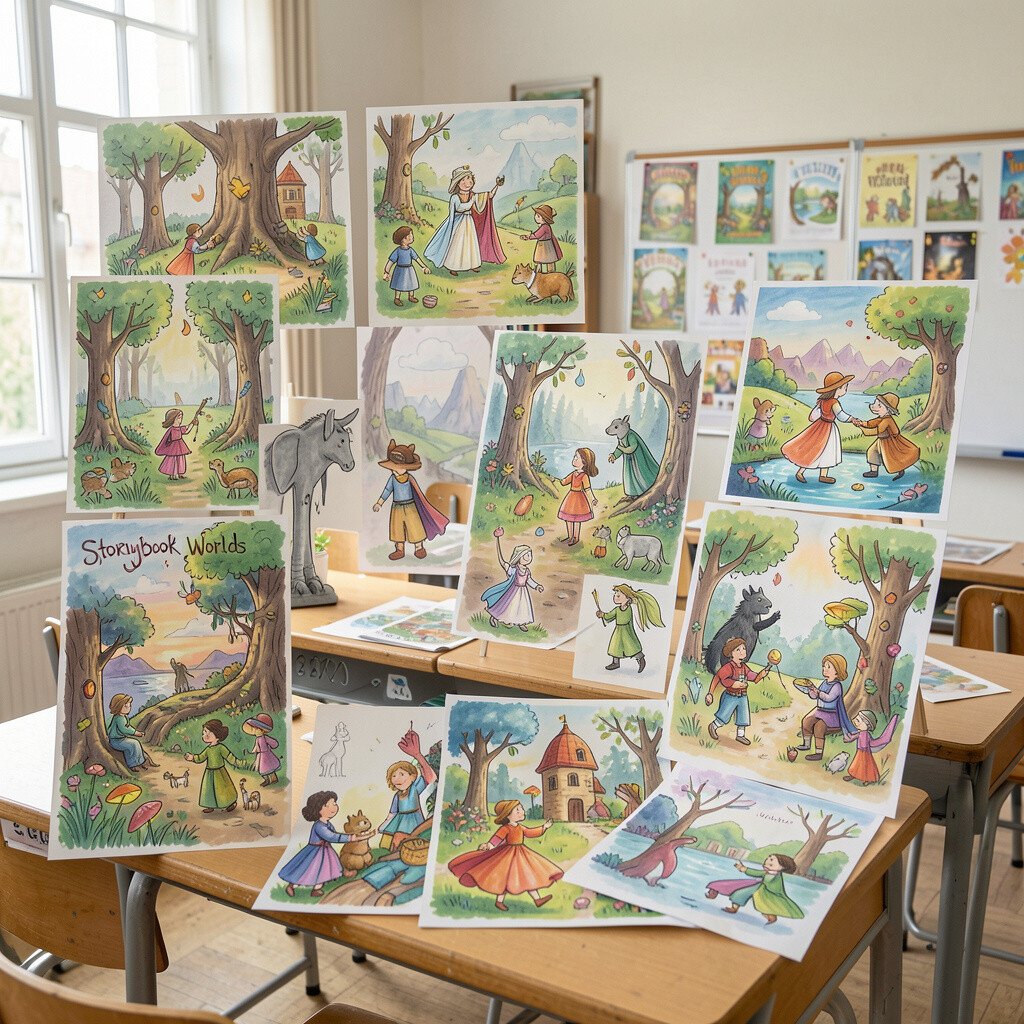
Students invent characters for a story and build them as collage portraits with layered paper. The visuals can be bold and surprising as feathers, patterned scraps, and drawn accessories come together.
This theme strengthens creativity because students can combine traits from real life and imagination. It also supports accessibility since collage materials let students move at their own pace.
Provide a variety of textures so students can choose what matches their character’s mood. Keep cost in check by using old magazines, fabric scraps, and classroom prints rather than buying new art packs. Encourage personalization by having students create a “symbol” for their character, like a cloud-shaped bracelet or a star-shaped key.
For practical tips, limit the number of collage elements students can use, which reduces overwhelm. Pair students to swap one question about their character, such as what they want most or what they fear most.
8. Dream Homes With Blueprint Posters
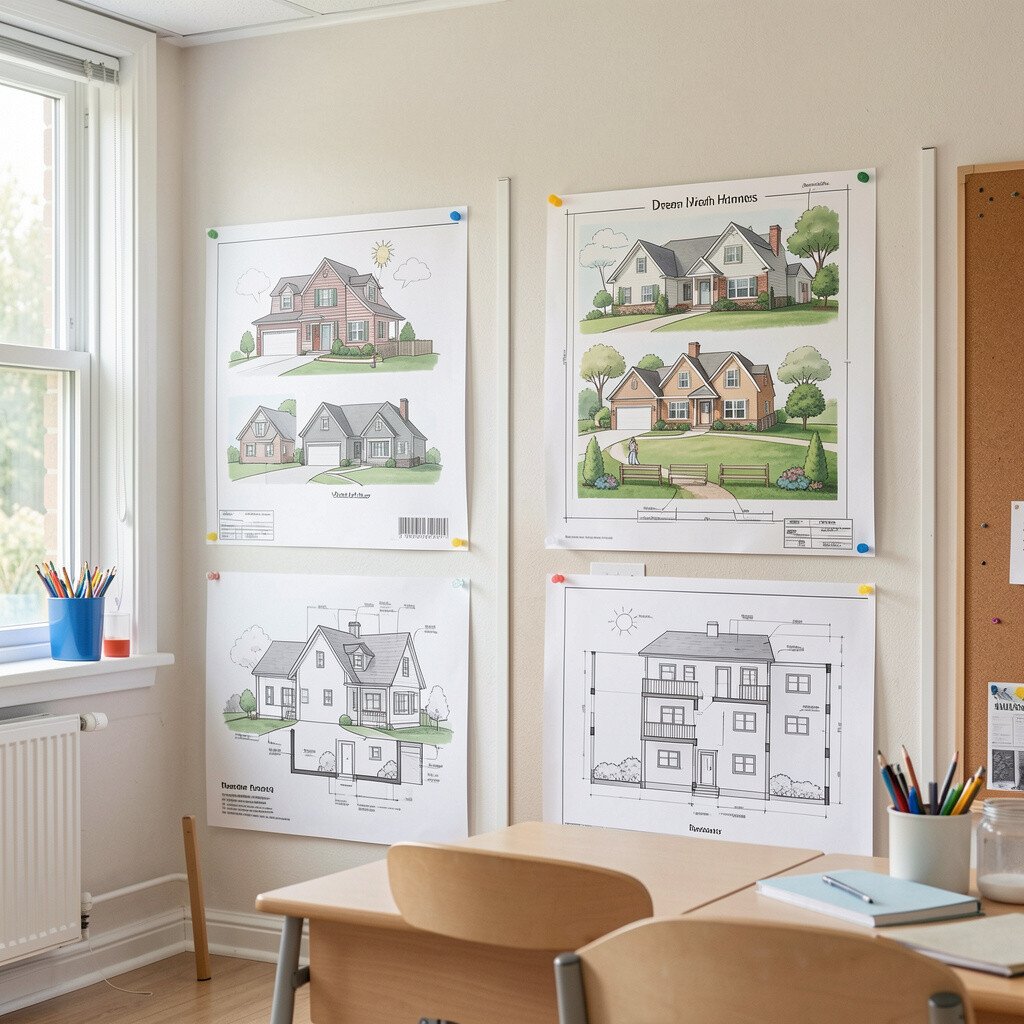
Students design dream homes and present them as blueprint-style posters. You can see clarity and creativity at once when students use lines, labels, and small icons for rooms and features.
This theme improves planning because students must think about space, flow, and function. It also builds confidence since visual organization makes student ideas easier for others to understand.
9. Spoken Word and Poetry With Bottle-Cap Beats
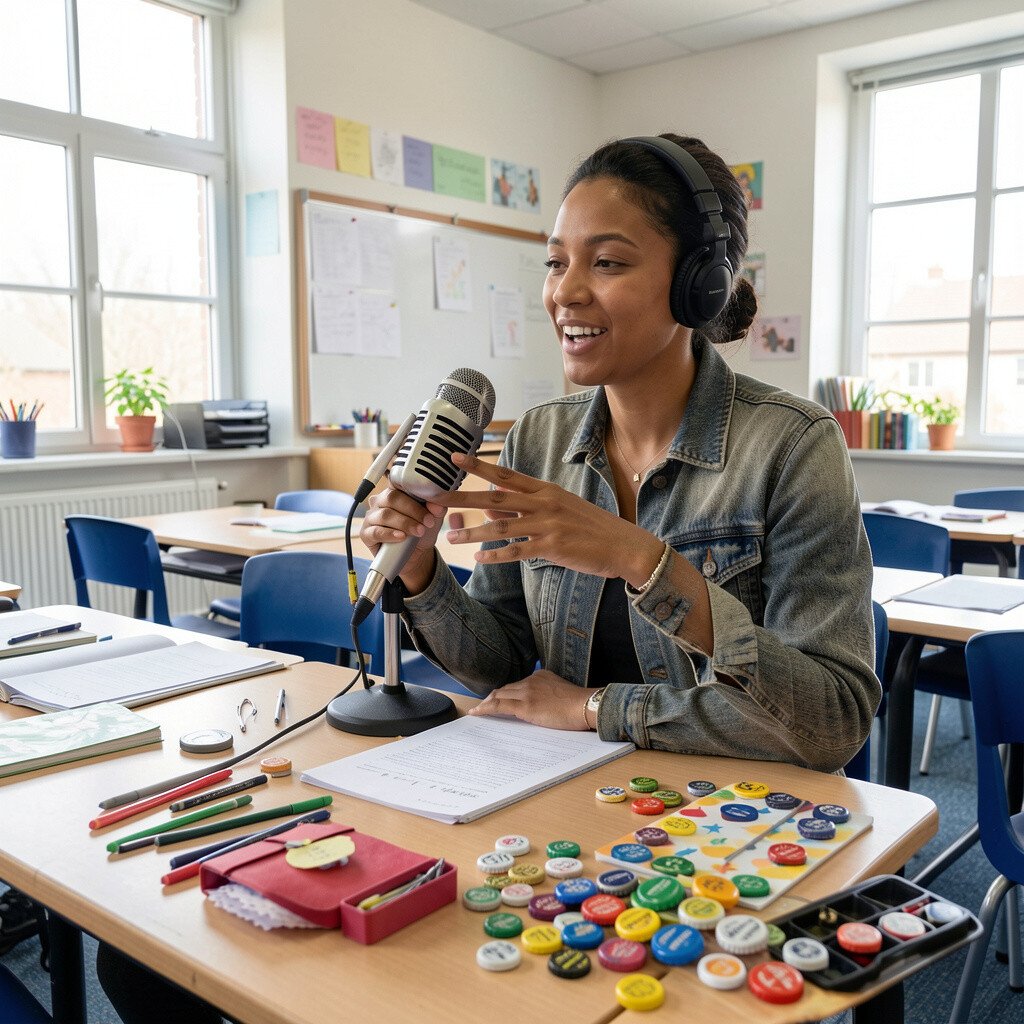
Students write short poems and pair them with rhythmic patterns using bottle caps or other small percussion. The classroom becomes lively as groups perform, showing how words can feel like music.
This theme helps students practice voice, timing, and revision, because they can adjust wording to fit the rhythm. Students also bring uniqueness by using personal topics, funny stories, or feelings they want to share.
For practical setup, collect bottle caps, bottle lids, or plastic tags and provide simple instruments like shakers or clappers. Keep costs low by using what students can bring and what the room already has. Encourage personalization by letting students choose a “beat color,” then use that color in their title or typography.
10. Space Mission Journals With Foldable Checklists
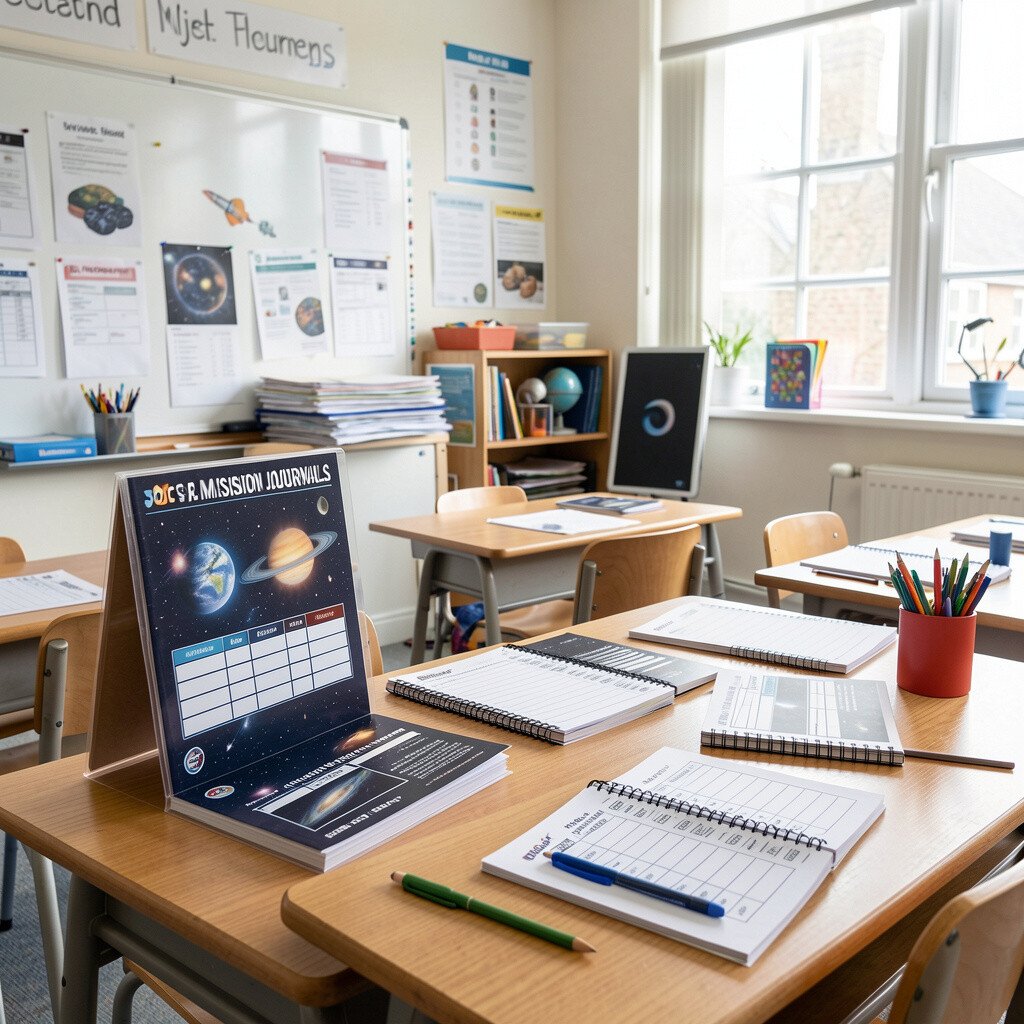
Students plan an imagined space mission and turn it into a foldable journal. The visuals feel exciting when students add mission patches, timelines, and “equipment” pockets.
This theme boosts persistence because students complete pages step by step and track progress. It also supports uniqueness when each mission has different goals, hazards, and team roles.
11. Art of Maps: “My City, My Stories” Walking Zines
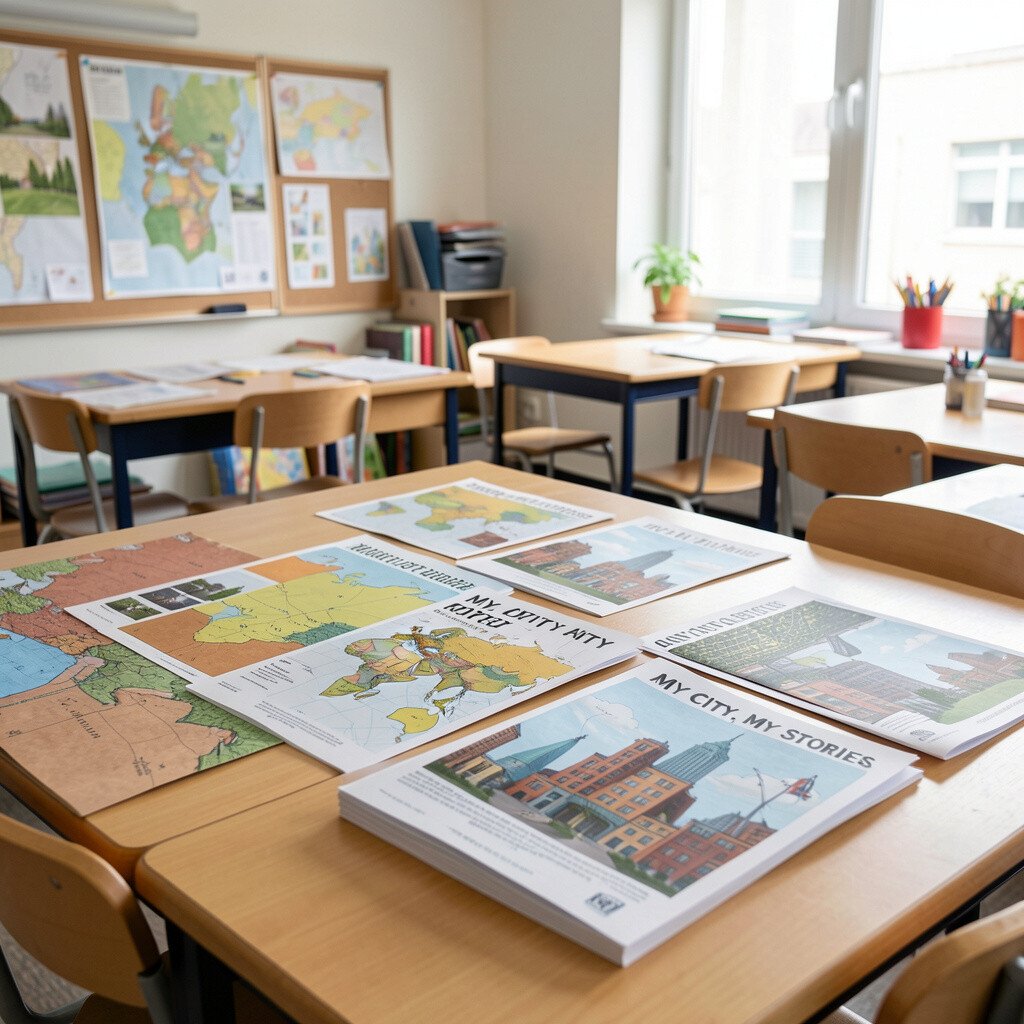
Students create small zines that share stories connected to places they know. A table of finished zines looks like a mini library, with colorful covers and tiny folded pages.
This theme builds identity and empathy because students notice details others might miss. It also improves reading and writing confidence through short, manageable sections.
To keep it practical, use simple fold methods like tri-fold or booklet folds, and provide prompts for each page. Cost stays low when you reuse paper and offer basic tools like markers and staplers. Personalization grows when students add a “map legend” made from pictures, like a bus stop icon, a favorite tree, or a mural they pass on the way home.
For current trends, you can connect this to creator culture by encouraging “micro-content” storytelling, where each page captures one strong moment.
12. Celebration Cultures With Festival Mask Making
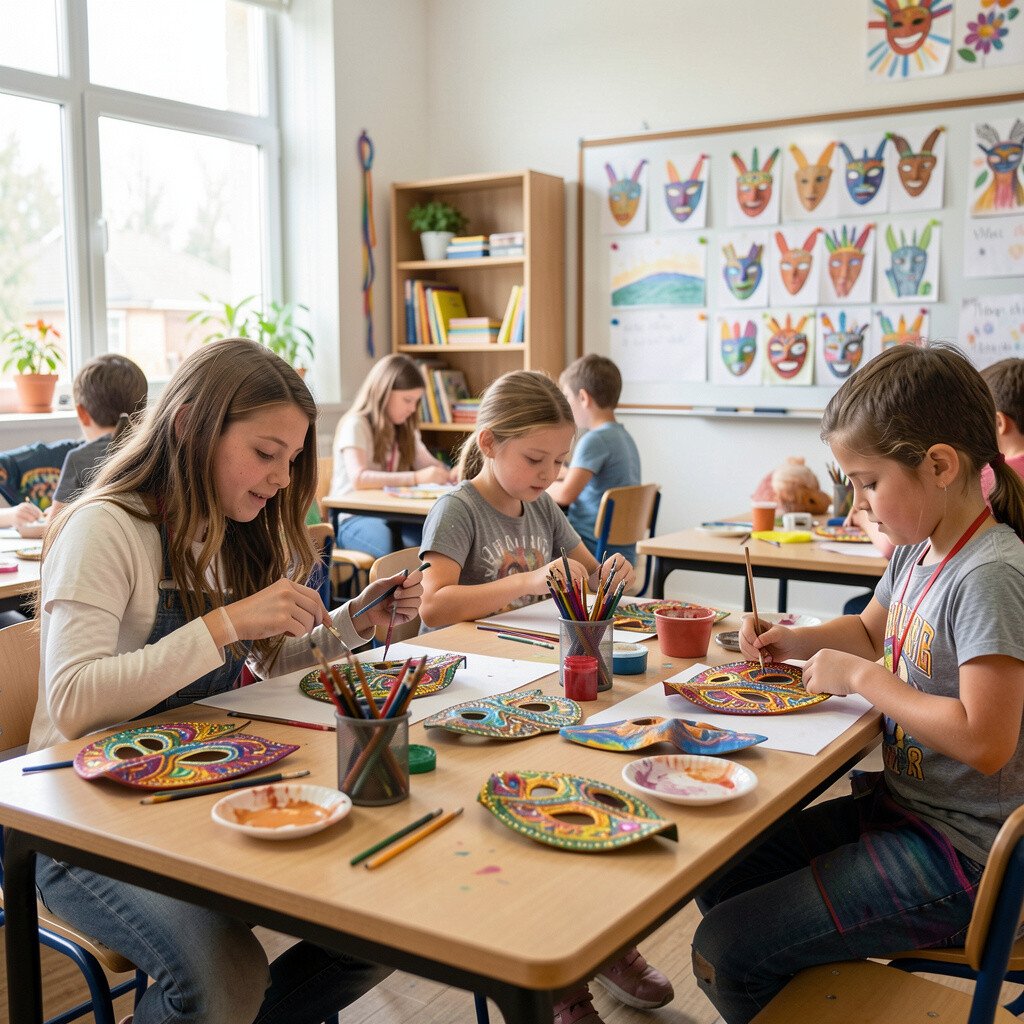
Students design festival masks inspired by real-world traditions and invented celebrations. The visuals are striking when students mix colors, pattern, and 3D details like paper tassels.
This theme supports cultural respect when students research carefully and keep their tone thoughtful. It also encourages uniqueness because students can blend symbols to match their own celebration story.
For practical tips, provide guidelines for simple features like eye shapes and a safe attachment method using elastic. Keep costs down by using paper plates, craft foam scraps, and recycled cardboard. Encourage personalization by asking students to include a “meaning phrase” on the inside flap that explains their design choices.
13. Superpower Experiments With Paper Circuit Posters
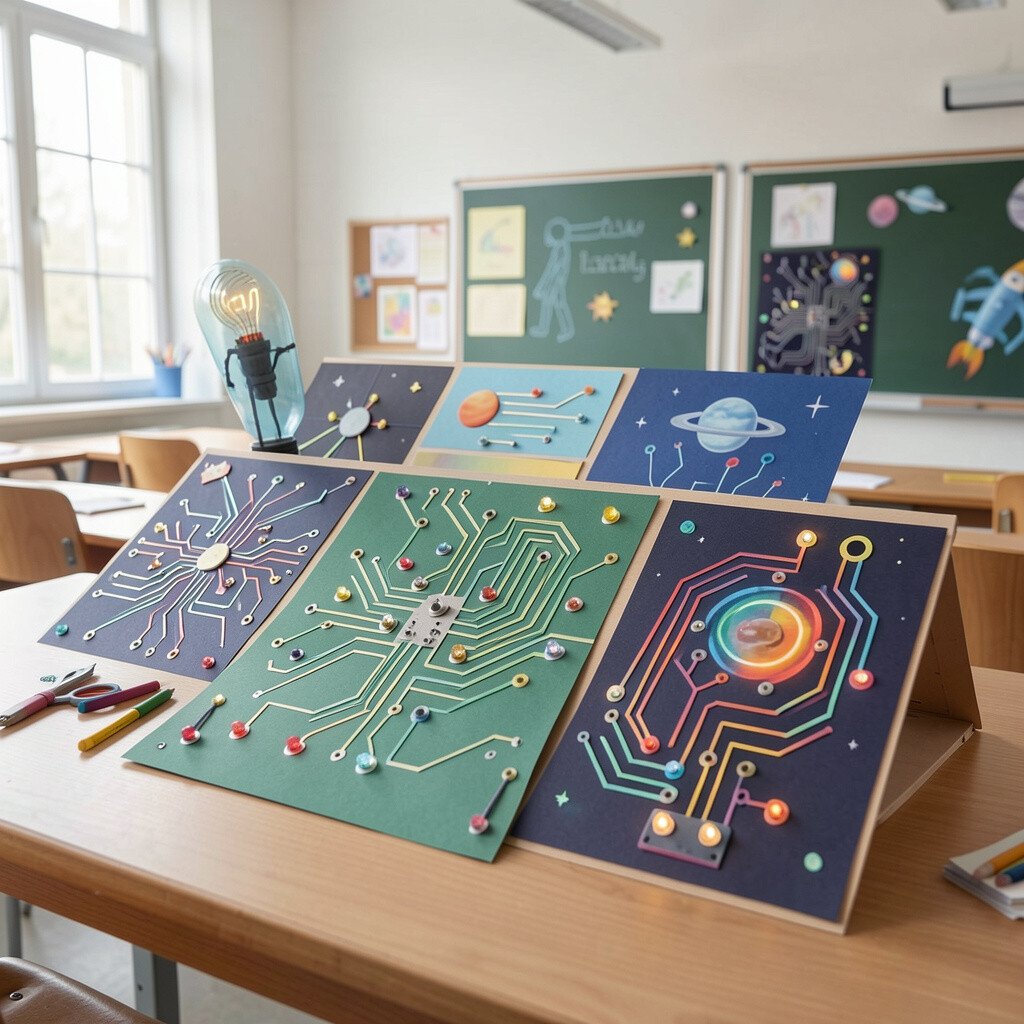
Students imagine superpowers and build poster-style “power plans” using simple craft materials. Even without advanced electronics, you can make the visuals feel technical with circuit line drawings and labeled energy paths.
This theme improves critical thinking because students must match a power to a problem and explain how it works. Students gain confidence because their art supports their reasoning, not the other way around.
To keep it safe and manageable, use conductive craft ideas only if you have training or age-appropriate materials, and otherwise focus on drawing “circuits” and designing icons. Costs can stay reasonable with marker, tape, and printable symbols. Personalization happens when students choose a real need in school, like helping students stay organized or making learning more accessible.
Make it feel current by referencing kid-friendly future tech trends, such as wearable ideas and design thinking, then ask students to pick one “future fix” for their community.
14. Heroes of the Classroom: Kindness Quest With Sign-Your-Work Tiles
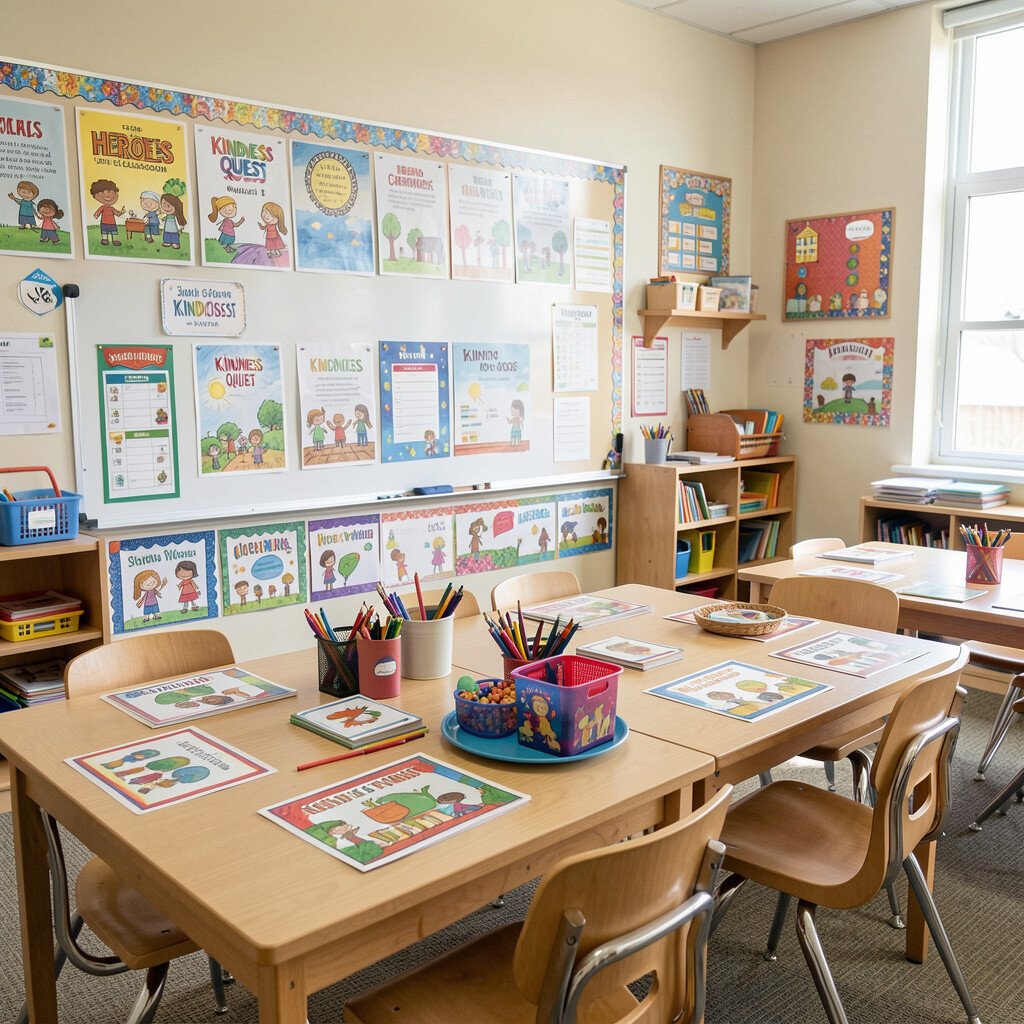
Students create a “kindness quest” board with individual art tiles that show a small act of encouragement. The overall wall becomes colorful and meaningful, like a trail of tiny messages guiding students toward better days.
This theme helps students practice social-emotional skills through art that invites participation. It also supports uniqueness because each tile can use a different style, from bright doodles to calmer watercolor-like swirls.
For practical setup, use sturdy paper or foam squares and provide a consistent size so the board looks tidy. Keep costs under control by using classroom scrap paper for backgrounds and letting students choose only a few accent materials. Encourage personalization by asking students to write one sentence that fits the tone of their artwork and then sign it with a small symbol they choose.
If you want it to feel extra actionable, have students rotate in teams to read each other’s tiles and add one supportive response tile to keep the quest growing.
When the class sees their work helping others, creativity becomes part of the classroom culture, not just an assignment.