A playful nursery starts with color that feels welcoming. Wall art can turn blank space into a daily source of smiles and calm.
1. Soft Pastel Blocks With Gentle Curves

Picture a wall filled with rounded rectangles in dreamy tones like peach, butter yellow, and cloud blue. The shapes look like sweet candy, and they feel easy on the eyes when the room is quiet.
This kind of art supports a calm mood during naps and bedtime routines. To keep it practical, choose a size that fits your wall but leaves a little breathing room around it. If you want it to feel unique, vary the block widths so some shapes look closer and others drift farther away. For a cozy finish, pick low-sheen paint or matte vinyl so reflections stay gentle. When thinking about cost, look for pre-cut shapes from craft stores or printable templates that you can layer yourself. Many nurseries today pair soft color-blocking with simple line details, so consider adding a few tiny curved accents for a current, modern touch.
2. Primary Color Tiles In a Playroom Grid
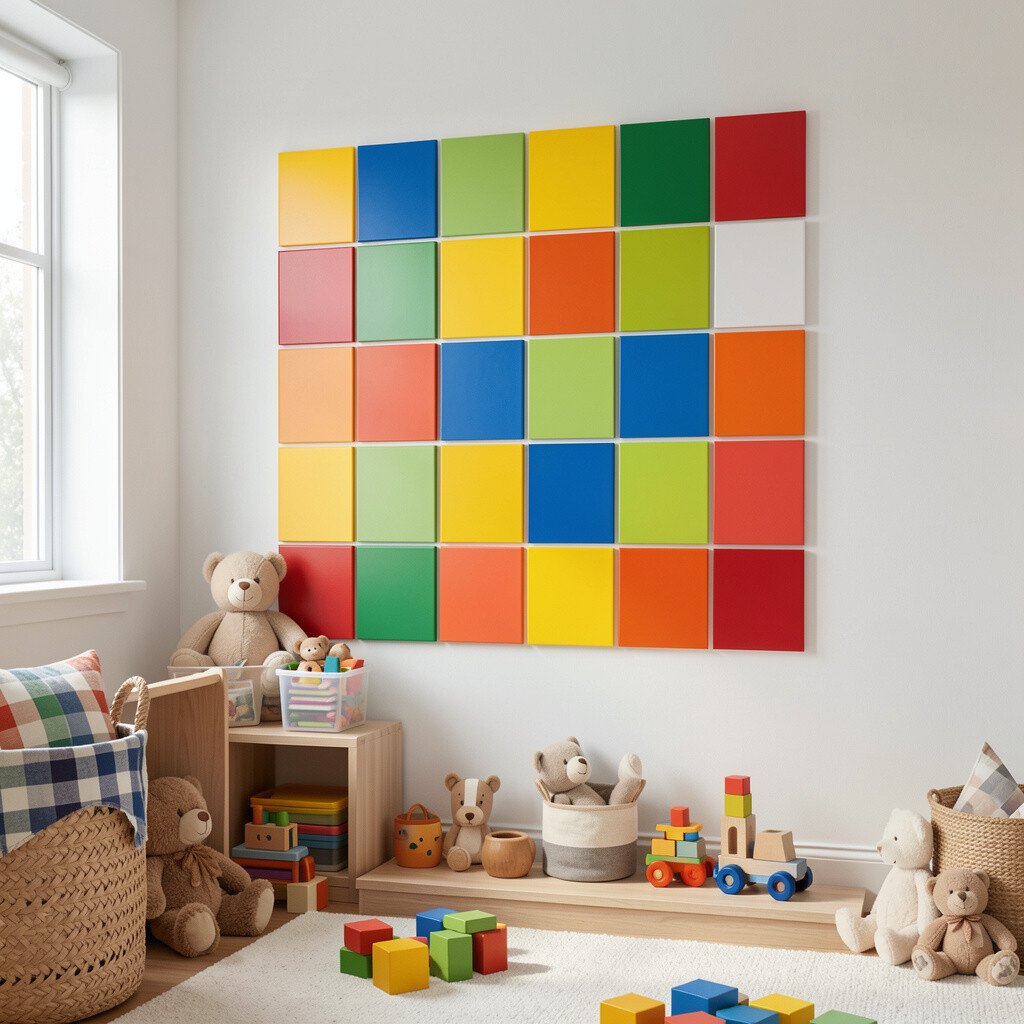
Think of a cheerful grid of bright blocks like red, royal blue, and sunny yellow, arranged in a tidy rhythm. The look is bold, crisp, and perfect for catching a child’s attention during playtime.
Strong primary colors can help kids notice contrast and focus longer on visual patterns. For practical results, measure your wall and decide where the center point should land before you mount anything. Use removable adhesive hooks or picture ledges for an easy update as your little one grows. Personalize the grid by swapping one tile color for your child’s name initial in a matching palette. If you’re budget-conscious, use thrifted frames and swap in new printed or painted inserts. Current trends often pull from classroom-inspired design, so this one fits right into the “playful learning” style that many families love.
To make it feel even more personal, match the block colors to items already in the room, like a toy bin or crib bedding. A cohesive palette helps everything look intentional, not random.
3. Two-Tone Rainbow Strips With Space for Changing Art
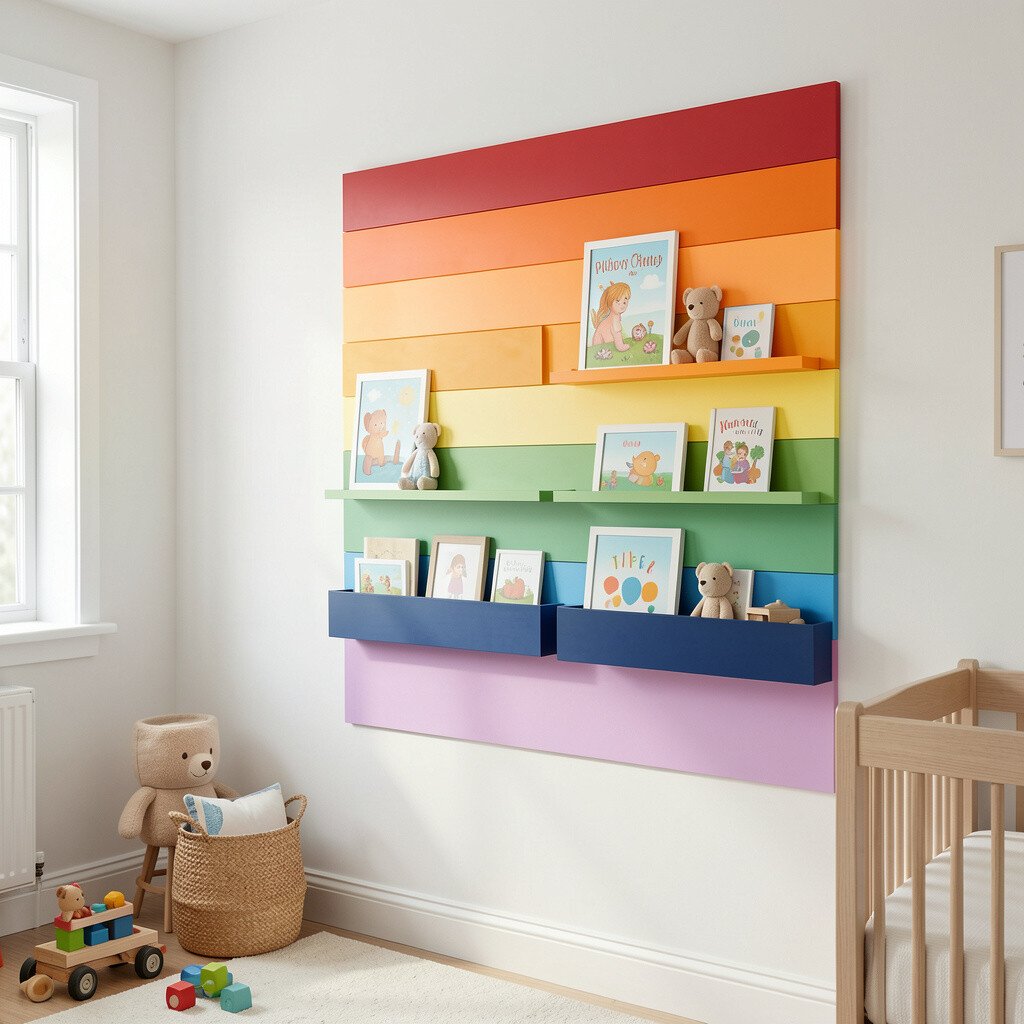
Imagine diagonal color-block strips that run like a gentle rainbow, but only in two tones at a time. The result feels lively without being too busy, and it creates a fun sense of motion.
Diagonal shapes often guide the eye across the wall, which can make the nursery feel bigger. Try mounting a larger base panel and leaving a small empty space beside it for future updates. That lets you rotate seasonal images or swap in a new theme as your child’s tastes change. For personalization, choose your favorite two rainbow-adjacent colors, then add tiny dots or stars in a contrasting shade. If you want to manage costs, look for large foam boards or canvas panels that you can paint and reuse. This approach also matches a trend toward flexible wall galleries, where families change pieces without repainting the whole wall.
When you assemble it, keep edges clean and use painter’s tape to form crisp lines. Crisp lines make the whole design look more polished, even if the materials are budget-friendly.
As a practical tip, anchor the design at toddler eye level so it stays engaging long after the crib days.
4. Monochrome Blocks With One Pop Color Accent
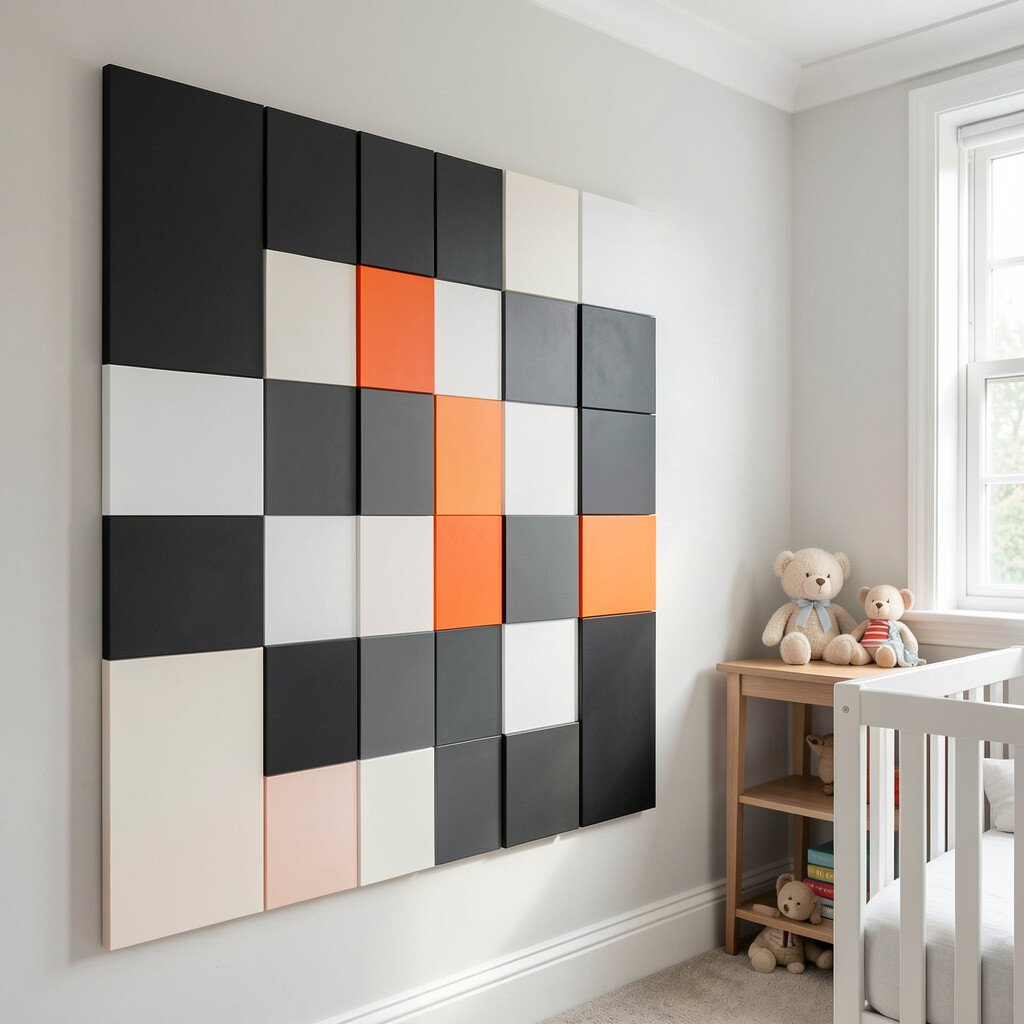
Picture a wall of neat, muted blocks in grays, creams, and soft taupes, with one bright color suddenly appearing like a wink. That single pop, maybe teal or magenta, becomes the focal point without overwhelming the space.
Monochrome color-blocking is great when you want a nursery that feels grown-up and calm. For practical tips, keep the bright accent consistent, repeating it in one or two small areas so the eye knows where to land. If you’re personalizing, choose an accent color that matches a meaningful item, like a blanket or stuffed animal. The uniqueness comes from restraint, since most nurseries go for full rainbow brightness. To handle cost, you can create it with inexpensive wall decals, then add painted blocks only for the accent areas. This style is trending because it pairs playful energy with a “designed and curated” look that many parents want now.
5. Woodland Shapes In Sage, Moss, and Ochre
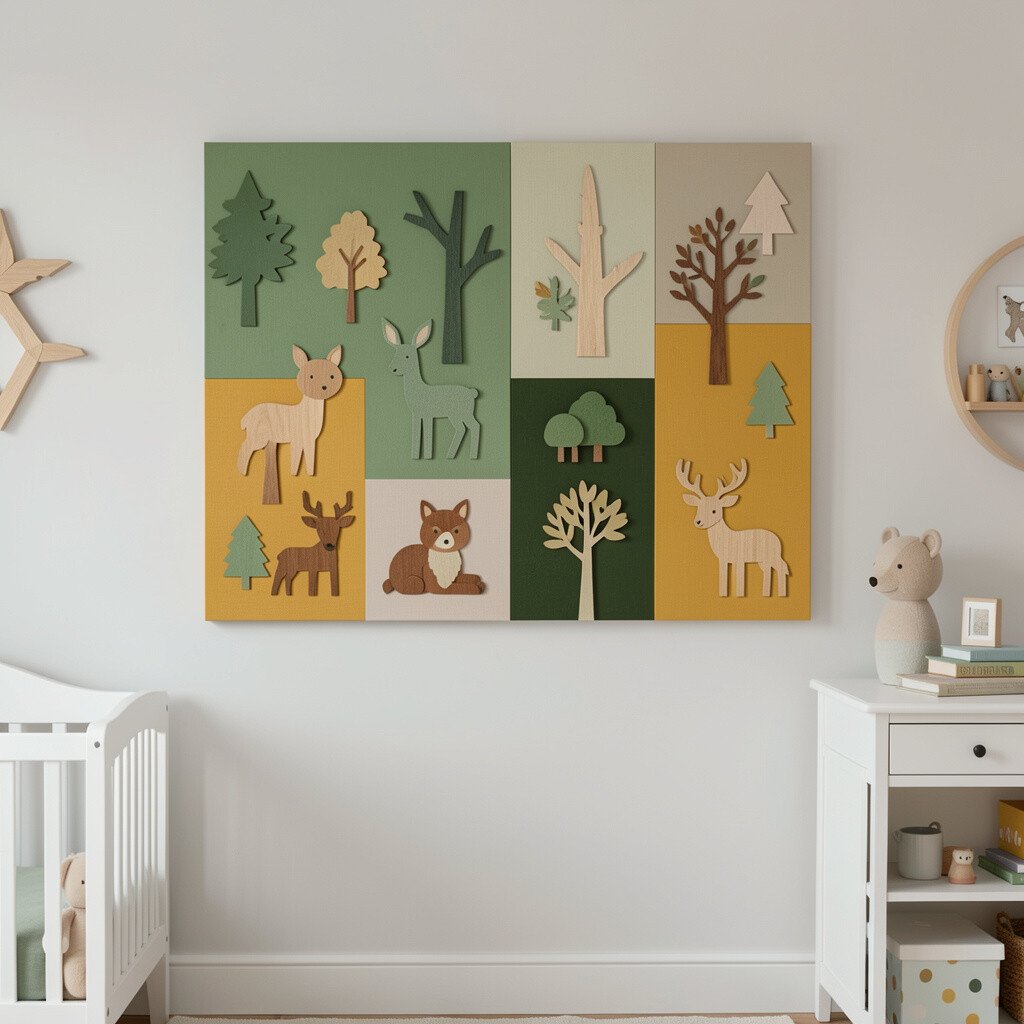
Imagine color-blocked wall art where trees and leaves are simplified into big shapes in sage green, mossy tones, and warm ochre. Even with minimal details, the wall feels like a tiny nature scene for your child to enjoy.
This kind of art brings a soothing, earthy vibe that can make the whole room feel grounded. To keep it practical, choose a design that includes broad color areas so small hands won’t easily pick at fine details. Personalize it by adjusting the “forest” colors to match your nursery theme, like adding a little sky blue for a dreamy background. For uniqueness, mix geometric leaf shapes with curved tree trunks so it feels both modern and friendly. If you’re thinking about cost, print a simple template on paper first, then transfer it onto foam board or canvas using paint and tape. Current trends lean toward nature-inspired minimalism, and blocky woodland elements fit that look perfectly.
When installing, place it where you can see it during story time, so it becomes part of your everyday moments.
6. Hot-Cool Contrast Blocks for Energy During the Day
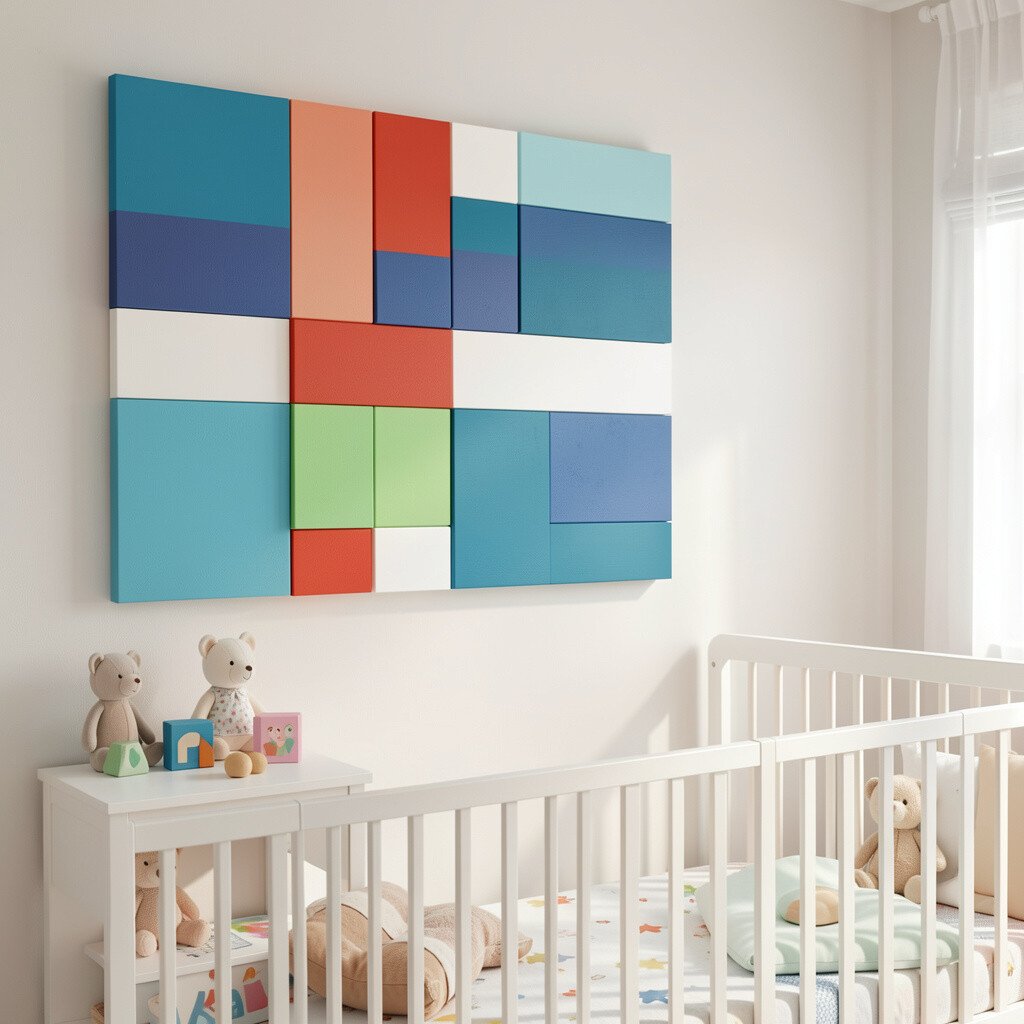
Think of blocks that pair hot tones like coral and warm orange with cool tones like aqua and deep blue. The contrast feels energetic, like a burst of sunshine that still works indoors.
High-contrast art can help stimulate visual attention and encourage active play. Use practical spacing by leaving consistent gaps between blocks so the design looks intentional, not messy. If you’re personalizing, repeat one favorite color across multiple blocks so it feels connected. For uniqueness, add a simple black or charcoal outline around some shapes to define edges sharply. To manage cost, use acrylic craft paint or contact paper cutouts instead of expensive framed pieces. Many nurseries now use bold color accents to keep spaces from feeling too neutral, and this one lands right in that current style.
Consider mounting the piece slightly higher so it becomes a “visual target” during tummy time, but keep it reachable only for adults when adjusting.
For an extra playful touch, choose colors that echo your child’s safe toys and books.
7. Dip-Dyed Color-Block Gradient Panels
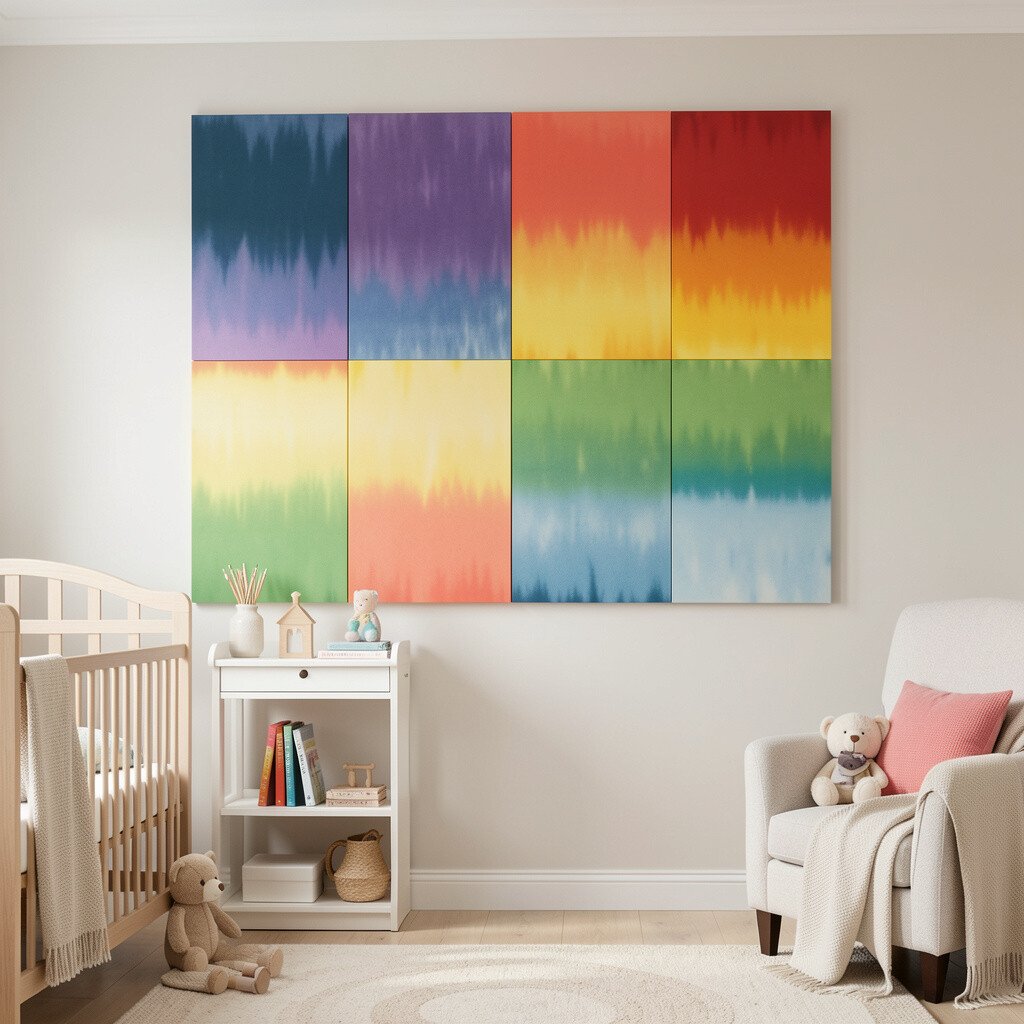
Picture large blocks that fade from one color into another, like paint dipped in water and set to dry. The gradient effect feels soft and dreamy, even though the shapes are bold and graphic.
This style adds movement without clutter, which can be comforting in a nursery. To keep it practical, choose a limited color range, such as lavender to blush or ocean blue to teal, and stick to it. Personalize it by matching the gradient to a theme in the room, like a sea shell mobile or a cloud-shaped rug. For uniqueness, make one side of the panel slightly darker so it looks like light is coming from the window. If you want to keep costs down, you can paint gradient blocks on a single large canvas rather than buying many small frames. Current trends often favor gentle ombré looks, especially paired with geometric edges for a balanced modern feel.
8. Lettered Color Blocks With Your Baby’s Initial
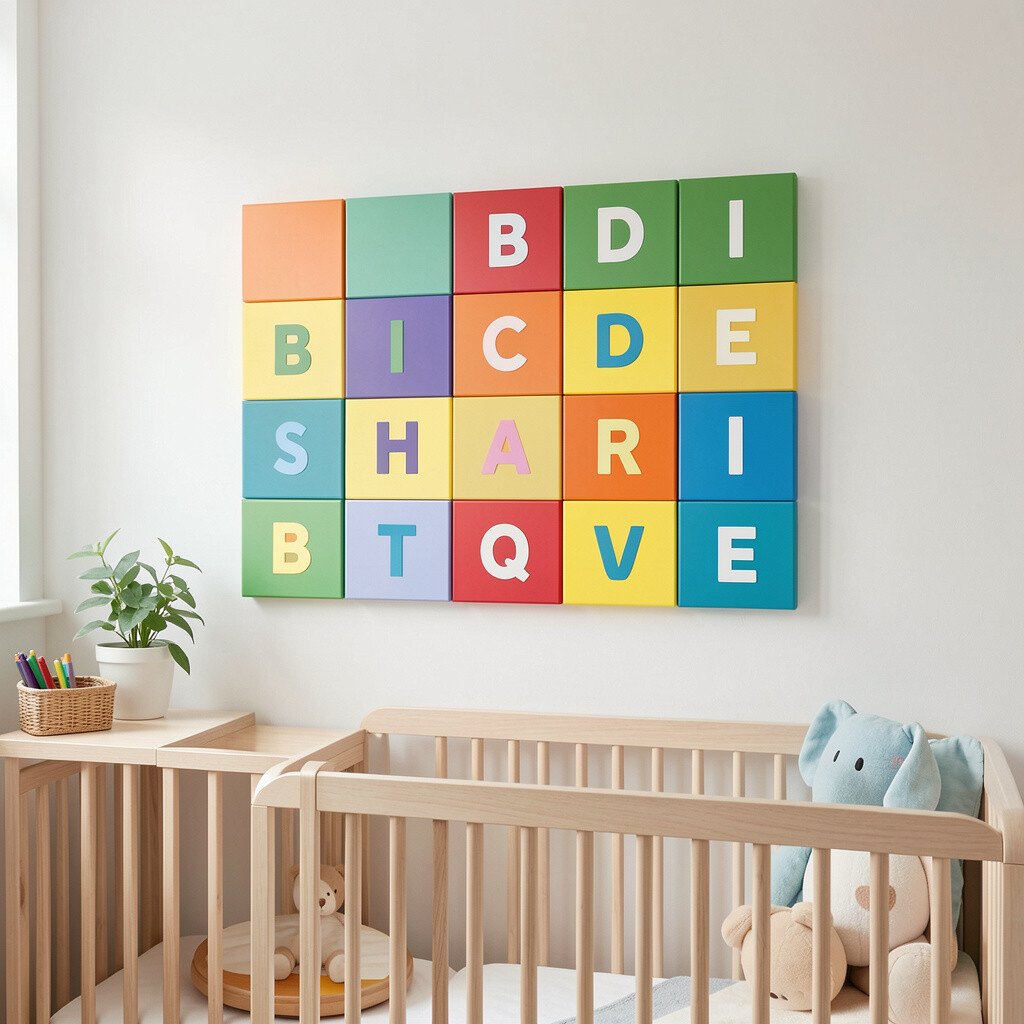
Imagine a giant block letter, built from several colored rectangles, sitting on the wall like a friendly banner. The letter can be your child’s initial or even a short nickname made of bold shapes.
Seeing a personal letter can make the space feel more special and helps kids connect the room to their own identity. For practical tips, choose a font that is thick and readable, and avoid tiny cutout details. Personalize by using colors that match your nursery textiles, then add a few smaller blocks around the letter for balance. The uniqueness comes from building the letter out of color, rather than using plain paint. For cost, you can use printable letter templates and paint them directly onto foam board or lightweight canvas. Many families enjoy this look now because it blends personalization with the clean style of modern wall art.
Hang it at a height that works for both baby eye level and toddler curiosity, so it stays useful as they grow.
9. Color-Blocked Storytelling Scene With Big Background Shapes

Think of a simple scene built from large blocks, like a house, a moon, and a tree made from solid colors. Instead of tiny details, you get bold shapes that feel friendly and readable from across the room.
Scene art can spark imagination because your child will start telling stories in their own way. For practical results, choose shapes that look good from a distance, since nurseries are often viewed quickly when you’re busy. Personalize the scene by swapping one element, like using your real favorite animal or your favorite color for the sky. Uniqueness can come from adding a subtle rhythm, such as repeating a stripe pattern on the window blocks. To manage cost, create it as a single panel or two panels instead of many separate pieces. Storybook-inspired, color-blocked art is a current trend because it feels both playful and modern without becoming overly themed.
When you install it, position it near a reading chair or a changing station so it becomes part of routines.
10. Framed Color-Block Squares With a Gallery-Like Feel

Picture a set of framed squares, each one filled with bold color blocks and crisp edges. The arrangement looks like a mini gallery, but it still feels warm and child-friendly.
Framed pieces are practical because you can swap them easily and keep things tidy during changes in decor. Use consistent frame sizes so the layout stays neat, even if you add more art later. Personalize the set by choosing colors that match the nursery palette, then vary the block patterns from frame to frame. For uniqueness, include one “surprise” frame with a different texture, like matte fabric or gently speckled paint. If you’re keeping costs reasonable, shop for inexpensive frames and print simple block patterns from your computer for quick inserts. Current trends include mixing minimal gallery styles with bright color, and this hits that balance nicely.
11. Hanging Fabric Color Blocks for Soft Texture on the Wall
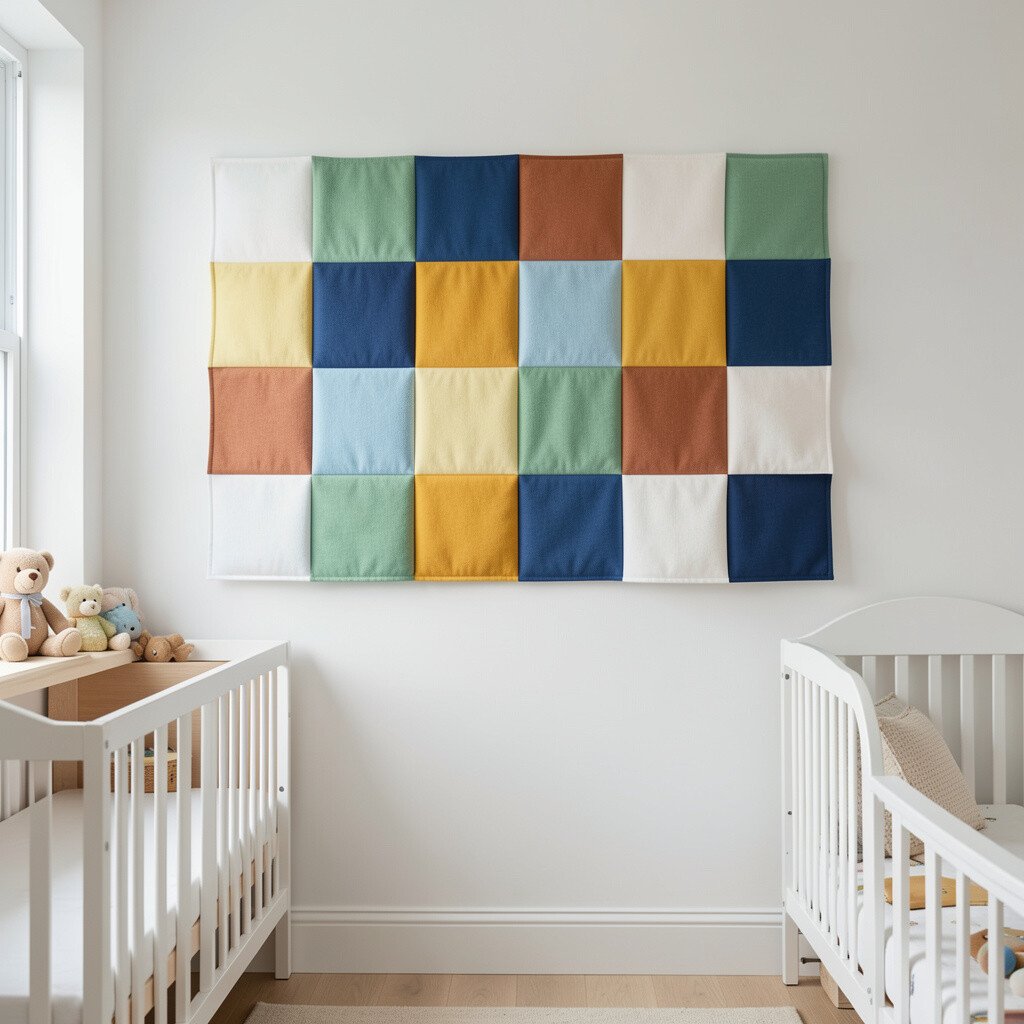
Imagine soft fabric panels or felt pieces arranged into color blocks, gently hanging along the wall like a playful banner. The texture adds warmth, and the colors feel cozy instead of purely graphic.
Fabric wall art can be safer in nurseries because it tends to be lighter and less likely to create sharp edges. For practical tips, secure it high and use sturdy mounts so it stays still during active play. Personalize by choosing fabric colors that already appear in your curtains, swaddles, or bedding. Uniqueness comes from combining felt shapes with smooth backing so the design feels both bold and gentle. To consider cost, you can use leftover fabric scraps or affordable felt sheets rather than buying ready-made decor. This style is trending because families want more tactile, cozy materials that make rooms feel soft and comforting.
For upkeep, pick washable or wipeable fabric options so the art stays fresh.
12. Chalkboard-Style Color Blocks With Temporary Scribble Zones
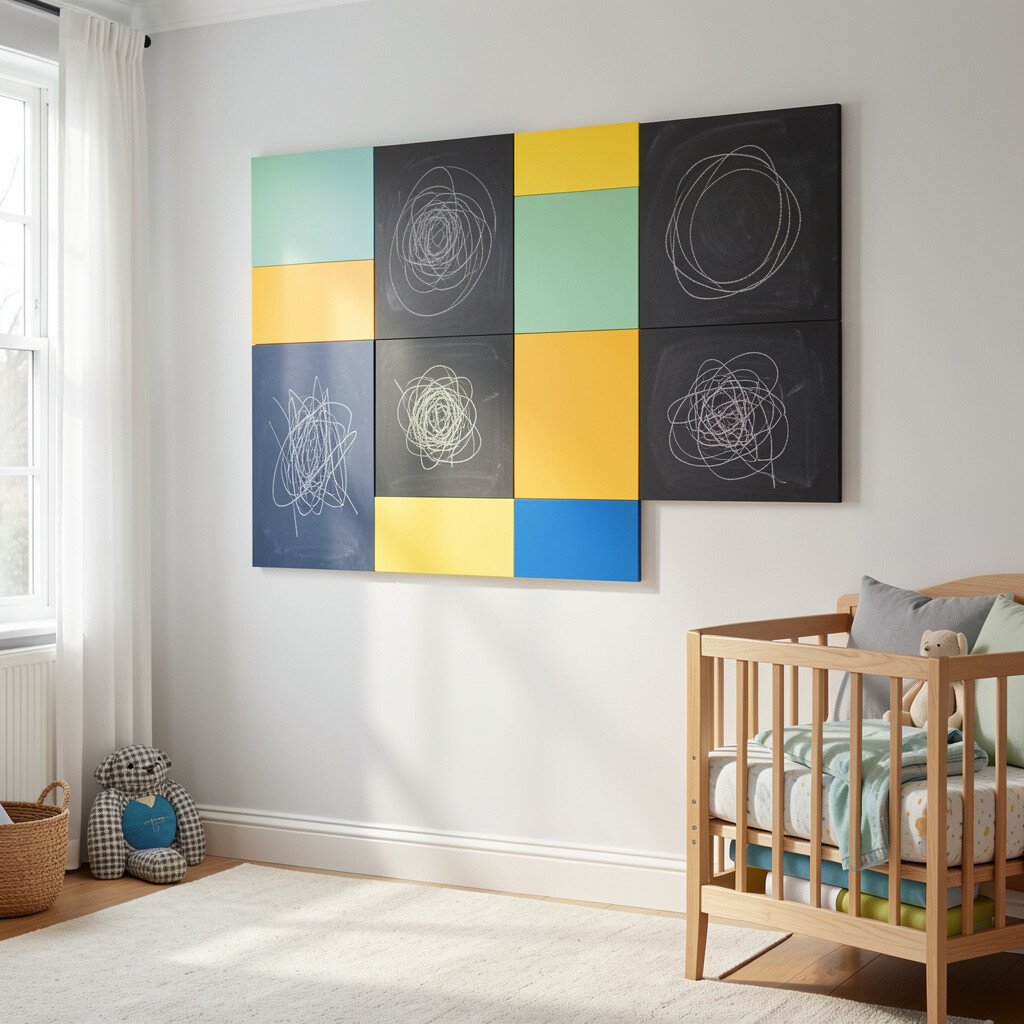
Picture a wall panel that combines color blocks with a chalkboard or marker-friendly section. Bright blocks frame a writable area so your child can “draw” in a fun, guided way.
Interactive art zones can help kids practice creativity while keeping the rest of the wall beautifully organized. For practical tips, use a durable surface and place it where you can easily supervise marker use. Personalize it by framing the chalkboard area with your signature colors, then adding small icons like stars or hearts in matching blocks. The uniqueness is in the contrast between structured blocks and free-form drawing space. For cost, you can repurpose a large board from craft stores or use a removable chalkboard sticker panel. Current trends emphasize kid-friendly, low-pressure creativity, and this design keeps the wall useful for years.
13. Map-Like Color Blocks With Imagined Routes
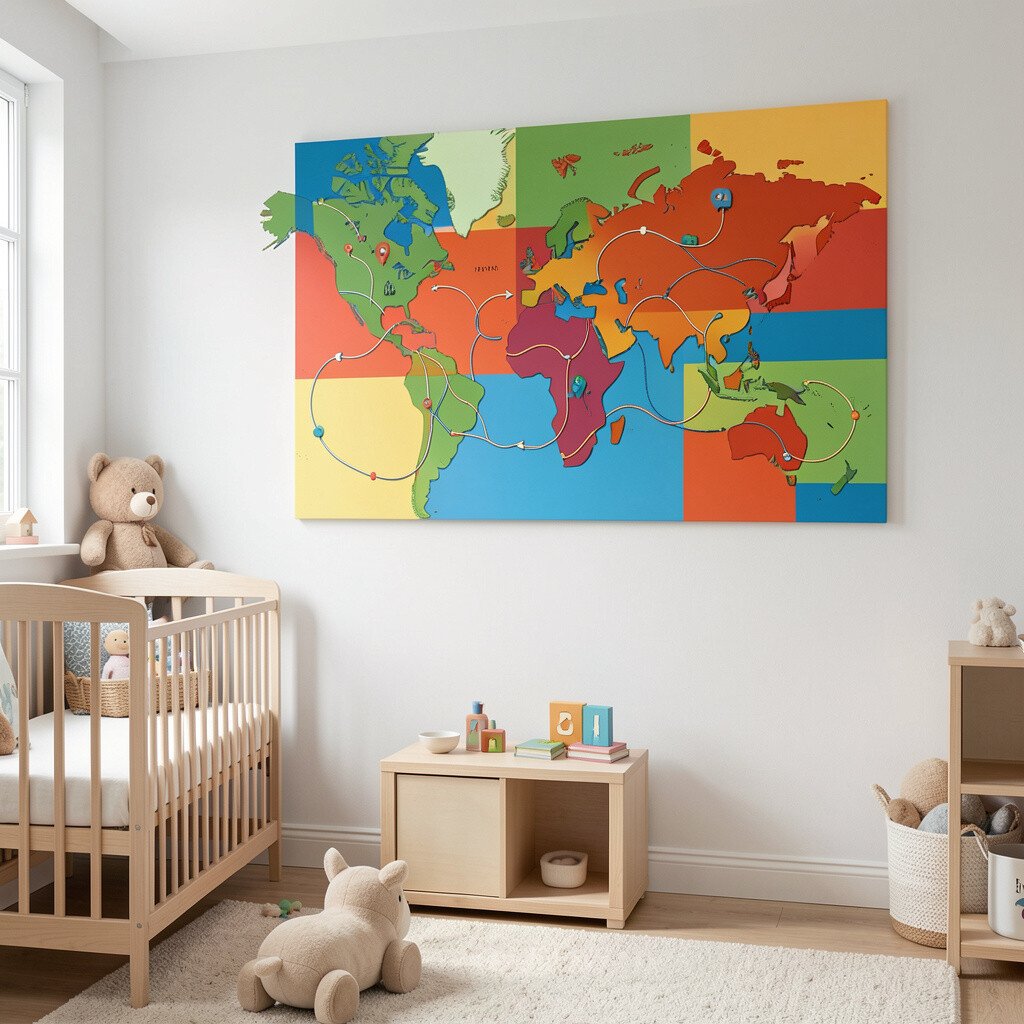
Imagine a wall art piece that looks like a playful map, but built from clean blocks and simple routes. You could use soft land shapes in sage and sand tones, then add “roads” in bright lines like coral or cobalt.
This kind of design encourages curiosity because it feels like there’s a story to follow. For practical tips, keep the “roads” thick and simple so the shapes read clearly, even from a distance. Personalize by including a route that points from the nursery to a favorite spot, like a bedtime chair or reading nook. Uniqueness comes from treating the wall like a world made of blocks rather than a literal map. If you’re managing cost, use printable map-style textures as guides and paint over them with basic craft supplies. This matches current trends in imaginative design, where nurseries borrow from travel, learning, and playful storytelling themes.
When mounting, place it at a height where adults can point it out during games and kids can notice it during daily routines.
14. Peel-and-Play Color Blocks for Easy Seasonal Updates
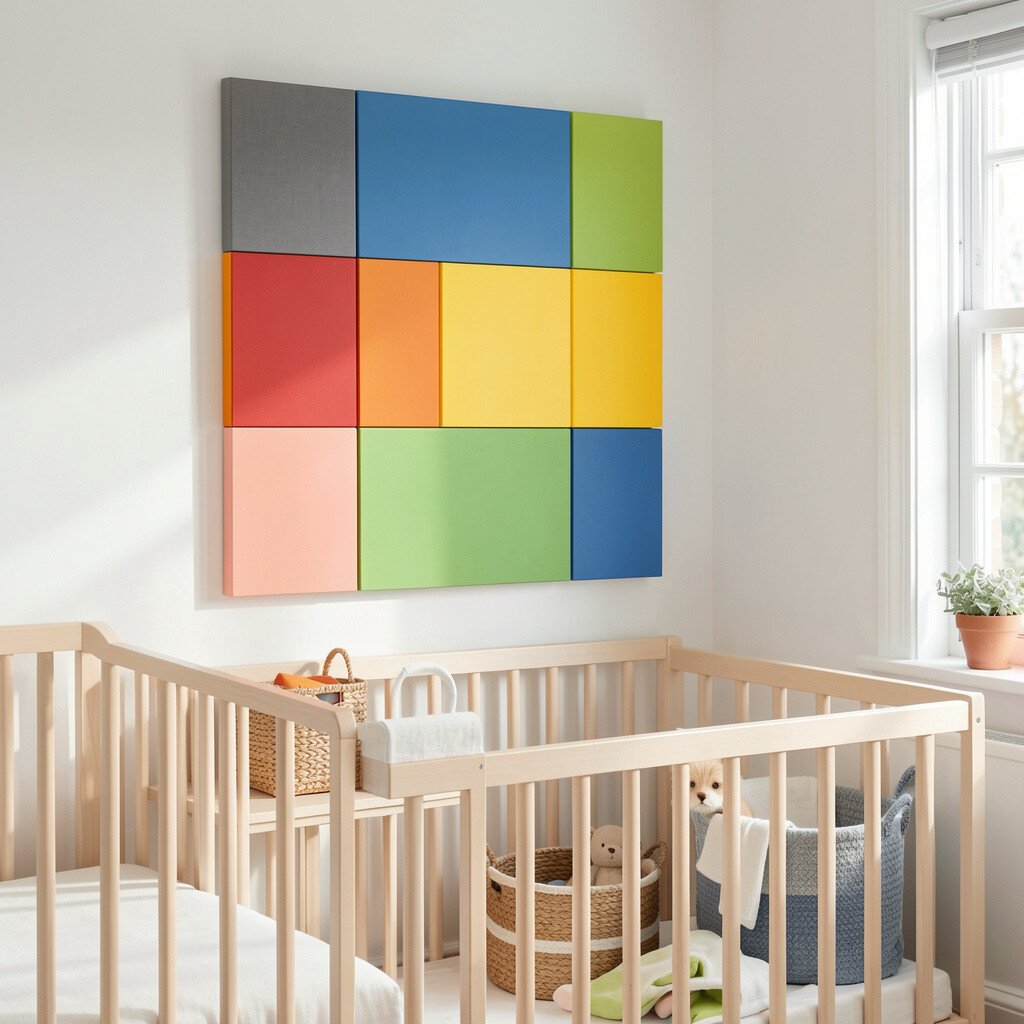
Picture bold color blocks that you can peel and reposition, arranged into a fresh pattern whenever you feel like changing things. The wall looks instantly updated, and you don’t have to repaint or buy a brand-new set every time.
Removable wall art is practical for growing families because tastes change quickly, especially in the toddler years. For personalization, choose blocks in your favorite shades and make a pattern that matches your room layout, like a corner ladder of color. Uniqueness comes from experimenting with different arrangements over time, since the design isn’t locked in. For cost considerations, removable sets can be more affordable than permanent framed art when you consider how often you might switch themes. This style is very much in line with current trends toward flexible decor and renter-friendly upgrades. When applying, use firm pressure and follow surface prep steps so the edges stay crisp and the pieces stay put.
If you want extra charm, add a few tiny block stickers near the main design, then remove them later when your child’s interests shift.
Keep the palette consistent with your nursery textiles so the changes still feel cohesive and calm.