A path can change the whole mood of a home. It can make the front yard feel warm, neat, and ready to welcome guests.
1. Curved Stone Garden Path
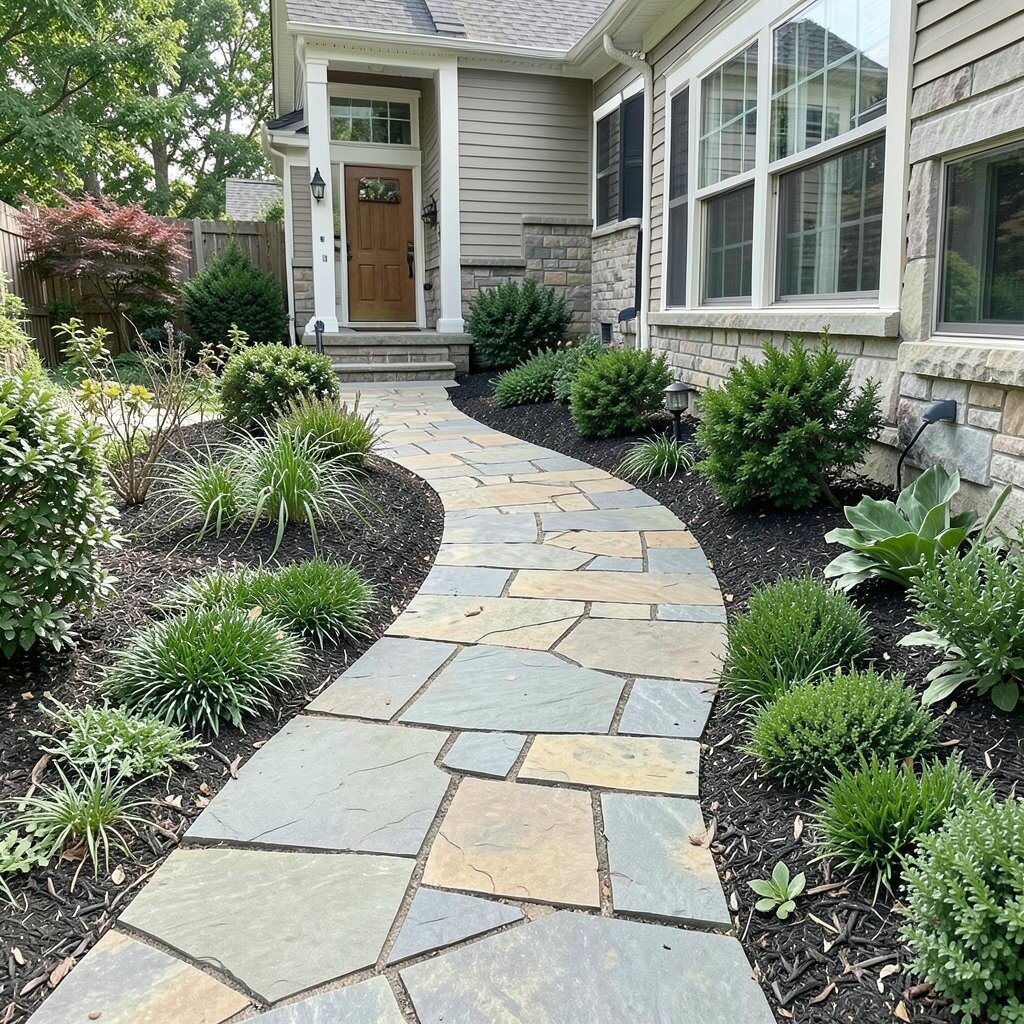
A curved stone path softens the look of a house and makes the approach feel calm and inviting. The gentle bend also helps a yard feel larger, which is a nice bonus for smaller spaces.
Natural stone gives each step a rich look, and no two pieces feel exactly alike. If you want a unique touch, mix stones in similar shades and add low plants along the edges, which can keep the path from feeling plain. Costs can vary a lot, so using stone only in the main walking area while filling the sides with gravel can help keep the project friendly to your budget.
2. Straight Brick Walkway
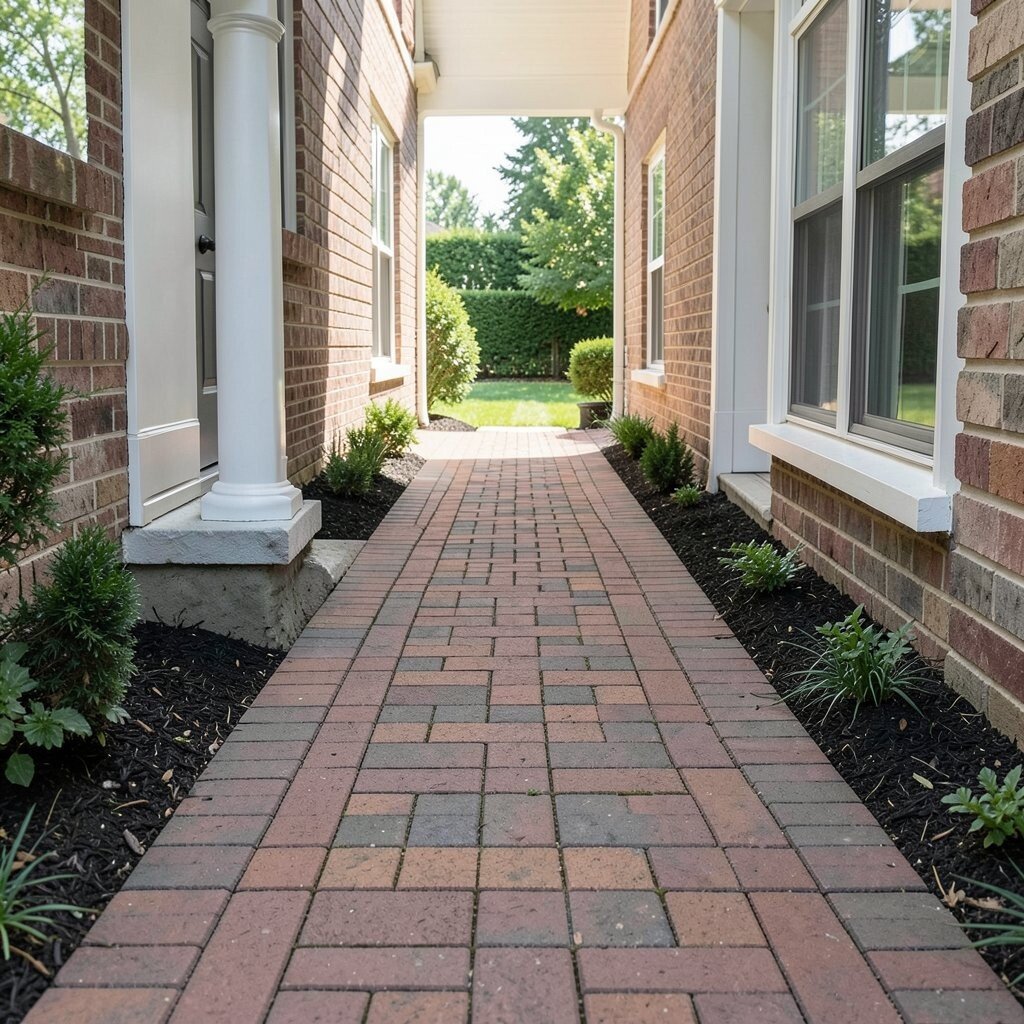
A straight brick walkway gives a front entrance a crisp and tidy look. It works well for homes with a classic style and helps guests find the door with ease.
Brick has a warm color that pairs well with green grass and simple shrubs. This style can be very practical because it is easy to sweep, and it fits neatly into both new and older homes. For a personal touch, you can choose a herringbone or running pattern, and mixing in a darker border can make the path feel more finished without adding too much cost.
Many homeowners like brick because it feels timeless but still current. It is also a smart choice if you want a strong path that can handle daily use and still look good after years of weather.
3. Gravel Path With Steel Edging
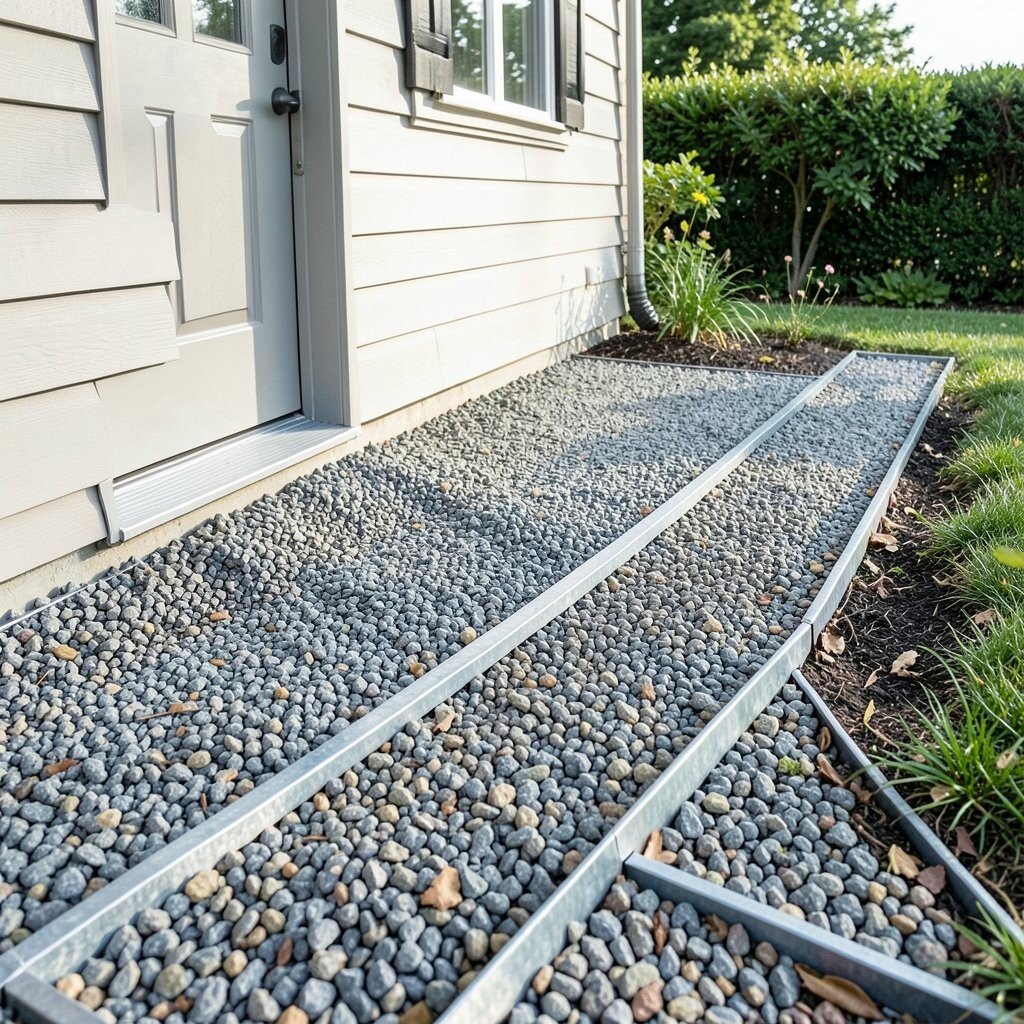
Gravel paths bring a relaxed, charming feel to a front yard. When paired with steel edging, the look becomes clean and modern instead of messy.
This choice is often easier on the wallet than full stone paving, and it can be built fairly quickly. The soft crunch underfoot adds a pleasant sound, which gives the path its own character and makes the trip to the front door feel special. To keep it neat, use a weed barrier and top it off with fresh gravel now and then, and try planting low herbs or flowers nearby for a cozy, personal touch.
Gravel is also a good fit for current outdoor design trends that lean toward low-maintenance materials. If you like a home that feels casual but stylish, this path can do that with very little fuss.
4. Flagstone Path Through Ground Covers
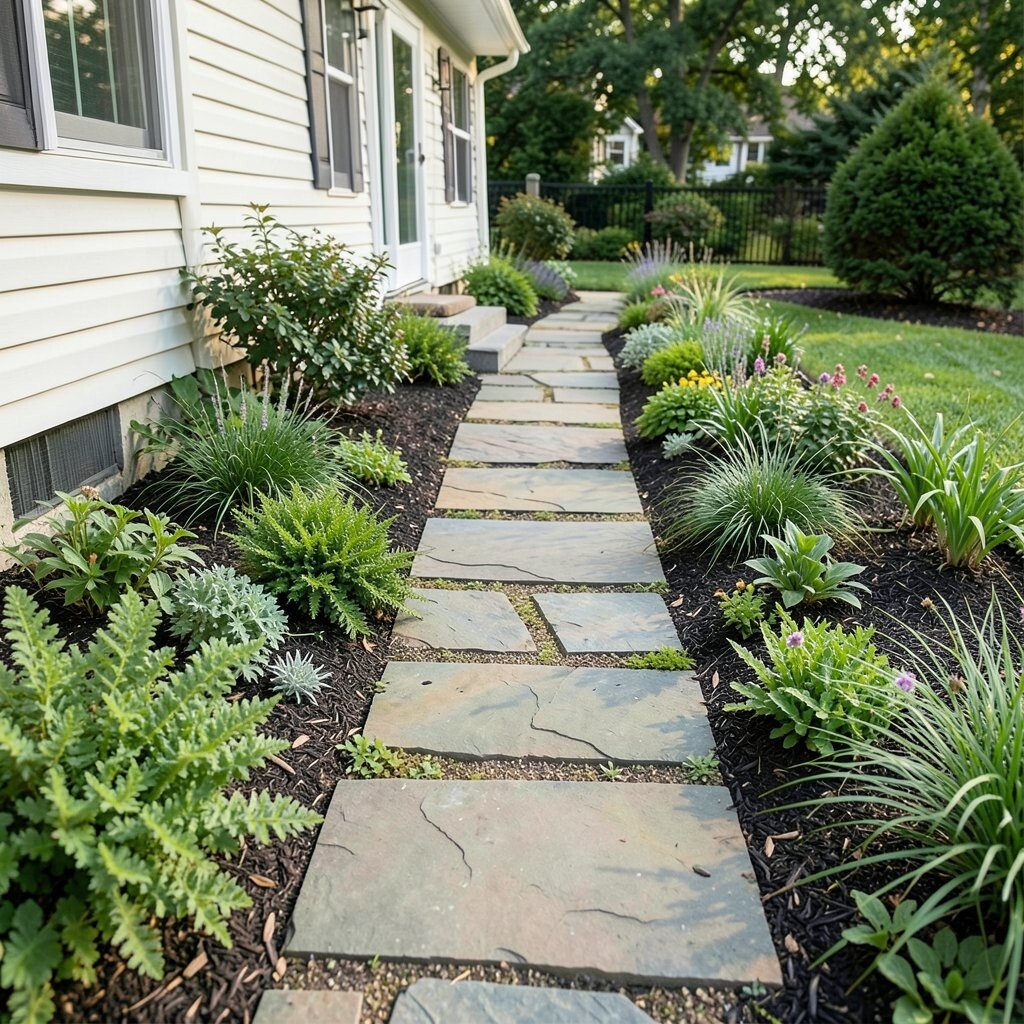
Flagstone set into soft ground covers creates a pretty, relaxed look that feels close to nature. The stones seem to float above the plants, which gives the front yard a gentle and welcoming style.
This kind of path is wonderful for homes that want a softer edge instead of a hard, formal line. It can also help with heat because the plants around the stones cool the space and make it feel fresh. If you want to keep costs under control, use larger stones with wider plant spaces, and choose ground covers that spread easily so the look fills in over time.
Each yard can make this style its own by choosing plants in different textures and colors. It is a lovely way to make the entrance feel calm, natural, and just a little bit magical.
5. Concrete Slab Path With Lawn Gaps
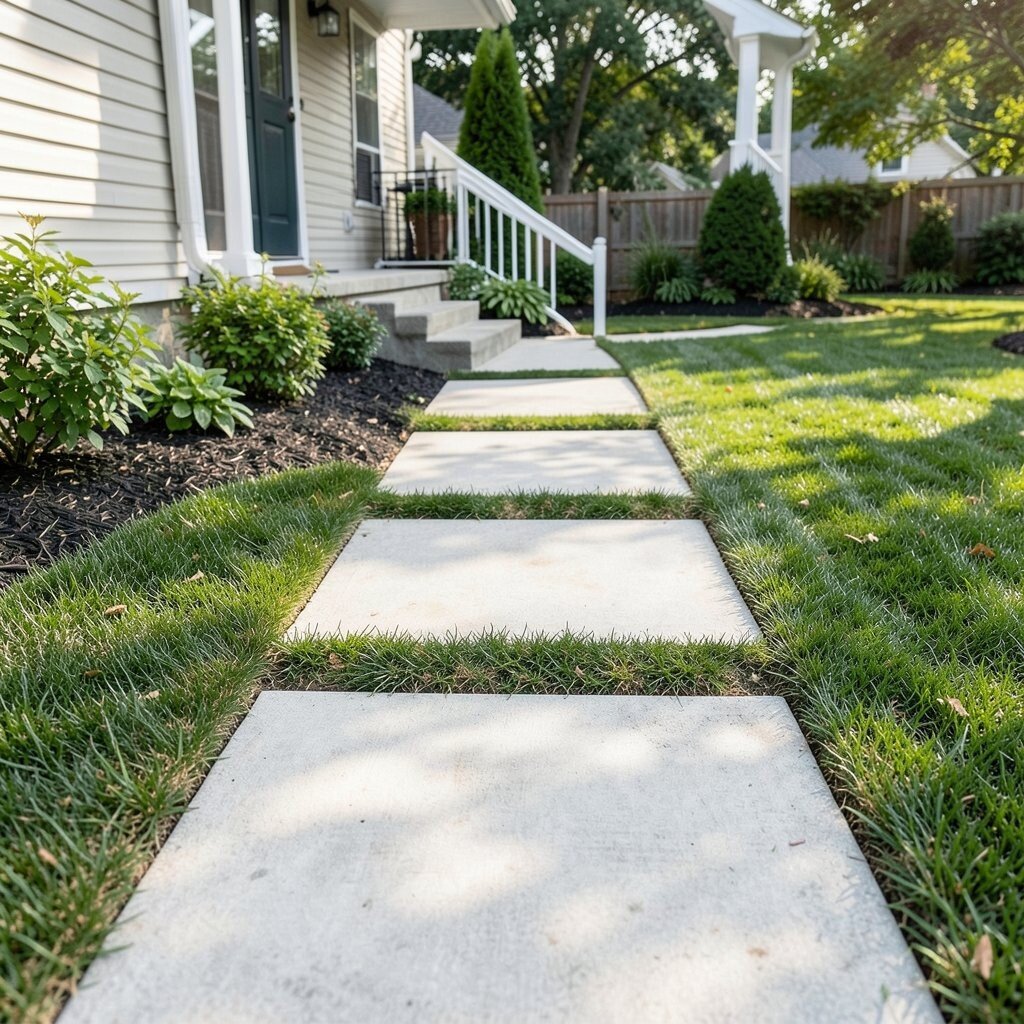
Large concrete slabs with small grass gaps between them create a clean, modern look. The open space between the slabs adds lightness, which keeps the path from feeling heavy.
This style works well for people who want something simple and easy to walk on. It also gives a yard a fresh look that matches many newer homes, and the straight lines can make the front area feel organized. For a custom feel, use wider slabs for a bold look or smaller ones for a softer pace, and remember that adding more green between the stones may take a bit more care but usually costs less than using solid paving everywhere.
6. Paver Entry Path With Border Detail
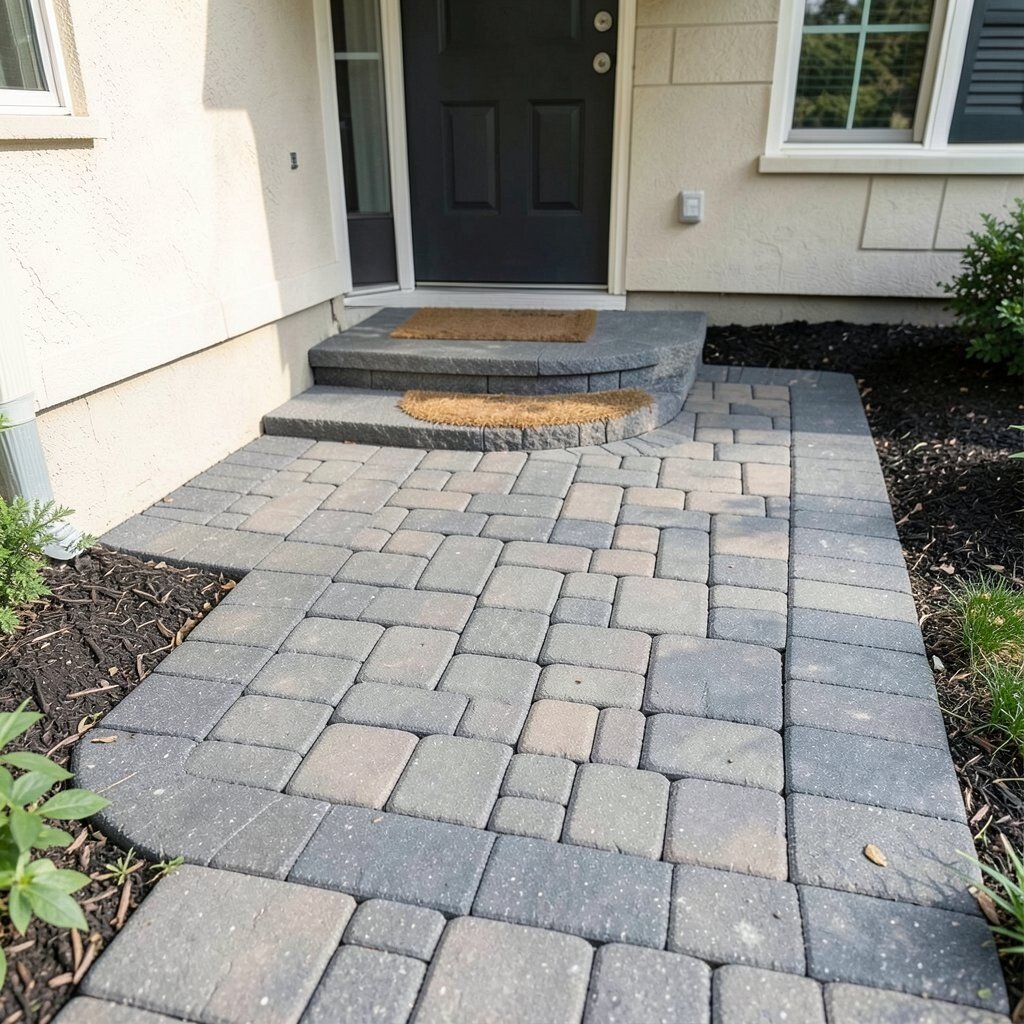
Paver paths can give a front entry a polished and sturdy look. A border in a different color or shape adds just enough detail to make the design feel special.
This option is popular because pavers come in many styles, from warm earth tones to cool gray blends. They are also easy to repair if one piece gets damaged, which makes them practical for busy households. To make the path feel more personal, you can choose a pattern that matches the home’s shape, and the finished look often feels worth the price because it adds real curb appeal.
Current outdoor style often favors neat lines and mixed textures, and this path fits right in. It gives the front yard a finished edge without feeling too formal.
7. Boardwalk Style Wooden Path
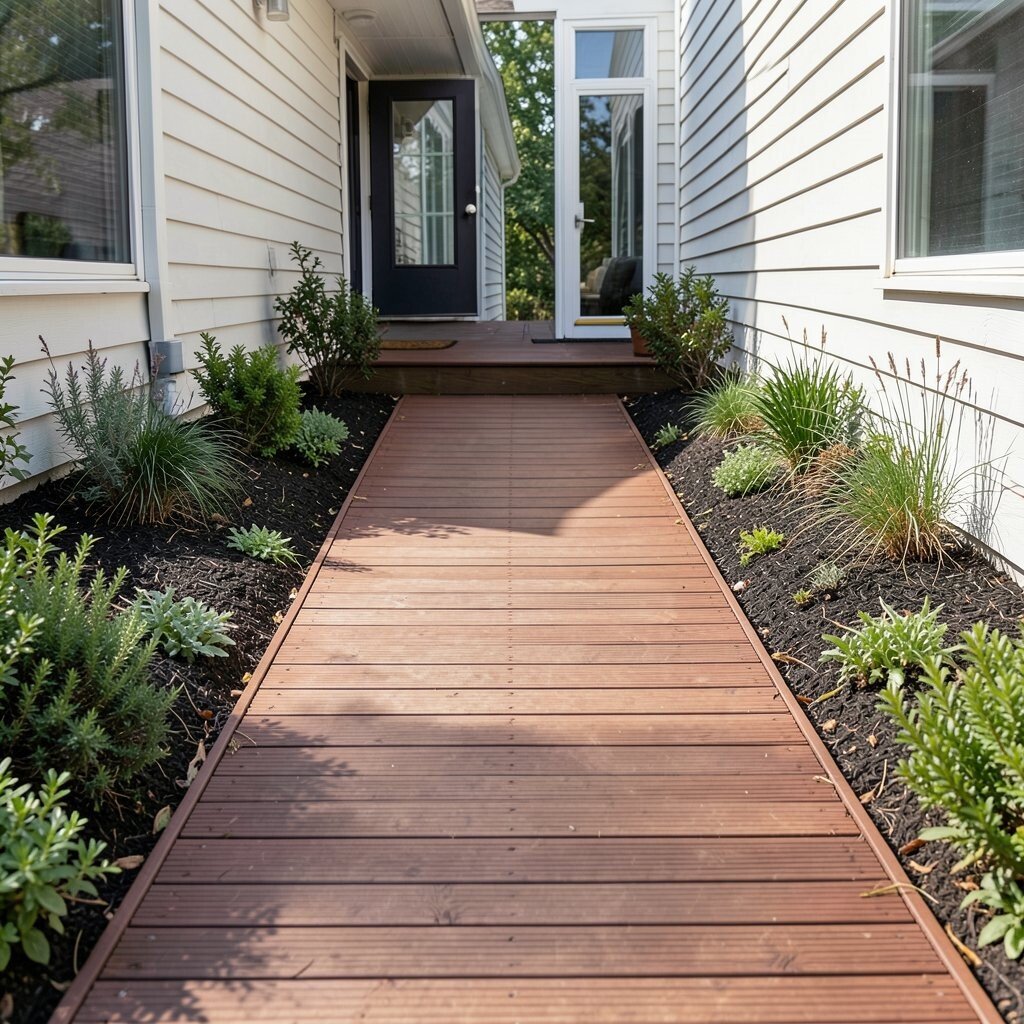
A wooden pathway can bring a soft, natural feeling to the front of a home. It works especially well in gardens where you want the route to feel like part of the landscape.
Wood has a warm color that blends beautifully with plants, shrubs, and mulch. It can be a charming choice, but it does need care, especially if your area gets a lot of rain or strong sun. You can keep the look fresh by sealing the wood and choosing simple rail-free edges, and while the upkeep may add some cost, the cozy style is often worth it for homes that want a welcoming, handcrafted look.
8. Stepping Stones In Mulch
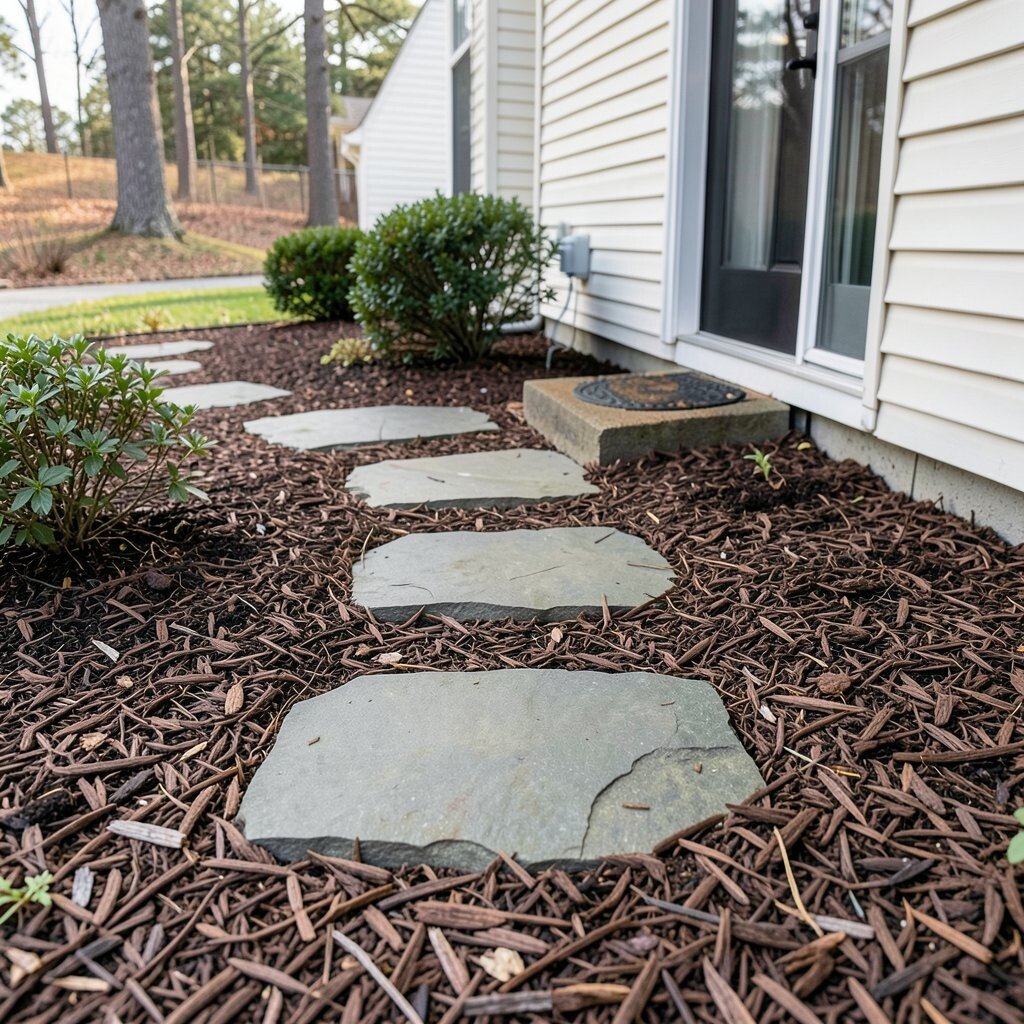
Stepping stones set in mulch make a front path feel relaxed and easygoing. The soft material around the stones gives the yard a neat but natural appearance.
This is a good option if you want something simple that does not feel too formal. It also keeps the path flexible, which can help when the yard has trees, garden beds, or uneven ground. For a personal touch, choose stones in a round or square shape and space them to match your stride, and mulch is usually a budget-friendly choice that is easy to refresh each season.
Many homeowners like this style because it looks friendly and low-key. It can also be changed later if you want to add more structure or a different material around the stones.
9. Herringbone Brick Path
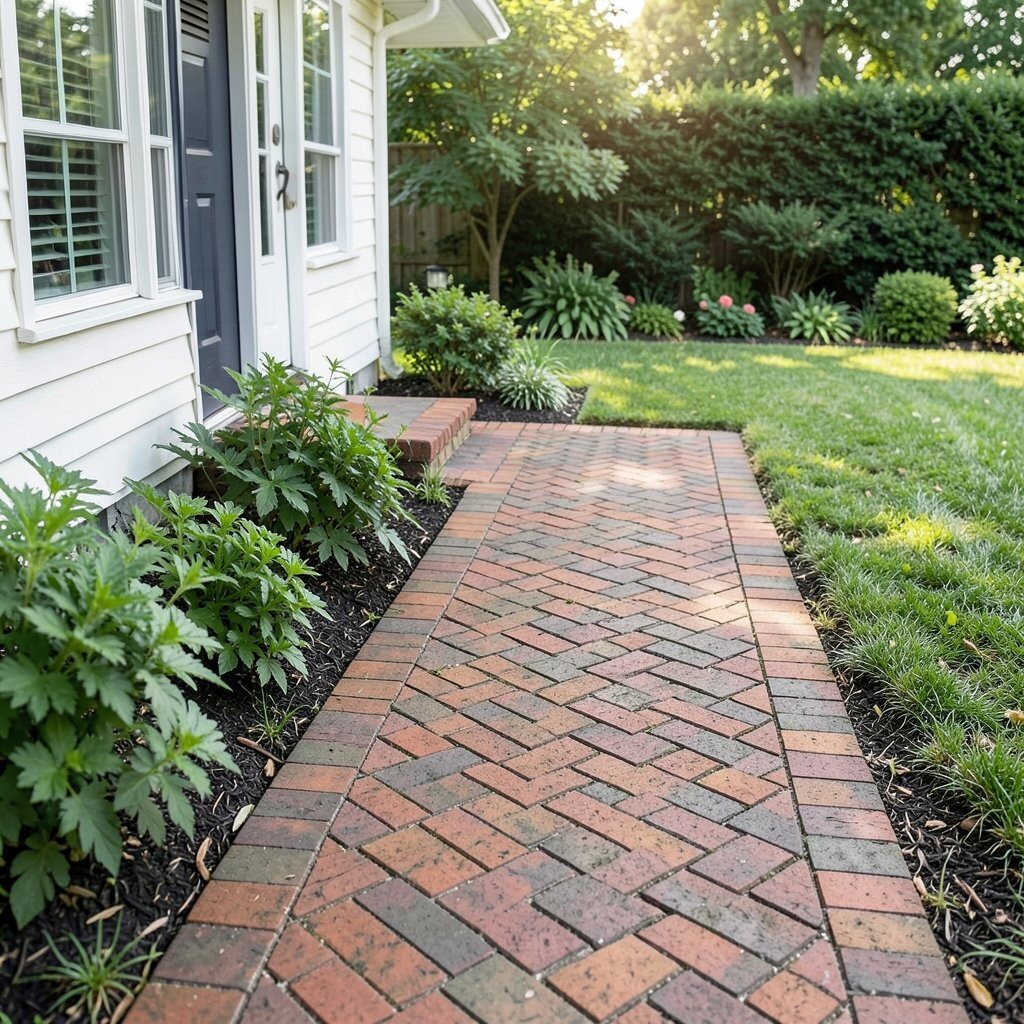
A herringbone brick path brings strong visual movement to the front of a house. The angled pattern makes even a small walkway feel thoughtful and well planned.
This design has a classic charm, yet it still feels fresh in modern settings. The pattern also adds strength, so it handles foot traffic well and holds up over time. If you want to make it your own, try a mix of red and brown bricks or add a narrow stone edge, and keep in mind that the detailed layout may cost a little more in labor but often pays off in style.
10. White Pebble Walkway
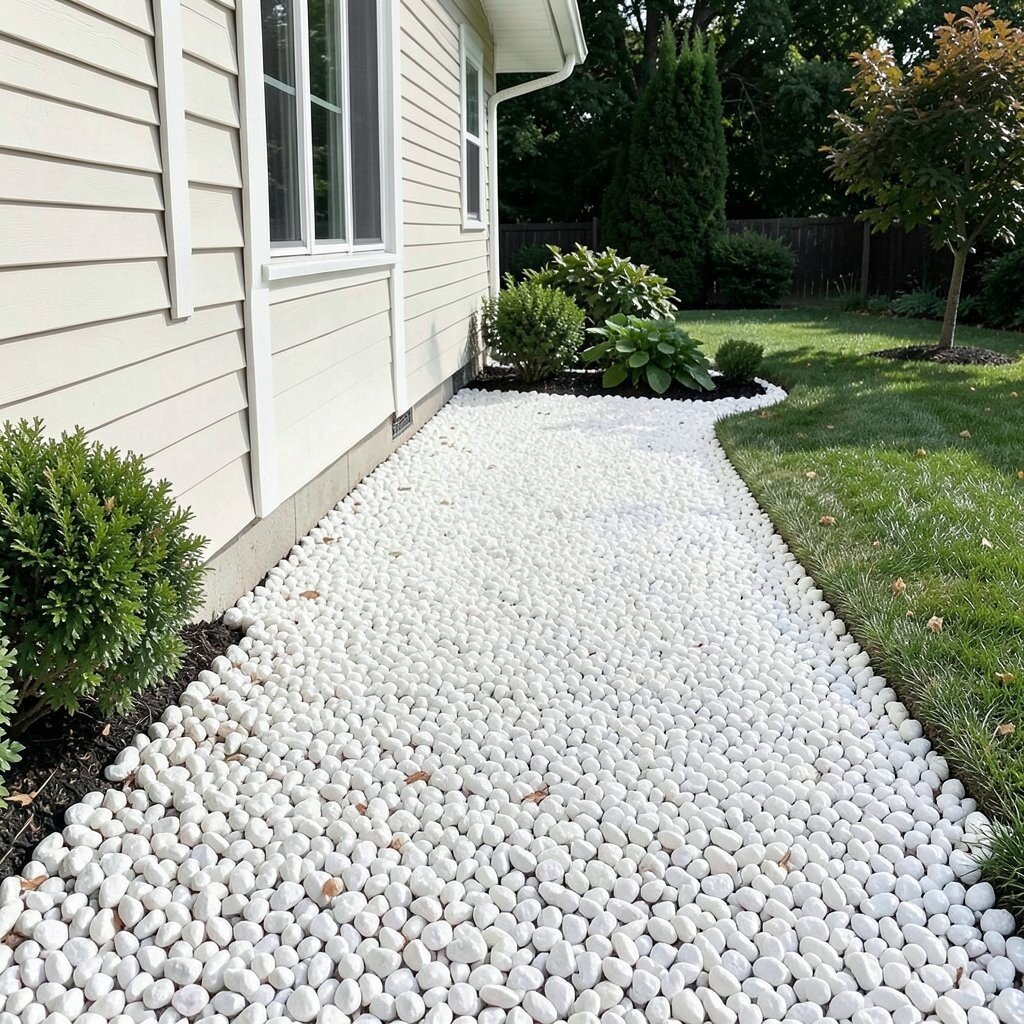
White pebbles can make a front pathway glow, especially near darker plants or a colorful house exterior. The bright surface reflects light and gives the yard a clean, airy feeling.
This path style can look very modern and neat, and it works well when you want a strong contrast in the landscape. It also pairs nicely with simple greenery, which keeps the design calm instead of busy. For practical use, choose larger pebbles in the walking zone so they stay more stable underfoot, and if you want to save money, use the white stones as a narrow center strip with a cheaper material around them.
The look is unique because it feels both elegant and relaxed. It can make a home stand out at sunset or early in the morning when the light is soft.
11. Slate Path With Clean Lines
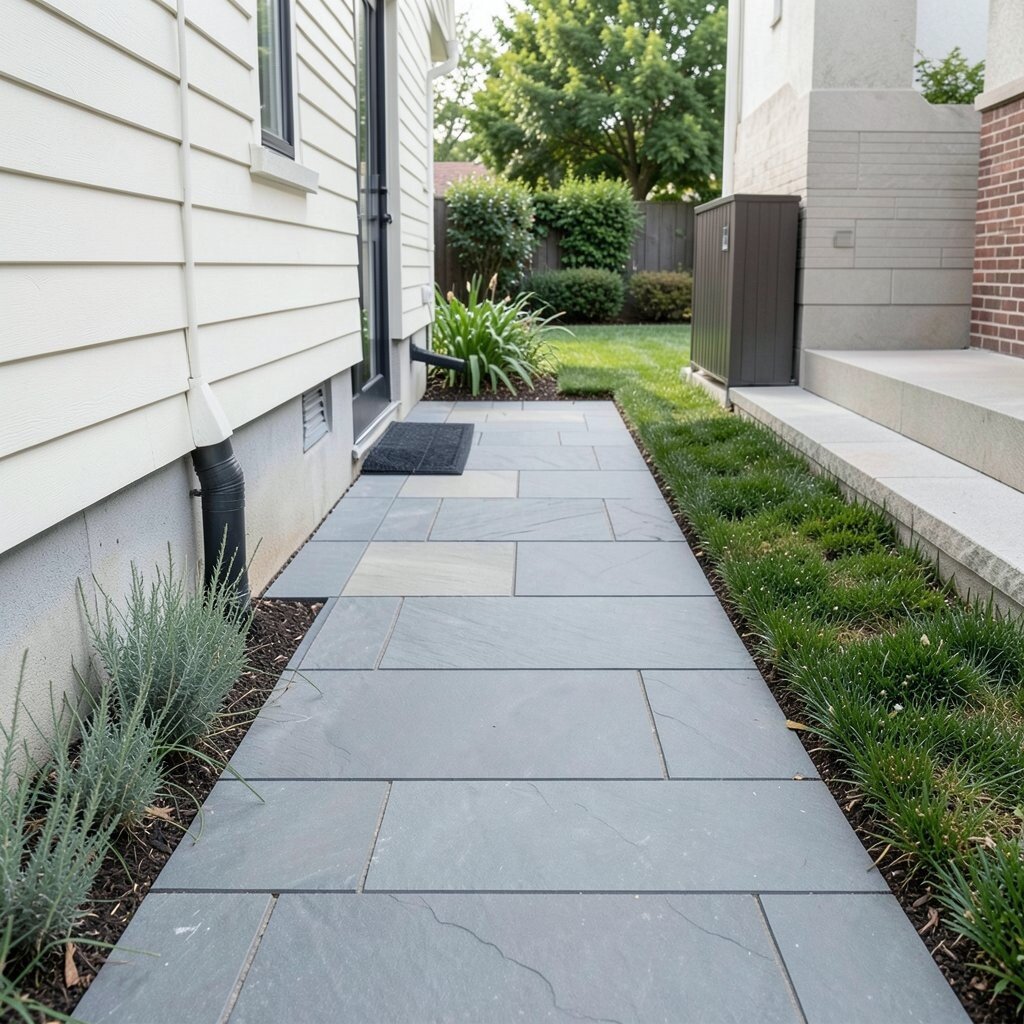
Slate gives a pathway a rich, deep color that can make a front entrance feel polished. Its smooth surface and strong edges create a smart look that works well with both modern and traditional houses.
This material often comes in cool grays, blue tones, and even hints of green, so the path can feel a little different from yard to yard. It is also durable, which makes it a smart choice for long-term use. If you want a more personal feel, vary the stone sizes in a careful way or pair slate with black edging, and while slate can be more costly than some other materials, its long life and clean style often make it a solid value.
The trend toward darker outdoor finishes has helped slate stay popular. It adds quiet drama without needing lots of extra decoration.
12. Raised Path With Low Retaining Walls
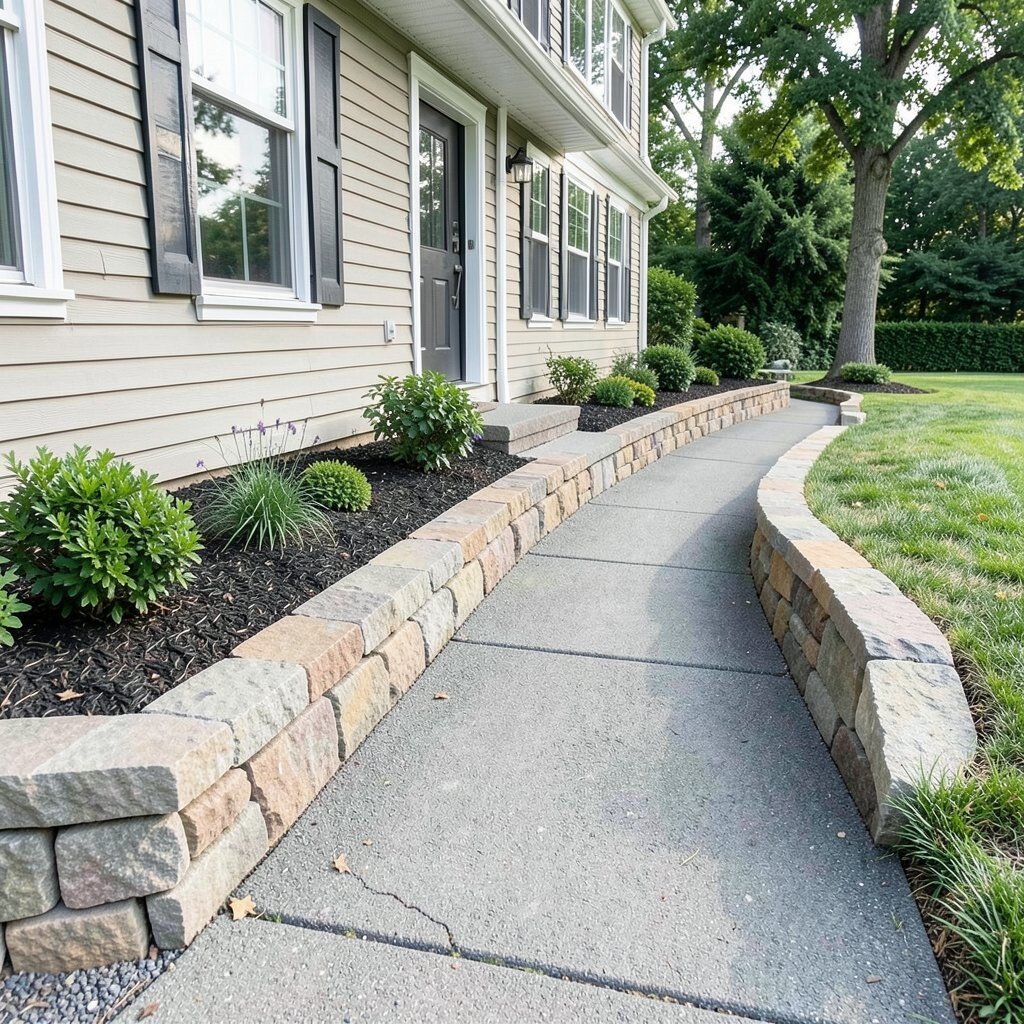
A raised pathway with low retaining walls gives the front yard depth and structure. The height makes the entry feel important and helps guide the eye toward the door.
This style can work well on sloped lots where a flat path is hard to build. The walls also create spots for flowers or small lights, which makes the entrance feel warm after dark. You can personalize it by using stone that matches the house trim or by placing small plants along the top edge, and the cost can stay reasonable if you keep the walls low and simple.
It is a practical choice that also feels a little grand. That mix of beauty and usefulness is what makes it stand out.
13. Mixed Material Path
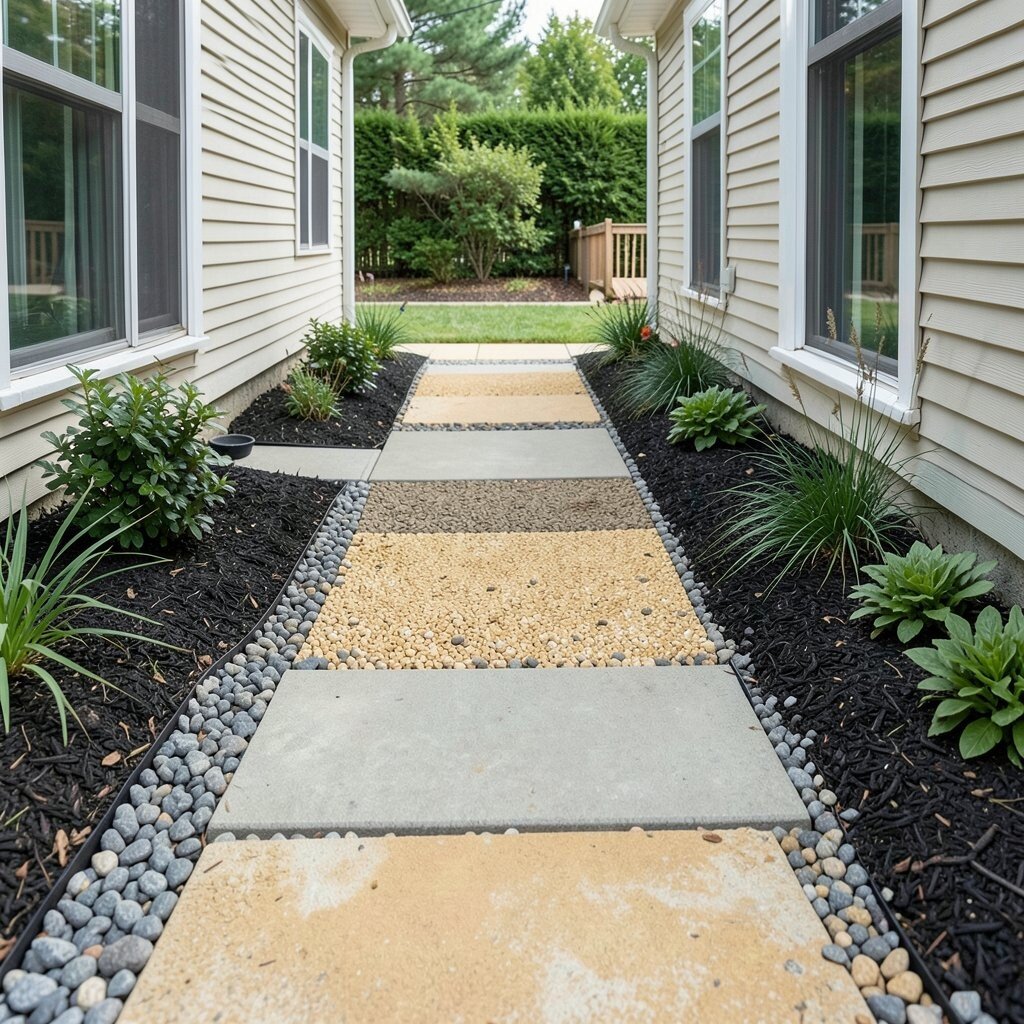
A mixed material path combines two or more surfaces for a look that feels lively and custom. Stone, brick, gravel, and concrete can work together when the colors stay balanced.
This style gives you room to be creative while still keeping the path easy to use. It can help separate the walking area from the border and make the whole front yard look more designed. For a smart budget approach, use the more expensive material in the center and a simpler one around it, and this also lets you play with current design trends that favor layered texture and contrast.
Because it is made to suit your home, it rarely feels boring. The mix of textures can also help the pathway stand out without needing bright colors or big ornaments.
14. Garden Path With Lantern Lights
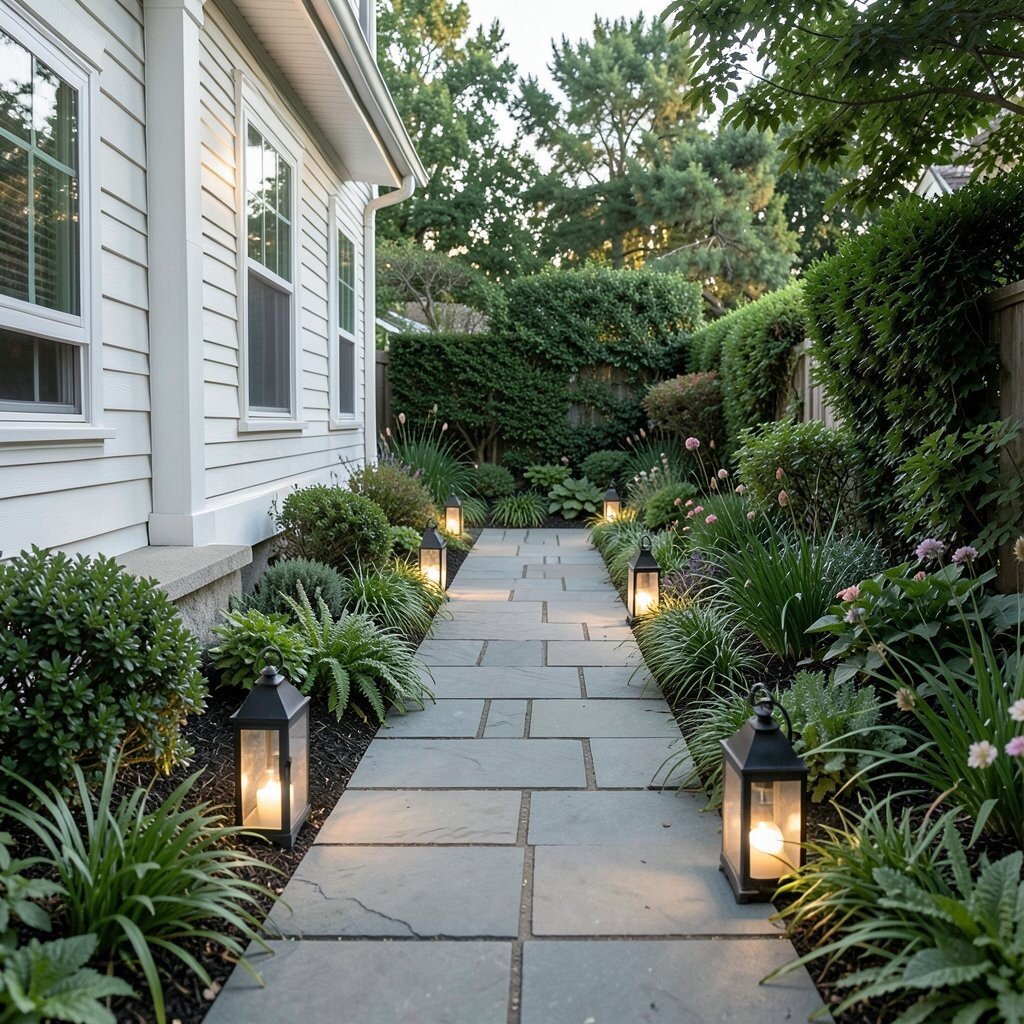
A garden path with lantern lights feels warm and inviting after sunset. The soft glow highlights the shape of the walkway and gives the front yard a calm evening look.
Lighting is useful as well as pretty, since it helps people see where they are going and can make the entrance feel safer. Solar lanterns are a popular choice because they are easy to place and usually cost less to run than wired lights. For a personal touch, choose lanterns in a style that fits the home, such as simple black metal or softer vintage shapes, and place them close enough to show the path without making it too bright.
This kind of path fits current outdoor trends that value mood and low energy use. It gives the front of the house a gentle glow that feels welcoming in every season.
15. Mosaic Accent Path
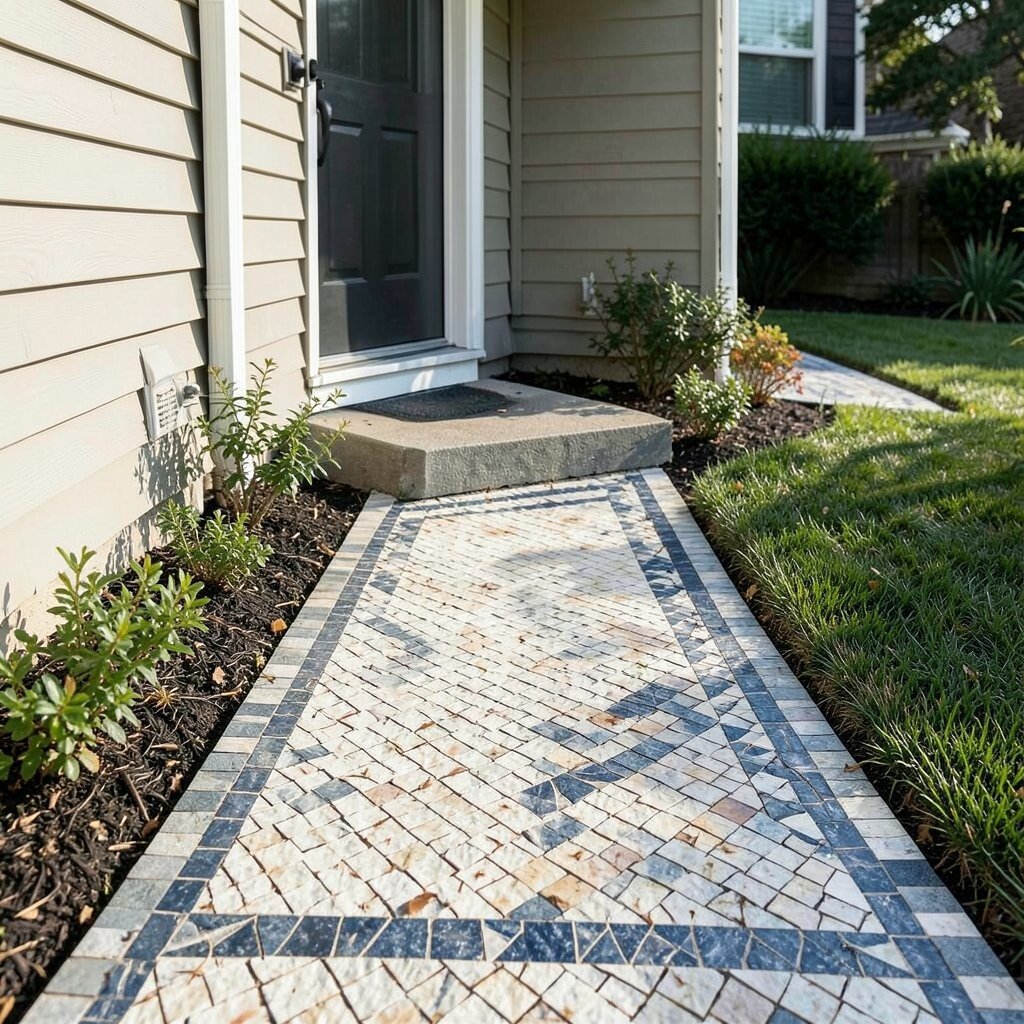
A mosaic path can turn a simple walkway into a true front yard feature. Small bits of stone, tile, or glass can make the surface look playful and full of character.
This is one of the most unique path styles because it can match almost any color scheme. It works especially well near homes that already have strong details, since the path can echo roof colors, window trim, or front door paint. If you want to keep the budget in check, use mosaic accents only in a few panels or as a border, and make sure the surface stays even so the path remains easy to walk on.
The best part is how personal it can feel. No two mosaic paths need to look the same, which makes each one feel like a small piece of art.
16. Sandstone Path With Soft Tones
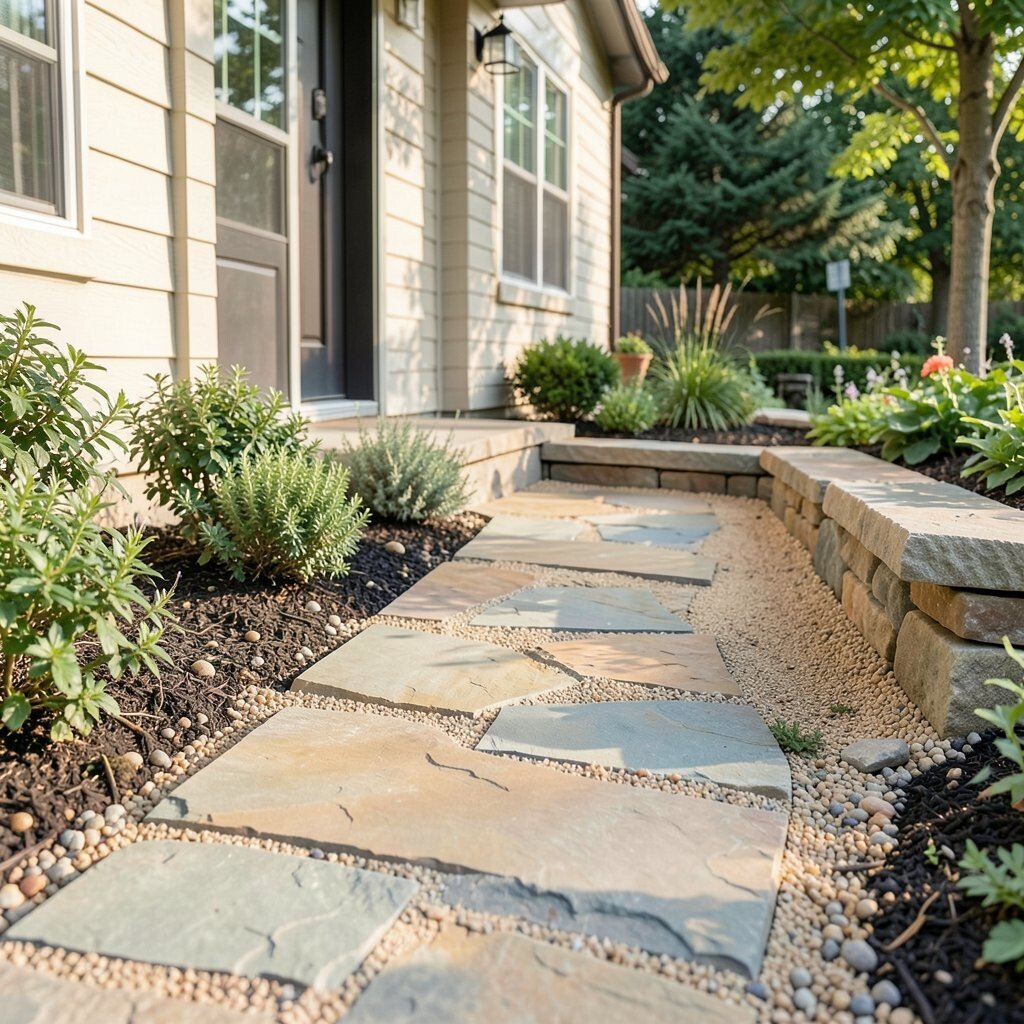
Sandstone brings a warm and gentle color to the front of a home. Its soft beige, tan, and honey shades can make the whole entry feel sunny and calm.
This material works well when you want a natural look that still feels polished. It pairs nicely with pale houses, green plants, and even darker front doors, so it can fit many styles. To make it more personal, choose stones with different shapes or combine sandstone with simple gravel borders, and while the price can depend on the stone quality, many homeowners like it because it offers a friendly look without feeling flashy.
Sandstone also matches the trend toward earthy outdoor design. It gives the path a grounded feeling that works well in both new and older neighborhoods.
17. Narrow Side Path With Tall Plants
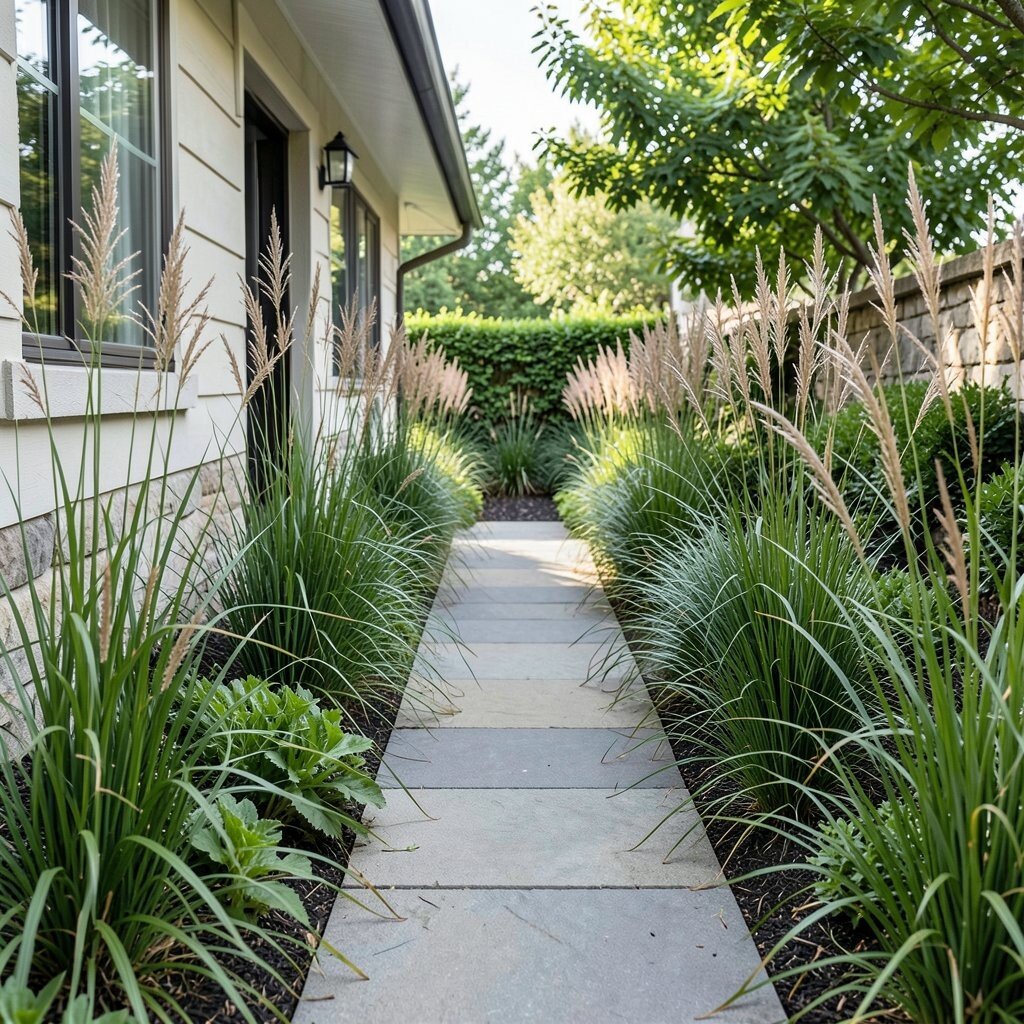
A narrow side path can make a front approach feel tucked in and charming. When tall plants line the edges, the walkway seems to lead visitors through a little green tunnel.
This style is useful for homes with smaller yards or side entries that need more attention. It does not require a huge area, so it can be a smart way to improve curb appeal without a major project. You can personalize it with upright grasses, slim shrubs, or flowers that bloom through the seasons, and the cost can stay low if you use simple stepping stones or compact pavers.
The look is cozy and a little unexpected, which makes it feel special. It also helps the front of the house feel more private while still being easy to reach.
18. Modern Dark Path With Light Borders
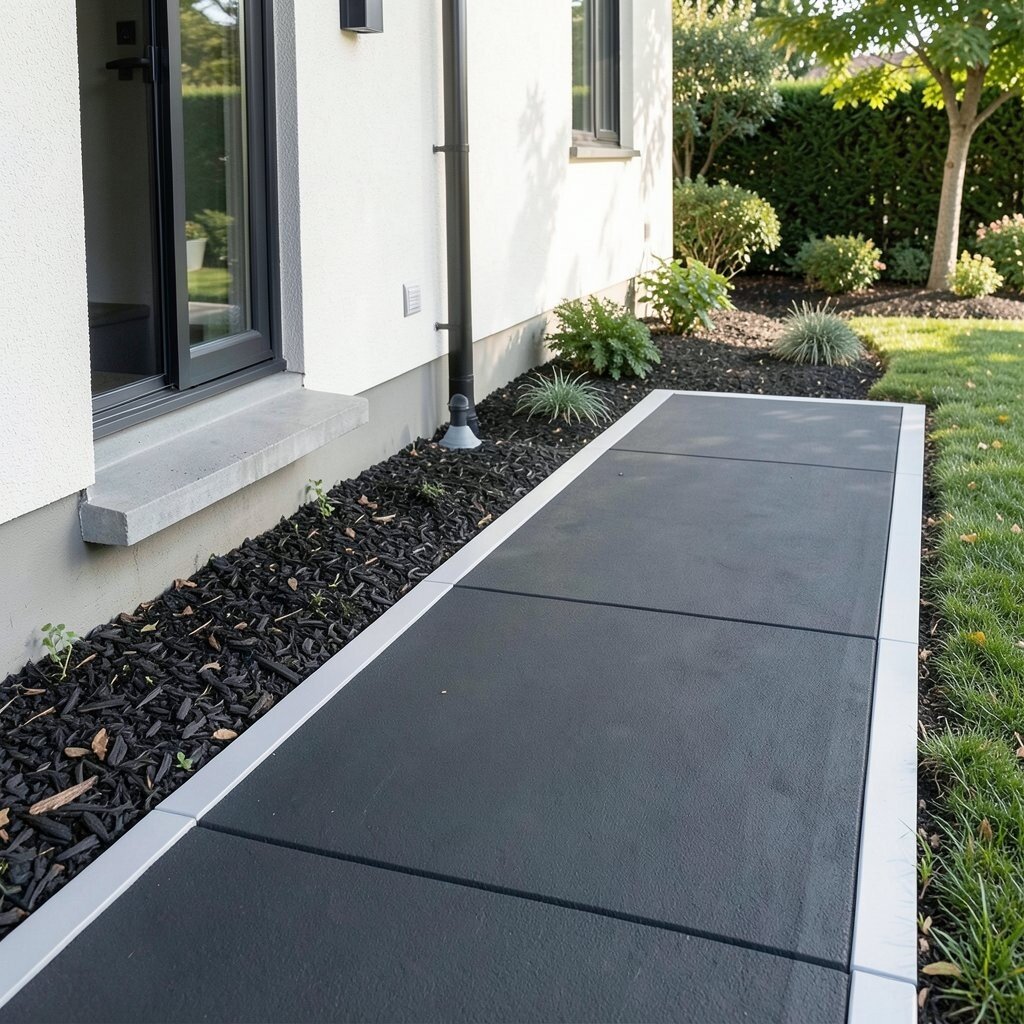
A dark pathway with light borders gives a home a sharp, modern edge. The strong contrast makes the route stand out and helps the entrance feel bold and clear.
This style works well with homes that have simple shapes and clean siding colors. It can also make nearby plants look brighter, since the dark surface lets the greenery pop. For a tailored look, choose smooth pavers in charcoal or deep brown and add pale stone on the sides, and keep in mind that the dramatic contrast can be achieved in a cost-friendly way if you use a smaller amount of the darker material in key spots.
Many outdoor design trends now lean toward bold contrast and crisp lines. This path fits that mood while still staying easy to live with.
19. Rustic Path With Reclaimed Materials
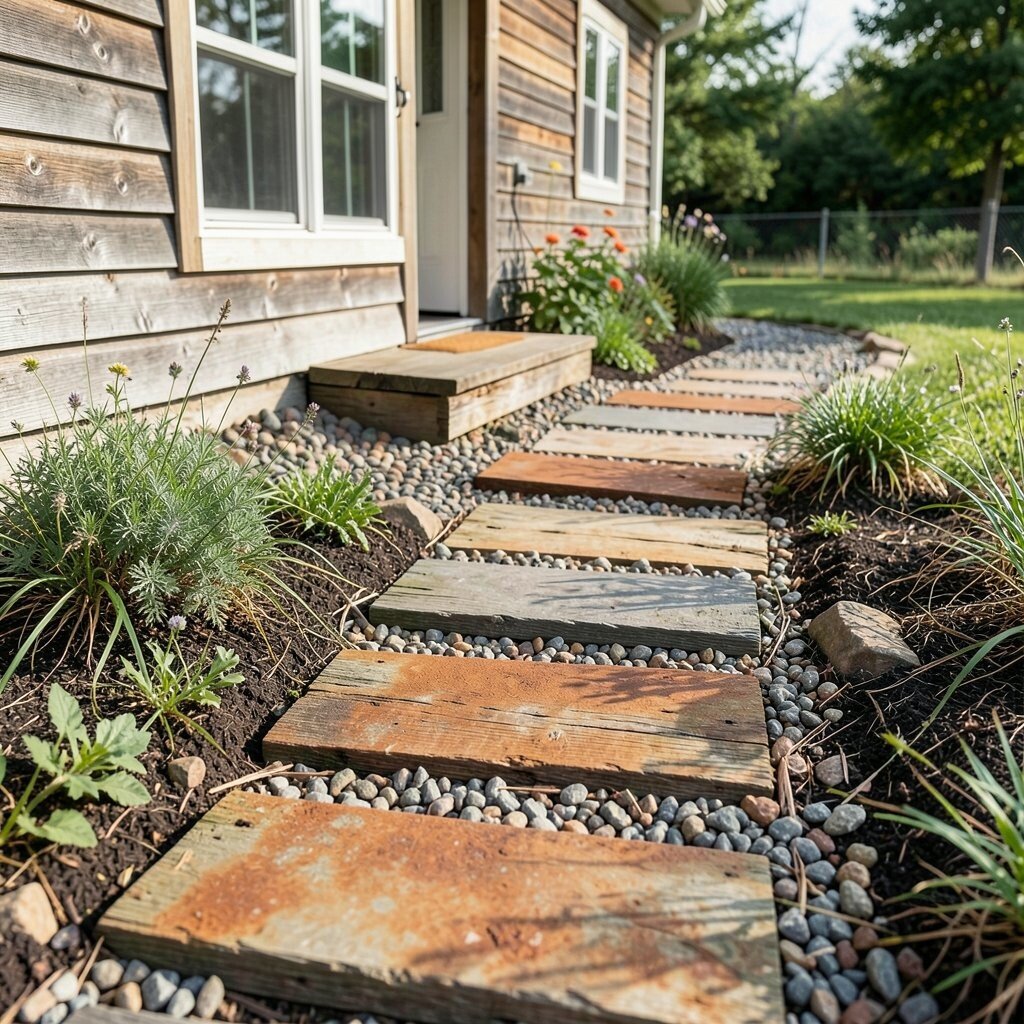
A rustic path made from reclaimed materials brings character right to the front door. Old bricks, worn stone, or reused concrete pieces can give the yard a storybook feel.
This option is friendly to the environment and can also save money if you find good materials locally. The uneven edges and weathered color add charm that new products often cannot copy. To keep the path safe and neat, lay the pieces carefully and fill the gaps so they stay level, and you can make it feel more personal by mixing materials that match the age or style of the home.
The uniqueness of this look is part of its appeal. It feels lived-in, warm, and full of history without trying too hard.
20. Cottage Style Path With Curved Edges
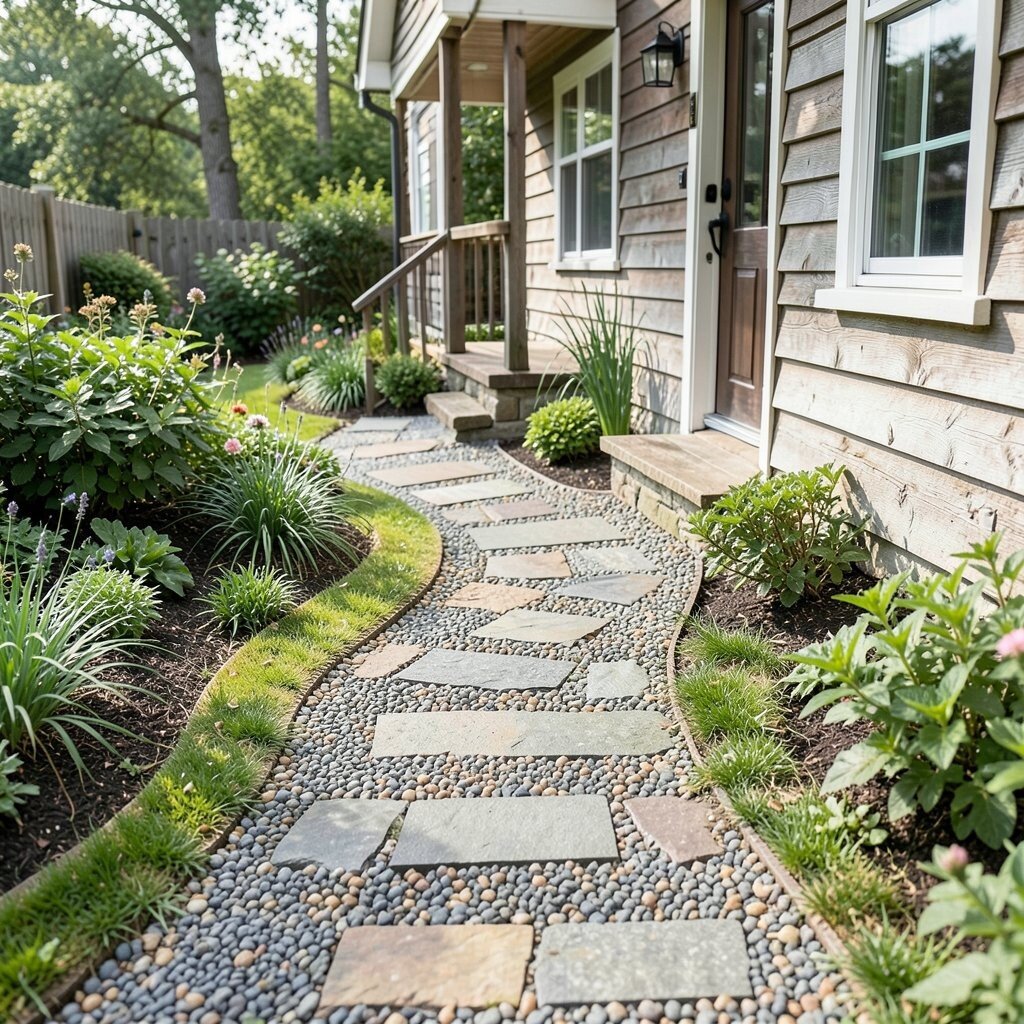
A cottage style path with curved edges gives the front of a house a sweet and welcoming look. The soft lines feel friendly and pair well with flowers, vines, and layered greenery.
This pathway style is a lovely fit for homes that want a relaxed and cheerful mood. It can be built with brick, stone, or pavers, which makes it easy to match different budgets and yard sizes. For a personal touch, let plants spill near the edges or use a mix of small lanterns and garden beds, and the cozy design feels right in step with current outdoor trends that favor natural shapes and less rigid layouts.
It stands out because it feels inviting from the very first glance. A path like this does more than lead to the door, since it helps the whole home feel cared for and full of charm.