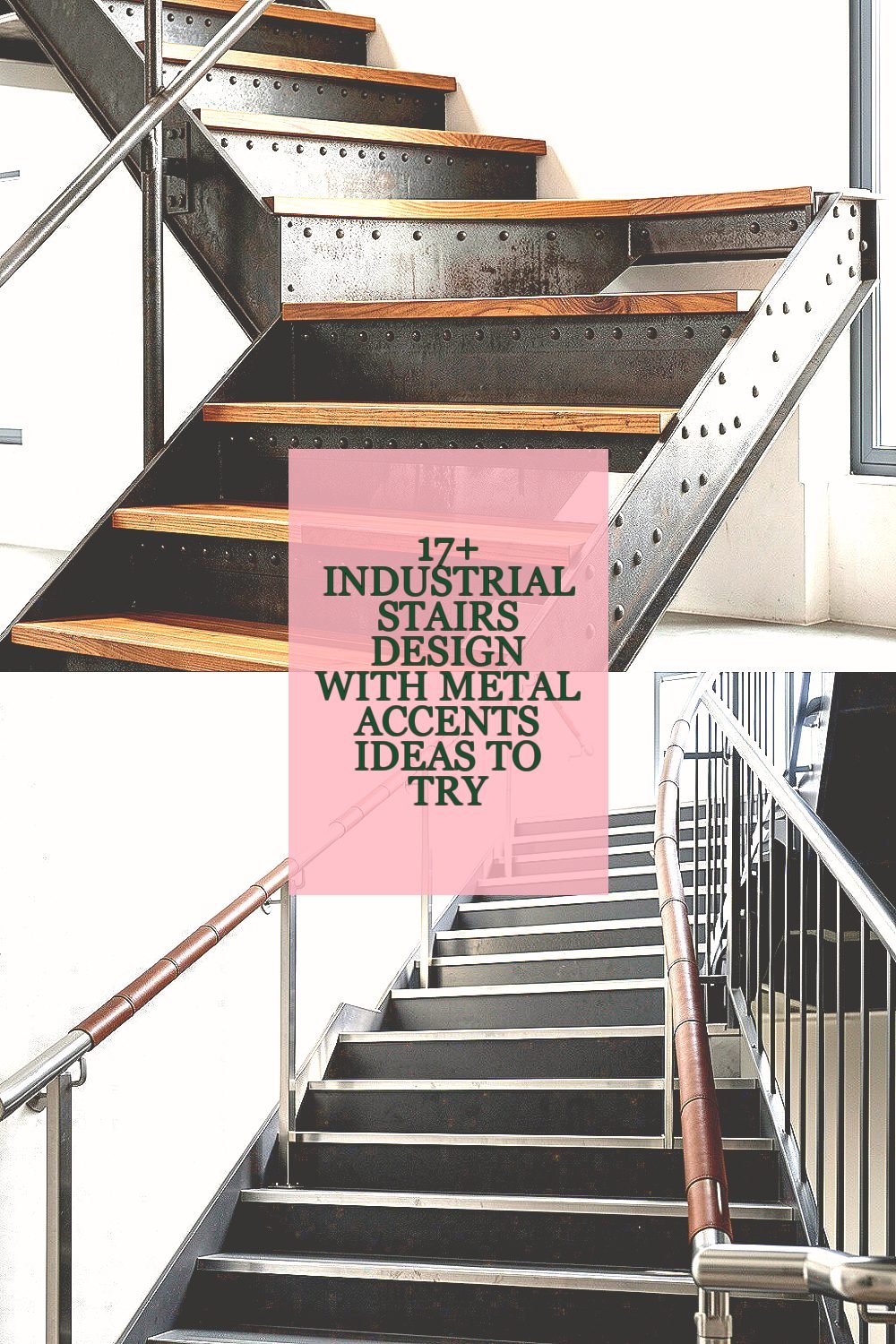
Cold steel can look warm when it’s paired with the right materials. Metal accents make stairways feel bold, sturdy, and full of character.
Below are ideas you can picture right away, plus practical ways to make them work in real homes and small businesses.
1. Riveted Steel Stringers With Warm Wood Treads

Imagine the side of the stairs showing neat rows of rivets, catching light each time you walk up. The wood treads add a soft, cozy feel that keeps the look from feeling too harsh.
This combo is great for an industrial vibe because it mixes “built to last” with “pleasant to step on.” Use matte black or brushed steel for the stringers, then choose wood with a visible grain for warmth.
For practical results, pre-finish the treads so spills and scuffs won’t soak in right away. Consider adding a thin clear coat with a satin sheen so the metal stays in focus while the treads stay easy to maintain.
2. Brushed Stainless Handrails With Leather Wraps
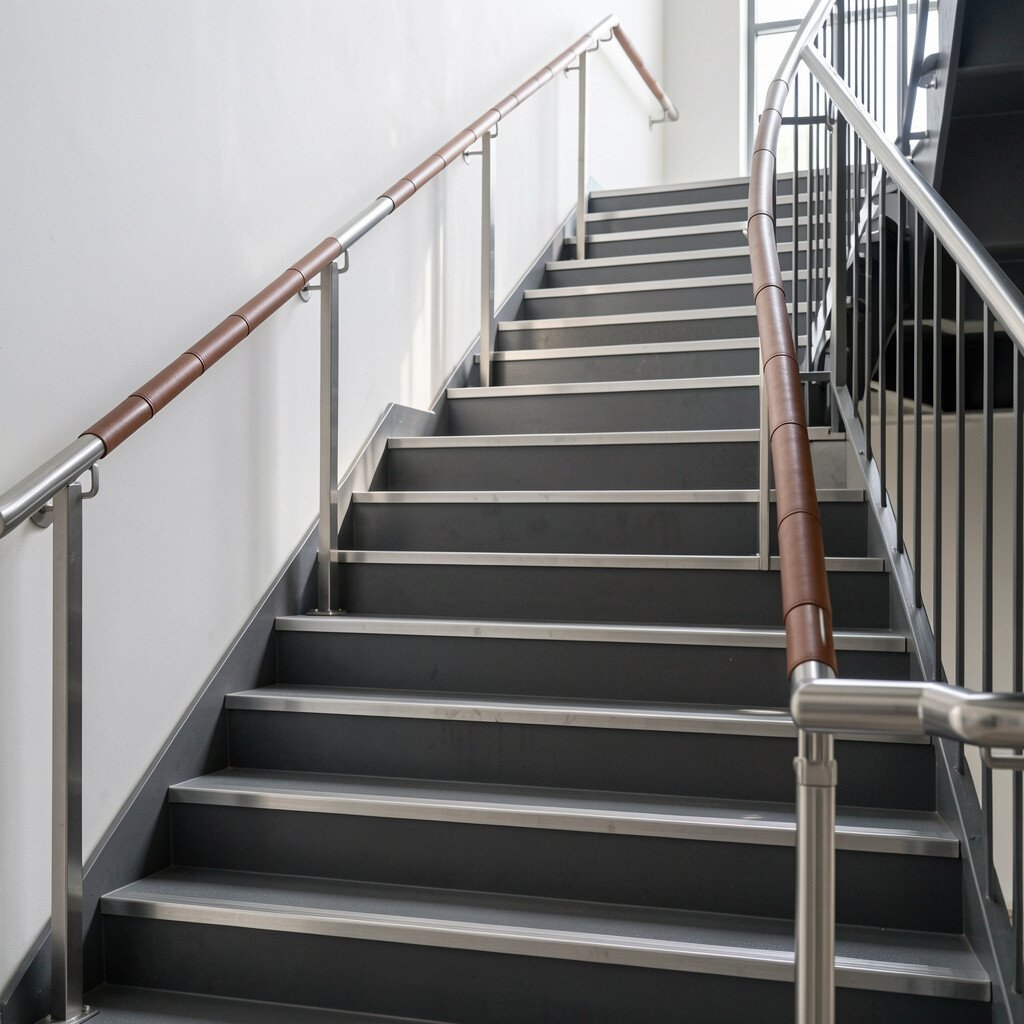
A brushed stainless handrail looks clean and bright, especially under warm lighting. Wrap key spots with dark leather so your hand feels comfortable and the metal still stands out.
This design is unique because it blends cold and warm in one line, like a bold accessory for a daily routine. It also helps grip, which matters when steps get damp.
Pick a leather color that matches other finishes, such as a brown floor stain or a charcoal wall paint. For budget planning, use leather only on the areas where hands actually rest instead of covering the whole rail.
3. Copper Trim Lines Around Every Step Edge

Copper trim tracing the edge of each tread creates a glowing outline from below. Even when the stairs are empty, the lines look like they’re doing the work of decor.
Copper ages in a beautiful way, so the stairway gains character over time instead of looking worn. Keep it in the same color family as your kitchen hardware, light fixtures, or plumbing accents for a pulled-together feel.
To make it practical, choose trim that is securely fastened and sealed at the seams. A clear protective layer can help slow oxidation if you prefer a steadier look, while leaving it untreated creates a richer patina later.
For personalization, vary the thickness of the trim on the bottom steps so they feel more grounded. If you want a softer look, use a thin copper strip and let the treads do most of the visual heavy lifting.
4. Blackened Steel Corner Posts With Minimal Cleats
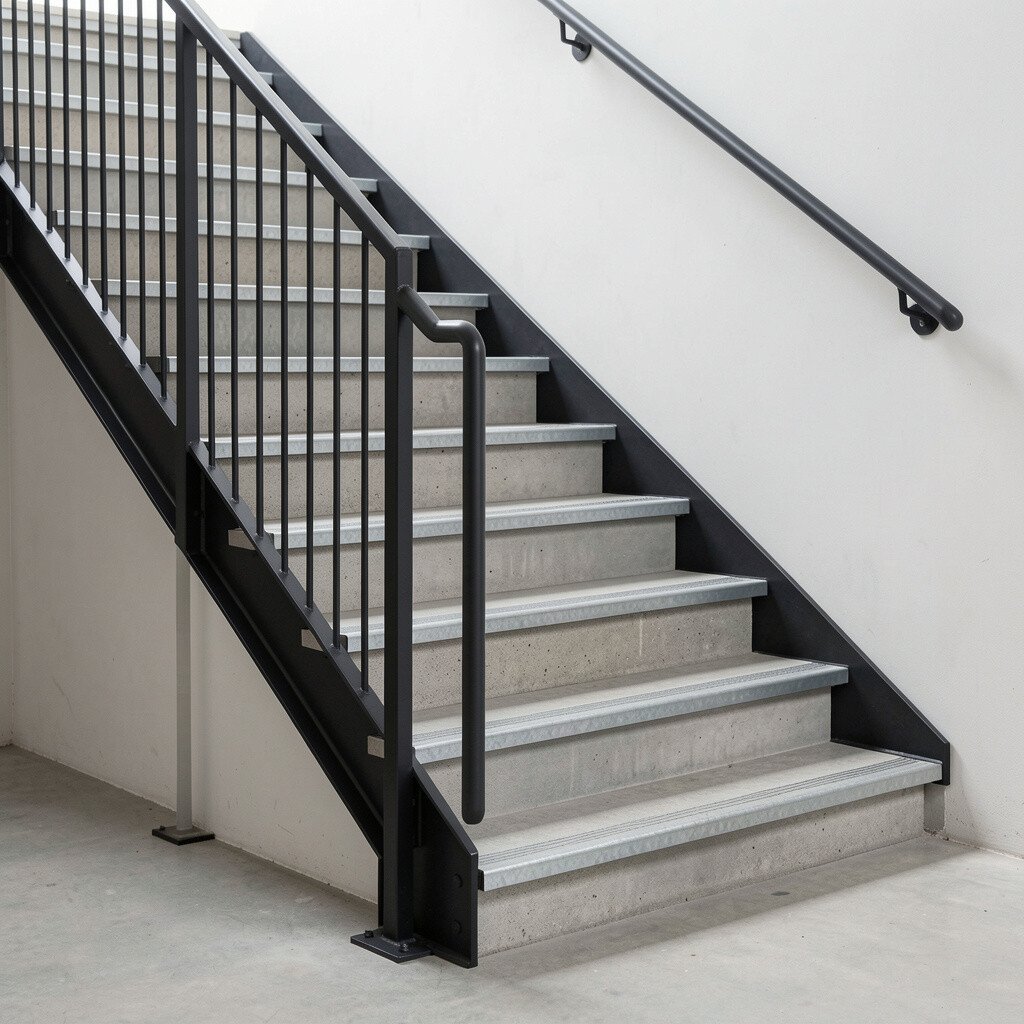
Picture simple corner posts in blackened steel sitting at the stair turns, like strong framing. Small cleats and brackets can hold the treads without cluttering the view.
This approach is appealing because it feels industrial but still neat, which works well for modern homes. It also makes future repairs easier since fewer parts hide behind trim.
Choose posts with a durable coating that resists fingerprints and scratches. If you’re cost-conscious, prioritize the posts and cleats on the most visible side, then simplify the hidden side for savings.
For practical tips, keep the brackets evenly spaced and double-check alignment before fastening. A laser level or careful measuring helps the stairs look straight and “factory made,” not DIY.
5. Industrial Mesh Riser Panels For Airy Visibility

Mesh riser panels give the stairs a lighter, open look while still showing off the structure. The pattern catches dust and light in a way that makes the stairway feel alive.
This is a great choice if you want industrial style without fully blocking sight lines. It can also help visually separate the stair area from the rest of the room so it feels intentional.
Use welded wire mesh or metal grating with smooth edges so shoes slide less. For safety, make sure openings are sized so small children won’t get stuck and that the panel is tightly mounted.
To personalize, paint the mesh to match a wall tone or leave it raw for a “workshop” feeling. If you want an easy maintenance plan, choose a powder-coated finish that wipes clean quickly.
6. Ladder-Style Side Rails With Step Spacers
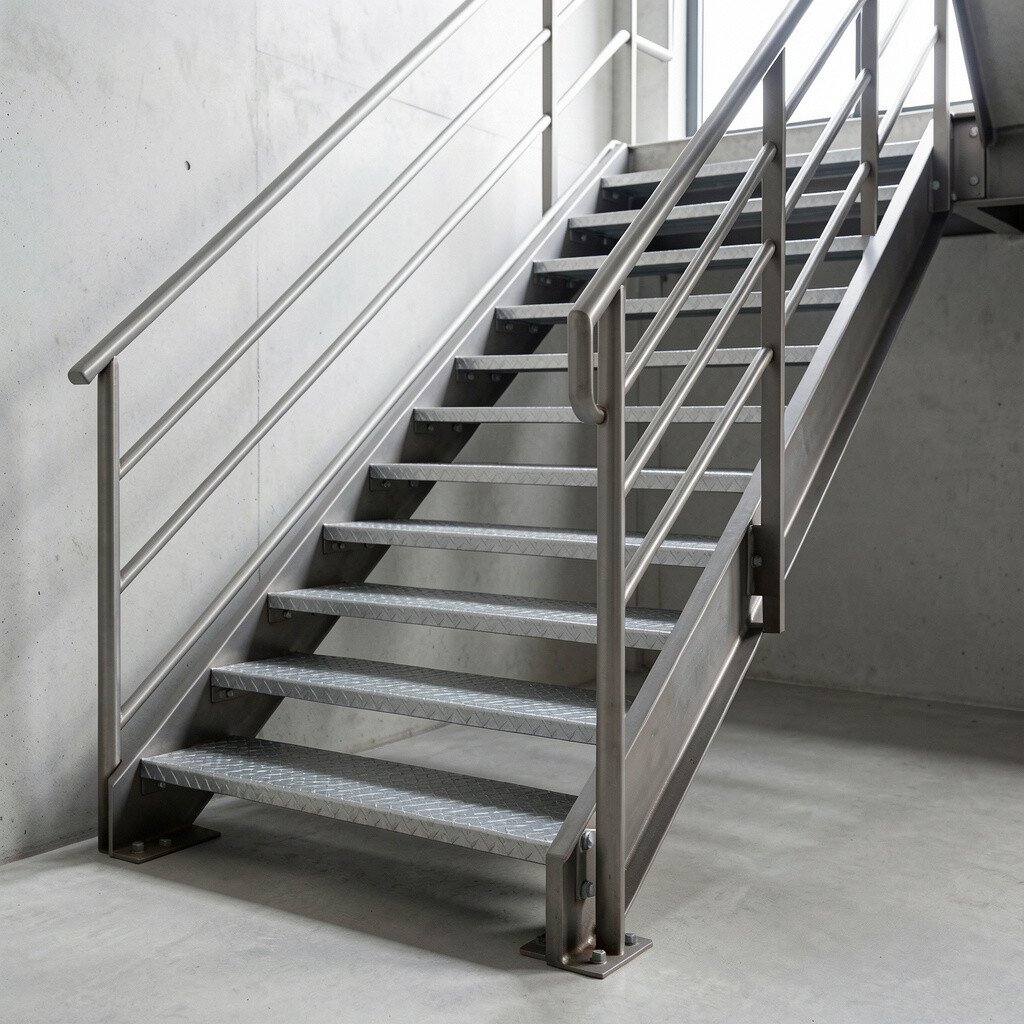
Think of stairs that look like a sturdy ladder, with side rails and clear step spacing. The metal accents feel bold, and the whole run looks graphic from hallway sightlines.
This design is unique because it turns the stairway into a structural art piece. It also allows you to show off treads in different woods or finishes for a more personal look.
For practicality, add non-slip strips and make sure step heights stay consistent. If you’re mixing finishes, seal each tread so colors don’t fade at different speeds.
7. Hot-Rolled Iron Balusters In Simple Repeating Shapes

Hot-rolled iron balusters bring a slightly rugged texture that looks authentic and strong. Repeating shapes help the stairway feel organized instead of random.
This style fits well with industrial lofts, but it can also soften the look of modern interiors. Choose a consistent baluster size and spacing to keep the design visually calm.
To keep it practical, pick a finish that resists rust and shop for balusters made for indoor use. A darker finish hides minor scuffs and reduces how often you need to touch up paint.
Personalize it by mixing one or two balusters into a different shape on each landing. That small change can become a signature detail without making the whole railing look busy.
8. Matte Aluminum Step Nosing With Reflective Strips

Matte aluminum step nosing looks crisp and modern, especially when paired with darker treads. Adding a narrow reflective strip can make each step edge easier to see.
This is a smart upgrade because visibility helps with safety, especially in dim hallways. It also gives a clean, “engineered” look that feels current without feeling cold.
For cost considerations, you can install nosing on the most-used steps first, then upgrade the rest later. Many metal edging kits are designed for straightforward installation, which helps keep labor costs down.
To personalize, choose reflective strips that match your lighting temperature so glare stays comfortable. Warm-white lighting usually makes aluminum feel less sharp.
9. Corten Steel Aging Panels Under the Tread Line

Corten steel has that earthy, rust-toned beauty that looks like it belongs in a workshop. When you place it under the tread line, the warm rust glow adds depth from the side.
This design stands out because the aging effect becomes part of the story, not a flaw you have to hide. It also pairs well with stone, concrete, and darker paint colors.
Keep in mind that Corten forms a protective layer, so installation should follow manufacturer guidance for best results. If you live in a very wet climate, consider sealing edges that are exposed to standing water.
For practical tips, balance Corten with smooth treads so the stairs feel comfortable to step on. You can keep the rest of the room simple so the steel details become the focus.
10. Gas-Pipe Style Vertical Posts With Flange Details
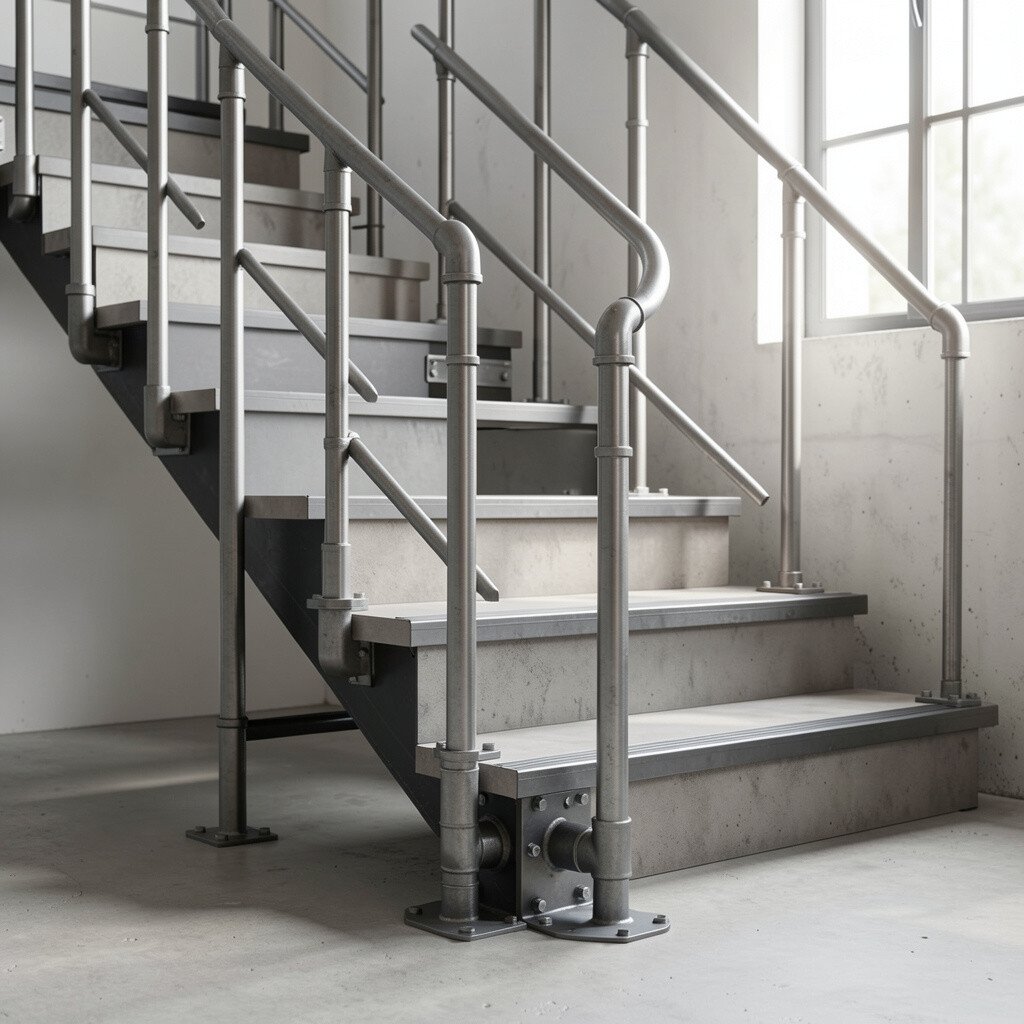
Using gas-pipe style vertical posts instantly adds industrial character, especially when you use flanges as decorative bases. The look feels familiar, like classic factory hardware with a modern twist.
This idea is unique because it turns everyday materials into a visual system. You can line up the posts in a repeating pattern to make the stairway feel intentional.
For personalization, choose pipe finishes like oiled black, antique brass, or galvanized silver based on your existing metal tones. Make sure the hardware is rated and securely anchored for real load-bearing needs.
To manage cost, use pipe styling where it’s visible and keep the structural supports behind the treads. That way you get the look without paying for full pipe coverage everywhere.
11. Bronze Corner Caps On Concrete-Look Treads

Concrete-look treads give a strong industrial base, and bronze corner caps make them feel polished. The bronze adds just enough shine to prevent the stairs from looking too flat.
This pairing is great for people who want industrial style but also want warmth. It also matches nicely with brass lighting, bronze faucets, and warm wood furniture.
For practical tips, seal concrete-look surfaces with a finish meant for floors so they resist staining and wear. Rounded corner caps can reduce the chance of chipping at high-contact edges.
Personalize by choosing bronze caps with a slightly different tone on the top steps, so the landing feels like a “destination.” Small changes like that keep the design from feeling cookie-cutter.
12. Laser-Cut Steel Scroll Inserts Between Treads

Laser-cut scroll inserts bring a decorative pulse to otherwise plain industrial stairs. Even if the stairs are mainly metal and wood, the inserts add personality at eye level.
This design is unique because it mixes soft curves with strong materials, creating an unexpected contrast. It also helps the stairway feel custom rather than mass-produced.
To keep maintenance easy, powder-coat the steel inserts so fingerprints and dust wipe off fast. Make sure the edges are smooth and the inserts don’t trap crumbs or water.
For cost considerations, start with inserts on the most visible sections, like the first few steps or the side facing the main living area. Later upgrades can make the stairway feel like a work in progress without overwhelming your budget.
For personalization, adjust the pattern density so it feels airy, not heavy. A lighter pattern looks modern, while thicker cutouts feel more dramatic.
13. Interchangeable Metal Accent Plates On Risers
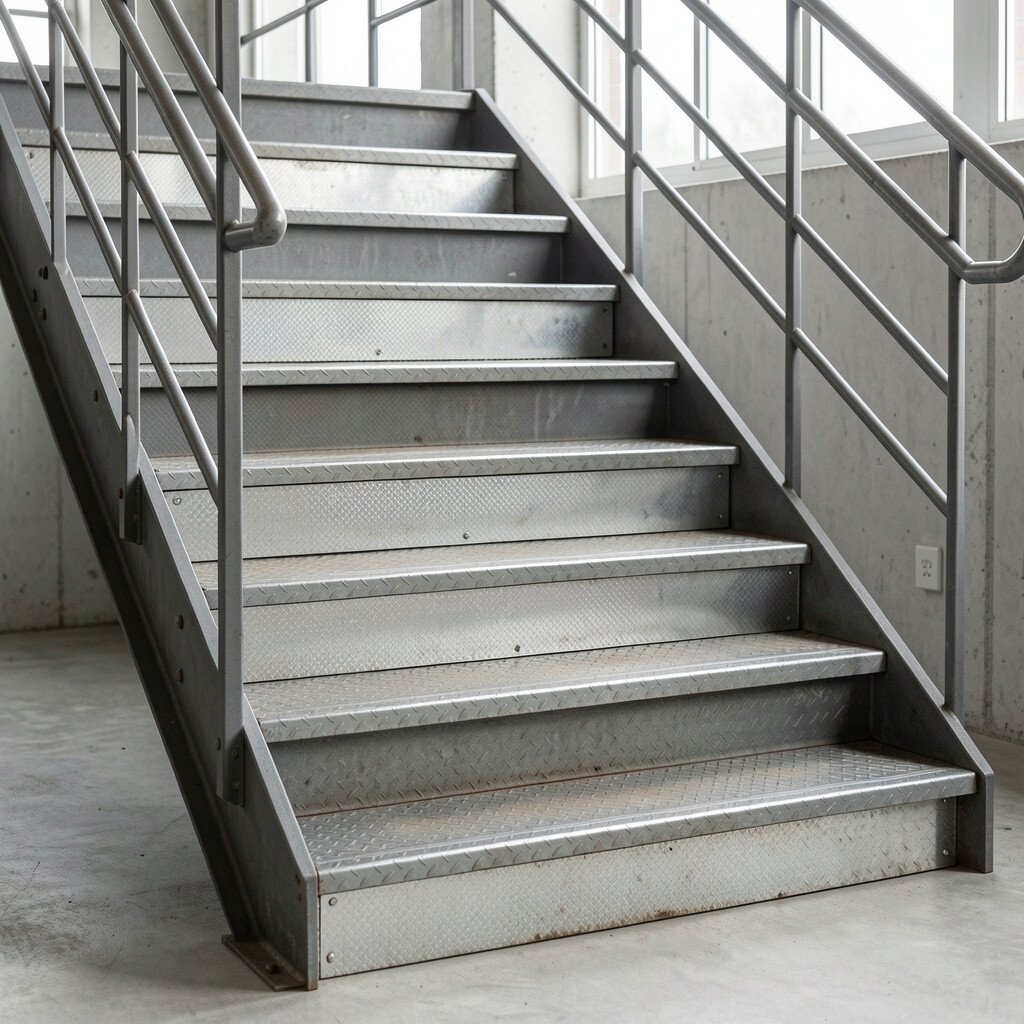
Accent plates that can be swapped turn your stairs into something you can update over time. You might start with dark steel, then switch to brushed aluminum later as your style changes.
This idea stands out because it makes the stairway feel like a changing gallery wall. It also helps if you’re renting or renovating in stages, since modifications can be done without replacing the whole structure.
For practical tips, use a fastening system that is stable and not easy to loosen with regular foot traffic. Choose materials that match your cleaning routine so you don’t create a maintenance hassle.
Cost-wise, plate-only upgrades are usually cheaper than replacing treads or railings. If you want a premium look without premium pricing, focus your first investment on the plates where people will notice them.
To personalize, engrave dates, house numbers, or simple symbols into the metal plates. Small personal touches make the stairway feel like it belongs to you.
14. Perforated Metal Overlays For Hidden Storage Lines
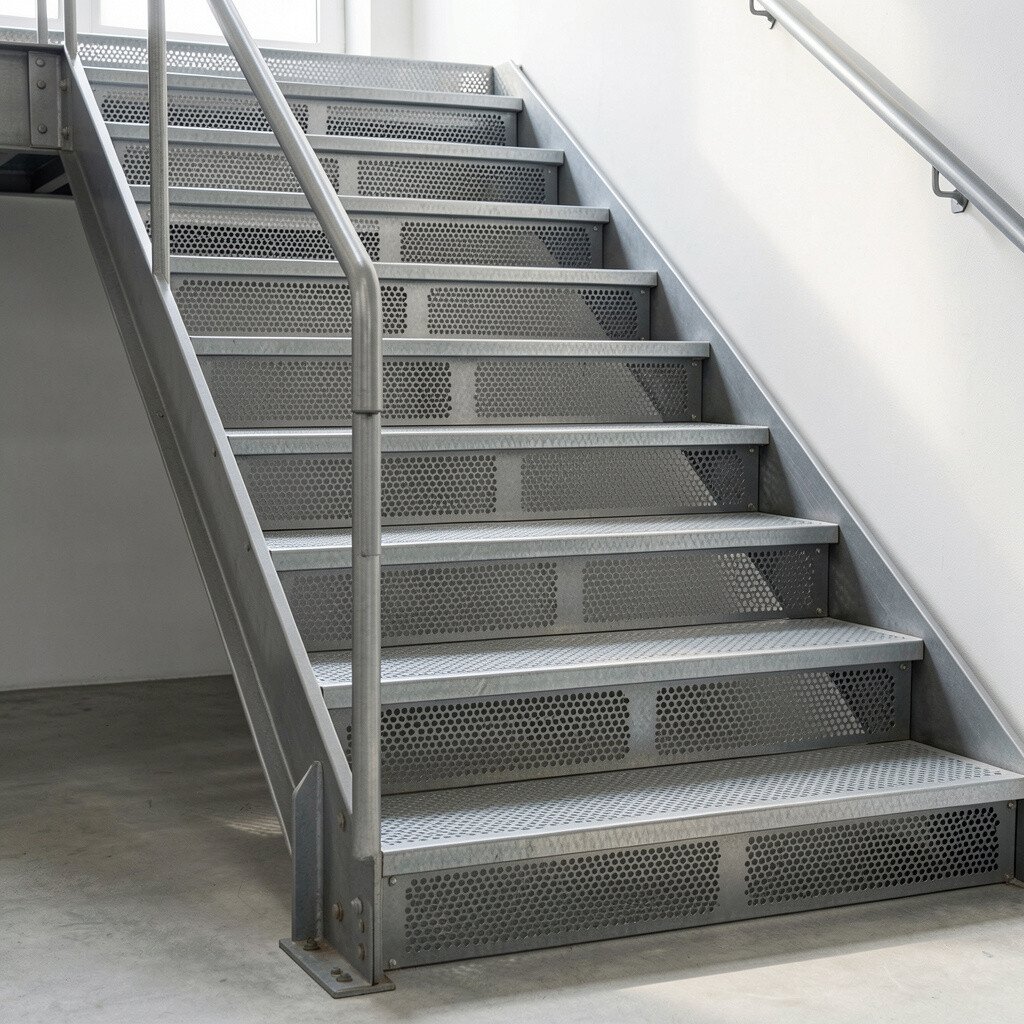
Perforated metal overlays can hide wiring, lighting channels, or even a slim storage panel line near the risers. The holes keep the look industrial while still allowing function underneath.
This is practical because it reduces visible clutter and protects fragile parts from daily bumps. It also creates a consistent pattern that makes the stairs feel designed rather than patched.
To keep it safe, ensure any openings are covered and that edges are sealed so nothing catches clothing. Choose perforation sizes that balance airflow and visual texture.
For personalization, you can align the perforation pattern with the tread layout so it looks like a planned grid. If you’re budget-minded, use overlays only in high-visibility areas while leaving less visible sections simpler.
15. Warm Oak Treads With Blackened Steel “Step Beams”
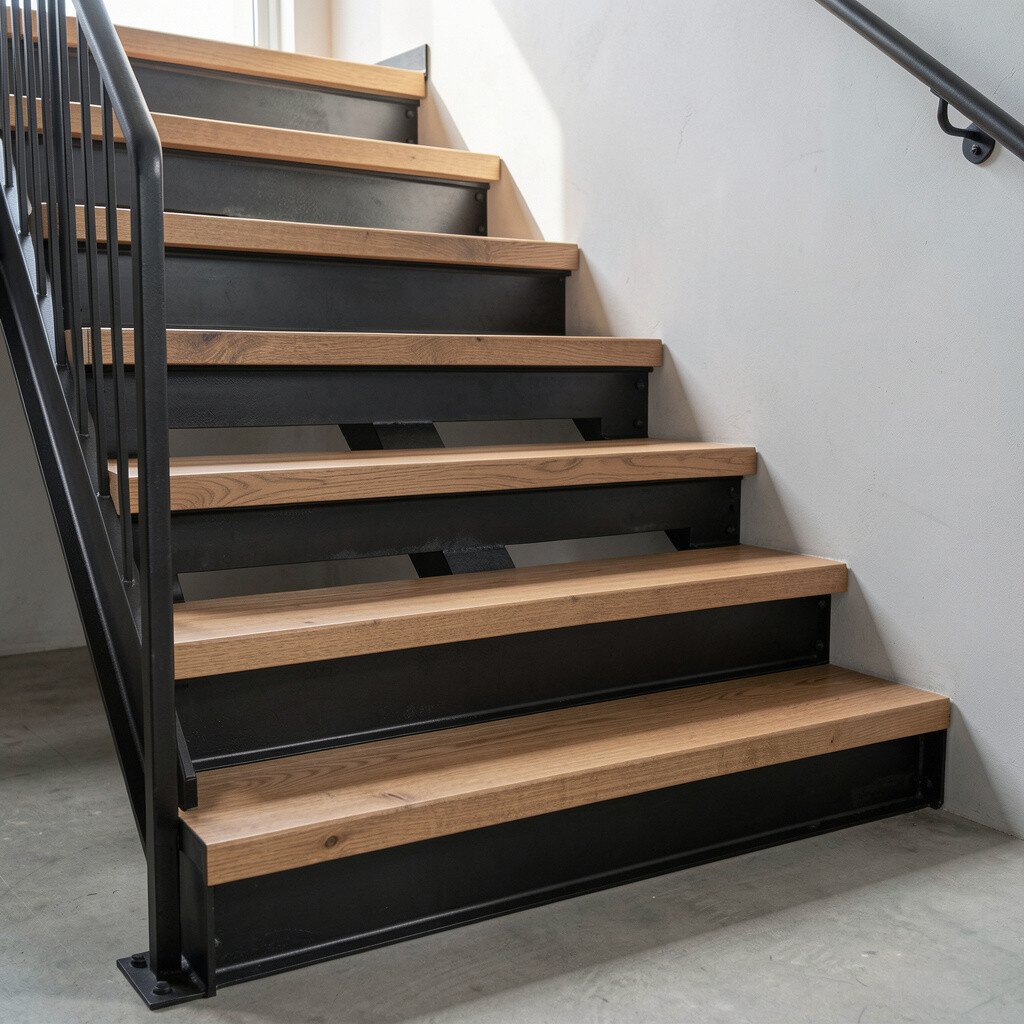
Oak treads bring a friendly glow, while blackened steel step beams add a strong industrial frame. Together they feel like a workshop meets a living room, which is a trend people love right now.
This combination works because the wood softens the metal, and the metal gives structure to the warmth. It also helps if you want a staircase that looks timeless, not trendy for just one season.
For practical tips, choose oak finishes that resist dents so the treads stay smooth even with daily use. Consider a durable topcoat with UV protection if your stairs get sunlight.
Personalize it by adding subtle beam cutouts near the lower steps so the top looks heavier by comparison. That visual trick makes the stair feel grounded and elegantly stacked.
16. Gold-Tinted Metal Accents On Light-Filled Landings

Gold-tinted accents can make industrial stairs feel upscale, especially in rooms filled with natural light. A soft metallic tone on rail trims or edge lines looks welcoming instead of harsh.
This approach is unique because it mixes industrial structure with a polished “jewel” feel. It also pairs well with warm neutrals and light-colored walls.
For cost considerations, you can keep expenses lower by using gold-tinted finishes only on visible trim pieces. Choose durable coatings so the color doesn’t fade quickly.
To personalize, match the tone to your faucet and light fixtures for a cohesive look. If you have existing brushed gold, keep everything in the same direction of grain so it doesn’t look mismatched.
17. Structural Cable Handrails With Treadside Clamps
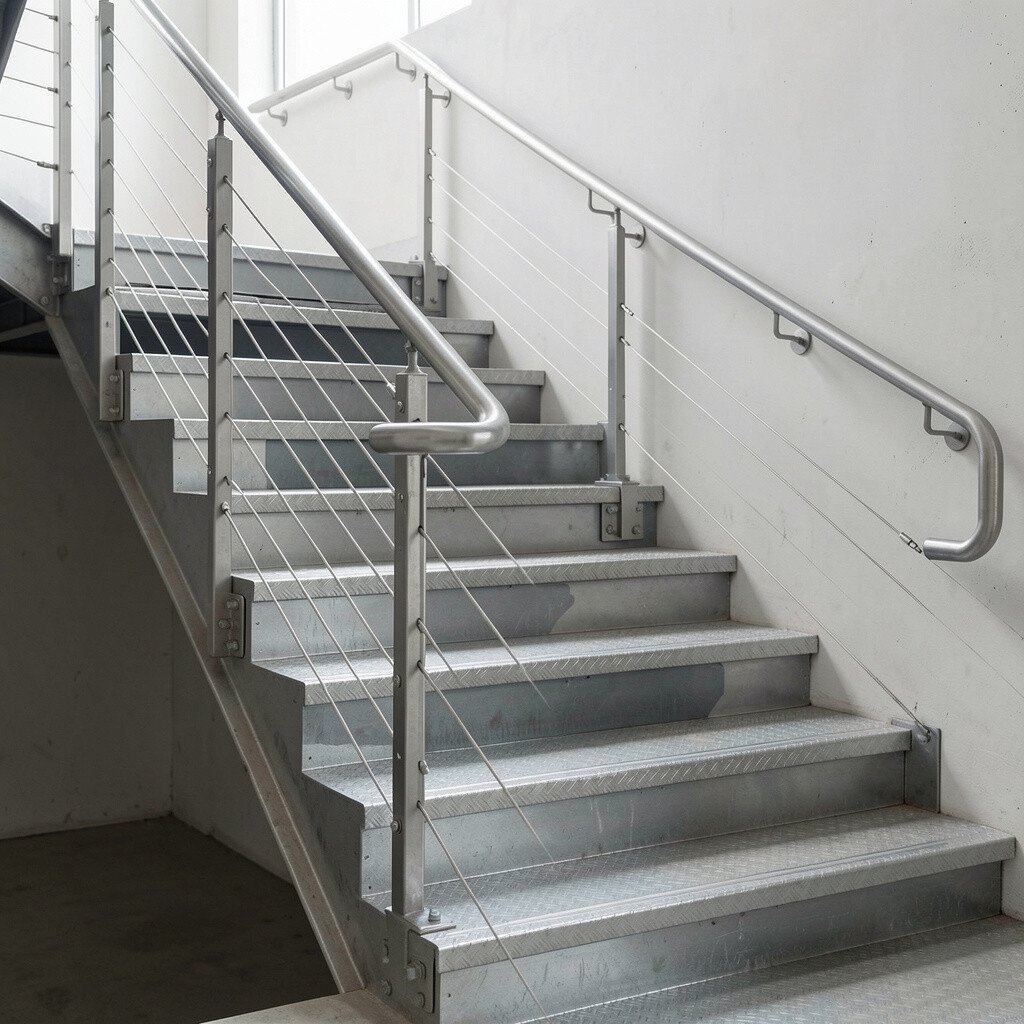
Cable handrails add an open, airy feel while still giving you a strong industrial look. When cables run cleanly between clamps, the stairs feel light and modern.
This design stands out because it breaks up the mass of traditional railings. It also provides a clear view through the stair area, which is great for smaller spaces.
For practical tips, use clamp hardware that is rated for indoor stair use and ensure proper tension. Smooth cable surfaces reduce snagging and feel nicer when you grip.
Personalize by choosing clamp finishes that match your accents, such as dark steel or brushed aluminum. If you want extra warmth, add wooden grips at hand height while keeping the cables sleek.
18. Mixed-Height Treads With Metal “Shadow” Lighting Channels

Mixed-height treads can create a bold, rhythmic look, and metal channels can hide lighting to wash the steps. When light glows along the underside edge, the stairs feel like they’re floating.
This design is unique because it blends industrial metal structure with modern lighting drama. It also makes the staircase easier to navigate at night without adding bulky fixtures.
For practical considerations, choose LED strips made for indoor use and plan wiring routes early. A metal channel protects the lighting and helps the glow stay even.
To personalize, adjust the light color temperature to match your room, usually warmer for cozy spaces. If you want cost control, start with lighting on the first landing and add more sections later.
Finally, keep tread surfaces non-slip so the dramatic look doesn’t sacrifice safety. A well-finished metal channel and a grippy topcoat create a stairway that feels both stylish and dependable.