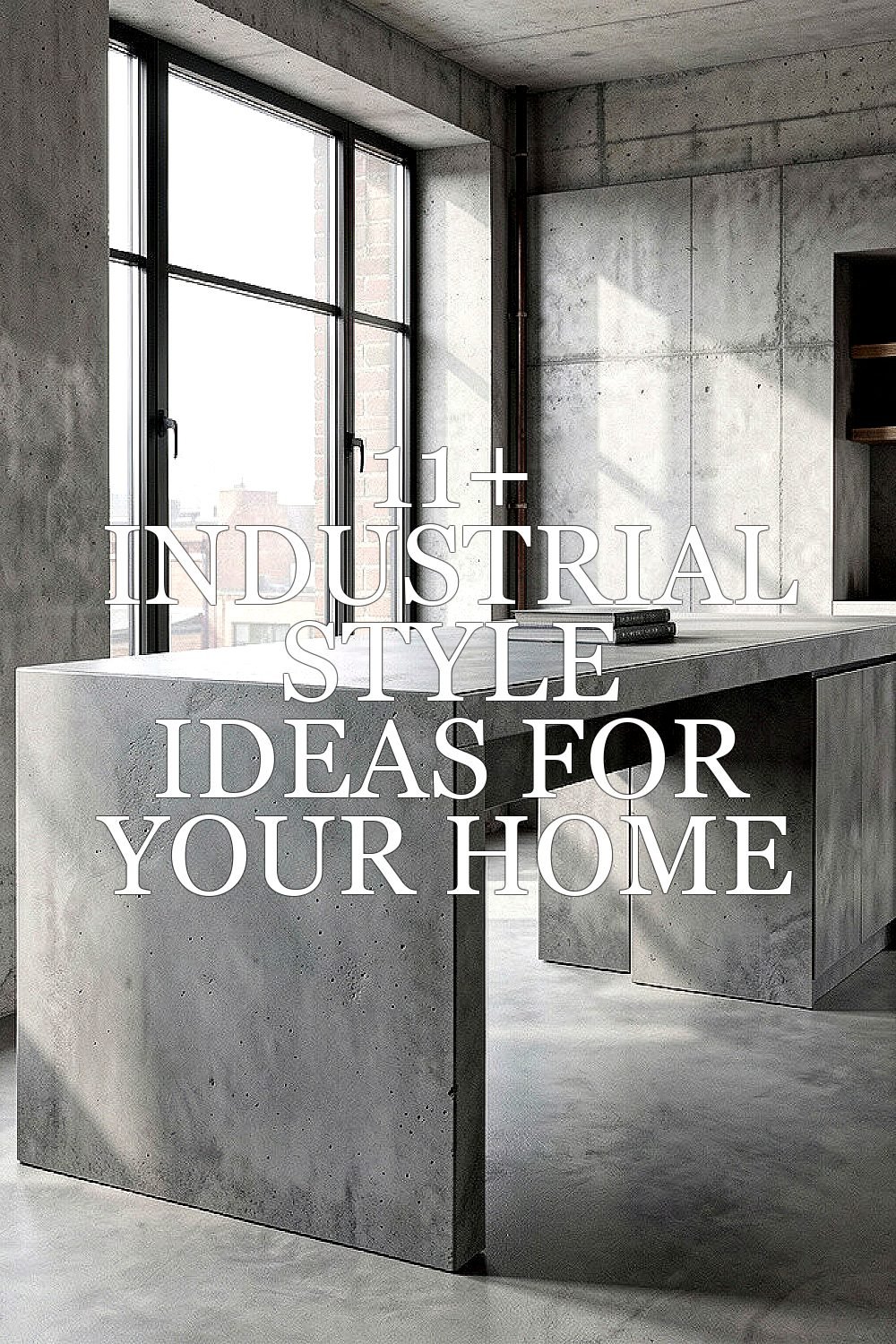
The industrial look feels tough on the outside and surprisingly cozy on the inside. It mixes raw materials, honest details, and everyday comfort in a way that still feels current.
You can build the vibe room by room without turning your home into a warehouse. With the right choices, each space feels lived-in, practical, and full of character.
1. Exposed Brick With a Soft Finish

Exposed brick instantly adds texture, depth, and a warm, grounded mood. When you keep the brick in view, walls feel like a feature even before you add furniture.
You can finish it with a light sealant so it stays easy to clean and resists wear. This look also pairs well with warm lighting, like amber bulbs, because the glow brings out the brick’s natural tones.
2. Reclaimed Wood Shelves That Mean Something
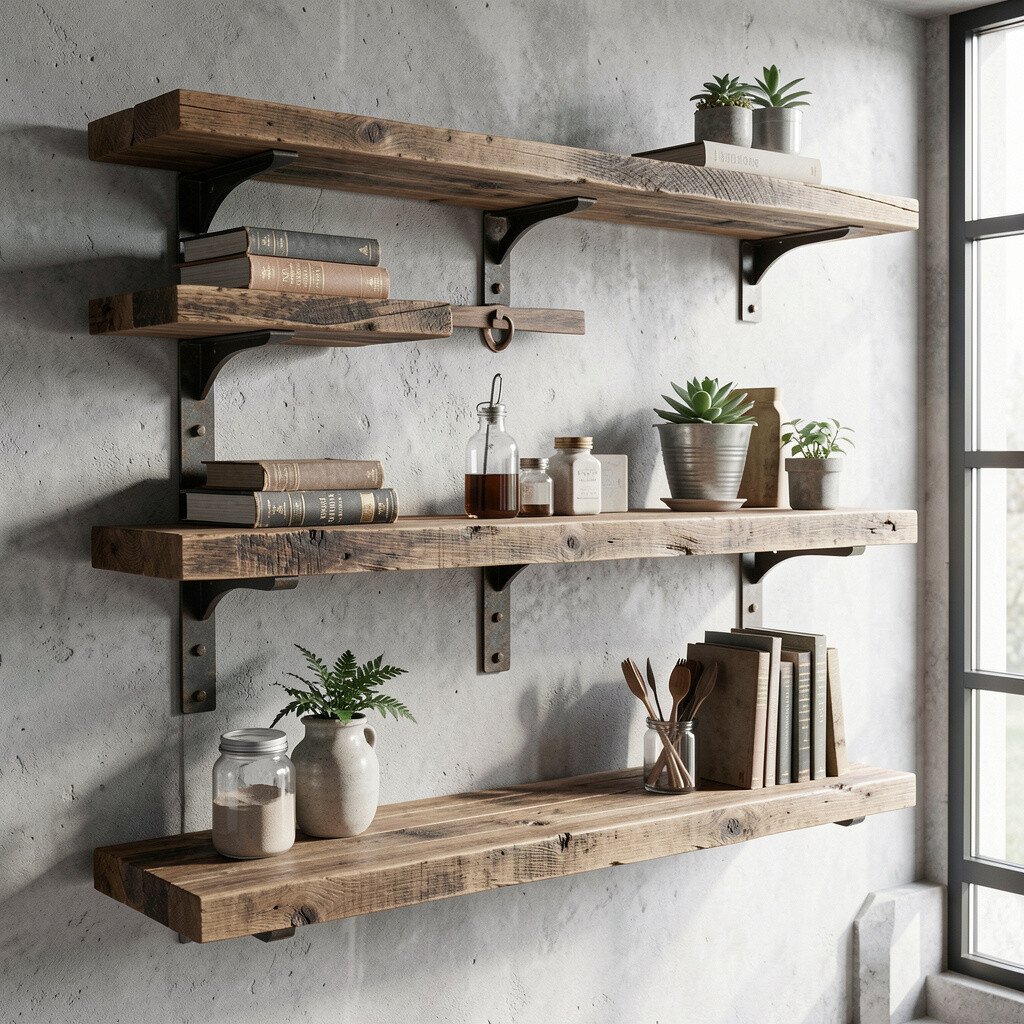
Reclaimed wood shelves bring instant history to your walls and they look great with both modern and classic pieces. The grain patterns and small marks make every shelf feel one of a kind.
Mount them over a console, beside a doorway, or above a desk to create useful storage without hiding the style. For a practical upgrade, anchor the boards well and use sturdy brackets so the shelves feel solid every day.
If you want it more personal, stain one section darker and leave the rest lighter for an intentional mix. Even on a budget, you can search for salvaged wood locally and refinish it yourself to control cost.
3. Black Steel Lighting With Warm Light
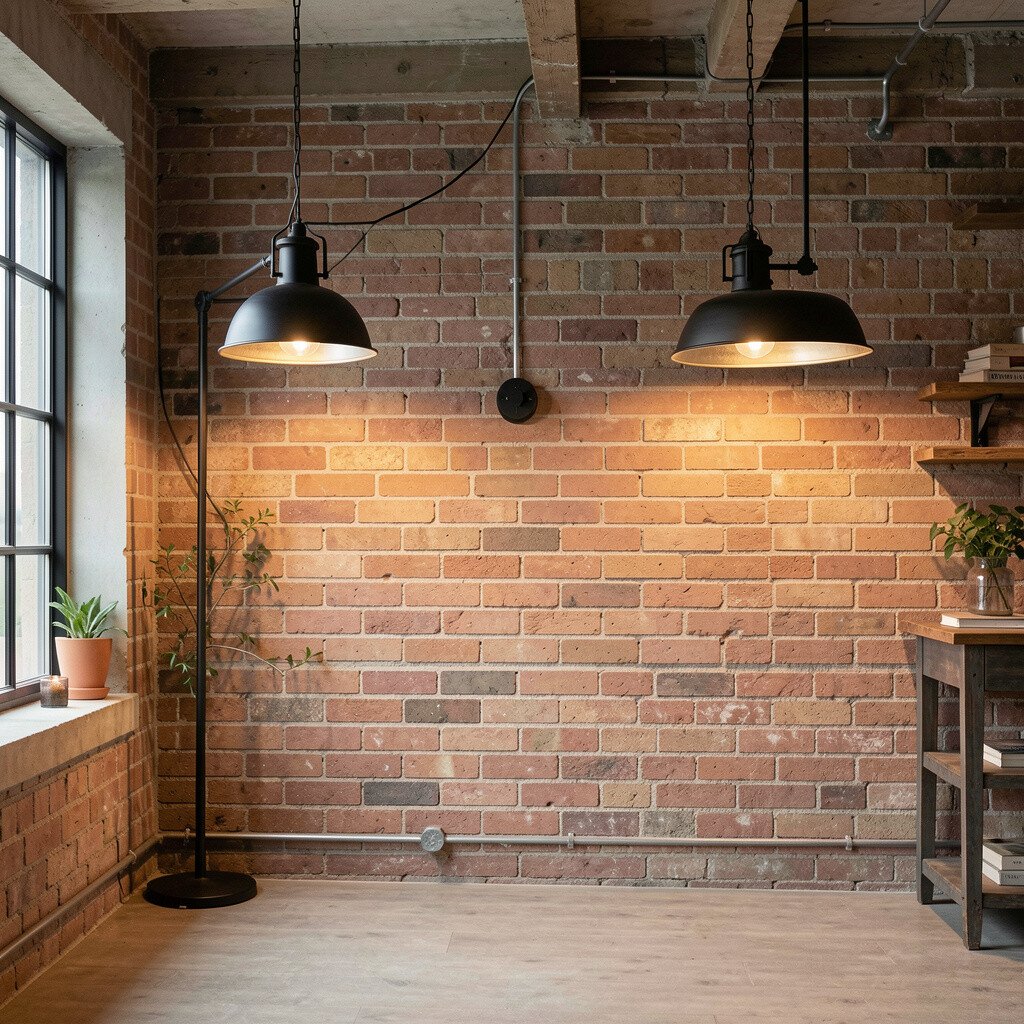
Industrial lighting often uses black steel frames and simple shapes that look sharp against softer decor. A pendant over a dining area or a floor lamp in the corner can give the room an instant style anchor.
Choose bulbs that cast warm light so the space feels inviting, not harsh. This combo helps the metal look feel elegant instead of cold.
To personalize, pick fixtures with adjustable shades or different heights to fit your layout. If you’re watching spending, focus your budget on one hero light instead of replacing every fixture.
You can also pair black steel with brass accents for a trendy contrast that still feels industrial.
4. Concrete-Inspired Surfaces Without the Heavy Cost
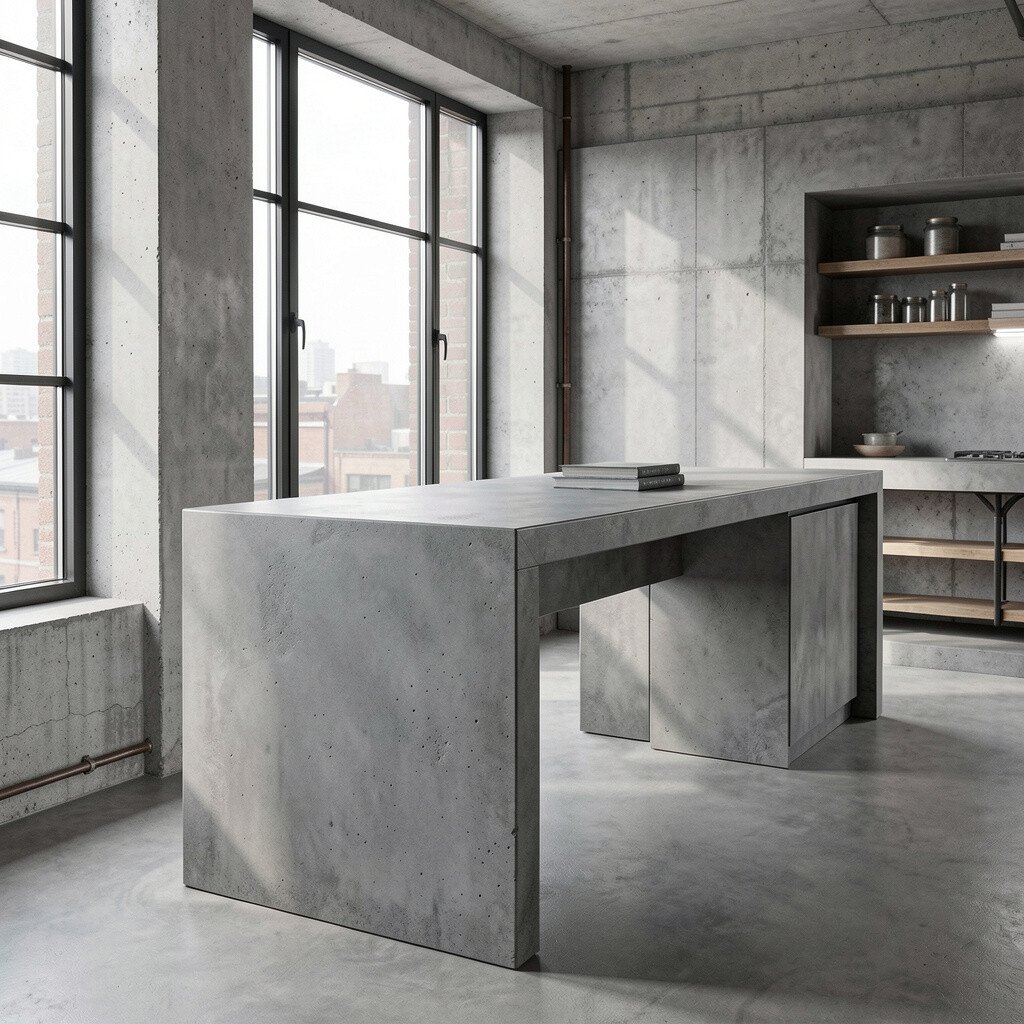
Concrete-inspired finishes can make a room feel modern and steady, especially on tabletops or floors. Even small details like a concrete look planter or a countertop overlay add that industrial calm.
Look for durable materials that resist daily messes, like sealed concrete-effect countertops or vinyl flooring that mimics texture. This style works well in kitchens and entryways where you want easy care and strong visual impact.
5. Vintage Metal Hardware Everywhere You Can Swap It
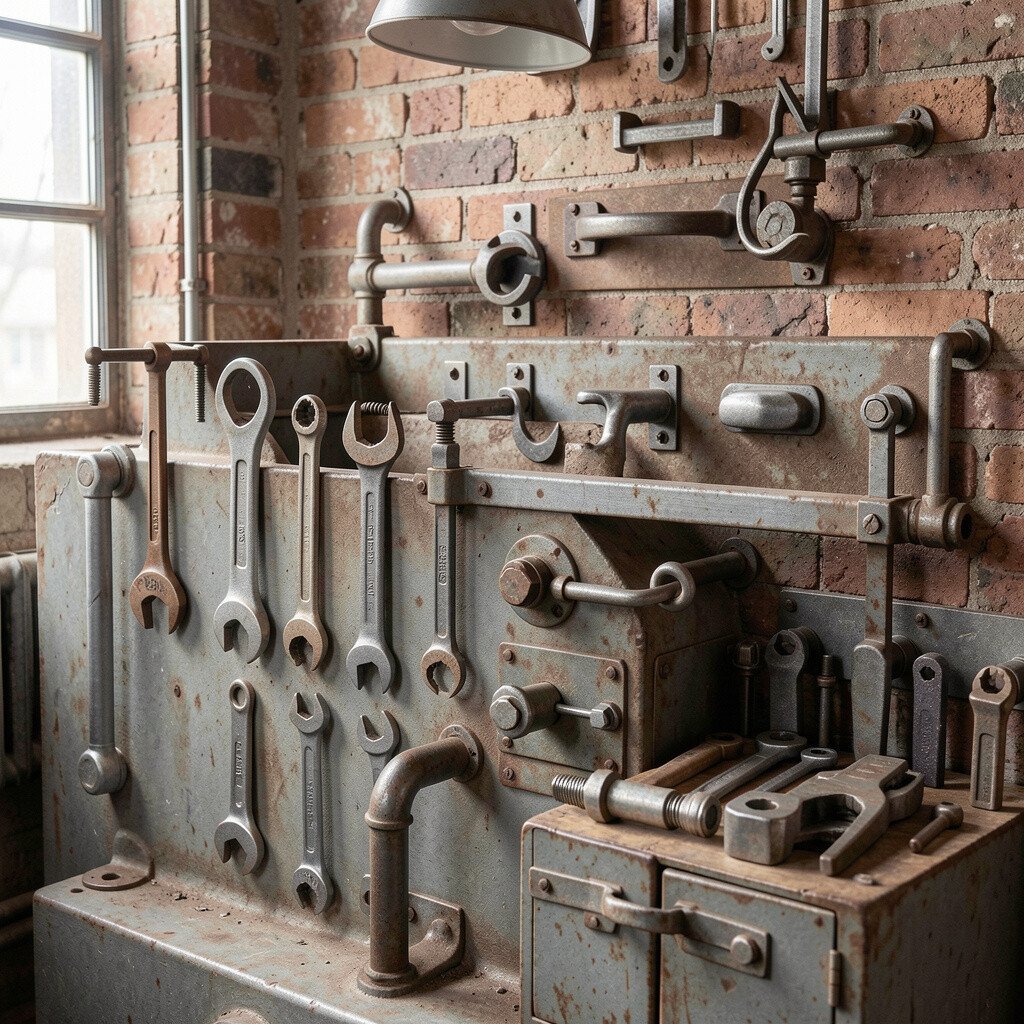
Small changes can make a big difference, and industrial metal hardware is one of the easiest wins. Swapping knobs and pulls on cabinets and dressers makes furniture look instantly more intentional.
Choose brushed steel, oil-rubbed bronze, or matte black for a consistent vibe across rooms. This also improves function, because many quality handles feel smoother and sturdier than older ones.
If you like a personal touch, mix sizes slightly, such as longer pulls on drawers and shorter ones on doors. It’s a budget-friendly upgrade since you can start with just one dresser or one kitchen section.
6. Large-Scale Windows and Window Treatments That Work
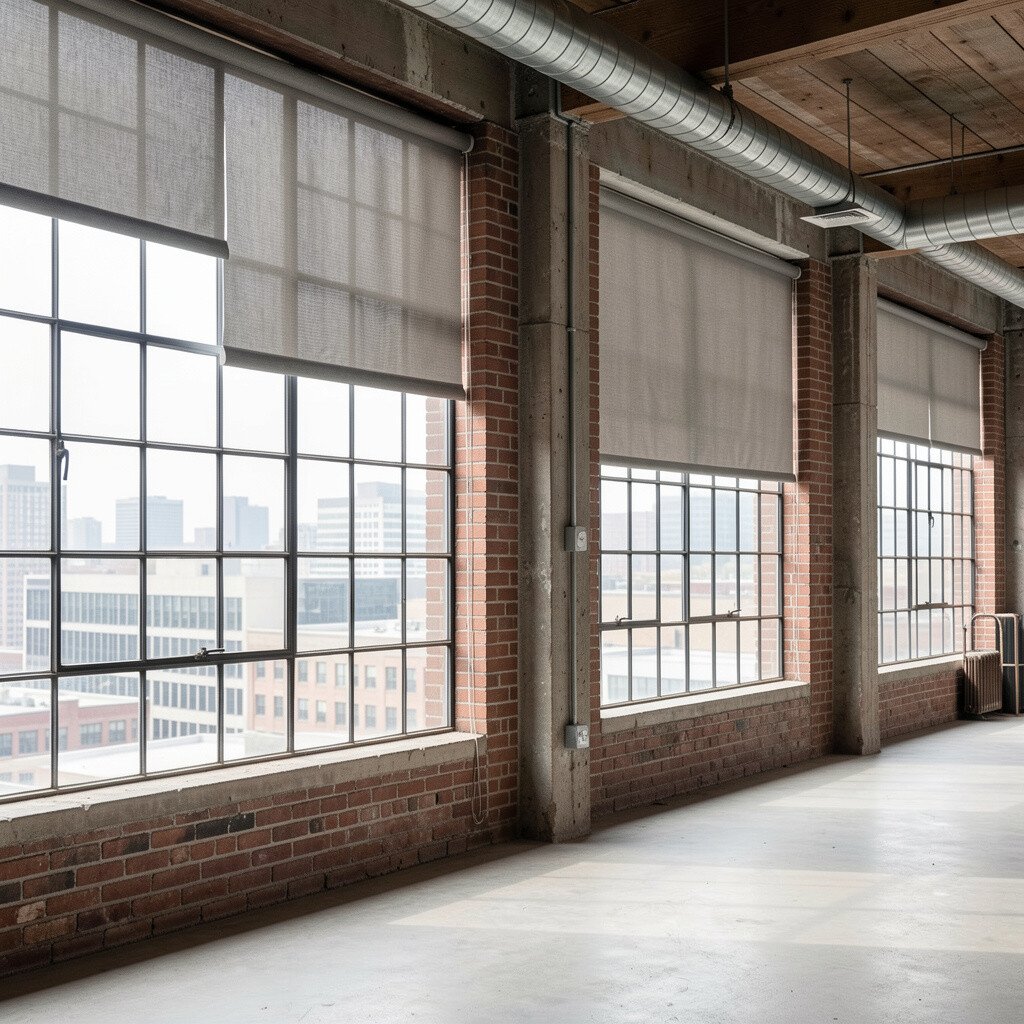
Industrial spaces often feel open because of big windows and clean sight lines. Even if your home can’t handle new window openings, you can mimic the feel by keeping coverings simple.
Use slim curtain rods, long panels, and neutral fabrics that allow light to move through. This keeps the room airy while still adding a softened edge to metal and brick textures.
If privacy is needed, choose blackout liners or layered sheers in a warm gray or cream. For personalization, tie the color to your flooring and add one darker element like a black frame or curtain finials.
7. A Statement Factory-Style Mirror

A bold industrial mirror can act like a piece of wall art while also helping rooms feel larger. Look for frames made of metal, aged finishes, or window-style grids.
Try placing a tall mirror near a light source to bounce brightness around the room. This can make a hallway, dining nook, or entry feel more welcoming without adding clutter.
To keep it cohesive, match the mirror finish to your lighting or hardware. If you’re cost-conscious, search for vintage mirrors at resale shops and refinish the frame with care.
8. Open Shelving With a Thoughtful, Curated Look
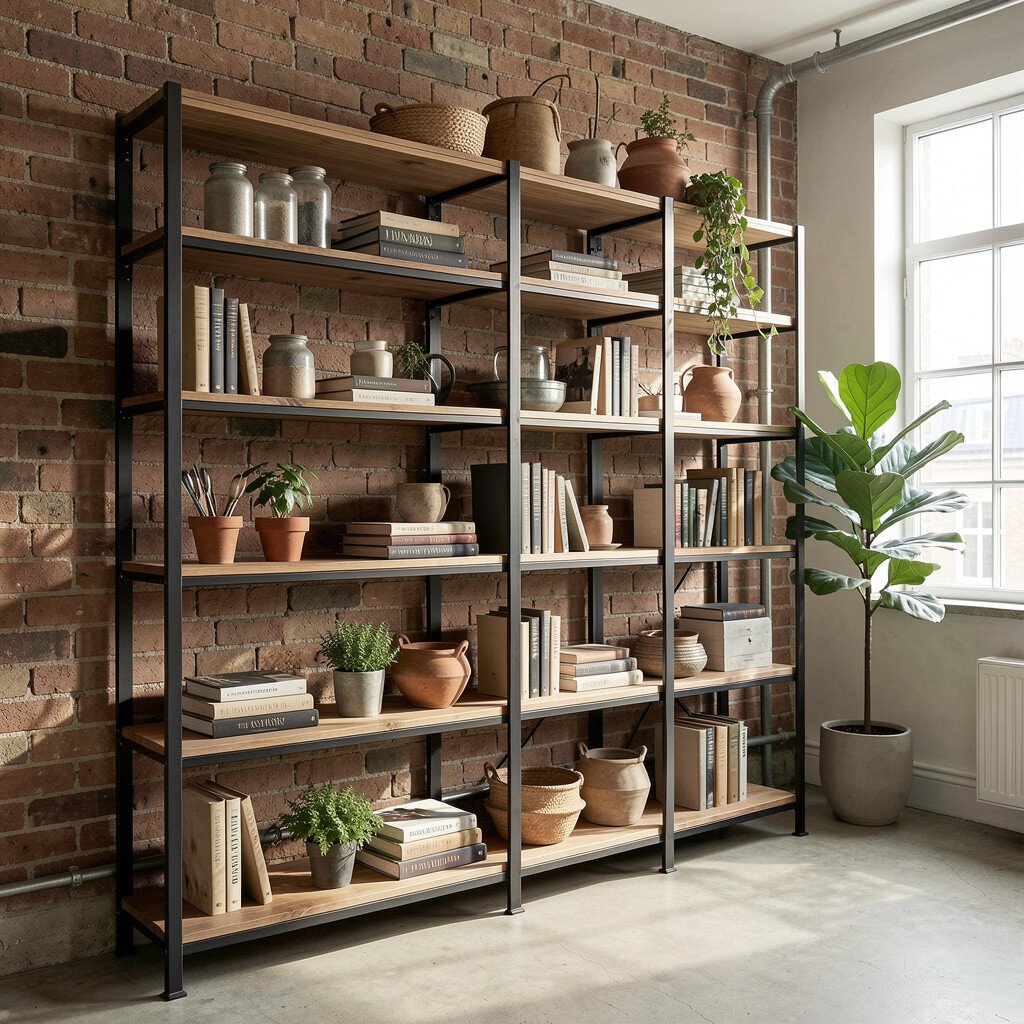
Open shelving fits the industrial style because it shows everyday objects instead of hiding them. When you keep the arrangement neat, it looks intentional rather than messy.
Use matching containers, simple spice jars, and a few display items like mugs or stacked books. This makes cleaning easier and keeps surfaces looking tidy.
If you want uniqueness, add one piece with a different texture, like a woven basket or a ceramic bowl. For practical tips, place heavier items on lower shelves and keep fragile pieces higher where they’re safer.
9. Rug Choices That Balance Rough and Soft
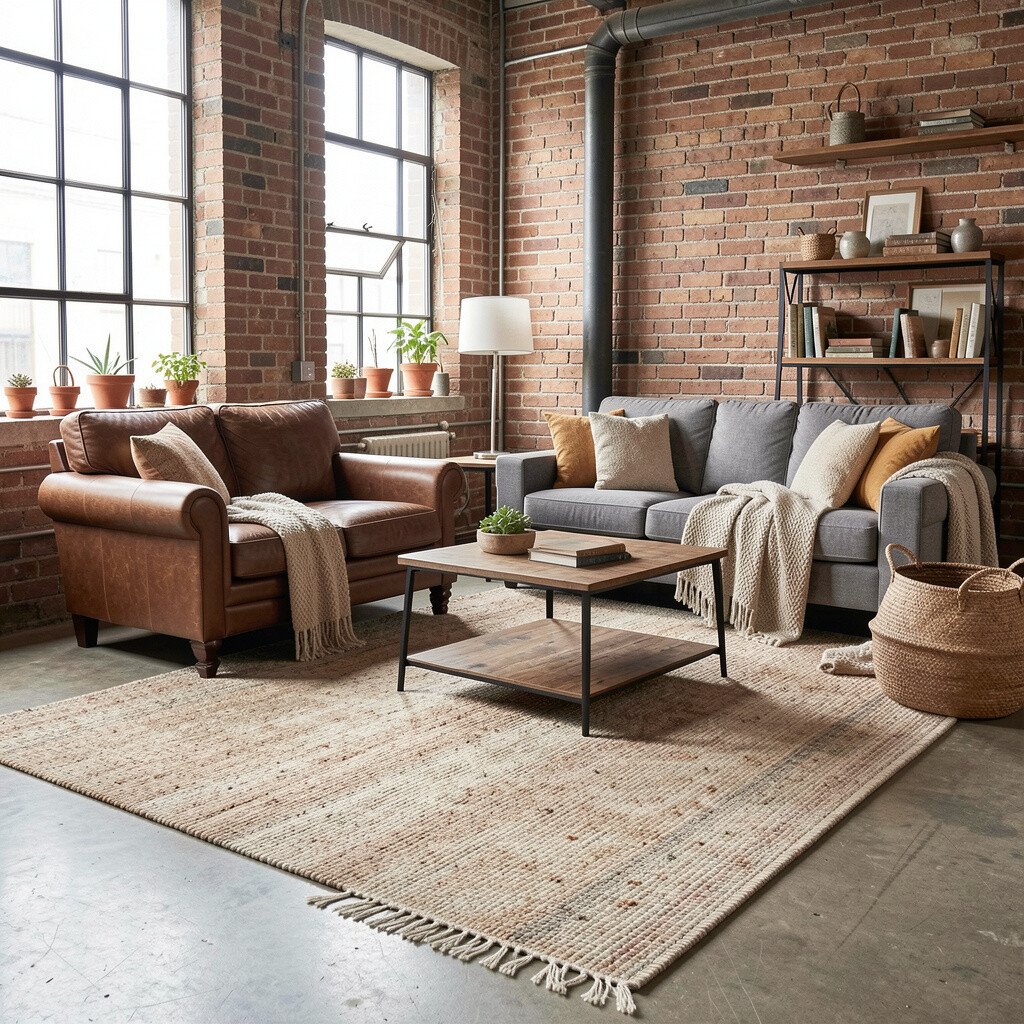
Industrial design often includes rough textures like brick, metal, and wood, so rugs help bring comfort. A rug with muted patterns, dark tones, or worn textures makes the room feel grounded.
Look for low-pile rugs if you want a cleaner look and easier vacuuming. When you choose the right size, furniture legs sit more securely and the whole room feels more pulled together.
Personalize with a runner in entryways or a larger rug that defines the living area. If you’re keeping costs in check, choose one key rug for the main gathering space first, then build around it later.
10. Industrial Pantry Organization With Clear Storage
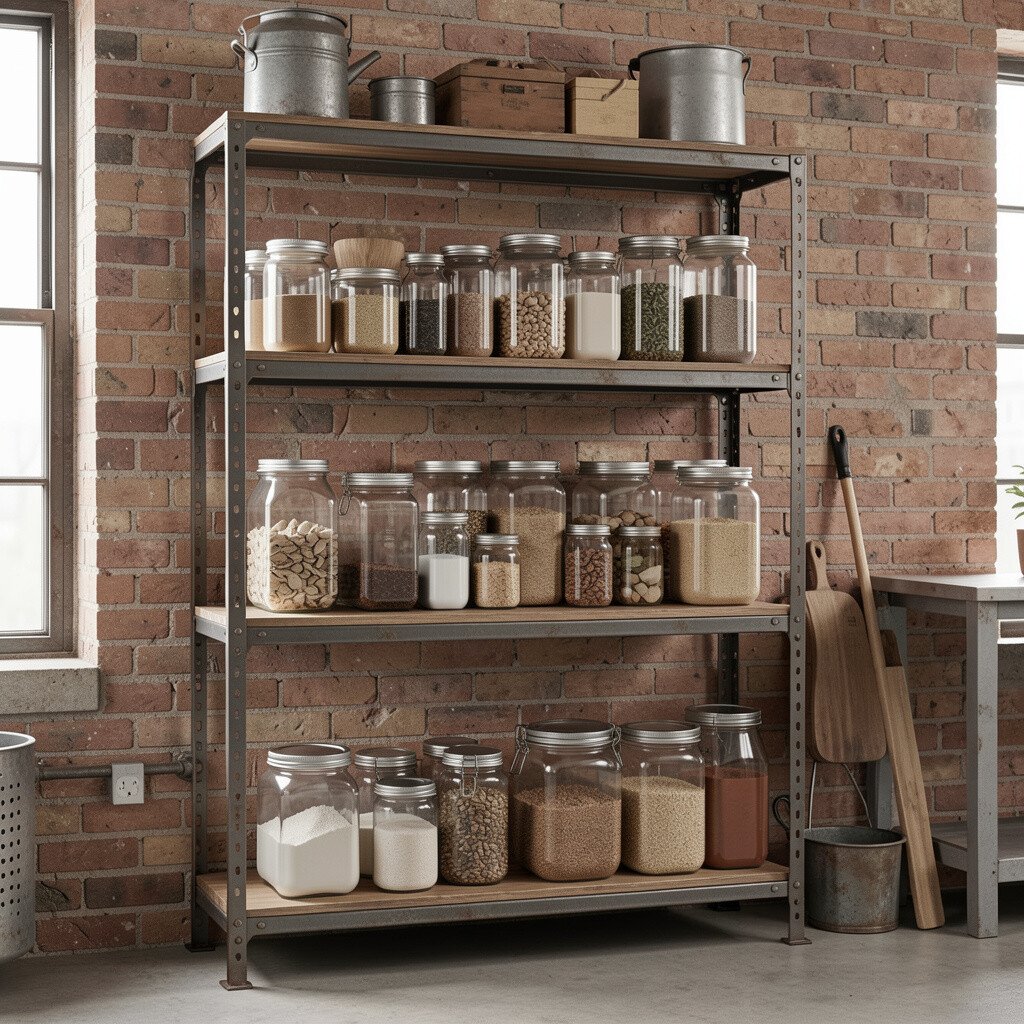
Industrial style isn’t only about looks, it’s also about smart, practical living. A pantry organized with sturdy bins, metal racks, or clear containers keeps the vibe functional.
Clear storage is especially helpful because you can spot what you need fast. Pair it with simple labels on containers or a small chalkboard note area to keep things tidy and personal.
For uniqueness, use different heights of shelves so the pantry feels designed instead of flat. If budget matters, start with the most used items first and upgrade containers over time as you finish what you have.
11. Picture Frames and Wall Art in Matching Metal Finishes
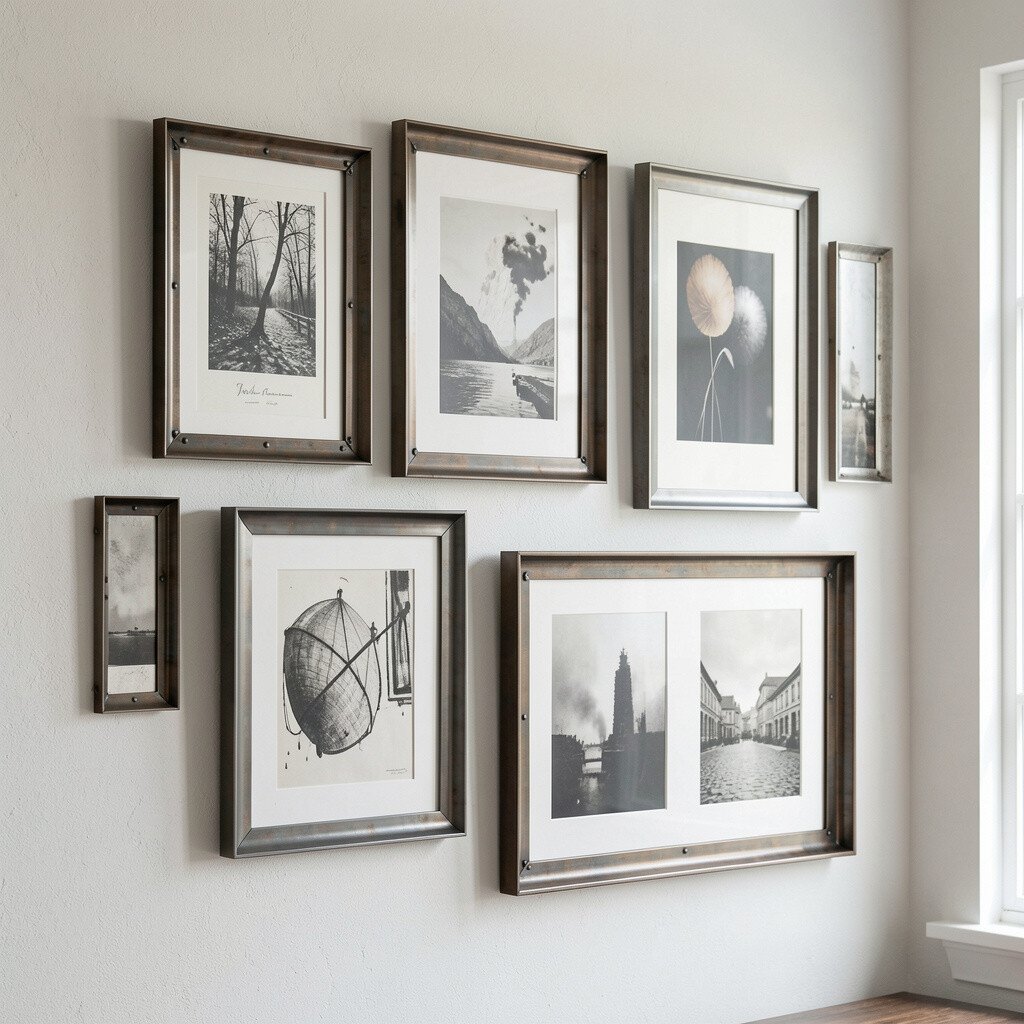
Wall art is where industrial style becomes truly personal. Using frames in a consistent metal finish helps the gallery look feel coordinated and sharp.
Choose prints with simple subjects, like city scenes, landscapes, or graphic typography. This fits current trends because people still love clean lines and bold visuals on neutral walls.
To make the space feel curated, keep the spacing even and vary only the size of the frames. For a practical approach, use painter’s tape to map your layout before you hang anything so it goes smoothly.
If you want to keep costs low, mix affordable prints with one or two meaningful pieces from your travels or family photos.
12. Industrial Style Seating With Leather or Textured Fabrics
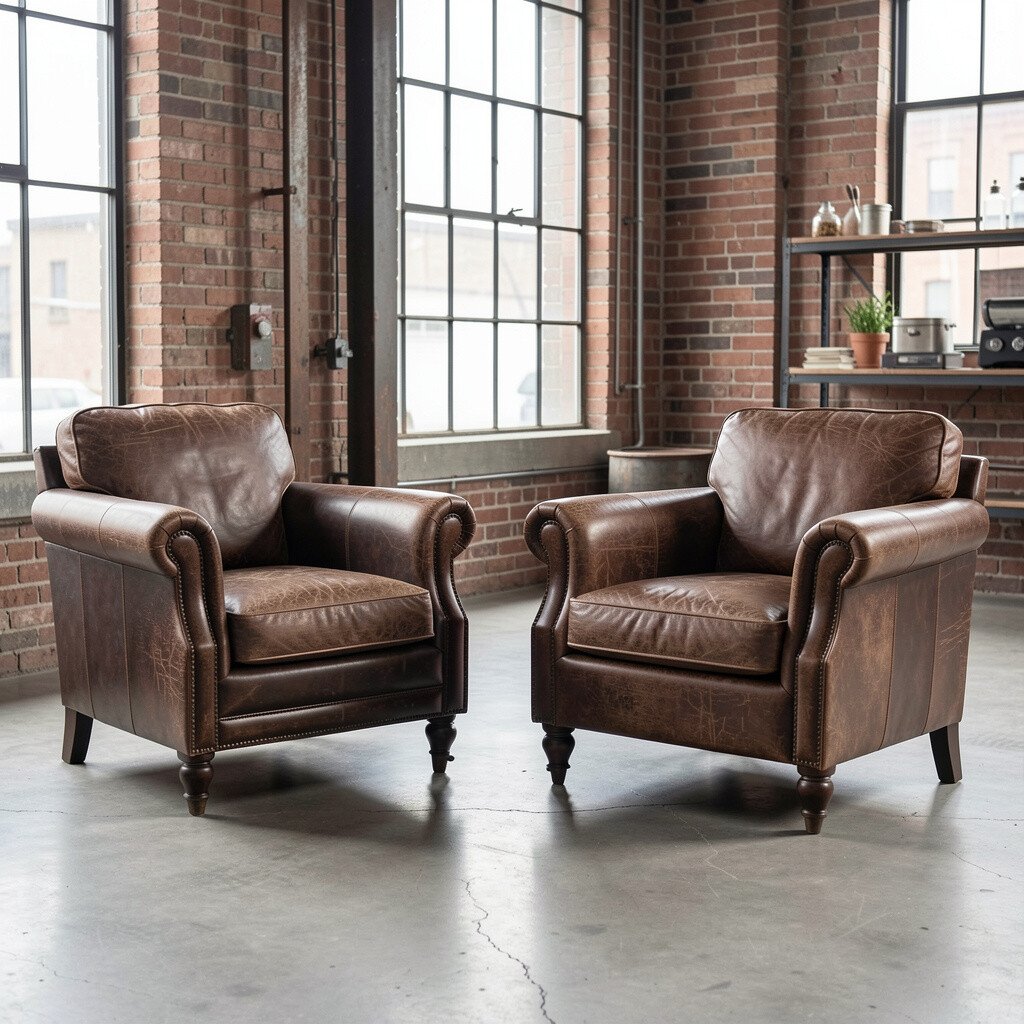
Industrial seating often features leather, faux leather, or textured fabrics that look tough but feel comfortable. A sectional in a dark neutral or a couple of leather-look chairs can set the tone for the entire room.
Choose designs with metal legs or simple frames to keep the look grounded in industrial shapes. Add a throw blanket with a soft weave to balance the rugged materials.
For personalization, place accent pillows in warm tones like rust, olive, or sand to bring out the natural warmth in brick and wood. If you’re planning around cost, consider buying one statement chair first and style the rest with budget-friendly pieces that match the finish.
This approach keeps your home feeling intentional now, while still letting you improve it step by step.