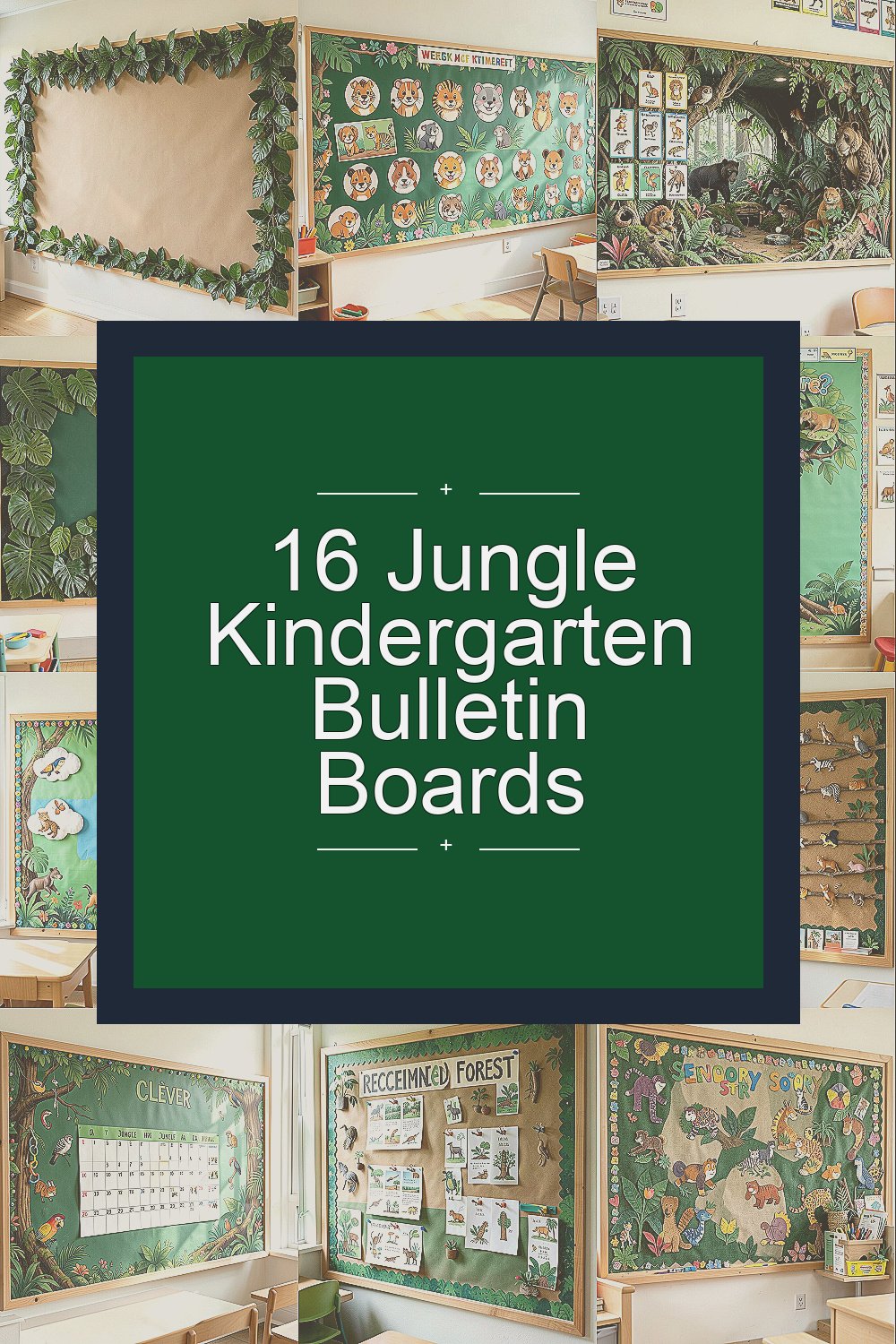
The jungle theme makes learning feel like an everyday adventure. Bright colors, leafy shapes, and friendly animals can turn a simple wall into a daily welcome.
Read on for classroom-ready ideas that are practical, budget-aware, and easy to personalize for your kids.
1. Leafy Canopy Border With Velcro Vines
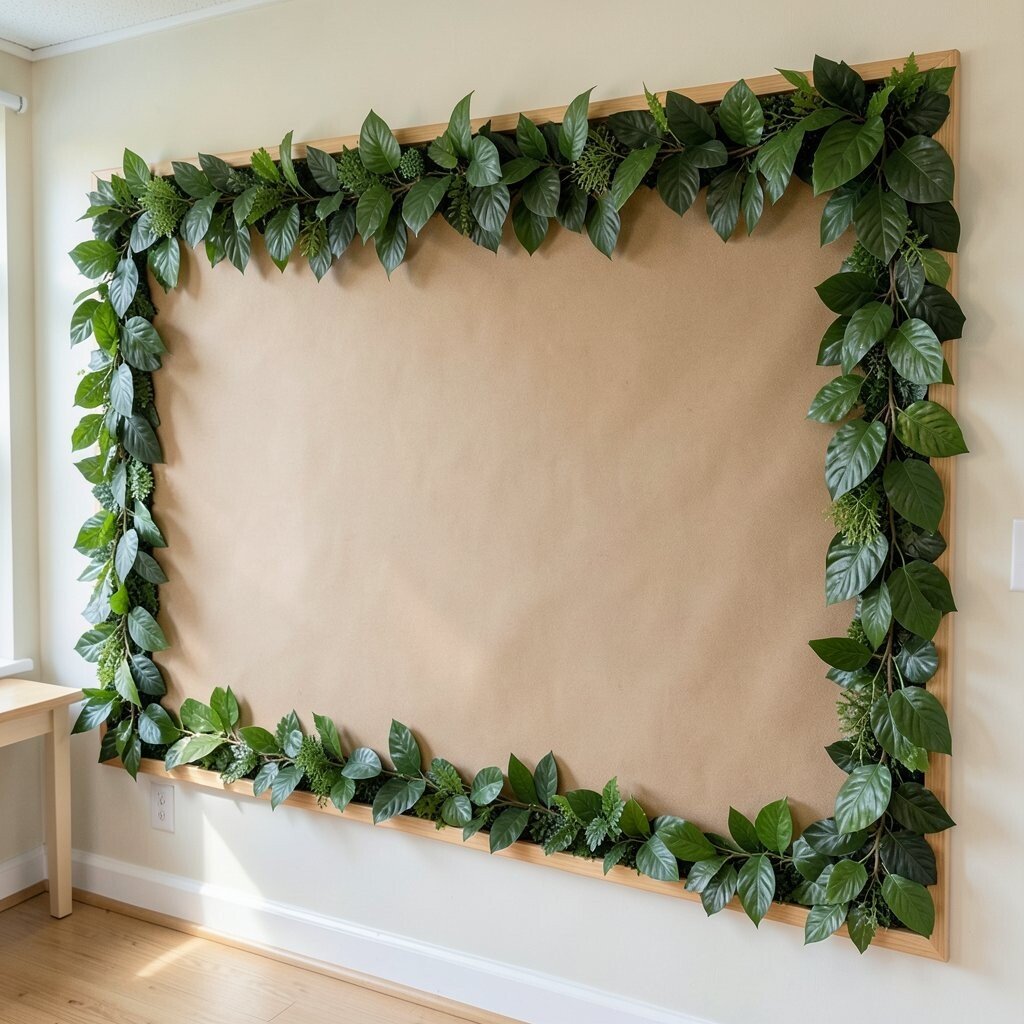
Picture a soft green canopy stretching across the top of your bulletin board like tree shade. Add layered leaf cutouts that look full and textured even from a distance.
Use thin strands of green paper or felt as vines, then attach small items with Velcro dots. This helps you swap pictures quickly for birthdays, vocabulary words, and seasonal updates. Kids also love seeing their work “hang” in the jungle, and you’ll save time during busy weeks.
2. Friendly Animal Faces That Match Weekly Themes
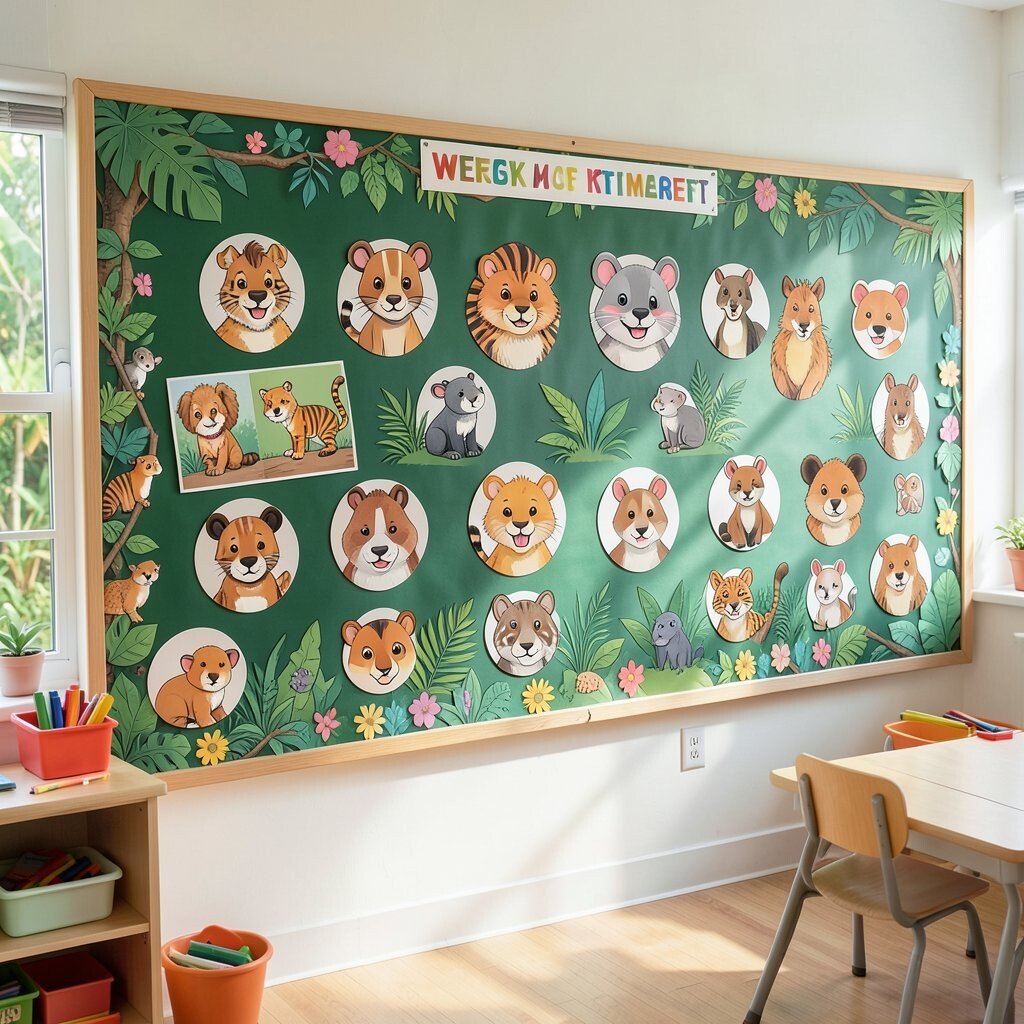
Imagine a line of animal faces peeking out from behind big leaf frames. Each one can reflect your weekly focus, like animals for a science week or habitats for writing time.
Print or draw faces on cardstock, then add removable picture inserts in the mouths or around the eyes. This gives you a fun place for student photos, sight words, or sentence stems. To keep it unique, switch one animal per month and let kids name it during morning meeting.
For cost, use scrap paper for leaves and reuse old picture frames from craft stores. Laminate the animal faces if you can, because bulletin boards get handled and bumped. Keep the design bold and simple so it stays readable from far away in the classroom.
3. Habitat Diorama Scene With Velcro “Critter Cards”
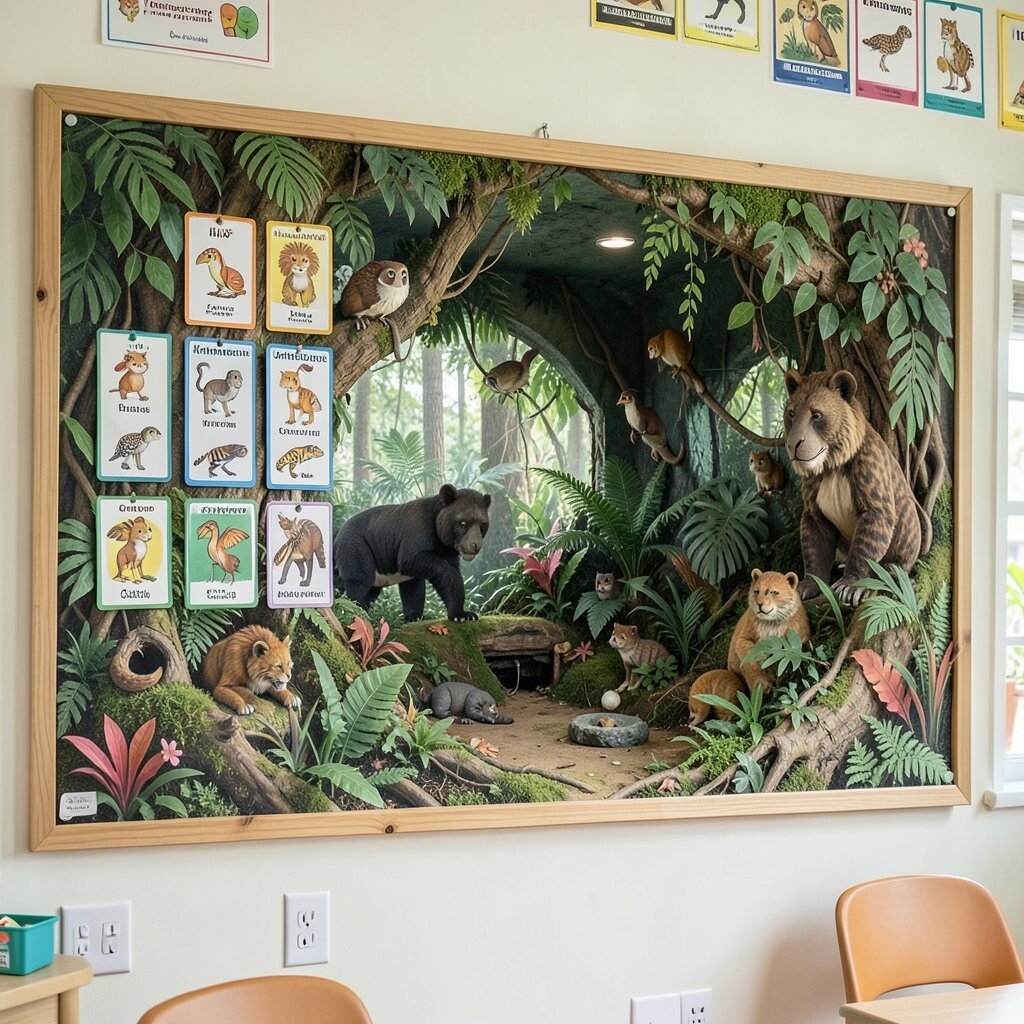
Build a small jungle habitat scene using a backdrop of sky-blue and deep forest green. Add a paper “ground” with soft texture using brown felt, torn craft foam, or crumpled paper covered in glue and sand.
Place critter cards on Velcro so you can rearrange them to match what you’re teaching. When students match an animal to its habitat, the board becomes a hands-on visual model. Keep critter cards large enough for kindergarten eyes and use simple labels on the back for your own reference.
For practical setup, make one big diorama board instead of many tiny pieces. This keeps your display organized and makes it easy to store parts in labeled bins. Personalize by adding your class theme colors to the habitat so it feels like your room, not a generic poster.
Make sure the board is at student eye level and leave a clear space below for daily work. Kids will gravitate to it because the scene feels like a real place, not just decorations.
4. Rainforest Number Trail Hidden in Leaf Layers
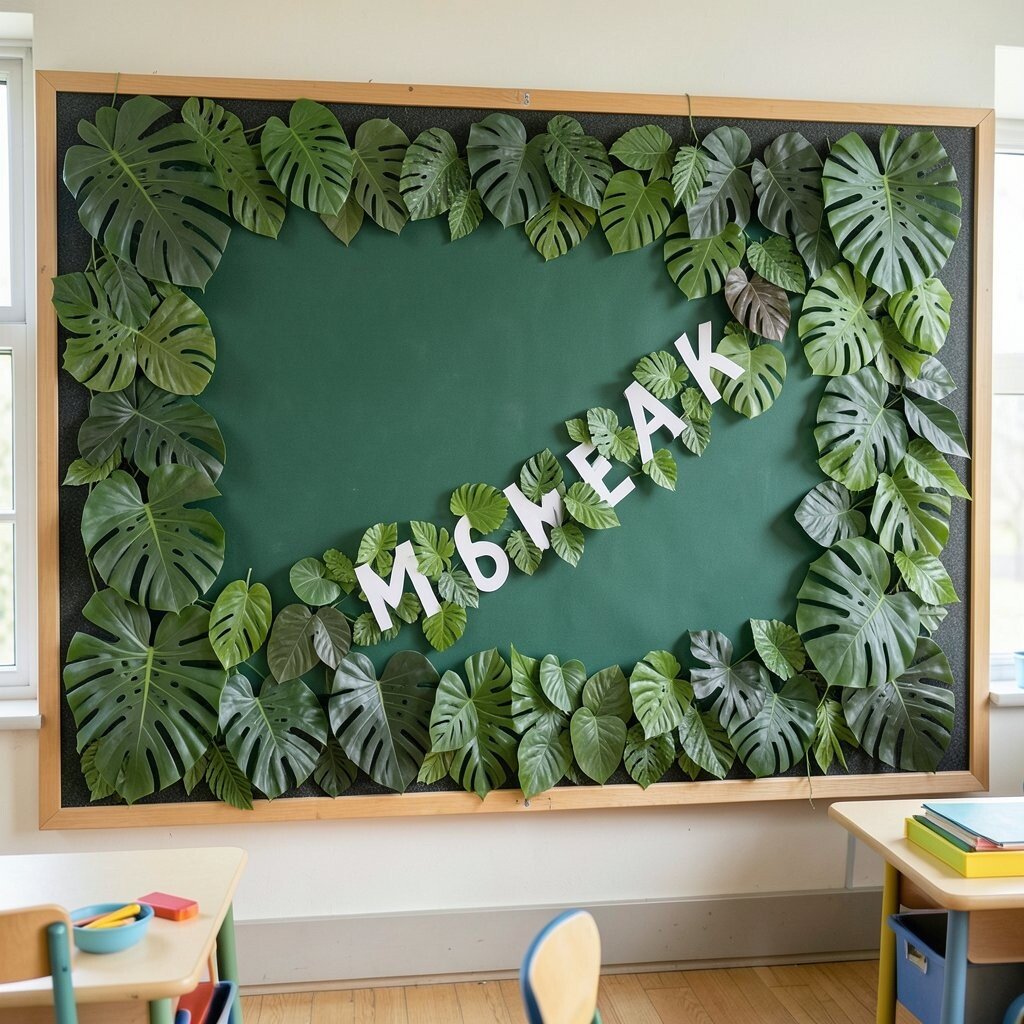
Create a number trail that winds across the board inside overlapping leaves. It can look like a path of steppingstones, with each leaf showing a number or counting dot.
As you teach math, move foam stickers or magnetic markers along the trail. This builds number sense in a visual, playful way while still keeping the focus on learning goals. Use thick paper or layered cardstock so the trail is easy to see and holds up to frequent touch.
5. Vocabulary Vine With Rotating Word Tags
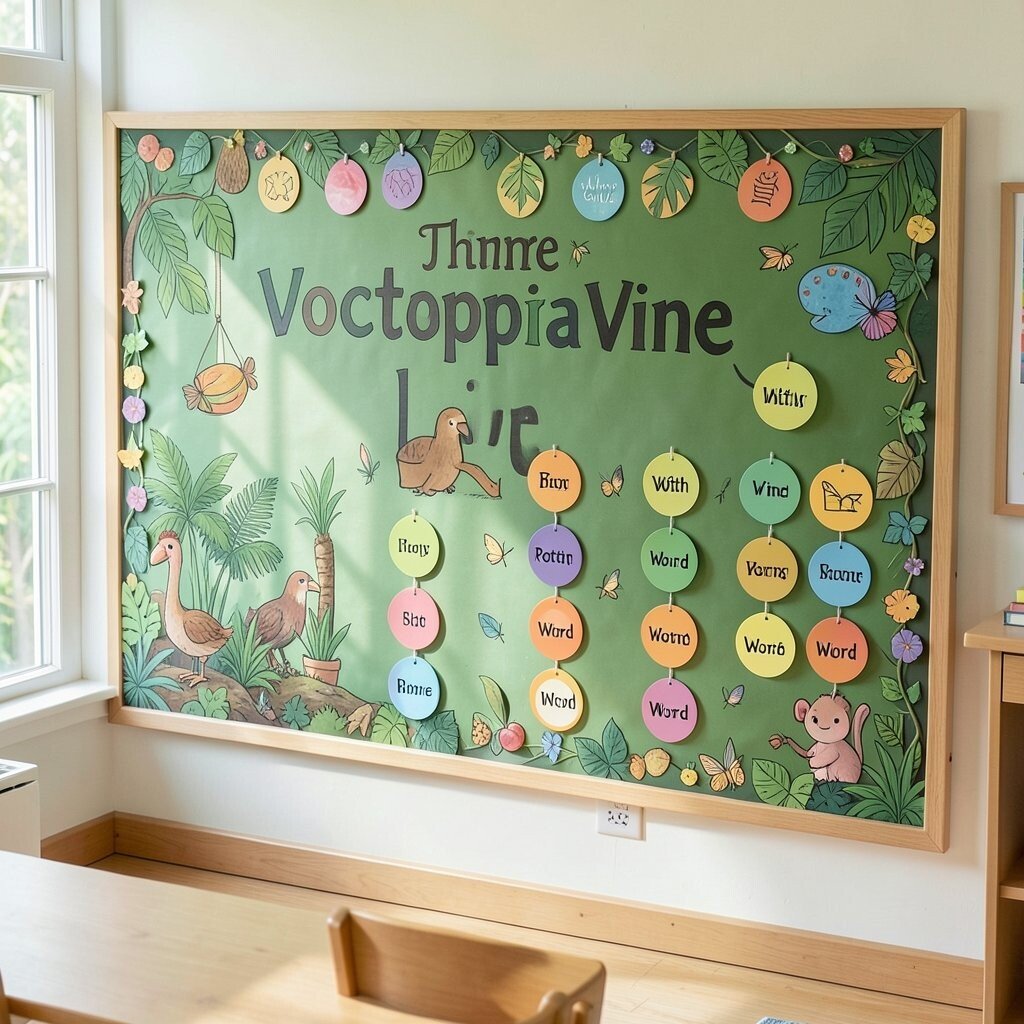
Stretch a vine across the bulletin board and hang word tags like fruit. Choose bold colors for each tag so word meanings stand out right away.
Write one word per tag and attach it with a small clip or fastener, then rotate tags as your class practices. Students can point, read, and match the words to pictures during mini-lessons. It also helps English learners because visuals make meaning clearer and reduce stress.
For personalization, let each student draw a tiny jungle detail to decorate one tag per month. Keep costs low by printing word cards on regular paper and covering them with clear contact paper. Change the vocabulary weekly without rebuilding everything from scratch.
6. “Who Lives Here?” Tree With Flip-Flap Habitats
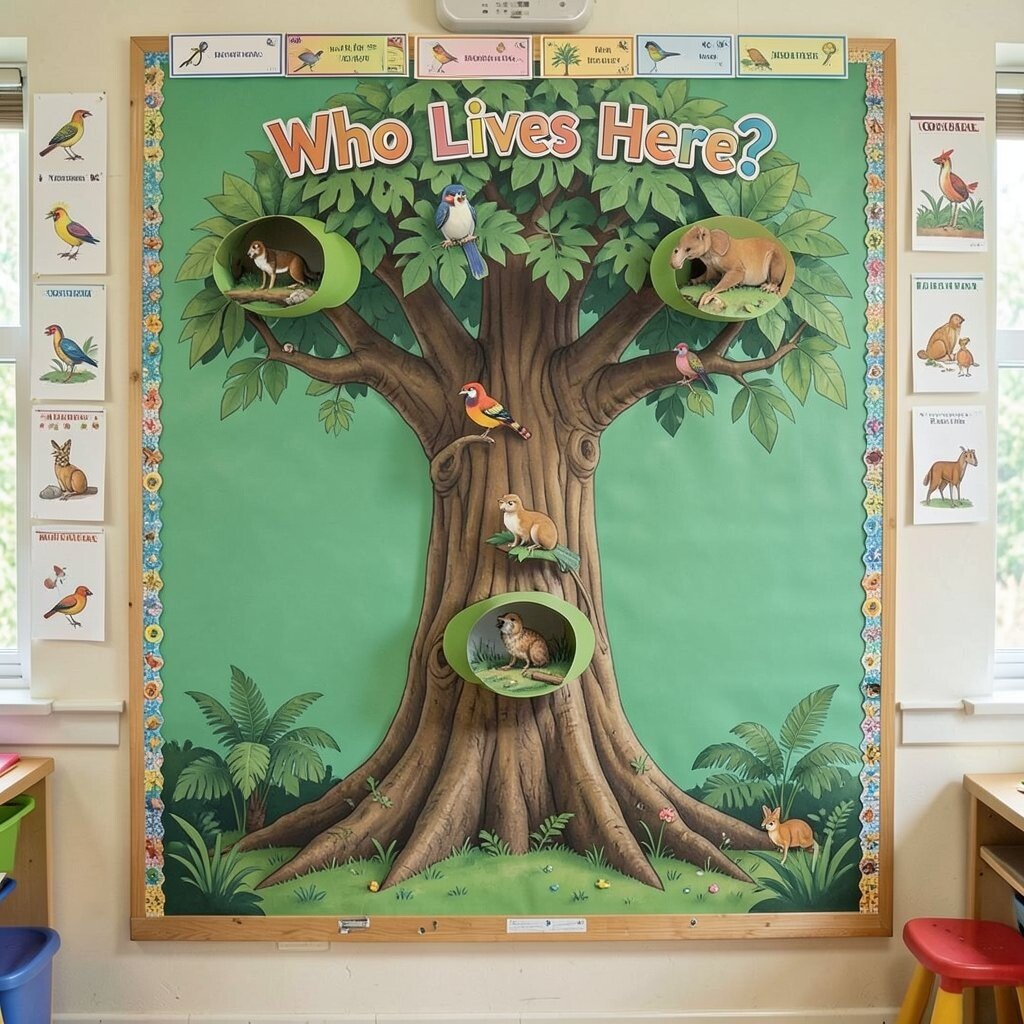
Make a tall tree shape and add flip-flap habitat pockets on the trunk. Each flap can reveal an animal picture and a simple fact sentence in kid-friendly language.
This kind of interactive board supports reading readiness and encourages students to make predictions. When you lift a flap, you can review habitats, shelter, and food in a way that feels like a game. Keep the flaps sturdy using laminated cardstock and add a clear plastic lamination cover if needed.
To keep it unique, choose a tree style that fits your classroom, like palm-like fronds or a big oak with jungle texture. Add a small “search” window where kids can find the habitat card that matches your read-aloud. It’s a fun way to connect stories to what they see on the wall.
7. Weather in the Jungle With Cloud Pockets
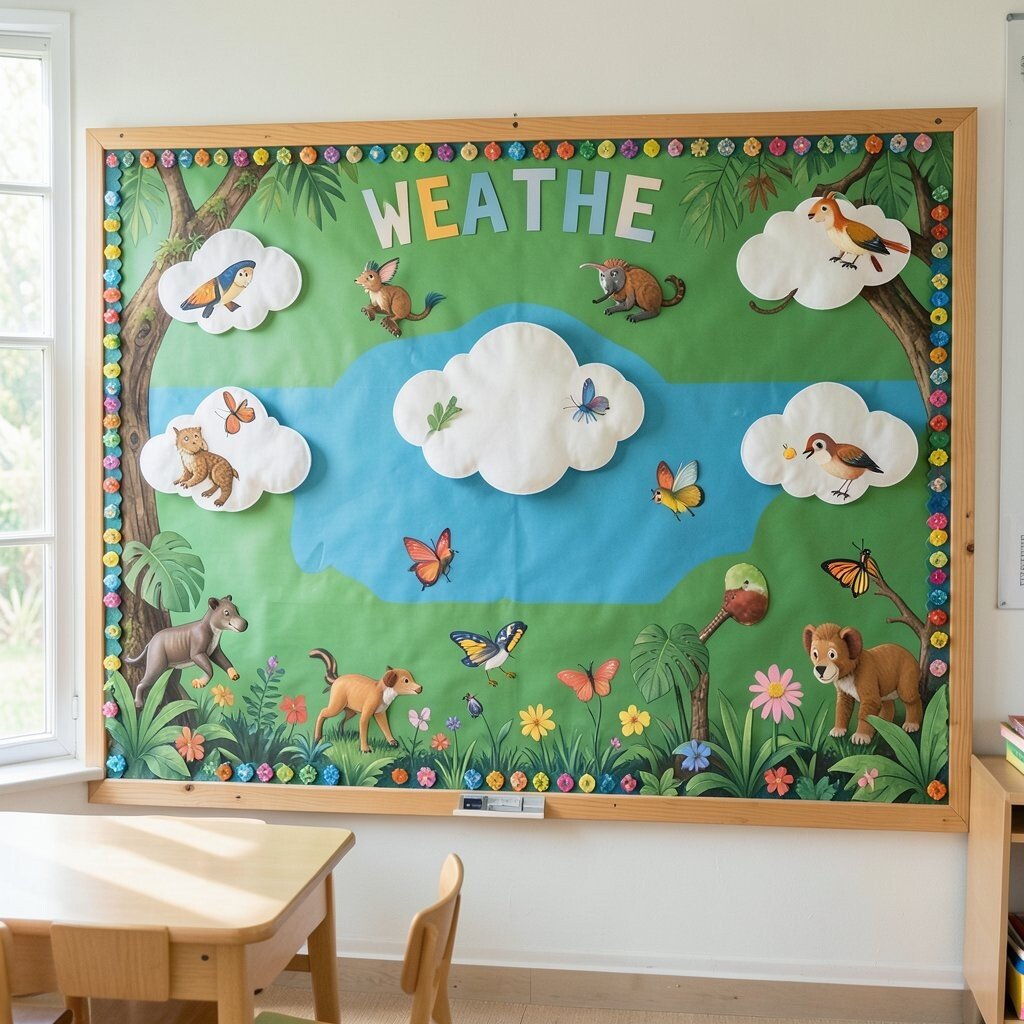
Turn your bulletin board into a daily weather display by using soft clouds and raindrop cutouts. Place cloud pockets across the top so students can add the day’s weather pictures.
Use Velcro to swap “sun,” “rain,” “cloudy,” and “windy” icons quickly. This helps students build routine, strengthens language skills, and supports science conversations. Keep the pieces consistent in size so the board looks neat even when kids move items.
For cost considerations, you can reuse icon sets from prior units and simply style them with jungle colors. Add a small leaf border and dark green background to make it feel like a rainforest. Personalize by letting students choose a jungle “mood” color for the week, like emerald, lime, or teal.
8. Morning Meeting Letter Park on a Giant Leaf
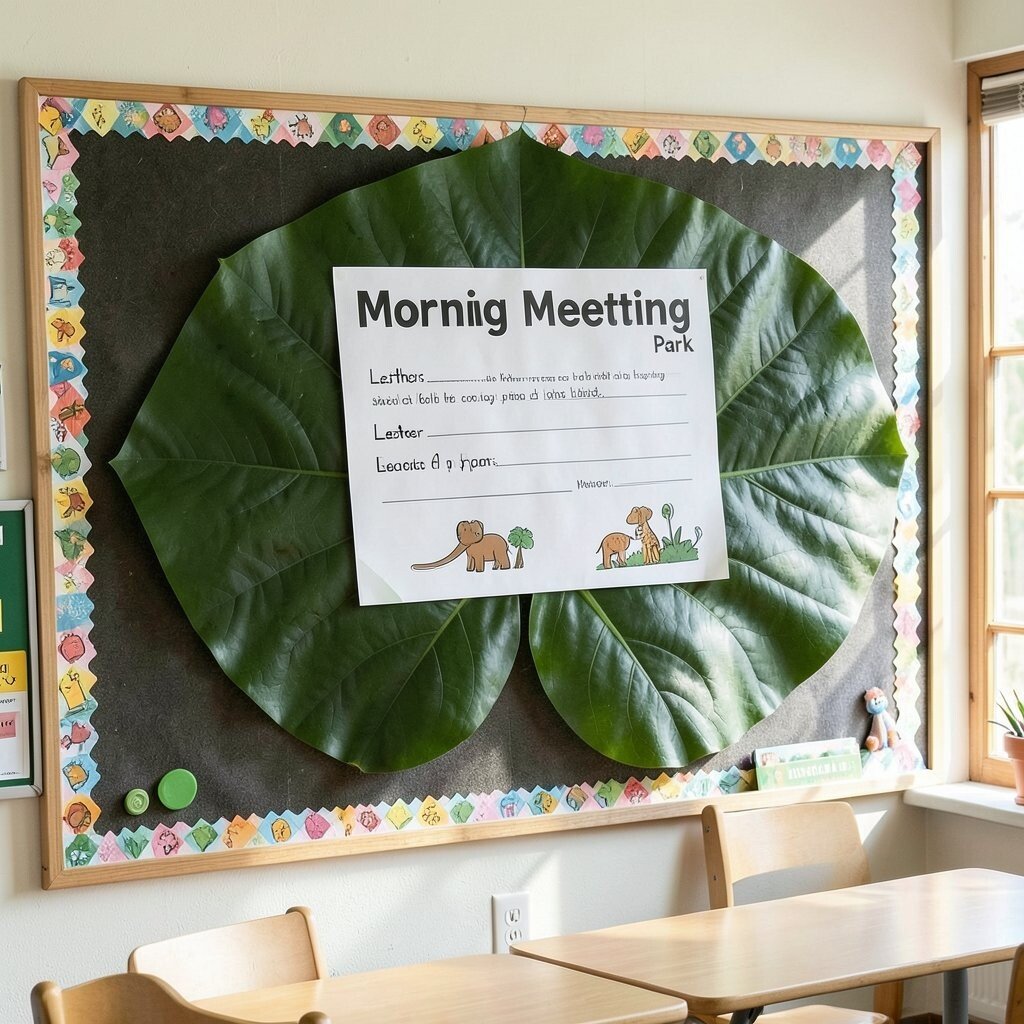
Make one oversized leaf as the backdrop for your morning meeting display. Add letter cards and name tags like they’re parked safely under the leaf canopy.
Use small pockets or magnets so you can organize names, job cards, and attendance. This supports fine motor practice and helps students stay focused during daily routines. Keep the leaf bold and bright so it works even on days when you’re moving between centers.
9. Animal Alphabet on Branch Strips

Cut branch strips out of brown cardstock and add one letter per strip. Place the branches side by side like a ladder, so each student can find their letter easily.
Include a matching picture for each letter to support sound recognition and early phonics. As kids rotate through literacy centers, they can point, match, and read simple sounds. If you want to personalize, let students help decorate the branches with green paint dots or glitter accents.
For budget, use craft store foam shapes for the animals or print simple silhouettes and color them with markers. Laminating branch strips keeps them durable. The look feels custom and playful, not like a generic alphabet chart.
10. Clever Jungle Calendar With Canopy Rings
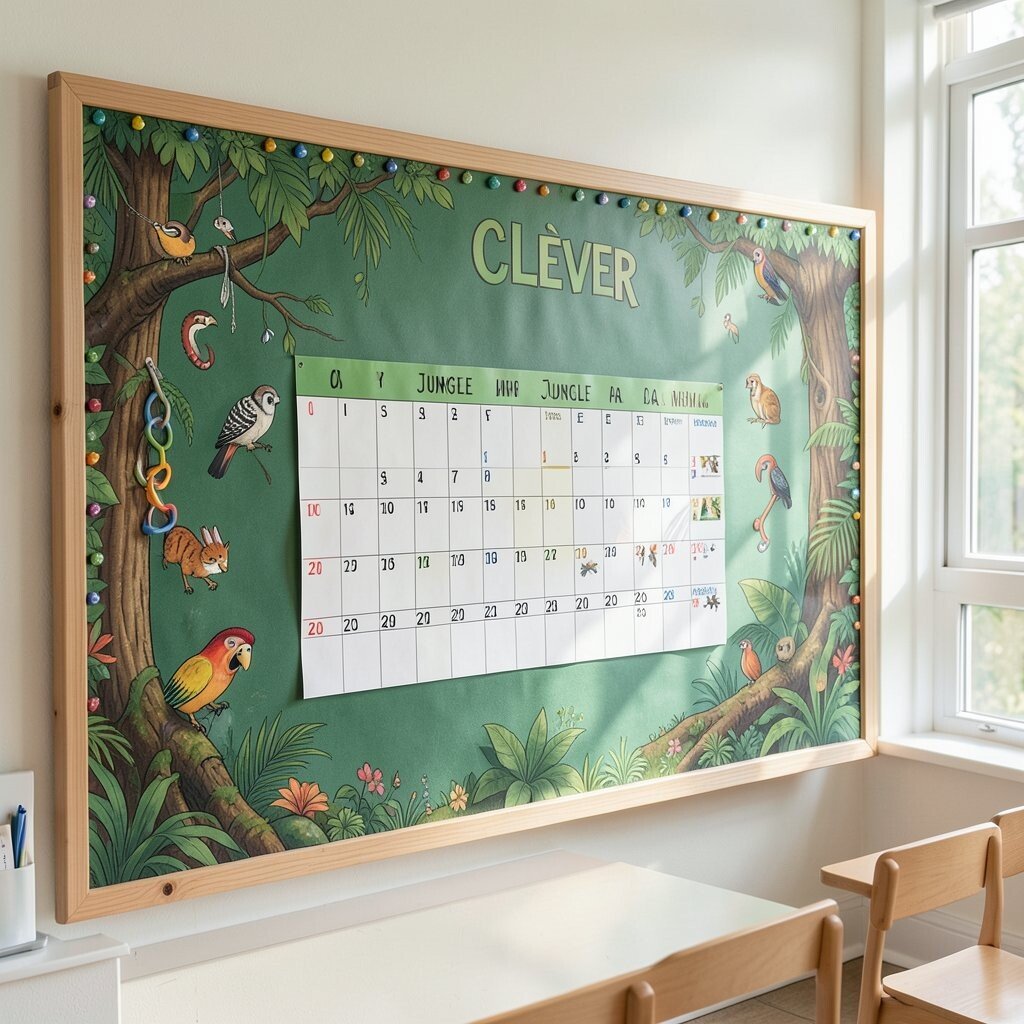
Design a calendar that sits under a canopy of circular leaf rings. Each ring can represent a week, month, or activity theme depending on how you run your day.
Use pocket chart inserts or slide pieces to keep dates visible and tidy. This helps students practice time concepts and supports consistent classroom routines. Choose a color scheme that matches your other decor so it feels coordinated instead of crowded.
To keep it unique, add mini facts around the calendar like “Today is a rainy day in the jungle” tied to your weather board. Kids enjoy when the jungle world connects across different displays. Cost-wise, focus your spending on sturdy pockets and reuse paper cutouts year after year.
11. Student Work “Reclaimed Forest” Wall With Choice Clips
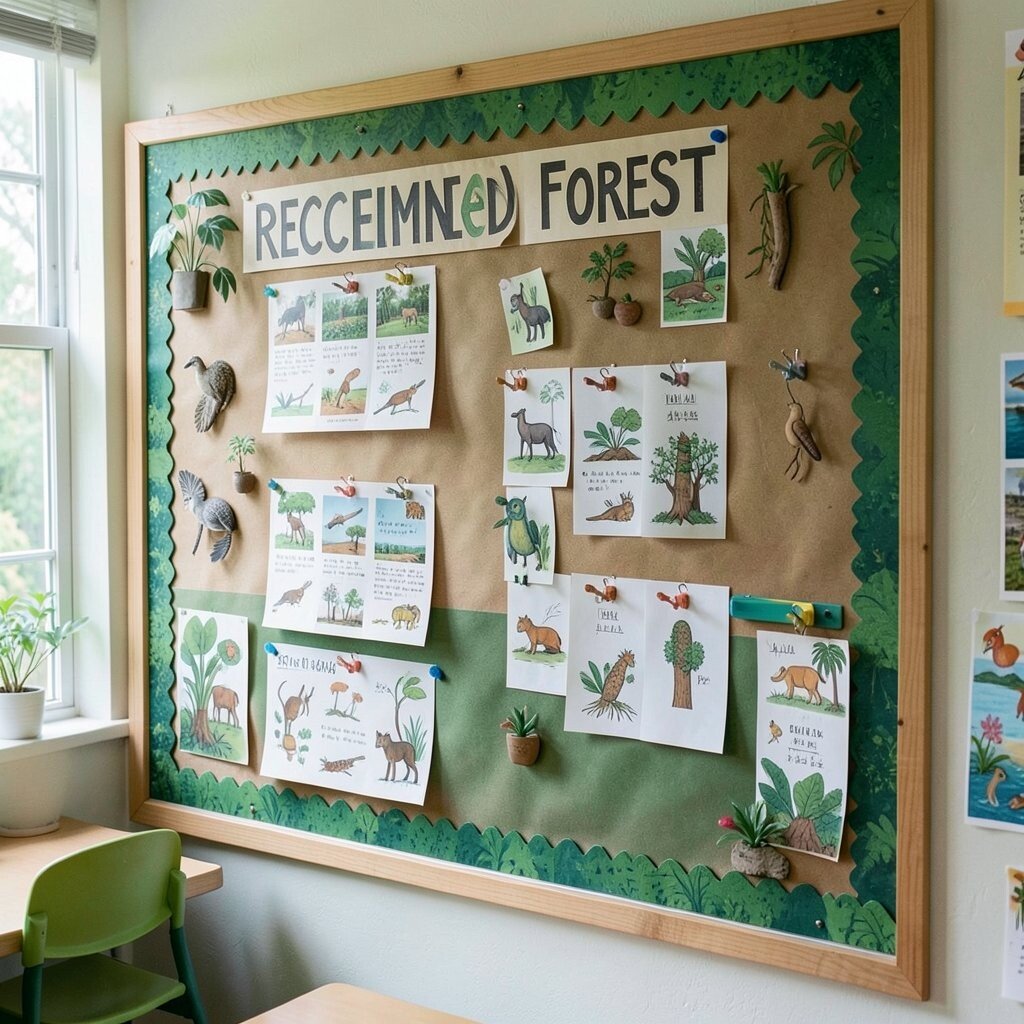
Create a work display called a reclaimed forest using scattered leaf shapes and “resource” tags. Hang student drawings on choice clips so they can see their efforts proudly on the wall.
Instead of displaying everything at once, rotate pieces so the board stays fresh and less overwhelming. This reduces clutter and gives each student’s work more spotlight time. Use sturdy binder rings or small clips that won’t snap under regular use, and place the board in a calm zone of the room.
Personalize the look by adding small background details like paper insects, soft vines, or tiny nests made from yarn. For cost, many leaf shapes can be cut from old green folders or recycled cardstock. The result feels meaningful because it celebrates growth like a living forest.
12. Sensory Story Scene With Texture Patches
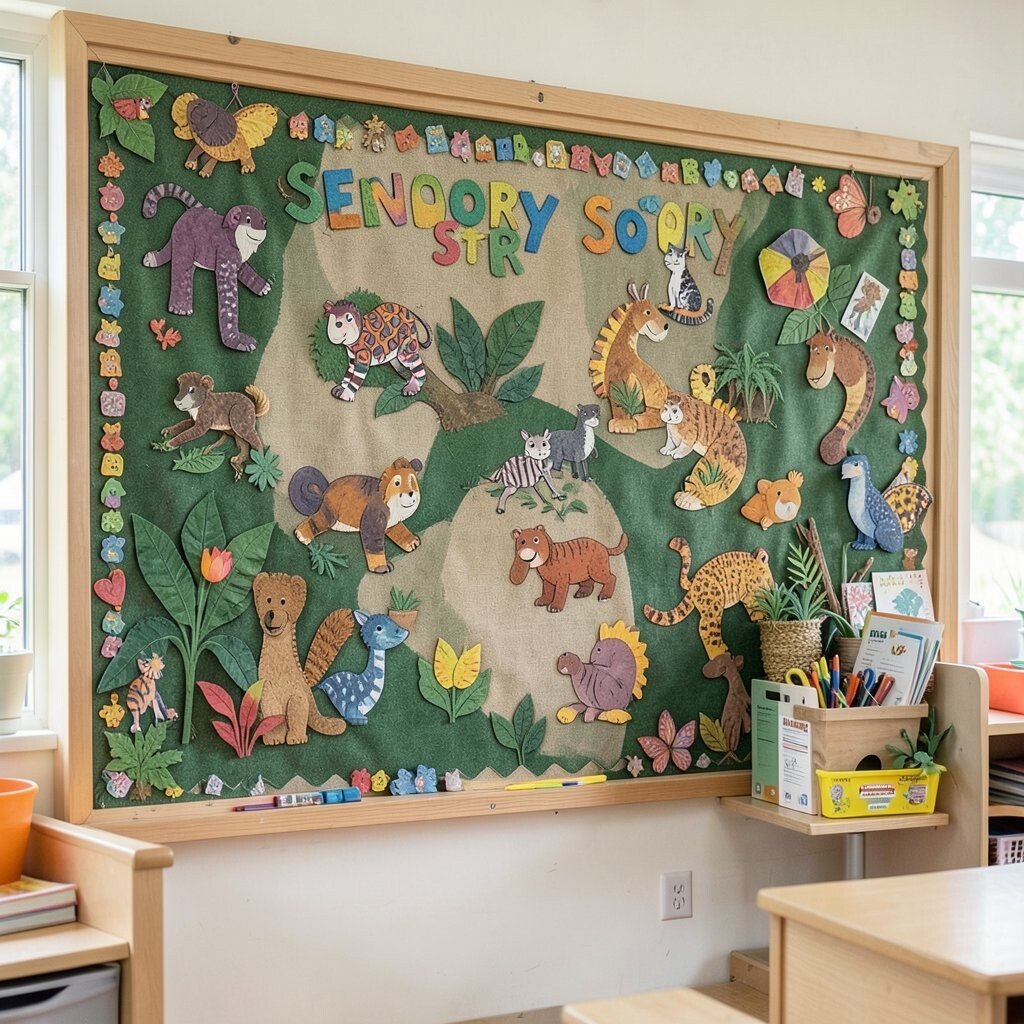
Build a sensory story board by adding texture patches that match your read-aloud. Add a “bark” patch, a “leaf” patch, and a “mystery” patch with a safe fabric or paper finish.
During story time, let kids touch a patch as they hear a description, then connect it to what they notice. This boosts engagement and supports kids who learn best through hands-on experiences. Keep textures safe and smooth, and avoid anything scratchy or shedding.
Make the scene jungle-themed with a small border of vines, then place the patches inside leaf pockets. Personalize by choosing textures that match your classroom values, like soft cloth for comfort or crinkly paper for rain sounds. Cost can stay low by using scrap fabric from sewing leftovers or old clothing cut into small squares.
13. Jungle Treasures Reward Track With Marble-Style Counting
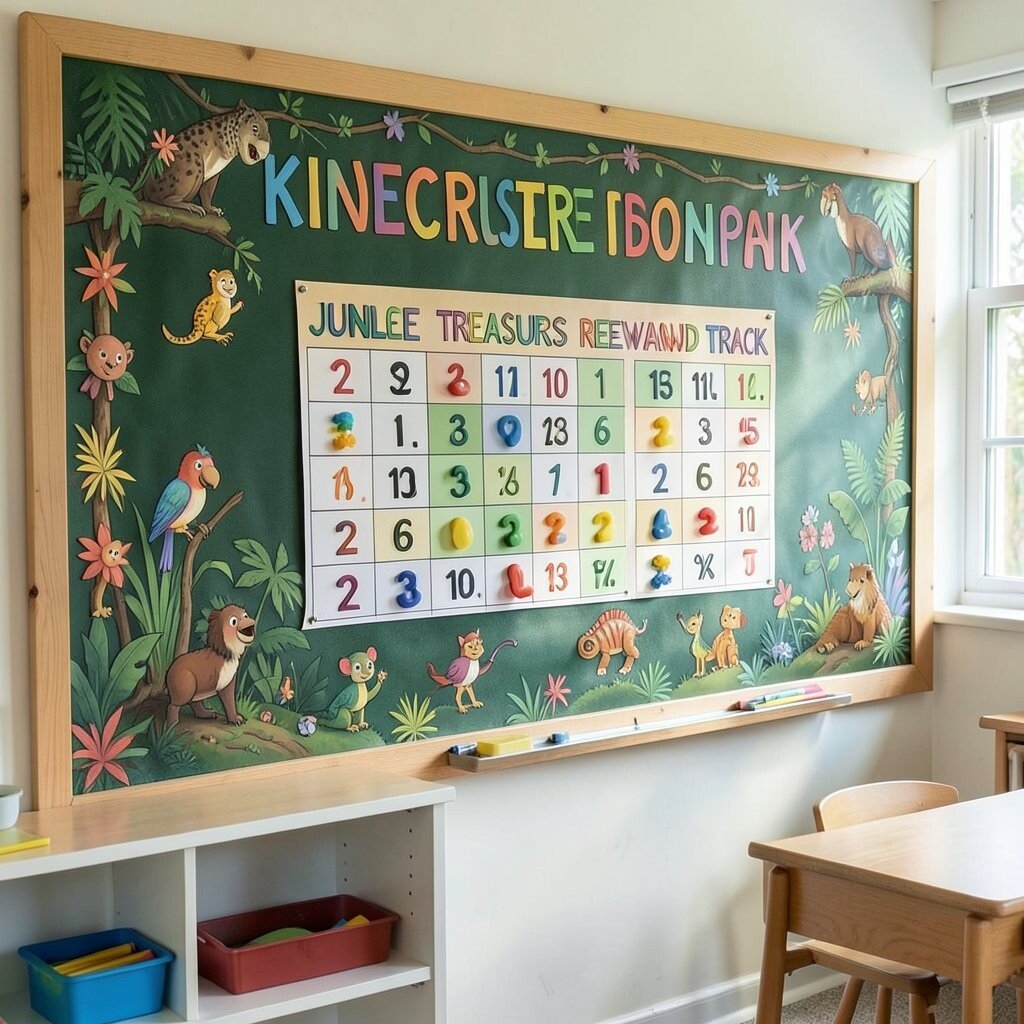
Turn positive behavior into a playful jungle treasure track. Use a winding “river path” on the board and small treasure stones that move along it.
Students can earn stones for teamwork, kindness, or completing routines, then you slide them along the river. This supports goal setting and keeps expectations visible without sounding harsh. Use foam circles or smooth bottle caps painted like gemstones for a marble-style look.
For personalization, label the river sections with class values like “Be Brave” or “Use Kind Words.” Keep the pieces large and easy to handle, especially for kindergarten fingers. If you want a budget-friendly approach, make the stones from cardboard and seal them with clear glue for a shiny finish.
14. Bug Hotel Corner With “Find and Match” Pockets
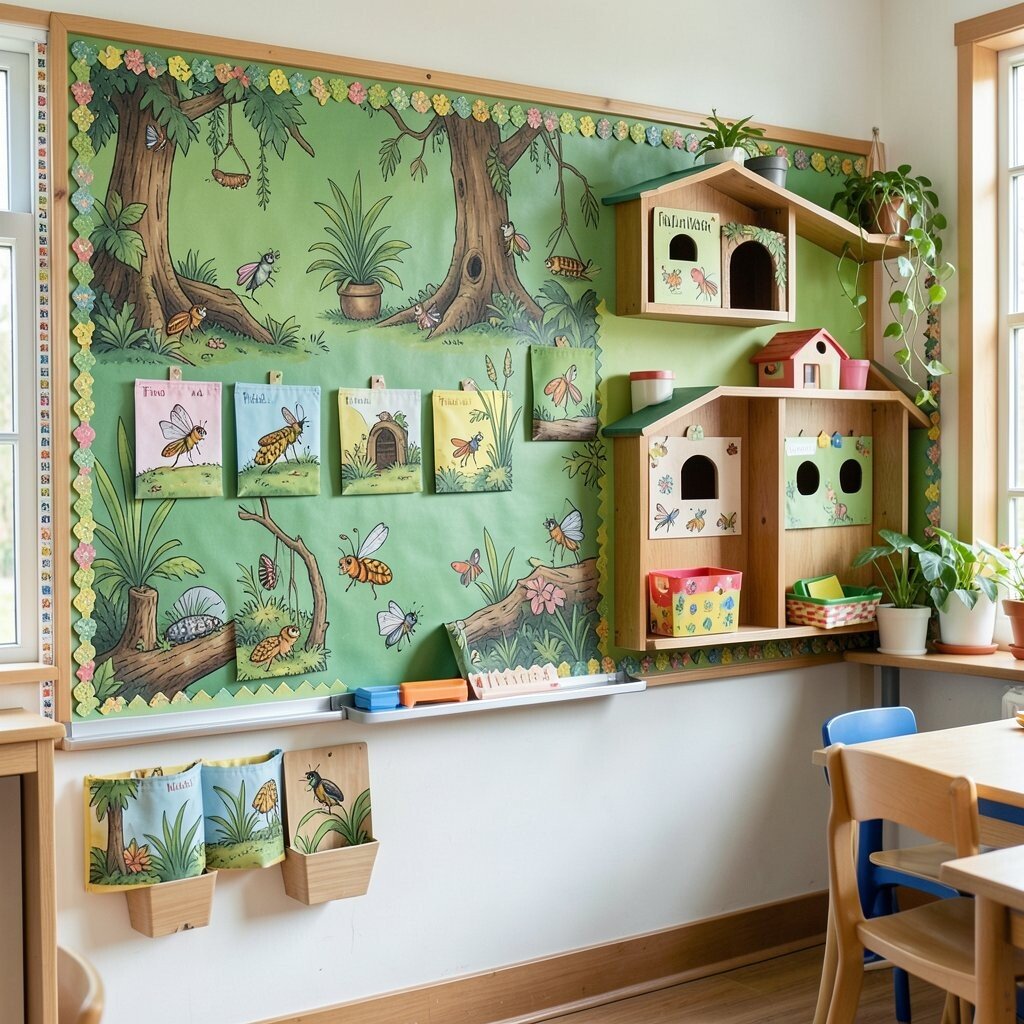
Make a bug hotel that looks like a tiny apartment building for insects. Add stacked rectangles that open into pockets holding bug cards and mini picture clues.
Use it as a simple matching activity during science and literacy blocks. Students can open a pocket, find the matching image, and place it back in the right space. This is great for improving sorting skills and building confidence because the task feels playful.
To keep it unique, decorate each floor with different leaf patterns and make the hotel door resemble a mouth or a cave. Use recycled cardboard boxes for the base if you want a low-cost build. Add a small pocket for magnifying glasses so kids can “check” bugs during center time.
15. River Crossing Phonics Board With Sound Bridges
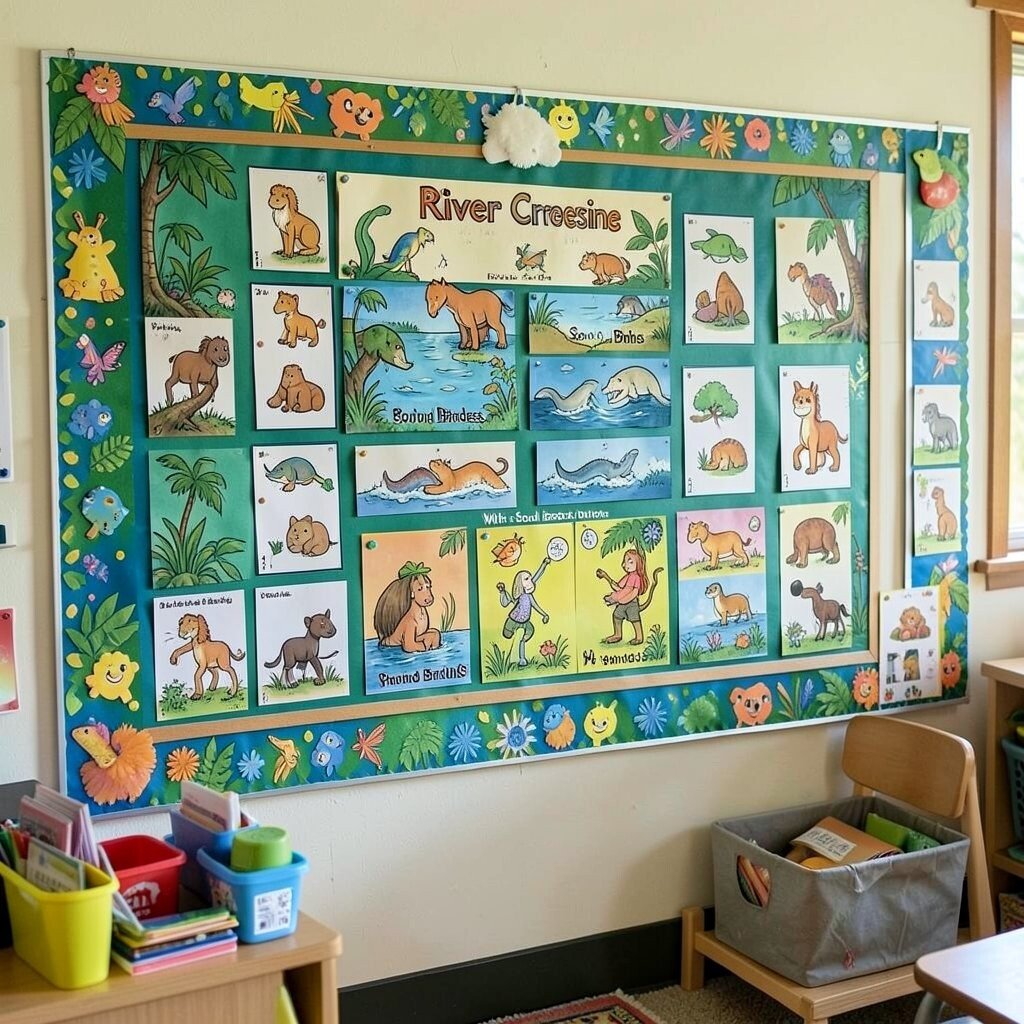
Design a river with bridges where each bridge plank holds a phonics sound. The board can show beginning sounds, rhyming pairs, or simple word families that match your current unit.
Students can place magnetic tiles or clothespin cards onto the bridge to form words. This keeps phonics visual and builds independence during literacy practice. Use high-contrast colors for sounds so kids can read quickly and stay focused.
Personalize by choosing a river name tied to your class theme, like “River of Hope” or “Sunny Stream.” Cost considerations can be managed by using magnetic sheet scraps for tiles and cardstock for bridge pieces. The board becomes a friendly place where kids feel brave enough to try reading.
16. Jungle Curtain Backdrop for Birthdays and Celebrations
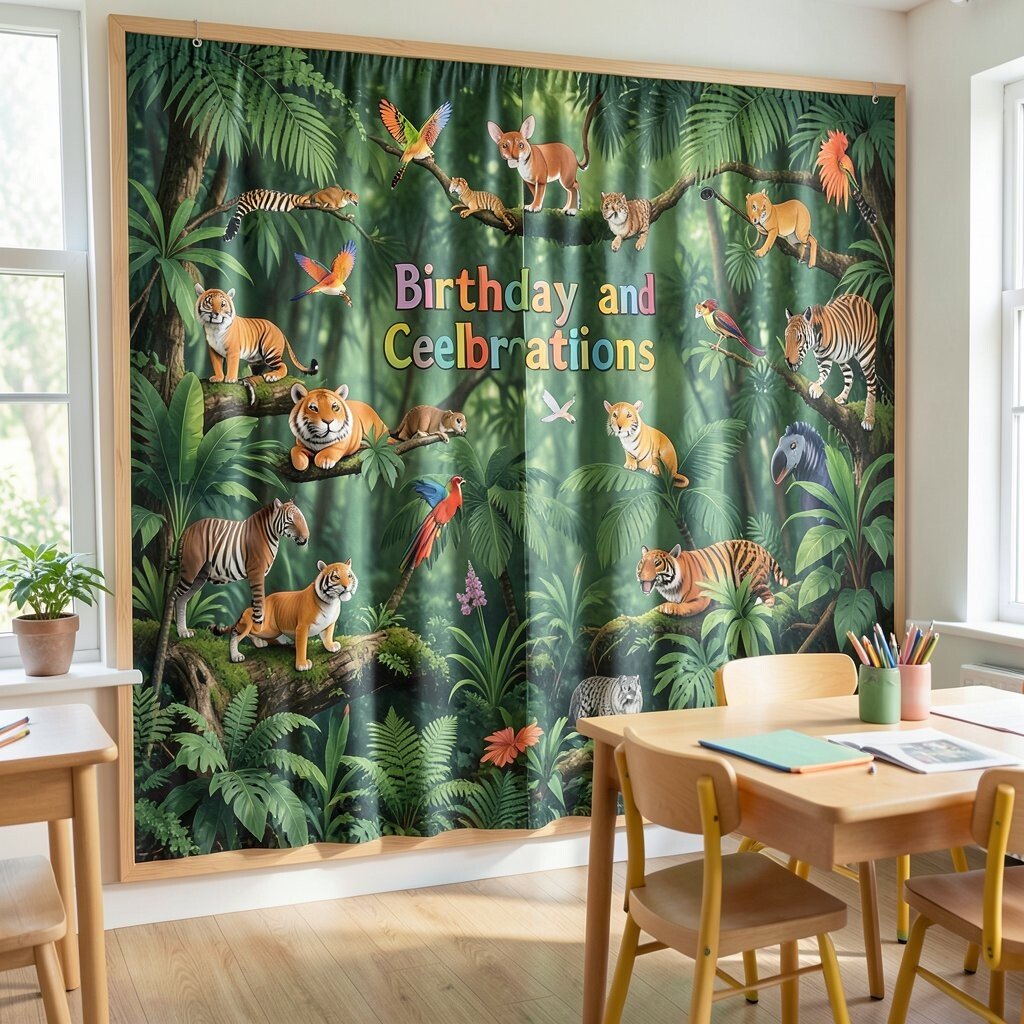
Create a curtain-style backdrop using strips of green and yellow paper or lightweight fabric. Let it frame a center “birthday nest” spot where you place a child’s photo and celebration sign.
This decor instantly makes celebrations feel special without needing constant changes to the whole board. The curtain look also hides messy backing materials and gives you a clean, finished appearance. Use paper that’s easy to replace for budget control, and store extra strips folded in a labeled container.
For personalization, add tiny name tags shaped like leaves next to the celebration space. You can also match the color of each child’s birthday crown to the board palette. Keep the main photo area large enough for everyone to see during circle time.
17. Interactive Jungle Message Board With Postcards From the Canopy
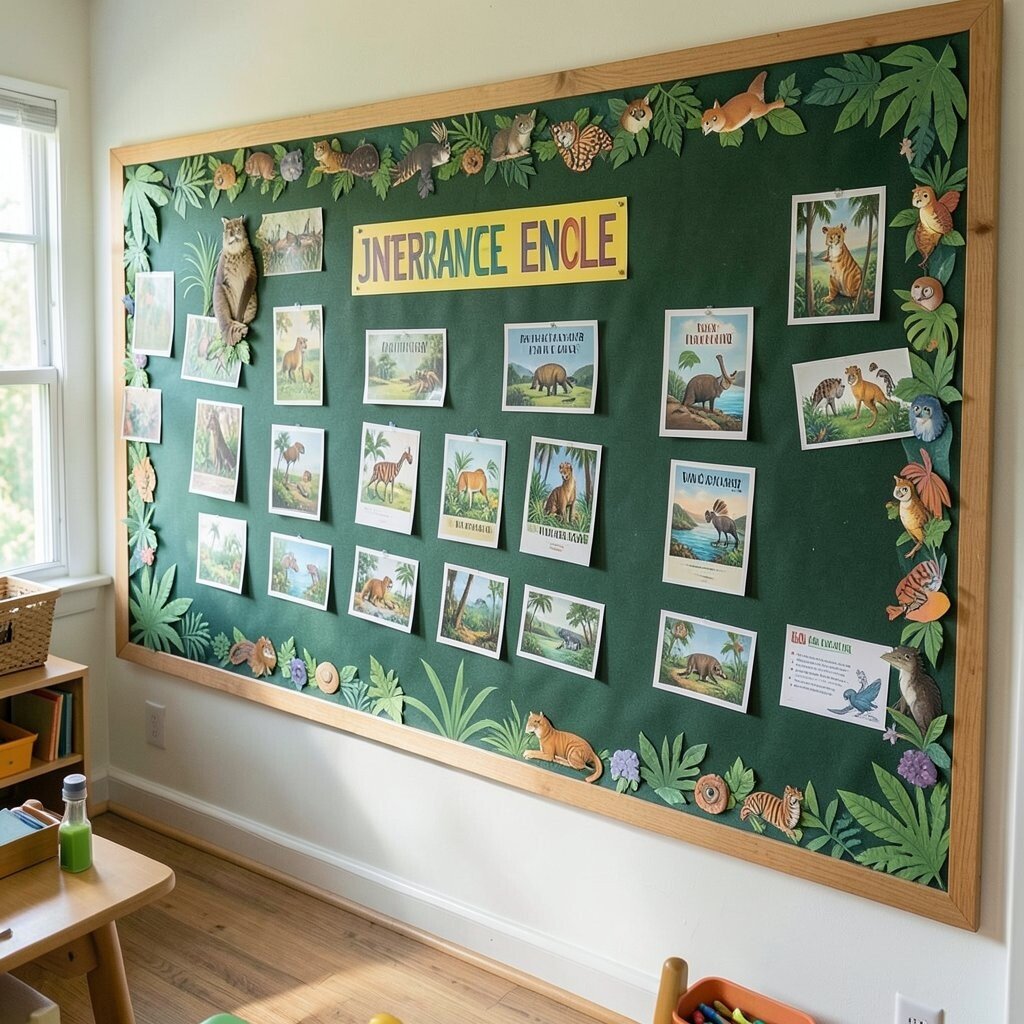
Make a message board where kids can “send postcards” from the canopy. Add postcard frames shaped like leaf outlines and place a mail slot pocket underneath.
Students can contribute journal snippets, goal reminders, or feelings drawings that you swap in daily or weekly. This supports social-emotional learning while keeping the jungle theme playful and warm. Use simple prompts that fit kindergarten life so kids can participate confidently.
To keep costs low, print postcard templates and let kids decorate them with markers and stickers. Laminate the frame edges so the board stays durable across the school year. Make it unique by adding a small animal mail carrier icon and rotating it when a different child becomes “canopy helper” each week.
Keep the message area uncluttered by limiting the number of visible postcards at once. When the board looks fresh, students will check it often and feel proud that their voice is part of the classroom jungle.