Ceilings can quietly set the mood of your whole room. With the right texture, they can look stylish and feel more welcoming.
From subtle speckling to bold, broken-up patterns, knockdown and stipple each bring their own charm.
1. Soft Knockdown That Flatters Every Room

A soft knockdown finish breaks up light in a gentle way, so your ceiling never looks harsh. In a living room, it creates a calm, cloudy look that feels warm from both day and night.
This style is especially helpful if your ceiling has minor imperfections because the texture visually evens things out. Keep the knockdown pattern relatively tight for a smoother feel, and ask your painter about a primer first so the finish looks consistent across the entire surface. For a practical boost, choose a flat or ultra-low-sheen paint so the pattern reads as cozy instead of shiny.
2. Crisp Stipple for a Clean, Modern Ceiling
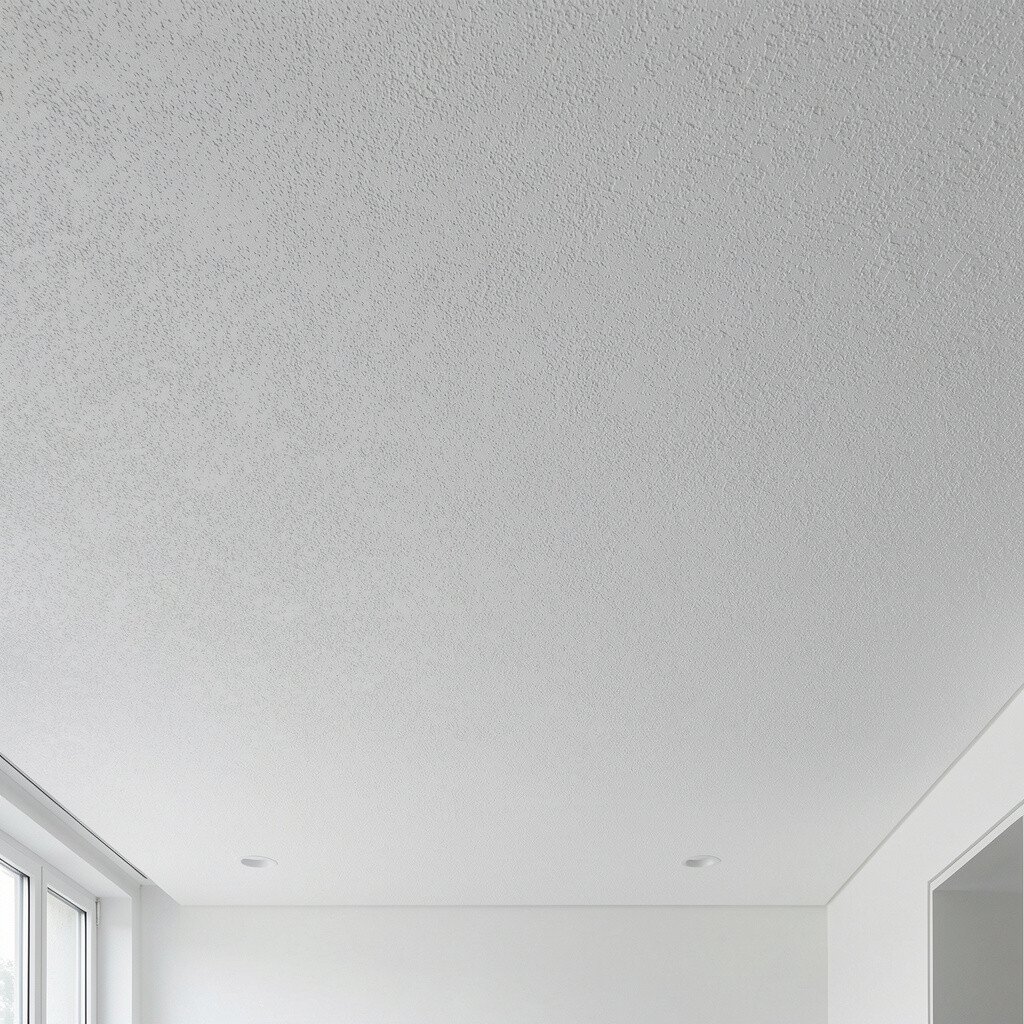
Stipple creates a fine, dappled surface that can look neat and modern. When the texture is small and even, it gives your ceiling a subtle “finished” look without turning it into a distraction.
Use stipple in rooms that already have sleek lines, like dining areas or home offices. If you want it to feel brighter, match the paint color to your trim and keep the ceiling light, since the tiny pattern helps hide uneven spots while still reflecting light nicely.
3. Knockdown in Warm Neutrals for Cozy Style
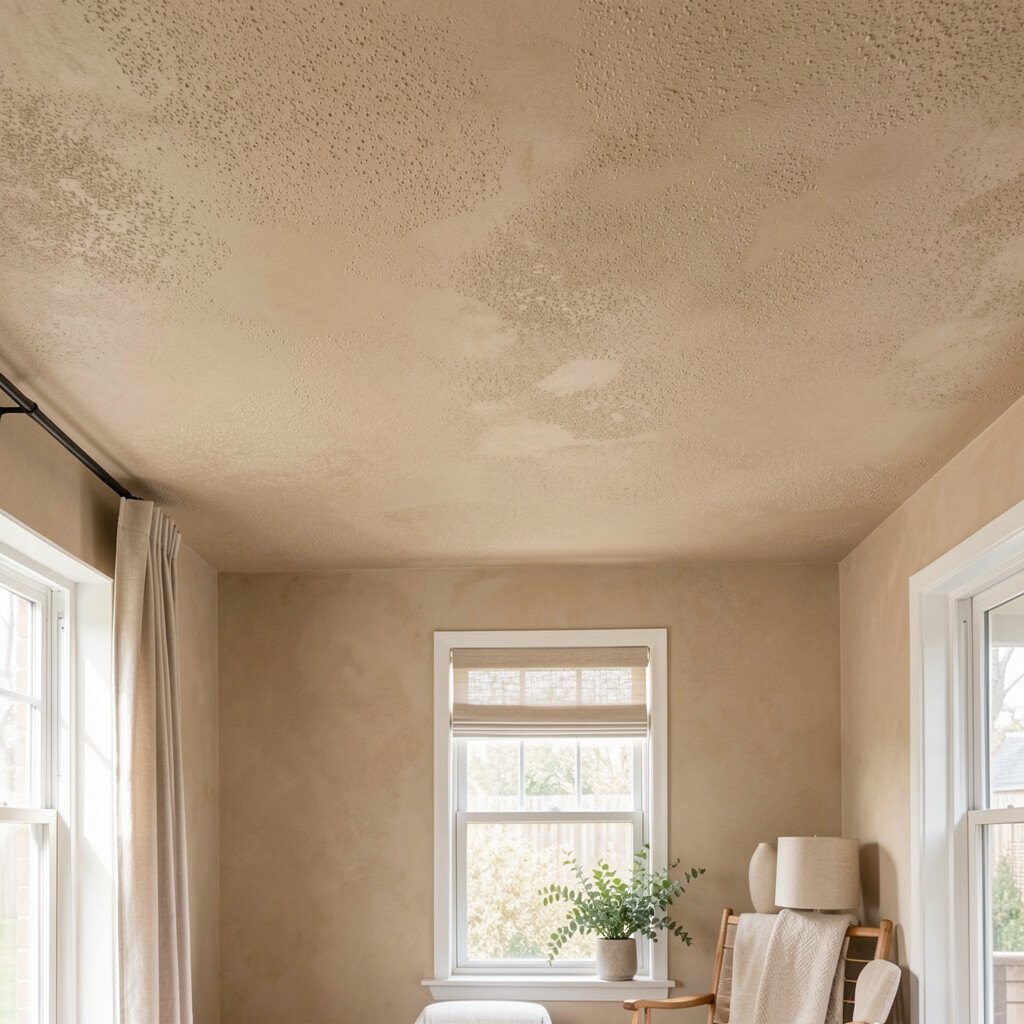
Knockdown texture shines in warm neutral tones because the broken pattern adds depth without needing bold color. Think creamy whites, soft greys, or beige shades that make the room feel inviting.
Pair the finish with warm lighting such as amber bulbs or dimmable fixtures so the ceiling texture looks gentle instead of flat. To personalize it, ask for a slightly larger knockdown “cloud” effect in the center of the room and keep the edges tighter for a framing vibe.
If you’re planning around a budget, remember that the biggest cost is usually prep and labor, not just the finishing product. Spend time sealing cracks and patching dents first so the texture job stays smooth and uniform across the whole ceiling plane.
4. Stipple Over Drywall for a Budget-Friendly Refresh
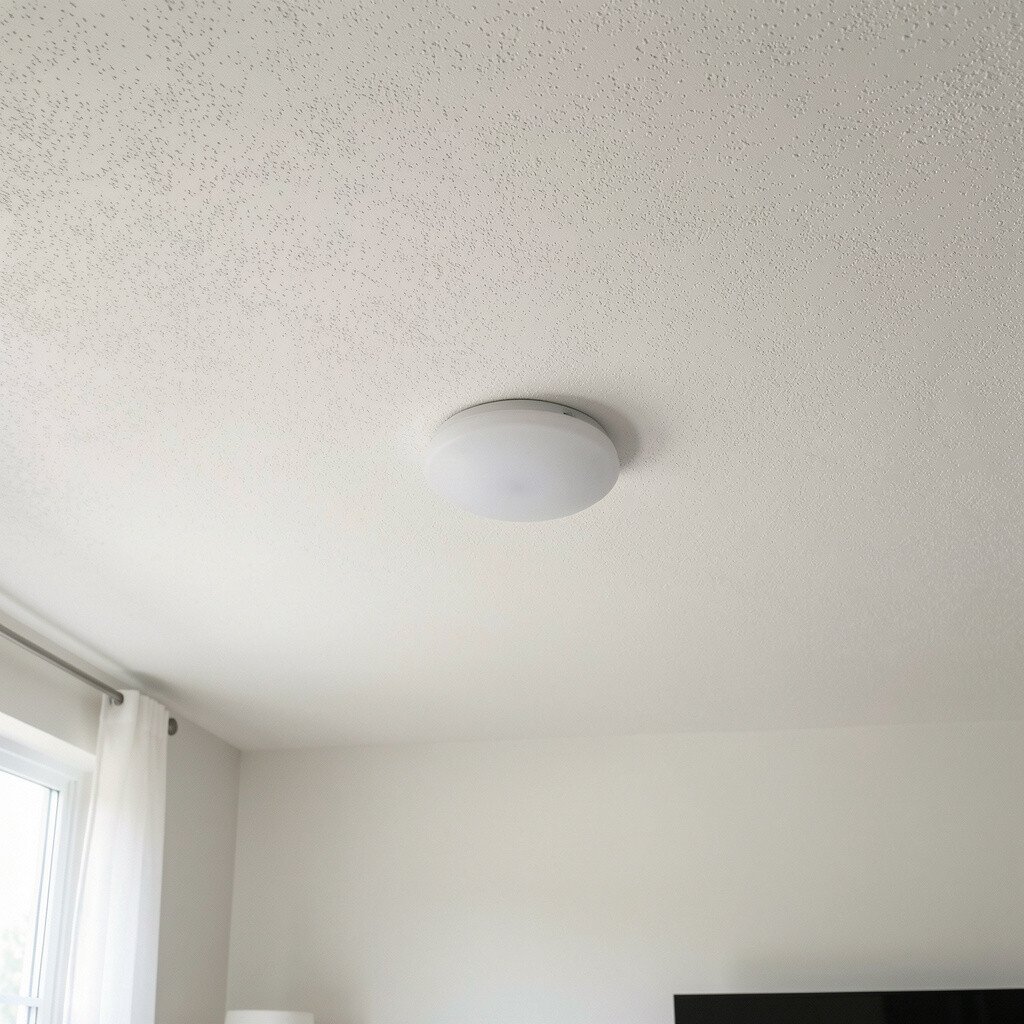
If you want a ceiling upgrade that doesn’t require major demolition, stipple can be a smart choice. It can cover small patch marks and make a tired ceiling look newly dressed.
For a practical approach, make sure the drywall is properly leveled and sealed before the finish coat goes on. Choose a fine stipple so the room doesn’t feel overly busy, and keep the pattern consistent from joist line to joist line so the texture doesn’t look accidental.
5. Knockdown to Create Subtle Architectural Depth

Knockdown texture can make ceilings feel taller because the pattern gives light something interesting to grab. In hallways and entryways, that depth effect makes the space feel more grand and less plain.
To get a more architectural vibe, coordinate the ceiling texture with wall finishes. If your walls are smooth and painted, a knockdown ceiling can add balance and keep the whole area from feeling one-note.
Personalize by using a slightly darker paint for the ceiling only if your space is bright enough, since contrast will highlight the broken texture. Cost-wise, choose a reliable contractor who has experience with knockdown consistency, because uneven application can create patchy-looking “clouds.”
6. Stipple That Hides Patching Around Fixtures
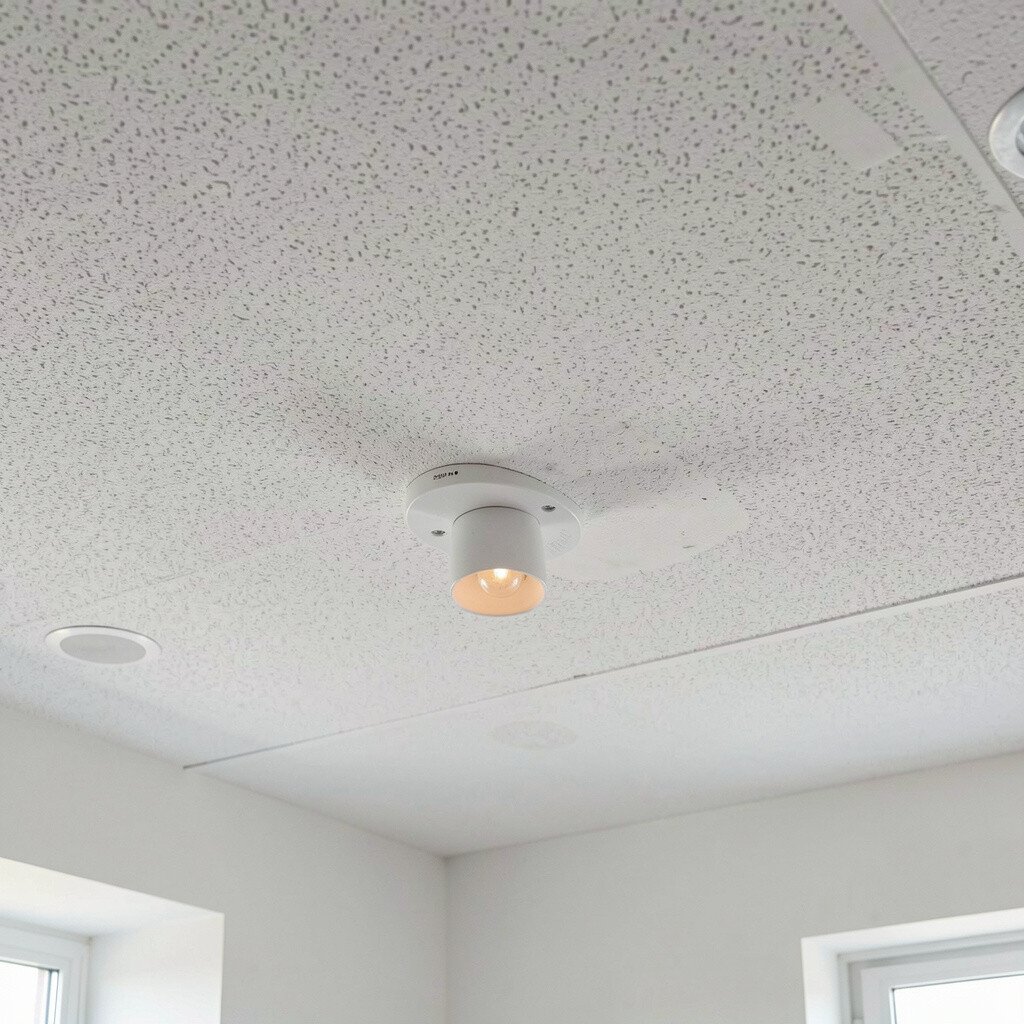
Ceilings often need patching around vents, lights, and old hardware spots. Stipple helps mask those transitions because the texture breaks up sight lines and blends the repaired areas.
When you have multiple fixtures, plan texture application so it wraps around each opening cleanly. Ask for a smooth cut at the edges so you don’t end up with rough ridges, and keep the paint schedule the same across the whole ceiling for an even sheen.
7. Two-Tone Knockdown for a Framed Ceiling Look
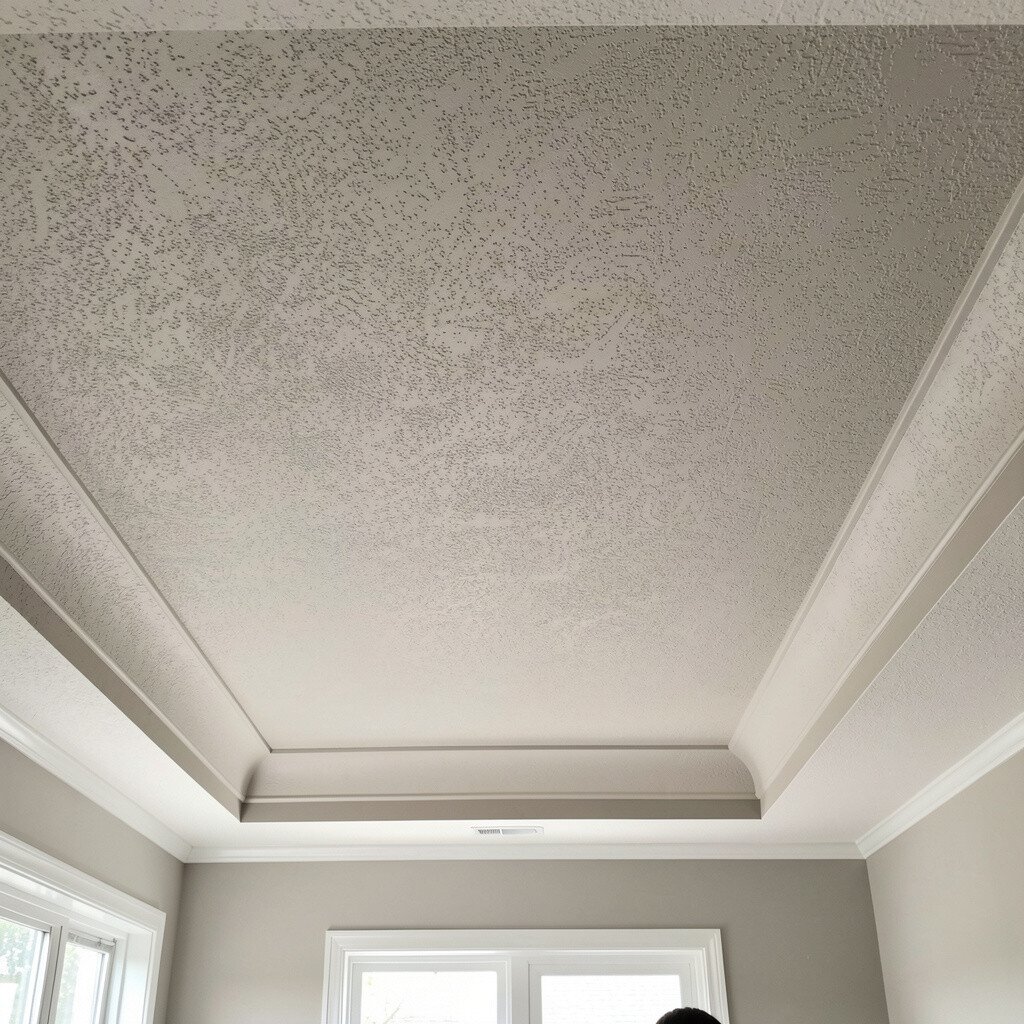
Knockdown works beautifully when you want a framed effect using color and texture. A popular look is a slightly deeper tone on the outer field with a lighter tone on the perimeter or tray trim.
To make it feel intentional, keep the pattern similar in both zones so the texture doesn’t look like two different styles. If you’re updating an older home, this can modernize the space without replacing ceilings, and it’s a great way to personalize the architecture you already have.
Costs can vary depending on how much masking and extra painting is needed, since two-tone designs require careful edges. A helpful tip is to bring test samples to your room and check them under your actual lighting so the knockdown depth doesn’t shift too dark.
8. Fine Stipple for Bedrooms That Feel Restful
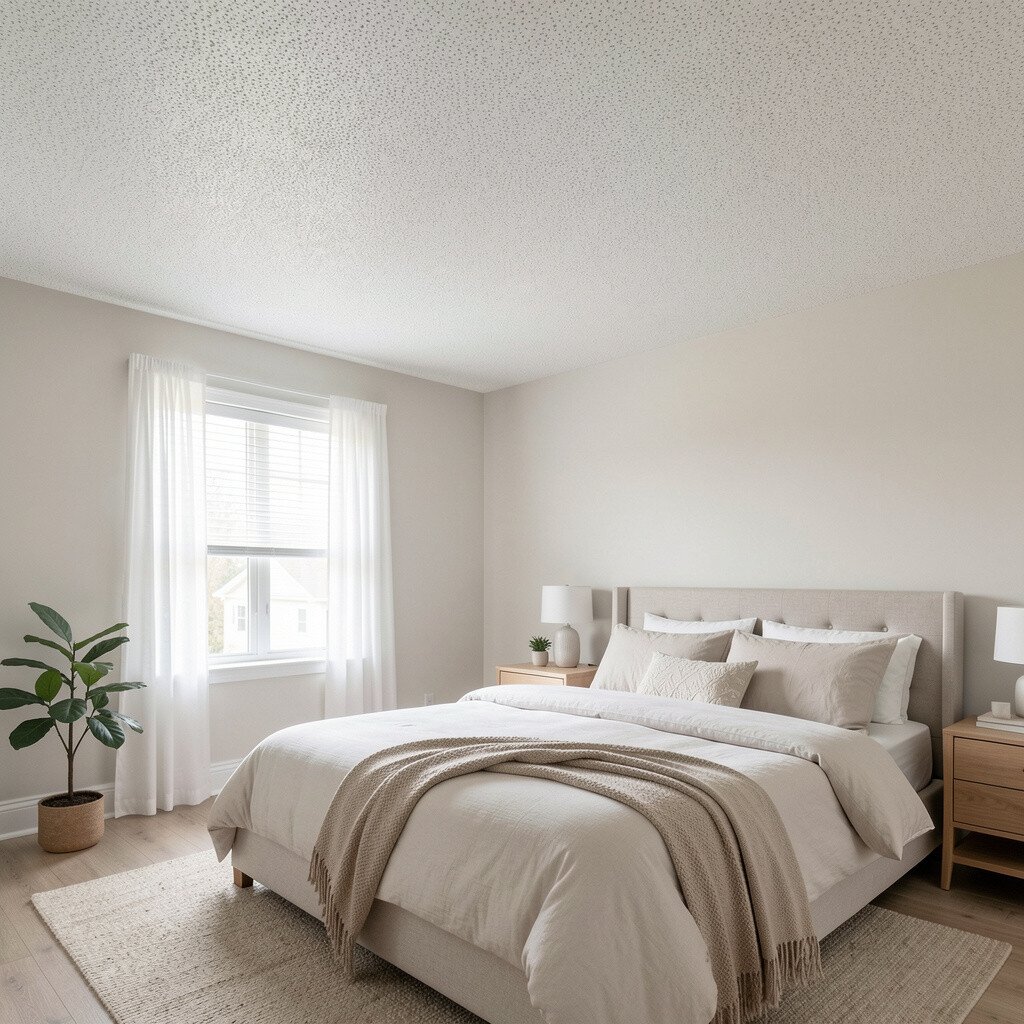
A fine stipple ceiling can feel soothing because the pattern is gentle and not overly dramatic. In bedrooms, it pairs well with soft bedding colors and layered curtains.
For a restful look, consider keeping the ceiling a bright neutral and letting the walls carry the mood. If you like a clean, tidy finish, ask for tight spacing in the stipple so the ceiling looks uniform from any angle.
9. Knockdown in Bathrooms for Soft Light and Privacy

Bathrooms are tricky because moisture and lighting can reveal flaws quickly. A knockdown finish can help your ceiling look smooth and forgiving, especially when paired with proper moisture-resistant paint.
Make sure the ceiling has been sealed correctly, and discuss ventilation because textures can only look good when the space stays dry. For practicality, choose bathroom-grade coatings and ask how the contractor plans to protect corners and edges near the vent fan.
To personalize, match the ceiling color to your tile undertones so the knockdown texture blends into the palette. The cost is often tied to prep and materials, but investing in quality moisture-rated products can save you from repeat work.
10. Stipple for Basements with Uneven Surfaces
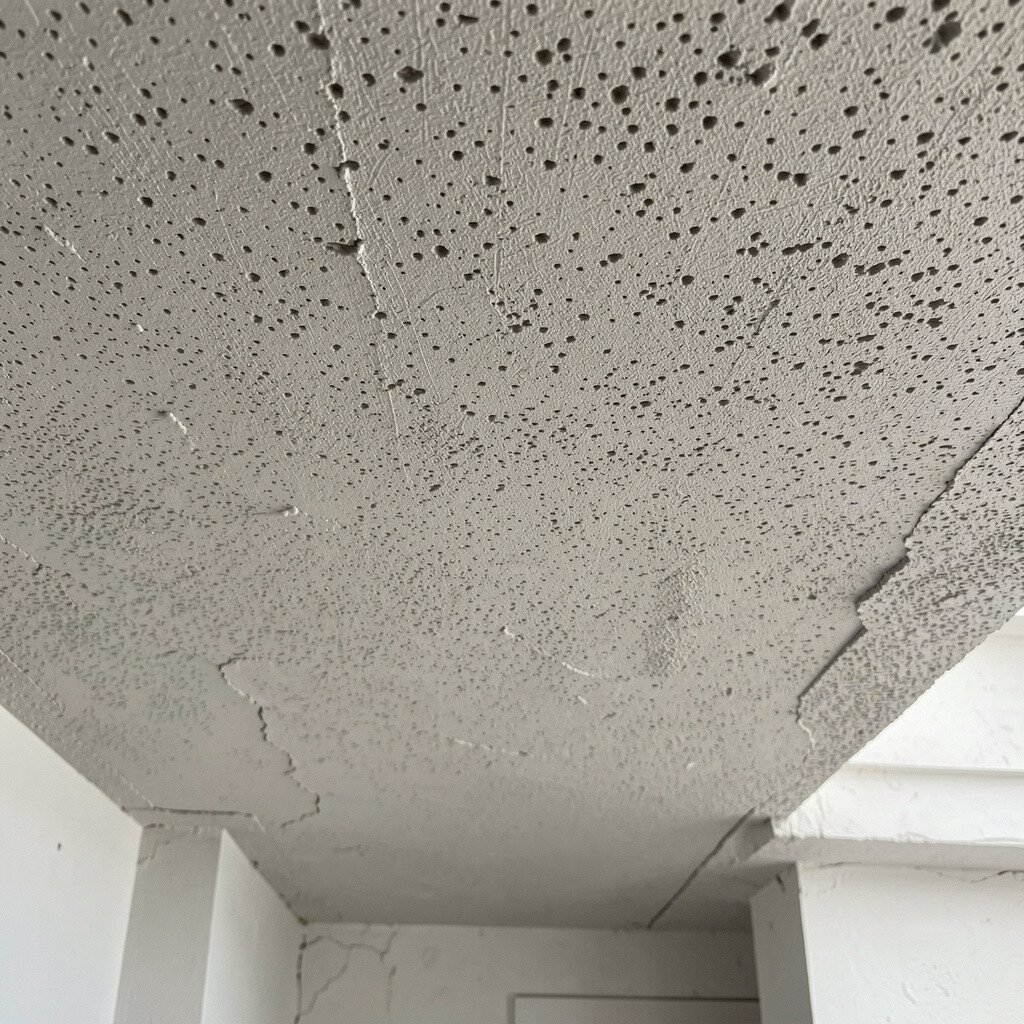
Basements often have ceilings that look uneven or slightly wavy after framing. Stipple can camouflage those issues because the surface texture visually evens the look.
Before finishing, check for moisture problems and address them first, since a texture job won’t fix dampness. If you want a brighter basement, paint the ceiling in a light tone and keep lighting fixtures evenly spaced so the stipple pattern looks balanced.
11. Knockdown for Dining Rooms That Feel Grand
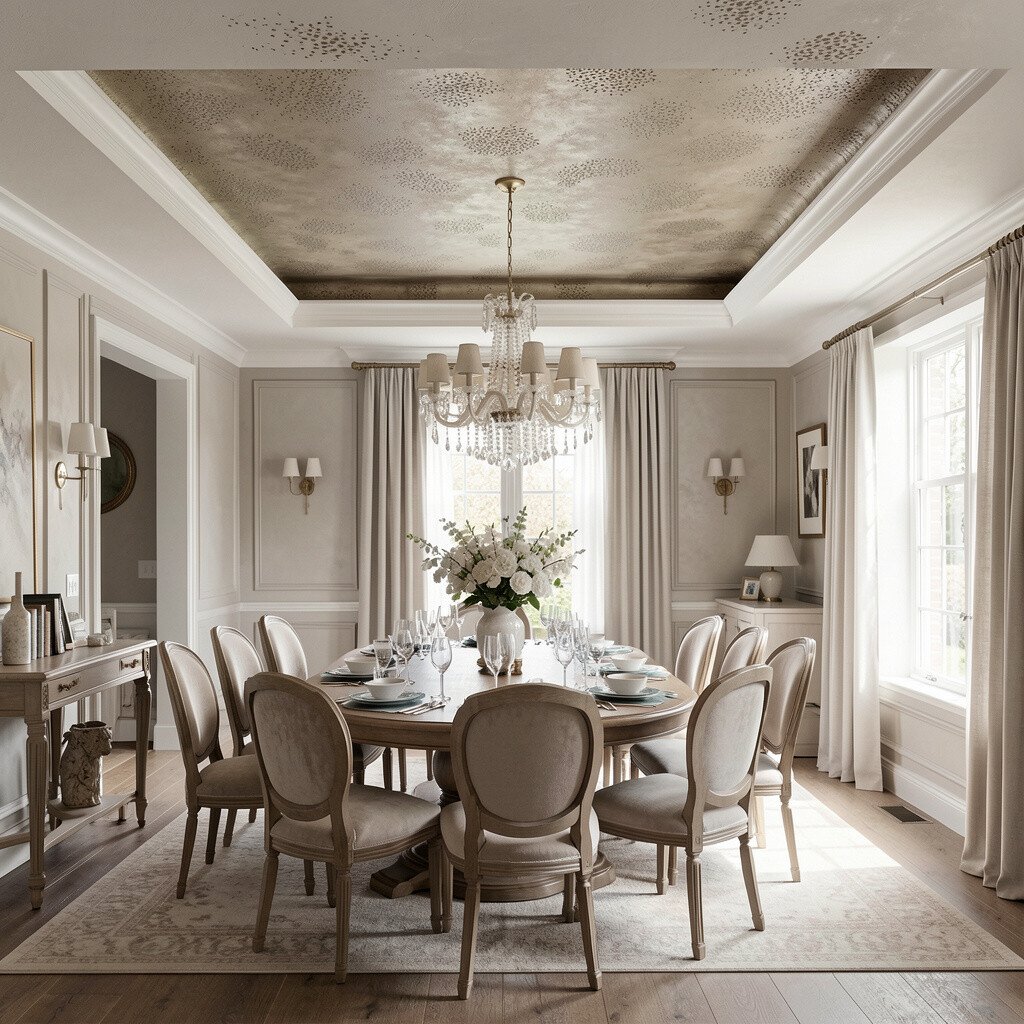
In a dining room, knockdown texture can add a rich, elegant feel without needing fancy moldings. The broken-up look works especially well when you have a chandelier or statement pendant that throws light across the ceiling.
For practical styling, avoid overly heavy texture if you have low ceilings, because too much depth can visually lower the room. Personalize by aligning the largest “breaks” with the centerline of the table so the room feels coordinated.
Cost considerations matter here because decorative ceilings take more time, especially with careful taping and consistent spray or trowel passes. Ask about labor estimates based on ceiling size and complexity, and request a clear plan for spot repairs if needed.
12. Stipple for Playrooms That Love Color
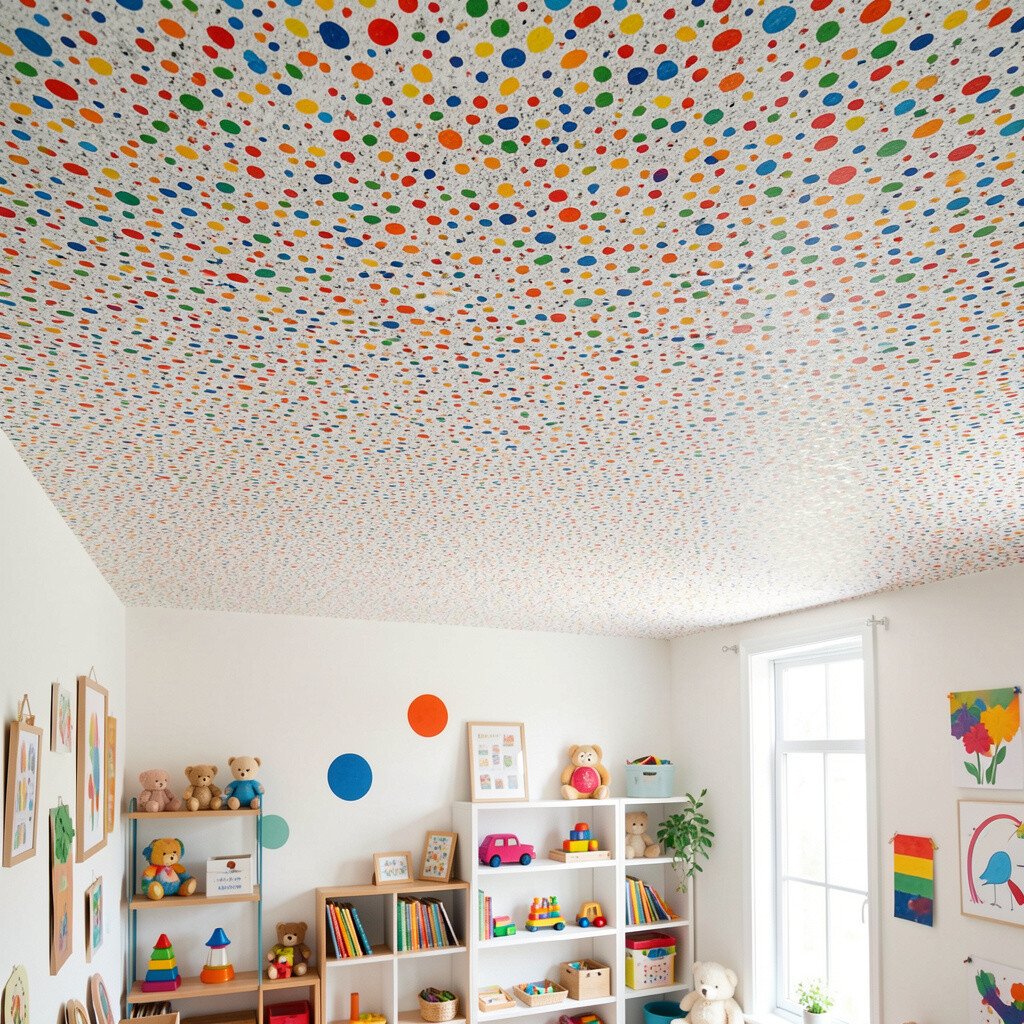
Playrooms get messy and busy, so ceilings should be easy to live with. A stipple finish helps hide small imperfections and fingerprints on painted surfaces because the texture adds visual forgiveness.
If you want a fun vibe, coordinate the ceiling color with a bright accent on the walls, like aqua, sunny yellow, or soft coral. Keep the stipple fine so the ceiling stays cheerful without becoming visually loud.
13. Knockdown with Smooth Trim Lines for a Polished Finish
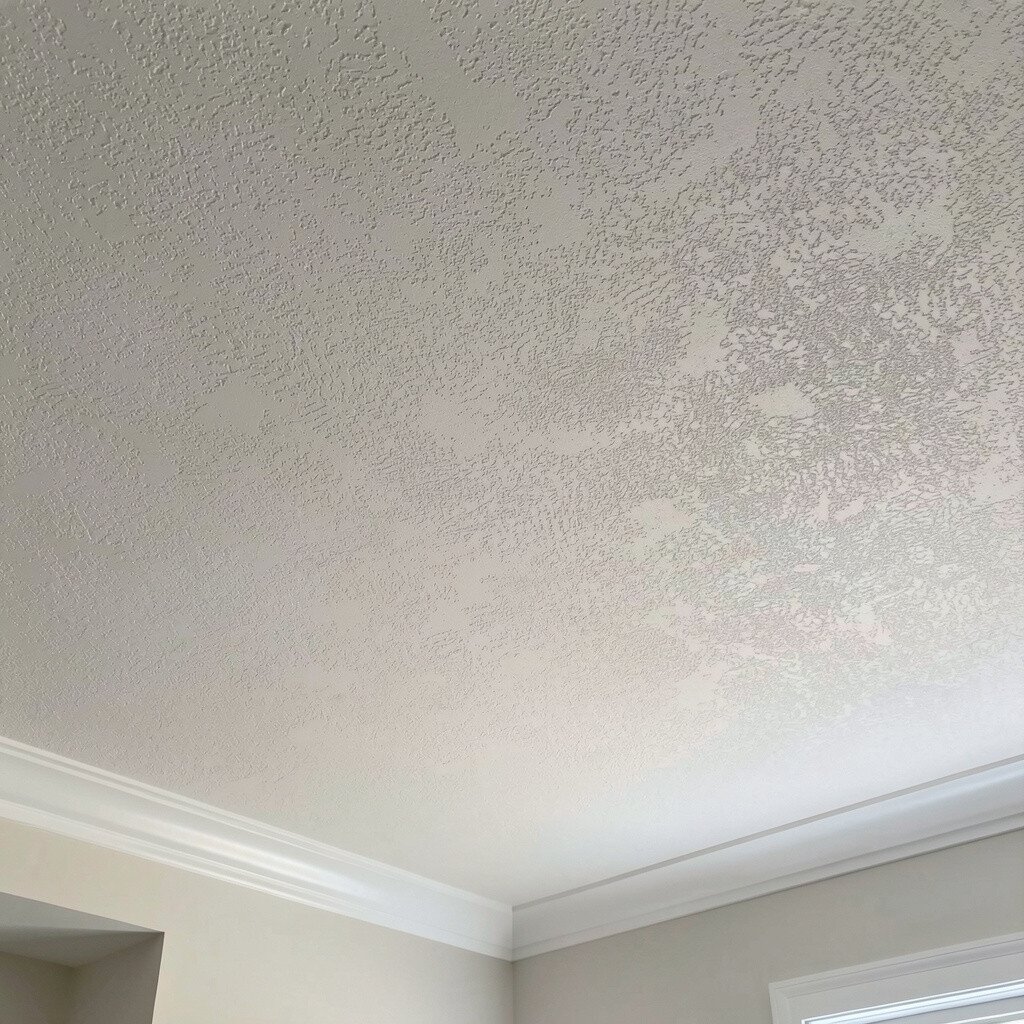
One of the biggest wins with knockdown is how it can look high-end when trim edges are crisp. If you have crown molding or modern ceiling trim, the texture gives warmth while the lines stay clean.
To get that polished look, plan for careful masking and a consistent finish near the trim. Ask your installer how they manage the transition between the ceiling surface and any ceiling beams or soffits so the texture doesn’t bleed into the lines.
Personalize by choosing paint that matches your trim color so the knockdown pattern stands out softly rather than fighting the design. This can be cost-effective because it reduces the need for frequent touch-ups later.
14. Stipple with Light Diffusing Paint for Bright Rooms
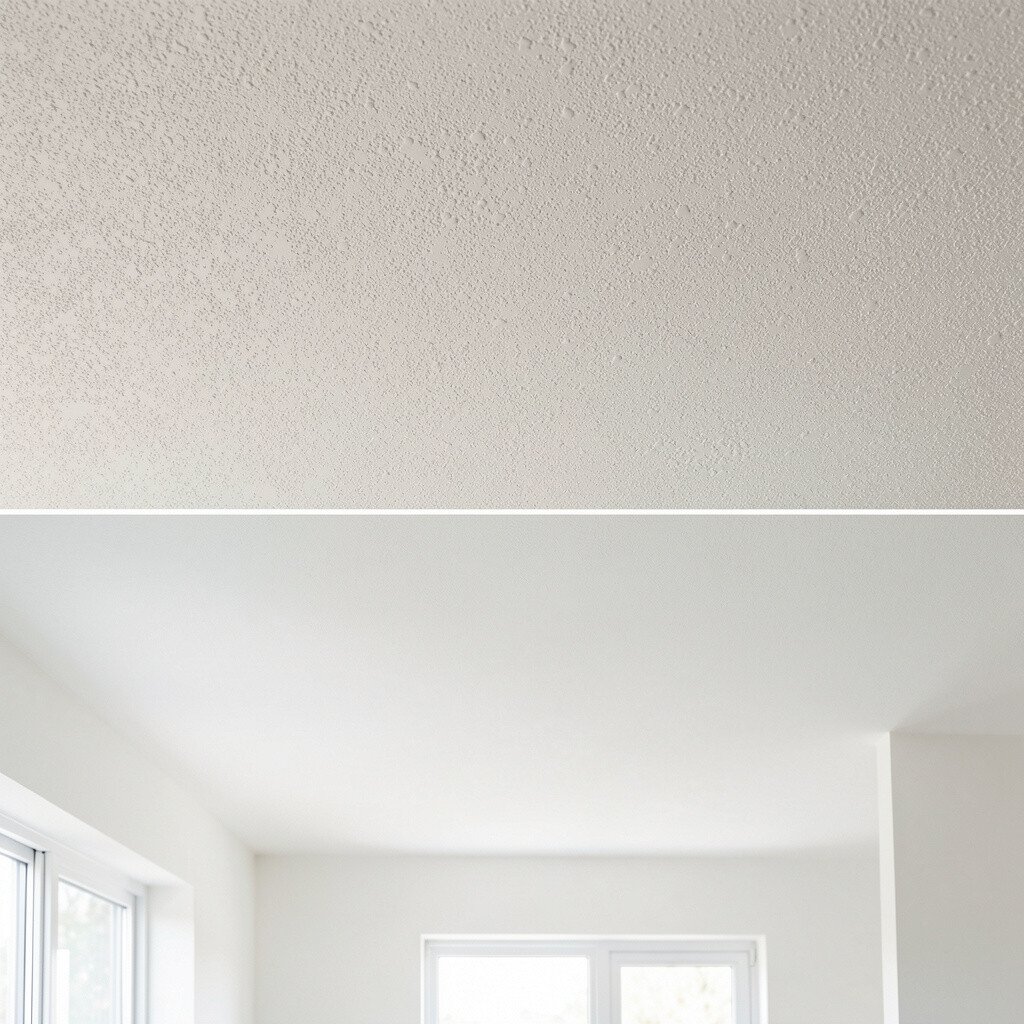
Lighting changes everything, and stipple can help spread light more evenly. When you paint a stipple ceiling with a bright, true white, the tiny pattern can reduce glare and make rooms feel airy.
Try pairing the ceiling with warm wall colors and clean hardware so the whole space feels balanced. For practical results, make sure the primer is even, since stipple texture will reveal thin spots and color differences more easily than a smoother finish.
15. Knockdown for Hallways Where Shadows Matter
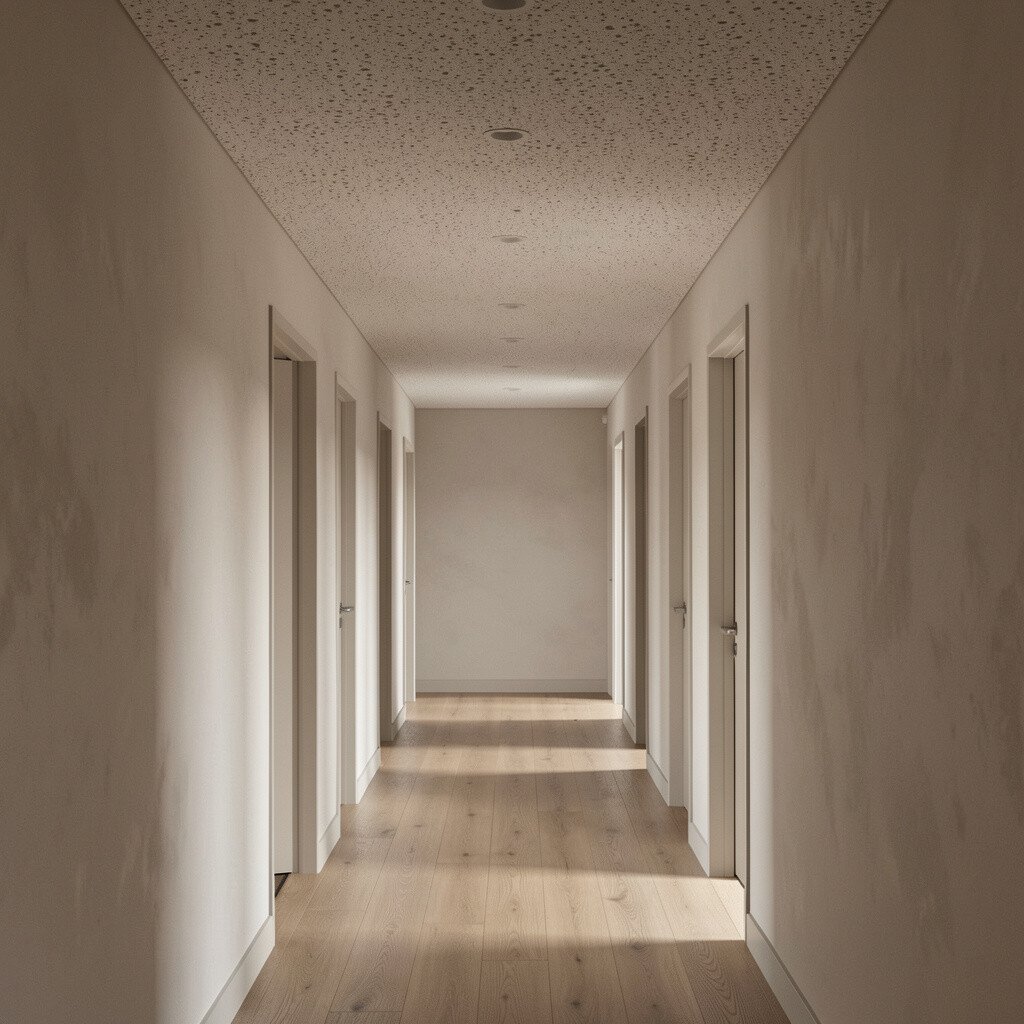
Hallways are narrow, and shadows move as you walk, which can make ceilings look uneven. Knockdown texture can soften those shadow lines because the surface breaks up direct reflections.
Choose a mid-level knockdown intensity so the ceiling looks detailed but not busy. If you want personalization, align the pattern direction with the hallway length so the visual rhythm follows the movement of the space.
Cost can be controlled by doing good prep and ensuring the ceiling is flat enough before texturing. A helpful tip is to ask for a small test patch in the hallway so you can see how it looks under your specific hallway bulbs.
16. Stipple That Works with Ceiling Fans
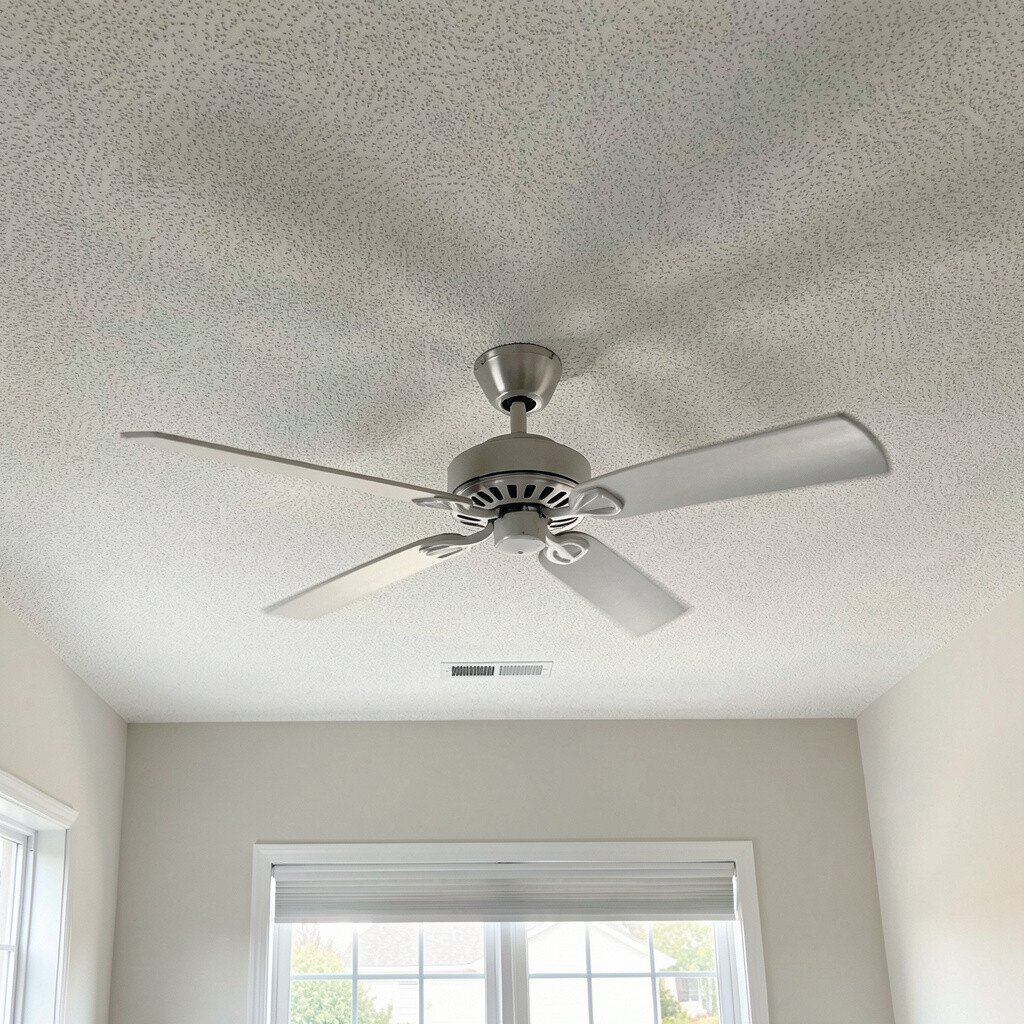
If you have a ceiling fan, stipple is often a great match because it gives the ceiling a stable look even when the fan creates airflow movement. The texture can make the ceiling appear richer while the fan adds function.
For safety and accuracy, make sure the electrical box and fan wiring are installed correctly before finishing. Personalize by coordinating the fan color with your hardware and keeping the ceiling tone close to the trim so the fan doesn’t look isolated.
17. Knockdown in Modern Farmhouse Homes for Character
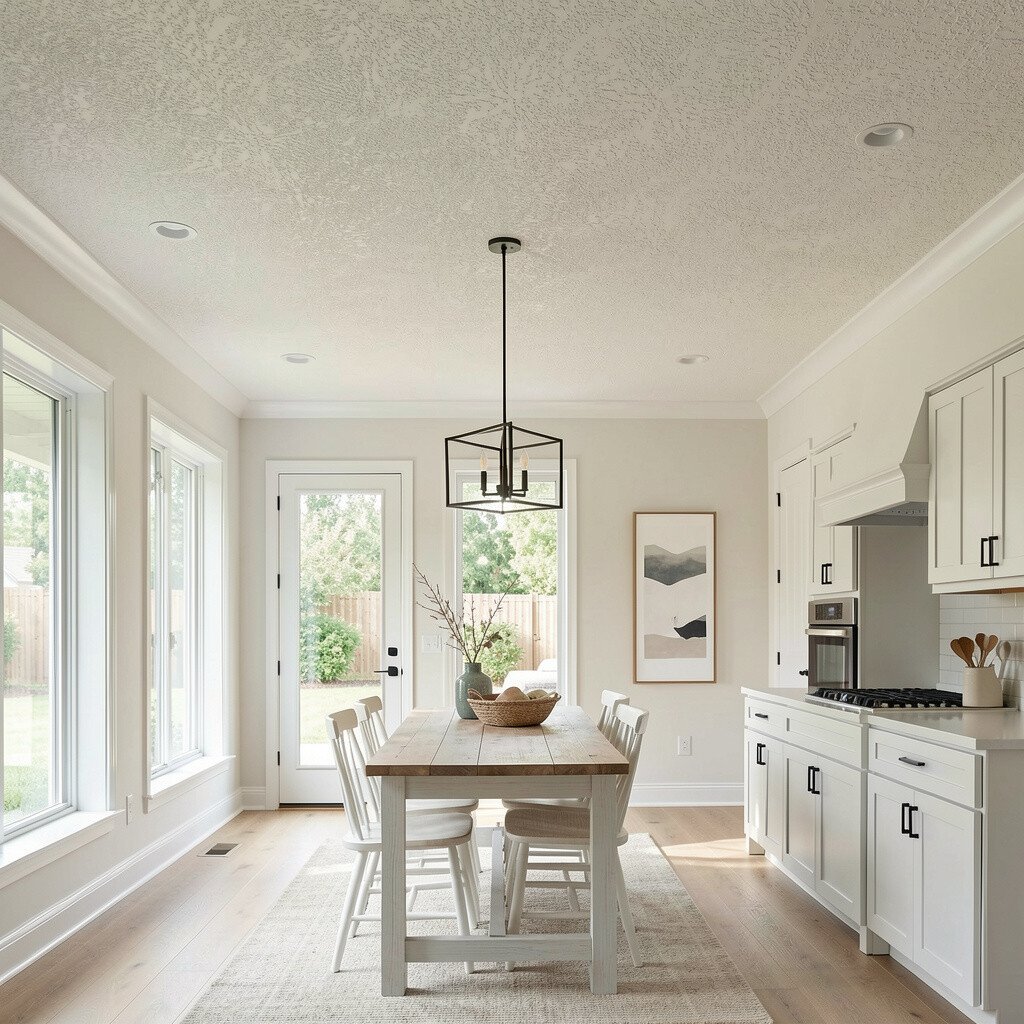
Modern farmhouse style often balances clean design with comforting textures, and knockdown fits right in. The ceiling looks textured and lived-in, but still neat enough for modern interiors.
To get that farmhouse energy, pair knockdown with natural wood beams, shiplap accents, or vintage-inspired lighting. If you want a practical upgrade, choose a knockdown that’s not too aggressive so the ceiling stays easy to paint over later if you change your color scheme.
When thinking about cost, remember that farmhouse-style updates may include extra design elements, but the ceiling texture itself can be relatively straightforward once the prep is done properly. A smart personalization idea is to keep the texture consistent throughout open-plan areas so the look flows from room to room.
18. Stipple in Open-Plan Areas for a Unified Look
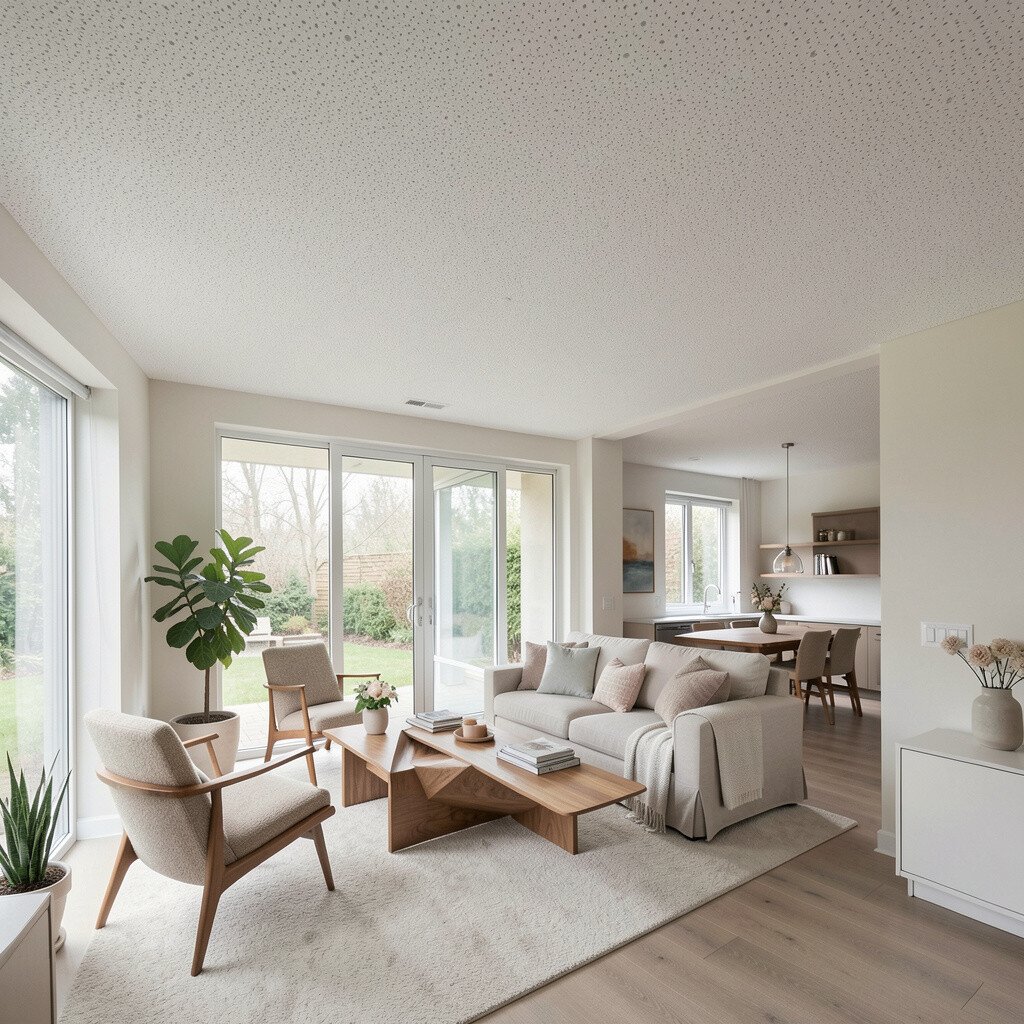
Open-plan rooms can feel messy if each ceiling section has a different finish or sheen. Stipple provides a consistent, speckled surface that can unify multiple zones, like kitchen and living spaces.
For a clean effect, talk to your painter about maintaining the same stipple scale in every section. If your plan includes transitions like soffits or boxed beams, ask how they will blend the texture so you don’t see hard seams.
19. Choosing Between Knockdown and Stipple Based on Your Home
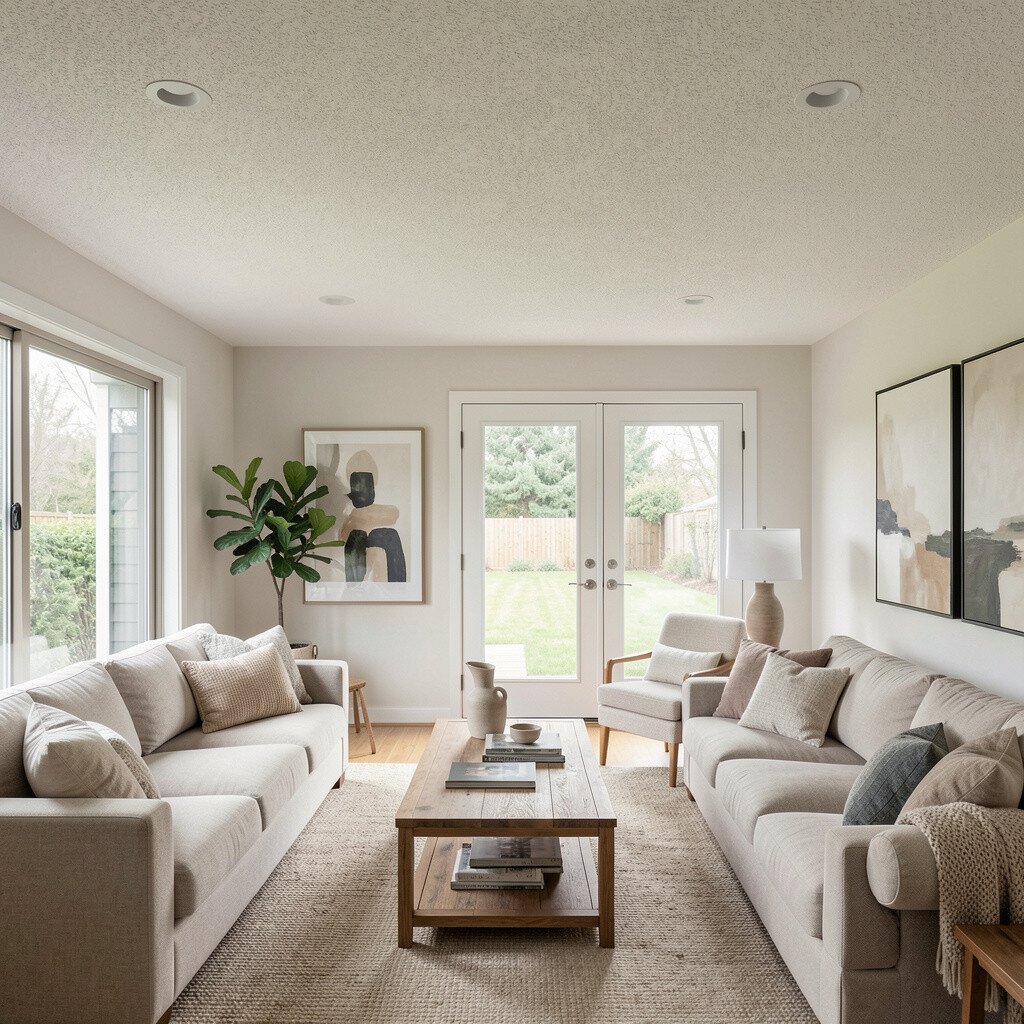
The best choice usually comes down to how you want light and shadows to behave in your space. Knockdown often looks more “broken and cloudy,” while stipple tends to read as smaller speckles that feel orderly and calm.
Consider your room size, ceiling height, and how bold you want the texture to feel. A practical way to decide is to request small sample boards or test patches so you can view both finishes in the same lighting, at different times of day.
For personalization, match the texture intensity to your style, from subtle and smooth-looking to more dramatic depth. Cost-wise, both finishes depend heavily on prep, coverage, and labor time, so the safest move is to get a clear estimate and confirm the exact paint and material plan before work begins.