Your staircase can feel like a grand hotel lobby without losing that timeless, traditional charm. Marble steps add a quiet kind of luxury that still looks welcoming every day.
When you pair classic design with practical choices, your stairway becomes both beautiful and easier to enjoy for years.
1. Classic White Marble With Soft Veining
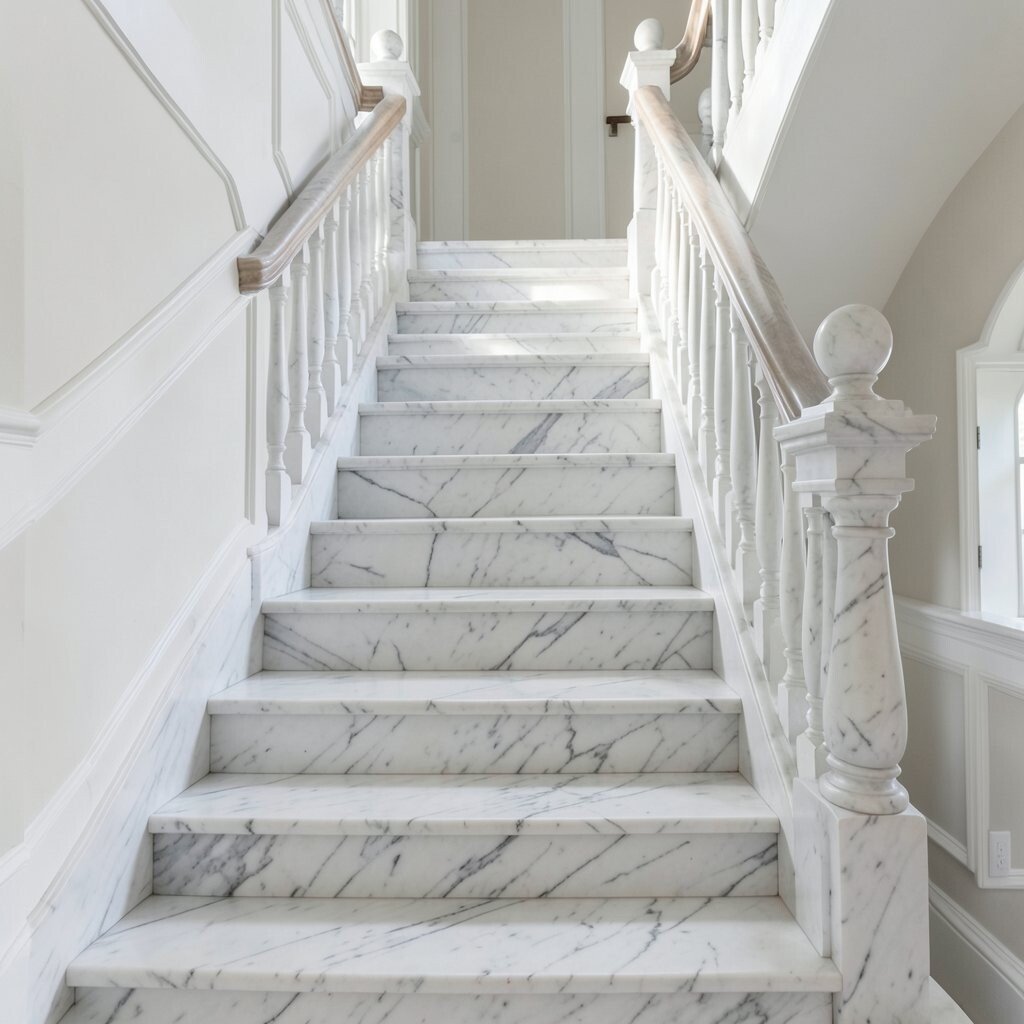
Imagine stepping onto bright white marble with gentle gray swirls that look like natural artwork. The surface catches light as you move, so the whole entry area feels cleaner and more open.
White marble is also forgiving with traditional styling because it pairs easily with wood railings and warm wall colors. Choose a honed finish if you want a calmer look and less glare, especially in hallways that don’t get strong direct sun.
2. Ornate Wrought Iron Balustrade With Marble Treads
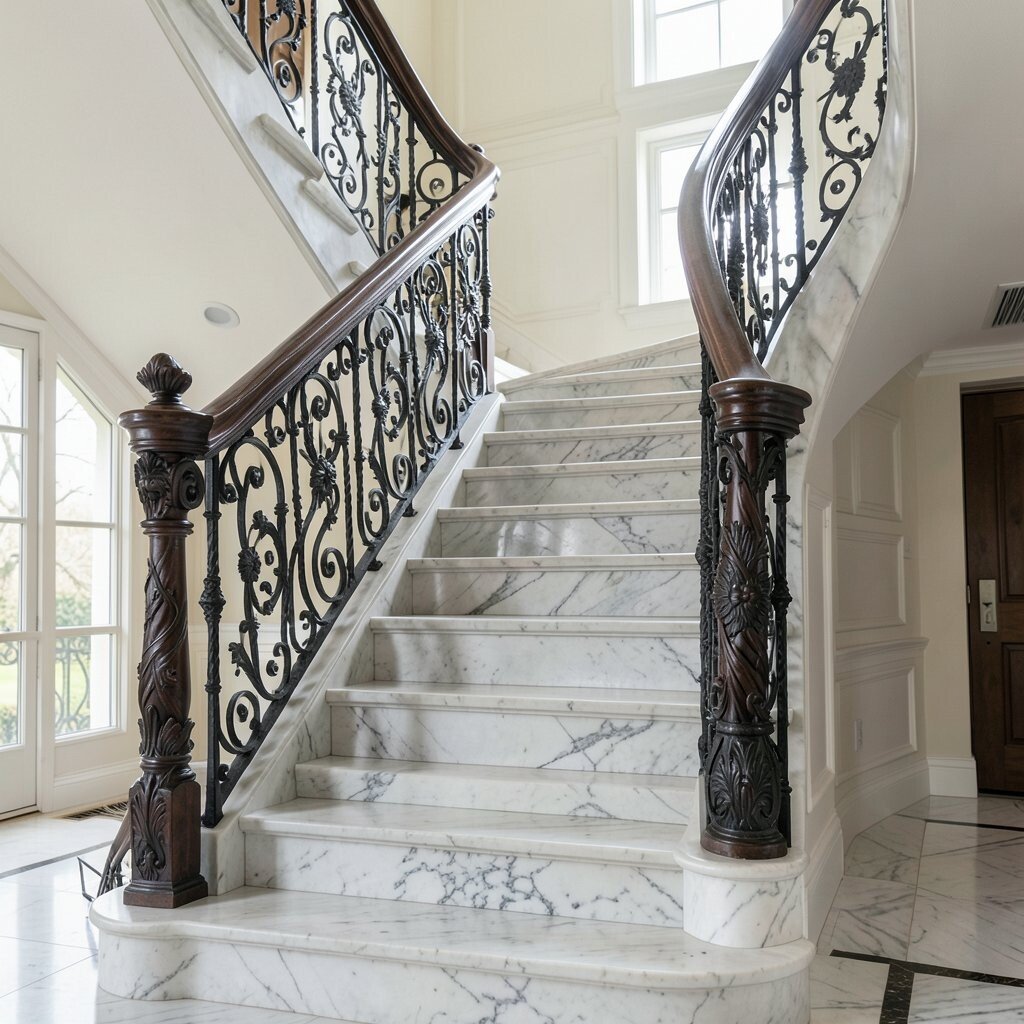
Picture tall, curved wrought iron spindles framed by thick, polished stone edges. The contrast makes the marble look even richer, like a crown for every step.
This combo feels strong and classic because iron brings structure while marble brings elegance. Keep the iron design simple around the most used hand height, and add a protective coating so it stays crisp and clean.
For personalization, match the iron scroll shapes to door hardware or light fixtures so everything looks planned. If you’re budgeting, consider using marble on the visible tread faces first, then extend coverage to risers later if the look still feels incomplete.
3. Warm Cream Marble Paired With Honey-Toned Wood

Soft cream marble with subtle tan veining creates a gentle, inviting glow. It looks especially lovely when the railing is honey-colored wood with a satin finish.
Wood softens marble’s firmness, and that balance can make a traditional staircase feel more comfortable. Use stair-nosing strips or carefully selected grout lines to keep edges tidy and slip-resistant.
To personalize, pick cabinet hardware or picture frames that share the same warm undertone as the wood. In cost terms, cream marble can feel luxurious while offering more flexible options than bold high-contrast stones.
4. Black Marble Accents With Traditional Rail Details
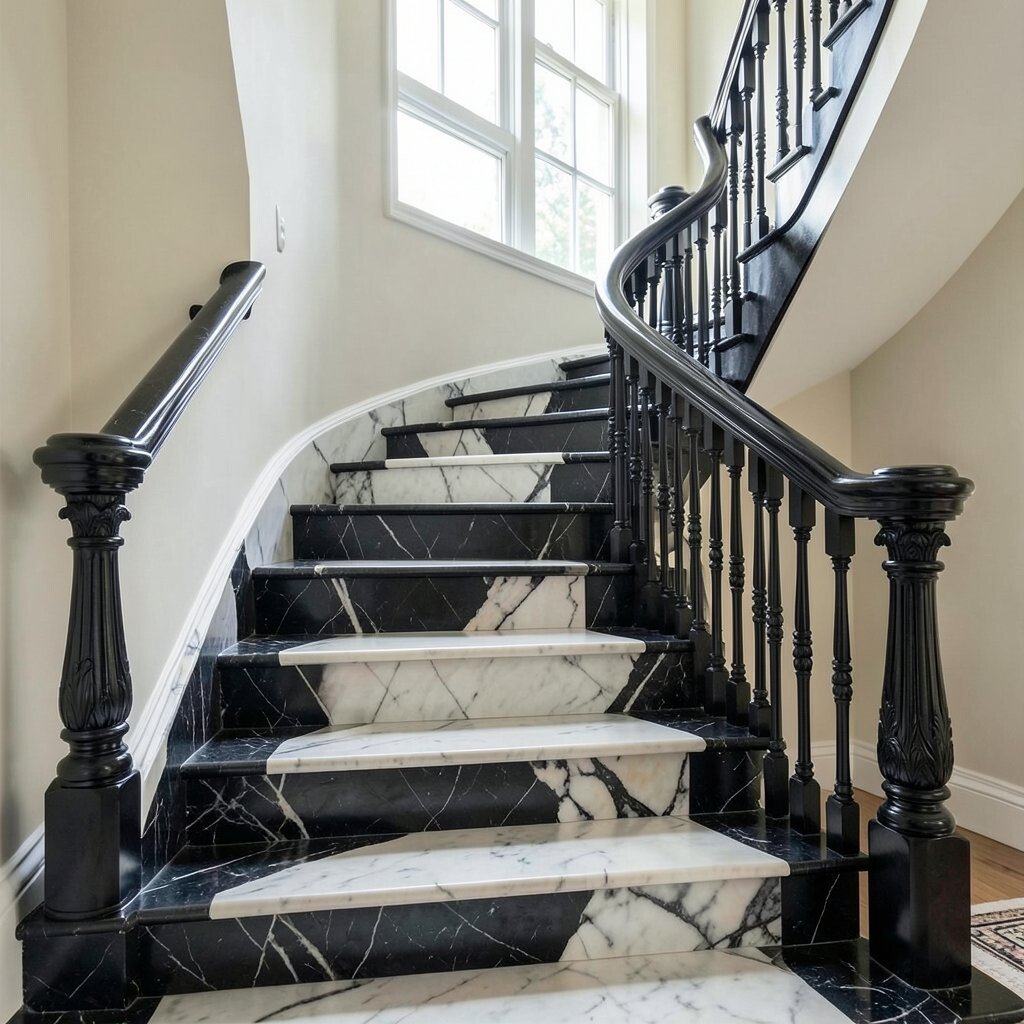
Black marble steps can look dramatic without feeling cold, especially when the rest of the staircase is dressed in classic shapes. Think glossy stone under warm lighting, with traditional rail details that echo the same dark tone.
This look makes entryways feel higher-end because dark stone creates strong visual focus. For safety and comfort, choose a slip-resistant treatment and keep lighting bright near every landing.
5. Marble Steps With Carved Wooden Stringers

Carved wooden stringers make the side of the staircase feel like heritage craftsmanship. When marble steps sit on top, the result feels like an elegant old-world scene.
Wooden detailing adds uniqueness because many homes use plain trim, while carved patterns feel full of personality. You can simplify the carving by sticking to one motif, like floral loops or classic arches, so it stays timeless.
To keep it practical, seal the wood well and wipe marble with a pH-neutral cleaner so it keeps its finish. Budget-wise, carved stringers can be scaled in size, meaning you can invest in the most visible sections first.
6. Two-Tone Marble Layout With Classic Symmetry
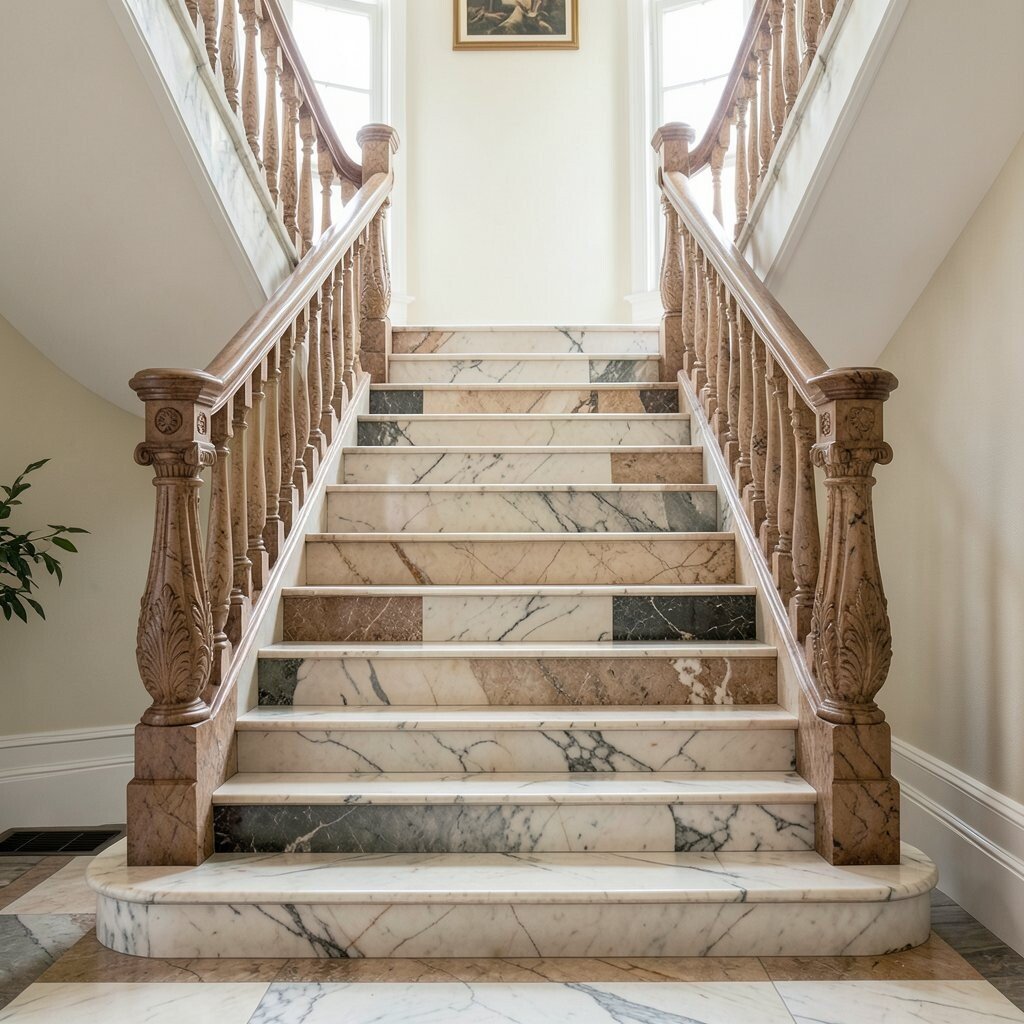
Two-tone marble, such as cream steps with a darker border, can create a crisp symmetrical rhythm. The pattern guides the eye and makes the staircase look designed, not accidental.
Symmetry is a big reason this style feels traditional, and it also helps the staircase look balanced from the front door. Add matching stair riser trim so the lines stay clean and the stone edges feel protected.
7. Vein-Forward Marble With Minimal Distractions

Let the stone do the talking by choosing large-format marble slabs with bold veining. When the slabs are set with care, the staircase becomes a natural art display.
Minimal distractions help the marble pattern shine, and that creates a unique luxury that feels calm. Keep the railing style simple, and pick a color palette for the walls that won’t compete with the stone.
For practical setup, ask your installer about slip-resistant finishes that still preserve the look of the veins. When cost matters, selecting stone based on the best veining from fewer slabs can reduce waste.
8. Traditional Panel Walls Along the Stair Landing

Extend the traditional mood by adding paneled wall sections near the landing. Marble steps will look even more refined when they sit against structured, classic wall texture.
This styling improves the overall flow because the staircase isn’t floating visually. Choose paneling in a warm wood tone or in paint that matches your trim for a cohesive look.
9. Turned Balusters With Classic Marble Stair Edges
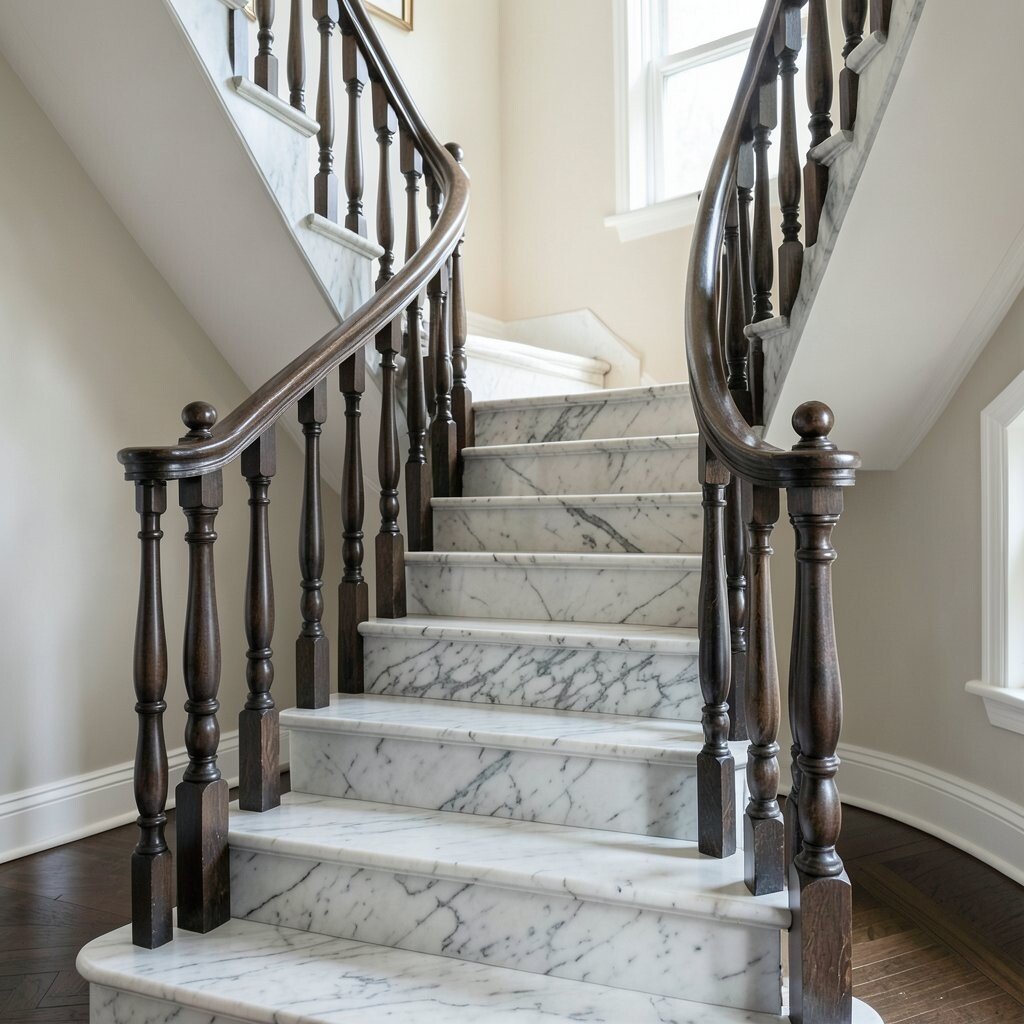
Turned balusters bring a familiar, old-fashioned charm that many people love. When paired with marble stair edges, the look feels both upscale and comforting.
Because turned pieces create repeating rhythm, the design feels traditional without needing heavy ornament. Keep spacing consistent so the stairs feel neat, and select a railing finish that won’t fight the marble undertones.
For personalization, you can vary baluster shapes slightly between the lower and upper runs, as long as the style stays matching. If you’re managing costs, prioritize marble edge quality, since that’s what people notice first with every step.
10. Light Marble With Gold-Flecked Details

Some marbles include tiny golden flecks that look subtle rather than flashy. Under warm bulbs, the flecks glow and make the staircase feel like a gentle celebration.
This works well in traditional spaces because gold accents naturally belong with classic metals and frames. To keep it tasteful, repeat gold only in a few places like the railing caps or chandelier hardware.
11. Marble Steps With Raised Mosaic Inlays on Risers

Raised mosaic inlays on risers can add a handmade feel to an otherwise sleek stair. When the patterns are small and elegant, the staircase still reads as traditional.
This is a fun way to create uniqueness because your risers can carry a custom motif without changing the whole layout. Choose a limited palette that matches the marble, such as soft cream, warm beige, and muted gray.
For practical tips, ensure the mosaic is sealed properly and the inlay surfaces remain smooth underfoot. Cost-wise, mosaics can be used strategically on select sections to keep the project under control.
12. Chevron or Herringbone Marble Pattern on a Stair Run

A chevron or herringbone stone pattern can make a traditional staircase feel instantly special. Even if you keep the railing classic, the step layout adds a confident design move.
This pattern brings movement and helps the staircase feel like a focal point rather than a hallway connector. Use consistent spacing and clean grout lines so the pattern stays sharp and doesn’t look messy.
13. Thick Bullnose Marble Steps for a Grand Look
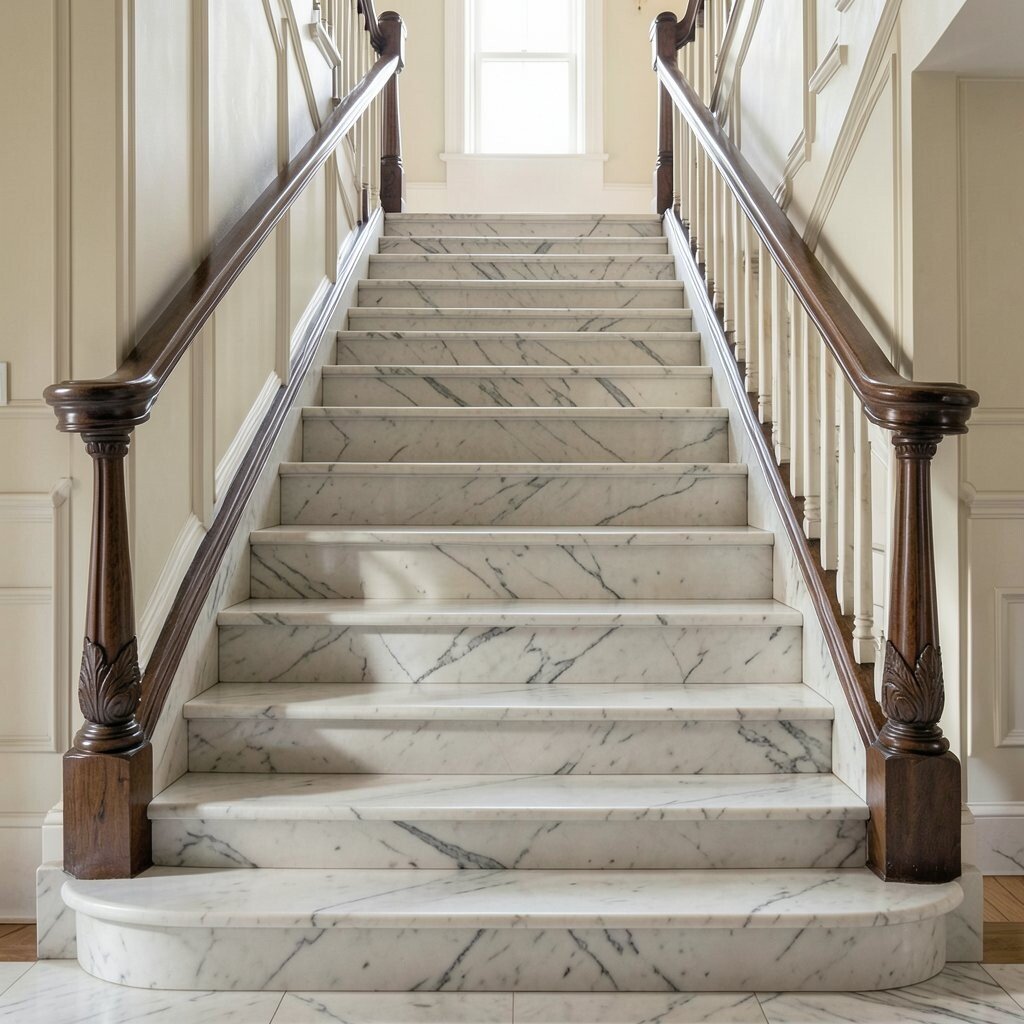
Bullnose marble steps have a rounded edge that feels more substantial. That extra thickness makes the staircase look like it belongs in an elegant residence with history.
When people first see thick-edged stone, they often assume the space is more expensive, and that’s a real visual benefit. For safety, ask for a finish that improves traction while still keeping the edge smooth to the touch.
14. Matching Marble Floors and Stair Treads for Seamless Flow

If your entry hall and adjacent rooms already use marble, matching the tones can make everything feel seamless. Carrying the same stone into the stairs helps the home look well planned.
This approach has a practical benefit because it visually reduces transitions, which can make spaces feel larger. Choose stone with similar veining direction so the flow looks intentional rather than random.
15. Traditional Staircase Runner Rug Over Marble Steps
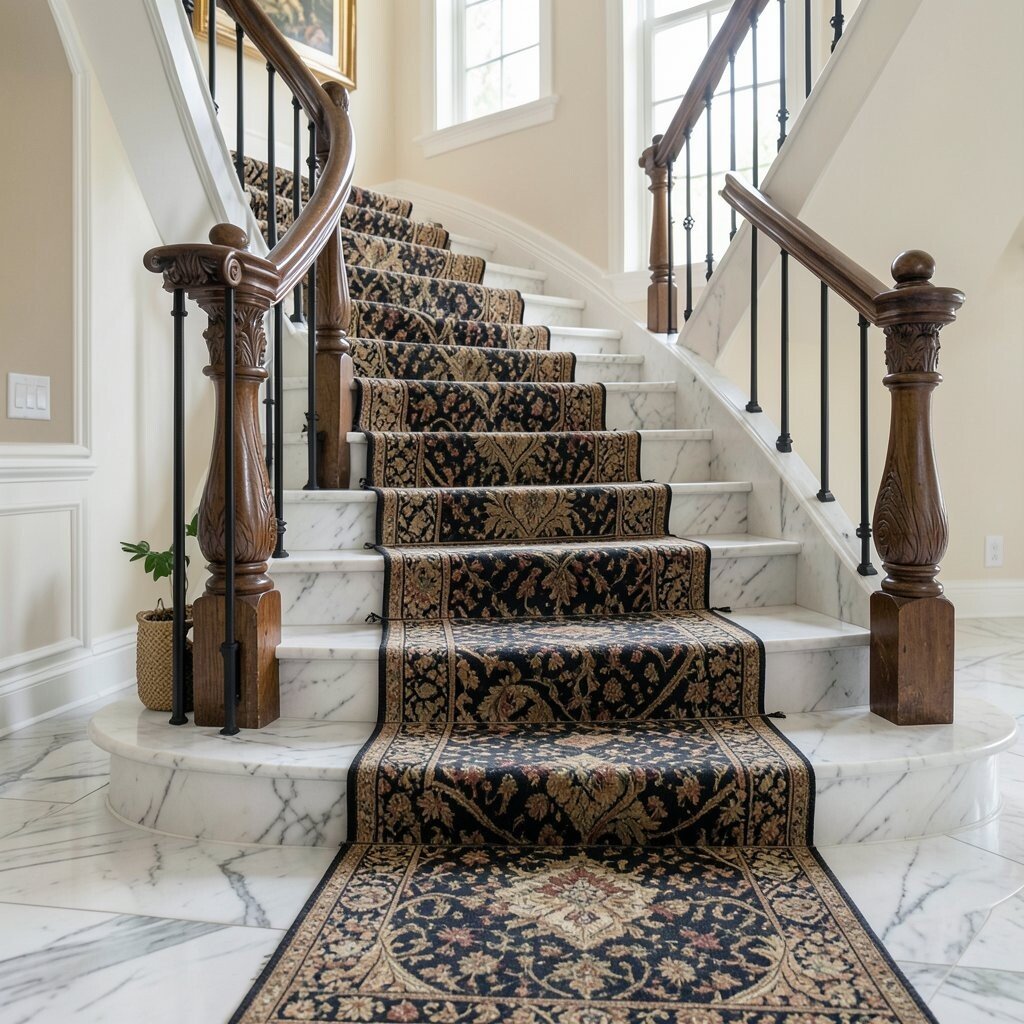
A classic runner rug can add warmth while still letting marble show at the edges. The contrast feels cozy, and it also makes the staircase more forgiving for everyday footsteps.
This is a smart benefit for families because rugs can soften sound and provide grip. Choose a rug pattern that echoes traditional style, like subtle medallions or classic borders, and secure it with grippers that won’t slip.
To personalize, match rug colors to your dining chairs or throw pillows. In cost terms, a runner can deliver a high-end feeling without fully upgrading all stone finishes at once.
16. Marble Steps With Brass Handrail and Classic Finials

Brass details make marble feel even more luxurious, especially when the handrail is warm-toned and smoothly polished. Classic finials add an extra layer of tradition at each turn.
The benefit here is simple: brass hardware stands out in a way that doesn’t require heavy decoration. Choose a finish that resists tarnish so daily cleaning stays easy and the staircase keeps its shine.
For personalization, match brass tones to wall sconces or picture frames. If you’re watching costs, you can choose premium brass only for the handrail sections that are most touched.
17. Sculpted Staircase Walls With Marble Step Risers

Sculpted wall features around the staircase can make the whole area feel like a gallery. When you add marble risers, the vertical surfaces look dramatic and polished.
This combination is unique because it treats the staircase as architecture, not just a means to go up. Plan the stone coverage carefully so the design stays consistent across every run and landing.
For practical tips, ensure the sculpted surfaces are sealed so they’re easy to dust and maintain. Cost can rise with custom wall shaping, so consider focusing sculpting on the most visible stair face first.
18. Antique-Style Wood Railing With Marble Treads and Risers

Antique-style wood railings bring an immediate sense of heritage. When they pair with marble treads and risers, the look feels like a refined estate home.
Wood railings are also practical because they feel comfortable to grip, especially during cooler seasons. Choose a stain that complements the marble undertones, and keep the finish smooth so it cleans easily.
To personalize, add gentle molding lines on the railing base rail that match your room trim. Cost considerations are important here, since fully marble risers raise material use, so you can mix marble with well-finished stone-look alternatives if needed.
19. Marble Steps With Integrated Lighting for Evening Elegance

Small integrated lights near the stair edges can make marble look like it’s glowing from within. At night, the steps become easier to see, and the traditional style feels more magical.
This is both a beauty benefit and a practical benefit because lighting reduces glare and improves step clarity. Choose warm color bulbs to keep the marble from looking too icy.
For personalization, align lighting with the pattern of the treads so it feels deliberate. If you’re budgeting, consider adding lighting only to the most used flight first, then expand later if the results are exactly what you want.
20. Traditional Corner Turn Stair With Marble Steps on Landings

A corner turn staircase has a natural drama because people must pause at the landing. Marble steps on both the run and the landing make that pause feel like a luxury moment.
This design is unique because the stone pattern can be set to wrap around the corner smoothly. Work with your installer on seam placement so the transition looks clean and the lines stay elegant.
21. Marble Steps With Hand-Rubbed Finishes for a Timeless Feel

Instead of only going for shiny polish, consider hand-rubbed or softly finished marble. The surface looks traditional and tactile, almost like it has been there forever.
This finish reduces glare and can hide minor scuffs better than high-gloss surfaces. For practical tips, keep cleaning gentle and avoid harsh chemicals so the finish stays consistent.
Personalization is easy by pairing the softened stone look with matte wall paint and brushed metal accents. In cost terms, finish selection can help you get the look you want without needing the most expensive stone colors.
22. Custom Marble Step Layout With Personalized Edge and Inset Choices

A custom layout lets you choose how the marble meets, how edges look, and what inset details appear at each landing. When it’s planned carefully, the staircase feels made for your home, not copied from a showroom.
This is where luxury becomes truly personal because you can match the design language of your kitchen, fireplace, and trim. Consider edge profiles that feel balanced to your style, such as a crisp bevel or a softer bullnose, depending on the atmosphere you want.
For practical planning, think about the heaviest traffic areas and put the most durable stone finishes where they matter most. Cost considerations can be managed by prioritizing the front-facing surfaces and saving detail work for the stair portions everyone sees first.