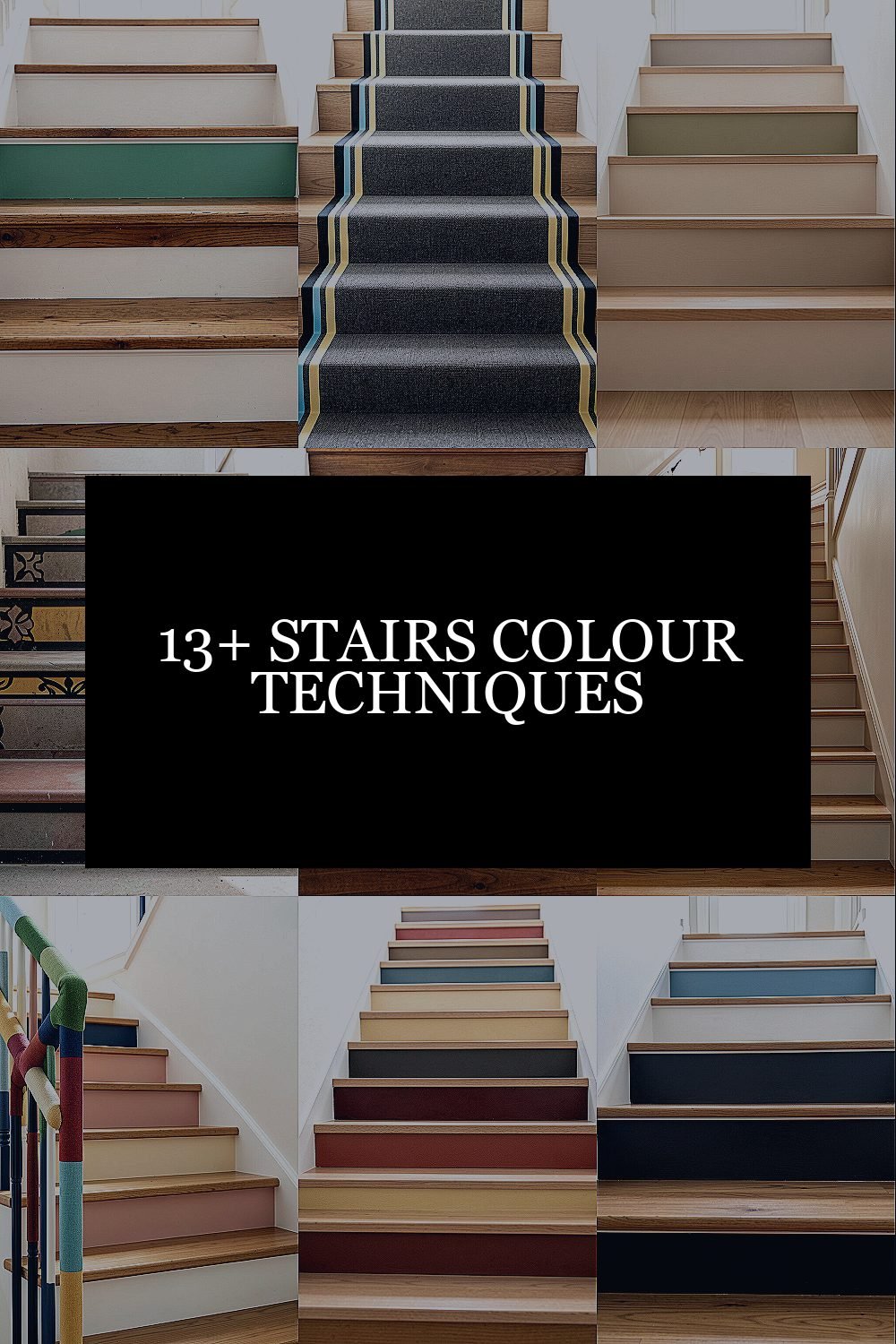
Your stairs can look tired even when the rest of your home feels fresh. With smart color choices, you can give them new energy without any special skills.
Think of every step like a small canvas that helps your hallway feel warmer, brighter, and more you.
1. Paint a Single Accent Stair Tread for Instant Cheer
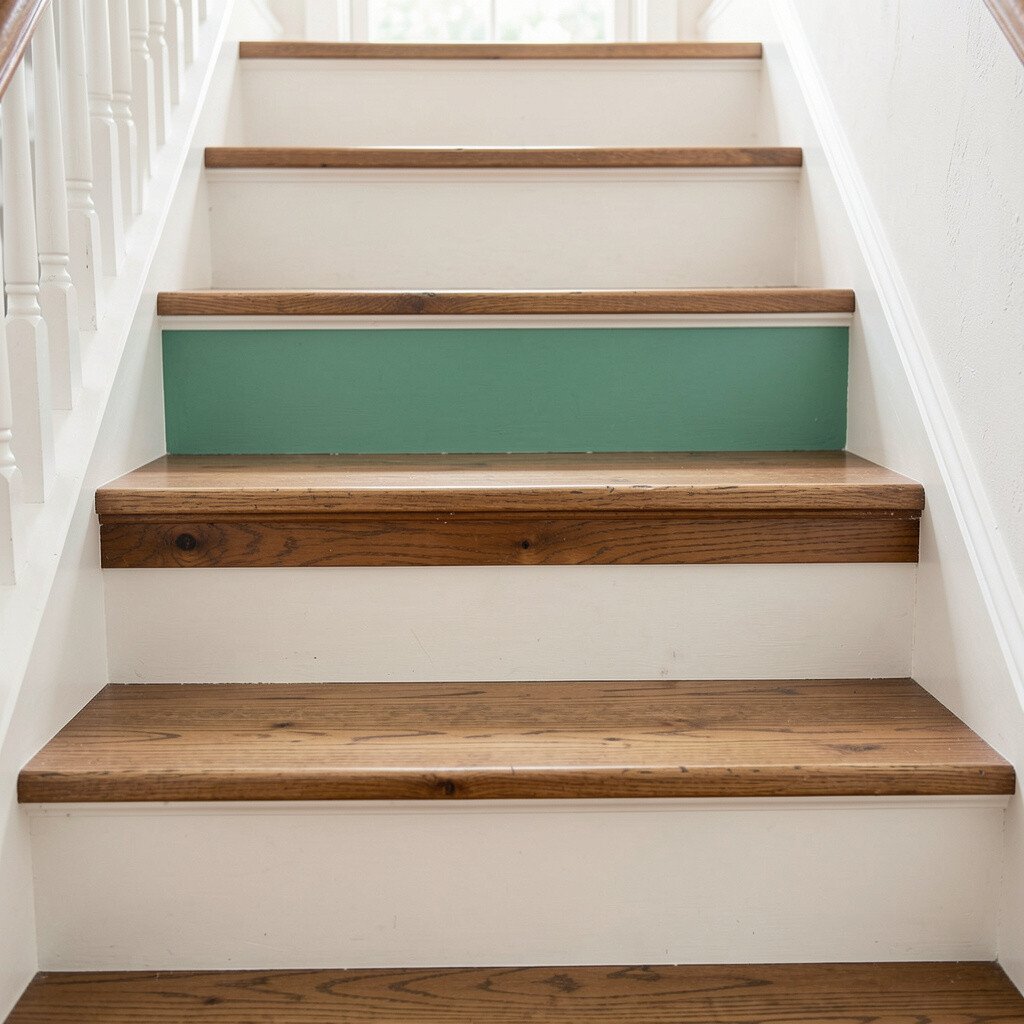
Pick one or two stair treads and paint just the top surface in a cheerful color like soft sage or warm terracotta. Then let the rest stay neutral so your eyes have a little “wow” moment every time you climb.
Choose a paint made for floors or a tough enamel so footprints won’t destroy it quickly. For best results, clean the tread well, lightly scuff it, and use painter’s tape for crisp edges. If you have small kids or pets, go for a darker accent instead of a pale shade, because it hides scuffs better.
2. Use a Two-Tone Runner Look with Removable Tape Lines

Instead of painting the whole staircase, create a two-tone stripe effect using painter’s tape and floor-safe paint. Put the tape where the visual split should happen, like along the nosing or a straight band that follows the tread line.
The result looks custom, even if your hands are not “crafty.” Start with a light base, then add the stripe in a deeper shade such as navy or charcoal so the steps feel bold and grounded. When you use tape carefully, you can personalize the width and placement to match your hallway style.
To keep upkeep easy, consider using semi-gloss for the stripe, since it reflects light and wipes clean. For a trend that feels current, try pairing a cool greige with a muted green stripe rather than bright primary colors. This approach also lets you swap colors later without committing to full repainting.
3. Color the Riser Faces for a Softer, Lighter Step-Up

Paint the vertical risers in a gentle shade like creamy white or light butter yellow. Your stairs will look higher and friendlier because the color “fills in” the empty vertical spaces.
Keep the treads and banister in a darker finish, so the steps stay practical and less likely to show dirt. When you paint risers, you also get a clean, structured look that feels neat even from the bottom of the stairs. If you want uniqueness, try a subtle gradient effect with slightly different tones across a few risers.
Choose a color that matches your wall undertone so everything feels coordinated. Warm undertones like beige, honey, and peach will look cozy, while cooler undertones like soft blue and grey feel calm. For cost, this technique is usually budget-friendly because you can work with smaller amounts of paint and quick drying times.
4. Add a Bold Edge Border with Stencil-Style Shapes
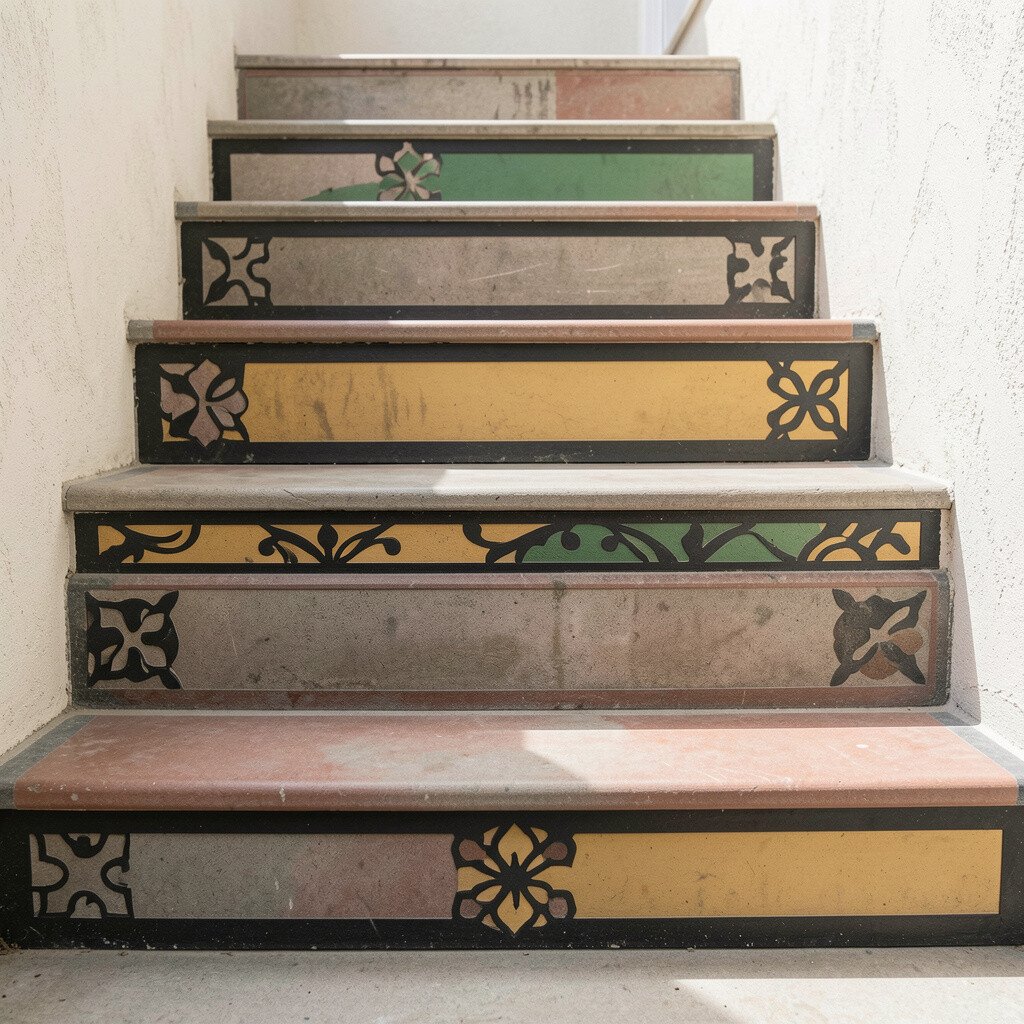
For a fun, artsy look, paint a thin border along the tread edge using a simple stencil or freehand block shapes. Even a single repeating pattern, like tiny circles or diagonal dashes, can make the staircase feel styled.
Go with matte or satin paint so the design doesn’t glare under light. This is a great way to bring uniqueness to a rented home, because you can keep the border narrow and reversible later. Try matching the border color to something you already love, like cabinet handles, a rug pattern, or a framed print.
5. Create a Sunburst Mood by Staining Only the Center Area
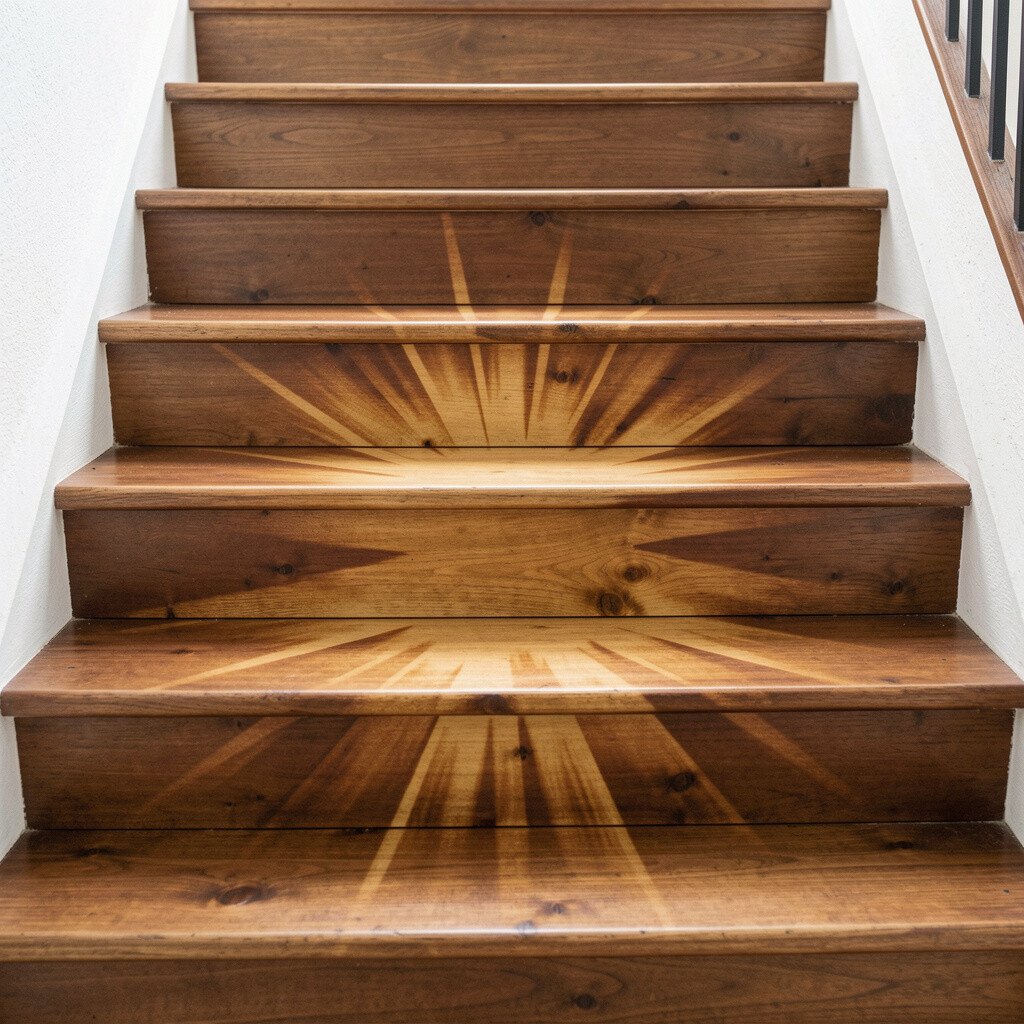
If your stairs are wood, you can brighten them without full repainting by focusing stain on the center of each tread. Blend lighter tones in the middle and let the edges stay darker, which frames the walkway like a warm spotlight.
The visual effect makes your stairs feel more dimensional, almost like they’re glowing from inside. Use a stain that is water-based and easy to wipe on, then seal it for durability. This technique is ideal if you want something unique but still natural, since it keeps the grain visible.
To personalize, pick a stain shade that matches your current floors, or go one step lighter for a fresh, airy look. For cost, spot-staining is often cheaper than sanding and finishing the entire staircase. It also keeps the workload smaller, so you can finish in a weekend.
6. Paint Stair Sidewalls in a “Gallery” Neutral with Warm Highlights
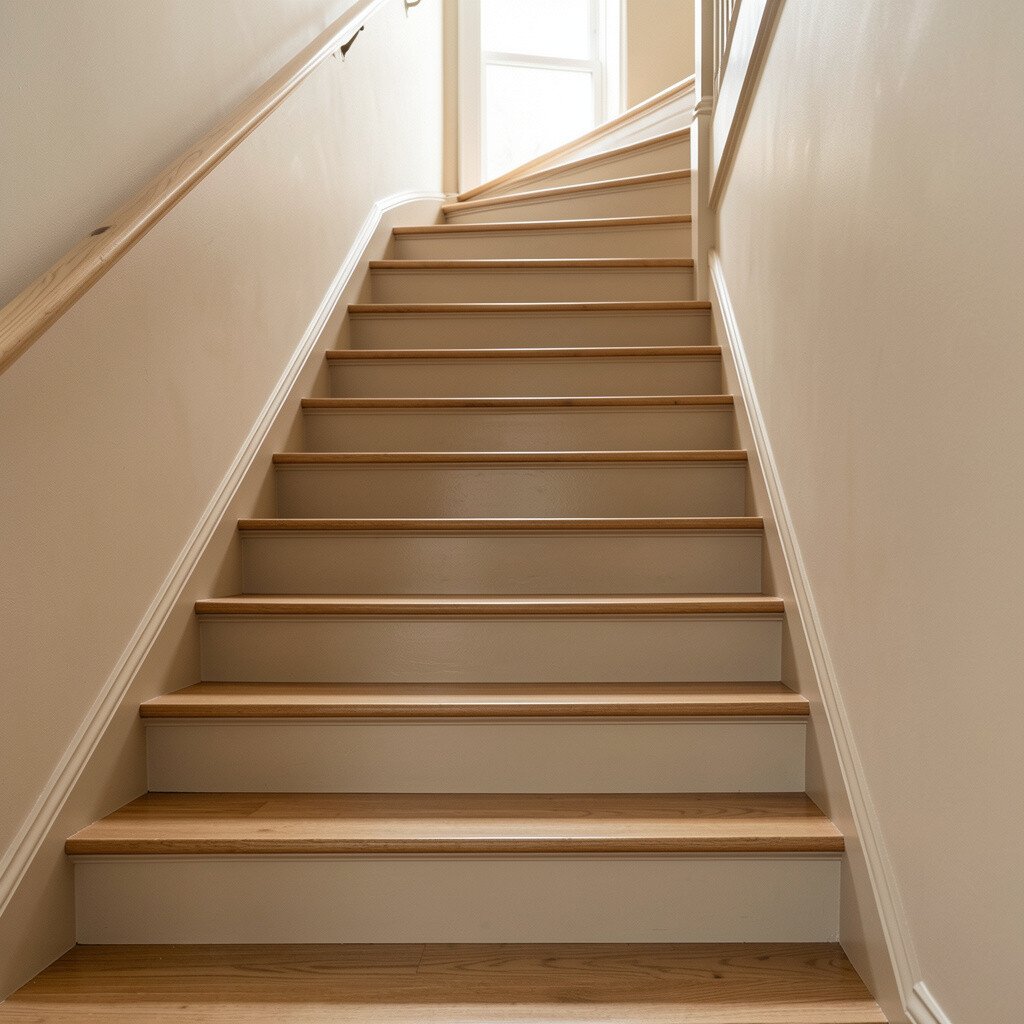
Many stairs feel dull because the sidewalls are the biggest blank space. Paint the sidewall or stringer in a warm neutral such as warm greige, oat, or soft taupe, then add a highlight color near the handrail.
This makes the whole stair zone feel intentional, like a small hallway gallery. A neutral base also pairs well with changing decor, so you won’t need new paint every time you swap throws or wall art. Choose a satin finish for easy cleaning, especially if the sidewalls get scuffed by bags or coats.
7. Try a Color-Blocked Banister Wrap with Fabric-Like Paint
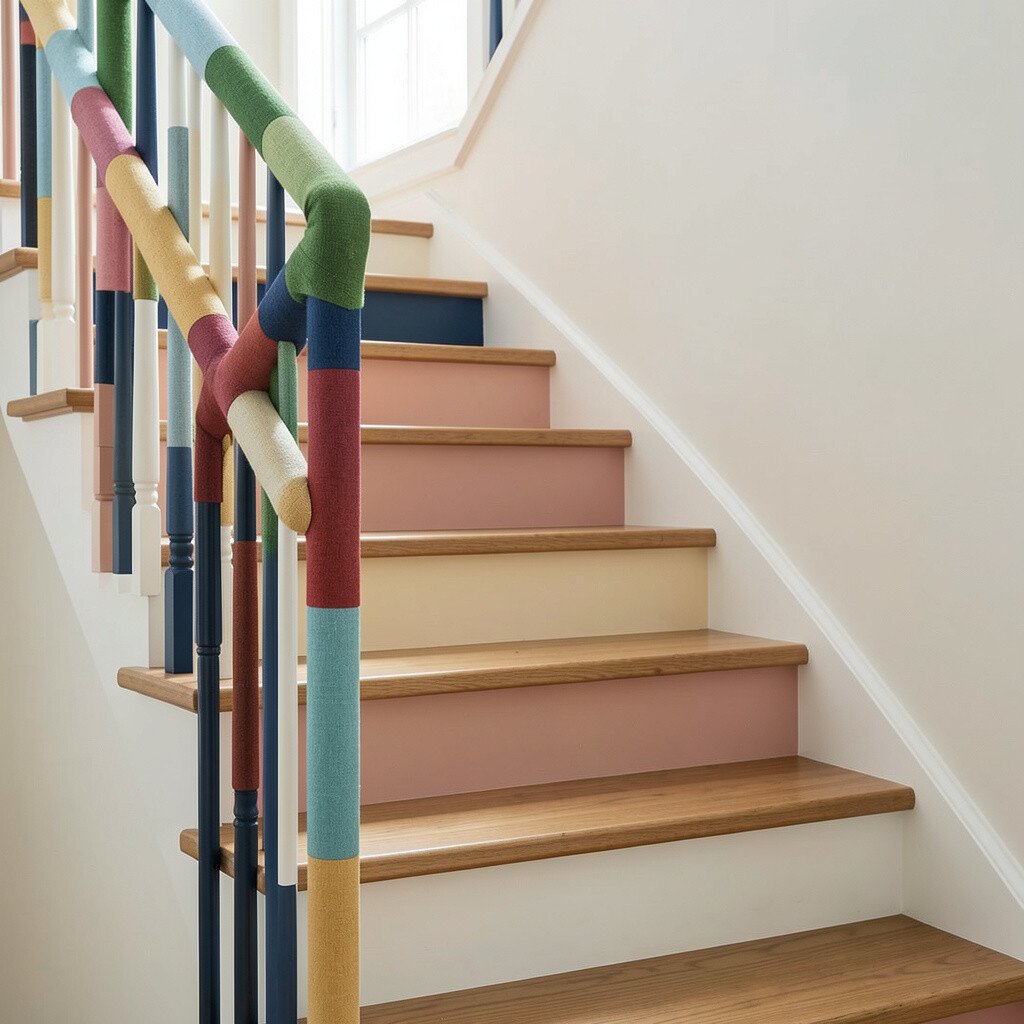
Instead of treating the banister like an afterthought, paint sections so it looks color-blocked and modern. Pick two colors with similar intensity, such as deep forest and soft cream, so the look feels balanced.
For no-skill success, use thin painter’s tape to mark the boundaries, then apply paint in smooth coats. Use a product that is meant for wood or trim, and allow enough drying time so your handprints don’t stick. This technique gives bold character and can tie your staircase into the rest of the room instantly.
If you want trends without going too loud, lean into nature-inspired palettes that feel calm and stylish. To personalize, mirror the same colors on an adjacent wall or picture frames. It’s also budget-friendly because you paint a smaller surface area than most stair projects.
8. Make Each Step a Tiny Mood Boost with Gradual Shade Changes
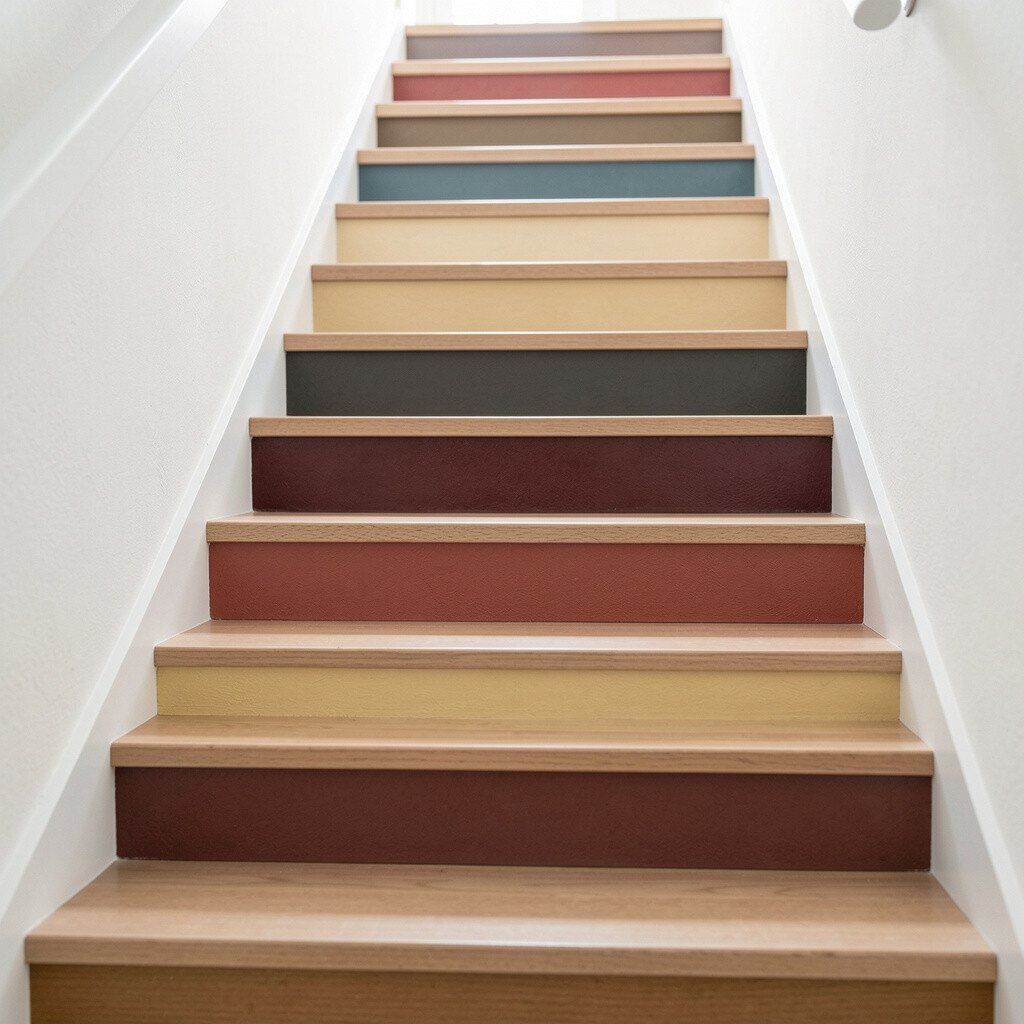
Choose a single color family and use it on each tread or riser in a gentle step pattern. For example, start with a light tone at the bottom, then gradually move to medium and deeper tones as you go up.
This creates a playful “mood ladder” that makes everyday movement feel more fun. Pick shades that relate to your home’s lighting, since warm light can deepen colors and cool light can mute them. Use sample pots and test two or three shades on scrap boards or hidden stair spots before committing.
9. Brighten Dark Stairs by Painting Only the Under-Edge
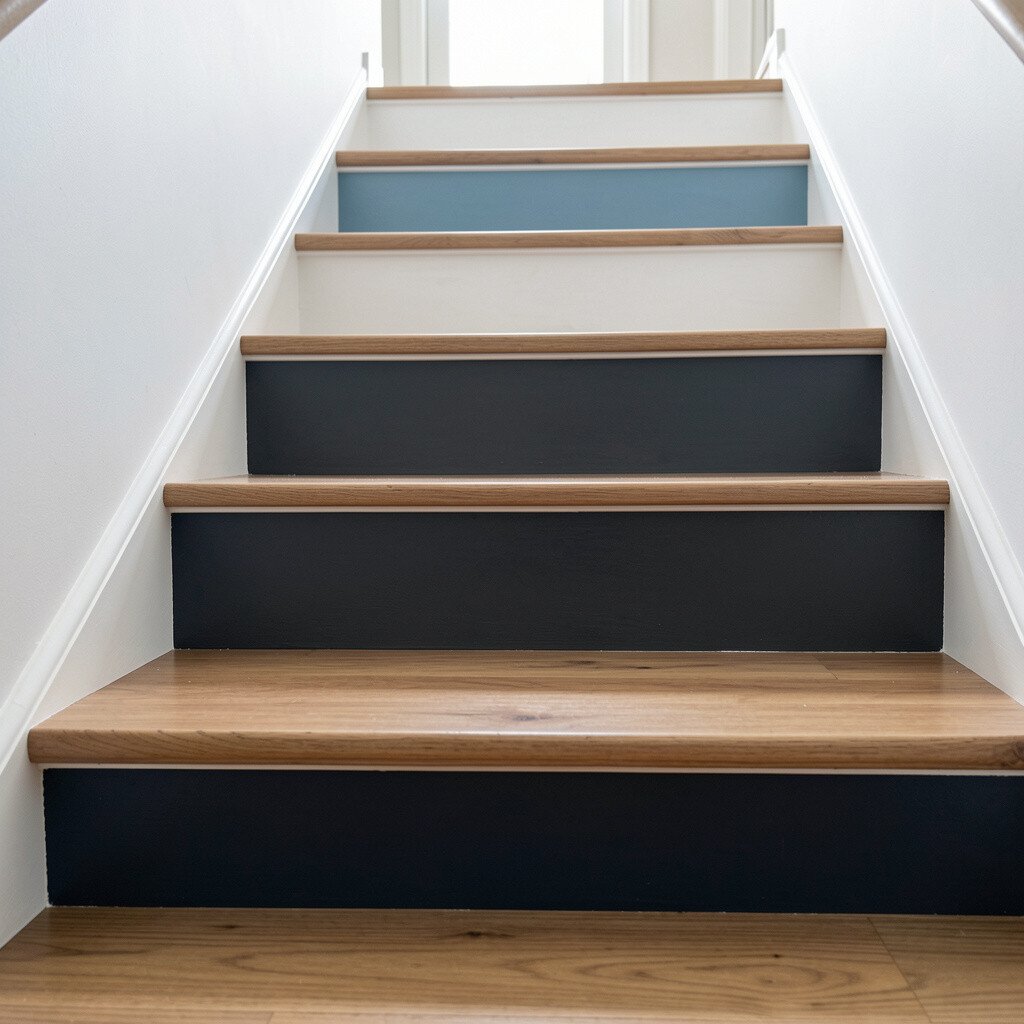
If your staircase is shadowy, paint the underside edges where light hits hardest. A quick coat of crisp white or soft ivory on the underside can lift the whole look without changing every surface.
Even a small change like this makes stair treads appear cleaner and brighter. Use masking tape to protect nearby wood and paint with steady strokes so lines stay tidy. This is also a smart cost choice because you use less paint than full coverage, and you can finish faster.
10. Use High-Contrast Floor Paint for “Guided” Foot Placement
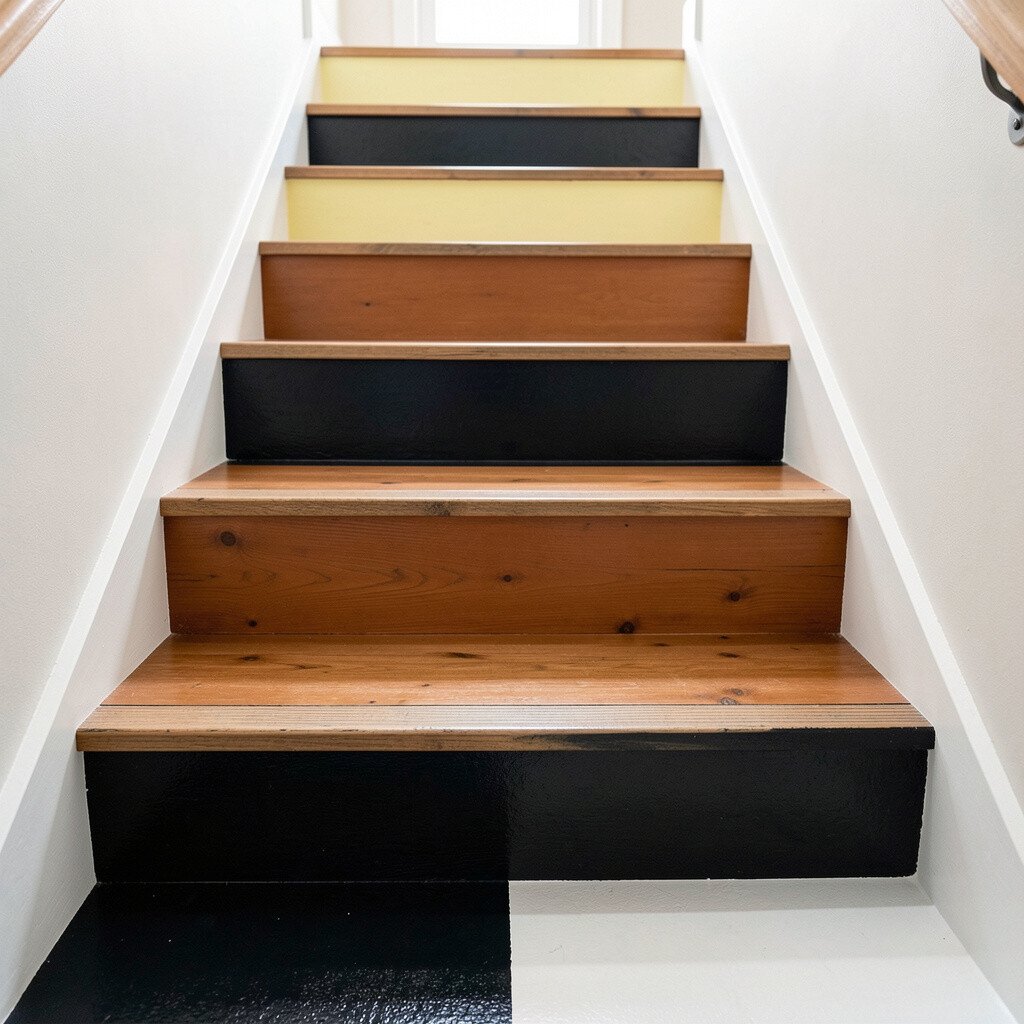
Paint simple arrows or guide lines on treads to help foot placement and add a sporty vibe. Keep the shapes subtle, like a directional stripe across the center, or go playful with small arrow icons.
The benefit is double-layered: it looks stylish and it reduces the chance of slipping on smooth days. Choose a slip-resistant or textured paint option if your stairs get slick, especially in winter. For personalization, match the arrow color to a theme you already have, like nautical navy or modern black and white.
11. Add Soft Color Washes with Sponging for a Vintage Feel
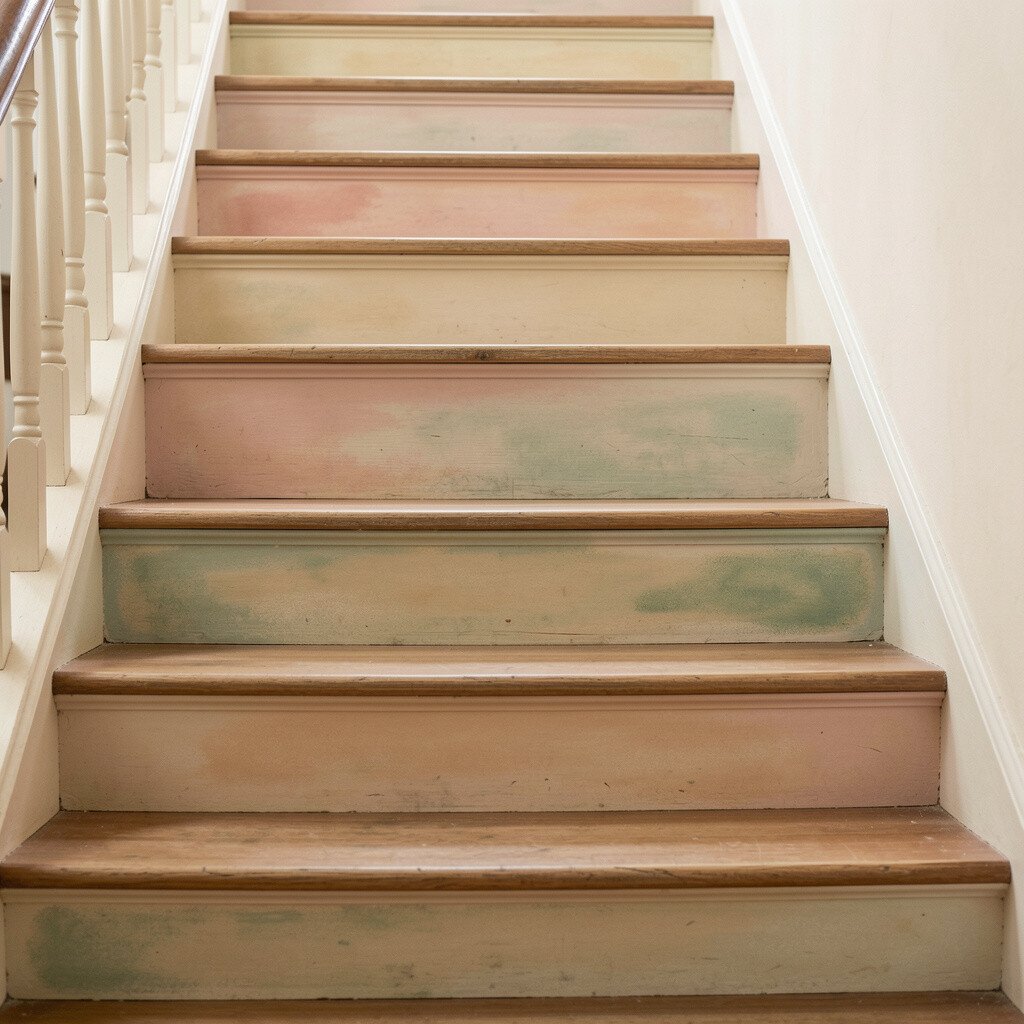
For a no-fuss artistic look, use a sponge to create a light wash on risers or side panels. Start with a base color, then dab a second shade over it so the finish looks mottled and vintage.
This method hides small brush marks and feels more forgiving than smooth solid paint. It also gives uniqueness because every sponging pattern turns out slightly different. Pick two colors that work together, like cream and pale sage, to keep it airy rather than chaotic.
If you want a trend that still feels warm, go for “old-world” earth tones with gentle contrast. Cost stays reasonable because a little paint goes far when you dab rather than fully cover. If you later change your mind, the washed look is easier to blend into future coats.
12. Stencil a Simple Pattern Only on the Landing Steps

Instead of decorating every step, focus on the landing where people pause and turn. Stenciling a repeating pattern on a few landing treads makes the stairs feel like they have a signature feature.
Use a stencil with large shapes so your results look crisp even if you’re not a pro. Line up the stencil carefully, then use a small amount of paint so you don’t bleed under the edges. This approach is practical because it limits time and paint while still making a big visual impact.
13. Color-Match the Stair Risers to a Room Accent Color
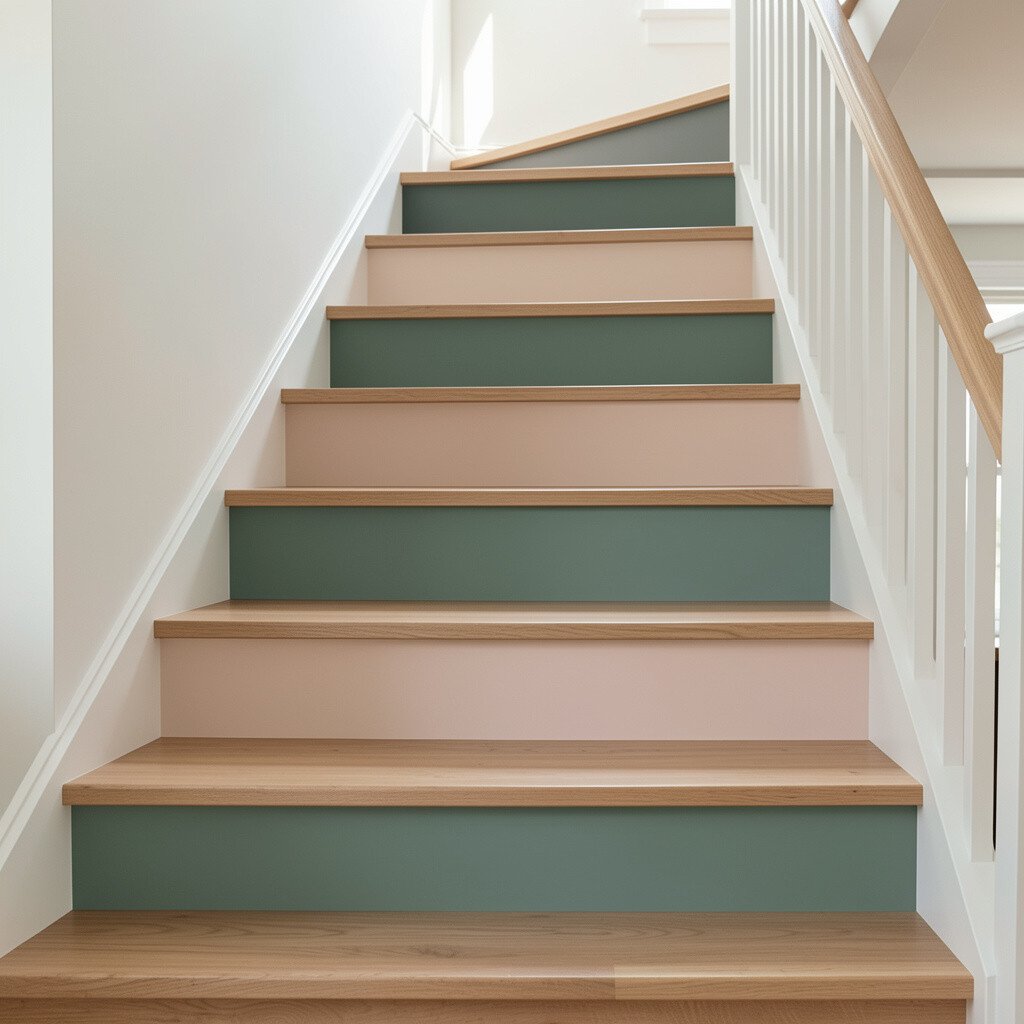
Choose a color you already use in the room, then bring it onto the risers for instant harmony. If your living room has teal cushions or your dining space has terracotta ceramics, echo that shade on the stairs for a coordinated flow.
This makes the home feel styled rather than random, because the staircase becomes part of the same design story. Keep the treads neutral so the space stays safe and easy to maintain. For personalization, vary the intensity slightly, using a lighter version of the accent color so it feels fresh and bright.
For cost, matching an existing palette often means you already have paint swatches on hand, so you can choose confidently. Right now, many homes lean into cohesive accents instead of constant new colors. It’s a simple way to look current without overdoing it.
14. Finish with Glaze or Tint for a Subtle, Luxurious Glow
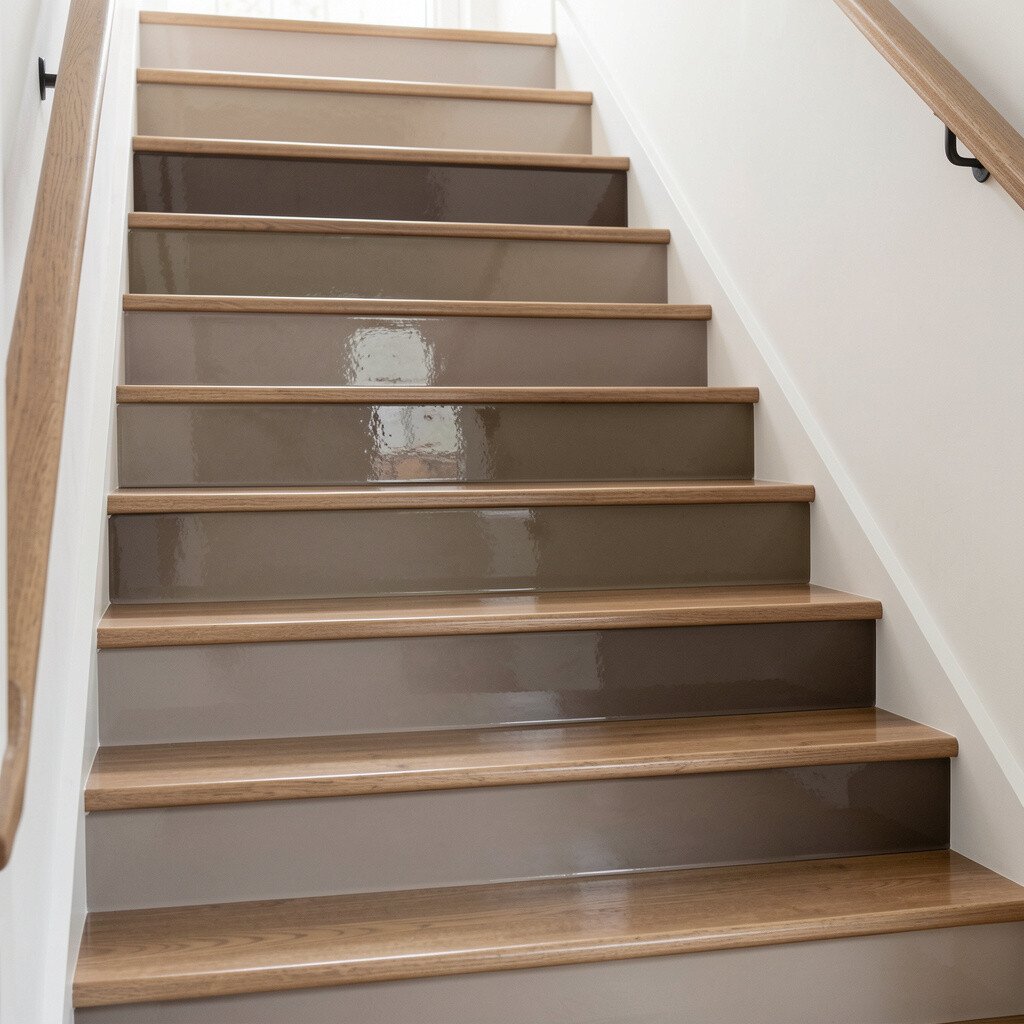
If you want color without a heavy look, use a glaze or tinted topcoat on painted risers. It adds a soft sheen and depth, so the staircase catches light differently throughout the day.
This technique gives a unique, “designer finish” vibe while still staying practical for everyday living. Apply it in thin coats, and test on a spare piece first so you know the final shade. A glaze can also help unify multiple painted surfaces, which is handy if your stairs are made of different materials.
For personalization, tint the glaze slightly warmer or cooler to match your lighting, like honey for warm lamps or pearl grey for cooler bulbs. The cost is usually a bit higher than plain paint, but you need less product for the same overall impact. If you like a calm, elegant look, this is one of the easiest ways to brighten stairs while keeping them classy.