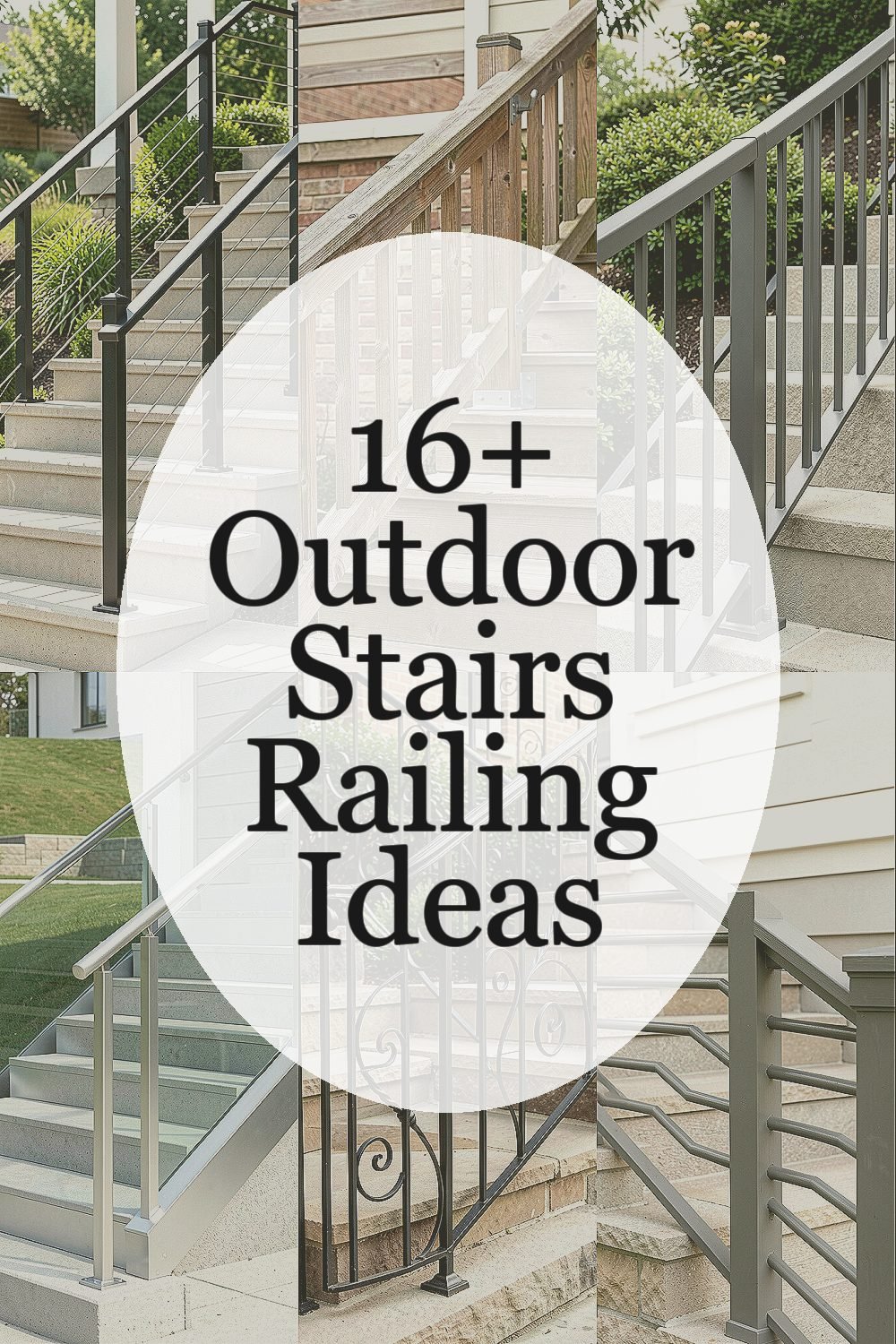
The right railing can make outdoor stairs feel calm and confident. It also adds the kind of curb appeal people notice right away.
1. Cable Railing With Slim Posts

Thin cables stretch across posts like neat lines of music. They give you strong hand support without blocking the view of your yard.
For safety, keep the spacing tight enough that kids and pets can’t slip through. Use stainless steel cable and weatherproof fittings so they hold up through rain and snow. A practical trick is to add a slightly thicker top rail where hands naturally rest, since comfort matters on every trip up or down.
2. Rustic Wood Handrail With Metal Brackets
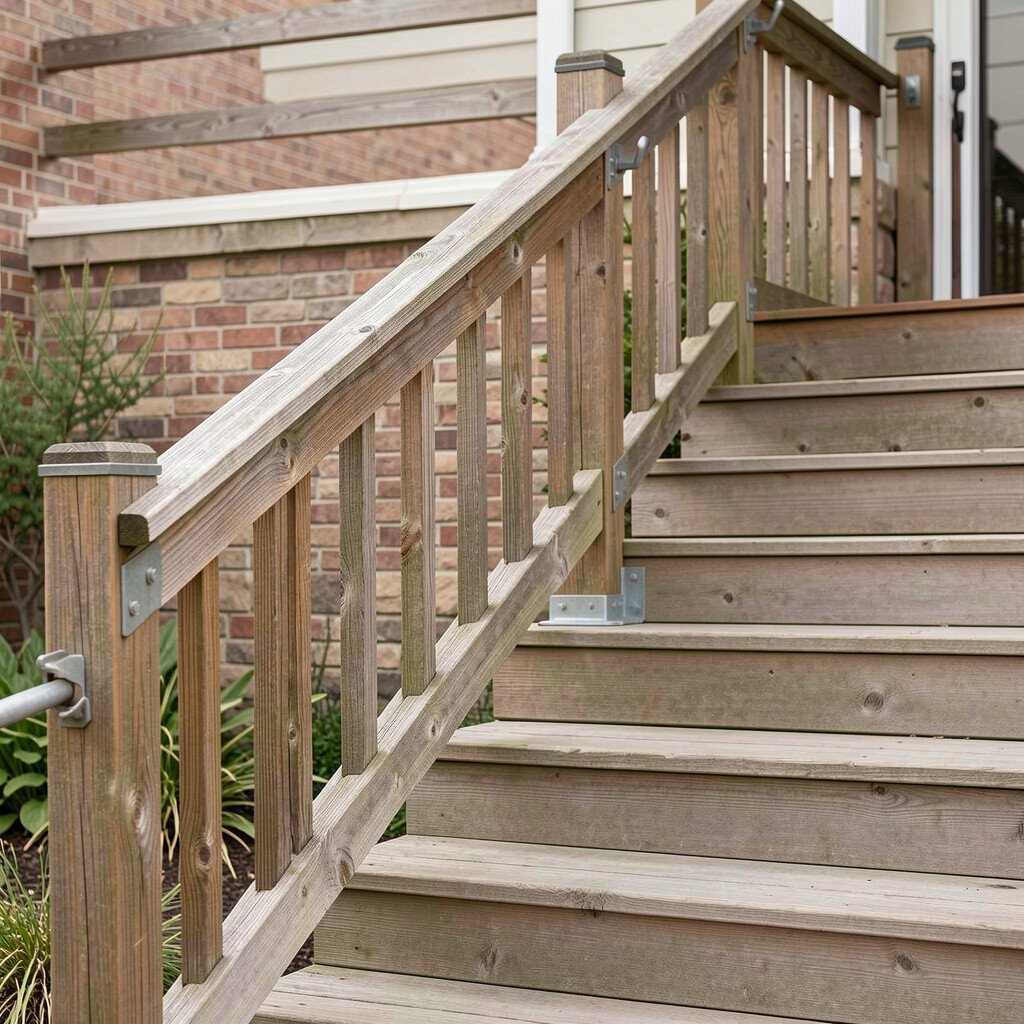
Warm wood on the top rail looks inviting even on a gray day. Pair it with sturdy black metal brackets and the stairs start to feel like part of a well-designed porch.
This setup works great because wood grips well, and metal holds firm. For best results, seal the wood with an exterior finish and reapply it on a regular schedule. You can personalize it with a darker stain for a cabin vibe or a lighter stain for a beachy feel, and the cost stays friendly when you buy common lumber and quality brackets.
3. Low-Maintenance Aluminum With Matte Finish
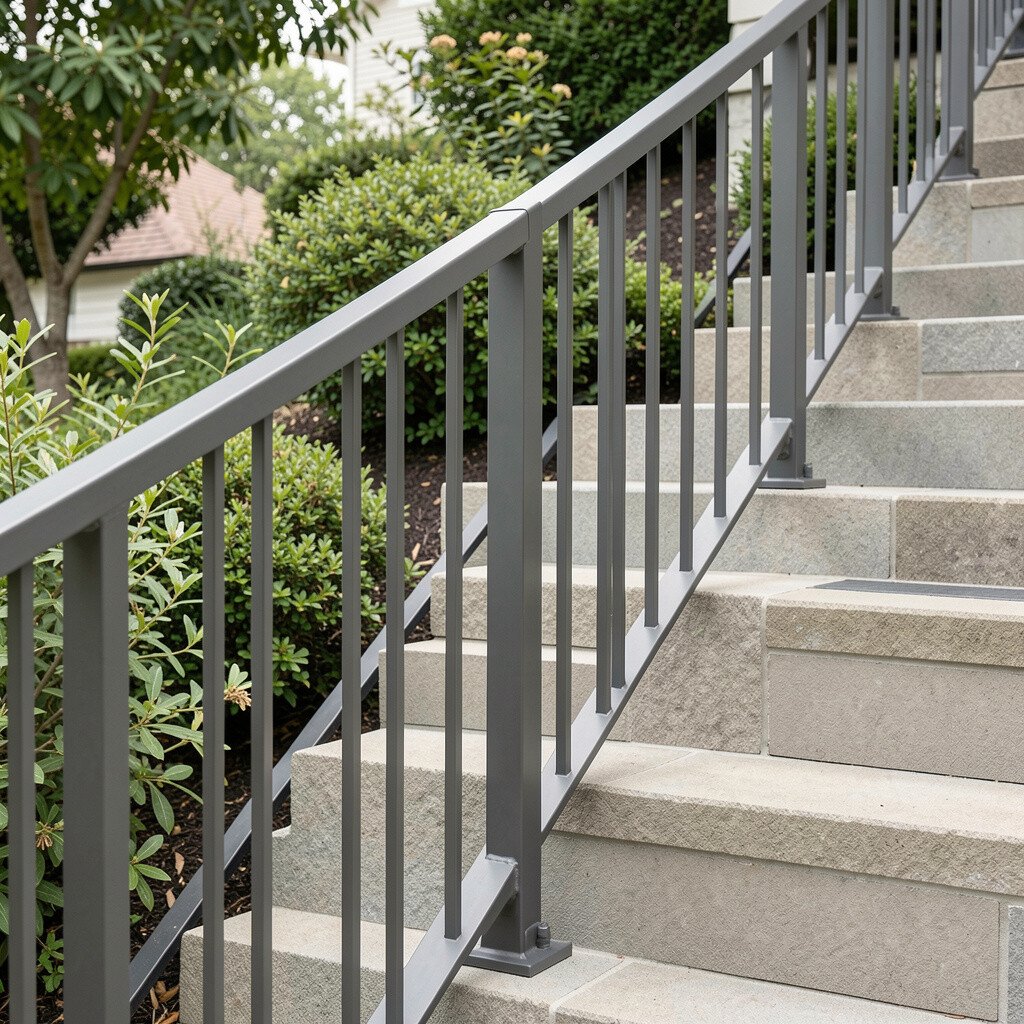
Matte aluminum railings look clean and modern. They also resist rust, so you spend less time scrubbing and more time enjoying your outdoor space.
Choose a style with rounded edges and smooth joints so hands glide comfortably. Many modern systems come in standard sizes, which makes planning easier. If you want personalization, match the railing color to your door hardware or outdoor lights, and expect mid-range pricing compared with budget steel options.
When installing, take careful measurements of stair height and angle so the handrail follows every step smoothly. A level top line makes the whole entry feel intentional. For trend-friendly curb appeal, go for a brushed or matte look instead of shiny chrome.
4. Glass Panel Rail With Aluminum Base
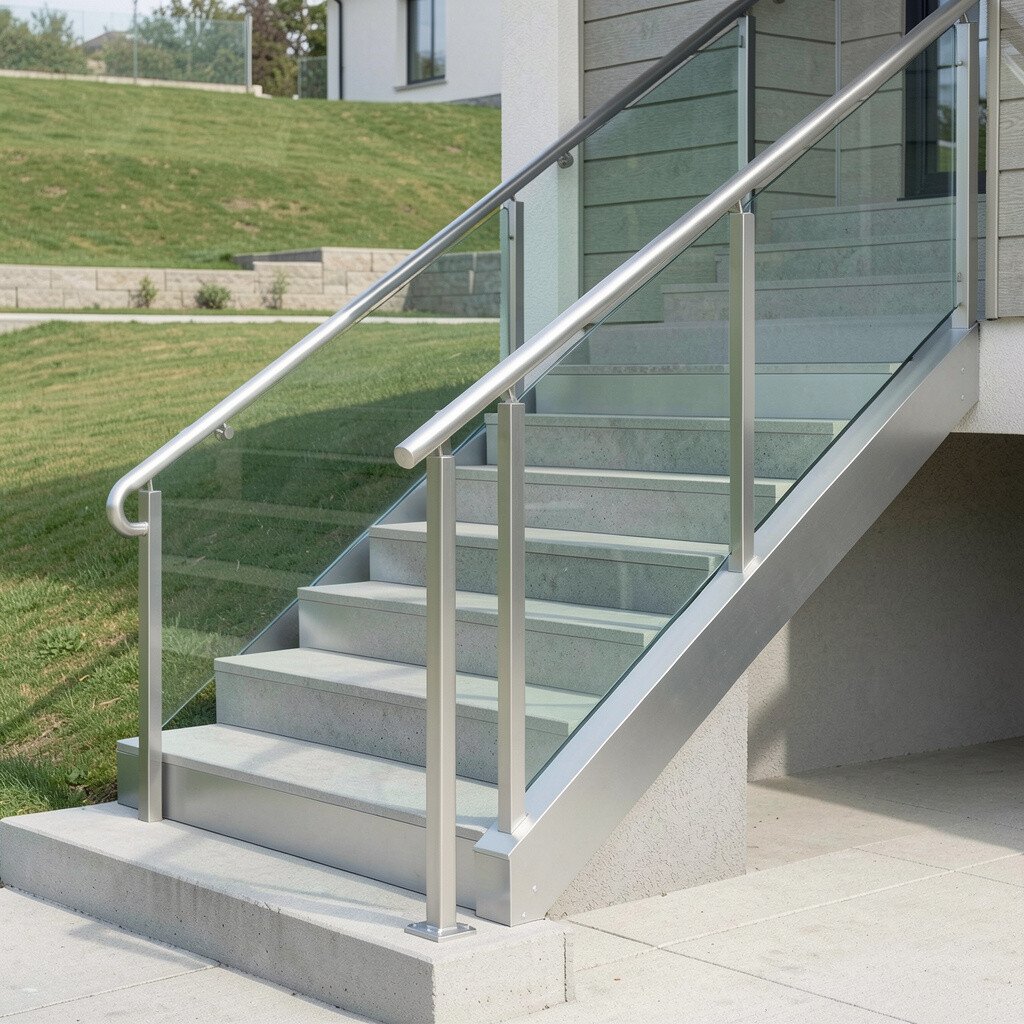
Clear glass panels give a crisp, airy look to outdoor stairs. You still get safety coverage while keeping sightlines open to your garden.
Use tempered or laminated glass designed for outdoor use, since it’s built to handle impacts. Add a solid metal base rail so the glass stays secure and your hand lands where it should. This choice feels unique for homes that want a sleek, gallery-like entrance, and the cost is higher, but the wow factor is real.
5. Wrought Iron Scrollwork With Safe Spacing
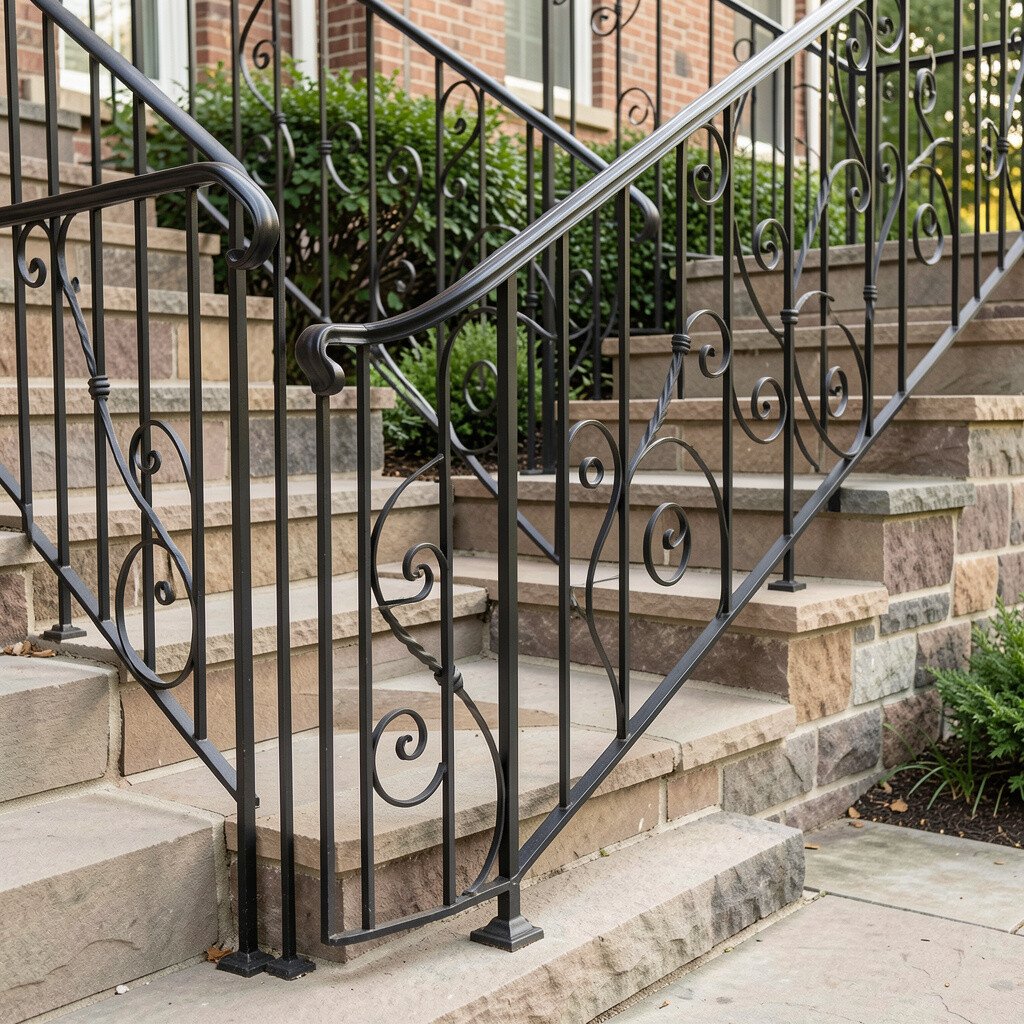
Wrought iron brings drama and charm, especially when you choose scroll details. The texture looks beautiful against stone steps and brick walls.
To keep things safe, select a design with spacing that prevents fingers from getting stuck and that won’t let small pets slip through. If you want a practical upgrade, paint the iron with a high-quality exterior coating to reduce corrosion. Personalize by matching scroll shapes to other metal features like your porch light or gate, and plan for a wide range of costs depending on how custom the scrollwork is.
For ongoing care, do a quick visual check after heavy storms and touch up chipped areas early.
6. Horizontal Balusters With Thick Top Rail
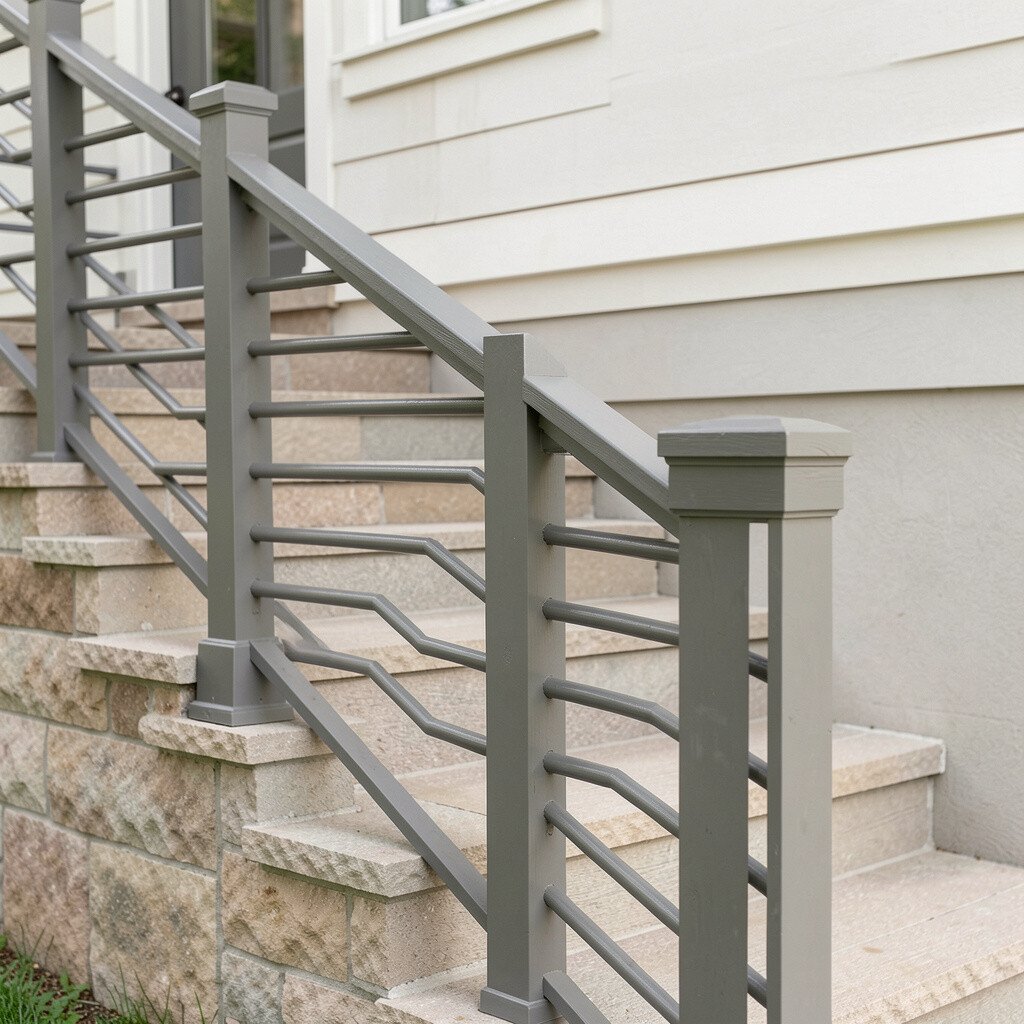
Horizontal bars create a steady, structured look. When the top rail is slightly thicker, it feels more comfortable to hold during wet weather.
This design boosts safety because it offers multiple points of contact for hands and steadiness. Choose powder-coated steel or aluminum so the bars resist rust and stay smooth. For practical personalization, match the bar spacing to the size of your family, and use end caps for a clean finish at corners.
It’s also a great budget-friendly path because many railing kits come as ready-to-install sections. You still get a bold, modern look without complex fabrication.
7. Curved Handrail That Follows the Steps
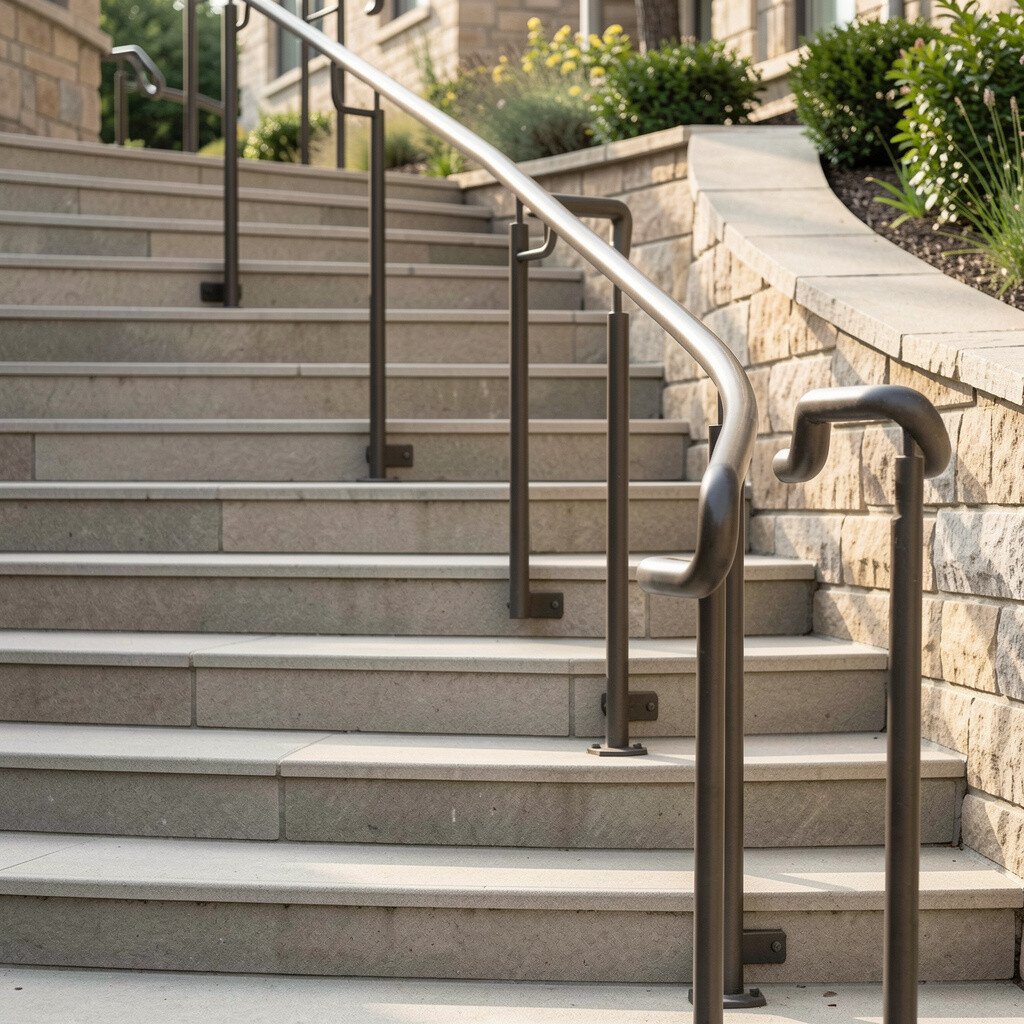
A curved handrail turns stair movement into something smoother and more natural. Even a simple curve can make your entrance feel more human and less rigid.
For safety, keep the curve consistent so your hand doesn’t suddenly slip away as you step. Use a solid backing material where possible so the rail feels sturdy, not wobbly. To personalize, add a gentle bend that mirrors the curve of a nearby walkway, which makes the whole approach feel coordinated.
While custom curves can raise costs, you may save money by using standard materials and focusing on precise measurement. The result looks upscale and designer-like, even when the build is straightforward.
8. Composite Railing For Weather-Ready Comfort
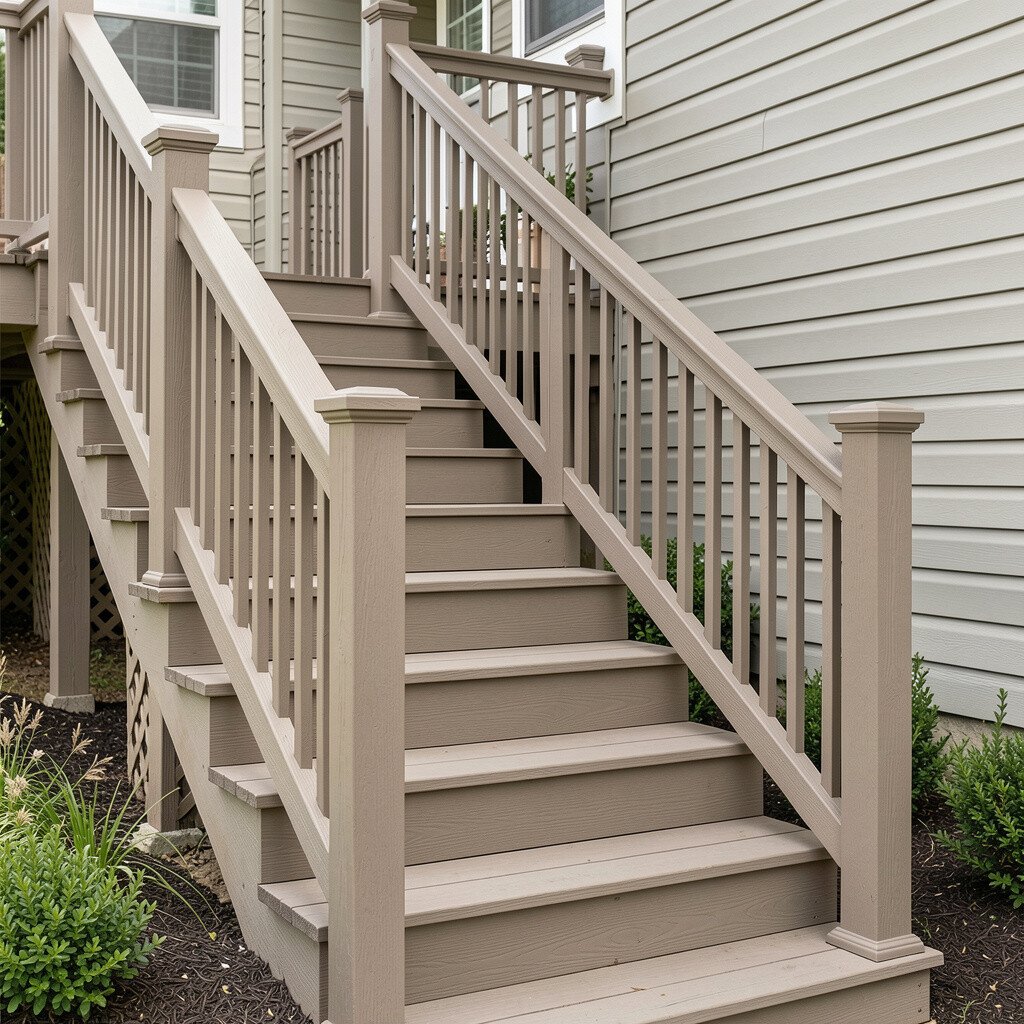
Composite materials look like real wood but handle weather much better. The grain pattern can be surprisingly realistic, and it stays clean with simple rinsing.
This option is great when you want comfort under bare hands. Choose a composite that has traction and a smooth finish so it feels secure on damp days. It’s usually priced in the mid to higher range, but you can offset that with fewer maintenance costs over time.
If you want uniqueness, pick a two-tone look with a darker post and a lighter handrail. Many homeowners also like pairing composite railings with natural stone for a warm, durable entry.
9. Stone Post Rail With Simple Iron Top
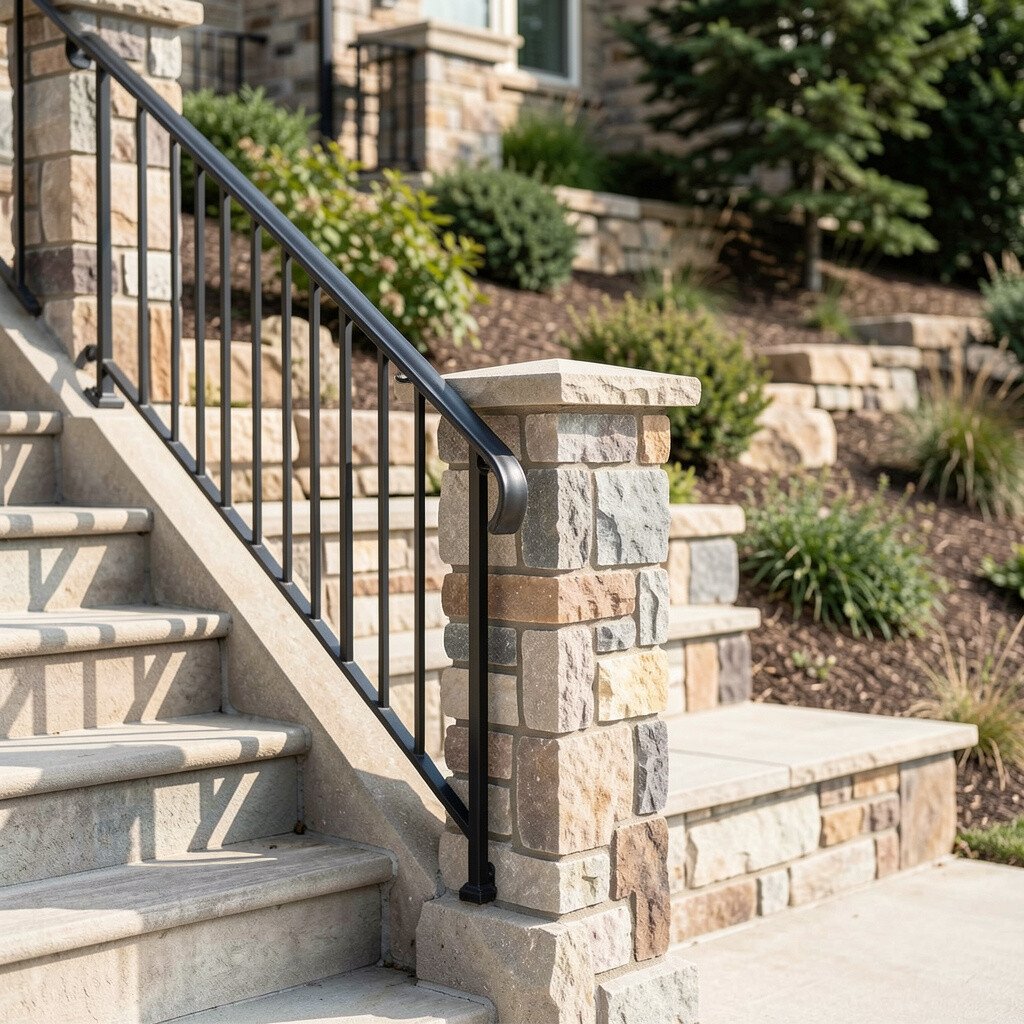
Stone posts make stair railings feel permanent and grounded. Add a simple iron top rail and you get a balanced look that doesn’t overwhelm the steps.
For safety, use properly anchored posts and a handrail height that matches how people naturally hold a rail. Choose iron with a protective coating so it doesn’t rust near the stone. This style is unique because it blends heavy, sturdy visuals with a lighter touch where hands grip.
Personalization is easy by matching the stone color to your steps or siding. Even if materials cost more, you can control the budget by limiting stone detailing to the main posts and using lighter filler rails in between.
10. Vertical Rods With Rounded Caps
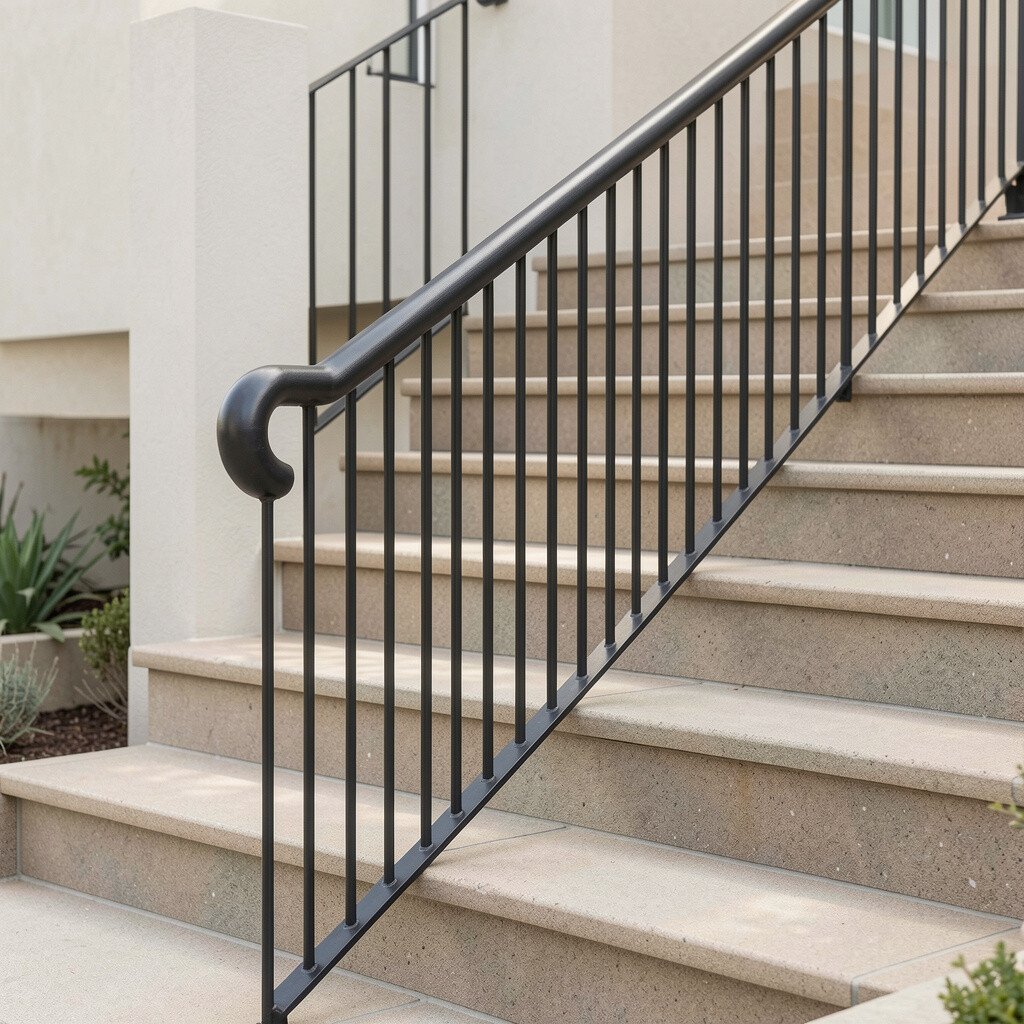
Vertical rods create a classic look that works with many home styles. When you finish each rod with rounded caps, the railing feels safer and looks polished.
It’s a solid choice for safety because upright bars reduce the risk of slipping through gaps. Use a weatherproof finish so rods stay smooth and don’t develop sharp spots over time. For practical personalization, match the rod thickness to the scale of your stairs, and keep the top rail comfortable with an ergonomic curve.
This can be a cost-conscious option when you choose pre-fabricated kits. The trend right now leans toward simple, clean lines rather than overly busy patterns, and this design fits that look well.
11. Bamboo Accent Rail With Indoor-Like Warmth
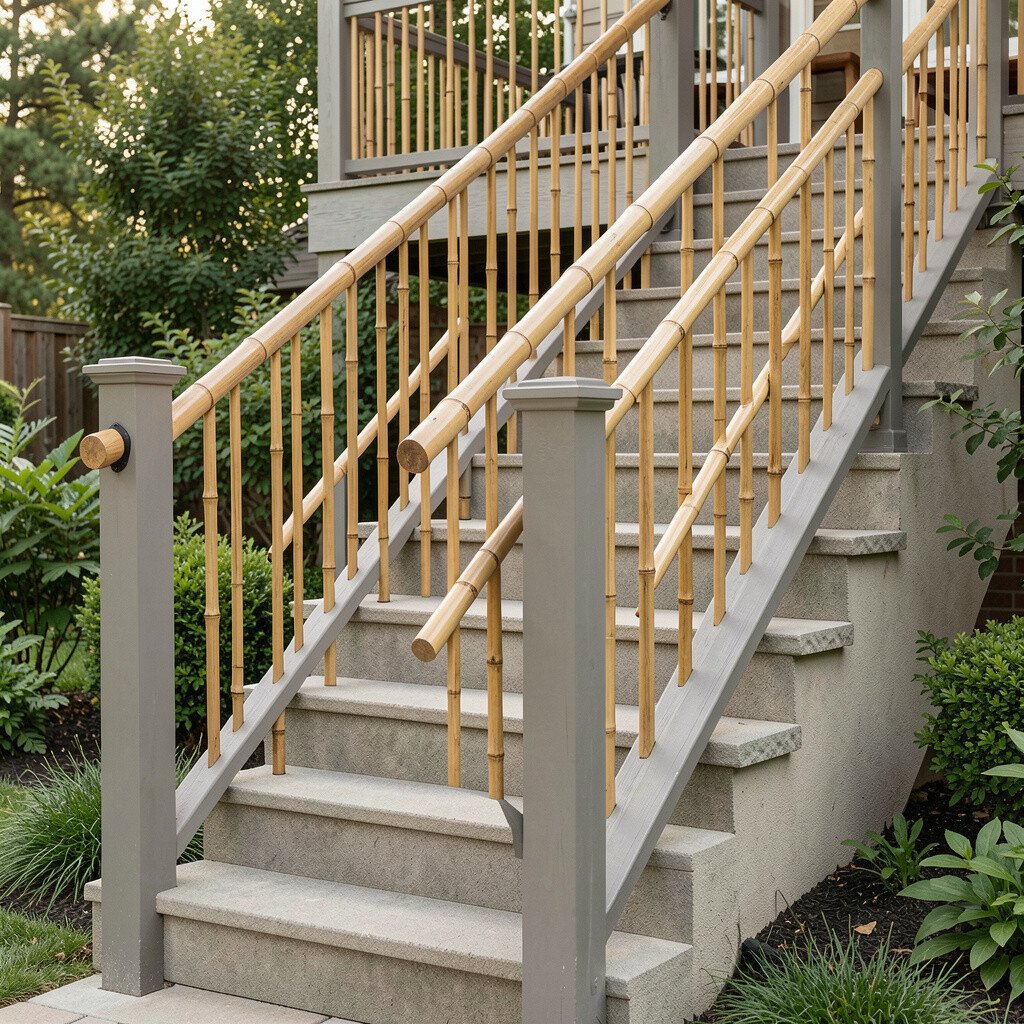
Bamboo accents can make outdoor stairs feel relaxed and welcoming. The look pairs beautifully with patios that already have plants and natural textures.
For safety, focus on a sturdy handrail underneath and use bamboo as a decorative element where it won’t take all the stress. Seal bamboo thoroughly and choose hardware made for outdoor use so it resists moisture and fading. Personalize the appearance by wrapping bamboo around a simple rail base or adding it as a trim near posts, keeping the overall structure reliable.
This approach is unique because it adds a softer visual rhythm while still letting you choose a stronger core system. Costs can be lower than custom iron work, but you should budget for proper sealants and replacement of any decorative parts over time.
12. Mixed Metal Rail With Wood Insert
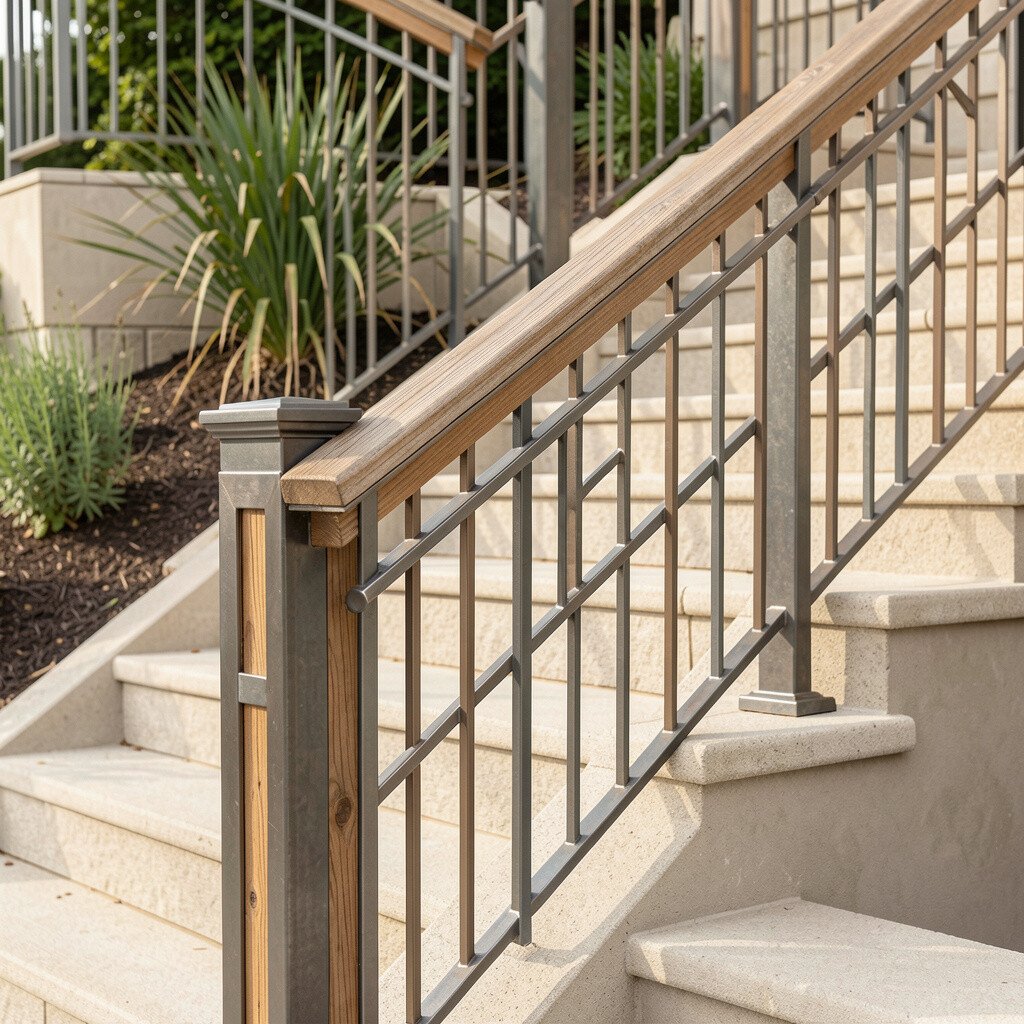
Mixing metals with a wood insert adds character fast. The contrast between cool metal and warm wood creates a railing people want to touch.
To keep it safe, use a continuous metal structure that holds the load, then install the wood where the hand naturally rests. Pick wood that’s rated for outdoor exposure and finish it for grip, especially during wet seasons. This design feels unique because you can mix colors like warm bronze with black steel or silver aluminum with light oak.
Cost varies based on how many materials you mix, but you can manage it by reusing existing posts and upgrading only the handrail area. A trendy approach is to keep the metal simple and let the wood insert carry the style.
13. Raised Pattern Rail For Better Grip
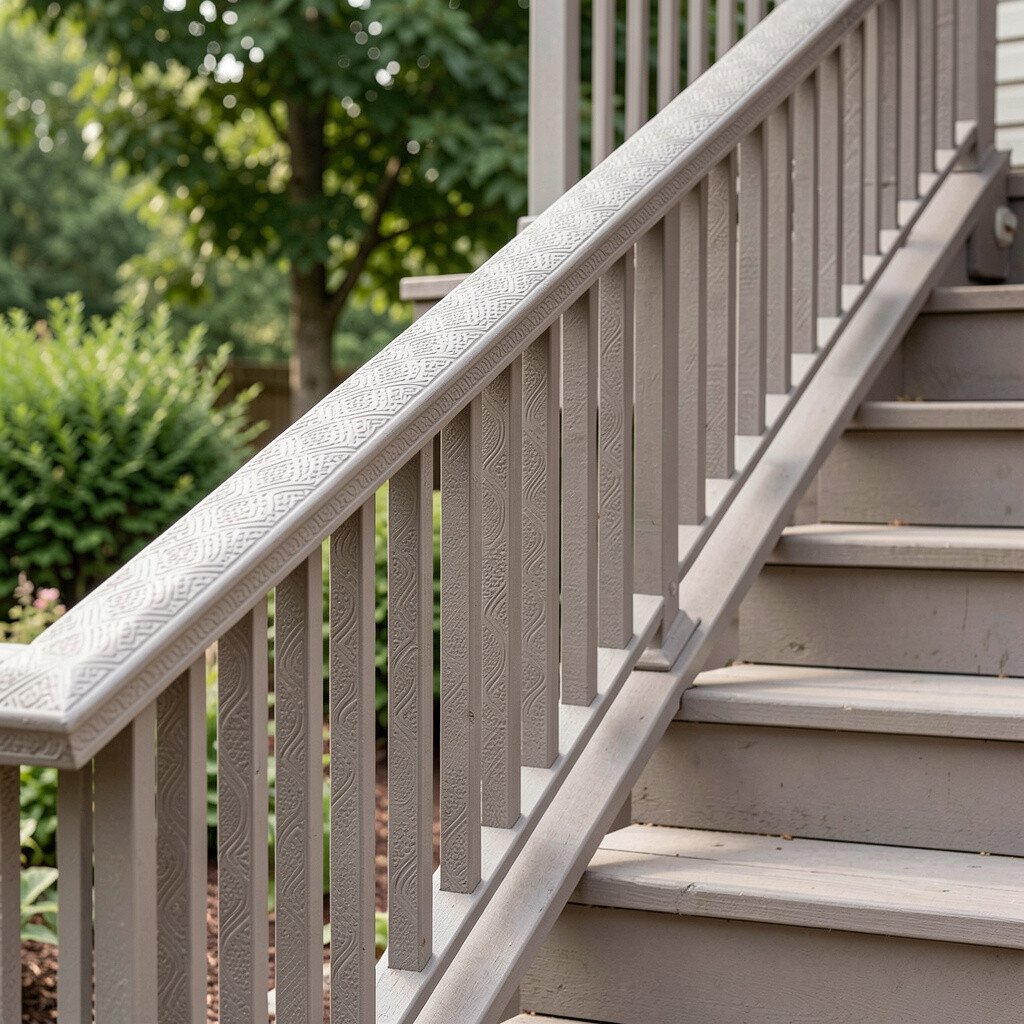
A raised pattern on the handrail gives extra grip when your hands are slightly damp. It also adds texture that looks interesting in side light.
For safety, choose a pattern that feels comfortable and won’t snag skin or gloves. Smooth, rounded edges at ends and corners are important so the railing stays friendly. Personalize by selecting a pattern inspired by tiles or woven textures found around your home, and keep the rest of the design clean so the pattern stands out.
This can be a practical upgrade that doesn’t need a total redo. Many railing systems offer textured top rails, which keeps cost moderate while boosting comfort.
14. Rounded Steel Handrail With Minimal Posts

Minimal posts make the railing look light and airy. A rounded steel handrail adds a sleek feel while still giving solid support.
This idea works well if your stairs are narrow and you want the railing to look proportional. Use strong mounting hardware and check alignment so the handrail stays steady from top to bottom. For personalization, choose a finish that matches your outdoor metalwork and add subtle decorative bands near the ends.
It’s often cost-effective because the design uses fewer materials and less complex shaping. The trend toward clean lines makes this style feel current without being flashy.
15. Stair Rail With Built-In Lighting
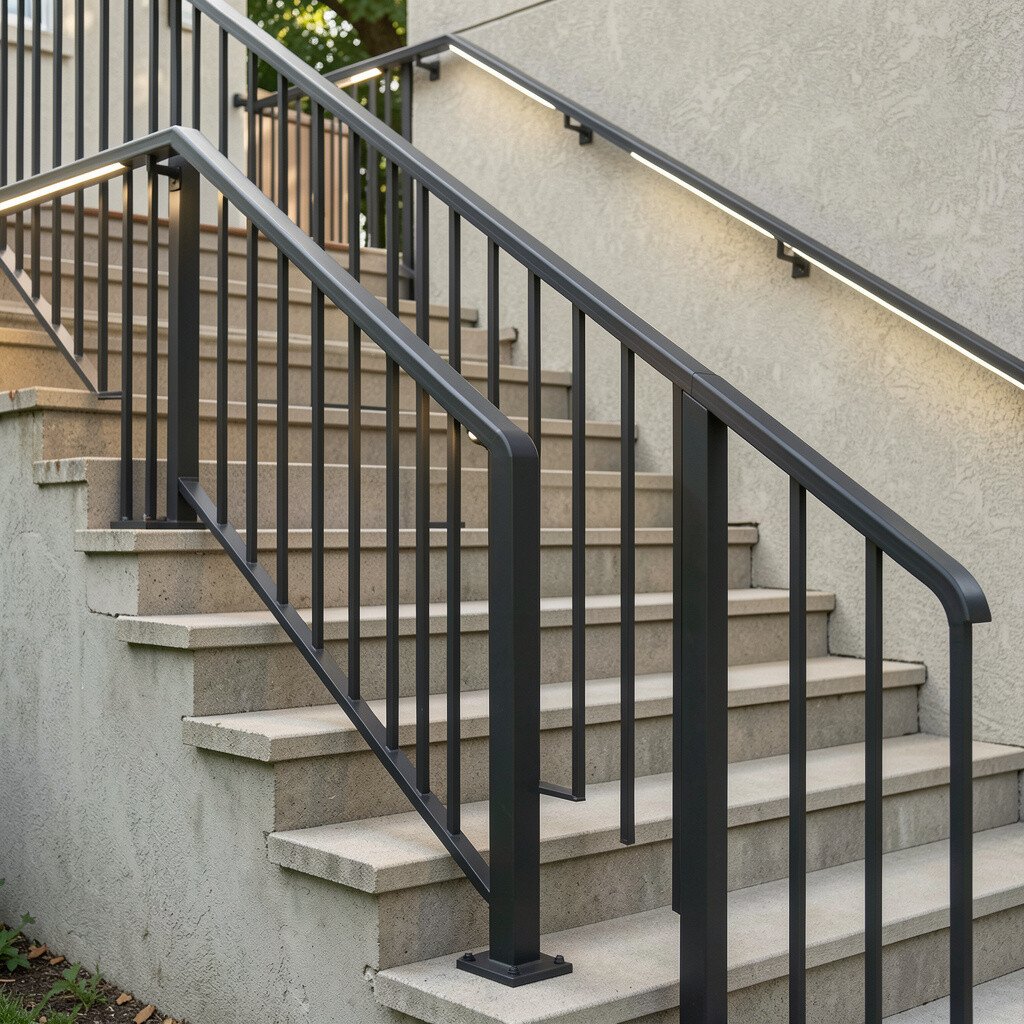
Lighting integrated into a railing makes night steps feel safer right away. Soft glow along the handrail helps guide your movement without glare.
For safety, aim for even illumination and protect wiring with outdoor-rated components. Use warm white bulbs to keep the entrance cozy and reduce harsh shadows. This design is unique because it combines function and style, and it can also make your home look more high-end.
Personalize by choosing a subtle color temperature, adding motion sensing, or selecting a finish that complements your fixtures. Costs can be higher due to electrical work, but you can save by hiring an electrician only for the final connections while handling the rest of the installation yourself if you’re comfortable.
16. Sliding-Style Handrail For Tight Spaces
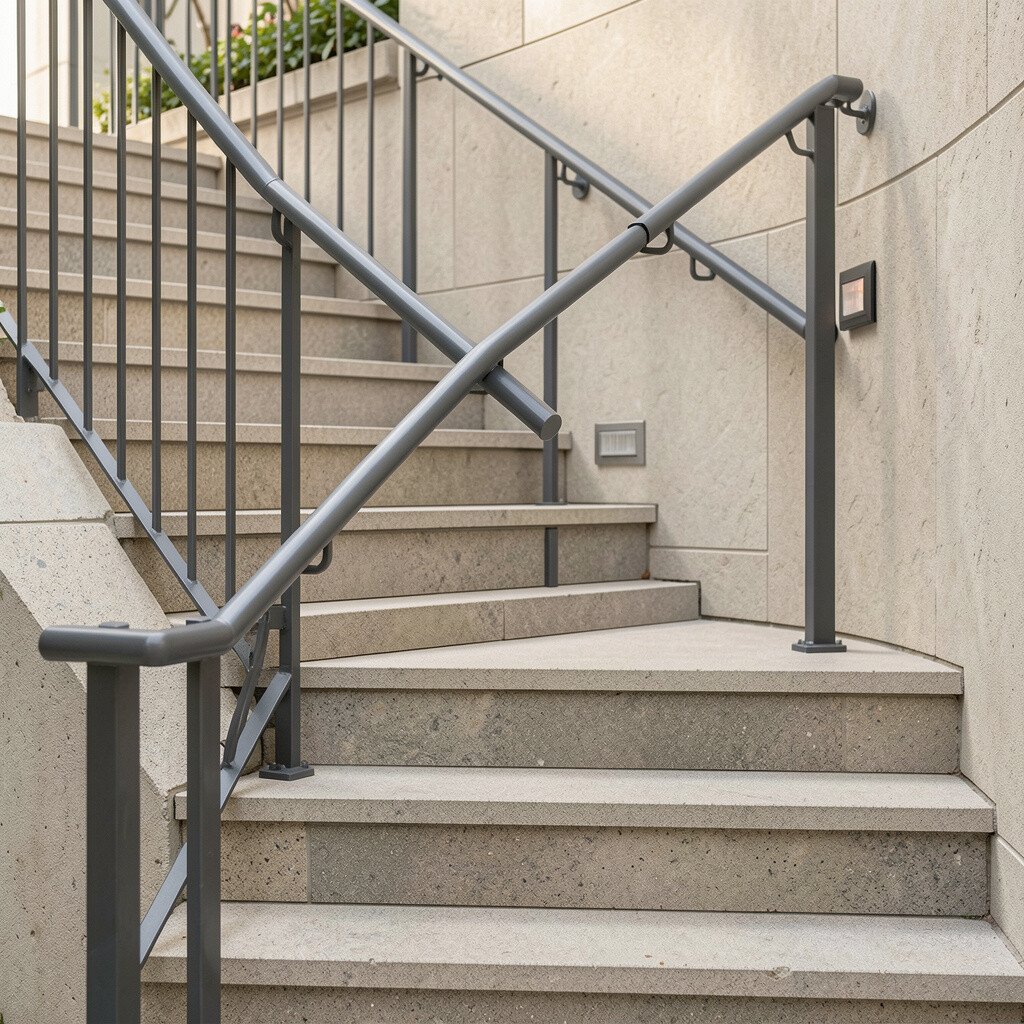
A sliding-style handrail can be a smart fit when space is limited. It gives you a secure grip without a bulky structure taking over the stair landing.
For safety, make sure the moving parts are stable and locked when in use. Choose hardware built for outdoor weather so movement doesn’t become stiff or unreliable. Personalize the look by keeping the visible parts simple and matching their finish to your existing entry hardware.
This idea feels unique because it adds flexibility, especially for older homes with unusual stair layouts. Costs depend on the mechanism, so it’s worth budgeting for reliable parts rather than going with the cheapest hardware you find.
17. Color-Blocked Railings With Matching Trim
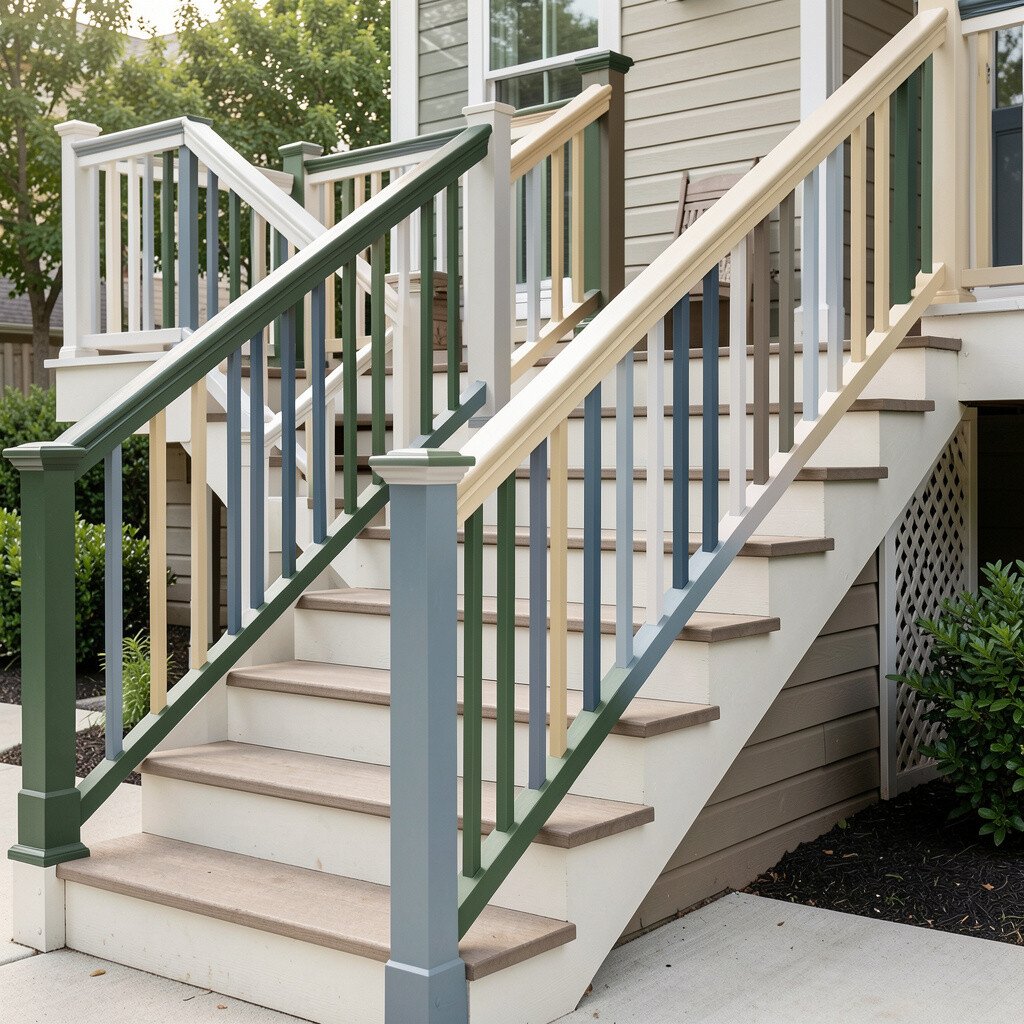
Color-blocking turns a railing into a design feature. A bold handrail color with matching trim can make the whole entry pop.
For safety, prioritize a smooth, protective finish so the rail stays comfortable to hold. Use exterior paint or powder coating meant for outdoor use, and apply it carefully for even coverage. Personalize by choosing colors that echo your front door, shutters, or planters, which helps the stairs blend naturally with the rest of your curb appeal.
Cost can be manageable if you choose standard railing shapes and focus your budget on quality coatings. The current trend favors confident colors paired with simple lines, and this style is a fun way to get there.