
Colorful stairs can make everyday movement feel lighter. They also turn a hallway into a little stage for your personality.
1. Rainbow Runner With Soft Pastels

Imagine stepping onto a stair runner that looks like a gentle rainbow, but made from calm pastels. The colors fade into each other like chalk on paper, and every tread feels cozy.
Pastel hues can brighten a narrow space without making it feel busy. Pick tones that match your walls, then add a clear grip layer so slips never feel like an option.
2. Bold Color-Blocked Risers for Instant Cheer
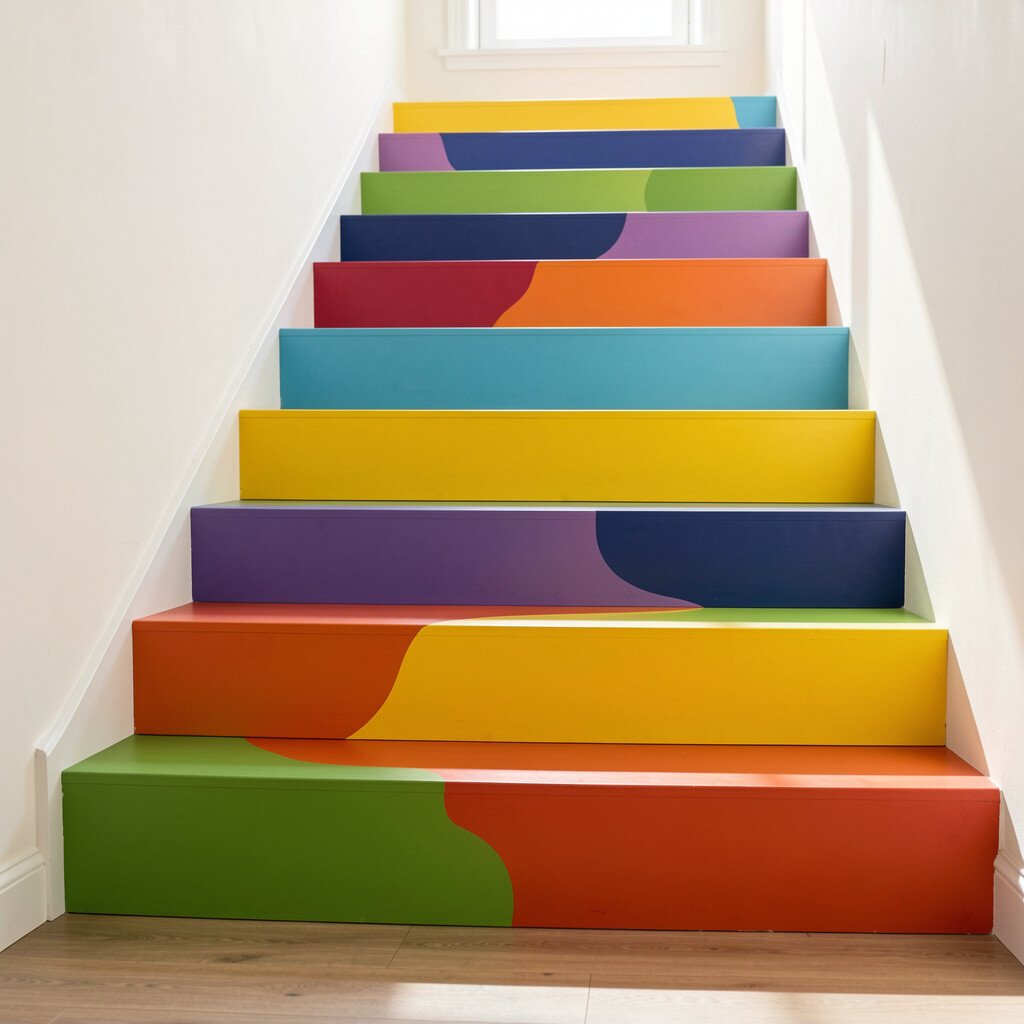
Turn each stair step into a mini art panel by painting the risers in bright color blocks. Red meets teal, sunshine yellow meets deep navy, and the pattern reads clearly from the top landing.
This style adds personality fast, and it also helps you judge step height at a glance. Use painter’s tape for clean edges, and seal the finish so it can handle daily foot traffic.
If you worry about changing trends, choose just two main colors and let the rest be neutral. That way, you can swap accent colors later without repainting everything.
3. Whimsical Checkerboard Treads With Matching Trim
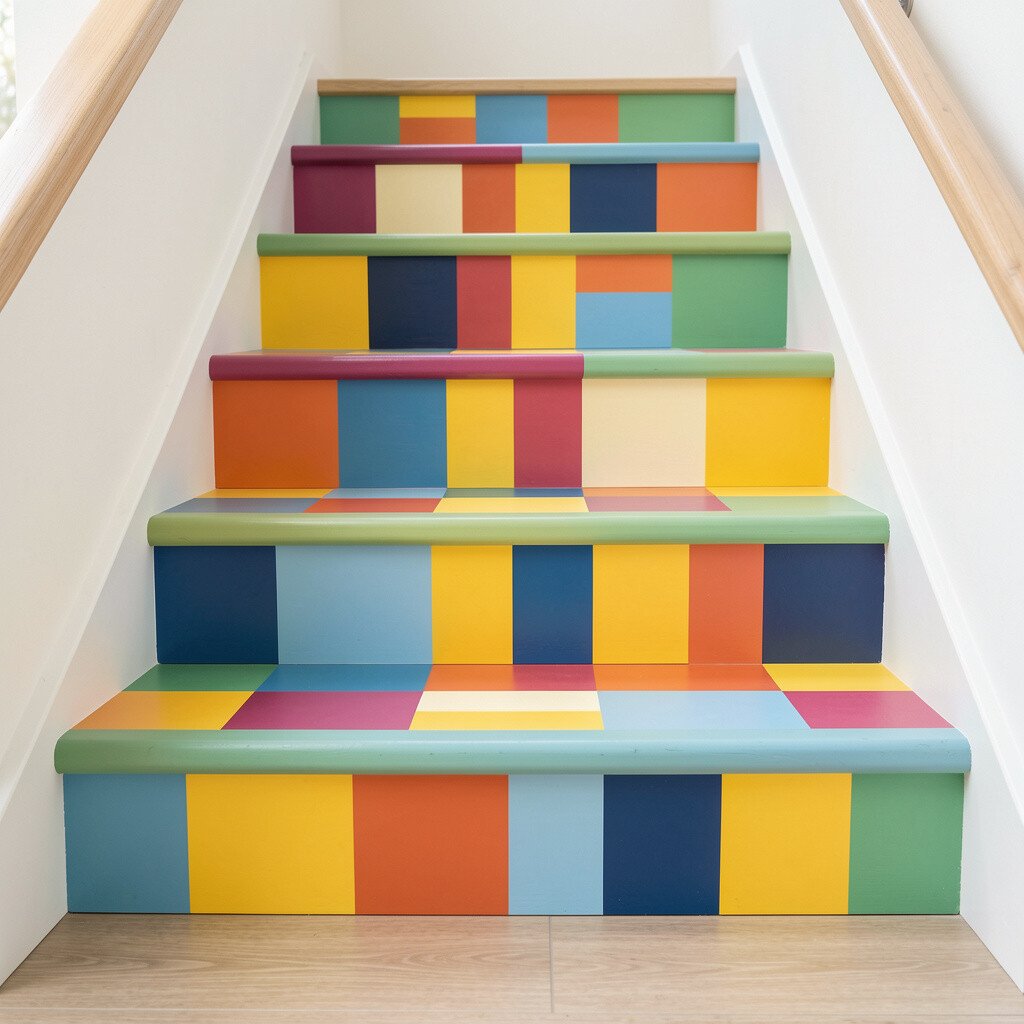
A checkerboard pattern on the treads can feel playful while still looking organized. Think warm cream squares paired with playful mint, with trim that repeats the same two tones at the edges.
Because the pattern creates strong visual breaks, it can make stairs feel easier to navigate. Keep the squares consistent in size, and consider a matte topcoat to reduce glare under lights.
For personalization, add a tiny symbol to every other landing, like a star or heart shape. You can paint it by hand using a fine brush, then seal it for durability.
4. Colorful Ombre Steps That Feel Like a Sunset
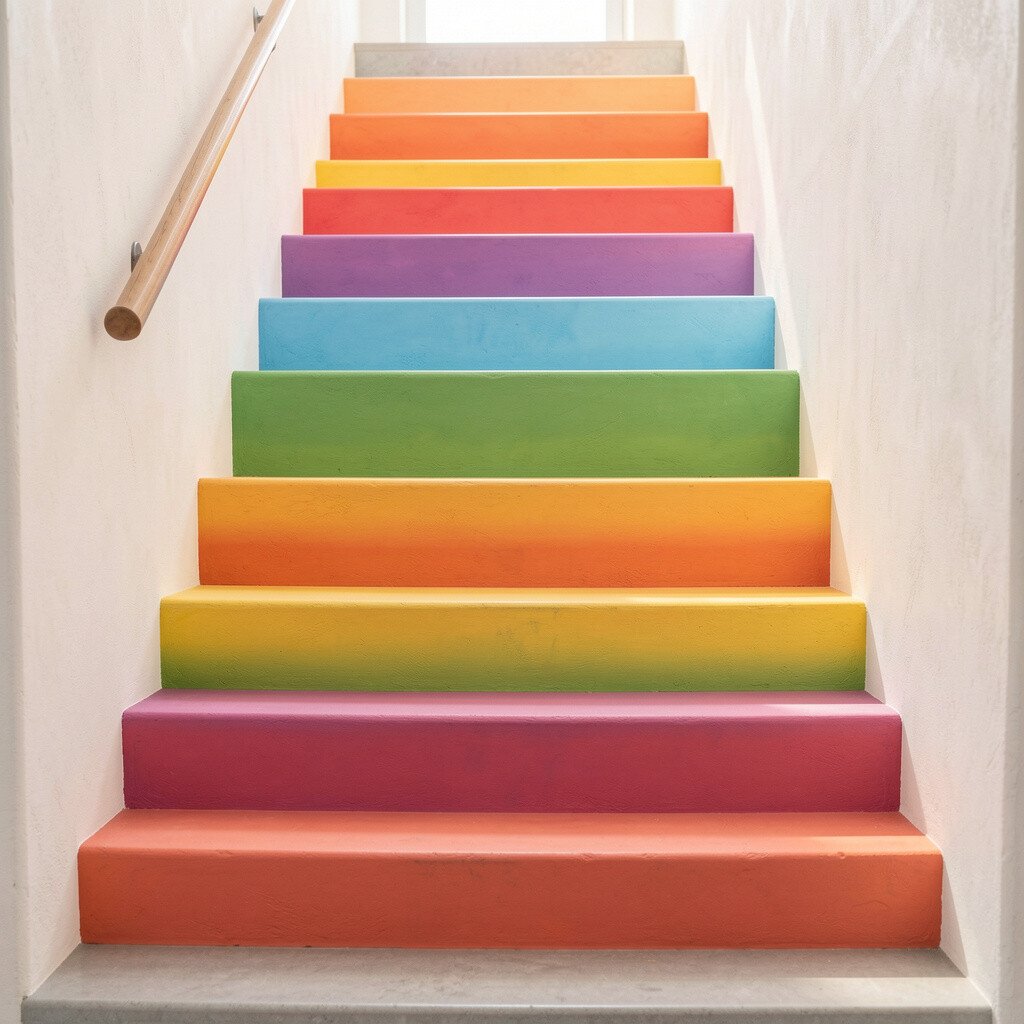
Ombre stairs move from one color to the next like a sunset spreading across the wall. Start with peach on the top steps and fade into lavender and then soft blue on the lower ones.
This gradient effect draws the eye and makes the whole staircase feel longer and brighter. To keep the look neat, blend with a sponge in light layers, letting each coat dry fully before adding the next shade.
5. Painted Arches on the Risers Like Tiny Portals

Give each riser a small arched frame and paint the arch in a different whimsical color. The result feels like a row of tiny doors to fun places, even if your stairs are in a simple hallway.
Framing colors add structure, which can make busy palettes look calmer. Outline the arch with a steady hand, and use a semi-gloss paint on the frames so they pop without looking flat.
For practical comfort, paint the tread edges with a slightly darker tone so wear marks are easier to spot. That means fewer touch-ups later and a staircase that stays looking sharp.
6. Patterned Stair Treads With Removable Vinyl Tiles
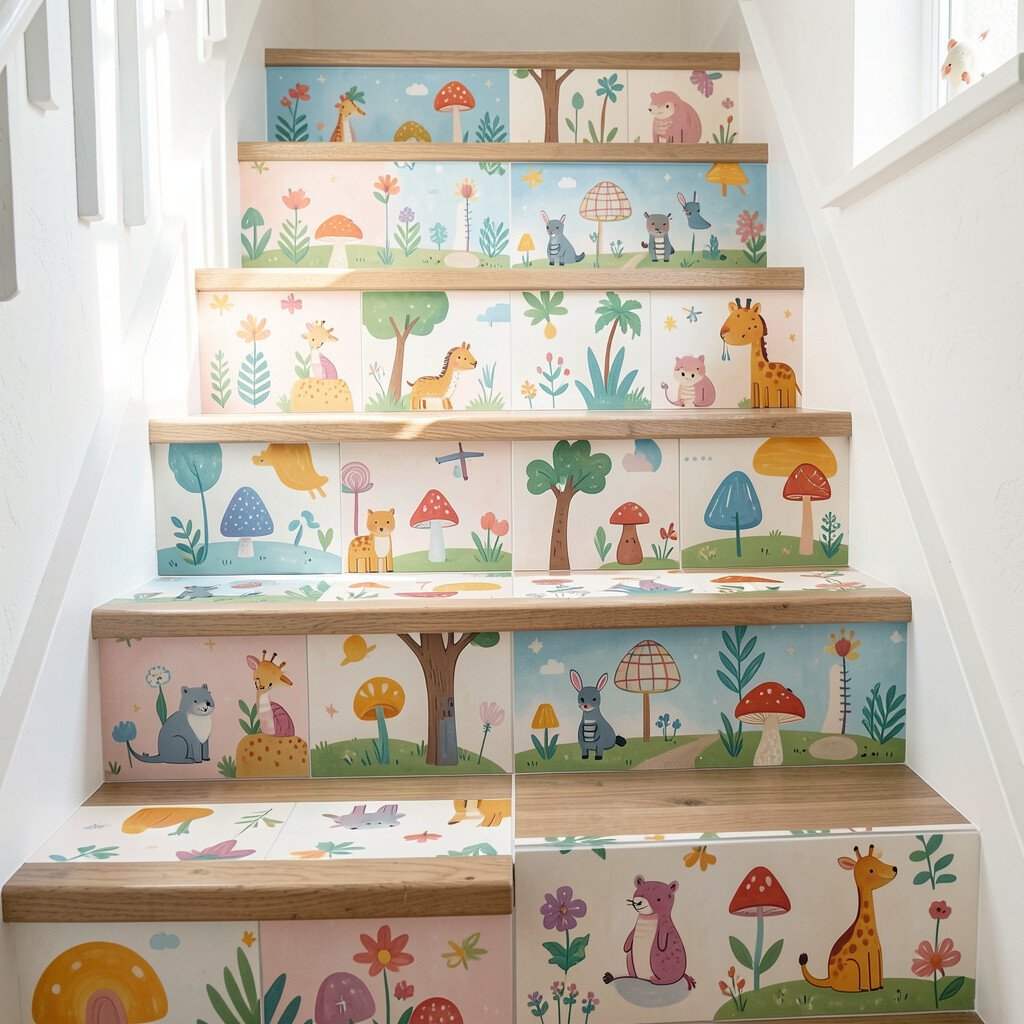
If you want color without committing to paint, patterned vinyl tiles on the treads are a great choice. Choose cheerful motifs like polka dots, tiny flowers, or even playful geometric shapes.
Removable tiles let you switch the look when your tastes change, which is perfect for renters or anyone who loves updates. Keep traction in mind by picking slip-resistant backing and avoiding overly glossy surfaces.
7. Playful Vertical Stripes for a Tall, Energetic Look
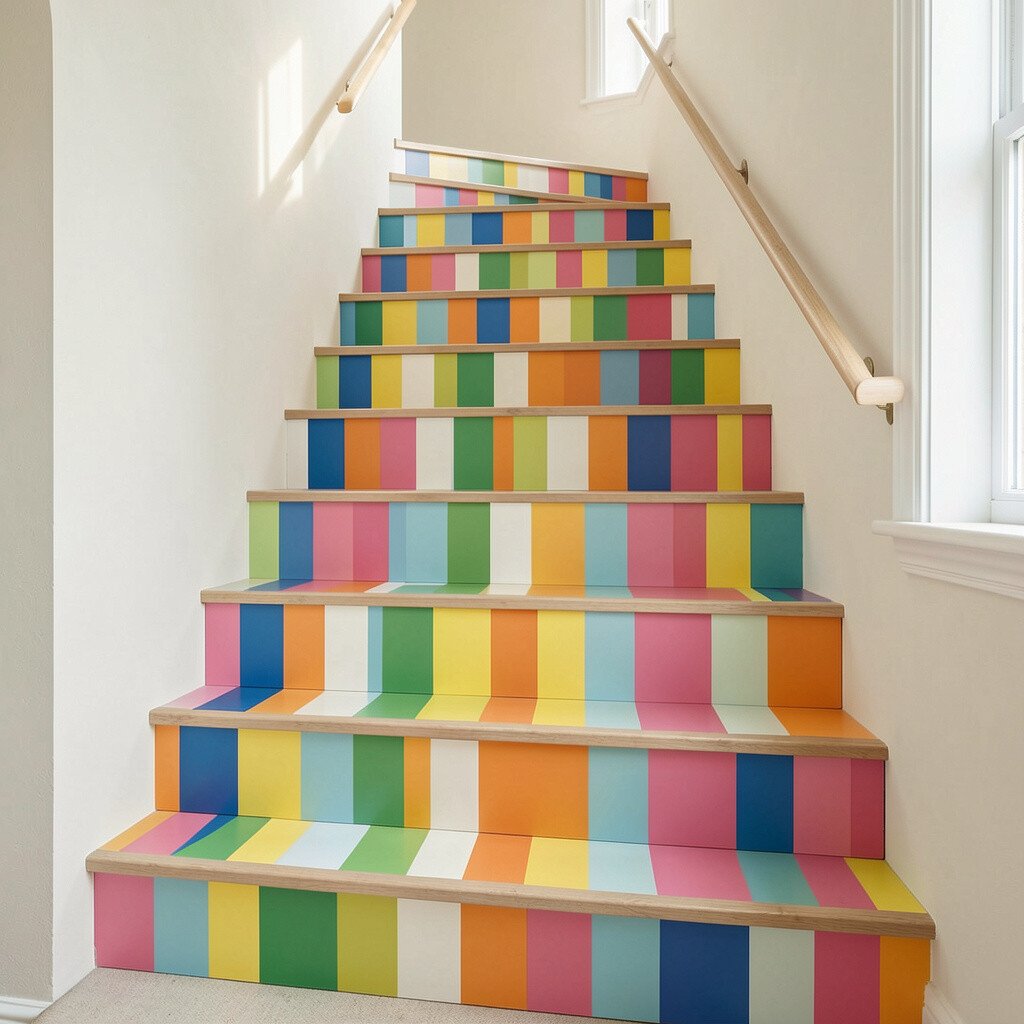
Vertical stripes on the wall behind the stairs can make the area feel taller and more energetic. Paint thin stripes in alternating bright colors, then carry one or two of them onto the risers for unity.
When stripes line up with each step, the staircase feels more intentional and easier to follow. Use a level and measure before you paint so the stripes stay straight from the landing down.
To personalize, match stripe colors to your decor in the next room, like throw pillows or a rug border. That small connection can make the whole home feel more coordinated.
8. Chic Pastel Steps With Gold-Dot Accents
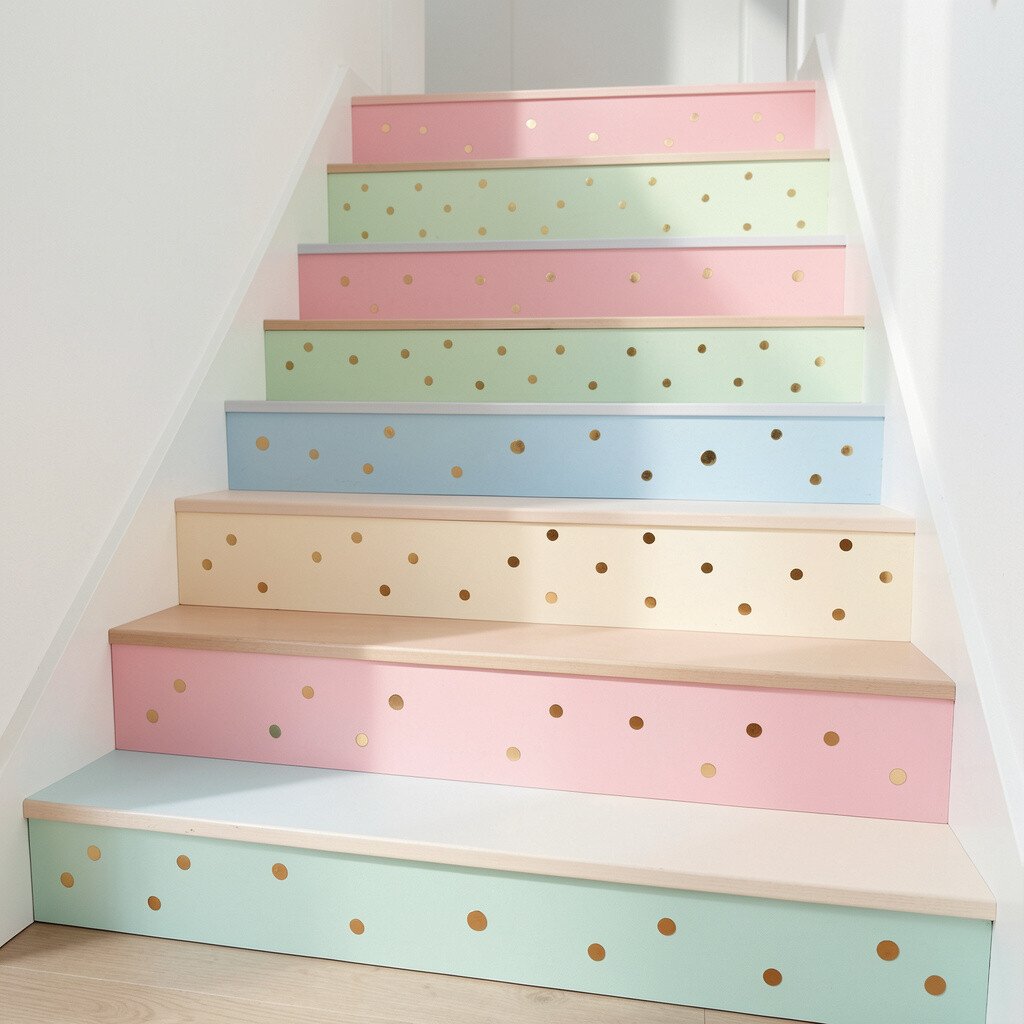
For a whimsical but polished vibe, paint each riser in a soft pastel and add tiny gold dot accents along one side. The dots can feel like confetti, catching light when you move past.
This design adds charm without overwhelming the space, and it suits both modern and classic homes. Use painter’s tape to create a steady dot line, and finish with a protective clear coat for easy cleaning.
9. Storybook Motifs on Every Other Stair
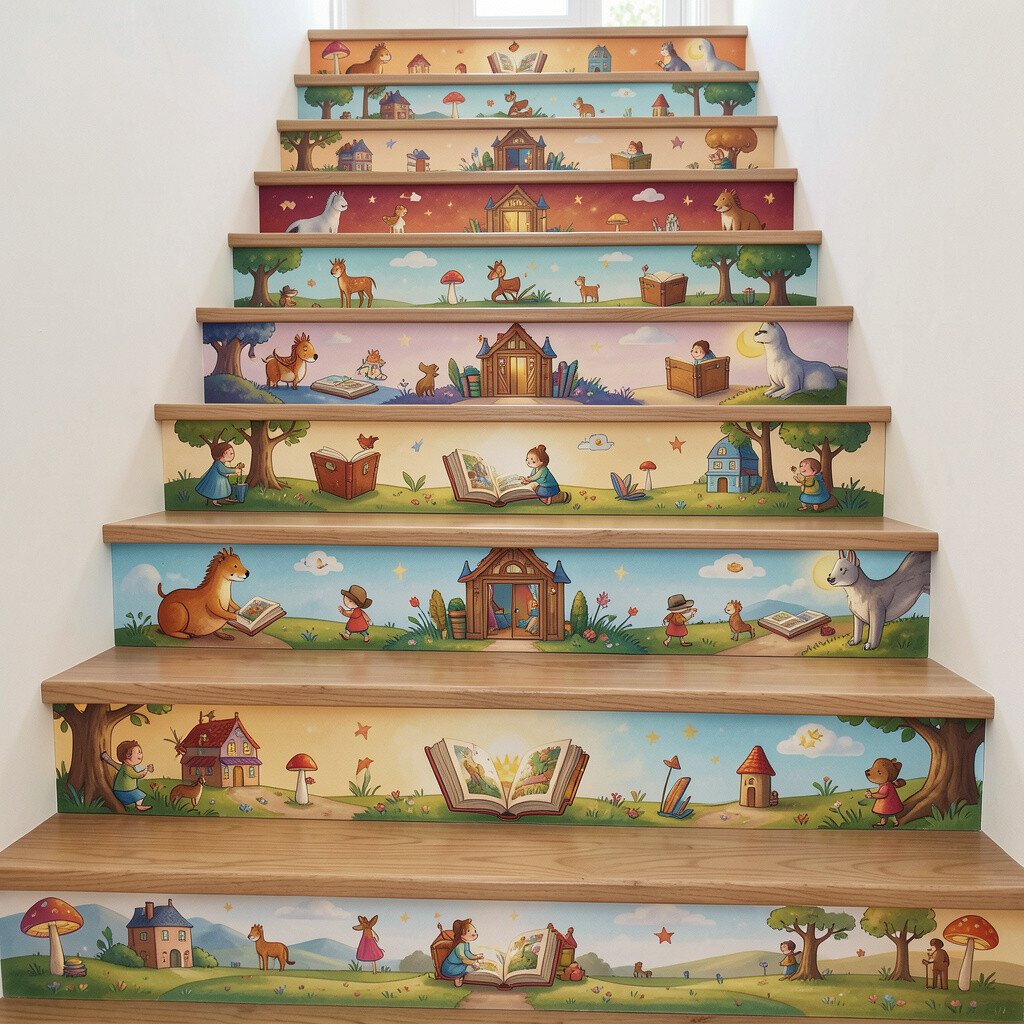
Paint small storybook scenes on alternating risers so the stairway becomes a gentle sequence. You can do clouds, waves, leaves, or little moons, each one peeking through as you climb.
This approach keeps the overall look light while still feeling unique and fun. Focus on a small palette, then repeat the same style of drawing so it feels cohesive instead of random.
If you want a practical upgrade, use stencils for crisp edges and paint a durable topcoat over the art. It helps the details last longer and keeps the steps looking fresh.
10. Colorful Edge Taping Like Candy-Coated Stripes

Sometimes the simplest trick looks the most joyful. Add a bright tape-like edge color along the stair tread borders, using colors that feel like candy.
Edge highlights can also guide your feet, which makes using the stairs feel more confident. Choose tape meant for floors or apply painted edging with a clear seal, then clean carefully so the edges stay crisp.
11. Bold Patterned Risers With a Matching Landing Wall
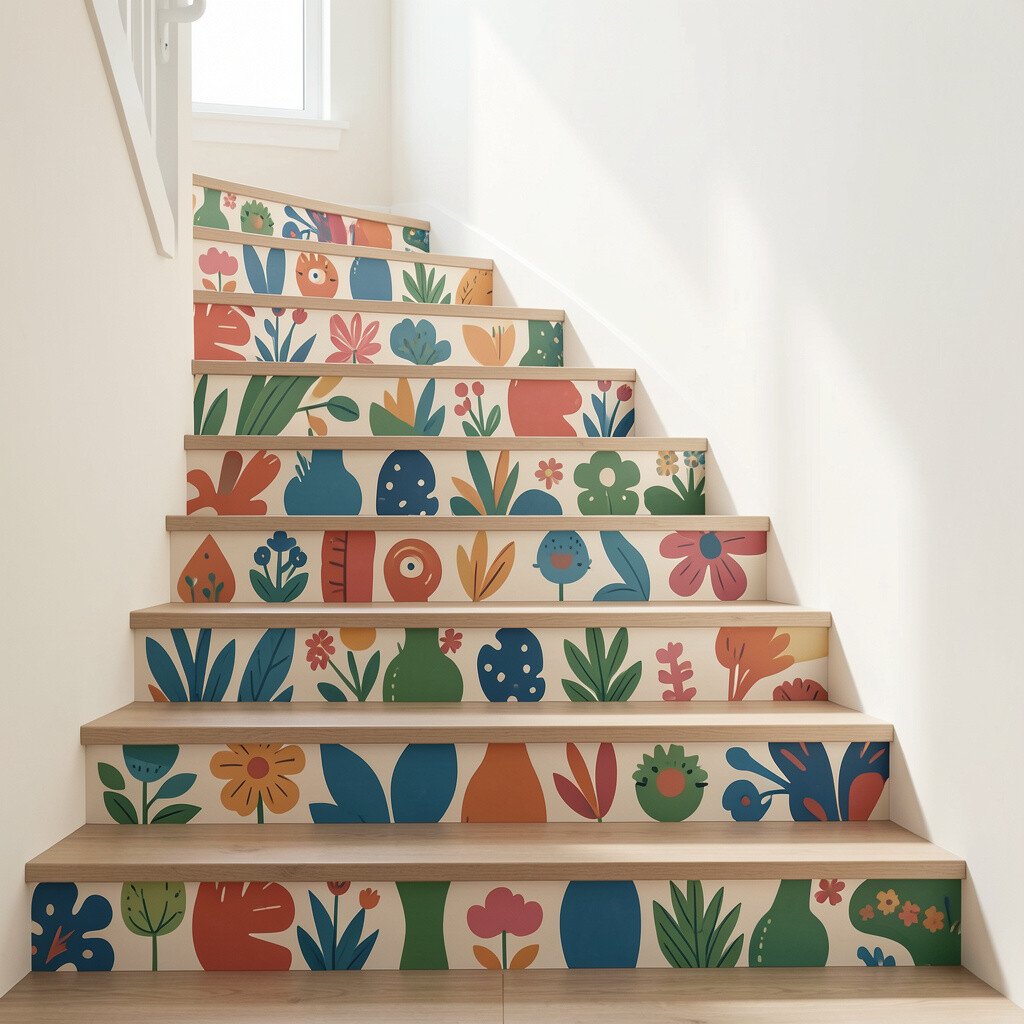
Make the staircase feel like a full design feature by adding a repeating pattern to the risers and matching it on the landing wall. Use a cheerful theme, like playful waves or small repeating shapes, in coordinated colors.
This creates a “designed” look that feels intentional from every angle. Before painting, test your pattern alignment by marking small points on the wall and using a grid so the design lines up.
For cost thinking, you can start with a single landing wall panel and just a few risers first. Once you see how it looks in daylight, you can decide whether to continue the theme down the rest of the stairs.
12. Chalky Matte Treads With Earth-Tone Joy

Choose chalky matte paint on the treads and pair it with earthy colors like terracotta, sage, and warm cream. The finish feels soft and modern, and it reduces glare compared to high gloss.
Matte color also hides scuffs better, which can be helpful in busy homes. For safety, use a clear protective floor seal and consider adding runners that cover the most worn walking paths.
13. Monochrome Steps With One Surprise Color
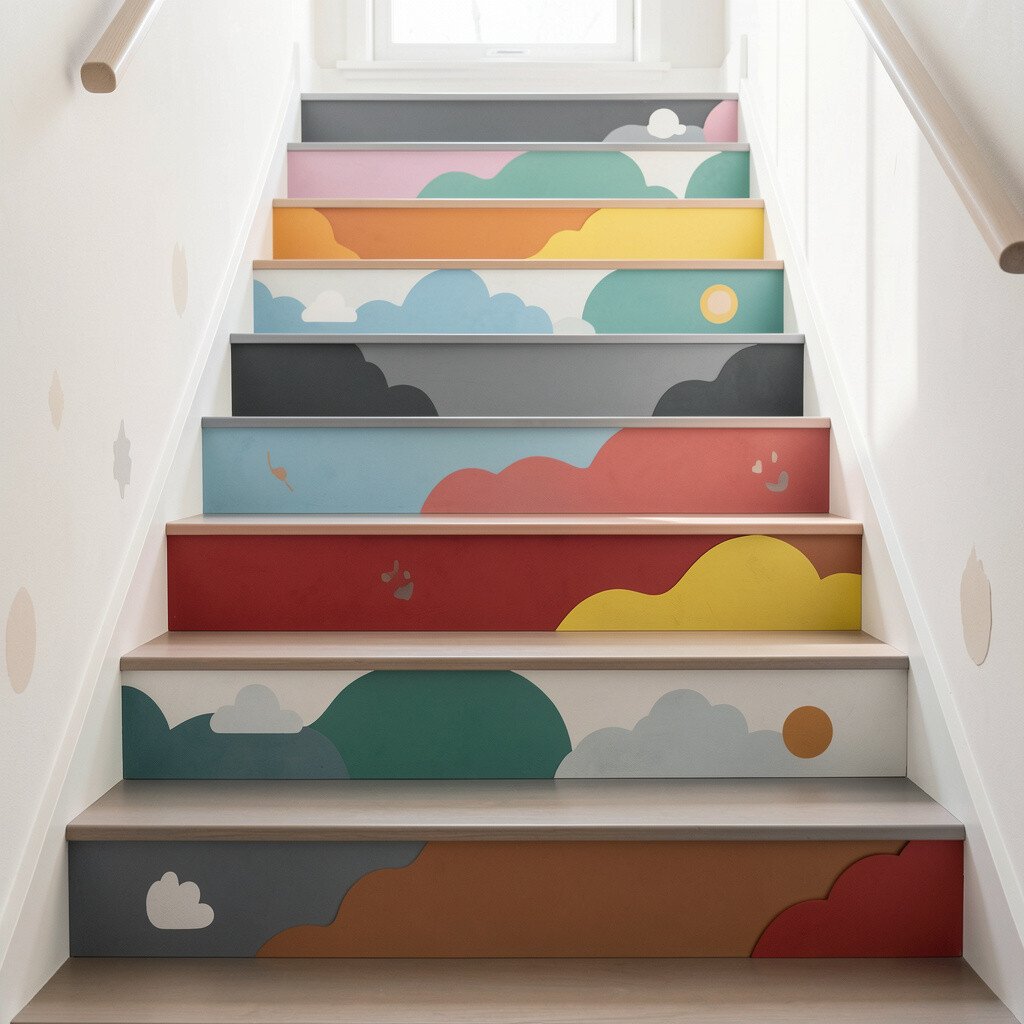
Go for a mostly monochrome stair design, then add one surprising accent color to a few key steps. For example, paint everything in soft gray, then highlight every third riser in vibrant coral or electric blue.
This creates a calm base while still offering a fun pop that draws the eye. Use painter’s tape to mark the highlighted steps carefully, and keep the accent consistent so the pattern feels planned.
If you like to swap decor often, this method makes it easier because most colors will match your changing style. You can also adjust the accent color later without repainting the entire stairway.
14. Colorful Stencil Borders With Vintage Charm

A stencil border along each riser can bring a vintage vibe with a fun twist. Try a scalloped edge in bright colors, or use tiny leaf motifs that repeat across the staircase.
Stenciled borders add personality while keeping the center of the riser clean and easy to maintain. Use a stencil brush or sponge so paint stays inside the lines, then seal for durability.
15. Two-Tone Stair Nosing With High-Contrast Comfort

Make the steps feel more comfortable by painting the nosing edge in a high-contrast color. Pair a light tread color with a darker edge, then add a matching accent strip on the side wall.
High contrast can help with depth perception, which is useful for kids and adults alike. For personalization, pick a color that matches your front door or a favorite piece of art so the stair edge becomes part of your home story.
16. Whimsical Colorful Handrail and Banister Accent
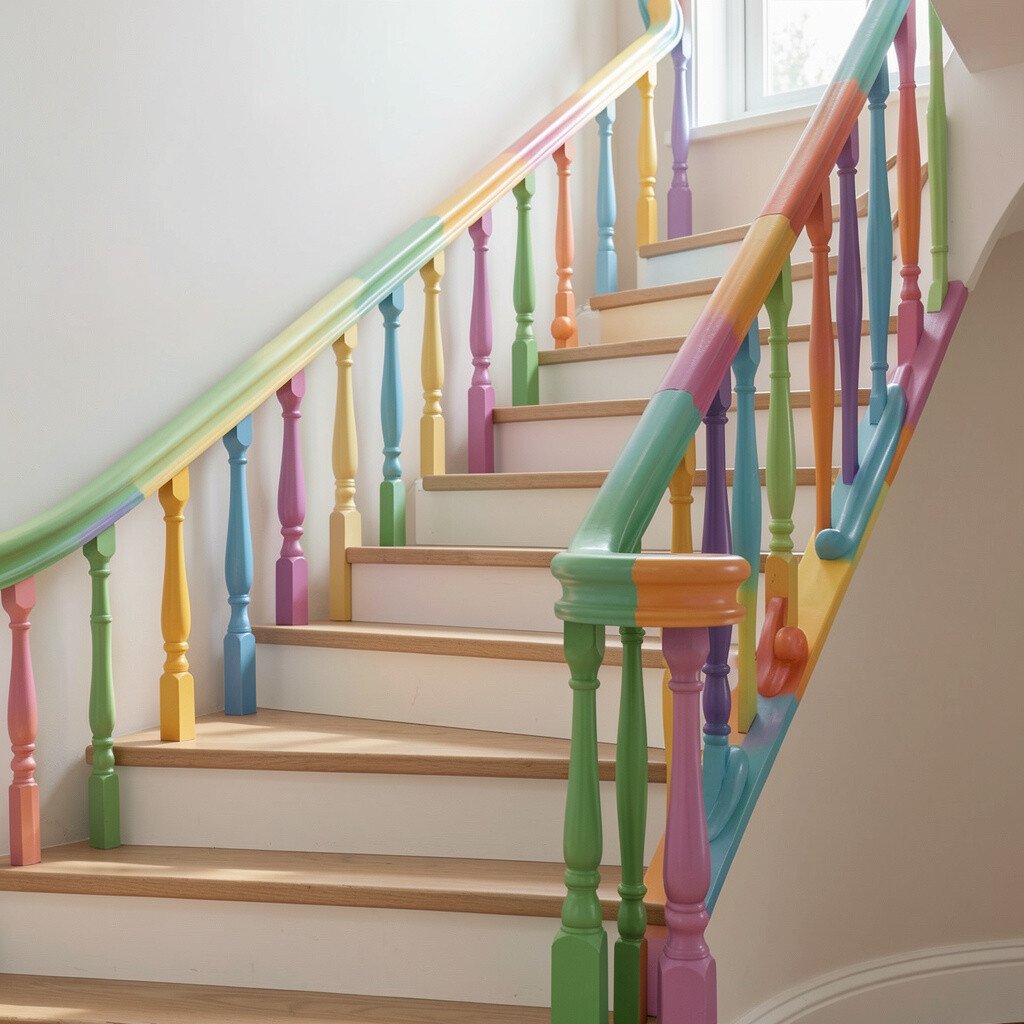
Don’t forget the handrail and banister, because they’re where you feel the design every day. Paint the rail in a cheerful color, like teal or sunny yellow, and tie it to matching riser accents.
This choice makes the staircase feel more complete, and it turns an everyday grip into a bright, friendly detail. Use durable paint made for wood or metal, then let it cure fully before heavy use so the finish stays smooth.
If you want flexibility, add removable decals on the banister instead of painting the whole thing. That way you can refresh the look seasonally without major work.