
Stairs wear out long before the walls do. A new color can make every step feel fresh and intentional.
Paint, stain, and refinishing choices can also brighten hallways, hide scuffs, and make your home feel more cared for.
1. Warm White That Turns Steps Into Light

Before the reno, the stairs may look dull and a bit gray, like they absorbed every shadow in the hallway. After painting a warm white, the treads look brighter and cleaner even when the light is low.
A warm white hides small scuffs better than many stark whites, so daily wear shows up less. Pair it with simple handrail hardware in brushed nickel for a smooth, modern vibe. For a practical win, use a cabinet-grade satin paint on treads, since flat matte finishes can scuff faster.
2. Soft Greige for a Calm, Neutral Home
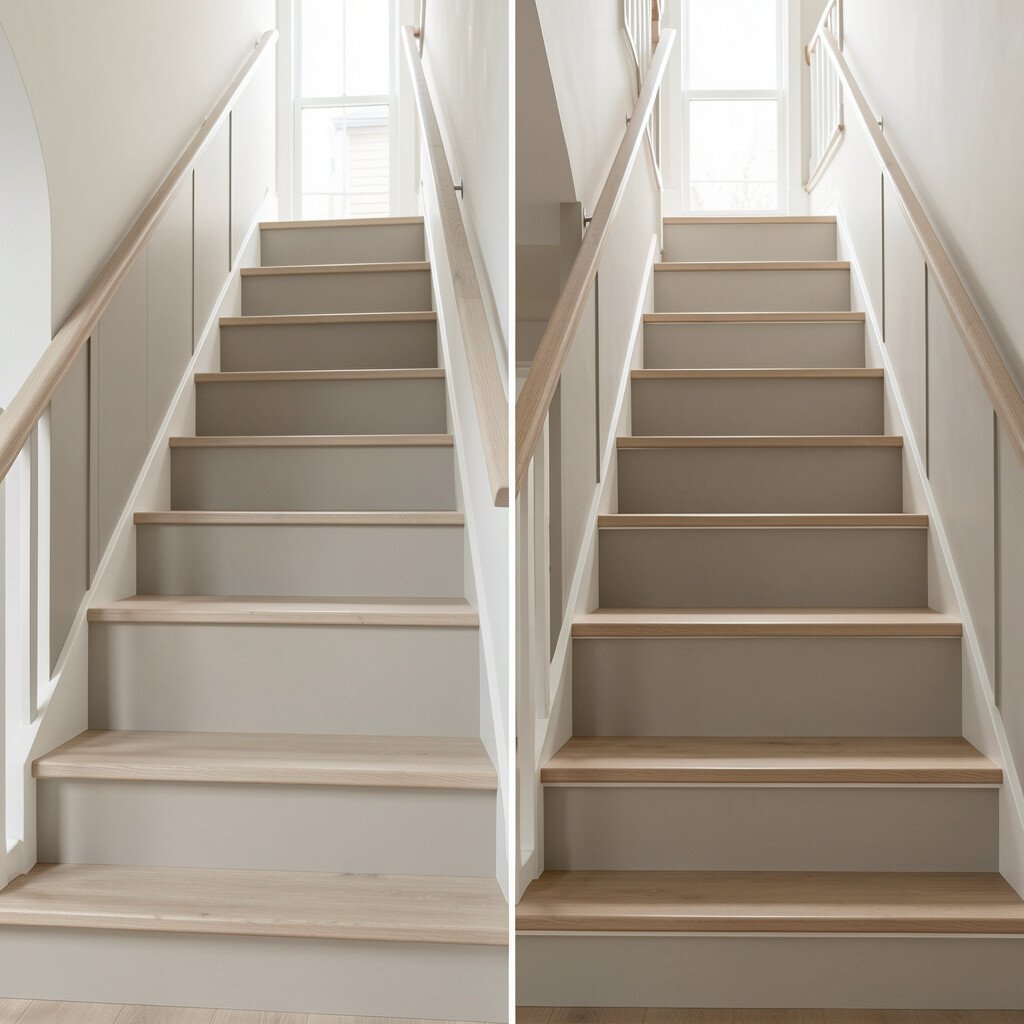
Before renovations, many greige stairs can look patchy, especially when different boards show through older stains. After switching to a soft greige paint wash or light stain, the wood grain looks even and cozy.
This color sits nicely between beige and gray, so it works with both cool and warm decor. A bonus is that greige makes busy patterns on rugs and walls look more balanced. Keep the risers slightly lighter or slightly darker than the treads to add depth without needing complicated design.
To personalize, test a sample on a hidden stair tread and watch it in morning and evening light. If your home has lots of oak furniture, lean a touch warmer; if it has silver accents, lean cooler. Costs can stay reasonable when you cover existing surfaces with paint, though staining plus sanding takes more time and product.
3. Classic Navy for Bold, Entry-Level Drama
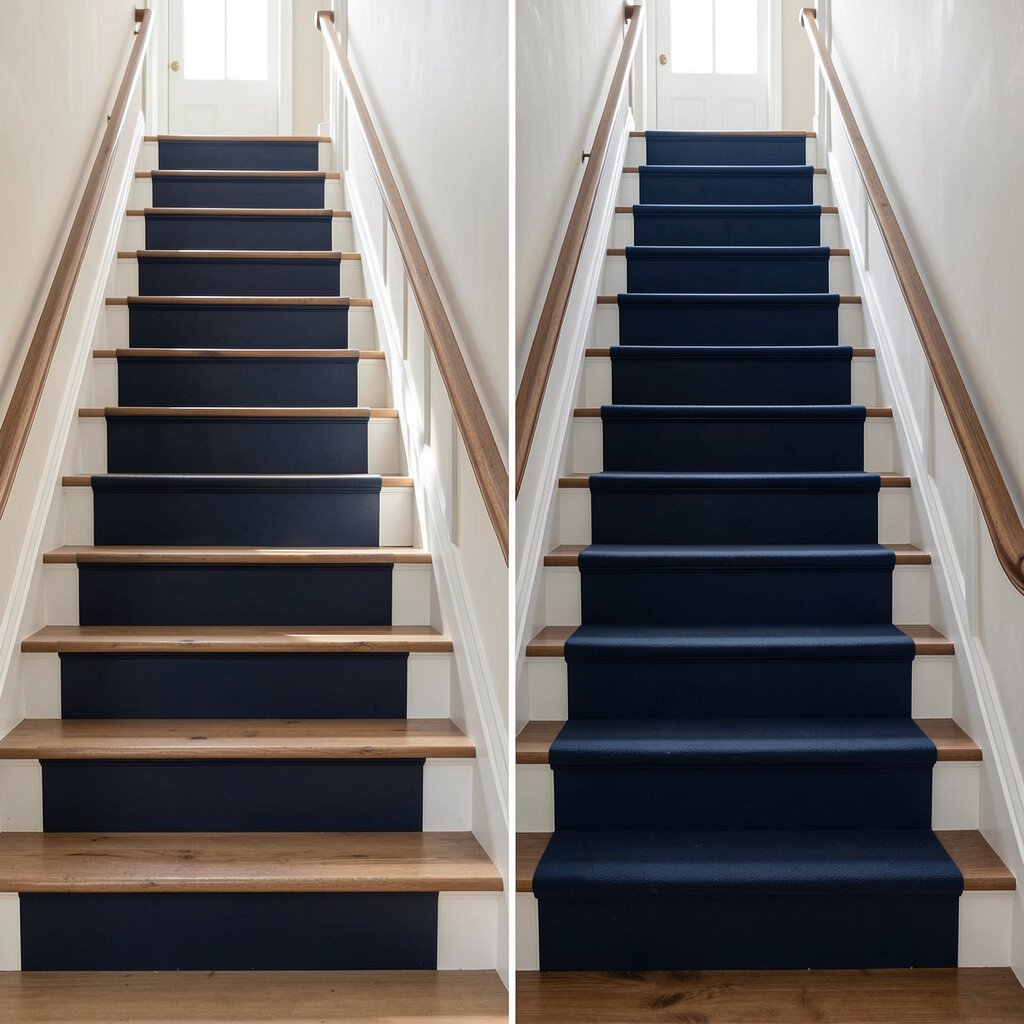
Before, dark stains on stairs can feel heavy, especially on narrow landings. After a rich navy, the stairs look crisp and stylish, like a built-in accent wall that you step on.
Navy also hides dirt better than medium browns, which helps if you have kids or pets. The visual contrast makes handrails stand out, giving the hallway a polished frame. Choose a satin or semi-gloss finish on treads so cleaning wipes off scuffs without dulling the color.
For personalization, add subtle contrast by painting the risers navy and the trim a warm white. Or keep everything navy but swap the balusters to black metal for a sharper look. A deeper color can cost more in prep because you want full, even coverage and clean edges along each tread.
Right after the reno, you will notice the whole entry feels more intentional, like you upgraded the first impression. Just remember that navy looks best with bright lighting, so consider a bulb update if your hallway runs dim.
4. Natural Oak Honey for a Cozy, Timeless Feel
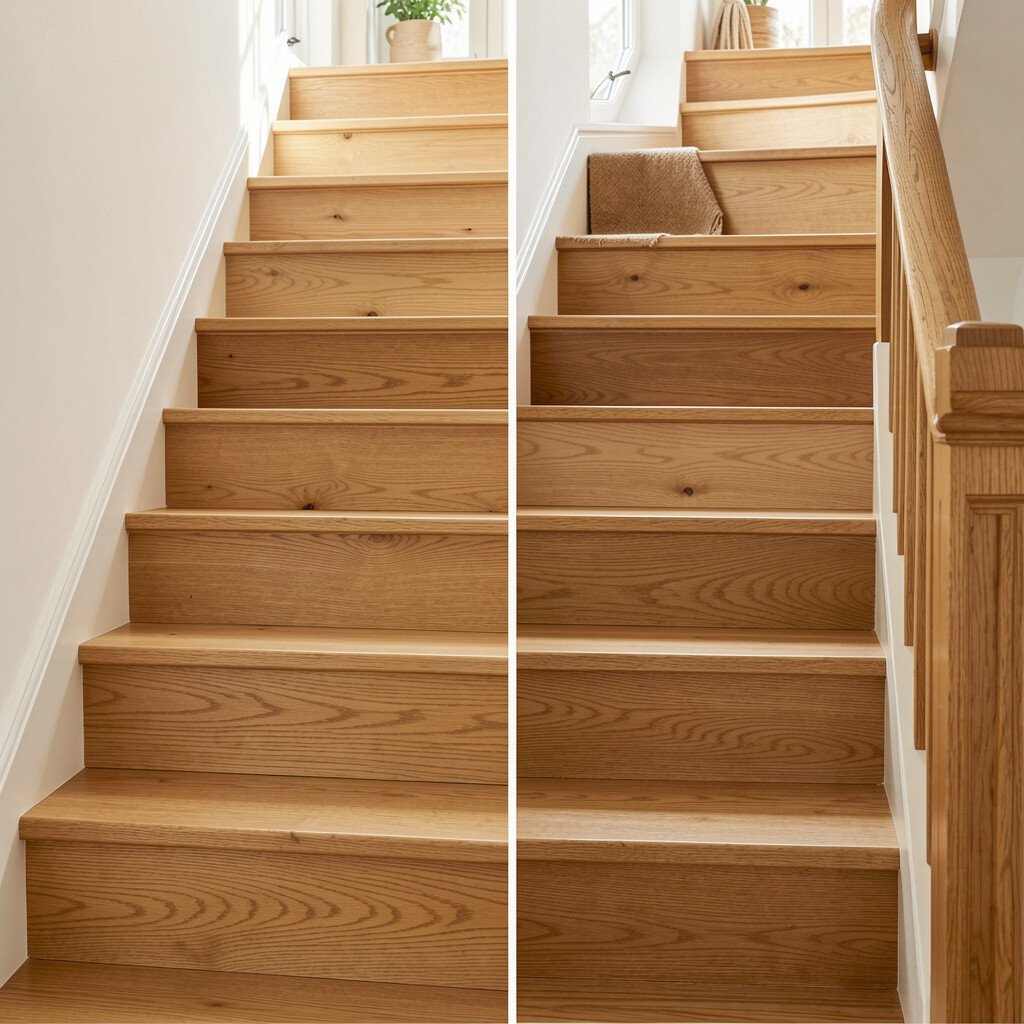
Before renovation, oak stairs might look uneven, with some boards darker and others lighter after years of use. After applying a honey-toned stain and a clear topcoat, the steps glow warmly and feel friendly.
This color brings out grain and texture, which makes the staircase look custom even if your layout is simple. It pairs well with tan walls, cream trim, and rattan or wood furniture. For a practical step, lightly sand between stain coats and wipe dust thoroughly, because leftover grit can cause dull spots.
5. Charcoal Gray for a Sleek, Modern Lift
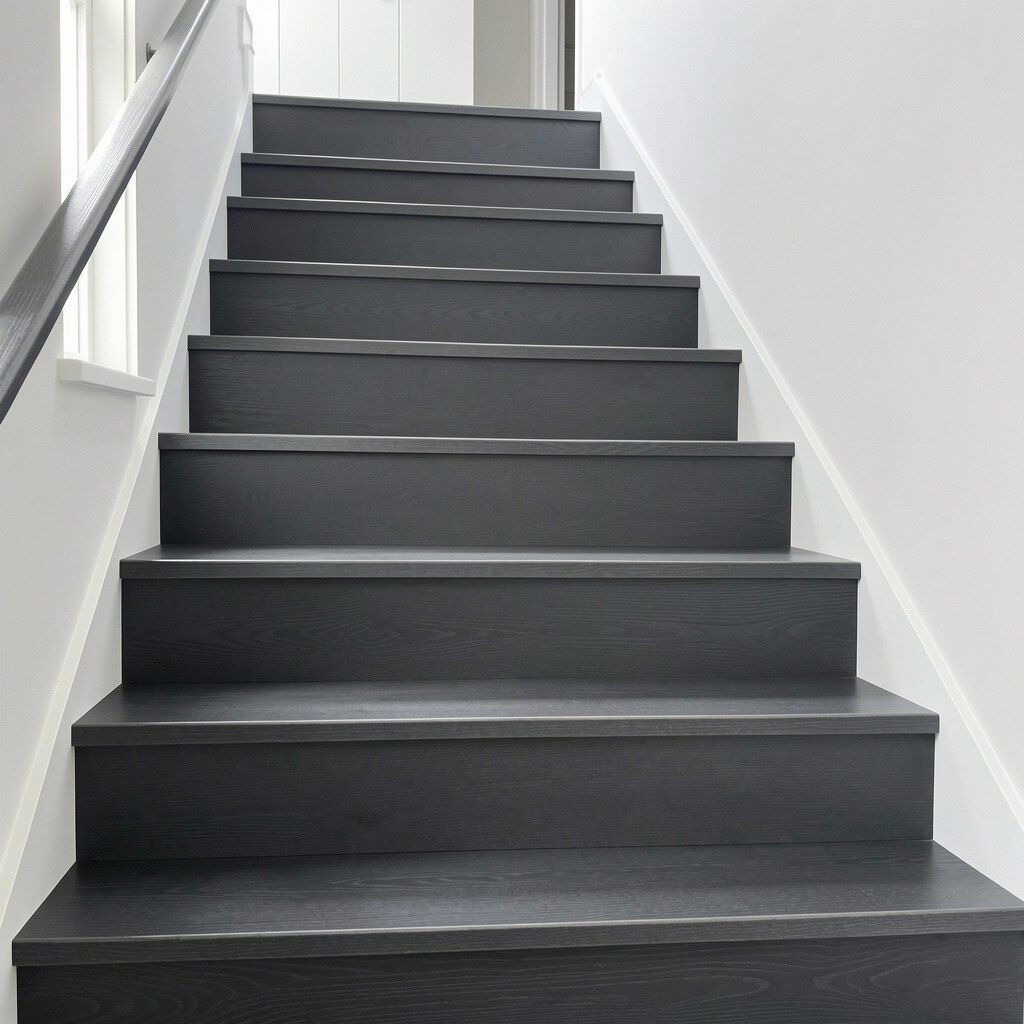
Before, gray stairs often look flat and dusty when the finish is too matte. After switching to a charcoal tone with a smooth clear coat, the steps look sleek and stronger against everyday scuffs.
Charcoal helps disguise marks and keeps the hallway from looking too busy. It also gives you a strong base for modern decor like black picture frames and cool-toned textiles. Try pairing charcoal treads with lighter risers for a refined two-tone effect that still feels easy to maintain.
If your staircase is narrow, choose a satin sheen instead of high gloss so it looks stylish without showing every fingerprint. For personalization, consider a contrasting edge line on each tread using a thin brush and painter’s tape. Cost can vary, but staining tends to be efficient when you want to keep the wood look rather than fully covering it.
6. Forest Green for a Fresh, Earthy Mood

Before renovations, the stairs might feel bland, especially if the hallway is lit by harsh overhead bulbs. After a forest green finish, the space feels grounded, like a quiet retreat right at home.
This shade adds personality without needing wallpaper or major changes. Forest green looks especially nice with brass accents and warm wood furniture. For practical results, use a paint that resists chips, and seal the edges of each tread since these get the most friction.
7. Soft Blush for a Playful, Unexpected Accent

Before the change, your stairs may look too traditional, with plain white or standard brown stain. After painting a soft blush, the staircase becomes a gentle focal point that feels fresh and charming.
Blush can make a hallway feel inviting, and it pairs surprisingly well with white trim and light gray walls. Because it is lighter than many bold colors, it can help the space feel open. For personalization, try blush only on the risers and keep the treads a warm white or natural wood stain.
When you choose blush, test undertones carefully, since peachy pink can look different in cooler lighting. A satin finish keeps it wipeable, which matters when shoes track in dust. On cost, paint is usually less expensive than repeated sanding, so this can be a budget-friendly makeover with a big visual payoff.
To keep the look cohesive, match the hardware color on the handrail and consider coordinating with pillows or wall art in similar tones.
8. Classic Walnut for Rich, Library-Style Charm
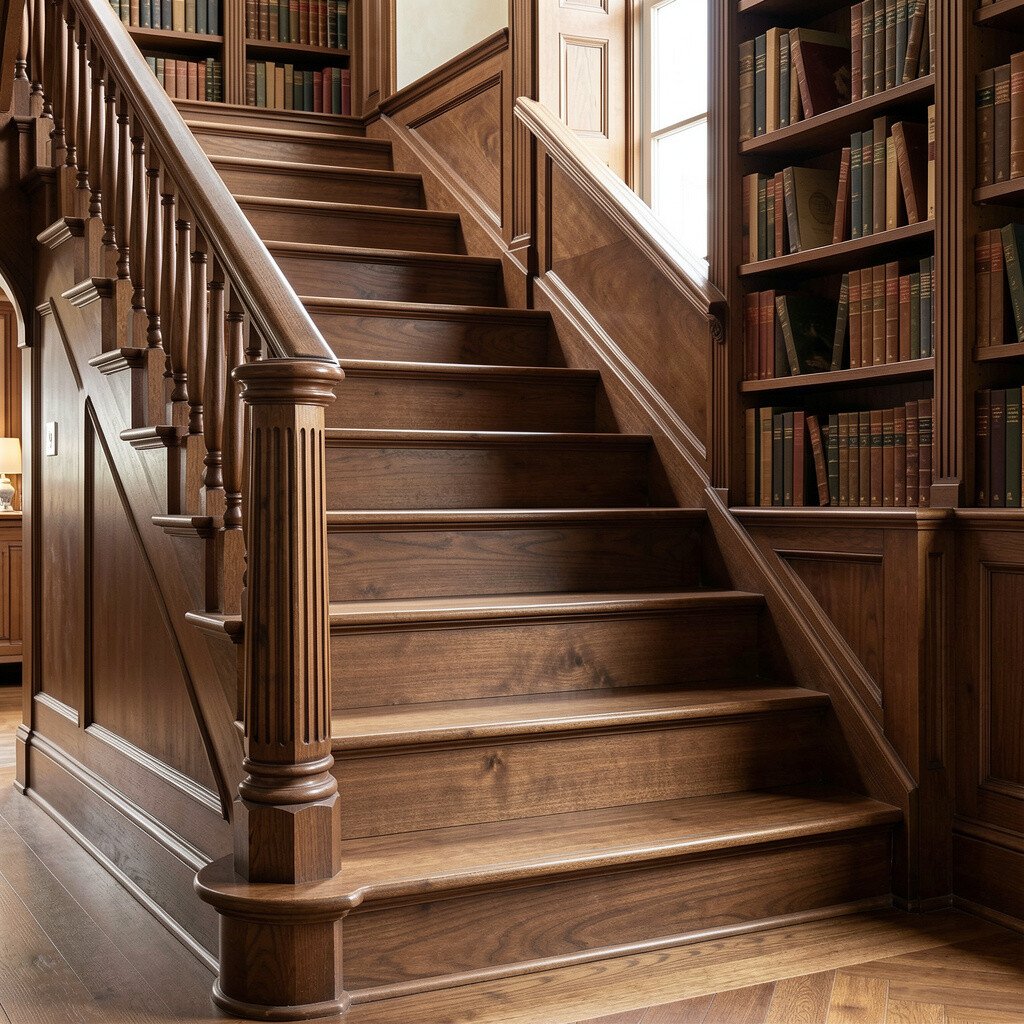
Before, the stairs might have worn patches where old stain faded unevenly. After refinishing with walnut tone, the steps look deeper and more elegant, like they belong in a well-loved home library.
Walnut colors create warmth and hide imperfections better than light stains. They also look fantastic with dark hardware, black metal accents, and warm lighting. For practical tips, remove old residue fully before applying stain so the color soaks evenly and avoids blotches.
9. Crisp Black for High-Contrast Style
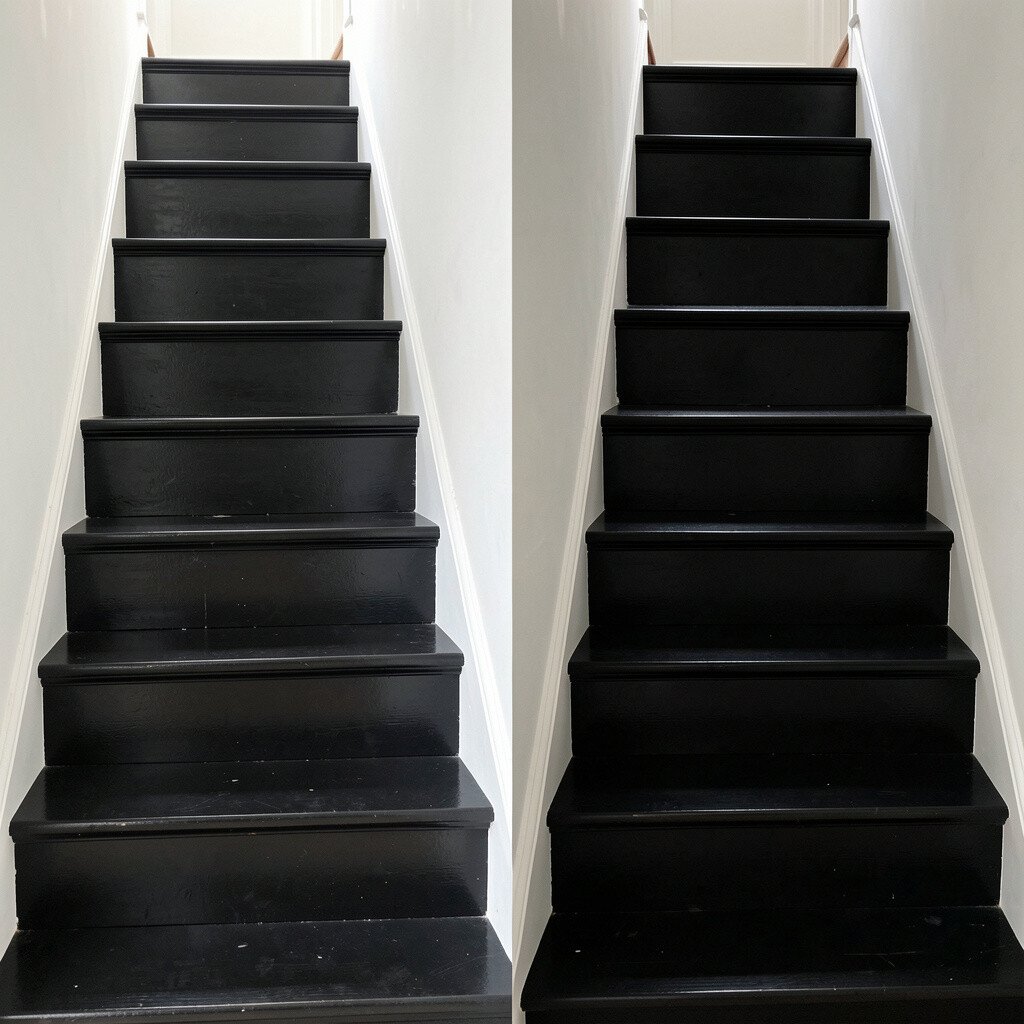
Before renovations, a staircase can feel visually crowded when the railing and trim blend into the background. After painting stair treads black with clean white risers, your staircase looks sharp and structured.
Black adds drama and helps define each tread line, which can make even small hallways feel designed. It is also great at hiding dirt, though it may show fine dust more than you expect. Use a durable finish so scuffs wipe away without leaving lighter streaks.
For personalization, add a thin gold line along the edge of the tread to mimic a refined inlay style. You can also keep the banister natural wood for a balanced look. Costs might rise if you need extensive prep to remove glossy old finishes, but the result often feels worth it.
Just keep in mind that black can look hottest in direct sun, so use curtains or blinds if your stairs get bright glare.
10. Sky Blue for a Bright, Airy Upgrade

Before, stairways sometimes feel cramped because everything is in the same neutral range. After a gentle sky blue, the hallway feels lighter, like fresh air moving through the home.
Sky blue works well with white trim and warm wood floors, creating a nice balance. It also pairs with natural textures like jute rugs and linen curtains. For practical results, use painter’s tape carefully around tread edges so lines stay crisp and easy to clean.
11. Vintage Teal for a Unique, Retro Feel
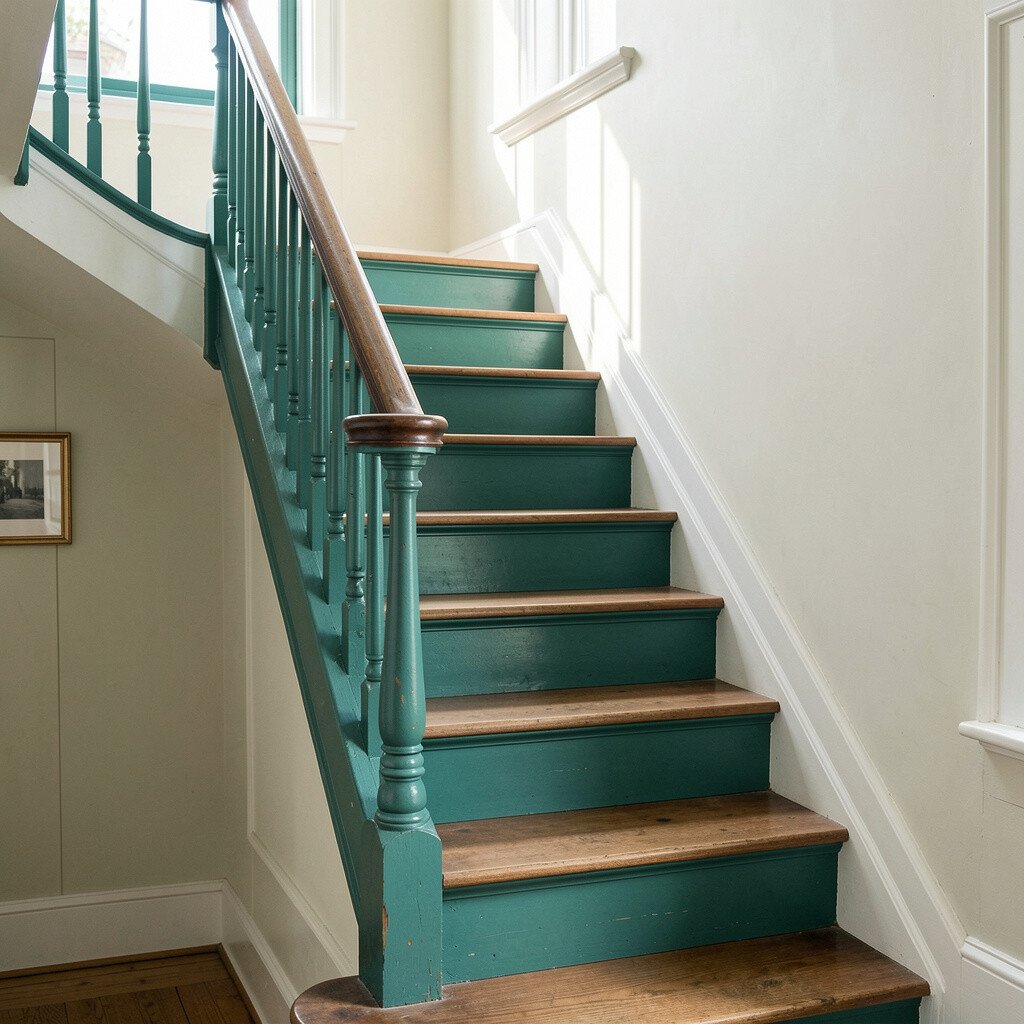
Before renovations, the stairs may look like standard builder brown, which can blend into the floor. After applying vintage teal, the staircase looks distinctive, like a retro piece updated for today.
Teal brings depth, color, and personality, especially when you add warm brass hardware. It can also make white walls look richer without feeling too bold. To make it practical, seal the finish well since teal pigments can fade faster if not protected.
For personalization, consider two-tone steps where risers are teal and treads are a darker neutral like charcoal. That approach keeps the staircase grounded and prevents the color from feeling too intense. Cost considerations depend on prep, since achieving smooth teal coverage usually requires thorough sanding and clean surfaces.
If you love the look but worry about longevity, choose a timeless teal close to a muted green-blue, which tends to stay appealing across changing decor trends.
12. Linen White for a Smooth, Modern Finish
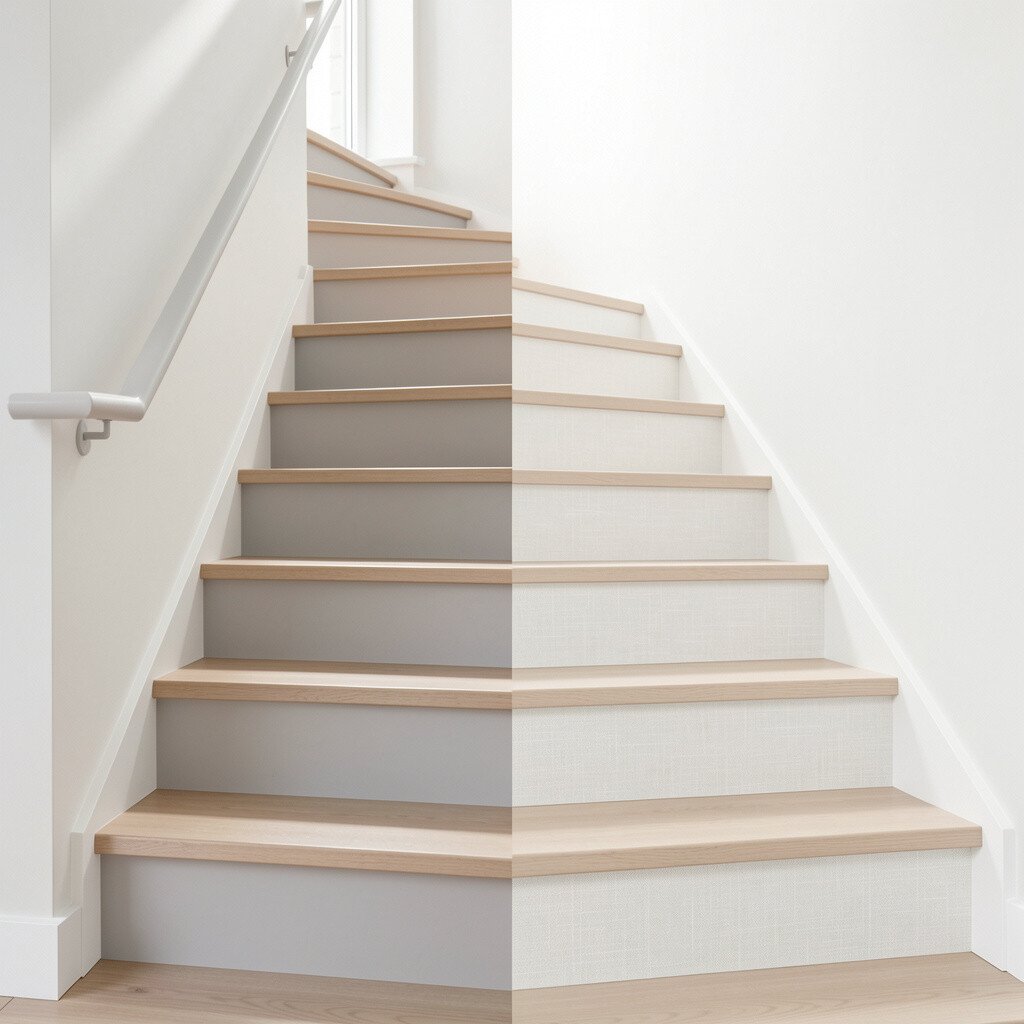
Before renovations, stairs may look chalky or patchy after older paint jobs. After using a linen white tone, the surface looks smooth, warm, and inviting.
Linen white adds softness compared to pure white, so it hides minor imperfections without looking dingy. It also makes the handrail and balusters stand out clearly. For practical tips, keep the sheen consistent across treads and risers, and consider using a bonding primer if the old finish is glossy.
13. Taupe for a Cozy, Low-Key Makeover
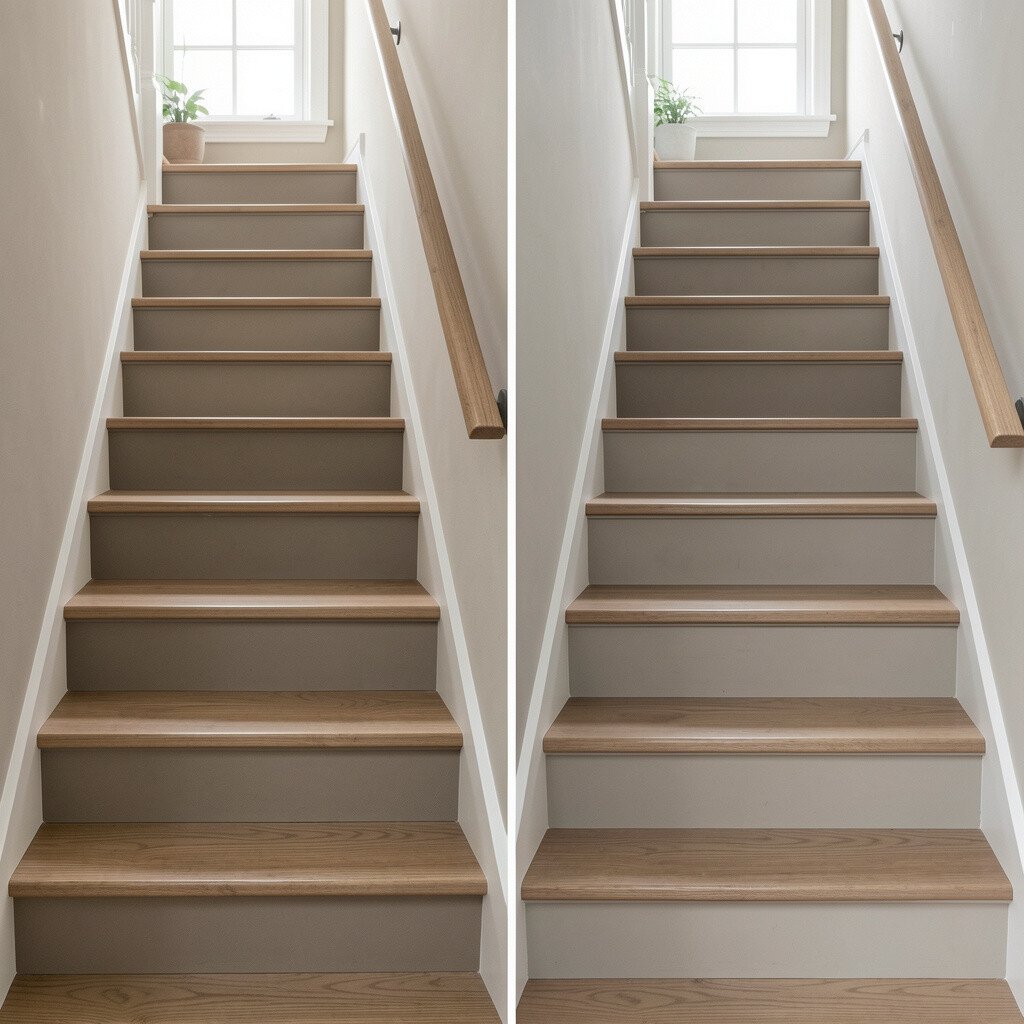
Before, taupe-adjacent stairs might lean too gray or too beige, leaving a confusing middle tone. After redoing them with a balanced taupe, the staircase feels calm and cohesive with the rest of the home.
Taupe is a smart choice if you like flexibility, since it pairs with many wall colors and floor finishes. It also does a great job camouflaging daily wear, which is a real benefit for busy households. Personalize it by adding a slightly darker edge stain on treads, creating a subtle, tailored border.
To keep the work manageable, choose a finish that is durable and easy to touch up, like a scuff-resistant paint. Costs can be controlled by focusing on painting the treads and risers while leaving trim in a matching, already-finished tone. Also remember that taupe undertones matter, so test samples in multiple lighting conditions.
14. Pale Mint for a Light, Fresh Style
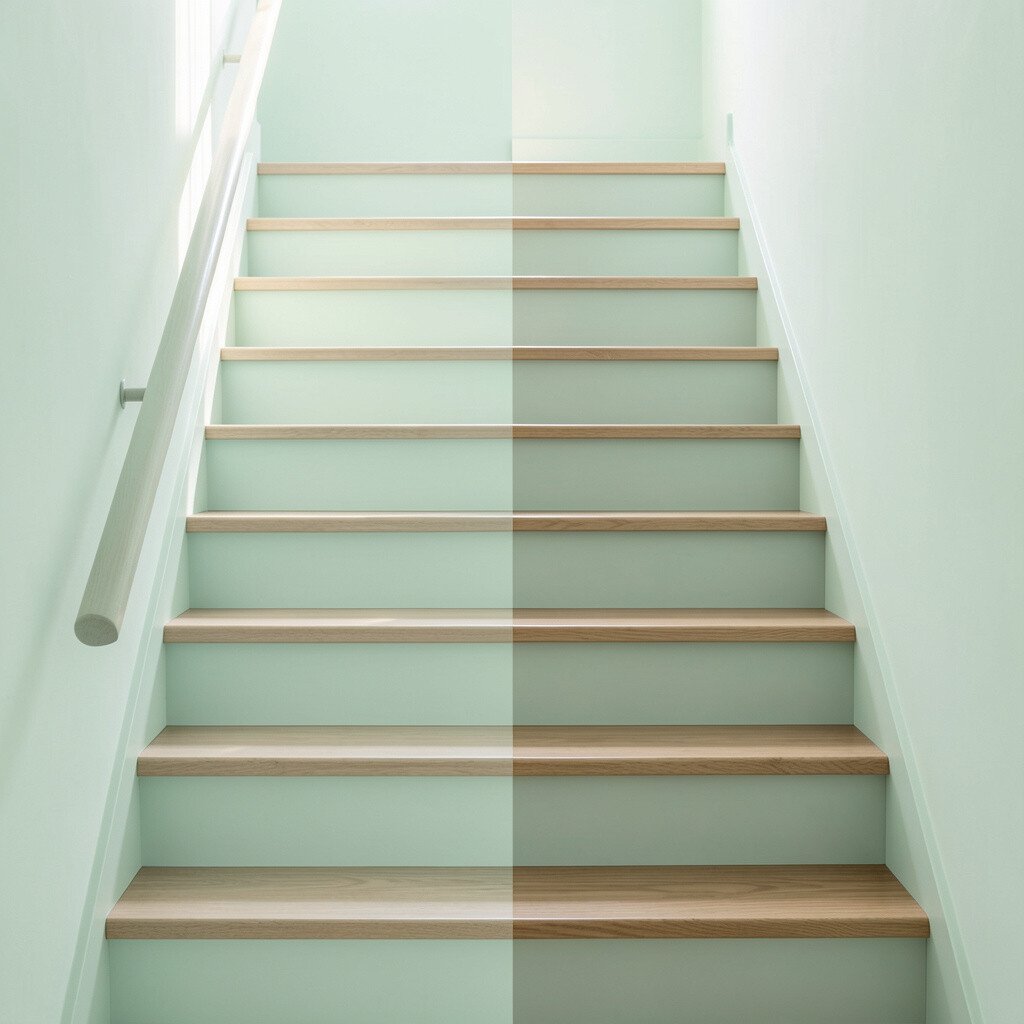
Before renovations, your stairs might feel stuck in a heavy mood, especially if they have dark railings. After painting them a pale mint, the staircase looks clean, friendly, and quietly playful.
Mint adds brightness without being loud, and it pairs well with white walls, natural wood, and soft neutral decor. It can also feel great in homes that want a gentle color pop rather than a bold statement. For practical tips, protect the edges with painter’s tape and apply thin coats to avoid drips.
15. Warm Gray for a Balanced, Everyday Look
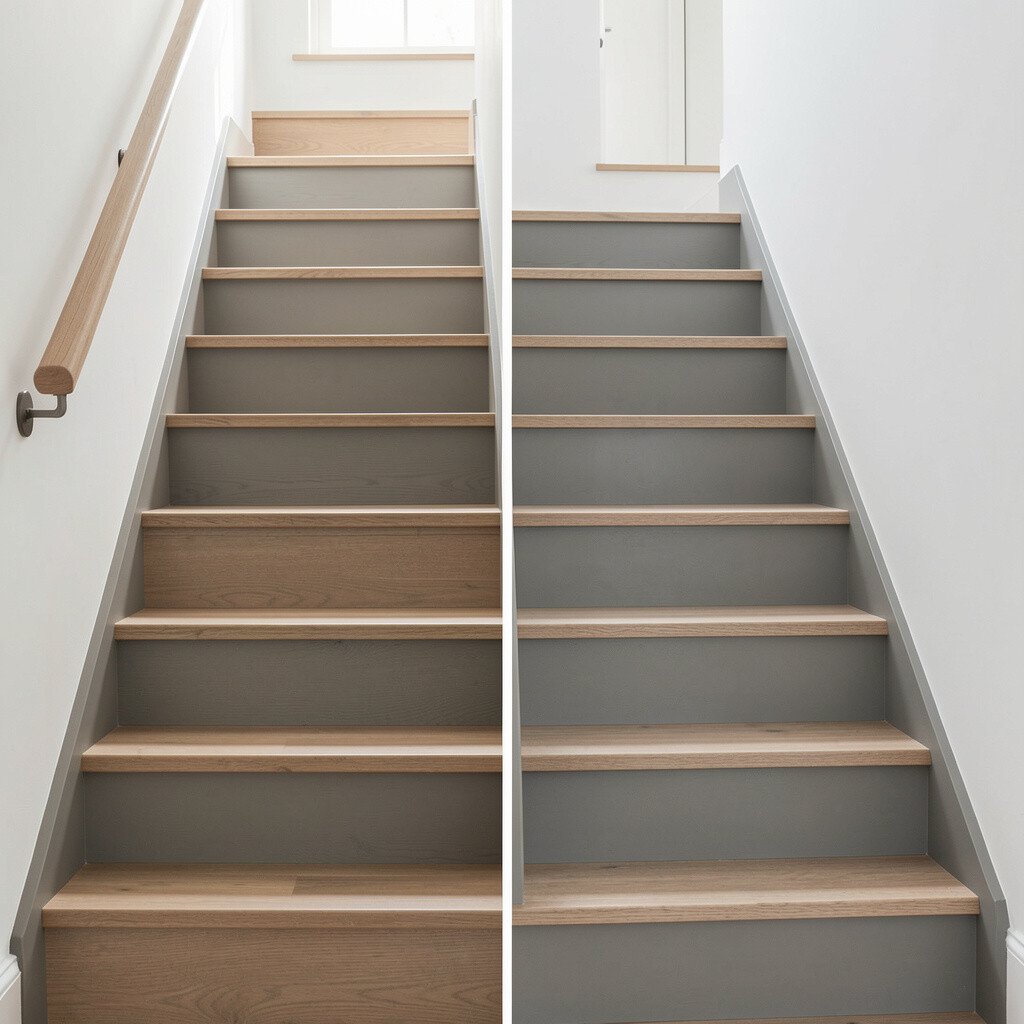
Before the renovation, gray stairs can appear cool and harsh if the undertone is wrong. After choosing a warm gray, the stairs look modern but still cozy, like the color was made for your hallway.
Warm gray helps your space feel updated without feeling cold. It also blends nicely with both light and dark flooring, which makes it a steady choice if you plan to change decor later. For personalization, match stair riser color to the wall trim so the staircase feels like part of a designed system.
Costs are often reasonable because warm gray can cover existing tones well, especially when you use primer properly. To keep the job looking sharp, sand and vacuum thoroughly so the finish stays smooth. If you want extra durability, consider a clear protective topcoat for treads that take more foot traffic.
Once finished, you may notice how much more inviting your hallway feels just from the calmer color palette.
16. Oatmeal Cream for a Soft, Homey Upgrade
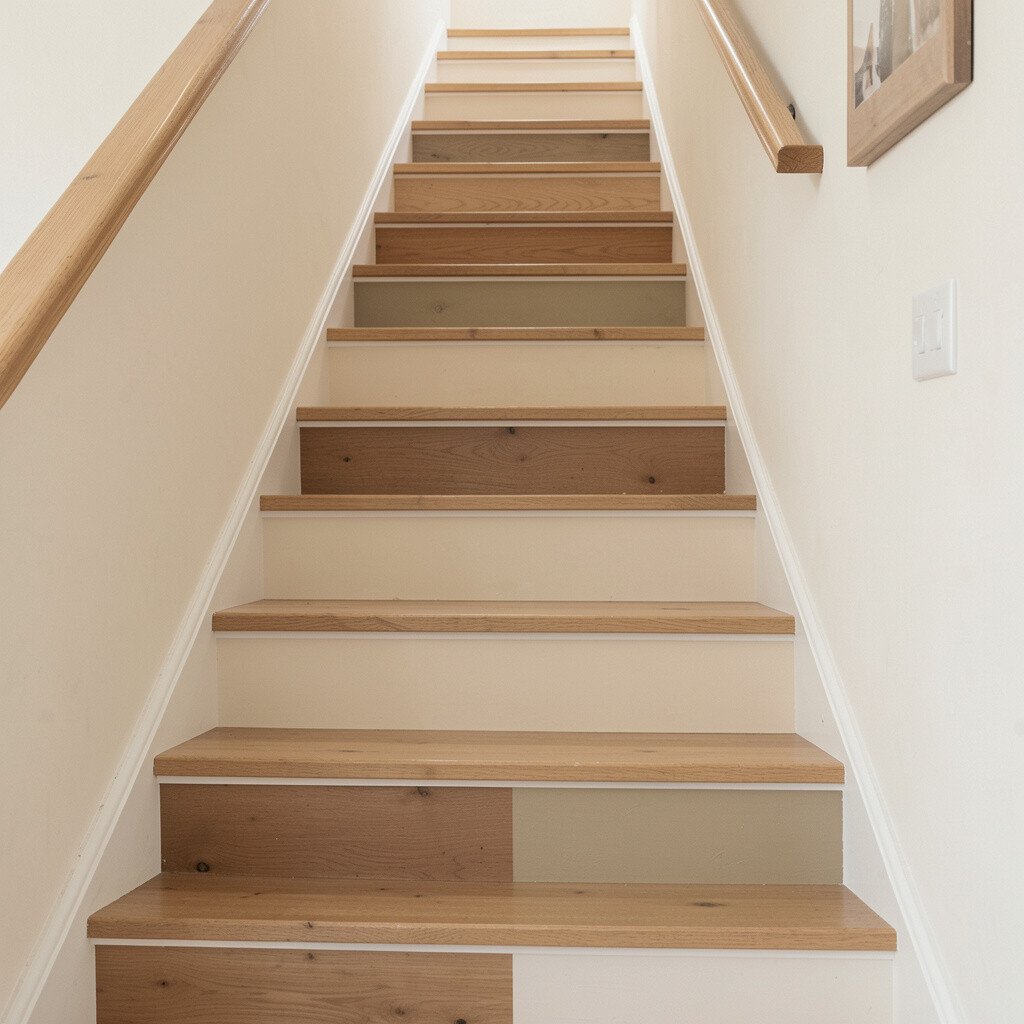
Before renovations, stairs may look too stark, like they belong to a showroom but not a lived-in home. After painting oatmeal cream, the staircase feels warm and comforting, like freshly laundered bedding.
Oatmeal cream is great for hiding tiny scratches and scuffs compared to brighter whites. It also complements wood flooring and natural fabrics beautifully. For practical tips, choose a finish that is easy to clean, since light colors can show dust if you do not wipe regularly.
17. Burnished Copper Accents With Painted Neutrals
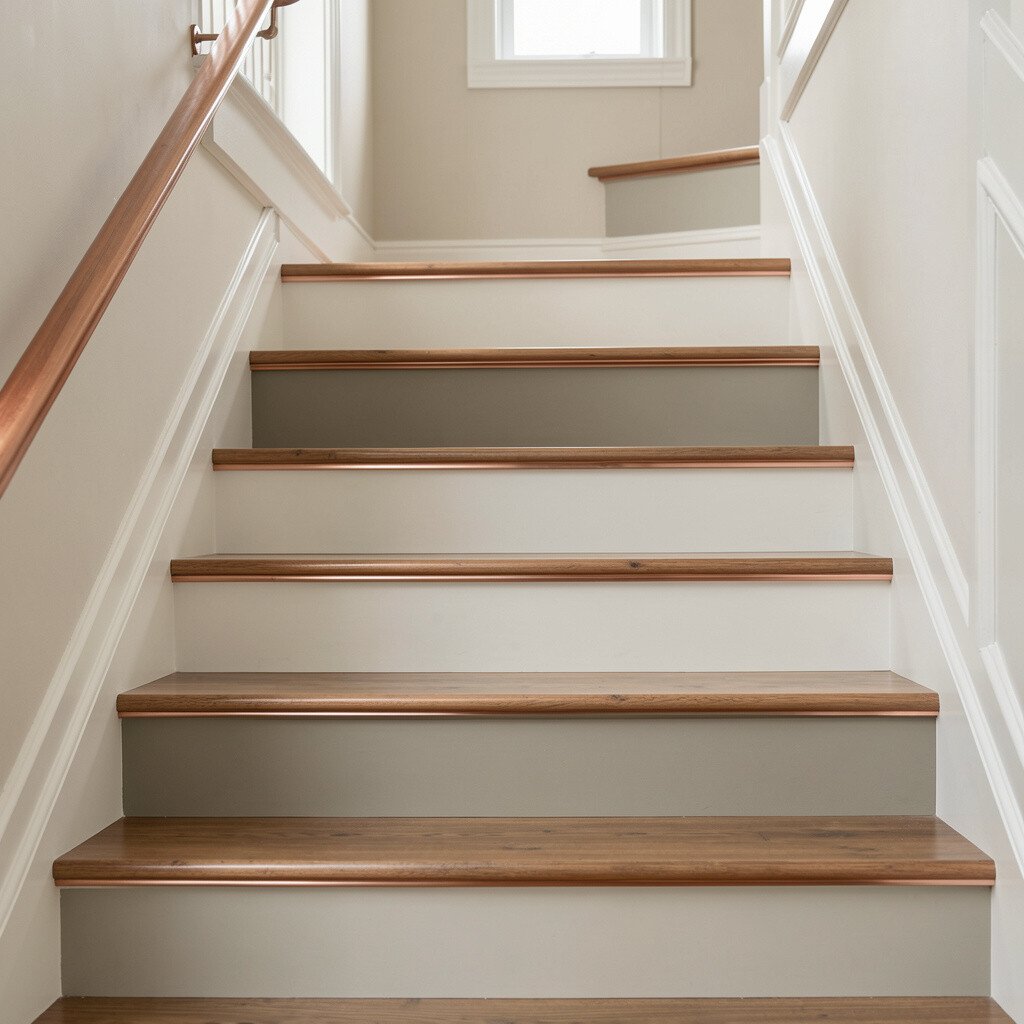
Before, you might keep stairs simple and neutral, which can look fine but a little plain. After adding copper-toned accent details on edges or riser lines, the staircase looks custom while staying mostly easy to maintain.
This approach is unique because you get color interest without painting every square inch. Copper accents can also connect the stairs to lighting fixtures and decor, creating a pulled-together feel. Practical tip wise, use high-quality tape and paint for the accent lines, then apply a clear protective coat so they stay crisp.
For personalization, try copper on the stair tread edges only, or create a thin chevron pattern on the risers. Cost considerations depend on how much detail you add, but using accents can reduce paint amount while still delivering big visual impact. Also keep the sheen consistent so the copper does not look dull next to satin treads.
18. Deep Burgundy for a Dramatic, Luxurious Look
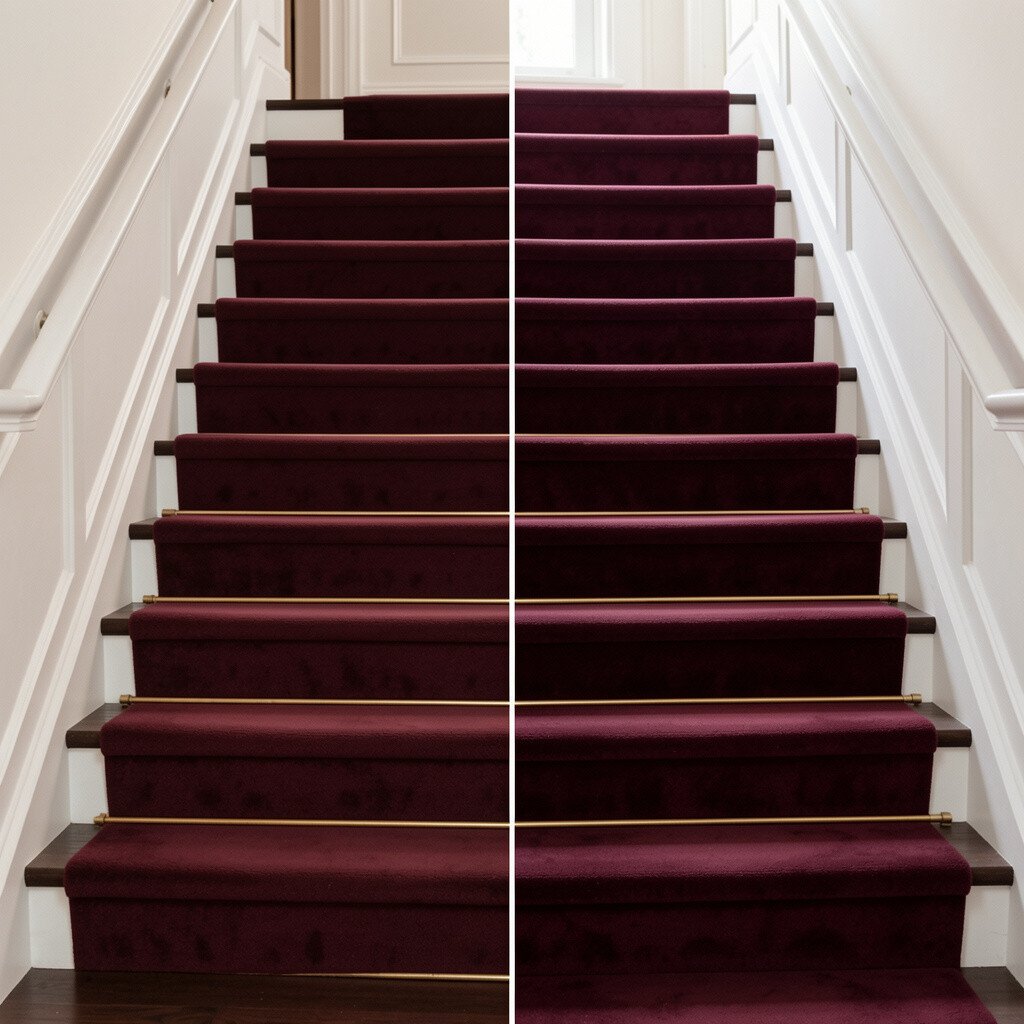
Before renovations, stairs may have looked flat because the color was too close to the walls. After applying deep burgundy, the staircase gains richness and looks like a tailored piece of furniture.
Burgundy adds warmth, especially in spaces with beige or tan walls and warm wood floors. It also hides some dirt better than lighter colors, since darker pigments mask smudges. To make it last, use a stain-blocking primer if you are painting over older finishes, and seal the treads with a protective topcoat.
19. Pale Sand for a Beachy, Relaxed Vibe
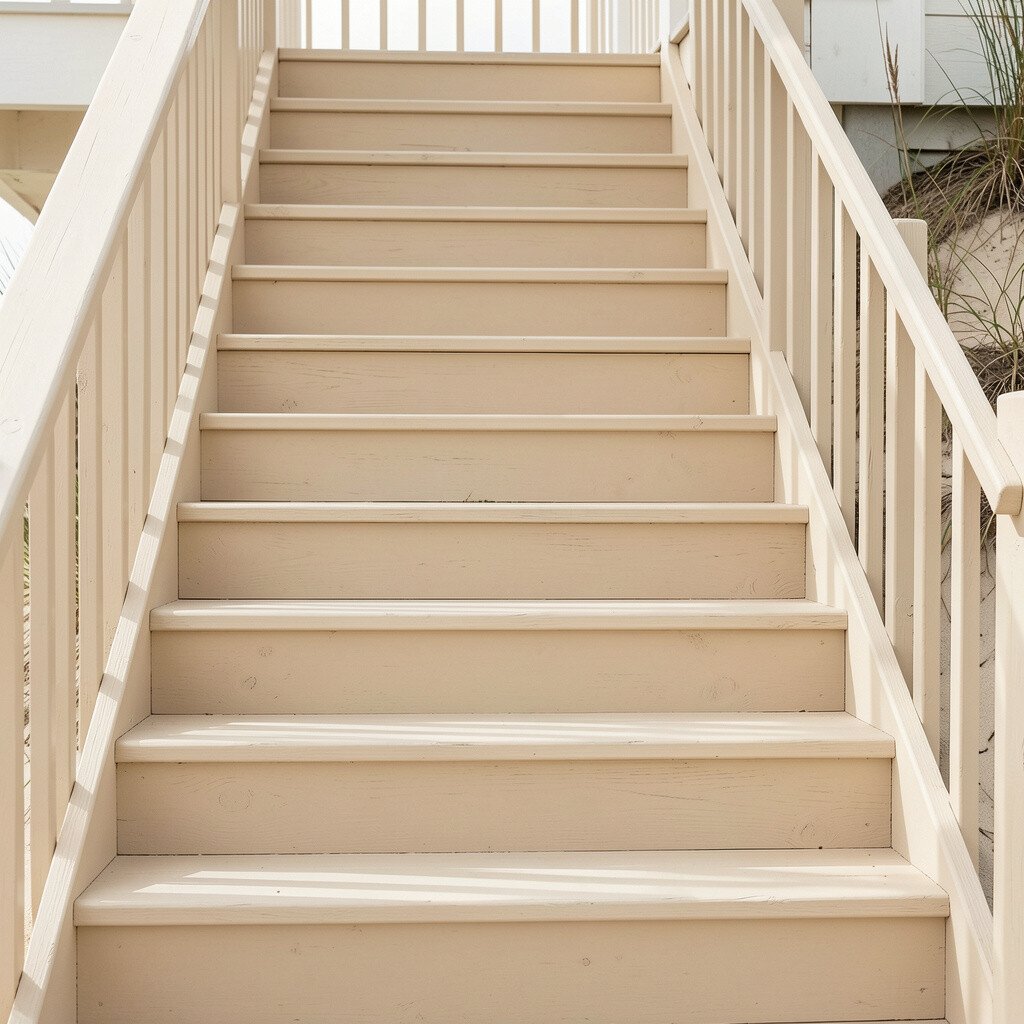
Before, stairs may feel too formal or too dark for the rest of your decor. After refinishing in pale sand, the staircase looks airy and relaxed, like a calm coastal corner.
Sand tones work well with white walls, light gray paint, and natural fibers. They also keep a hallway from feeling heavy, which is especially helpful in smaller homes. For practical tips, balance the color by using slightly darker trim or risers so the stairs read clearly and do not blend into the floor.
To personalize, incorporate a subtle wood grain look by using a light stain instead of full coverage paint. Costs can be managed because lighter finishes may require fewer coats, but accurate sanding is still key for smooth results. If you want a trend-forward look, pair pale sand with black hardware or matte bronze lighting for contrast.
20. Two-Tone White Risers With Wood Treads
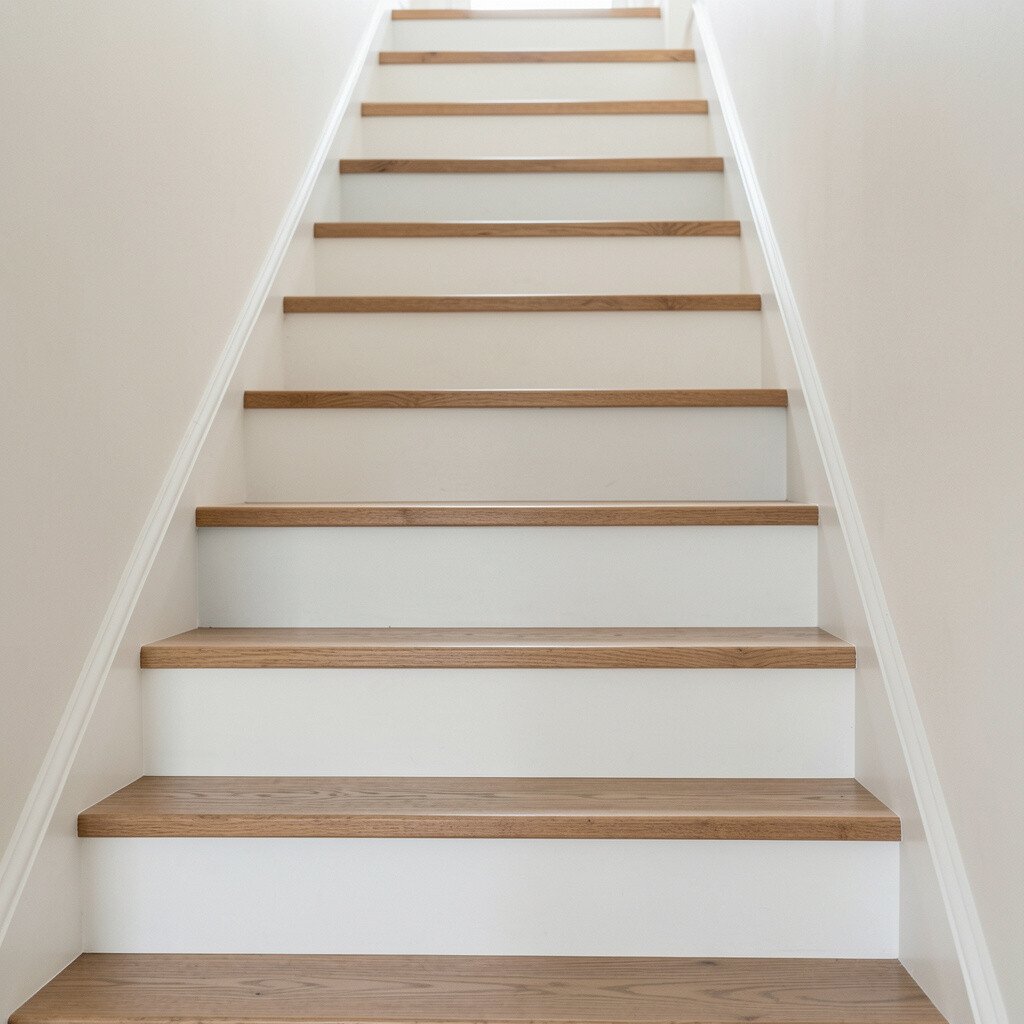
Before renovations, stairs might be the same color everywhere, which can make them look like a single block. After pairing white risers with clear, warm wood treads, the staircase gains dimension and feels more custom.
This two-tone combo is a current favorite because it highlights the architecture of the steps. It also makes cleaning easier since wood treads can handle regular wiping with proper sealing. For practical tips, paint risers fully and let them cure before heavy foot traffic to prevent scuffs.
Personalize the look by choosing the wood tone that matches your floors, whether that is light oak or deeper walnut. Cost can vary, but often you will spend more on the finishing and sealing for wood treads than on painting risers. If you want it to look extra sharp, add a matching stain on the stair nosing to frame each tread line.
21. Soft Charcoal With Patterned Risers for Creative Energy
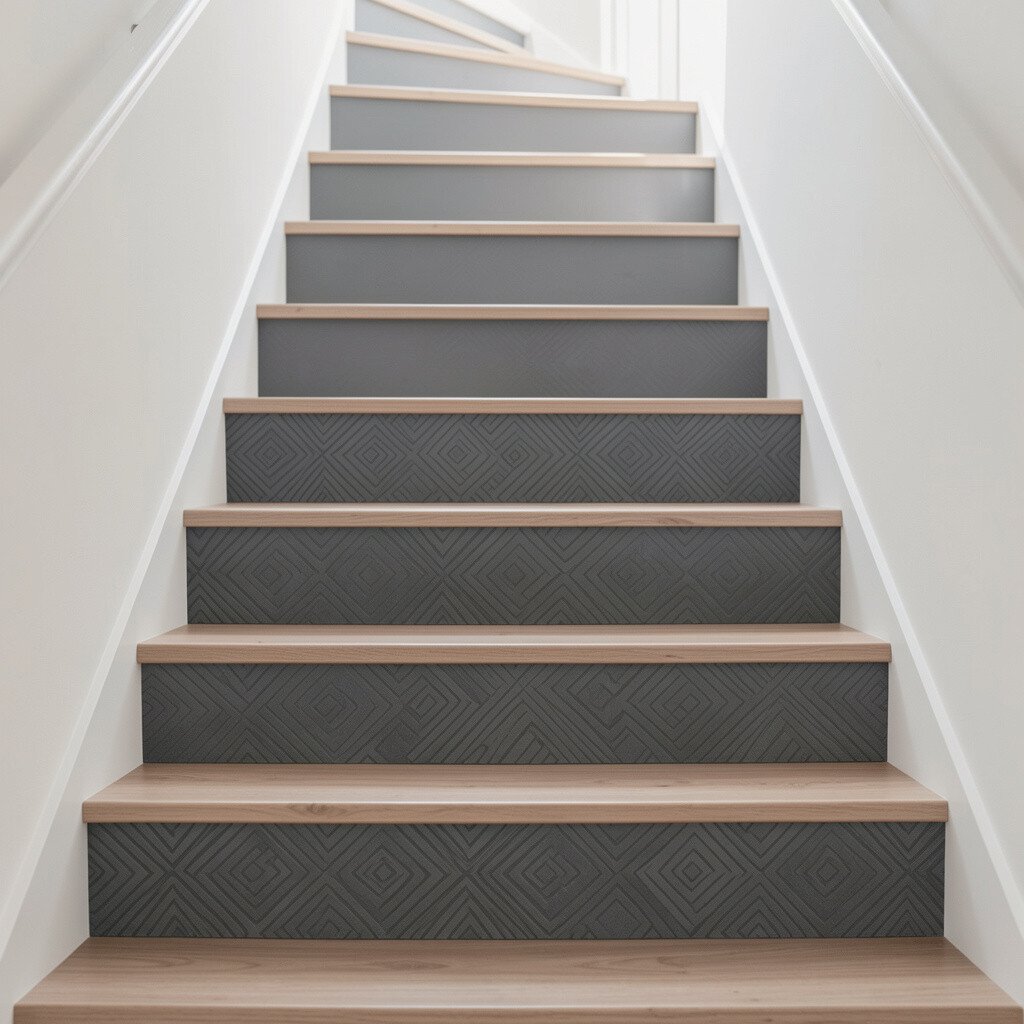
Before, your staircase may feel plain, even if the space is decorated well. After painting soft charcoal and adding a simple patterned riser design, the stairs become a stylish mini feature that still feels practical.
Patterned risers are a unique way to add personality without changing your entire floor plan. You can keep the pattern subtle, like small dots or a narrow stripe, so it stays classy and not overwhelming. Practical tip wise, use a stencil or measured painter’s tape to keep lines straight and repeatable across each stair.
For personalization, match the pattern style to your decor, such as modern stripes for minimalist homes or gentle curves for a softer look. Costs depend on the amount of detail, but you can reduce time by choosing a stencil and using quick-dry paint. If you want the safest long-term finish, seal the charcoal surfaces so cleaning stays easy and color stays true.
When it is done, you will likely feel how the staircase changes the mood of the hallway, making it feel more like your own style instead of a default version of someone else’s.