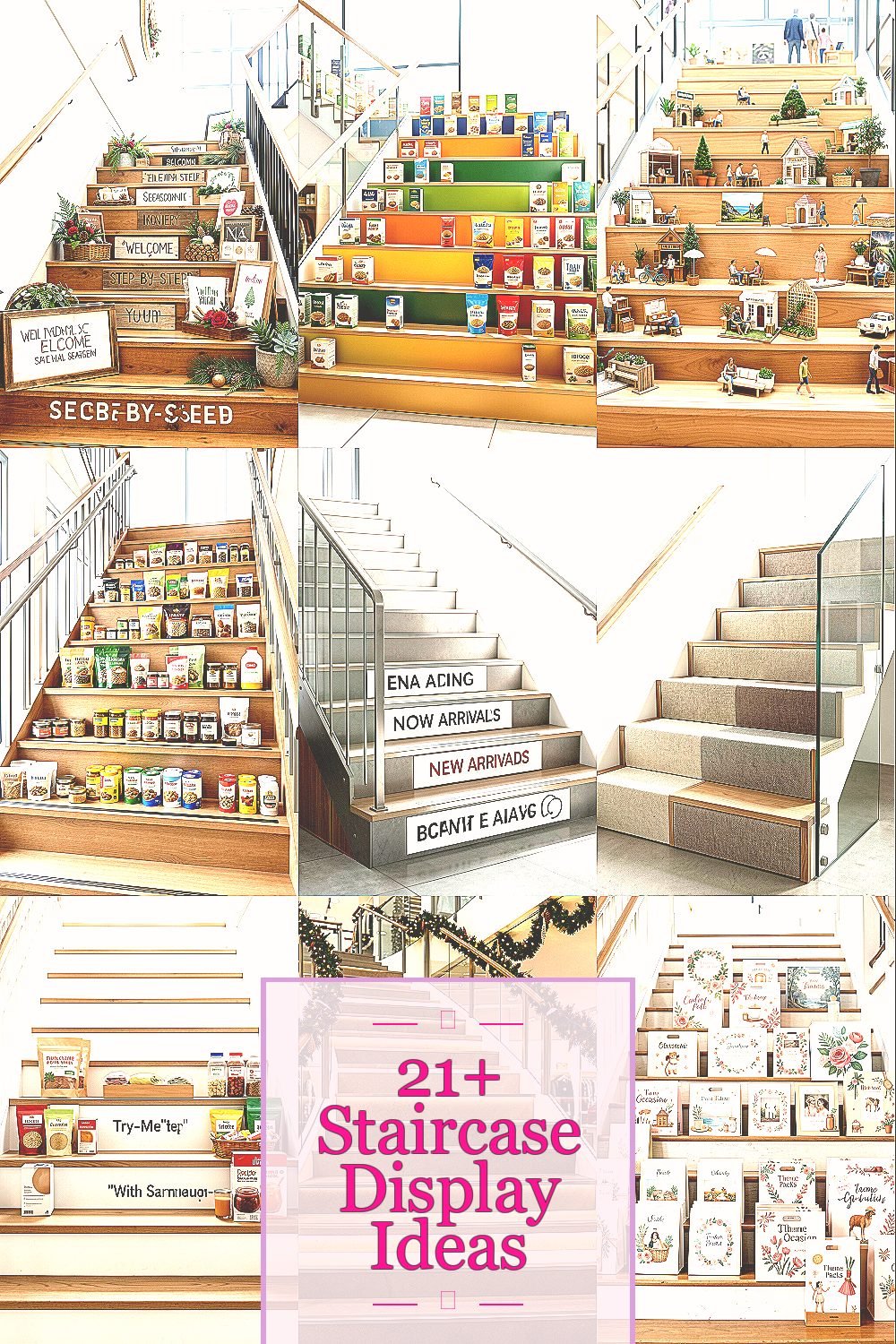
A staircase in a store can do more than move people between levels. It can also spark curiosity the moment shoppers step inside.
With the right arrangement, each step becomes a mini story that encourages browsing, grabbing, and buying.
1. Step-by-Step Welcome With Seasonal Signage
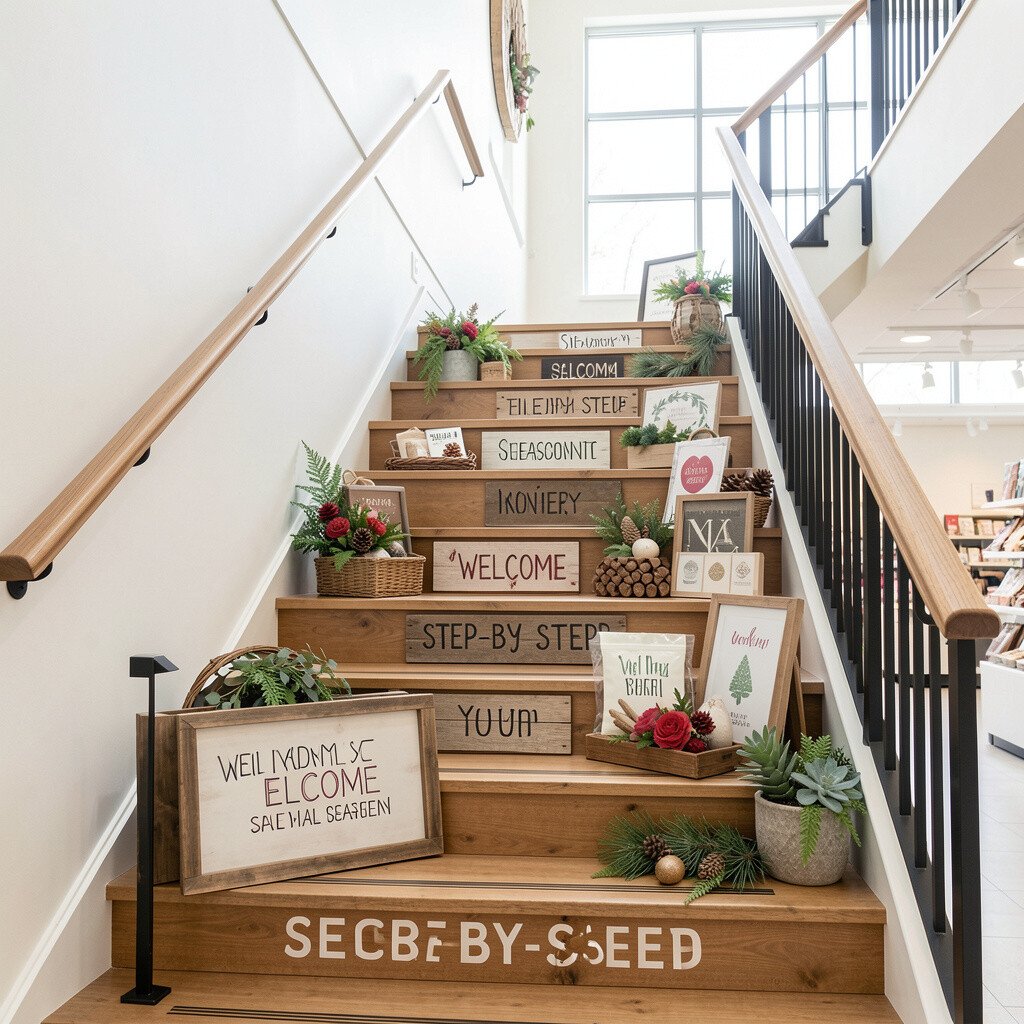
Set the tone right at the first step with seasonal colors and a clear message that fits your brand. Use matching fonts and simple icons so shoppers understand the vibe in a glance.
For each step, place a small card or backing that highlights one theme, like cozy winter or bright spring. Keep the spacing consistent so the display looks neat, even when foot traffic is busy. Choose paper, acrylic, or vinyl that can be swapped fast to keep costs under control across the year.
2. Color-Coded Product Steps for Fast Browsing
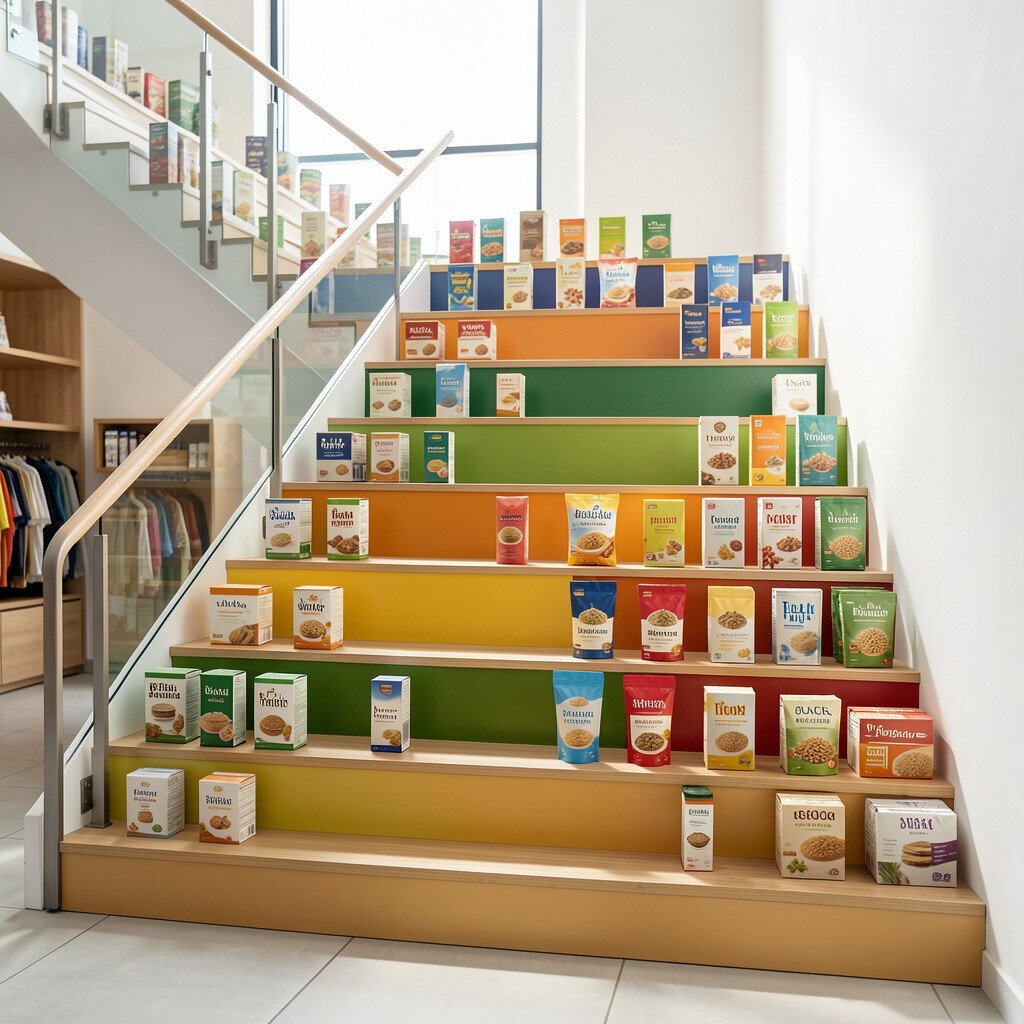
Sort items by color and assign one shade family to each step, creating an easy visual path. Shoppers naturally scan from top to bottom, so the layout can guide their attention without extra signage.
Use price tags that match the step colors and keep your labels facing forward for quick reading. If you sell skincare, candles, or snack boxes, this method makes variety feel organized instead of overwhelming.
To personalize it, rotate one step each week for featured best-sellers while the rest stay steady. This keeps the display fresh without replacing everything, which helps budgeting stay realistic.
3. Lifestyle Mini Scenes That Turn Steps Into Stories
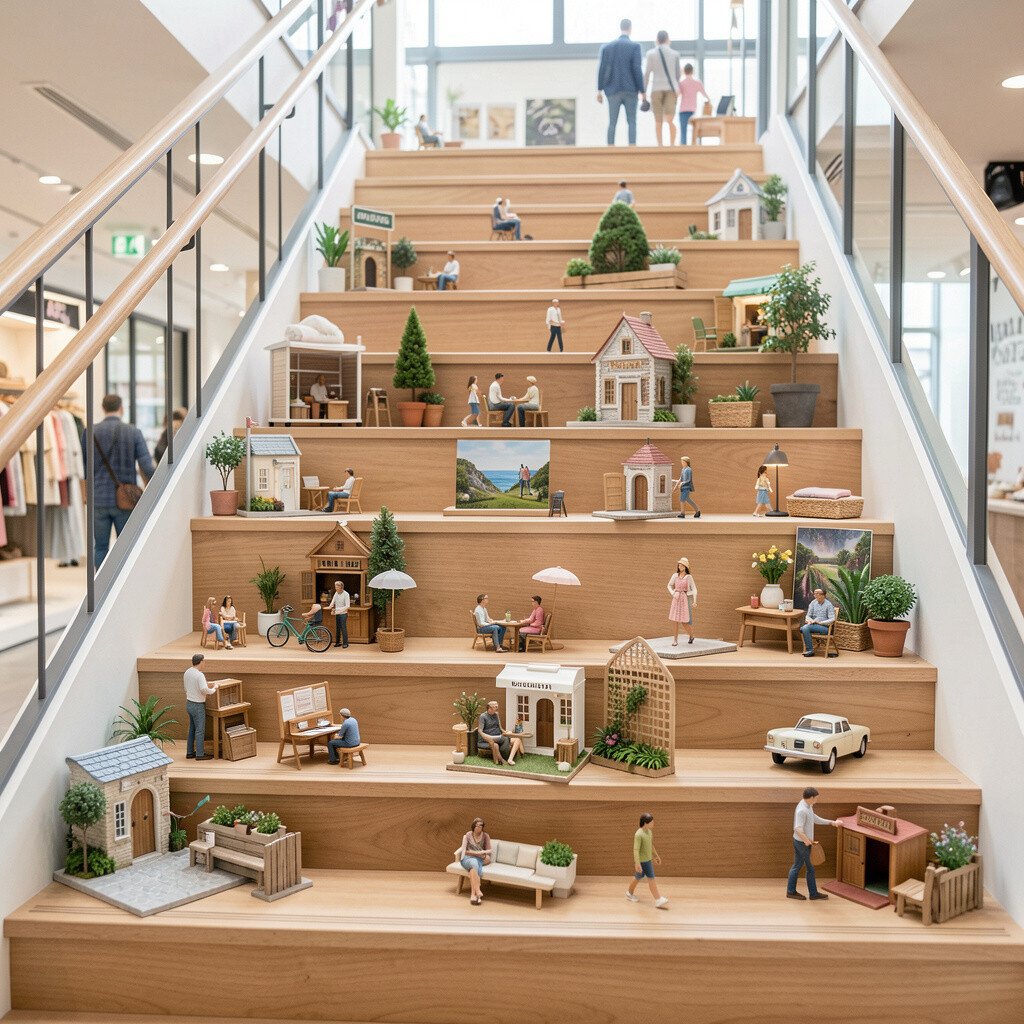
Build tiny scenes on each step, like a coffee corner, a reading nook, or a weekend picnic. Small props such as fabric blankets, compact frames, and miniature planters can make the setup feel real and inviting.
Arrange products so they belong inside the scene, not just sitting beside it. When shoppers see the whole look, they can imagine how the items fit their own life. Use warm lighting from a battery lamp or a small plug-in spotlight to boost the mood, especially near evening hours.
For uniqueness, keep each scene linked by a shared color or theme, such as “coastal calm” across all steps. Practical tip: anchor every prop with museum putty or clear adhesive dots so nothing shifts when people walk by.
4. Height-Designed Value Ladder With Bundles
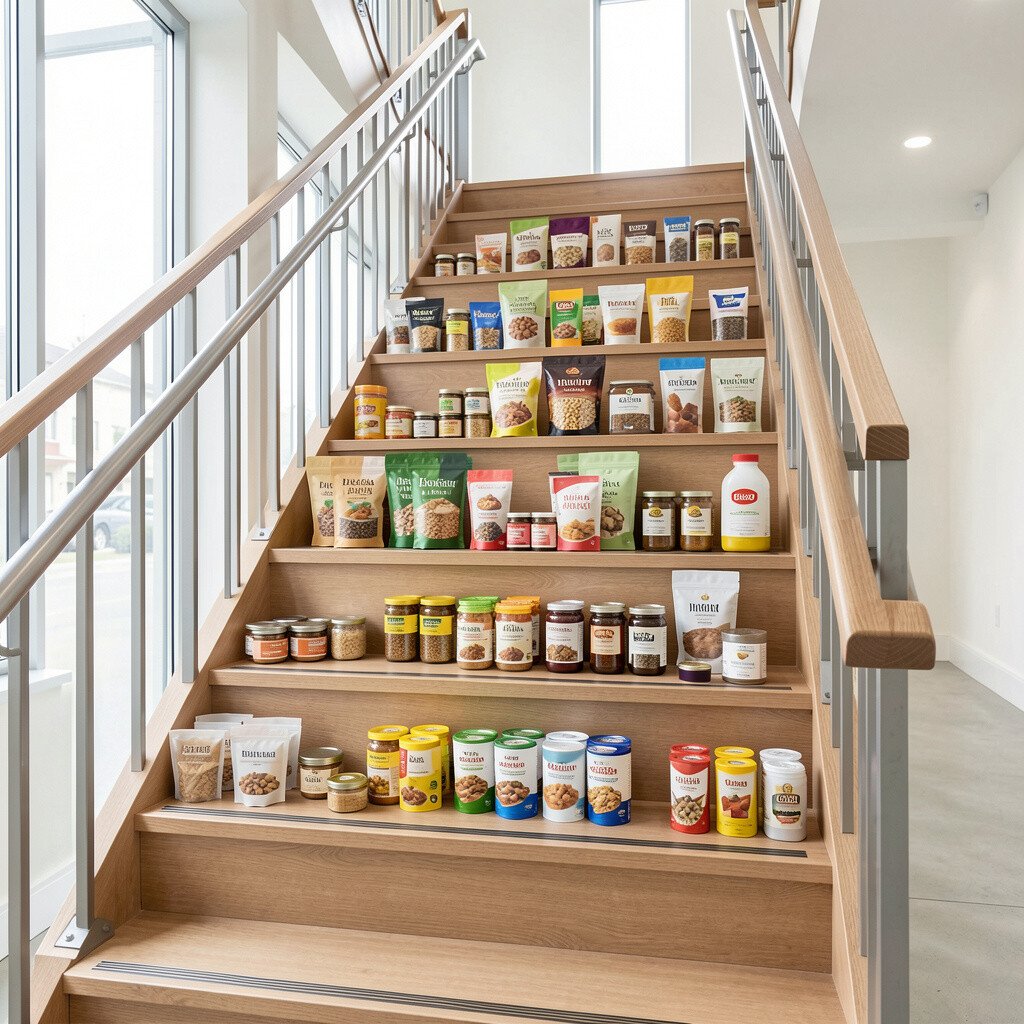
Create a value ladder where each step shows a bundle, from small to larger. The visual rise makes the options feel progressive, which can encourage shoppers to consider spending a bit more.
Place one hero product on each step and pair it with complementary items that customers commonly buy together. Keep the bundle sizes simple so shoppers can understand the choice quickly during a busy rush.
5. Rotating “New Arrivals” Step With Clear CTA Signage
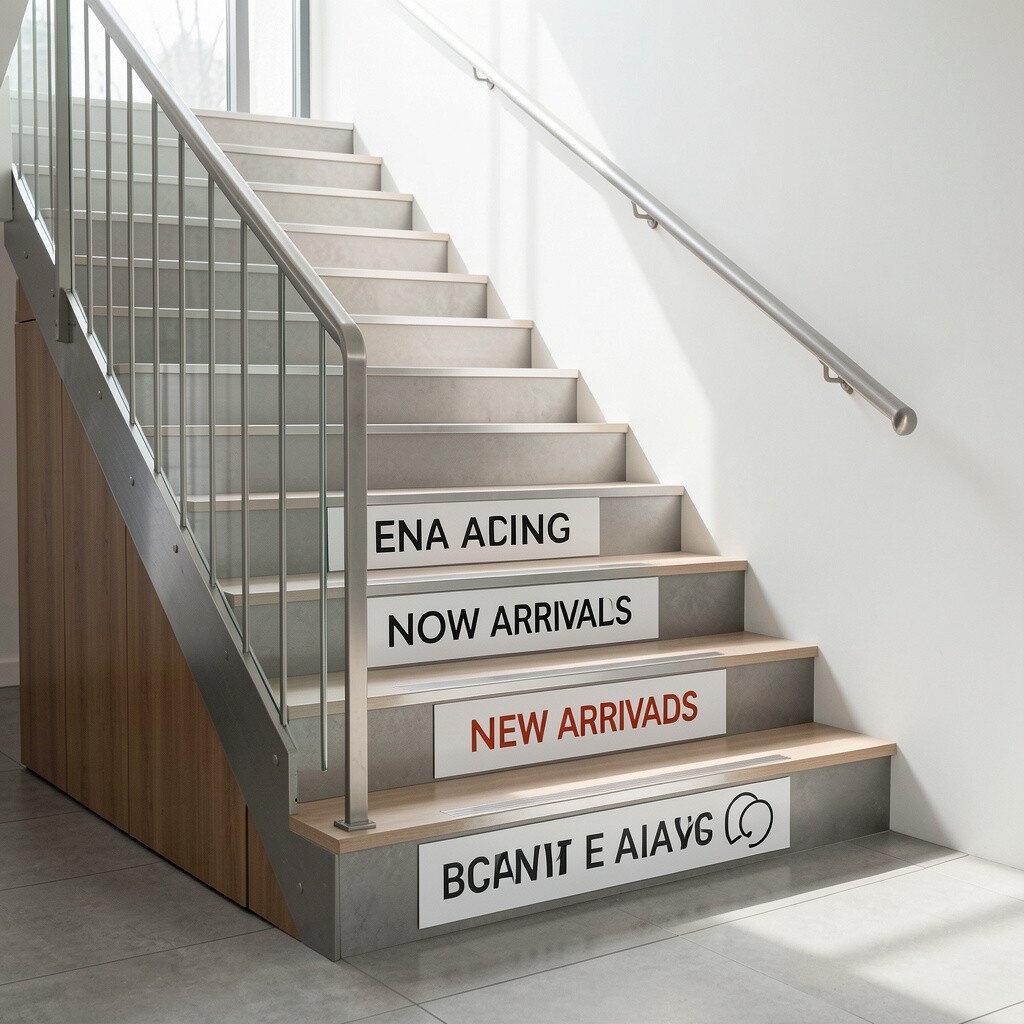
Dedicate the top steps to new arrivals so returning shoppers know exactly where to look. Use eye-catching packaging as your decoration, and keep the presentation clean so product colors do the work.
Swap items on a set schedule, like weekly or biweekly, so the display stays current. Add small tags that point shoppers to the right section in-store when stock runs out.
Personalize the look by matching the tags to your brand colors and using the same size card across steps. If you want cost control, reuse frames and swap only the inserts.
6. Texture-Forward Displays Using Fabric, Wood, and Glass
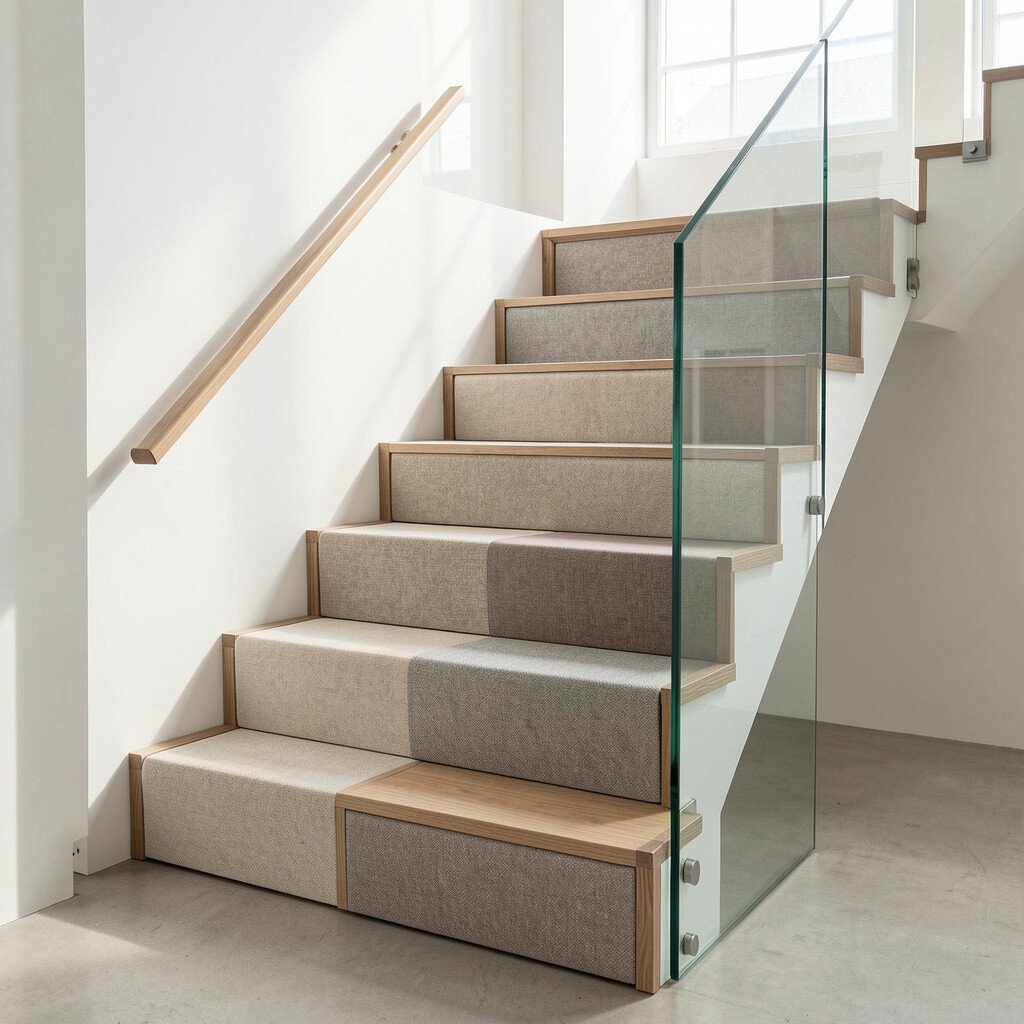
Mix textures across steps using fabric runners, wooden risers, or clear acrylic holders. When customers see varied materials, they feel like the store is curated, not random.
Choose textures that match your product category, such as soft felt for cozy goods or sleek glass for modern accessories. Place one signature item per step in a clear holder so it stands out and stays safe.
For practical setup, wipe surfaces before adding items and keep edges aligned to avoid a messy look. This kind of tactile presentation often increases confidence because shoppers can clearly see quality.
7. The “Try-Me” Step With Sampling-Friendly Setup
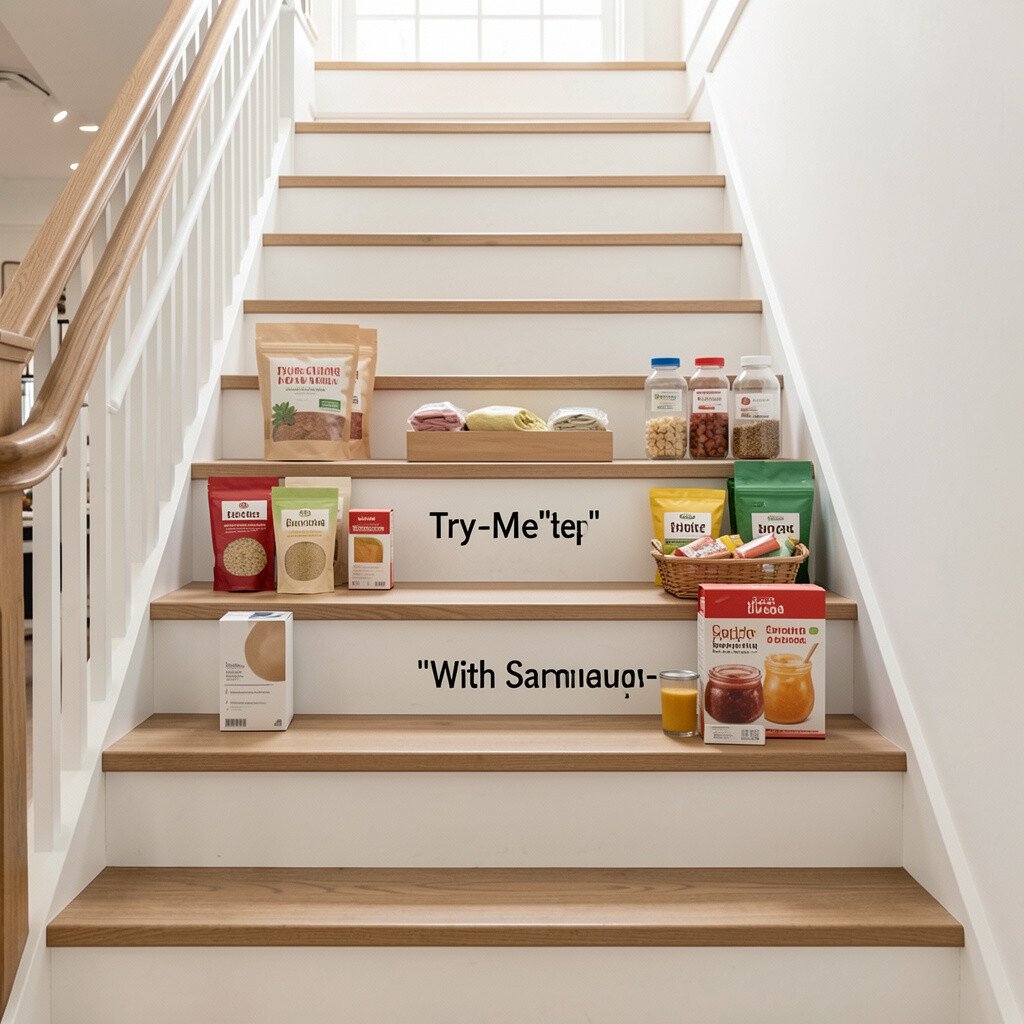
Use one or two steps for easy sampling, like mini sachets, testers, or bite-size packaging. Keep the setup simple so customers can grab without digging through clutter.
Place hand-friendly items at the front edge of each step and keep a clean tray behind them. If you sell beauty or fragrance, add a small instruction card so shoppers know how to use a tester.
To keep costs steady, order trial-size versions or partner with brands that provide samples. Rotate stock based on expiry dates so you never display anything past its best window.
8. Seasonal Lighting for Nighttime Sparkle
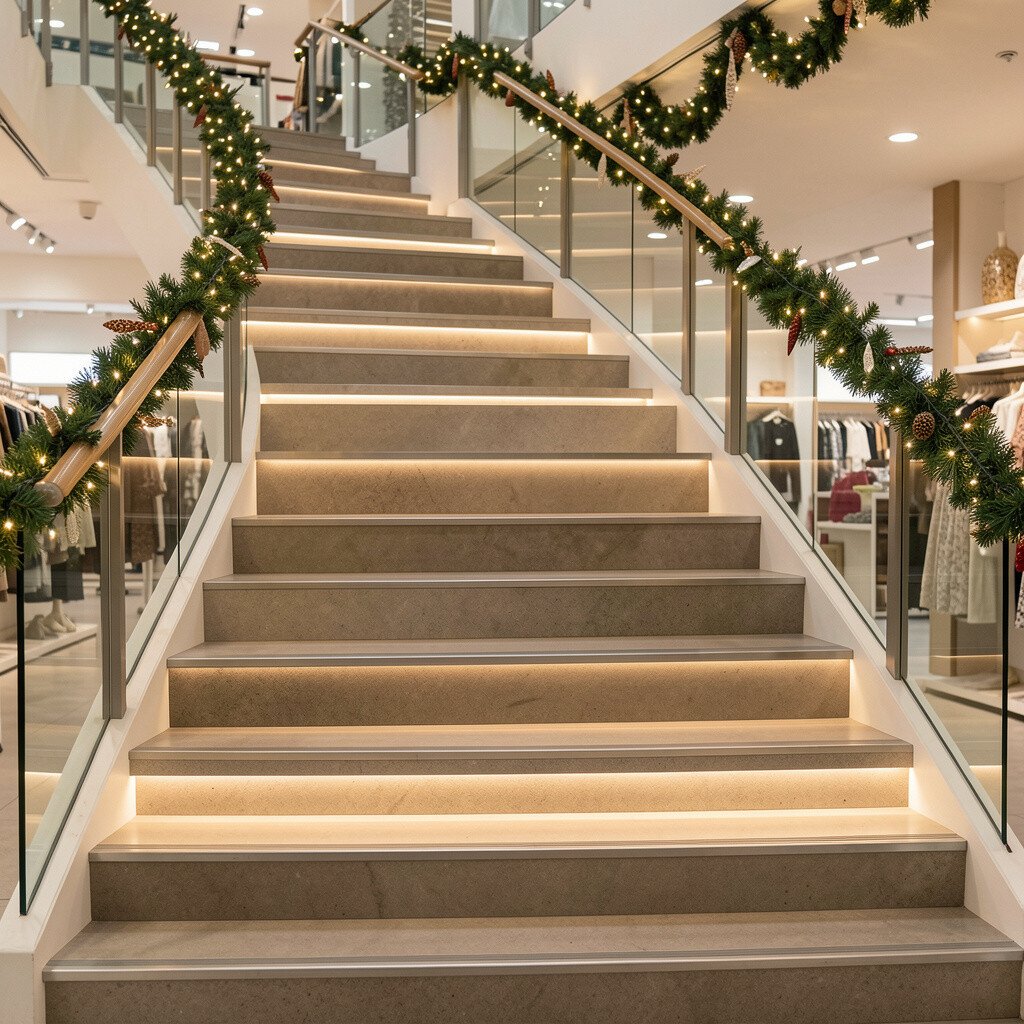
Even in daytime, lighting can make a staircase display feel special. Add subtle LED strips or small warm bulbs to outline each step and highlight product fronts.
Choose warm white lighting for cozy warmth or a cool tone for crisp, modern energy. Keep cords hidden along the side and use battery power where outlets are limited.
9. Theme Packs by Occasion for Easy Gifting
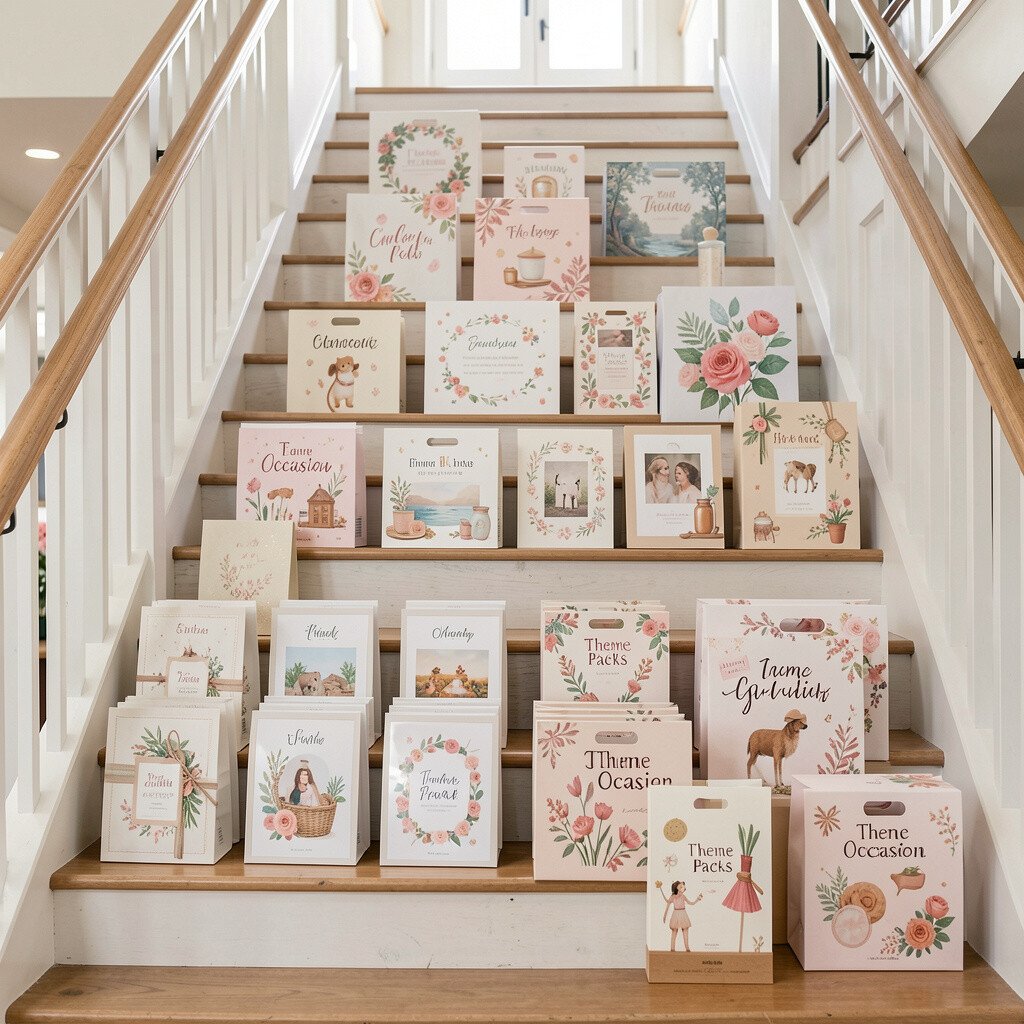
Create step-by-step gift packs for events such as birthdays, weddings, or housewarming. Each step can feature a complete idea that feels “ready to grab” the moment shoppers arrive.
Use ribbon swatches, small gift tags, and coordinating packaging so the whole display looks gift-ready. Shoppers love when they do not have to assemble items at the last minute.
For personalization, tailor the packs to local preferences, like including regional snacks or travel-friendly items. Practical tip: include a range of price points across steps so more budgets feel included.
10. Interactive Scannable QR Steps for Style Guidance
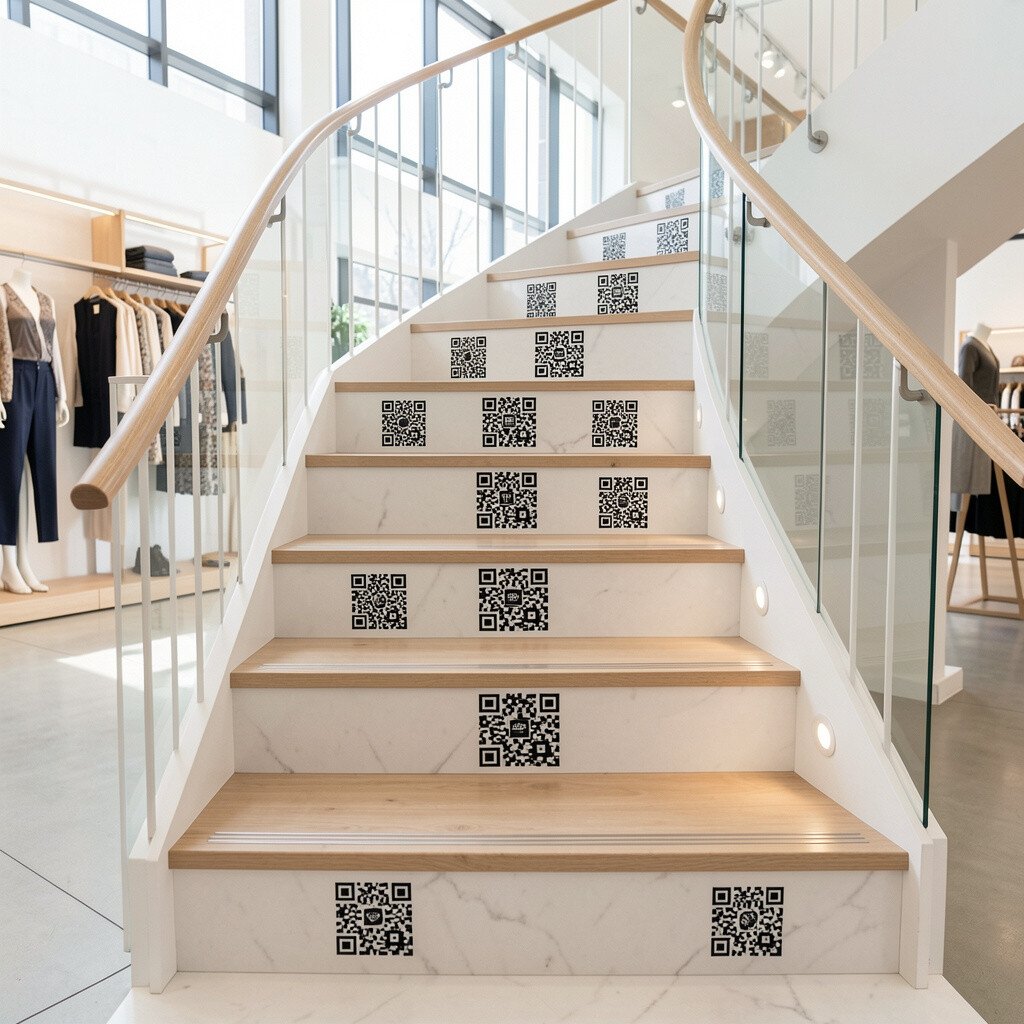
Place QR codes on select steps so shoppers can get styling ideas or product details with one scan. This adds a modern touch while keeping physical shelves uncluttered.
Link each code to short pages that show how to use the product, pair it with others, and choose a size. Keep the prompts simple so shoppers feel guided rather than rushed.
To keep things practical, use durable card holders and test every QR link before launch. This is a great fit for current trends toward quick, phone-based product education.
11. Colorful Checkout-Adjacent Bundles That Pull You In
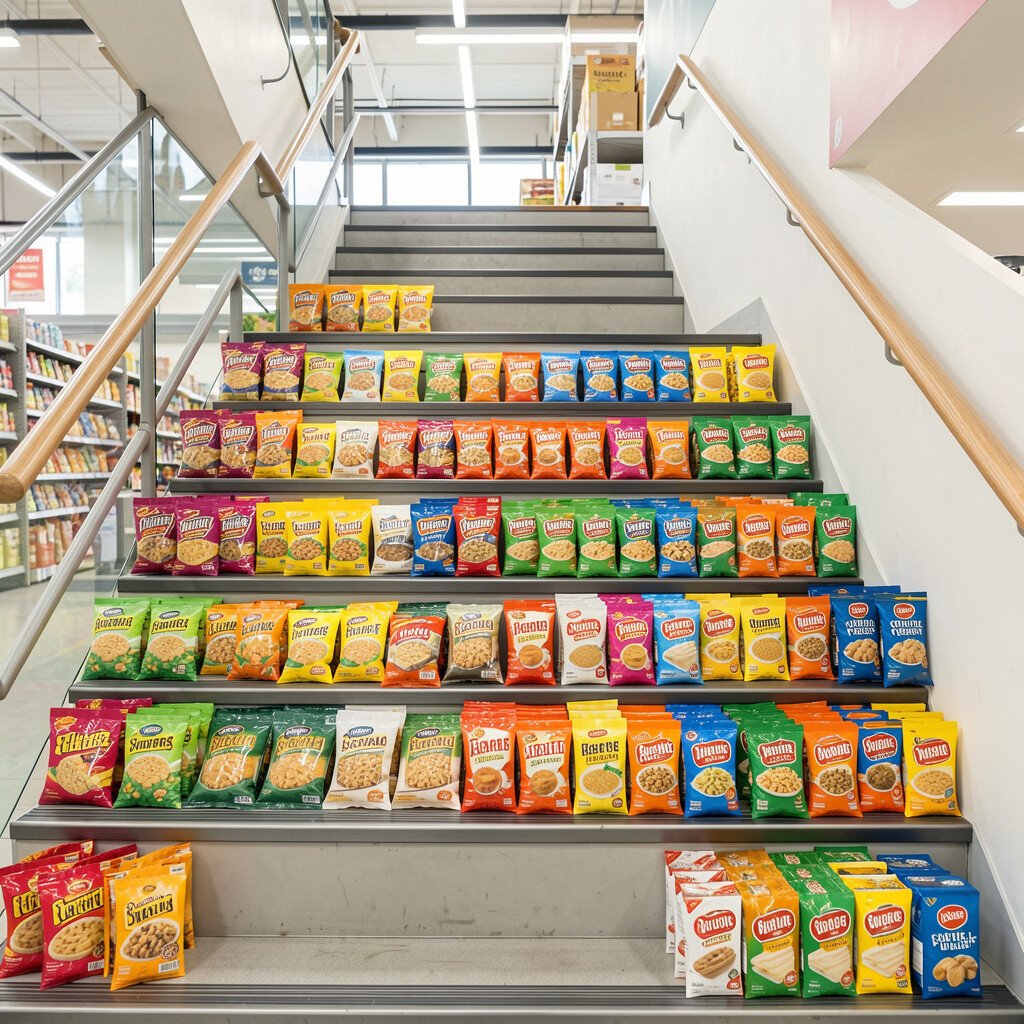
If your staircase sits near checkout, use it as a magnet for last-minute purchases. Put impulse-friendly items on the lower steps where shoppers pass closest to the register.
Choose small accessories, quick snacks, or travel minis that fit in a basket without taking lots of space. Keep the prices clear and place a best-seller in the most visible spot.
For uniqueness, vary the shapes and heights of items across steps so the display looks playful. Budget-wise, choose items you already stock and avoid specialty props that only work once.
12. Monochrome Luxury Steps With One Signature Accent
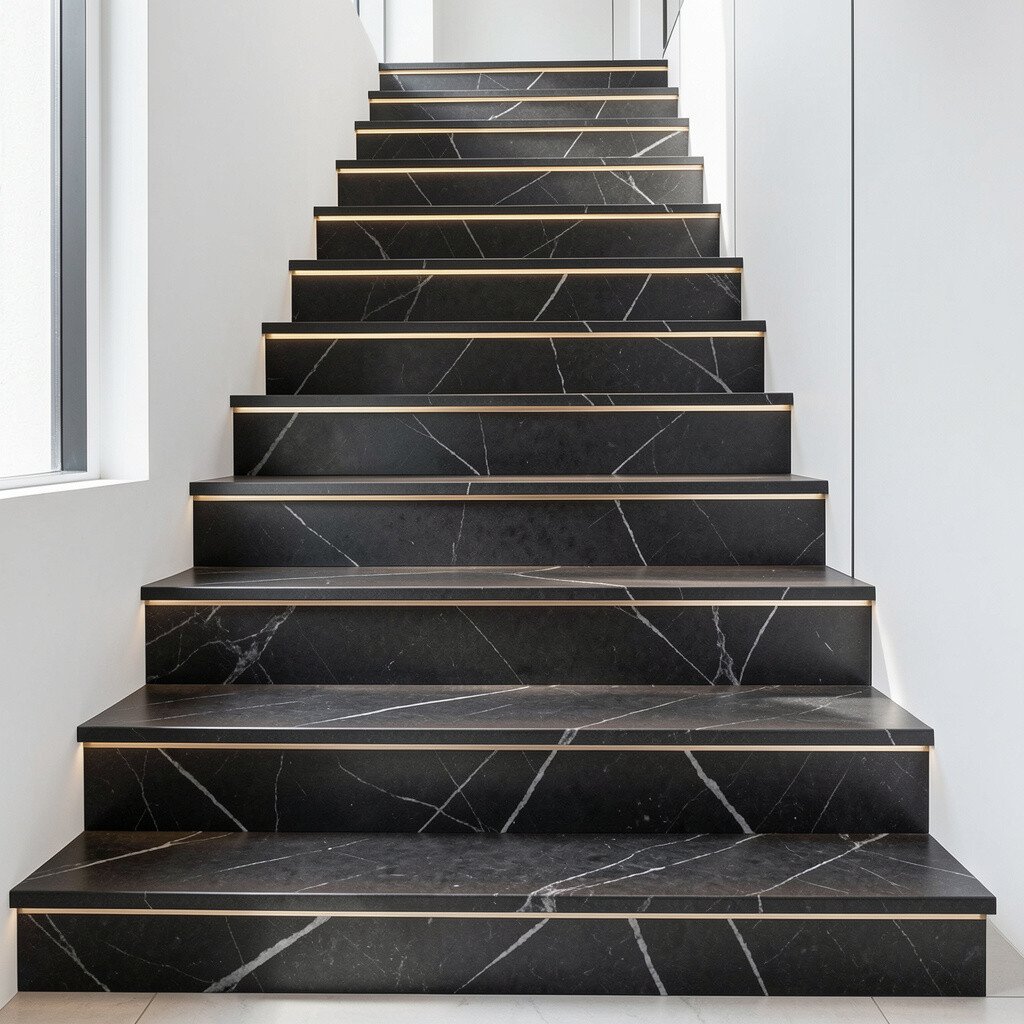
For a clean, premium look, style the staircase with monochrome tones like black, white, or neutral beige. Add one accent color per step, such as a bold red candle or bright teal label, to keep interest high.
Arrange products by shape as well as color, so tall items go on higher steps and small items fill the lower ones. This makes the display feel intentional and helps customers spot their favorite quickly.
13. “Before and After” Visual Steps for Results Products
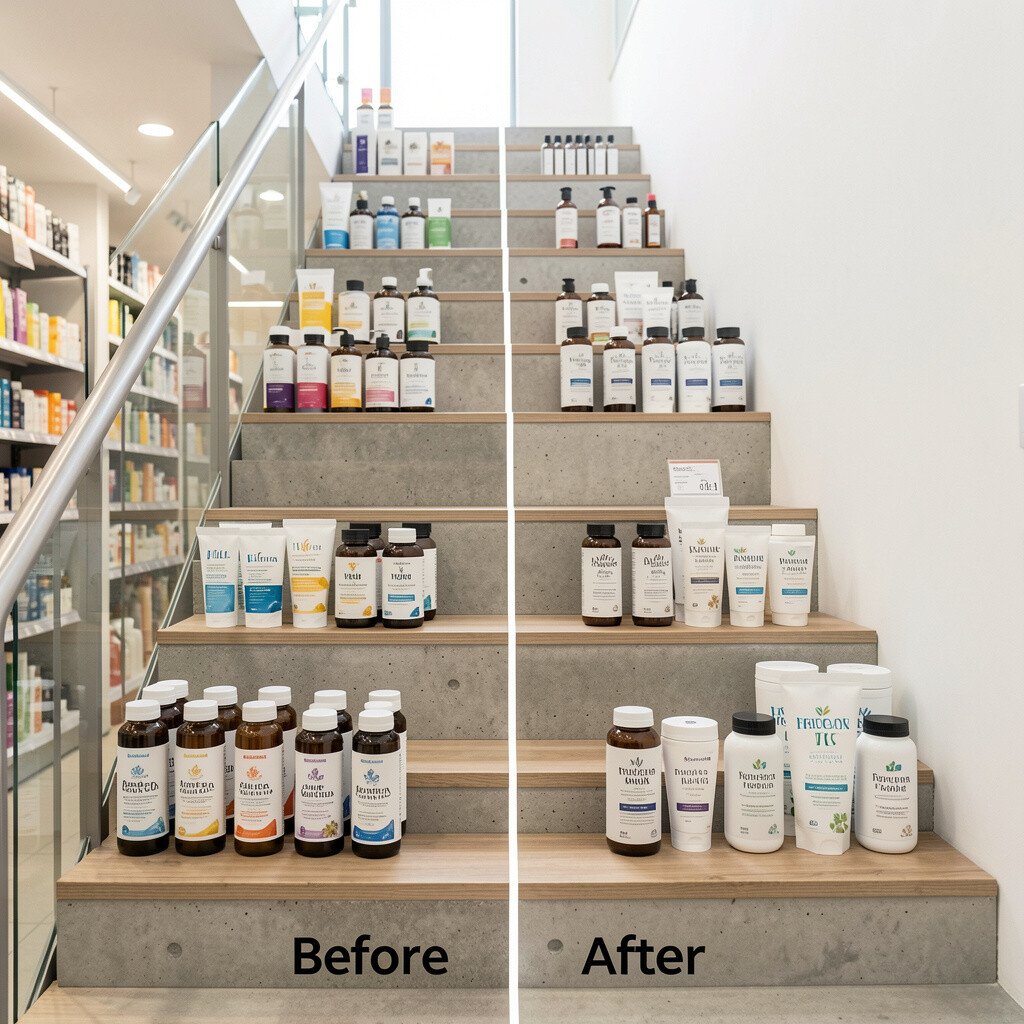
If you sell cleaning supplies, skincare, or home services, use visual cues that suggest results. For example, place product bottles beside simple, labeled cards showing “fresh” or “shiny” outcomes.
Keep the visuals honest and easy to read, using charts that match your brand tone. Shoppers respond well to confidence builders, especially when they can understand value quickly.
To personalize, swap cards for the current season or the most promoted formula. Practical tip: use laminate to protect cards from spills and routine cleaning.
14. Build a Staircase With Stacked Packaging Art
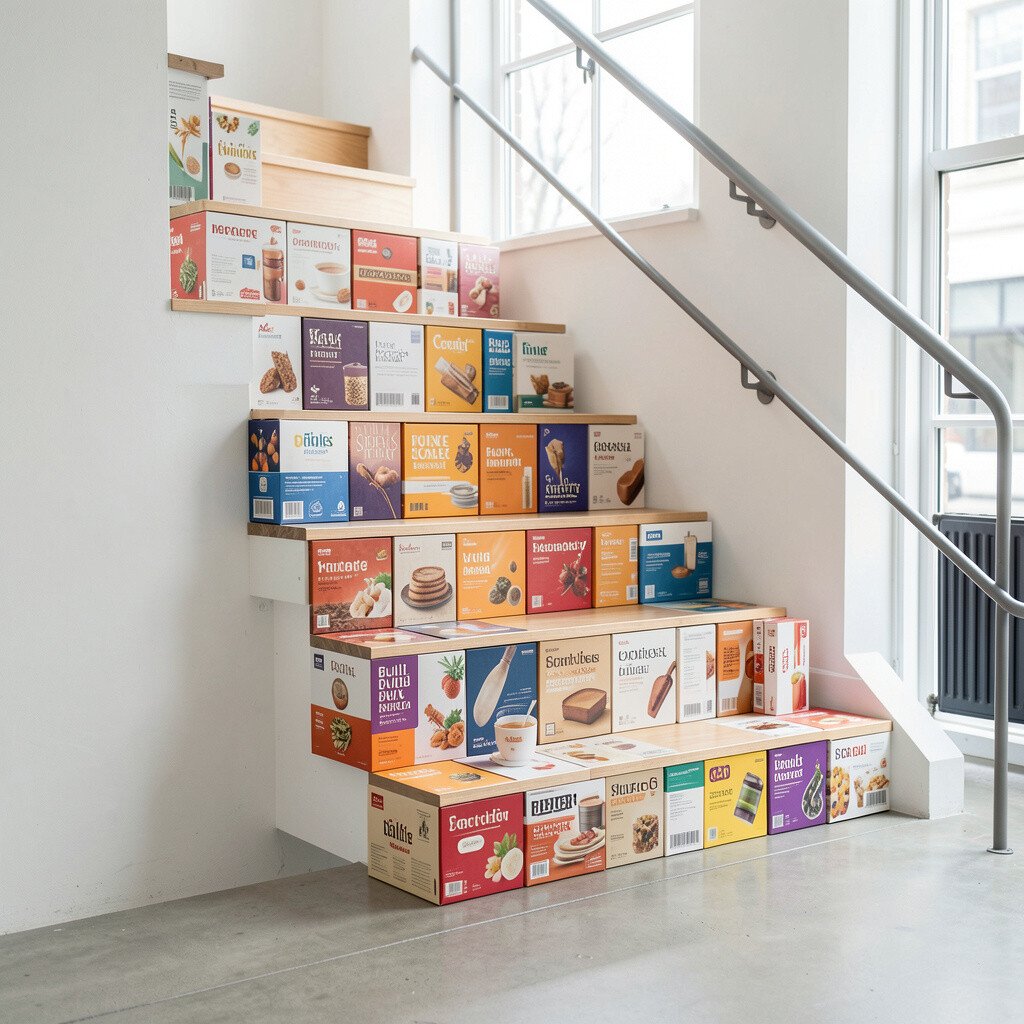
Turn product packaging into art by stacking boxes, arranging labels forward, and creating neat columns. When items are displayed like a gallery, shoppers feel encouraged to browse longer.
Use step risers so each product sits at an angle that catches light. This technique works well for books, boxed snacks, and gift sets because the packaging already has strong design.
15. Brand Story Steps With Small Milestones
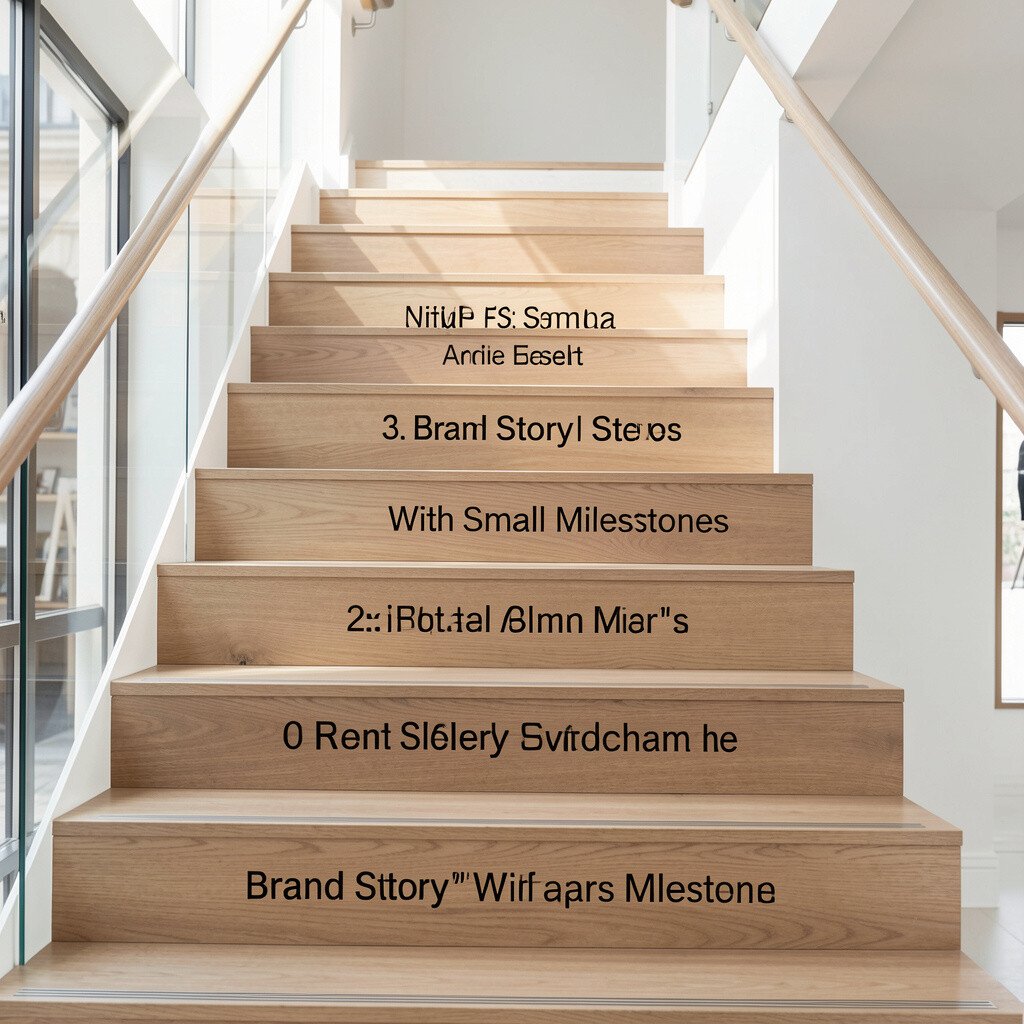
Share your story without long text by placing small milestones on each step. Use short phrases, like “made by hand” or “local sourcing,” paired with a matching product on the same step.
Keep fonts readable from a distance and make sure the product always stays the hero. People enjoy learning, but they still want speed, so keep words short and consistent.
For uniqueness, include one rotating “fact step” that changes monthly based on promotions. Cost consideration: use printed card inserts and reuse frames so you only pay for updates.
16. Community Spotlight Steps With Local Partner Products
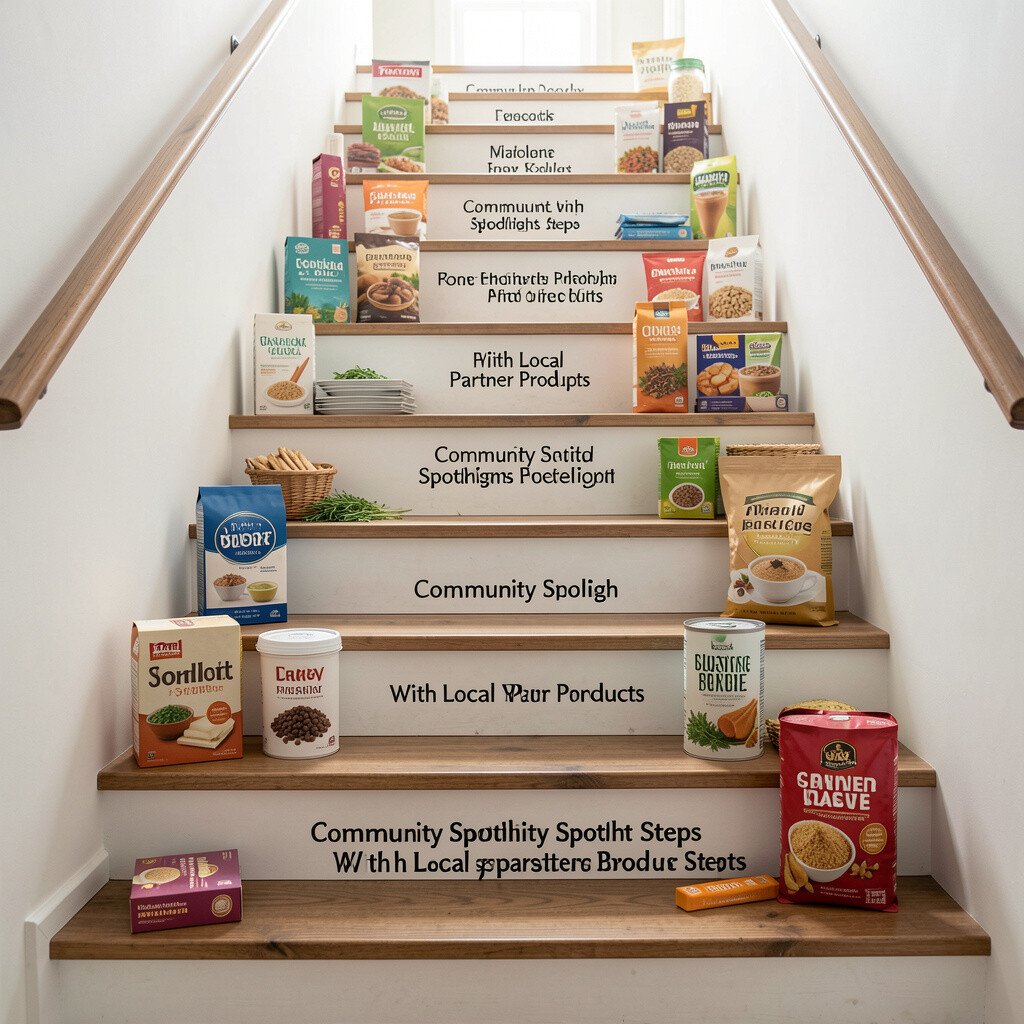
Dedicate a few steps to local makers and partner brands to build goodwill and attract new shoppers. When people see a local connection, they often feel proud to buy and more likely to share the find.
Display each partner item with a small brand card that includes their town or neighborhood. Pair it with a complementary product so the assortment feels like a curated set, not a random mix.
To personalize, rotate partners based on community events and seasonal needs. A practical tip is to ask for branded display materials so you can reduce your own set-up costs.
17. Step-Down Color Spray to Match Your Store Layout
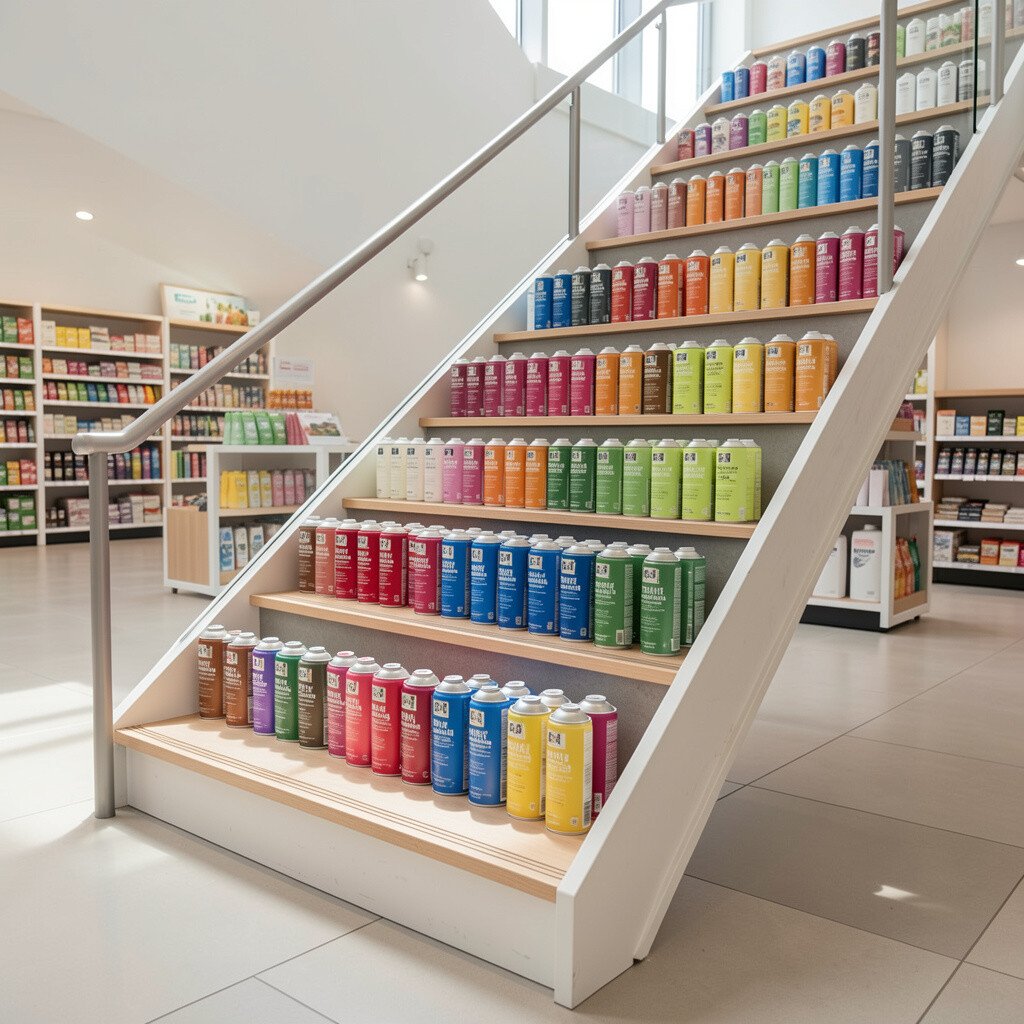
Match the staircase display colors to your store layout so everything feels coordinated. If your floor tiles or wall accents have warm tones, mirror them on the steps for a smooth visual flow.
Arrange items in a gradient, like light to dark or cool to warm, so the display feels modern and easy to follow. Shoppers often treat gradients like a guide and will naturally spend extra seconds looking.
Cost-wise, gradients are flexible because you can achieve them with items you already carry. Uniqueness comes from how you stage, not how expensive the props are.
18. Step-Perfect Height for Best-Seller Focus
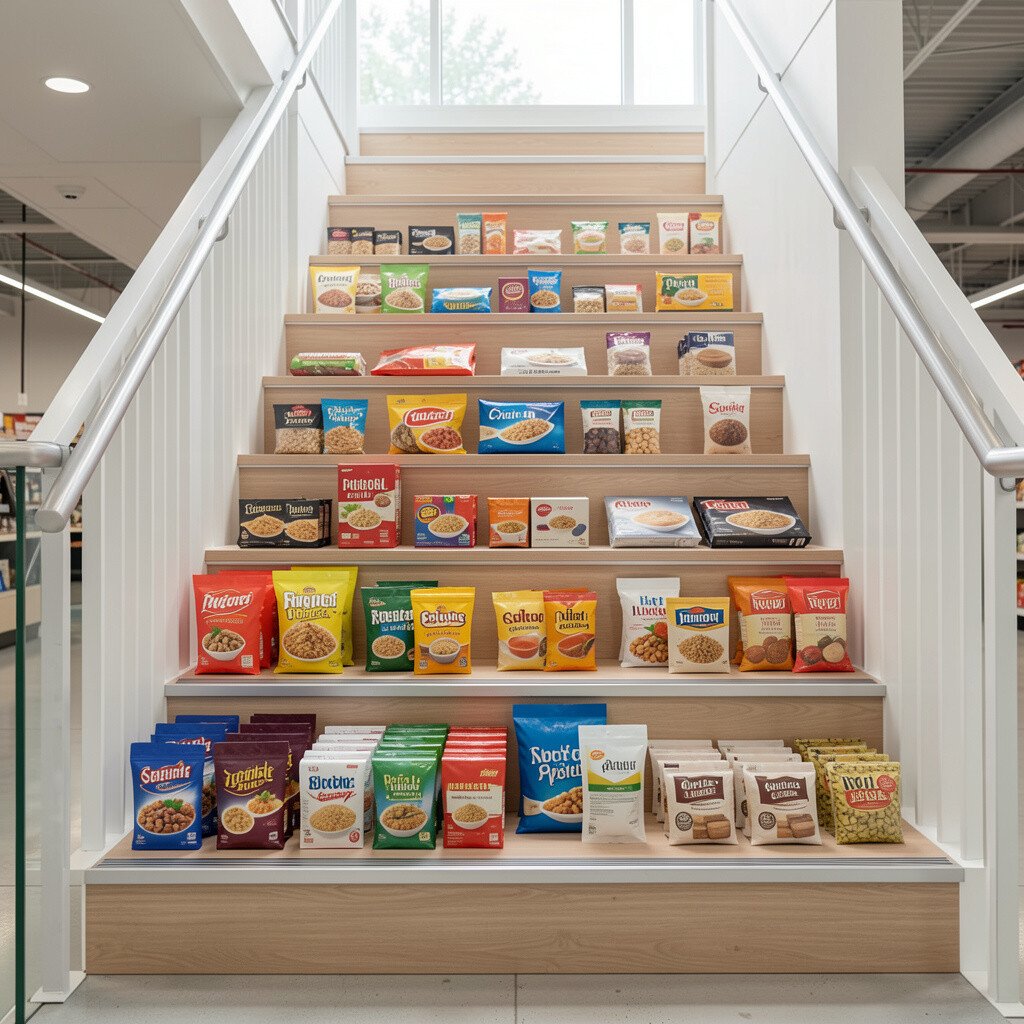
Study where shoppers stand and then set your best-seller at eye level on the most visible step. This simple adjustment can increase attention without changing your whole inventory.
Use a clear stand or a small platform so the product front faces the aisle. Keep the surrounding steps lighter so they support the hero item rather than compete for attention.
19. Build a “Family Style” Assortment With Shared Themes
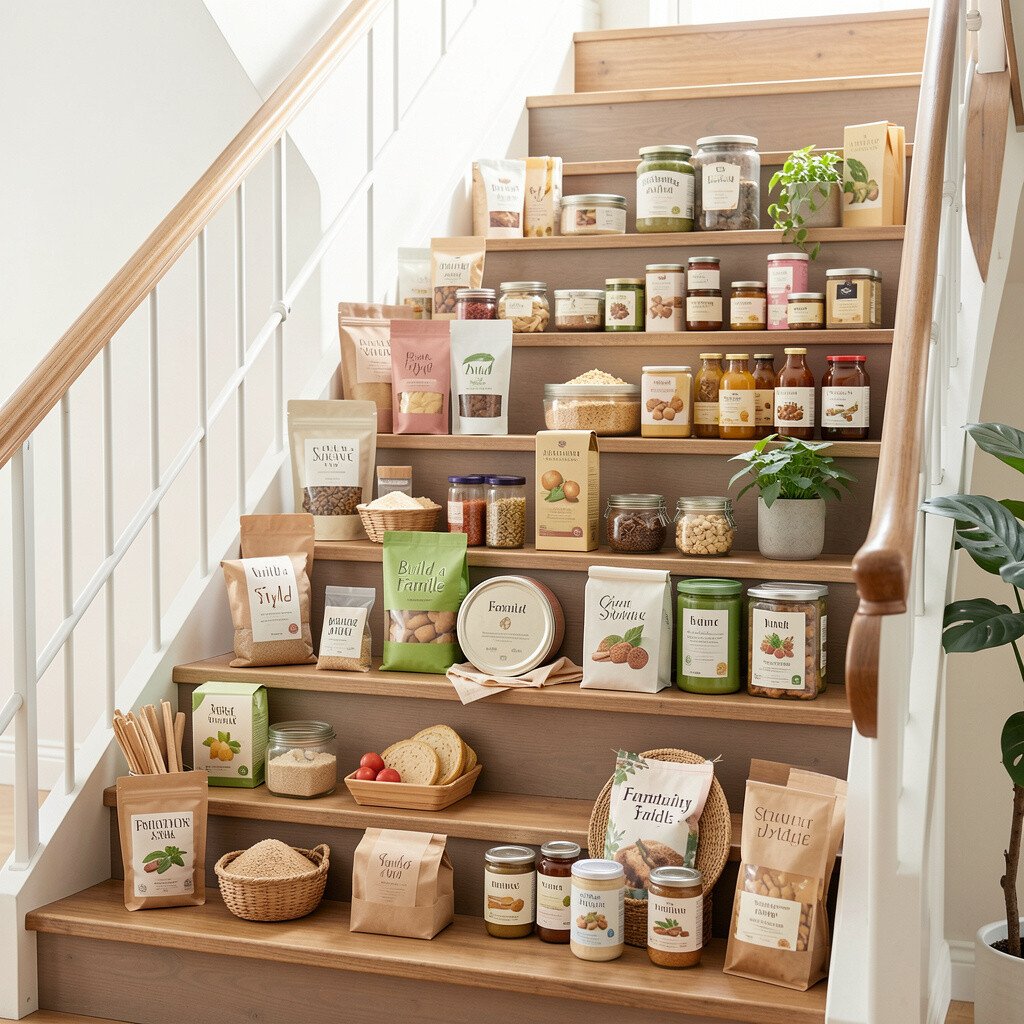
Group products into family-style assortments where every step belongs to one shared theme. Think “movie night,” “self-care Sunday,” or “kitchen basics,” and keep the items aligned with that mood.
Include at least one anchor item on each step and add smaller supporting pieces. Customers like when they can choose an option that fits their routine without overthinking.
For practical tips, keep the items small enough to handle and sturdy enough to stay neat. Personalization shines here since you can swap themes based on local events and weather.
20. Seasonal Scents and Sample Cards for Fragrance Retail
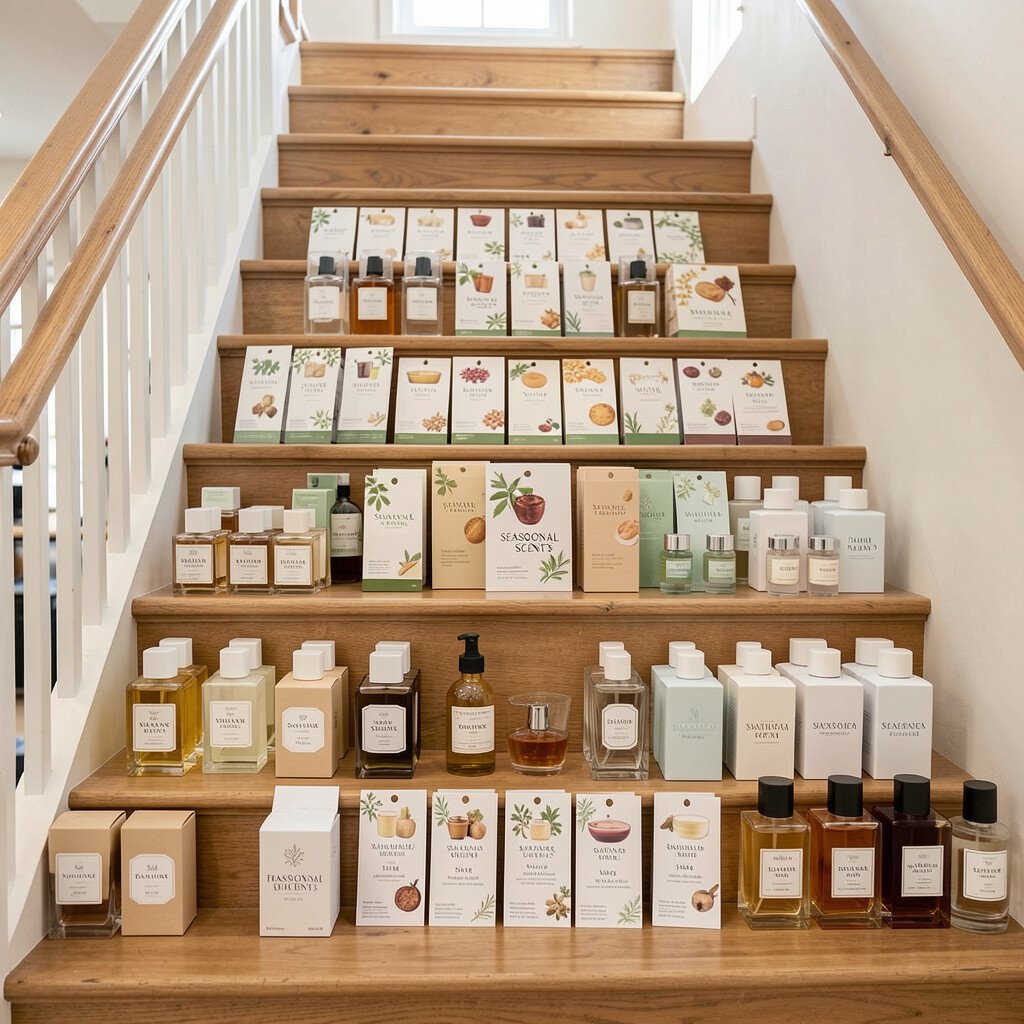
For fragrance stores, place scent cards or mini testers on each step with a clear order to smell. Even a simple “start here” layout can help shoppers move through the options smoothly.
Keep the scents from blending by giving each step its own space and using resealable test sleeves. When shoppers can compare calmly, they make better choices and feel more confident buying.
Uniqueness comes from pairing each scent with a visual cue like a color strip or small scene card. Cost considerations are manageable when you use sample sizes or partner with brands that provide testers.
21. Winter-Ready Cozy Props With Washable Materials
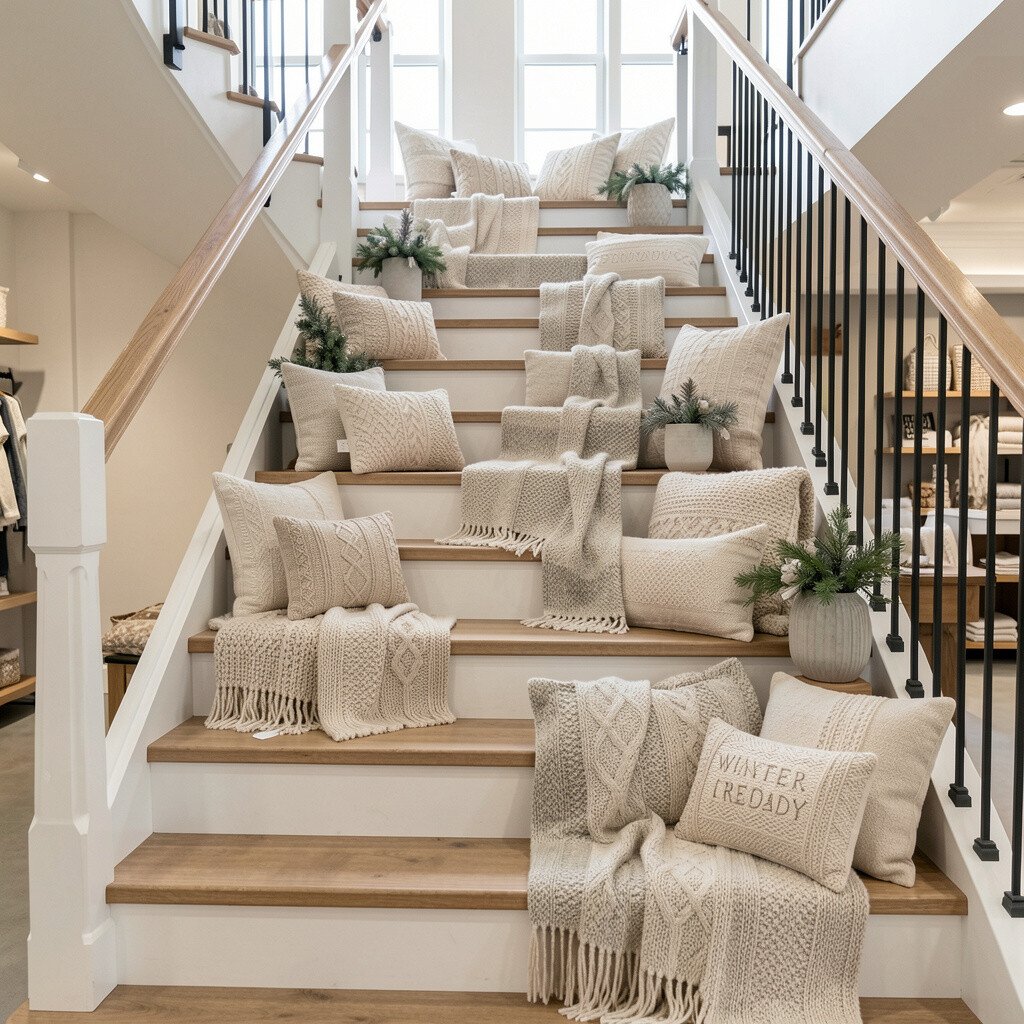
Use cozy props like faux knit runners, mini snowflake accents, or warm-toned lanterns to make cold seasons feel inviting. Choose materials that are easy to clean so your display stays fresh even during busy shopping days.
Place products in the “warm spotlight” area of each step, such as candles, hot cocoa kits, and soft accessories. Shoppers respond to comfort cues because they match how they feel during the season.
Personalize the look by switching prop colors from year to year while keeping the underlying layout. Practical tip: use removable covers so you can update quickly without rebuilding the entire staircase setup.
22. Luxe Packaging Finish With Clear Holders and Labels
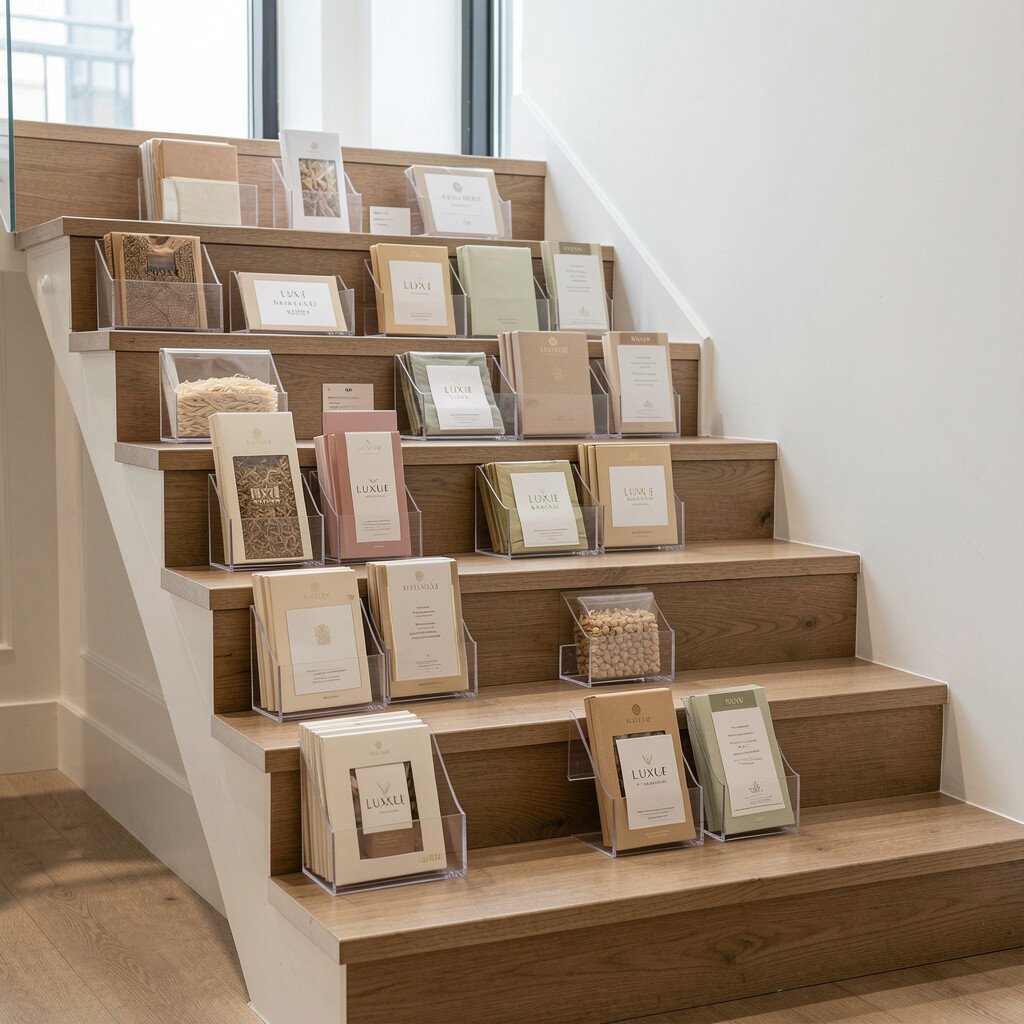
Create a polished retail look by using clear acrylic risers and tidy label cards on each step. This keeps products protected and makes the display feel upscale without adding clutter.
Use labels that highlight the key details shoppers care about, such as scent type, flavor, or size, while keeping the text short. When everything is readable and aligned, shoppers are more likely to pick up items and buy.
To stay on trend, pair clean presentation with modern materials like slim clear stands and minimal typography. Cost considerations are easier when you buy a few durable holders that can be reused for every new promotion.