Uneven steps can turn a simple walk into a careful dance. A few smart habits can make each step feel calmer and steadier.
1. Check the surface before you step
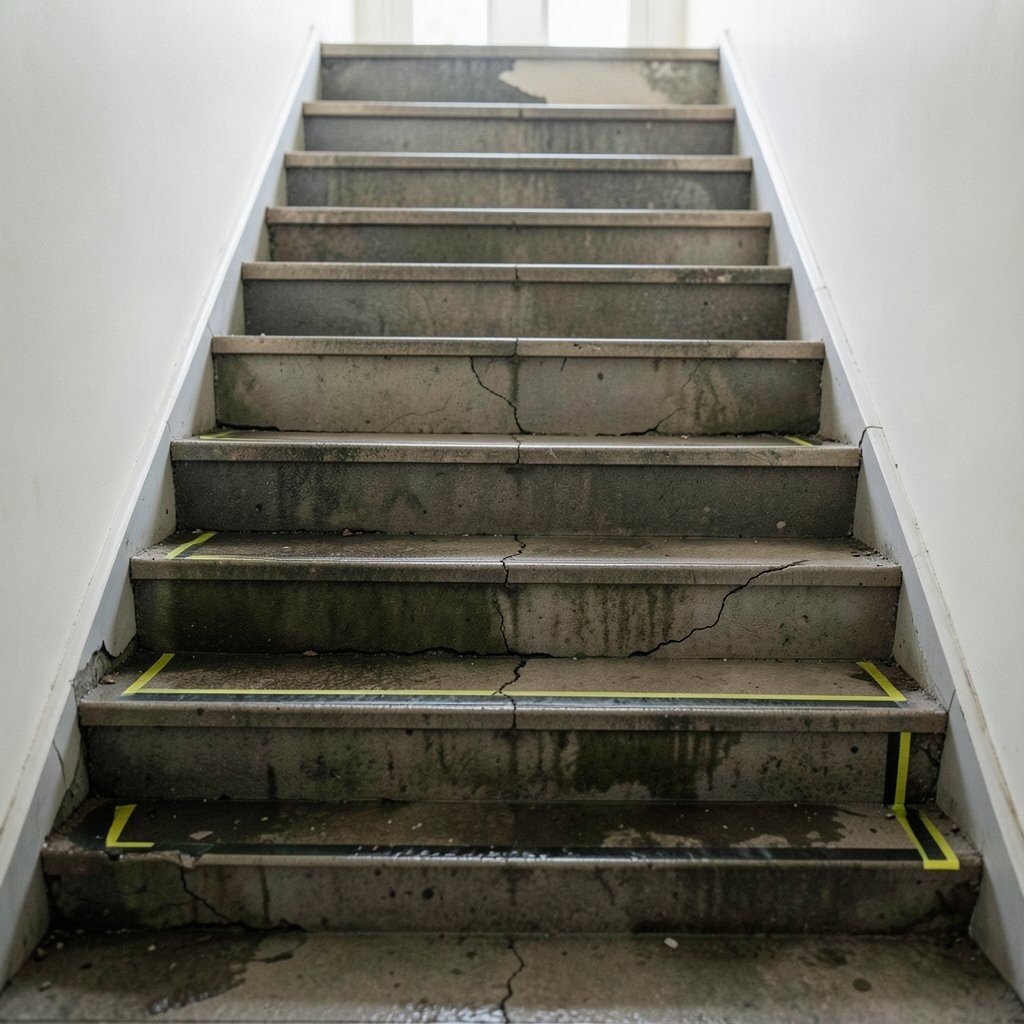
Look at the stairs from the bottom before you move, and notice cracks, loose edges, wet spots, or broken corners. A quick scan helps your eyes map the shape of each step, which can lower stress and make your pace feel more natural.
This habit costs nothing, yet it can save you from a painful slip. If the stairway looks dark or hard to read, use a phone light, a small flashlight, or brighter bulbs nearby. Some people also mark tricky edges with high-contrast tape so the step line stands out better.
2. Keep your hands free and ready
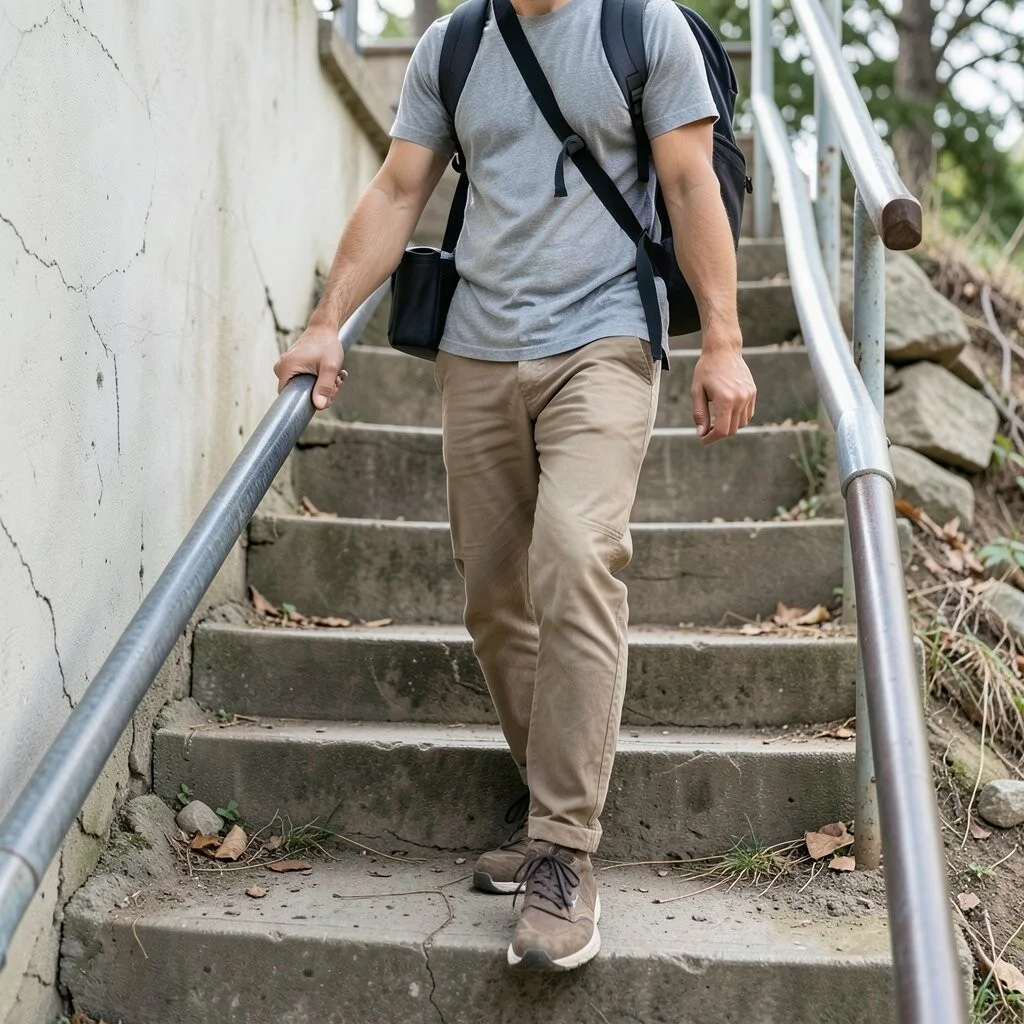
When your hands are busy, balance gets harder right away. Hold the rail if one is there, and keep bags, drinks, and loose items tucked away before you start climbing.
A free hand can help you steady yourself if a step feels odd or shallow. Many people now use crossbody bags or backpacks with snug straps because they stay close to the body and move less. If you have a favorite walking cane or grab handle, make sure it is easy to reach and fits your grip well.
This small change can make stairs feel less crowded and more open. It also gives your body one less thing to manage, which is a big help on uneven ground.
3. Slow down and use smaller steps
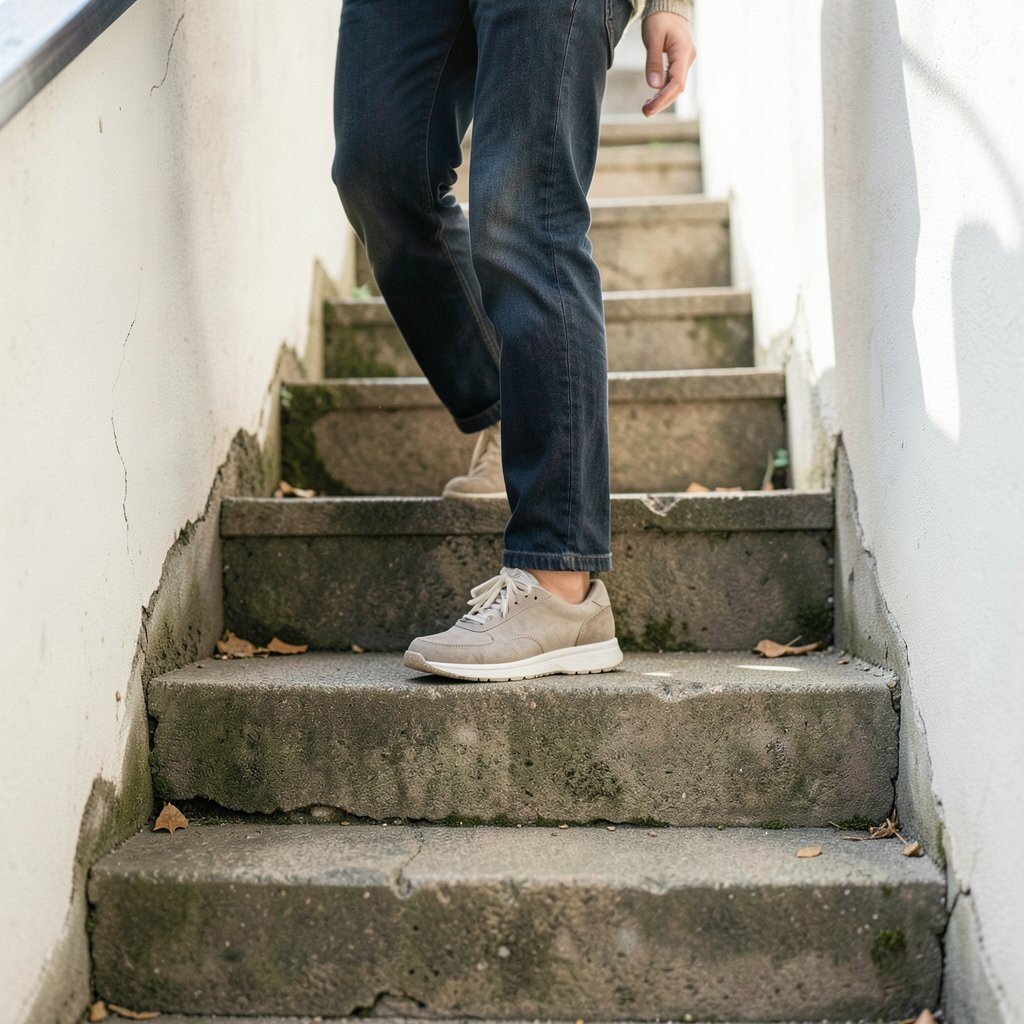
Fast feet and uneven stairs do not mix well. Short, careful steps give your eyes and body more time to work together.
Try placing your whole foot on each step instead of only the toes or heel. That fuller contact can feel more stable and may help spread your weight more evenly. If you feel rushed, pause for a moment and reset your stance before moving again.
Many people like to match their pace to the stair shape, not the other way around. That simple shift can lower fear and make the climb feel smoother. It is a low-cost habit with a big comfort payoff.
4. Choose shoes with grip and support
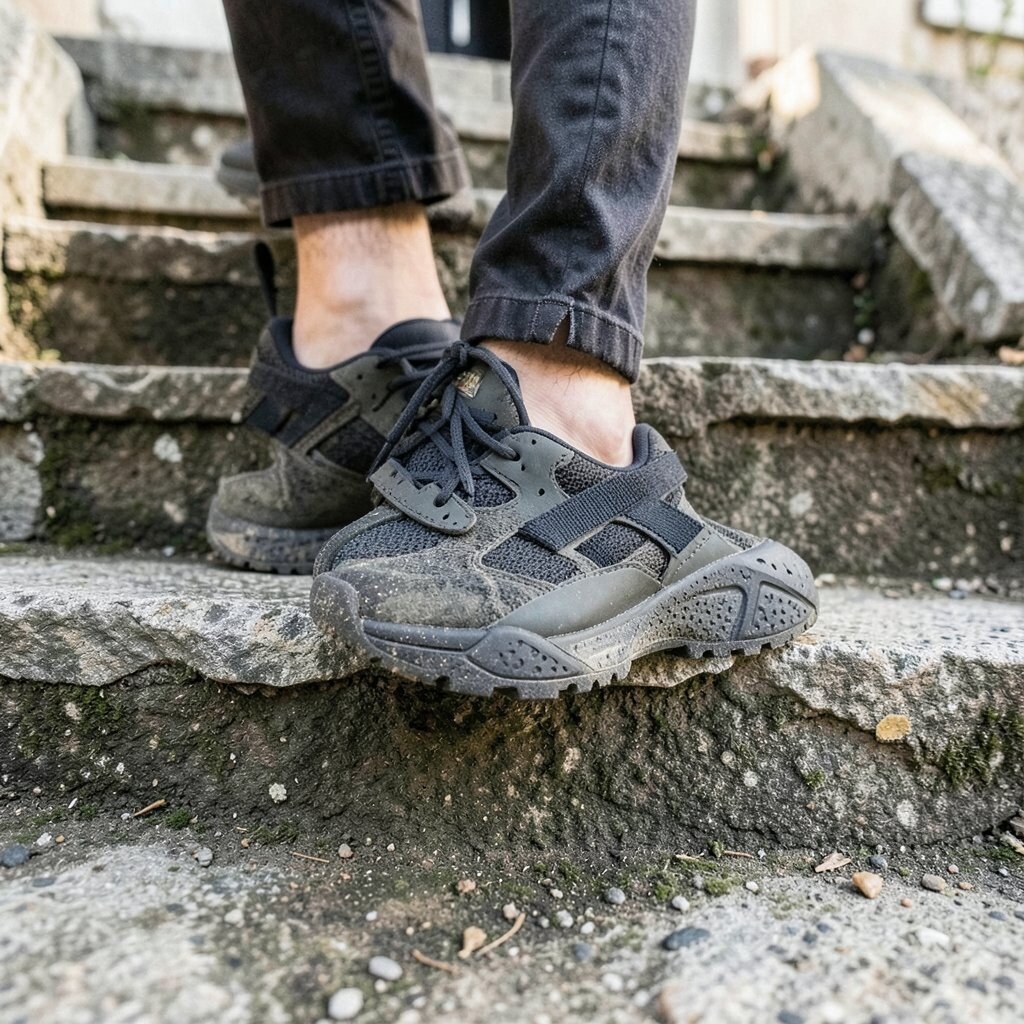
Good shoes matter a lot on rough stairs. A shoe with a firm sole, strong tread, and a secure fit can help your feet stay planted.
Loose sandals, slick soles, and worn-down heels can make a bumpy surface feel even trickier. Shoes with rubber bottoms are a popular choice because they often grip better on stone, wood, and concrete. If you walk these stairs often, it may be worth spending a little more on a pair made for stability.
Some people also like cushioned insoles for extra comfort. That can be a personal choice, especially if the stairs are long or the surface feels hard underfoot.
5. Use the railing like a steady friend
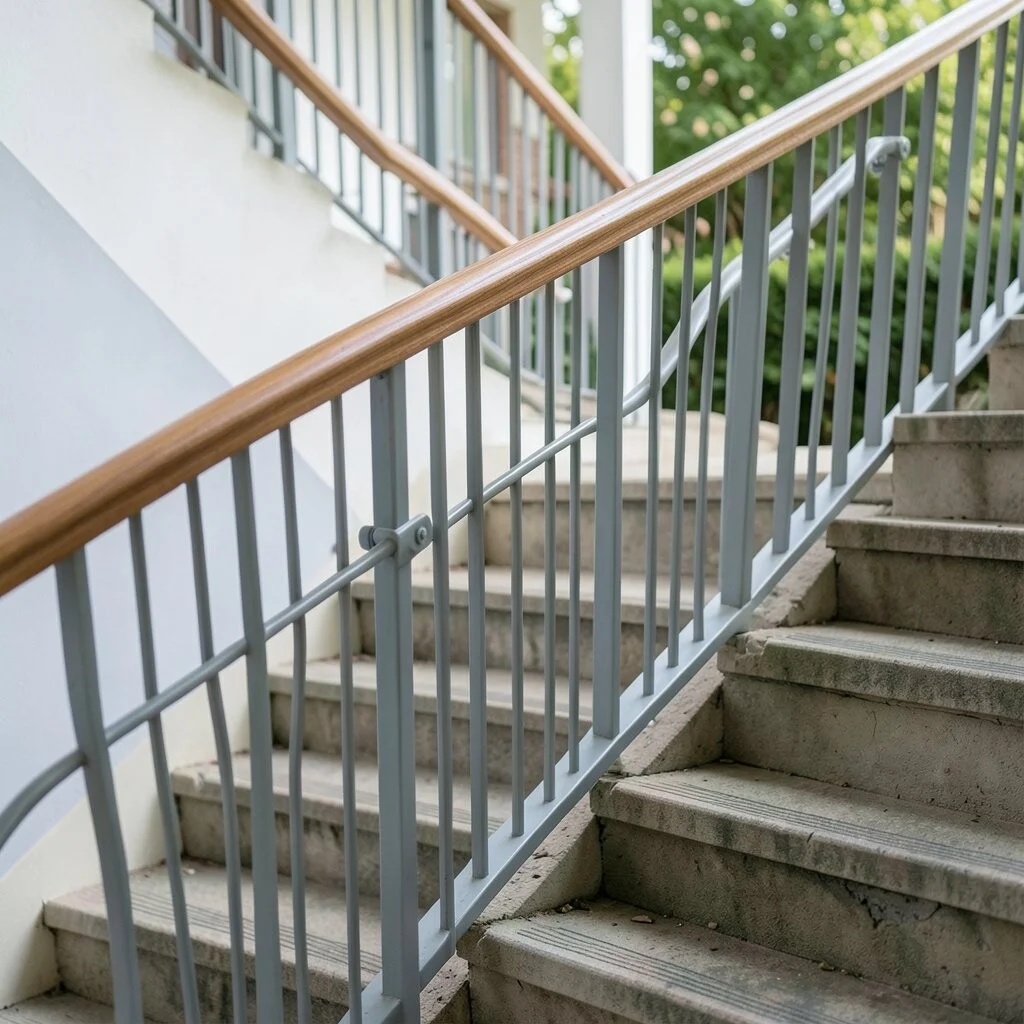
A railing can be one of the best safety tools on a stairway. It gives your body a guide line and can help you stay centered when the step shape changes.
Hold it with a relaxed grip, not a tight squeeze. If the railing feels shaky, dirty, or too far away, tell someone or look for another route. Newer rail designs often use smooth metal or wood with a clean finish, since many people want both safety and a neat look.
For homes, adding a railing is often a smart investment. It may cost more at first, but the support can be worth it every day.
6. Improve the light around the stairs
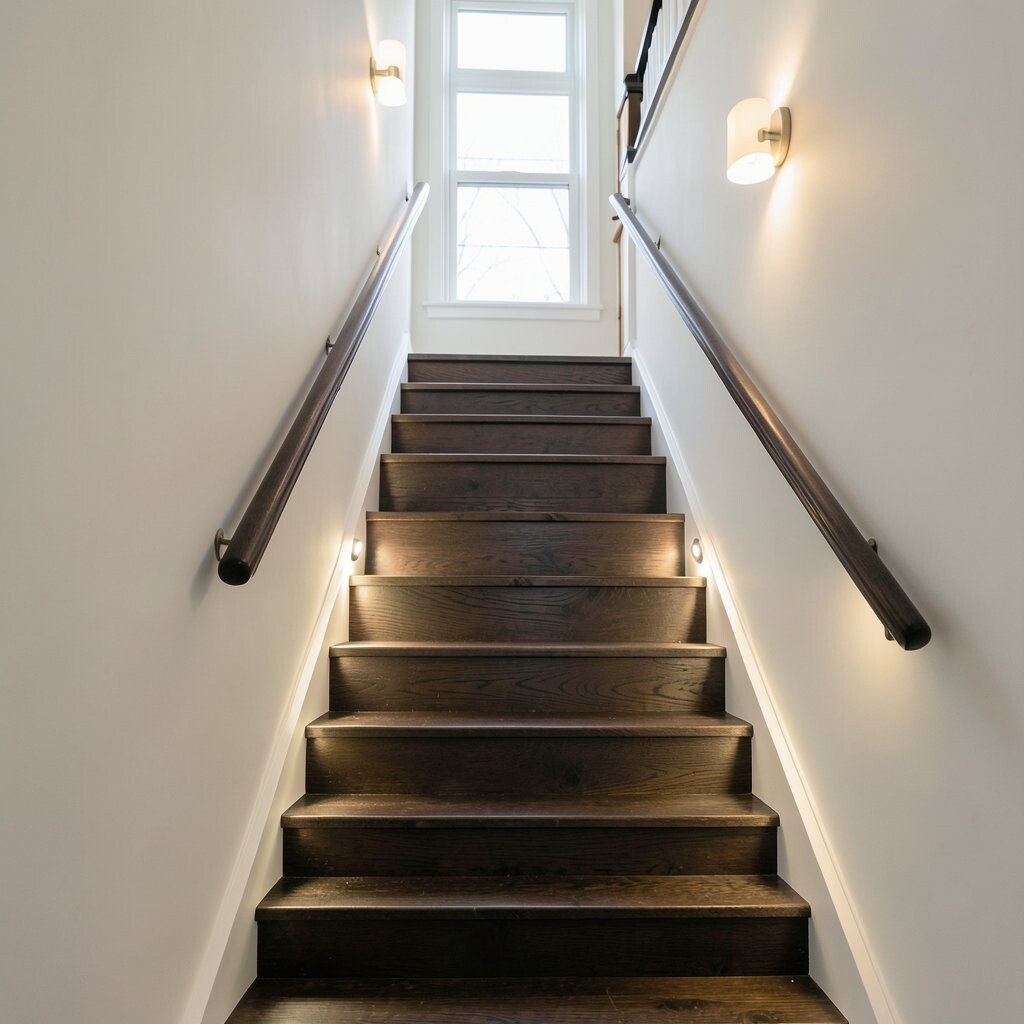
Dark stairs hide problems, and hidden problems lead to mistakes. Bright, even lighting makes each edge easier to see and gives the area a calmer feel.
Use lamps, wall lights, or motion lights to brighten the path. LED strips are a current trend because they use little power and can outline each step in a clean, modern way. If you rent or want a low-cost fix, stick-on lights can be a simple choice.
Good light also helps guests and kids feel more sure of themselves. A well-lit stairway can look nicer too, which is a bonus for any home.
7. Add texture where feet need help
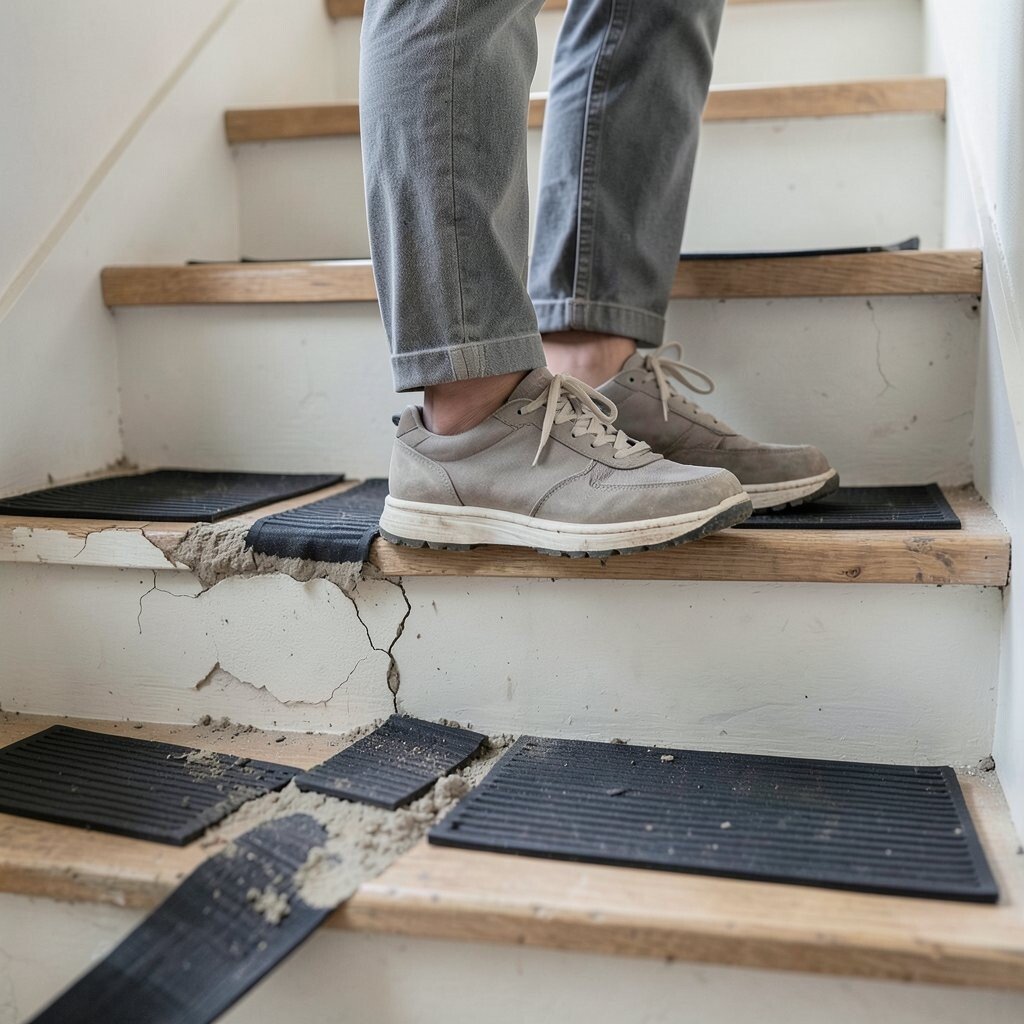
Texture can give your shoes a better hold on uneven steps. Rough strips, stair treads, and non-slip mats help reduce the slick feel of smooth surfaces.
These items come in many looks, from plain black strips to wood-tone pads that blend in better. Some people prefer bold colors because they are easier to see, while others want a soft style that matches the room. The cost can stay low if you only cover the riskiest steps.
Try to place the texture where your foot lands most often. That makes the stair feel more secure without changing the whole look of the space.
8. Carry only what you need
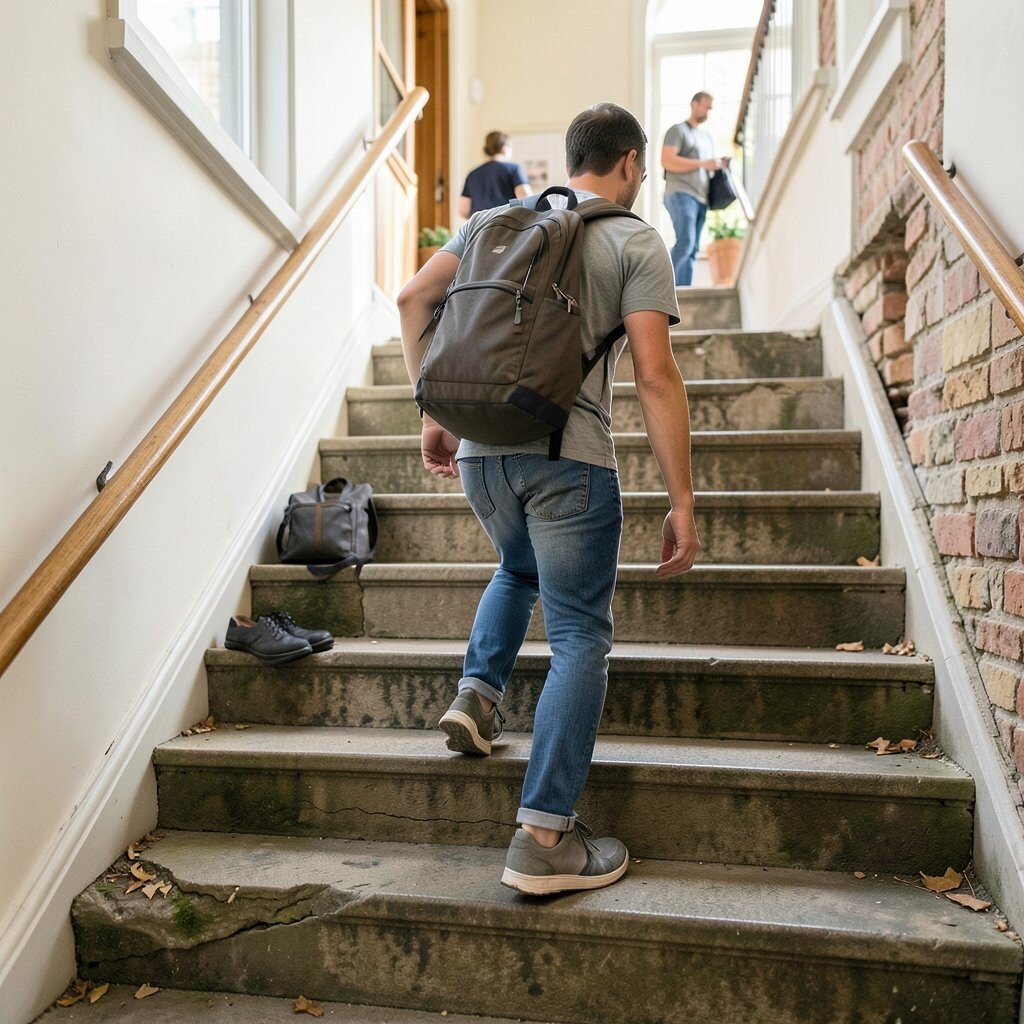
Heavy loads can pull your body off balance fast. When you carry less, your steps stay lighter and your arms can help with balance.
Use a small bag, make two trips, or set items down before climbing. This is especially useful when stairs are uneven, because your attention should stay on your footing. Many people now use compact totes or slim backpacks for this very reason.
A lighter load can also make the climb feel less tiring. That matters on long stairways, at busy events, or in homes with steep steps.
9. Watch the edges, not just the center
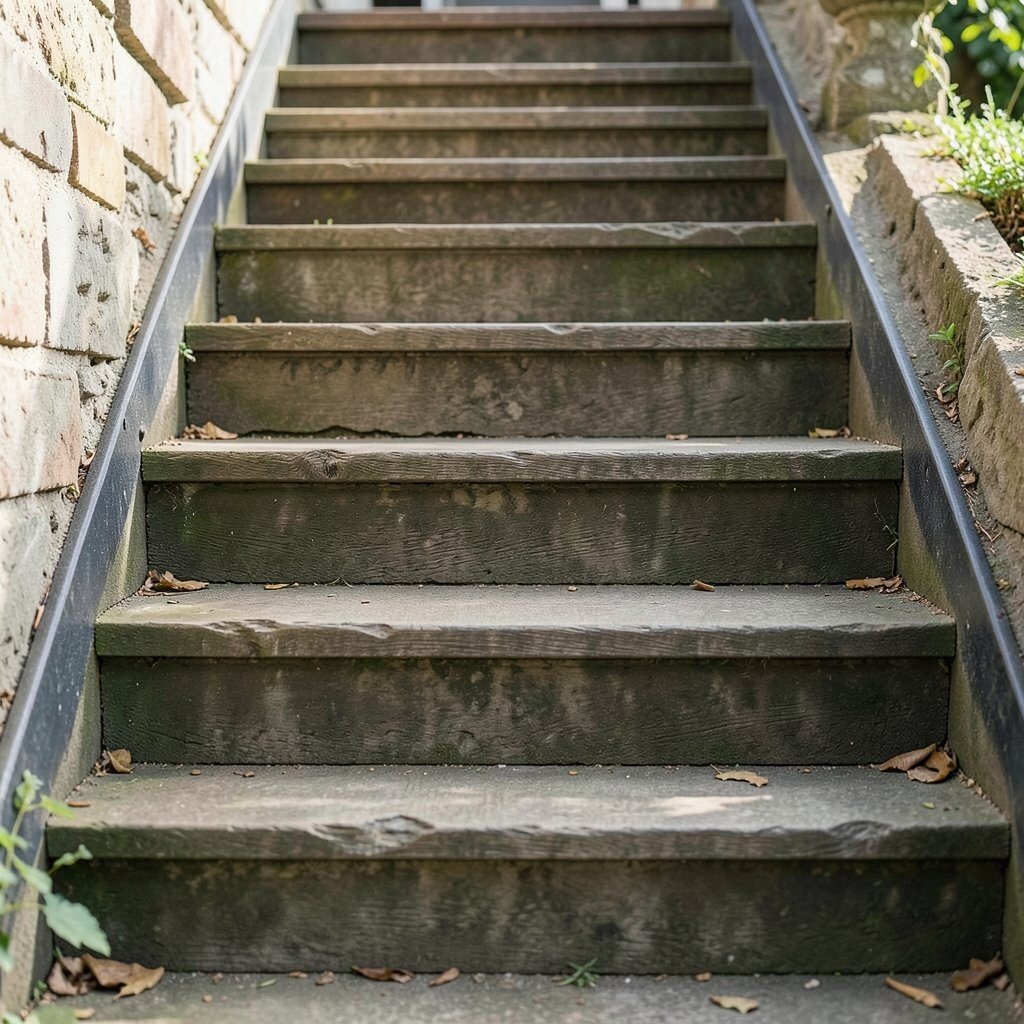
Uneven stairs often have worn edges that look different from the middle. If you only stare straight ahead, you may miss a chipped corner or a step that juts out a little too far.
Train your eyes to read the full width of each step. This can help you place your foot in the safest spot and avoid catching your shoe on a rough lip. People who use patterned tape or painted edge lines often find the stair shape easier to read.
This tip is helpful in older buildings, outdoor patios, and garden steps. Those places often have unique charm, but they can also hide small surprises underfoot.
10. Keep stairs clean and dry
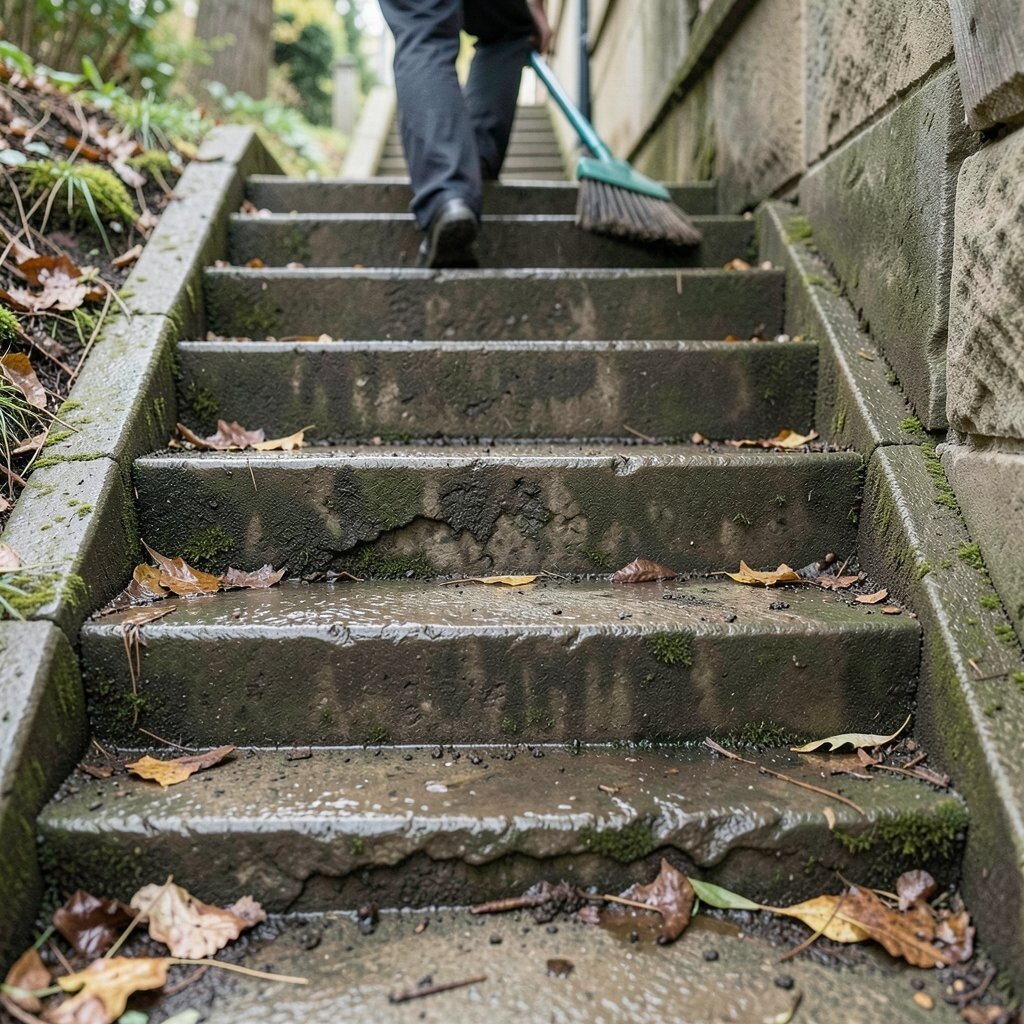
Dirt, leaves, dust, and water can make uneven surfaces much harder to trust. A clean stairway gives your shoes a better chance to grip and lets you see the real shape of each step.
Sweep often, wipe spills right away, and clear away anything that could slide underfoot. Outdoor stairs may need extra care after rain, since moss and mud can create a slick film. Simple cleaning tools are usually cheap, but the safety benefit is huge.
If the area gets wet often, think about a covered path or drain help. Small changes like that can make a big difference over time.
11. Practice the route when you are not in a rush
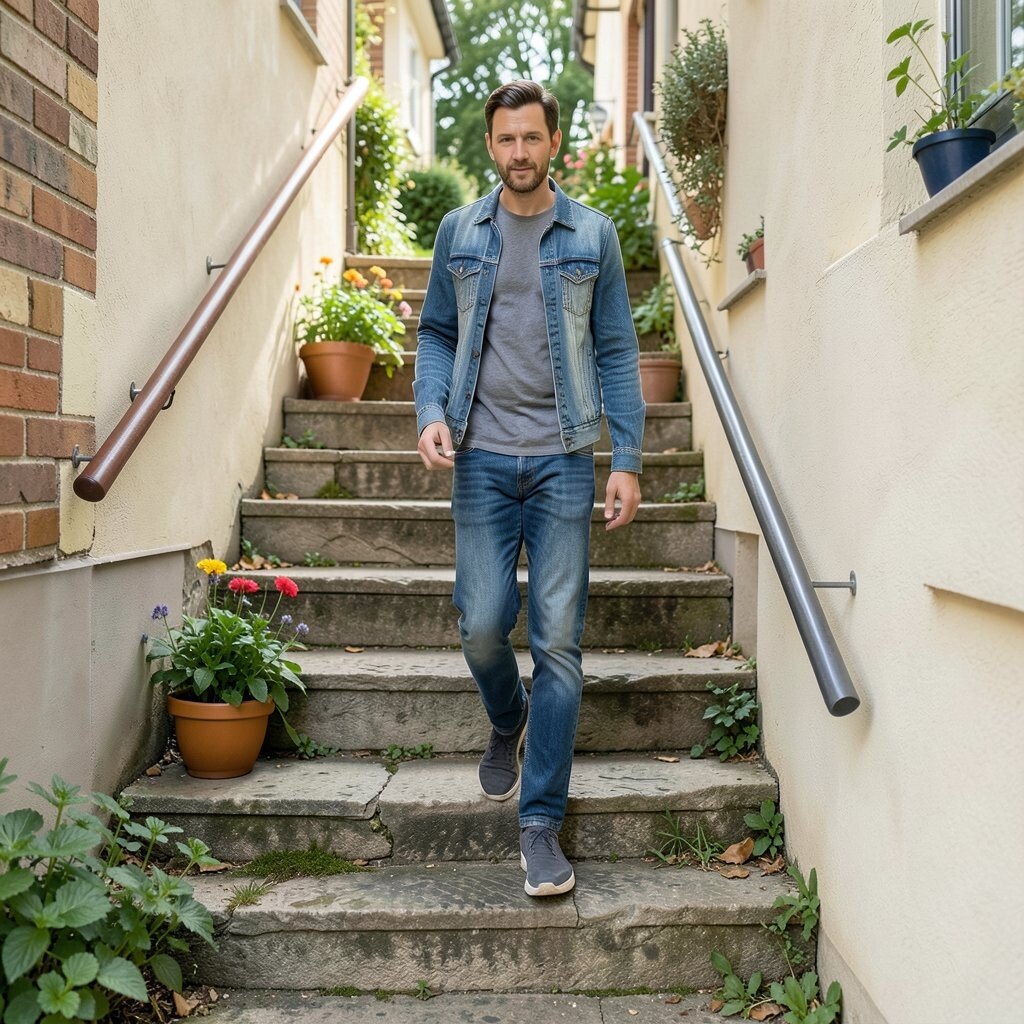
Familiar stairs feel easier because your body learns their shape. Walking the route slowly when you have time can help you remember which step is taller, shorter, or deeper.
That practice can build confidence and reduce surprise. It is useful for homes, schools, porches, and garden paths where the surface changes from one spot to the next. If you share the space with others, point out tricky areas so they can move with more care too.
Some people even use small visual cues, like a bright plant pot or a wall marker, to remember a tricky landing. Personal touches like that can make the area feel more friendly and less stressful.
12. Make small repairs early

A loose board, cracked tile, or wobbly step should not wait. Small damage can grow into a bigger hazard if it keeps getting stepped on.
Fixing problems early often costs less than waiting for a major repair. You may only need glue, screws, filler, or a replacement tread in some cases. For bigger issues, a skilled repair person can make the stair safer and help it look neat again.
Many homeowners now choose simple, clean repair materials that blend with the floor. That way the stair stays safe without losing its style.
13. Match your pace to the weather
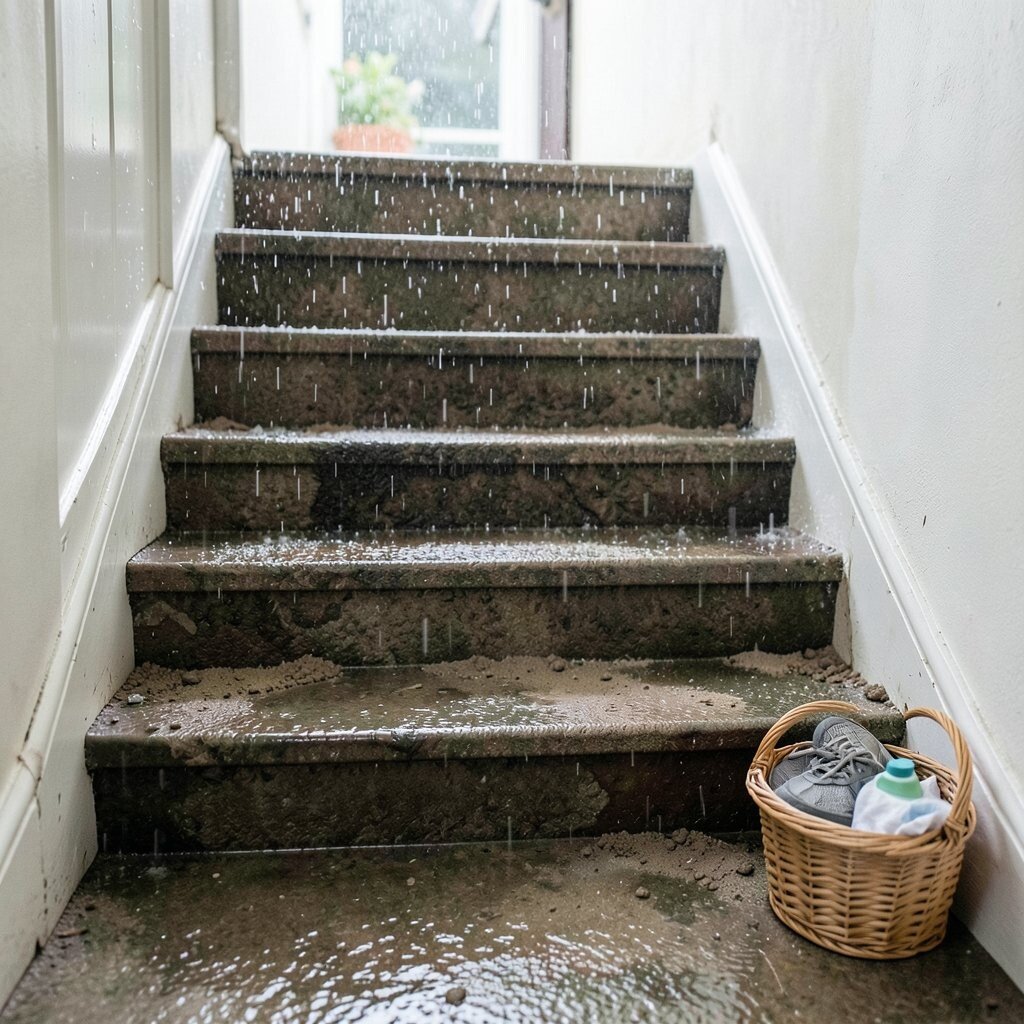
Rain, ice, heat, and dust can all change how stairs feel. On damp days, even a familiar step can seem new and tricky.
Wear weather-ready shoes, wipe off mud, and take extra care when the surface looks slick. In colder places, ice melt or sand can help with grip outside. For hot weather, some surfaces can feel dry but dusty, so a quick sweep may still be needed.
This tip is easy to personalize by season. A small basket near the door with shoe wipes, a cloth, or a brush can make safe stepping part of your daily routine.
14. Use color and contrast to guide your eyes
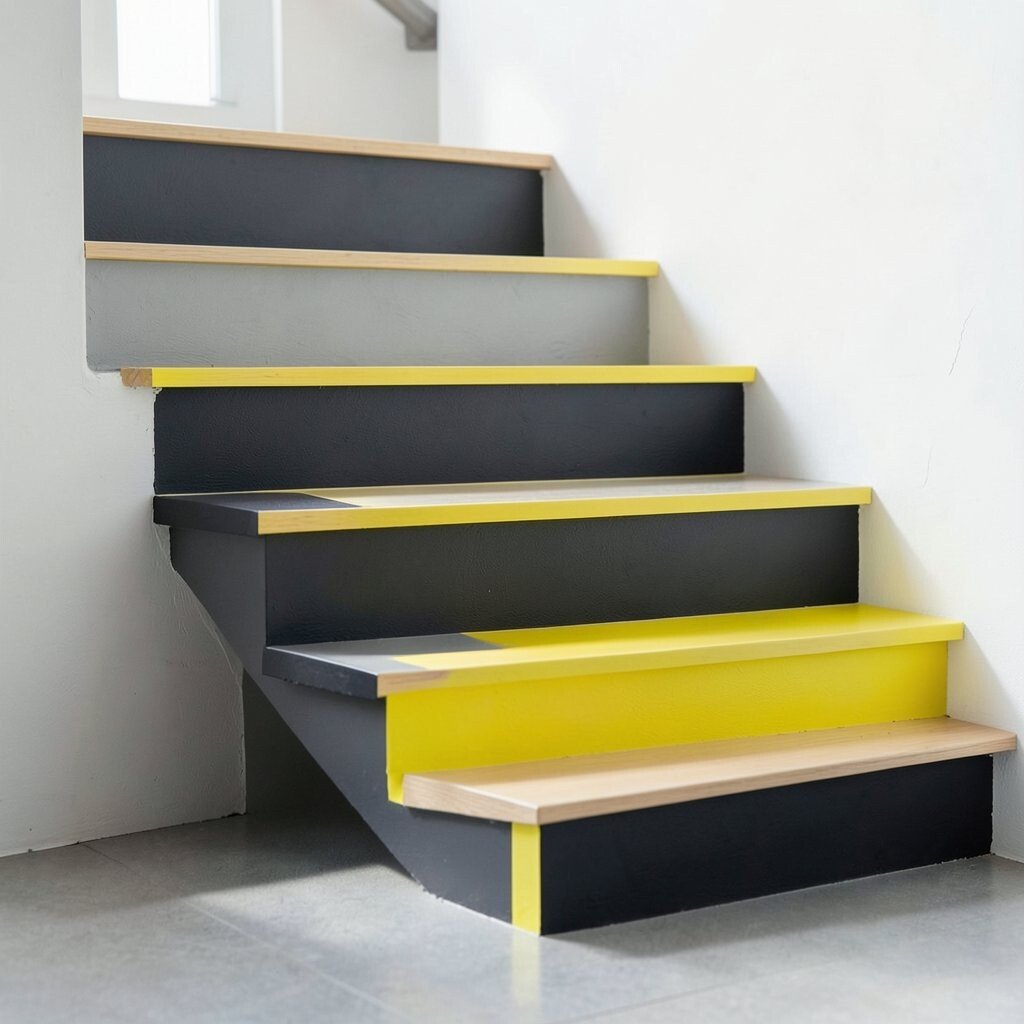
Strong color contrast helps the brain read a step faster. A light stair edge on a dark tread, or a dark edge on a light tread, can make the path much clearer.
This idea is popular in modern homes and public spaces because it looks sharp and works well. You can use paint, tape, or ready-made strips to create that visual cue. The cost can stay modest if you focus only on the most important steps.
People can personalize the colors to fit their home style, from soft gray to bright yellow. The best choice is the one you can see easily without making the area feel harsh.
15. Make the stairway fit the people who use it
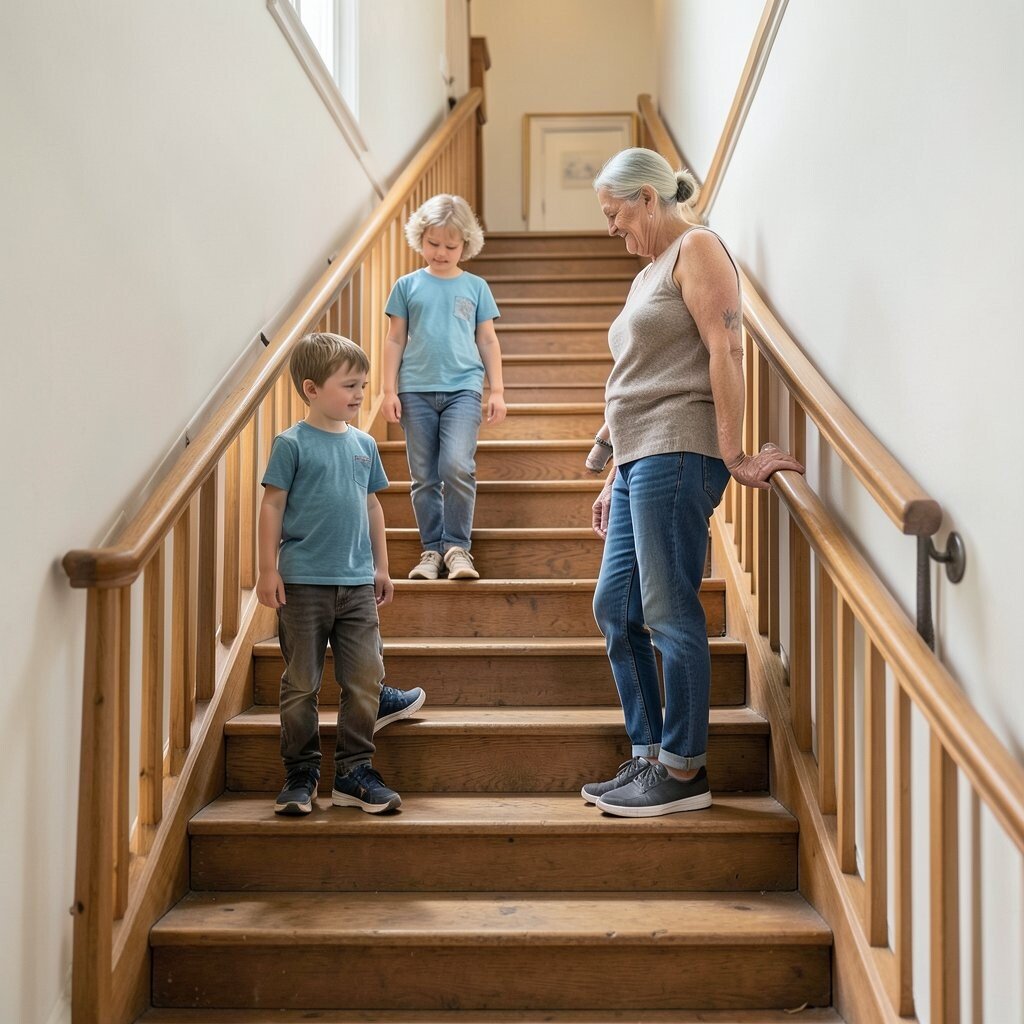
No single stair solution works for everyone. A child, an older adult, a person with low vision, and a busy parent may all need different kinds of support.
Think about height, grip, lighting, shoe type, and how often the stairs are used. You might add a second railing, wider treads, or a resting spot nearby if the stairway gets a lot of traffic. These changes can cost more, but they often bring comfort, confidence, and long-term value.
Personal touches matter too, like choosing warm lighting, soft colors, or a handrail shape that feels good to hold. When the stairway fits the people who use it, each step can feel more natural and far less stressful.